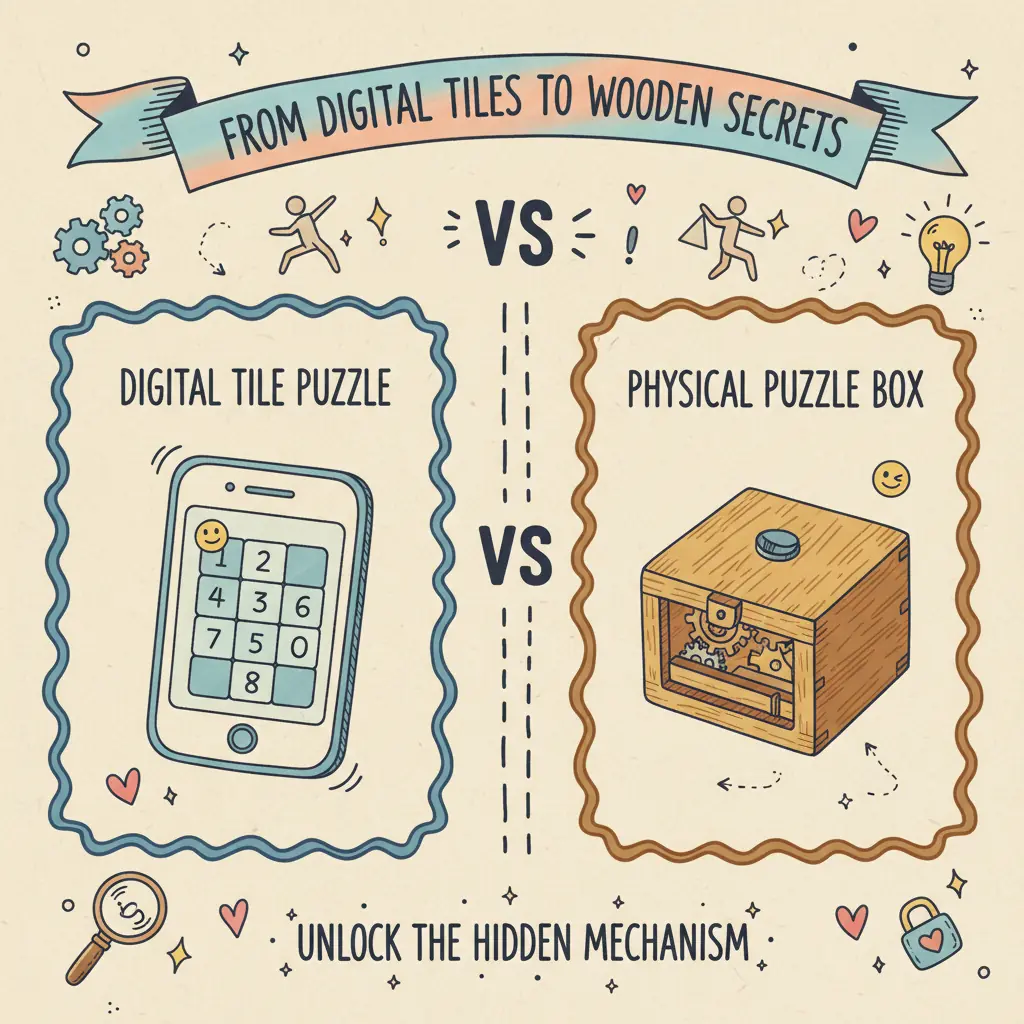
The Great Divide: When Your Brain Says ‘Tiles’ but the Box Says ‘Sequential Secret’
Your thumb swipes, tiles clatter into place on a glass screen. The goal is clear: arrange the chaos into a picture. Now, imagine that same motion, but your hands cradle solid wood. Your goal is unknown. The only objective is to open it. This is the great divide. One is a sliding tile puzzle. The other is a puzzle box. Understanding this rift is your first, most crucial solve.
A digital sliding puzzle is a game of concurrent slides. You see the entire state of play. Multiple tiles can move in your mind’s plan, paths branch and converge, and the solution is a rearrangement of a known image or sequence. It’s a frenetic dance on a 4×4 grid. Your enemy is the empty space, a single, frustrating vacancy. You can find a slide puzzle solver online for these in seconds—the logic is computational, the path is often reversible.
A physical slide puzzle box operates on sequential movement. This is a heist, not a shuffle. Each slide is a deliberate step in a hidden sequence. You don’t see the mechanism; you infer it from tactile feedback and dead ends. Moving panel A locks panel B. Sliding stick X reveals a channel for stick Y. The solution is a linear, often non-reversible series of actions to release a hidden compartment. There is no “picture” to complete, only a secret to uncover. This is the realm of the sequential box, where the box itself is the brain teaser.
Think of it like this: the digital puzzle asks, “How do you organize this room?” The physical box whispers, “Find the hidden door out of it.”
This mechanical DNA dictates everything. The sliding mechanism in an app is a physics engine. In a rosewood box, it’s a crafted interplay of tolerances and wood grain. Your phone offers infinite retries with zero consequence. A wooden secret box remembers. Repeated solving wears pathways, the fit changes slightly, the tactile feedback softens (a charm for some, a flaw for others). The frustration curve is different. On screen, frustration is a logic plateau. With a mechanical puzzle in hand, it’s the paranoia that you’ve triggered a silent, internal reset.
So, when you search for a sliding puzzle box solution, you must first ask: which world am I in? Are you looking for the steps to complete the Vitruvian Man image on a laser-cut lid? Or are you seeking the secret sequence to open a sliding sticks box where the panels are the lock? This confusion is the locked door most people face. (My own obsession began with a 19th-century trick box that stumped me for a week, precisely because I approached it like a tile game. I was listening for the click of completion, not the whisper of progression.)
This divide maps directly to your desire. Do you crave the smooth, swift satisfaction of pattern recognition? The digital realm awaits. Or do you yearn for the slow, deliberate negotiation with a physical object, the “aha!” that comes from feeling a component yield? That is the call of the wooden box.
Understanding this is your master key. It frames every choice that follows, from a simple craft box to a hardcore sequential puzzle. Now, with the fundamental logic split clear, let’s map the three distinct landscapes where these puzzles live.
The Three Realms of the Slide: Digital Brain, Crafted Wood, and Hardcore Logic
Now that you’ve seen the great divide between tile-shuffling logic and sequential lock-picking logic, the landscape itself comes into focus. The world of slide puzzle boxes isn’t a monolith; it fractures into three distinct realms, each with its own materials, makers, and mindset. Choosing the right one means understanding not just what you’re solving, but where you’re solving it.
The Digital Brain: The Endless Tile Grid.
This is the realm of the slide puzzle box online game. It’s frictionless, infinite, and lives in your pocket. Here, the sliding mechanism is pure, abstract logic—you manipulate digital tiles on a grid with a swipe, aiming to reconstruct an image or order numbers. The appeal is crystalline: immediate access, zero setup, and a near-infinite frustration curve with 36+ levels that introduce boards shaped like hexagons or snakes. The primary sensation is cognitive flow; you’re training pattern recognition and planning several moves ahead. A satisfying click is replaced by a smooth animation. User-reported solve times are hard to pin down—they’re measured in levels, not hours—but the difficulty is in the algorithm’s perfect, unforgiving logic. This is a brain teaser in its most concentrated form, with no wooden box to feel, only the cool glass of your screen.
The Realm of Crafted Wood: The Secret in Plain Sight.
Step into the tactile world of Etsy and artisan workshops. Here, the sliding puzzle box is a physical object, often a treasure box with a hidden compartment. We’re talking about the wooden sliding puzzle box secret compartment that doubles as a jewelry case or money safe. The primary appeal is dual: the pleasure of solving a modest mechanical puzzle and the delight of a beautiful, functional object. Aesthetics are key—think laser cut birch plywood with intricate patterns (like the Slide Picture Puzzle Box featuring the Vitruvian Man) or solid woods with a satisfying wood grain. Prices sit comfortably in that $15-$50 range, and the logic is often a single-layer puzzle box with sliding panels that must be aligned to release a catch. The “aha!” is often followed by the discovery of the empty space inside. Solve times for these craft pieces are reported around 10-30 minutes for a first attempt—long enough to feel clever, not so long to induce despair. They are as much a decorative conversation piece as they are a secret lock.
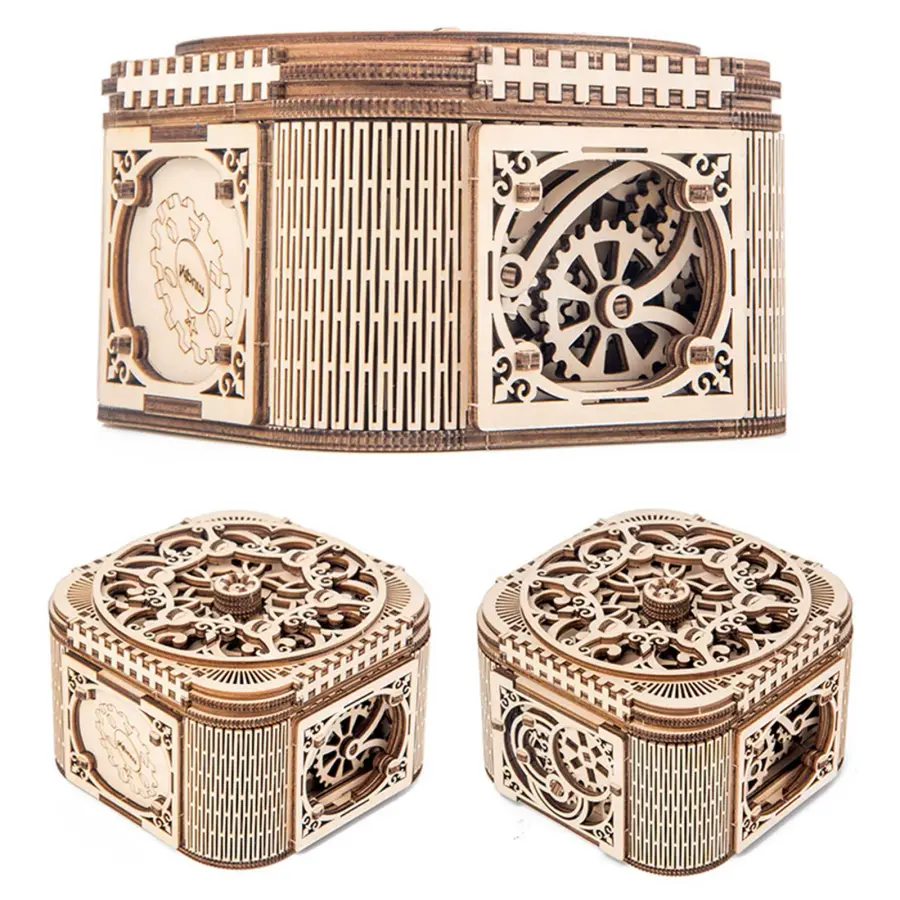
This box is a classic example—a mechanical puzzle that functions as storage. (As noted in our guide to puzzle boxes that reward patience, this blend of utility and challenge is a major draw.) The solve is generally straightforward, a gateway into the physical world of secret boxes.
The Hardcore Logic Realm: Sequential Machines in Wood.
This is the domain of the connoisseur, the best slide puzzle box for adults who find craft boxes too brief. Here, the box is not a container first; it is a pure sequential box engine. Think of brands like Logica Puzzles. Their infamous Sliding Sticks Box (20.4 x 12.5 x 7.3 cm of solid rosewood, rated a Hard 3/6) is a benchmark. The puzzle pieces are the lock, requiring a precise, non-obvious series of sequential movements—slides, shifts, and alignments that feel like navigating a dead end maze in three dimensions. The appeal is the deep, meditative challenge; the tactile feedback of precision-cut wood guiding (or misleading) your hands. The frustration curve is steep and personal, with first-time solve durations reliably reported at an hour or more. These are not magic boxes with cheap tricks; they are elegant logic machines. The price reflects the engineering, often soaring well above the craft tier. This realm answers the question, “How do you open a sliding sticks box without breaking it?” with a simple, daunting answer: with patience, strategy, and a respect for the mechanism.
So, you have the endless grid of the digital brain, the cozy craftsmanship of the decorative secret, and the austere logic of the sequential machine. Your desire—for a quick mental workout, a beautiful object with a little surprise, or a profound duel with engineered wood—places you squarely in one of these three camps. But to truly choose, you must peek under the hood and understand the core mechanics that make each realm tick.
Inside the Machine: How ‘Sliding’ Actually Works (From Tiles to Trapped Sticks)
The distinction between a fleeting digital brain-tickler and a maddening wooden artifact comes down to one fundamental mechanical principle: concurrent versus sequential movement. Understanding this is the master key. It’s the difference between a casual chess match and planning a heist where the walls themselves move, locking some doors while—if you’ve plotted correctly—revealing a single new corridor.
Let’s start with the familiar: the digital sliding puzzle. This is the realm of the classic 15-puzzle or Klotski. Here, you have a grid with one empty space. Every move is concurrent. Slide a tile up, and the empty space concurrently moves down. You can instantly reverse any move. The logic is purely spatial and visual, a flat optimization problem played out on a frictionless screen. The dead end is only a mental one; you can’t physically trap a piece. A slide puzzle solver online works here because the system is perfectly predictable and digital. The challenge is in seeing patterns and planning several moves ahead on a static board. (For a deeper technical dive into this logic, resources like HowStuffWorks’ explanation of how sliding puzzles work are excellent.)
Now, pick up a physical slide puzzle box. The word “slide” is the same, but the logic has been warped into three dimensions. This is sequential movement. Your first slide doesn’t just create a new empty space; it physically reconfigures the entire internal maze of channels and blockers. Move A enables—or more devilishly, permanently blocks—access to Move B. There is no undo button. This is the core of the sliding mechanism in a true sequential box. You are not rearranging tiles on a grid; you are navigating a labyrinth where the walls shift based on your previous choices. (The insider tip from Reddit power-users, “look for dead ends,” now takes on a literal, physical meaning. A wrong slide can create a literal dead end in the internal track, forcing a complete reset.)
This sequential logic manifests in three primary physical forms you’ll encounter:
The Sliding Panel Box (The Classic Secret Keeper): Think of the Contraption Cart Vitruvian Man box. Here, laser-cut birch plywood panels slide in grooves, often in multiple layers. Solving it isn’t about reaching an image; it’s about discovering the precise, non-linear order of slides, pushes, and sometimes slight panel lifts that align internal channels to release a catch. The hidden compartment is revealed not by a hinge swinging open, but by a panel finally yielding after the correct sequence. The frustration curve is defined by the sheer number of possible, yet incorrect, sequences. It feels like manipulating a safe where the combination changes with every dial turn.
The Sliding Sticks Box (The Austere Logic Engine): This is the pinnacle of sequential purity, exemplified by the Logica ‘Sliding Sticks’ box in solid rosewood. The mechanism is deceptively simple: a set of internal sticks trapped in perpendicular grooves. Your slides of the external box pieces shift the internal maze, allowing the sticks to move. But each stick movement changes the maze for the other sticks. You are not sliding a single element to a goal; you are orchestrating a delicate, interdependent ballet of obstructions. Asking “how to solve a sliding sticks box without breaking it?” is asking for a philosophy lesson. The answer is: you must listen to the tactile feedback—the subtle differences in resistance, the faint clicks—and abandon any assumption that force is the answer. It is a mechanical puzzle of profound elegance, where the solution is a specific, non-reversible sequence burned into the grain of the wood itself.
The Slide Picture Puzzle Box (The Hybrid): This type, like the Vitruvian Man box, marries the imagery of a digital tile puzzle with the sequential mechanism of a trick box. The picture is fragmented across sliding tiles, but solving the image does not open the box. Instead, reaching the “solved” image state is merely one step—often a red herring or a mid-point—in a longer sequential process to release the secret lock. It cleverly hijacks your digital puzzle-solving instincts, only to introduce the deeper, sequential reality.
So, do they wear out? A well-made wooden puzzle box, with precise laser-cut or machined parts, will only improve with gentle use, the wood grain and parts settling into a smoother operation. A cheaply made one may loosen. But the true durability test is on your patience. The difficulty level isn’t marketing; it’s a forecast of the complexity of the sequential path laid inside. A digital puzzle escalates difficulty by adding more tiles or irregular shapes. A physical puzzle box escalates by adding more interdependent steps, more false leads, and deeper dead ends.
Now, armed with this mechanical insight, you can move from confusion to informed choice. The next step is to match this understanding of machinery to the machinery of your own desires.
Your Personal Puzzle Matrix: Matching Purpose to a Box’s Personality
Understanding the machinery is one thing. Now, you must decide which machine is for you. This is where most buyers stumble, choosing a box that fights their intent. The right fit isn’t about the “best” box, but the box whose personality aligns with your purpose. Let’s build your personal decision matrix.
First, define your Purpose:
* The Gift: You want to delight, intrigue, and maybe mildly stump someone. The goal is a satisfying “aha!” not a week of frustration curve.
* The Self-Challenge: You seek the pure, unadulterated click of a mental lock. You want to be outsmarted by an object, to wrestle with sequential logic until it yields.
* The Decorative Secret: The puzzle is a bonus feature for a beautiful container. The object must look compelling on a shelf, its hidden compartment a private thrill.
Now, layer that against the Difficulty Spectrum I promised—the unified scale that places all realms side-by-side based on the logic required.
On the easier end: Simple craft boxes from Etsy (think $15-$25). Their mechanism is often a single, elegant sliding mechanism—a panel, a lid, a false bottom—that requires observation, not complex sequencing. Solve time: 10-30 minutes. Perfect for gifting or a decorative secret box. (Are they suitable for kids? For older kids with patience, yes—these are the gateway.)
In the middle: The hybrid digital-physical puzzles, like the Slide Picture Puzzle Box with the Vitruvian Man. Here, you must solve the image and then discover the subsequent physical trick. This dual-layer thinking bumps it up. Then you have digital sliding puzzle apps with 36+ irregularly shaped levels—their challenge is visual-spatial, demanding you to think in concurrent slides.
On the formidable end: The pure sequential box, like the Sliding Sticks Box by Logica. At 20.4 x 12.5 x 7.3 cm of solid rosewood and rated a Hard 3/6, this is the benchmark. There are no tiles to align, only interdependent, trapped sticks that must be manipulated in a precise, non-obvious order. It has dead ends. It requires hypothesis, testing, and sometimes setting it down to reset your brain. User solves often exceed an hour the first time. This is for The Self-Challenge.
So, which is harder: a sliding tile app or a physical sequential box? They are different muscles. The app trains rapid, spatial pattern recognition. The sequential box tests deep, patient sequential movement and kinesthetic reasoning. The latter is often more fundamentally stumping because it defies the screen-based logic we’re accustomed to.
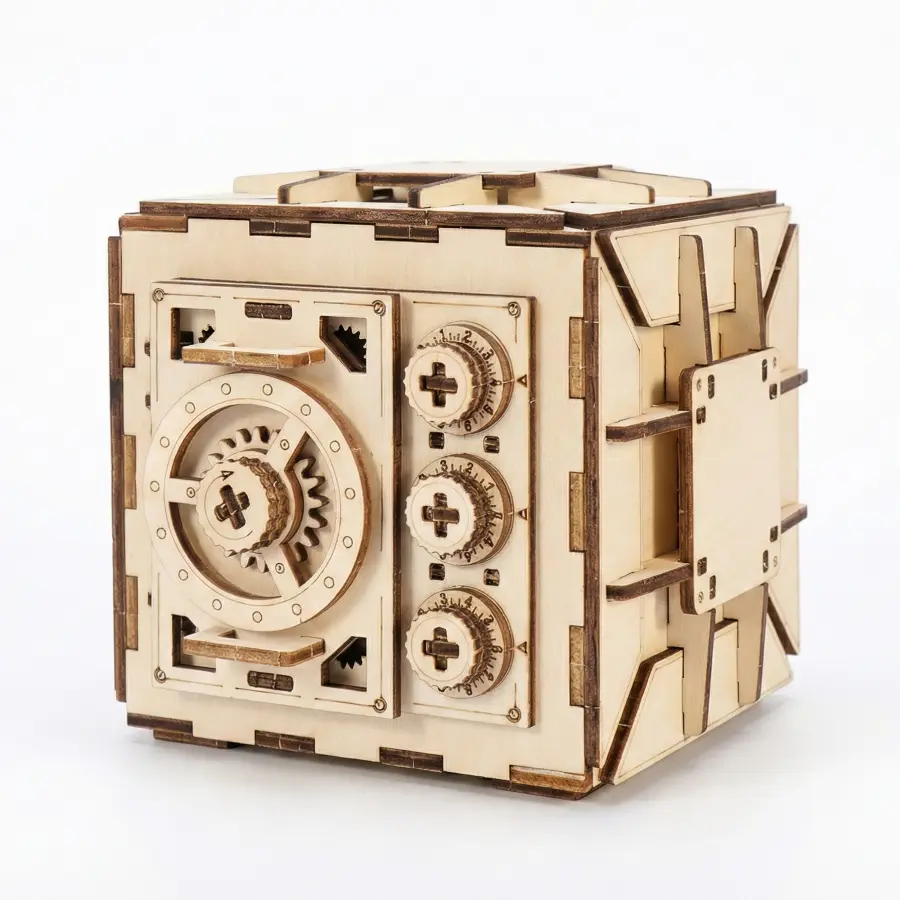
Take the 3D Wooden Puzzle Safe above. It’s a perfect matrix example. Its purpose leans toward The Gift and The Decorative Secret—it looks like a classic safe, promising a treasure box feel. Its difficulty is mid-spectrum; it incorporates a combination lock puzzle into a wooden box build, offering more steps than a simple slide-lid but a more guided path than a true sequential monster. (A deeper dive on puzzles that balance this act well can be found in our guide, The Best Wooden Box Puzzles).
Your final filter is Material & Craft. A laser-cut birch plywood box is precise and affordable. A solid rosewood or walnut box is an heirloom—the wood grain, the weight, the tactile feedback are part of the experience. The former is a clever brain teaser; the latter is a tactile conversation with a craftsman.
And yes, you can reset almost all of them. That’s the beauty. The true secret lock resets with the final closing click, ready to challenge its next victim—I mean, recipient. Choose based on where your purpose intersects the spectrum. Want a beautiful shelf object that occasionally hides a note? Pick from the easy end. Want to test your mettle against engineered obscurity? March toward the hard end. The matrix doesn’t decide for you—it just ensures you’re arguing with the right puzzle. (For those who feel stuck before they even begin, check out our guide on puzzle box stands to escape lid sliding hell—sometimes the right setup is half the battle).
Hand-Picked Standouts: Where Cleverness Lives in Each Realm
Having filtered your purpose through a decision matrix, the abstract becomes concrete. Here, we leave the categories and meet the characters—the specific digital apps, crafted boxes, and hardcore mechanical puzzles that define their respective realms. This isn’t a numbered list, but a curated gallery where each example is a masterclass in a specific kind of cleverness. Your choice isn’t about which is “best,” but which flavor of brain teaser aligns with the intellectual itch you need to scratch.
Let’s start in the digital ether, where the sliding puzzle is stripped to its purest logical core. The standout here isn’t a single app, but a design philosophy: the app that offers 36+ levels and, crucially, varied board shapes. You begin with the classic 3×3 grid, a gentle reintroduction. But soon, you’re navigating a 4×4, then a 5×5, and then the board morphs—into a cross, a T-shape, a hollow square. This variation is the genius. It forces your brain to abandon muscle memory and re-engage with spatial reasoning from first principles. The ‘aha!’ moment is silent and personal: when you stop trying to force a familiar pattern and finally see the unique pathway the new shape demands. It’s frictionless, endless, and the perfect gym for your visual cortex. (A quick tip from a digital solver: use the empty space as your primary tool, not the tiles).
The digital realm is pure logic. But when you crave the whisper of wood grain under your fingertips, you enter the realm of the craftsperson. Here, the Slide Picture Puzzle Box, often featuring the Vitruvian Man image, is the archetype. Made from laser-cut birch plywood, its beauty is its deceptive simplicity. The puzzle is the image; you slide tiles to complete the iconic drawing, which in turn releases the lid. This is where secret compartment meets aesthetic object. The ‘aha!’ is twofold: first, the satisfaction of the image snapping into place, and second, the gentle click of the now-freed lid. It’s a treasure box designed to be seen, not hidden. The solving path is moderate—you might hit a few dead ends—but the frustration curve is gentle, making it a brilliant bridge object. It says, “Look, a physical sliding puzzle can be beautiful and functional.”
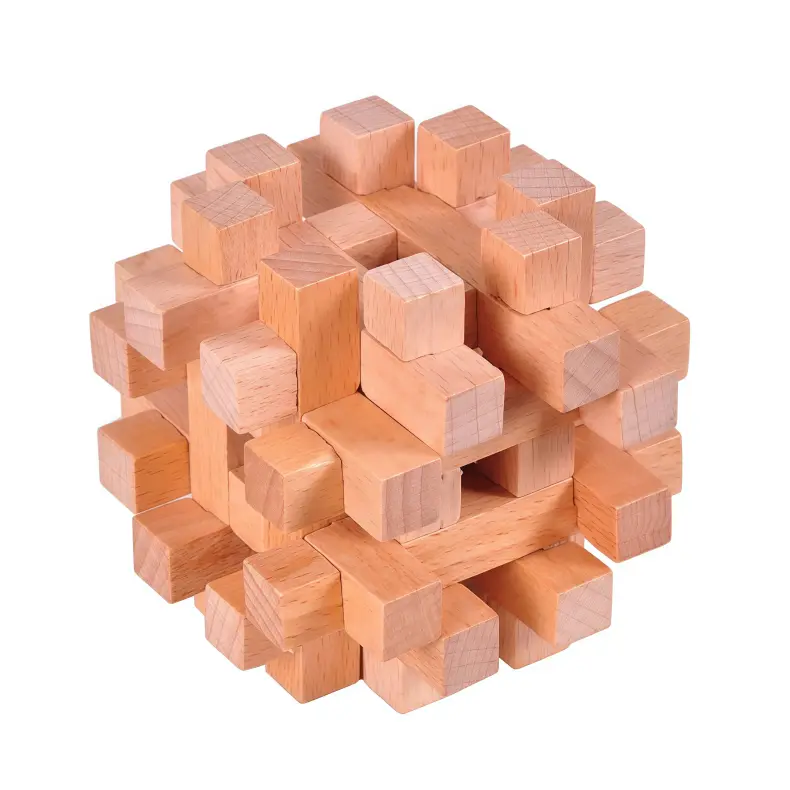
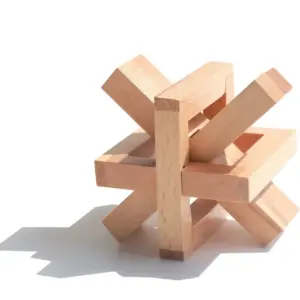
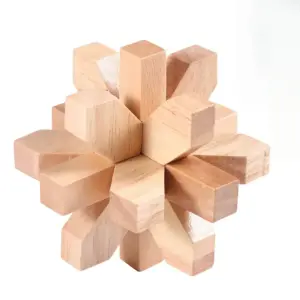
For a different take on crafted intrigue, consider pieces like the Double Cross Cage Puzzle above. It embodies a similar ethos: a beautiful object that demands interaction, proving clever sequential movement isn’t confined to rectangular boxes. (For more adult-focused crafted boxes that respect your intellect, our roundup of 7 Wooden Puzzle Boxes For Adults explores this niche further.)
Then, there’s the deep end. The realm of the hardcore sequential box. The Sliding Sticks Box by Logica Puzzles is its undisputed sovereign. This is no mere trick box; it’s a masterclass in obfuscated mechanics. Its dimensions (20.4 x 12.5 x 7.3 cm) give it a substantial, heirloom presence, crafted from solid rosewood. Rated a Hard 3/6, its genius lies in absolute commitment to sequential logic. Nothing concurrent slides here. Each stick moves only when the precise internal alignment is achieved. The tactile feedback is subtle—a millimeter of give, a faint shift in weight. The ‘aha!’ moment is monumental, often arriving after an hour of deliberate, quiet experimentation. You don’t “solve” it so much as negotiate with it, learning its hidden language stick by trapped stick. This is a secret lock for those who find joy in the journey of pure deduction, where the hidden compartment is almost a secondary reward to the triumph of understanding the system itself.
So, which is harder: the endless digital 15 puzzle or the physical sliding sticks box? It’s a mismatch of disciplines. The digital game tests adaptive pattern recognition under time pressure. The sequential box tests persistent, deductive reasoning and patience. One sharpens a blade; the other teaches you to forge the steel. Your standout is waiting in the realm that speaks to the kind of challenge you seek.
The Pro Solver’s Corner: Extracting the Tacit Knowledge from Forums
So you’ve chosen your puzzle box. You hold it in your hands, its sliding mechanism a silent mystery. The initial excitement is now tinged with a familiar, quiet tension. This is where most guides end and the true, solitary work begins. But you’re not alone. The collective wisdom of a thousand frustrated, then triumphant, solvers on forums and Reddit threads forms a hidden body of knowledge. Let’s extract and systemize that tacit know-how into a formal beginner’s framework. This is how you graduate from fumbling to solving.
First, the universal question: is there a general strategy? For physical sequential boxes, the answer is a definitive yes, and it begins with a mental pivot. Forget the goal (the hidden compartment). Your primary objective is to understand the empty space. As one power-user succinctly put it: “Map the void.” Your fingers aren’t just pushing panels or sliding sticks; they’re detectives tracing the single, shifting path of internal emptiness. Every move is about manipulating this negative space to travel where it needs to go to release the next piece.
This leads to the cardinal rule: Look for dead ends first. Before making a rash move, perform a static analysis. Gently test each sliding element. Which ones have zero play? Those are your fixed points, your puzzle’s immovable architecture. The ones with the slightest give are your candidates. Start there. This isn’t random pushing; it’s a diagnostic. (An excellent primer on this tactile approach is echoed in resources like How To Solve A Puzzle Box Without Losing Your Mind).
Now, engage all your senses. A digital sliding puzzle is a visual game. A wooden box is a tactile and auditory one. Listen. A hollow tap versus a solid thud can reveal internal chambers. Feel for minute differences in resistance—a stick that slides smoothly for 2cm then catches reveals a internal ledge or notch. Close your eyes. Your fingers will map subtleties your eyes will miss. This sensory feedback loop is the core dialogue between you and the mechanical puzzle. This principle is central to the art of the invisible seam in wooden puzzle boxes.
When truly stuck, think in reverse. Imagine the box is open. What would the last step to close it look like? Mentally walk it backwards. This reverse-engineering can crack seemingly impossible sequential box logic, revealing the one move that creates the necessary alignment. And for the love of smooth wood grain, do not force anything. These are precision instruments of confusion, not tests of brute strength. A stuck piece means you’ve missed a prerequisite move elsewhere (a topic covered in our guide on how to open a trick wooden puzzle box without breaking it).
This brings us to two vital practical concerns. Can you reset it? Absolutely, and the method is part of the design’s elegance. The closing sequence is almost always the solving sequence in reverse. Mastering this reset is key for sharing the challenge—a secret lock is no fun if it’s left perpetually unlocked. Does repeated solving wear out a wooden box? Here, craftsmanship is key. A cheaply made box with loose tolerances will degrade. A well-crafted one from solid rosewood or precise birch plywood actually improves with gentle use, the parts wearing into a smoother, more forgiving motion. Maintenance is simple: keep it dry, and occasionally a minuscule amount of furniture wax on the sliding tracks can preserve that satisfying glide for a lifetime.
The final, oft-unspoken piece of forum wisdom? Embrace the frustration curve. That moment of utter stuckness isn’t failure; it’s the threshold of discovery. Set it down. Walk away. Your subconscious will continue the work, and the solution often appears when your hands are busy elsewhere. This brain teaser is not just testing your logic, but your patience. The secret box rewards the persistent, not just the quick. For a step-by-step application of this calm, methodical approach, guides like How To Open A Wooden Puzzle Box can provide a useful scaffold. Now, with these extracted principles in hand, you’re no longer just a buyer or a casual fiddler. You’re a solver, ready to listen to what the box has to say.
The Final Verdict: Choosing the Click That Will Satisfy You
So you’ve absorbed the principles, weighed the mechanisms, and listened to the whispers from the forums. You are no longer a spectator but a solver-in-waiting. The final step is to turn this newfound clarity into a choice—to find the puzzle box whose particular click will resonate with your own intent. Forget broad categories; the right box is the one that aligns with your personal why.
Start by asking yourself three questions, in this order. First: What is its primary purpose? Is it to be a secret box for a cherished object, a pure brain teaser for your desk, or a shared conversational piece? Second: What flavor of challenge do I crave? The spatial deduction of tiles, the sequential deduction of trapped sticks, or the forgiving discovery of a decorative hidden compartment? Third: Do my hands yearn for wood grain or is my mind content with digital smoothness?
Let’s translate those answers into a verdict.
If you want a decorative secret keeper and a gentle introduction, your destination is the realm of craft boxes. Look for a wooden box on Etsy or a similar artisan marketplace with a clear, singular image to reassemble. The Slide Picture Puzzle Box with the Vitruvian Man is a quintessential example here. Its laser-cut precision offers a satisfying sliding mechanism that feels clever but not cruel. The solve is concurrent; you can see progress with each move, and the reward is a functional jewelry case or treasure box. Expect to spend between $15 and $50 for a well-made piece, and solve it in under 30 minutes. (A pro tip: if giving it as a gift, solve it once yourself first to ensure the mechanism is smooth, then reset it—the path back is always easier).
If you crave pure, unadulterated sequential logic and own your frustration, you are ready for the hardcore sequential box. This is the territory of the Sliding Sticks Box by Logica. Made from solid rosewood, its beauty is austere, its mechanism inscrutable. There is no picture to guide you, only geometry and the deep, patient logic of cause and effect. This is a mechanical puzzle that demands you think in chains of moves, where a dead end means a full reset in your mind. It is a private duel of wits. The difficulty level is real; that “Hard 3/6” rating translates to an hour or more of dedicated, tactile exploration for a first solve. The satisfaction isn’t just in opening it, but in the slow, earned understanding of its internal clockwork. For a broader look at this category, you can explore the wider world of mechanical puzzles.
If your goal is cognitive calisthenics and portable challenge, the digital sliding puzzle app remains a superb and affordable tool. It divorces the logic from the object, letting you practice the patterns of Klotski or the 15 puzzle across dozens of levels. Use it to hone the spatial reasoning that will later serve you when facing a physical trick box. It is the training ground for your puzzle solution muscles.
The ultimate synthesis? Perhaps it’s this: begin with a beautiful craft box to fall in love with the idea. Graduate to a true sequential magic box to master the logic. And use the digital slide puzzle solver in your pocket to stay sharp. Each realm offers a distinct satisfaction, but only one lets you feel the weight of the wood, hear the whisper of the slide, and experience the profound, silent click of a secret, willingly surrendered. That is the heirloom moment no screen can ever replicate. (And if you need a final, comprehensive roadmap, our complete guide to opening a puzzle box can be your companion on that journey.)
Reader Friction and Quick Answer
So, after all that, you’re hovering over the ‘Add to Cart’ button for a beautiful wooden box, but a final, practical hesitation sets in. I know it well. The leap from intellectual curiosity to purchase is often stalled by a few very real fears. Let’s dismantle them, quickly and firmly.
“I’ll break it.” This is the loudest fear. The answer is: you almost certainly won’t. A well-made puzzle box is designed to withstand exploration. The sliding mechanism has stops; you cannot pull a panel completely free. The cardinal rule (echoed in every forum and puzzle guide) is: never force anything. If it’s not moving, it’s not the right move. Use all your senses—listen for clicks, feel for slight give. (For a deep dive on gentle technique, resources like the guide on opening a trick wooden puzzle box without breaking it are invaluable.)
“The frustration will outweigh the fun.” This is where your honest self-assessment from our Decision Matrix is key. That frustration curve is real, but it’s also the source of the ‘aha!’ moment. Start simple. A $20 Etsy craft box with a hidden compartment offers a 10-minute victory, a confidence builder. It proves you can think with your fingers. The difficulty level of a true sequential box is a feature, not a bug, for the right seeker.
“Is it a one-time trick?” Almost all quality boxes are resettable. Opening one is learning its secret language; closing it is simply speaking that language in reverse. The secret lock re-engages, ready to stump the next person. This reusability transforms it from a disposable brain teaser into a reusable artifact of cleverness. This reset function is a hallmark of the broader puzzle box tradition.
The final, actionable step is this: Revisit the matrix. Nail down your primary purpose (decoration, gifting, deep challenge) and your honest skill level. Then, make one choice in one realm. Buy the tactile, beautiful craft box to sit on your desk. Download the nuanced digital Klotski puzzle app for your commute. Or commit to the austere logic of a solid rosewood sequential challenge. The goal isn’t to own the entire spectrum at once—it’s to begin the hands-on conversation between your mind and a mechanism. Choose one. Start the slide.