The Warm Metal of Frustration: Your Starting State
The puzzle in your hands feels stuck because it is designed to be—the classical Nine Linked Rings requires a minimum of 341 moves to separate completely, a deliberate 2,000-year-old exercise in mechanical patience. Your frustration isn’t a sign of failure; it’s the intended starting state. This isn’t a trick, but a tactile algorithm made of metal.
You’ve been turning the same two rings for ten minutes. Your thumbs are sore. The metal is warm from your hands. And the solution feels impossibly out of reach. Welcome to the ancient Chinese ring puzzle—a lesson in recursion you can feel. I’ve been there, on a cramped flight with one of these, mapping every move. Let’s get you out.
First, stop forcing. Feel the weight—a well-made set is 3 to 5 ounces of zinc alloy or annealed steel. Listen. A clean, permitted move has a soft snick or a smooth slide. A wrong move produces a dead halt or a grating scrape. That scrape is the puzzle’s grammar-check. It’s saying, “Not this move, not now.” This feedback loop is your guide, not your enemy.
This leads directly to your most urgent question: Can you get it permanently stuck or damaged by forcing it? Almost certainly not. The design is a closed system. While you can wedge rings into a deeply convoluted state that feels hopeless, there is no single move that irrevocably locks the mechanism—short of prying a ring apart with pliers. The worst outcome is backtracking. If you’ve forced something and it’s now jammed, apply gentle reverse pressure. The path out is the path you took in. This inherent limit is the genius of its engineering; it challenges your mind, not your strength. Adopting the 3-step mindset to solve any metal ring puzzle can prevent this frustration from the start.
Right now, you’re holding history. In the West, it was called Baguenaudier (time-waster) or the Devil’s Needle. In China, it’s Jiulianhuan, the Nine Linked Rings. It’s been confounding clever hands since the Warring States period. But you aren’t facing 341 random steps. You’re facing a pattern—a recursive sequence so elegant it mirrors binary counting. Your goal isn’t just to take it apart. It’s to learn the language.
So feel that warm metal. Acknowledge the frustration. Then set it down for a moment. The way out isn’t through brute-force repetition. It’s through understanding a single, repeating rule. We’re not memorizing steps; we’re learning an algorithm. And once you speak it, you can solve any linked-ring puzzle, from 6 rings to 9, or even a theoretical 20-ring monster. The journey from stuck to solved begins with a simple shift: from seeing chaos to seeing a predictable, rhythmic state machine.
Not a Devil’s Needle but a Time-Traveler: Names & 2000-Year History
The puzzle in your hands, warm from your attempts, is not a modern torment but a time-traveler—a physical algorithm refined over two millennia. The classical Chinese Jiulianhuan (Nine Linked Rings) dates to at least the Warring States period (475–221 BCE), referenced in texts as a challenge of logic and patience long before it migrated west along trade routes.
That migration gave it new names, each capturing a different facet of the struggle you’re feeling. French craftsmen called it Baguenaudier (you can explore its detailed etymology on Wikipedia), a word with the weary sigh of “time-waster” built right in. In 19th-century Europe, it became the Devil’s Needle—a name that likely speaks less to diabolical origin and more to the pointed frustration of being repeatedly almost free, only to be hooked back into the sequence. These names are cultural footnotes to the same core experience: the confrontation between human intuition and a recursive mechanical rule.
But look at the object itself. Antique versions were forged from iron or bronze, the metal worked by hand until the rings slid with a specific, deliberate friction. The modern variant you likely hold is typically a zinc alloy or stainless steel, mass-produced yet still obeying the ancient rules. It’s a standardized form: 6 to 8 inches in length, a weight of 3 to 5 ounces that feels substantial but not burdensome—a weight that signifies craft, not trinketry.
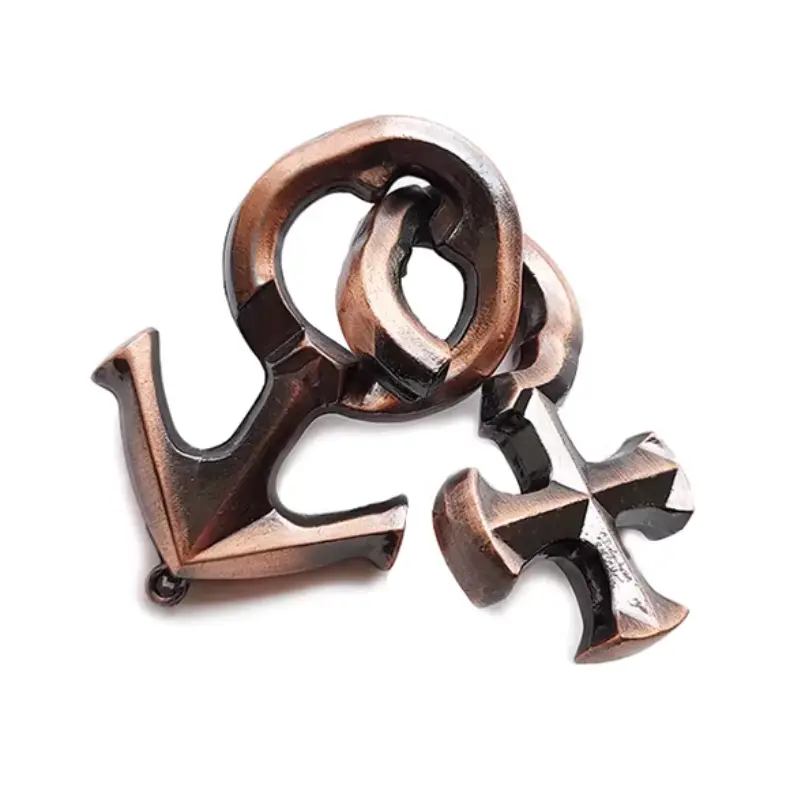
Its longevity answers a question you might be asking: Is this appropriate for a smart 12-year-old, or too frustrating? It has been appropriate for curious minds for over 2,000 years. The frustration isn’t a bug; it’s the central feature of its pedagogy. It teaches mechanical patience—the understanding that some problems yield not to force, but to a series of precise, non-intuitive state changes. This is why it persisted, while other amusements faded. It doesn’t just test cleverness; it trains a specific type of focus, a back-and-forth rhythm that quiets the impulse to rush.
So you’re not wrestling a devil. You’re holding a conversation with a Zhou dynasty craftsman, a Renaissance mathematician like Cardan (whose name also adorns it: “Cardan’s Rings”), and every puzzled person in between. The metal has changed, but the tactile feedback—the snick of a ring clearing a wire, the grating scrape of a wrong move—is the same. That continuity is the point. Your thumbs aren’t sore because the puzzle is unfair; they’re sore because you’ve been speaking the wrong dialect of a very old, very logical language. Let’s learn its grammar.
The Core Principle: Your Rings Are a Binary State Machine
The frustration you feel when the same two rings won’t budge isn’t a sign you’re missing a trick. It’s proof you’ve encountered the puzzle’s central, elegant rule: each ring is a binary switch, and its moves are strictly governed by the state of its neighbors. This conditional logic means the puzzle is not 341 random steps, but a deterministic sequence. Specifically, the Nine Linked Rings’ infamous 341-step solution is the direct output of a simple recursive algorithm applied to nine binary digits—it’s a count from 000000000 to 100000000 in a special error-minimizing order called a Gray code.
Think of the handle as the central data bus. Any given ring is in one of two possible positions, or states: it’s either on the handle (1) or off the handle (0). Your goal is to transition all nine rings from state 1 (fully assembled) to state 0 (completely separated). The algorithm—the universal rule behind solving any linked-ring puzzle—is this: you can only change the state of a specific ring if its immediate neighbor toward the handle is on (1), and all rings before that neighbor are off (0). For Ring 1, the first and smallest one, this rule simplifies: you can always move it if it’s free, because it has no “earlier” neighbor. This rule structure is what makes the solution a recursive sequence; solving an 8-ring puzzle is a subroutine within solving the 9-ring.
This conditional logic transforms the puzzle from a tangled mystery into a finite state machine. You are the operator, and each valid move transitions the entire system from one unique configuration to the next. Every single one of the 341 states on the path to separation is unique and necessary. The puzzle is isomorphic—structurally identical—to a binary counter that changes only one bit at a time. If you were to write down the sequence of on/off states as 1s and 0s, you’d produce the reflected binary Gray code, a sequence crucial in engineering for minimizing errors in positional sensors. When you manipulate the rings, you are physically walking through this code. This is why you can solve it without instructions if you deduce the pattern: the pattern is the logic of the machine itself.
Let’s make this tactile. Look at your puzzle. Identify Ring 1, the smallest ring at the free end opposite the handle. According to the rule, it’s always eligible to move. Now look at Ring 2. You can only move Ring 2 if Ring 1 is on the handle and Rings 3 through 9 are in any state? No. Crucially, Ring 2 can only move if Ring 1 is off the handle. Ring 1 acts as a gatekeeper. This conditional dependency chains through the entire assembly: Ring n is moveable only when Ring n-1 is on and Rings n-2, n-3,…1 are off. This creates the back-and-forth rhythm—you must constantly manipulate the earlier, smaller rings to unlock the later, larger ones. It feels iterative because it is.
This is the fundamental state change logic that governs your Baguenaudier. Understanding this transforms your interaction. You are no longer fumbling randomly, applying force where it won’t go. You are auditing the current configuration, asking: “Which ring is the first movable ring according to the rule?” Then you execute its only possible move—either threading it onto the handle or off of it. Then you reassess. This audit-execute loop is the complete linked ring puzzle algorithm. It scales perfectly: the same rule solves a 3-ring toy, your 9-ring puzzle, or a hypothetical 20-ring monster. The move count explodes (2^n – 1 steps), but the rule remains constant, a testament to the power of a recursive process.
This binary foundation is your “aha” moment. The grating scrape you hear is the sound of trying to change a bit out of sequence. The satisfying snick is a valid state transition. Your job is now clear: learn to reliably identify the only ring that can move next. Once you internalize that, the 341 steps become a meditative journey, not a memorization nightmare. You are not performing magic; you are executing a clean, mechanical function. As noted in our guide to unlocking the unseen logic of your ring metal puzzle, grasping this principle turns a source of frustration into a deeply satisfying physical simulation of a computational process. You’re not just solving a puzzle; you are running an ancient, tangible computer.
Your Two-Word Vocabulary: The Only Moves That Exist
The trick is that every one of the 341 steps is a combination of just two fundamental actions: Thread and Unthread. Mastering these actions—and learning to feel the difference—is how you transform random scraping into a deliberate, solvable algorithm. This binary vocabulary scales to any linked-ring puzzle, from 3 to 99 rings.
So, what are you actually doing with your hands? Every move involves one ring and the long central handle (or “needle”). Forget the other rings for a moment. Your goal is to change the relationship between that one ring and the handle. There are only two possible relationships: a ring is either on the handle or off it. Therefore, there are only two possible moves to change that state. I call them Thread (moving a ring from off the handle to on it) and Unthread (moving a ring from on the handle to off it). This is the complete grammatical foundation of the puzzle’s language.
Executing a Thread feels like unlocking a deadbolt. With the ring held in one hand, you slide it along the handle’s shaft until its opening aligns with the keyhole-like gap in the handle’s head or eye. A slight forward push, and the ring glides onto the handle with a definitive, low-pitched click. The motion is smooth, requiring no force. If you meet resistance, stop. You are either trying to thread a ring that is already on, or you haven’t cleared the other rings from its path—a sign you’ve chosen the wrong ring to move.
The Unthread is the reverse: a careful retreat. You guide the ring backward along the handle, out of the eye, and off the shaft. It should feel like a clean disengagement, a release. The same satisfying click often accompanies this separation. Forcing an unthread is the primary cause of the grating metal-on-metal scrape. That sound is your puzzle’s error message—it means the ring you’re trying to move is blocked by the state of the rings in front of it, violating the binary sequence.
Your entire sensory focus should be on this tactile feedback. A well-made puzzle of annealed steel or zinc alloy will offer a crisp, mechanical confirmation for each valid move. The click is your reward. The scrape is your instruction to pause, reassess the state of the rings, and apply the algorithm to find the correct next bit to flip. Once you internalize the feel of these two moves, you’ve learned the alphabet. Now we build words.
The Recursive Rule: The One Sentence That Unlocks All Variants
The recursive algorithm that governs every linked-ring puzzle is this precise statement: To free Ring N, you must first free Ring N-1, and put all rings before it (N-2, N-3, etc.) back on the handle. This single rule generates the entire 341-step sequence for a nine linked rings solution, and it’s the reason you can solve a 6-ring or a theoretical 20-ring variant without memorizing a new list. It transforms the puzzle from a sequence of steps into a predictable, scalable process.
Now you understand the two moves—the alphabet. This rule is the grammar. It tells you the exact, conditional order in which to apply those moves. Think of it like a lock with a sequence of tumblers: you can’t move the fourth tumbler until the third is in the correct position, and getting the third into position requires resetting the first and second. Your rings are mechanical bits in a binary state machine, and this rule is the program logic.
Let’s make it tactile. You’re holding your puzzle. The handle is free; your goal is to free Ring 3 (the third ring from the handle’s end). You cannot just slide Ring 3 off. According to the rule, to free Ring 3 (N=3), you must first free Ring 2 (N-1=2). But wait—to free Ring 2, you must first free Ring 1. So you start there. Free Ring 1. Now, to proceed to freeing Ring 2, the rule has a second clause: you must put all rings before N-1 back on. For Ring 2, the ring before it is Ring 1. So, after freeing Ring 1, you must deliberately put Ring 1 back on the handle. Only then is the state correct to free Ring 2. Once Ring 2 is free, your goal (freeing Ring 3) requires you to put Ring 1 back on again, and then also put Ring 2 back on. This back-and-forth isn’t random—it’s the recursive dance.
This is the profound “aha” moment. The process is deeply recursive: solving for N rings requires you to fully solve for N-1 rings, then reset that entire substack, then proceed. The daunting 341-step figure for the jiulianhuan puzzle solve isn’t a count of 341 unique maneuvers; it’s the total count of individual ring movements (each thread or unthread) generated by this rule when N=9. The exact formula for the classical puzzle (where Ring 1 can always be moved) is a recurrence relation. For an odd number of rings n, the minimum moves to free the handle is (2^(n+1) – 1)/3. For n=9: (2^(10)-1)/3 = (1024-1)/3 = 1023/3 = 341. So, applying this recursive rule results in precisely 341 individual ring manipulations, each one a “thread” or “unthread.”
This is why learning the rule is more powerful than memorizing steps. If you internalize this conditional logic, you can scale it. Freeing Ring 5? You already know the drill: solve the entire 4-ring sequence, reset it, then Ring 5 slides off. It’s the same pattern, nested inside itself. I often hum it as a rhythm: off, on, off, on, off… a recursive melody where every other beat calls the same tune from the beginning.
This pattern is mathematically isomorphic to a binary Gray code—a sequence where only one bit changes at a time. Each ring is a bit (0=on, 1=off), and the algorithm ensures you change only one ring’s state per move, walking through every possible state without repetition until you reach the final, all-off, solved state. When you solve this puzzle, you are literally executing a thousand-year-old algorithm with your hands. You are the processor. For a deeper dive into the mechanical patterns that govern these puzzles, see our article on how to unlock any metal puzzle with mechanical grammar.
So, the answer to “Do you have to go through all 341 steps every time?” is yes, but not in the way you fear. You’re not performing 341 random acts. You’re following a beautiful, logical progression—a fidget-cycle that becomes meditative once you see the pattern. The weight of the metal, the crisp clicks, the back-and-forth of the rings—it transforms from frustration into a satisfying, physical manifestation of a recursive function. You’re not just solving a puzzle; you are running an ancient piece of mechanical code, one deliberate move at a time.
Walkthrough: Learning the Rhythm on a 3-Ring ‘Training’ Puzzle
You now have the recursive rule—the core algorithm. But abstract logic feels different from the cold metal in your hands. So let’s translate that rule into a physical rhythm you can feel, using a minimal 3-ring version. Mastering this reduces the daunting 341-step journey to a manageable 7-goal-move sequence, proving the pattern is learnable, not just memorizable. This is where you shift from understanding to doing.
Imagine, for a moment, that your 9-ring puzzle has only its first three rings attached. This is your training ground. The goal is the same: to free the handle (or leading ring) by getting all three rings off the loop. According to our rule, the sequence will be a miniature version of the grand pattern. I want you to hum along as we go: a low note for an “off” move, a high note for an “on.” The rhythm will become your guide.
Here is your 3-ring walkthrough. Your rings are numbered 1 (closest to the handle), 2, and 3 (farthest back). Remember the two moves: you can only take a ring off the loop or put it on the loop. And the recursive rule: To manipulate Ring n, the ring before it (Ring n-1) must be on, and all rings before that must be off.
Let’s begin with all rings on the loop. Your handle is trapped.
Move 1: Take Ring 1 off. This is always your first move. It’s the only one you can do. Click. Hum a low note.
Move 2: Take Ring 2 off. Can you? Check the rule: To manipulate Ring 2, Ring 1 must be on. But Ring 1 is off. So you cannot. Therefore, you must first correct the state before it. Put Ring 1 on. Click. (A high note). Now you can take Ring 2 off. Click. (A low note).
Feel the back-and-forth? You made two moves to achieve one goal on Ring 2. This is the recursion in action. The state is now: Ring 1 (on), Ring 2 (off), Ring 3 (on).
Move 3: Take Ring 1 off. Again, check the rule. To manipulate Ring 1, there is no ring before it (Ring 0), so it’s always free if it’s movable. It is. Click. (Low note). State: 1-off, 2-off, 3-on.
Move 4: Take Ring 3 off. Target Ring 3. Rule: Ring 2 must be on. It’s off. So we must get Ring 2 on, but to do that, Ring 1 must be on. Build the stack backward. Put Ring 1 on. Click. (High). Put Ring 2 on. Click. (High). Now you can take Ring 3 off. Click. (Low). State: 1-on, 2-on, 3-off.
You’re halfway. The handle is still on, but you’ve cleared the farthest ring.
Move 5: Take Ring 1 off. Click. (Low). State: 1-off, 2-on, 3-off.
Move 6: Take Ring 2 off. Check: Need Ring 1 on. Put Ring 1 on. Click. (High). Now take Ring 2 off. Click. (Low). State: 1-on, 2-off, 3-off.
Move 7: Take Ring 1 off. Click. (Low).
The handle slides free. All three rings are off the loop. The sequence, in pure moves, was: 1-off, 1-on, 2-off, 1-off, 1-on, 2-on, 3-off, 1-off, 1-on, 2-off, 1-off. That’s 11 physical actions. But in terms of your target rings—the ones you intentionally set out to remove—you only made 7 goal-oriented moves: R1, R2, R1, R3, R1, R2, R1. That’s 2³ – 1 = 7. See the pattern? It’s the same alternating, nested rhythm. This aligns with the broader category of mechanical puzzles, where the solution lies in understanding the moving parts’ constraints.
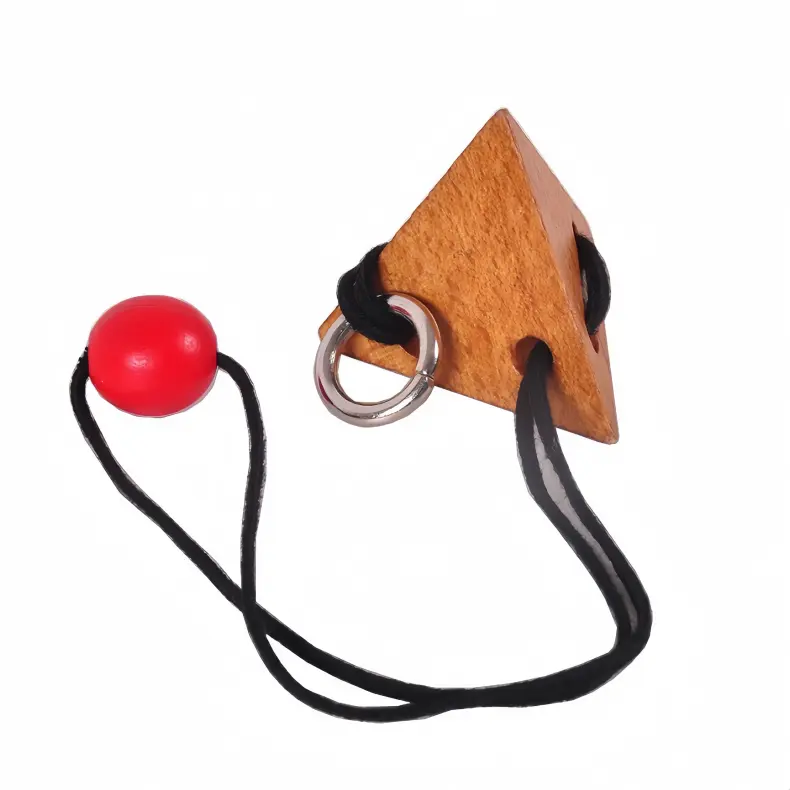
Run through this 3-ring sequence two, three times. Let your hands learn the dance. The rhythm—off, on, off, on, off—is the recursive algorithm’s heartbeat. This is the exact same pattern you’ll execute for 9 rings; you’re just nesting more layers. Once this cadence is in your fingers, scaling up is a matter of patience, not new learning. You are now programming the state machine. For more on developing this tactile intuition, our guide on why your hands are lying to you about solving metal puzzles delves deeper into overcoming misleading physical instincts.
So, can you solve it without instructions if you figure out the pattern? Absolutely. Once you internalize this recursive rule—the conditional check, the necessary reset moves—you can derive the steps for any number of rings from first principles. You’re not memorizing; you’re executing a logical, mechanical protocol. The 9-ring puzzle is waiting. You have the rhythm. Let’s scale up.
Scaling Up: Conquering the 9-Ring and the 341-Step Myth
Now that the recursive rhythm is in your hands, your 9-ring puzzle is no longer a daunting beast—it’s a larger-scale application of the exact same law. The legendary 341-step count is not a count of 341 unique, distinct moves you must memorize; it’s the simple, predictable total of all state changes required to free the handle, calculated as (2^(9+1)-1)/3 = 341. This is our key hook: you are not memorizing a list, you are executing a repeating, doubling pattern.
Think of it like this: freeing Ring 9 requires you to first get Rings 1–8 into the exact on/off sequence that you now understand from our 3-ring drill. But to get Ring 8 into position, you must first manipulate Rings 1–7. This nesting of cycles is the recursion in action. Your strategy shifts from “I need to get to step 200” to a single, focused question: What is my next target ring, and what is the state of the ring before it? This is how you manage the sequence without being overwhelmed by the total.
Here’s how you apply the rule to your 9-ring puzzle:
1. Identify your target. To free the handle, your final target is Ring 9. You can only move Ring 9 if Ring 8 is on the loop and Rings 1–7 are off.
2. Work backwards recursively. To get Ring 8 on, Ring 7 must be on and Rings 1–6 off. This logic chains all the way back to Ring 1, your dependable metronome.
3. Execute the nested cycles. You will perform the entire “free Ring 3” sequence you just learned within the process of freeing Ring 4. And that whole sequence happens within freeing Ring 5. The pattern telescopes.
So, do you have to go through all 341 steps every time? Yes, but you’re not counting. You’re following the conditional rule. Once internalized, your hands enter a flow state—a fidget-cycle of checking, moving, and resetting that becomes almost meditative. The 341 moves are the total distance traveled, but your brain only ever needs to hold the simple rule and the current state. This is why comparing it to a Hanayama puzzle like Vortex or Equa is instructive but not equivalent. Those are about discovering a single, clever hidden mechanism. The Nine Linked Rings is about patiently executing a known, elegant algorithm—it’s mechanical patience versus a eureka moment.
The “myth” of the 341 steps is that it sounds like an insurmountable marathon. In reality, it’s a rhythmic, binary cadence. As you work, you’ll feel the algorithm’s structure. Long stretches of methodically working through the lower rings will be punctuated by the satisfying, hard-won slide of a higher-numbered ring moving forward. This pattern—this deeply logical progression—is mathematically isomorphic to a reflected binary Gray code, a sequence used in error-correcting digital circuits. You are literally performing manual, tactile computation. For a formal, step-by-step mathematical breakdown, resources like this Chinese Rings Solution paper can be fascinating.
Your brain loves this. The predictable rhythm of check-and-move engages working memory and procedural learning, creating a feedback loop that’s deeply focusing. It’s the cognitive benefit beyond patience: structured iteration that quietens mental noise. For more on this neurological hook, our exploration of the metal puzzle brain and its 4000-year history delves into why these ancient patterns are so satisfying.
Begin. Start with Ring 1, your anchor. Follow the rule. When you finally slide Ring 9 forward and the handle separates with that definitive, hollow clink, you’ll understand. The 341 steps weren’t a barrier; they were the entire, beautiful point.
Fidget-Cycle Mastery: Using the Puzzle for Focus, Not Just Solution
The final, hollow clink of separation is a triumph—but it’s not the end. The true mastery of the Chinese ring puzzle begins when you start putting it back together, transforming its 341-step recursive sequence from a one-time challenge into a predictable, rhythmic tool for focus. This is the fidget-cycle: a mechanical meditation where the algorithm’s cadence—not the solution—becomes the point, engaging your procedural memory to quiet mental static and enhance concentration for 15-20 minute stretches.
That rhythmic pattern you learned—the back-and-forth dance dictated by the binary state rule—creates a perfect cognitive loop. Your hands execute a known, finite sequence while your mind is freed to wander, ponder, or focus on a separate problem. It’s active rest for the executive-function parts of your brain, similar to the focus found in knitting or simple manual tasks, but encoded with ancient logic. The tactile feedback of annealed steel sliding, the visual check of ring positions, the soft clicks confirming each state change—these become anchors, pulling your attention away from diffuse anxiety and into a defined, completable process.
Once the algorithm is internalized, solving and reassembling ceases to be a puzzle. It becomes a kinetic ritual. You’re not thinking about step 187; your fingers are performing the sequence, your conscious mind riding atop the rhythm. This is the answer to “what’s the point of putting it back together?” The point is the cycle itself—the deliberate, mindful traversal from order (assembled) to chaos (disentangled) and back to order. It builds a unique form of mechanical patience, reinforcing the neural pathways of logical procedure each time you run through it.
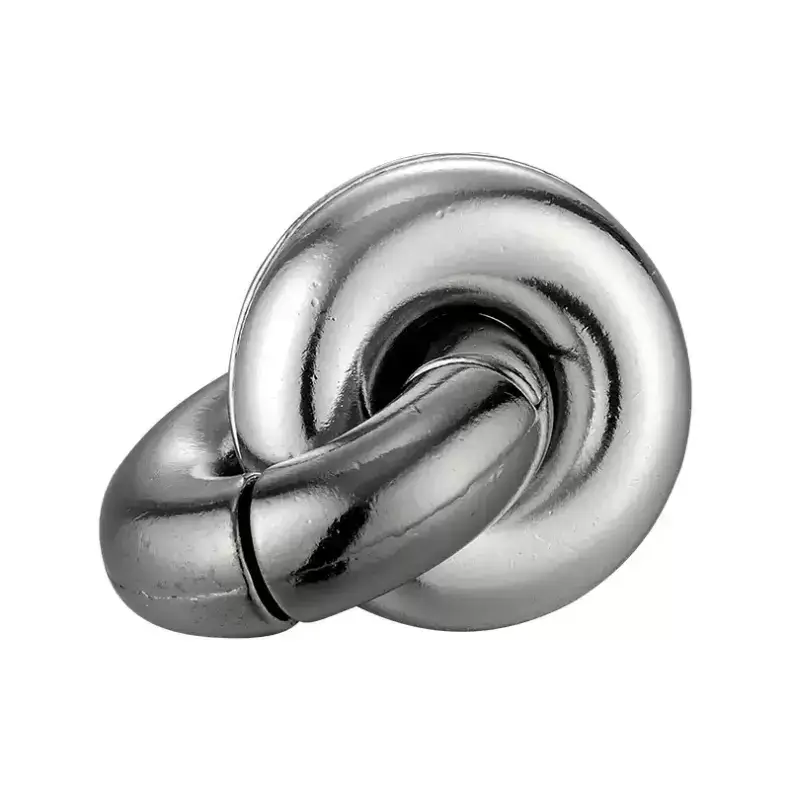
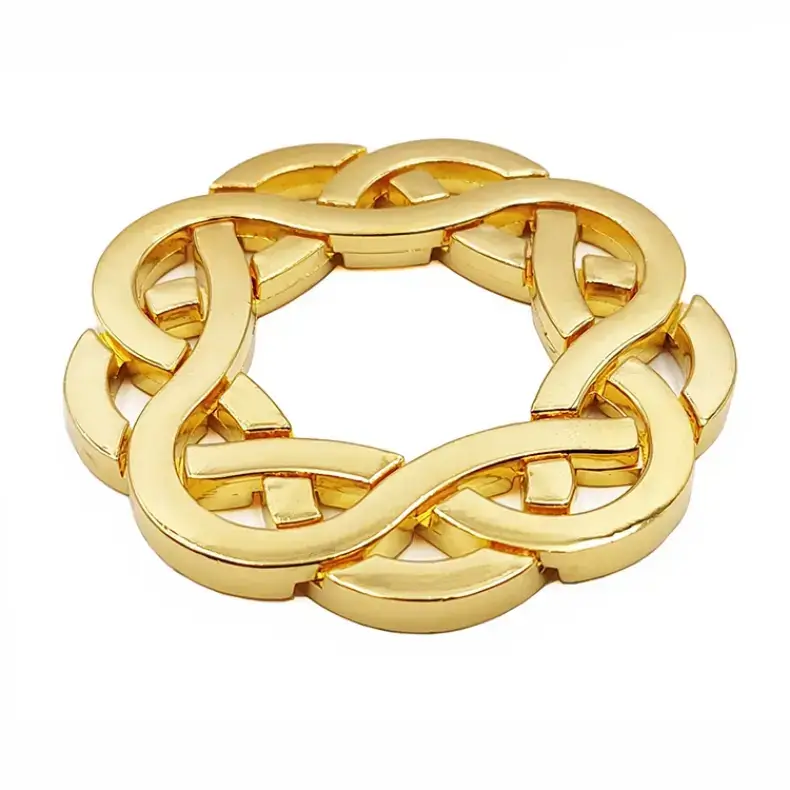
For a more portable, faster-cycle practice, a simpler puzzle like the one shown can cement the feel of the algorithm. The cognitive benefits extend beyond the session. You’re training your brain to engage with complex, sequential problems without frustration—breaking them into recursive sub-tasks, trusting the process, and valuing the journey as much as the goal. It’s the antithesis of the instant, swipe-based gratification that fractures attention. As explored in our piece on the I Ching puzzle toy for teaching patience, this structured tactile manipulation can be a powerful ally for focus, making the ancient “time-waster” a profoundly modern tool for your mind.
Choosing a Worthy Companion: What a Well-Made Puzzle Feels Like
After mastering the algorithm, your hands will crave the clean execution a quality puzzle provides—the difference between a satisfying rhythm and a grating chore. A well-made ring puzzle is defined by three tactile qualities: substantial weight (3-5 ounces for a standard 9-ring), silent, fluid movement, and an absolute absence of sharp edges. It is a prime example of a well-crafted disentanglement puzzle.
The first checkpoint is material. Seek out annealed steel or brass. These metals have a warm, dense heft and a slight springiness that prevents permanent deformation. Avoid lightweight, glittery zinc alloys; they feel hollow, can develop a gritty grind over cycles, and are prone to snapping under force—a genuine risk if you brute-force a move. The wire gauge matters, too. Look for a thickness between 2-3mm; thinner wire feels flimsy, while thicker wire makes the rings too stiff to manipulate with one hand.
Inspect the welds or joins where the rings connect to the long bar. They should be seamless and smooth to the touch. A rough, globular weld will snag on adjacent rings, corrupting the algorithm’s flow. For a younger puzzler (a patient 12-year-old is perfectly suited), these factors are even more critical—a durable, smoothly finished puzzle prevents frustration and injury, turning a lesson in mechanical patience into a victory. A quality piece becomes a lasting companion, its tactile feedback a direct conduit to the ancient logic it embodies. For more on durability and selecting robust designs, our guide to metal puzzles that don’t break—a veteran’s guide details what to look for.
The Final, Satisfying Click: From Algorithm to Instinct
That quality companion in your hand—with its seamless welds and clean feedback—is no longer a source of frustration, but a calibrated instrument. The moment the handle slides free is not magic; it’s the inevitable outcome of executing a perfect recursive sequence. You’ve just navigated a 341-move state machine, and the final, resonant click is your earned proof of understanding.
Now, you don’t merely know the steps—you hold the rule. The algorithm has moved from your working memory to your muscle memory. This is the transformation: the puzzle is no longer a locked box, but a kinetic expression of binary logic you can feel. Your thumbs are no longer sore from random struggle; they are conducting a known rhythm. To solve it again, you won’t need instructions—you think in the recursive conditionals, your fingers following the established fidget-cycle.
The true solution was never the separated parts. It was the internalized pattern. So, your final, empowering step is this: reassemble it. Run the sequence in reverse, not by rote, but by applying the same rule. Each move will confirm your mastery. Then, you can use it as intended—not as a one-time challenge, but as a tool for focus, its predictable, mechanical patience a direct line to a 2,000-year-old algorithm. For your next tactile conquest, explore the interlocking logic of the the metal starfish puzzle ring as a guide to mastery. You have the language now. Apply it.