The sun was hitting my desk at exactly 4:15 PM last Tuesday when I finally heard it. That sharp, crystalline click. It’s a sound every mechanical puzzle enthusiast chases, but with a Bepuzzled 3D crystal puzzle, it’s different. It’s the sound of forty-four pieces of translucent polycarbonate finally surrendering their individual identities to become a single, solid object.
I’ve spent the better part of fifteen years chasing the high of a perfect solve. My shelves are heavy with brass, steel, and exotic hardwoods. Yet, I keep coming back to these “plastic” challenges. Why? Because they lie to you. They look like cheap shelf-fillers you’d find in a museum gift shop, but they possess a unique brand of spatial cruelty that even a seasoned solver can’t help but respect.
Most people approach a mechanical puzzle looking for a trick—a hidden magnet, a centrifugal lock, or a sliding panel. With these 3D crystal builds, there is no trick. The challenge is pure, unadulterated geometry. You are fighting gravity, transparency, and your own impatience.
My thesis is simple: Bepuzzled 3D crystal puzzles are the “entry drug” of the mechanical world, but they are also a masterclass in structural integrity. They reward observation and punish the heavy-handed. If you think you’ve outgrown “jigsaws,” these will humble you within twenty minutes.
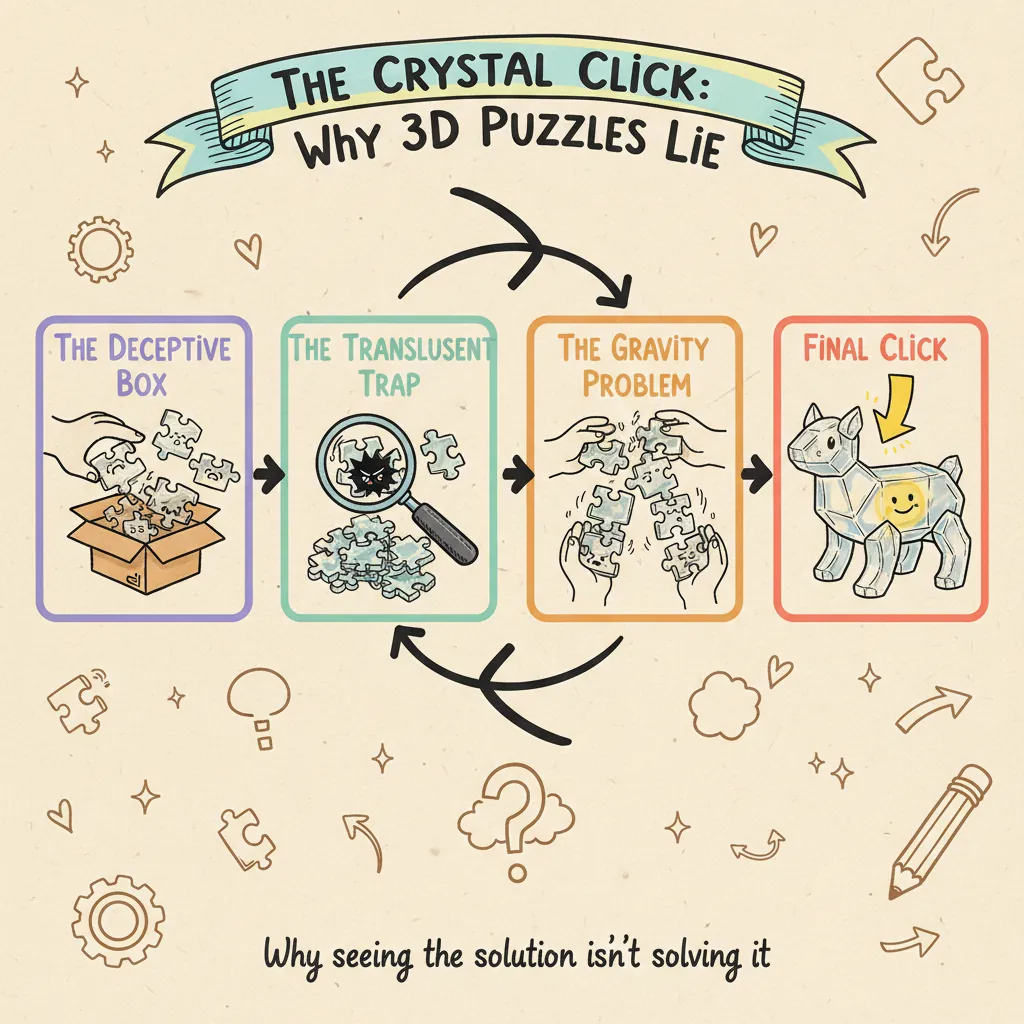
The Translucent Trap: Why Seeing the Solution Isn’t Solving It
There is a specific psychological hurdle when you dump a fresh box of crystal pieces onto your felt mat. Unlike a traditional flat jigsaw where the image guides you, or a solid metal puzzle where the tactile feedback is king, these are clear. You can see right through the pieces. You’d think this would make the assembly trivial.
It doesn’t. In fact, the transparency is your greatest enemy.
When you’re working with the 3D Crystal Rose Puzzle, priced at $19.99, the “petals” are all variations of the same translucent red. Because the light refracts through the layers, your eyes struggle to judge depth. You’ll think a piece fits perfectly because the silhouette matches, only to find that the internal locking groove is a millimeter off.
I’ve had moments where I stared at three nearly identical pieces for ten minutes, trying to determine which one was the “base” and which one was the “locking” layer. It’s a comprehensive breakdown of translucent interlocking mechanics that you have to learn on the fly. You aren’t just building a shape; you are navigating a 3D coordinate system where the pieces only lock when every previous piece is held in a precise, fragile alignment.
The “Gravity Problem”: Keeping 40 Pieces in Place with Two Hands
The most common complaint I hear from people who give up on these is that the pieces “won’t stay put.” They aren’t wrong. Until you reach the final locking pin, a Bepuzzled sculpture is essentially a controlled explosion held together by hope and finger pressure.
This is where the hobbyist separates from the casual buyer. You have to develop a specific grip—I call it the “cradle.” You’re essentially building a stack of slippery plastic layers that want to slide apart at the slightest tremor. It’s frustrating. It’s maddening. And when that final center rod screws into place, it is incredibly rewarding.
If you find your hands cramping up, it might be time to take a break and switch to digital logic games that scratch the same itch as spatial puzzles. Sometimes stepping away from the physical plastic allows your brain to reset its spatial map.
3D Crystal Rose Puzzle
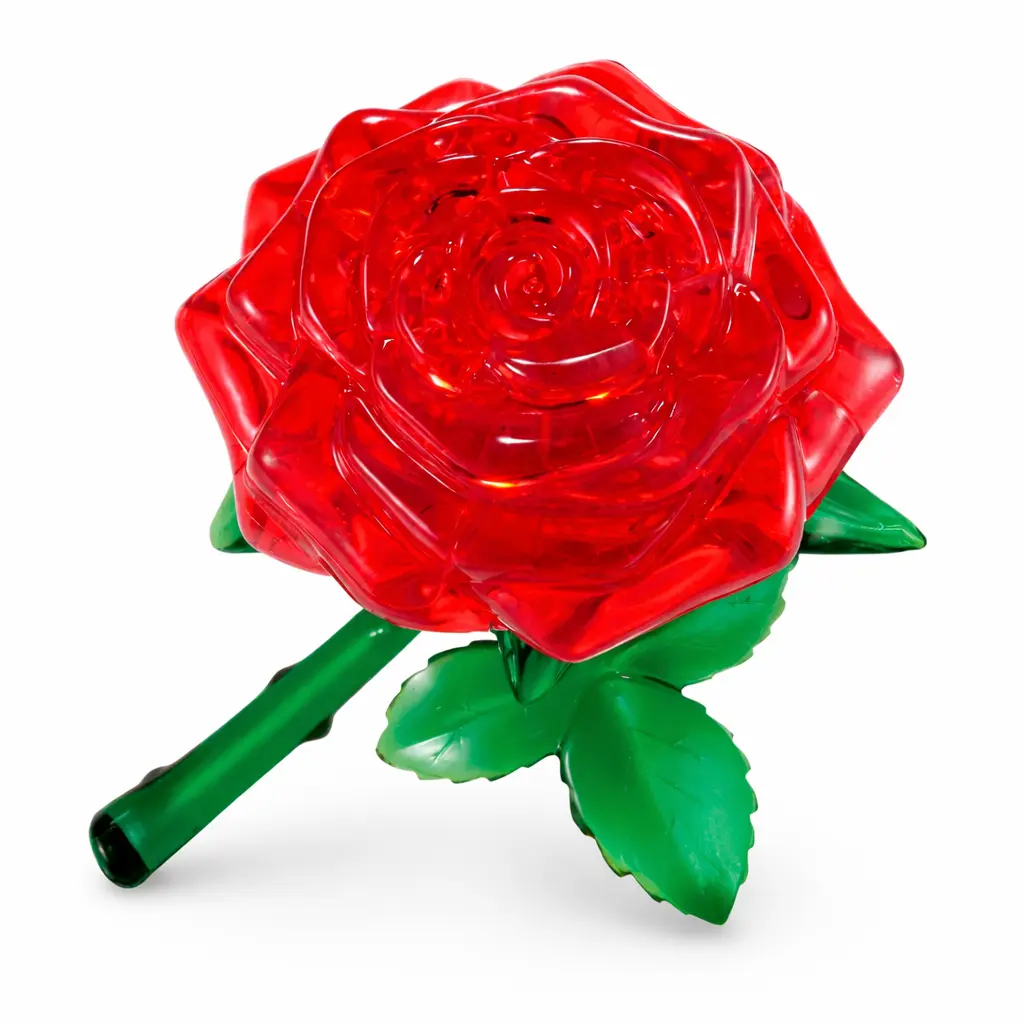
3D Crystal Rose Puzzle — $19.99
I bought the 3D Crystal Rose Puzzle for $19.99 as a “quick” project for a rainy Saturday. Two hours later, I was still debating the orientation of the third petal layer. This isn’t just a puzzle; it’s a 44-piece architectural challenge. The red polycarbonate is surprisingly high-quality—it doesn’t have that “milky” look of cheaper knock-offs.
The build starts with a small, fiddly base and expands outward. The real genius is in the stem and leaves. They aren’t just decorative; they provide the final tension that keeps the entire bloom from vibrating apart. If you’re looking for a gift that says “I spent an hour of my life frustrated for you,” this is it. It’s far more permanent than a real rose and, frankly, much harder to kill. The finished product catches the light beautifully on a windowsill, looking more like art glass than a toy. My only gripe? The instructions are essentially a list of numbers that I recommend ignoring if you want a real challenge.
3D Crystal Apple Puzzle
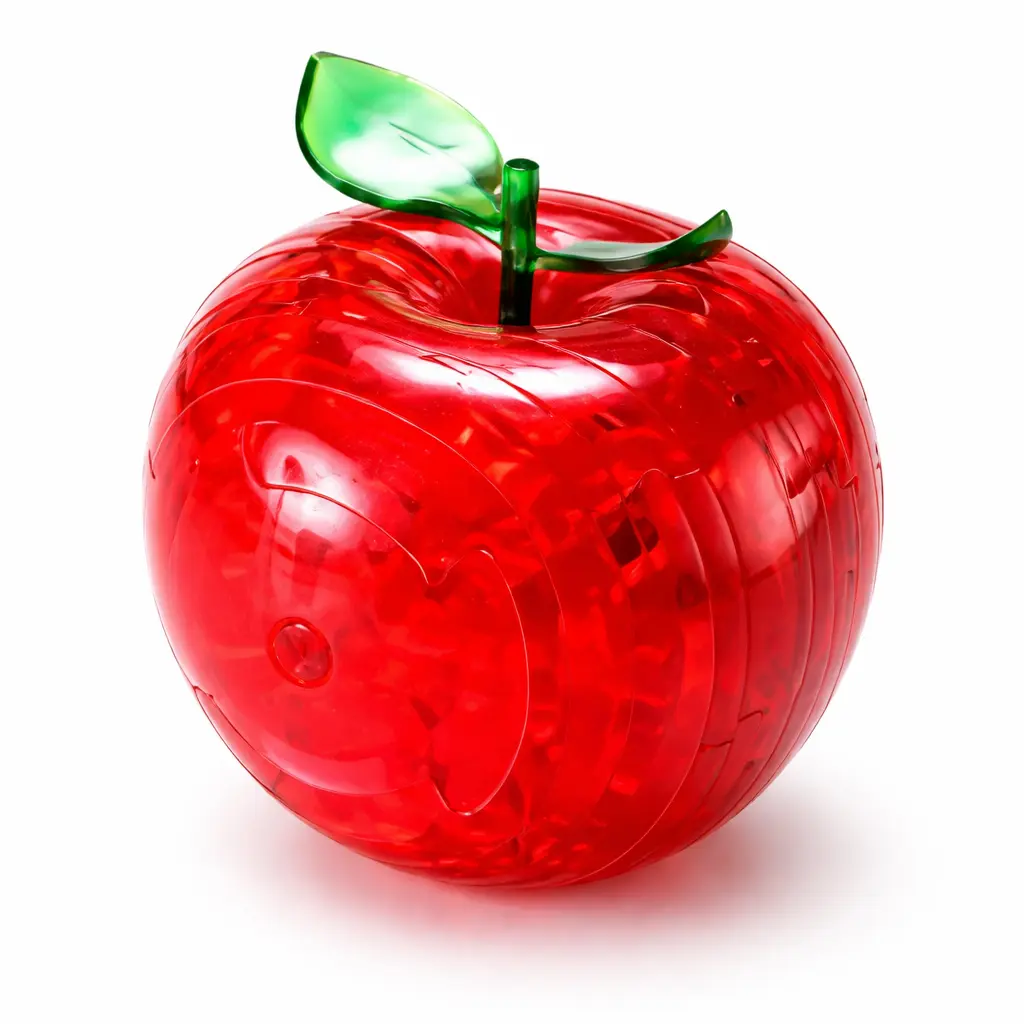
If the rose is about delicate layers, the 3D Crystal Apple Puzzle, available for $18.88, is a lesson in core stability. This 44-piece build is deceptively sturdy. Because the apple is a more compact, spherical shape, it feels more substantial in the hand as you build it.
The green stem is the MVP here. It’s the “key” that locks the entire structure. I’ve handed this to coworkers who think they’re smart, and they usually get about five pieces in before the stack collapses. It stands 7.5cm tall, which is roughly the size of a real Gala apple. It’s the perfect desk toy because it doesn’t look like a puzzle once it’s finished. It looks like a piece of mid-century modern decor. For under twenty dollars, the fit and finish are impressive. Just be warned: the clear pieces are fingerprint magnets. Keep a microfiber cloth nearby if you’re a perfectionist like me.
12 Piece Crystal Luban Lock Set
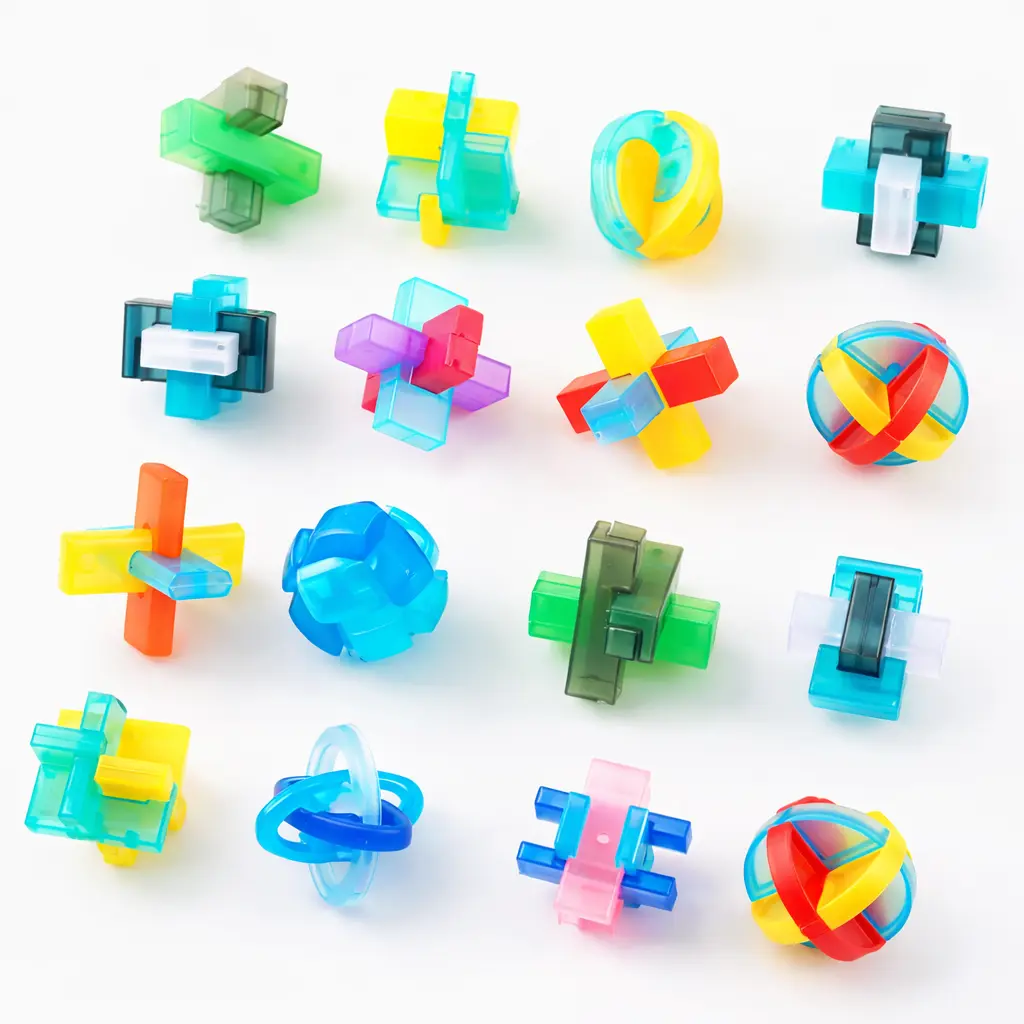
Sometimes you don’t want a sculpture; you want a workout for your prefrontal cortex. The 12 Piece Crystal Luban Lock Set ($28.88) is a fascinating bridge between ancient history and modern materials. Luban locks, or Burr puzzles, usually rely on the friction of wood.
In this set, you get 12 mini-puzzles that use ancient Chinese joinery reimagined in modern materials. Each piece is between 3.7cm and 5.5cm. Because they are transparent acrylic, you can see the notches. You’d think this would make it easier. It actually makes it harder because your brain gets overwhelmed by the visual noise of the overlapping grooves. These are perfect for travel. I keep a couple in my carry-on for long flights. They are quiet, they don’t have loose parts that roll away easily once they’re locked, and they are much more satisfying than scrolling through your phone.
The Peak: The Secret Numbering Debate (To Look or Not to Look)
Here is the moment of truth that divides the 3D crystal puzzle community. If you look closely at the flat side of almost any Bepuzzled piece, you will find a tiny, almost microscopic number molded into the plastic.
Some purists call using these numbers “cheating.” I call it “sanity preservation” for beginners.
If you follow the numbers, you are essentially following a 1-to-44 instruction manual. It becomes a task of sorting rather than solving. But here is the professional insight: even with the numbers, the assembly isn’t a guaranteed success. You still have to figure out the orientation and the interlock.
The real “peak” experience with these puzzles is realizing that the numbers are there as a safety net, not a solution. I once spent forty minutes on a particularly difficult swan puzzle, convinced the piece was defective. I finally broke down, grabbed a magnifying glass, and realized I was trying to put piece #22 where piece #24 belonged. The difference was a notch less than half a millimeter wide.
That’s the level of precision we’re talking about. It’s not just “plastic toys.” It’s high-tolerance engineering disguised as a hobby. If you find yourself getting too frustrated with the physical pieces, I often find that meditative tile-matching challenges help soothe the “puzzle rage” that can build up when a stack of 30 pieces slips through your fingers.
Transitioning to Metal: When You Need More Weight
While I love the aesthetic of the crystal line, there comes a point where every collector craves the weight and permanence of metal. If the Bepuzzled line is the “entry drug,” then cast metal puzzles are the “hard stuff.”
Metal puzzles offer a different sensory experience. There’s a temperature to them—they start cold and warm up in your hands. There’s a sound—the clink of alloy against alloy. And there’s the “solve.” While crystal puzzles are about building, metal puzzles are usually about disassembling.
Take the Four-Square Lock Puzzle ($12.98), for example. It’s a disentanglement challenge that feels like it belongs in a Victorian study.
Four-Square Lock Puzzle
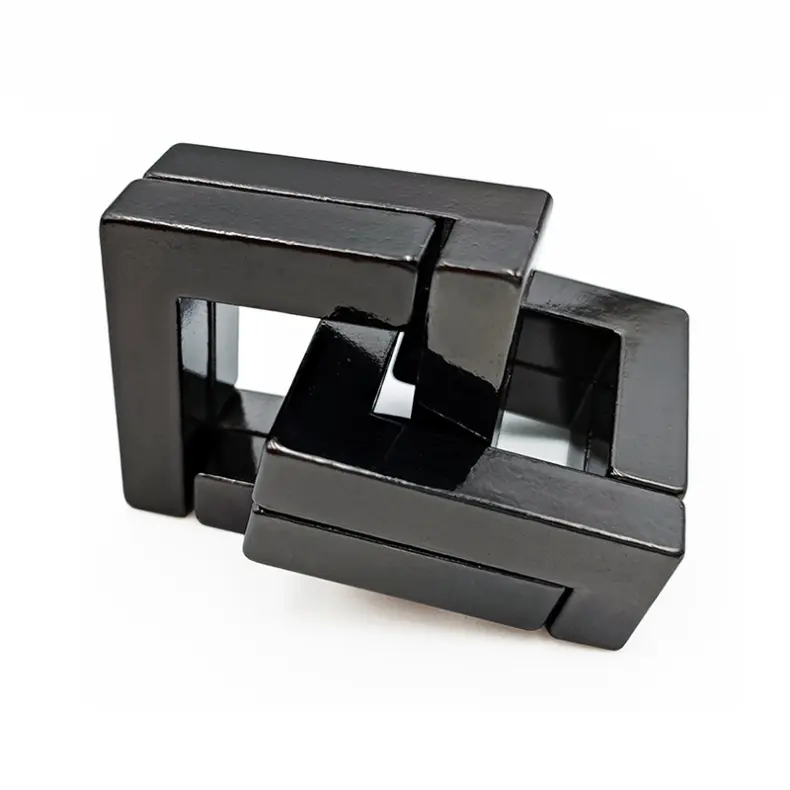
The Four-Square Lock Puzzle is priced at $12.98 and offers a level of complexity that belies its simple appearance. It consists of four interlocking alloy squares. Your goal is to separate the nested rings from the main structure. Unlike the crystal puzzles where you can see the internal structure, this one requires you to feel your way through “three-dimensional misalignment.”
I’ve had this on my desk for three weeks, and I still find myself picking it up to fiddle with the movement. It’s a high-difficulty piece. If you’re the type of person who gets bored with “easy” solves, this is your wake-up call. The alloy is sturdy, and the finish is smooth enough that it won’t snag on your skin, but it has enough “grip” to feel secure. It’s the perfect counterpoint to the fragility of the crystal rose.
Silver Heart Lock Puzzle
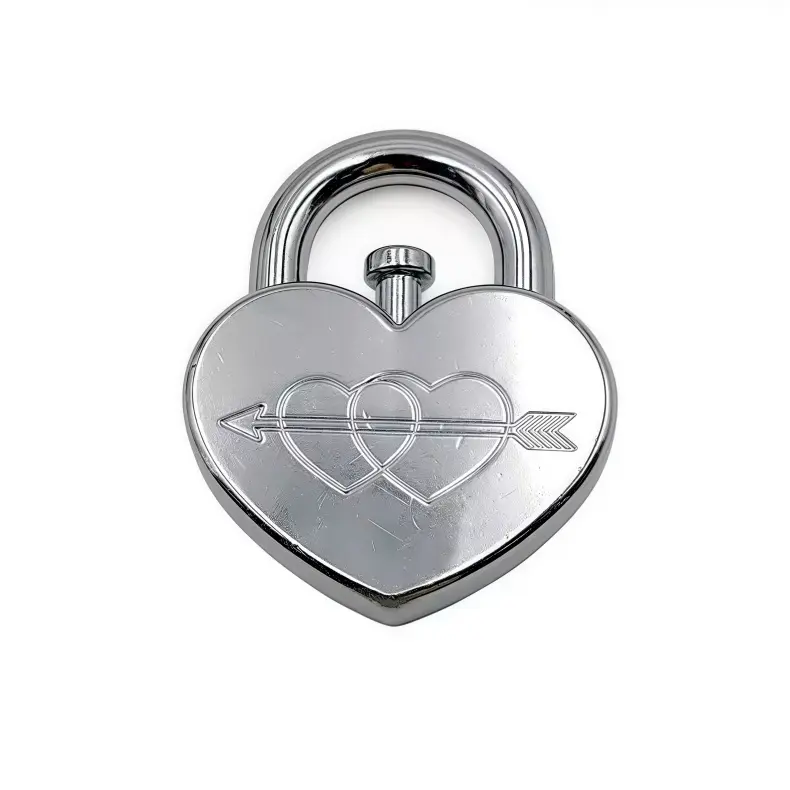
For something a bit more symbolic, the Silver Heart Lock Puzzle at $18.89 is a classic. It’s a silver-plated metal piece that uses a clever interlocking mechanism. While Bepuzzled focuses on the “3D jigsaw” aspect, this is a pure mechanical puzzle.
The silver plating gives it a premium feel that makes it a great gift for a partner—assuming your partner has the patience of a saint. I’ve seen people solve this in two minutes, and I’ve seen people struggle for two hours. It’s all about whether you can visualize the internal path of the lock. It’s compact, durable, and has a satisfying weight that plastic simply can’t replicate.
Magic Golden Mandarin Lock
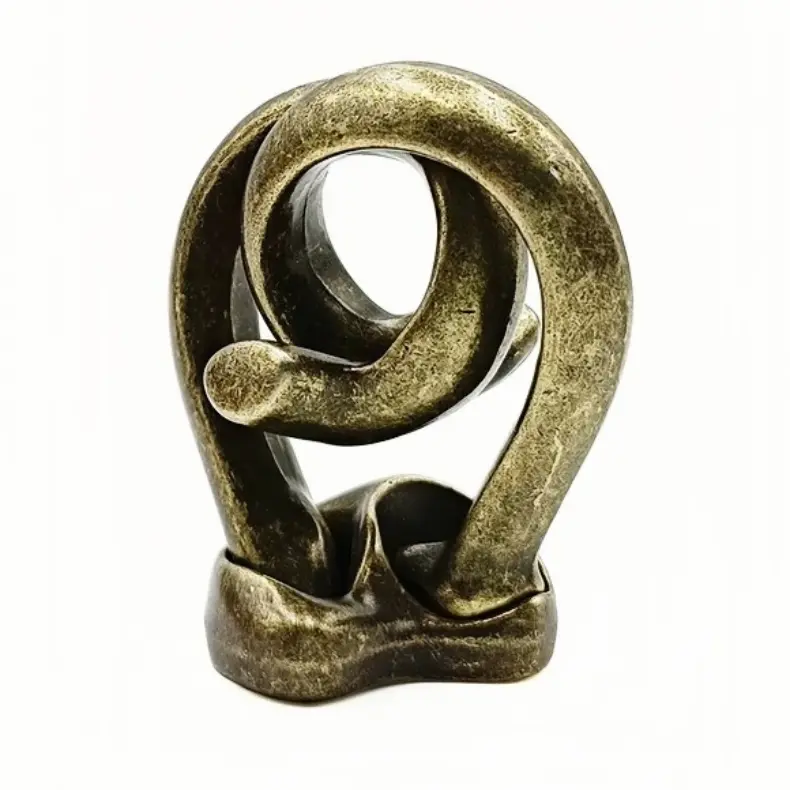
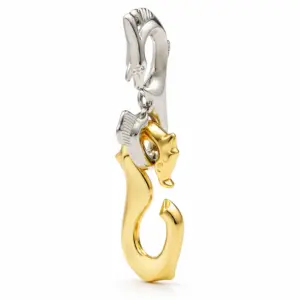
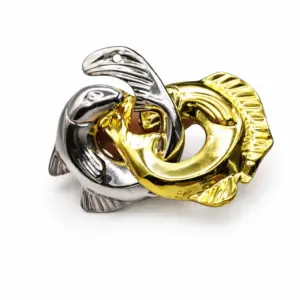
If you want to feel like an ancient scholar, the Magic Golden Mandarin Lock ($18.98) is the way to go. It features three interlocked components—a base and two curved columns. This is a “separation” puzzle that defies conventional logic.
The gold finish is striking, and the craftsmanship is inspired by ancient designs. I find that this puzzle is less about “solving” and more about “discovering.” You don’t force it; you find the path. It’s a great conversation starter. I keep mine next to some physics-based desk toys that explore rotational dynamics because they both share that “how is this possible?” aura.
Bridging the Gap: The Shuriken and the Pyramid
As you expand your collection, you’ll find puzzles that try to do both—offer a visual theme while maintaining high-level mechanical difficulty.
The Shuriken Dart Edition Gear Puzzle ($12.77) is a great example of this. It’s a cast puzzle inspired by ninja artistry. It’s not just a shape; it’s a series of interlocking gears that require precision movement to solve. It feels dangerous and clever at the same time.
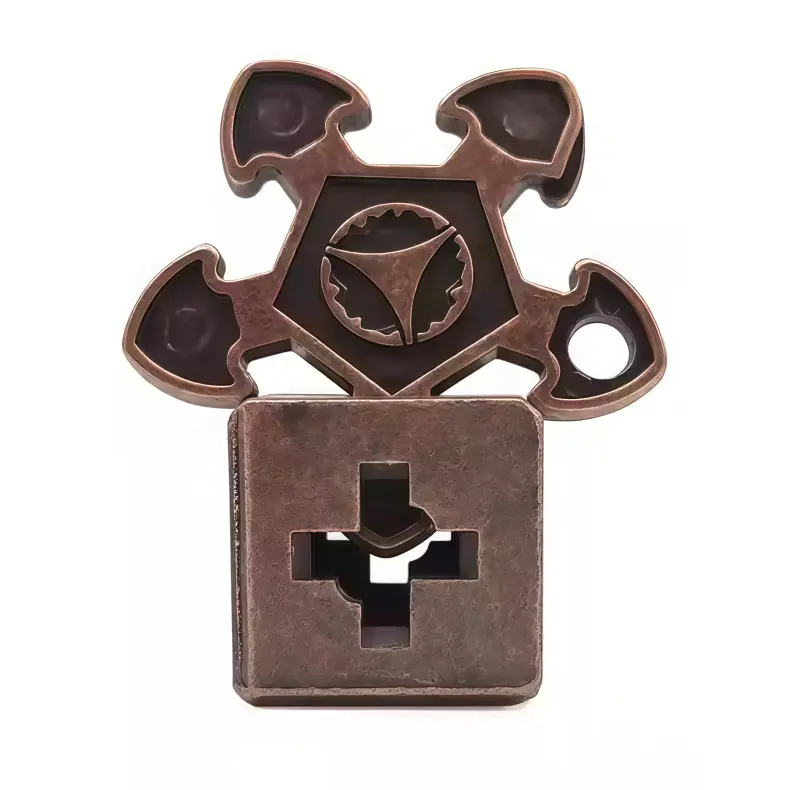
The Shuriken Dart Edition Gear Puzzle is forged from high-strength alloy. At $12.77, it’s one of the best values in the metal category. The “gear” aspect adds a layer of complexity that simple disentanglement puzzles lack. You have to think several moves ahead, much like you would in a game of chess.
For those who prefer geometry, the 6 Piece Steel Ball Pyramid Puzzle ($11.98) is a must-have.
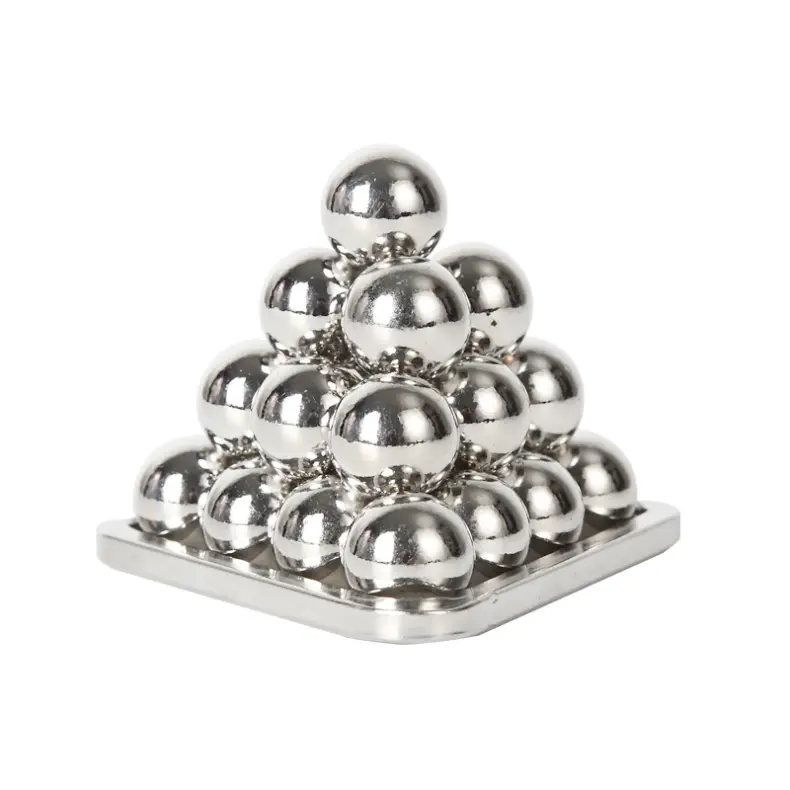
The 6 Piece Steel Ball Pyramid Puzzle ($11.98) is exactly what it sounds like: six unique steel ball pieces that must be arranged into a perfect pyramid. It’s a “packing” puzzle in three dimensions. It’s harder than it looks because the spheres don’t give you the same “locking” cues that flat-edged pieces do. It doubles as a fantastic desk ornament once you’ve mastered it.
And if you’re looking for something with a bit of romance, the Love Interlocking Arrow Cross Rings Puzzle ($11.98) is a simple but elegant disentanglement challenge.
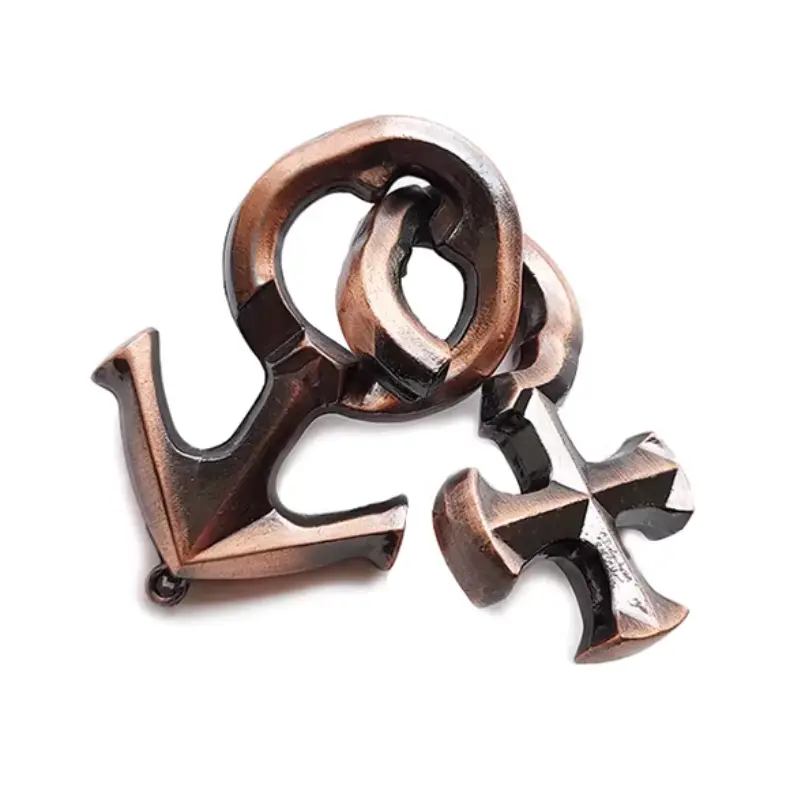
The Love Interlocking Arrow Cross Rings Puzzle ($11.98) features two rings—one with an arrow motif and one with a cross. It represents the union of two people, but practically speaking, it’s a fun little brain teaser that you can solve while waiting for your coffee to brew.
Finally, let’s not forget the Double G Lock Puzzle ($11.99).
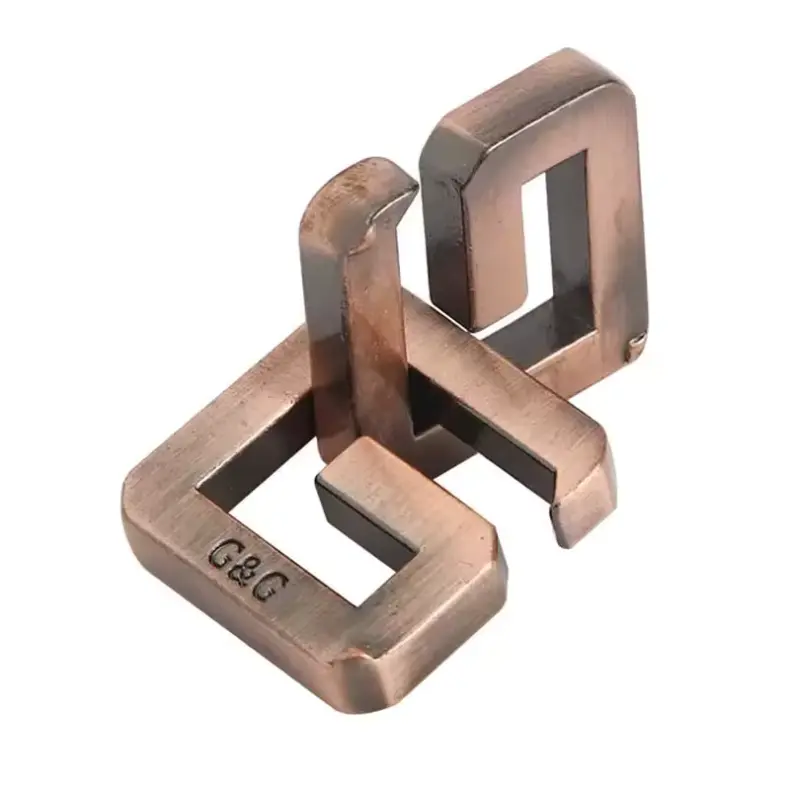
Double G Lock Puzzle — $11.99
The Double G Lock Puzzle ($11.99) is a portable, high-logic challenge. It’s two ‘G’ shaped pieces that are hopelessly intertwined until you find the exact sequence of rotations to free them. It’s small enough to fit in a pocket but difficult enough to keep you occupied for a twenty-minute commute.
Quick-Reference Comparison Table
FAQ: Everything You’re Afraid to Ask About Crystal Puzzles
Are Bepuzzled 3D crystal puzzles actually hard, or just annoying?
They are hard in a specific way. They don’t require high-level mathematics, but they do require extreme spatial patience. The difficulty comes from the transparency and the fact that the pieces don’t “lock” until the very end. If you’re used to flat jigsaws, you’ll find the 3D aspect a significant jump in challenge. I’ve seen engineers struggle with the 44-piece models because they try to over-calculate the fit instead of feeling for it.
My puzzle is missing a piece. What do I do?
First, check the box again. Then check the floor. Because the pieces are translucent, they are incredibly easy to lose on a patterned rug or a wooden floor. If it’s truly gone, most manufacturers like University Games (the parent of Bepuzzled) have a replacement part service. However, for the 3D Crystal Apple Puzzle, it’s often cheaper to just buy a new one than to deal with international shipping for a single plastic shard.
Can I glue them together once they are finished?
You can, but I wouldn’t recommend it. Part of the charm is that they are held together by a single locking pin. If you glue it, you lose the ability to take it apart and challenge a friend. Plus, most glues will cloud the clear plastic, ruining that “crystal” look. If you want something permanent, the locking pin is usually more than enough to keep it together on a shelf.
Are these suitable for children?
The boxes usually say “Ages 12 and Up,” and I agree with that. Younger kids will likely get frustrated when the stack collapses for the fifth time. However, if you have a particularly focused 10-year-old, the 3D Crystal Apple Puzzle is a good starter. It’s more “solid” than the animal or flower shapes.
How do I clean them?
Fingerprints are the bane of the crystal puzzle collector’s existence. I use a simple microfiber cloth (the kind you get with eyeglasses). Avoid using harsh chemicals or Windex, as some plastics can react poorly and become brittle or foggy over time. A little breath and a soft cloth usually do the trick.
Why do some people call them “3D Jigsaws” and others call them “Mechanical Puzzles”?
Technically, they are three-dimensional jigsaw puzzles. A true mechanical puzzle usually involves a hidden mechanism or a specific “solve” to open or close it. These are assembly puzzles. However, the line is blurred because of the central locking rod, which is a mechanical element. In the hobby, we usually just call them “crystals.”
I can’t get the final screw to fit. Is my puzzle defective?
Almost certainly not. This is the most common “user error” moment. If the final rod won’t screw in, it means one of your 44 pieces is slightly misaligned—usually by a fraction of a millimeter. You have to go back through the layers and ensure every piece is seated perfectly flush. If there is even a tiny gap in layer three, layer forty-four won’t lock.
Are the “Deluxe” versions worth the extra money?
The Deluxe versions usually have more pieces (90-100+) and are significantly larger. They are beautiful, but I actually prefer the standard 40-50 piece range. They are more “fidget-friendly” and don’t take up as much desk space. If you’re a completionist, the Castle Deluxe is a legendary build, but for a daily desk toy, stick to the 3D Crystal Rose Puzzle.
Do the numbers on the pieces match the assembly order?
Yes. If you look at the flat side of a piece and see a “12,” that is generally the 12th piece to be added to the stack. If you’re stuck, use the numbers. If you want the full experience, ignore them and try to solve by shape alone.
Is there a “trick” to holding the pieces together while building?
Some people use rubber bands to hold the layers as they go. I find that “cheating” the tactile experience. The real trick is building from the base up and using your non-dominant hand as a “cradle” to keep the pieces from sliding laterally.
How do these compare to Hanayama metal puzzles?
Hanayama puzzles are generally about taking things apart (disassembly). Bepuzzled is about putting things together (assembly). Hanayama is more durable and feels more premium, but Bepuzzled offers a visual payoff that metal can’t match. They are two different sides of the same coin.
Can I find these at Barnes & Noble?
Often, yes. They are one of the few high-quality puzzle lines that made it into mainstream retail. However, the selection is usually limited to the most popular 3-4 models. If you want the more niche designs, online is your best bet.
What 15 Years of Plastic and Frustration Taught Me
Looking back at that 3D Crystal Rose Puzzle on my windowsill, I realize it’s more than just a toy. It’s a reminder that complexity often hides in plain sight. We live in a world of digital shortcuts, where a game like 2048 can give us a quick hit of dopamine in thirty seconds. But there is something fundamentally different about the slow, tactile, and often infuriating process of building a 3D object from a pile of identical-looking shards.
The thesis I started with—that these are a masterclass in structural integrity—holds up. Every time I finish one, I’m reminded that the “click” isn’t just a sound. It’s the physical manifestation of order being brought to chaos.
If you’re ready to graduate from flat jigsaws but aren’t quite ready to drop $100 on a high-end brass puzzle box, start with the 3D Crystal Apple Puzzle. At $18.88, it’s the price of a decent lunch, but it will give you an hour of focused, meditative frustration that you’ll remember long after the sandwich is gone.
Once you’ve mastered the apple, the door is open. You might find yourself gravitating toward the heavy, cold logic of the Four-Square Lock Puzzle or the ancient wisdom of the 12 Piece Crystal Luban Lock Set. Whichever path you choose, remember: don’t force the pieces. If it doesn’t fit, it’s not the plastic’s fault. It’s yours. And that’s exactly why we love it.