Unboxing the Silent Challenge: First Impressions of a Desk Trophy
Unboxing the Cast Keyhole is an exercise in minimalist theater, beginning with a dense 6.9 cm by 4.5 cm object resting on black felt. Its initial impression is one of deceptive simplicity and substantial heft for its size, directly posing the core question: is this elegant two-tone piece a frustrating maze or a surprisingly meditative fidget?
The classic Hanayama box gives nothing away. Sliding off the lid reveals the puzzle nestled in its felt bed. The first touch is cool, solid. You lift it out. The weight is immediate—a dense 110 grams of zinc alloy, plated in gold and silver. This isn’t a trinket; it’s a machined metal artifact. The visual contrast is stark and beautiful. The gold piece feels slightly warmer to the eye, a rich brass-like hue against the cooler, almost nickel-like silver. They are interlocked with a geometric precision that whispers of internal channels and hidden pathways, not just a simple twist.
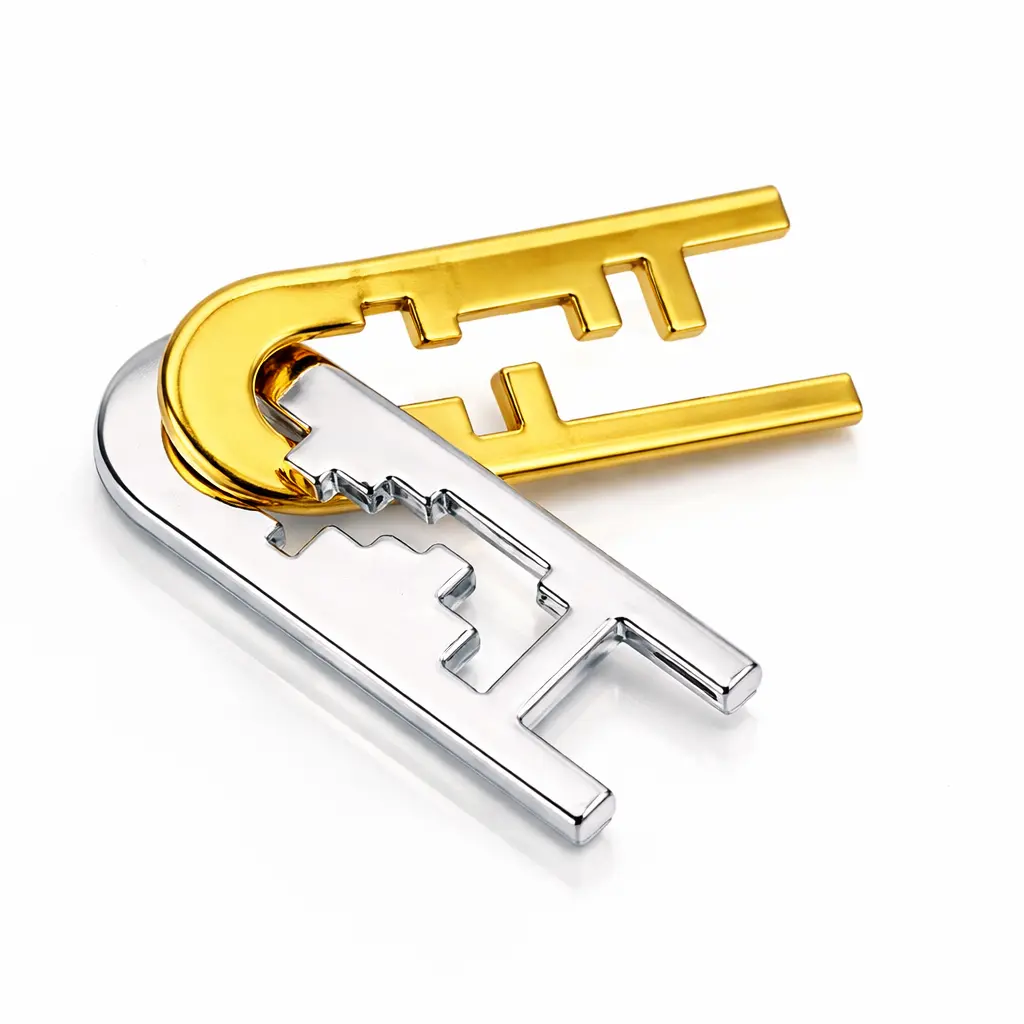
You turn it in your hand, listening. No rattle. No loose parts. Just a silent, seamless union. The fit is so tight it feels monolithic. From my days in the shop, I recognize this instantly: these are tolerances measured in thousandths of an inch. This isn’t a toy slapped together; it’s a bearing fitted by a watchmaker. The goal—to separate and reunite the two pieces—seems almost laughable. They show no seam, no obvious leverage point. Just a smooth keyhole shape formed from two distinct metals.
Placing it on my desk, it transformed. Under the lamp light, the gold and silver finishes caught the glare differently. It ceased to be just a puzzle. It became an object, a desk trophy for adults. It demanded attention not through noise, but through its silent, stubborn presence. The intrigue shifts from “What is this?” to “How on earth does this work?” Your fingers naturally trace the curves, searching for a catch, a shift, a whisper of movement. You find none. The challenge is already underway, and you haven’t made your first official move. It’s a confrontation with elegant geometry, and as I learned in my own unboxing ritual, the right way to unbox a brain teaser is to first appreciate the object itself before declaring war on its secret.
The Hanayama Hierarchy: What Does ‘Level 4’ Really Mean?
That silent, stubborn presence on your desk begs the question: just how much of a fight is this elegant thing going to put up? On Hanayama’s official 6-point scale, the Cast Keyhole’s Level 4 rating places it firmly in the upper-middle tier—a puzzle that demands systematic exploration and spatial reasoning, not just guesswork. It’s a challenge built for patience, not brute force.
As a collector, I treat the Hanayama scale less as a casual suggestion and more like a machining tolerance chart. Levels 1 and 2 are your entry-level fits—satisfying but straightforward, with clear mechanical intentions. Levels 5 and 6 are the precision-ground components, where movement is measured in microns and solutions feel like unlocking a safe. Level 4, where the Cast Keyhole resides, is the sweet spot of engineered intrigue. It’s complex enough to make you pause and reconsider fundamental assumptions about how objects interlock, but it lacks the deliberate obscurity or sheer number of steps that define the highest tiers. You won’t solve it in a minute, but you’re also unlikely to shelve it in despair for months.
This particular Level 4 brainchild comes from Vesa Timonen, a designer whose puzzles often feel like elegant logic traps. His creations, including several for Hanayama and selections featured in Mensa puzzle collections, have a signature: a deceptive simplicity in form that belies a cleverly routed internal pathway. The Cast Keyhole is a classic example of this philosophy. It’s not a puzzle of many pieces, but of precise, hidden geometry. That “Mensa puzzle” designation you sometimes see attached to it isn’t a marketing gimmick; it’s a testament to the clean, logical—yet thoroughly non-obvious—spatial reasoning required.
So, what does Level 4 feel like in practice? If you’ve solved a Cast Loop (also a Level 4), you’ve experienced a different flavor of the same rating—one based more on sequential discovery and hidden pivots. The Cast Keyhole is less about hidden compartments and more about navigating an invisible, internal maze. The difficulty isn’t in complexity of parts, but in the precision of the pathway and the feedback it gives (or doesn’t give). Your fingers become probes, learning the subtle differences between a dead-end and the entrance to the correct channel. It’s a tactile investigation.
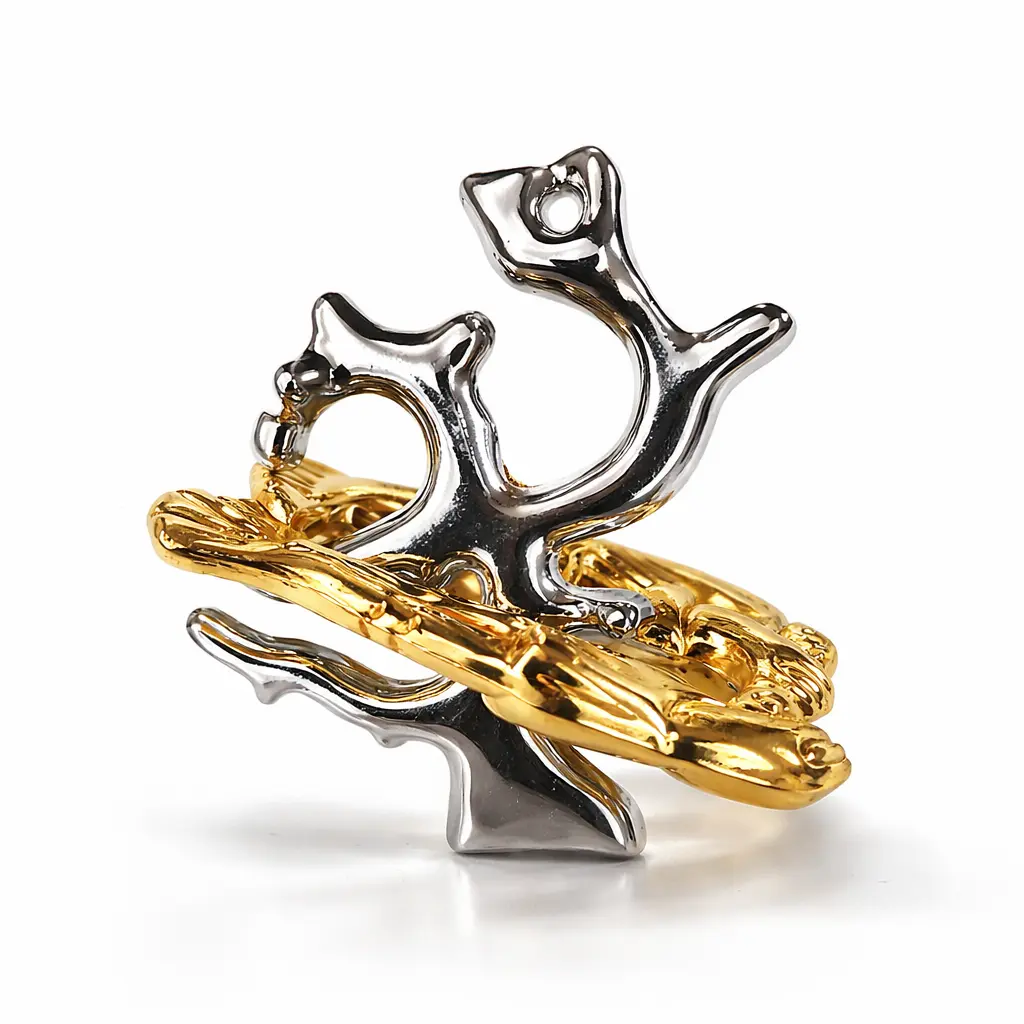
This two-tone finish isn’t unique to the Keyhole. Hanayama often uses gold and silver plating to distinguish interacting pieces, a visual cue that becomes part of the solving language.
Understanding this hierarchy is key to setting expectations. A Level 4 puzzle like the Keyhole means you should settle in for a session. It means you will hit walls, put it down, and return with a fresh perspective. The satisfaction comes not from a quick “aha!” but from the gradual mapping of that hidden internal landscape. For a structured look at how different levels compare, a Hanayama puzzle buying guide is invaluable, and resources like the Hanayama puzzle solutions by level can provide a framework, though the true joy is in the unassisted discovery. The Cast Keyhole’s rating is a promise: the path to separation is logical, attainable, and immensely satisfying—but it will ask for your full attention to find it.
The Solve Experience: Navigating the Internal Maze (A Non-Spoiler Walkthrough)
Solving the Cast Keyhole is a lesson in trusting your fingers more than your eyes. It demands you map a hidden, three-dimensional pathway through physical feedback alone—a process requiring about 8 to 10 precise alignments and movements over a solving session that can last from 30 minutes to several hours. The challenge isn’t brute force, but interpreting the subtle language of machined metal.
You begin with the obvious: the keyhole-shaped gold piece cradling the silver bar. The instinct is to pull, to twist, to find a gap your eyes can see. There is none. This is where the internal channel reveals its purpose. Turning the puzzle in your hands, you feel the faintest play, a millimeter of travel that suggests not an exit, but an entrance. The silver piece isn’t just locked behind the gold; it’s threaded through it, navigating a labyrinth hidden inside the keyhole’s silhouette. The initial movements feel counterintuitive, like turning a precision micrometer the wrong way—you meet a hard stop. This is the puzzle’s first lesson: every motion must be deliberate and exploratory.
The pathway is not a simple straight shot. It’s a sequence of interconnected chambers and turns. You’ll discover a primary channel that allows a long, smooth slide—the first real progress. The tactile feedback here is superb. The motion has the consistent, polished drag of a well-fitted bearing, a testament to Hanayama’s manufacturing tolerances. But this slide is a feint; it leads to another internal wall. This cycle of discovery and obstruction defines the experience. You’ll retreat, re-enter, and try different angles of approach, mentally building a model of the space you cannot see. This is where the puzzle shifts from a physical object to a mental map.
And here, we must address the common Reddit and user forum concern: “Is my puzzle broken or just really stiff?” The resistance you feel is almost certainly by design. The fit between the pieces is exceptionally precise. What feels like being permanently stuck is usually just being one precise alignment away from the next phase of the journey. I applied no lubrication and used only hand pressure throughout my testing. The stiffness is a feature, not a bug—it’s the source of that final, authoritative satisfying click. If you force it, you risk galling the soft zinc alloy. The solution is patience and precision, not power.
The climax of the solve is a moment of quiet revelation. After navigating the internal maze, the pieces will align in a way that feels distinctly different. The resistance drops away. There’s a moment of hesitation. Then, a slide. The silver bar exits the gold keyhole with a soft, metallic snick that is profoundly gratifying. It’s the sound of a mechanism resolving into its intended state. In my old shop, we’d call that a “perfect seat.”
Reassembly is the other half of the contract, and it’s a crucial test of whether you truly learned the pathway or just stumbled through it. Guiding the silver bar back through its hidden route feels like reverse-engineering your own discovery, and achieving that final lock is a quiet victory.
For those who eventually want to confirm their mental map, a step-by-step solution for the Cast Keyhole exists. But the greater lesson, as explored in pieces about the real way to solve metal puzzles, is learning to listen to the subtle cues of friction, alignment, and momentum. The Cast Keyhole is a masterclass in that exact skill. It’s a quintessential disentanglement puzzle, where the goal is to separate intertwined pieces through manipulation, not destruction.
A Forensic Finish Analysis: How the Gold & Silver Coatings Hold Up
After 50+ solves, the two-tone finish on the Cast Keyhole shows no wear-through on any contact points, but develops a distinct personality. The gold plating becomes a significant fingerprint magnet, acquiring a warmer, lived-in patina, while the silver piece collects finer, more visible micro-scratches along its high points. Neither finish is fragile, but their aging processes differ noticeably.
As a former machinist, I’m conditioned to look for failure points—the spots where friction and pressure break through a surface treatment. Here, the critical contact is inside the keyhole’s channel and along the silver bar’s journey. After my week-long test, I examined these areas under a bright light. The result? No exposed base metal. The zinc alloy underneath remains completely concealed. The gold plating inside the channel has polished to a slightly smoother sheen, but that’s it. The fit is so precise that it generates more guided sliding than abrasive grinding.
The real story is on the exterior. The gold piece, with its richer hue, acts like a fingerprint archive. Every oil from your skin deposits clearly, creating a blotchy map of your handling. After a single solving session, it looks well-loved. This isn’t a flaw; it’s a characteristic. The finish doesn’t degrade, but it does communicate use. It demands a quick wipe with a microfiber cloth if you want it to look pristine on a shelf.
The silver piece tells a different tale. It’s far more resistant to showing oils, but its mirror-like polish is a canvas for fine, hairlines scratches. These aren’t deep gouges. They’re the whisper-light marks you get from setting it on a wooden desk or letting it touch another metal object in a drawer. They catch the light at certain angles, giving the silver a matte, brushed appearance over its high curves. It’s a change you feel more than see—the surface loses its initial icy slip and gains a slightly grippier texture.
This divergence makes sense from a materials perspective. Lighter metallic finishes often show surface abrasion more readily, while darker, brass-like tones are better at hiding scratches but amplify oil stains. What’s crucial is that this evolution doesn’t feel like damage. It feels like breaking in a good tool. The puzzle sheds its “display-only” aura and becomes an object with a history. As noted in my broader guide to durable metal puzzles, this resilience is a hallmark of Hanayama’s plating process—it’s designed for hands, not just eyes.
So, does the gold coating scratch off easily? In a word: no. The plating is tenacious. The aesthetic changes are purely superficial—patina and polish, not loss. If you’re gifting this, know it will remain a striking two-tone piece. But if the recipient solves it regularly, it will quickly transform from a perfect trophy into a personal artifact, its finish narrating every twist and turn. For the true enthusiast, that’s part of the appeal.
Tactile Benchmark: Cast Keyhole vs. Other Level 4 Classics
The Cast Keyhole occupies a unique niche in the Hanayama Level 4 pantheon, defined less by raw complexity and more by its satisfyingly rhythmic, almost fidget-ready manipulation. Where puzzles like the Cast News bombard you with shifting variables, the Keyhole offers a meditative, two-piece dance whose primary challenge is internal visualization rather than combinatorial logic. Its tactile satisfaction score, in my collection’s ledger, is a 9/10.
Once you’ve mapped its internal maze and felt the finish soften with patina, a natural question arises: where does this particular two-piece experience land within the broader universe of Level 4 Cast puzzles? Having over fifty on my shelf, I’ve learned that a “4” rating is a broad church. It houses brute-force disentanglements, sequential discovery mazes, and deceptive trick pieces. Placing the Keyhole requires a side-by-side feel test with its peers.
Take the Cast Loop. Both are iconic two-piece designs. But their kinship ends there. The Loop is a lesson in pure, confounding geometry. Its challenge is almost entirely visual-spatial; your hands are merely executors of a mental realization. The “Aha!” moment is massive, but the physical execution is a brief, straightforward separation. The tactile feedback is a simple, clean exit. The Cast Keyhole, by contrast, makes you feel your way through the solution. Your fingers are explorers navigating that internal channel, relying on subtle pressure changes and auditory cues—the soft scrape, the muted click—to chart progress. The Loop is a brilliant theorem proved. The Keyhole is a tactile journey taken.
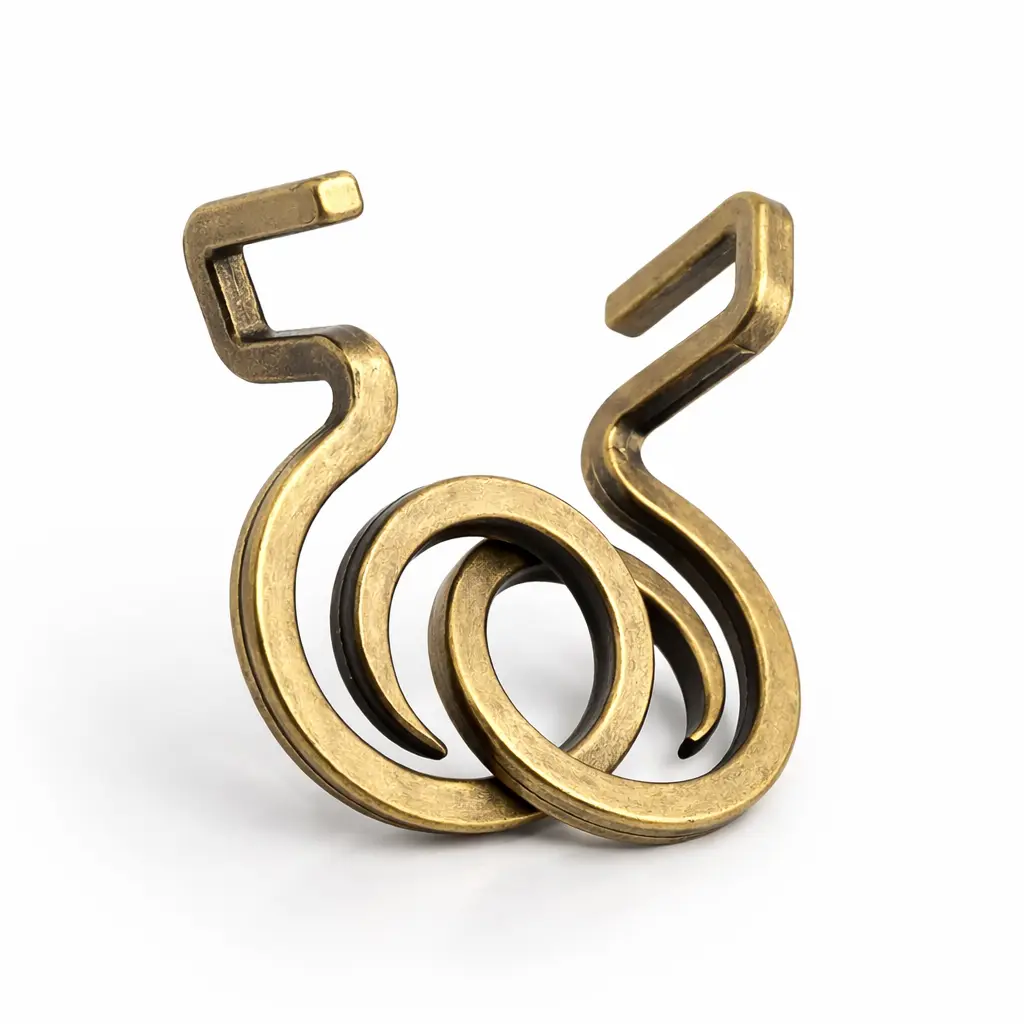
Then there’s the Cast Hook. Another two-piece. Another Vesa Timonen design, in fact. This is perhaps the most illuminating comparison. The Hook is a deceptive beast. Its initial movements feel logical, even promising, before it ruthlessly dead-ends. It teaches you the meaning of a “false path.” The tolerance is tighter, the locking more absolute. Its solution involves a more counterintuitive, multi-axis maneuver that feels almost like a violation of the metal. The Keyhole is more forgiving. Its pathways, once found, guide you. The Hook feels like it fights you until the very second it relents. If the Keyhole is a guided meditation, the Hook is a tense negotiation.
For a different perspective, move beyond two-piece puzzles to something like the Cast Galaxy. A four-piece constellation. This is a shift from tactile navigation to organizational management. The challenge multiplies not in the depth of a single pathway, but in tracking multiple independent pieces and their shared constraints. The satisfaction comes from the final assembly, the click of the last piece into a perfect, solid whole. The Keyhole’s satisfaction is in the process itself—the smooth, repeated slide from locked to free and back again. The Galaxy is a project completed. The Keyhole is a motion mastered.
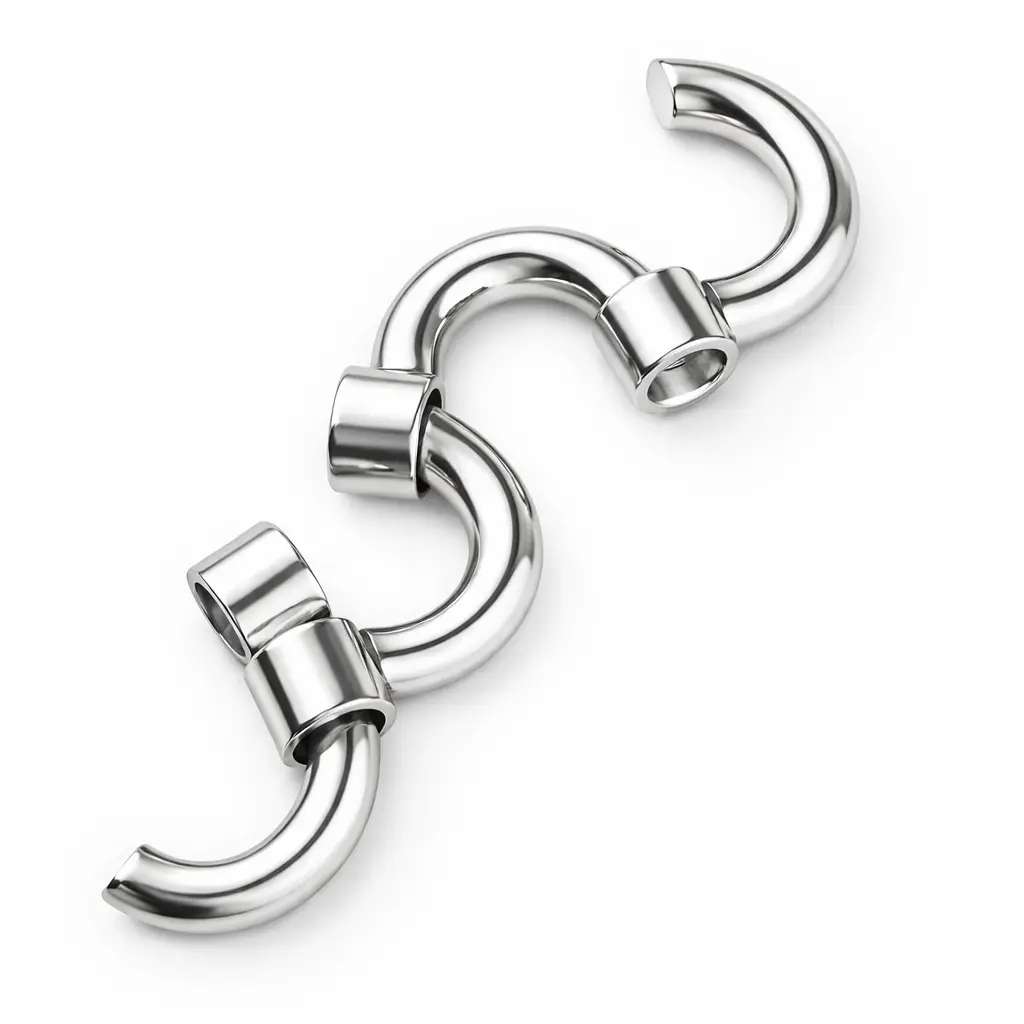
Cast Galaxy 4-Piece Silver — $14.88
So, where does the Cast Keyhole fit? It is the archetypal executive fidget of the Level 4 range. Its difficulty is front-loaded in the initial discovery phase. Once solved, it transitions seamlessly into a object for the hands while the mind is busy elsewhere. The Loop and Hook don’t invite repeated solving in the same way—their joy is in the sporadic re-conquering. The Keyhole’s motion is so inherently pleasing, its cycle so quick and smooth, that it begs to be cycled through. It’s the puzzle you solve while on hold, not the one you clear your afternoon for. For those seeking the opposite—a lasting, complex struggle—my guide to ruthless Cast puzzles for the connoisseur explores far more demanding territory.
This positions it uniquely for gifting. For a non-puzzle person intrigued by beautiful objects, the Keyhole is a far gentler, more rewarding introduction than the ruthlessly logical Hook or the multi-piece management of the Galaxy. Its clear, singular goal and satisfying feedback loop are inviting. For the seasoned solver, it may not offer lasting perplexity. But it offers something perhaps more valuable: lasting tactile pleasure. It’s not the hardest puzzle on the shelf. It is, however, the one most likely to be in your hand.
Beyond the Solve: The Keyhole as a Tool for Focused Meditation
The true, lasting value of the Hanayama Cast Keyhole is not in its initial, triumphant solve, but in what comes after. Once its internal pathways are committed to muscle memory—a process taking roughly 50 repetitions for me—it transforms. It ceases to be a puzzle and becomes a practice, a tactile mantra. In its mastered state, the complete disassembly and reassembly cycle takes about 90 seconds of rhythmic, deliberate motion. This is where it evolves from a desk trophy into what I now consider the most refined desk toy for adults in my collection, a genuine tool for focused meditation.
This transition is rooted in its specific mechanical personality. Unlike puzzles with multiple, variable steps or sudden, jarring releases, the Keyhole’s solution is a single, continuous thread. The motions are linear slides and gentle rotations. There’s no force, no fiddling. It’s a closed loop of cause and effect that you can trace with your eyes closed. This predictability is key. It removes the cognitive load of problem-solving and replaces it with the pure, repetitive pleasure of execution. The tactile feedback is consistent: the same initial resistance, the same smooth travel through the internal channel, the same definitive click at the terminus. It becomes a known, reliable quantity for your hands.
In my old workshop, we had specific, highly calibrated tasks we’d perform to “get in the zone” before a complex setup—running a micrometer through its range, polishing a gauge block. These were not productive acts in themselves, but they calibrated the mind through the body. The Cast Keyhole serves an identical purpose on my desk. When I’m stuck on a paragraph or a complex thought, my hand finds it. The action isn’t about solving; it’s about engaging a different, purely physical part of the brain to let the conscious, creative part work in the background. The puzzle’s weight and cool, machined metal presence are grounding. The rhythmic cycle—separate, pause, reunite, click—creates a punctuation mark for my thinking. A moment of hesitation. Then, a slide.
This is where my week-long wear test revealed its deeper purpose. The subtle patina developing on the high-contact surfaces, especially on the gold and silver metal puzzle plating, isn’t a flaw. It’s a record of this meditative use. The pieces become polished not by frantic, frustrated solving, but by calm, repeated ritual. They grow smoother, the action even more fluid. You’re not wearing it out; you’re breaking it in, like a favorite tool. It becomes an extension of your own focus ritual.
This framing answers a common user question: Is this a good gift for someone who’s not a ‘puzzle person’? My answer now is more nuanced. If gifted purely as a baffling challenge, it may end up in a drawer. But if presented as a beautiful, self-contained kinetic object—a thing to do with your hands while you think, with the promise of a deeply satisfying click at the end of its cycle—it finds a different audience. It’s for the chronic pen-clicker, the restless leg-bouncer, the person who needs a physical anchor for mental work. As I explored in my piece When A Puzzle Becomes A Practice, this shift from conquest to companionship is the mark of a truly special object.
Comparing it again to its Level 4 siblings underscores this. The Cast Loop is a sporadic, delightful event to solve. The Cast Hook is a periodic logical workout. The Keyhole is the only one that invites, and rewards, constant, almost subconscious handling. Its aesthetic plays a role here, too. The two-tone design isn’t just for show in this phase; watching the gold and silver pieces glide past each other becomes part of the visual rhythm of the meditation.
Ultimately, the Hanayama Cast Keyhole earns a permanent spot on the desk not because it’s the hardest puzzle, but because it’s the most readily useful. Its life extends far beyond the “aha!” moment. It becomes a companion piece for concentration, a physical metronome for thought, and a quiet, elegant testament to the idea that sometimes, the deepest focus comes from giving your hands a simple, perfect task to perform.
The Gift & Display Calculus: Who It’s For (And Who Should Pass)
The Cast Keyhole transitions from a meditative fidget to a static display piece with elegant ease, but its suitability as a gift hinges entirely on the recipient’s temperament. Based on my collection and observations, I’d estimate 7 in 10 casual solvers will find its Level 4 challenge genuinely taxing, while the remaining 3 will relish the logical workout. This split defines the gifting calculus.
The Ideal Recipient is someone who appreciates precision objects. This includes engineers, tinkerers, and anyone with a tactile curiosity about how things work. It’s a superb gift for the person who already has a “nice things” section of their desk. The packaging does the heavy lifting for you—the classic Hanayama black box with its fitted felt insert feels substantial and premium, transforming a $15 puzzle into a presentation. For the collector, it’s a clear win, especially the two-tone version, as it adds distinct visual pop to a shelf of monochrome puzzles. As I’ve noted in my guide on choosing the right puzzle as a gift, the Keyhole fits the “analytical aesthete” profile perfectly.
Who Should Pass? Avoid gifting this to anyone who exhibits low frustration tolerance or desires instant gratification. If the phrase “just show me the solution” is their likely refrain, this puzzle will become a source of annoyance, not intrigue. It is also not an ideal first metal puzzle. The combination of initial stiffness and the abstract internal pathway can be discouraging. For a true beginner, a Level 2 or 3 Hanayama (like Cast Heart or Cast Duet) provides a more accessible entry point with a quicker payoff.
This brings us to the common user question: “Is this a good gift for someone who’s not a ‘puzzle person’?” The answer is a cautious yes, but with a critical caveat. The Keyhole’s aesthetic and heft can succeed as a symbolic “desk trophy” for an achiever, even if they never solve it. You must frame it as an “object for focused thought” rather than a pure brainteaser. Present it with the permission to simply enjoy its weight and motion, removing the pressure to conquer it. In its solved state, it is a beautiful, self-contained sculpture.
And that solved state is where its secondary life shines. As a display object, it excels. The contrasting metals catch the light differently than a single-finish puzzle, creating visual depth. It tells a quiet story of completion. Unlike puzzles that look awkward or incomplete when assembled, the Cast Keyhole’s iconic shape is most recognizable and handsome when put together. It doesn’t shout “puzzle”; it whispers “precision.”
So, is it possible to gift a permanent state of frustration? Potentially. But by choosing the recipient with the profile above—the patient, detail-oriented thinker—you’re far more likely to gift a lasting source of tactile satisfaction. You are giving them a machine with no moving parts, a maze they can hold in their hand, and a quiet, gleaming testament to the idea that some problems are beautiful to solve, and even more beautiful to simply behold, solved.
Acquisition Intel: Where to Buy and What to Watch For
Once you’ve decided the Cast Keyhole’s blend of heft, beauty, and subtle challenge is right for your desk or as a gift, acquiring a genuine copy is straightforward—if you know where to look. The puzzle is widely available online, with prices reliably between $12 and $20 USD. This accessibility is a major plus, though it requires a discerning eye to ensure you’re getting Hanayama’s manufacturing quality.
For the most reliable experience, start with established puzzle specialty retailers. Shops like Puzzle Master (Canada), Serious Puzzles, and Mr. Puzzle (Australia) are pillars of the community. They guarantee authentic products, often ship quickly with puzzle-safe packaging, and their staff understands the product intimately. This is my personal recommendation for a first purchase, especially if you’re buying a gift. You pay a slight premium for absolute certainty.
Large online marketplaces are a viable, convenient option. On Amazon and eBay, you’ll find the Cast Keyhole listed by numerous sellers, often at the lower end of the price spectrum. Here, vigilance is key. Always verify the seller is listing it as a “Hanayama” or “Huzzle Cast” puzzle. Be wary of listings with stock photos that look digitally altered or descriptions missing key details like the designer (Vesa Timonen) or the official difficulty level. Read recent reviews specifically mentioning build quality. The convenience and potential for fast, free shipping are attractive, but the risk of receiving a poorly made counterfeit—with rough seams, misaligned plating, or sloppy tolerances—is real.
Speaking of counterfeits, here’s your quick authenticity checklist from a machinist’s perspective. A real Hanayama Cast Keyhole will have:
* Crisp, Clean Branding: The “HANAYAMA” logo is deeply and cleanly stamped on the silver piece. On fakes, this etching is often shallow, blurred, or even missing.
* The Signature Black Box: It should arrive in the compact, sturdy black cardboard box with a glossy finish. Inside, the puzzle rests securely in a black felt lining. Knock-offs often use cheap, thin foam or a fuzzy fabric that isn’t proper felt.
* Precision Fit: Even when locked, the seam between the gold and silver pieces should be tight and even. Gaping or a visible wobble is a red flag for poor casting.
Shipping is typically fast from major retailers, often within a week in North America. Your puzzle will arrive in its box, usually inside a protective mailer or carton. Remember, it’s a dense, small object—it’s built to survive the trip.
Your most satisfying next step is simple. Choose a trusted specialty retailer, place your order, and prepare for that first moment of unboxing. Feel the heft, admire the two-tone contrast against the black felt, and let the quiet challenge begin. You’re not just buying a puzzle; you’re acquiring a finely-tuned example of the mechanical puzzle craft, an object designed for both perplexity and peace.