From Tangram to Tumblers: A Crash Course in Chinese Puzzle History
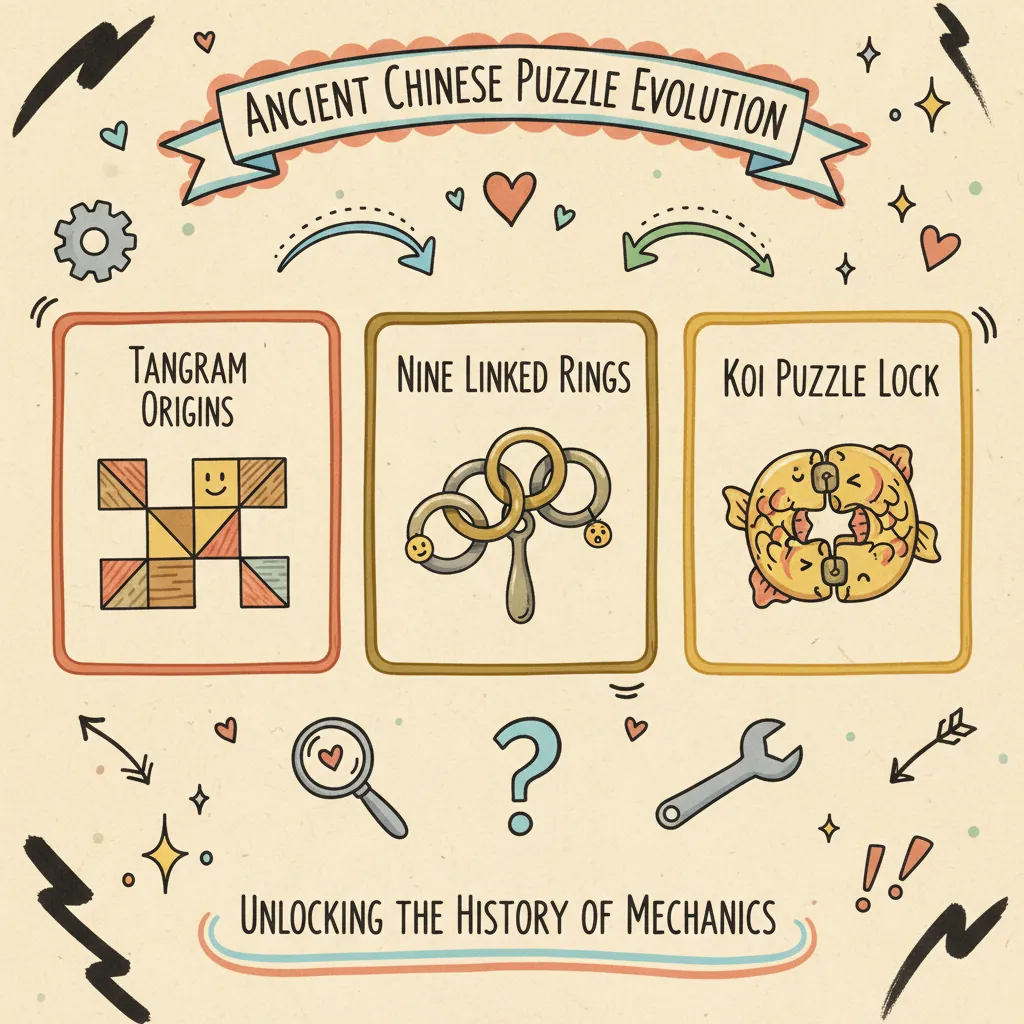
To understand the quiet genius of a Chinese puzzle lock, you have to start with the flat, geometric ancestors that defined the entire category. When Westerners hear “Chinese puzzle,” the first image is often the Tangram (七巧板, qī qiǎo bǎn, or “seven ingenious pieces”). Its history is a puzzle in itself, with origins debated between the Tang and Song dynasties. Some scholars, as noted on ChinesePuzzles.org, trace its roots to the Northern Song dynasty and scholar Huang Bosi, who used a set of rectangular tables for spatial reasoning. By the early 19th century, it had sailed to Europe and America, captivating minds with its deceptively simple task: arranging seven polygons to match a silhouette. The true puzzle wasn’t just the solution, but the geometric intuition it demanded—a style of thought that, as the Wikipedia entry suggests, deeply influenced Chinese intellectual culture.
But the Tangram is just the most famous face of a much richer tradition. The Chinese puzzle ethos isn’t about brute force or obscure trivia. It’s a philosophy of elegant constraint, where a minimal set of rules or pieces yields a maximal universe of challenges. It values the “aha” moment born from patience and perceptual shift over speedy completion. You see this in puzzles like Huarong Pass (the sliding block escape game) and, most pertinently for locks, the Nine Linked Rings.
Known in the West as the Baguenaudier (French for “time-waster”), this is a foundational mechanical puzzle. It consists of a series of rings connected to a bar and a looped handle; the objective is to disentangle the entire assembly. Its solution follows a recursive, binary sequence—a logic puzzle made manifest in brass or wire. Its documented history in China stretches back centuries, solidifying it as a classic of sequential movement and foresight. You can explore its intricate mechanics on its Wikipedia page.
This lineage—from the spatial play of the Tangram to the sequential deduction of the Nine Linked Rings—creates the DNA for the ultimate 3D evolution: the Chinese puzzle lock. These are not locks in the modern security sense. Forget keyholes and tumblers. These are ornate, often beautiful objects—boxes, balls, or padlocks—where the locking mechanism is the puzzle. To open one, you must discover the hidden sequence: sliding panels, pressing disguised plates, rotating rings, or manipulating interlocking components in a precise order. They are tactile riddles.
The “puzzle ball” or Chinese carved mystery ball, a series of concentric, freely rotating spheres carved from a single piece of ivory or jade, is a stunning artistic cousin to this concept. Its Wikipedia entry highlights the sheer craftsmanship, but the puzzle lock applies that layered, secretive philosophy to a functional (if ceremonial) purpose.
This brings us to the object of our focus: the modern reproduction puzzle lock. It is a direct descendant of this history, translating the “elegant problem” ethos into a desktop object. It takes the sequential discovery of the Nine Linked Rings and encases it in a narrative of craftsmanship, often using traditional motifs like the plum blossom, as detailed in our hands-on review of traditional designs like the Plum Blossom Lock.
For instance, the Plum Blossom Lock isn’t just a brand name; it’s a continuation of this tradition. It embodies the core principles: a visually pleasing form that conceals a logical, multi-step opening sequence. Solving it provides the same satisfaction as completing a perfect Tangram shape or freeing the final ring of a Baguenaudier—a hands-on connection to a centuries-old intellectual play. To open it is to literally hold a piece of that history in your hands, a 3D testament to the Chinese art of the layered, elegant brain teaser.
Unboxing the Mystery: First Impressions of the Koi Puzzle Lock
The box arrives, a simple, unassuming cardboard affair that gives nothing away. There’s a certain thrill in this moment, a feeling echoed in Reddit threads where users share their “no name Chinese puzzle” hauls, often bracing for a “truly next level” of janky quality. You half-expect flimsy, paper-thin pieces or a finish that feels like cheap spray paint. Pulling out the Koi Puzzle Lock, however, is a genuine surprise that immediately subverts those low-cost expectations.
The weight hits you first. This isn’t a feather-light trinket; it has a satisfying, dense heft that speaks of solid material. The body is cast brass, cool to the touch with a warm, muted gold hue. It’s not the shiny, polished brass of cheap hardware, but has a slightly antiqued, matte finish that feels intentional and old-world. The iconic Koi fish shape is immediately recognizable, its curves smooth and fluid under your fingers. The craftsmanship is evident—there are no rough casting seams or sharp edges. This is a solid, tactile object that feels like it belongs on a scholar’s desk, not at the bottom of a bargain bin.
Holding it, you begin the inspection. The fish’s scales are delicately etched, not just stamped, providing subtle texture. The eyes are defined, and the tail fans out gracefully. But the real mystery begins as you search for the point of entry. There is no obvious keyhole, no visible hinge, no shackle to pry at. It is a seamless, self-contained bronze sculpture of a fish, utterly locked. You turn it over, peering at the belly, the mouth, the gills. Nothing yields. It’s completely inert, a beautiful paperweight that silently mocks your attempts to understand it. This is the core of the puzzle lock’s charm: its form gives no hint of its function. The artistry conceals the mechanism completely, living up to the “intriguing” nature of its historical cousins like the Chin-Chiao Pan tangram.
The initial impression, then, is one of conflicted delight. The object far exceeds the quality you might fear from an online order—it’s a well-made, attractive piece of decor. Yet, its very perfection is the setup for the challenge. It feels premium and puzzling in equal measure. You’re not just holding a lock; you’re holding a secret encased in brass. The silence of the thing is its first and most elegant clue. There is no rattle, no loose part to shake. Every component is locked in place, waiting for the correct sequence of discoveries, much like the interlocking pieces of a traditional burr puzzle. You set it down on the table, the Koi seeming to swim in a pond of polished wood, and the real work begins. The history lesson is over; now it’s a hands-on conversation between your intuition and four hundred years of clever, concealed engineering.
The First Moves: How to Even Begin Solving It (Spoiler: It’s Not About Force)
Your first instinct with the Koi lock will be wrong. It’s a primal, human response: you see a shackle, you pull it. It doesn’t budge. You push it. Nothing. You try to twist the fish’s body, slide the scales, or press the eyes. Every action is met with the same solid, silent resistance. This is the puzzle’s first and most important lesson: brute force is not just ineffective; it’s the antithesis of the solution. You are not wrestling a padlock; you are conversing with a mechanical riddle.
This initial frustration mirrors the universal experience with traditional Chinese puzzles, from the deceptive simplicity of the tangram to the maddening sequential logic of the baguenaudier (or nine linked rings). The solution path is never linear or obvious. The key is to abandon the goal—”open the lock”—and adopt a new one: “understand the system.” Your primary tool is not strength, but observation. Under bright light, examine every millimeter. Look for seams that are slightly different, for components that reflect light unlike their neighbors, for any visual anomaly on the otherwise flawless surface. Is one scale a different shade? Does a line in the engraving seem to serve no artistic purpose? These are your clues.
The second principle is sequential discovery. Unlike a jigsaw where all pieces are available at once, a puzzle lock reveals its components only as you solve preceding steps. You cannot access chamber B until you’ve correctly manipulated part A, which itself was hidden until you moved part C. It’s a tactile narrative. The goal of your initial exploration isn’t to open it, but to find the first movable part. This is often the hardest leap. You may spend twenty minutes convinced nothing moves at all, until a gentle press in just the right spot, with just the right amount of rotational nuance, yields a nearly imperceptible click or a 1-millimeter shift. That tiny victory is the door opening.
A common, critical mistake is overlooking subtle feedback. In your focus on visual clues, don’t let your hands go numb. Does a component have a different temperature because it’s a different metal underneath? Does applying slight pressure in one direction create a faint, new gap somewhere else? This lock communicates in whispers, not shouts. The logic is deeply rooted in the philosophy of classic Chinese puzzles, where elements are interdependent. Moving one piece often blocks another, requiring a precise order of operations, a dance of constraints and allowances. It’s the three-dimensional embodiment of the tangram’s spatial reasoning, where placing one triangle limits the possible positions of the parallelogram. This is the core principle of observation over force that defines solving any quality mechanical puzzle.
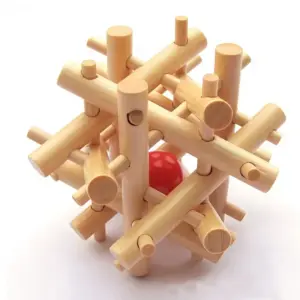
If this abstract mindset is difficult to grasp, practicing with a simpler, related puzzle can train your brain. A product like the 6 Piece Wooden Puzzle Key is an excellent, low-stakes tutor. It presents the same core concepts—sequential discovery, interdependent parts, and the absolute irrelevance of force—in a forgiving, wooden form. Solving it teaches you to think in terms of hidden pathways and internal clearances, skills that translate directly to the metal Koi on your desk.
When you finally locate that first subtle movement, do not rush. This is where most people fail. They get excited, force the new piece, and hit a hard stop, potentially resetting the puzzle or locking it into an unsolvable state. Instead, stop. Observe what changed. What new geometry is now visible? What previously hidden element has been exposed? The puzzle has entered a new phase, and you must restart your observation process from this new configuration. This iterative cycle of Observe, Act, Pause, Re-assess is the fundamental rhythm of solving. It requires a patience that feels at odds with our modern desire for instant solutions, but it is the only way forward. Your hands have been lying to you, telling you to push and pull. You must now teach them to listen.
Inside the Mechanism: The Engineering Brilliance of Interlocking Secrets
Once you’ve solved the Koi lock and the box finally opens, the real magic begins. The initial victory of access gives way to a deeper appreciation: you now hold the puzzle’s entire secret history in your hands. This is the moment to reverse-engineer the experience, to understand not just that it worked, but how. The mechanism you’ve just navigated is a masterclass in spatial constraint and sequential discovery, principles that find their formal analysis in modern research like the Structural analysis of traditional Chinese complex puzzle locks published in Scientific Reports. That study dissects locks with up to 12 internal pins and sliding plates, noting how their security relies not on strength, but on “the solver’s ability to comprehend the spatial relationships and operation sequences.” Your Koi lock is a direct descendant of this philosophy.
Opening the box reveals its internal architecture. What felt like a solid, impenetrable block from the outside is revealed as a cage of precisely machined parts with deliberate voids and channels. Those first frustrating slides and turns weren’t random; they were aligning internal pins with hidden gates in these channels. The “ah-ha” moment when a panel finally released wasn’t a single event, but the culmination of creating a clear pathway through this layered maze. The engineering brilliance lies in its economy: a handful of moving parts create a vast number of possible states, with only one correct sequence. This is the mechanical equivalent of a tangram, where a finite set of shapes (or parts) can be reconfigured into seemingly infinite forms, but only one configuration solves the specific puzzle at hand.
The hidden compartments and sliding panels operate on a principle of mutual blockage. Panel A cannot move until Pin B is retracted, but Pin B is housed in Slider C, which is blocked by Panel A. This circular dependency is the core of the puzzle. Solving it requires finding the one external input that begins to unwind the knot. Often, this is a subtle, counter-intuitive motion—a half-turn of a decorative element or a light press on what appears to be a fixed rivet. The Scientific Reports analysis highlights this, stating that in traditional designs, “the keyholes or operation interfaces are often concealed or disguised,” forcing a period of exploratory manipulation. Your initial, patient observation phase was, in fact, a non-destructive search for these disguised interfaces.
This complexity is not mere ornamentation; it’s a direct thread back to the layered-problem tradition in Chinese puzzles. Consider the Baguenaudier, or “Nine Linked Rings” puzzle. Its solution is a long, recursive sequence where each ring’s state is entirely dependent on the states of the rings before it. You cannot move the ninth ring without first manipulating the first eight in a precise order. The Koi lock applies this same logic in three dimensions. Its mechanism is a physical algorithm. Each action changes the system’s state, enabling the next legal move in a chain that culminates in release. There is no shortcut, just as there is no shortcut to solving the Nine Linked Rings.
Understanding this transforms the object from a simple box into a narrative device. The Chinese Koi Puzzle Lock you hold is a story told through brass and steel. Its engineering is its history, a tangible expression of a culture that has long valued mental elegance over brute force. The lock doesn’t just protect a small space; it encapsulates a centuries-old dialogue between creator and solver, where the challenge is the gift. To solve it is to temporarily think like its designer, to follow a trail of logic they embedded in metal. For a deeper dive into the specific mechanics of this fascinating device, see our complete guide to the Koi lock’s mechanics. When you close the box and scramble the mechanism, you’re not just resetting a puzzle; you’re preserving that elegant, interlocking secret for the next curious mind ready to listen.
Who Is This Puzzle Lock Really For? A Scenario-Based Fit Guide
The Chinese Koi Puzzle Lock is a stunning object, but it is not for everyone. Its value is entirely situational, dependent on what you seek in a puzzle. To help you decide if this is a brilliant buy or a frustrating folly, let’s match it to four distinct reader personas.
The Puzzle Purist
Fit: Excellent. This is the lock’s ideal owner. You appreciate puzzles as intellectual architecture. You’ve solved Hanayama metal puzzles, own a burr set, and understand that the joy is in the process—the tactile feedback, the logical deduction, the “aha” moment that feels earned. The Koi lock delivers a deep, contemplative solo challenge that can occupy hours or even days. Its historical lineage and mechanical integrity are features you’ll cherish. For you, this isn’t a toy; it’s a piece of functional art and a worthy successor to classics like the Baguenaudier (Nine Linked Rings). This is a definitive buy.
The Gift Giver (Seeking “Wow” Factor)
Fit: Good, with major caveats. You want a gift that is unique, beautiful, and screams “thoughtful.” The Koi lock, as a decor piece or conversation starter, is unparalleled. However, you must know your recipient. Gift this only to someone with proven patience and a puzzle-solving mindset. Paired with a note about its history, it becomes a profound gesture. Gift it blindly to a casual gamer, and you’ve given an expensive paperweight that will induce stress. For the right person, it’s a memorable buy. For the unknown, it’s a skip.
The Collector
Fit: Very Good. If your shelves hold puzzle boxes, antique locks, or culturally significant curios, the Koi lock is a compelling addition. Its engineering, detailed in studies like the structural analysis of traditional Chinese puzzle locks, makes it a fascinating specimen. It represents a specific niche in Chinese puzzle history with tangible heft and presence. However, as a collectible, be aware of potential quality variance. It’s not a mass-produced souvenir, but it may not have the flawless finish of a museum piece. As one piece in a curated collection, it’s a buy.
The Impatient Novice
Fit: Poor. You want quick, satisfying fun—something to fiddle with during a Zoom call or to solve with friends at a party. This lock is your antithesis. It demands sustained focus, tolerates no force, and offers no immediate gratification. The frustrations voiced in Reddit threads about “Chinese torture” puzzles—thin materials, false fits, and maddening difficulty—are echoed here if you approach with the wrong expectations. The Koi lock is not “torture,” but for the impatient, it will feel exactly like it. This is a hard skip. Consider a simpler wire puzzle or a tangram set instead.
Where It Excels & Where It Fails
Excel: The Contemplative Solo Challenge. This is a meditative object. Its value is in the quiet, focused engagement it requires, making it perfect for a desk, a study, or any place you go to think.
Excel: Unique Decor & Conversation Piece. Even unsolved, its intricate koi motif and solid brass construction make it a beautiful artifact.
Fail: Quick Fun or a Party Game. You cannot casually solve this. It will kill a party vibe and likely embarrass anyone put on the spot.
Fail: For the Frustration-Averse. If you give up on IKEA instructions, this will break you.
Addressing the “Chinese Torture” Quality Question
Balanced honesty is key. The Reddit horror stories often involve ultra-cheap, no-name wooden puzzles with paper-thin pieces and terrible false fits. The Koi lock is several tiers above that, but it’s not industrial perfection. You might find minor casting seams or a tumbler with a slightly gritty feel. This isn’t a defect; it’s the character of a hand-assembled, complex mechanical object. However, if you demand Swiss-watch precision at this price point, you will be disappointed. For most, the minor imperfections are outweighed by the mechanical ingenuity and aesthetic.
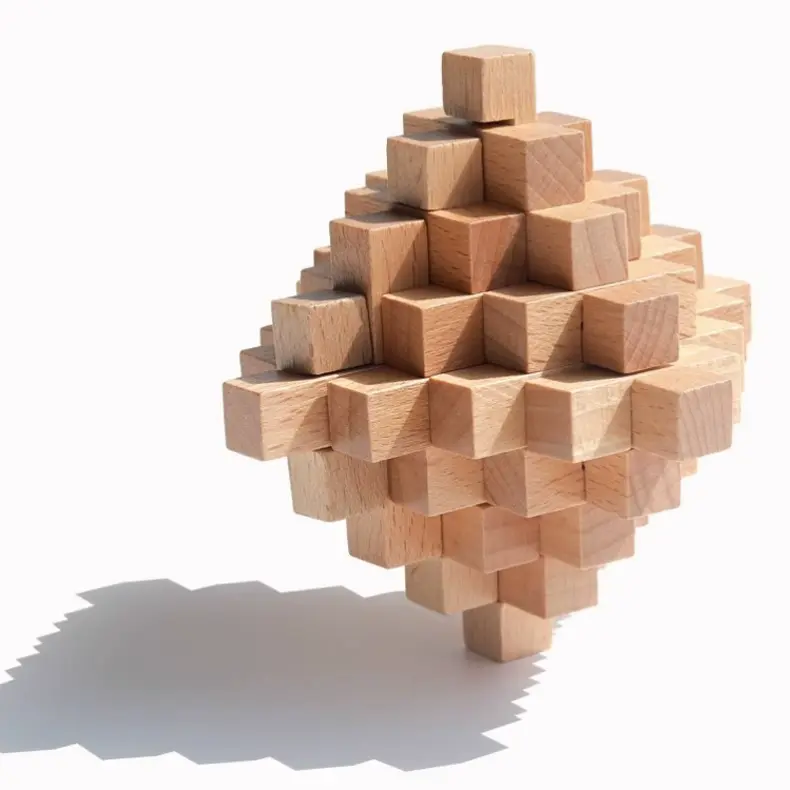
For those who love the style but seek a slightly different challenge or aesthetic, there are variants like the Big Pineapple Yellow Emperor Puzzle Lock, which applies similar principles in a different folk-art form.
Ultimately, the Chinese Koi Puzzle Lock is a specialist’s device. Its purpose is not to be universally likable, but to be profoundly satisfying for the right person in the right context. Know thyself, or know thy gift recipient, and you’ll know whether to turn the first key or walk away.
Beyond the Koi: How It Stacks Up Against Other Classic Puzzles
To understand the unique appeal of the Chinese Koi Puzzle Lock, it helps to place it within the broader family of traditional Chinese puzzles. Each classic offers a distinct flavor of challenge, and where you find your satisfaction reveals what kind of puzzler you are.
Take the Tangram, perhaps the most famous of all. Its history is deep, with scholars tracing its roots to the Northern Song dynasty and the rectangular tables of Huang Bosi. The challenge is purely spatial and visual: rearranging seven flat geometric pieces (the qiqiao ban, or “seven ingenious pieces”) to match a silhouette. It’s a silent, contemplative exercise in plane geometry and creativity. The Koi lock shares that heritage of elegant problem-solving but replaces silent contemplation with tactile, auditory feedback. You don’t just see the solution; you hear and feel it click into place through a sequence of discoveries.
Then there’s the Nine Linked Rings puzzle, known in the West as the Baguenaudier. This is a test of patience and procedural memory, a daunting series of repetitive moves to free a central ring from its interlinked loop. Its solution is a long, meditative algorithm. The Koi lock is its antithesis in pacing. Instead of a long, known sequence, the Koi offers a shorter but denser journey of exploration. You’re not executing a memorized pattern; you’re probing a compact, three-dimensional space for hidden interactions and sequences, making its “aha” moments more frequent and varied.
The Chinese puzzle ball—those stunning, layered ivory or wooden spheres—occupies another niche: that of artful astonishment. Its challenge is in its creation, not its disassembly for the owner. It’s a static display of impossible craftsmanship. The Koi lock bridges this gap. It is a functional art object you can interact with, marrying the intricate, layered artistry of the puzzle ball with the hands-on, solvable mechanics of a lock.
This brings us to the most direct mechanical cousin: interlocking burr puzzles, often associated with the legendary artisan Lu Ban. These are pure, abstract dexterity tests in wood.
A set like the Luban Lock Set 9 Piece is a masterclass in this form. The goal is singular: disassemble and reassemble a complex three-dimensional wooden joint. The satisfaction is in understanding the precise geometric interference and order of operations. The Koi lock incorporates this principle—its internal pins and plates are a form of interlocking burr—but envelops it in a narrative. You’re not just taking apart a joint; you’re unlocking a story symbolized by the koi. The functional lock mechanism and the decorative casing elevate it from an abstract geometric exercise to a symbolic, purposeful object. For those who want to explore classic interlocking puzzles like the Luban set, it offers a purer, more geometric challenge.
So, where does this leave our Koi? It doesn’t replace the spatial genius of the Tangram, the meditative rhythm of the Nine Rings, or the pure geometric purity of a Luban burr. Instead, it synthesizes. It is a bridge: between mechanical puzzle and functional artifact, between abstract challenge and symbolic art. It offers the sequential discovery of a lock, the three-dimensional reasoning of a burr, and the aesthetic presence of a sculpture. For the puzzler who wants their “Eureka!” moment to feel like unlocking a secret treasure, not just solving a diagram, the Koi lock carves out its own compelling niche.
Frequently Asked Questions (FAQ)
Is the Koi Puzzle Lock actually a functional lock?
No. While it mimics the form and internal mechanics of a traditional Chinese puzzle lock, it is not designed to secure anything. The “key” is part of the puzzle itself—a piece you must discover and manipulate internally to unlock the casing. Its purpose is intellectual and aesthetic, not security.
How long does it take to solve the first time?
For someone new to interlocking puzzles, expect to spend anywhere from 45 minutes to several hours. The puzzle has multiple distinct stages: finding the first moving part, navigating the internal pins and plates, and finally extracting the central “key” column. Don’t rush it; the journey is the point.
Is there a risk of breaking it?
Yes, if you use force. The primary risk is applying too much pressure when sliding components, which can shear delicate internal wooden pins or plates. The correct movements are precise, subtle, and never require straining. If something feels stuck, you’re on the wrong path. Patience is your best tool.
Can it be re-locked and re-solved endlessly?
Absolutely. Once solved, you can reset it by reassembling the internal mechanism and closing the outer shell. This makes it a perfect recurring challenge or a meditative ritual. The re-locking process is a puzzle in itself, often requiring you to reverse the solving sequence precisely.
Are solutions or hints provided?
Typically, no written solution is included with the puzzle itself, preserving the challenge. However, solution videos can be found online. We recommend consulting the detailed Collectors Guide To 12 Ancient Chinese Puzzle Locks for historical context and general principles before seeking a full walkthrough.
How does its quality compare to cheaper puzzle locks?
The difference is stark. Cheap, mass-produced puzzle locks often use soft wood, have loose tolerances (making solutions feel accidental), and may use paint that chips. A quality Koi lock uses hard, finely-sanded wood with precise, snug-fitting components that provide clear, tactile feedback for correct moves.
What if I get permanently stuck?
First, set it down for a while. Fresh eyes help. If truly stuck, search for the specific puzzle name with “solution” online; video guides exist. As a last resort, a gentle tap with a soft mallet on the sides (not the ends) might loosen a slightly wedged piece, but this risks damage. Force is the enemy.
Is it suitable for children?
For older children (12+) with strong patience and fine motor skills, it can be a fantastic challenge. For younger kids, it will be frustrating and likely lead to breakage. Consider a simpler interlocking puzzle as a starter.
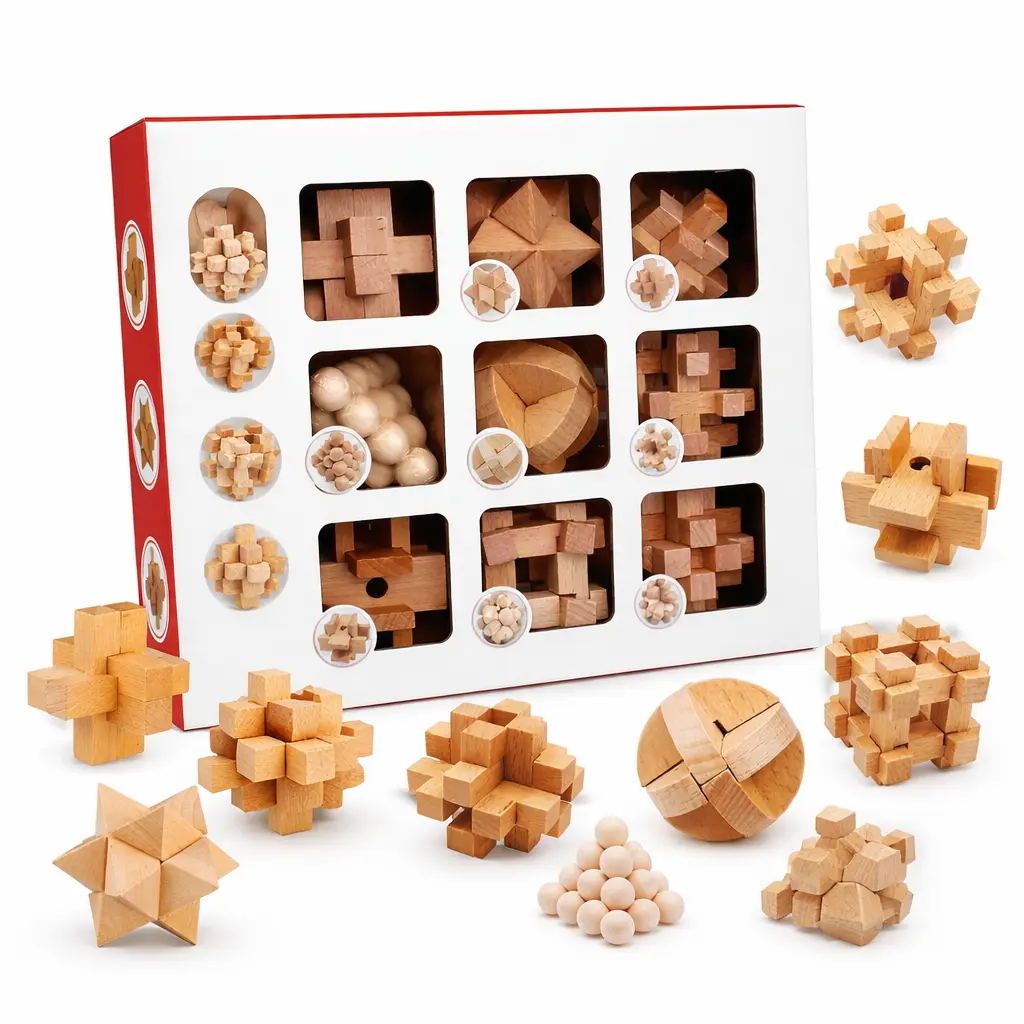
Luban Lock Set 9 Piece — $39.99
For those seeking a pure, non-representational challenge, a set like the Luban Lock Set 9 Piece offers classic burr puzzles that focus solely on geometry and sequence, without the decorative narrative of the Koi.
Does it require any special tools?
No tools are needed or recommended. Using anything to pry or probe will almost certainly mar the wood or break internal parts. Your only tools should be your fingers, observation, and logic.
How do I maintain or clean it?
Dust it lightly with a soft brush. Avoid liquids or oils, which can warp the wood or gum up the precise internal channels. Store it in a dry place. Handling it with clean, dry hands is the best maintenance.
Is it a good gift for a puzzle enthusiast?
It’s an excellent gift for an enthusiast who appreciates craftsmanship and history. It’s less ideal for someone who only enjoys speed-solving or purely logical (e.g., Sudoku) puzzles. It’s a tactile, contemplative object as much as a brain teaser.
Can the solution be memorized?
Yes, after solving it a few times, the sequence becomes memorized. The lasting value then shifts to the pleasure of executing the elegant mechanical routine and appreciating it as a display piece. For ongoing novel challenges, you’d need to acquire different puzzle locks or burr sets.
The Final Verdict: Is the Chinese Koi Puzzle Lock Worth Your Time?
After taking it apart, putting it back together, and weighing its charms against its quirks, the answer is a firm yes—but with a very specific audience in mind. This isn’t a casual purchase. It’s an investment in a particular kind of experience. If you’re looking for a quick dopamine hit from a solved puzzle, look elsewhere. If you seek a meditative, hands-on engagement with a piece of functional art that carries centuries of cultural ingenuity, the Koi lock is profoundly worth it.
The value here isn’t just in the “Aha!” moment (though that is deeply satisfying). It’s in everything that surrounds it: the scent of sandalwood, the precise click of a hidden latch sliding home, the visual story of the koi swimming through the lock’s form. It transforms a mental challenge into a tactile ritual. You’re not just solving a puzzle; you’re performing a miniature, mechanical ballet that has been perfected over generations. This elevates it far above disposable plastic brain teasers. As a timeless object, it holds its value on a shelf or desk, serving as a constant reminder of patience and cleverness.
The potential for frustration is real, but it’s not a flaw—it’s a feature. The initial blockade is what makes the eventual solution meaningful. Unlike a jigsaw puzzle where progress is constantly visible, here you can stare at it for an hour with nothing to show. This forced pause is where the real mental shift happens. You stop forcing and start observing. You learn to listen to the wood and feel for imbalances. This taught patience is, for many, the lock’s greatest gift, a lesson explored in our article on why patience is the key to these challenges.
So, who should buy it?
– The collector who appreciates craftsmanship over quantity.
– The thinker who enjoys process as much as solution.
– Someone seeking a distinctive, conversation-starting gift for a patient, curious person.
– Anyone who wants a tangible connection to the history of puzzles, a direct link to classics like the Baguenaudier (Nine Linked Rings) and complex interlocking burrs.
Who should skip it?
– Anyone prone to quick frustration who lacks the patience for multi-session puzzling.
– Someone looking for a high-volume, repeat-play challenge (once solved a few times, the sequence is memorized).
– If your primary interest is in geometric area-covering puzzles, you’d be better served by a comprehensive Tangram book, which offers thousands of configurations from a simple set of seven shapes.
Your Next Step
If you’re convinced, the critical step is sourcing a quality version. Avoid the cheapest listings on generic marketplaces; poor craftsmanship with misaligned channels or soft wood can render the puzzle unsolvable or break it. Seek out specialty puzzle retailers or reputable craftspeople who emphasize precision joinery. Our curated guide to the 10 Best Puzzle Locks For Adults & Collectors is a solid starting point for vetted options.
For those intrigued but hesitant about the Koi lock’s commitment level, consider a gateway puzzle. A smaller, more geometric interlocking puzzle can offer a similar “aha” with a shorter time investment.
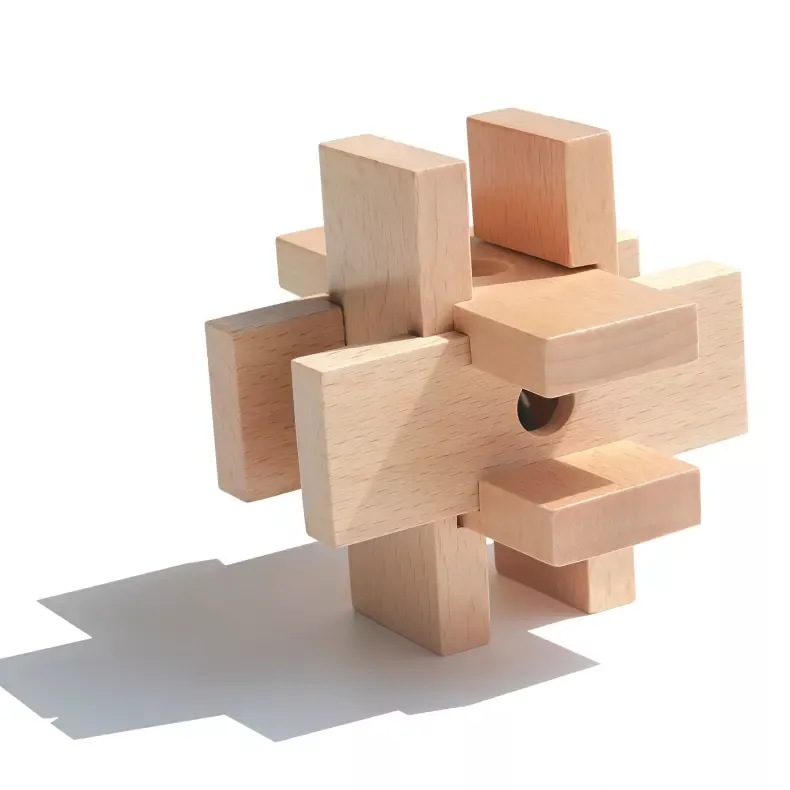
6 Piece Wooden Puzzle Key — $12.99
For instance, the 6 Piece Wooden Puzzle Key is a fantastic alternative. It strips the concept down to pure, elegant geometry—no decorative narrative, just the clean challenge of six pieces forming a solid key. It teaches the same fundamental principles of alignment, sequence, and three-dimensional thinking as the Koi lock, but in a more abstract and often quicker-to-solve format. It’s a perfect test to see if you enjoy the language of wooden puzzle locks before graduating to a more complex, artistic piece like the Koi.
Ultimately, the Chinese Koi Puzzle Lock is more than a puzzle. It’s a workshop in patience, a lesson in non-force, and a beautiful artifact. For the right person, its value extends far beyond its price tag, offering a rare and quiet satisfaction that few modern toys can match. If your description aligns with the former audience, don’t hesitate. Seek out a well-made specimen, clear your desk, and prepare for a uniquely rewarding struggle.