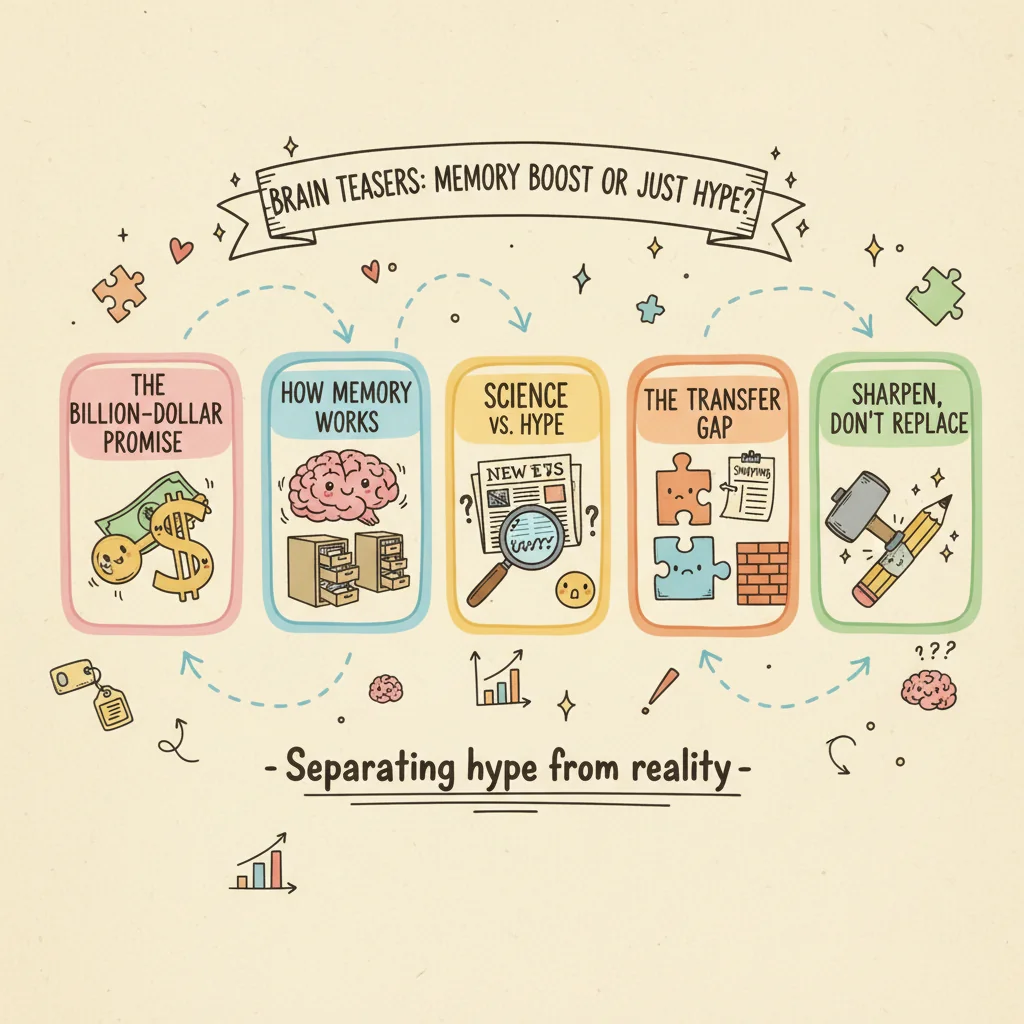
The Forgotten Keys and the Billion-Dollar Promise
The moment is so mundane it’s universal: you walk into the kitchen with a clear purpose, and by the time your hand reaches the refrigerator door, your mind is a blank slate. You’re left staring at the humming appliance, grasping for a ghost of a thought. I time my morning Sudoku, but I still forget why I opened the fridge. This gap between our practiced skills and our daily forgetfulness is where our question blooms: we’re told brain teasers are the solution, but is that just a comforting myth sold to us by a brain training industry now worth over $10 billion?
My interest isn’t just professional; it’s stained with newsprint. A few years ago, my grandmother, after a diagnosis of mild cognitive impairment, began diligently doing the daily crossword. She filled in the squares with a fierce, hopeful concentration. Watching her, I was caught between the researcher who demands rigorous proof and the granddaughter who desperately wanted the pencil and puzzle to be a shield. I’ve since logged hundreds of hours across Lumosity, Elevate, and a shelf of puzzle books worn soft at the corners, testing claims against both the literature and my own cognition.
The promise is intoxicating. A few minutes a day on your phone, playing colorful games that feel like a mental workout, and you’ll not only sharpen your working memory but potentially prevent Alzheimer’s. The apps present sleek graphs tracking your “improvement,” a satisfying quantification of your brainpower. It feels like progress. It feels like control. This is the billion-dollar promise: that cognitive decline is not an inevitability, but a problem you can puzzle your way out of.
But does it work? The scientific community is famously—and frustratingly—split. Headlines scream contradictory findings: “Brain Training Games Improve Memory!” one week; “Brain Games Are a Waste of Time,” the next. This confusion isn’t academic; it leaves anyone genuinely concerned about their cognitive reserve holding a phone in one hand and a crossword in the other, wondering if they’re building a fortress or just stacking paper cups.
So, we begin here, in the gap between the forgotten keys and the dazzling promise. To find an honest answer, we must first move past the hype and the outright skepticism. We need to ask more precise questions. Instead of “Do puzzles improve memory?” we must ask: What kind of memory? What kind of puzzle? And what does “improve” actually mean in the messy reality of our daily lives? The path to clarity starts by dismantling the very idea of memory as a single, monolithic thing.
Memory Isn’t a Muscle: Dissecting the Brain’s Filing System
The honest answer is that ‘memory’ is not a single, trainable muscle you can flex, but at least three distinct neural systems—working, episodic, and spatial memory—each handling different types of information. A 2020 survey found over 60% of adults conflate all memory under the umbrella of “short-term vs. long-term,” a critical oversimplification that lets vague brain-training claims flourish. To know if puzzles can help, you must first know which filing cabinet in your mind you’re trying to reorganize.
Think of working memory not as a vault, but as the brain’s mental sticky note. It’s the active, temporary workspace where you hold a new phone number just long enough to dial it, or keep the first half of a sentence in mind while hearing the second. It’s fragile, limited to about four “chunks” of information, and it’s what fails you when you walk into a room and instantly forget why. When we talk about short term memory puzzles, this is the specific cognitive function we’re targeting.
Then there’s episodic memory. This is your brain’s autobiographical documentary channel, responsible for time-stamped personal experiences. It’s recalling the taste of your birthday cake last year, the conversation you had with a friend last week, or where you parked your car this morning. It’s deeply tied to context and emotion. This is the system people are often most worried about when they talk about “memory loss”—the fear that life’s personal film reel is starting to degrade.
Finally, consider spatial memory. This is your internal GPS and 3D modeler. It allows you to navigate your home in the dark, remember the layout of your favorite grocery store, or visualize where you left your keys on the cluttered kitchen counter. It’s less about what happened and more about where things are and how they relate to each other in physical space. Enhancing spatial reasoning puzzles memory means sharpening this specific mental mapping tool.
So, when you ask, “Do puzzles help with short term memory?” you’re primarily asking about working memory. When you fret about forgetting recent events, you’re concerned with episodic memory. And if you’re trying to remember where you put things, spatial memory is your culprit. Each system uses different neural pathways and is engaged by different activities.
This is why the blanket statement “puzzles improve memory” is scientifically meaningless. It’s like saying “sports improve fitness.” Running a marathon, lifting weights, and practicing yoga all improve fitness, but they do so by targeting vastly different systems—endurance, strength, flexibility. You wouldn’t expect world-class flexibility from marathon training alone. The same precision applies to your brain. A puzzle that brilliantly taxes your working memory may do precisely nothing for your ability to recall your wedding day.
Understanding this distinction is the first step out of the hype cycle. It allows us to move from a vague hope to a specific hypothesis: could a particular puzzle type act like a targeted workout for one of these specific memory systems? The answer, as we’ll see, is a fascinating and qualified “sometimes.” But to get there, we must first abandon the myth of the universal brain muscle and start looking at the brain’s intricate, specialized filing system. This is foundational to understanding how puzzles can rewire your brain—it’s a precise, not a general, process.
Headlines vs. Hard Data: What the Rigorous Studies Actually Show
The scientific evidence reveals a nuanced picture: cognitive training can yield measurable, lasting memory benefits, but only under specific conditions. The landmark ACTIVE study found that 10 sessions of targeted memory training boosted participants’ performance on similar tasks, with these improvements persisting for a full decade. More recently, a 2022 study in NEJM Evidence demonstrated that regular crossword puzzles outperformed computerized brain games in improving memory and function in people with mild cognitive impairment—a finding discussed in depth by Columbia Neurology.
Armed with our new understanding of memory’s specialized systems, we can finally move past marketing claims and into the messy, illuminating world of clinical trials. Here, in the realm of control groups and p-values, we find our most reliable answers. The search for evidence, however, immediately presents us with two starkly different portraits.
On one side, you have studies like the expansive Advanced Cognitive Training for Independent and Vital Elderly (ACTIVE) trial. It’s a titan in the field, often cited for good reason. Researchers followed nearly 3,000 older adults for a decade. The participants who received just 10 hours of structured training in memory, reasoning, or speed-of-processing showed a clear benefit: they got better at the exact tasks they practiced. More compellingly, those gains didn’t just vanish. Follow-ups showed the training group maintained a statistically significant edge over the control group for 5, and then 10, years. This is a powerful argument for the durability of cognitive training, suggesting it can help shore up what neuroscientists call cognitive reserve—the brain’s resilience to age-related decline. It’s a headline-worthy result, and rightfully so.
Then, in 2022, another robust study published in NEJM Evidence added a fascinating twist. Researchers pitted computerized brain games against good old-fashioned crossword puzzles in individuals with mild cognitive impairment (MCI). The result? The crossword group showed significantly greater improvement on tests of both memory and daily functioning. Why? The researchers hypothesized that crosswords, with their demand for crystallized intelligence (the retrieval of stored knowledge) and flexible verbal recall, may more deeply engage and challenge the brain networks related to memory and verbal fluency than the narrower, repetitive tasks of some digital games. It’s a potent reminder that a low-tech, dense grid of black and white squares can sometimes be a more effective tool for critical thinking puzzles memory improvement than a suite of flashy animations.
But what about the other portrait? This is where the transfer problem comes crashing in. For every positive study, there are others—often just as rigorous—that find limited to no benefits. A major point of contention is “far transfer”: the holy grail where getting better at a brain game makes you better at something completely different, like remembering your grocery list or your new neighbor’s name. Most studies of commercial brain games show strong “practice effects”—you become a master of that specific game—but frustratingly weak far transfer to untrained, real-world memory tasks. It’s the difference between becoming an expert at a single, specific video game and expecting that skill to make you a better driver. The neural pathways you’re strengthening may be too specific to the game itself.
So, how do we reconcile these conflicting findings? The consensus from systematic reviews and meta-analyses provides the crucial middle ground. It suggests that cognitive training can work, but it is not a universal law. Its efficacy depends entirely on the what, the how, and the for whom. The ACTIVE study’s training was structured, progressively challenging, and focused on core cognitive strategies, not just playful distractions. The crossword study leveraged deep semantic knowledge. The null-result studies often test broad commercial apps that may fail to push users beyond a comfortable, unproductive plateau.
This is the heart of the scientific story: the benefit is in the critical thinking, not just the thinking. A puzzle must force you to strategically manipulate information in your working memory, to forge new connections, to struggle just enough. If you’re simply repeating a pattern you mastered weeks ago, you’re likely just cementing a habit, not prompting neuroplasticity. The question “do brain games improve memory scientific study” is thus refined to: “Does this specific protocol, with this level of challenge, transfer to this specific memory function?” That is the question a responsible science—and a savvy user—must ask.
The Puzzle-Memory Matrix: Which Game Targets What?
Not all puzzles are created equal, and different types engage distinct memory systems. To move beyond vague promises, we must map specific games to specific cognitive functions. For instance, a landmark 2022 study in NEJM Evidence found crossword puzzles superior to computerized games for improving memory in mild cognitive impairment, highlighting how the target—verbal recall—is precisely matched to the tool. The enduring appeal of such classic formats speaks to how ancient puzzles train your brain through proven, fundamental mechanics.
So, if benefit hinges on the what and the how, let’s get tactical. Think of your brain not as a single muscle to be flexed, but as a complex orchestra. A crossword puzzle tunes the string section of verbal memory, while a Sudoku grid rehearses the percussion of logic and sequence. Playing the right score for the right section is the key.
Crossword Puzzles: The Library of Your Mind
When you tackle a crossword, you’re conducting a deep search through your internal lexicon. The clue “17th-century Dutch master” sends you rummaging through semantic networks—art history, names, spellings—before landing on “Rembrandt.” This primarily exercises crystallized intelligence, your accumulated knowledge, and taps episodic memory by pulling personal associations (maybe that trip to the Rijksmuseum). The NEJM Evidence study’s finding makes perfect sense here: for individuals with mild cognitive impairment, who often struggle with word retrieval, crosswords provide targeted, effortful practice of that exact skill. It’s less about raw processing speed and more about reorganizing and accessing your mental library. This is why crossword puzzles memory improvement elderly is a well-supported connection; it reinforces existing neural pathways for verbal knowledge, a core component of cognitive reserve. The ongoing debate about their efficacy is well-summarized by National Geographic.
Sudoku & Logic Puzzles: The Mental Scratchpad Workout
My morning coffee-queue Sudoku is a ritual of working memory. To place a ‘4’ in the correct cell, I must hold the rules of the grid, the numbers already placed in the row, column, and sub-square, and test hypotheses—all in my mind’s eye. This is a pure exercise in attentional control and pattern recognition within a constrained system. You’re not recalling facts; you’re manipulating abstract symbols under pressure. The Sudoku benefits for working memory are clear: it forces you to maintain and update multiple pieces of information simultaneously, a core function of the prefrontal cortex. The caveat? The skills are highly specific. Getting faster at spotting numerical patterns in a 9×9 grid may not help you remember your shopping list, but it does strengthen the underlying mental muscle of holding and sorting data.
Jigsaw Puzzles: Mapping Space in Your Head
Now, consider the humble jigsaw. You pick up a piece, scan its unique shape and color snippet, and mentally rotate it against the growing image of the whole. This is a profound spatial reasoning task. It engages your visuospatial sketchpad—a component of working memory dedicated to visual and spatial information—and your long-term memory for objects and scenes. The jigsaw puzzles cognitive benefits memory of where things belong in physical and mental space. Completing a landscape puzzle reinforces your ability to construct and navigate mental maps, a skill linked to the hippocampus, a brain region critical for memory formation. It’s a quiet, meditative workout for the part of your brain that remembers how to navigate your neighborhood or where you left your keys on the counter.
Physical Manipulative Puzzles: Thinking with Your Hands
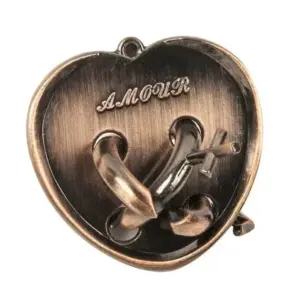
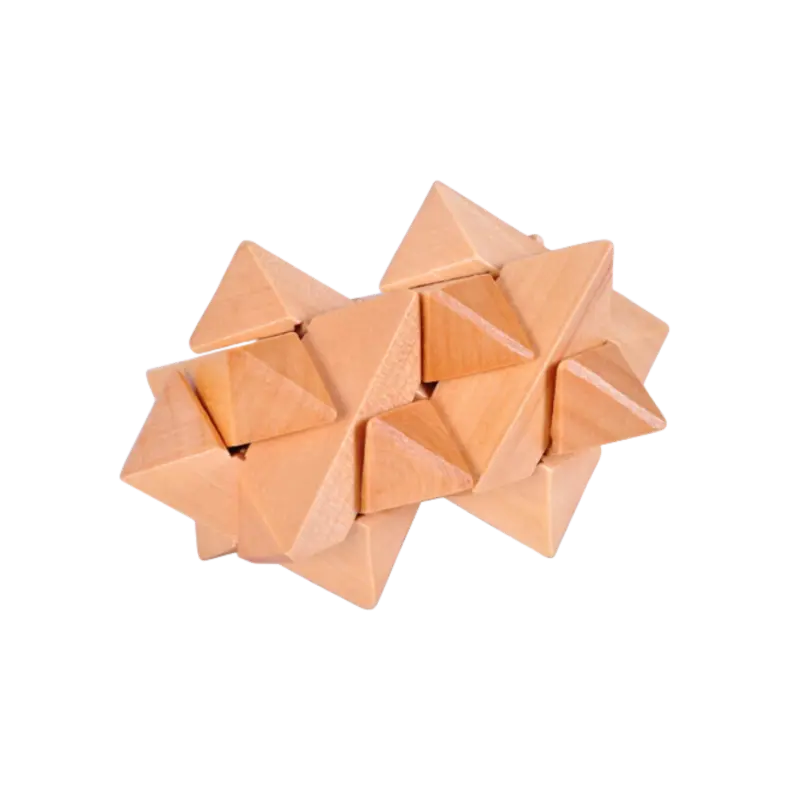
This brings us to a fascinating category: three-dimensional puzzles like disentanglement rings or take-apart brain teasers. A puzzle like the Twin Star, where you must navigate interlocking pieces in physical space, combines spatial reasoning with procedural memory and logic. You develop a tactile strategy, learning through your fingers. This kind of multi-sensory engagement—visual, spatial, and motor planning—can forge stronger memory traces than a purely digital task. It’s neuroplasticity you can feel. The process of failing, adjusting, and finally feeling the pieces slide into place creates a robust problem-solving schema that your brain may be more likely to apply in other physical-world scenarios. For a deeper dive into this tactile world, our guide on the best metal disentanglement puzzles explores how these intricate objects challenge the mind.
Digital Brain Training & The Dual N-Back Enigma
Then there’s the world of apps. Many target working memory through tasks like the “dual n-back,” where you must recall both a visual position and an auditory letter from several steps earlier in a sequence. It’s brutally difficult and arguably one of the purest digital workouts for working memory and attentional control. The research is mixed, but the principle is sound: it forces extreme, adaptive focus. However, this is also the realm where the transfer problem is most acute. You may get astonishingly good at the dual n-back game itself (a strong “practice effect”) but see minimal carryover to remembering a new colleague’s name.
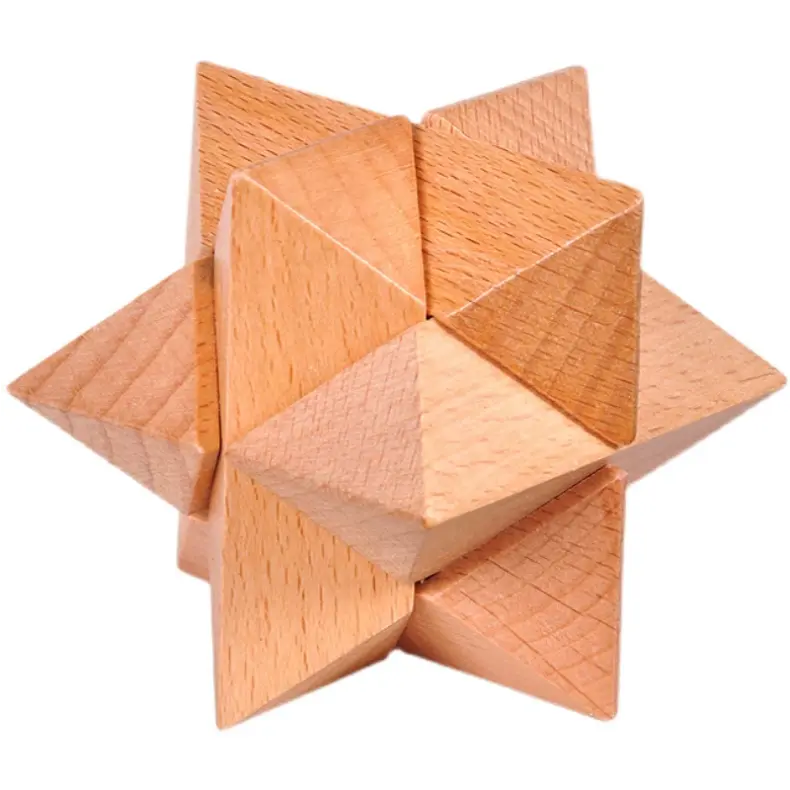
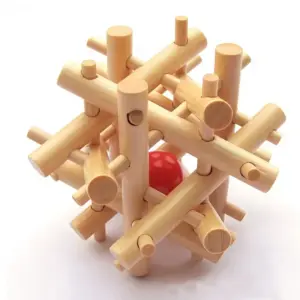
So, what’s the best type of puzzle for memory? The unsatisfying but accurate answer is: a rotating portfolio. If your goal is to support overall cognitive reserve, diversity is your ally. A week might include crosswords (for verbal recall), a 3D puzzle like the Fuxi Eight-Corner Ball (for spatial-manipulative reasoning), a session of challenging Sudoku (for working memory), and a jigsaw (for visual integration). This approach, akin to cross-training, engages multiple brain networks. It also satisfies the non-negotiable requirement for novelty and increasing difficulty—once a puzzle type becomes easy, its cognitive returns diminish. Choosing the right tool from a well-stocked workshop, like those explored in our definitive buyer’s framework for wooden puzzle sets, is how you move from passive play to active mental cultivation.
The Brick Wall of ‘Transfer’: Why a High Score Doesn’t Mean You’ll Remember Your Shopping List
Here’s the inconvenient truth, supported by a landmark 2014 consensus statement signed by over 70 scientists: getting better at a specific brain game does not reliably make you better at unrelated, real-world memory tasks. This is the “transfer” problem, and it’s the brick wall where most overblown brain training claims shatter. You can achieve a master ranking in a working memory app and still forget why you walked into the kitchen.
Let’s break down why. When you practice a specific puzzle—say, a game where you remember the sequential order of flashing stars—you aren’t just polishing a general “memory” faculty. You are becoming exquisitely skilled at that particular task. You learn its hidden rules, its interface quirks, its rhythm. This is called a practice effect. Your brain gets more efficient at that one narrow slice of cognition, building a kind of specialized, cognitive callus. The billion-dollar question has always been whether that callus protects the whole hand, or just that one spot.
This is where the concept of far transfer—improvement on a vastly different, untrained task—comes in. And it’s notoriously elusive. The cognitive machinery you recruit to solve a Sudoku grid (logical deduction, pattern recognition within a 9×9 matrix) is simply not the same machinery you use to recall where you parked your car at the airport. The latter is a complex episodic memory task laced with spatial and contextual details. Becoming a Sudoku savant is like being a world-class archer; it doesn’t mean you’ll be a better soccer player, even though both involve leg muscles and hand-eye coordination.
This is the core critique of many commercial brain training apps like Lumosity. In 2016, the company settled an FTC lawsuit for $2 million over deceptive advertising, precisely for implying that its games conferred broad cognitive benefits that weren’t backed by solid evidence. Does Lumosity improve memory? The evidence suggests it improves your memory for the specific games on Lumosity. The leap to daily life is a chasm most studies have failed to bridge consistently. For every study showing a sliver of far transfer, a meta-analysis—the gold standard that pools many studies—typically finds the effects are small, fragile, and often indistinguishable from simply engaging in any stimulating activity.
Which brings us to a pivotal comparison: brain teasers vs physical exercise for memory. If we’re talking about a single intervention with the most robust, across-the-board evidence for enhancing memory and executive function, aerobic exercise wins. Why? While puzzles provide a targeted cognitive challenge, physical exercise acts as a potent fertilizer for the brain itself. It boosts blood flow, stimulates the release of brain-derived neurotrophic factor (BDNF, a key protein for neuroplasticity), and can even promote the growth of new neurons in the hippocampus—the brain’s memory hub. A 30-minute brisk walk is, in a very real sense, a more comprehensive “memory game” for your entire neural ecosystem than 30 minutes of tapping patterns on a screen.
So, does this mean all memory games that actually work are a fantasy? Not entirely. It reframes the goal. The value isn’t in magical, generalized improvement, but in targeted maintenance and the strategic engagement of specific functions. The key is to stop expecting a puzzle to be a memory panacea and start seeing it as a precision tool. You use a wrench to tighten a bolt, not to hammer a nail. This mindset shift—from seeking a universal brain “upgrade” to engaging in deliberate, varied mental exercise—is the foundational principle behind building a more resilient mind, a topic we explore deeply in our guide on why most brain teaser puzzles fail.
The takeaway isn’t to abandon puzzles. It’s to manage expectations. You are sharpening a very specific set of tools in your cognitive toolkit. That sharpening has value, but it doesn’t replace the need for other forms of mental upkeep—or for putting down the puzzle and going for a walk. The next section moves from this reality check to a practical blueprint: how to use these tools intentionally within a holistic strategy.
A Practical Prescription: How to Use Brain Teasers Intentionally
The research points to a clear, evidence-based regimen: for measurable maintenance of cognitive skills like working memory, aim for short, challenging sessions about three times a week. This isn’t about marathon puzzling; a 2021 meta-analysis in Psychological Science suggested sessions of 20-30 minutes are sufficient to engage neuroplasticity, provided you’re truly stretching your abilities. The goal is consistent, deliberate practice, not just completion. So, forget the idea of casually doing the same easy crossword every morning. How often should you do brain teasers for memory? The science of cognitive reserve suggests a rhythm of regular, challenging engagement, not daily repetition on autopilot.
But here’s the critical principle: you must progress. If a puzzle no longer makes you pause, frown, or mentally reach, it’s become a comfort ritual, not a cognitive workout. The benefit lies in the struggle to form new connections. This is why many brain training app subscriptions structure their games with adaptive difficulty algorithms—they force you out of your comfort zone. Are they worth it? Only if you value the structured progression and variety they provide. A well-designed app can efficiently deliver the novelty and escalating challenge the brain craves. But you can replicate this principle for free: move from beginner to expert Sudoku puzzles, tackle cryptic crosswords, or shift puzzle types entirely every few weeks.
The most powerful tool in your regimen, however, isn’t an app—it’s novelty. When you first attempt a KenKen, a sliding block puzzle, or a nonogram, you can almost feel new pathways fizzing to life. This intense period of learning and pattern recognition is where the most robust neural exercise occurs. Once you’ve mastered a format, the returns diminish. This is where tactile, three-dimensional puzzles offer a distinct advantage; they engage spatial reasoning and motor planning in a way screens cannot.
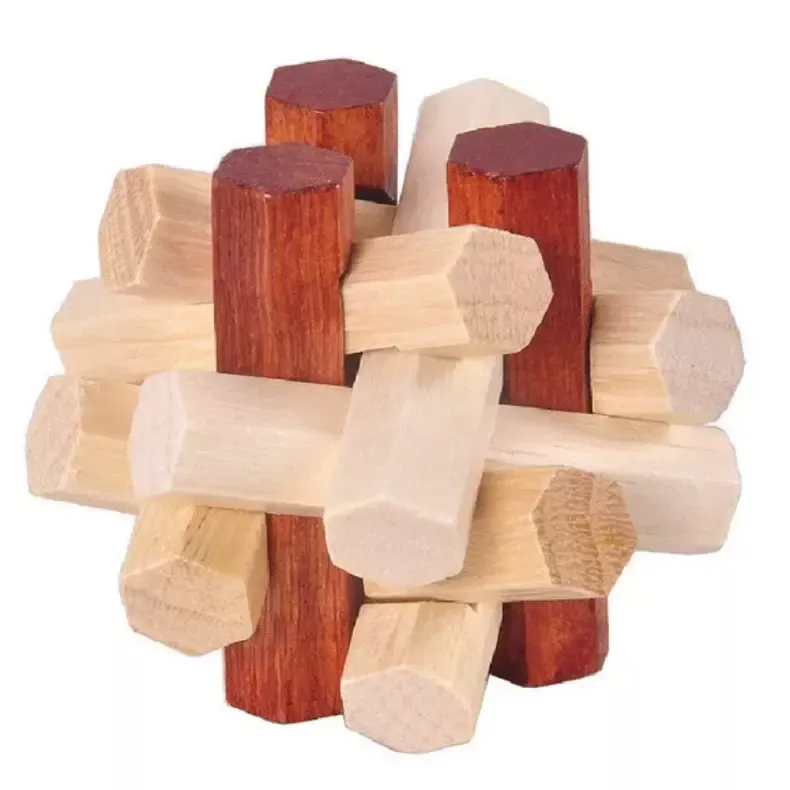
Six-Angle Twelve Sisters — $14.99
A puzzle like the Six-Angle Twelve Sisters forces your brain off its well-worn digital paths. It requires you to manipulate physical pieces, visualize spatial relationships in three dimensions, and test hypotheses with your hands. This kind of multi-sensory engagement can provide a potent jolt of novelty, actively recruiting working memory and spatial skills in a unified task. It’s a perfect example of moving beyond the screen to find a truly fresh challenge, a principle we champion in our guide to the real way to unwind with brain teasers.
Is there an age where starting brain teasers is most beneficial? While it’s never too late—the ACTIVE study participants were elderly—building cognitive reserve is a lifelong project. Midlife is an especially impactful time to establish the habit. Think of it like retirement savings: consistent contributions over decades yield the strongest buffer. The prescription, then, is ageless: start now, prioritize challenge over comfort, and change your mental “routine” as soon as it becomes routine.
Finally, frame this activity correctly. This intentional practice is not a standalone cure. It is one spoke in the wheel of brain health, alongside aerobic exercise (which boosts BDNF, a brain-growth protein), quality sleep (when memory consolidation occurs), and social engagement (a complex cognitive workout of its own). The best prescription for memory is a blended one: perhaps a brisk walk, followed by 20 minutes of a novel puzzle, all after a good night’s rest. Use brain teasers not as a magic bullet, but as a focused tool for sharpening specific mental blades—all while tending to the much larger garden of your overall health. Understanding this balance is a key reason why smart people keep puzzles on their desks—not as a cure-all, but as a dedicated tool for focused mental maintenance.
Beyond the Puzzle: Sharpening the Tool, Not Buying a New Brain
So, is the time spent on puzzles well-invested? The evidence suggests yes—if your goal is mental maintenance, not miraculous transformation. Brain teasers are a tool for honing specific cognitive skills and, crucially, for building a resilient cognitive reserve over decades. Studies like the ACTIVE trial show this training can provide protective benefits that last 5 to 10 years, a substantial return on consistent practice.
This brings us to the honest, final point of clarity. Brain teasers are not a substitute for a healthy brain, but a component of its care. Neuroplasticity—the brain’s remarkable ability to adapt—is stimulated not just by novel puzzles but by novel experiences in general. The “transfer” problem we discussed exists because real-world memory is messy, emotional, and context-dependent. You become proficient at the puzzle’s ruleset, not at life.
Therefore, the most effective strategy is a blended one. The research consensus is unambiguous: combining mental stimulation with physical exercise, quality sleep, and rich social engagement creates a far more powerful cognitive shield than any single activity. Aerobic exercise pumps brain-derived neurotrophic factor (BDNF), a fertilizer for neurons. Sleep is when memories are consolidated. Social interaction is a complex, dynamic cognitive workout all its own.
Think of your brain health like a portfolio. A daily puzzle is a solid, stable investment. A brisk walk, a good conversation, and seven hours of sleep are the diversified assets that truly manage risk. To make brain teasers work for you, integrate them into this larger ecosystem. Do a crossword after your morning walk. Try a new spatial puzzle with a friend, debating strategies. The engagement itself—the curiosity and enjoyment—is part of the benefit, a concept explored in the secret that makes these puzzles irresistible.
Ultimately, you are not downloading a memory upgrade. You are performing skilled maintenance on the intricate, biological system you already have. Manage your expectations, diversify your efforts, and appreciate the puzzle for what it is: a satisfying test of focus in the moment and a single, deliberate stitch in the tapestry of long-term cognitive health. You’re sharpening the tool, not buying a new brain. And a sharp tool, used as part of a complete kit, is a wonderfully empowering thing to own.
Opening Scene and Core Thesis
So, you’re standing in the kitchen, holding your keys, and you have absolutely no idea why you walked in here. That flicker of frustration—the ‘senior moment’ cliché that’s both universal and uniquely unsettling—is the itch this entire industry promises to scratch. We’ve just mapped a nuanced path through the evidence, moving from that initial hope to a clear-eyed strategy. The core thesis is this: brain teaser puzzles can be a legitimate tool for maintaining and even modestly improving specific types of memory, but they are not a magic bullet. Their benefit hinges entirely on how you use them—targeting the right memory system with the right puzzle, at the right level of challenge, and crucially, as part of a broader cognitive health regimen. Think of it as sharpening one blade in a multi-tool, not buying a whole new Swiss Army knife for your brain.
Remember that opening scene of forgetfulness? The science we’ve unpacked suggests a better response than just grabbing a puzzle book in panic. First, identify the memory type involved. Forgot why you entered the room? That’s often a glitch in prospective or working memory—the system for holding and executing intentions. A targeted approach might involve 15 minutes daily of a dual n-back task or a fast-paced game of Set to exercise that specific attentional control, not just a leisurely crossword. The key is intentionality. You now have a framework to move from frustration to a plan. Your next step isn’t to search for the “best” brain game. It’s to pick one puzzle type from the matrix we discussed—say, a jigsaw for spatial memory or a cryptic crossword for verbal recall—and commit to it with increasing difficulty for a month, while also scheduling that extra walk. Track not just your puzzle score, but whether finding your keys becomes a little less of a daily mystery. The real win is the mindful engagement itself, a single, deliberate stitch against the fraying edges of memory, woven into the richer tapestry of a brain-healthy life. For a curated start, consider the principles behind thoughtfully designed puzzles that prioritize genuine engagement over empty claims. Now, go sharpen your tool.