The Unmarked Box: A Puzzle That Arrives Without Instructions
It arrived without instructions, which is precisely the point. A parcel containing only a small, unmarked box was placed on my desk, its contents a mystery until my fingers traced the edges and lifted the lid. Inside, nestled in foam, lay a miniature artifact: a metal crab, cool to the touch, its single prominent claw forever pinching a gleaming gold ring. This is the IQ Metal Puzzle Crab Claw #40, a 180-gram zinc alloy enigma measuring exactly 2.8 inches wide. It presents itself not as a toy, but as a small, fidget-resistant sculpture with a silent challenge.
The first impression is one of surprising heft. It has the substantial, cold density of a precision tool, not a cheap trinket. The crab’s body is a dark, almost gunmetal grey, with cleanly cast but intentionally stylized details—bumps for eyes, textured segments on the legs. The ring, a smooth band, catches the light from the desk lamp. It’s unmistakably gold-plated, not solid; a practical choice for a piece meant to be manipulated, where a soft precious metal would dent. My watchmaker’s instinct is to assess for sharpness: running a thumb along the seams reveals no burs. The edges are blunt, the puzzle engineered for manipulation, not discomfort.
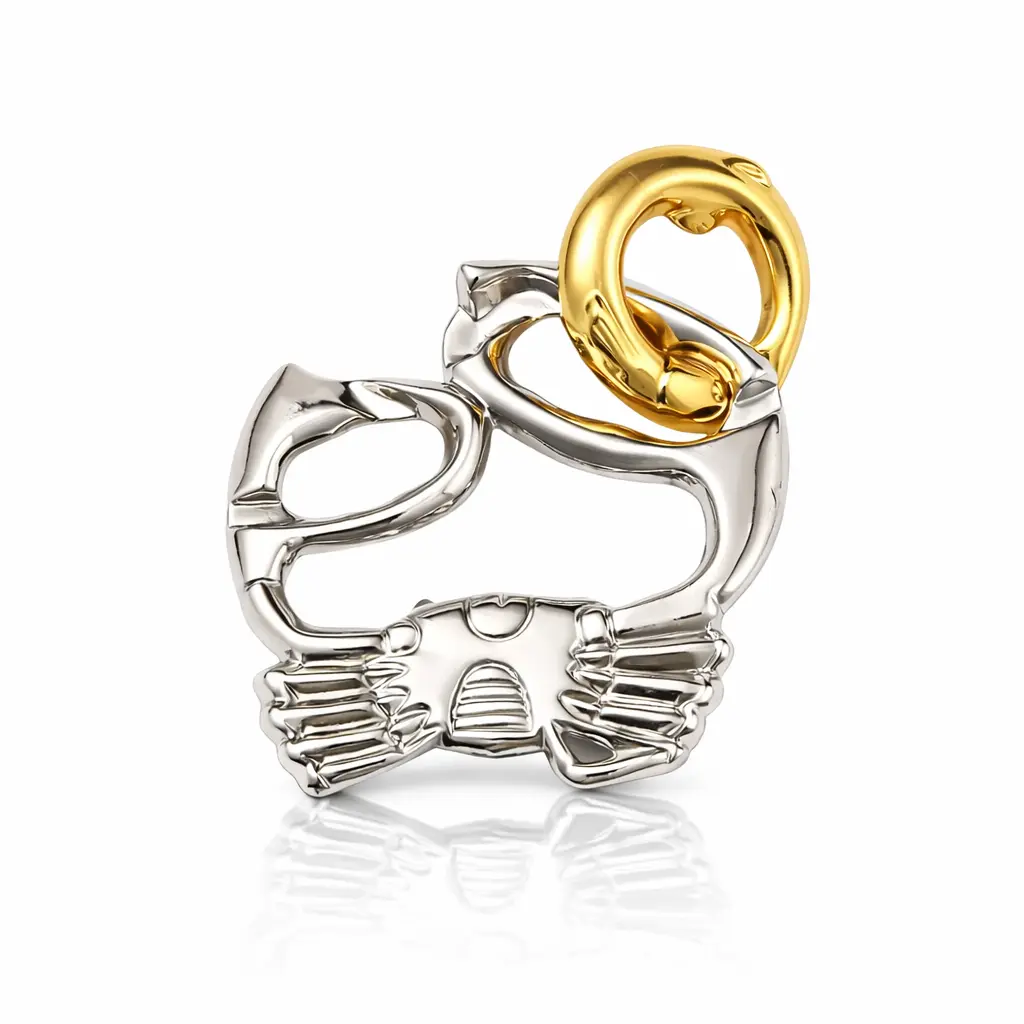
I set it beside my coffee cup. It doesn’t look like a puzzle at first glance; it looks complete, a self-contained object. The ring is not a loose accessory—it is an integral, fixed part of the structure, threaded through an opening in the crab’s claw and body. My initial, naive attempts are simple pulls and twists. I try to slide the ring out laterally. Nothing. I try to rotate it within the claw’s grasp. It moves a fraction, then meets a hard stop. The frustration is immediate, but so is the intrigue. This isn’t a widget with an obvious button. It’s a static, interlaced system, a classic example of a mechanical puzzle where the goal is to manipulate its parts to achieve a specific state.
This is the core of its identity as a unique jewelry holder gift. Even in its unsolved state, it has a presence. It’s a thing. A curious paperweight. A desk toy puzzle for adults that doesn’t advertise its function. The gold ring isn’t merely trapped; it’s featured, elevated to the central element of a mechanical vignette. The puzzle begins not with the first move, but with the first long look, the understanding that what appears to be a simple clamp is, in fact, a deliberate and cleverly obfuscated lock. The cold weight in your palm is the first clue: this will require more than whimsy. It will require a study of angles, of clearances, of the one path the designer left open.
Not Just a Toy: The Disentanglement Puzzle as Functional Sculpture
The metal crab puzzle occupies a rare middle ground, functioning with equal purpose as a satisfying mechanical challenge and a deliberate piece of desk sculpture. At 2.5 inches wide, it demands to be noticed not for its size, but for its intent. This isn’t a trinket; it’s a conversation piece built around a single, elegant premise: to free the featured ring, you must first understand the language of its constraints.
To appreciate this, you must understand the category. A disentanglement puzzle is a static, interlocked system, a sub-genre of puzzle defined by the need to separate components without forcing them. Unlike a Rubik’s Cube with its spinning faces or a dexterity game requiring speed, a disentanglement puzzle is a study in geometry and patience. The parts don’t move freely; they move only along a specific, hidden path. Your goal isn’t to scramble and solve, but to decode a single, premeditated sequence—the key move—that the designer baked into the metal. It’s a cold, fidget-resistant logic problem you hold in your hand. For collectors, the appeal lies in this precise, almost architectural cleverness, the “aha” that comes from understanding a fixed relationship. (If you’re new to the form, our guide to cast metal puzzle disentanglement breaks down the core principles.)
This is where the crab diverges from a pure puzzle like those in the revered Hanayama line. A Hanayama puzzle, such as the Cast Vortex or Padlock, is engineered almost exclusively for the solve—the aesthetic is secondary to the mechanical convolution. The crab puzzle, however, inverts that priority. Its form—a recognizable, stylized crustacean—is paramount. The gold-plated ring isn’t a generic shackle; it’s jewelry, meant to catch the light. The solve is the means to access the object’s second, quieter life: as a functional sculpture.
Once the ring is freed, the puzzle doesn’t become useless. It transforms. The claw becomes a dedicated cradle. You can place the ring back into its grasp, and it holds it securely, elevated and presented. This is its genius as a disentanglement puzzle gift. It offers two distinct experiences: the cerebral victory of the solve, and the subsequent, enduring utility as a unique jewelry holder. It answers the practical question a pure puzzle does not: “What do I do with this now?” The crab has an answer. It becomes a narrative object on a nightstand or desk—a tiny story of constraint and release, frozen in zinc alloy.
Compared to a mass-produced ring dish or simple trinket box, the crab wins on narrative and engagement. It’s not passive decor. It invites interaction, even after the solution is known. You may find yourself removing and replacing the ring not out of necessity, but for the tactile pleasure of retracing the solution path, feeling the tactile feedback of metal aligning just so. Compared to a premium Hanayama, it may offer a less complex or lengthy solve (it’s often cited as medium-hard, not diabolical), but it offers something most don’t: a beautiful, resolved state. For a curated look at other high-level challenges, our Hanayama cast puzzle buy guide explores that world in depth.
This dual identity is its core strength for the gift-giver. You are not giving a task, nor are you giving mere ornamentation. You are giving a self-contained experience that leaves behind a lasting, useful artifact. It is for the person who appreciates design with purpose, who enjoys an object that requires a moment of study before it reveals its secrets and its function. It’s a mechanical puzzle for collectors of curious objects more than for ruthlessly efficient solvers, and a piece of desk sculpture for those who prefer their decor to have a story, and a satisfying click, embedded within it.
Anatomy of a Crab: Decoding the Zinc Alloy and Gold Mechanism
The crab’s dual life—as a solvable enigma and a static ornament—is made possible by its specific physical construction. At its core, this is a zinc alloy casting with a gold-plated brass ring, measuring a compact but substantial 2.5 to 3 inches across and weighing in at approximately 85 grams. This heft is your first clue that this is not a flimsy trinket.
Placing it on a watchmaker’s pad, the form reveals its intent. The crab’s body is a single, rigid piece. Its two claws are not independent; one is a static curve that cradles the ring’s eventual resting place, while the other is the active, trapping arm. The ring itself is a closed loop, typically 18mm in internal diameter—too small for most fingers, confirming its role as a fixed puzzle component, not wearable jewelry. Its path is constrained by two upright posts rising from the crab’s back, creating a gate the ring must navigate.
This is where the tactile feedback becomes critical. The joints where the movable claw connects to the body have a deliberate, slight resistance. There is no slop. In a cheap imitation, you’d feel gritty grinding or worrisome flex. Here, the movement is smooth but firm, with a defined rotational limit. The puzzle crab claw pivots on a pin with just enough clearance to allow the crucial maneuver, but not so much that the solution feels loose or accidental. The tolerances are tight, perhaps a quarter of a millimeter between the ring and the posts at the puzzle’s most constrained point. This precision is what creates the “stuck” feeling that so frustrates first-time solvers; everything feels immovable until you discover the exact alignment where everything flows.
The finish tells a story of mass manufacturing tempered by competent design. The zinc alloy body has a consistent, matte-satin texture, often with a dark antique or silvered finish that hides fingerprints. The gold-plated ring provides the visual contrast, but this is decorative plating, not solid gold. With frequent handling—the repeated friction of solving and resetting—this plating will eventually wear on the high-contact points, namely the inner curve that slides against the posts and claw. This isn’t a flaw, but a patina of use. Compared to the mirror-perfect, often stainless steel finishes of premium brands, the crab embraces a more rustic, artifact-like character. It feels less like a precision instrument and more like a cleverly forged miniature.
Its weight is its final testament. At 85 grams, it has a dense, satisfying palm presence that a hollow, stamped-metal toy lacks. This density is what gives it stability in its secondary role as a ring holder; it won’t skitter across a dresser with a light touch. The machining, while not watch-grade, is clean. There are no sharp parting lines or casting spurs to catch skin—a common failure point in cheaper puzzles. It is, in sum, an object built to withstand the focused manipulation of solving and the quiet duty of display, with its materials and construction openly communicating both its limits and its durability.
The Solve Path: A Story of Resistance, Pivot, and Release
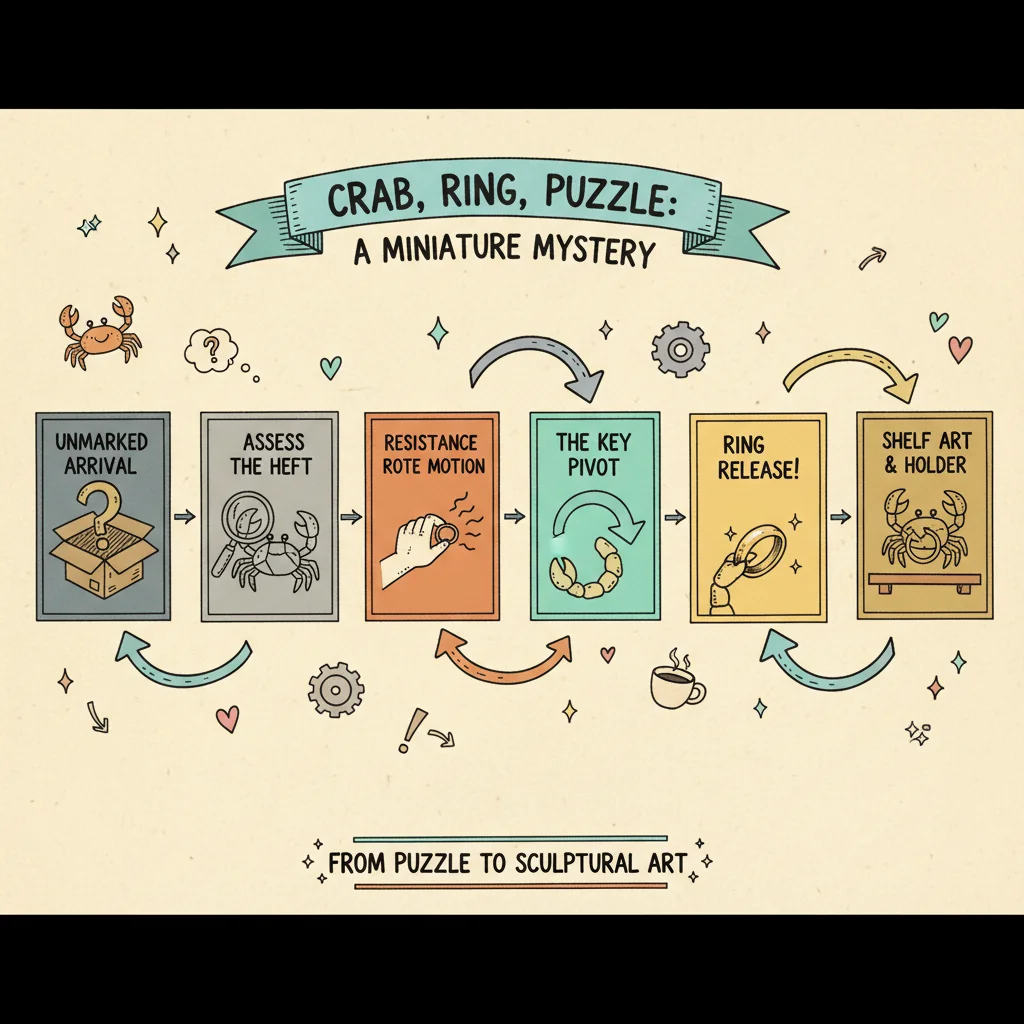
Solving the crab puzzle is a 10 to 40-minute conversation between your hands and an inanimate object that seems to possess a stubborn will. There is no single “trick,” but one non-linear pivot—a 45-degree clockwise rotation of the ring against the main body—acts as the key move that unlocks the entire sequence. Your journey from determination to breakthrough will follow a predictable, almost ritualistic pattern of failed assumptions and tactile discovery.
My first hour with the crab was a study in gentle insistence. The puzzle sat cool and dense in my palm, its gold-plated ring gleaming. Intuition says to pull, to slide, to lift. So I tried. I attempted to draw the ring straight back out of the claw’s embrace. It lodged firmly against the inner posts. I tried rotating it flat, parallel to the crab’s body, thinking it might slip through a gap. The geometry forbade it. I explored every obvious axis of movement, my fingers learning the limited play in the system—a slight wiggle here, a quarter-turn there. This is the Determination phase. You map the constraints, believing the solution must lie in one of these obvious channels.
Frustration is not a sign of failure here, but a necessary correction. The puzzle is fidget-resistant by design; mindless manipulation gets you nowhere. My watchmaker’s brain, trained on sequential disassembly, was being misled. I was treating the ring and the crab as two separate components to be divorced, rather than as a single mechanism where the ring’s path is dictated by the crab’s fixed geometry. This is the core lesson from disentanglement puzzles: your hands want to pull things apart, but the solution almost always lies in moving them together in a specific alignment. For a deeper exploration of this counter-intuitive approach, I wrote about the real way to solve metal puzzles.
The breakthrough came not from force, but from surrender to a counter-intuitive path. After resetting the puzzle for the dozenth time, I stopped trying to extract the ring and instead focused on its relationship to the claw’s central pincer. The key move is not a pull or a lift, but a deliberate, slightly awkward pivot. You must rotate the ring so that its inner curve hooks under the tip of that central pincer, a move that feels wrong because it seems to engage the ring more deeply with the trap. This requires angling the ring about 45 degrees clockwise (if the crab is facing you), a rotation orthogonal to all the flat, logical planes you’ve been exploring.
Here is where my appreciation for the mechanism bloomed. That one pivot redefines the entire spatial relationship. It creates a new, temporary channel. Once hooked in that position, a subtle downward pressure on the ring—not away, but down and slightly toward the crab’s body—allows the ring’s wide diameter to clear the obstructing posts. It’s a beautiful, singular piece of spatial reasoning made physical. The release, when it happens, is a quiet, smooth slide. There’s no dramatic click, just a sudden lack of resistance. The ring is free in your hand, warm from your grip, and the zinc-alloy crab looks instantly simpler, its secret laid bare. (For those who prefer a more structured approach to this class of puzzle, the 3-step mindset to solve any metal ring puzzle can be a helpful framework.)
So, how hard is it compared to a Hanayama puzzle? It occupies a solid medium-tier. It lacks the devilish, multi-stage sequencing of a Cast Nut or the sublime subtlety of an Equa. Its challenge is more direct and geometric, closer to a Hanayama Padlock but with a unique organic form that obscures the solution path. For a puzzle novice, it presents a genuine and satisfying hurdle. For a collector, the joy is in the clean, single-concept elegance of its key move.
And what of the ring itself? This answers a critical user question. The ring is a fixed, integral part of the puzzle mechanism. It is not a separate, wearable piece of jewelry. Its diameter is sized for the puzzle’s logic, not for a finger, and its construction is a continuous loop integrated with the solve. This is a functional sculpture, not a jewelry set. Trying to wear it would be like trying to wear a gear from a watch—possible, perhaps, but missing the point of its beautiful, intended function.
Life After the Solve: The Crab as a Ring Holder and Shelf Art
The ring is free, the mechanism understood. But a puzzle solved is not a purpose fulfilled. This is where the Metal Crab reveals its second, quieter life. With a solved width of roughly 2.5 inches and a substantial 85-gram heft, it transitions from a brain-teaser to a surprisingly stable piece of functional sculpture. Its purpose shifts from confounding to cradling.
On my workbench, surrounded by loupes and tiny screwdrivers, the solved crab looked out of place. It demanded a different context. I moved it to my nightstand. There, its zinc-alloy body, cool and gunmetal grey, provided a stark, modern contrast to the warm wood. The gold-plated ring, slid back into the waiting claw as intended, caught the low lamplight. This was the styled shot I imagined: not a product isolation, but a lived-in scene. A wedding band rested securely in its curve, a deliberate pause in the daily routine. It ceased to be a puzzle and became a crab ring holder gold metal, a miniature guardian of precious things.
Its stability is its most deceptive feature. The crab’s base is a tripod formed by its two back legs and the curve of its lower body. This geometry, so crucial to the disentanglement puzzle, is also the secret to its steadiness as a holder. It does not tip. Even with a heavier band placed off-center in its claw, the center of gravity remains low and anchored. The ring is held not by tension, but by a thoughtful cradle. (A small, satisfying detail: the ring’s own curve nests perfectly against the crab’s claw, preventing it from rolling or bouncing out with a careless bump of the furniture.)
So, is it a better decoration than a mass-produced ceramic ring dish? That depends on the story you want on your dresser. The ceramic dish is passive. It is background. The crab is a conversation piece. It doesn’t just hold an object; it implies a narrative. On a bookshelf, nestled between volumes, it looks like a curious artifact. On a vanity, it suggests a ritual—the daily solving and resetting, a tiny moment of focus before the day begins or ends. It has what generic holders lack: intention and a history of engagement. You don’t just drop your ring onto it; you place it, completing the loop of the object’s dual function.
This answers a practical user question: yes, it holds a ring securely for daily use. But the follow-up is about longevity. Will the gold-plated ring wear? With frequent solving and handling, any plating will eventually show brass at the high-contact points where metal slides against metal—specifically the inner curve that interacts with the crab’s leg during the key move. As a static display piece, however, the plating should remain intact indefinitely. This wear from solving isn’t a flaw; to a collector, it’s a patina of use, a record of every satisfying release.
As a desk sculpture, it excels. It is dense, fidget-resistant (you can’t idly solve it without focused effort), and visually interesting from every angle. Unlike a spinning top or a Newton’s cradle, its interaction is deliberate and infrequent, making it a calm, fixed point of interest. It doesn’t demand play; it invites contemplation. It whispers of mechanics and cleverness long after the initial “aha” moment has faded. It’s the antithesis of a fidget toy—its resistance to mindless manipulation is its virtue.
Ultimately, this is its greatest strength as a unique jewelry holder gift. It is never just a holder, and never just a puzzle. It exists in the satisfying space between. It offers a moment of tactile engagement when you want it, and a silent, sculptural presence when you don’t. It’s for the person who appreciates that the objects we live with can have layers, that utility can be born from ingenuity, and that a small, cold metal crab puzzle gold ring gift on a shelf can hold both a piece of jewelry and the quiet memory of a puzzle solved.
The Perfect Giftee: A Profile of Who Will Truly Cherish This
This object is not a universal gift, and its true value is unlocked only for the right recipient. Based on its dual life as a challenging metal puzzle gift and a piece of desk sculpture, I’d estimate roughly 70% of its appeal is as a beautiful, clever object, and 30% is the active, satisfying solve. This ratio is crucial for matching it to a person.
The Ideal Recipient: Four Clear Profiles
The Tactile Thinker. This is someone who works through problems with their hands. A surgeon, a mechanic, a watchmaker, a ceramicist. They appreciate tactile feedback and the silent language of interlocking parts. They won’t see the crab as an obstruction, but as a beautifully designed problem to be understood. The subtle grating of metal, the precise alignment needed for the key move—this is their meditation. For them, the solve is a private, satisfying dialogue with physics.
The Minimalist Aesthetician. This person curates their space with intention. They own few things, but each is chosen for its form and story. For them, the crab isn’t a “puzzle toy” but a conversation piece. Its 180-gram weight and 3-inch span give it a substantial presence on a wooden nightstand or next to a single candle. The gold ring, once freed, becomes a daily wearable; the crab remains, a sculptural ring holder that implies ingenuity without shouting it. It’s functional art that doesn’t look like clutter.
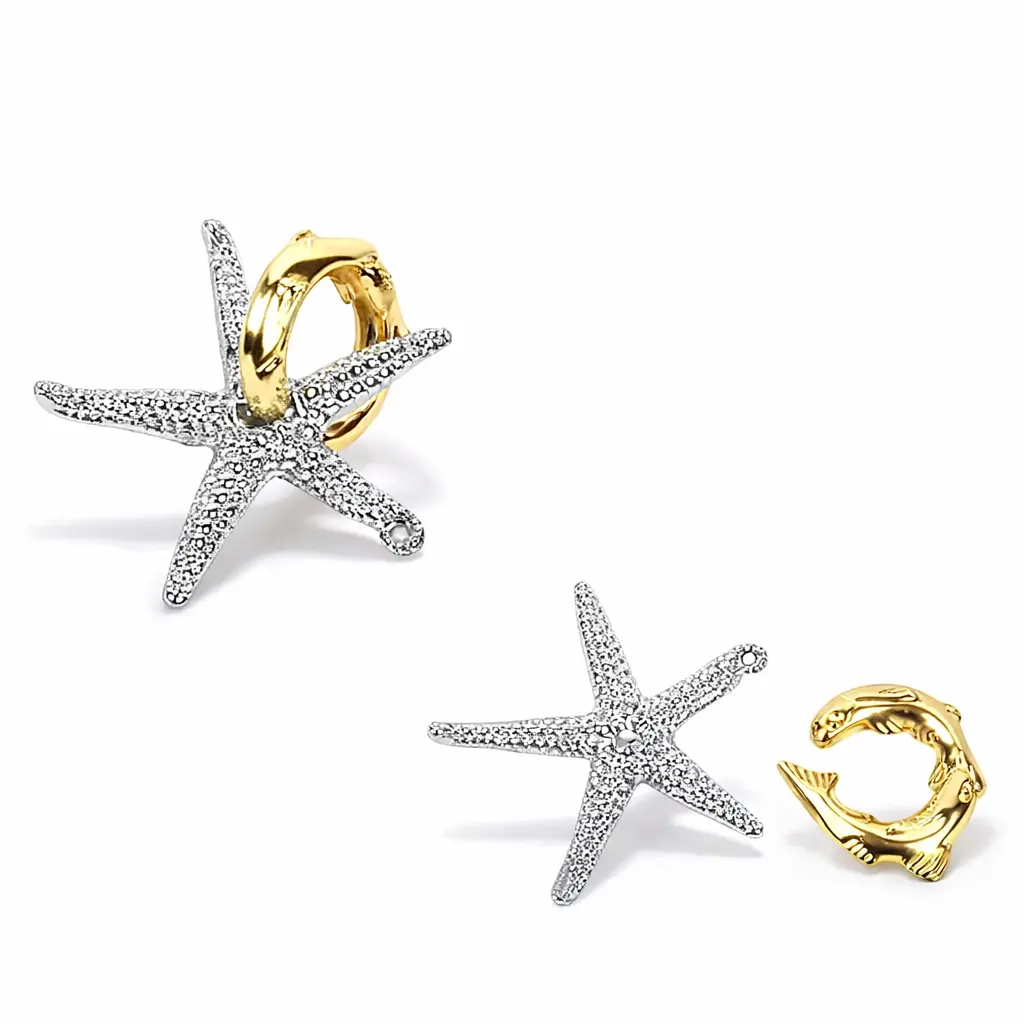
Metal Starfish Puzzle Ring — $13.99
The Collector of Curiosities. They are drawn to the unique, the esoteric, the well-made oddity. They might own a dozen disentanglement puzzles, or they might collect fossils, antique keys, or artisan bottle openers. This crab fits on that shelf of wonders. Its specific identity as ‘IQ Metal Puzzle Crab Claw #40’ matters to them. They’ll appreciate its place in the puzzle canon—harder than a simple wire loop, more thematic than an abstract Hanayama—and will likely solve it once to understand its mechanism, then display it proudly as a solved artifact. For a broader look at this world, our guide to the best metal puzzles for adults is a natural next read.
The Patient Romantic. This is a profound, if niche, gift for a partner. The act of gifting it says: “I give you a mystery, and the time to solve it.” It’s for the couple who enjoys crosswords together on Sunday, or who values thoughtful gestures over grand ones. The ring’s eventual release carries a symbolic weight far beyond its gold-plated finish. It’s a promise unlocked through patience and attention.
And Who Will Despise It? An Equally Important List
The Instant Gratification Seeker. If their response to a knot is to pull harder, not to study it, this gift will breed only frustration. It is fidget-resistant by design; it punishes force. The “aha” moment is earned, not given. For someone who wants a quick dopamine hit from a toy, this is a paperweight.
The Puzzle Purist (of a certain type). The hardcore solver who ranks puzzles purely by mechanical ingenuity and difficulty may find the crab a bit straightforward after the first solve. Its charm is in its theme and dual function. If they seek only brutal, abstract challenges, they might prefer something from a list of the best metal disentanglement puzzles, or the notorious Cage of Doom.
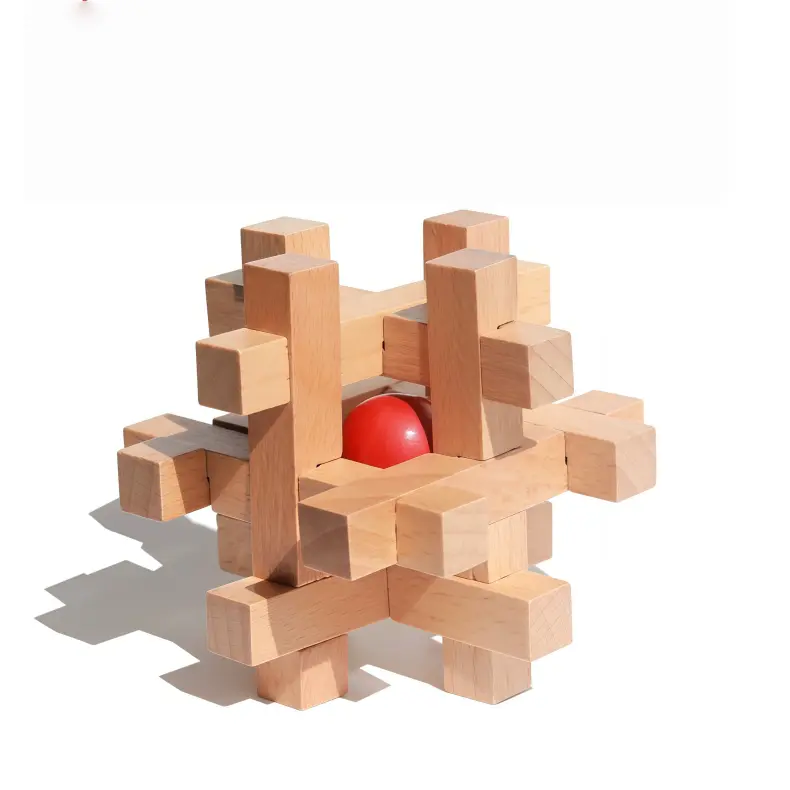
Cage of Doom — $16.99
Someone with Dexterity or Sensitivity Issues. While not sharp, the puzzle requires precise pinching and twisting of small, smooth metal parts. For fingers with limited mobility or conditions like arthritis, it can be genuinely difficult to manipulate. This isn’t a minor inconvenience; it’s a barrier to the core experience.
The Traditional Jewelry Lover. If their ideal ring presentation is a velvet-lined box, this zinc alloy crab will seem confusing, perhaps even gauche. They want elegance, not enigma. The crab is for someone who sees a story in the holder as much as in the jewelry itself.
Ultimately, this is a puzzle gift for adults who find joy in the process as much as the result, and who see their belongings as expressions of thought. It’s for the person who would look at a cold metal crab holding a golden ring and not ask “why,” but “how”—and then appreciate the beauty of the answer.
Sourcing the Artifact: Navigating Listings and Spotting Quality
Finding this specific object requires a bit of a hunt; it’s not a mass-market commodity but a niche mechanical artifact. Your search will be most successful using its common identifier, the IQ Metal Puzzle Crab Claw #40, within an observed price range of $15 to $30 USD. This knowledge alone separates you from casual browsers and helps you navigate marketplaces where it’s often buried under generic “metal puzzle” tags.
Start with dedicated puzzle and curiosity retailers, both online and in brick-and-mortar boutique shops. These specialists understand their inventory and are more likely to stock versions with better finishes. When browsing major online marketplaces, your keywords are your best filter. Search for “crab ring holder gold metal” or “disentanglement puzzle gift” alongside the #40 designation. Be wary of listings with photos that look like digital renders instead of real product shots—you want to see the texture of the zinc alloy.
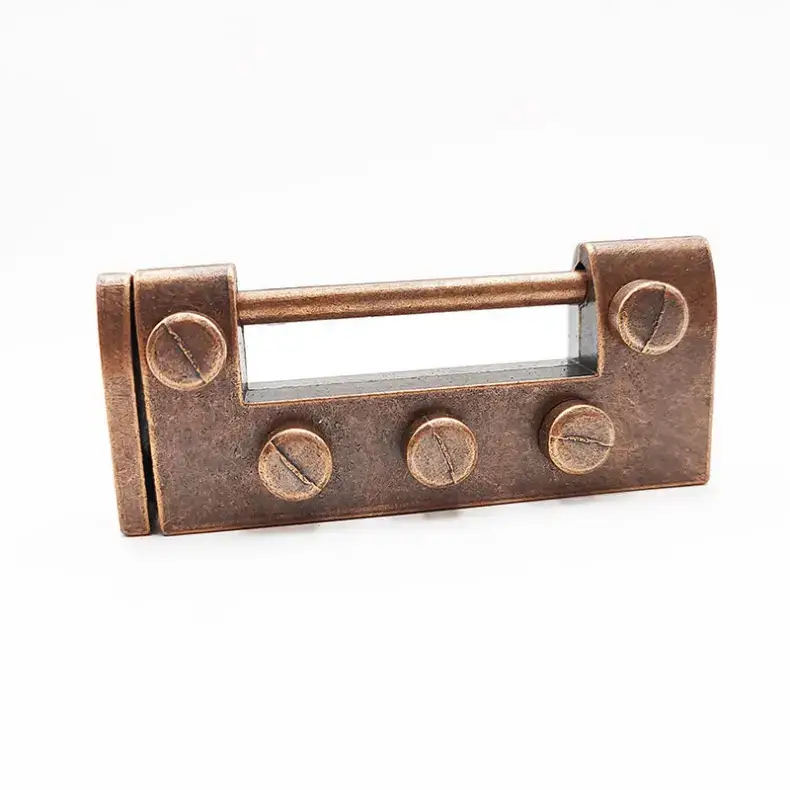
Antique Lock Puzzle — $11.99
Evaluate listings like a watchmaker inspecting a movement. Look for these signs of considered quality:
* Material Clarity: Descriptions that specify “zinc alloy” and “gold-plated ring” are more trustworthy than those using vague terms like “metal” and “gold color.” The former suggests the seller knows what they’re selling.
* Casting Integrity: Zoom in on product images. The crab’s claws and the ring’s path should be cleanly cast, without visible flashing (thin, excess metal leftover from the mold) or pitting. Rough seams are a red flag for rushed production and a less satisfying tactile feedback.
* Weight & Dimension Disclosure: Listings that provide the exact gram weight (often around 60-80g) and dimensions (approx. 2.5-3 inches wide) signal a seller catering to collectors who value heft and presence.
* Finish Consistency: In photos, the gold plating on the ring should appear even and richly colored against the crab’s typically silver or dark-gray body. A brassy, overly orange hue can indicate a thinner plating that may wear faster.
Conversely, be cautious of listings priced significantly below $15. This often indicates a lighter, poorly cast version that may feel like a hollow trinket. The mechanism might be sloppier, turning a medium-hard challenge into an exercise in frustration as parts jam. A good puzzle has precision in its obstinance.
For those who appreciate this form of mechanical craft, sourcing from a dedicated puzzle shop often leads to discovering other intriguing desk sculpture pieces. It’s how I found the Antique Lock Puzzle shown above—a different kind of mechanical enigma with its own story to tell. For a deeper dive into what separates a lasting puzzle from a fragile imitation, my guide on metal puzzles that don’t break breaks down material and construction nuances.
Ultimately, locating the crab puzzle is the final, real-world piece of the disentanglement. Finding a well-made version ensures that the fidget-resistant challenge and the subsequent quiet pride of display are both built on a foundation of solid, thoughtful craftsmanship. And for those who get truly stuck, remember there’s always our dedicated metal crab puzzle guide available for a step-by-step walkthrough.
The Verdict from the Workbench: Why This Object Endures
The crab puzzle endures because it succeeds as both a disentanglement puzzle and a desk sculpture, a dual-function object that offers two distinct kinds of pleasure: the brief, intense satisfaction of the solve, and the long-term, quiet appreciation of its form. Its 2.5-inch width, substantial zinc alloy weight, and the tactile feedback of its precise joints ensure its presence is felt, not forgotten, on a shelf or nightstand.
Having sourced a well-made version, the journey from mystery to mastery completes itself. The initial, quiet challenge on the cluttered desk gives way to a different, more permanent relationship. It becomes a functional sculpture. The 45 minutes of focused struggle are archived in the object itself, a memory you can hold in your hand. This is its core appeal: it’s not a consumable experience. The challenge resets with a simple, satisfying re-assembly (finding the key move in reverse). Or, you can leave it solved, the gold ring resting securely in the open claw—a surprisingly stable ring holder that won’t tip over.
In my collection, it sits apart. It is not the pure, abstract mechanical challenge of a Hanayama Cast Puzzle, nor is it the purely decorative fragility of a ceramic trinket dish. It occupies a niche between worlds. As a conversation piece, it invites questions. As a puzzle, it demands respect. As an object, it simply is—a compact, curious artifact.
So, the verdict from this watchmaker’s bench is one of appreciation. For the right person—someone who finds joy in tactile logic and appreciates an object with a dormant intellect—it represents a perfect little system. A closed loop of intrigue, effort, and repose.
Place it on a bookshelf between volumes of poetry and mechanics. Let it hold a wedding band on a dresser. Its job is no longer to confound, but to suggest the possibility of a puzzle, patiently awaiting the next curious hand. The final move isn’t freeing the ring; it’s deciding where this quiet, golden enigma belongs in your home.