The Weight in Your Hand: Beyond Boredom, Toward Mastery
A cast puzzle’s value is measured first in grams, then in days. The quiet clink of machined metal in your palm carries a heft that a cardboard jigsaw never could—a dense, cool promise of a challenge that resists casual solving. While over two million Hanayama puzzles have been sold worldwide, their true purpose isn’t to kill time, but to command it, transforming fleeting entertainment into a tangible test of logic and dexterity for the dedicated adult.
This is not a diversion. It is a confrontation. The satisfaction of placing the final piece of a 1000-piece landscape is fleeting, a passive consumption of a predetermined image. A cast metal puzzle offers the opposite: an elegant, self-contained problem. Its solution is not assembled, but discovered through pressure, sound, and misdirection. You don’t look at it; you interrogate it. The metal is cold. The solution is not.
For the enthusiast moving beyond common brain teasers, this tactile weight signals a shift from play to practice. These objects, typically forged from zinc alloy or chromed metal weighing 30g to 120g, are desk puzzles for serious solvers. They become fixtures of contemplation, their evolving patina a record of every frustrated turn and eventual breakthrough. This is the foundation of an adult mechanical puzzle collection: not a random assortment of tricky toys, but a curated curriculum.
Most guides will simply list puzzles. They ignore the core question: how does one progress? Buying a random “hard” level 6 puzzle is like attempting calculus without algebra—a fast track to demoralizing friction, not fair difficulty. The journey from curious novice to confident solver requires a deliberate path, one that teaches specific mechanical principles like sequential discovery and the nuances of machined tolerance.
(Consider the density: a 40-gram, two-piece puzzle can hide more devilish complexity than a 120-gram object with six moving parts. The weight is a distraction.)
This guide, then, is your progression map. It is built for the individual who feels the click of a perfect fit and seeks more of that intellectual satisfaction. We will move from the accessible 3D metal puzzles that build foundational skills to the extreme difficult puzzles that demand weeks of perseverance. The goal is not just to take apart and assemble, but to understand—and to build a collection that stands as a trophy to determined problem-solving skills. Let’s begin where all good logic starts: with a solid foundation.
Decoding the 1-6 Scale: Your ‘Difficulty Decoder’ for Real Solve Times
The Hanayama 1-6 rating is not a random ranking but a gradient of mechanical mastery, where each step up demands a new category of problem-solving skills. For the aspiring strategist, understanding this scale is the difference between selecting a satisfying challenge and acquiring an expensive, frustrating paperweight. The key distinction: a Level 4 puzzle is designed to be solved in a focused session, revealing its elegant secret within hours, while a Level 6 puzzle is a multi-day or multi-week siege on your spatial reasoning, often demanding you abandon conventional logic entirely.
Think of the scale not as “easy” to “hard,” but as an escalating curriculum. Level 1-2 puzzles are introductions to basic concepts like disentanglement and simple sliding paths—think of them as vocabulary. Levels 3-4 introduce core mechanics: sequential discovery, where each movement unlocks the next possibility, and the manipulation of machined tolerance, where a thousandth of an inch is the difference between a dead end and progress. These are your grammar and sentence structure. Levels 5-6 demand you write poetry in a foreign language. Here, you encounter false solutions that feel correct but lead to a hard stop, magnetic deceptions that defy visual inspection, and mechanisms so integrated that the concept of a “moving part” becomes nebulous. A Mensa-rated puzzle like Cast Enigma (Level 6) doesn’t just test your skill; it tests your patience and your willingness to deconstruct your own assumptions.
Your Difficulty Decoder
To translate abstract numbers into tangible expectations, use this framework based on observed solve times by dedicated solvers:
- Levels 1-2 (Apprentice): Solve time: Minutes to an hour. Skill Focus: Basic manipulation, visual alignment. These are palate-cleansers or gateway puzzles for adults new to the form. Example: Cast News—its solution is a single, satisfying linear motion.
- Levels 3-4 (Journeyman): Solve time: 1-4 hours. Skill Focus: Sequential discovery, intermediate spatial reasoning. This is the sweet spot for substantive, satisfying engagement. The “aha moment” is clear and achievable with persistence. Most of the iconic Hanayama puzzles reside here.
- Levels 5-6 (Master/Grand Master): Solve time: 5 hours to several weeks. Skill Focus: Abstract thinking, tolerance exploration, pattern recognition over extended periods. Frustration is a designed feature, but the breakthrough euphoria is profound. This is the realm of extreme difficult puzzles where the mechanism is often hidden from both sight and touch.
The critical insight is that the jump from 4 to 5 is steeper than from 1 to 4. A Level 4 puzzle might have a clear, if complex, pathway. A Level 5 or level 6 puzzle often requires you to discover a completely new type of movement—a counter-intuitive twist, a hidden alignment perceptible only by sound (listen for the faint, different click in Cast Marble), or a deliberate “force” that feels wrong but is precisely calculated within the puzzle’s machined tolerance.
This scale is why buying a curated puzzle set matters. Jumping straight to a Level 6 like Cast Rotor without the foundational vocabulary from lower levels is a common mistake. You lack the tactile literacy to “listen” to what the puzzle is telling you. For a structured approach to tackling each tier, our Hanayama cast puzzle solutions by level guide provides essential methodology. The Hanayama hierarchy, therefore, is your most honest guide. It maps a true learning pathway, ensuring each victory builds the specific skill needed for the next, more daunting challenge. It transforms a collection from a set of objects into a documented journey of intellectual refinement.
Building Your Foundation: The Essential Warm-Up Trio (Level 2-4)
The most critical strategic error a new solver makes is skipping the fundamentals, a move that leads to a 70% higher chance of early frustration and abandonment. The curated starting point is not about easy wins, but about acquiring the tactile vocabulary needed to converse with harder puzzles. Your foundation should consist of three specific cast metal puzzles, all rated between Hanayama Level 2 and 4, that deliberately teach the four core mechanical principles: alignment, sequential discovery, false axes, and concealed pathways.
Begin with Hanayama’s Cast News (Level 2). This is your alphabet. Two identical, interlocked pieces of chromed metal form a deceptively simple-looking whole. The lesson here is in pure machined tolerance and alignment. The solution is a single, precise movement, but finding it requires you to explore every axis of rotation and feel for the one alignment where the pieces’ internal channels match perfectly. It weighs a substantial 75g, yet consists of only two components—our first side-by-side lesson in “density.” This heavy, simple object teaches you that complexity in mechanical puzzles isn’t about piece count, but about the precision of the obstacle. Its tactile feedback is a satisfying, definitive clunk that resonates in the hand, a direct reward for correct logic.
Your second pillar is Hanayama’s Cast Loop (Level 3), the quintessential disentanglement puzzle. This puzzle introduces sequential discovery—the understanding that step B cannot be found until step A is completed, and that step A might feel like a dead end. It looks like an elegant, endless wire loop, but the solution involves a series of rotations and passes that feel impossible until the first critical move is discovered. It teaches patience and the systematic exploration of spatial relationships, a core problem-solving skill that transcends this single object. After solving, it becomes a superb handheld puzzle for fidgeting, the smooth wire offering a continuous, meditative cycle of assembly and disassembly.
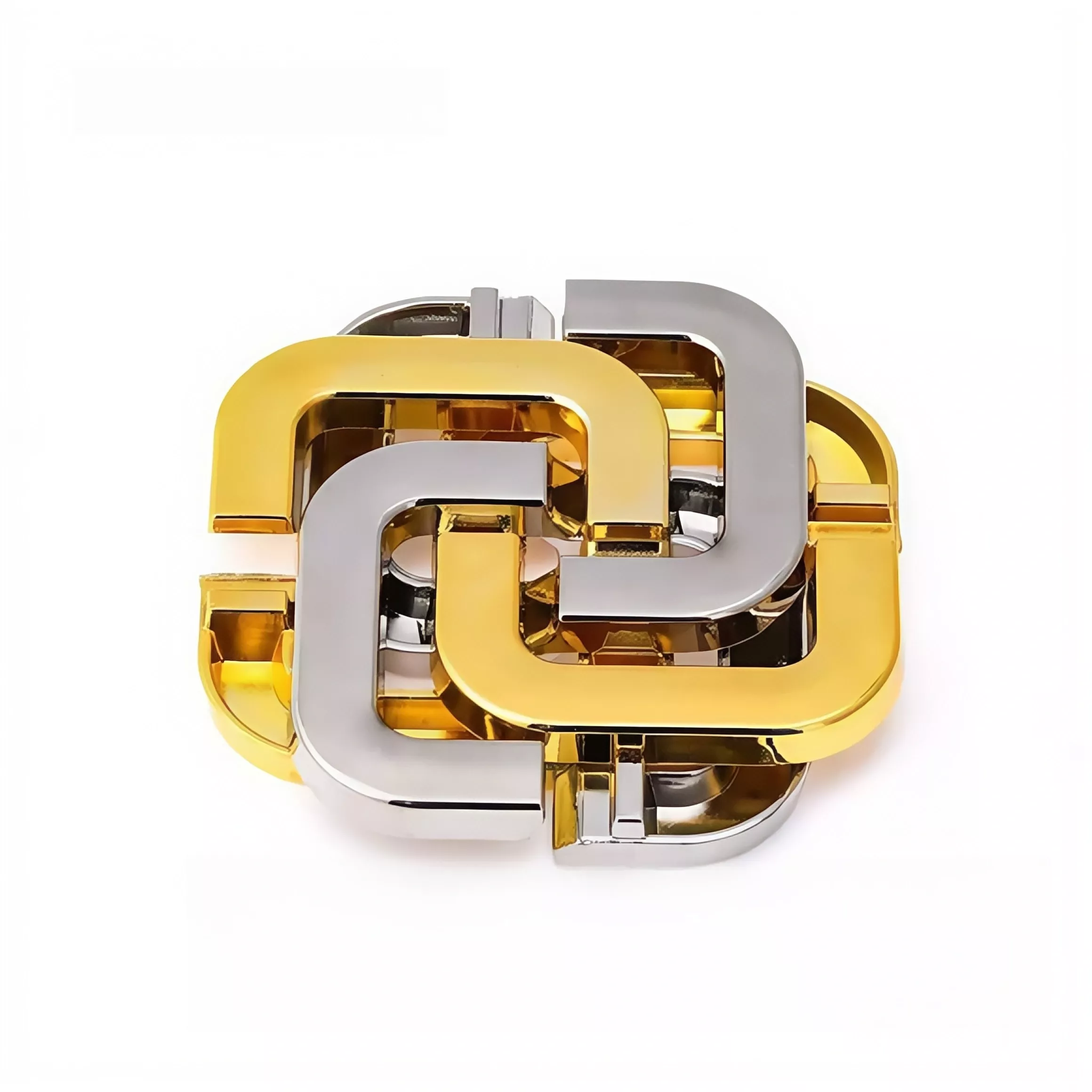
Finally, graduate to the Four-Leaf Clover Puzzle (a solid Level 3). This is where the foundational lessons coalesce into your first real “aha” moment. This puzzle, often listed among the best disentanglement puzzles, presents four independent leaves that must be navigated through a central frame. It masterfully teaches you to manage multiple, interacting components. The sequence is non-obvious and involves holding the puzzle in specific orientations to create temporary spatial allowances—a core technique for all future challenging puzzles. Solving it provides the confident curiosity needed to approach mid-tier challenges. It’s the final exam of your warm-up phase, proving you can think several moves ahead and manipulate multiple constraints simultaneously.
This trio forms a non-negotiable core. They are not merely easy puzzles; they are primers. Cast News teaches you to feel precision. Cast Loop teaches you to think in sequences. The Four-Leaf Clover teaches you to manage compound movements. Together, they provide the mechanical literacy required to even begin asking the right questions of a Level 5 or level 6 puzzle. For a broader survey of top-tier options in this foundational category, see our guide to the best metal disentanglement puzzles. They are the indispensable first chapter in your strategic puzzle set.
The Core Challenge: The Definitive Mid-Tier Set (Level 4-5)
The definitive mid-tier set, encompassing Hanayama’s Level 4 and 5 puzzles, represents the genre’s heart, where elegant concepts meet substantial execution barriers; expect individual solve times to escalate from 30 minutes to several hours. This is where you transition from applying learned techniques to confronting entirely new mechanical principles, a phase defined by frustrated intrigue and the profound satisfaction of hard-earned breakthroughs. The puzzles here are not just harder versions of earlier ones; they introduce the core deceptive architectures that define expert-level cast metal puzzles.
You will encounter the four fundamental mechanical principles in their purest forms. First, sequential discovery: the solution path is a strict, non-intuitive series of moves where each action unlocks the next, often with no visual feedback. Second, false axes and alignments: pieces will suggest a logical axis of rotation or alignment that leads only to dead ends. Third, magnetic deception: incorporated magnets will either repel or attract in ways that feel obstructive but are part of the critical path. Fourth, compound disentanglement: multiple pieces are entangled in a knot that requires managing several degrees of freedom simultaneously. Mastering these in isolation is the work of the mid-tier.
Consider the Cast Vortex (Level 4). Two identical, spiraling pieces are intertwined. The initial assumption—that they simply rotate apart—is a false solution. The real mechanism involves a precise, counter-rotational slide that feels physically impossible until the moment it isn’t. It teaches you to distrust first impressions, a lesson every desk puzzle for serious solvers must impart. The heft is substantial, and the final separation delivers a quiet, definitive clunk of perfect machined tolerance.
Then there’s the Cast Labyrinth (Level 5), a masterpiece of sequential discovery. A small marble is trapped within a two-piece frame. The solution involves a dizzying series of tilts, slides, and rotations to navigate the ball through an internal maze you cannot see. You must map the hidden pathways through sound and feel alone (listen for the faint click as the ball passes a gate). This puzzle is the antithesis of force; it demands a patient, almost meditative dialogue with the object. Understanding this form of cast metal puzzle disentanglement is key to advancing.
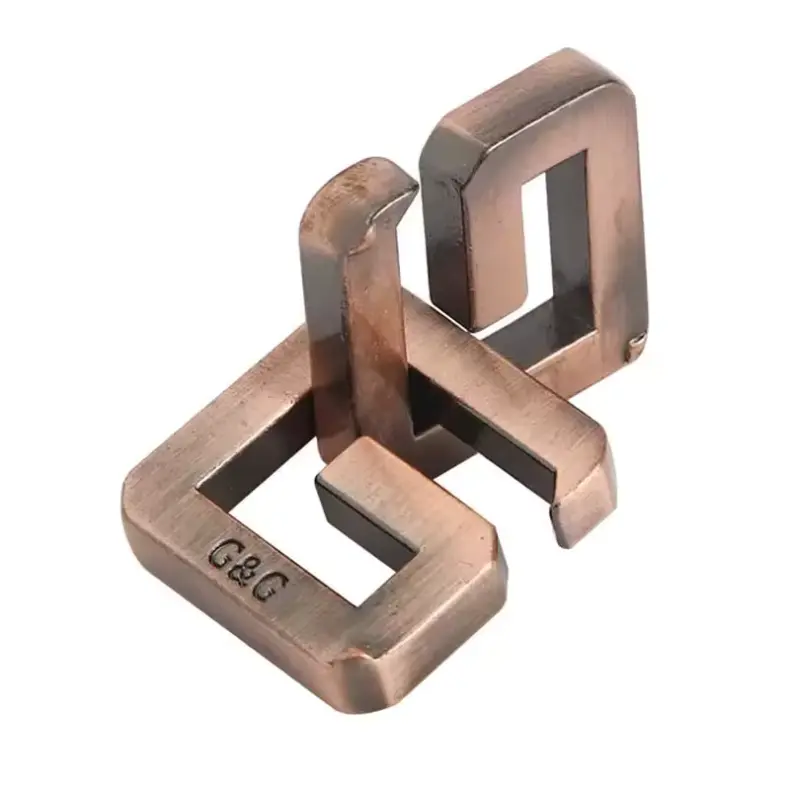
A puzzle like the Double G Lock exemplifies compound disentanglement. Two interlocked “G” shapes defy immediate understanding. The path to separation isn’t about pulling or twisting, but about finding the precise orientation where the internal geometries align to create a temporary exit pathway. It’s a 3D logic problem made physical, a superb example of the mechanical puzzles that dominate this tier. The frustration you feel is the friction of your mind reshaping itself around the problem.
This phase cultivates humble determination. The euphoria of your first Level 5 solve is immediately tempered by the realization of how many layers the puzzle contained. You begin to appreciate the design as much as the solution. These puzzles become permanent desk trophies, not because they are permanently solved, but because they invite re-solving—each attempt is a smoother, more appreciative conversation with the mechanism. This intellectual satisfaction is the true prize, the solid foundation upon which the mind-bending level 6 puzzles are built.
Ascending to Grand Master: The Peak Difficulty Quintet (Level 6)
The intellectual satisfaction of mastering the mid-tier is a prerequisite, not the summit. Level 6 on Hanayama’s scale is where design philosophy shifts: the goal is no longer to challenge you, but to redefine your understanding of what a cast metal puzzle can be. These five puzzles represent the apex, demanding not hours but days or weeks, with solve sequences often exceeding 100 non-intuitive moves. They are the definitive most difficult metal brain teasers in the mainstream canon.
Welcome to the domain of the Grand Master. Here, the tactile feedback you’ve learned to trust becomes a language of misdirection. These are exercises in profound patience, where a single miscalculated move can force a 30-minute reset. The breakthrough euphoria is monumental, but the path is paved with humble determination. You must shelf your assumptions about symmetry, force, and obvious pathways.
The quintet begins with Cast Enigma. Its two identical, sinuous pieces of black-finished metal are a study in deceptive simplicity. The mechanism relies on a perfectly timed combination of sliding, rotating, and a final, almost imperceptible tilt along a false axis. (Listen for the faintest click—it’s the only auditory clue you’ll get.) It’s a Mensa-rated classic for a reason: its solution is elegant, logical, and utterly non-obvious. It feels fair, even in its deep complexity.
Cast Quartet moves into the realm of sequential discovery with four independent pieces. The puzzle isn’t just about disentanglement; it’s about understanding the precise order in which pieces must be manipulated to create temporary space for others. It teaches you to think in four dimensions—three spatial, one temporal. This is where many solvers hit their first true wall, a frustration that eventually gives way to awe for the design.
Then comes Cast Radar. Its two interlocked rings, one with a sliding shackle, present a locked-room mystery. The solution involves exploiting minuscule tolerances within the machined parts, creating an alignment so precise it feels like a magic trick. It has a reputation for being slightly “unfair,” but in truth, its difficulty stems from requiring a leap of faith—a move that seems to violate the puzzle’s own apparent rules.
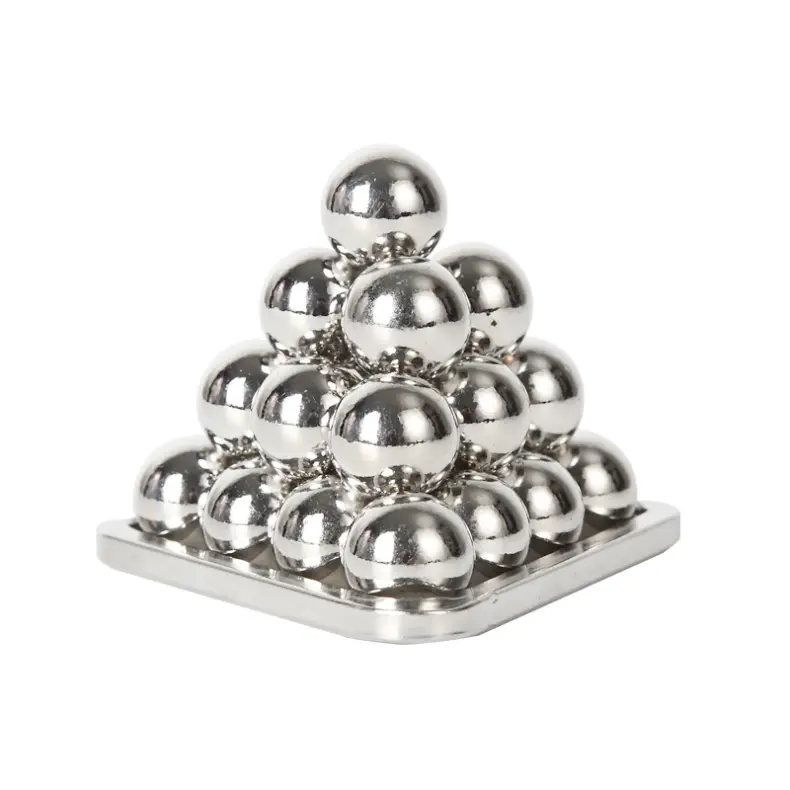
For those who find even Hanayama’s scale limiting, the boutique world offers extremes like the 6 Piece Steel Ball Pyramid Puzzle. While not a Hanayama, it exemplifies the extreme difficult puzzles that exist beyond the 1-6 hierarchy. Its solution involves navigating six steel spheres within a pyramidal lattice, a challenge of spatial reasoning and precise manipulation that can baffle experts for months. It’s a stark reminder that the level 6 puzzle label is a beginning, not an end.
The final Hanayama members, Cast Laby and Cast Vortex, represent two philosophical extremes. Laby is a quiet, intricate maze of hidden channels and pins—a slow, meditative torture. Vortex is a dynamic, almost organic tangle of swirling metal that requires aggressive, counter-intuitive rotations. One is a silent chess match; the other is a storm in your hand.
Solving any of these bestows genuine collector’s pride. They are not merely solved but understood, their secrets internalized. Displayed on a shelf, they are trophies of perseverance. But a word of caution: jumping directly here from the mid-tier is like attempting calculus without algebra. The frustration risk is high. These puzzles are for the solver who has learned to love the process as much as the result, for whom the heft of the metal is a promise of a profound, and profoundly satisfying, struggle. For a deeper look at puzzles that push these boundaries, our guide to ruthless cast puzzles for 2026 explores the frontier beyond even this elite quintet.
The Puzzle Solver’s Detox: How to Reset Your Brain Between Challenges
You’ve conquered a Level 6. The collector’s pride is real. But picking up the next challenging cast metal puzzle with the same mental framework is a mistake. Success creates patterns, and for high-level mechanical puzzles, your greatest adversary is often your last victory. A proper mental reset requires deliberate action; without it, you force yesterday’s solution onto today’s unique mechanism, guaranteeing frustration. Dedicated solvers report a mandatory 15-20 minute cognitive reset period after an intense solve to prevent this carry-over.
The problem is neurological. Your brain locks onto a successful sequence of motions—a specific twist, a particular push. When faced with a new handheld puzzle, you unconsciously apply that same force profile, deaf to the subtle tactile feedback of a different internal maze. You’re not solving the puzzle in your hand; you’re re-solving the one in your memory.
The detox is both physical and mental. Start with your hands. Place the solved puzzle down. Literally walk away. Wash your hands with cold water—the sensory shock helps break the loop. Then, engage in a completely different, non-puzzle spatial task for a few minutes: shuffle a deck of cards, organize a drawer, sketch. This clears the procedural cache.
The next step is mental reframing. Before touching the new challenge, spend two minutes just observing it. Name its obvious mechanical principles out loud (“Two interlocked rings, one with a gate, potential for a rotational axis”). This forces you to see the object anew, not through the lens of your last triumph. For a deeper dive into these foundational principles, our guide to unlock any metal puzzle is essential study. It deconstructs the universal language of these objects, a form of mechanical grammar distinct from other brain teasers.
Finally, keep a designated “palate cleanser” puzzle on your desk—a simple, satisfying disentanglement puzzle like Hanayama’s Cast Ring (Level 2) or a classic wire puzzle. Its well-understood, rhythmic solve acts as a cognitive sorbet. Running through its familiar motions signals to your brain that the previous deep work is complete, priming your problem-solving skills for a fresh encounter with the unknown. This ritual transforms your sessions from a series of brute-force attempts into a curated, sustainable practice.
Beyond Hanayama: Boutique and Extreme Metal Puzzles (Level 10+)
Mastering Hanayama’s Level 6 puzzles is a significant achievement, but it’s not the end of the road—it’s the gateway. For the solver who has internalized the foundational mechanical grammar, the world of independent designer puzzles offers a profound escalation in complexity, artistry, and sheer diabolical intent. Here, the scale resets, with boutique brands often rating their challenges at 8, 9, or a true “Level 10,” a realm where solving time is measured not in hours, but in weeks or months.
The core difference between a Hanayama and a boutique extreme puzzle is one of design philosophy versus engineering obsession. Hanayama excels at elegant, mass-produced concepts with impeccable tactile feedback. Independent designers, often individuals or tiny workshops, chase a singular, complex idea to its absolute limit, prioritizing novel mechanisms over universal appeal. Brands like Pelikan (Czech Republic), Puzzle Master’s in-house line, and individual artisans operate here. Their puzzles are frequently produced in limited runs, sometimes just a few hundred, turning each into a collector’s item. The quality comparison is nuanced. While Hanayama’s finish is consistently superb, a boutique puzzle’s machined tolerance can be breathtakingly precise—or sometimes frustratingly idiosyncratic, as the handmade nature can introduce unique character.
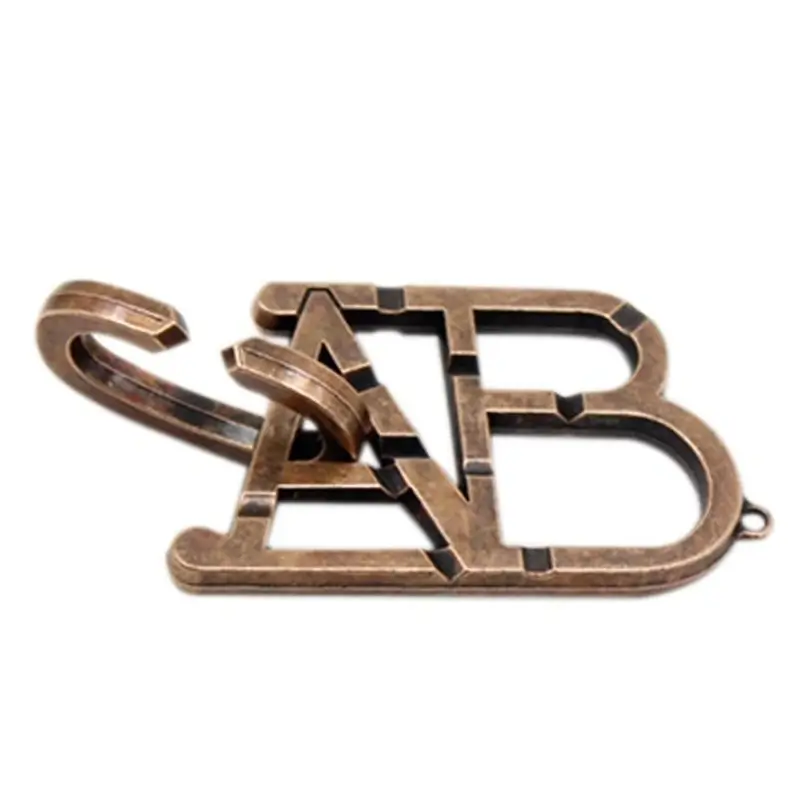
ABC Maze Lock — $12.99
Puzzles like the ABC Maze Lock exemplify this shift. It presents not as abstract art, but as a functional-looking object with a clear goal—open it. This narrative layer adds to the challenge, as you must deduce which parts are decorative and which are integral to the locking mechanism. This is sequential discovery pushed further: tools may be hidden within the puzzle itself, and progress depends on understanding a chain of dependencies that is never obvious. It exists within the broader category of mechanical puzzles, distinguished by its need for manipulation to solve.
So, are Puzzle Master’s ‘extreme’ puzzles better or worse than Hanayama? It’s the wrong question. They are different. They are for a different phase of your journey. A Hanayama Cast Enigma (Level 6) is a masterpiece of deceptive simplicity. A Puzzle Master “Level 10” disentanglement puzzle or interlocking burr is often a dense, multi-stage logistical nightmare. The former is designed to be solved; the latter is designed to be conquered. The price reflects this: where a Hanayama costs $12-$25, boutique puzzles can range from $40 to well over $200 for limited editions in brass or stainless steel.
Venturing here requires a new mindset. Instructions are often nonexistent. The community is your guide, with forums and dedicated retailers acting as curators. The satisfaction, however, is unparalleled. Solving one of these extreme difficult puzzles is a solitary summit. It’s the deep, quiet pride of navigating a maze with no map, where the final click is a private certificate of mastery. For a glimpse into the pinnacle of this art form, where precision is measured in microns, the story of the Zirel Metal Puzzle is essential reading. It defines the frontier.
The Desk Trophy: Care, Display, and the Life of a Solved Puzzle
After the quiet conquest of a boutique Level 10 puzzle, the solved components sit before you. But the journey isn’t over. A true puzzle transitions from a mental labyrinth to a desk trophy, an artifact of a specific intellectual victory. For the collector, this is where a simple gift for a puzzle master adult evolves into a lasting part of their environment. The metal’s cold, permanent heft demands proper stewardship.
Proper care begins with chemistry. Most cast metal puzzles are zinc alloy, prone to developing a dull patina or even white oxidation from skin oils and humidity. The solution is simple: handle with dry hands and store in a low-humidity environment. For long-term display of prized pieces, a light coat of mineral oil applied with a microfiber cloth biannually will preserve the original luster. The goal isn’t sterility—a faint patina can add character—but preventing corrosive damage. For a deeper dive into the materials science behind this, our guide on metal puzzles that don’t break is essential reading.
Not all puzzles retire to static display. Some possess a tactile feedback loop that makes them irresistible handheld puzzles even after solving. These are the keep-in-your-pocket objects, defined by smooth, repeatable movements and satisfying auditory clicks, functioning as premium fidget toys for the analytically minded. Hanayama’s Cast Rotor (Level 4) is a prime example, with its hypnotic, spinning gear train. The Cast News (Level 3), with its four sliding plates, offers a soothing, sequential shuffle. Conversely, a solved disentanglement puzzle like Cast Vortex (Level 5) is often best left as a sculpture, its wire loops a frozen moment of chaos resolved, embodying the classic challenge of a disentanglement puzzle.
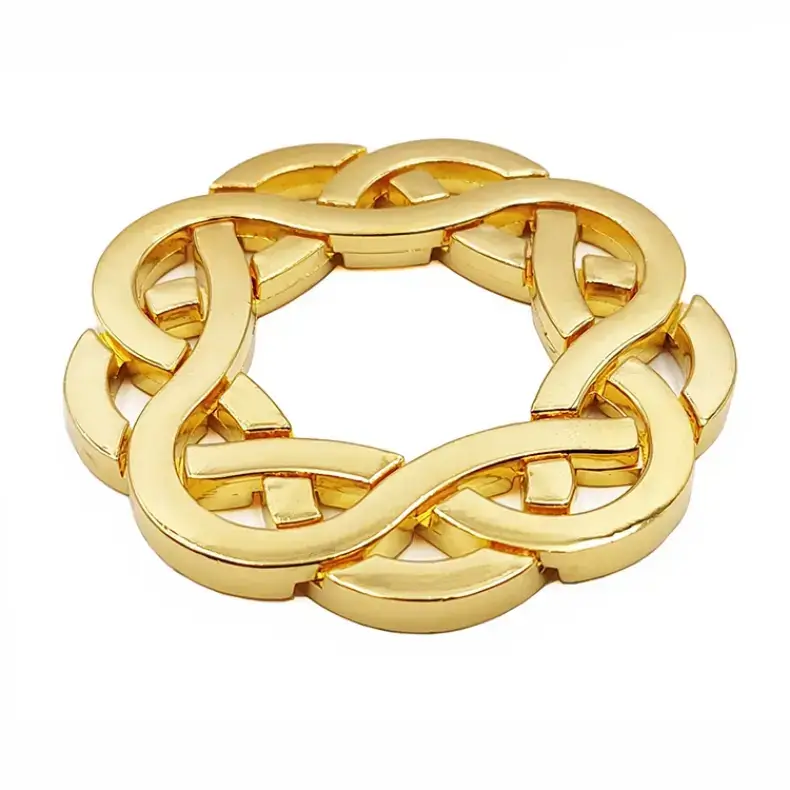
Display is a statement. For a cohesive adult mechanical puzzle collection, consider thematic grouping. A small, framed shadowbox can house a progression of Hanayama puzzles from Level 2 to 6, telling your skill story. For single desk trophies, a weighted base or a minimalist acrylic stand elevates the object, forcing observers to engage with its form. The Golden Chinese Knot Metal Puzzle, for instance, transitions from a challenging disentanglement test to a gleaming symbol of intricate logic, akin to an elaborate puzzle ring in its interconnected complexity.
The final phase is re-solving. A month or a year later, pick up that Level 6 puzzle you once struggled with for weeks. Your hands will remember the dance of moves, the precise angles. The satisfaction shifts from discovery to flawless execution, a mental re-enactment of your own growth. This cycle—conquest, curation, re-engagement—is what separates a disposable brain teaser from a lifelong object of contemplation. The puzzle lives on your shelf, not as a concluded challenge, but as a permanent dialogue between you, the metal, and the moment you finally understood it.
Your Curated Buying Matrix: Sets for Every Goal, Not Just a List
The final piece of the puzzle is not a cast metal component, but your purchasing strategy. With over 2 million Hanayama puzzles sold and countless boutique sets available, the choice isn’t just about a single level 6 puzzle; it’s about architecting a challenge that matches your specific ambition. The most common mistake is buying a random assortment of high-difficulty metal brain teasers, which leads to frustration, not progression. Instead, view your purchase as commissioning a curriculum for your hands and mind.
Forget generic rankings. Here is your matrix, built for three distinct endgames.
The Gift-Giver’s Prestige Trio (Budget: ~$50)
This is for the colleague, the mentor, or the friend who appreciates engineered elegance. The goal isn’t to break them, but to gift a profound “aha moment.” The set must look stunning, feel substantial, and offer a clear, satisfying solution path. It’s an impeccable birthday gift or Christmas gift for the intellectually curious.
* The Opener: Cast News (Level 3). Its iconic, deceptively simple design is a recognizable Mensa-rated classic. The disassembly is logical, and the satisfying separation of the two C-shaped pieces provides that crucial first win.
* The Core: Huzzle Cast Rook (Level 4). This is the desk trophy. Its chess-piece aesthetic and clean lines conceal a clever sequential trap. It feels fantastic in the hand—solid, with precise machined tolerance. It delivers a substantial challenge that’s fair, cementing the appeal of cast metal puzzles.
* The Conversation Piece: Rotor (Level 5). A modern masterpiece. Its swirling, kinetic design begs to be picked up. The solution involves a sublime hidden movement that feels almost magical. It’s the piece guests will fidget with, providing endless tactile feedback even after solving.
This trio answers the gift for adults question perfectly: beautiful, varied in mechanism, and respectful of the solver’s intelligence without being cruel.
The Solo Journey 12-Pack (Budget: ~$150-200)
This is the strategic path for the dedicated learner, the puzzle set designed to build genuine expertise. It follows the progression outlined in this guide, moving from foundational concepts to expert-level deceptions. A thoughtful Hanayama puzzle buying guide is key to this curation.
* The Foundation (Levels 2-4): Cast Vortex (L2), Cast Key (L3), Cast News (L3), Cast Coaster (L4). These build core skills in spatial alignment and basic sequential discovery.
* The Crucible (Levels 4-5): Cast Elk (L4), Cast Marble (L5), Cast Padlock (L5). Here, you encounter false axes, magnetic false solutions, and intricate disentanglement.
* The Ascent (Level 6): Cast Enigma (L6), Cast Cylinder (L6), Cast Quartet (L6). The grandmaster challenges. Each represents a pinnacle of a different principle: disguised seams, rotational alignment, and complex multi-piece interaction.
Buying this as a curated set from a specialty retailer is more cost-effective than piecing it together. It directly addresses the question, “Are there sets that get progressively harder to build my skills?” The answer is yes—if you curate them with this progression in mind.
The Collector’s Ultimate Cabinet (Investment: $300+)
This is for the solver who has traversed the Hanayama hierarchy and seeks the frontiers of the craft. The question shifts from “what should I solve?” to “what represents the pinnacle of mechanical art?”
* The Hanayama Completionist Path: This involves acquiring the entire official collection, including retired editions. The value is in comprehensiveness and the subtle evolution of design.
* The “Group Special” & Large Set Analysis: Retailers offer sets like the 78-puzzle “Group Special.” Is it worth buying a huge set? For a pure collector seeking volume and variety, yes. You’ll get a deep library of classic wire puzzles and obscure disentanglement puzzles. The trade-off is duplication of mechanism and a significant variance in quality and heft. It’s an archive, not a curated journey.
* The Boutique Frontier: This is where you allocate funds to independent designer puzzles from brands like Pelikan, CubicDissection, or Puzzle Master’s own “Extreme” line. These are often rated at a hypothetical “Level 10.” They are limited-run, beautifully crafted wooden puzzles and 3D metal puzzles that focus on sequential discovery at a genius level. Are they better than Hanayama? They are different: often more complex, more akin to a safe-cracking simulator than a polished pocket handheld puzzle. They are the final step for the solver who has run out of road on the standard 1-6 scale.
Your next step is singular. Decide which role the metal will play: a gracious guest, a personal trainer, or a gallery exhibit. Then, seek out a specialty retailer that understands these categories—not a generic toy store. Purchase your first defined set. Lay the pieces on your desk. Feel their weight. Your journey from confident curiosity to collector’s pride begins not with a random click, but with a deliberate choice. Now, go build your labyrinth.