The third time the translucent red petal slipped from my grip and rattled across the hardwood floor, I stopped. I didn’t swear. I didn’t reach for the tweezers. I simply sat back, took a long sip of lukewarm oolong, and stared at the pile of forty-four jagged shards on my desk. They looked like a broken taillight from a high-end sports car. In sixty minutes, they were supposed to be a rose.
My thesis after two decades of collecting is simple: 3D crystal puzzles are the “glass-half-full” challenge of the mechanical world. They offer a unique psychological torture because they are transparent. You can see exactly how the internal notches are supposed to align. You can see the central locking pin. Yet, that visibility is a lie. It creates a false sense of security that leads to rushed movements and dropped pieces. These puzzles punish impatience and reward the kind of quiet observation usually reserved for watchmakers.
If you are coming from the world of traditional flat jigsaws, you are in for a shock. If you are coming from the world of metal Hanayama casts, you’ll find the tolerances surprisingly tight. Today, we are looking at why these plastic enigmas—and their wooden mechanical cousins—have taken over my shelves in early 2026.
The Geometry of Light: Why Acrylic Hits Different
Most people think of puzzles as a way to pass time. I see them as a way to manipulate light. When you finish a three-dimensional jigsaw puzzle, you aren’t just looking at a completed image. You are looking at a prism. A well-constructed crystal puzzle catches the morning sun and throws fractured colors across your workspace. It’s functional art that you happened to sweat over for two hours.
The appeal lies in the interlocking logic. Unlike a wooden puzzle where friction does a lot of the heavy lifting, crystal puzzles rely on a specific “key” piece. Usually, it’s a long, threaded rod or a central spine that holds the entire tension of the object. Until that last piece is inserted, the whole thing is a fragile house of cards. One wrong breath and your $19.99 investment is back to being a pile of shards.
I’ve spent a lot of time mastering the unique interlocking logic of these clear models, and the learning curve is steep but satisfying. You start to recognize the “language” of the plastic—the way a certain tab shape always indicates a base layer, or how the curvature of a piece dictates its proximity to the outer shell.
3D Crystal Rose Puzzle
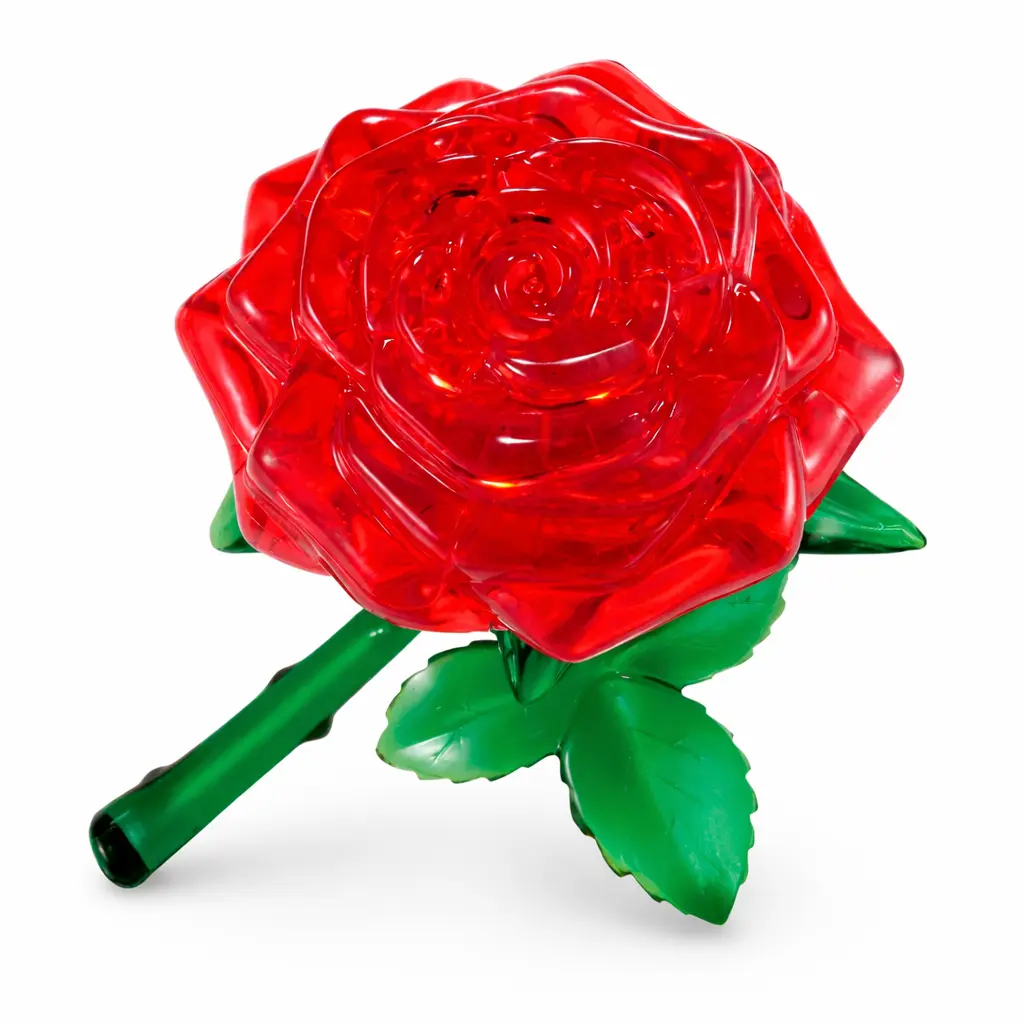
The 3D Crystal Rose Puzzle ($19.99) is the quintessential “gateway” into this hobby. I’ve built three of these over the years—mostly as gifts—and every time, the middle section catches me off guard. It’s forty-four pieces, which sounds like a walk in the park. It isn’t. Because the pieces are all varying shades of the same deep ruby red, you can’t rely on color cues. You have to feel the notches.
When it’s finished, it stands about the size of a real rose head. I keep one on my bookshelf because it’s one of the few puzzles that actually looks like it costs fifty dollars once the light hits it. If you’re tired of the usual florist routine, assembling a flower from forty-four shards of plastic is a much more permanent gesture. Just don’t lose the locking pole, or the whole thing will “wilt” into a mess of acrylic.
Material Matters: The Great Acrylic vs. Plywood Debate
As a veteran who has handled everything from ancient mechanical puzzles to modern 3D-printed iterations, I’m often asked if plastic is “cheating.” It’s not. It’s just a different discipline.
Wooden puzzles, like the ones that use laser-cut plywood, offer a tactile warmth and a smell that acrylic can’t match. They use complex joinery—often inspired by the ancient Chinese joinery wisdom found in crystal Luban locks—to create movement. Wood is forgiving; it can be sanded. Plastic is binary. It either fits perfectly, or you are forcing it and about to snap a tab.
I’ve found that my brain switches gears when I move between materials. Wood requires a mechanical mindset—you are building a machine. Crystal requires a jeweler’s mindset—you are building a structure.
3D Wooden Puzzle Treasure Box
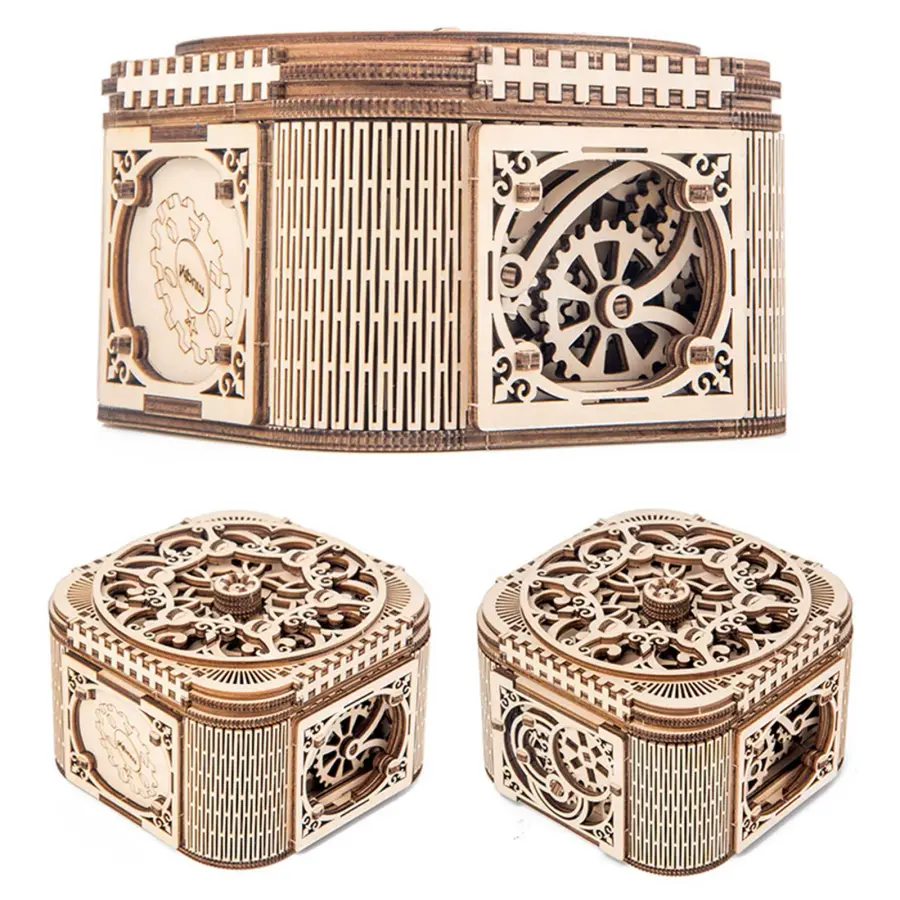
The 3D Wooden Puzzle Treasure Box ($29.99) is where you graduate from “puzzler” to “engineer.” This isn’t a weekend distraction; it’s a 150-200 piece commitment. What I love about this specific kit is the visible gear mechanism. You aren’t just building a box; you are building a lock.
The assembly takes me about three hours, and I’ve learned the hard way to keep a bit of candle wax nearby to lubricate the gears. If you don’t, the movement can be “crunchy.” When it’s done, the lid opens with a mechanical flourish that feels incredibly premium for under thirty dollars. It’s the kind of project that reminds you why we still value physical objects in a digital world. If you find your hands cramping after a few hours of sanding wood, I usually switch to digital logic games that clear the palate before heading back to the workbench.
The “Click” Factor: Engineering Tolerances in 2026
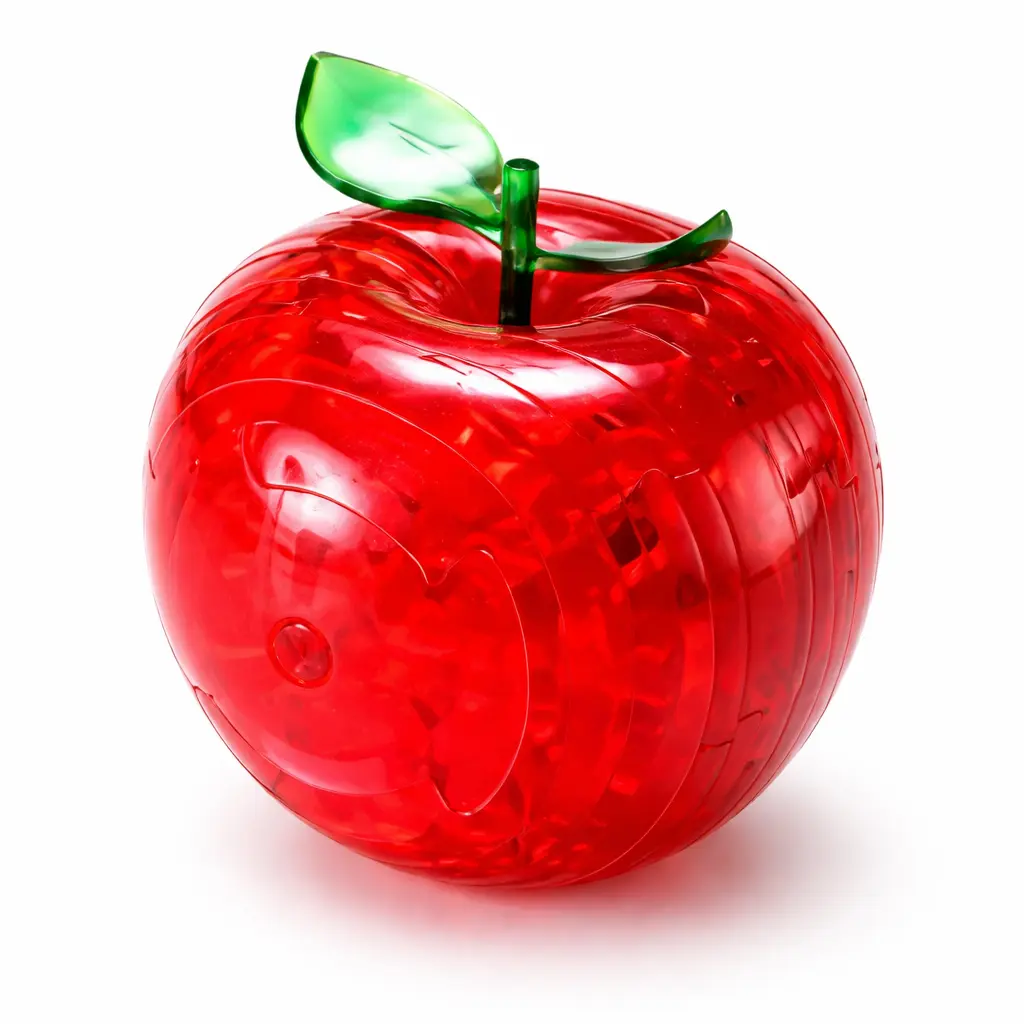
We live in a golden age of manufacturing. In 2026, the precision of a twenty-dollar puzzle is better than what professional collectors could buy for a hundred dollars a decade ago. This is especially true for the “Crystal” line. The seams are nearly invisible. When two pieces of the 3D Crystal Apple Puzzle ($18.88) slide together, there is a distinct, high-pitched click that tells your brain the geometry is solved.
Speaking of that translucent fruit that won’t rot on your desk, the Apple ($18.88) is actually more difficult than the Rose. The spherical nature of the build means there are fewer “anchor points” to hold onto while you work. I’ve seen grown men get frustrated with the stem assembly. But once that green leaf is locked in, the weight of the object in your palm is surprisingly substantial. It’s exactly 7.5cm tall—the size of a Gala apple—and makes for a brilliant “fidget” object during long Zoom calls.
I’ve noticed that people who visit my office always go for the Apple first. There’s something primal about the shape. They pick it up, realize it’s a puzzle, and then the questions start. “How many pieces?” “Did you use glue?” (The answer is always no). It’s a conversation starter that proves you have the patience to see a complex task through to the end.
Small Scale, Big Headache: The Luban Lock Challenge
Don’t let the size of a puzzle fool you. Some of the most “expert-level” frustrations I’ve encountered come from pieces no larger than a thumb.
The 12 Piece Crystal Luban Lock Set ($28.88) is a perfect example. These are mini puzzles, ranging from 3.7 to 5.5cm. You’d think being able to see through the acrylic would make the notches obvious. It doesn’t. It actually creates an optical illusion where the internal grooves appear to be on the wrong side of the piece.
I keep a few of these in my “go-bag” for travel. They are perfect for those thirty-minute gaps at the airport. Each one is a masterclass in traditional interlocking puzzles, but rendered in modern, neon-bright acrylic. If you can solve all twelve without looking at a guide, you officially have better spatial reasoning than 95% of the population. I’m still stuck on the “ball” shaped one—the tolerances are so tight I’m convinced it was built by a malevolent AI.
The Afterlife of a Completed Build: Decor vs. Toy
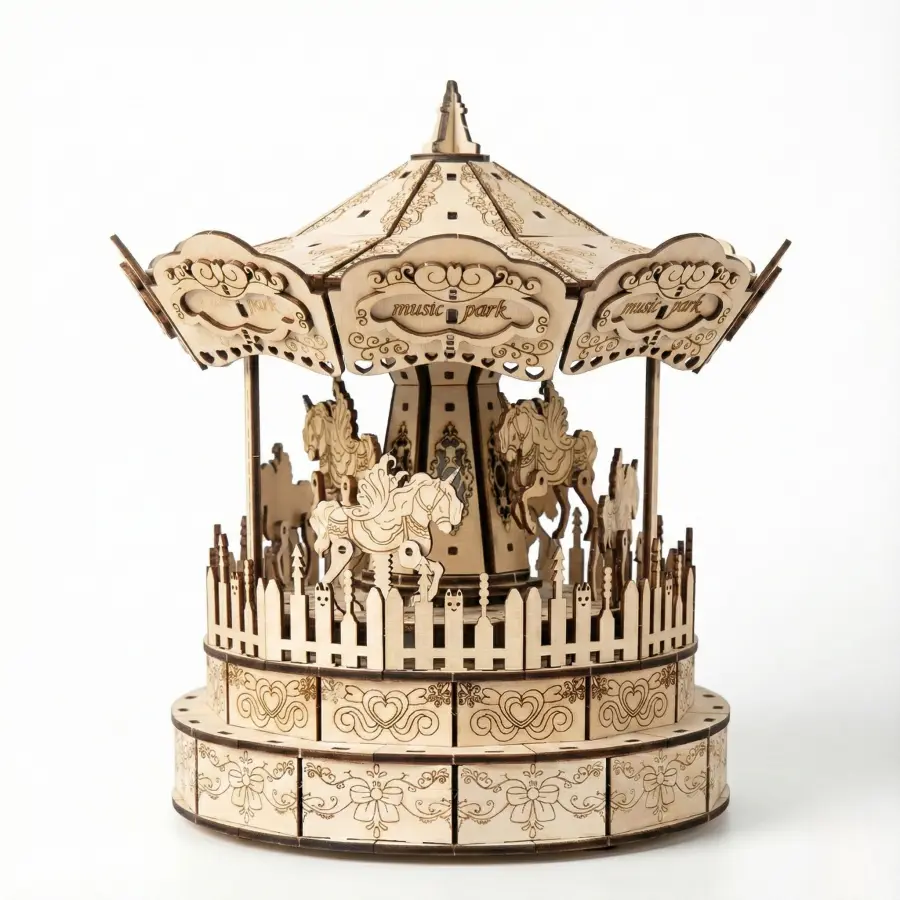
One of the biggest critiques of the puzzle hobby is the “now what?” factor. You spend five hours building a 3D Wooden Carousel Music Box ($43.99), you feel a rush of dopamine, and then… it sits on a shelf.
However, the Carousel ($43.99) avoids this trap by being a functional music box. This is a heavy-duty build—281 pieces. It’s Victorian-style, stands nearly nine inches tall, and actually moves. I’ve found that the mechanical wood kits have a longer “shelf life” because they aren’t just static sculptures. You wind them up to show friends. You watch the horses rotate. It’s a performance.
When I built mine, I spent an extra hour just detailing the engravings with a fine-tip pen to make the Victorian details pop. It’s a project that bridges the gap between a “toy” and a “heirloom.” If you’re looking for a deep-dive into this kind of craftsmanship, I’ve written before about the historical satisfaction of building wooden maritime models, which shares a lot of DNA with these mechanical carousels.
Complexity Curves: From 28 Pieces to 281
If you are new to this, do not start with the 281-piece Carousel. You will end up with a pile of broken wood and a headache. Puzzling is a skill that needs to be leveled up like a character in an RPG.
Start with something like the 3D Wooden Puzzle Clock DIY Kit ($26.99).
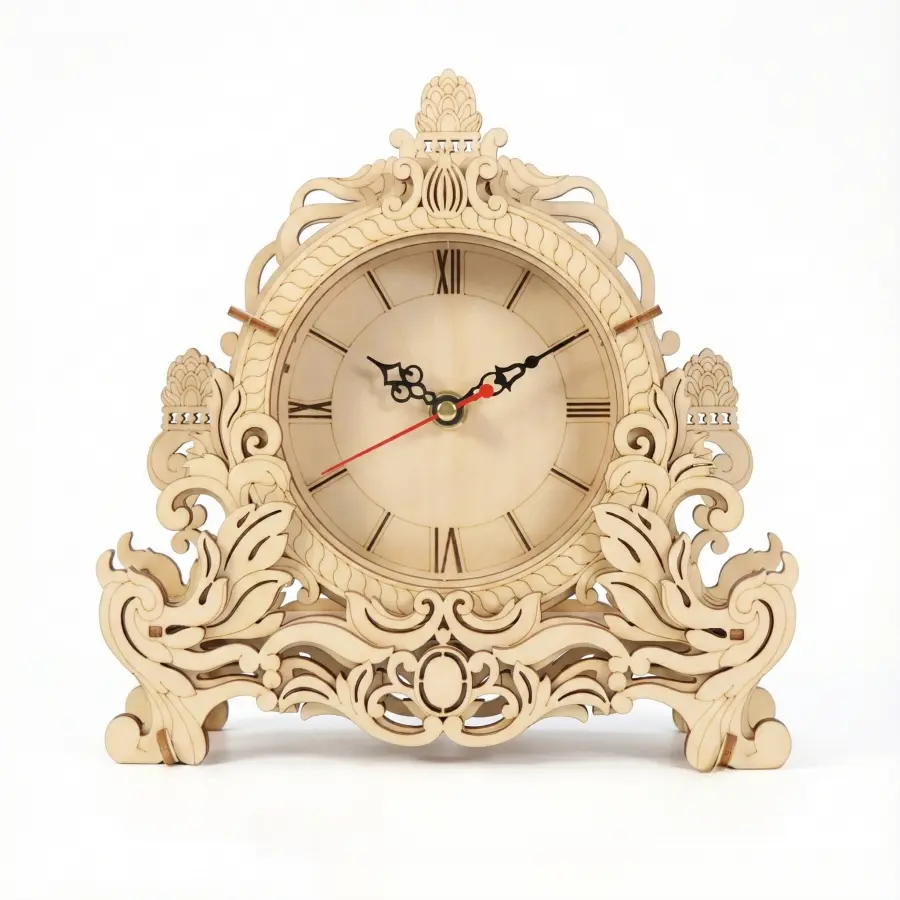
At 28 pieces, it’s a “quick win.” It takes about thirty minutes. It’s the perfect way to test if you actually enjoy the process of laser-cut assembly without committing an entire weekend. The baroque styling is elegant, and the fact that it actually tells time makes it a practical addition to a nightstand. I’ve given these as “thank you” gifts to coworkers, and they are always a hit because they look much more complex than they actually are.
Once you’ve mastered the 30-minute build, you move to the 2-3 hour range. This is where the 3D Zodiac Owl Mechanical Clock Puzzle ($39.99) lives.
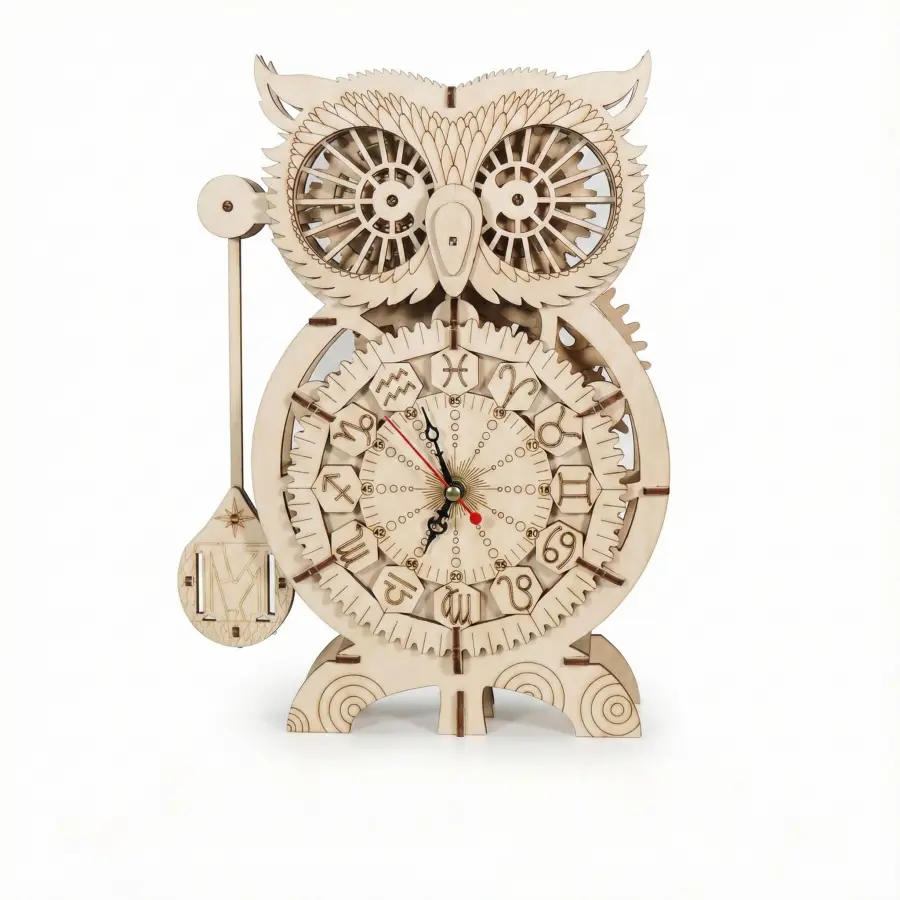
With 102 pieces, the Owl is a significant step up. The celestial design and moving gears require a steady hand. I’ve found that the “owl” theme is surprisingly popular in the puzzle community—something about the wisdom of the bird matching the mental effort required to build it.
I’ve had this one on my mantle for six months. The gears haven’t slipped once, which is a testament to the modern laser-cutting tech used in 2026. It’s a far cry from the “press-out” wood puzzles of the early 2000s that would splinter if you looked at them wrong.
The Aesthetic Value of the “Night Light” Puzzle
There is a new sub-genre of 3D puzzles that I’m particularly obsessed with: the illuminated shadow box. These move away from the “object” and toward the “environment.”
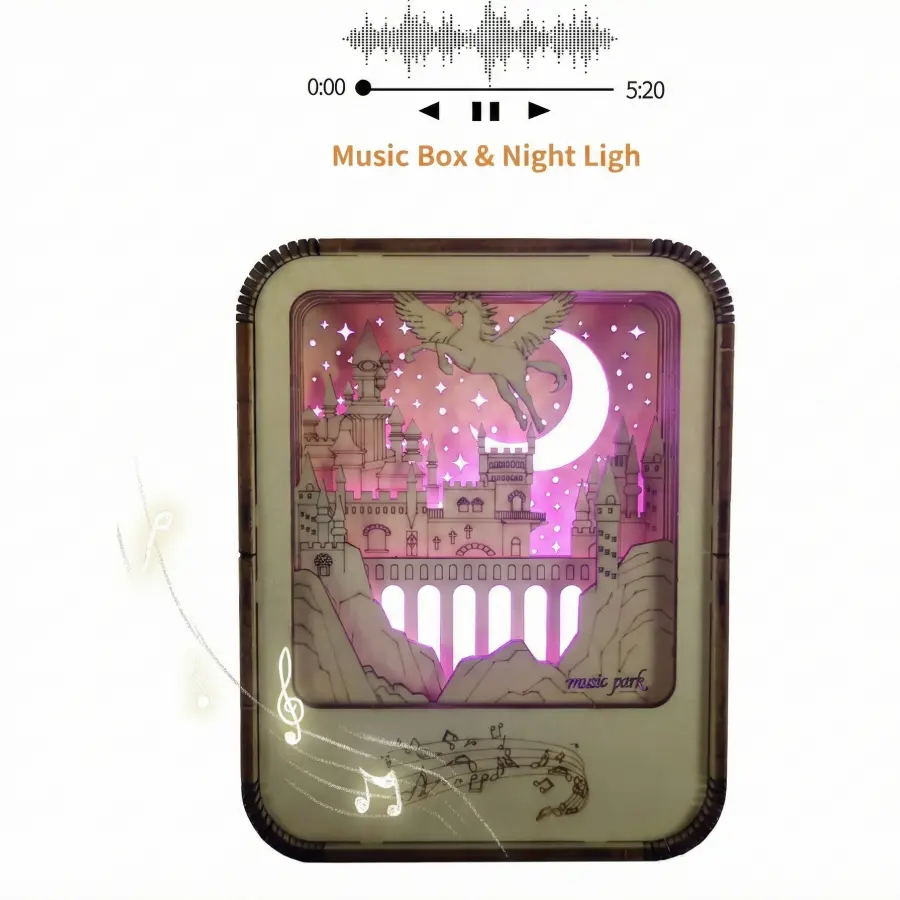
The DIY Castle Music Box Night Light ($33.99) is a hybrid. It’s a 28-piece build, so it’s not mentally taxing, but the result is a multi-layered shadow box with six LED modes. I built this during a rainy Tuesday evening, and it’s become my favorite desk accessory. There’s something about the teal and amber light filtering through the laser-cut layers that makes the whole room feel different.
It’s less of a “brain teaser” and more of a “soul smoother.” If you’re feeling burnt out from high-intensity logic, this is the “cozy game” equivalent of the puzzle world. If you want to go even deeper into that aesthetic, I highly recommend looking into how gothic architecture influences modern wooden puzzle designs.
Gifting Logic: What to Give and to Whom
After testing over 200 puzzles, I’ve developed a “gifting matrix” for my friends and family.
- For the Romantic: The Rose ($19.99). It’s cliché because it works.
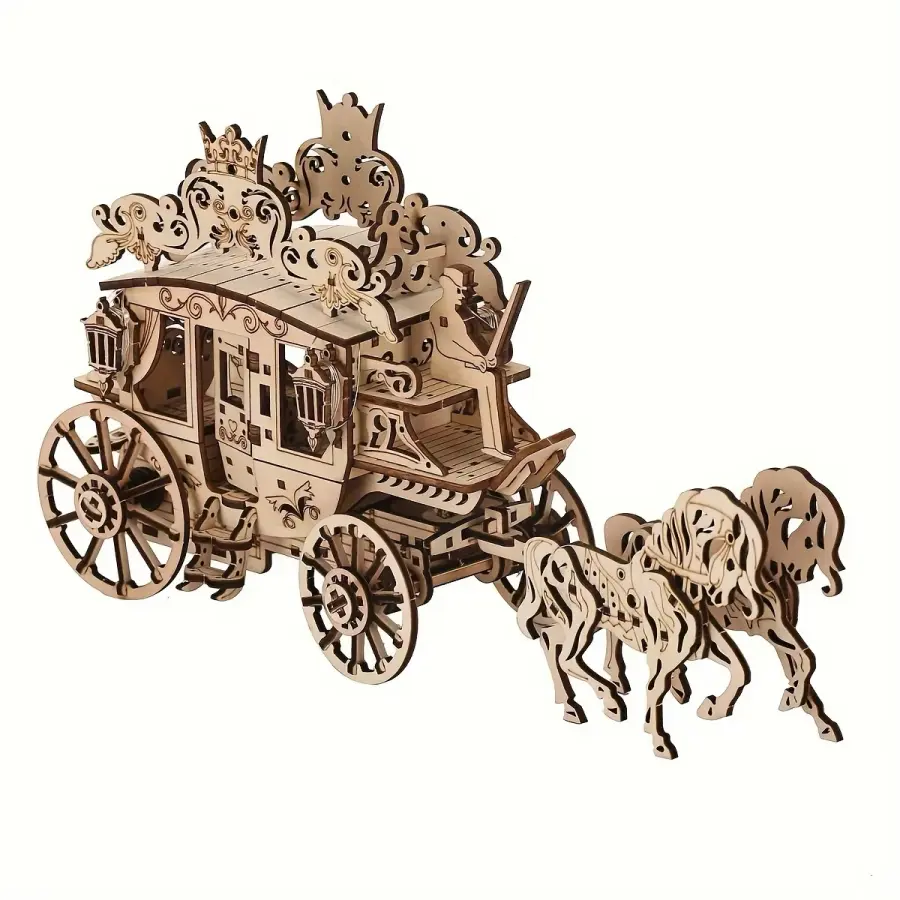
- For the History Buff: The Royal Carriage 3D Wooden Puzzle ($25.99).
This 11-inch long model is surprisingly elegant. It has two horses and a coach that looks like it stepped out of a 19th-century painting. It takes about 4 hours to build, making it a solid "Saturday afternoon" project. It’s not too difficult, but the size makes it feel like a major accomplishment.- For the World Traveler: The Mechanical 3D Wooden Globe Puzzle ($28.88).
This is my personal favorite for office decor. It has a functioning gear-drive system that lets you rotate the Earth. It’s intermediate difficulty, which means it’s fun for adults but won't cause a breakdown.- For the “Smartest Person in the Room”: The Luban Lock Set ($28.88). It’s the ultimate ego-checker.
FAQ: Everything I’ve Learned Since 2004
How do you start a 3D crystal puzzle?
The biggest mistake is trying to build from the top down. Always find the base pieces first. They usually have a flatter profile or a specific notch that accepts the locking rod. I recommend sorting pieces by curvature. The “flatter” the piece, the closer it is to the core.Are 3D crystal puzzles harder than regular jigsaws?
Yes, by a factor of ten. A 500-piece flat jigsaw is a test of pattern recognition. A 44-piece crystal puzzle is a test of spatial orientation. You are working in three axes, and because the pieces are clear, you lose the “front/back” orientation that makes flat puzzles manageable.Do I need glue for the wooden mechanical puzzles?
In 2026, most high-quality kits are “friction fit.” You shouldn’t need glue. If you find yourself reaching for the Super Glue, you’ve probably made a mistake three steps back. The only exception is if you accidentally snap a small decorative tab.What happens if I lose a piece?
For the crystal puzzles, you’re usually out of luck unless you buy a second kit. For the wooden ones, you can sometimes “sculpt” a replacement out of a spare bit of the plywood frame using a hobby knife.Are these suitable for children?
The crystal puzzles are rated 12+ for a reason. The pieces are small and require delicate finger pressure. A child will likely get frustrated and break a tab. The wooden clocks, like the 30-minute baroque model, are a better starting point for supervised kids.How do I clean my finished crystal puzzles?
Dust is the enemy of acrylic. I use a can of compressed air once a month. Never use Windex or harsh chemicals; it can cause the plastic to “cloud” over time. A damp microfiber cloth is all you need.Why are some puzzles “Level 1” and others “Level 5”?
Difficulty levels are usually based on the number of “blind” moves—steps where you have to hold three pieces in place while inserting a fourth. A Level 5 puzzle will have dozens of these moments.Can you take them apart and rebuild them?
Technically, yes. But be careful. The plastic tabs on crystal puzzles can wear down if you assemble and disassemble them too often. I usually build them once, enjoy the “click” of the final piece, and leave them as trophies.What’s the best lighting for displaying these?
Bottom-lighting is the secret. If you place a crystal puzzle on a glass shelf with a light source underneath, the entire object glows from within. It’s a total game-changer for the Rose and Apple models.Is there a benefit to puzzle-solving for adults?
Absolutely. Beyond the stress relief, there’s legitimate research—including studies in the National Institutes of Health database—suggesting that spatial puzzles help maintain cognitive flexibility as we age. It’s essentially a gym for your frontal lobe.What should I do if the gears on my wooden puzzle won’t turn?
Wax. Wax is your best friend. Rub a tea light candle on every moving tooth of every gear during assembly. If it’s already built, try a tiny drop of dry graphite lubricant, but wax is always better.Which is better: Metal, Wood, or Crystal?
Metal is for the minimalist who likes “sleek.” Wood is for the builder who likes “mechanical.” Crystal is for the artist who likes “light.” I have all three on my desk because they satisfy different parts of the brain. If you’re looking for a quick mental break between builds, I sometimes hop onto simple matching games to reset my focus.How long do these actually take to build?
Ignore the box estimates. If it says “1 hour,” budget two. If it says “Intermediate,” budget an entire afternoon. Puzzling isn’t a race; it’s a form of meditation.Are they worth the money?
Considering a movie ticket costs nearly twenty dollars and lasts two hours, a $25 puzzle that gives you four hours of focus and a permanent piece of decor is some of the best value-per-hour entertainment you can buy in 2026.The Final Click
The morning sun is hitting my desk now, and that red rose is finally finished. It took me longer than an hour—partly because I kept stopping to admire the way the light caught the internal facets. That’s the thing about these 3D crystal puzzles: they aren’t just about the solve. They are about the transformation of a pile of “garbage plastic” into something that looks like it belongs in a museum gift shop.
If you’re looking to start your own collection, don’t rush. Pick one that speaks to you aesthetically. Whether it’s the mechanical complexity of a globe or the simple, elegant “click” of a crystal apple, the goal is the same. You are training your brain to see the world in three dimensions, one notch at a time.
My recommendation? Grab the 3D Crystal Apple Puzzle ($18.88). It’s the perfect balance of “I can’t believe I did this” and “I want to do it again.” Just remember to keep the coffee close and the cat away from the desk. Those forty-four pieces are a lot harder to find once they’ve been batted under the refrigerator.
- For the World Traveler: The Mechanical 3D Wooden Globe Puzzle ($28.88).