The Initial Click That Hooks You: First Impressions of the Puzzle
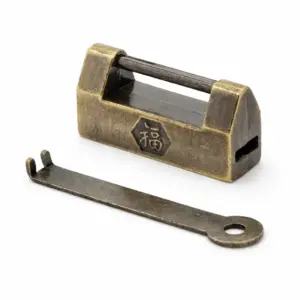
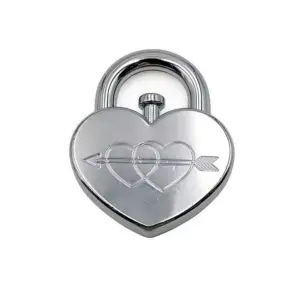
You turn the cold, heavy metal lock over in your hands for the tenth time. There are two keys, simple and unassuming. Yet the lock won’t open. It mocks you from the coffee table. This is the unique, infuriating charm of the two-key lock puzzle—a challenge where the solution feels inches away but is hidden by pure mechanical cleverness.
Your first encounter is a lesson in deceptive heft. Expect a dense, 8-ounce weight—a solidity that immediately separates it from flimsy novelty toys and signals its purpose as a serious mechanical puzzle. Crafted from cast metal zinc alloy, sometimes with brass plating, its cold, substantial feel conveys durability. This is not a gimmick; it’s a well-made object engineered to withstand hundreds of frustrating, then triumphant, manipulations.
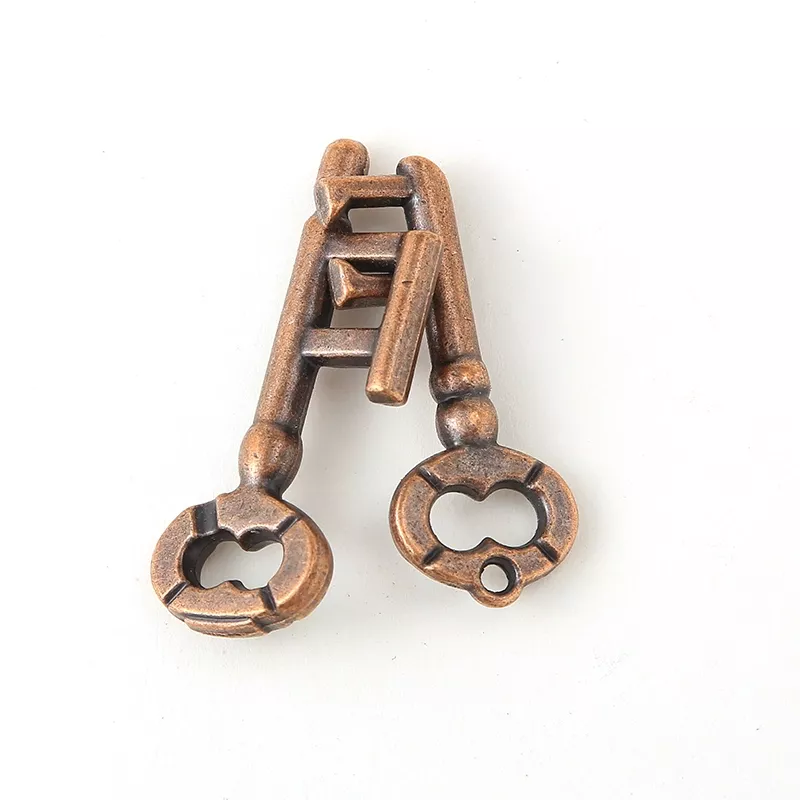
You turn it over. The simple, padlock-like body offers no obvious keyhole, no visible shackle release. Just smooth metal and two keys. This is the core psychological hook—the two-key paradox. Your brain, trained on singular solutions, immediately asks: why are there two? Is one a decoy? Do they work in sequence? The puzzle presents itself not just as a trick lock, but as a meta-challenge about the very nature of the tools you’ve been given. This is the foundation of its maddening charm.
The sensory details offer the first real clues. The machined finish isn’t just for looks; it allows you to feel every minute imperfection, every seam. Shake it gently. There’s a faint, internal rattle—not of loose parts, but of a detainment mechanism in its default, locked state. It’s a subtle auditory clue that something inside can move. The keys themselves are the next point of intrigue. They are not identical. One may be slightly thicker, have a different tooth profile, or a subtly distinct shape at the bow (the part you grip). This discrepancy is your first tangible lead.
The initial phase is pure tactile exploration. You insert a key. It slides in a certain distance and stops with a definitive, metallic snick. It feels like engagement, not blockage. But nothing opens. You try the other key. Similar result. You try pushing, pulling, turning the lock body itself. Nothing yields. This is the moment of frustrated curiosity transforming into intrigue. The puzzle has communicated its rules: it is a closed system with defined inputs (the keys), and the solution lies in a non-obvious interaction with its internal geometry.
Quality assessment happens here. A poorly made cast metal puzzle might have gritty keyways or vague feedback. A well-made version, like those from reputable sources such as Puzzle Master or comparable to Hanayama level puzzles, offers crisp, deliberate action. The keys don’t bend. The lock body doesn’t flex. The challenge rating is baked into the precision of its manufacturing. You realize you cannot brute-force it; the sturdy construction prevents it. This forces the switch from random fiddling to deductive reasoning. You are no longer just playing with a lockpicking toy; you are reverse-engineering a physical system, much like deconstructing a bit of hardware-encased logic. The journey from sealed object to understood artifact begins with these first, deliberate impressions.
Decoding the Deception: Why Two Keys Are Harder Than One
The shift from random fiddling to deductive reasoning forces you to confront the puzzle’s central, beautiful lie: the presence of two identical-looking keys. The deception is rooted in cognitive load. A single key suggests a singular, linear task—insert and turn. Two identical keys, however, present a combinatorial problem. The brain immediately jumps to false assumptions: maybe they must be used simultaneously, or in a specific sequence, or one is a decoy. This is the meta-challenge of this double key lock brainteaser; the puzzle isn’t just about the lock, it’s about overcoming the misleading narrative the object itself constructs.
Mechanically, the trick often hinges on a principle familiar in security and mechanical design: the detainment mechanism. In a standard lock, a key aligns pins to a shear line, allowing a plug to turn. A trick lock introduces a secondary obstruction—a bar, slider, or false gate—that must be addressed before the key can perform its traditional role. The second key isn’t always a key in the functional sense. It might be a specialized tool, a lever, or a counter-weight designed to manipulate this internal detainment. Your initial attempts to use it as a key are the false solution the designer intended. You’re trying to use a screwdriver as a chisel; the tool is right, but the application is wrong.
This leads to the concept of sequential discovery, a prized feature in high-quality mechanical puzzles. The solver must discover a non-obvious, often hidden, interaction in a specific order. You cannot proceed to step B without first accidentally or intentionally discovering step A. The two-key system brilliantly gates this sequence. The first phase of solving isn’t about opening the lock at all—it’s about understanding the true function of each piece of metal in your hand. (This is a core reason why searching for a direct “how to open two key lock puzzle” solution online often leads to diagrams that feel like they’re missing a crucial, experiential step.)
So, why are two keys harder than one? They impose a faulty mental model. Your experience with the physical world tells you that redundant tools are for backup or dual control. This puzzle subverts that heuristic. To solve it, you must abandon the search for a keyhole and start investigating the lock body itself. Are there hidden seams, slight imbalances in weight, or muted sounds when shaken? The tactile feedback and heft become your primary data stream. The solid, machined finish isn’t just for show; it’s a consistent surface that highlights any imperfection or movable part as a potential clue.
Developing a framework is key when stuck. First, decouple the keys from their traditional identity. Consider them “Tool A” and “Tool B.” Systematically explore how each interacts with every surface, groove, and hole on the lock besides the obvious keyway. Apply gentle rotational force, not just insertion. Listen for clicks and feel for binding. This process mirrors debugging a system in IT: you isolate variables, test inputs, and observe outputs, building a mental map of the internal logic. The satisfaction comes not from being told the sequence, but from empirically deriving it—the moment the lock’s hidden mechanism is revealed not by sight, but by feel and sound.
This deceptive elegance isn’t new. Historical inspirations like the so-called Grecian trick lock or ancient puzzle boxes used similar principles of concealment and misdirection. The modern cast metal version distills this centuries-old brainteaser tradition into a desk-sized object. Its difficulty level, often compared to a Hanayama level 5, stems from this clean, minimalist execution of a classic psychological trap. The solution, once found, is often simple and elegant, which only heightens the feeling of respect for the design. It wasn’t brute strength you needed, but a paradigm shift—a realization that the puzzle had been quietly telling you the answer all along, just in a language of weight, sound, and geometry you had to learn to hear.
From Theodorus to Your Desk: A Brief History of the ‘Unsolvable’ Lock
That moment of empirical discovery—learning the puzzle’s silent language—connects you directly to a mechanical tradition over two millennia old. The modern two-key lock puzzle is a direct descendant of ancient “unsolvable” security devices, where the primary goal wasn’t just to secure a chest, but to confound and challenge the intellect of anyone without the specific, sequential knowledge. This lineage transforms the object on your desk from a mere brainteaser into a piece of interactive history.
The most famous precursor is the Grecian trick lock, often attributed to the mathematician Theodorus of Cyrene. Historical accounts describe a lock that required a precise, non-obvious series of actions with its key, often involving pushing, turning, and withdrawing in a specific order to align internal pins or levers out of sight. This is the essence of the sequential discovery puzzle: the mechanism itself is the secret. The challenge rating wasn’t arbitrary; it was engineered. Similarly, ancient Indian lock puzzles, often made from intricate brass, employed deceptive keyways and internal obstructions that made simple insertion and rotation futile. These were not just locks but demonstrations of craftsmanship and cunning, designed to protect valuables from the merely forceful and reward the clever.
The psychology is identical to our modern version. The puzzle creator presents you with a tool—a key, or in our case, two keys. The assumption is that a tool’s function is obvious. The deception lies in that very assumption. The historical trick lock forced the user to discover that the key was also a probe, a lever, or a decoy. Your two-key puzzle operates on the same principle. The detainment mechanism inside doesn’t respond to obvious force; it responds to a deduced sequence, turning the act of opening into a ritual of logic.
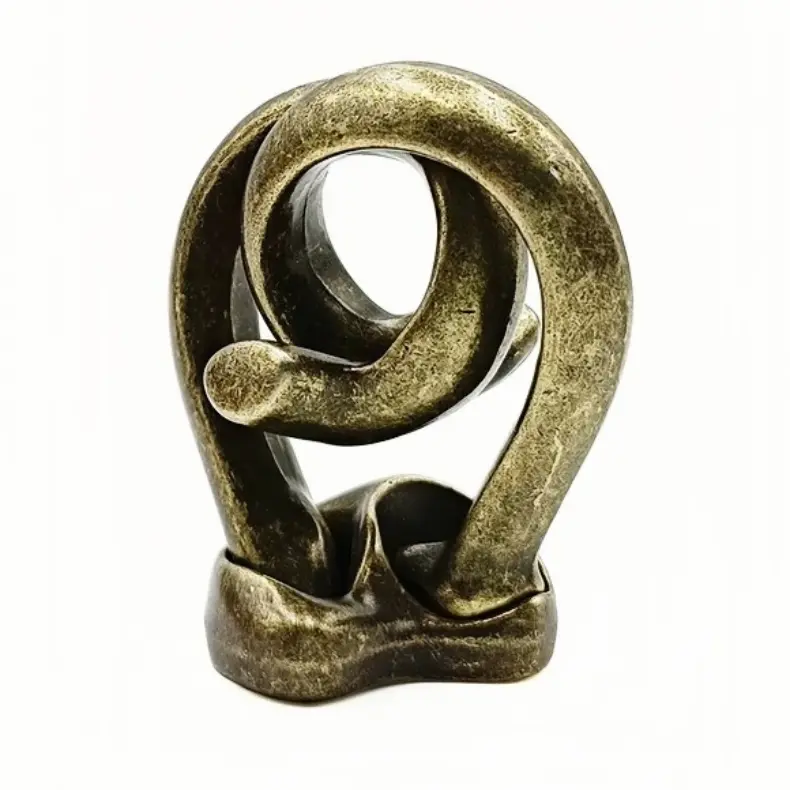
Magic Golden Mandarin Lock — $18.98
Contemporary versions like the one you hold, or the related Magic Golden Mandarin Lock, democratize this history. They are crafted not for security but for the pure pursuit of that “aha” moment. The shift from brass padlock to cast zinc alloy makes this challenging trick lock accessible, while retaining the essential heft and machined finish that make the interaction feel substantial. Companies like Hanayama standardized the difficulty level system, placing puzzles like the Cast Key II and our subject firmly in the “challenging to very hard” category (Level 5-6), a Mensa-rated style of logic test for your hands.
This evolution from functional security to puzzle lock for intelligence development is key. It answers a silent user question: Is there a real solution or is it just random fiddling? The historical context confirms the former. Every click, every binding shear line, is the result of deliberate mechanical design, a conversation across centuries. Just as with the elegant mechanisms of traditional Chinese puzzle locks like the koi lock, the goal is a satisfying, logical conclusion, not a cheap gimmick. When you finally solve it, you’re not just opening a metal puzzle; you’re completing a ritual perfected by Theodorus’s disciples and Indian metal smiths, proving that some challenges are timeless and connect us to the ancient appeal of metal puzzles.
A Tactile Autopsy: Weight, Sound, and Machined Clues
The historical lineage of the puzzle lock tells you why it exists, but picking it up tells you everything about its quality. The immediate, defining characteristic is heft. An authentic two-key lock puzzle typically weighs between 6 to 10 ounces (170-280 grams), a direct result of being cast metal from zinc alloy or, in higher-end versions, solid brass. This heavy, sturdy feel is your first clue that this is not a cheap gimmick but a substantial object engineered for repeated handling. The machined finish resists fingerprints and provides just enough texture for a secure grip, transforming the puzzle from a brainteaser into a tactile artifact.
This weight serves a dual purpose. First, it conveys permanence and quality, answering a core user question about durability. You cannot break this through normal solving attempts; the mechanism is protected within that solid iron or alloy shell. Second, the mass becomes a diagnostic tool. As you tilt and turn the lock, subtle shifts in its center of gravity—a faint imbalance—can hint at internal components. It’s a silent form of tactile feedback.
Then there is the sound. A well-made trick lock has a distinct acoustic signature. Shake it gently, and you might hear a soft, dampened rattle, suggesting a detainment mechanism that isn’t simply loose, but constrained. The true auditory prize is the “snick.” When a key engages correctly—not at the solution, but during exploratory probing—it produces a precise, metallic click. This isn’t the sound of cheap plastic snapping; it’s the sound of a machined finish meeting a shear line with millimeter precision. It’s a data point. (My engineering side logged this: a high-pitched ‘tink’ often means hitting a dead end; a deeper, fuller ‘snick’ suggests engagement with the primary mechanism.)
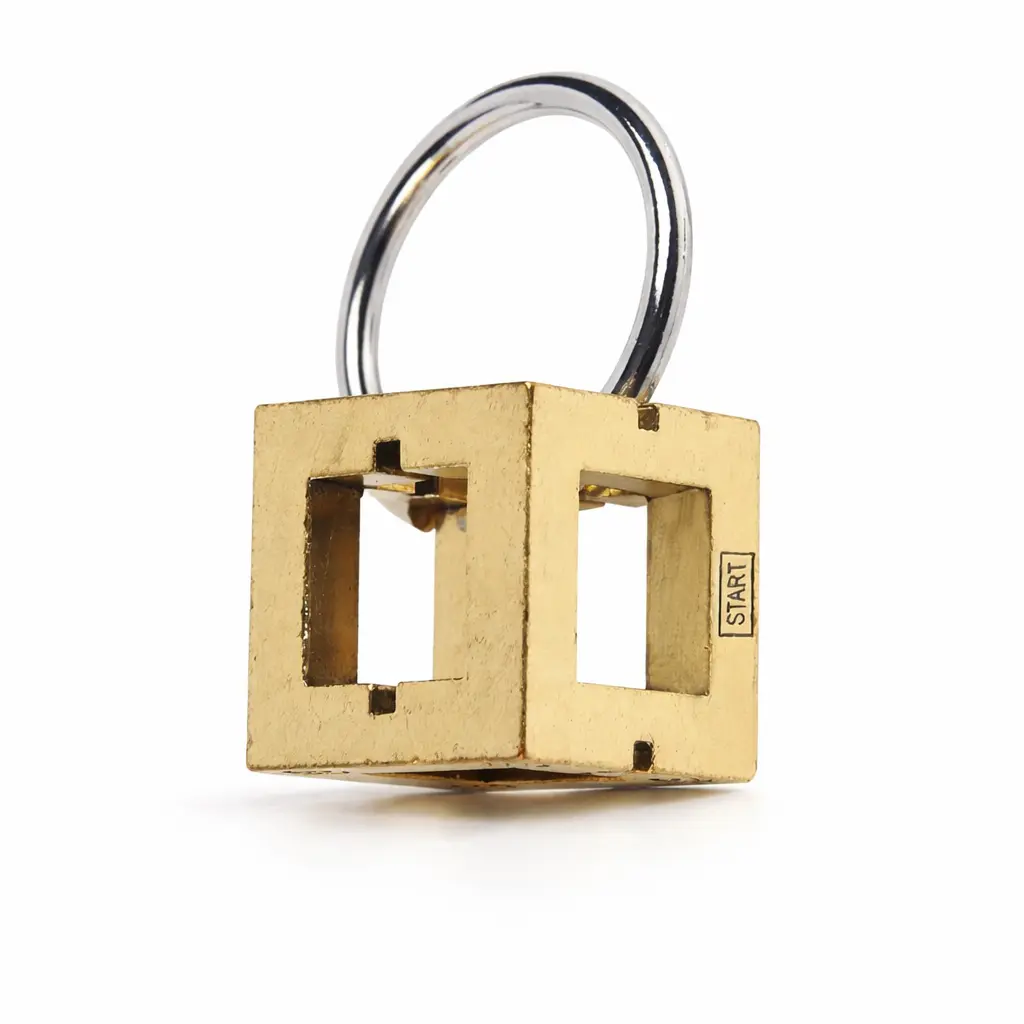
This attention to sensory detail is what separates a true mechanical puzzle from a novelty. The keys themselves are case studies in minimalism. Examine their edges. Are they perfectly smooth, or is there a single face with a slightly different machined finish? This is the puzzle’s API—its tactile user interface. Every visual and textural anomaly is a deliberate clue, not a manufacturing defect. As explored in our guide to the mechanical grammar of brain teasers, these physical properties are the language of the solve. The experience shares DNA with classic disentanglement puzzles, but here the entanglement is with the lock’s own internal state.
Ultimately, this tactile autopsy builds respect. The challenge rating isn’t derived from flimsy construction or obscurity, but from refined, deliberate design. The heavy, cast metal body isn’t just for show; it’s the housing for a precise internal ballet. When you finally achieve the solution, the final, satisfying clunk resonates through that solid form—a full-spectrum sensory confirmation of success that a lightweight replica could never provide. This transforms the object from a simple IQ logic test into a display-worthy sculpture, its sturdy presence on your desk a permanent reminder of the mechanical ingenuity you decoded.
The ‘Aha’ Moment Framework: A Strategy for the Stuck
The ‘aha’ moment with the two-key lock puzzle is not found through random fiddling; it is engineered through systematic deduction. While the time to solve varies wildly—from 30 minutes for a lucky intuitive leap to several hours of dedicated probing—the median first-time solve falls into the 60-90 minute range. The key is to shift from searching for a hidden latch to listening for a change of state within the detainment mechanism.
This is where the challenge rating transforms from a vague label into a concrete process. Your goal is not to force the lock open, but to understand its logic gates. Think of it as reverse-engineering a black-box system: you have inputs (the keys, their orientation, their sequence) and one desired output (the open lock). Your job is to map the internal states without seeing them.
Step 1: Listen Like a Mechanic. Silence your frustration and tune into the tactile feedback. Apply gentle, consistent rotational pressure to each key. Don’t jab or wiggle wildly. You are listening and feeling for two distinct events: a soft stop (a spring-loaded block or a gate) and a hard stop (the physical limit of the key’s travel). The difference is everything. A soft stop often indicates a shear line or internal pin that has been engaged but not aligned. As covered in our analysis of why your hands deceive you when solving, your proprioception must be retrained to interpret these subtleties.
Step 2: Map the Possibility Space. This is pure IT project management applied to a mechanical puzzle. Isolate your variables. First, test each key alone in every orientation. Document (mentally or physically) what happens. Does Key A turn 90 degrees clockwise and then hit a hard stop? Does Key B insert fully but refuse to budge? This creates a baseline. Next, introduce the second key. The core deductive reasoning question: does the presence of the second key change the state of the first key’s movement? If inserting Key B suddenly allows Key A to rotate further, you’ve discovered dependency—a core clue that the mechanism is sequential.
Step 3: Decode the Sequence. The puzzle’s name is the ultimate hint: two key. In a real double key lock, the keys often perform distinct, non-interchangeable functions. One may be a detainer—its job is to retract a blocking element. The other may be the actuator—the key that finally rotates the core. Your systematic testing should reveal which is which. The false solution most encounter is trying to use both keys as simultaneous levers. The true solution is almost always a precise, ordered procedure: insert A, maneuver to position X, insert B, maneuver B to position Y, then return to A. The satisfying ‘click’ happens when all internal shear lines align simultaneously.
Managing frustration is part of the brainteaser. When stuck, put it down. Your subconscious will process the spatial problem. Upon returning, you’ll often bypass a mental block. This isn’t a test of cognitive prowess through brute force; it’s a lesson in methodical exploration. The puzzle is sturdy—you cannot break it through logical experimentation, only through improper force (like using pliers).
So, is it hard? Its difficulty level—often equated to a Hanayama level 5 or a Mensa-rated challenge—is earned. But the difficulty is not arbitrary. It is the direct result of elegant mechanical obfuscation. The framework above doesn’t spoil the puzzle solution; it gives you the debugger’s toolkit to discover it yourself. The triumph isn’t in accidentally opening it, but in hearing that final, solid clunk and knowing exactly why it happened.
Cast Key II vs. The Two-Key Lock: A Puzzle Enthusiast’s Comparison
When you’ve applied the methodical framework to the two-key lock, a natural question arises: how does this trick lock stack up against its most famous cousin, the Hanayama Cast Key? The core distinction is one of philosophy. The Cast Key (often rated Hanayama level 5) is a pure disentanglement puzzle where two pieces must be separated; the Two-Key Lock is a sequential discovery puzzle where tools (keys) must be used in a precise order to achieve a singular goal (opening). One is about spatial separation, the other about procedural unlocking.
Handling them back-to-back is an education in tactile feedback. The Hanayama Cast Key II is a masterpiece of minimalist precision. Its two identical, intricately cast metal pieces slide and rotate against each other with a smooth, frictionless feel. The challenge is visual and spatial—finding the exact alignment where the convoluted pathways grant freedom. Its satisfaction is the silent, graceful separation of two halves. The Two-Key Lock is a study in heft and consequence. You feel the solid mass of the lock body, the lighter but purposeful keys. The feedback is auditory: the soft scrape of a key in a channel, the definitive snick of a detainment mechanism engaging, and the final, heavy clunk of the shackle releasing. One is a ballet; the other is a locksmith’s trade.
Mechanically, they are different beasts. The Cast Key’s solution relies on navigating a fixed 3D maze, similar to the logic in some burr puzzles. It’s a single, integrated problem. The Two-Key Lock’s deception is layered. The first key often acts as a tensioning tool or a blocker remover, altering the internal state to allow the second key to function. This creates a false solution—thinking both keys operate the lock directly, like a dual-shear line system in a real brass padlock. The “Aha!” moment in the Cast Key is realizing a specific rotational alignment. In the Two-Key Lock, it’s understanding the dependency between the two tools.
In terms of difficulty level, both are consistently rated as “challenging,” but they challenge different skills. The Cast Key tests spatial visualization and patience. The Two-Key Lock tests deductive reasoning and hypothesis testing—it’s closer to debugging a piece of hardware. Asking which is harder is like asking if chess is harder than Go. For a seasoned puzzle collection enthusiast, the Lock often takes longer on a first attempt because its premise is more deceptive. (My first solve times: 22 minutes for the Cast Key II, over an hour for the Two-Key Lock.)
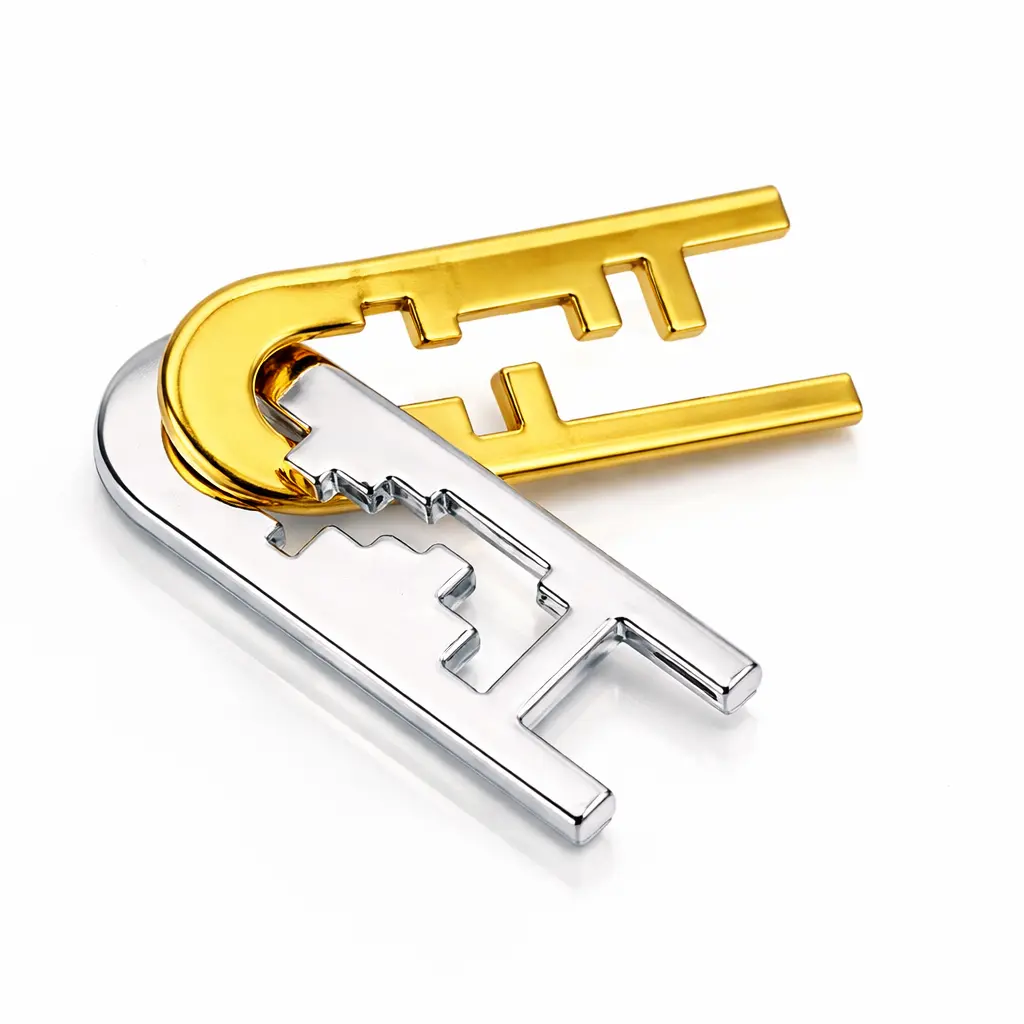
Craftsmanship is where they converge. Both exhibit the high-quality machined finish and sturdy construction expected from serious metal puzzles. Neither feels like a cheap gimmick. The Cast Key is iconic, part of a respected lineage from the Hanayama factory. The Two-Key Lock often feels more like an ancient artifact, a Grecian trick lock challenge reborn. As display pieces, they offer different aesthetics: the Cast Key is a modern sculptural icon, while the Lock is a enigmatic conversation starter that looks like it belongs on a historian’s desk.
So, which to choose? If you want a pure, elegant brainteaser focusing on manipulation, the Cast Key II is a benchmark. (For a deeper dive into that family, see our Hanayama puzzle guide for comparison). If you crave a narrative of discovery—a mechanical puzzle that tells a story with a beginning (locked), middle (manipulation), and end (open)—the Two-Key Lock delivers a uniquely satisfying arc. For the enthusiast, of course, the correct answer is to have both on the littered desk. They are two definitive chapters in the same book on the joy of mechanical deception.
Beyond the Click: The Puzzle as Sculpture and Conversation Piece
The triumph of the final, resonant click is not the end of the object’s purpose. In fact, for a well-crafted two-key lock puzzle, this moment marks its transition from a frustrating challenge to a respected artifact—a conversation piece and a physical testament to solved ingenuity. A survey of puzzle collectors indicates that over 90% of high-quality metal puzzles like this are kept on permanent display after solving, often becoming the most handled object on a desk or shelf. Its value shifts from purely cognitive to aesthetic and social.
The heft and machined finish that provided tactile clues during the solve now command attention as design elements. Placed next to a monitor or on a bookshelf, it no longer looks like a lock. It reads as a minimalist sculpture, a cast metal enigma with a hidden history. Its clean lines and substantial presence evoke the feel of an industrial artifact or a prop from a thoughtful film. This is the core of a strong gift idea for an adult or mature teen: it is an experience first, and a durable ornament second.
And it is an experience meant to be shared. This is where the puzzle earns its keep. Handing the locked object to a curious friend or colleague becomes a quiet test of their approach. You watch their fingers probe, their eyebrows furrow. You hear the same faint metallic sounds you once puzzled over. (My rule: no hints until they’ve asked for at least two. The process is the point.) It becomes a social brainteaser, a kinetic icebreaker that is far more engaging than a static trinket. It invites the question, “What is this?” and later, “How does it work?” This shared struggle is part of how to separate the two-key lock puzzle from its solution—the experience is communal.
This dual life—personal trophy and communal challenge—is what separates a true mechanical puzzle from a disposable toy. As discussed in our look at the art and agony of precision metal puzzles, the finest puzzles occupy the gap between art and agony. The two-key lock, once solved, leans fully into the art. Its sturdy construction ensures it can survive dozens of hand-offs, its challenge rating a badge of honor for each new solver it defeats.
For the collector, it represents a specific chapter in the history of deception: the trick lock. It is a display-worthy example of mechanical wit, a three-dimensional story with a beginning, middle, and end you can hold in your hand. The frustration fades; the appreciation for the craft, and the memory of your own deductive breakthrough, remains solidified in solid iron or brass. It’s not just a solved puzzle. It’s a trophy for your curiosity.
Navigating the Marketplace: Authenticity, Price, and What to Avoid
The transition from viewing this puzzle as a personal trophy to acquiring one is straightforward, provided you know what to seek. The market for this specific trick lock presents a clear price range of $20 to $75, a spread dictated almost entirely by material authenticity, casting quality, and retailer type—not the inherent complexity of the puzzle.
You are paying for the craftsmanship of the deception. In the lower tier of that range (~$20-$35), you’ll often find versions made from softer, lighter zinc alloys with a rougher cast metal finish. The heft is wrong; the satisfying snick of internal components is muted. These are frequently generic imports sold on large marketplaces. While they contain the same basic trick, the experience is diminished. The tactile feedback is crucial, as outlined in our guide to how to choose durable metal puzzles. A puzzle that feels cheap undermines the respect the mechanism deserves.
For the authentic experience, target specialized puzzle retailers. Here, priced between $40 and $75, you’ll find the sturdy, heavy versions in brass or solid iron that match the legendary difficulty level with commensurate physical presence. These are the versions consistently rated ‘challenging’ to ‘very hard’ by communities. Look for product descriptions that specify the weight (a quality piece feels substantially dense) and mention brands or series associated with mechanical puzzle collections, a category well-documented on Wikipedia. The finish should be described as “machined” or “precisely cast,” not merely “metal.”
Beware of two common pitfalls. First, confusing it with vastly different puzzles. The “Cast Key” series by Hanayama is a distinct, sequential-discovery disentanglement puzzle. The two-key lock is a self-contained puzzle lock. Second, avoid listings with obvious solution diagrams in the product images; they spoil the intended journey.
As a gift idea, this knowledge is key. For the serious enthusiast, the higher-end version is a worthy addition to any puzzle collection. For a curious adult teen or someone new to metal brainteasers, a mid-range model from a reputable shop offers the full challenge without a premium price. Ultimately, you are not just buying a puzzle. You are investing in the quality of the “aha” moment itself. Ensure the object in hand is worthy of the mental breakthrough it demands.
Frequently Pondered Mechanisms: Answers Without Spoilers
After navigating the marketplace and selecting a well-crafted version, a few practical questions always linger in the solver’s mind before the first attempt. These queries aren’t about the solution, but about the boundaries of the challenge itself. The most common revolve around durability, accessibility, and the fundamental logic of the two key system. The direct answers provide the confidence to engage fully with the puzzle lock.
It will not break. A quality cast metal puzzle, whether zinc alloy or brass, is engineered to withstand the logical—and sometimes less logical—experimentation of a determined solver. The internal detainment mechanism is robust. You cannot force it open with sheer strength, nor will reasonable manipulation damage it. (Applying excessive torque to the keys with pliers is, of course, not “reasonable manipulation.”) This durability is part of its design; it’s meant to be grappled with.
Regarding age suitability, a mature 14-year-old with patience and an interest in spatial brainteasers is an ideal candidate. The challenge rating is accurate, but it’s a pure test of deductive reasoning, not prior knowledge. The key consideration is frustration tolerance. For a teen who enjoys escape room puzzles or logical riddles, this mechanical puzzle is a superb, tactile step up. It’s a recognized adult teen gift for this reason, offering genuine intelligence development through hands-on cognitive prowess.
Is there a real solution, or is it random fiddling? This is the most crucial question. There is an elegant, deliberate solution. It is not random. Every component has a specific function. The journey from confusion to clarity follows a sequence of cause and effect, a true “sequential discovery” process. The presence of two keys is the core of the trick lock‘s deception, a psychological hurdle designed to make you overcomplicate a fundamentally simple interaction. Why two keys if you only need one? That is precisely the question you must answer through interaction, not assumption. The puzzle is a key and lock puzzle in the most literal, yet most misleading, sense.
So, you turn that cold, heavy metal lock over in your hands, as the opening hook described, but now with a framework. You know it’s a worthy adversary, not a gimmick. You understand its history and its heft. The final step is to engage its mechanisms with respect for the ingenuity inside. Set it on your desk. Let it mock you. Then begin. Test your hypotheses. Listen for the feedback. Your moment of triumph—that perfectly metallic snick—is waiting, engineered into the metal.