From Box to Table: Unboxing the Wood Knot Puzzle 2
The first thing you notice is the weight. Or, more accurately, the lack of it. Sliding the compact, flat box of the Wood Knot Puzzle 2 from its shipping sleeve, the heft is surprisingly modest. This isn’t the dense, book-like slab of a premium 4mm-thick Wentworth or Liberty puzzle. It’s light, almost disconcertingly so for something billed as “wood.” The box itself is sturdy cardboard with a glossy, attractive print of the completed puzzle—a complex, single-color Celtic knot design in a rich walnut brown. It looks elegant, but the packaging feels more akin to a mid-tier board game than a luxury heirloom object. There’s no magnetic clasp, no ribbon, no inner linen box. For the price point, that’s not a shock, but it’s the first clear signal of where this puzzle sits in the market spectrum.
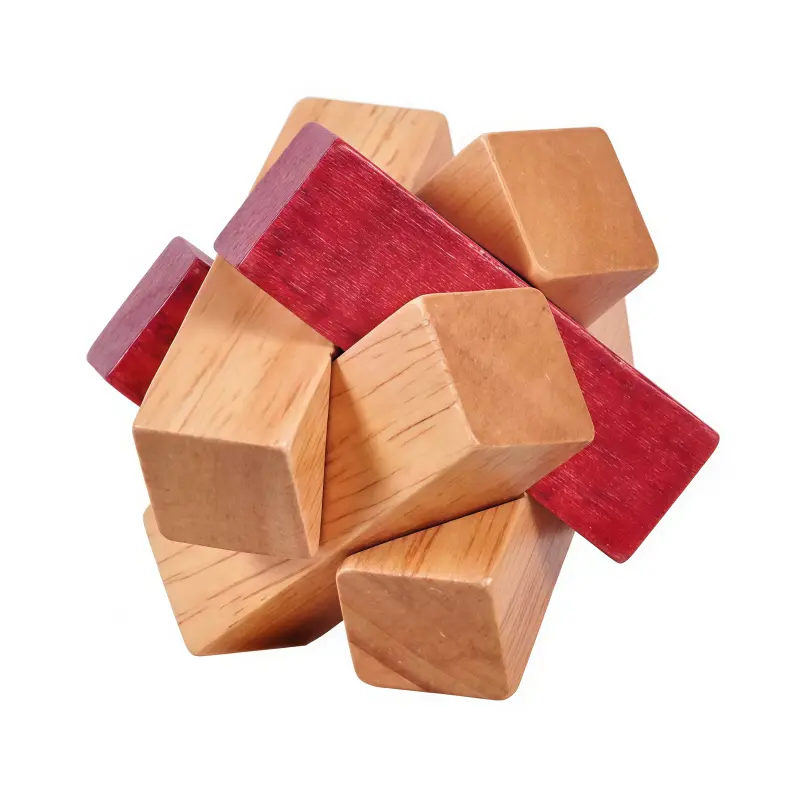
Wood Knot Puzzle — $16.99
Cracking the box open, the scent hits you—not the deep, aromatic smell of freshly laser-cut birch or maple, but a fainter, slightly dusty odor with a faint, almost chemical edge. It’s the smell of processed wood composite, a far cry from the “crack open a cedar chest” aroma that often accompanies higher-end wooden puzzles. Nestled inside is a single, vacuum-formed plastic tray, and within it, the pieces are piled neatly. There’s no loose bag, which is a nice touch for organization, but the plastic tray feels utilitarian.
Now, for the main event: the pieces. Pouring them onto your table creates a soft, muted clatter. It’s not the sharp, satisfying click-clack of thick, solid hardwood pieces connecting, nor is it the papery rustle of cardboard. It’s somewhere in between—a lighter, plasticky tap. Picking up a handful confirms the initial weight impression. These pieces are thin, likely around 2mm, and are made from laser-cut wood composite (like HDF or MDF). The edges are smooth, with no splintering, a testament to a clean laser cut. The finish is uniformly matte, and the color is consistent—a solid, dark brown on both sides. The cut itself is where things get interesting. This isn’t a random cut or a standard grid. Each piece is a unique, whimsical shape—twists, curves, and intricate silhouettes that are a hallmark of the “wooden puzzle” experience. They are genuinely fun to look at individually.
The tactile feel, however, is where the compromise becomes palpable. The pieces lack the substantial, cool weight and oily-smooth grain you can run your finger across in a solid wood puzzle. They feel dry and slightly porous. When you attempt to fit two together, they don’t “click” or lock with any authority. They nestle, resting gently against one another. You can lift a small connected section, but it’s fragile; a slight jostle and it will come apart. This is a common trait in many laser-cut composite puzzles, a stark contrast to the almost magnetic fit of some precision-made brands or the satisfying snap of a high-quality cardboard puzzle like Ravensburger.
Your immediate quality cues are mixed. On one hand, the intricate, whimsical cut is impressive and visually appealing, promising a unique challenge. The packaging is presentable and protective. On the other, the material choice and thinness communicate “accessible entry point” rather than “generational heirloom.” For someone used to the substantial, sensory-rich unboxing of a premium wooden puzzle, this might feel underwhelming. For a puzzler curious about whimsical pieces but hesitant to drop $100+, this is the tangible, lower-stakes invitation. It sets the stage not for a luxurious, slow savoring of craftsmanship, but for a focused, tactile battle against a monochrome, cleverly cut brain teaser. The table is set, but the feast is purely mental.
Why Wood? The Tangible Difference Between Cardboard and Heirloom Puzzles
So, why make the jump from cardboard to wood? On Reddit, the answer isn’t just about “quality.” It’s a sensory manifesto. Users don’t just see a puzzle; they feel it. The shift is from a disposable activity to a tactile experience you can hold in your hand—literally. As one puzzler put it, the tactile feel and sound are fundamentally different, making a 250-piece wooden puzzle feel as complex as a 500-piece cardboard one. It’s a move from consumption to connection.
The first and most immediate difference is in the hand. Cardboard has a uniform, slightly fuzzy give. Wood, depending on the brand, offers a cool, smooth solidity. With a premium heirloom puzzle, you feel the weight and density of each piece, often cut from 4mm or thicker sustainable plywood. There’s a satisfying, substantial thock when you place a piece correctly on the table. The Wood Knot Puzzle 2, being a more accessible entry, uses a thinner laser-cut composite wood. You don’t get that hefty thock, but you still get the essential smoothness and a cleaner, more precise edge than cardboard. It’s a gateway to that tactile world.
Then there’s the infamous “click.” This is a major point of division in the wooden puzzle community. High-end hand-cut puzzles like those from Liberty or Wentworth are famed for their precision fit—pieces slide together with a quiet, authoritative snick that feels like solving a tiny, perfect lock. Many cardboard puzzles, like Ravensburger, achieve a similar satisfying snap. But many laser-cut wooden puzzles, including the Wood Knot Puzzle 2 and brands like Unidragon, operate differently. As noted on Reddit, “The pieces don’t click together, but they tend to rest gently against one another.” This isn’t a defect; it’s a different kind of challenge. It demands more careful alignment and creates a more fragile, meditative assembly process. You’re building a picture that rests in harmony, not locks in place. To understand this nuanced interaction better, our article on The Physics Of The Click breaks down the strategy shift it requires.
Durability is where wood makes its case for being an heirloom. A cardboard puzzle, once done, is often bent, with nubs worn from repeated fitting. It’s a single-use item in spirit. A well-made wooden puzzle can survive decades, even generations, of handling without fraying. The Wood Knot Puzzle 2, while not in the “pass down to your grandchildren” tier due to its thinner material, still far outlasts cardboard. You can disassemble and reassemble it countless times without degradation. This transforms the puzzle from an activity you finish into a object you own and revisit.
This leads to aesthetics as decor. A completed cardboard puzzle often gets glued, a messy concession to preservation. Wooden puzzles, by their inherent beauty, are display pieces. The intricate, whimsical cuts of a premium puzzle are art in themselves. The Wood Knot Puzzle 2, with its monochrome, knot-themed whimsy pieces, is designed to be framed. The puzzle becomes a conversation piece, a testament to the time and focus invested. It bridges the gap between hobby and home decor, a concept we explore in When Wooden Puzzles Become Functional Art.
Finally, there’s the eco-conscious angle, which resonates strongly today. Cardboard, while recyclable, often comes with plastic bags and is seen as single-use. Wooden puzzles, especially those made from sustainably sourced materials like birch ply, market themselves as a durable, plastic-free alternative. They appeal to the desire to buy fewer, better things. The Wood Knot Puzzle 2 leans into this, positioning itself as a more sustainable and lasting choice than a disposable cardboard equivalent.
In essence, choosing wood is choosing a more engaged, sensory, and lasting form of puzzling. It’s about the cool weight in your palm, the quiet shush of pieces sliding on a table, and the pride of a completed object beautiful enough to keep out. The Wood Knot Puzzle 2 sits at the accessible end of this spectrum. It delivers the core wooden experience—the smooth touch, the whimsical cut, the durability—without the premium price or the authoritative click. It answers the “why wood?” question for the curious, offering a tangible, lower-stakes taste of a world where puzzles are not just solved, but felt and kept.
Solving the Knot: A Step-by-Step Walkthrough of the Unique Challenge
Forget everything you know about assembling a cardboard grid. Solving the Wood Knot Puzzle 2 is less about pattern-matching and more about learning a new tactile language. The absence of a locking “click” and the prevalence of whimsy pieces demand a different philosophy, one that’s about savoring the process as much as reaching the solution. Based on the strategic wisdom from guide-focused resources, here’s a walkthrough that moves beyond “start with the edges” into the real, grain-level tactics you’ll need.
Phase 1: The Lay of the Land (Not the Border)
Your first instinct will be to find all the straight edges. Resist it. With many wooden puzzles, especially those with intricate, themed whimsies, the border pieces might not have a uniform straight edge. Instead, begin with The Great Sort. Dump all the pieces onto your work surface and simply observe. Group pieces by dominant color or shade from the knot’s wood grain. More importantly, separate the obvious whimsy pieces—the unique shapes like leaves, tools, or abstract forms that are cut into the puzzle’s design. These aren’t just decoration; they are critical anchor points and visual clues. Setting them aside gives you a handle on the puzzle’s “vocabulary.”
Phase 2: Decoding the Grain & The False Fit
Now, engage with the material. Pick up a few pieces and look at the wood grain. In a quality wooden puzzle, the grain pattern is a continuous image across the face. This is your most powerful tool. Align two pieces side-by-side. Does the grain flow seamlessly across the seam, matching both color and the direction of the wood’s lines? If yes, you have a candidate. Now, test the fit.
This is where the false fit lurks. A piece may slide next to another, appearing to align, but the cut lines won’t be perfectly complementary, leaving a hairline gap or a slight lip you can feel with your fingertip. Trust the grain over the shape. If the grain matches perfectly but the fit feels even slightly ambiguous, it’s probably correct. If the shape seems to fit but the grain is broken or mismatched, it’s a trap. This tactile verification is the core skill of wooden puzzling.
Phase 3: Building from the Inside Out
With your whimsies sorted and your grain-matching eye in training, start building small clusters. Connect a few whimsy pieces that share a color region. Use the distinctive shapes as hubs. Because the pieces don’t lock, you’ll be building free-floating islands on your table. This is normal and preferable. Trying to build a contiguous section too large too early will lead to frustrating collapse. This inside-out method, advocated by expert guides, allows you to understand the puzzle’s internal logic and artwork before committing to its rigid structure.
Phase 4: The Gentle Click and Section Assembly
As your clusters grow, you’ll start to feel what seasoned puzzlers call the gentle click. It’s not an audible snap, but a satisfying, slight resistance followed by a seamless seat. You’ll feel the laser-cut precision when a piece is truly home. Once you have several stable clusters, begin to bridge them. Look for pieces with unusual, elongated tabs or sockets that could connect two islands. Use the overall image on the box sparingly—it’s a guide, not a blueprint. The real map is in the wood itself.
Phase 5: The Final Lock & The Philosophy
The border will often come together last, almost as an afterthought. By the time you’re connecting the final pieces, you’re not just filling gaps; you’re completing a cohesive, hand-held piece of art. The final piece won’t drop in with a celebratory snap. It will slide into place, and the entire puzzle will gain a subtle, final rigidity. This is the moment to appreciate the journey—the observation, the patience, the shift from frustration to flow. For a broader look at this strategic mindset, our guide on How To Solve A Wood Puzzle Without Losing Your Mind offers a solid foundation.
This process teaches a broader puzzle-solving mindset applicable to even more complex mechanical brain teasers. For instance, the approach to a classic like the Six-Piece Burr is analogous: it requires understanding the internal geometry and movement of pieces rather than forcing them, a lesson directly transferable from managing the Wood Knot 2’s floating clusters. For more on this strategic shift, our exploration of 3D Wooden Puzzle Solutions delves into why observation always beats brute force.
Ultimately, solving this puzzle isn’t a race. It’s a practiced, mindful engagement with a physical object. The challenge is the point. Embrace the lack of a click, decode the grain, and let the whimsies guide you. The completed knot isn’t just a picture; it’s proof you’ve learned to speak a little of wood’s quiet language.
The Price of Craftsmanship: Is a Wooden Puzzle Worth the Investment?
Let’s be blunt: the biggest hurdle between you and a wooden puzzle like the Wood Knot Puzzle 2 is the price tag. You can buy a dozen standard cardboard puzzles for the cost of one premium wooden heirloom. The question isn’t just “Is it expensive?”—it’s “What am I actually buying, and is that worth it to me?”
First, break down the cost. You are not paying for a printed image. You are paying for:
* Material: Sustainably sourced, kiln-dried hardwood (often birch or maple) versus laminated paperboard. It’s the difference between a solid oak table and a cardboard box.
* Precision: Laser-cutting is not a stamping process. It’s a slow, meticulous burn that creates intricate, interlocking whimsies and a flawless, dust-free edge on every single piece. This level of precision in manufacturing is costly.
* Design & Artistry: The cut is the art. A designer doesn’t just choose an image; they craft a piece map where the shapes themselves tell a story, related to the theme. The whimsy pieces in the Wood Knot 2 aren’t random; they’re part of the puzzle’s narrative.
* Durability: This is a one-time purchase. A wooden puzzle can be assembled, disassembled, and reassembled for decades without fraying, bending, or losing its fit. It’s built for generations, not just one rainy afternoon.
The most common objection is, “But I finish a puzzle and it’s done. That’s a lot for a one-time activity.” This is where the mindset needs to shift. You don’t “consume” a wooden puzzle; you curate it. The value isn’t in the novelty of the image, but in the repeatable, tactile experience of solving it. It’s like comparing a streaming movie ticket to a beautifully crafted board game you pull off the shelf every year. The per-hour entertainment value, when spread over a lifetime of use, often beats many other hobbies. This transforms puzzling from a simple pastime into a mindful practice versus a disposable activity.
Furthermore, a puzzle like this transcends being an activity. Its heirloom quality makes it a displayable object. Once completed, many puzzlers glue and frame them or simply leave them out on a coffee table as a conversation piece. It’s functional art. This dual purpose—engaging pastime and aesthetic object—fundamentally changes its value proposition.
The Wood Knot Puzzle 2 sits in a specific niche of this value spectrum. You’re not paying for a famous artist’s license or a massive 1000-piece count. You’re investing in a uniquely engineered, challenging mechanical brain-teaser made from a premium material. Its value is in its clever design and the satisfying, repeatable “aha!” moment of solving its knot.
To put this in perspective, consider other puzzle-adjacent purchases. A cheap plastic 3D puzzle feels disposable. But a finely made mechanical puzzle that also functions offers even clearer value.
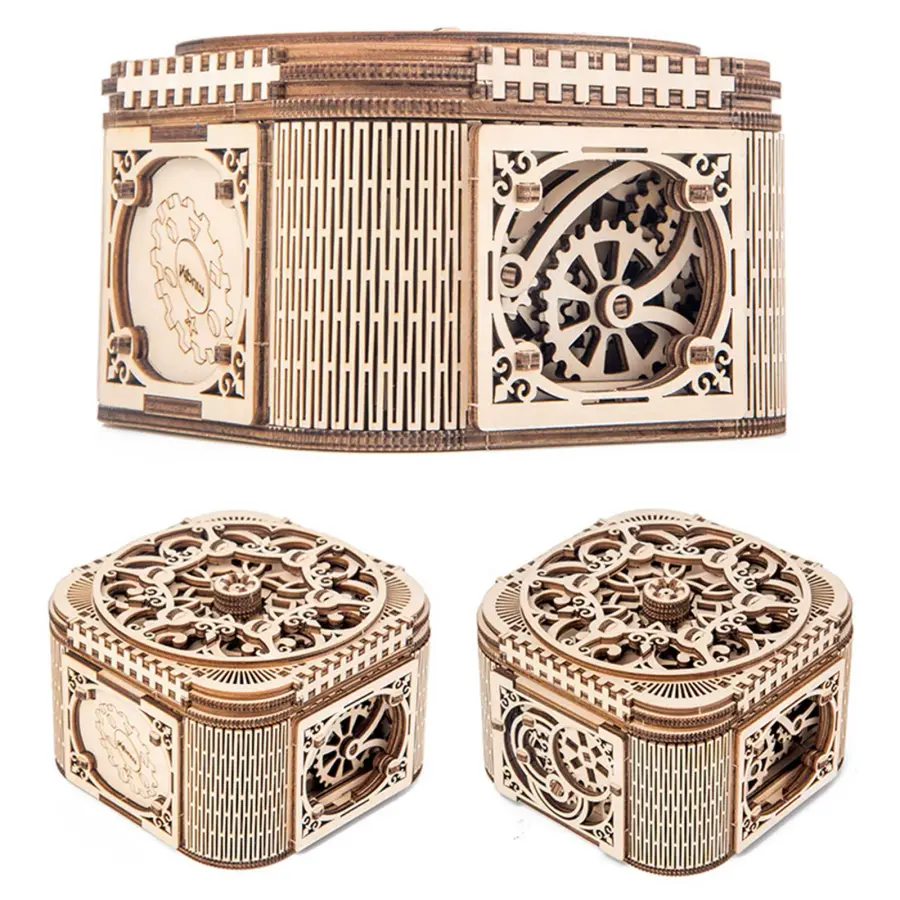
For example, the 3D Wooden Puzzle Treasure Box (at a lower price point) highlights this functional shift. You pay not just for the puzzle-solving session, but for a lasting jewelry box you’ll use afterward. It justifies its cost through ongoing utility. The Wood Knot 2 justifies its cost through ongoing experience and display-ready beauty.
So, who should skip it? If your goal is to rapidly cycle through images, cover your wall with varied art, or you prefer a relaxing, meditative fit-over-challenge assembly, a premium wooden puzzle is a hard sell. Stick with high-quality cardboard.
Who is it worth it for? The collector, the tactile learner, the person who values objects that tell a story through craftsmanship. It’s for the puzzler who finds joy in the process as much as the result, and who sees a beautifully made object as a legitimate destination for discretionary spending. You’re not buying a puzzle; you’re buying a future heirloom and countless hours of deeply satisfying engagement. In that light, the knot isn’t just in the wood—it’s in the value, which tightens and becomes clearer the longer you own it.
Wood Knot Puzzle 2 vs. The Market: How It Stacks Up to Liberty, Wentworth, and Unidragon
So, you’re convinced a wooden puzzle is your next move. The market is full of beautiful, expensive boxes. Where does the Wood Knot Puzzle 2 fit? Is it a quirky outlier or a serious contender against established names like Liberty, Wentworth, and Unidragon? Let’s break it down by the real buying criteria puzzlers talk about on forums like r/Jigsawpuzzles: challenge level, art, whimsies, and the all-important “vibe.”
The Core Comparison: What Are You Actually Buying?
First, a crucial distinction. The Wood Knot Puzzle 2 is a single, specific design challenge—a complex, interlocking knot. Brands like Liberty and Wentworth are art-driven jigsaw puzzles with whimsical piece shapes. They are different species. Comparing them is like comparing a master-level chess problem to a beautiful, 1000-piece landscape painting. Your goal dictates the choice.
For the Art Collector & Gift-Giver: Liberty Puzzles & Wentworth
* The Vibe: Heirloom, artistic, luxurious gift. Opening a Liberty box feels like receiving a piece of fine craft. Their signature is “whimsies”—pieces laser-cut into shapes that match the theme of the artwork (a bird in a tree, a ship on a sea).
* The Challenge: Moderate to high, but the challenge is in sorting color gradients and navigating whimsy pieces, not necessarily a brutal mechanical solve. A 500-piece Liberty is often cited as being easier than a 500-piece cardboard puzzle due to the distinct piece shapes.
* The Price: The highest tier. You’re paying for licensed art, intricate custom whimsies, and brand prestige.
* Wood Knot 2’s Place: It’s not competing here. If your primary goal is to gift a stunning, frameable piece of art that happens to be a puzzle, go Liberty or Wentworth. The Knot is about the puzzle mechanics, not the final image.
For the Modern, Visually-Stunning Experience: Unidragon
* The Vibe: Contemporary, vibrant, Instagrammable. Unidragon uses thick, high-quality plywood with stunning, often animal-shaped silhouettes and intricate, thematic piece cuts (leaf shapes in a forest puzzle).
* The Challenge: Low to moderate. The pieces are thick and satisfying but don’t interlock tightly; they “rest gently against one another,” as one Redditor noted. The challenge is visual pattern recognition, not structural cunning.
* The Price: Premium, but often below Liberty/Wentworth.
* Wood Knot 2’s Place: If you want a beautiful object that’s a relaxing, meditative assemble, Unidragon is a fantastic choice. The Knot is the opposite: visually monochromatic (just wood grain) and mechanically demanding. It’s for when you want to think with your hands, not just relax with them.
For the Mechanical Puzzle Purist: Where the Wood Knot 2 Lives
This is the Knot’s true arena. Its competitors aren’t pictorial jigsaws, but other mechanical wood puzzles like burrs and disentanglement puzzles.
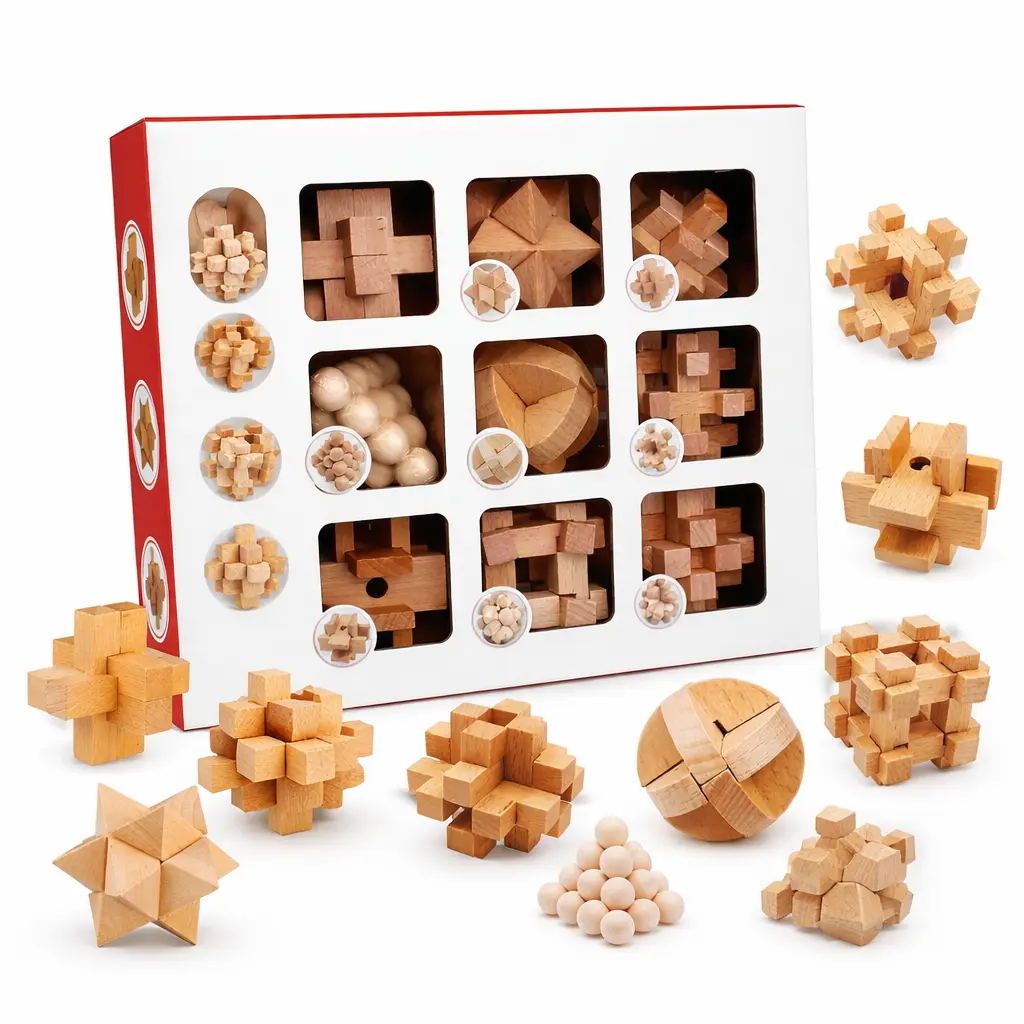
Luban Lock Set 9 Piece — $39.99
For instance, the Luban Lock Set 9 Piece is a direct spiritual cousin. It’s a collection of interlocking puzzles based on ancient Chinese joinery, where the goal is disassembly and reassembly through understanding spatial relationships and hidden tolerances. The Wood Knot Puzzle 2 operates on the same wavelength: it’s a single, elegant, maddening problem of logic and dexterity. You’re not looking at a picture; you’re decoding a three-dimensional secret.
Scenario-Based Decision Guide
Goal: “I want my first wooden puzzle and a beautiful keepsake.”
- Buy: A mid-piece-count Wentworth or Unidragon. The structured yet whimsical cuts are forgiving and delightful.
- Skip: The Wood Knot Puzzle 2. Its lack of an image and high frustration potential is a poor introduction.
Goal: “I want an extreme, brain-burning challenge. I love Sudoku and escape rooms.”
- Buy: The Wood Knot Puzzle 2 or the Six-Piece Burr Puzzle. These are pure logic problems in wood.
- Skip: Most art jigsaws. For a tougher jigsaw challenge, seek out Liberty/Wentworth puzzles with monochromatic sections or complex patterns.
Goal: “I want a stunning centerpiece to frame and display.”
- Buy: Liberty Puzzles. Their art selection and craftsmanship are designed for this.
- Skip: The Wood Knot Puzzle 2. While beautiful, its abstract knot form is more of a curiosity than a classic piece of wall art.
Goal: “I want a unique, thoughtful gift for a puzzle enthusiast who has everything.”
- Buy: The Wood Knot Puzzle 2. For a seasoned puzzler bored of standard cuts, this is a deep, novel challenge. It’s a gift that says, “I know you love a real test.”
- Alternative: A high-difficulty Liberty puzzle or a set like the Luban Lock.
The Ravensburger Wild Card
Ravensburger has entered the wooden space, often with their famous fine-art prints. They offer a bridge: recognizable, high-quality art on a sturdy wood substrate, but often with more traditional piece shapes. They’re a safe choice for a cardboard puzzler wanting to upgrade material without venturing into whimsy-land or mechanical puzzles.
Final Verdict: Know Your Puzzle Personality
The Wood Knot Puzzle 2 doesn’t “stack up” against Liberty or Unidragon—it exists in a different lane. The market isn’t a hierarchy with one “best” at the top. It’s a spectrum:
* Art & Whimsy (Liberty/Wentworth) —> Art & Modern Design (Unidragon) —> Classic Art on Wood (Ravensburger) —> Mechanical & Logic Puzzles (Wood Knot 2, Luban Lock, Burr Puzzles).
Choose your lane. If your joy comes from serene assembly and beautiful results, invest in the artisanal jigsaws. If your joy comes from the “Aha!” moment of solving a fiendish mechanical problem, the Wood Knot Puzzle 2 isn’t just an option; it’s a destination. For more help navigating this choice, our no-nonsense guide on The Real Way To Choose Wooden Puzzles can help solidify your decision.
Common Stumbling Blocks: Mistakes I Made (So You Don’t Have To)
Let’s be honest: the first time you dump out the pieces of the Wood Knot Puzzle 2, a wave of “what have I gotten myself into?” is completely normal. I’ve been there. The journey from that chaotic pile to the satisfying final “click” is paved with small errors in judgment. These aren’t failures; they’re the curriculum. Here are the exact pitfalls I hit, so you can sidestep them and enjoy the learning curve.
Mistake #1: Treating It Like a Jigsaw (The Sorting Fallacy)
My cardinal sin. I instinctively laid out all the nearly identical, dark walnut pieces on my table, trying to group them by shape. It was an exercise in futility. Unlike a picture puzzle where you sort by color or edge, a pure mechanical puzzle like this requires you to think in relationships, not categories. I wasted an hour before I realized the key wasn’t visual sorting, but tactile exploration. The solution was to pick up two pieces at random and slowly, deliberately, explore how their grooves and protrusions interacted. The goal isn’t to find “all the knobs,” but to discover which two pieces create a stable, interlocking unit first. Ditch the sorting tray mentality.
Mistake #2: Forcing the Fit (A Lesson in Wood’s Language)
With cardboard, a piece either fits or it doesn’t. With precision wood, there’s a subtle language of alignment. Several times, I had a connection that seemed almost right. I’d apply a little pressure, a slight twist, trying to will it into place. This is a great way to stress the fine laser-cut joints or get pieces frustratingly wedged. The Wood Knot Puzzle 2 taught me that a correct fit in a quality mechanical puzzle has a certain smooth, authoritative feel. It doesn’t “grind” into place. If you’re applying more than the gentlest persuasive force, you’re wrong. Back up, rotate the piece 180 degrees, or consider that it might belong to a different assembly stage entirely.
Mistake #3: Ignoring the Grain & Ignoring the Obvious
This sounds minor, but it’s critical. The wood grain runs in a specific direction on each piece. Early on, I was trying to connect pieces with opposing grain directions, which often meant their internal structures were misaligned. Once I started consciously noting the grain, it became a built-in guide for orientation. Conversely, I also overlooked the most obvious shapes—the large, uniquely curved connectors. I dismissed them as too easy, thinking the heart of the puzzle must be in the small, tricky bits. In reality, these larger “keystone” shapes often form the foundational frame that the more complex pieces lock into. Don’t overcomplicate it by ignoring the simple-looking parts.
Mistake #4: The Frustration Spiral (And How to Break It)
There was a 45-minute period where I was convinced my puzzle was defective. I had a three-piece assembly that had to be correct, but it refused to integrate with the growing core. Frustration mounted, focus shattered. My mistake was white-knuckling it. The fix? I put it down. I made tea. This is the core philosophy I wrote about in Wooden Puzzles Aren’t About Solutions They’re About Focus. When I returned, I disassembled that stubborn section completely—something that felt like admitting defeat. Starting that section fresh, without the assumption it was “already done,” I saw the error in under a minute. Regular breaks and the willingness to backtrack are not weaknesses; they are the essential tools for resetting your spatial reasoning.
Mistake #5: Underestimating the “Click”
My first solve felt… floppy. The final knot held together, but it had a slight wiggle. I’d missed the final, fully-seated position for one key piece. In a wooden mechanical puzzle, the true solution isn’t just “it stays together.” It’s a state of perfect, tensioned harmony where the structure becomes rigid and emits a series of soft, final clicks as the last pieces settle. Don’t stop at “it’s assembled.” Gently test it. If there’s play, one last piece is a millimeter out of its true home. That final, satisfying solidity is the real reward.
These lessons translated directly when I later tackled the . The same principles applied: no forced fits, grain as a guide, and frequent breaks to avoid tunnel vision. Each stumble with the Wood Knot Puzzle 2 fundamentally rewired my approach, transforming frustration into a deeper appreciation for the craft. Your mistakes will be your own, but knowing these common traps will let you spend less time wrestling and more time in that wonderful state of focused flow.
Recommended Puzzle Picks
Frequently Asked Questions About Wooden Puzzles
After diving deep into the Wood Knot Puzzle 2 and its market, the same practical questions from new puzzlers kept popping up in forums like r/Jigsawpuzzles. Here are the unfiltered answers, based on hands-on experience and real user chatter.
Can you glue and hang a wooden puzzle?
Absolutely, and it’s a popular way to display heirloom-quality art. Brands like Lubiwood even sell kits for it. The process is similar to framing a cardboard puzzle but gentler. You’ll need a specialized puzzle glue applied carefully with a brush to avoid pooling in the intricate laser-cut gaps. Once sealed and dried on a rigid backing, it makes stunning wall art. We have a detailed guide on how to frame and preserve your completed puzzle.
Are replacement pieces available?
It depends entirely on the brand and how the puzzle is made. For mass-produced laser-cut puzzles (like many from Unidragon or Ravensburger’s wooden line), manufacturers often have a process for ordering replacements. For hand-cut or small-batch artisan puzzles, it’s far less likely. Always check the company’s policy before buying if this is a concern. It’s a key reason why a dedicated, organized storage solution is crucial.
How should I store my wooden puzzles?
Never just throw them back in the box loose. The pieces are delicate and the friction can cause wear. The best method is to store them flat, fully assembled, on the puzzle board or a foam board you can slide into a large, flat bag. If you must disassemble, use resealable bags within the box to separate sections. This keeps whimsy pieces from getting damaged and makes your next solve easier to start. For complex puzzles like interlocking burrs or spheres, specific disassembly and storage techniques are essential to avoid damage.
Why don’t wooden puzzle pieces “click” together like cardboard?
This is the biggest tactile shift for newcomers. Cardboard puzzles rely on a friction-fit “click” from the interlocking tab-and-blank structure. Premium wooden puzzles are cut with a laser, resulting in vertical-sided pieces that nest together rather than lock. They rest gently against one another, held by precise cut lines and gravity. You get a soft, satisfying snick or shush sound, not a click. This is a feature, not a bug—it’s part of the refined, tactile experience.
Is a 250-piece wooden puzzle harder than a 1000-piece cardboard one?
Often, yes. As one Reddit user noted, they’ll opt for half the piece count in wood. The difficulty isn’t in volume, but in complexity. With no reference image on the pieces, uniform piece colors (like in a solid wood knot puzzle), whimsy shapes, and a cut that doesn’t follow a standard grid, your brain can’t rely on the usual shortcuts. A 250-piece wooden puzzle challenges your spatial reasoning in a way a larger, predictable cardboard puzzle may not. It’s a different, often more meditative, kind of hard.
How do you clean wooden puzzles?
Gently and infrequently. Use a soft, dry brush (like a clean makeup brush) to dust the assembled puzzle or loose pieces. For sticky spots, barely dampen a lint-free cloth with water, wring it out completely, and wipe gently, then immediately dry with another cloth. Never soak pieces or use chemical cleaners, as they can warp the wood or damage the finish. The best practice is to work on a clean surface and wash your hands before puzzling.
What’s the historical appeal?
The allure isn’t new. The jigsaw puzzle itself, invented in the 1760s, started as an educational tool made of wood. Modern wooden puzzles are a direct callback to that origin, marrying old-world craft with new technology. They represent the enduring human fascination with mechanical puzzles—objects designed to test ingenuity and dexterity, a category with a rich history you can explore further within the broader world of puzzles.
The Final Verdict: Who Should (and Shouldn’t) Buy the Wood Knot Puzzle 2
After spending hours with the Wood Knot Puzzle 2, feeling the weight of its pieces and navigating its deceptive simplicity, my conclusion is definitive: this is a niche masterpiece. It won’t be for everyone, and that’s precisely its strength. It’s not a mass-market toy; it’s a specific experience for a specific type of person. Let’s break down who that is.
Buy the Wood Knot Puzzle 2 if you are:
- The Tactile Upgrader: You’ve done enough cardboard puzzles that the snap of a piece feels mundane. You crave a more substantial, sensory experience—the solid clack of wood on wood, the satisfying heft of each piece, the visual grain. This puzzle transforms puzzling from a visual task into a full tactile ritual.
- The Gift-Giver Seeking an Heirloom: You’re tired of disposable gifts. You want to give an object that implies permanence, thought, and quality. The Wood Knot Puzzle 2, with its durable craftsmanship and elegant presentation, feels like a gift that will be remembered and kept, not just used once and forgotten. It’s a statement that says, “I value lasting quality.”
- The Decor-Minded Puzzler: You see a completed puzzle as a temporary art piece. The organic, interlocking flow of the wood grain in this design is inherently beautiful. Once solved, it’s a conversation-worthy object to display on a shelf or coffee table before taking it apart for the next victim—I mean, guest.
- The Meditative Problem-Solver: Your goal isn’t speed; it’s immersion. You appreciate a challenge that forces you to slow down, to think in three dimensions, and to engage in a quiet, focused flow state. The lack of an image guide and the reliance on shape and feel make this a perfect mental palate cleanser.
Skip the Wood Knot Puzzle 2 and look elsewhere if you are:
- The Budget-Conscious or Casual Dabbler: If your primary metric is cost-per-hour of entertainment and you view puzzles as somewhat disposable, this isn’t it. The investment is in the object itself. For a fraction of the price, you can get a 1000-piece cardboard puzzle. The value here is material and experiential, not volumetric.
- The Pure Speed-Solver or Competitive Puzzler: If your joy comes from beating your personal time or the thrill of rapid pattern recognition, you’ll find this puzzle frustratingly “slow.” It deliberately removes the tools you rely on for speed. This is a puzzle to savor, not race.
- Someone Seeking a Relaxing, Low-Stress Activity: While ultimately meditative, the initial stages of this puzzle involve genuine confusion and trial-and-error. If you want to completely zone out without mental friction, a standard image-based jigsaw is a better choice. This one demands your full attention.
- The Puzzler Who Needs a Clear “Win” State: The abstract nature means there’s no picture to complete for that classic satisfying moment. Your victory is a silent, structural one. If you need the dopamine hit of seeing a finished image, consider a brand like Liberty or Wentworth with their artistic whimsy pieces instead.
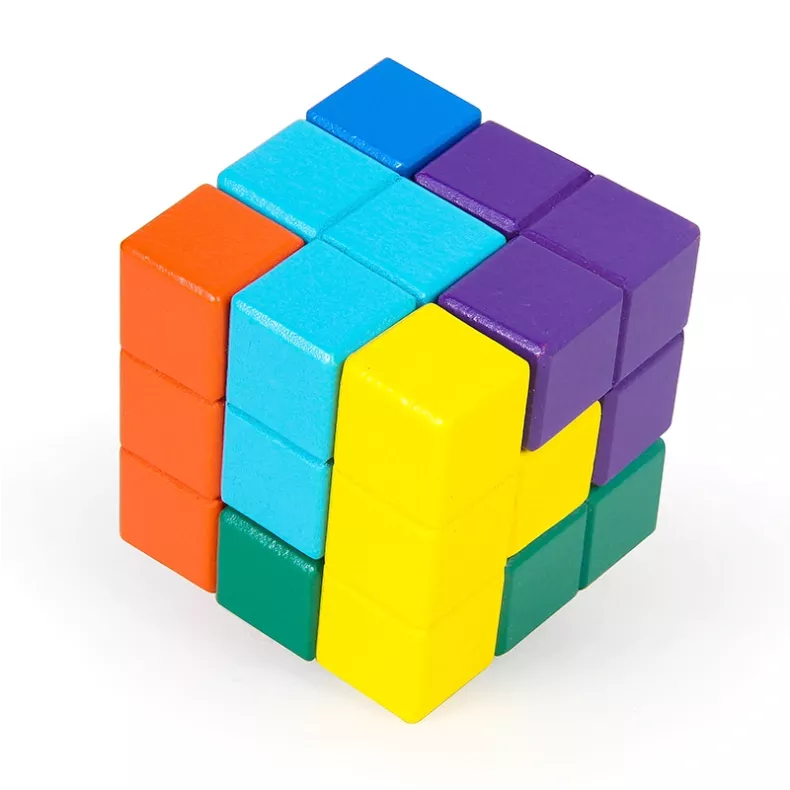
For those who fit the “buy” profile but want a different flavor of 3D wooden challenge, consider a lateral move. The ** [7 Color Soma Cube Puzzle](https://tea-sip.com/product/7-color-soma-c