More Than a Puzzle Box: Where Craft, Music, and Mechanics Collide
When you hear “puzzle box,” your mind might jump to a specific image. Perhaps it’s a classic Japanese himitsu-bako, a wooden cube requiring a precise sequence of slides and presses to reveal a hidden compartment. Or maybe it’s a modern “sequential discovery” puzzle, where tools are found and used within the puzzle itself to progress. In the formal taxonomy of mechanical puzzles, a puzzle box is defined by its primary challenge: to open it, or to discover its secret. It’s a self-contained world of trickery, meant to be solved, admired, and then solved again.
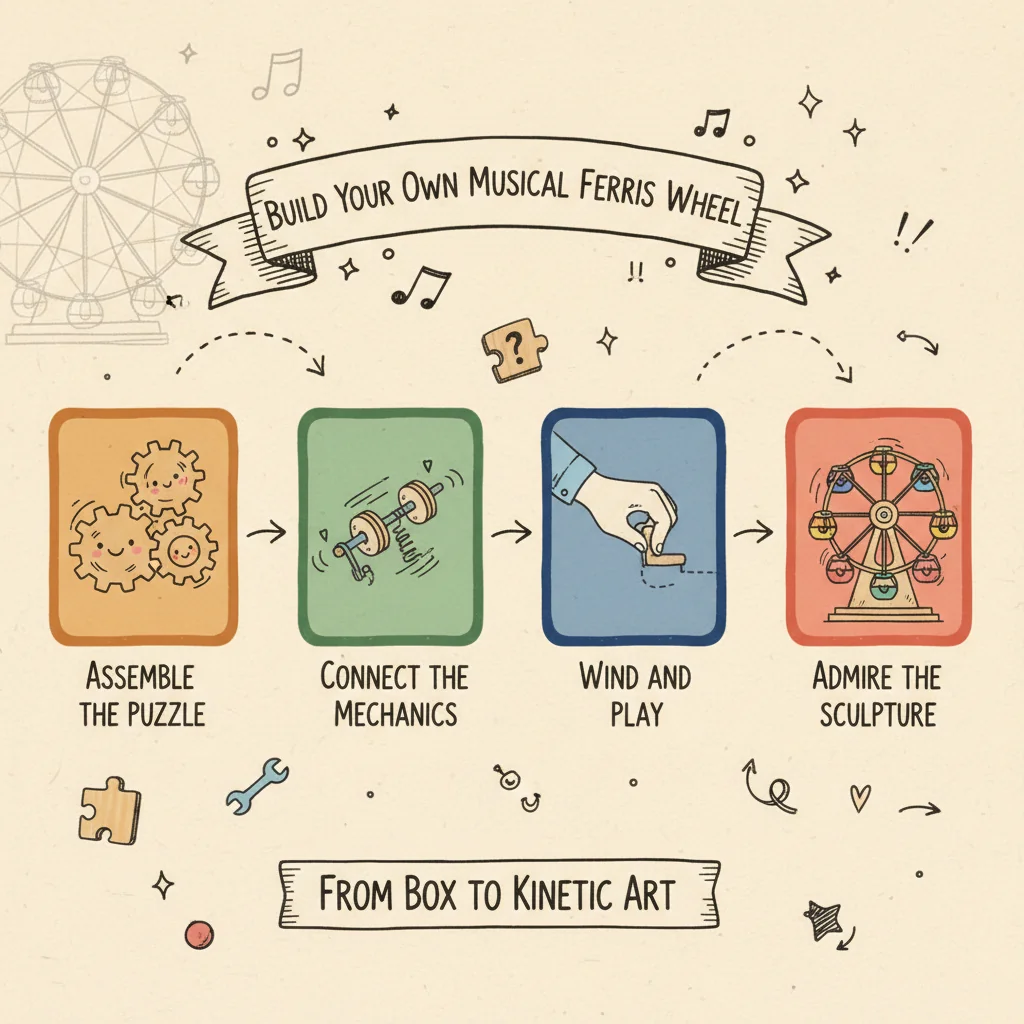
But what if the puzzle wasn’t just about opening a box, but about building the entire wondrous contraption from the ground up? What if the reward wasn’t merely a hidden void, but a charming, kinetic sculpture that plays music? This is the territory of the Wooden Ferris Wheel Music Box Kit. It’s a hybrid that defies simple categorization, sitting at the compelling intersection of a 3D puzzle, a craft kit, and a functional mechanical music box. It’s not a puzzle box you solve to access; it’s a puzzle you assemble to create.
For the dedicated puzzle enthusiast, this shifts the entire paradigm. The satisfaction isn’t found in a sudden “aha!” moment of a sliding panel, but in the cumulative, hours-long journey of construction. You’re not just manipulating a finished mechanism; you are its architect. Each of the 200+ precision-cut wooden pieces is a component in a larger mechanical logic. Fitting gear A into slot B, ensuring axle C rotates freely, and seeing the slow, steady connection between the wind-up mechanism and the turning Ferris wheel gondolas—this is the core “puzzle.” The challenge is one of patience, spatial reasoning, and careful following of instructions to bring order from a pile of potential.
This kit also speaks directly to the crafter and the tinkerer. There’s a tangible, old-world appeal to working with wood, to the scent of laser-cut birch plywood, and to the physical act of pressing out pieces and sanding the occasional burr. It’s a hands-on, screen-free project that results in a display-worthy object. The finished product is a conversation piece: a nostalgic Ferris wheel, evoking fairground memories, that slowly rotates to the gentle tune of a 18-note music box mechanism (typically a classic like “Memory” from Cats or “You Are My Sunshine”).
So, who is this for? It’s a perfect storm for a specific type of person:
* The Puzzle Lover seeking a longer-form challenge: If you burn through take-apart puzzles or puzzle boxes quickly and crave a deeper, more immersive engagement.
* The Detail-Oriented Crafter: Someone who finds zen in meticulous, multi-session projects and values the pride of displaying their own hand-built creation.
* The Music Box Aficionado: A collector who appreciates mechanical music but desires a more active role than simply winding a pre-made box.
* The Gift-Giver looking for a “wow” factor: For a patient, curious recipient, this promises an unforgettable unboxing and a shared building experience.
However, this unique fusion also raises the central question for our evaluation: Is this immersive, multi-sensory project the right fit for you? It demands a different set of expectations than a traditional puzzle box. The payoff is delayed, the commitment is significant (6-8 hours is common), and the “solution” is permanent. You can’t reset it and solve it again next week. The value is in the journey of building and the permanence of the heirloom-like result. If you want a quick, brain-teasing solve, look elsewhere. But if you want to step into the role of artisan and watch a puzzle transform into a singing, spinning piece of art, you’ve found your next great project.
Unboxing the Experience: What You Really Get (And What You’ll Need)
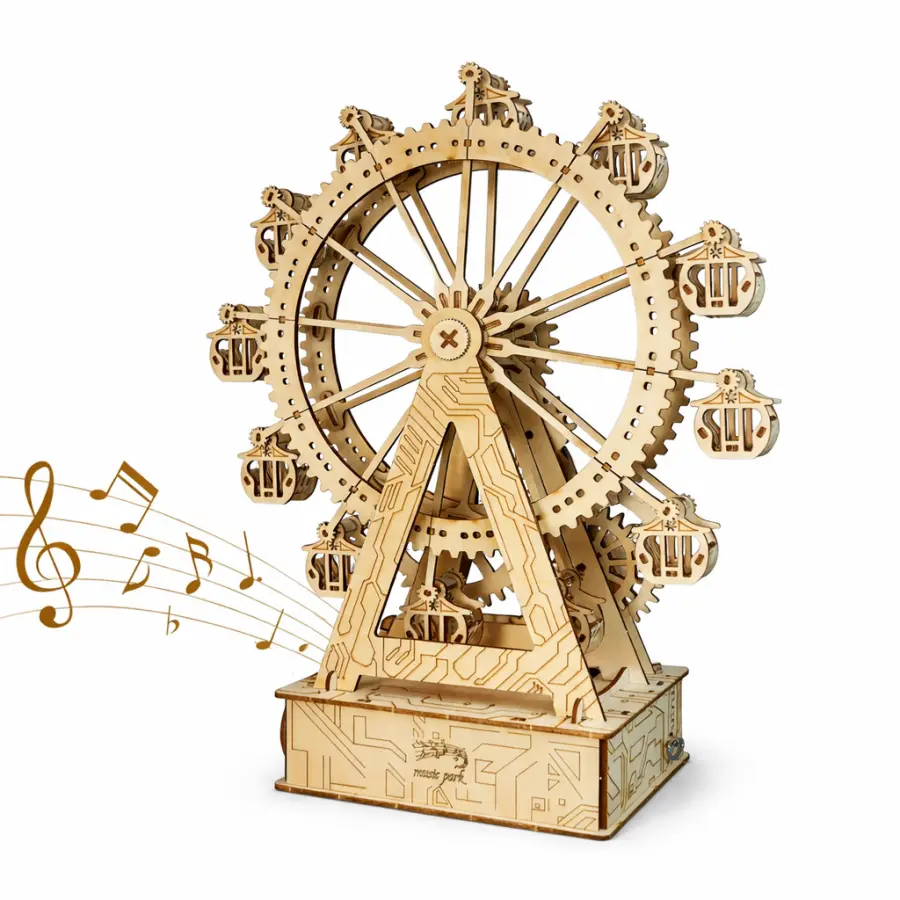
Opening the box for the Wooden Ferris Wheel Music Box Kit is a moment of truth. This isn’t a glossy, pre-assembled toy; it’s a project in a flat-pack. The contents are a mix of promise and prerequisite, and your initial reaction will likely set the tone for the entire build. Let’s lay it all out on the workbench.
The Kit Inventory: The Good, The Precise, and The Fragile
You’ll find several sheets of laser-cut plywood, each densely packed with parts. The precision of the laser cutting is immediately apparent—edges are clean, and the intricate gear teeth look impressively detailed. The wood itself is a standard birch plywood; it’s not a luxury hardwood, but it’s sturdy enough for the purpose. You’ll also get the star of the show: a small, key-wound music box movement with a metal comb. This is the genuine article, not a digital speaker, and its presence is what elevates this from a model kit to a mechanical instrument.
The kit includes sandpaper (a crucial inclusion), a small wooden mallet for tapping parts together, and a set of illustrated instructions. The instructions are the typical diagram-heavy, word-light type common to these kits. They show you where parts go, but rarely explain why or offer much troubleshooting insight. As one user on a puzzle forum might put it, “The first step is obvious, but the next will elude you for far longer than you’d care to admit if you don’t read the diagrams just right.”
The Non-Negotiable Shopping List: What’s Not in the Box
This is the most critical buying criteria. To complete this kit, you must supply your own:
* Wood Glue: A high-quality, fast-grab PVA wood glue (like Titebond) is non-optional. The structural integrity of the entire Ferris wheel depends on it.
* Small Clamps or Rubber Bands: You’ll need a way to hold glued pieces firmly while they dry. A few small spring clamps or a bundle of rubber bands is essential.
* Small Weights or Heavy Books: For gluing larger flat panels, you’ll need even pressure to prevent warping.
* A Dedicated Workspace: You need a clean, flat table you can occupy for multiple sessions. This isn’t a coffee table activity; it’s a workshop project.
Forget any of these, and your project is dead in the water before you even punch out the first piece.
First Impressions & Pre-Assembly Prep
The moment you pop the first pieces from their plywood sheets, you understand the commitment. There will be tiny nubs and laser char. This is normal. The included sandpaper is your best friend here. Taking 10-15 minutes before you even look at the instructions to gently sand the edges of every piece, especially where friction fits are indicated, will pay massive dividends in smooth operation later. This is the “real user” secret: the difference between a gear that grinds and one that glides is often just a few careful passes with sandpaper.
Setting expectations is key. The materials are adequate for the price point, but they are not premium. You are not receiving a handcrafted mechanical puzzle from a master artisan; you are receiving the raw ingredients to become the artisan. The quality of the final product is almost entirely dependent on your patience, preparation, and precision during assembly.
In short, unboxing this kit reveals its true nature: it’s a project starter pack, not a finished product. The value is in the potential, not the presentation. If you look at the sheets of wood and feel a sense of exciting, daunting possibility, you’re the right builder. If you feel overwhelmed by the idea of sourcing glue and clamps, this might be a project to skip. Your readiness to engage with these fundamentals is the first and most honest puzzle this box presents.
The Build Diary: A Step-by-Step Walkthrough of Triumphs and Tensions
The assembly of the Wooden Ferris Wheel Music Box Kit is where the rubber meets the road—or rather, where the laser-cut plywood meets your fingertips. This isn’t a simple snap-together model; it’s a sequential, logical, and deeply tactile puzzle where each phase builds on the last, and a single misstep can echo through the entire mechanism. My build was a five-day journey of quiet focus, punctuated by moments of sheer frustration and genuine triumph. Here’s that journey, broken down into its critical phases.
Phase 1: Foundation & Frame – The Puzzle of Precision
The first sheets you punch out form the massive base and the twin A-frame supports. This phase feels deceptively simple, but it’s arguably the most important. The entire kinetic sculpture relies on the absolute squareness and stability of this foundation. The instructions emphasize checking that the A-frames are perfectly perpendicular to the base. I used a small engineer’s square, but you can eyeball it against a book corner. The “aha” moment here is realizing that the puzzle isn’t just about following steps; it’s about interpreting two-dimensional diagrams to achieve three-dimensional integrity. When you slot the cross-braces in and the entire structure gains a satisfying rigidity, you feel the first flush of accomplishment. This is where you set the stage, and any wobble introduced now will haunt you when the wheel spins.
Phase 2: Gear Assembly & Mechanics – The Heart of the Puzzle
This is the core of the mechanical challenge. You’re presented with a forest of nearly identical-looking gears, a drive shaft, and a crank handle. The puzzle aspect shifts from structure to sequence and alignment. The central gear train that transfers power from the crank to the main axle must be assembled in a specific order; try to add the locking plate before the intermediate gear, and you’ll have to backtrack. The critical, mistake-prone step is aligning the interlocking teeth of the compound gears before pressing them onto their axles. A fraction of a millimeter off and they will bind. This is where my earlier sanding paid off, allowing for minor adjustments without forcing. The moment you turn the crank and see all the gears move in synchronized, silent agreement is a profound relief—it’s the first confirmation that your logic and dexterity are correct.
Phase 3: Gondola & Wheel Construction – A Test of Patience
Now you build the iconic wheel itself. You’ll assemble eight individual gondolas, each a tiny, fiddly puzzle of side panels, floors, and swing arms. This is repetitive work that demands consistency. Each gondola must swing freely on its tiny axle pin. If you get glue in the pivot point (a very easy mistake), you’ll create a stiff car that disrupts the wheel’s balance. The major “tension” point comes when attaching the gondola arms to the massive, spoked wheel. You must ensure each arm is seated in its corresponding slot at the exact same depth and angle. The instructions here are minimal, relying on the builder’s eye for symmetry. It’s a slow, meditative process. The satisfaction is cumulative: seeing the empty wheel transform into a ring of delicate, hanging cabins makes the project suddenly look like what it’s meant to be.
Phase 4: Final Integration & Tuning – The Moment of Truth
This is the grand unification. Mounting the wheel onto the main axle is the final, nerve-wracking puzzle. The axle must pass through the center of the wheel and seat into bearings on both A-frames. If your frame isn’t square, the axle won’t be perpendicular, and the wheel will rub. I held my breath as I slid it through. It fit, but the wheel had a slight drag. This is where “tuning” comes in. I gently loosened the frame joints, tapped the A-frame a hair, and retightened. The drag vanished. The final step is connecting the music box mechanism to the gear train. One last gear must mesh perfectly. When it did, I turned the crank.
The result was magic. The wheel turned with a soft, wooden whisper, the gondolas swaying, and the music box plinking out its gentle tune. The “aha” was now a sustained, quiet joy. The entire build is a masterclass in functional puzzle design through the lens of mechanical engineering, where the solution isn’t a hidden compartment, but a working machine you’ve willed into existence with your own hands.
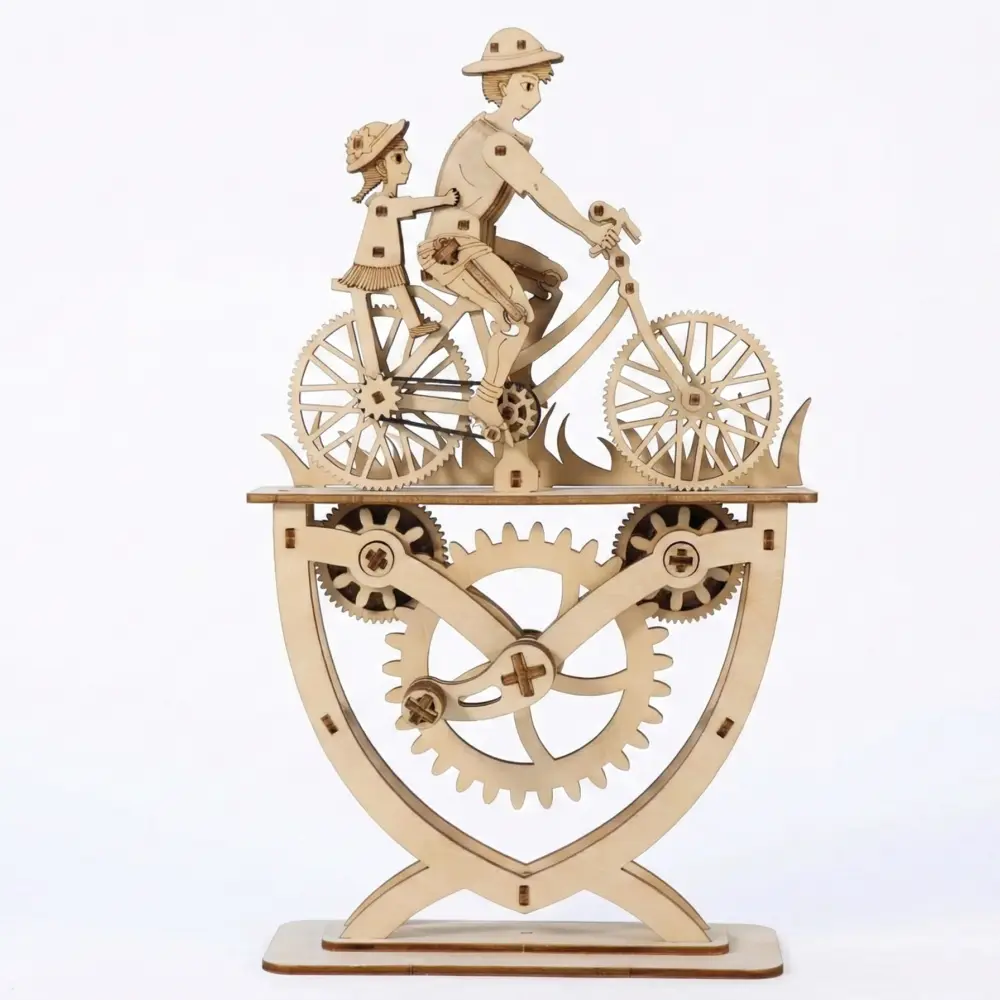
For those who relish this process but seek a different mechanical subject, the journey is similar in kits like the Father and Daughter Bicycle 3D Wooden Mechanical Puzzle. It trades the vertical spectacle for a complex, chain-driven mechanism, offering another deeply engaging puzzle of gears, alignment, and final, satisfying motion. Both demand the same builder’s mindset: viewing each phase not as a chore, but as a solvable, physical enigma.
Who This Kit Will Delight (And Who Might Find It Frustrating)
This isn’t a product for everyone. Its magic is niche, and understanding who will click with it—and who will clash with it—is the most honest buying advice I can give. Based on its unique blend of puzzle, craft, and kinetic art, here’s who will find it a perfect match, and who should probably look elsewhere.
The Delighted: Three Perfect Builder Profiles
1. The Patient Puzzle Solver (Loves Sequential Discovery)
This is for the person who frequents forums like r/PuzzleBox, discussing the “first step” and the “aha moment” of a sequential discovery puzzle. They don’t just want to open a box; they want to unlock a process. The Ferris Wheel kit is that process, physicalized. The puzzle isn’t about finding a hidden latch; it’s about deducing how 150+ pieces logically, mechanically, and sequentially assemble into a coherent, moving whole. Each phase—framing the base, building the gear train, aligning the wheel—is a self-contained puzzle with a tangible, functional reward. If your idea of a great weekend is being stumped by a beautifully crafted wooden brain teaser for hours, only to have the solution click into place with profound satisfaction, this kit is your playground. It delivers the same deep engagement as high-end puzzle boxes, but the final “treasure” is the mesmerizing, self-built machine itself.
2. The Detail-Oriented Crafter (Seeks a Beautiful Display Piece)
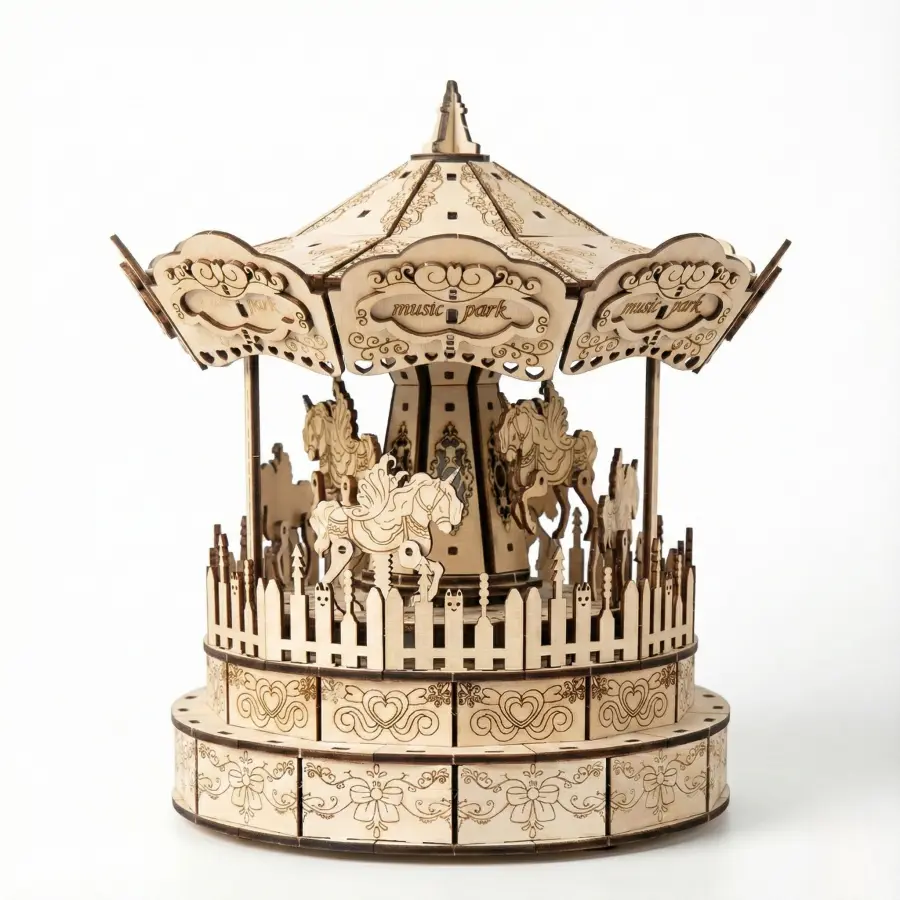
This builder is motivated by the finished object. They want something that doesn’t just sit on a shelf, but commands it—a conversation starter that reflects hours of careful, loving work. The Ferris Wheel, once completed, is a stunning kinetic sculpture. The warm wood, the intricate lattice of the wheel, the gentle sway of the gondolas, and the soft chime of the music box create a display of rare charm. This kit is perfect for the crafter who takes pride in sanding a rough edge perfectly, who ensures every gear tooth meshes silently, and who finds deep satisfaction in applying the final coat of finish to their creation. It’s a project that yields a legitimate heirloom-quality piece, far surpassing the typical “model kit.” For a similar display-worthy, musical build with a different character, the 3D Wooden Carousel Music Box offers an alternative. It trades the Ferris Wheel’s vertical, open-frame elegance for a more enclosed, classic carousel aesthetic with its own set of mechanical assembly puzzles, resulting in another beautiful, music-playing centerpiece.
3. The Unique Gift Giver (Wants a Memorable Experience)
Forget another gift card. This kit is for the person who wants to give an experience, not just an object. It’s an ideal gift for a retiring engineer, a puzzle-obsessed partner, a creative teen, or anyone who proudly declares they “love to work with their hands.” You’re giving 15-20 hours of focused, engaging activity and a permanent trophy. As echoed in Reddit threads about “best value” gifts, the value here isn’t just in the materials, but in the depth and uniqueness of the engagement. It says, “I think you’re clever and patient enough to conquer this.” It’s a standout choice on any list of thoughtful gifts, like our curated selection of puzzle boxes that actually reward your patience, but with the added dimension of becoming a functional work of art.
The Frustrated: Three Mismatched Profiles
1. The Instant Gratification Seeker
If you want to unbox, snap a few pieces together, and have a finished product in under an hour, run. This kit is the antithesis of that. It requires methodical pacing, frequent referral to the instructions, and a tolerance for moments of confusion. There is no quick win. The gratification is slow-burn and cumulative, exploding only at the very end when the wheel turns for the first time. If your patience wears thin after 30 minutes of focused work, this build will feel like a tedious chore, not a rewarding puzzle.
2. The All-Thumbs Beginner (Without a Supportive Mindset)
While not impossible for a first-timer, this kit presents a real challenge for someone completely new to models, puzzles, or fine motor tasks. The pieces are small, some steps are fiddly (like installing the tiny gondola pins), and the instructions, while generally good, require careful spatial reasoning. The beginner who will succeed is the one who is determined, who doesn’t mind looking up a video tutorial for a tricky step, and who views mistakes as part of the learning process. The beginner who gets easily flustered, expects every step to be obvious, and has no tolerance for backtracking to fix a misaligned gear will likely end up with a pile of beautiful, frustrating wood.
3. The Pure Collector (Who Only Wants Traditional ‘Take-Apart’ Puzzle Boxes)
This is a crucial distinction. If your passion is exclusively for the classic puzzle box—a sealed container with hidden mechanisms you must discover to unlock a compartment—this is a different category. As defined by resources like Wikipedia’s entry on mechanical puzzles, a traditional puzzle box’s primary function is concealment and discovery. The Ferris Wheel kit is a construction puzzle; its primary function is assembly to create a new function. A collector seeking the tactile mystery of a Japanese “himitsu-bako” or a sequential discovery box from a craftsperson like Cubicdissection might find the build process of this kit interesting, but it won’t scratch that specific itch of secrecy and storage. The “puzzle” is in the building, not in the subsequent solving.
Common Pitfalls and How to Avoid Them: A Builder’s Survival Guide
Let’s be honest: the path to a smoothly spinning, melodic Ferris wheel is paved with potential missteps. This isn’t a failure of the kit or the builder; it’s the nature of intricate mechanical assembly. The most common frustrations aren’t random—they’re predictable. Here’s how to spot them early and, more importantly, fix them without starting over.
Gluing Errors: The Sticky (or Not Sticky) Wicket
This is the number one point of no return. Too much glue oozes out, seizing up delicate moving parts or marring the clean wood aesthetic. Too little, and a critical joint fails later, potentially causing a cascade of failures when the mechanism is under tension.
* The Fix: Adopt the “less is more” mantra. Use a toothpick or the tip of a precision glue bottle to apply a thin, even bead. For load-bearing parts like the main support arches or gear axles, press the pieces together firmly, hold for 30 seconds, and immediately wipe away any excess with a slightly damp cloth. Before any glue sets permanently, do a “dry fit” assembly of sub-sections to ensure perfect alignment. If you do get glue where it shouldn’t be and it dries, a fine-grit sandpaper (220 grit or higher) can carefully remove the residue without damaging the surrounding wood.
Gear Mesh & Alignment: When the Wheel Won’t Turn
A wobbly, grinding, or completely stuck wheel almost always traces back to the gear train. The central axle must be perfectly perpendicular to the base, and the drive gears must mesh cleanly—not too tight (causing friction), not too loose (slipping).
* The Fix: Patience during the gear installation step is non-negotiable. Don’t fully secure any part until you’ve temporarily placed all interacting gears and given the crank a tentative turn. Feel for resistance. If it’s grinding, check that each gear is seated flush on its axle and that axles are straight. A tiny amount of paraffin wax or graphite (from a pencil) on the gear teeth can work wonders to smooth the action. Our guide on solving the 3D wooden carousel music box delves deeper into gear system troubleshooting, which applies directly here.
Music Box Mechanism Installation: The Silent Finale
Nothing is more anticlimactic than finishing the build and hearing… a click, or nothing at all. The common culprit is installing the pre-wound music mechanism incorrectly. If it’s jammed against a structural piece or mounted at a slight angle, the internal governor can’t spin.
* The Fix: Before finalizing its placement, temporarily hold the mechanism in its slot and turn the crank. Listen for the clear, unhindered melody. Ensure there’s at least 2-3mm of clearance on all sides, especially where the winding key protrudes. The mechanism should sit perfectly flat. If your wheel turns but the music doesn’t play, the drive pinion might not be engaging with the wheel’s gear. You may need to gently adjust the mechanism’s depth.
Fragile Pieces & Wood Splintering: Handling the Delicate Bits
The laser-cut boards are precise, but some smaller parts, like connector pegs or decorative elements, can be delicate. Forcing a piece out of its frame or sanding too aggressively can cause splintering.
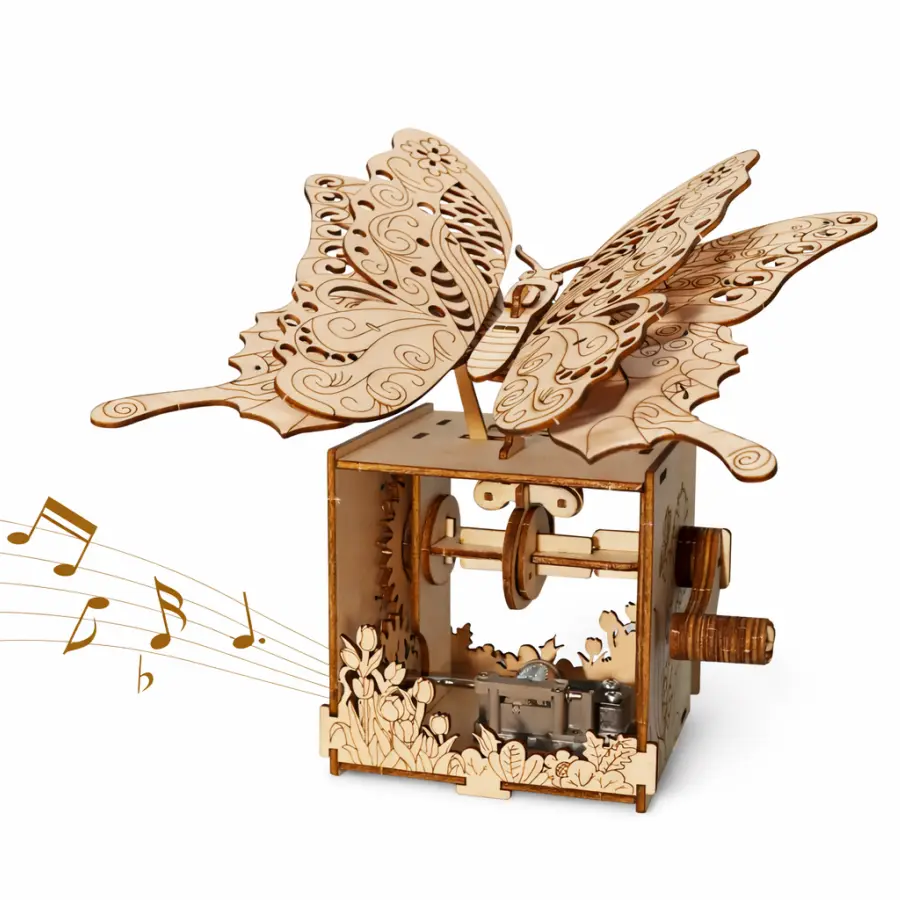
* The Fix: Always push pieces out from the back (the side with the laser-burn marks) toward the clean face. Use a gentle rocking motion, not pure force. If a piece feels stuck, use a craft knife to carefully score along the cut line from the back. For minor splintering on an edge, a light touch with fine-grit sandpaper can smooth it out. For more significant breaks, a tiny drop of wood glue and careful clamping can salvage the part. This approach is universal for layered wooden kits; similar care is needed for something like the Layered Butterfly Wooden Music Box, where thin, intricate wings are vulnerable.
The Big Picture Mindset
The single best preventative tool is observation. Before applying glue, mentally walk through the motion of the entire assembly. Where does this gear transfer force? Where does this arm need to swing freely? This principle of why observation always beats brute force in 3D wooden puzzles, will save you hours of headache. When you hit a snag, stop. Put the kit down, walk away for ten minutes, and return with fresh eyes. Nine times out of ten, the issue becomes obvious: a part oriented backwards, a missed step in the manual, or a grain of sand in the gear teeth. This build is a marathon of small, careful victories. Each pitfall avoided isn’t just a problem solved—it’s a deeper understanding of the mechanics you’re bringing to life.
Beyond the Build: Display, Customization, and the Finished Reward
The final click of the last gear into place is a profound moment, but it’s not the end. This is where the Wooden Ferris Wheel Music Box Kit diverges from a traditional puzzle box. Solving a classic puzzle box (or himitsu-bako) is a brilliant, often solitary, feat of sequential discovery. Once opened, its purpose is typically fulfilled; it becomes a static trophy on a shelf. Your Ferris wheel, however, is just beginning its life. The “solution” to this build results in a kinetic art piece, a functional sculpture whose reward is ongoing.
First, it’s a display piece that commands attention. Unlike a flat jigsaw puzzle you glue and frame, this is a three-dimensional, moving diorama. On a bookshelf, mantel, or desk, it becomes an instant conversation starter. People don’t just admire it; they lean in, watch the gondolas sway, and inevitably ask, “You built that?” It transitions from a project to a testament to patience and skill. This transformation of puzzle into personal artifact is a theme we explore in when wooden puzzles become functional art.
The kit’s raw, sanded wood is a blank canvas, inviting customization. This is your chance to imprint personality. A light wood stain can elevate it from “craft project” to “heirloom piece,” highlighting the grain. You could paint the gondolas in vibrant, carnival-esque colors or delicate pastels. For a magical night-time display, consider adding a subtle string of micro-LED lights around the wheel’s frame—a modification that transforms it into a miniature fairground spectacle after dark. This act of customization deepens your connection to the piece; it’s no longer just a kit, it’s yours.
Then, there’s the functional reward: the music. Crank the handle and the familiar, tinkling melody begins. This isn’t just a sound effect; it’s the emotional payoff. The music box mechanism, a tiny marvel of pinned brass cylinders and tuned steel teeth, is the soul of the build. Its history is fascinating, tracing back to intricate 18th-century snuff boxes, as detailed in the hidden history behind layered music boxes. That gentle melody validates every moment of frustration, turning the mechanical process into an emotional one. It’s a sensory experience that a static puzzle box can never provide.
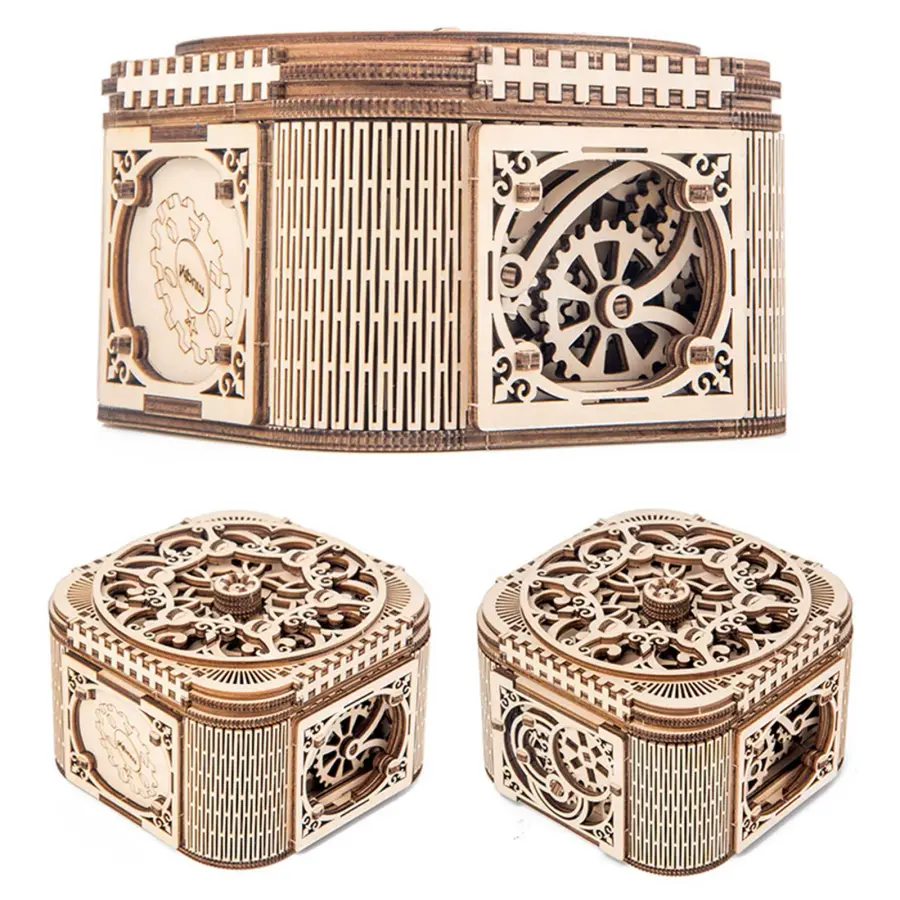
This functional aspect bridges into another category: the puzzle-as-furniture. Consider the 3D Wooden Puzzle Treasure Box. Like the Ferris wheel, its assembly is a challenging, gear-driven puzzle. But once solved, its purpose shifts to being a beautiful, secretive jewelry box. The puzzle’s “solution” grants you not just satisfaction, but a usable object. The Ferris wheel offers a similar duality: the puzzle yields kinetic art and music.
Ultimately, the Ferris wheel kit offers a triple reward: the intellectual challenge of the build (the “puzzle”), the pride of a stunning display object (the “art”), and the enduring, whimsical joy of the music (the “experience”). It’s a cycle you can revisit—cranking the handle to relive the achievement. While a superb traditional puzzle box asks “Can you open me?” once, a successfully built Ferris wheel asks, indefinitely, “Would you like to see something wonderful?”
Recommended Puzzle Picks
Frequently Asked Questions (FAQ)
Is this suitable for a complete beginner with no woodworking experience?
Yes, but with a major caveat. The kit is designed for assembly, not crafting; you won’t need saws or glue. However, it demands immense patience, fine motor skills, and the ability to follow intricate, sometimes ambiguous diagrams. If you’re a beginner to puzzles but are meticulous and calm under frustration, you can succeed. If you’re easily flustered by tiny, similar-looking parts, start with a first-timer’s guide to building a mechanical puzzle box.
How long does the assembly truly take?
The advertised 6-8 hours is a best-case scenario for a focused, experienced builder. For most, expect 12-15 hours spread over several days. Rushing is the enemy—forcing a piece can snap a delicate wooden axle. Treat the time estimate as a guideline for a pleasant, careful build, not a race.
Can the music box melody be changed?
No. The 18-note metal comb is pre-tuned and permanently fixed to the mechanism. You cannot re-pin it or swap it for a different tune. The melody is part of the kit’s fixed design.
What’s the difference between this and a ‘sequential discovery’ puzzle box from a place like CubicDissection?
This is a fundamental distinction. A sequential discovery puzzle box (like those from CubicDissection) is a solving challenge. Its purpose is to conceal its opening mechanism using tools hidden inside; the goal is to discover the sequence to unlock it. The Ferris wheel kit is an assembly challenge. The goal is to construct a complex, functional object from scratch. One is about deconstruction and discovery, the other is about construction and creation.
Is it sturdy enough for children to interact with once built?
Once fully assembled, it’s reasonably sturdy for gentle, supervised operation. The gears and structure hold up well. However, it is not a toy. Rough cranking or pulling on the gondolas will damage it. It’s best as a display piece that adults or very careful older children can occasionally set in motion.
Are the instructions clear, or will I be searching for a video tutorial?
The instructions are pictorial, not written, and can be ambiguous at critical junctions. Many builders report needing to consult the official or user-made video tutorials online for certain steps (like the central gear assembly). It’s wise to have a tablet or phone handy to search for visual help. Our own guide, how to solve a puzzle box without losing your mind, offers mindset tips that apply here.
What if I break a piece?
The laser-cut plywood is surprisingly resilient, but breakages happen. Most reputable sellers (and the manufacturer) will send replacement parts for free or at minimal cost if you contact them with proof of purchase. Do not try to glue a critical structural piece like a gear tooth—it will fail under tension.
Does it require any special tools?
Everything you need is included: the wooden sheets, music mechanism, crank, and sandpaper. However, many builders swear by a few extras: a small file for smoothing burrs, a pair of fine tweezers, and a flat, clean workspace with good lighting. These aren’t mandatory but can prevent frustration.
How does this compare to a traditional interlocking puzzle?
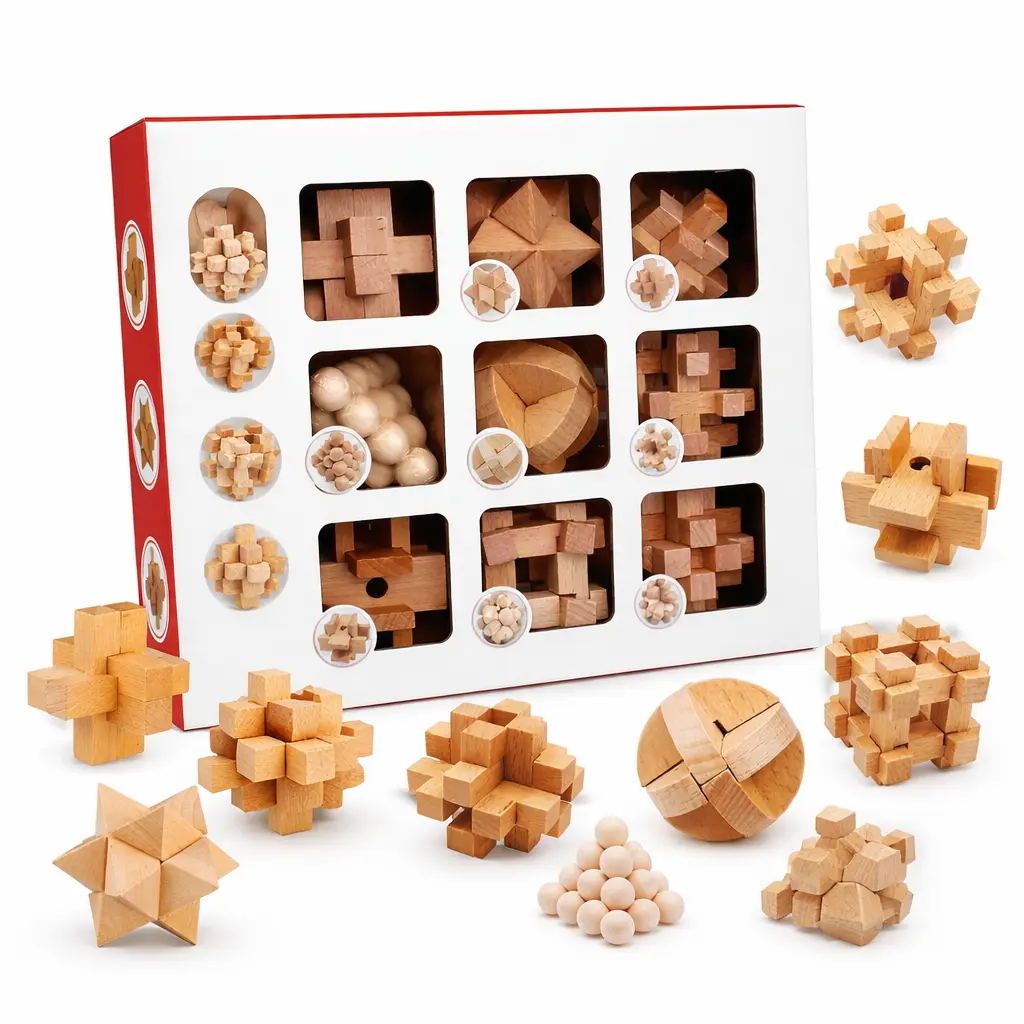
It’s a different beast. A set like the Luban Lock Set 9 Piece is a pure, non-linear disassembly/assembly challenge focused on spatial reasoning and fit. The Ferris wheel is a linear, sequential build with a functional, kinetic outcome. The Luban Lock is a logic puzzle; the Ferris wheel is a mechanical model kit with puzzling aspects.
Is the finished product worth the price, considering it’s just plywood?
This is the core value question. You are not paying for exotic materials. You are paying for the precision laser-cutting, the engineered design, the music mechanism, and the 15+ hours of engaging, hands-on entertainment. The value is in the experience and the unique finished artifact it produces. If you only want a decorative object, buy one pre-made. If you want the journey, the kit justifies its cost.
Can it be painted or stained?
Yes, but with caution. It’s best to disassemble major sub-assemblies (like individual gondolas) and paint them before final assembly. Use very light coats of acrylic paint or wood stain to avoid warping the thin plywood or gumming up the gear teeth. Test on spare wood first.
What’s the biggest single point of failure during the build?
The central transmission assembly—specifically, the step where you connect the large central gear to the vertical axle that drives the gondola rotation. The gears must mesh perfectly, and the axle must be seated just so. If this step is off by a millimeter, the entire wheel will bind. Go painfully slow here, dry-fit everything, and double-check the manual.
The Final Verdict: Is This Puzzling Musical Journey Worth Your Time?
After dozens of hours spent sorting, sanding, assembling, and troubleshooting, the final judgment on the Wooden Ferris Wheel Music Box Kit comes down to a single, personal metric: what are you truly buying? If you’re looking for a quick, disposable toy, the answer is a resounding skip. This is not that. But if you’re seeking a curated, hands-on experience that blends the logic of a mechanical puzzle with the satisfaction of fine craft, the answer is a profound and emphatic buy.
This kit sits in a rare niche. It’s more than a simple puzzle box; it’s a functional kinetic sculpture you build from the ground up. The value isn’t hidden in a secret compartment—it’s woven into the process itself. You are paying for 15-20 hours of focused, screen-free engagement, for the tangible engineering lesson in gear trains and linkages, and for the unique, conversation-starting heirloom you’re left with. Compared to a mass-produced decor item, the finished wheel carries the weight of your own effort, making its gentle rotation and soft melody infinitely more rewarding.
Who should buy this immediately?
– The puzzle enthusiast bored with static brain teasers, craving a build with a grand, functional payoff.
– The craftsman or model-builder looking for a project that emphasizes precision and mechanical elegance over pure aesthetics.
– The mindfulness seeker who finds therapy in detailed, step-by-step manual work. This isn’t just assembly; it’s a practice in patience and presence, much like the mindset discussed in our piece on when a puzzle becomes a practice.
– The gift-giver for a special graduate, retiree, or dedicated hobbyist who would appreciate a deep, absorbing challenge.
Who should consider an alternative first?
If you are new to 3D wooden puzzles or lack confidence with tiny, fragile parts, start with something simpler. A product like the 3D Wooden Puzzle Treasure Box offers a more manageable scale and a quicker payoff with its satisfying mechanical locks and storage function, serving as an excellent training ground for the skills needed here. If your primary desire is simply to own a beautiful music box, buy one pre-assembled. This kit is for those who value the journey as much as the destination.
Success demands the right mindset. You must be willing to read the manual twice, to sand every single tab, to walk away when frustrated, and to find joy in the incremental “click” of a perfectly meshing gear. There will be moments of confusion and delicate frustration—this is inherent to the puzzle box genre, from handcrafted sequential discovery puzzles to mass-produced kits. The difference is the monumental, musical crescendo awaiting you at the end.
In a world of digital distractions and instant gratification, the Wooden Ferris Wheel Music Box Kit is a deliberate antidote. It is a physical manifesto of patience. It doesn’t just test your puzzling skill; it teaches you a slower, more meticulous way of engaging with an object. For the right person, the investment of time and attention yields a dividend of pride no store-bought item can match. It is not merely a kit; it is a memorable experience parked at the compelling intersection of art, engineering, and personal accomplishment.