There’s a specific kind of modern exhaustion that doesn’t show up on your calendar, but somehow owns it.
It’s the Tuesday afternoon fog where your brain feels like it’s buffering. The “I should be grateful” guilt spiral after you snap at someone you love. The moment you stare at a decision—push harder or pull back?—and realize you’ve been solving life like it’s one continuous sprint.
Most people label these moments as “stress,” “burnout,” “bad luck,” or—if they’re feeling dramatic—“my life is cursed.” But if you zoom out far enough, patterns appear. Systems have seasons. People have cycles. Teams have weather. And the same forces that make a commute feel unbearable can also make a small habit feel like a reset button.
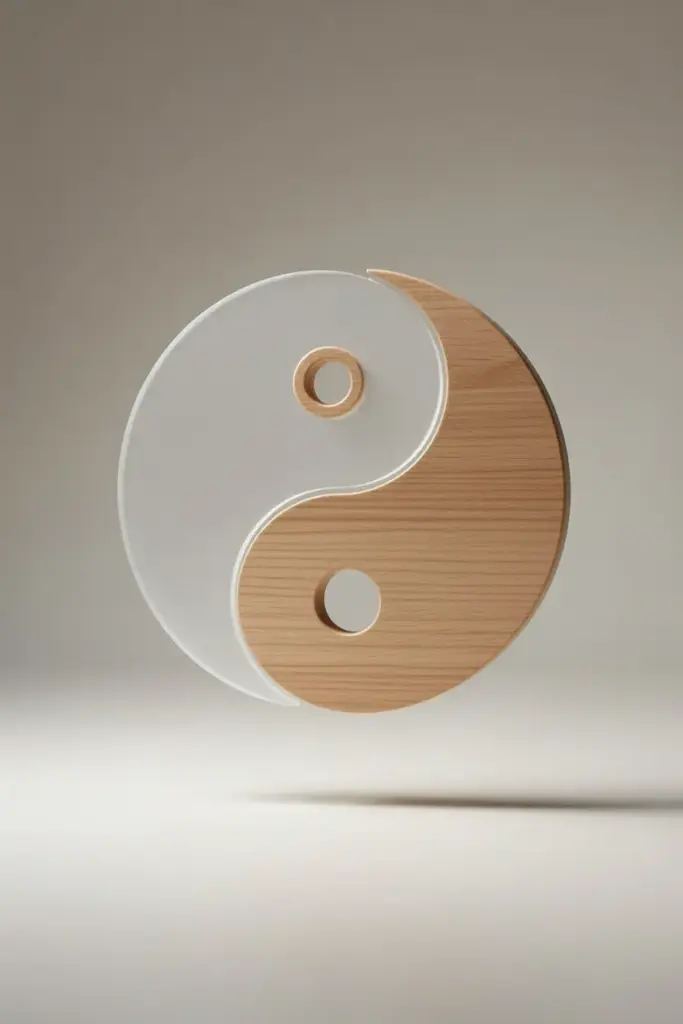
That’s where yin–yang thinking becomes unexpectedly useful—if we translate it into modern language and strip out the fortune-cookie vibe.
Yin–yang isn’t a superstition. It’s a model of change. A way to categorize how energy moves, how systems evolve, and how balance is maintained—not by being “perfect,” but by continuously adjusting. Think of it like a lightweight operating system you can run in the background while you make decisions, manage relationships, and recover from the week.
If you want a deeper read on how this lens maps to everyday choices, Tea-Sip has a companion guide that frames it clearly without the mysticism: a practical operating system for balance, energy, and better decisions.
In this article, we’ll focus on five “rules” (really: patterns) that show up everywhere—careers, leadership, relationships, learning, and even how you decompress at night. We’ll anchor each idea in real-world examples and then turn it into something you can actually use: a short, screen-free practice you can start tonight, plus decision rules you can reuse when life gets noisy.
First: A Modern Translation of Yin and Yang (No Robes, No Incense Required)
Let’s define terms in a way your brain can work with on a workday.
- Yang = output, action, expansion, intensity, speed, pushing forward, being seen, “let’s do it.”
- Yin = recovery, consolidation, reflection, constraints, depth, slowing down, listening, “let’s stabilize.”
Neither is “good” or “bad.” They’re complementary functions. A healthy system needs both.
In modern life, most of us over-index on yang by default. We mistake motion for progress. We confuse constant availability with responsibility. We treat rest like something you earn after you become a better person.
But evidence-based health guidance generally points in the opposite direction: small, consistent recovery behaviors can meaningfully support well-being, especially under prolonged stress. The CDC’s general guidance on managing stress emphasizes practical, repeatable steps—like taking breaks, making time to unwind, and using calming techniques—rather than waiting for life to “settle down.” CDC: Managing Stress
Yin–yang thinking doesn’t replace medical care or therapy. It’s a framework for choosing the right type of effort at the right time—so you stop using a hammer for every problem, including the ones that need a seatbelt.
To keep this grounded, here’s the core idea we’ll use throughout:
When something is stuck, it’s often because you’re applying the wrong “energy.” You’re pushing when you should be stabilizing. Or you’re stabilizing when you should be moving.
Now let’s get into the five rules.
Rule 1: “When Yin Gets Heavy, Yang Is Being Born” (Why Rock Bottom Often Precedes a Pivot)
Classic yin–yang language says something like: when yin reaches an extreme, yang emerges from within it. Modern translation:
When things feel darkest, the system may be forcing a reset—clearing space for a different direction.
This is not motivational poster logic. It’s systems logic. When an old strategy stops working, the discomfort is the signal. If you keep doubling down, you’ll burn time and confidence. If you pause, reassess, and redirect, the same pressure can become fuel.
A real-world example: the “forced pivot” moment
In China’s education sector, a well-known tutoring company faced a sudden regulatory shock in 2021 that effectively wiped out its core business overnight. Many observers assumed it was finished. Instead, the founder exited the old model relatively cleanly—handling refunds, taking responsibility, and preserving trust—then rebuilt around a completely different engine: live-stream commerce led by teachers.
You don’t have to know the names to understand the pattern: the collapse wasn’t only a loss; it was a clearing. The company’s “yin” period (contraction, silence, reputational risk, rebuilding) contained “yang” seeds (talent, trust, communication skill, audience relationship) that couldn’t fully emerge while the old model still existed.
How this shows up in normal life (aka: not corporate drama)
- You lose momentum in a job and panic… but the truth is you’ve outgrown your role.
- Your relationship hits a “stuck” season… but what’s actually stuck is how you communicate.
- You try to power through exhaustion with caffeine and grit… and your body finally says “no.”
Psychologically, it’s common to interpret the low point as proof you’re failing. But stress research consistently shows that prolonged strain can affect mood, behavior, sleep, and physical systems. APA: Stress When you’re depleted, your brain’s threat-detection settings get sensitive, and you start treating “change” as danger instead of information.
A decision rule you can reuse
If you feel trapped, don’t ask “How do I push harder?” Ask “What is this season trying to end?”
And then do something surprisingly practical:
- List the one thing you keep doing that no longer creates results.
- List the one asset you still have (skills, relationships, reputation, savings, time window).
- Choose a small experiment that uses that asset in a new direction—small enough that failure won’t crush you.
If you want a literal, low-stakes experiment that trains your brain to tolerate uncertainty without spiraling, a short tactile challenge works well for many people because it’s contained. You start, struggle, adjust, and finish—without infinite tabs.
For example, a pocket-size interlocking puzzle can become a “micro pivot” practice: you learn to stop forcing, change approach, and keep calm. Tea-Sip’s collection-style guide is built for exactly that kind of quick session: a crystal Luban lock set plus giftable brain teasers.
That’s the mindset of Rule 1: when things compress, don’t only mourn the loss—look for what’s being freed.
Rule 2: “Warmth and Boundaries Must Coexist” (Why Great Leadership Isn’t Soft or Harsh—It’s Timed)
Traditional phrasing calls this “yin punishment, yang virtue”—which sounds intense. Modern translation:
Healthy systems need both support and accountability, and the timing matters.
In a growth season, people need encouragement, resources, and trust. In a correction season, they need clear limits and consequences. Too much warmth without boundaries creates chaos. Too much punishment without warmth creates fear, resentment, and covert rebellion (including the silent kind where people “comply” but stop caring).
A real-world example: why Singapore often gets used as a case study
Singapore is frequently cited because it combines strong investments in housing, education, and public infrastructure with strict enforcement of certain rules. Whether you agree with every policy choice is a separate conversation. The relevant pattern is structural:
- “Yang” side: build social trust by providing stability and opportunity.
- “Yin” side: preserve order with clear rules and enforcement.
In work terms: you can be kind and still be clear. You can be patient and still be firm. The trick is not personality—it’s seasonality.
How this applies if you manage people
Here are two common failure modes:
- The “pure sunshine” manager: avoids hard conversations, over-explains, keeps giving chances, and ends up with a team that feels safe but drifts.
- The “pure control” manager: micromanages, nitpicks, uses pressure as default fuel, and ends up with a team that looks disciplined but loses creativity and psychological safety.
Stress doesn’t only harm individuals—it changes group behavior. Under chronic stress, people become less flexible, less collaborative, and more reactive. APA: Stress effects on the body
How this applies if you manage yourself (the hardest employee)
Self-management often fails because we apply boundaries like punishment. We try to “discipline” ourselves into health. That approach can backfire, especially for anxious or perfectionist personalities.
A more balanced approach looks like:
- Warmth: “I’m tired because I’m human. Let’s reduce load.”
- Boundary: “Also, I’m not scrolling in bed tonight.”
The NHS frames self-help for stress as practical steps and support options—not moral judgment. NHS: Get help with stress
A simple practice: the “two-lane rule”
When you’re trying to change behavior, run two lanes in parallel:
- Lane A (yang): one tiny forward action you’ll do even on bad days.
- Lane B (yin): one protective boundary that prevents spirals.
Example:
- Lane A: 7 minutes of screen-free focus after lunch.
- Lane B: no meetings scheduled over your actual lunch (yes, this counts as self-respect).
If you want a “Lane A” action that doesn’t require motivation, a buildable object helps because it gives your attention a job. A quick, functional build—like a 30-minute wooden puzzle clock—can be a surprisingly effective boundary against mindless scrolling because your hands are occupied and progress is visible.
Rule 2 is the leadership rule: warmth and limits aren’t opposites. They’re teammates.
Rule 3: “Energy Needs Two-Way Flow” (Why Communication Breaks When One Side Stays ‘Up There’)
Traditional language says “yin descends, yang rises.” Modern translation:
Systems thrive when information and empathy move in both directions.
This is the difference between:
- a manager who reads dashboards but never speaks with front-line staff, and
- a manager who regularly visits reality and listens until the story changes.
It’s also the difference between:
- a partner who lectures (high ground), and
- a partner who asks and listens (shared ground).
A real-world example: “go to where the work is”
When Japanese Airlines (JAL) went through a major restructuring, one widely discussed leadership approach emphasized something simple: leadership must “descend” to the front line, and front-line insights must “rise” to decision makers. You see versions of this in Lean thinking (“go to the gemba”) across industries.

When leaders only operate in abstraction, trust decays. When employees feel unheard, they stop offering information that could prevent problems. That’s not a personality flaw—it’s a flow problem.
How to use this at work (without turning into a TED Talk)
If you’re “upstream” (more power, more status, more control):
- Ask one front-line question per week that can’t be answered by a spreadsheet.
- Repeat back what you heard before you propose fixes.
- Set a small response-time promise (e.g., “I will respond within 48 hours even if the answer is ‘not yet’”).
If you’re “downstream” (less power, more constraint):
- Don’t only present problems—present one possible solution or tradeoff.
- Use concrete examples (“last Friday at 3pm…”) instead of general complaints (“you never…”).
- Find the best channel for your message (written, meeting, 1:1), not just the loudest.
How to use this at home
Most relationship gridlock is “one-way energy.” One person stays on the high ground (logic, rules, conclusions). The other stays underground (feelings, silence, resentment). They don’t meet. They ricochet.
Try this structure once (seriously: once):
- Step 1 (descending): the person with “the argument” starts with “Here’s what I might be missing.”
- Step 2 (rising): the person with “the feelings” starts with “Here’s what I need, in one sentence.”
- Step 3 (exchange): each repeats the other’s sentence before responding.
This is not magic. It’s flow.
If you want a low-pressure way to practice two-way flow with family (especially when screens have hijacked everyone’s attention), consider building a shared “hands-on hour” into the week. Tea-Sip’s broader collections hub can help you pick something that fits your group: gift guides and curated puzzle collections.
Rule 3 is a reminder: your message isn’t only your words. It’s the direction your energy is moving.
Rule 4: “Three Builds, Four Stabilizes” (Why Startups, Habits, and Careers Have Different Math at Different Stages)
Traditional phrasing points to “yang three, yin four.” Modern translation:
Early-stage growth thrives on a small, flexible triangle. Long-term stability needs a stronger, four-corner structure.
You can see this everywhere:
- Startups often begin with a tight triad: product, engineering, and go-to-market.
- Creative projects often begin with three forces: idea, execution, feedback.
- Personal change often begins with three moves: start, repeat, adjust.
But once something works, you need “four”:
- process, quality control, risk management, and sustainable pacing;
- or in personal life: sleep, movement, nutrition, and stress management;
- or in a relationship: communication, trust, conflict repair, and shared rituals.
The most common mistake: using “four” too early
This is the person who decides they’ll “get their life together,” then creates:
- a 90-day plan,
- a spreadsheet,
- a new identity,
- and a new moral superiority complex.
And then collapses by Wednesday.
Early change needs momentum, not bureaucracy. Your nervous system needs small wins and flexibility. If you’re under stress, your capacity for complex planning shrinks. That’s not laziness—it’s biology. APA: How stress affects your health
The second most common mistake: refusing “four” when it’s time
This is the person who keeps running their life like a scrappy startup forever—improvising everything, sleeping whenever, responding to every ping, and calling it “freedom.”
But long-term freedom usually requires structure. Not rigid structure. protective structure.
The American Academy of Sleep Medicine’s public education site emphasizes stable sleep habits like consistent schedules and wind-down routines for healthy sleep. AASM Sleep Education: Healthy sleep habits
A practical framework: the “3-to-4 upgrade”
If you’re starting something new, begin with three:
- One goal: what you’re aiming for (clear, small).
- One behavior: the simplest repeatable action.
- One measurement: how you’ll know it’s working (without obsessing).
After 2–3 weeks, upgrade to four by adding:
- One stabilizer: a boundary or system that protects the behavior (calendar block, environment change, accountability).
Want an example that doesn’t involve a new app?
Try a “three” habit built around a tangible object:
- Goal: reduce evening screen fatigue.
- Behavior: 12 minutes of hands-on building after dinner.
- Measurement: you fall asleep a bit easier or feel less wired (subjective is okay).
Then add “four”:
- Stabilizer: charge your phone outside the bedroom.
If you prefer an ongoing, daily anchor that literally marks time (and quietly trains consistency), a build like a wooden perpetual calendar puzzle can function as a “visible stabilizer” on your desk—less as décor, more as a reminder: today is not meant to be one endless blur.
Rule 4 is the growth rule: build with “three,” protect with “four.”
Rule 5: “Opposites Are Co-Roots” (Stop Trying to Erase the Thing That’s Actually Teaching You)
Traditional phrasing calls this “yin–yang mutually rooted.” Modern translation:
Your opposing force often contains the raw material for your next level.
People love the fantasy of a life with only “ups.” No setbacks. No conflicts. No negative emotions. No annoying competitors. No hard seasons.
But systems don’t work that way. Polarity is built in. Like a magnet: you don’t get a “north-only” piece no matter how many times you cut it.
A real-world example: James Dyson and the 5,126 “failures”
The Dyson story is famous because it’s so annoyingly specific: thousands of prototypes before the working design. The key is not the grit. The key is the relationship between failure and success.
Those early prototypes weren’t just mistakes—they were data. Each “no” narrowed the path to “yes.” Success didn’t appear in spite of the failures. It emerged because of them.
That’s yin–yang co-rooting: the thing you want to delete is often the thing shaping you.
How this applies to your stress and mental health (carefully, realistically)
Stress is not inherently evil. Acute stress can help you perform. Chronic stress, however, can become harmful and is associated with a range of physical and psychological effects. APA: Chronic stress
So the goal is not “eliminate stress forever.” The goal is to build recovery capacity and better stress literacy—so you can respond earlier, not only when you’re already drowning.
The WHO’s public guidance on coping skills emphasizes practical techniques and building routines during hard times. WHO: Doing What Matters in Times of Stress
A reframing question that actually works
When you meet a “negative” force—fatigue, rejection, conflict—ask:
“What is this trying to protect me from?”
- Fatigue may be protecting you from a pace you can’t afford.
- Rejection may be protecting you from a mismatched path.
- Conflict may be protecting you from a relationship built on avoidance.
Then ask the second question:
“What is the smallest respectful action I can take next?”
Not the biggest. Not the perfect. The smallest respectful next move.
Sometimes that move is restorative rather than productive: a short walk, a shower, a quiet reset. The NHS includes “pay attention to the present moment” as one of its evidence-informed steps toward mental wellbeing. NHS: Five steps to mental wellbeing
Sometimes the respectful move is a structured, absorbing activity that interrupts rumination—something with a beginning, middle, and end.
If your brain tends to spin at night, a longer “deep build” can be a healthier alternative to doomscrolling for some people. Tea-Sip’s write-up on building a ship model makes a strong case for why slow assembly can feel like a cognitive anchor: a deep dive into the galleon wooden puzzle. And if you want the actual build, here’s the kit page: galleon ship 3D wooden puzzle model.
Rule 5 is the resilience rule: don’t waste energy fighting reality’s polarity. Learn to harvest it.
The 10–12 Minute “Yin–Yang Reset” You Can Start Tonight (Screen-Free, Zero Spiritual Drama)
Let’s convert the philosophy into an actual practice.
This is intentionally short because consistency beats intensity. Also, you have a life.
Think of this as a micro-routine for the moment you feel overstimulated, scattered, or stuck. It blends three things that show up repeatedly in mainstream stress and wellbeing guidance:
- brief calming techniques (breathing / grounding),
- a focused activity that occupies attention,
- and a transition ritual (so your brain knows a “mode change” happened).
Health authorities often recommend small, repeatable coping steps. The CDC explicitly mentions things like taking breaks, deep breathing, and making time to unwind. CDC: Managing Stress
Important: This is not treatment for anxiety, depression, or insomnia. It’s a supportive habit that may help some people feel calmer or more focused. If you’re struggling significantly, consider professional help.
Step 1 (2 minutes): “Downshift”
- Sit with both feet on the floor.
- Inhale through your nose for a slow count of 4.
- Exhale for a slow count of 6.
- Repeat 6–8 times.
If counting stresses you out (yes, that happens), just exhale longer than you inhale. That’s it.
Step 2 (6–8 minutes): “Give your hands a job”
Choose one screen-free task that is:
- bounded (it ends),
- tactile (hands involved),
- neutral (no emotional landmines).
Good options include folding laundry, making tea, sketching, or—if you like puzzles—an interlocking brain teaser.
A nice thing about small mechanical puzzles is that they teach the exact skill you need under stress: stop forcing, change the angle, try a different sequence. Tea-Sip’s breakdown of the transparent set highlights how sequencing beats brute force: a deep dive into the 12-piece crystal Luban lock set.
If you want a wooden option with variety (and a longer runway before boredom hits), this historical + practical guide is a good overview: the 6-in-1 Luban lock set story and solving mindset. For a broader “pick something that fits your mood” approach, there’s also a curated traditional wooden brain teaser collection.
Step 3 (2 minutes): “Name the next move”
Ask yourself, and answer in one sentence:
- What mode am I in right now (pushing / recovering)?
- What does the next hour require (action / consolidation)?
Then choose one next move that matches the mode. Examples:
- If the next hour needs action: write the first messy paragraph, send the one email, start the timer.
- If the next hour needs consolidation: clear your desk, prep tomorrow’s clothes, take a shower, go to bed.
This tiny closing step matters because it prevents the reset from becoming “just another thing I did.” It becomes a transition ritual.
Choosing the Right “Yin” or “Yang” for Your Personality and Situation
People don’t fail because they’re weak. They fail because they pick strategies that don’t match their nervous system, schedule, or season.
Here are a few “profiles” to make the advice usable. Pick what sounds like you this month.
1) The Overcaffeinated Achiever (high output, low recovery)
Common pattern: You can push through anything—until you can’t. Then you crash and feel ashamed.
What to try: Schedule yin before you need it. Use a short reset after lunch and a longer wind-down before bed.
Best fit activities: short, satisfying builds that end cleanly. Consider a functional mini build like a mechanical wooden treasure box—it rewards patience and gives closure.
2) The Anxious Thinker (high rumination, low containment)
Common pattern: Your mind wants to solve everything at once, and you get stuck in “research mode.”
What to try: Choose grounding activities that occupy your hands and narrow the problem space. Mindfulness practices may help some people, and evidence summaries from the NIH’s NCCIH recommend cautious, realistic expectations. NCCIH: Meditation and mindfulness effectiveness and safety
Best fit activities: small puzzles with clear constraints, or a simple craft you can repeat.
3) The Night-Owl Doomscroller (late stimulation, poor downshift)
Common pattern: You feel tired, but your brain is still “on.” You scroll until you’re numb, then regret it.
What to try: Replace the “infinite feed” with a finite ritual. Sleep hygiene guidance often emphasizes consistent routines and avoiding overstimulation near bedtime. Sleep Education: Healthy sleep habits
Best fit activities: warm lighting, quiet assembly, low-pressure building. If you want an “evening vibe” project that also becomes décor, the lantern build is designed for a single sitting: a light-up gothic wooden lantern 3D puzzle. The story context is here: lanterns, gothic light, and the wooden lantern puzzle.
4) The Socially Drained Caregiver (high responsibility, low personal space)
Common pattern: You’re “needed” all day. Quiet time feels impossible.
What to try: Use micro-restoration instead of waiting for a free weekend that never arrives. The Mayo Clinic’s overview of meditation frames it as accessible and short, which matters when time is scarce. Mayo Clinic: Meditation as a simple way to reduce stress
Best fit activities: 7–12 minute routines you can do in the kitchen or at the coffee table. Bonus points if kids can join without turning it into chaos.
5) The “I Need a Project” Person (high curiosity, loves depth)
Common pattern: You don’t want “tips.” You want a thing you can get lost in.
What to try: Choose longer, narrative builds that create a sense of immersion. Tea-Sip’s writing on mechanical history and the way building changes attention is a fun rabbit hole: how tiny engineering stories shape focus and satisfaction.
Best fit activities: ship models, musical mechanisms, layered builds. For something elegant (and slightly brag-worthy on a shelf), consider a wooden sailboat DIY ship model or a 3D wooden cello model kit.
Common Mistakes (and How to Correct Them Without Becoming More Anxious)
Mistake 1: Turning “balance” into another performance metric
What it looks like: You start tracking every habit, optimizing every routine, and feel guilty when you’re not “balanced.”
Correction: Balance is not a score. It’s a steering behavior. Use small adjustments, not identity judgments.
Mistake 2: Using “yin” as an excuse to avoid hard action
What it looks like: “I’m honoring my need for rest” becomes “I never take the scary step.”
Correction: Yin is recovery in service of sustainable action. If you rest but never act, you’re not balancing—you’re stalling.
Mistake 3: Using “yang” to bully yourself through depletion
What it looks like: More caffeine, more hours, more pressure—then a crash.
Correction: If your stress response is chronically activated, pushing harder often worsens outcomes. The APA distinguishes between normal stress and chronic stress that can harm well-being over time. APA: Chronic stress
Mistake 4: Choosing the wrong challenge level
What it looks like: You pick an activity that’s too hard, get frustrated, and conclude “relaxation doesn’t work for me.”
Correction: Start below your ego. Choose “pleasantly engaging,” not “rage-inducing.” If you’re new, begin with simpler, shorter builds and work up as tolerance grows.
Mistake 5: Expecting any practice to fix a medical problem
What it looks like: You treat a routine like a cure for insomnia, anxiety, or depression.
Correction: Mindfulness and structured activities may support well-being for some people, but they’re not replacements for care. Evidence summaries from health authorities emphasize cautious interpretation and mixed results depending on condition and individual. NCCIH: Evidence and safety notes
FAQ
1) Is yin–yang thinking a religion?
No. It can be used inside religious traditions, but as a framework it’s closer to systems thinking: how forces interact, how cycles shift, how balance is maintained through adjustment. You can use it as a practical lens without any spiritual commitment.
2) How do I “use” this in daily life without overthinking it?
Use one question: “Do I need action or consolidation right now?” If you need action, choose one concrete step. If you need consolidation, choose one recovery or stabilization behavior. Over time, you get better at matching energy to season.
3) How often should I do the 10–12 minute reset?
Start with 3–5 times per week. If you’re in a high-stress period, daily is fine as long as it stays small and doesn’t become another obligation. The WHO’s stress skills guide is built around brief, repeatable practices rather than marathon sessions. WHO: Doing What Matters in Times of Stress
4) Does this actually “work,” or is it just a mindset trick?
It depends on what you mean by “work.” As a philosophy, it helps people make better decisions by noticing cycles and tradeoffs. As a habit framework, it can help some people interrupt overstimulation and practice calmer attention. For stress and wellbeing, mainstream authorities emphasize that coping tools can help, but outcomes vary and severe or persistent symptoms deserve professional support. CDC: Stress coping guidance
5) I’m skeptical. What’s the least “woo” way to try this?
Ignore the terminology. Treat it like a two-mode model: “push” and “recover.” Do the 10-minute reset for one week and observe whether you feel slightly less scattered afterward. That’s your data.
6) Can I start tonight if I feel wired but tired?
Yes. Do the 2-minute downshift breathing, then 6–8 minutes of a screen-free, low-friction activity (light cleanup, stretching, simple puzzle), then name your next move: “bed.” Sleep hygiene guidance often highlights consistent, calming routines. Sleep Education: Healthy sleep habits
7) What if puzzles frustrate me?
Then puzzles are not your tool—at least not at that difficulty level. Choose a simpler tactile activity: warm shower, tea, journaling, gentle stretching, folding laundry, or a beginner-friendly build. The method matters more than the object.
Closing: Be the “Operator” of Your Own Life (Not the Customer Support Rep)
These five rules—heavy yin birthing yang, warmth with boundaries, two-way flow, three-to-four stage shifts, and co-rooted opposites—aren’t mystical secrets. They’re patterns that help you stop fighting reality with the wrong tool.
When you’re in a dark season, you don’t have to panic and thrash. You can treat it as a compression phase with seeds inside it.
When you’re leading or parenting or just trying to manage your own brain, you don’t have to choose between being kind or being firm—you can time both.
When communication breaks, you can stop repeating arguments and instead repair flow.
When you’re building something new, you can stay light and flexible—then stabilize when it works.
And when something “negative” shows up, you can stop trying to erase it and instead ask what it’s shaping.
If you want more screen-free ideas and long-form reads that connect hands-on building to focus and decompression, you can browse Tea-Sip’s blog for deeper guides and stories that make the hobby feel less like “buying a thing” and more like building a ritual.
Medical disclaimer: This article is for general educational purposes only and is not medical advice. It does not diagnose, treat, cure, or prevent any disease. If you have persistent stress, anxiety, depression, sleep problems, or other health concerns, consider speaking with a licensed healthcare professional.