
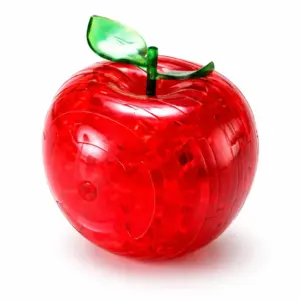
3D Crystal Apple Puzzle
This crystal apple puzzle transforms light into a mesmerizing challenge. Its translucent pieces catch and refract ambient light, creating a visual spectacle on your desk. The curved, interlocking segments demand spatial thinking without overwhelming beginners. Perfect for those who want a display-worthy puzzle that doesn't live in a drawer after solving. Each piece clicks with satisfying precision, and the completed apple serves as an elegant conversation starter.
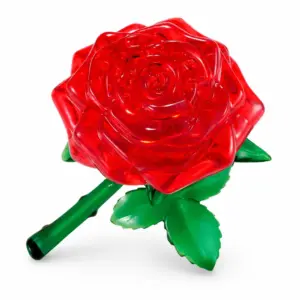
3D Crystal Rose Puzzle
More complex than its apple cousin, this rose puzzle rewards patience with stunning results. The delicate petal pieces interlock in ways that aren't immediately obvious, making assembly genuinely challenging. Crystal material catches light beautifully when complete, doubling as room décor. Assembly requires careful attention to subtle curve variations between similar-looking pieces. Ideal for those building a crystal puzzle collection or seeking a thoughtful gift that combines visual elegance with mental stimulation.
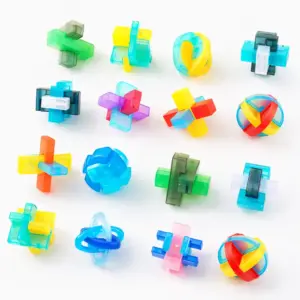
12 Piece Crystal Luban Lock Set
This comprehensive set introduces twelve distinct interlocking puzzle designs, each with unique assembly logic. Crystal construction adds visual appeal to the ancient Luban lock tradition, making progress and mistakes equally visible. The set progresses in difficulty, offering both entry points for newcomers and genuine challenges for experienced puzzlers. Pieces nest together for compact storage. Excellent value for collectors wanting variety without accumulating multiple full-size wooden versions of classic designs.
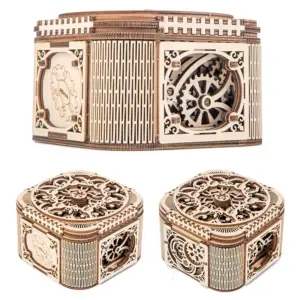
3D Wooden Puzzle Treasure Box
This trick box combines practical storage with mechanical puzzle solving. Hidden panels and sliding mechanisms protect small valuables while providing daily puzzle entertainment. The wooden construction feels substantial without being overly heavy, and the mechanism stays smooth through repeated use. Assembly required, which serves as the first puzzle before you can even use it as a trick box. Appeals to those who want their wooden puzzles to serve dual purposes beyond shelf decoration.
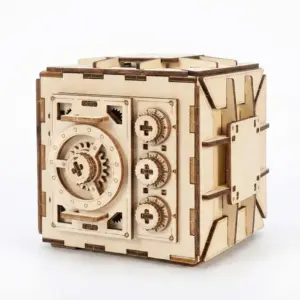
3D Wooden Puzzle Safe with Combination Lock
This working combination lock safe doubles as both puzzle and functional storage. The mechanism teaches basic lock principles through hands-on assembly and operation. Setting your own combination adds personalization most puzzles lack. Wooden gears and pins move with satisfying mechanical precision. Takes several hours to assemble correctly, making it unsuitable for quick gratification seekers. Perfect for those fascinated by how locks work or wanting a unique way to secure small items with style.
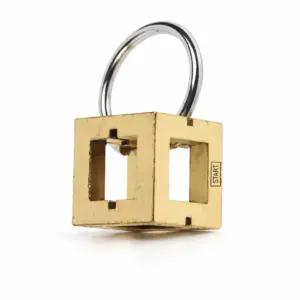
Brass Cube Maze Puzzle Keychain
Solid brass construction gives this pocket-sized cube satisfying heft and durability. The internal maze requires navigating a steel ball through passages using tilt and rotation, similar to classic labyrinth games but in three dimensions. Metal puzzle construction ensures longevity despite being attached to keys or bags. Small size means you can work on it during commutes or waiting rooms. The challenge resets instantly, offering unlimited replay value for fidgeters who need more than spinners.
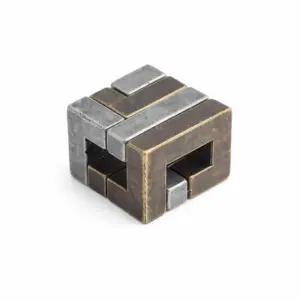
Cast Coil Pocket Puzzle
This cast metal puzzle presents an elegantly simple appearance that belies its difficulty. Two coiled pieces seem inseparable until you discover the specific sequence of twists required. The cast construction provides smooth movement without rough edges or pinch points. Compact enough for pocket carry, though solving requires both hands and focus. Appeals to those who appreciate mechanical puzzles where the solution feels inevitable in hindsight yet remains elusive during attempts. Replayability comes from demonstrating it to others.
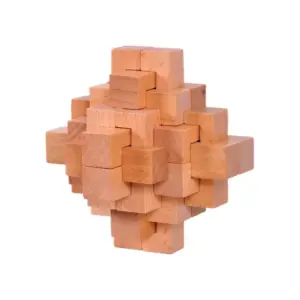
24 Lock Puzzle
Twenty-four interconnected locking mechanisms create a complex sequential puzzle requiring systematic problem-solving. Each lock must be opened in specific order, with early mistakes preventing progress later. Wooden construction allows you to see the mechanism's inner workings, turning this into an educational experience about mechanical engineering principles. Solving requires 30-60 minutes for most people, offering substantial challenge without being impossibly frustrating. Rated 4.75 stars because some find the solution less intuitive than hoped.
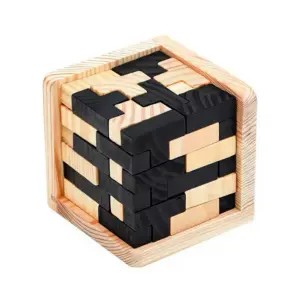
54‑T Cube Puzzle
Fifty-four T-shaped pieces assemble into a perfect cube through precise spatial reasoning. Each piece follows the same shape, making this puzzle deceptively uniform yet challenging. Unlike random-looking burr puzzles, the geometric regularity here creates beautiful patterns when partial assemblies go wrong. The wooden pieces slide smoothly, and the solution feels architecturally satisfying. High 4.93-star rating reflects how completion provides genuine accomplishment. Best for patient puzzlers who enjoy methodical approaches over trial-and-error tactics.
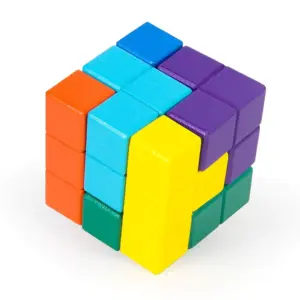
7 Color Soma Cube Puzzle
This classic soma cube features seven color-coded pieces that assemble into hundreds of possible shapes beyond the standard cube. The color differentiation makes it educational for children while remaining engaging for adults tackling advanced configurations. Wooden construction feels premium compared to plastic versions found elsewhere. The included shape booklet provides progressive challenges, preventing the "now what?" feeling after initial cube completion. Combines collectible aesthetics with genuine replay value through its configuration variety.
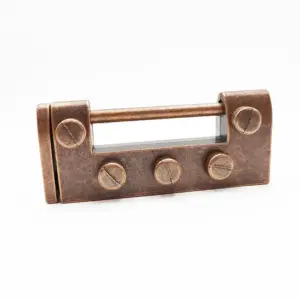
Antique Lock Puzzle
Antique-style finish gives this metal puzzle an heirloom appearance that appeals to vintage collectors. The locking mechanism requires discovering hidden release points through tactile exploration rather than obvious visual cues. Metal construction ensures durability while maintaining authentic weight. Rated 4.78 stars with users praising the aesthetic quality alongside the puzzle challenge. Entry-level pricing makes it accessible for those testing whether they enjoy trick lock puzzles before investing in more complex variants.
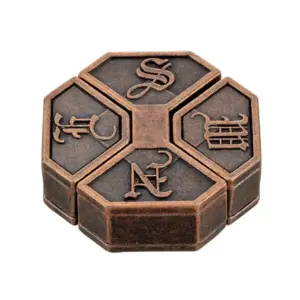
Bagua Lock Puzzle
Traditional Bagua symbolism makes this lock puzzle culturally distinctive while remaining functionally challenging. Eight trigrams guide the unlocking sequence, blending philosophy with mechanical puzzle solving. Cast metal feels substantial, and the engraved symbols resist wear from repeated handling. The 4.96-star rating reflects appreciation for both the cultural design and satisfying mechanism. Best for those building collections around traditional puzzle designs or seeking conversation pieces that transcend generic brain teasers.
Understanding Mechanical Puzzle Types
Mechanical puzzles represent a fascinating intersection of engineering, art, and problem-solving. Unlike traditional jigsaw puzzles or Rubik's cubes, these brain teasers rely on hidden mechanisms, precise movements, and spatial reasoning to unlock their secrets.
The collection above spans multiple puzzle categories: crystal geometric puzzles that refract light while challenging spatial awareness, wooden trick boxes with sequential opening mechanisms, cast metal disentanglement puzzles requiring specific manipulation sequences, and interlocking burr puzzles demanding systematic assembly approaches.
Research from puzzle design communities indicates that mechanical puzzle solving activates different neural pathways than linguistic or mathematical puzzles. The tactile feedback and three-dimensional manipulation engage both visual-spatial processing and motor planning areas of the brain.
Historical Significance
Mechanical puzzles date back centuries, with Japanese puzzle boxes (Himitsu-Bako) and Chinese Luban locks representing some of the earliest documented examples of trick mechanisms designed purely for entertainment and skill demonstration.
Material Science
Modern mechanical puzzles utilize advanced materials: cast zinc alloy for precise metal puzzles, optical-grade acrylic for crystal puzzles, and precision-cut hardwoods for traditional designs. Material choice directly impacts both solving experience and longevity.
Collection Building
Experienced collectors recommend balancing difficulty levels, material types, and mechanism styles. Starting with medium-difficulty puzzles prevents early frustration while building the problem-solving skills needed for advanced designs.
Frequently Asked Questions
What makes a puzzle "mechanical" versus other puzzle types?
Mechanical puzzles rely on physical mechanisms, moving parts, or hidden structures that must be manipulated to solve. Unlike jigsaw puzzles where pieces simply fit together, or twisty puzzles like Rubik's Cubes which use rotational mechanics, mechanical puzzles often involve discovering secret releases, sequential steps, or precise movements. Examples include trick boxes with sliding panels, cast metal puzzles requiring specific disentanglement sequences, and interlocking burr puzzles where pieces must be assembled in exact order.
How difficult are crystal puzzles compared to wooden or metal puzzles?
Crystal puzzles like the 3D Crystal Apple typically rate easier than complex metal or wooden designs because their transparent nature reveals piece shapes clearly. However, this transparency creates unique challenges—you can see how pieces should fit but executing proper assembly still requires spatial reasoning. Crystal puzzles excel as entry points for new collectors or as display pieces. For more challenging experiences, explore wooden interlocking puzzles or sequential discovery boxes.
Can mechanical puzzles be solved multiple times or are they one-time challenges?
Most mechanical puzzles offer unlimited replay value. Trick boxes can be closed and reopened repeatedly, cast metal puzzles reset by reassembling the pieces, and interlocking puzzles can be disassembled and rebuilt. The challenge evolves—first solving tests problem-solving skills, while subsequent attempts develop muscle memory and understanding of the mechanism. Some puzzlers time themselves, challenge friends, or attempt to solve puzzles without looking. Sequential discovery puzzles like the 24 Lock Puzzle offer consistent challenge since forgetting the exact sequence restores difficulty.
What's the difference between a trick box and a puzzle box?
The terms overlap significantly. "Trick box" emphasizes the secret mechanism aspect—boxes that appear unopenable without knowing the trick. "Puzzle box" can refer to either trick boxes or boxes designed specifically for storing puzzle pieces. Traditional Japanese puzzle boxes (Himitsu-Bako) require multiple precise movements in sequence. Modern trick boxes may involve sliding panels, hidden buttons, or magnetic releases. The key distinction: trick boxes focus on concealment mechanisms, while puzzle boxes might simply be attractive storage for other puzzles.
How do I choose the right difficulty level for a mechanical puzzle?
Start with rated difficulty levels, but consider personal factors. If you've solved Rubik's Cubes or enjoy strategy games, medium difficulty puzzles likely suit you. Complete beginners should start with "easy" rated puzzles like simple crystal geometric designs or single-step trick mechanisms. Avoid jumping to "hard" rated puzzles initially—frustration from an impossible-seeming challenge can discourage further exploration. The 7 Color Soma Cube offers adjustable difficulty through its multiple configuration challenges, making it ideal for skill building.
Are solutions provided with mechanical puzzles?
Most quality mechanical puzzles include solution guides, either printed or accessible online via QR codes. However, many puzzlers recommend attempting to solve without consulting solutions first, using them only after genuine effort. The discovery process provides the primary satisfaction—consulting solutions too quickly diminishes the achievement feeling. For collection building, knowing solutions exist provides security that you won't remain permanently stuck, reducing purchase anxiety around difficult-rated puzzles.
What maintenance do mechanical puzzles require?
Wooden puzzles benefit from occasional light mineral oil application to prevent drying and maintain smooth movement. Metal puzzles rarely need maintenance beyond occasional cleaning with dry cloth. Crystal puzzles show fingerprints easily but clean with glass cleaner. Avoid forcing any mechanism—if pieces don't move smoothly, you're likely attempting incorrect manipulation. Store puzzles away from extreme temperature or humidity changes. For metal puzzles, prevent rust by storing in dry environments.
Can mechanical puzzles help with cognitive skills or are they purely entertainment?
Research suggests mechanical puzzle solving engages spatial reasoning, pattern recognition, and systematic thinking skills. The tactile manipulation aspect differentiates these puzzles from screen-based problem solving, engaging motor planning and proprioception. However, expecting significant cognitive enhancement from casual puzzle solving overstates the benefits. Regular engagement with varied puzzle types provides modest improvements in specific spatial reasoning tasks. The primary value remains the meditative focus and satisfaction from solving, with cognitive benefits as secondary outcomes.