The Weight of a Secret: First Encounter with a Turkish Puzzle Box
It sits in your hands, dense and quiet. The wood is warm, not from the room, but from a patina built from decades of handling. Close your eyes, and you can trace the carvings: a coiled dragon, its garnet eye watchful, or perhaps an eagle with wings swept back, framed by geometric borders. Run a thumb along the seams. They are tight, almost invisible. This appears to be a simple, beautiful wooden puzzle box. A secret box for jewelry, perhaps. But there is no clasp. No visible hinge. No lid to pry open.
This is your first encounter. You turn it over. The faint, resinous scent of juniper wood or the deeper, nutty aroma of walnut greets you. You press on the top. You slide your fingers along the sides, feeling for a catch. Nothing gives. The object is a perfect, impenetrable cube. This isn’t just a box; it’s a conversation with a craftsperson. Your job is to listen with your fingers.
What you hold is commonly called a Turkish puzzle box, though its roots are woven through the broader Ottoman craft tradition and share a familial resemblance with Romanian secret boxes. These are not mass-produced novelties. They are handcrafted objects born from a woodworking culture that valued both beauty and subtle cunning. A craftsperson would spend days carving the exterior, then devote equal attention to the hidden mechanism inside—a private joke, a test of patience, a safeguard for small valuables. This tradition is part of the wider, fascinating world of the mechanical puzzle.
For centuries, such boxes served a practical purpose. In a time before personal safes, they were a clever way to secure coins, important seals, or personal trinkets. The intricate lid designs—the dragon, the eagle, the floral motifs—weren’t merely decorative. They signaled the box’s special nature to those in the know, while appearing as mere folk art to a casual glance. An antique Turkish puzzle box passed down through a family often carries this dual legacy: a piece of heritage and a still-functional guardian of small secrets.
The allure is immediate. It is beautiful. It is mysterious. It promises a tactile revelation. But that promise quickly curdles into a quiet challenge. The beautiful, impenetrable object resists you. Where does it open? How does it open? The intuition we apply to every other container in our lives fails completely here. This is the moment of intrigue, shaded by the first hint of frustration. You are not just holding a box. You are holding a question, carved in wood.
The answer lies not in force, but in understanding a single, simple principle hidden in plain sight.
The One Simple Principle: How the ‘Magic’ Actually Works
That carved wooden question, however, has a straightforward answer. The turkish puzzle box mechanism isn’t based on a lock. It doesn’t rely on a combination, a trick of magnets, or a series of sequential moves like some Japanese puzzle boxes for collectors. Its operation is elegantly blunt: a hidden sliding panel or bolt is released by applying direct, deliberate pressure to a specific, disguised point on the box’s exterior. Your intuition was right to seek a seam or a moving part; it was simply looking in the wrong place.
Think of it like the spine of a hardcover book. To open it, you don’t pull on the cover; you bend the book backward to break the glue. The principle here is similar. The visible, beautiful lid? It’s often fixed. The true point of entry is a side or bottom panel that is held shut by a small wooden pin or tab, spring-loaded by the tension of the wood itself. To open it, you must find the precise spot—often a carving detail, an inlaid stone like a garnet eye, or a subtle asymmetry—and press. Firmly. The goal is to physically depress the internal latch, allowing the entire secret compartment to slide free from its housing. That faint snick you hear? That’s the satisfying resistance of the catch releasing, the sound of the secret yielding. For a broader look at the philosophy behind such designs, explore our piece on why hidden compartment puzzle boxes filter your focus.
This is the crucial distinction from its cousin, the Romanian secret box. A Romanian box typically uses a traditional lock and key mechanism, albeit a hidden one. You slide a panel to reveal a keyhole, insert the key, and turn. The Turkish box eliminates the keyhole entirely. The decorative hidden key sometimes included is purely symbolic. It serves as a visual cue or a thematic prop, not a functional tool. This reinforces the core principle: entry is granted not by possession of a key, but by knowledge of the box’s body.
This design speaks to its origins. It was security through obscurity, not complexity. A thief looking for a lock would find none. A casual admirer would see only a solid, ornate block. But the owner, who knew the secret of the dragon’s eye or the particular knot in the wood, could access the contents with a confident push. It’s a mechanical secret handshake.
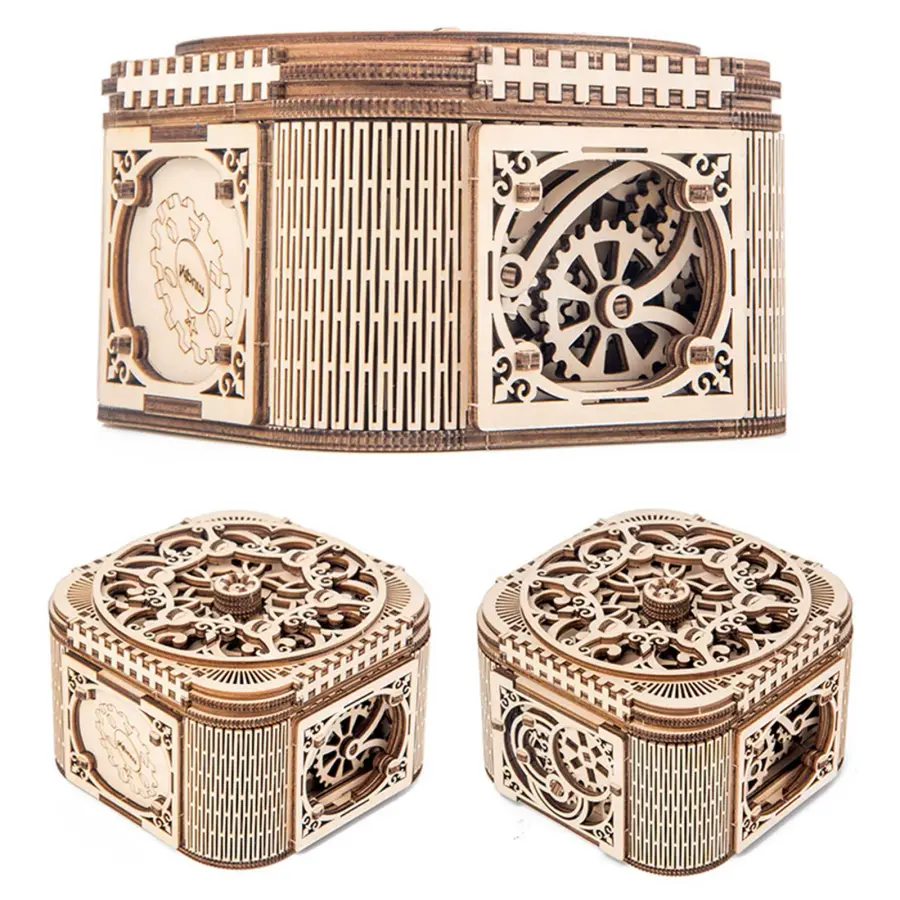
Modern interpretations, like the wooden puzzle box shown here, faithfully replicate this principle. The mechanism is the same, even if the aesthetic leans toward a more contemporary handmade puzzle toy. Understanding this should dissolve any lingering intimidation. The box isn’t a riddle with infinite solutions. It is a drawer with a disguised latch. Your initial frustration was simply not knowing where to push. Once you learn the one simple principle—find the disguised pressure point—you can approach any box in this family with a new lens. You’re no longer fumbling in the dark; you’re looking for the specific trigger designed by the craftsperson.
This is the moment of enlightenment. The beautiful object is no longer impenetrable. Its secret is laid bare, not as a trick, but as a testament to straightforward, clever woodworking. The satisfying resistance you feel isn’t the box fighting you—it’s the tension of the latch, the final barrier before the reveal. And that final, smooth slide of the hidden panel is the conversation you were meant to have, a quiet click of understanding.
A Conversation with Your Fingers: Your First Guided Opening
Now that you understand the single, simple principle—the disguised latch—the physical object in your hands shifts from a mystery to a partner in dialogue. That moment of enlightenment becomes tactile. This section is your spoiler-warned guide. If you wish to discover the sequence purely through touch, set this aside. If you’ve felt the first flicker of frustration, let me be your guide, as the stallholder in that Istanbul bazaar was for me. We’ll move from uncertainty to the quiet, satisfying click of success.
First, quell the most common fear: you will not break it. A well-made wooden puzzle box is a robust object, its secret compartment secured by nothing more than a wooden spring or latch. Apply firm, deliberate pressure, but never force. If something feels truly stuck, the issue is likely a warped panel or poor construction—a sign you’re holding a lesser piece, not that you’re doing it wrong.
Start by placing the box on a stable surface. Feel its weight. Run your palms over the top and sides. Your goal is to locate the sliding panel that conceals the mechanism. On most standard Turkish puzzle boxes, this is on the front face, below the carved dragon lid or eagle lid. It is often the largest, smoothest panel without obvious seams. On some, it’s a side. Close your eyes. Let your fingertips read the surface like braille, searching for the faintest seam or a slight give when you press firmly along the edges. For those who appreciate a deep dive into technique, our complete guide to opening a puzzle box explores the mindset needed for this kind of tactile puzzle.
Here is the sequence, the conversation:
Find the Key. Not the decorative metal one, if it exists, but the key panel. This is usually a smaller, inconspicuous piece of wood, often on the bottom or the side opposite the hidden compartment. It might be a tiny square or a narrow strip. Press it. You should feel a solid, inward movement of perhaps a millimeter. A soft snick or shift in weight. This is the disguised latch releasing.
Listen for the Shift. With the latch disengaged, immediately move your fingers to the large front panel we identified. Without the key panel depressed, it will not move. Now, slide this main panel. It should glide sideways—often to the right—with a satisfying resistance. That resistance is the precision of the fit, the hand-rubbed edges moving against each other. There is no rough grinding, only a smooth, wooden whisper.
The Reveal. As the panel slides, the entire top of the box—the beautifully carved lid—will become loose. You can now lift it straight off. Inside, you’ll find the fabric-lined interior. That lining, often velvet or felt, serves a practical purpose beyond cradling jewelry: it dampens sound, protects delicate items from wood, and, crucially, prevents dust from seeping into the mechanism’s tracks and causing it to stick.
The hidden key, when included, is often just a stylized tool to press the key panel without a fingernail, or a purely decorative element echoing older locking traditions. Its necessity is a myth; your finger works just as well.
The ‘aha’ moment isn’t visual. It’s in the knuckles and the ears. It’s the chain of physical feedback: the click of the key panel, the subsequent smooth slide where there was none before, the weight of the lid lifting freely. You have listened with your fingers and understood the reply. You’ve solved not just a puzzle, but the intent of the craftsperson. For a more detailed, step-by-step walkthrough of this tactile process, you may find our step-by-step guide to opening a wooden puzzle box helpful. Now, with the mechanism laid bare, you are equipped to judge the quality of its execution—which is precisely what we must do before you consider a purchase.
The Craftsperson’s Hand: How to Spot Quality in Wood and Motion
Now that you’ve felt the mechanism work, you understand its language. The next step is learning to judge the accent—the subtle differences between a box that will age with grace and one that will become a frustrating, sticky heirloom. In restoration, I learned that quality isn’t a sticker; it’s a series of conversations between material, tool, and hand. For a Turkish puzzle box, that conversation is recorded in the wood, the carve, and the glide.
Start with the wood itself. The most common woods cited are juniper and walnut. Each tells a different story. Juniper is lighter, both in weight and color, and often carries a faint, clean scent—a hallmark of many boxes from the region. Walnut is denser, heavier, and offers a richer, deeper grain. Run your fingers across the surface. A quality piece will have a hand-rubbed finish that lets you feel the wood’s texture, not a thick, plastic-like polyurethane that obscures it. Cheap imports often use softer, unfinished woods that dent easily and lack that characteristic warmth. The weight in your hands should feel substantial, not hollow; a hollow sound when tapped often indicates thin panels or poor joinery elsewhere.
Decipher the carving on the lid. The classic dragon lid or eagle lid is a signature. Look at the depth and crispness of the lines. A hand-carved piece will have slight, intentional asymmetries—the swirls on a dragon’s scales won’t be perfectly identical, and the feather details on an eagle will have varying depth. Machine-stamped or laser-etched designs are flawlessly uniform, often shallow, and lack the lifelike shadow play of true carving. If the design includes inlaid stones for eyes, like a garnet eye, check the setting. It should be snug, with the stone flush to the wood, not glued clumsily on top. A loose stone is a telltale sign of rushed work.
The true test is in the motion. This is where reviews for a turkish puzzle box often reveal the truth. The hidden mechanism should have a satisfying resistance—not a stubborn stickiness. When you press the secret compartment‘s release panel, it should engage with a soft click or a definite give, not a mushy, uncertain press. Then, the sliding panel must move smoothly along its track. It should not rock or wobble. Here’s a concrete test to imagine or look for in video reviews: once the panel is sliding, try to wiggle it from side to side. Any lateral movement means the tracks are poorly machined or worn, and this will only worsen over time, leading to a secret box that feels loose and fails to align properly. Understanding these nuances is key to finding wooden puzzle boxes for adults that don’t insult your intelligence.
The fabric-lined interior—typically velvet or felt—is not merely for decoration. Yes, it cradles jewelry, but its primary role is functional. It acts as a dust seal, preventing fine particles from entering the mechanism’s tracks and causing it to stick. It also dampens sound, so the contents don’t rattle, and protects delicate items from the wood’s natural oils. Check that the lining is neatly glued, with corners tucked in tightly. A lining that is already peeling at the edges suggests inferior adhesive and rushed assembly.
How to spot a poorly-made import? Look for these red flags: a finish so thick it feels like plastic, a lid design that looks flat and stamped, a mechanism that grinds or requires excessive force, and a lining that smells strongly of chemical glue. These boxes, often mass-produced and sold at the lowest price brackets, prioritize novelty over longevity. They are puzzles that fight you, rather than converse with you.
Finally, consider the craftsperson’s legacy in durability. A well-made wooden puzzle box will not get “loose or wobbly over time” if the sliding joints are precise and the wood is properly seasoned. Ask sellers if the wood is kiln-dried or aged; this reduces warping. In your hands, the entire object should feel like one solid, coherent piece—a secret made tangible, built to be solved not just once, but for generations. The art of maintaining that perfect fit is explored in our article on the art of the invisible seam in maintaining puzzle boxes.
The Marketplace Map: From Etsy to Specialty Shops
Armed with the tactile knowledge of what makes a good box, you can now navigate the marketplace like a seasoned bazaar-goer. This is where understanding transforms into confidence. You are no longer just buying a trinket; you are commissioning a secret. The venue you choose is a primary indicator of what you will receive.
Let’s start with the question of origin: are they actually made in Turkey? The honest answer is: it depends, and the product listing is often unreliable. Many boxes sold under this name, particularly at lower price points, are crafted in other regions with similar woodworking traditions or produced en masse. An authentic piece from a Turkish craftsperson is a treasure, often found through dedicated specialty retailers or specific Etsy artisans who can verify their source. For most buyers, however, the priority is the quality of the handcrafted object itself, not a strict geographic pedigree.
Etsy is the modern, digital bazaar. It is a landscape of extremes. Here, you can find individual artisans carving unique dragon lid or eagle lid designs, sometimes with a garnet eye, from aged juniper wood or walnut. You can often request customized dimensions or designs. The pros are authenticity and direct communication with the maker. The cons are variability and price. Read reviews specifically for notes on mechanism smoothness and the seller’s responsiveness. Ask them about the wood’s seasoning and the fabric-lined interior material. This is your best chance for a true handmade piece.
Amazon is the department store. It offers convenience, fast shipping, and buyer protection. The selection leans toward consistent, mass-imported stock. You will find standard dimensions and popular lid designs. The major con is the inability to vet the individual craftsperson. Quality control can be a lottery; you may get a decent box, or one with a hidden mechanism that sticks. Scrutinize customer images, not just the professional shots, and filter reviews for mentions of “sticky” or “forced.” This is a viable route for a standard, intermediate level gift, but temper your expectations for heirloom quality.
Specialty retailers like Puzzle Box World occupy a curated middle ground. They function as connoisseurs and selectors, often sourcing directly from workshops. Their price is higher, but it typically includes a guarantee of mechanical function and better construction details. They provide accurate descriptions of wooden puzzle box mechanisms and difficulty levels. If you are a serious enthusiast and value reliability over hunting for a bargain, this is an excellent starting point.
eBay is the attic sale. It is the domain of the inherited box, the lot with a missing key, or the vintage piece sold as-is. This is for the restorer, the tinkerer, or the collector hunting for a rare find. You might discover an antique gem or a frustrating project. Ask the seller for clear videos of the mechanism sliding; a static photo of a secret compartment tells you nothing about its current state.
Now, let’s decode the price breakdown: what you’re actually paying for.
- Around $30: You are buying the novelty of the secret box concept. Expect smaller size (closer to 4×3 inches), thinly-sanded wood that may feel light, a laser-etched or very shallow carved lid, a thin felt lining, and a mechanism that may be finicky or require breaking in. This is a casual, disposable puzzle.
- Around $60: This is the standard market sweet spot. You enter the realm of proper hand-carved details, standard dimensions (~7x5x5 inches), solid wood like juniper, a decently fitted velvet lining, and a mechanism with that crucial satisfying resistance. The finish will be smoother. This tier is for the genuine article, suitable for gifting and regular use.
- $100 and beyond: You are paying for artistry and substance. This buys larger format boxes (10x6x5 inches or more), intricate multi-panel carvings, premium woods like rich walnut, impeccable mechanism tolerances, and perhaps stone inlays or a custom lining. You are funding a craftsperson’s time directly. This isn’t just a box; it’s a sculpture with a secret.
Wherever you look, remember the tactile rules from the last section. The marketplace is vast, but your educated hands are the best map you have. For a curated look at puzzles that excel in this balance of quality and satisfaction, see our review of the best wooden box puzzles that actually deliver.
Beyond the Puzzle: The Practical Soul of a Secret Box
Understanding where to buy and what to pay grants you confidence. But it begs the next, more personal question: what do you do with it once it’s yours? The answer lies not in what a Turkish puzzle box is, but in what it is not. This is a terrible container for anything you need quickly. It is, instead, a perfect vessel for the things you want to find slowly.
Let’s talk dimensions and capacity. A standard box, roughly 7x5x5 inches, creates a secret compartment about the size of a clenched fist. This is not a jewelry armoire. It is a reliquary for selection. Will it hold rings? Absolutely. A few special ones. A necklace? If carefully coiled. Its purpose is curation, not collection. The fabric-lined interior—often velvet or felt—serves a practical soul beyond mere cushioning. In the dry climates where juniper and walnut thrive, the wood can still be subtly resinous. That lining protects delicate items from ever contacting the raw interior, preventing snags on a tiny wood fiber or the transfer of scent. It is a barrier of respect between the craft and your keep.
This defines its primary use case: intentional storage. The mechanism is a filter for your attention. You cannot mindlessly stash or retrieve. You must commit to the sequence, engage with the sliding panel, listen for the soft thud of the secret compartment releasing. This makes it profound for items of significance—a handwritten letter, a single photograph, a token from a journey. It transforms storage into ritual. The box becomes a personal ceremony, a few moments of tactile focus in a world of instant access. This intentionality is a hallmark of well-designed puzzle boxes for adults that reward patience.
This is also the core of its power as a gift. To give a Turkish puzzle box gift is not to give an object, but to offer an experience and a trust. You are saying, “What I have for you is worth the engagement.” For a wedding ring, a milestone key, or a piece of heritage, the box becomes part of the story. The hidden key, often decorative, can be passed separately, adding a layer of ceremony. It’s a gift that acknowledges patience and curiosity.
Of course, this deliberate pace isn’t for everyone. Some seek a more immediate, toy-like interaction with puzzles. If the idea of a purely mechanical challenge to access a space appeals, but the cultural craftsmanship is less critical, there are other wooden puzzle box options that function more as interactive displays.
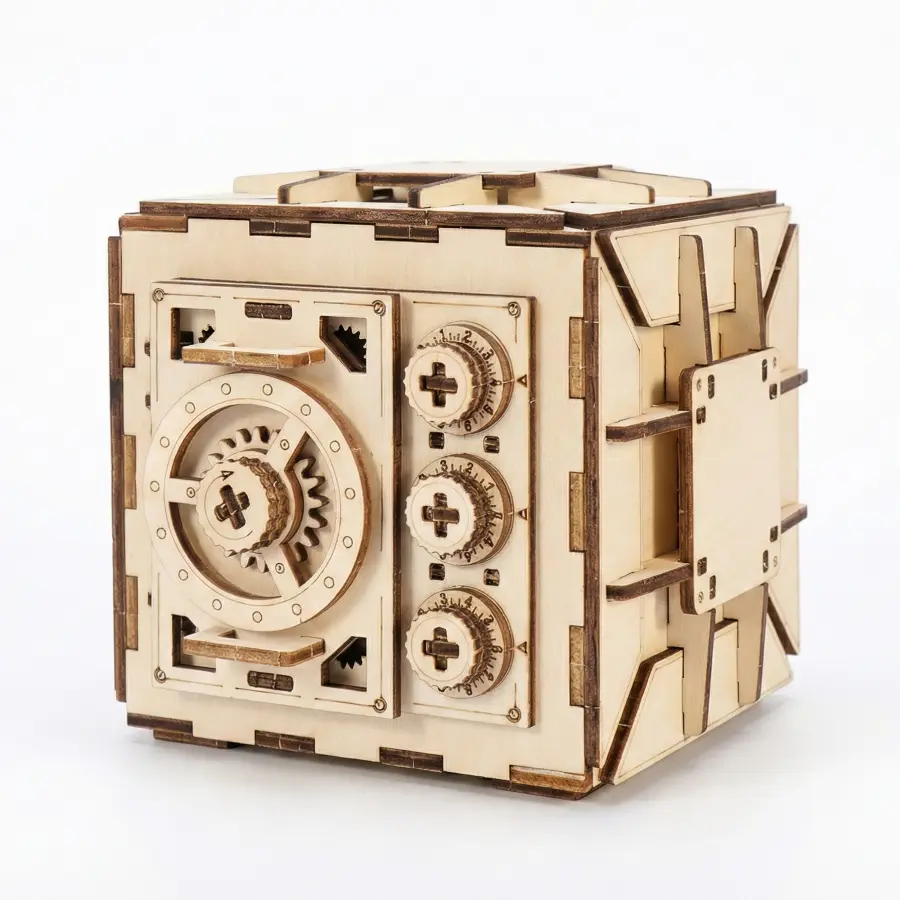
Items like this 3D puzzle safe offer a different kind of engagement—a cerebral, assembly-based challenge with a combination lock. It’s a fascinating puzzle, but its relationship with its contents is more utilitarian. The Turkish box’s value is in its fusion of material warmth, cultural texture, and secret-keeping ritual.
That leads to its final role: a conversation piece with a dormant secret. On a shelf, it’s a handsome handcrafted object, a dragon or eagle lid silently guarding its history. A guest might admire it. Only you know the simple, satisfying press along the side that brings it to life. In an age of digital transparency, there is a quiet joy in owning an object that does not announce its function. It waits for the right moment, the right person, the worthy question.
This is the anticipation. You are no longer just a buyer assessing dimensions and wood grain. You are a keeper of a small, elegant secret. You have the confidence to choose well, and now you have the vision for what it will hold. The puzzle was merely the introduction. The real story begins when you close the lid, slide the panel home with that final, solid click, and place it back on the shelf. Looking ordinary. Holding everything.
The Right Hands: Who This Box Is For (And Who Might Be Frustrated)
So, you are a keeper of a small secret. That role—that anticipation—is the final, most important filter for deciding if a Turkish puzzle box belongs in your life. It is not a universal object. Its joys are specific, and its frustrations are real for the wrong user. Let’s place it in the right hands.
This box is for the patient puzzler. Someone who enjoys the process of discovery as much as the reveal. The mechanism is not a Rubik’s Cube; it’s a tactile riddle. It rewards observation and a gentle touch. If you appreciate the “aha” moment that comes from understanding a simple, elegant principle, this is your object. It sits comfortably at an intermediate level—not impenetrable, but requiring a shift away from brute force.
It is for the appreciator of craft. You see the handcrafted dragon lid or eagle lid not as kitsch, but as a signature. You understand that the satisfying resistance of a sliding panel is the result of careful calibration, not an accident. You value the scent of juniper wood and the protective purpose of the fabric-lined interior. You are buying a conversation with a craftsperson, and you are willing to listen.
It is for the meaningful gift-giver. This is not a last-minute purchase. A Turkish puzzle box gift says, “I trust you with a secret,” or “I value the time it takes to uncover something beautiful.” It is perfect for a milestone—a graduation, an anniversary, a retirement—where the act of solving mirrors a new beginning. It’s a physical metaphor you can hold.
Now, for whom is it likely a poor fit?
It is not a secure lockbox. The secret compartment is for sentiment, not security. A determined person will find the mechanism. Do not store anything of high monetary value inside; its purpose is emotional safeguarding.
It is not, generally, a child’s toy. Small parts are not a concern, but patience is. A young child may become quickly frustrated by the lack of immediate reward. However, a mature child or teenager with a logical mind and calm demeanor could find it a wonderful challenge—best given with guidance. Similarly, for an older adult, consider dexterity. The slides require precise pressure from a single finger. For someone with arthritis or significant tremor, the operation could be more frustrating than satisfying.
It is not for the easily frustrated or those seeking instant utility. If you want quick, daily access to your rings, buy a standard jewelry box. This object demands ritual. It asks you to slow down. If that sounds like a chore, it will become one.
Finally, it is not for the passive collector. An inherited box placed on a shelf unopened is a story half-told. Its soul is in the motion, the click, the reveal. To own one is to agree to be an active participant in its function.
In the end, the right hands are deliberate hands. They are hands that seek more than storage—they seek a moment of focus, a connection to material and cleverness, and the quiet privilege of keeping a beautiful secret. If that resonates, you have not just found a box. You have found your role.
The Caretaker’s Notes: Maintaining Your Box and Solving Problems
So the box has found its home in the right hands—yours. Now, the relationship shifts from purchaser to caretaker. A handcrafted wooden puzzle box is a resilient object, but like any fine tool, it responds to thoughtful handling. Your role is to preserve its silent, smooth function for years, and perhaps, for another set of hands after you.
First, understand its nature. The wood—juniper or walnut—lives. It expands and contracts subtly with humidity. The best maintenance is environmental: keep it away from direct sunlight, radiators, and damp windowsills. A stable, room-temperature environment prevents the panels from swelling or shrinking, which is the primary cause of a mechanism that sticks or becomes too loose.
Dust is the enemy of the secret compartment. Never blow into the seams; this forces fine particles deeper into the mechanism. Instead, use a soft, dry artist’s brush to gently sweep dust from the carved lid and across the panel lines. For the main body, a slightly damp (never wet) microfiber cloth wiped with the grain is sufficient. Never use furniture polish or wax; it will gum up the precise sliding tracks.
Ah, the sticky slide. It is the most common frustration. If a panel refuses to budge, or moves with grating resistance, do not force it. Forcing is how a handcrafted box becomes a broken one. The cause is almost always microscopic: a speck of debris, a slight swelling, or a dried residue.
Begin with the gentlest solution. Hold the box with the troublesome panel facing down and tap the back gently with the heel of your hand. This can dislodge a trapped particle. If that fails, examine the seam with a bright light. Use a toothpick, not metal, to very lightly pick along the gap, attempting to hook any visible lint or debris.
For swelling or dried sap (more common in juniper), the cure is patience and graphite. A #2 pencil is your tool. Sharpen it, then “draw” heavily along the inner edge of the sliding panel’s track, focusing on the corners where it binds. The graphite acts as a dry lubricant. Work the panel back and forth gently to distribute it. Avoid liquid oils; they attract more dust and can stain.
Now, for the inherited box, often arriving with a story and a missing part. The decorative hidden key is a common absentee. Understand its purpose: it is a probe, not a talisman. Its blunt end is for applying precise pressure to a release pin, usually found by feeling around the fabric-lined interior. If it’s gone, a suitable replacement is easy to fashion. A rounded chopstick, a dowel sanded smooth, even the handle of a small spoon can work. The goal is a blunt, non-marring tool. Specialty retailers like Puzzle Box World sometimes sell replacements, but the DIY solution is often more personal.
What of wear? A well-loved box will develop a patina. The dragon lid’s high points may polish to a deeper sheen from your thumb. The secret compartment’s felt lining may compress where a ring habitually rests. This is not damage; it is the record of use. The mechanism itself, if treated well, should not become “wobbly.” If it does, it suggests the internal guide rails were poorly made from the start—a flaw, not a feature.
Your final duty is to share the secret. If this box is to be passed on, write down the solution. Tuck it inside the fabric-lined interior. The puzzle is in the discovery, but the legacy is in the preservation. You are not just storing an object; you are keeping a conversation alive between craftsperson and solver, across years and hands. Care for the wood, respect the mechanism, and the quiet satisfaction of the reveal will be yours for a very long time.
Answers in the Grain: Addressing Your Curiosities
Having learned to care for its secret, you might still hold a few questions in the wood’s grain. These are the lingering curiosities from collectors and new owners alike, gathered from workshops and online forums.
What’s the difference between a Turkish puzzle box and a Romanian secret box?
The principle is nearly identical: a secret compartment accessed by sliding panels. The distinction is largely one of origin and ornamentation. Turkish boxes often feature juniper wood, eagle or dragon lid carvings, and a fabric-lined interior. Classic Romanian boxes, sometimes called cutii meșteșugite, frequently use lighter woods like linden and favor geometric marquetry or painted floral motifs. Both are handcrafted testaments to regional woodcraft, falling under the broader category of puzzle boxes as defined by enthusiasts.
Can one be customized?
Yes, but selectively. On platforms like Etsy, some artisans offer customization of the dragon lid‘s eye stones (like a garnet eye), interior lining color, or initial carving. True bespoke work—altering the secret compartment size or mechanism sequence—is rare and costly. For most, the beauty is in the established traditional form.
Are wholesale or Alibaba boxes worth considering?
This is where the handcrafted claim often meets factory production. Boxes from wholesale sites can be 30-50% cheaper, but you trade control for cost. The wood may be thinner, the dragon lid casting less sharp, and the sliding mechanism prone to sticking from poor sanding. They serve as decent practice puzzles, but lack the satisfying resistance and longevity of a piece from a dedicated artisan or reputable shop like Puzzle Box World. You are buying a product, not a conversation with a craftsperson.
What does ‘Tubibu’ mean?
You’ll see this term on some listings. It’s not a type of box, but a modern brand name—essentially a trademark for a line of imported wooden puzzle boxes. It signals a commercial product, not a specific tradition.
Is the mechanism suitable for children or older adults?
It depends on dexterity and patience. The hidden mechanism requires precise, sequential pushes and slides. For small children, the fine motor control may be frustrating. For older adults with arthritis or diminished tactile sensitivity, the same can be true. It is an intermediate level puzzle that rewards patience. For a more accessible, purely mechanical curiosity, consider a different style of puzzle entirely.
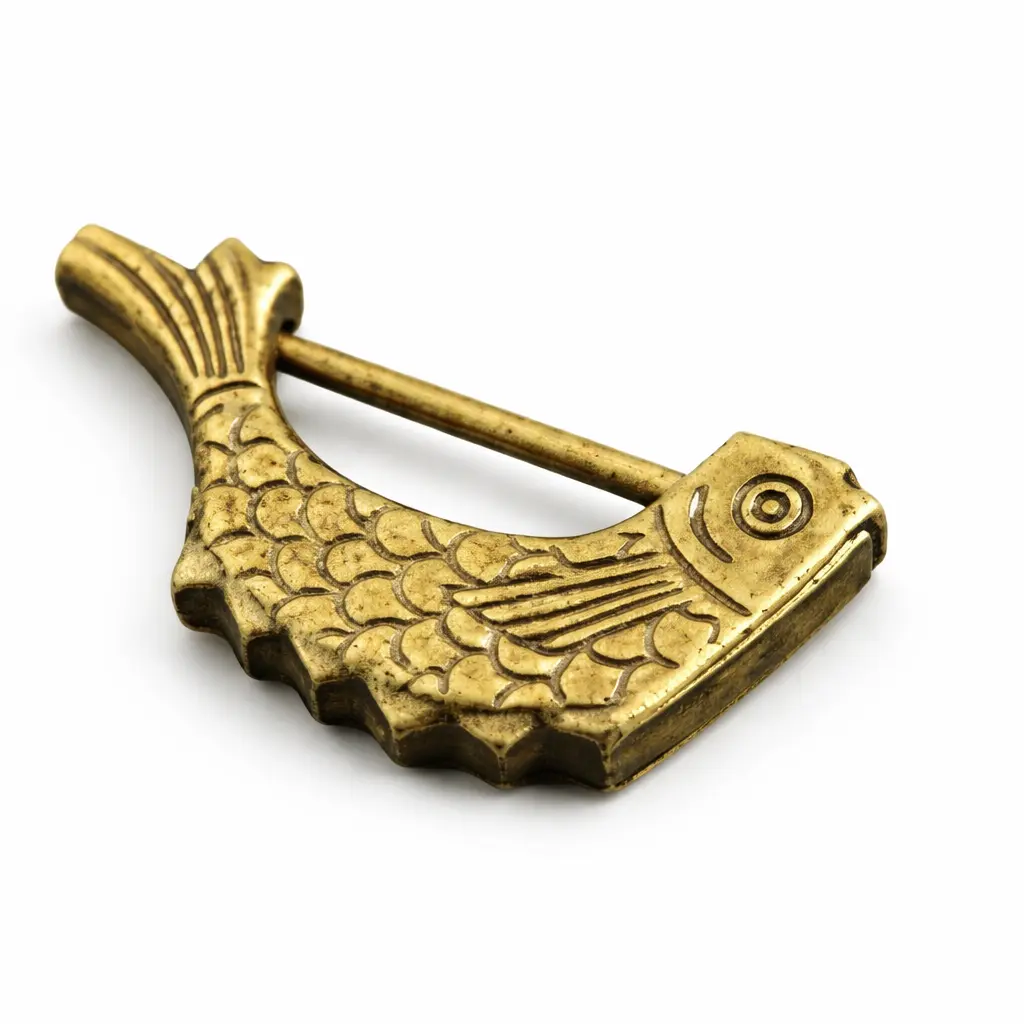
Chinese Koi Puzzle lock — $16.99
The Koi puzzle lock, for instance, offers a different kind of tactile engagement. For a broader look at related puzzles, our guide to Chinese puzzle boxes for adults explores that distinct tradition.
So, your final step. You began with an impenetrable object and a question held in your hands. You now hold the answers: the simple mechanical principle, the signs of honest craftsmanship, the fair price, and its purpose. The anticipation now is to act. Find a box whose carving speaks to you. Feel its weight. Listen with your fingers. The secret, once revealed, becomes yours to keep—or to pass on, its hidden compartment carrying a new story of your own.