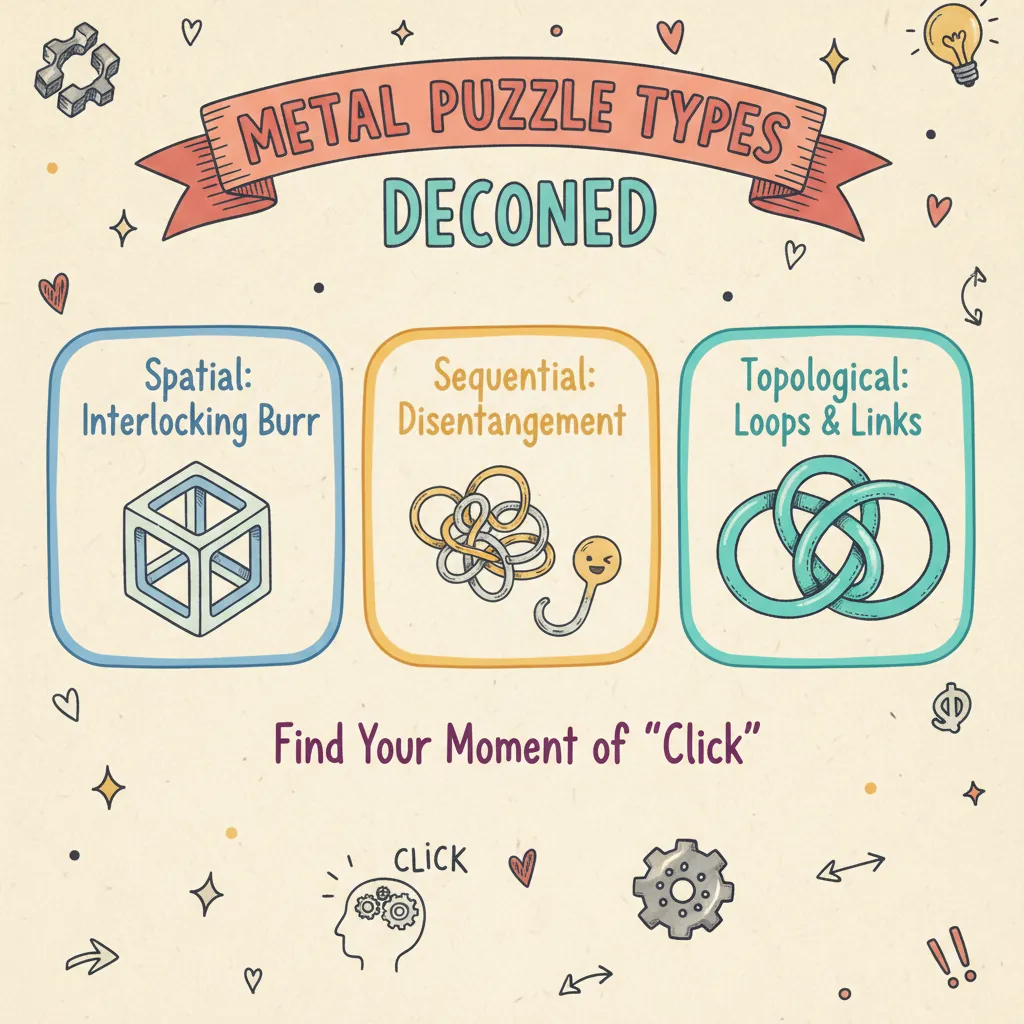
The Moment of ‘Click’: Why a Cold Piece of Metal Becomes an Obsession
That first moment of impossibility is universal. You’re handed a seemingly solid knot of forged steel or a precision engineered block of interlocking pieces. It’s cool and dense in your palm—a satisfying 30 to 150 grams of intent. You turn it, prod it, and are met with immovable resistance. This is the hook of every great mechanical puzzle, a tradition stretching back over 4,000 years to ancient iron puzzle rings and Chinese dilemmas. The journey from this frustration to the silent, physical ‘click’ of solution is what transforms a simple object into an obsession.
I’ve timed guests in my workshop on this very journey. Their initial confidence dissolves into intense, quiet focus. The room disappears. There’s only the faint grating of metal on metal, the subtle shift of weight, the search for the hidden vector of movement. Then it happens: a nearly imperceptible alignment, a smooth slide, a final, decisive click. The shoulders drop. A slow smile appears. That ‘click’ isn’t just auditory—it’s the tactile and cognitive signal of a barrier falling, a sudden clarity where chaos reigned a second before. This moment of engineered epiphany is the core experience that unites every puzzle on my shelves, from the simplest wire loop to the most complex Hanayama cast puzzle.
For decades as an industrial designer, I appreciated form and function. But here, in these palm-sized conundrums, I found a purer expression of both. The function is the obstruction, and the form is a beautiful lie. A cast metal puzzle presents itself as a static sculpture, hiding its secret rotations. A disentanglement puzzle mimics a hopelessly tangled web, yet obeys rigid, logical rules. This isn’t just play; it’s a targeted workout for specific cognitive muscles. Solving these puzzles trains your brain in tangible ways, forging new pathways in spatial reasoning, sequential logic, and topological thinking—you can explore the cognitive benefits of metal puzzles in more depth.
That’s the real taxonomy—not merely wire versus cast, but the type of ‘aha’ moment they manufacture. The satisfaction of solving a burr puzzle relies on visualizing hidden spatial voids, while mastering a sequential Chinese ring puzzle is about deducing a flawless chain of moves. Your brain learns a new dialect with each type.
So, let’s move beyond the store shelf’s mystery and the Mensa-rated difficulty labels. Let’s sort this wondrous clutter. Forget “awesome” or “mind-blowing.” We’re after the elegant, the deliberate, the click. We’re here to understand not just what your hands hold, but how your mind will engage with it. What follows is a collector’s map to the distinct landscapes of challenge waiting in that cold, clever piece of metal.
Your Brain on Metal: The Three Core Challenges (Spatial, Sequential, Topological)
At its core, every metal brain teaser is engineered to test one of three primary cognitive skills: spatial visualization, sequential deduction, or topological reasoning. Think of them not as toys, but as precision tools for mental calibration. Understanding the three core skills every puzzle tests allows you to predict both the nature of the challenge and the unique satisfaction of its solution.
Spatial Visualization: The Thinker’s Puzzle
This is the realm of maps, blueprints, and 3D modeling in your mind. Puzzles built for spatial problem solving ask you to mentally rotate, translate, and intersect solid forms to discover a hidden path or alignment. Your primary opponent is not complexity of movement, but perception. The classic burr puzzle is the quintessential example: six interlocked pieces that appear impossibly knotted, yet separate with a gentle slide once you visualize the exact orientation of their internal voids. Solving it is a silent, cerebral dance of geometry. It’s less about what your hands do and more about what your mind sees. These are the puzzles that feel like unlocking a secret architectural diagram held in cold, forged metal. If you enjoy mentally assembling IKEA furniture without the instructions or navigating a city by a folded map, this challenge is for your brain.
Sequential Deduction: The Planner’s Puzzle
If spatial puzzles are like reading a map, sequential puzzles are like following a meticulous recipe or a line of dominoes. The challenge here is logic and geometry in motion: discovering and executing the one correct order of moves, where each step unlocks the possibility for the next. A misstep often means backtracking to the beginning. The ancient Chinese ring puzzle is the archetype—a lesson in patience and procedural logic, where each ring’s state dictates the next. Modern Hanayama cast puzzles like the ‘Labyrinth’ or ‘Equa’ are masters of this form, hiding their sequential pathways within sleek, seemingly monolithic forms. The satisfaction is algorithmic and narrative; you are writing and following a story where the conclusion—the separation of pieces—is known, but the plot must be deduced through trial, error, and meticulous hypothesis. This is for the brain that delights in flowcharts, complex board game rules, or untangling a knotted timeline of events.
Topological Reasoning: The Intuitive’s Puzzle
This is the world of knots, loops, and flexible relationships within rigid constraints. Disentanglement puzzles—those perplexing arrays of metal wire puzzles and rings—are the purest expression of this. The challenge isn’t brute force (which will only bind them tighter), but understanding how shapes can move through and around each other within a fixed set of rules. It’s like untangling a necklace from a box of chains, but where every loop is unyielding steel and the solution is a matter of precise, counter-intuitive rotations. Your brain is learning to see connections and pathways in a tangled web, a skill more akin to understanding a subway system map than building a block tower. The ‘aha’ moment here is often a silent, lateral shift in perspective—realizing a piece must go that way, not this way. It feels more like a magic trick revealed than a problem solved.
Most great puzzles are hybrids, of course—a cast metal puzzle might require a spatial insight to begin a sequential procedure. But one core challenge always dominates, defining the flavor of the struggle and the character of the click. So, before you choose a puzzle based on its looks, ask yourself: do you want to navigate a space, execute a plan, or unravel a knot? Your answer is the first, most crucial step to finding your perfect mental match.
The Architect’s Puzzle: Spatial Visualization and the Interlocking Burr
If the topological puzzle is about untangling a knot, then the spatial puzzle is about navigating a silent, three-dimensional maze you hold in your hand. This is the architect’s or sculptor’s domain, where the core challenge is mental rotation and assembly—your brain must construct and deconstruct a precise volumetric model to find the single, often elegant, path to separation. The foundational icon here is the 6-piece burr, a deceptively simple-looking cluster of interlocking notched bars, which boasts thousands of possible internal arrangements for just six pieces. Solving one is a test of pure spatial problem solving, a silent, smooth rotation of forms in your mind’s eye before your fingers ever move.
The physical sensation is distinct from wire puzzles. There’s no grating or bending; instead, you feel the satisfying snick of perfectly machined parts sliding against each other, a testament to precision engineered tolerance. This world divides into two main camps: the traditional wooden burr and its modern, heavyweight descendant, the cast metal puzzle. Here lies the clearest answer to a common user question: What’s the difference between a Hanayama cast puzzle and a regular wire puzzle? A wire puzzle is about flexible paths and topological loopholes; a cast puzzle is a rigid, interlocking metal object that must be understood as a static, assembled whole before it can be taken apart. It’s the difference between solving a labyrinth and reverse-engineering a clock.
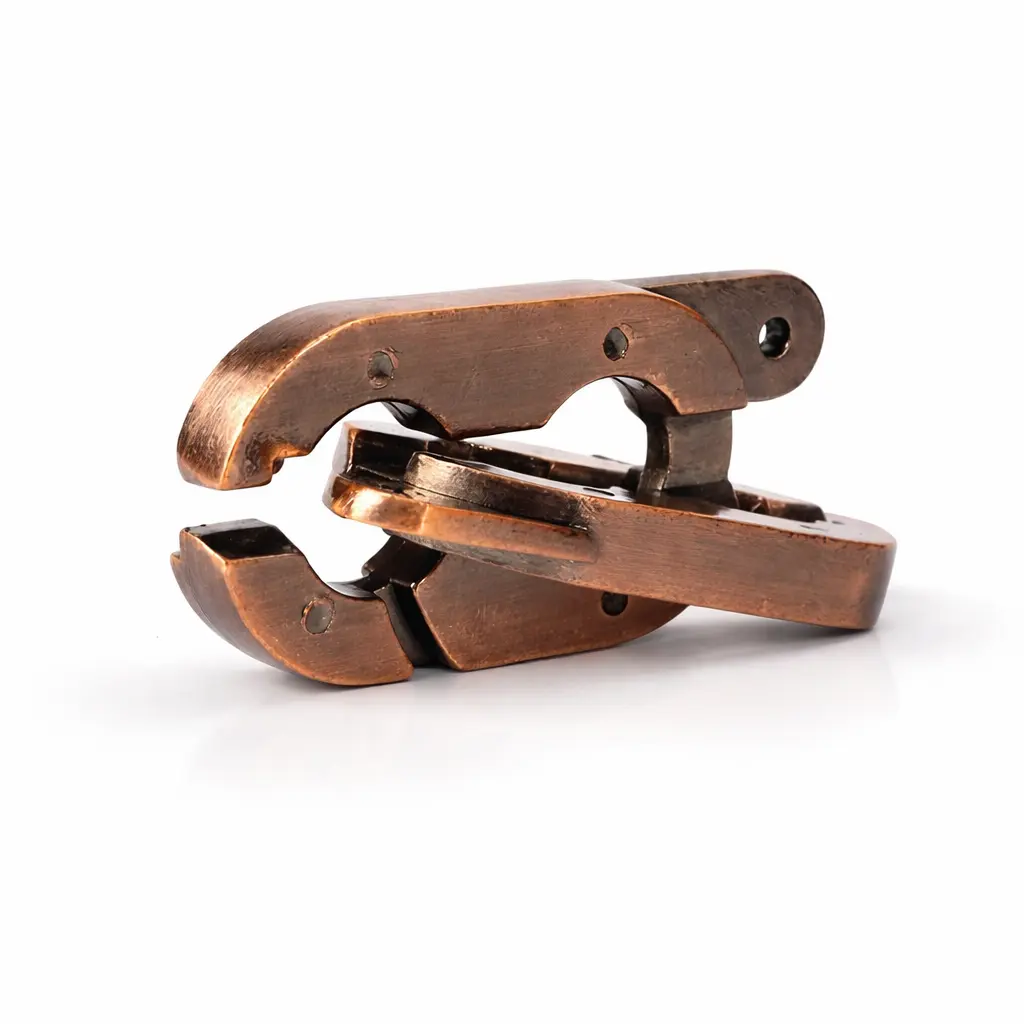
Brands like Hanayama have perfected the art of the cast metal puzzle, typically using dense zinc alloy to create pieces that feel substantive—often over 150 grams—and cool to the touch. The process allows for intricate, almost organic shapes that interlock in baffling ways. How do cast metal puzzles work? They exploit blind alleys and false seams; two pieces may appear to slide apart linearly, but the solution usually involves a compound movement—a simultaneous rotation and translation that only becomes apparent once you’ve fully internalized the geometry. It’s why a puzzle like the Hanayama Cast Marble (a perennial favorite) feels so impossibly locked until that one, perfect axis of rotation is discovered.
This brings us to a crucial point that debunks a common myth: a higher Mensa-rated difficulty (like a Hanayama Level 6) is not inherently “better” or more satisfying than a well-designed Level 3. A complex puzzle can be convoluted, while a simpler one can offer a breathtakingly elegant “aha” moment. The satisfaction profile here is one of crystalline clarity—the moment the invisible 3D map in your head suddenly aligns with the object in your palm. For a structured approach to these modern classics, our guide to step-by-step solutions for cast puzzles can serve as a helpful companion when you’re truly stumped.
When choosing, remember: the burr puzzle vs wire puzzle distinction is really about the nature of the struggle. Do you want to wrestle with pliable paths or commune with immutable geometry? For those drawn to the latter, the silent, smooth world of spatial interlocking offers a deeply cerebral, almost meditative form of triumph.
The Locksmith’s Ritual: Sequential Deduction in Disentanglement
If spatial puzzles demand you build a mental map, sequential puzzles require you learn a secret handshake. This is the locksmith’s domain. Here, victory isn’t found in visualizing unseen geometries, but in discovering and executing a precise, often elegant, chain of physical moves. The core challenge is one of sequential deduction: every action opens or closes a future possibility, creating a logic puzzle you manipulate with your hands. The path to separation is fixed and finite—often between 10 to 30 precise moves—and your goal is to decode that path through tactile trial and observation, not force.
These are your classic metal disentanglement puzzles. Think of the iconic horseshoe-and-ring or the interlinked hearts. At first glance, they’re a maddening knot of rigid wires, but they operate by strict, machined rules. The satisfying “click” here isn’t silent; it’s often a soft, metallic grating slide as two pieces align perfectly in a groove or pass through a precisely calculated opening. This is the world of the horseshoe nail puzzle and its countless descendants. Solving one is akin to untangling a cherished necklace from a jewelry box, but with one crucial difference: brute force is not just futile, it’s forbidden. The right move feels inevitable, a consequence of the puzzle’s internal logic.
The tactile feedback is paramount. A well-machined puzzle will guide you with subtle cues—a slight resistance before a channel opens up, a smooth rotation that signals alignment. This makes them exceptionally fidget-friendly; even after solving, the ritual of threading the pieces back together and apart again is a satisfying, rhythmic exercise in manual memory.
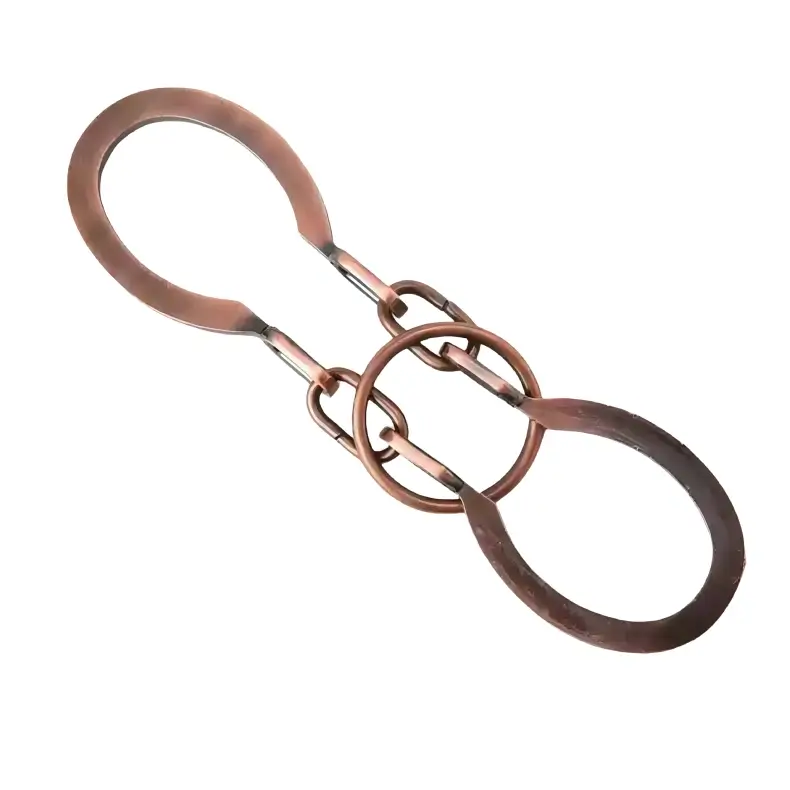
This category also includes the ancient puzzle ring and the Chinese ring puzzle, some of the oldest mechanical puzzles in history, a category well-documented on Wikipedia. Their solutions are literal algorithms—repeatable sequences that feel almost like a dance once mastered. This is where understanding Hanayama puzzle difficulty levels becomes practical. A Level 1 or 2 sequential puzzle offers a short, sweet sequence, perfect for building confidence and understanding the “language” of moves. A Level 4 or 5, like the notorious “Double-M” or “Equa,” might involve dozens of steps with false endings and deceptive symmetries. The Mensa-rated difficulty scale here is less about raw spatial intelligence and more about patience, pattern recognition, and procedural memory.
A common frustration for newcomers is the fear they’re solving it “wrong” or forcing it. The rule is simple: if you’re applying bending pressure or feel a sharp grind, you’re off the intended path. The correct sequential movement in a precision engineered puzzle should feel deliberate and smooth, if sometimes tight. The beauty lies in that moment of retrospection—after solving, you can trace the elegant logic of each step backward, a solved proof resting in your palm.
For a hands-on tour of this specific type, our curated list of the top-rated disentanglement puzzles dives deeper into the tactile nuances of top designs. If your brain delights in cracking codes and executing perfect procedures—if you find satisfaction in a repeatable, mastered skill—then this locksmith’s ritual is your ideal starting point.
The Knot Theorist’s Delight: Topological Reasoning with Loops and Links
Topological puzzles are the realm of impossible objects—linked rings and knotted wires that seem to defy separation by conventional logic, yet they rely entirely on the mathematical study of shape, position, and connection. Unlike sequential disentanglement, which follows a rigid path, or spatial burrs, which require precise alignment, these puzzles challenge you to understand the fundamental relationships between loops in space, with classic designs like the Chinese ring puzzle dating back centuries. Your primary tool isn’t force, but a profound understanding of slack, orientation, and the permissible moves within a constrained system.
This is the thinker’s puzzle. If the sequential type is a locksmith’s ritual and the spatial an architect’s blueprint, then the topological puzzle is a philosopher’s knot. It asks you to mentally manipulate objects in a flexible, almost abstract space, probing for the one key rotation or translation that changes the entire relationship. The challenge isn’t in remembering a dozen steps, but in perceiving the single, elegant truth hidden in plain sight. It’s like untangling two rigid necklaces from a jewelry box—you can’t break them, you can only rotate and slide them through each other’s openings, searching for the exact configuration where their paths diverge—a classic form of disentanglement puzzle.
Classic examples include the timeless Double-M puzzle, the deceptive Horseshoe Nail ring, and modern Hanayama cast puzzles like “Equa” or “News.” The Iron link unlock style, where two seemingly solid figures are intertwined, is a hallmark of the category. The metal used here is often smooth, sometimes even precision engineered to a mirror finish, because the solution depends on feeling minute clearances and visualizing angles, not on battling friction. The “aha” moment is distinct: often a silent, counter-intuitive swoop where a loop you thought was trapped glides free in a direction you’d mentally ruled out, a pure example of topological reasoning.
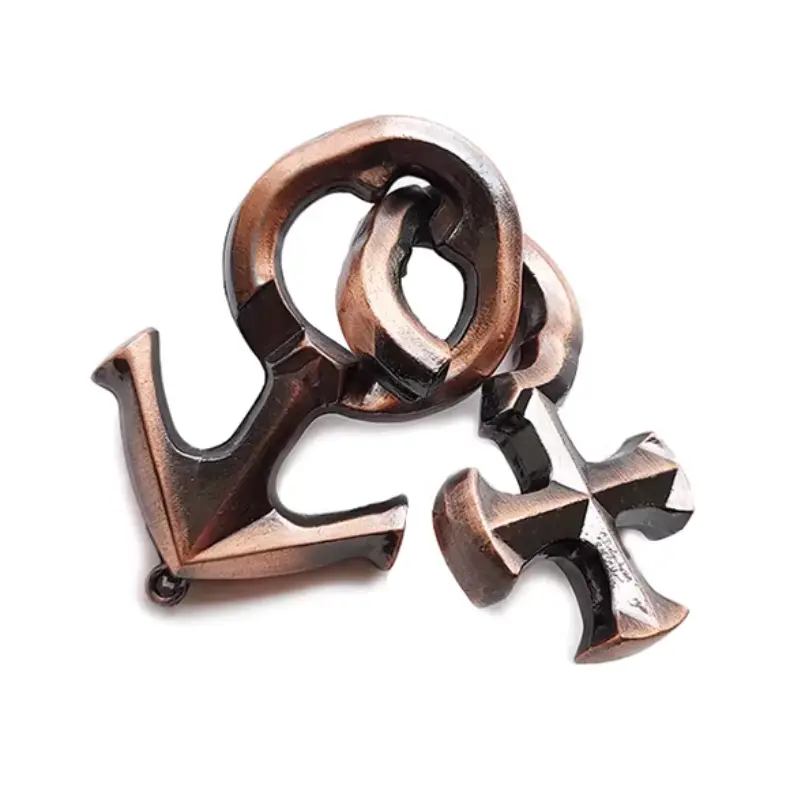
Beginners often ask if they’re solving it “wrong.” With topology, the line is clear: you should never bend the metal. The solution uses the existing voids. If you find yourself stuck, set it down and look from a new angle—literally. The three-dimensional relationship between the parts is everything. This type hones a unique form of spatial problem solving, one less about rotation and more about connection. For a deeper exploration of the logic behind these looping designs, our guide on solving ring-based puzzles delves into the principles at play.
Why choose this type? If you are fascinated by paradoxes, enjoy visualizing flexible shapes in your mind’s eye, and relish the sudden, graceful collapse of a seemingly intractable problem, then this is your category. It debunks the myth that higher Mensa-rated difficulty (a Level 6 topological knot) is inherently more satisfying than a clever Level 3 link. Often, the sheer elegance of a simpler puzzle’s single, brilliant move provides a purer, more profound intellectual click—the quiet triumph of the knot theorist.
The Flowchart: Choosing Your First (or Next) Metal Companion
After exploring the distinct ‘click’ of spatial burrs, the methodical cadence of sequential locks, and the graceful collapse of topological knots, the natural question is: where do you start? The most direct path to a satisfying solve begins with self-assessment, not difficulty ratings. Consider this simple, three-branch flowchart: Do you instinctively prefer maps, storylines, or knots? This framework matches puzzle types to fundamental cognitive preferences, guiding you to your ideal handheld puzzle companion with more accuracy than any generic “hardest” list.
Begin with maps. If you excel at reading blueprints, assembling flat-pack furniture without the instructions, or navigating by mental landmark, your brain is wired for spatial visualization. Your entry point should be an interlocking metal puzzle like a simple 3-piece burr or a Hanayama cast puzzle from their lower-tier difficulty rating, such as the Key (Level 2) or Ring (Level 3). These are forged or precision engineered to have a satisfyingly precise fit, teaching you the language of alignment and clearance—the tolerance is your teacher. They are typically handheld puzzles in the 100-150g range, substantial without being cumbersome, and often fall in the $15-$25 bracket. The satisfaction here isn’t brute force, but the geometric ‘aha’ when the internal map in your mind matches the object in your hand.
Choose storylines if you relish procedural logic, following a recipe, or untangling a narrative. Your strength is sequential deduction. The classic entry here is a straightforward disentanglement puzzle, like a two-piece horseshoe or a simple iron link unlock. Avoid the intricate multi-loop designs initially; seek one with a clear goal, like separating a ring from a double helix. A brilliant beginner wire brain teaser is Hanayama’s Spiral (Level 3), which has a clear, repetitive sequential movement that feels like discovering a secret dance. These metal wire puzzles are often lighter (30-70g) and wonderfully fidget-friendly once solved, making them perfect stocking stuffers or desk companions. The price is right, too, usually between $5-$15. Remember, a well-designed Level 3 sequence can be more narratively satisfying than a frustrating, opaque Level 6.
If knots call to you—if you’re fascinated by paradoxes, Möbius strips, or the elegant tangle of a necklace chain—then topological reasoning is your native language. Start with a puzzle ring with 3 or 4 bands, or a simple linked loop set. The goal is to see the negative space as a tool. These puzzles train you to manipulate connections in your mind before moving metal. They are often elegant display pieces as much as IQ test puzzles, with price points spanning from affordable mass-produced rings to artisan pieces over $50.
This leads to the crucial debunking: harder is not inherently better. A Mensa-rated difficulty of 6 (the highest on the Hanayama scale) often indicates complexity and obscurity, not necessarily elegance or depth of idea. A supremely designed Level 3 puzzle—with a single, brilliant, counterintuitive move—can deliver a purer, more rewarding intellectual ‘click’ than a Level 6 that you brute-force over days. The goal is the journey of understanding, not the trophy of completion.
So, where to begin? If the flowchart leaves you undecided, my universal recommendation for a first mechanical puzzle is a mid-difficulty (Level 3-4) Hanayama cast puzzle. Brands like Hanayama and Project Genius offer consistently good quality at this level. They blend spatial, sequential, and sometimes topological challenges into a polished, precision engineered object that feels substantial. It’s a complete introduction to the craft. You can find them at specialty toy shops, museum stores, and major online retailers—where to buy metal brain teasers is thankfully not a puzzle in itself. Start there, feel that cold weight in your palm, and begin your own tactile dialogue with geometry and logic. For a more personalized dive into this selection process, consider the insights in our companion guide, how to choose the right puzzle for you.
Beyond the Solve: The Culture, Craft, and Quiet Display of Puzzles
The moment of solution is not an ending, but a transition—the point where a metal brain teaser shifts from a strict problem to an object of appreciation, a kinetic sculpture for your shelf, and a passport into a quiet, global community. For the true enthusiast, the life of the puzzle begins after the first solve.
The most immediate afterlife of a solved mechanical puzzle is as a piece of kinetic art. A well-designed puzzle, like many Hanayama cast puzzles, is a study in precision engineered form. Its weight, finish, and the silent, smooth rotation of its components demand to be handled, even after the secret is known. This transforms it from a mere dexterity toy into a conversation piece. I keep a polished burr puzzle on my coffee table; guests who solve it feel a spark of triumph, while those who don’t appreciate its geometric intricacy. Display becomes part of the hobby—a way to live with these objects of logic and geometry daily. The satisfaction isn’t fleeting; it’s reinforced every time your fingers trace the cool, machined paths you once struggled to navigate.
This leads to a common question: is solving a one-time event? For a true handheld puzzle, absolutely not. The pleasure for a collector often lies in the reset. The goal becomes internalizing the algorithm—the elegant sequence of sequential movement—until you can execute it flawlessly, appreciating the designer’s intent with each fluid motion. It’s a tactile meditation. Forgetting the solution after a few months and rediscovering it anew is its own particular joy.
The metallurgy evolution in puzzle-making directly explains why some pieces command prices of $50 or more, while others cost under $15. Mass-produced, cast zinc-alloy puzzles are accessible wonders, but the upper echelon involves hand-forging, machining to tolerances of thousandths of an inch, and exotic alloys. A handcrafted iron puzzle feels and sounds different—a solid clink versus a dull tap. The investment is in a singular artifact of craftsmanship, as detailed in our exploration of precision, the artistry behind precision metal puzzles. You’re not just buying a challenge; you’re buying a benchmark of material and mechanical art.
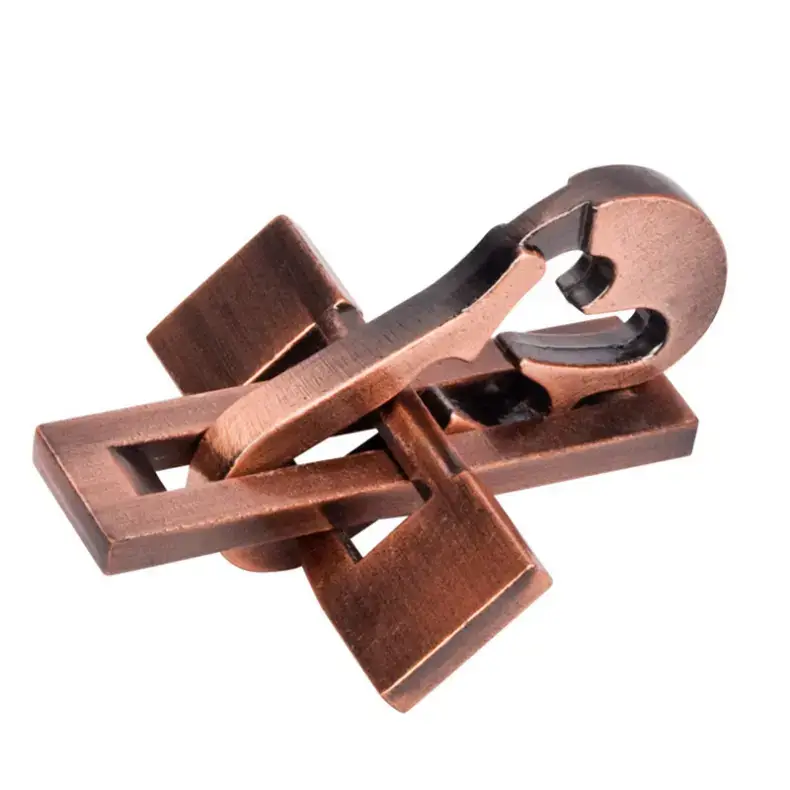
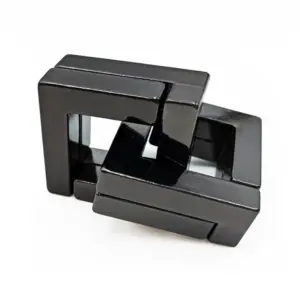
Yangqin Lock Puzzle — $12.66
When you are truly stumped—and you will be—a vibrant, courteous community awaits. Online forums are filled with collectors dissecting new releases, sharing metal puzzle solutions through intricate diagrams, and debating the elegance of one solve over another. This is where the Mensa-rated difficulty scale finds its context; it’s a shared language for gauging a challenge. Asking for a hint is a rite of passage. You learn that there is almost always a “right” way—a solution that respects the design without forcing it. Forcing, you’ll quickly hear, is a cardinal sin that risks damaging the delicate interplay of parts. The community ethos is one of shared frustration and ultimate revelation.
So, are these puzzles “good for your brain”? Beyond the obvious spatial reasoning and logic, they train patience and a specific form of focus. They are a counterpoint to a digital world—a finite, physical problem with a definite, satisfying conclusion. In the end, collecting metal puzzles is about surrounding yourself with beautiful problems. It’s a hobby that engages your hands, hones your mind, and connects you to centuries of design history and thousands of fellow solvers, all seeking that perfect, silent click of understanding. The quest never really ends; it simply finds a new shape on your shelf, waiting for the next curious hand.
The Never-Ending Quest: When One ‘Click’ Leads to a Hundred More
The initial, perfect click of a solved puzzle isn’t an ending—it’s a gateway. That moment of triumph, often repeated as you re-solve a favorite, is the seed of a deeper fascination. It’s the reason my own collection, started with a single, frustrating horseshoe nail puzzle, grew to over fifty pieces. The true joy lies in the realization that for every design you master, a thousand more exist across the three core disciplines of spatial, sequential, and topological reasoning, each promising its own unique texture of challenge.
This is where the taxonomy becomes your map. You can now move beyond random purchases and embark on deliberate quests: to experience every nuance of interlocking metal pieces within the burr puzzle family, or to trace the metallurgy evolution from forged iron to precision engineered Hanayama cast puzzles. The Mensa-rated difficulty scale transforms from a daunting label into a personal progress tracker. You might seek out every legendary disentanglement puzzle or become a connoisseur of silent, sequential movement. Each category is a world, and each puzzle within it is a distinct landscape to navigate. For those ready to ascend to truly formidable challenges, the world of more challenging cast puzzles awaits.
So, take that first solved puzzle—the one now sitting proudly on your desk—and let it ask you a question. Did you love the feel of navigating internal space, the narrative of a step-by-step unlock, or the phantom flexibility of rigid wires? Your answer points to the next shelf, the next craftsperson, the next century-old design waiting to be held. My workshop is a testament to this endless branching path; a library of elegant problems where the only conclusion is the gentle suggestion of the next one to try. Your collection, and the quiet satisfaction it brings, begins with that single, resonant click. Now, go find its echo.