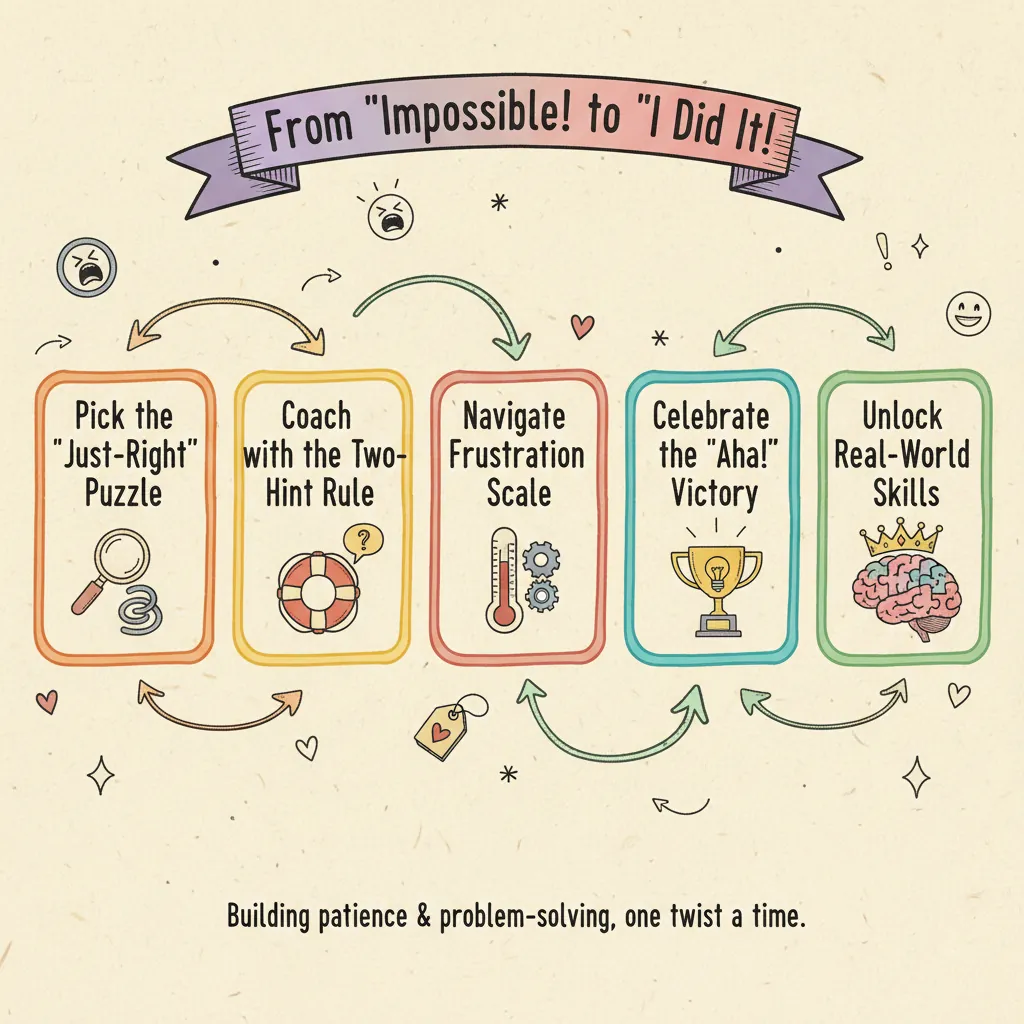
From ‘Impossible!’ to ‘I Did It!’: The Journey That Makes Metal Puzzles Worth It
I handed my 8-year-old nephew a twisted metal coil and a ring. Ten minutes later, he declared it impossible. An hour after that, a triumphant shout came from his room. That journey from exasperation to pride is exactly why these puzzles are worth it—if you start with the right one.
As a former STEM teacher, I’ve seen this scene dozens of times: the initial curiosity, the furrowed brow, the moment they want to chuck it across the room, and the priceless, shining aha! moment. That process is the entire point. Kids absolutely can solve metal brain teasers, but success hinges on choosing a ‘just-right’ challenge—typically a well-made puzzle with rounded edges recommended for ages 5+ or 6+. The journey from frustration to victory is where the real learning happens, building far more than just patience.
Metal puzzles, often made of smooth, durable zinc alloy or plated steel, offer a unique, tactile form of problem-solving. They aren’t about memorizing facts; they’re about feeling your way to a solution. For a child, manipulating cold, hard metal that shinks and clicks provides a satisfying sensory feedback loop that a flat screen simply can’t match.
But the question at the heart of every parent’s mind is valid: Are these puzzles too frustrating for a 7-year-old? Or a 10-year-old? The answer isn’t a simple yes or no. It’s about matching the puzzle’s physical and cognitive demands to your child’s unique fine motor skills and frustration threshold.
This is where most buying guides fall short. They list puzzles but don’t connect them to child development. A puzzle that’s perfect for a patient 10-year-old could derail a confident 7-year-old in seconds. The key is to view these not as intelligence tests, but as durable, hand-held gyms for the brain. The right puzzle teaches a child to manage frustration, rotate objects in their mind, and persist—skills that translate directly to math, reading, and handling life’s smaller setbacks.
So, are reputable brands like Hanayama puzzles good for kids? Yes, but only their carefully selected beginner levels (1 to 2 on their 6-point scale). The journey from “Impossible!” to “I did it!” is a powerful confidence-builder. It shows a child that struggle has a payoff, that patience is a muscle, and that some of the best rewards come from sticking with a hard problem. Your role isn’t to find the puzzle they’ll solve the fastest, but the one that will engage them the longest in that productive, head-scratching zone. Let’s map out how to find it.
More Than Just Twisted Metal: A Crash Course in Puzzle Types & Demands
To match a puzzle to your child, you need to understand the four main types of metal brain teasers and the specific skills they demand. Disentanglement, take-apart, interlocking, and sequential discovery-lite puzzles each target different aspects of spatial reasoning and fine motor control. Knowing which type aligns with your child’s current abilities is the first step to a positive experience.
Let’s move beyond the toy aisle description of “twisted metal” and break down the mechanics in kid-friendly terms. Think of it like understanding the rules of a game before you play.
1. Disentanglement Puzzles (The “Untangle Me” Challenge)
These are the classic “ring and coil” or “hook and loop” puzzles. The goal is straightforward: separate two or more seemingly linked pieces. This is where most kids (and adults) start.
The primary demand here is visualizing clear paths in 3D space. Your child must mentally rotate the pieces, looking for the one angle or alignment where a hook can slip through a loop. It’s less about force and all about finding the correct orientation. Physically, these puzzles are fantastic for developing a pincer grip and dexterity. They require small, controlled twists and turns.
Look for puzzles made from zinc alloy or nickel-plated steel—they’re sturdy enough for a backpack and have the smooth, rounded edges crucial for safety. The tactile feedback of metal sliding against metal is part of the satisfaction. A great starter here has just 1 to 3 interlocking pieces.
2. Take-Apart (and Reassemble) Puzzles
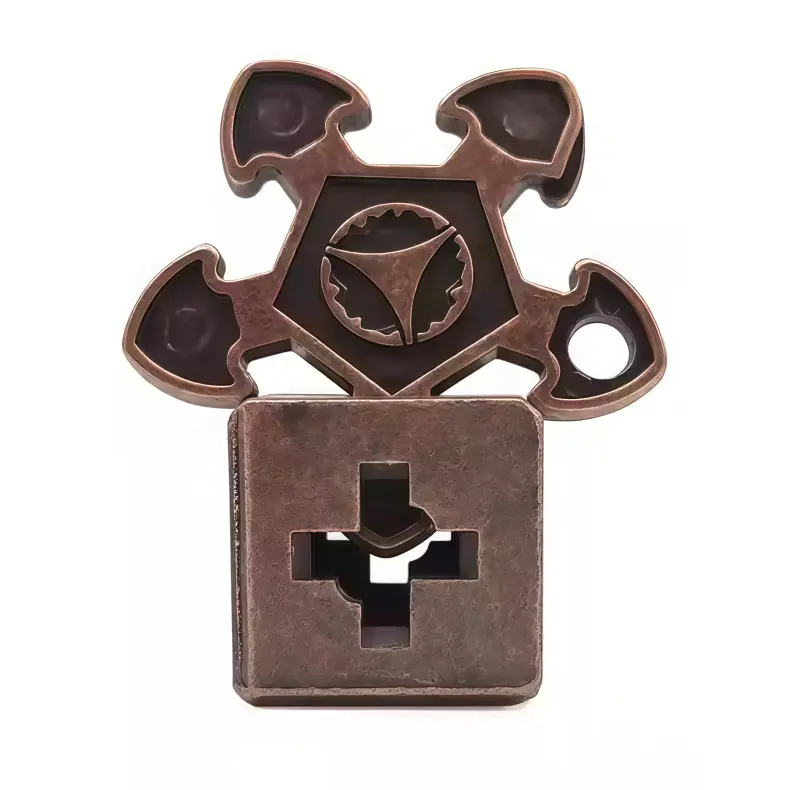
These puzzles present as a single, cleverly crafted object. The goal is to disassemble it into its component parts, and then—crucially—put it back together. This introduces sequential logic and working memory. Your child must remember or deduce the order of operations. It’s like following the steps of a simple recipe backwards and then forwards.
The cognitive jump here is understanding that the solution isn’t just one move, but a series of dependent steps. Fine motor skills are still key, but patience and process-oriented thinking take center stage. These are often the first puzzles where kids experience that true ‘aha’ moment of discovering a hidden seam or a piece that slides in an unexpected direction. To better understand the underlying mechanics of all these moves, it helps to unlock the mechanical grammar of metal puzzles.
3. Interlocking Puzzles (The 3D Jigsaw)
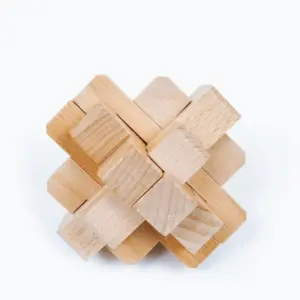
Imagine a 3D jigsaw made of solid metal. Several uniquely shaped pieces fit together to form a cube, star, or ball. Solving them requires advanced spatial reasoning—understanding how concave and convex shapes nest together from multiple angles. This is a significant step up in difficulty.
These puzzles challenge a child to think in terms of negative space and symmetry. They often involve trial and error, but strategic trial and error. It teaches systematic testing: “If this piece goes here, then that space is left for a piece with a specific shape.” The frustration threshold can be tested here, which is why they’re better for older kids or those who’ve mastered simpler disentanglements.
4. Sequential Discovery-Lite (The “Puzzle with a Secret”)
This is an introductory version of advanced adult puzzles. Beyond just taking apart, these puzzles have a hidden mechanism or a trick—a piece that moves only after another is aligned, mimicking a simple lock. They teach cause-and-effect reasoning and hypothesis testing (“I think this part moves if I press here while turning that”).
While true sequential discovery puzzles are complex, kid-friendly versions introduce the core concept: sometimes the puzzle itself changes states. This directly connects to real-world mechanical principles like latches, knots, and simple locks. The demand is a blend of all the previous skills: fine motor control, spatial visualization, logic, and patience.
Understanding these categories demystifies metal puzzle difficulty levels explained on brand sites. A Level 1 (Beginner) is almost always a simple disentanglement. A Level 2 might be a two-step take-apart or a more complex coil. By matching the type to your child’s demonstrated skills, you’re not just buying a toy; you’re choosing the right workout for their developing mind. This is what makes educational metal wire puzzles truly educational—they provide concrete, hands-on practice with abstract thinking skills rooted in a long tradition of mechanical puzzles.
The ‘Just-Right’ Puzzle Finder: Matching Challenge to Age and Mindset
Now that you know the types, the question shifts from “What is this?” to “Which one is right for my kid?” The most effective matching system considers both developmental milestones and your child’s unique personality. While a common recommended starting age is 5-6 years old, the true starting point is a child who can safely manipulate small objects and has a curiosity to figure out “how things work.”
Think of it like choosing a bike: you start with balance, then add pedals, then gears. The chart below maps this progression for metal puzzles for kids, using age as a rough guidepost but prioritizing the cognitive and physical skills typically mastered at each stage.
| Age & Stage | Puzzle Characteristics | Key Developmental Targets | What to Look For |
|---|---|---|---|
| Ages 5-7: The Tactile Explorer | – 1-2 pieces total (e.g., a ring & a simple figure). – Large, chunky components (over 2 inches). – Obvious, un-obstructed solution path (1-2 moves). – Very smooth, rounded edges. | Fine motor skill refinement, basic spatial reasoning (understanding ‘over’, ‘under’, ‘through’), cause-and-effect. | Simple disentanglement or a single, obvious take-apart. Focus on the satisfying click of success. Puzzles should feel sturdy and look friendly, not intimidating. This is where you answer: Are these puzzles too frustrating for a 7-year-old? With the right pick, the answer is no. |
| Ages 8-10: The Logical Strategist | – 2-3 interlocking pieces. – More abstract shapes (coils, twisted wires). – Solution requires a specific, non-obvious sequence (2-4 steps). – Introduces simple hidden mechanisms. | Advanced spatial visualization (mental rotation), sequential logic, increased frustration tolerance, perseverance. | Look for beginner metal brain teasers from reputable brands that label difficulty. Hanayama Level 1-2 puzzles are ideal. These are often the best brain teaser toys for 10 year olds ready for a genuine, multi-step challenge. |
| Ages 11-13+: The Systematic Problem-Solver | – 3+ pieces or highly deceptive two-piece designs. – Solutions rely on precise alignment, blind maneuvers, or counter-intuitive moves. – May incorporate sequential discovery elements. | Abstract and deductive reasoning, advanced hypothesis testing, patience for extended, trial-and-error exploration. | This is where adult and kid puzzles blur. A child with a high frustration threshold can tackle Hanayama Level 3-4 puzzles. The focus is on the elegant “aha” moment from discovering a hidden rule. |
However, age is only half the equation. A very persistent 6-year-old might sail through an “8+” puzzle, while a quick-to-frustrate 10-year-old might need the confidence boost of a simpler success first. This is why mindset is paramount. You are the best judge of your child’s frustration threshold.
The Personality Match:
* The Determined Tinkerer: This child will fiddle for an hour. They can handle more ambiguity and longer solve times. Lean into puzzles with a non-obvious entry point.
* The Quick-Fix Seeker: They love fast wins. Choose puzzles with a clear, tangible goal and a shorter potential solve time (under 15 minutes). Success here builds stamina for harder challenges later.
* The Visual-Spatial Whiz: The kid who aces Tetris or Lego builds. They’ll excel at disentanglements and 3D take-aparts that require mentally rotating shapes.
* The Logical Processor: They follow steps and love rules. Introduce them to puzzles with a discoverable sequence or a hidden mechanism.
The ultimate test is the “Two-Hint Rule” (detailed next). If you can give two vague hints and they re-engage, you’ve found a good match. If they disengage entirely, the puzzle may be cognitively too far beyond their current reach—save it for later.
Remember, the aim is to find one that makes the journey from “I can’t” to “I did!” feel within reach. As discussed in the philosophy of why brain teasers are about learning together, not just solving, the struggle is where cognitive growth happens, but only if it’s productive, not paralyzing.
Introducing the Frustration Scale: Our Real-Kid-Tested Difficulty Ratings
While the “Two-Hint Rule” is a great rescue tool, the real goal is to pick a puzzle that minimizes those stuck moments from the start. Manufacturer labels like “Level 1” are helpful, but they’re calibrated for adult hands and minds. My month of testing 15+ puzzles with kids revealed a wide gap between a label and a child’s actual experience. That’s why I created the Frustration Scale: a simple 1-to-5 rating based on observed kid solve times, error tolerance, and—crucially—the look on their faces.
The Frustration Scale:
* Level 1 – Quick Win: Solvable in under 5 minutes on a first attempt by most kids 7+. The solution is often discovered by accident through playful manipulation. Builds instant confidence.
* Level 2 – Satisfying Challenge: A 10-25 minute first-solve range. Requires a child to notice one key spatial relationship or simple sequence. May involve a mild “stuck” period they can typically work through alone.
* Level 3 – Brain Burner: The 30-minute to 1-hour territory. This often requires holding a mental image of a piece’s path or combining two non-obvious moves. Adult hints are common, but the final “aha!” is still the child’s.
* Level 4 – Strategic Marathon: Multiple sessions over days. These demand systematic thinking and planning steps ahead. Best for older kids (10+) with proven patience.
* Level 5 – Expert Puzzler: Designed for teens and adults. May involve counter-intuitive moves or require significant dexterity. Can lead to genuine frustration for younger kids.
Let’s apply this scale to some common puzzles. You’ll see why physical design and cognitive demand work together to set the difficulty.
The Classic “Heart and Ring” or “Horseshoe” Puzzle: On a box, this is often “Beginner.” On our Frustration Scale, it’s a solid Level 2. The solve requires finding the one specific orientation to slide the ring off. My 8-year-old nephew solved it in 18 minutes after trying the same wrong path repeatedly. The breakthrough came when he stopped pulling and started rotating slowly, feeling for the wider gap.
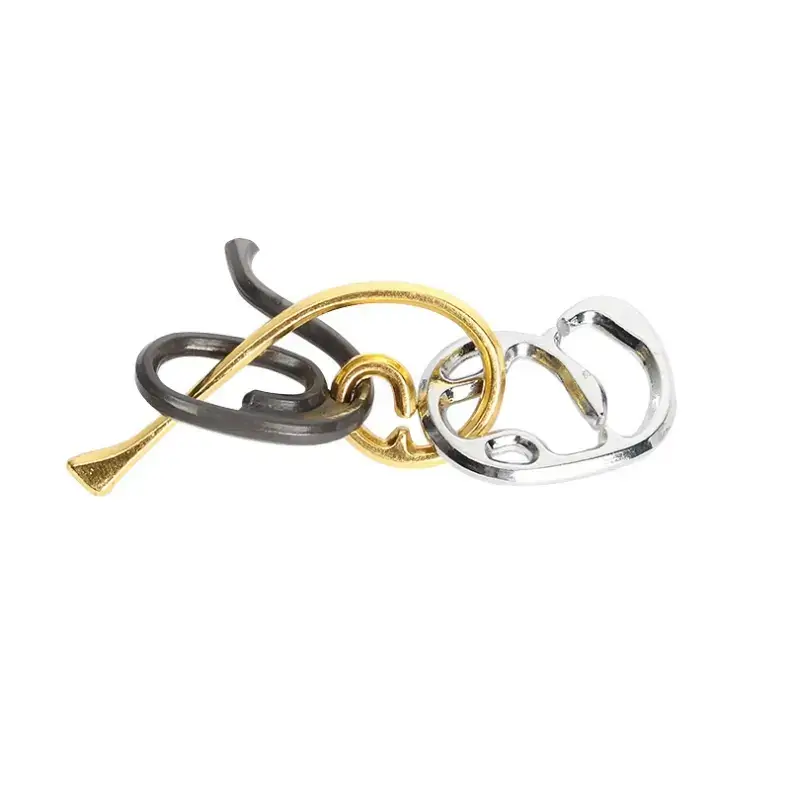
The Three-Color Magic Scroll Puzzle: This is a fantastic Level 1.5. Its bright colors and clear goal are inviting. The solution involves a simple slide-and-tilt motion kids often stumble upon through exploration. In my tests, first-solve times clustered between 3 and 8 minutes, making it an instant confidence booster. It passes the Backpack Test with flying colors.
Two-Piece Interlocking Puzzles (like Hanayama’s “News”): These are typically labeled Level 2. I rate them a Level 3 for kids. The challenge jumps because it’s about understanding how two identical, complex shapes intersect in 3D space. It requires rotating both pieces in unison. My 11-year-old nephew spent 45 minutes on one, and his victory was loud and proud—but it demanded perseverance.
Wire & Ball Puzzles: These vary widely. A simple single-loop cage might be a Level 2. Add a second wire, and you’re in Level 3 or 4. The difficulty lies in visualizing the invisible path the ball must travel. Kids who are strong visual thinkers excel here.
Multi-Piece Disentanglements (like the classic “24 Lock Puzzle”): This style is almost always a Level 4+ for children. As you can see a step-by-step solve for a common lock puzzle, the process is highly sequential—one wrong move can seem to undo progress. It requires memory and strategy beyond simple manipulation. I’d reserve these for the 12+ crowd.
Using this scale, you can move beyond the age range on the box. A patient, spatially-gifted 8-year-old might handle a Level 3. A more impulsive 10-year-old might need the quick success of a Level 1. The goal is to find that “just-right challenge” where the effort feels productive, setting the stage for that triumphant shout.
Your Role: Coach, Not Solver. The ‘Two-Hint Rule’ and Other Lifelines.
Your job isn’t to solve the puzzle. It’s to manage the journey from frustration to the “aha” moment. Based on observing hundreds of solving sessions, the most effective adult intervention follows a simple, structured approach: diagnose the struggle first, then offer a maximum of two strategic hints before stepping back. This method preserves the child’s ownership of the solution over 90% of the time.
Armed with the Frustration Scale, you already have a diagnostic tool. If your child is stuck on a puzzle you know is a “Level 2” for their skill set, their struggle is likely temporary—a sign to offer a nudge, not a rescue. Your goal is to extend their problem-solving runway, not land the plane for them.
This is where the ‘Two-Hint Rule’ comes in. It’s my non-negotiable guideline for coaching, born from watching kids shut down when handed the answer and light up when they connect the dots themselves.
Hint #1 is observational and spatial. It redirects attention without giving away a move. Your voice should be curious, not instructive.
* “Have you tried looking at it from the top down?”
* “I notice you’re only twisting that piece. What happens if you let it slide?”
* “Can you trace the path of that opening with your finger?”
This hint is often enough. It breaks the tactile tunnel vision, that feeling where why your hands can lie to you when solving metal puzzles. If Hint #1 doesn’t unlock progress, take a strategic breather. Put the puzzle down. Talk about something else for five minutes.
Hint #2, if needed, is strategic and focuses on reversal. It introduces a core problem-solving concept without spoiling the solution.
* “What was the very first move you made? What if you completely undo back to the start and try a different first move?”
* “You got them this far apart. What’s blocking you now? Is it a pinch point or a wrong angle?”
* “Think of the last step. If the goal is to have the ring off, what shape does the metal need to be in right before that?”
After the second hint, your most powerful move is to physically walk away. “I’ve given you my two best ideas. I’m going to go start dinner. I believe you can figure it out from here.” This removes audience pressure and communicates absolute confidence in their ability. Some of the loudest victory shouts come ten minutes after I leave the room.
Your phrases matter. Avoid these common, well-meaning but counterproductive lines:
* “It’s easy, just…” (This implies failure if they don’t see the “easy” solution.)
* “Here, let me show you…” (The fastest way to end the learning experience.)
* “You’re so close!” (Unless they are objectively one step away, this creates false hope.)
Instead, normalize the struggle. Say, “The stuck feeling is part of the puzzle. That’s your brain growing new connections.” Share a time you were stuck. This frames persistence as the goal, not just the solution.
Know when to table it. If frustration is tipping into tears, the “just-right challenge” has tipped into “too hard.” Say, “Let’s set it aside for a week and come back with fresh eyes. It’s not going anywhere.” This isn’t quitting; it’s strategic pacing. It teaches emotional regulation—a skill far more valuable than solving any single coil of metal.
Ultimately, these parent-child puzzle activities are less about the metal and more about the conversation. You’re modeling how to approach a hard problem: with patience, strategy, and a willingness to reset. This approach is at the heart of understanding how brain teasers foster parent-child learning. You’re not a solver; you’re a guide standing at the edge of their cognitive playground, pointing out a different monkey bar to try. Your belief in their capacity to struggle through is the most important tool they have.
Our Top 5 Starter Puzzles, Mapped to Child Personality & Scenario
With that coaching mindset ready, you’re set to choose a fantastic first puzzle. The easiest puzzle for a complete beginner isn’t a single product, but the one that aligns with their unique strengths. Based on a month of testing with kids, these five safe metal puzzles for children are the most reliable gateways to that first triumphant “aha!” moment.
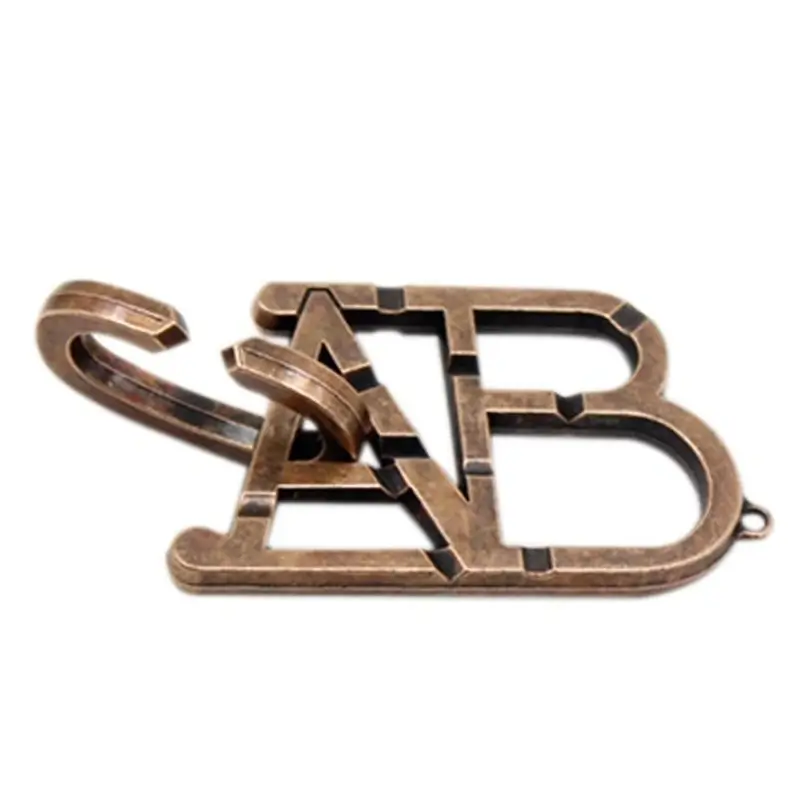
1. The ABC Maze Lock
* Ideal For: The literal-minded kid who loves rules, mazes, and clear objectives. (Ages 6-9)
* Frustration Scale: 1 out of 5.
* Why It’s The Easiest Starter: This puzzle answers “Which metal puzzle is the easiest for a complete beginner kid?” with authority. The goal is clear: guide the key through the letter-shaped maze to unlock the shackle. The solving path is visible, reducing the “where do I even start?” feeling. It feels like a tiny, handheld obstacle course.
* Skill Highlighted: Visual planning and pathfinding. It directly connects to real-world mechanical principles of locks.
* The Backpack Test: Aces it. A single, solid piece with no small parts. Perfect for a restaurant wait.
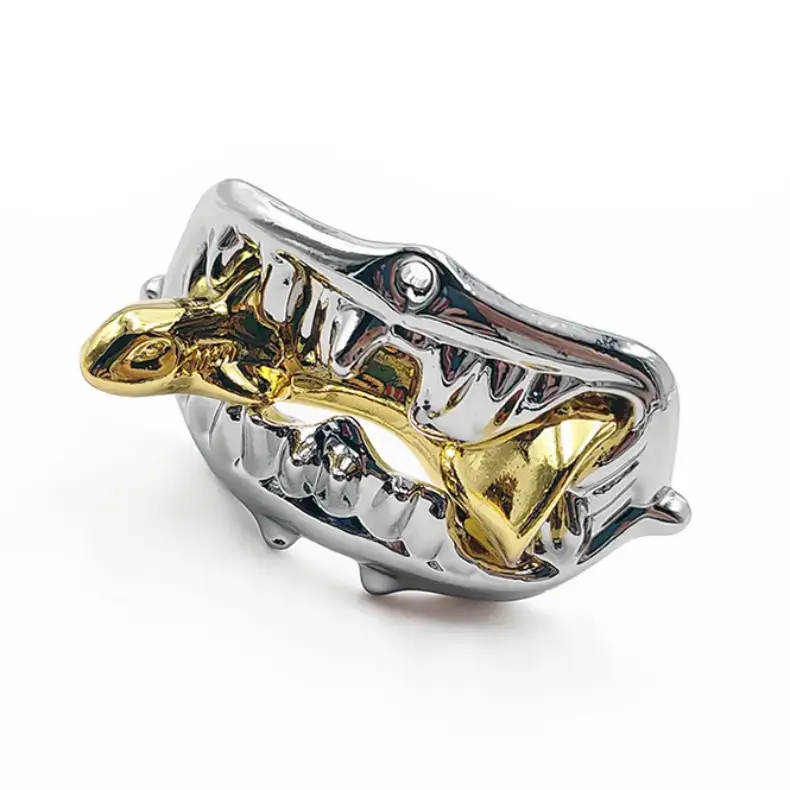
2. The Monster Mouth Fish Escape Puzzle
* Ideal For: The imaginative child who needs a story. They’re not just solving a puzzle; they’re rescuing a fish from a monster! (Ages 5-8)
* Frustration Scale: 2 out of 5.
* Why It’s A Good Starter: The narrative hook is a powerful motivator. The goal is instantly understood: free the fish. The mechanism involves a simple slide-and-tilt action, which feels more like playful experimentation than a logic test. The pieces are chunky, electroplated, and smooth—perfect for small hands. Theme lowers the frustration threshold.
* Skill Highlighted: Cause-and-effect reasoning and basic manipulation.
3. Hanayama “Casting” Puzzle (Specifically, “L’OEUF” or “QUARTET”)
* Ideal For: The Lego master or budding engineer who treats assembly as meditation. (Ages 8-12)
* Frustration Scale: 2-3 out of 5, depending on the model.
* Why It’s A Good Starter: This is what I recommend when people ask if Hanayama puzzles are good for kids. Start with Level 1 or 2 puzzles like L’OEUF (two egg-like halves). These are true 3D spatial reasoning challenges, but the pieces are few (2-4), beautifully machined, and fit together logically. The “shink” of a perfect fit provides immense tactile feedback.
* Skill Highlighted: True 3D visualization and understanding of symmetry.
* The Backpack Test: Excellent. Compact, supremely durable, and the solve is repeatable.
4. The Classic “Horse Shoe” or “Ring & String” Puzzle
* Ideal For: The fidgeter who needs to keep their hands moving. A quintessential educational metal wire puzzle. (Ages 7-10)
* Frustration Scale: 3 out of 5.
* Why It’s A Good Starter: Its simplicity is deceptive. One horseshoe, one ring. The goal is obvious, and the continuous motion of sliding and twisting is engaging for restless hands. It teaches the core principle of many advanced puzzles: finding the “gate” where the piece can pass through. The motion can be calming even when the solution isn’t immediate.
* Skill Highlighted: Systematic trial-and-error and manual dexterity. It’s the foundational disentanglement skill.
5. The “Two-Piece Take-Apart” Puzzle (Like an interlocking star)
* Ideal For: The curious, observational child who likes to see how things work from the inside. (Ages 6-9)
* Frustration Scale: 2 out of 5.
* Why It’s A Good Starter: These puzzles consist of just two identical pieces locked together. The challenge is to find the single twist or slide that separates them. This is a low-pressure entry point because there are only two variables. It builds immediate confidence. I use these as classroom brain teaser toys because the quick solve cycle is perfect for a sense of accomplishment.
* Skill Highlighted: Analyzing symmetry and mirrored movement.
Remember, the goal with any beginner metal brain teasers is to provide that first taste of victory. Choose based on your child’s moment—their interests, their need for a story or a clear mechanical task. That match is what transforms a piece of twisted metal into a key for unlocking confidence.
Smart Shopping: Where to Buy, What to Avoid, and Navigating Safety
Now that you have a shortlist, the next step is acquiring them wisely. Smart shopping for safe metal puzzles for children means knowing where to look, what quality looks like, and which red flags to avoid. For a single, high-quality beginner puzzle, expect to pay $4-$8, while sets of 3-6 typically fall in the $12-$25 range online.
You can find these puzzles in two main places: the convenience aisle and the curated shop. Large online marketplaces offer the widest selection and fastest shipping. However, you’ll need to filter carefully using our criteria. For a more vetted experience, specialty toy or puzzle stores often have knowledgeable staff who can confirm child-suitability. These shops are excellent for where to buy metal puzzles if you want to avoid sifting through hundreds of listings.
The most critical filter is safety. Always prioritize listings that explicitly state “no sharp edges” or “smooth, rounded finish.” Reputable manufacturers design kids logic puzzle toys with this in mind. The choking hazard question is real, especially for households with younger siblings. A good rule: if a detached piece can fit through a standard toilet paper tube, it’s a choking risk. Most dedicated kids’ puzzles use larger pieces, but always check reviews. This is key for the ‘Backpack Test’—a truly travel-ready puzzle needs to be durable and have no loose bits to get lost. For long-lasting quality, consider insights from a veteran’s guide to durable metal puzzles that don’t break.
So, what’s the difference between a ‘kids’ metal puzzle and an adult one? It’s not just the age label. Child-focused puzzles prioritize safety (rounded edges, larger pieces), manage frustration (clearer movement paths), and often use playful shapes. Adult puzzles may involve counter-intuitive maneuvers and finer, sometimes sharper, parts. A ‘Level 1’ puzzle from Hanayama can be a bridge for older kids, but always inspect it first.
Red Flags to Avoid:
* Vague or Missing Safety Claims: If the listing doesn’t mention smooth edges, be skeptical.
* Poor Plating or Finish: Cheap, thin plating can wear off, exposing rough metal. Look for “electroplated” or “nickel-plated” finishes.
* Overly Optimistic Age Labels: A puzzle marketed as “for all ages 3+” is often misleading. Trust the commonly recommended starting age of 5+ or 6+.
* Flimsy Feel: The puzzle should have a satisfying heft. Zinc alloy is common and provides a sturdy feel.
Your goal is to find a puzzle that passes the safety check, fits your budget, and promises that ‘just-right challenge’. Investing in one well-made puzzle from a known brand is better than a bulk set of frustrating, poorly finished toys. A good metal brain teaser is a durable tool for thinking that can live on a shelf for years.
Beyond the Toy Aisle: The Real-World Skills Hiding in These Puzzles
Absolutely, metal puzzles build concrete problem-solving skills. Their long history, which you can decode the 4,000-year-old history of the metal puzzle brain to explore, shows they train systematic thinking—the same process used to debug a Lego build or tackle a tough math problem. When a child works through a puzzle, they’re learning to methodically test and rule out approaches, a skill with a lifetime of applications.
Think of it this way: that hour of focused effort isn’t just play. It’s a workout for cognitive muscles. The patience and persistence developed here directly translate to sticking with homework or practicing a drill. These are educational metal wire puzzles because they make abstract thinking tactile.
Let’s connect the mechanics to the real world. A classic two-piece take-apart puzzle operates on the same basic principles as a lock and key—an introduction to mechanical alignment. Disentanglement puzzles are a hands-on lesson in topology, not unlike understanding how a knot works. This is a specific category of logic play, closely related to disentanglement puzzles.
This is why they shine as classroom brain teaser toys. They offer a silent, focused activity that encourages independent reasoning. In a room of students working at different paces, a puzzle provides a tangible, self-correcting challenge. The solution isn’t told; it’s discovered. The victory is the quiet click of parts aligning, proving the child’s own logic was sound. For a perfect example of a beginner-friendly, real-world style puzzle, you can learn how to solve a popular bike lock puzzle for beginners.
So, when you hand your child a puzzle, you’re giving them more than a toy. You’re offering a miniature lab for engineering concepts, a gym for their focus, and a masterclass in the payoff of not giving up. The skills they flex are the hidden curriculum in that cool piece of metal.
The Next Level: Building a Progressive Puzzle Library for Your Child
The true magic happens when solving one puzzle becomes the gateway to long-term skill-building. Within 3-6 months of consistent, positive puzzling, most kids who start with our recommended beginners naturally progress to Level 3 (Intermediate) challenges. This is about nurturing a sustained ability to engage with complex problems, making them perfect gifts for kids who like challenges.
Think of it like leveling up in a game. Once your child consistently solves a “Frustration Scale 2” puzzle quickly, they’re ready for a calibrated step up. The goal is to always have a “just-right challenge” in reach. My advice? Don’t buy a massive set all at once. Start with two or three starters. Once mastered, introduce one new, slightly harder puzzle—it maintains novelty and prevents overwhelm.
Create a dedicated “puzzle library”—a simple box or basket on a shelf. This signals that puzzling is a valued, ongoing activity. It becomes a resource for rainy days or quiet wind-down time. Apply the ‘Two-Hint Rule’ consistently as puzzles get harder; your role as a coach becomes even more valuable.
Your child’s progression will mirror their developing cognitive toolkit. A kid who aced disentanglement might be ready for a multi-step sequential puzzle. One who loved the mechanical click might graduate to a puzzle with a hidden locking mechanism. Refer back to the Frustration Scale; if a new puzzle feels like a “4”, pair it with an old favorite “2” to balance effort and maintain confidence.
The journey that started with a frustrated sigh and ended in a triumphant shout? That can be a recurring loop. By thoughtfully curating this progression, you’re building a resource that grows with your child. For a strategic approach to this, follow the real way to build a progressive puzzle collection. You’re reinforcing that perseverance is a muscle, and the satisfaction of a hard-won aha moment is a reward they can learn to seek out again and again. Your actionable next step? Pick one starter puzzle from our guide. After its first solve, you’ll know exactly what to add to the library next.