Yin-Yang Isn’t Mystical. It’s a Practical Operating System for Energy, Timing, and Better Decisions.
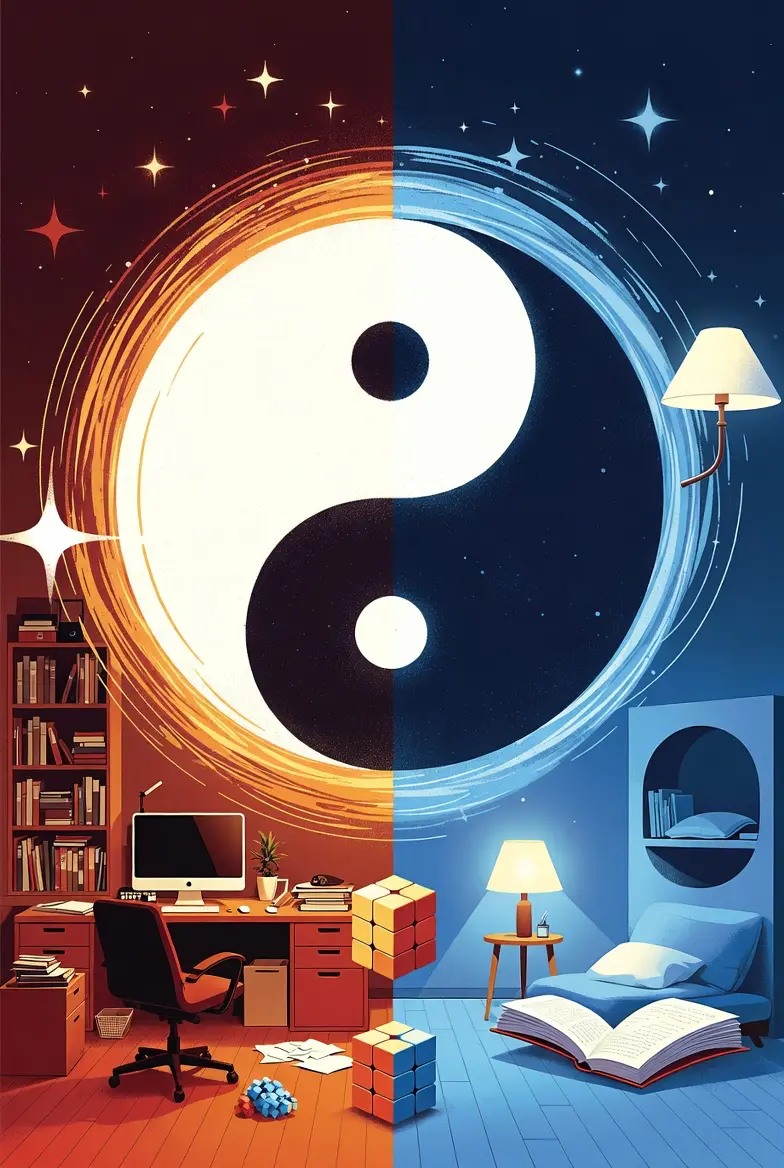
If “yin-yang” makes you picture incense smoke, fortune tellers, or vague motivational posters, you’re not alone. In the West, these words are often treated as either spiritual wallpaper or cultural trivia. But there’s another way to read them—one that feels surprisingly modern: as a plain-language model for managing energy, timing, and trade-offs in real life.
Not “magic.” Not “destiny.” Just a framework that helps you notice when you’re pushing at the wrong moment, resting at the wrong moment, or committing to a strategy that no longer fits the environment you’re in.
This article translates the underlying logic into everyday terms you can actually use: during a Monday workweek ramp-up, in a high-pressure project cycle, in a family routine that’s drowning in screens, or when your brain feels like it has 47 tabs open and none of them are responding.
The fastest way to understand yin and yang (without the mysticism)
Here’s the simplest translation that holds up in modern life:
- Yang = outward energy. Activation. Output. Expansion. Decision. Motion. “Do the thing.”
- Yin = inward energy. Recovery. Input. Consolidation. Reflection. Stillness. “Let the thing settle.”
Think of it less like a moral label (“yang good, yin bad”) and more like two modes your body and your life constantly cycle through—similar to how you shift between focused work and decompression, between sprinting and walking, between talking and listening.
In modern terms, you could map this to:
- Physiology: activation vs. recovery (often discussed as sympathetic vs. parasympathetic tone)
- Attention: narrow focus vs. diffuse thinking (deep work vs. insight mode)
- Behavior: assert vs. absorb (launch vs. iterate)
- Strategy: expand vs. consolidate (growth vs. resilience)
Once you see yin and yang as modes, not “beliefs,” the value becomes obvious: many of our biggest mistakes happen when we demand yang output when we’re depleted (yin-needed), or when we hide in yin when the moment requires yang action.
And if you want a surprisingly effective, screen-free way to feel this difference in your hands (not just think it), physical puzzles are a great training tool—because they naturally pull you into either an energized, exploratory mode or a calmer, methodical mode depending on difficulty and timing. If you’re curious, you can browse Tea-Sip’s puzzle toy collection as a low-stakes way to experiment with focus resets that don’t involve yet another app.
Why “Monday brain” is real: timing mismatch, not laziness
Most people have lived some version of this: Monday morning arrives, the alarm feels personal, your to-do list looks like a threat, and your brain’s startup sequence is… slow. By Friday afternoon, you’re suddenly capable of jokes, courage, and finishing tasks you swore would ruin you on Tuesday.
We often blame “discipline.” But there’s a more practical explanation: you’re experiencing a mismatch between your internal state and the external demand.
In yin–yang terms, the workweek start is an “activation point” (yang demand). If your body is still in a recovery rhythm (yin state) from weekend sleep shifts, social activity, or simply mental decompression, you’re asking a yin system to do yang output on command. Of course it feels awful.
This is also why many people get their best ideas in the shower, on a walk, or at night. Those are lower-demand moments where the mind can shift into a quieter, more associative mode (yin), which often supports insight. The goal isn’t to romanticize late-night hustle; it’s to recognize that different times and contexts support different kinds of thinking.
If stress is part of this equation for you, it’s worth grounding the conversation in reputable health sources. Chronic stress is associated with a range of physical and mental health impacts, and public health organizations recommend practical stress-management approaches rather than “push harder” mentality. You can read more from CDC mental health resources and the World Health Organization’s mental health overview.
The yin–yang takeaway: don’t interpret a timing mismatch as a character flaw. Treat it as a system problem you can redesign.
The real power of yin–yang is calibration: “What mode am I in, and what does this moment require?”
In modern workplaces, we’re trained to value yang: output, speed, visibility, decisiveness. That’s not wrong—yang builds careers and ships products. But the hidden cost is that we often neglect yin until it forces itself on us (exhaustion, irritability, insomnia, brain fog, impulsive decisions).
Evidence-based sleep and mental health guidance consistently points to the importance of recovery rhythms. Sleep problems and stress can reinforce each other, and “powering through” often backfires. For accessible, mainstream guidance on sleep and its role in health, see NIH/NHLBI sleep resources and the American Academy of Sleep Medicine (AASM) information hub.
So what does calibration look like in real life? It’s a two-question check-in:
- Internal: Am I currently in an activation state (amped, restless, urgent) or a recovery-needed state (tired, scattered, emotionally thin)?
- External: Does this situation require output (decision, performance, action) or input (learning, listening, stabilizing, resting)?
When those match, life feels strangely smoother. When they don’t, everything feels like friction—because it is.
A simple tool that helps many people practice this calibration is a short, tactile focus ritual—something physical that gives your mind a single track to follow. If you want options designed for desk use, this Tea-Sip guide to desk-friendly puzzles offers examples you can use as “between meetings” resets rather than doomscroll breaks.
Ancient “strategists” and modern strategy: why timing beats talent
One reason yin–yang thinking lasted for centuries is that it scales beyond personal wellness. It also describes cycles in business, markets, teams, and technology.
Strip away the old vocabulary and you get an insight most seasoned leaders eventually learn the hard way: success is not only about effort—it’s about fit with the moment.
That’s why experienced founders talk about “timing” like it’s a superpower. It’s why a brilliant product can fail in the wrong year, and why an average product can win if it hits a wave at the right time.
Think of it as “macro yin–yang”:
- Expansion phases (yang): capital flows, risk appetite increases, hiring accelerates, everyone wants growth
- Consolidation phases (yin): budgets tighten, quality matters, resilience and efficiency win
Neither phase is “better.” They demand different behaviors. The mistake is doing the wrong behavior in the wrong phase—like trying to scale aggressively when the environment is punishing leverage, or refusing to invest in innovation when conditions are ripe for it.
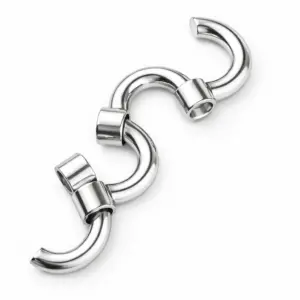
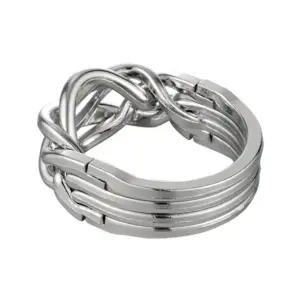
If you want a tangible metaphor you can hold: a complex mechanical puzzle is basically strategy training in miniature. In the early phase, exploration is productive (yang). Later, careful sequencing and restraint become essential (yin). If you rush the late phase like it’s still early phase, you jam the system. That’s why people enjoy higher-difficulty disentanglement puzzles like the Four-Square Lock Puzzle: it rewards timing, not brute force.
“Mismatch risk”: when your strategy no longer fits your environment
A core idea embedded in yin–yang logic is that some failures aren’t caused by lack of effort—they’re caused by misalignment. The environment changes, but you keep acting like it hasn’t.
We’ve seen this pattern repeatedly in business history. A company can dominate one era’s rules and still collapse when the rules flip. The problem isn’t always intelligence; it’s inertia. The habits that created success become the habits that block adaptation.
On the personal level, mismatch shows up as:
- Staying in a job strategy that worked pre-burnout, but now leaves you exhausted and resentful
- Trying to “optimize” your life when what you need is rest and simplification
- Doubling down on intensity when the season actually calls for maintenance and repair
On the team level, mismatch can look like enforcing high-pressure “always on” norms when the group is already depleted—pushing yang into a system that needs yin. Evidence-informed psychology organizations emphasize stress management, healthy coping, and realistic workload approaches rather than glamorizing chronic overwork. The American Psychological Association’s stress resources are a solid starting point for mainstream guidance.
Mismatch is also why certain “stress relief” tips fail. Not all calming strategies work for all people in all states. A technique that helps when you’re mildly tense may not help when you’re in full cognitive overload. If you want a thoughtful breakdown of why difficulty level and engagement matter, this Tea-Sip article on stress-relief puzzles explains why mindless fidgeting and intentional problem-solving can feel very different.
The brutal curve: why “too much yang” can flip into collapse
One of the most practical warnings inside yin–yang thinking is the idea that extremes are unstable. When activation is pushed too far for too long, systems don’t just “gradually decline.” They can snap.
You’ve seen versions of this:
- The high performer who suddenly can’t get out of bed
- The founder who crashes right before a major launch
- The student who powers through finals and then gets sick immediately afterward
This is not a moral lesson. It’s biology and systems behavior. High arousal states can be useful—until they become chronic. Recovery needs are not optional; they are deferred. And deferred costs have a way of arriving all at once.
For a cautious, evidence-based perspective on mind-body practices that may support stress regulation (without claiming miracles), the NIH/NCCIH overview of meditation and mindfulness is a reliable reference. It emphasizes that effects can vary and that mindfulness is not a substitute for medical care when someone is struggling.
The yin–yang move here is simple and surprisingly difficult: add a small dose of yin while you still feel “fine.” Don’t wait for the crash to force it.
A short, practical ritual you can start tonight: the 9-minute screen-free reset
This is designed for real life—after a commute, after kids are finally in bed, after you’ve been staring at Slack for six hours, or when your nervous system is buzzing but you know you should sleep.
Goal: shift from scattered activation into grounded attention, without relying on your phone.
Step 1 (1 minute): Set the container
- Put your phone out of reach (not just face down). If you can, leave it in another room.
- Choose one physical object for your hands: a puzzle, a small model kit, or a simple brain teaser.
If you don’t own anything like this yet, browse the “pick-up-and-try” options in Tea-Sip’s metal puzzle section or the more tactile builds in the wooden puzzle collection. You’re looking for something that feels pleasant to touch and doesn’t require batteries, accounts, or updates.
Step 2 (7 minutes): Do one deliberate loop
Pick one challenge and stay with it. Your only rule is: no multitasking, no switching to “just check” anything.
Choose one of these loops:
- Loop A: “Solve mode” (for restless energy) — choose a puzzle that’s engaging enough to absorb you. A classic option is a cube-style spatial puzzle like the 7 Color Soma Cube, where your brain gets a clean, satisfying problem to hold.
- Loop B: “Build mode” (for screen fatigue) — choose a small mechanical build that rewards patience and sequencing. Something like the 3D Wooden Perpetual Calendar Puzzle is perfect as a coffee-table project you can return to without feeling like you’re “behind.”
- Loop C: “Untangle mode” (for overthinking) — disentanglement puzzles force you to slow down and observe constraints. Try a higher-difficulty piece like the Four-Square Lock Puzzle if you enjoy a challenge that punishes rushing.
The point is not to “win.” The point is to let one structured task replace the unstructured noise in your head.
Step 3 (1 minute): Close the loop
- Stop on purpose—even if you’re mid-attempt.
- Take three slow breaths, noticing whether your jaw, shoulders, or hands softened at all.
- Decide what you need next: sleep, a shower, a conversation, or a longer session tomorrow.
If you want a curated set that gives you variety without overthinking, the Wooden Brain Teaser Set & Luban locks collection is designed around “aha!” moments at different difficulty levels—useful if some days you want a quick win and other days you want deep focus.
How to choose the right “yin” or “yang” practice for your situation
One reason people quit self-care routines is that they choose a tool that doesn’t match their state. In yin–yang terms, it’s like trying to fix a cold room with a fan.
Below are practical “profiles” you can use to match the moment. You don’t need to identify as a type permanently—just pick what fits today.
1) The Overclocked Achiever (high yang, low recovery)
Signs: productivity spikes, then irritability; sleep feels shallow; you’re “fine” until you’re not. You may crave stimulation even when you’re tired.
What helps: gentle yin practices that still hold attention, so you don’t feel trapped by stillness. A medium-difficulty puzzle or build works well: engaging enough to interrupt the grind, calm enough to downshift.
Try: a repeatable desk ritual using one object you enjoy touching. The “collector mindset” helps here—choosing fewer, better items instead of chasing novelty. This piece on collecting puzzles instead of disposable toys is a surprisingly relevant read if you’re tired of buying quick dopamine that leaves you emptier afterward.
2) The Mentally Fried Knowledge Worker (screen fatigue, scattered focus)
Signs: you can’t read another email; your attention is jumpy; social media feels like a reflex; you’re “tired but wired.”
What helps: structured, tactile tasks that give your brain one channel instead of ten. This can support a break from digital overload, which some evidence suggests may be associated with improved mood in certain contexts (effects vary). If you want a research-informed starting point on digital detox concepts, browse mainstream explanations and avoid extreme claims.
Try: a 10–15 minute session with a tactile puzzle, then stop. If you want options designed for adult desks, revisit the desk puzzle guide and pick one that looks satisfying, not necessarily “hard.”
3) The Anxious Optimizer (too much thinking about the routine)
Signs: you turn relaxation into a performance metric; you feel guilty when you rest; you keep searching for the “best” method.
What helps: simple constraints and small wins. A short, solvable challenge can be better than a massive project that becomes another source of pressure.
Try: a compact, quick-win wooden puzzle you can complete in 10–40 minutes and then revisit later. The “quick wins” section in Tea-Sip’s wooden brain teaser topic page is built for this kind of gentle momentum.
4) The Under-Stimulated Drifter (low yang, stuck in scroll)
Signs: procrastination isn’t about fear—it’s about flatness. You don’t feel driven, but you also don’t feel rested. You default to passive input (videos, feeds) that doesn’t restore you.
What helps: healthy yang—small activation that’s enjoyable, not punishing. Puzzles are useful because they create challenge without the social pressure of “performing.”
Try: a colorful spatial puzzle like the Soma Cube, or browse Tea-Sip’s shop page and pick something that makes you curious enough to put your phone down.
The “five forces” idea (five elements, modernized) for teams and life systems
Traditional frameworks often expand yin–yang into a richer model sometimes translated as “five elements.” Without getting lost in historical terminology, here’s a modern way to use the concept: as a reminder to look at relationships, not just isolated metrics.
In teams, you can loosely map five recurring functions:
- Drive (momentum, urgency)
- Structure (process, quality, stability)
- Resources (time, money, energy)
- Growth (learning, experimentation)
- Integration (alignment, communication, coordination)
Many organizational failures come from overfeeding one function and starving another. A “growth at all costs” phase might supercharge drive but weaken structure and integration. A “risk control” phase might strengthen structure but crush growth. The point isn’t to keep everything equal; it’s to notice what’s being neglected.
At home, the same logic applies. If your evenings are 90% stimulation (screens, noise, frantic chores) and 10% recovery, you may be unintentionally creating a permanent yang environment. Adding a simple, shared, screen-free activity—like a puzzle on the coffee table—creates a yin-friendly anchor without requiring a big lifestyle makeover.
If you want to explore options that are more decorative and “leave it out” friendly, the wooden puzzles category tends to work well as a living-room object that invites casual participation.
Common mistakes that make people more anxious (and how to fix them)
Mistake 1: Treating yin as “doing nothing”
Recovery is not laziness. Yin can be intentional: sleep hygiene, a quiet walk, a short tactile focus session, journaling, gentle stretching. The key is that it restores rather than drains.
If sleep is part of your struggle, avoid self-blame. Start with mainstream, medically conservative guidance like NHS sleep tips and consult a clinician if insomnia is persistent or severe. Yin–yang thinking supports the same idea: chronic depletion is not solved by more pushing.
Mistake 2: Using “calming” tools that are too easy (so your mind keeps spinning)
For some people, a low-engagement activity doesn’t quiet the mind—it leaves room for rumination. That’s why you may feel more relaxed after a challenging puzzle than after mindless scrolling.
Solution: choose a difficulty that absorbs you. If you need a starting point, explore curated picks like the wooden brain teaser set guide or browse metal puzzles for tactile “constraint-based” challenges.
Mistake 3: Turning recovery into another optimization project
If your relaxation routine requires six apps, a spreadsheet, and a sense of guilt, it’s not recovery. Yin should reduce complexity, not add to it.
Solution: keep the ritual tiny. Nine minutes. One object. One loop. No performance goal.
Mistake 4: Waiting for a crisis to introduce yin
Most people add rest only when exhaustion forces it. But systems don’t behave kindly when you do that. Small, consistent recovery is more stable than rare collapse-driven breaks.
Solution: schedule micro-yin into your day: 7–12 minutes after lunch, 9 minutes after work, 10 minutes before bed.
Mistake 5: Over-claiming what any single practice can do
Mindfulness, puzzles, breathing practices, and screen-free habits can support stress management and focus for many people, but they are not cures for medical or mental health conditions. If you’re dealing with significant anxiety, depression, or sleep disruption, consider professional support. For mainstream mental health information and help-seeking guidance, NIMH resources can be a useful starting place.
FAQ
1) Is yin–yang a religion?
It doesn’t have to be. You can treat it as a descriptive model: two modes of energy and attention that cycle in people, teams, and environments. You don’t need to adopt spiritual beliefs to use the practical parts.
2) Does this mean I should stop being ambitious (stop yang)?
No. The goal is not less ambition; it’s better timing and better recovery. Yang without yin becomes brittle. Yin without yang becomes stagnant. A stable life uses both on purpose.
3) How often should I do the 9-minute reset?
Start with 3–5 days per week. If you’re using it as a “transition ritual” (work to home, or evening to sleep), consistency matters more than duration. Keep it small enough that you’ll actually do it.
4) Will puzzles “treat” anxiety or insomnia?
Puzzles may help some people shift attention, reduce screen time, and create a calming routine, which can support stress management. But they’re not medical treatment. If insomnia or anxiety is persistent, severe, or worsening, consult a qualified health professional. For conservative, evidence-based guidance on mindfulness and safety, see NCCIH’s overview.
5) I’m not a “puzzle person.” What if I get frustrated?
Frustration usually means the difficulty is mismatched. Go easier, shorten the session, or pick a different type (build vs. disentangle vs. spatial). A good first step is browsing a range and choosing something that feels inviting rather than intimidating—start with the broader Puzzle Toys category and avoid the highest-difficulty items at first.
6) How do I start tonight if I have nothing at home?
Do a “no-purchase” version: set a 9-minute timer, put your phone in another room, and do one analog task with your hands (fold laundry slowly, clean a small surface, sketch, organize a drawer). The key is single-tasking. If you want an object that makes this easier long-term, choose something you’ll happily leave visible—like a small wooden brain teaser from the wooden puzzle section.
7) Is this just “balance” advice in fancy packaging?
It’s more actionable than generic “find balance,” because it emphasizes mode matching: don’t ask a depleted system for high output; don’t hide in recovery mode when action is needed; don’t let extremes run until they snap. It’s about calibration, not perfection.
Closing: the three-question check-in that prevents a lot of regret
If you want one practical takeaway you can reuse for years, make it this. When you feel stuck, anxious, or oddly out of sync, ask:
- What mode am I in right now—activation or recovery?
- What does this moment actually require—output or input?
- What’s one small adjustment that would bring them closer together?
Sometimes the adjustment is courage (yang). Sometimes it’s rest (yin). Often it’s a tiny bridge ritual—like a short, tactile, screen-free focus loop that helps your nervous system shift gears instead of grinding the clutch.
And if you want your environment to support those shifts, not fight them, build a “default” that makes the right thing easy: a puzzle on the coffee table, a small challenge on your desk, a screen-free object that invites your hands back into the physical world. Explore options in Tea-Sip’s shop or start with a curated bundle like the wooden brain teaser set collection.
Disclaimer: This article is for educational purposes only and does not provide medical advice. It is not intended to diagnose, treat, cure, or prevent any disease. If you have concerns about stress, anxiety, depression, sleep, or any medical condition, please consult a qualified healthcare professional.