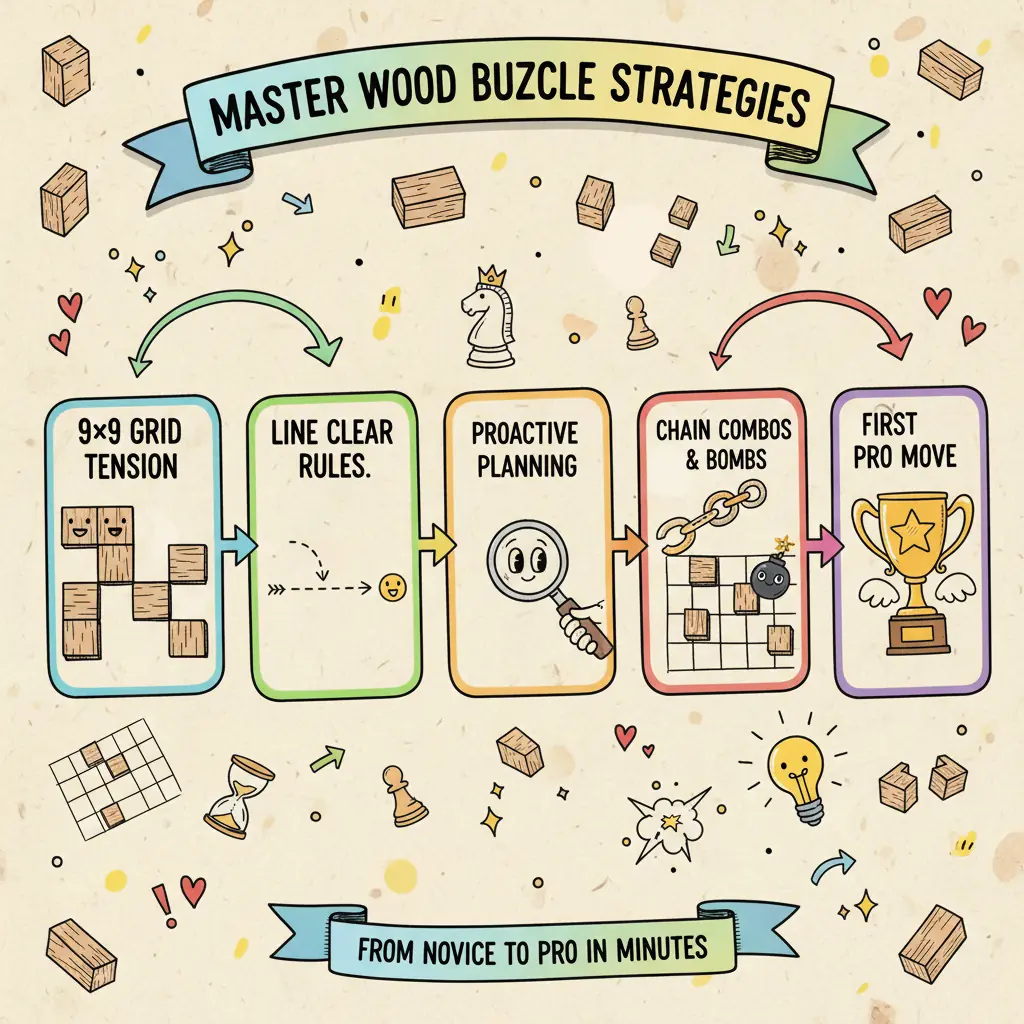
The 9×9 Tension: More Than Just Filling Space
You have three blocks. The board is nearly full. One is a stubborn L-shape. You scan the 9×9 grid, searching for a home that doesn’t exist. The timer in your head ticks. You place a block, hoping it’s right. The queue refreshes. The shapes are worse. The game ends.
Ever lost an hour to fitting shapes into a grid, chasing that satisfying line-clear click? Let’s master it.
This is Wood Block Puzzle, the digital game you’ve likely seen in ads or played on a site like CrazyGames or Coolmath Games. Its premise is deceptively straightforward: drag and drop a series of wooden polyominoes onto a 9×9 grid. Complete a horizontal or vertical line, and it vanishes, scoring points and creating space. You get three blocks at a time from a “next” queue. The game continues until you cannot place any of your current three pieces.
That last part is the hook. The objective isn’t merely to clear the board. It’s spatial resource management. You are given finite, awkwardly shaped resources (your blocks) and must allocate them across a limited, decaying landscape (your grid). Most players start reactively. They see an obvious slot for the Z-block and take it. They clear a line the moment it’s available. This works for fifty moves. Then the inevitable wall hits.
Why? Because a reactive mindset sees a grid filling with blocks. A proactive mindset sees a grid filling with future problems. That seemingly perfect spot for your square block? It might be the only future home for a different, more troublesome piece three moves from now. Using it now is a tactical misallocation of a critical resource.
This is the core tension. The 9×9 grid is just small enough to feel constricting. The three-block preview is just limited enough to obscure your long-term planning. The game’s minimal, wood style interface lulls you into a zen state, but underneath, it’s a brutal logic engine. You are not just playing a block puzzle; you are learning to conduct a spatial orchestra with a three-note lead sheet.
Your first shift in understanding comes when you stop asking “Where does this block fit?” and start asking “What board state do I need two blocks from now?” This is the leap from casual play to strategic play. It’s also the source of that first real frustration—the moment you realize you’ve been playing checkers while the game is demanding chess.
We’ll build that strategic lens. First, by breaking down exactly how the machine operates, and then by learning to see the board not as empty slots, but as a dynamic system of potential energy and strategic gaps. The path from frustration to your next 1000-point combo starts here.
Rule Zero: What Actually Clears a Line (And What Doesn’t)
That frustration often stems from a mismatch between what you think should happen and what the game’s logic actually registers. You see a gap, you have a piece that fits, but the game stubbornly ends. To manage the board strategically, you first need to understand its fundamental machinery with absolute clarity.
Here is the rule, stripped bare: Clear a full horizontal row OR a full vertical column. That “OR” is crucial. Unlike some grid-based puzzles, you are not required to clear both at once. Every single square in that row or column must be occupied by a placed block. The instant the last square fills, the entire line—row or column—vanishes in that satisfying click, freeing up space and awarding points.
Let’s visualize this on the standard 9×9 grid. Place blocks to fill, say, the entire bottom row. It clears immediately. Now, imagine you’ve been stacking blocks in the leftmost column. The moment the ninth block touches the top of that column, the entire vertical line disappears. The system is ruthlessly symmetrical. This is the core mechanic of every wood block puzzle you’ll encounter on sites like Coolmath Games or CrazyGames.
A critical note: some variants, like the one on 1001Games, use a 10×10 board. The principle is identical, but the strategic landscape changes slightly—more space can mean more complex pile-ups, but also more room for recovery. Always check the grid size in the first two seconds of a new session.
Now, let’s address the most common post-game-over shout: “But there was space!”
This is the concept of a tactical gap—a space that is physically present but logically unusable for your current three blocks. The game only checks if any one of your three queued pieces can be placed. If none can, it’s over. A 1×4 slot is useless if you only have L-shaped and square blocks. A single square hole is a death trap if your queue contains only 3×1 rods. The board isn’t judging empty real estate; it’s judging the compatibility between your specific inventory and the available shapes on the grid.
Therefore, how to clear lines in wood block puzzle isn’t just about making lines. It’s about managing the negative space you leave behind. Creating a jagged, Swiss-cheese board with odd, isolated holes is the fastest path to a game over, even if the total empty area seems high. Your primary goal shifts from “clear lines as they appear” to “shape the empty space into forms that can accommodate common block shapes.” You are a spatial bouncer, deciding which shapes get in and making sure the club floor (your grid) doesn’t become a chaotic mess they can’t navigate.
This understanding is your foundation. The block puzzle isn’t testing your reflexes; it’s testing your spatial resource management. You’re given three resources (the blocks in your queue) and must deploy them onto a limited map (the 9×9 grid) to achieve a tactical objective (line clears) while maintaining future operational viability (a manageable board state). Every placement is a trade. With this lens, the path from simple drag and drop to genuine strategic gaps mastery begins.
The Proactive Pivot: Reading Your Next Three Blocks Like a Chessboard
That foundation of managing negative space is what separates a player who scores 200 points from one who cracks 1000. But managing space reactively—just patching holes as they appear—will only get you so far. The true wood block puzzle strategy emerges when you stop treating the game as a series of isolated placements and start treating it as a continuous, foresight-driven puzzle. This is the critical mindset shift: you must move from reacting to the current board to proactively planning for the next board state.
Most players see the three-block next queue and think only of their immediate choice. This is the reactive trap. You look at your board, see a perfect spot for the Z-block in your queue, and slam it down. You clear a line. It feels good. But then the next two blocks appear—an L-shape and a single square—and you realize the perfect spot you just created is now a mismatched, awkward hole. Your grid management is back to scrambling.
The proactive player uses the same queue differently. They don’t just see three blocks. They see a sequence of three moves. The question isn’t “where does this block fit best now?” but “if I place this block here, what will my board look like for the subsequent two blocks, and the three after that?”
This is the chessboard mentality. In chess, you don’t move a piece just to capture an opponent’s pawn now; you consider the resulting position several turns later. Apply that to your 9×9 grid. Before you drag that first block, perform this three-step analysis:
- Analyze the Shapes: What are the specific spatial demands of your next three blocks? Do you have two long, straight 4×1 blocks and a single square? That’s a signal: you need long, clear rows or columns and a single-hole filler.
- Audit Your Board: Look at your current board state. Where are the potential long channels? Where are the small, block-sized gaps? Crucially, which of these gaps are useful versus dead ends? A 2×2 square is a universally useful gap. A zigzagging 3-cell L-shaped hole is a specialist gap that only one specific block can fill—a risky liability.
- Simulate the Trade: Decide on a placement for your first block. Mentally picture the board after that placement. Now, ask the critical question: Does this new, hypothetical board state have logical, accommodating spaces for the next two specific blocks in my queue? If the answer is “maybe” or “no,” you have not found your best move. Abort and re-evaluate.
Let’s make this concrete. Imagine your next queue shows: a 3×1 line, a 2×2 square, and an L-shape.
A reactive player sees the 3×1 line, spots a nearly-complete row missing one block, and fills it to clear the line immediately.
Reactive Placement (Before & After):
Board: X X X X X X X _ Queue: | | ||
… (rest of board) ||| |
|_| |
Place the line in the gap, clear the row.
Board After: _ _ _ _ _ New Queue: ||| | , then L-shape.
… (now with a new, random hole)
You get points, but you’ve traded a predictable, completable row for a completely empty—and now formless—row. Your next block is a 2×2 square. Where does it go optimally? Anywhere, really. But placing it might create new, awkward edges. The L-shape that follows could struggle. You’ve gained points but lost control.
The proactive player might make a seemingly less optimal play. They see that same 3×1 line but place it adjacent to an existing block in a middle row, deliberately choosing not to clear a line yet.
Proactive Placement:
Board: X X X _ _ _ Queue: | | ||
X _ _ _ _ ||| |
Place the 3×1 here: || |
Result: X X X X X _ _
X _ _ _ _ _
No line clear. But look at the new board state. You’ve now created a long, clean channel of five empty cells in a row. This is a magnet for your upcoming 2×2 square and L-shape. You can place the square to partially fill that channel, then use the L-shape to both fill space and likely set up multiple line-clearing opportunities. You’ve sacrificed immediate points for sustained spatial reasoning control. This is the essence of the Strategic Gap principle applied dynamically over time.
The game doesn’t let you see more than three blocks ahead, so this sequential forecasting is your most powerful tool. By reading your next queue and planning two moves deep, you transform random placement into strategic sequencing. You stop asking “Does this fit?” and start asking “What does this move create for my future self?” This pivot from reactive to proactive thinking is what unlocks true wood block puzzle tips for a high score, turning a casual puzzle game into a rigorous exercise in foresight and grid management.
Visual Tactics: Board States to Cultivate and Pitfalls to Avoid
That shift to proactive thinking is everything, but it needs a physical home on your 9×9 grid. It’s one thing to know you should plan ahead; it’s another to look at your current board and know precisely which shapes to hope for. This is where theory meets practice. We’re going to map out ideal board states to cultivate and the deadly traps that quietly end games.
Let’s start with the single most powerful pattern to understand: the Strategic Gap.
The Strategic Gap Principle: Sacrifice the Line, Secure the Future
A beginner clears a line the moment it’s available. A strategist sometimes lets it sit. Your most valuable asset isn’t an empty board—it’s a board with flexible, contiguous space. A perfect 2×2 square gap is the gold standard.
Imagine this board state, where X is a filled cell and _ is empty:
_ _ X X X X X X
_ _ X X X X X X
You have a complete bottom row ready to clear. Do it immediately? Not always. If you have a 2×2 square in your next queue, hold off. Clear that line, and you get a flat, empty top layer. Place your 2×2, and you’re left with two isolated single cells. That’s a weak state.
Now, leave the line uncleared. Place the 2×2 square directly into that perfect 2×2 hole you’ve preserved in the top-left corner of the full rows:
S S _ _ _ _
_ X X X X X X
_ _ X X X X X X
(Where S represents the placed square). Now, clear the full rows. The result is a beautiful, clean block of empty space. You’ve used the full lines as a “platform” to place a key shape, then removed the platform, leaving prime real estate for your next blocks. This is grid management at its finest—using the board’s own geometry to create better future options. It’s the core tactic for achieving a true wood block puzzle high score.
Cultivate: The Clean Edge and The Managed Center
Your goal is to avoid a scattered, hole-riddled board. Think in terms of zones.
- The Clean Edge: Use the board’s boundary as a natural guide. Stack blocks neatly along one or two edges, creating a solid “wall.” This consolidates your filled area and leaves large, open L-shaped or rectangular spaces in the remaining area. A cluttered center with blocks touching all four sides is a disaster in the making.
- The Managed Center: If you must fill the center, do it symmetrically. Aim to keep the center mass compact. A good pattern is a solid 4×4 or 5×5 block in the middle, leaving channels along the edges. This makes it easy to slot in long 3×1 or 4×1 blocks to trigger multiple line clears at once.
Avoid: The Isolated Single Cell (The “Game-Ender”)
This is the most common tactical gap that causes a premature game over. It looks like this:
X X _ X X
X X _ X X
X X _ X X
X X _ X X
See that single empty cell in the middle of each quadrant? That’s a death sentence. No standard block in the game is a single cube. If your queue fills with 3×1, 2×2, and L-shapes, you are literally stuck. The board can be 90% empty, but if that emptiness is fragmented into single-cell holes, the game ends. Always ask: “Am I creating any 1×1 gaps?” If yes, fix it immediately with a small block before it gets surrounded.
Avoid: The Unreachable Channel
Creating a long, thin channel seems smart until it’s not. A two-cell-wide column is useful. A one-cell-wide canyon is a trap.
X _ X X X X X X X
X _ X X X X X X X
X _ _ _ _
You need a 1×3 block placed vertically to fill that left-most column. If you don’t get it, that column becomes a useless, unreachable scar on the board that splits your playable area. Never create a one-cell-wide gap that runs more than 2-3 cells deep unless you have the specific block to fill it in your current queue.
From Cultivation to Combo
When you master cultivating clean edges and a managed center while avoiding isolation traps, you set the stage for the big plays. A clean board state allows you to place a block that completes two lines at once—a row and a column. This is a combo, worth exponentially more points. It’s not luck; it’s the direct result of building a board where intersections are primed for clearing.
This visual discipline transforms the wood block puzzle from a race against filling space into a spatial resource management simulation. You’re not just fitting shapes; you’re architecting a landscape that future shapes will thrive in. It’s the same core skill of spatial planning and mental rotation that you’d apply to a complex burr puzzle—envisioning how moves now create (or destroy) possibilities later. Get this right, and the high score isn’t a hope; it’s an inevitability.
Beyond the Basics: Chain Combos and the Strategic Bomb
That inevitable high score we talked about? It’s delivered in big, satisfying jumps by combo chains. You’ve built a clean board state where lines are primed. Now, let’s exploit it. Placing a single block that completes both a row and a column simultaneously doesn’t just clear two lines—it triggers a combo. The game rewards this foresight with a massive points multiplier. But you can go deeper.
Think beyond a double. The true master play is engineering a cascade. Place a block that completes a line. That clear makes space, allowing a block already on the board to now complete a different line. You didn’t even place a new piece, yet you get another line clear, chaining the combo multiplier even higher. This isn’t random. It requires you to look at the current board and your next queue, placing pieces not just to solve the immediate grid, but to leave specific, adjacent lines one block short of completion in multiple directions. It’s spatial resource management at its most elegant.
Which brings us to the bomb version of the wood block puzzle. You’ve likely seen it: a special, darker wooden block with a fuse appears occasionally in your queue. The instinct is to treat it as a panic button for when your board is a mess. That’s a waste. Used reactively, it just delays the inevitable. Used proactively, it’s a board-reset tool that can save a strategic position or even set up a massive combo.
Here’s the strategic doctrine for the bomb block. When placed, it detonates, clearing itself and all blocks in the eight surrounding cells (a 3×3 area). Don’t just drop it in the densest cluster. Instead, use it to surgically remove a strategic gap you accidentally created—like that isolated single-block column we warned about. Or, use it to blast open a clogged center, creating a large, versatile empty space you can then fill with your upcoming, awkwardly-shaped blocks. The best use? Plant it adjacent to several nearly-complete lines. Its explosion clears the key blocks, completing those lines and potentially triggering the multi-line combo you meticulously planned. The bomb is not a “get out of jail free” card; it’s a dynamic piece of your long-term grid management.
As for cheats or hints? The game’s design is intentionally pure. There’s no hidden peek at future blocks beyond the three in the queue. The only “cheat” is the strategic foresight you’re building right now. Some app variants offer a “hint” button for ad views, but it usually suggests a suboptimal, reactive placement. You’re better than the hint. Your brain, trained to read the next queue and manage the board state, is the ultimate power-up.
Mastering combos and the bomb transforms the game’s rhythm. You’re no longer just surviving until the next clear. You’re building towards explosive scoring events, turning the quiet wooden puzzle into a game of deliberate, thrilling climaxes.
Where to Play: Navigating the Free Web vs. App Landscape
Those high-score chain combos and tactical bomb plays are the same whether you’re on a phone during a commute or on a browser tab during a work break. But where you choose to play your wood block puzzle game can subtly shape the experience, from the grid you manage to the rhythm of your session.
For a pure, no-install-required experience, free browser gaming portals are your best first click. Sites like CrazyGames and Coolmath Games host excellent, instantly-playable versions. They capture the core minimalist appeal: a clean wood style interface, the satisfying clunk of block placement, and the focus on pure spatial reasoning. This is the digital equivalent of a well-crafted wooden puzzle—no fuss, just the grid and your mind.
A critical strategic note: pay attention to the grid size. The most common and classic version uses a 9×9 grid. However, some portals, like 1001Games, host a 10×10 board variant. That single-row difference alters your grid management calculus, offering more space but requiring adjustment to your gap-placement strategies from earlier sections. The Coolmath Games version is functionally identical to many mobile apps in its core 9×9 rule set, making it a perfect training ground.
When you move to mobile, the question shifts from “where” to “which.” Searching “wood block puzzle app” reveals a forest of similar-looking options. The differences aren’t in core gameplay—they’re in presentation and periphery. Some, like the popular “Block Puzzle Wood” or “Woody Block Puzzle,” might offer the bomb version as a separate mode. Others might feature daily challenges or different wood grain textures. The underlying puzzle game of fitting shapes to complete rows and columns remains consistent.
The high-quality wooden aesthetic and straightforward drag and drop mechanics explain the consistently high app store ratings (typically around 4.6 stars). The business model is also uniform: free-to-play with ads. Ads usually play between games or as optional videos for bonuses. Be wary of app variants that push intrusive banner ads onto the playing grid itself—they disrupt the clean visual field crucial for planning.
So, is there a “best” version? For strategy purists, the web versions on CrazyGames or Coolmath offer an ad-light environment to practice the proactive tactics we’ve outlined. For on-the-go play, choose a mobile app with high ratings and reviews that mention minimal ad intrusion. The skills you develop—strategic gaps, next queue analysis, board state management—are completely transferable. Your high score isn’t locked to a platform; it’s locked to your honed spatial strategy.
From Pixels to Pine: The Real-World Block & Pin Puzzle Connection
The spatial strategy you’ve honed on that 9×9 grid isn’t confined to your screen. That itch to mentally rotate and fit shapes is rooted in a centuries-old tradition of handcrafted puzzles made from real wood. For a subset of players who find the digital version’s infinite retries lacking a final click of resolution, the physical wooden block and pin puzzle is the ultimate test.
These are true mechanical puzzles, often marketed as a “10 piece wood block puzzle.” Unlike the digital game’s goal of clearing lines, the objective here is pure assembly or disassembly. The core challenge? Interlocking pins and holes. Each of the ten (or six, or twelve) uniquely shaped blocks has wooden dowels protruding from its faces and corresponding holes drilled to receive them. Your task is to discover the single, non-obvious sequence of slides and rotations that allows the entire, seemingly solid cube to come apart. It’s the strategic gap principle taken to a three-dimensional extreme.
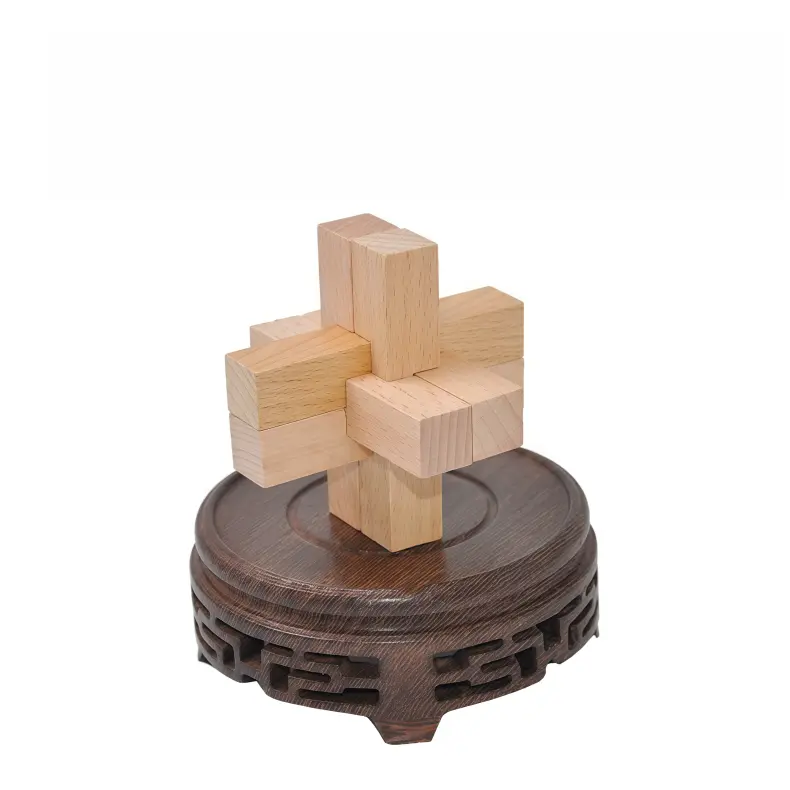
The most famous archetype is the burr puzzle. A classic six-piece burr puzzle is a fantastic starting point. The skills transfer directly. “Reading” the next queue of three digital blocks trains your brain for the physical task: examining a real block, identifying its pin configuration, and visualizing its potential path through the internal lattice of the half-assembled puzzle. You’re no longer managing a 2D board state, but a 3D one where pieces block each other in multiple axes. For a full walkthrough of this type, our Cracking The Six Piece Wooden Cube Puzzle Solution Without Losing Your Mind guide breaks down the approach.
So, how do you approach solving one? Start with a basic mindset shift from the digital game. You cannot force it. Apply gentle pressure to feel for movement. Analyze the grain pattern on the high-quality wooden pieces; it often reveals orientation. Look for the “key” piece—usually one with a unique pin layout that moves first. Mentally map the internal channels. It’s a slow, tactile form of the same spatial reasoning. Understanding that geometry beats brute force every time is the key to these puzzle game classics.
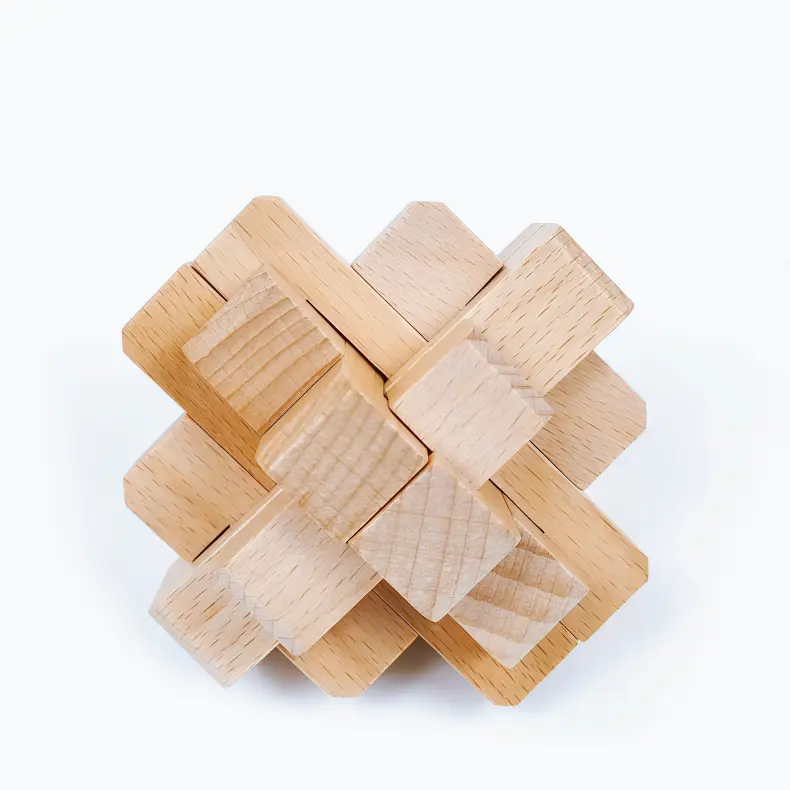
Blockade Puzzle — $16.99
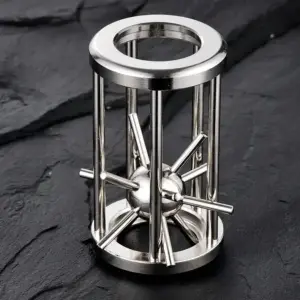
For a more direct bridge from the 2D grid, consider a packing puzzle like the Blockade. Here, the goal is to fit shapes flat into a framed box. This is the pure, undiluted essence of the digital block puzzle wood game—no line clears, just perfect packing. It’s the ultimate check of your ability to analyze shapes and fit shapes into a confined area without the safety net of a “next” preview.
If you find yourself truly stuck on a specific puzzle, the digital community has a physical counterpart. Platforms like Reddit’s r/mechanicalpuzzles are invaluable. Dedicated solvers share layered diagrams, solution algorithms, and moral support. For a deep dive into the principles that make these puzzles so compelling, exploring resources that go beyond the burr can be enlightening.
This is the final evolution of the skills you’ve been building: from reactive placement to proactive grid management, and now to tangible, tactile problem-solving. The screen was your training ground. The real wood is your master class.
Your First Pro Move: The One Placement Rule to Start With Now
After exploring the tactile world of mechanical puzzles, returning to the clean 9×9 grid of the digital block puzzle wood game should feel different. Your spatial reasoning is primed. You understand that every move is a commitment. Now, we synthesize every tactic—the next queue reading, the strategic gaps, the board state management—into one foundational commandment. This is your first pro move.
Always place your current block to create or preserve a Universal Home for your most awkward upcoming shape.
Here’s how to execute it. Look at your queue of three blocks. Identify the single most cumbersome shape—the 4×1 beam, the chunky 3×3, the twisted Z. Now, before you place the block you’re currently holding, ask: “Where will that monster go?” Your immediate move must create or protect a space for it. This flips the entire game from reactive placement to proactive grid management.
This rule solves the core frustration: the game ending with apparent space. You didn’t run out of squares; you ran out of usable squares. By forcing yourself to house the worst shape in your queue, you automatically build a board with flexible gaps. This often means leaving a perfect 2×2 hole instead of greedily clearing a line. That hole becomes a rotation point, a future anchor for a tricky piece. It’s the difference between a dead-end board and one that breathes. It’s the same foresight needed for a real-world wooden block puzzle cube—planning the move for the most restrictive piece first.
Implementing this changes your puzzle game experience. You’ll stop seeing three individual blocks. You’ll start seeing a two-move sequence with a safety net. The stress of the filling board dissolves. You control the pace. Your score points climb not from frantic luck, but from the steady execution of a plan. Line clears become deliberate combos, not random accidents.
So, start your next game. See the awkward shape. Build its home first. This is the strategic foresight that turns a casual pastime into a deeply satisfying exercise in spatial planning. The journey from that initial, tense game-over to your first effortless 1000-point combo begins with this single rule. Place with purpose. The board is yours to manage.