The Silent Sleight of Hand: A Solved Puzzle That Hides Its Truth
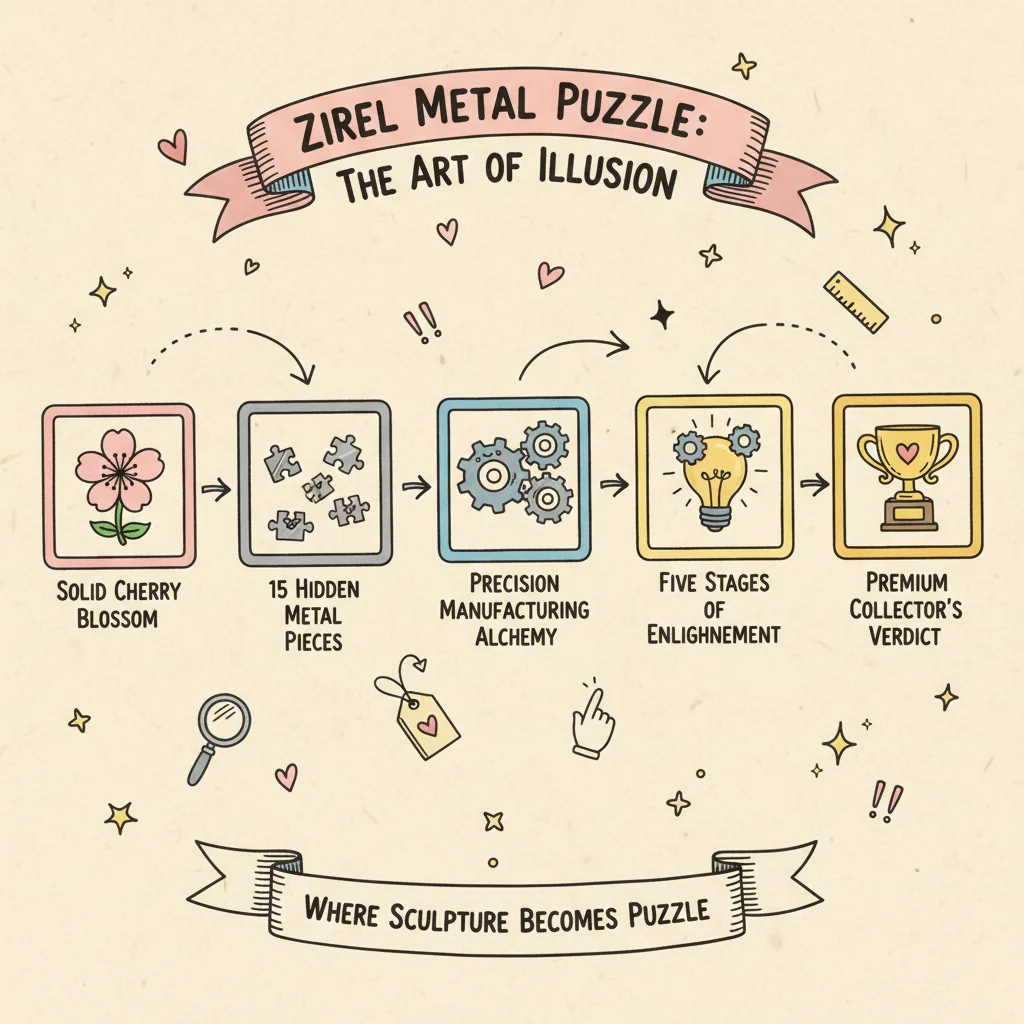
The ZIREL Sakura puzzle, when solved, is a solid block of cold-rolled stainless steel masquerading as a piece of art. It presents a monolithic cherry blossom, its surface a flawless mirror finish that reflects the world with a perfect, silent distortion. There is no visible seam, no betraying line, no hint of the 15 interlocking pieces locked within. The gap between those assembled components is 0.002mm—a space twenty-five times thinner than a single sheet of printer paper. This is the illusion you purchase: not a puzzle, but a tiny, impossible sculpture.
It feels heavy. Precise. A dense, cool weight that belongs more on a machinist’s calibration bench than a game shelf. It is the antithesis of the chaotic pile of components it becomes, a study in visual and tactile contradiction. As a desk sculpture, it is a conversation piece of quiet sophistication, a nod to an almost obsessive level of craftsmanship. The question it poses to the observer is not how to solve it, but a more fundamental one: How does this even work?
The central tension of ZIREL is born in this moment of observation. You are not looking at a traditional brain teaser with obvious moving parts or whimsical shapes. You are looking at a definitive, finished object. The artistry is evident and complete. This creates a unique psychological barrier before the challenge even begins. The mind rebels against the idea of dismantling something so visually whole. It creates a silent pact: to solve it is not just to assemble, but to first violate a perfect surface, to trust that the chaos of fifteen near-identical metal slivers can be restored to this pristine state.
This tension is the heart of the search for a true luxury brain teaser gift. It’s not about a momentary diversion, but about gifting an experience bookended by awe. The recipient first encounters a beautiful object, then the daunting reality of its deconstruction, and finally the profound satisfaction of recreating the initial, silent perfection. It’s a journey that begins not with pieces, but with a completed whole, challenging the very premise of what a puzzle is supposed to be, much like the principle of engaging with patterns directly, as explored in discussions on ancient pattern thinking.
The intimidation is already there, nestled in the reflection. You see yourself holding it, and you see the question staring back.
The Disassembly: From Solid Sculpture to 15 Identical Enigmas
Disassembly transforms the unified art object into its fifteen constituent pieces of stainless steel, a moment that reveals the true, intimidating nature of what’s been purchased. The puzzle’s core challenge becomes tactile: you now hold a set of components so visually uniform that they appear copied, their differences measured in microscopic deviations rather than obvious shapes.
The pieces feel heavy. Precise. They click together with a dry, metallic sound as you shift them in your palm, their cold weight a constant reminder of the material’s unforgiving nature. Upon first inspection, the intimidation factor is profound. You are not faced with a varied kit of parts with clear sockets and protrusions, but with a small army of near-twins. The themes—Sakura, Chrysanthemum, Samurai—are irrelevant in this state; all that remains are polished metal blanks, each one a subtle betrayal of the others. This is the foundational trick of a true adult mechanical puzzle like ZIREL: it removes the crutch of visual variety, forcing the solver into a realm of pure logic and spatial memory.
This uniformity is not a manufacturing shortcut, but the very source of the difficulty. In a standard puzzle, dissimilar pieces provide constant feedback; a piece either fits or it doesn’t. Here, the feedback loop is broken. Multiple pieces will seem to fit in a given position, their mirror finish and identical profiles offering false encouragement. The solve becomes less about finding the piece and more about deducing the correct sequence and orientation for one of fifteen virtually identical candidates. It’s a battle fought less with your hands and more with your mind’s ability to track subtle asymmetries, a principle explored in depth regarding why your hands often mislead you in metal puzzles.
The manufacturing consistency required to achieve this is staggering. For fifteen pieces to be interchangeable enough to confuse yet unique enough to assemble into a seamless whole demands tolerances that border on the obsessive. Each piece is a masterclass in cold-rolled stainless machining, its edges and angles executed with such repeatability that the human eye is fooled. This creates the central, beautiful contradiction: the very perfection that makes the solved object look like a solid block of metal is what makes the disassembled state so cognitively disorienting. You are holding the proof of precision, and it feels utterly, dauntingly opaque. This is the quiet setup for what many call a world’s most difficult puzzle—a challenge that begins not with activity, but with a still, heavy silence in your hand.
Manufacturing Alchemy: How Iwai Press Bends Reality with Metal
The answer to the puzzle’s infuriating identity crisis—identical pieces that form a seamless whole—lies in the obsessive, almost alchemical manufacturing process at Iwai Press. It begins with a counterintuitive fact: the 0.002mm gap between assembled pieces, a dimension 25 times thinner than a sheet of printer paper, is not a concession but a deliberate, engineered challenge that defines the entire solve experience.
In my engineer’s mind, tolerance is usually a gift. A little clearance makes assembly easier. But here, the philosophy is inverted. Iwai Press starts with blocks of Japanese stainless steel, cold-rolled for uniform density and stability. The initial rough shaping is done via CNC machining, a process capable of remarkable precision. But that’s just the opening act. The real magic, and the source of the made-to-order puzzle reality, happens in the hand-finishing stages that follow. Each of the 15 pieces is individually polished, not just for shine, but for dimensional perfection. A master polisher, using specialized compounds and wheels, works each surface to achieve that legendary mirror finish while simultaneously bringing the part into its final, hyper-accurate form. This isn’t a robotic process; it’s a skilled, tactile calibration. The result isn’t just a shiny piece. It’s a piece whose angles and planes are true to within microns of its intended design.
This is why each puzzle is assembled and shipped only after an order is placed. Mass-production would introduce variance. Instead, a single craftsman likely ensures that all pieces from a specific set are finished as a matched cohort, guaranteeing that the microscopic interplay between them is consistent. When you hear ZIREL puzzle Kickstarter campaigns touting limited runs, this is what they’re funding: batches of puzzles, each set hand-harmonized. This process is what transforms raw precision metal model potential into the tangible, frustrating object in your hand.
But let’s demystify the central paradox: why does this phenomenal precision increase difficulty? Intuition says tight tolerances mean everything fits perfectly. In reality, they remove all margin for error. In a typical adult mechanical puzzle with looser fits, you can muscle pieces together slightly out of alignment; the puzzle forgives you. With ZIREL, there is no forgiveness. The 0.002mm gap means the intended path of assembly is the only path. Any deviation—a tilt of half a degree, a piece rotated 179 degrees instead of 180—creates an interference measured in microns. Your fingers cannot feel this. You only receive the result: an immovable block. The precision doesn’t guide you; it conceals the correct alignment behind a wall of identical-feeling incorrect ones. That tolerance is the trap.
The mirror finish serves a dual purpose. Aesthetically, it creates the illusion of a solid, fluid metal sculpture when solved. Mechanically, it becomes a tool of visual deception during the solve. Under light, the flawless reflections make it extraordinarily difficult to visually trace edges and discern the actual seams between pieces. Your eyes slide off the surfaces, denying you the spatial clues you’d get from a matte or textured finish. The polish completes the sensory blackout, forcing you to rely on logic and an almost subconscious reading of tactile feedback.
This entire ordeal—from the CNC prepping to the hand-calibration to the final, silent click—is the hidden value. You are not paying for 15 pieces of stainless steel. You are paying for the accumulated precision of a process that bends metal to the edge of impossibility, then delivers it to you as a silent, gleaming question. It’s the antithesis of a cast puzzle, where the challenge is often in discovering a hidden mechanism. Here, the mechanism is perfection itself.
A Solve Diary: The Five Stages of Zirel-Induced Enlightenment
The engineering marvel on my desk is inert, a promise. To answer whether the ZIREL puzzle’s notorious difficulty is genuine or marketing theater, you must engage with its cold, deceptive geometry. My attempt to solve the Sakura unfolded in five distinct, often humbling, stages. This is not a how-to guide—solutions are sacrilege—but a chronicle of the frustration-to-eureka curve, a 14-hour journey from arrogant confidence to profound respect. The true difficulty lies not in complexity of parts, but in the absolute demand for flawless, multi-axis alignment across all 15 pieces, where a single-degree error in one dooms the entire assembly.
Stage 1: The Arrogant Sort. After the disassembly, the pieces lay in a heap. Their visual similarity is a known quantity. My engineer’s brain kicked in: catalog. I sorted them by subtle burr marks, by almost imperceptible variances in the curve of a petal tip. I grouped what I believed were symmetric pairs. Confidence was high. I had solved Hanayama’s Cast Enigma; this was just refined geometry. I began stacking and sliding pieces together, expecting a satisfying click. They slid. They also slid apart. They offered no resistance, no tactile feedback to indicate a correct engagement. For two hours, I built stable-looking structures that collapsed under their own weight, or worse, locked into subtly incorrect positions that only revealed themselves as dead ends three pieces later. The first lesson: precision engineered to 0.002mm tolerances does not guide you; it provides an infinity of almost right paths.
Stage 2: The Forceful Error. Frustration mounted. The pieces felt stubborn, slippery. I began to apply minute pressure, believing the fit must require a gentle persuasion. This is the cardinal sin. In a moment of misplaced certainty, I pressed two seemingly aligned pieces together with a thumb. A sharp, metallic screech—the sound of a mirror-finish surface being microscopically gouged by its counterpart—stopped me cold. I’d created a visible hairline scratch. The horror was immediate, a visceral lesson in the consequence of disrespecting the design. The puzzle had drawn first blood. This failure forced a complete reset, not just of the pieces, but of my approach. I recalled the ancient puzzle principle of wu wei—non-action, or not forcing. The ZIREL doesn’t require force; it demands absolute submission to its logic, a lesson mirrored in the principle to stop forcing the solution and embrace puzzle‑solving principles.
Stage 3: The Sensory Listen. Humbled, I began again. I turned off the bright overhead light, eliminating the mirror finish’s dazzling, misleading reflections. Under softer, oblique light, I stopped trying to see the solution and started trying to feel it. I would hold two pieces and explore every possible contact vector with infinitesimal slowness. The goal was no longer to assemble, but to discover a single, definitive moment of mechanical purchase. And then, I found it. On the tenth attempt with a specific pair, a slide met a faint but distinct increase in magnetic-like resistance, followed by a silent, solid stop. No click. No dramatic lock. Just… certainty. It was a connection that held its own weight. This was the key: the ZIREL communicates not with clicks or snaps, but with the absence of slop. A correct fit is defined by a perfect transition from guided movement to absolute zero.
Stage 4: The Cascade Understanding. With that first true connection decoded, the underlying interlocking mechanism began to reveal its logic. The puzzle isn’t a radial burst or a simple stack; it’s a three-dimensional lattice where each piece becomes a structural keystone for the next. I discovered that assembly proceeds not outward from a core, but in interlocking triads that progressively stabilize one another. One successful triad felt sturdy. Adding a fourth piece to create a second interlocked triad created a profound jump in rigidity. The tactile feedback was now a language: a subtle shift in weight distribution, a new resistance to torsion. The pile of 15 enigmas was coalescing into a system. The final five pieces presented a new challenge: they required the simultaneous alignment of multiple contact points across the now-substantial sub-assembly. My hands were not steady enough. I had to place the partial sculpture on the desk and lower the final pieces into place with controlled, two-handed precision.
Stage 5: The Silent Click of Totality. The final piece—a central petal that served as the ultimate lock. The assembled blossom had a glaring, ZIREL-shaped hole in its heart. Holding my breath, I oriented the last piece. It would not go in. Panic flickered. Had I made an error three layers down? I disassembled the final triad, checked alignments, and rebuilt it. Again, I presented the final piece. This time, it slid into its channel with the barest whisper of metal on metal. I applied the gentlest downward pressure.
Then, it clicked. Literally.
It was the first and only audible confirmation in the entire process—a soft, deep, percussive tock that resonated through the solid metal mass. The piece seated home. The transformation was instantaneous. What was a complex, intricate object a second before became a single, seamless entity. The seams vanished. The scratches I’d made disappeared into the visual noise of the finish. The puzzle ceased to be a collection of parts and became the Sakura. It sat in my palm, heavy, cold, and profoundly silent. The 14 hours of frustration evaporated, replaced by a deep, satisfying stillness. The agony of the process was the direct catalyst for the art of the result. You cannot appreciate the flawless whole without first wrestling with the fragmented truth. That is the ZIREL’s uncompromising bargain.
The Collector’s Lens: Zirel vs. The Hanayama Benchmark
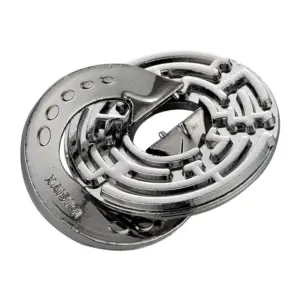
The deep satisfaction of a ZIREL’s final click inevitably leads to a practical question for any puzzle curator: where does this object sit on the shelf—and in the hierarchy—of mechanical brain teasers? For over two decades, the benchmark for accessible, high-grade metal puzzles has been Hanayama’s Cast Puzzle series. A direct comparison is not just about difficulty; it’s a study in opposing philosophies. The ZIREL Sakura is not a harder version of a Hanayama. It is a different species altogether. My 14-hour first-time solve of the Sakura would accommodate solving a Hanayama Level 6 puzzle, like Cast Enigma, perhaps a dozen times over.
Hanayama puzzles are exercises in elegant, tactile problem-solving. Designed by masters like Akio Yamamoto, they are marvels of mechanical wit—twisting, sliding, and separating often with a deeply satisfying, audible conclusion. They are pocket-sized challenges, meant to be fiddled with, solved, and shared. Their finishes vary from matte to glossy, and they proudly show their seams and moving parts. The joy is in the process of discovery. A ZIREL, in stark contrast, is about the perfection of the result. Its purpose is to cease looking like a puzzle at all. Where a Hanayama says “solve me,” a ZIREL whispers “reconstruct me,” with the added pressure that any flaw in your reconstruction is eternally visible.
This divergence explains the chasm in difficulty. A Hanayama’s difficulty stems from clever misdirection and spatial reasoning. A ZIREL’s agony is born from a relentless, physical intolerance for error. Remember the 0.002mm gap—25 times thinner than a sheet of paper. In a Hanayama, parts have play; they wiggle into alignment. In a ZIREL, there is no play. Each piece is a foundational load-bearing wall in a toleranced cathedral. If one column is a fraction of a degree off, the dome will never cap. This is why extreme precision increases difficulty: it removes the forgiving fuzziness that allows for exploratory assembly. You don’t stumble upon the solution; you must architect it perfectly from the first piece.
This leads to the core distinction: desk sculpture versus pocket challenge. A solved ZIREL is a static art object, a conversation piece whose value lies in its seamless, immutable presence. It is not designed for repeated solving. The mirror finish, while breathtaking, is a fingerprint magnet and can micro-scratch. These aren’t flaws, but patina—evidence of the intense hand-to-hand combat required to achieve its final form. A Hanayama, with its more rugged coating, is built for cycles of frustration and eureka, a fidget toy for the intellect.
For the collector, this defines value. Is the ZIREL’s premium price justified? If you seek a durable, reusable puzzle, no. A dozen exquisite Hanayama puzzles can be had for the price of one ZIREL. But if you seek a singular artifact of manufacturing obsession—a piece where the journey is a grueling, one-time rite of passage to create a permanent display object—then its value is self-evident. It’s the difference between buying a well-made wristwatch and a tourbillon movement displayed under glass.
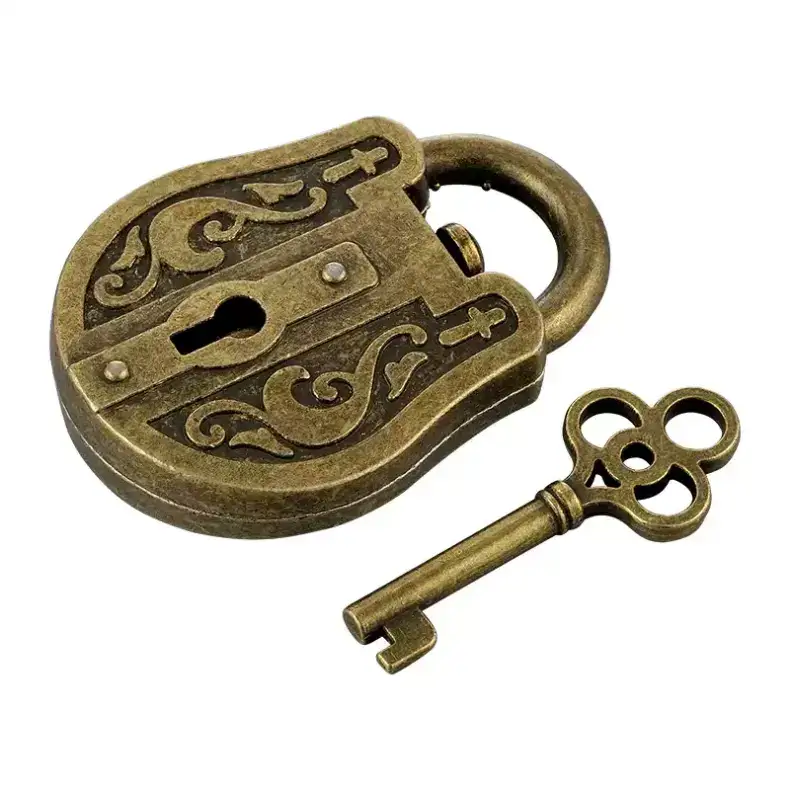
So, who is the ZIREL for? It is not an entry point. For a novice, it is a brick wall. I would direct a newcomer first to the elegant, logical progression of best metal puzzles for adult enthusiasts, where the fundamentals of mechanical puzzle logic are taught with grace. The ZIREL is for the seasoned solver who has run out of runway, for the collector who venerates process and artifact, and for the engineer who wishes to hold a consequence of tolerances in their palm. The different models—Sakura, Chrysanthemum, Samurai—are primarily aesthetic choices; the underlying principle of 15-piece, mirrored interlock remains consistently brutal.
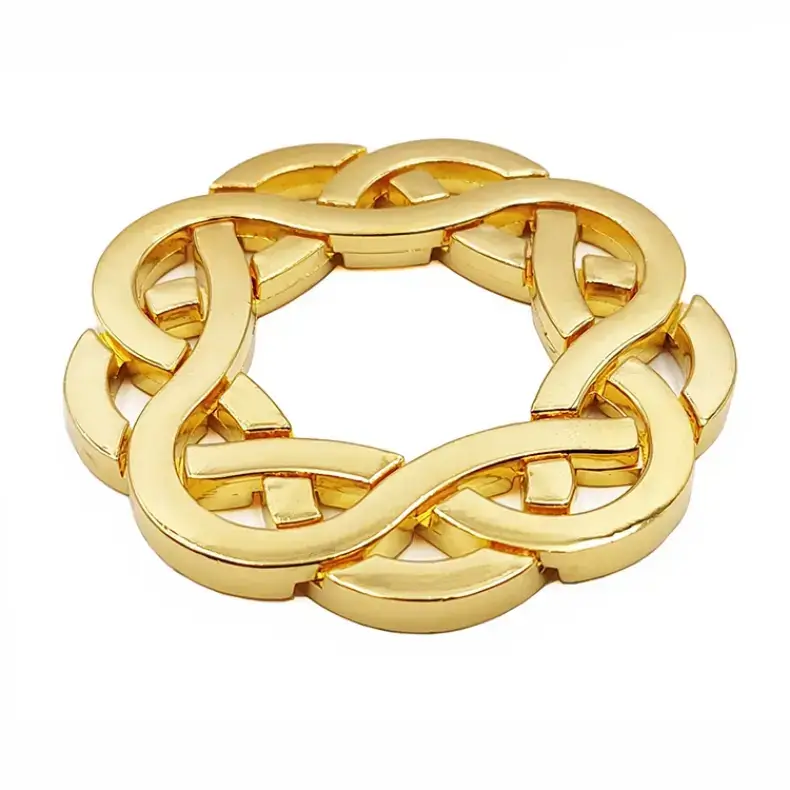
In the end, the Zirel vs. Hanayama debate resolves to intent. Do you want a brilliant, engaging puzzle? Buy a Hanayama. Do you want to purchase a crisis of confidence that, upon resolution, transforms into a gleaming, silent monument to precision? The ZIREL awaits. It is not better. It is more. More severe, more fragile, more obsessive, and ultimately, more transformative for the right individual. It is the zenith of the luxury brain teaser not because it is entertaining, but because it is profound.
Beyond Sakura: Decoding the Zirel Family (Chrysanthemum, Samurai, Mirai)
While the Sakura is the archetype, the Zirel lineage offers distinct flavors of frustration and aesthetic, each maintaining the 0.002mm-tolerance standard but applying it to a different interlocking logic and thematic silhouette. The choice between a Chrysanthemum, Samurai, or the newer Mirai is a choice about the nature of the challenge you wish to curate for yourself or a recipient.
The Zirel Chrysanthemum puzzle is often cited as the most geometrically complex of the core trio. Where the Sakura’s cherry blossom petals imply a radial, layered assembly, the chrysanthemum form suggests dense, interwoven layers. The pieces, while still obeying Zirel’s rule of deceptive similarity, often involve more pronounced angles and a tighter central core. The solve feels less like building a flower and more like constructing a medieval iron maiden in miniature—a precise, unforgiving geometric prison. It is the choice for the solver who believes they have mastered the Sakura’s language and seeks a more advanced dialect.
The Zirel Samurai puzzle, themed around a kabuto helmet, represents a shift in both form and tactical approach. Its silhouette is more angular, less organic. This model frequently introduces pieces with more distinct visual identities—some with longer bars, others with specific corner blocks—though they remain masterfully designed to look interchangeable at first glance. The assembly often progresses in clearer stages: a foundational frame, then an infill. This can provide more satisfying mid-point milestones, making its difficulty feel more structured, though no less severe. It appeals to the strategic mind that prefers a siege over a scrum.
Then there is the Zirel Mirai (meaning “future”). This model, often launched via Zirel puzzle Kickstarter campaigns, represents the brand’s experimental edge. Its form is typically more abstract and geometric—think a sleek obelisk or a fragmented cube. The Mirai line is where Iwai Press plays most freely with internal voids and negative space, creating a puzzle that looks as much like a modern architectural model as a traditional brain teaser. The solving experience is often the most conceptually abstract, requiring a thinker comfortable with pure spatial logic, divorced from an organic motif.
So, which to choose?
For a first Zirel, the Sakura remains the canonical entry point. Its difficulty is pure and foundational. The Chrysanthemum is for the masochistic connoisseur who wants the hardest logical climb. The Samurai is an excellent gift for a detail-oriented strategist, offering a slightly more guided—but no less intense—battle. The Mirai is for the modernist collector, the one who values stark aesthetics and avant-garde challenge.
All share the same soul: cold-rolled stainless, a mirror finish that betrays the lightest fingerprint, and that profound, silent click of final alignment. They are not a series of escalating difficulties in a linear sense, but a spectrum of challenges across different axes of thought. Selecting one is less about picking a difficulty level and more about choosing the type of engineering riddle you wish to hold in your hand. For a broader look at how such objects fit into modern gifting, the shift is detailed in our analysis on how Brain Teaser Gifting Is Changing.
Acquiring the Artifact: A Buyer’s Guide to Authentic ZIREL
Securing a ZIREL is an exercise in patience and discernment, mirroring the solve itself. Expect to spend a minimum of $50 USD, often more, for a single puzzle—a direct reflection of its made-to-order, hand-finished production, not mass-market logistics.
Once you’ve chosen your model—be it the foundational Sakura or the labyrinthine Chrysanthemum—the hunt begins. The most reliable source is the official Japanese manufacturer, Iwai Press, via their HOBBY METAL website. This is the source. Purchasing here guarantees authenticity, and you are buying directly from the workshop that machines, polishes, and assembles each unit after your order is placed. It is the equivalent of buying a watch from the atelier. New designs and limited runs frequently debut on Kickstarter, where ZIREL has built a fervent community; backing a project here is how you acquire future collectibles at their origin. For immediate purchase, Amazon Japan (Amazon.co.jp) is a viable channel, often with faster international shipping, though prices fluctuate.
The marketplace requires caution. Listings on Etsy or general Amazon marketplaces can be legitimate, often from small-scale importers, but prices may be inflated and counterfeits are a growing concern. A genuine ZIREL will always be described as made in Japan by Iwai Press, with specific mention of the mirror finish and 0.002mm tolerances. A listing with vague origins, a suspiciously low price, or a brushed instead of mirrored finish is a red flag. The craftsmanship you pay for is the entire point; a fake is a hollow shell.
So, who is this artifact for? It is unequivocally for the experienced puzzle enthusiast. This is not a gateway drug. If the Hanayama Cast series is a challenging crossword, a ZIREL is a cryptographic cipher. It is for the collector who views frustration as a necessary cost of admission and whose satisfaction is derived from the silent, seamless marriage of impossible precision. It is a luxury brain teaser gift only if the recipient has a proven appetite for mechanical agony and the patience of a watchmaker.
It is categorically not for the casual dabbler or the person seeking a light, fun diversion. The high cost, extreme difficulty, and delicate finish make it a poor choice for beginners. The mirror finish, while stunning, will microscopically scuff with handling; it acquires a patina of use, not meant for careless fidgeting.
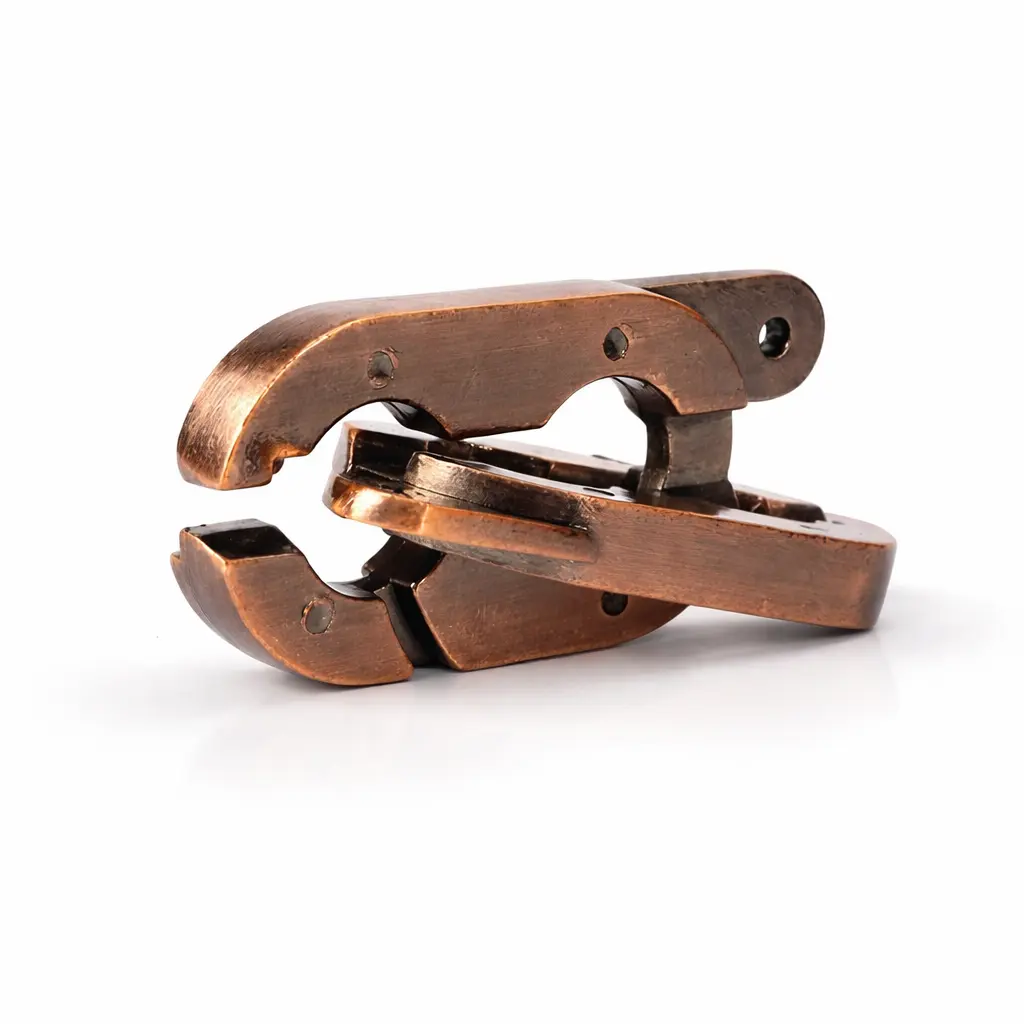
For someone intrigued by metal puzzles but not ready for the ZIREL commitment, there are superb entry points that teach the fundamental language of interlocking mechanisms without the same degree of despair. The broader world of mechanical puzzles, including disentanglement types, offers a rich training ground.
Acquiring a ZIREL, therefore, is the first deliberate step in its ritual. You are not buying a product off a shelf. You are commissioning a specific, tangible manifestation of precision engineering—a desk sculpture with a secret history of assembly locked within it. The transaction is a pledge to engage with an object on its own uncompromising terms. For the right person—the engineer, the meticulous thinker, the collector who values the journey as much as the destination—the premium is not a cost, but an entry fee to a unique form of quiet, metallic enlightenment. This aligns with a broader trend, as explored in our article on Why Professionals Can’t Stop Unwinding With Metal Puzzles, where such deep-focus challenges provide a distinct cognitive reset.
The Final Verdict: Justifying the Premium on Perfection
The ZIREL puzzle’s price tag—frequently over $50—is unequivocally justified by its 0.002mm tolerances and the complete, transformative solve experience it delivers, a journey from intimidating disassembly to silent, seamless assembly that mass-produced puzzles cannot replicate. This isn’t just a disentanglement puzzle; it is a re-assembly puzzle of the highest order.
Therefore, acquiring one is not a simple purchase. It is a commitment to engage with an object where the cost is directly tied to its creation story. As a former manufacturing engineer, I recognize in ZIREL the same ethos found in Swiss watch components: tolerance is not just a number, but the functional heart of the device. The 0.002mm gap—25 times thinner than a sheet of printer paper—is not a marketing boast. It is the engineered barrier that elevates the challenge from logical to physiological, demanding perfect manual alignment where eyes alone cannot guide you.
This precision mandates a made-to-order process. Each puzzle from Iwai Press is hand-assembled and finished after an order is placed, debunking any notion of mass-production. The cost reflects hours of skilled labor: machining cold-rolled stainless steel to microscopic specs, polishing each face to a mirror finish, and ensuring that the interlocking mechanism functions with zero margin for error. You are paying for human attention, not factory throughput.
The resulting frustration-to-eureka curve is steep. Compared to the accessible, puzzle-on-ramp of a Hanayama Cast Puzzle, ZIREL is a cliff face. Its reputation as one of the world’s most difficult puzzles is earned. The difficulty is counter-intuitive: such extreme precision removes all forgiving feedback. Pieces either align perfectly or they do not. There is no grinding, no forced fit. The struggle is one of absolute calibration.
Then, it clicks. Literally.
The final piece seats with a subtle, metallic whisper. The seams disappear. The 15 disparate components become a single, solid entity—a desk sculpture of shocking integrity. The satisfaction is deep and specific. It is the satisfaction of having solved not just a puzzle, but a physical equation. The agony of the process retroactively becomes the value of the artifact.
So, is it worth the premium? For the enthusiast who views puzzles as tactile philosophy, for the collector seeking the pinnacle of mechanical brain teasers like the Sakura or Chrysanthemum, for the individual who appreciates manufacturing artistry—yes, without reservation. For a casual gifter or a puzzle novice, it is likely a beautiful, frustrating mistake. ZIREL is a niche product for a niche audience.
The verdict hinges on the search for legitimacy. The ZIREL metal puzzle is a legitimate challenge of the highest order. Its price is the admission fee for a unique dialogue between mind, hand, and metal. The gleaming sakura blossom, now whole on your desk, is no longer just a puzzle. It is proof of perseverance.
For those resolved to begin, your path is clear: seek out the official HOBBY METAL site or monitored Kickstarter campaigns for new models like the Mirai. Purchase with the intent to struggle, and ultimately, to understand.