The third time the brass pin slipped past my thumb, I set the box down and made coffee. It was 11:45 PM on a Tuesday, and I was being outsmarted by four ounces of wood and a hidden spring. This is the reality of a high-quality puzzle box for adults: it doesn’t just sit on your shelf looking pretty; it demands a specific kind of mental surrender that most of us haven’t practiced since grade school.
After testing over 200 mechanical puzzles, I’ve realized that the market is flooded with “difficulty level” ratings that mean absolutely nothing. I’ve solved “Level 10” puzzles in five minutes and spent three days on a “Level 3” because I was too arrogant to listen to the wood. My thesis for this collection is simple: the best puzzle boxes for adults punish impatience and reward observation. If you try to force a solve, you’ve already lost. If you listen to the mechanism, it will tell you exactly where it wants to go.
The Tactile Shift: Why Adults are Returning to Analog Enigmas
We spend our days clicking glass screens and typing on plastic keys. There is no resistance, no “soul” to the interaction. When you pick up a well-made puzzle box, you are engaging with physics. You feel the friction of grain against grain. You hear the internal tumble of a locking pin. It’s a grounding experience that digital games simply cannot replicate.
Most people looking for a challenge start with magnetic desk toys for entry-level fidgeting, which are fine for keeping your hands busy during a Zoom call. But a true puzzle box is a different beast. It’s a narrative. There is a beginning (the mystery), a middle (the frustration), and an end (the revelation).
The psychological benefit isn’t just about “brain training”—a term I find mostly marketing-driven—but about the forced transition into a flow state. You cannot solve a complex interlocking puzzle while thinking about your mortgage. The object won’t allow it. It requires your total presence, making it one of the few forms of meditation that doesn’t feel like a chore.
The Geometry of Frustration: Understanding the Burr and the Lock
Before we look at the specific hardware, we need to talk about the two main “families” of puzzles you’ll encounter. First, there’s the Burr puzzle. Historically, these are interlocking sticks that form a 3D shape, often a cross. They rely on “key” pieces that must be moved in a specific sequence to collapse the structure.
Then there are the secret opening boxes and locks. These are often more “sequential discovery” puzzles. You might find a tool hidden in one compartment that helps you open the next. For those who want to go deeper into this specific sub-genre, I highly recommend checking out a detailed look at containers with hidden compartments to understand the mechanical variety available.
The Circular Lock
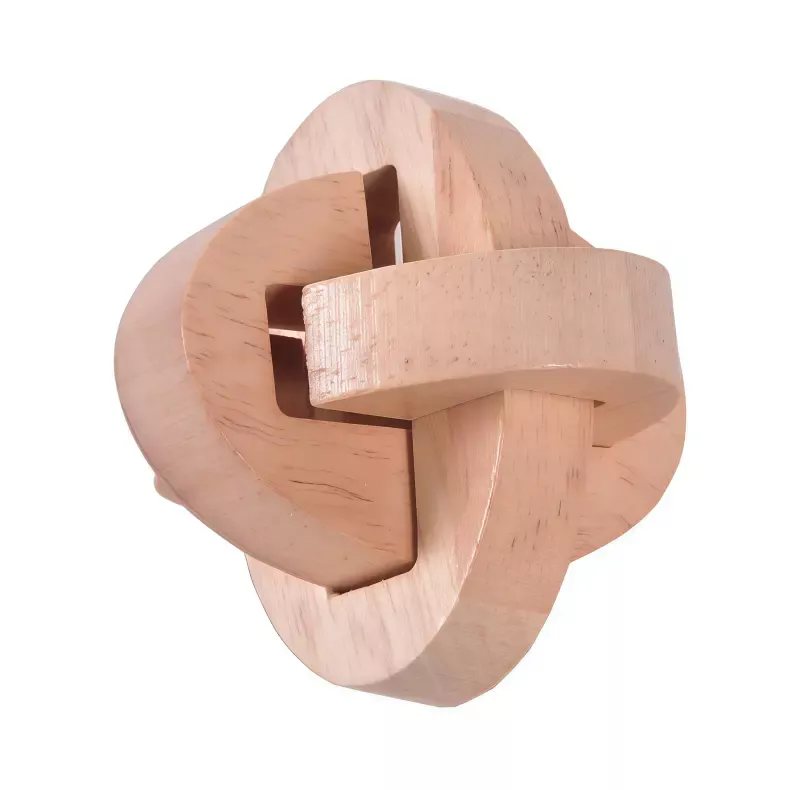
The Circular Lock ($16.99) is a masterclass in “less is more.” When I first pulled this out of the box, I thought it was a coaster. It consists of three precision-cut wooden pieces that interlock with a motion so smooth it feels almost hydraulic.
What I appreciate about this piece is the lack of visual “noise.” Many adult puzzles try to look complex by adding unnecessary gears or etchings. This lock doesn’t bother. It’s just three shapes and a solution that requires you to stop thinking in straight lines. I’ve found that it’s the perfect desk toy for someone who needs to reset their brain between deep-work sessions. It’s not a three-hour ordeal; it’s a five-minute recalibration.
The Mystic Orb Lock
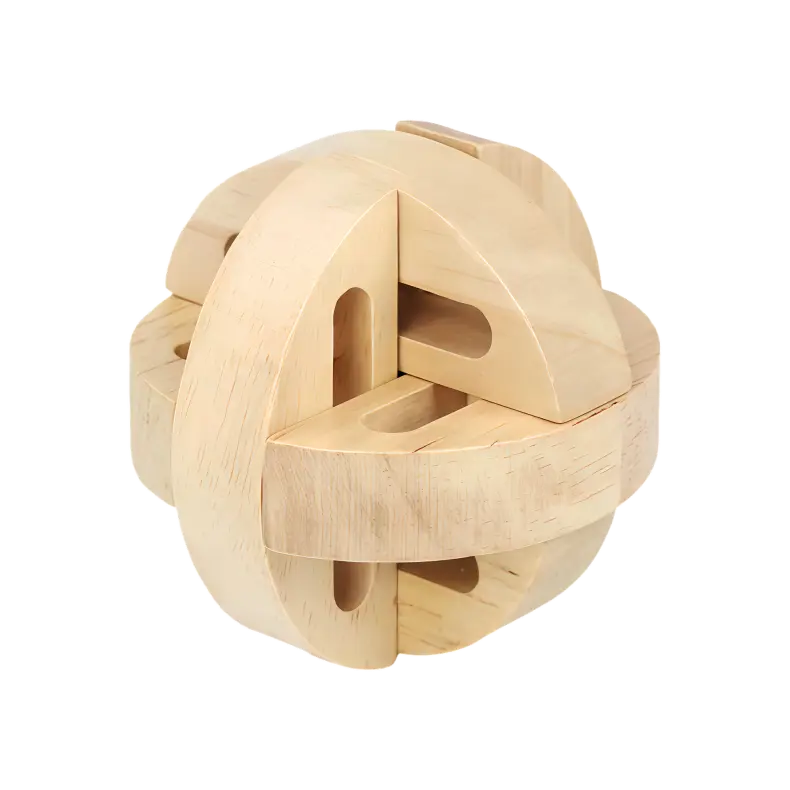
If the Circular Lock is a haiku, The Mystic Orb Lock ($16.99) is a short story. It uses six semi-circular pieces that form a sphere, but the secret lies in two specific locking pieces that govern the entire structure.
I’ve had this on my desk for three weeks, and it’s the one guests always gravitate toward. The tactile feedback is incredible—there’s a specific “snap” when the pieces align that is immensely satisfying. It embodies that Daoist philosophy of yielding to succeed; if you try to pull it apart with force, the wood will bind and resist you. You have to find the “gap,” the hidden vulnerability. It’s a beautiful metaphor for problem-solving in the real world.
Why Your First Solve Will Be an Accident (And Why That’s Okay)
There is a phenomenon in the hobbyist community where you’ll be fiddling with a puzzle, looking at the TV or talking to a friend, and suddenly—clack—it opens. You didn’t mean to. You didn’t even see what you did.
This is the “Accidental Solve,” and it’s a vital part of the learning process. It teaches you that your subconscious is often better at spatial reasoning than your conscious mind. When this happens, don’t feel like you cheated. The real challenge begins now: can you put it back together? Reassembly is often 2x harder than disassembly because you have to reverse-engineer a path you didn’t know you were taking.
If you find yourself getting too frustrated with a mechanical lock, I often suggest taking a break with numerical logic challenges or even grid-based mathematical enigmas. It uses a different part of the brain and prevents you from throwing a perfectly good wooden puzzle across the room.
Interlock Puzzle Sphere
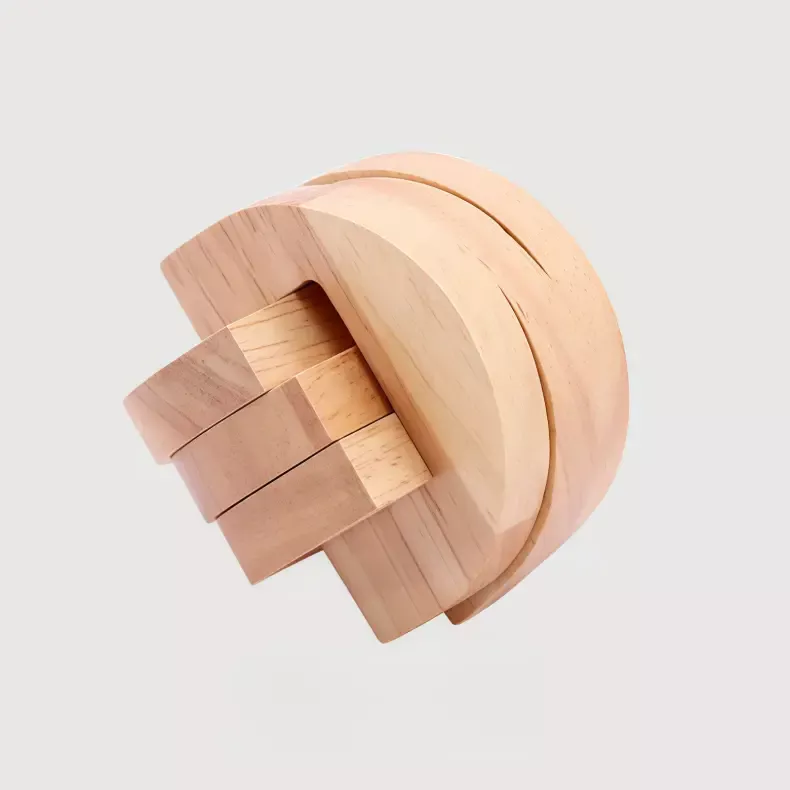
The Interlock Puzzle Sphere ($17.99) is the ultimate test of reassembly. It disassembles into six unique pieces in seconds once you find the key. But getting those six pieces back into a seamless sphere? That’s where the “adult” part of the challenge comes in.
I’ve seen grown men—engineers, mostly—get genuinely humbled by this sphere. It demands an ego-free approach. You have to meet each piece where it is, rather than where you want it to be. The wood is finished well, and the tolerances are tight enough that you can’t just “wiggle” your way to a solution. At just under eighteen dollars, it’s arguably the best value-per-hour of frustration in my current collection.
Six-Piece Burr
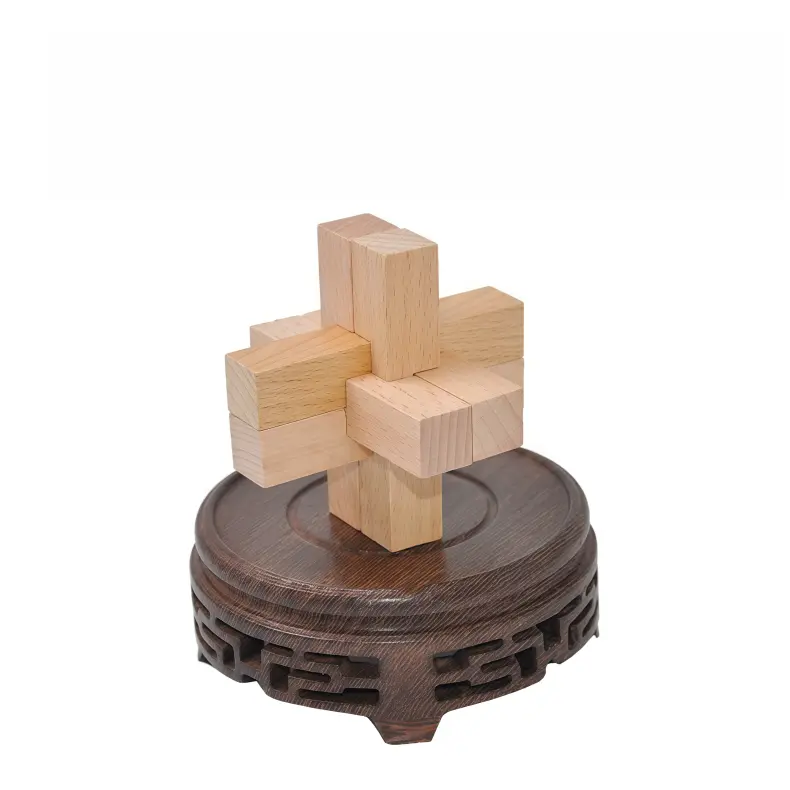
For the purists, the Six-Piece Burr ($17.99) is an essential. This is a classic interlocking design where every piece plays a vital role. There are no shortcuts here.
I like to keep this one in my travel bag. It’s sturdy, doesn’t have tiny parts that will get lost under an airplane seat, and it’s a great conversation starter. It whispers a timeless bit of wisdom: true mastery lives in simplicity. It’s not about how many pieces you have, but how they support one another. If you’re looking for interactive gatherings with relatives, passing a Burr around the table is a guaranteed way to kill an hour without anyone looking at their phone.
THE PEAK: The Engineer vs. The Seven-Year-Old
Last summer, I conducted an informal experiment. I took a moderately difficult puzzle—one involving a hidden sliding mechanism—and gave it to my brother-in-law, a brilliant structural engineer. He spent forty minutes analyzing the seams, calculating the possible internal volume, and trying to use a credit card to “feel” for a latch. He was convinced it was a “Level 10” impossibility.
Then, I gave the same box to my seven-year-old niece. She didn’t analyze it. She just picked it up and started shaking it gently. She listened. She felt the weight shift. Within three minutes, she had found the sliding panel because she wasn’t looking for a “logical” solution—she was playing with the object.
This is the secret that most “serious” puzzle reviewers won’t tell you: we overthink it. The best puzzle boxes for adults are designed to exploit our tendency to look for complexity. We assume there must be a hidden button or a 12-step sequence, when often, the answer is just a simple “yield.” This realization—that your expertise is actually your biggest obstacle—is the “peak” moment of the hobby. It changes how you look at every problem in your life.
Metal vs. Wood: Choosing Your Medium
While this guide focuses heavily on the warmth and tradition of wood, metal puzzles (often called “Cast” puzzles) offer a different experience. They are cold, heavy, and usually rely on more “impossible” looking geometries.
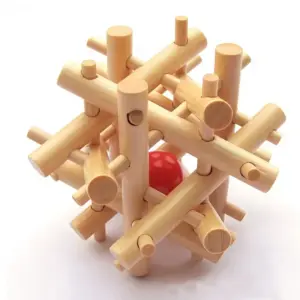
If you want to branch out from boxes, the Twelve Sisters Puzzle ($19.99) is a fascinating bridge. It’s wooden, but it feels like a mechanical assembly. With 25 pieces—including 12 rods and a crimson center sphere—it’s more of a construction challenge than a “trick” box. It teaches you that complex patterns reveal themselves naturally once you master the fundamental structure.
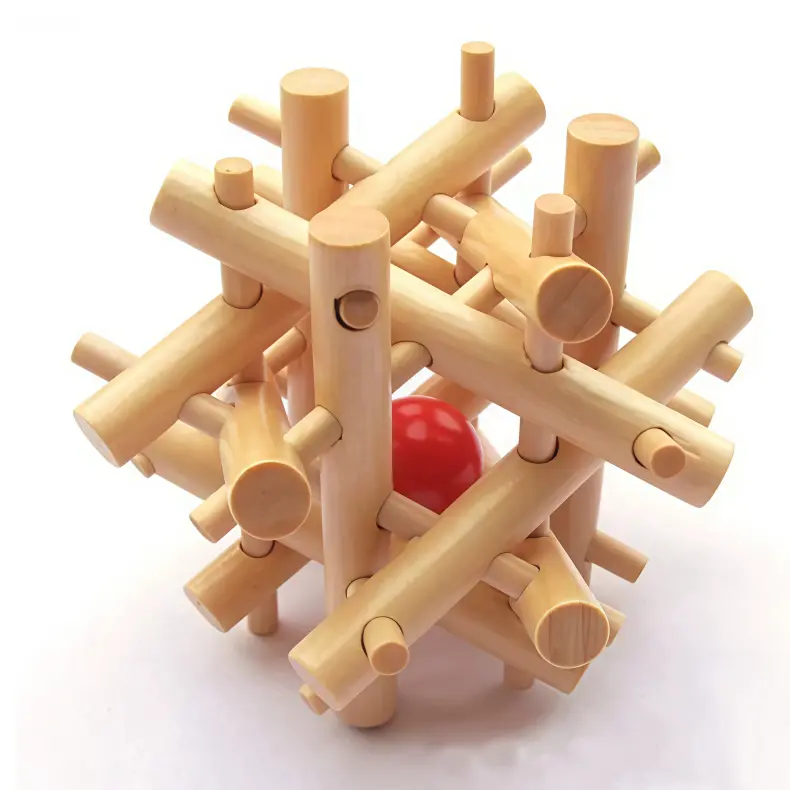
Twelve Sisters Puzzle — $19.99
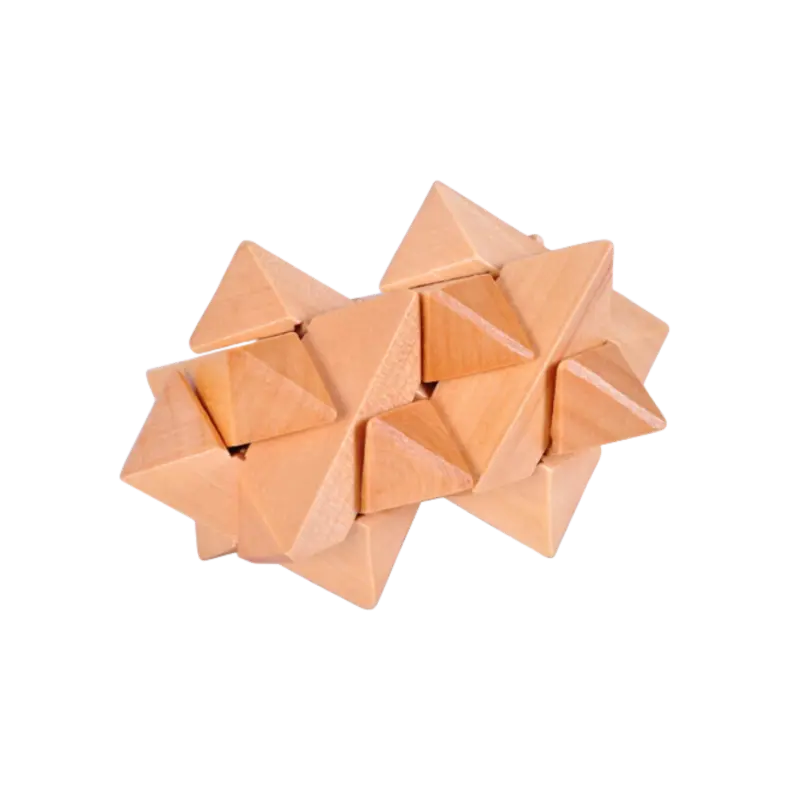
The Twin Star Puzzle — $17.88
Similarly, The Twin Star Puzzle ($17.88) uses 11 precision pieces to challenge your spatial reasoning. It’s a “Luban lock” style, which is a traditional Chinese woodworking technique that doesn’t use nails or glue. These are great for people who find secret boxes too “gimmicky” and want something that feels like an architectural study.
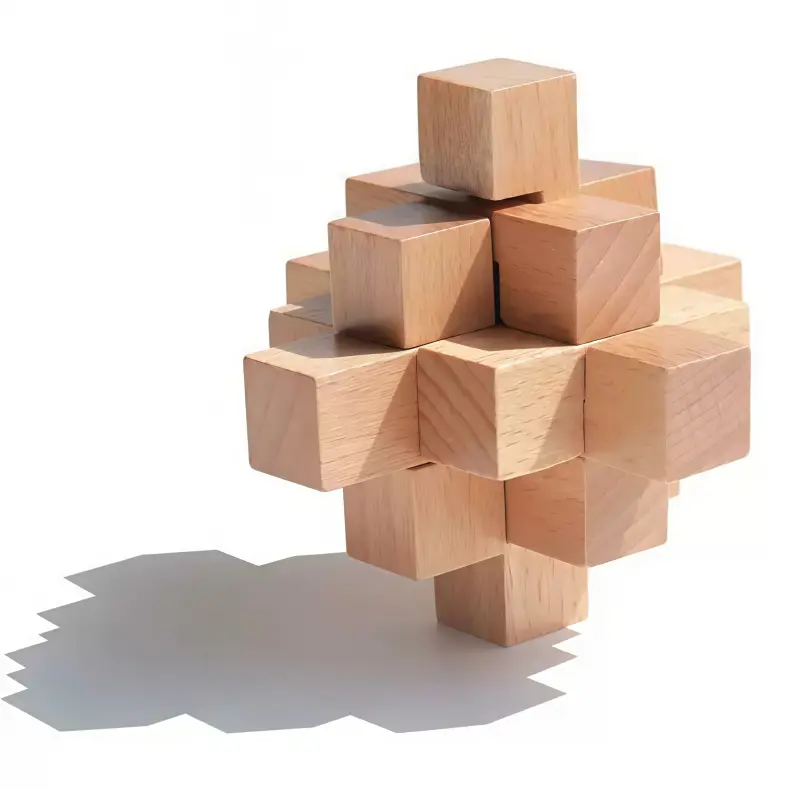
Jiutong Lock — $16.99
The Jiutong Lock ($16.99) is another one that bridges the gap. It features skeletal strips and locking blocks. It’s more of a “meditation” piece. I find that I don’t “solve” this one as much as I “contemplate” it. It’s a great desk object for when you’re on a long phone call and need a tactile anchor.
The Art of Effortless Problem Solving
There’s a concept in Chinese philosophy called Wu Wei, often translated as “effortless action.” It’s the idea that the most effective way to handle a situation is to align yourself with its natural flow rather than fighting against it.
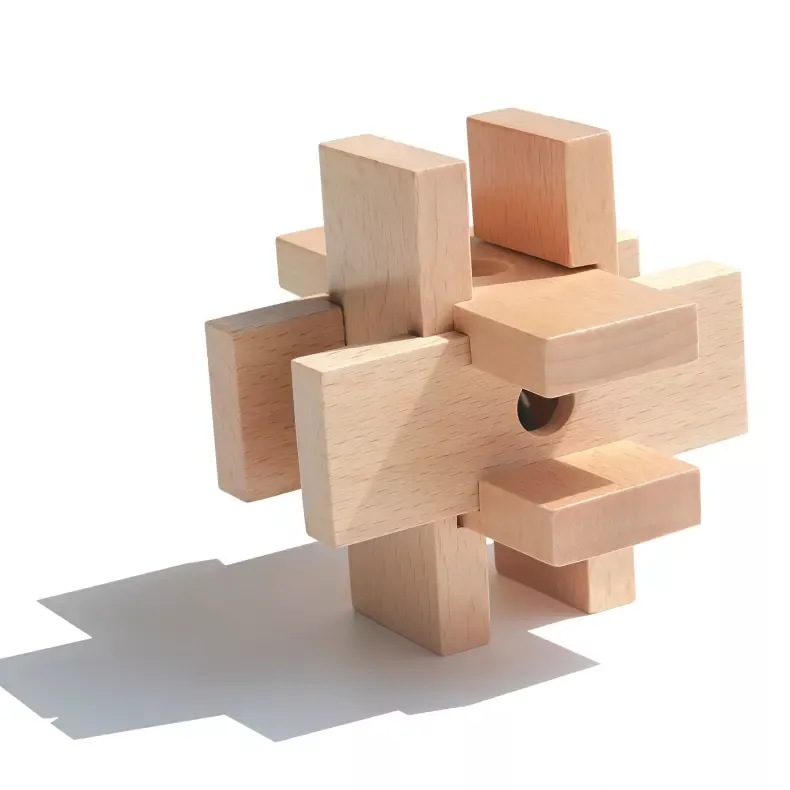
6 Piece Wooden Puzzle Key — $12.99
The 6 Piece Wooden Puzzle Key ($12.99) is the physical manifestation of this. It’s a simple hardwood brain teaser. If you try to force it, the pieces bind. If you relax your grip and let the patterns emerge, the complexity dissolves. It’s a quiet, minimalist experience that proves you don’t need electronics to engage a modern mind.
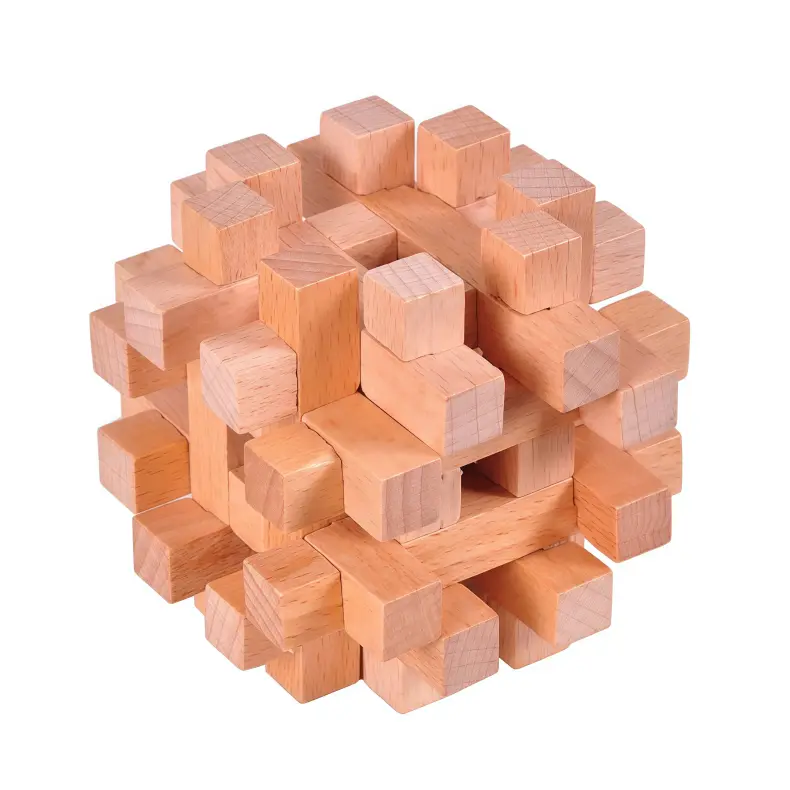
Double Cross Cage Puzzle — $18.88
If you want something a bit more substantial, the Double Cross Cage Puzzle ($18.88) uses 24 identical pieces to create a structure of seemingly impossible strength. It’s a tactile meditation on alignment. I’ve noticed that after six months of daily fiddling, the mechanism on mine is actually smoother than the day I bought it. The wood has “learned” the path, much like the solver.
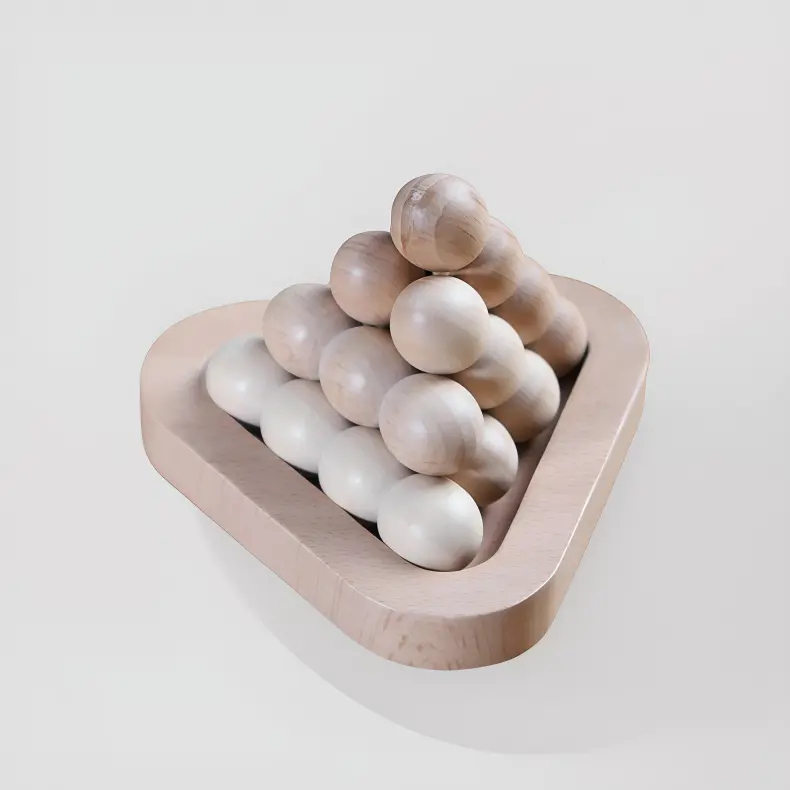
Wooden Bead Pyramid — $18.88
Finally, for those who prefer 3D spatial challenges over interlocking sticks, the Wooden Bead Pyramid ($18.88) is a deceptive delight. It consists of six bead strands that must be arranged into a pyramid. It’s a “subtracting the unnecessary” kind of puzzle. Most people try to build it from the bottom up, but the “Aha!” moment comes when you realize the structure is more about the voids than the beads.
Quick-Reference Comparison Table
FAQ: Everything You’re Afraid to Ask About Adult Puzzles
How do I open a puzzle box if I’m completely stuck?
First, stop pulling. Most mechanical puzzles are designed to open with almost zero force. If you’re pulling hard, you’re doing it wrong. Try the “Gravity Test”: tilt the box in all six directions and listen for a sliding pin. If that fails, look for a piece that has slightly more “give” than the others. That’s usually your starting point.
Are wooden puzzle boxes durable enough for daily use?
Generally, yes, but wood is a living material. It expands and contracts with humidity. If a puzzle feels “stuck” in the summer, it might just be the moisture in the air. I’ve had some of mine for years, and they actually get better with age as the oils from your hands naturally polish the wood.
What’s the best way to gift a puzzle box?
The “Money Box” trick is a classic. Hide a gift card or a hundred-dollar bill inside the box before gifting it. It turns a simple present into an experience. Just make sure the recipient has the patience for it—otherwise, you might find your expensive wooden box being “solved” with a hammer.
Why are some puzzles so much more expensive than others?
Tolerances. A cheap puzzle has loose pieces that rattle, making the “trick” easy to spot. A high-end puzzle box for adults is machined so precisely that the seams are invisible to the naked eye. You aren’t just paying for the wood; you’re paying for the hours a craftsman spent ensuring that the fit is perfect.
How do I maintain my wooden puzzles?
I use a tiny amount of Renaissance Wax once a year on my most prized pieces. For everyday puzzles, just keep them out of direct sunlight and away from radiators. If a mechanism gets “crunchy,” a puff of graphite powder (the stuff used for door locks) works wonders. Never use oil; it will soak into the wood and make it swell.
Can these puzzles actually help with cognitive decline?
While I’m a reviewer, not a doctor, there is significant research into “cognitive reserve.” Engaging in novel, challenging tasks—like learning a new mechanical language—is generally considered a good thing for brain health. At the very least, it’s better for you than scrolling through a social media feed.
Is it “cheating” to look up the solution?
In the hobbyist community, we call it “The Walk of Shame.” We’ve all done it. However, I suggest only looking at the first step of the solution. Often, that’s all you need to get the momentum back. Looking at the whole thing ruins the “Aha!” moment, which is the only reason we do this in the first place.
What difficulty level should I start with?
Ignore the numbers. Start with something that looks beautiful to you. If you like the object, you’ll be more patient with it. For most adults, a “Medium” or “Level 4-6” is the sweet spot—hard enough to be a challenge, but not so hard that you want to quit the hobby forever.
Why do some puzzles mention “Luban” or “Burr”?
These refer to the historical lineage of the designs. Lu Ban was a legendary Chinese structural engineer from the 5th century BC. His “locks” are the ancestors of almost all modern interlocking puzzles. When you solve one, you’re participating in a 2,500-year-old tradition.
Are these puzzles suitable for people with ADHD?
Actually, many of my friends with ADHD find these incredibly helpful. It’s “fidgeting with a purpose.” The high-intensity focus required to solve a complex mechanism can provide a very satisfying “reset” for a racing mind.
What if my puzzle arrives with a broken piece?
Because wood is natural, it can occasionally have a weak grain line. Most reputable sellers (including us) will replace a defective piece. However, check first that the piece isn’t “broken” on purpose—some puzzles have pieces that look snapped as part of the trick!
Do I need to be good at math to solve these?
Not at all. This is about spatial reasoning and tactile intuition. I know brilliant mathematicians who can’t solve a simple burr, and I know artists who can take them apart in seconds. It’s a different kind of intelligence.
Start Here, Then See Where the Rabbit Hole Goes
If I could go back to the start of my collection, I wouldn’t buy the most expensive, most complex box on the market. I would start with something that taught me how to feel the mechanism.
The Interlock Puzzle Sphere ($17.99) is that starting point. It taught me more about patience and the “ego-free” solve than any of the $200 boutique boxes I’ve bought since. It’s a humble object, but it’s a perfect one.
When you finally feel that key piece slide out, and the whole sphere collapses into your palms, you’ll understand why we do this. It’s not about the box. It’s about the moment your brain finally stops shouting and starts listening. If this clicks for you, the world of sequential discovery and trick boxes only gets deeper from here.
Set your phone in the other room, pour a drink, and give the wood a chance to speak. You might be surprised at what it has to say.