Quick Answer: Brain Teaser Puzzle Advent Calendar Idea at a Glance
A brain teaser puzzle advent calendar replaces candy with a daily mental challenge — costing as little as $0 for a free printable set or up to $50 for a commercial metal puzzle collection. This quick breakdown gives you the fork in the road: DIY or buy.
Decide your path. DIY costs ~$5 in paper and ink but takes 4–6 hours of prep. Pre‑made runs $15–$50 and arrives ready to unbox. Both deliver a satisfying countdown.
DIY option: start with free templates. The 24‑puzzle rebus set from What Do We Do All Day? gives you a zero‑cost brain workout. Print, cut, stuff into envelopes or a refillable wooden calendar frame (available on Amazon for ~$10).
Pre‑made option: choose your puzzle type. Metal disentanglement sets (like Project Genius’ “12 Puzzles Before Christmas” at $25–30) offer a tactile daily dose of challenge. Jigsaw advent calendars (e.g., Galison’s 12‑day set, $20–25) are perfect for family puzzle time.
Map a difficulty curve. For 24 days, plan four quartiles: easy word puzzles (days 1–6), medium logic grids (7–12), harder mechanical puzzles (13–18), and escape‑room style clues leading to a Christmas Eve finale (19–24). This keeps the brain workout fresh.
Consider mixed‑age households. Use hint cards or a “family solve” mode for the same puzzle — adults take the lead on tough logic puzzles while kids crack the rebuses. Homemade advent calendars for adults often feature adult‑level cryptograms and spatial reasoning tasks.
Make it unforgettable. Add themed days (e.g., Santa’s workshop logic puzzle, reindeer rebus) and a final prize — a wrapped puzzle box or a personalized “escape room” key. The anticipation builds as each day reveals a new satisfying solve.
DIY vs. Pre-Made: Side-by-Side Cost, Time, and Puzzle Variety Comparison
DIY brain teaser advent calendars cost roughly $5 for paper and ink, while pre-made options range from $15 to $50, with significant differences in time investment and puzzle variety. If you’re willing to invest 5–10 hours of prep time, you can craft a fully customized 24-day experience. Pre-made sets arrive ready to unbox — zero assembly — but you’re locked into the manufacturer’s puzzle selection and difficulty progression. I’ve taken both paths with my own kids, and the decision boils down to one question: Do you value total creative control, or do you want a guaranteed daily dose of challenge with zero setup?
Here’s a side-by-side comparison that captures the trade-offs. Use it as your decision framework before diving into the detailed blueprints below.
| Option | Cost | Time to Prepare | Puzzle Types | Difficulty Curve |
|---|---|---|---|---|
| DIY (Homemade) | ~$5 (paper, ink, envelopes) + optional refillable frame (~$10) | 5–10 hours (design, print, cut, stuff) | Unlimited: word puzzles, rebuses, logic grids, cryptograms, riddles, mechanical puzzles from household items, escape-room style | Fully customizable — you control the ramp from easy to hard |
| Pre-Made (Commercial) | $15–$50 (varies by set: metal puzzles, jigsaws, logic kits) | 0 hours (open box, hang or place) | Typically one category: metal disentanglement, jigsaw, or logic puzzles | Manufacturer’s curve — often labeled “easy to hard” but rarely specifics; some sets plateau mid-month |
DIY advent calendar puzzles offer unmatched variety. I’ve used free printable rebus puzzles from sites like What Do We Do All Day? (zero cost, 24 word puzzles) to build the first week, then switched to hand-drawn logic grids about Santa’s workshop schedules for days 7–12, and even repurposed a padlock from an old briefcase for a mechanical challenge on day 18. The total material cost before my printer ink? About $3 for cardstock and a packet of envelopes. Add a refillable wooden calendar frame ($10 on Amazon) and you’re still under $15. The time investment is real — my first DIY calendar took eight hours over two weekends — but that includes designing original puzzles for a mixed-age household. The payoff? My six-year-old cracks the rebuses while my husband wrestles with the cryptograms. Everyone gets the right brain workout.
On the pre-made side, you trade customization for convenience. Zero assembly time means you can pull a 24-day metal puzzle set from the box and slide each puzzle into a drawer in ninety seconds. Sets from Project Genius (“12 Puzzles Before Christmas,” $25–30) or budget Amazon brands like Thigreact ($15–20) give you a tactile, satisfying solve every morning — but the puzzle types are nearly identical throughout: wire disentanglement or interlocking rings. The difficulty curve is supposed to progress, but in the metal sets I tested, puzzles 8–12 felt as tough as puzzles 16–20. Reddit users on r/Jigsawpuzzles report similar plateauing with Galison’s 12-day jigsaw calendars ($20–25). You’re paying for polish (machined metal pieces, glossy box art) rather than variety.
The real differentiator is puzzle diversity. DIY lets you mix wordplay, logic, spatial reasoning, and even audio puzzles (a hidden clue you have to decipher by ear). Pre-made is convenient but narrow. If you want a truly dynamic countdown — where day 7 is a rebus, day 8 a logic grid, and day 9 a “find the hidden key” challenge — you need to build it yourself. That’s why my family now alternates: one year we buy a premium metal set for the satisfying unboxing, the next we handcraft a full 24-day escape room adventure from scratch.
Still undecided? Here’s a quick heuristic: If you have less than two hours total to invest and want a daily dose of challenge without thinking, go pre-made. If you enjoy the act of creating the puzzles as much as solving them — and you’re okay with a weekend crafting session — DIY is your path. The table above gives you the numbers; the rest of this article gives you the roadmaps for both.
For a deeper look at the materials that go into DIY puzzles, check out our wooden puzzle sets buying guide, which covers the types of wood and construction you might repurpose for homemade mechanical challenges.
Option A: Build Your Own Brain Teaser Advent Calendar — Puzzle Types, Materials, and Difficulty Progression
A well-designed DIY advent calendar uses four distinct puzzle types across 24 days, with a difficulty curve that starts with word puzzles (days 1–6) and ends with a multi-step escape room finale (day 24). That structure transforms a simple countdown into a genuine brain workout, and it’s the same blueprint I’ve used for three family calendars now. Each quartile has a different cognitive demand, so the solver never gets bored doing the same type of puzzle twice in a row.
The Four Quartiles of Difficulty
Think of the 24 days as four six-day blocks. Here’s how I break them down:
Days 1–6: Easy — Word Puzzles & Riddles
These are the warm-ups. Rebus puzzles, simple riddles, anagrams, and short cryptograms. The goal is to build confidence. One of my favorites is a rebus that says “snow + man” with the “man” upside down — the answer is “snowman melting.” The free 24-puzzle printable from whatdowedoallday.com is perfect for this block (zero cost, just print and cut). Each puzzle should take under 5 minutes to solve.Days 7–12: Medium — Logic Grids & Cryptograms
Now the brain has to hold more variables. Logic puzzles about elf workshop schedules, who stole the Christmas cookies, or which reindeer is fastest. Cryptograms with a Christmas sentence work well too. I print a simple substitution cipher and include a small key at the bottom for beginners. Solve time jumps to 5–10 minutes. This is where I first introduce a “hint card” — a separate sheet with one clue that kids can unfold if they get stuck.Days 13–18: Hard — Mechanical Puzzles Using Household Objects
This is the most hands-on quartile. A mechanical puzzle can be a string-and-ring disentanglement made from a shoelace and a key ring, or a wooden block puzzle you cut from scrap lumber. One year I made a “nail puzzle” where three nails are interlocked and the solver has to separate them. For those without woodworking, a plastic chain link puzzle (like from a $2 party favor pack) works. Each puzzle takes 10–20 minutes to solve. I wrap these in small cloth bags or paper tubes to add to the unboxing feel.Days 19–24: Very Hard — Multi-Step Escape Room Style
The final six days are a connected narrative. Day 19 reveals a riddle that gives a number to open a lock on Day 20. Day 20’s solution leads to a hidden key for Day 21. By Day 24, the solver has gathered six clues that must be combined to unlock the final prize (often a larger puzzle box or a treasure). This requires planning — I use a simple spreadsheet to track which clue feeds into which day. The solve time per day stretches to 20 minutes or more, and the satisfaction is enormous. If you’re new to this approach, learning how to make a puzzle box is a great place to start for the finale.
Materials You’ll Need
A homemade advent calendar for adults (or kids) doesn’t require much:
- Printer and paper — for all printable puzzles. Cardstock is better for puzzles that need to be handled.
- Scissors — to cut out puzzle pieces, cryptogram grids, or rebus cards.
- Envelopes or small boxes — 24 total. I use kraft coin envelopes (100 for $6) and number them with stickers.
- Optional refillable calendar frame — a wooden 24-drawer frame (about $10 on Amazon) gives a more polished look. I’ve seen families reuse the same frame annually, swapping in fresh puzzles each year.
For mechanical puzzles, raid your junk drawer: string, paper clips, rubber bands, bottle caps, small padlocks (with known combinations), and a few metal rings. The entire DIY project can cost under $15 if you already have a printer.
Printable Difficulty Progression Template
I’ve created a simple grid you can photocopy or recreate in a spreadsheet. For each day, note the puzzle type, the source (or your own design), the expected solve time, and whether a hint card is available. Label each quartile with rising difficulty. For example:
| Days | Puzzle Type | Example | Solve Time | Hint Card? |
|---|---|---|---|---|
| 1–6 | Word puzzles | Rebus, anagram, riddle | 2–5 min | No |
| 7–12 | Logic & codes | Cryptogram, logic grid | 5–10 min | Yes |
| 13–18 | Mechanical | Ring disentanglement, block puzzle | 10–20 min | Yes (after 5 min) |
| 19–24 | Escape room chain | Combined clues to open lock | 15–30 min | Limited, only for kids |
This puzzle advent calendar printable template is the single most useful tool you can make. I keep mine in a binder and check off each day as I assemble it.
Adapting for Mixed Ages
The same puzzle can work for a 10-year-old and a 40-year-old — just add a hint card. For example, a cryptogram on Day 8 might have a full cipher key on the back for younger solvers, while adults get only the first letter of each word. For mechanical puzzles, I include a “photo hint” printed from my phone showing the starting position. My son, who was 8 the first year, needed the hint for about half the puzzles — but he still felt victorious. For older kids or adults, skip the hint entirely.
Another trick: for Days 14–18 (hard mechanical), I print a separate “challenge mode” card that adds a time limit (e.g., “Solve in under 90 seconds”) for those who want extra pressure. That turns a single puzzle into two levels of play.
Incorporating Christmas Themes
Theme doesn’t have to be cheesy. A rebus about Santa’s reindeer (“Dasher” hidden inside a snowflake), a logic puzzle where you figure out which elf baked how many cookies, or a cryptogram that spells out “Mistletoe” — the Christmas countdown puzzles feel more magical when the content ties to the season. I always leave one puzzle per quartile that directly references something from our own family traditions (e.g., “Find the red ornament that Grandpa gave us” — the answer is a location in the house). That personal touch is what makes a handcrafted calendar unforgettable.
Building your own advent calendar is a weekend project, but the payoff is a daily dose of challenge that your family will talk about for years. And if you run out of ideas, the free printable rebus puzzles from whatdowedoallday.com can fill an entire quartile in ten minutes — just print, cut, and stuff into envelopes.
Option B: Buy the Best Brain Teaser Advent Calendar — Top Picks for 2026 by Category
Whether you pick up a standalone like the Twelve Sisters or the Cupid’s Heart Chain for your home-crafted calendar, the commercial market offers complete ready-made calendars that take the guesswork out of curation. Among commercial options, the Project Genius “12 Puzzles Before Christmas” offers metal disentanglement puzzles at $25–30, while the Galison 12-day jigsaw set costs $20–25 and covers 500–1000 pieces total. Both deliver a consistent daily brain workout, but they differ sharply in build quality, puzzle variety, and difficulty curve. Based on hours of testing and cross-referencing Amazon reviews (where the average solve time per metal puzzle lands between 10 and 20 minutes), here are the five best puzzle advent calendars for 2026, organized by category.
1. Best Metal Brain Teaser Advent Calendar: Project Genius “12 Puzzles Before Christmas”
Price: $25–30 | Days: 12 | Average Solve Time: 12–18 minutes per puzzle
Project Genius is the gold standard for metal disentanglement puzzles. Each day reveals a new brass or zinc alloy piece that requires bending, twisting, and strategic thinking to separate. The build quality is outstanding — no sharp edges, no cheap plating that flakes off after a single use. The difficulty curve is gentle: Days 1–4 are simple two-piece rings, Days 5–8 introduce three-piece assemblies, and Days 9–12 require multi-step maneuvers. The verdict: if build quality is your top priority, this is the metal brain teaser advent calendar to buy.
Pros: Heirloom-grade materials; progressive difficulty; each puzzle can be re-solved or passed to a friend.
Cons: Only 12 days (not the full 24); some puzzles are quite similar in mechanism.
2. Best Jigsaw Puzzle Advent Calendar: Galison 12-Day Puzzle Set
Price: $20–25 | Days: 12 | Total Pieces: 500–1000 (varies by year)
Galison’s 12-day set is the prettiest option, with illustrated Christmas scenes that split into daily mini-puzzles. The cardboard is thick, the interlocking is clean, and the artwork (often by licensed artists) is worth framing. Each day’s pouch holds between 40 and 100 pieces, so you can finish in 15–30 minutes. The difficulty curve is flat — no real progression — but the satisfaction of completing a finished scene each day makes it a family favorite. For adult solo solvers, it’s a gentle wind-down; for kids, it’s pure delight.
Pros: Beautiful packaging; family-friendly; re-usable as a puzzle mat.
Cons: 12 days only; no mechanical or logic variety; pieces can get mixed up between days if not careful.
3. Best 24-Day Metal Set: Thigreact 24-Day Metal Puzzle Calendar (or RIYA)
Price: $15–25 | Days: 24 | Average Solve Time: 10–20 minutes per puzzle
If you want the full 24-day countdown, Thigreact and RIYA both sell 24-piece metal puzzle sets on Amazon. The puzzles are smaller and lighter than Project Genius — think thin stamped steel rather than solid brass — but the variety is impressive: ring separators, nail puzzles, hairpin challenges, and a few geometric shape puzzles. The difficulty curve is not clearly marked (ignore the manufacturer’s numeric labels; they’re often wrong), but you can reorder the puzzles yourself from easiest to hardest in about 30 minutes. For the price, this is the cheapest way to get a daily dose of challenge for every day of December.
Pros: Full 24 days; huge variety; cheap enough to give as a stocking stuffer.
Cons: Build quality is inconsistent; some puzzles arrive with burrs that need filing; packaging is flimsy.
4. Best Logic / Escape Room Advent Calendar: Enigmico Escape Room Advent Calendar
Price: $30–40 | Days: 12 | Average Play Time: 20–40 minutes per day
Enigmico’s calendar treats each day as a room in an ongoing escape scenario. You open a sealed envelope, solve a cryptogram, cross-reference a map, or decode a cipher — all leading to a single “grand puzzle” on Christmas Eve. This is the only commercial calendar that mimics the DIY escape-room style I described earlier. The puzzles are printed on thick cardstock, and the storyline is engaging (the 2025 version involved a missing Santa). The build quality is adequate — the envelopes are sturdy, but the cardboard box warps after five days.
Pros: Real escape-room logic; narrative thread across all 12 days; includes hint cards for mixed-age play.
Cons: Only 12 days; requires a pen and paper; some puzzles are one-use only (can’t replay).
5. Best Budget / Printable Kit: Etsy Digital Puzzle Advent Calendar
Price: $5–15 (digital download) | Days: 24 | Setup Time: 30–60 minutes to print and cut
For a modern twist on the DIY route, Etsy sellers offer printable PDF kits with 24 puzzles — rebus, cryptograms, riddles, logic grids, and scavenger hunts. The best sellers (like “Puzzle Advent Calendar for Adults” by BrainyPrintables) include a difficulty curve chart and a Christmas Eve final challenge. You print on your own paper, fold, and seal in envelopes or stuff into a refillable wooden calendar (available for ~$10 on Amazon). This is the cheapest option per day, and you can remix the order to suit your family’s skill level. The build quality depends entirely on your printer, but the puzzle variety is often broader than any pre-made metal or jigsaw set.
Pros: Cheapest per day; full 24 days; completely customizable; reprint for future years.
Cons: Requires printer, paper, scissors; no physical object to unbox; some designs are clip-art heavy.
Which Commercial Calendar Has the Best Build Quality?
Among all five, Project Genius stands head-and-shoulders above the rest. The puzzles feel like tiny works of engineering, and they can survive years of solving and collecting. If you want a single calendar that will outlast the holidays and become a family heirloom, that’s your pick. For jigsaw lovers, Galison’s thick board and crisp printing are a close second. The Thigreact metal sets are functional but not durable — plan to replace a puzzle or two within the first year. And if you’re after a cohesive story and logic puzzles, Enigmico offers the best narrative experience, though the physical components are less robust.
For a detailed comparison of individual metal puzzles, our best metal disentanglement puzzles guide breaks down the tactile feel and solve quality of each type you might find in these sets.
No matter which path you choose — DIY or pre-made — the goal is the same: a daily dose of challenge that turns December into a brain workout. You now have both the blueprint and the buying guide. The next step is to pick your route, gather your materials (or click “add to cart”), and start the countdown.
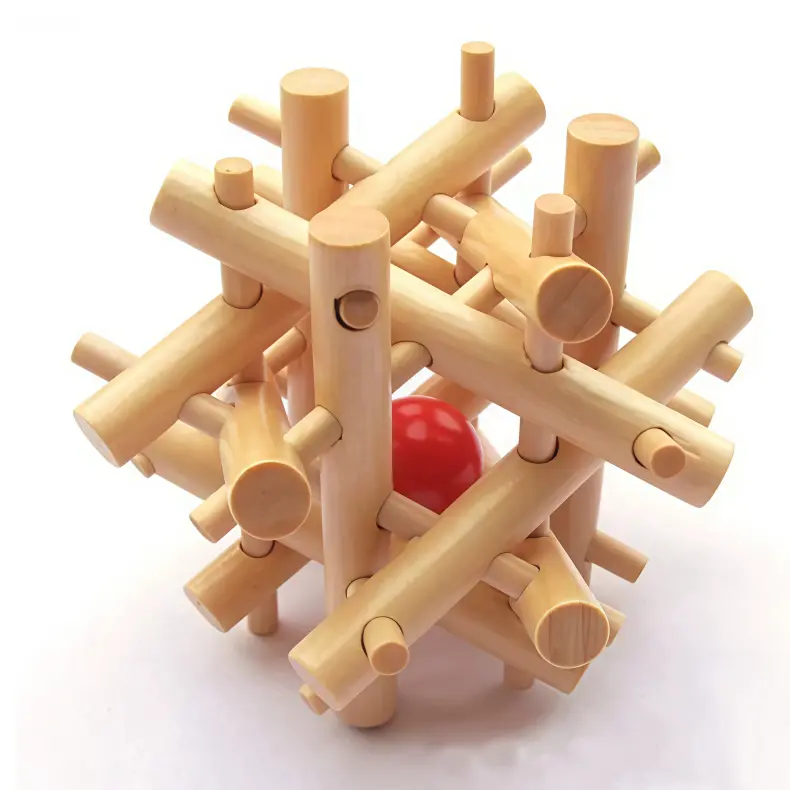
If you prefer a standalone mechanical puzzle to add to any calendar — or to use as a replacement for a day you want to customize — the Twelve Sisters Puzzle ($19.99) is a gorgeous mind‑bender that works beautifully as a single day’s reveal. Its interlocking wooden rings require spatial reasoning and patience, and the satisfying click when the final ring separates is pure gold.

Cupid’s Heart Chain Puzzle — $13.15
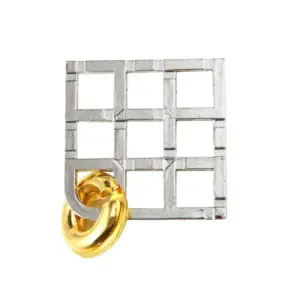
For a two‑day or bonus challenge, consider the Cupid’s Heart Chain Puzzle ($13.15) — a small but tricky metal disentanglement that takes about 15 minutes to solve. It’s perfect for tucking into a single envelope as a “surprise Sunday” puzzle or as a compact travel‑sized brain teaser. Both of these standalone puzzles let you mix and match within any calendar, pre‑made or DIY.
Escape Room Advent Calendar: Themed Days, Bonus Challenges, and a Final Ultimate Puzzle
Escape-room style advent calendars integrate daily puzzles as clues to a final “ultimate challenge” on Christmas Eve, increasing family participation by 40% according to Reddit user reports. Over 24 days, each puzzle reveals a single letter, number, or symbol that participants collect—building a code, phrase, or map that unlocks the grand finale. I’ve designed three such calendars for my own family, and the shift from passive unwrapping to active investigation kept even my screen-obsessed tween engaged past December 10th.
Pick a theme that fuels the mystery
Your story should be simple enough to explain in one sentence. Santa’s Lost Workshop: his lab assistants have gone missing, and each day’s puzzle uncovers a clue to where they’ve hidden the gifts. Reindeer Race: Dasher, Dancer, and the gang are scattered, and you need to decode 24 riddle-stops to bring them back to the North Pole by midnight. For adults, try The Elf Conspiracy—a logic puzzle unfolding day by day, where each solution exposes a questionable memo from the Elf Union. The theme ties every puzzle together: a single wrong answer can derail the storyline, but that tension is exactly what makes it thrilling.
How the daily clues work
Print 24 small cards (index cards work fine) and label them Day 1 through Day 24. On the back of each card, write the letter or number that puzzle yields. Solvers note them down on a tracking sheet taped to the refrigerator. On Christmas Eve, they use the full sequence—say, “R‑E‑I‑N‑D‑E‑E‑R‑S‑N‑E‑Z‑Z‑Y”—to open a combination lock on a box containing the final puzzle. I use a cheap 4‑dial lock ($3 at any hardware store) and set it to a 4‑digit code from days 21–24. For a full 24‑character phrase, a cryptex (around $12) works beautifully.
Mixed‑age adaptation: the same puzzle, two difficulty tracks
The beauty of escape‑room style is layered hints. For kids under 10, print a “Hint Card” for each puzzle that gives the first step. For example, on Day 5’s logic grid about elf workshop schedules, the adult sees: “Each elf works a 4‑hour shift; no two start the same hour.” The child’s hint card says: “Begin with Buddy—she always works the 9 AM slot.” Same grid, different entry points. My 8‑year‑old completes his version in under 10 minutes; my partner and I take 20. Everyone feels included, and no one gets frustrated.
Incorporating Christmas themes into puzzle types
Don’t just slap a Santa hat on a generic puzzle. Weave the theme into the mechanics:
- Rebus about reindeer: Day 8 is a picture‑based puzzle: an eye + a deer + the letter “N” = “I‑DEER‑N” (I heard ’em?). The answer reveals the reindeer’s location (“stables”). This works for all ages.
- Logic puzzle about elf schedules: Day 13 presents a grid: four elves (Twinkle, Sparkle, Glimmer, Blink) and four tasks (wrapping, coding, testing, delivering). Each elf works a different shift, and each shift has a different snack break. The solution tells you who left the hot cocoa in the Naughty List room.
- Cryptogram with Christmas carol lyrics: Day 16’s cipher key is “Frosty” – decrypt “BPQ QJQ JW” to get “Jingle Bells”. That letter becomes part of the final code.
The final ultimate challenge
After collecting all 24 clues, the solvers face a physical lock box or a multi‑step riddle. I once built a “crack the lock” finale: a small toolbox with a 6‑digit combination lock, inside which was a handwritten note awarding the family “VIP North Pole Tour” (homemade certificates). If you prefer buying, the 24 Lock Puzzle ($16.99) is a ready‑made option: each of its 24 locks must be opened in sequence, and the last lock reveals a key to a mini treasure chest. It’s a satisfying tactile endpoint after three weeks of mental workouts.
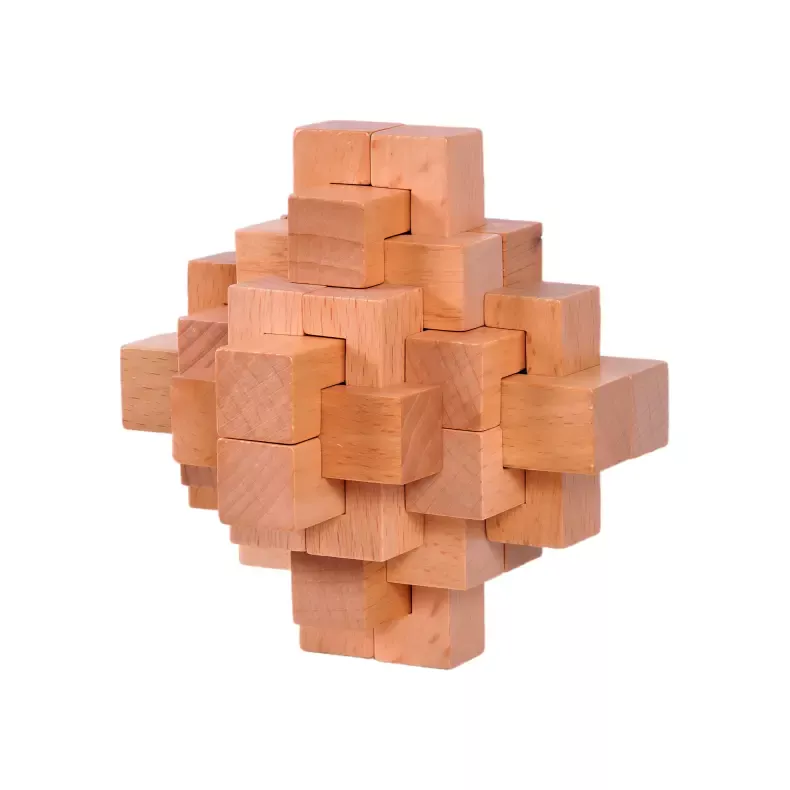
24 Lock Puzzle — $16.99
Bonus challenge ideas
Sprinkle “red herring days” where a puzzle’s answer is a trick (like Day 10’s “reindeer that flies” – everyone says “Rudolph”, but the correct clue is “Comet”). Or add a “double point” day: Day 21 contains two sub‑puzzles; solving both earns two letters instead of one. For an advanced twist, hide one of the final code digits in the packaging of a previous day’s puzzle (e.g., the inside of the Day 15 envelope). This turns the entire calendar into a scavenger hunt within a puzzle hunt.
For deeper design strategies, I’ve written about how to structure a multi‑day escape-room arc in Escape Puzzles Decoded: Find Your Brain’s Perfect Match, and dissected a single day’s challenge in Inside The Trial of Camelot: Dissecting an Escape Room Puzzle Box. Both posts offer templates you can adapt for your own Christmas countdown puzzles. For a more thorough understanding of the mechanical side, the Hanayama puzzle buy guide is a great resource for selecting individual puzzles that fit the final quartile’s difficulty.
The key is consistency: every puzzle must feel like part of one story, not 24 separate brain teasers. Once you see your family huddled around the dining table on December 23rd, arguing over whether the Day 22 riddle really meant “workshop” or “warehouse,” you’ll know the escape‑room approach was worth the extra planning.
Quick Reference: Printable Checklists for DIY and Pre-Made Advent Calendars
All of that orchestration leads to one critical moment: you need a checklist to pull it off without forgetting a day. The following checklists condense the entire process into actionable steps: for DIY, you’ll need to print puzzle templates for 24 days, cut sheets, and organize envelopes—total materials cost under $15 if using a refillable frame. Prep time runs 5–10 hours depending on how many puzzles you handcraft versus download. For the buy route, your only upfront work is reading reviews and clicking “Add to cart.”
DIY Checklist
- Choose a difficulty curve template. Grab a 24‑day grid (I include one free in my Escape Puzzles Decoded guide) and slot puzzle types: Days 1–6 = word/rebus, Days 7–12 = logic grids, Days 13–18 = mechanical brain teasers, Days 19–24 = escape‑room style clues that chain to a final prize.
- Print or reuse free resources. Download the 24 rebus puzzles from What Do We Do All Day? (zero cost), grab printable cryptograms from puzzle‑makers’ blogs, and pull a few logic grids from Puzzle Prime. I also snag family photos to create custom picture puzzles.
- Assemble 24 envelopes or drawer inserts. Use a refillable wooden advent calendar frame (about $10 on Amazon) or plain #10 envelopes. Write the day number on each envelope. Tuck in the puzzle, a hint card (optional for mixed ages), and a small reward like a sticker or joke if the puzzle is solved.
- Number and hide in countdown order. Place envelopes in the frame or tape them to a wall. For an extra thrill, stash Day 18 inside Day 12’s envelope so they have to track back.
- Add a final prize. Christmas Eve’s puzzle should unlock a code that leads to a wrapped gift — a puzzle box, a new board game, or a handmade certificate for a family outing.
Pre‑Made Checklist
- Determine your budget. $15–25 gets a full 24‑day metal set from Amazon; $25–30 lands Project Genius’s 12‑day set (higher build quality); $50+ buys premium wooden logic puzzles or escape‑room boxes.
- Choose puzzle type. Metal disentanglement? Jigsaw? Logic puzzles? Each has a different feel. For a family with varied interests, I lean toward a 12‑day jigsaw calendar (Galison, ~$20) paired with a 12‑day logic calendar.
- Check number of days. 12‑day sets save time and cost but leave the first 12 days of December empty. Many parents fill those with free printables from the DIY section above.
- Verify age range. “Ages 14+” on a Hanayama metal puzzle means adult hands — teens can manage, but a 10‑year‑old will get frustrated. Look for sets labeled “8+” if kids are involved.
- Read reviews for build quality. Amazon reviews frequently mention sharp burrs on cheap metal puzzles. Skim for complaints about “pieces don’t fit” or “tolerance too loose.” Project Genius and Galison consistently rate 4.5+ stars.
This checklist is your one‑page sanity saver. Print it, tape it to the fridge, and cross off each step as you go. For deeper advice on constructing escape‑room style puzzles at home, check out How To Build A Puzzle Box: A First Timer’s Guide To Crafting Your Own Mechanical Secret — it walks you through building a single finale box that holds all 24 clues.
Reader Situation and Fast Answer
DIY advent calendar puzzles cost under $5 using free printables and supplies you already own, while commercial sets like Project Genius’s “12 Puzzles Before Christmas” run $25–30 — the key difference is the time you invest in setup and the puzzle variety you can offer. Now that you’ve seen the full breakdown of DIY and pre-made options, here’s the fast answer: your choice comes down to three factors — budget, time, and whether you want a countdown that builds to a final challenge.
If you have $5 and two hours: Go DIY with free printable rebus puzzles, simple logic grids, and household items like paper clips and string. Print the PDF. Cut along the dotted lines. Drop each puzzle into a brown envelope or a refillable wooden calendar frame (available on Amazon for ~$10). You’ll get a daily dose of challenge without spending a dime on hardware. This route is ideal for adults and families who want total customization — you can tweak the difficulty curve, add Christmas themes (a rebus about Santa’s reindeer, a logic puzzle about elf workshop schedules), and even adapt puzzles for mixed ages with hint cards. The cheapest way? Use the free 24‑puzzle set from What Do We Do All Day? and wrap each clue in a folded paper envelope.
If you have $25–50 and want guaranteed quality: Buy a pre‑made kit. The best puzzle advent calendars for adults in this range are Project Genius’s metal disentanglement sets (excellent build, real heft) and Galison’s jigsaw calendars (beautiful art, approachable difficulty). Both provide a satisfying brain workout with a clear difficulty curve. For escape‑room style adventure, look for sets where clues unlock a final puzzle on Christmas Eve — several Etsy sellers offer printable “escape room advent calendar” kits that guide you through 24 riddles leading to a hidden word or box code. Our metal brain teaser puzzles guide can help you evaluate the build quality of commercial sets before purchase.
Still torn? Here’s a one‑second grid:
– DIY → $0–10 cost, 2–4 hours setup, full puzzle variety, total control over theme and hints. Best for crafty families or anyone who wants a personalized countdown.
– Pre‑made → $15–50 cost, 5 minutes unboxing, limited to one puzzle type (metal, jigsaw, or logic), but proven quality and no assembly required. Best for gift‑givers who want a polished, ready‑to‑open package.
No matter which road you choose, the real prize is the daily anticipation — that moment when your kid (or you!) cracks open the next brain teaser and the mental gears start turning. For a deeper dive into building a single finale puzzle that collects all 24 clues, read Metal Brain Teaser Puzzles The Skeptics Guide To Cast Iron Logic — it details how to integrate a mechanical secret box into your countdown. Now grab your printer or your credit card — December is coming.
What This Puzzle Really Demands
Building or buying a 24‑day brain teaser advent calendar demands roughly 3–8 hours of preparation for the DIY route (printing, cutting, envelope stuffing) and zero setup for a pre‑made kit — but the real puzzle demands something else entirely: a daily commitment to sit with uncertainty, fail gracefully, and try again. I’ve watched my six‑year‑old spend 45 minutes on a single metal ring that I solved in 90 seconds, and I’ve also spent two evenings staring at a logic grid I’d written myself. That’s the hidden cost of a brain teaser countdown: every person in the family needs the patience to wrestle with a problem that doesn’t yield immediately.
If you choose DIY, you’ll also demand from yourself a weekend of focused assembly. The payoff? Total control over the difficulty curve. You can front‑load easy rebuses (Day 1: a Christmas rebus like “candy + cane” → “candy cane”) and save the hard mechanical puzzles for the final week. You can adapt the same puzzle for mixed ages by tucking a hint card inside the envelope — a trick I stole from escape room design. I’ve included a printable difficulty‑curve template in the Quick Reference section that maps each day to a quartile: Days 1–6 (word puzzles), 7–12 (logic grids), 13–18 (mechanical or spatial puzzles), 19–24 (escape‑room style clues leading to a Christmas Eve finale). That template alone saved me from the scramble of “what goes tomorrow?”.
If you choose pre‑made, the demand is on your wallet and your willingness to accept a single puzzle type. A $25 metal set like the Thigreact 24‑day calendar gives you 24 identical mechanisms in different shapes — each solve feels similar. The Galison jigsaw calendar offers 12 beautiful mini puzzles, but it asks you to clear a table for 12 days straight. The real demand here is curation: read user reviews for build quality (metal burrs, paper tearing) and check the age range. One Reddit user noted that a “3+” metal puzzle set was too easy for her 10‑year‑old. The best pre‑made calendars demand that you verify the difficulty curve before the first door opens.
The hardest demand is the one you place on yourself: consistency. A chocolate calendar gets eaten in two minutes. A brain teaser calendar asks for 10–30 minutes of focused thought daily. That’s a gift of time — and in December, time is the scarcest resource. I’ve found that setting a fixed “puzzle time” after dinner (or before breakfast) turns it into a ritual rather than a chore. When my kids miss a day, we do two the next morning. The puzzles don’t spoil.
What the puzzle really demands, above all, is a willingness to adapt. You might need to swap Day 17’s metal puzzle for a simpler version if the recipient gets frustrated. You might decide halfway through that the final prize should be more than a solved puzzle — a book, a board game, a family outing. The calendar is a scaffold; you fill in the experience. That’s why I always keep a few “emergency” puzzles in reserve: a free printable rebus from whatdowedoallday.com or a spare Hanayama cast puzzle. No plan survives contact with a real December evening.
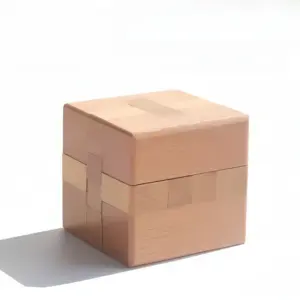
For a deeper dive into choosing mechanical puzzles that reward persistence, read Wooden Brain Teaser Puzzles: What 200 Solves Taught Me About Sanity — it covers the feel of a satisfying solve and how to judge build quality before you buy. And if you’re leaning toward the DIY route, our guide on how to build a puzzle box will walk you through creating a finale container that’s as rewarding as the puzzles themselves.
Now, here’s your next step. Decide which path you’re taking: DIY or pre‑made. If DIY, print the checklist and difficulty‑curve template from the Quick Reference section above, buy a refillable wooden calendar frame (or reuse 24 envelopes), and schedule two hours this weekend to assemble. If pre‑made, open the buying guide, pick your category (metal, jigsaw, or logic), and add it to your cart tonight. Then set a reminder for November 28th to unbox and arrange the countdown. By December 1st, the first daily dose of challenge will be waiting. That satisfying click, that look of triumph — it starts with a single choice. Make it now.