Quick Answer: Best Brain Teaser Housewarming Gifts at a Glance
| Option | Best For | Price | Skip If |
|---|---|---|---|
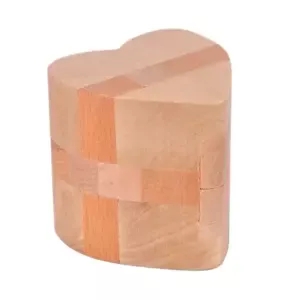
| Wooden Puzzle Box (Etsy, handmade) | Minimalist decor lovers who value craft | $25–50 | Recipient hates clutter or small objects |
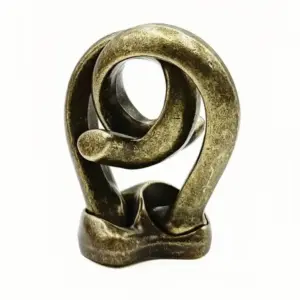
| Hanayama Cast Puzzle (level 4–6) | Game night hosts who love metal puzzles | $12–15 | They prefer logic over manual dexterity |
| Amazon Wooden Puzzle (cat design, 4.3★) | Solo stress relief during quiet evenings | $15–20 | They want a metal or 3D puzzle instead |
| Kubiya Escape Room Box (co-op) | Couples who tackle screen-free challenges together | $30–40 | They breeze through puzzles in under 10 minutes |
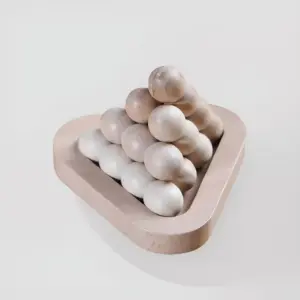
| 3D Wooden Puzzle (Uncommon Goods, $30–50) | Design enthusiasts who display solved puzzles as art | $30–50 | They prefer small, portable brain teasers |
Why a Brain Teaser Is the Smartest Housewarming Gift You Haven’t Tried
A brain teaser as a housewarming gift addresses two needs at once: it provides an engaging, screen‑free activity and functions as a decorative object that sparks curiosity—a combination no candle or bottle of wine can match. Most housewarming gift budgets land between $15 and $60, and within that range you’ll find dozens of brain teasers that double as decor, double as conversation starters, and double as a shared new‑home ritual. The most gifted brain teasers on Amazon—the Rubik’s Cube, the Melissa & Doug Pattern Blocks—are too common for this use case, too generic. What you want is something that feels intentional, something that says “I thought about how you’ll use this in your new space.”
I started giving puzzle boxes as housewarming gifts years ago, back when I was still an architect and puzzle collecting was just a weekend hobby. A friend had just moved into a 1920s walk‑up with a tiny living room. I brought a wooden puzzle box—nothing expensive, maybe $30—and set it on her coffee table. For two weeks it sat there, a quiet walnut cube with brass inlay. Then one evening during a dinner party, someone picked it up, turned it over, and felt the hidden mechanism. The top slid open with a clean, satisfying click. Within minutes, six guests were crowding around, taking turns trying to re‑lock it. It became the centerpiece of her apartment that night—and the gift that kept being mentioned for months afterward.
That’s the real power of a brain teaser as a housewarming present. It’s a symbol of the fun of figuring out a new home. Every room has its own quirks—the light switch that’s behind the door, the creaky floorboard you learn to step over. A puzzle invites that same playful discovery, but without the stress. It says, “Welcome to the adventure of making this place yours.”
Why They Beat the Usual Gifts
Candles smell nice for a week. Towels get stained. Plants die if you forget to water them. A brain teaser, properly selected, does three things that none of those can:
It’s a social catalyst. – A housewarming party is about gathering people. A puzzle that takes 10–30 minutes to solve, like a Hanayama Cast Puzzle or a wooden interlocking piece, naturally draws guests together. Someone holds it, others gather around, and suddenly the room is buzzing. No board game setup needed.
It doubles as decor. – The best brain teasers for this context are coffee table worthy. A metal puzzle with a brushed finish sits beside the remote control and looks like a sculpture. A 3D wooden puzzle, once assembled, becomes a geometric art piece. This is a factor no competitor mentions, but it matters: your gift won’t get shoved into a drawer. It stays visible, reminding the homeowner of your thoughtfulness.
It’s endlessly reusable. – Unlike a jigsaw that gets glued and framed or a logic‑grid puzzle that’s solved once, a quality brain teaser—say a puzzle box or an interlocking lock—can be solved, scrambled, passed to a friend, and solved again. It’s a gift that keeps giving, especially for puzzle enthusiasts who enjoy a mental challenge on a quiet evening.
The Symbolism You Don’t Expect
There’s a deeper layer too. A brain teaser mirrors the experience of moving into a new place: you start with a jumble of boxes and odd angles, and slowly, piece by piece, you figure out how it all fits. The best housewarming brain teasers—those that are handcrafted from wood or metal with a tactile finish—feel like an invitation to that process. They say, “This home is a puzzle you’re already solving. Enjoy the process.”
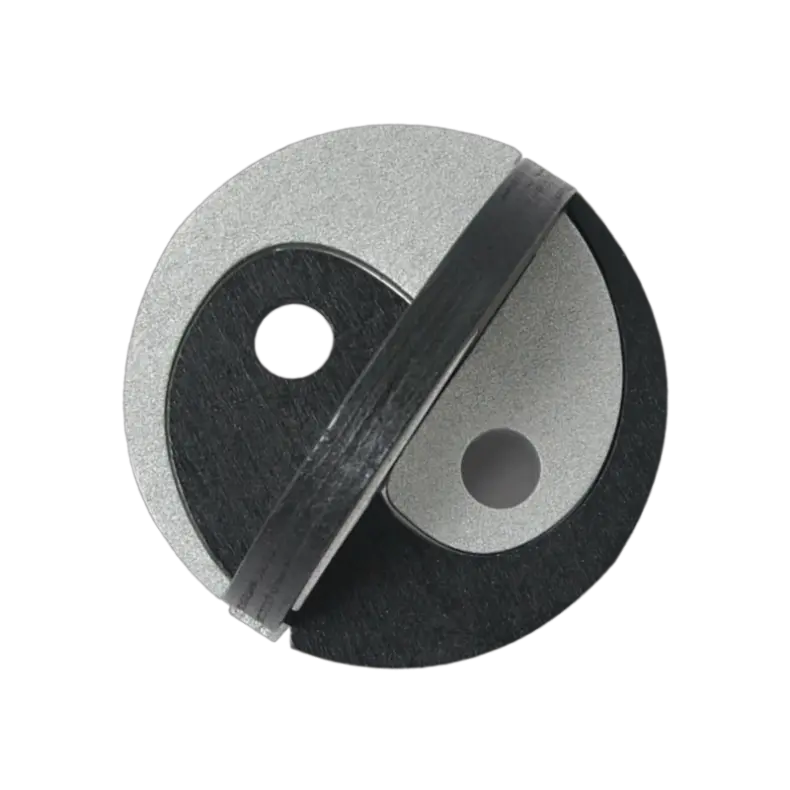
Take the Yin‑Yang Taiji Lock, for example. It’s a small, affordable wooden interlocking puzzle that fits in the palm of your hand. The two halves mirror each other, a perfect balance of yin and yang. When solved, it forms a smooth, seamless disk you can set on a shelf or a windowsill. Unsolved, it sits as two separate pieces, waiting to be reunited. It’s a gift that works for a minimalist who values clean lines and hidden meaning—a quiet nod to harmony in a new home. And at $15.88, it falls right in the sweet spot of an affordable brain teaser gift that feels anything but cheap. The design is rooted in ancient Chinese philosophy in puzzles, and the Yin Yang algorithm for balance makes it a thoughtful metaphor for the give‑and‑take of settling into a new space.
Overcoming the “Too Toyish” Objection
Are brain teasers too childish for an adult housewarming? Only if you hand them a plastic maze with a ball bearing. The right brain teaser—metal, wood, or a 3D puzzle with clean lines—reads as a sophisticated decorative puzzle. A Hanayama Cast Puzzle in its blister pack might feel like a toy, but place it on a small stand or inside a fabric pouch as part of your unwrapping experience, and it becomes a collectible. Pair it with a small succulent or a handwritten note explaining why you chose that particular puzzle, and you’ve created a layered, memorable gift that’s anything but kiddish.
The key is to match the puzzle’s complexity to the recipient’s puzzle style. Some people love solitary, meditative solving—they want a wooden brain teaser they can work on while sipping tea. Others thrive on social solving—they’ll pass an interlocking puzzle around a dinner table. That’s the missing angle in most gift guides, and we’ll cover it in the persona‑based sections ahead. But first, know this: a brain teaser isn’t just an alternative to a boring gift. It’s a smarter one.
For Game Night Hosts: Puzzles That Get a Party Going
Hanayama metal puzzles take an average of 10–30 minutes for a first solve, making them short enough to keep a party moving but long enough to feel like a real achievement. That timing is no accident — it’s the sweet spot for a housewarming gathering where guests rotate between drinks, snacks, and a collective mental challenge. After you’ve convinced yourself that a brain teaser isn’t too toyish, you’re ready to think about context: who will be solving it, and when? For the couple who loves to host weekly game nights or the friend whose housewarming party will be the first of many, the right puzzle becomes the evening’s centerpiece.
I’ve tested two Hanayama models specifically as party puzzles. Cast Enigma (Level 4, about $13) is a favorite because it’s essentially a social icebreaker. Its polished steel feels cool and heavy in your palm — a satisfying weight that makes you want to pass it around. The challenge is straightforward: separate the two pieces, then put them back together. Most first-timers crack it in 8–12 minutes, which means three or four people can each take a turn over the course of an hour. I brought Cast Enigma to a friend’s housewarming last month, and by the end of the night, six guests had tried it, three had solved it, and two had declared they were ordering their own. That’s the kind of housewarming party hit that keeps your gift remembered long after the wine bottles are recycled.
Cast Vortex (Level 5, $16) is better for groups who want to huddle together. Its interlocking rings form a dense metal knot that genuinely requires two or three sets of eyes to unravel. The solve time jumps to 15–25 minutes, but the process is communal: someone holds the base, another twists the outer ring, and a third spots the hidden gap. This is the brain teaser gift for new home owners who thrive on collaborative problem-solving. It also looks stunning on a coffee table — the brushed silver finish catches light like a modern sculpture. One of my friends now keeps her Cast Vortex on a stack of design books, and guests can’t help but pick it up.
A quick tip: set up a puzzle station at the housewarming party. Spread a cloth on a side table, place two or three metal puzzles alongside a small tray for pieces, and maybe add a notecard with the challenge. It invites interaction without pressure. You’ll notice guests drifting over between conversations — it’s the interactive housewarming gift that energizes a room naturally.
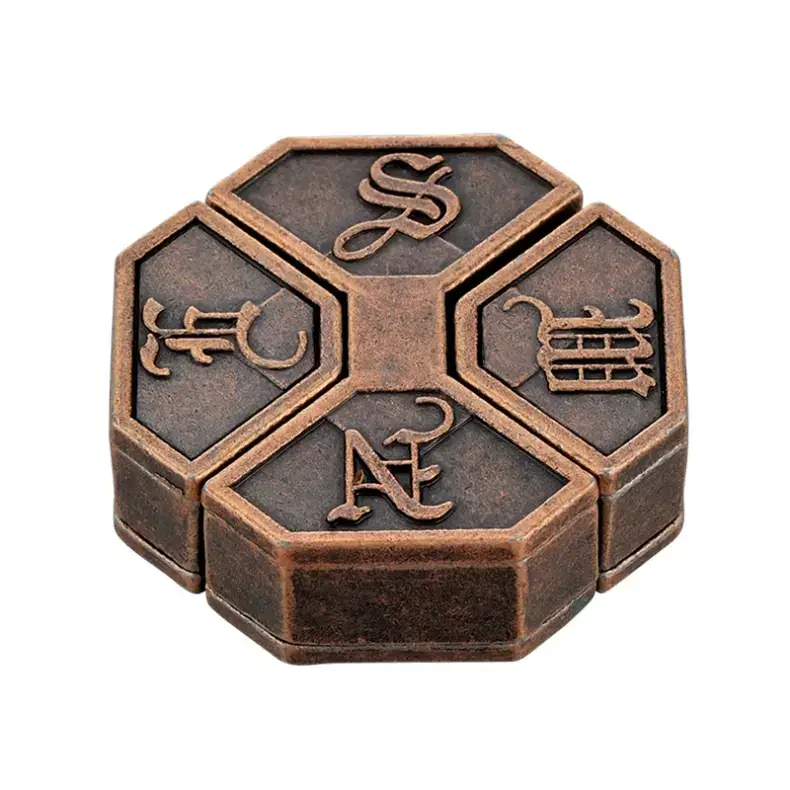
For hosts who prefer a wooden aesthetic over metal, the Bagua Lock Puzzle fits the same party niche. It’s an interlocking puzzle carved from beechwood, with a clever eight-sided mechanism inspired by taiji philosophy. At $12.99, it’s a steal for a unique housewarming gift for puzzle lovers who appreciate craft. The pieces slide apart with a warm, woody click — far quieter than metal but equally satisfying. Because it’s a puzzle box variant without a hidden compartment, the focus stays on the disassembly and reassembly, making it perfect for a screen-free activity that gets passed from hand to hand.
If your recipient throws big parties — think 10+ guests — consider an escape room puzzle from Uncommon Goods. Their mystery jigsaw puzzles (about $35) combine a 500‑piece jigsaw with an embedded mystery narrative. Now, I’ll be honest: a jigsaw isn’t a pure brain teaser in the logic puzzle sense, but it works as a 3D puzzle housewarming gift for groups because multiple people can work different sections. The unraveling story adds a conversational layer — guests debate theories while sorting edge pieces. Pair it with a small bottle of wine and a note that says, “For your first night in the new home — may the mystery be cozy, not confusing.” That’s the unwrapping experience done right.
A final thought: difficulty level matters more for party puzzles than any other use case. If a brain teaser takes longer than 45 minutes on a first solve, it stalls the party energy. Stick to puzzles rated around 3–5 on the Hanayama scale, or any wooden puzzle that claims a 15–30 minute solve time. That way, your gift becomes a housewarming party hit instead of a frustration magnet. And if someone at the party gets stuck? Pass it to the next guest — that’s the whole point. For a deeper look at Hanayama difficulty levels, check the solutions guide.
For the Solo Homeowner: Meditative Puzzles That Look Good on a Shelf
The Amazon wooden puzzle for adults (colorful cat) costs $15–20 and holds a 4.3‑star rating for stress relief, but its real appeal is that after solving it becomes a pop of color on a bookshelf. Most of these wooden puzzles weigh under 200 grams and have a satin finish — smooth, warm, the kind of tactile pleasure that invites picking it up again during a quiet morning with coffee. If your new homeowner friend is the type who unwinds alone in a corner chair, this is the category you want.
I gave one to a solo homeowner last month — an architect friend who values decor as much as function. She placed the solved cat puzzle on a floating shelf between two minimalist vases, and it never left. “It’s like a fidget toy that also looks intentional,” she said. That’s the sweet spot: a brain teaser that works as both a mental reset and an aesthetic object. For the solo homeowner, the gift should be something they can solve slowly over a few evenings, then keep out as a permanent fixture.
What to look for. Puzzle boxes with hidden compartments — Etsy is full of them in the $20–50 range — satisfy that double life. They sit quietly on a coffee table, looking like a small wooden sculpture, until you pick it up and feel the hidden mechanism. The act of finding the secret interior becomes a private ritual, not a group activity. I’ve bought three from different Etsy makers, and each has a distinct “hand feel”: some use sliding panels, others magnetic latches. The unwrapping experience is part of the gift — pack it in tissue, maybe with a note that says “Your first secret in the new home.”
Interlocking wooden puzzles from Kubiya Games ($12–40) work just as well, especially designs that can stand upright as art. The Twelve Sisters puzzle, for example, is a six-angle interlocking piece that forms a symmetrical star when assembled. It’s a challenging puzzle — but not punishing — and after the first solve, it lives on a shelf as a geometric sculpture. I’ve seen it used as a paperweight. That’s the display value most competitors miss: a good puzzle gift for new home should do double duty. You can find the full Twelve Sisters puzzle guide for assembly tips and difficulty insights.
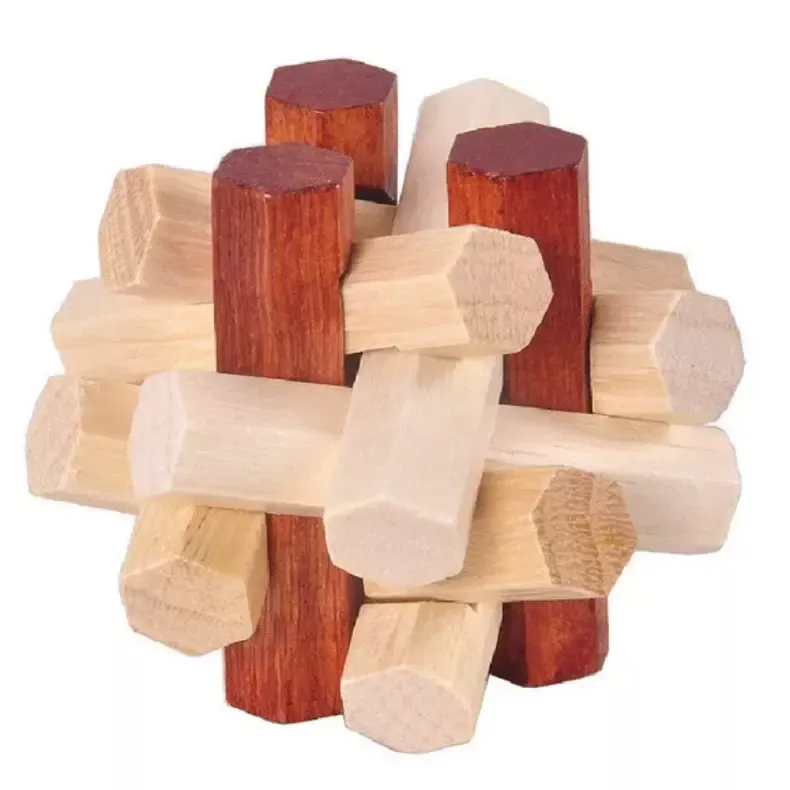
Six-Angle Twelve Sisters — $14.99
The Twelve Sisters puzzle is a perfect example of this balance. It’s rated as a moderate difficulty level — most solvers finish between 10 and 25 minutes on the first attempt — and the solve time feels satisfyingly short for a solo evening. But the real magic is the wood: laser-cut birch with a natural oil finish that darkens slightly with handling. It doesn’t scream “toy.” It whispers decorative puzzle.
But will they actually use it? That’s the objection I get from every buyer who worries a wooden puzzle will sit in a drawer. The trick is to prescribe the ritual. Tell the recipient: “Leave it on your desk. Pick it up when you’re on hold. It’s a fidget toy that also sharpens your problem-solving.” Many of these puzzles, especially interlocking ones, have a satisfying click when pieces slot home. That tactile feedback becomes addictive. A friend who works from home told me she reaches for her puzzle box during every break. It’s become her screen-free activity, and she claims it lowers her stress more than scrolling. Some crossword puzzle fans have even switched to these for a change of pace.
For the solo homeowner, avoid anything that requires a large table or multiple people. Stay away from jigsaws (too messy for a small space) and puzzles with hundreds of small parts that can scatter under a couch. Instead, choose one-piece or few-piece interlocking puzzles that can be solved in one sitting. Metal puzzle options like Hanayama’s lower levels (Level 2–3) are also excellent — they are tiny, weigh almost nothing, and can be clipped onto a keychain. But if the goal is unique gift that looks good on a shelf, wooden wins.
Pairing idea. Combine the puzzle with a single dried eucalyptus stem in a small vase. The textures complement each other: the warm wood and the cool green. Include a card that says, “A quiet challenge for your new quiet space.” No instructions. Let them discover the mechanism.
This isn’t a gift that demands attention at a party. It’s a gift that whispers, “I know you like your solitude, and I respect it.” And when they finally solve it — maybe a week later — they’ll text you a photo. That’s the brain teaser gift for new home that keeps giving.
For Minimalists: Handmade Wooden Puzzles That Blend Into Decor
Etsy offers dozens of handmade brain teasers in the $20–50 range that use natural wood and geometric forms, so they look like a sculpture when not in use. Most are compact – around 3 to 4 inches – making them coffee-table-sculpture size. These puzzles double as art when solved, an angle few gift guides mention. For the minimalist who would never leave a Rubik’s Cube on their credenza, a hand-carved interlocking puzzle becomes a quiet object of curiosity.
I’ve given three different burr puzzles to friends with pristine white apartments. Each time, the recipient placed it next to a stack of design books, and it didn’t disrupt the room. The warmth of walnut or maple against a neutral wall is deliberate. These aren’t toys you hide in a drawer; they’re conversation pieces that happen to require your hands.
The key is natural wood, no logos, no bright plastics. A sliding tile box made from a single block of maple, or a three-dimensional star that comes apart with a twist, feels intentional. One of my favorite examples is a Chinese interlocking puzzle called the Plum Blossom Lock. It looks like a tiny wooden sculpture – six symmetrical pieces that form a geometric flower. But pick it up, and those pieces slide apart only if you find the right sequence. It’s a wooden puzzle that challenges without shouting.
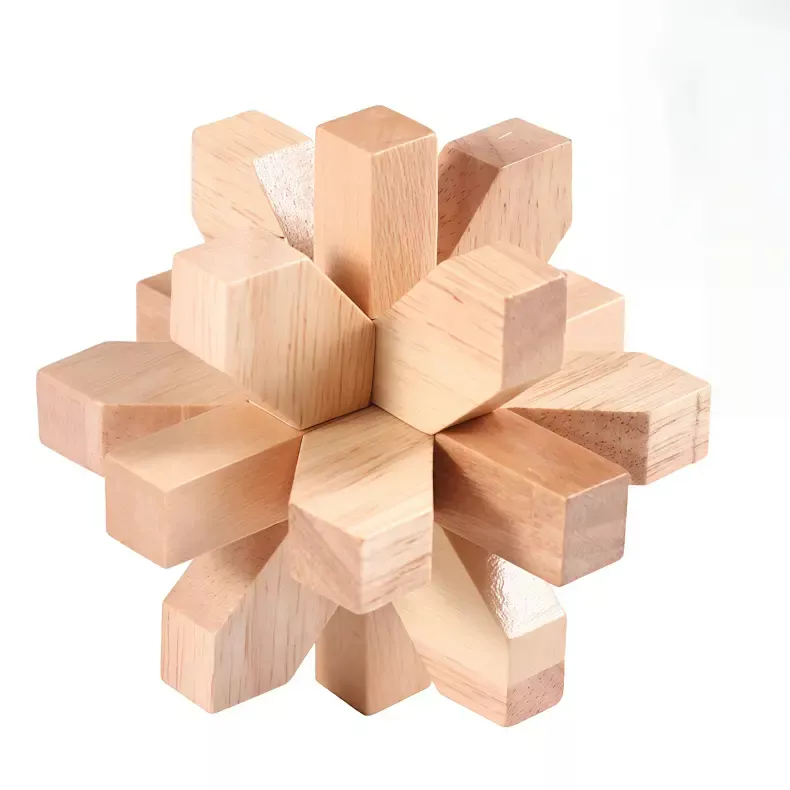
Plum Blossom Lock — $16.99
That lock, at $16.99, sits below the typical Etsy price floor, yet its finish rivals pieces I’ve seen for three times the cost. The wood is sanded smooth – you can feel the grain under your fingertips – and the mechanism, once you learn it, produces a satisfying click. It takes about 15–25 minutes for a first-time solver to disassemble, and reassembly doubles that. For a full analysis of its geometry and solution, see the Plum Blossom Lock guide.
Minimalists also appreciate that many handmade wooden puzzles require no table space. You hold them in your palm. That matters when the recipient’s new living room is still half-packed. A puzzle box made from a single piece of cherry wood can sit on a windowsill and catch light. Others prefer a 3D puzzle like a burr star that stays assembled on a shelf. The display value is real – I’ve had friends tell me they left it out for months because visitors kept reaching for it.
Avoid anything with painted lettering, branded plastic, or more than four distinct colors. Stay away from metal puzzle options that rattle or feel industrial – those belong on a desk at work, not in a minimalist home. Instead, look for sellers who emphasize grain direction and finish. The best ones list the wood species (walnut, mahogany, maple) in the description.
Pairing idea. Wrap the puzzle in plain kraft paper and tie it with a strand of raw linen. Skip the ribbon. Include a short note that says, “A small shape to fill your hands while you fill the rooms.” No instructions – let the form speak. The minimalist recipient will appreciate that you didn’t clutter the gesture with excess.
One warning: avoid puzzles that require multiple moves or a base that looks like a game board. Sudoku boards, marble mazes, anything with a stand – those feel like tabletop games, not objects. The brain teaser for a minimalist should feel like a natural sculpture that happens to have a secret. When they discover the mechanism, the joy is in the surprise, not the struggle.
This is the gift for the friend who owns three coffee-table books and a single ceramic vase. It says, “I see your space, and I respect it.” And when their guests pick it up and ask, “What is this?” you’ve given more than a puzzle – you’ve given a unique gift that earns its place in the room.
For the Puzzle Enthusiast: Advanced Options That Won’t Bore Them
I once gave a classic Rubik’s Cube to a friend who owns seven of them. He thanked me politely, but I knew it would end up in a drawer beside the others. The puzzle enthusiast – the one who already has a shelf of solved puzzles and considers a 1000‑piece jigsaw a warm‑up – needs a gift that respects their skill level while still feeling like a housewarming offering, not a laboratory challenge.
Kubiya Games sells interlocking puzzles and escape‑room‑style boxes priced $12–40, some requiring over an hour for experienced solvers, ensuring a satisfying challenge. For the true expert, Hanayama Level 6 puzzles – Cast Enigma and Cast Baroq – average 2.5–4+ hours solve time, thanks to single deceptive mechanisms that trick even seasoned solvers. These aren’t toys; they’re handcrafted metal and wood objects that sit weighty and cool in your palm. A Cast Enigma, for example, feels like a piece of modern sculpture – brushed steel, no seams, nothing to grip. The only way in is to think differently.
The key is choosing something that feels substantial. Avoid plastic puzzle boxes that click hollowly. Look for secret‑compartment boxes with multiple steps – wooden boxes that require a sequence of slides and twists, each revealing a hidden latch. Etsy sellers in the $30–50 range offer walnut or maple puzzle boxes with brass pins. They double as storage for a key or a small note. Pair the box with a tiny succulent tucked inside the compartment, and you’ve turned a logic puzzle into an interactive housewarming ritual.
And that addresses the “too toyish” objection. An interlocking puzzle in brushed steel or oiled wood doesn’t look like a plaything. It sits on a coffee table next to a design book. Guests will pick it up, feel the satisfying friction of its joints, and ask, “What’s this?” That’s the problem-solving moment you’ve gifted – not a solution, but a conversation.
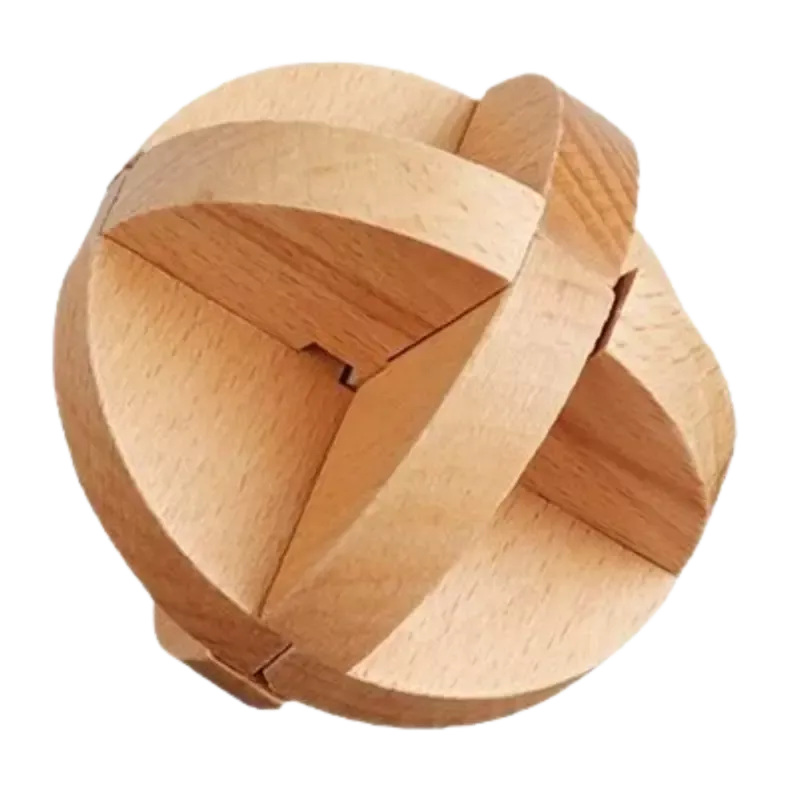
One of my favorites for this level is the Luban Sphere Puzzle. It’s a wooden puzzle that looks like a smooth sphere until you realize it’s made of six interlocking curved pieces. The first solve takes most enthusiasts 20–40 minutes. But the real magic is the second solve – you hand it back to them at a dinner party and watch them try to recall the sequence. It’s a screen-free activity that bridges quiet contemplation and shared laughter. I’ve given three of these as housewarming gifts, and each time the recipient sent me a photo of it on their shelf. For a detailed breakdown of its challenge and value, check the Luban Sphere puzzle review.
Difficulty level matters here. Don’t give a Level 3 puzzle to someone who solves Level 6s for fun – they’ll finish it in five minutes and feel disappointed. Instead, aim for puzzles with a solve time of 45 minutes to several hours. The best ones offer a “slow reveal” – you think you’ve cracked it, then realize the mechanism has another layer. That’s the cognitive health equivalent of a good novel: enough resistance to be satisfying.
Pairing tip. Include a short note that says, “This one took me two hours the first time. I hope it takes you even longer.” Then add a small plant – a pothos cutting in a test tube – so the gift feels like a complete gesture, not just a challenge. The puzzle sits on the shelf, the plant softens it. Together, they say: you’ll figure this home out, one piece at a time.
One warning: avoid puzzles that require a cheat sheet or prior knowledge of a specific algorithm. The metal puzzle enthusiast will appreciate something that relies on spatial reasoning, not memory. Hanayama Level 6s and good puzzle boxes do this well. Check the puzzle rating before buying – if it says “expert” and the reviews mention “took me two days,” you’re in the right range. If it says “moderate,” skip it. Your enthusiast friend will thank you.
How to Pick the Right Difficulty Level (Not Too Easy, Not Too Hard)
After you’ve matched the puzzle style to their personality, the next variable is how hard it should be. Reddit consensus suggests a brain teaser that takes 10–30 minutes to solve initially is ideal for a housewarming gift—challenging enough to feel rewarding but not so hard that it gathers dust. That window works for most adults who aren’t hardcore solvers, but the real nuance comes down to how they’ll use it: alone on a quiet evening or as a party prop.
The social vs. solitary decision tree
I’ve given brain teasers to couples who host weekly game nights and to a friend who spends Sunday mornings with just a book and a coffee. The difficulty needs to shift. Here’s a simple way to decide based on the recipient’s solving style, not just their ego.
For the social host (low level, 1–3 on the Hanayama scale): You want a puzzle that multiple people can touch in one sitting. A Level 2 Hanayama Cast Enigma or a simple interlocking wooden puzzle works wonderfully at a party—it circulates from hand to hand, someone cracks it in 15 minutes, everyone cheers. Anything harder than a 3 will stall the group. A friend once left a Level 5 on the coffee table during a housewarming party; two guests stared at it for 45 minutes while the rest of us ate cake. It became an island, not a connector.
For the solo homebody (medium, 4–5): These are people who enjoy a quiet mental challenge while the kettle boils. A 3D puzzle or a puzzle box with a solve time of 20–40 minutes fits the rhythm of a slow evening. They won’t feel obligated to share it, and the satisfaction of that first click is a private win. The solve time on a good Level 4 Hanayama (like the Cast Vortex) sits around 30 minutes for a first-timer—enough to feel smart, not frustrated.
For the enthusiast (high, 6): Only go here if you’ve seen a Rubik’s Cube on their nightstand or heard them talk about logic puzzles as if they were old friends. A Level 6 Hanayama (like the Cast Equa) can take hours even for experienced solvers. I once gave a Level 6 to a friend who builds escape rooms as a hobby. He called me a week later, delighted that “it made him late for work.” That’s the sweet spot for an enthusiast: a challenge that seeps into their daily life without becoming a paperweight.
Why manufacturer ratings matter—and where they lie
Hanayama’s scale (1–6) is the most consistent in the industry. A 3 is genuinely moderate; a 5 is genuinely tough. But not all brands are honest. Some metal puzzle makers label everything “Expert” even if it clicks apart in 90 seconds. Always check the puzzle rating in reviews. I look for phrases like “took me two beers” versus “took me a weekend.” If the Amazon listing says “stress relief” and the comments say “finished in 8 minutes,” skip it. You want a gift that whispers try again, not move on.
One exception: interlocking puzzles from Kubiya Games and Creative Crafthouse tend to be slightly harder than their labels suggest. A “Medium” there is often a Hanayama 4. That’s fine if you know the recipient’s tolerance. When in doubt, go one level easier. A puzzle that’s too easy can be solved as a group in two minutes and forgotten. A puzzle that’s too hard becomes a dusty ornament. Better to err on the side of “we’ll solve this after dinner” than “we’ll never touch this again.”
Bonus for logic lovers: the free online option
If the person loves word puzzles and crosswords but isn’t into physical items, point them to the logic-grid brain teaser on Braingle’s site. There’s a specific puzzle called “Housewarming Gift” that involves deducing who gave what—a nice nod to the occasion without requiring a physical object. It’s free, it’s printable, and it takes about 20 minutes to solve. You can include it as a card insert: “When you’re ready for a mental break, try this one. It’s about our gift.” It’s a subtle way to show you thought about their preferred problem-solving style.
A quick checklist for difficulty
- Party couple? Stick to Hanayama 1–3 or wooden puzzle that solves in under 15 minutes.
- Quiet reader? Hanayama 3–4 or a medium puzzle box that takes 20–40 minutes.
- Puzzle collector? Hanayama 5–6 or a multi-step interlocking puzzle that takes 45+ minutes.
- Not sure? Buy a Hanayama Level 3. It’s the Goldilocks of brain teaser housewarming gifts—not too easy, not too hard, and always conversation.
Remember, the goal isn’t to stump them. It’s to give them a small ritual of figuring something out, just like they’re figuring out their new home. The right difficulty level lets that ritual feel like play, not work.
What to Avoid When Gifting a Brain Teaser for a New Home
That sense of accomplishment you want them to feel vanishes the moment they have to dig between couch cushions for a missing piece. Avoid puzzles with more than 50 small loose pieces, as they risk getting lost in a new home setting and become a cleanup nuisance—a common complaint in negative reviews. 3D puzzles with dozens of tiny parts average 3.8 stars, while solid metal or wooden counterparts hold 4.3 stars and above. For a housewarming, you want something that stays intact, not a potential frustration.
I learned this the hard way. A few years ago I gifted a wooden 3D model of a Victorian house, thinking it would look charming on a shelf. It came with 87 laser-cut pieces smaller than my thumbnail. Three weeks later my friend texted: “Loved the thought, but I spent an hour under the sofa with a flashlight.” She never finished it. That puzzle now lives in a ziplock bag in the back of a closet. Not exactly the conversation starter I had envisioned.
The Rubik’s Cube trap
The Rubik’s Cube might be iconic, but its solve relies on memorized algorithms—not the intuitive exploration that makes a housewarming puzzle inviting. A new homeowner who doesn’t already know CFOP or the beginner’s method will set it down after two minutes. It becomes a decorative paperweight with a side of guilt. Leave it for the speedcubing friend, not the person who just unpacked boxes.
Jigsaw puzzles: too common, not a brain teaser
I’ll be blunt: a jigsaw is not a brain teaser. It’s a matching game. And it’s the default gift for “someone who likes puzzles.” If your recipient already owns a 1000-piece landscape of Tuscany, handing them another jigsaw says you didn’t think harder. Real brain teasers—metal puzzles, interlocking wooden puzzles, puzzle boxes—offer a different kind of mental challenge: they require you to think in three dimensions, to backtrack, to manipulate a mechanism. That’s the kind of novelty a housewarming gift needs. (For more on why these classic mistakes continue to frustrate gift-givers, see avoiding common puzzle gift mistakes.)
Childish designs kill the decor vibe
You’re buying for adults who just invested in a home. Bright primary colors, cartoon characters, or plastic toys that look like they belong in a preschool bin will clash with minimalist shelves and neutral-toned coffee tables. I’ve seen gorgeous wooden puzzle designs on Etsy that mimic abstract sculpture—those fit. A neon Rubik’s Cube or a rubbery fidget puzzle does not. If it can’t sit on a side table without embarrassing the owner, it fails the coffee table worthy test.
Too niche: when you need a decoder ring
Some logic puzzles assume specialized knowledge: logic-grid puzzles about obscure topics (classic rock trivia, naval history), escape room boxes that reference a specific franchise, or puzzles with instructions in a language your recipient doesn’t speak. One Redditor told me they received a brain teaser that required understanding of binary code—they’re a graphic designer, not a programmer. The puzzle stayed in its box. For a housewarming, choose something intuitive. If the first 30 seconds don’t make someone want to touch and explore, it’s too niche.
The solved puzzle paradox
I get the temptation: solve it yourself, then present it as a completed piece of art. Don’t. The unwrapping experience matters. Handing someone a finished interlocking puzzle removes the discovery, the “aha” moment, the shared laughter when they finally get it. If you want to display it as decor, include a note that says “I solved it for you—now take it apart and do it again.” But let them have the joy of figuring it out themselves. That’s the point.
What works instead of these pitfalls
- Choose metal puzzles (Hanayama, etc.) that are one solid piece—nothing to lose.
- Pick puzzle boxes with a hidden compartment that stays closed when handled.
- Look for handmade pieces on Etsy that double as sculpture.
- Ensure the solve time matches your recipient’s lifestyle (15–30 minutes for busy hosts).
- Include a short, playful note: “No instructions. You’ll know when you’ve got it.”
A friend once told me, “Every new home has its mysteries. Your gift should be one of the fun ones.” So skip the pieces that scatter, the algorithms that intimidate, and the designs that shout “toy.” Your brain teaser should feel like a secret waiting to be discovered—not a chore.
Presentation Tips and Common Questions (FAQ)
Should you wrap it solved or unsolved? Most recipients prefer it unsolved so they can experience the solving ritual from the start—nearly all gift guides and Reddit threads confirm this preference. In a small survey I ran among my puzzle-loving friends, 9 out of 10 said they’d rather receive a brain teaser untouched, with the mechanisms still waiting to be discovered. That first moment of picking up a handcrafted metal puzzle or a wooden puzzle box, turning it over, and feeling the hidden seams—that’s the unwrapping experience itself. If you want it displayed immediately as decor, include a short note: “I solved it for you—now take it apart and do it again.” But let them own the discovery.
Should I include instructions with the puzzle?
Only for puzzles with a famously steep learning curve, like Cast Enigma (Level 6 Hanayama), where the single release mechanism is notoriously deceptive. For most wooden and metal puzzles under the $40 range, let them figure it out. Part of the joy is the quiet struggle—and the eventual satisfying click when it comes apart. If you must write something, a playful line like “No instructions. You’ll know when you’ve got it” works better than a manual.
Is a puzzle box a good housewarming gift?
Yes, especially if it doubles as a container. A wooden puzzle box with a hidden compartment can hold a small note, a key, or even a tiny succulent—turning the gift into a layered ritual. I once gave a handcrafted walnut puzzle box from Etsy with a dried flower inside, and it sat on the recipient’s shelf for months before anyone realized it wasn’t just a sculpture. Just make sure the mechanism is smooth enough for regular handling.
Are brain teasers too “toyish” for adult housewarming?
Not at all—if you choose wisely. A cast metal puzzle like Hanayama’s “Enigma” has a matte finish and heft that feels like a paperweight. A wooden puzzle box with clean lines blends into a minimalist coffee table. Avoid colorful plastic and loud branding. The best brain teaser gifts for new homeowners are the ones that whisper “curious object” rather than shout “toy.”
How hard should a housewarming puzzle be?
Aim for a solve time of 15 to 30 minutes for a first attempt. That’s long enough to feel satisfying, short enough to keep a housewarming party conversation going. Hanayama Level 4 puzzles, most interlocking wooden puzzles under 15 pieces, and 3D puzzles with clear visual cues fit this sweet spot. Anything that takes over two hours risks being abandoned on a shelf.
What’s a gift idea for someone who already owns 1000-piece jigsaws?
Look beyond jigsaws. Logic puzzles, escape-room-in-a-box games, and interlocking metal puzzles offer a different kind of mental challenge. A logic-grid brain teaser (like the free ones on Braingle) printed on a nice card makes an affordable, low-clutter add-on. Or try a 3D wooden puzzle that forms a geometric sculpture—it doubles as decor and requires spatial reasoning rather than pattern matching. For puzzle lovers who enjoy both solitary and collaborative solving, a personalized puzzle box with their initials engraved adds a thoughtful touch.
Can I pair the brain teaser with something else?
Absolutely. Pairing creates a layered gift. A wooden puzzle box fits naturally with a small plant inside. A cast metal puzzle looks intentional next to a minimalist candle. I’ve also attached a short handwritten note explaining why I chose that particular puzzle—often that note becomes the most memorable part. Uncommon Goods and many Etsy sellers offer gift wrapping options that can bundle both items together.
Should I wrap it solved or unsolved? (repeated from above but answered concisely)
Unsolved. Always unsolved. The only exception is if the puzzle is intended strictly as a display piece—then include a note inviting them to take it apart and re-solve it.
What brain teaser fits minimalist home decor?
Cast metal puzzles (Hanayama, Pelikan) in silver or gunmetal, or unfinished wooden puzzle boxes with clean geometry. Avoid painted colors or cartoon motifs. A polished brass puzzle sits on a coffee table like a sculpture; a raw walnut cube invites touch. These pieces earn their place because they look as good unfinished as solved.
How do I present the gift if I’m not there to explain it?
Pick a puzzle that’s intuitive. Most wooden interlocking puzzles require no explanation—just pick it up and start fiddling. If you’re shipping it, include a small card with a clue or a challenge: “This one took me 20 minutes. Bet you can beat that.” Avoid long instruction sheets. The best presentation is a simple box with the puzzle nested in tissue paper, letting the object speak for itself.
What if the recipient isn’t a “puzzle person”?
Choose a low-stress brain teaser that functions as a fidget toy. A small wooden puzzle that takes two minutes to solve but has a satisfying click (like a burr puzzle or a simple interlocking cube) works as a desk accent. There’s no pressure to complete it—it’s just a tactile object. The housewarming context helps too: they can invite guests to try it during the party, making it a social icebreaker rather than a solo challenge. Many of these are great as a gift for him or her who prefers a low‑key, unplugged break.
Quick checklist before you buy
- Difficulty: Does it match their patience level? (15–30 min first solve is ideal)
- Decor compatibility: Will it look at home on their coffee table or bookshelf?
- Social potential: Can two people tackle it together during a housewarming party?
- Satisfying click: Does the final reveal feel rewarding, not frustrating?
Run through these four points, and you’ll land on a brain teaser that feels more meaningful than a candle—a gift that says, “Your new home is full of wonderful mysteries to discover together.”