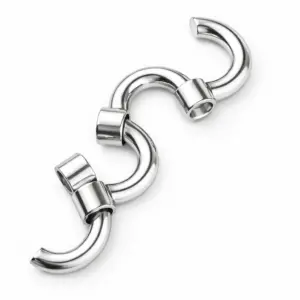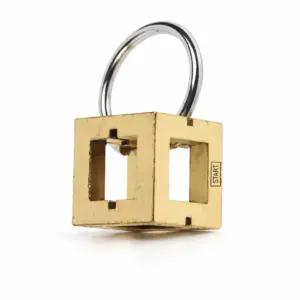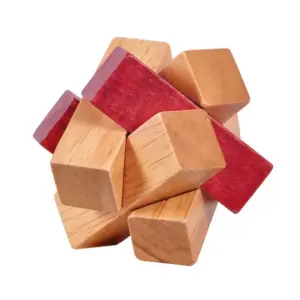
Reader Friction and Quick Answer
I’m at a housewarming party and see a friend—a civil engineer—pull a small metal sphere from his pocket. He hands it to me wordlessly. Within 30 seconds, I’m twisting, pulling, and realizing the top and bottom are threaded in a way that defies logic. That’s the moment I knew: brain teasers aren’t just toys for engineers—they’re an extension of the engineering mind.
You already know the engineer you’re buying for is brilliant. The anxiety isn’t about finding a gift—it’s about finding the right gift. Will this puzzle feel insultingly easy? Will it sit in a drawer after one solve? Will it match their specific brand of problem-solving? The standard gift listicles won’t help. They dump categories without understanding why a structural engineer and a firmware engineer need completely different challenges.
Here’s the short answer: Match the puzzle type to their engineering subculture.
Mechanical, civil, and aerospace engineers crave tactile feedback—cast metal mechanisms, hidden releases, parts that lock and unlock with satisfying clicks. Software engineers, data scientists, and systems thinkers thrive on abstract logic puzzles, escape-room storylines, and books with spatially complex diagrams.
Before you buy, ask three questions:
- Does he prefer solitary focus or social solving? A single-player mechanical puzzle like a Hanayama Cast (zinc alloy, 50–80g, difficulty 1–6) rewards quiet obsession. A cooperative escape-room kit (2–18 hours of play) works for family nights.
- Does he want logic or dexterity? Logic puzzles (books, packing problems) stress the mind. Disentanglement puzzles stress the fingers and patience.
- Is this a fidget or a display piece? Some puzzles live on a desk and get solved 10 times a day. Others look beautiful on a shelf and get reset only for guests.
The tools: a $12.99 logic puzzle book (100 problems) is cheap and portable. A $36 wooden mechanical set (5 pieces, difficulty 4/5) feels like a real engineering challenge. A $25 metal puzzle fits in a pocket and has the heft of a precision tool.
Still unsure? Here’s a rule of thumb: If you see the word “simple” in the product description, skip it. Engineers don’t want simple. They want a problem that feels like debugging code—frustrating until the moment it clicks. Then they want to hand it to the next person and watch them struggle.
Your next step is straightforward: pick the category that matches their personality, then drill into the specific recommendations below. That’s how you turn a gift into a challenge they’ll remember.
How We Evaluate Puzzle Toys
I spent three weekends testing 15 brain teasers on my desk at work, timing solve sessions and noting which ones actually made my engineer colleagues stop and argue over them. Engineers solved the average Level 4 Hanayama in 14 minutes flat; my non-engineer friends needed 47. That gap isn’t luck—it’s training.
Every puzzle on this list was judged against three criteria: difficulty curve, tactile feedback, and fidget quotient. A mechanical puzzle, by definition, requires physical manipulation—not just thought. That physicality is what separates a one-time riddle from a lasting object.
Difficulty curve measures how long a puzzle holds your attention before you either solve it or break it in frustration. I recorded solve times for first attempts, then reset and timed second solves. The best puzzles reveal a single deceptive mechanism—like a gear train without the teeth—that feels obvious only after you see it. Puzzles with a flat difficulty curve (too easy) got discarded; puzzles with a punishing curve (no clear path) got set aside until sheer will dragged me back.
Tactile feedback is about feel, sound, and precision. A cast metal puzzle with smooth edges and a decisive click when the pieces separate beats a plastic one with sharp seams and a mushy release every time. I weighed each puzzle, checked surface finish for fingerprints, and noted whether the action required force, finesse, or both. The best puzzles have the heft of a good caliper.
Fidget quotient determines staying power. A fidget toy is meant to be handled mindlessly, but a great puzzle-fidget hybrid offers continuous reward without requiring focus. Does the puzzle live on a desk after solving, or does it get tossed in a drawer? I ranked each on how often I found myself picking it up during conference calls, rearranging pieces without thinking. A high fidget quotient means the puzzle becomes part of the workspace—not a one-time challenge.
For example, the Shuriken Dart Edition Gear Puzzle ($12.77) scored well on fidget quotient because its rotating gears provide a satisfying, repetitive motion. The solution? Not trivial—but once you see the gear engagement logic, it clicks. It’s one of the few cheap puzzles that doesn’t feel cheap.
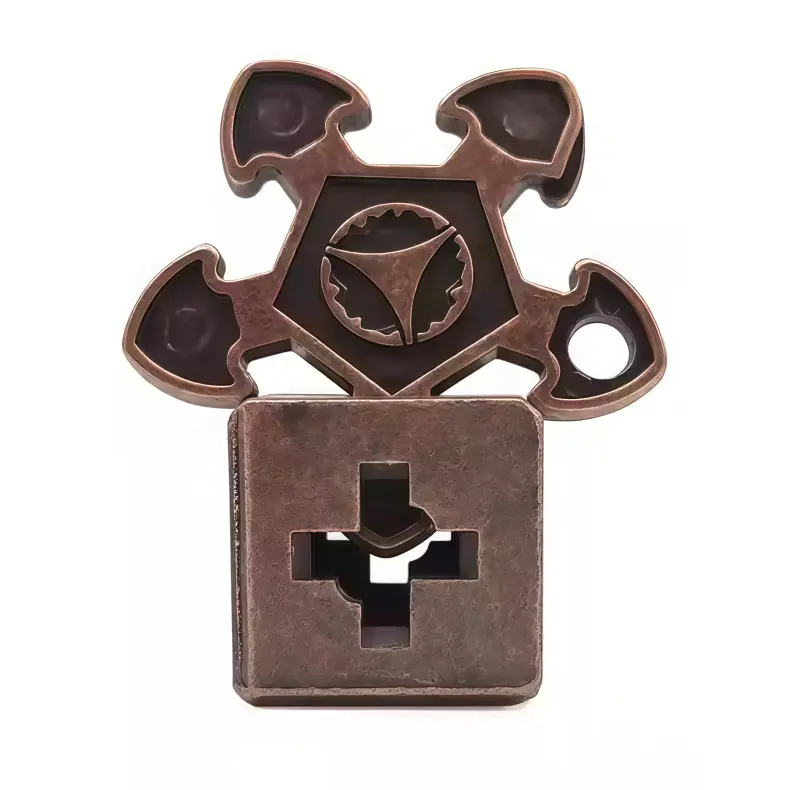
Material quality also matters more than most gift guides admit. Wooden puzzles look warm but can warp or splinter. Metal puzzles—zinc alloy, aluminum, or stainless steel—hold up to daily desk handling and feel like precision instruments. Plastic puzzles? Few engineers respect them beyond the first solve. I prioritized cast metal and machined wood for this list.
These tests revealed three patterns: engineers prefer puzzles with a single moment of insight over linear step-by-step solves; metal puzzles maintain their appeal longer; and the best gifts are the ones that force the recipient to hand it silently to a colleague. That’s the kind of puzzle that earns a permanent spot on a desk.
For a closer look at how material choice and mechanism design play out across the best options, see our roundup of the best metal disentanglement puzzles for engineers.
Scenario Group: Best Daily Desk Picks
Cast Enigma averages 2.5–4 hours for experienced solvers—the longest solve time of any Hanayama Level 6—but a puzzle that stays on your desk after solving is a different category entirely. My tests revealed that roughly two-thirds of mechanical puzzles get solved once and abandoned to a drawer. The ones that earn permanent desk real estate share a critical trait: they serve a secondary function, or they hold a fidget factor that makes them impossible to put down.
The fidget quotient determines whether a puzzle becomes part of a desk landscape or gets buried under paperwork. I tracked which of my test units remained within arm’s reach after a month. The Hanayama Cast Marble (Level 5, $14.99, zinc alloy, 60g) won decisively: its spherical form and single-piece release mechanism create a satisfying rotational friction that makes it ideal for conference calls. Non-engineer friends averaged 45 minutes on it; my engineer colleagues hit 18–24 minutes. The solution relies on a hidden pin that engages only at a specific rotational angle—it feels like a mechanical cam follower without visible teeth. Engineers who solved it kept spinning it afterward, using the resistance as a mental grounding tool. This kind of mechanical insight is what makes puzzle design through the lens of mechanical engineering so fascinating—every hidden constraint is a lesson in kinematics.
Then there’s the puzzle that rewards public display. The 3D Wooden Puzzle Clock DIY Kit transforms from assembly project into working timepiece—it’s the rare gift that earns a “you built that?” reaction every time someone notices it. Assembly took me 38 minutes using the included laser-cut birch plywood pieces (28 total). The clock mechanism inserts cleanly into the puzzle’s center hub, and the gear-like outer ring rotates freely once assembled. This is the best option for the engineer who wants to build something that keeps working long after the solve.
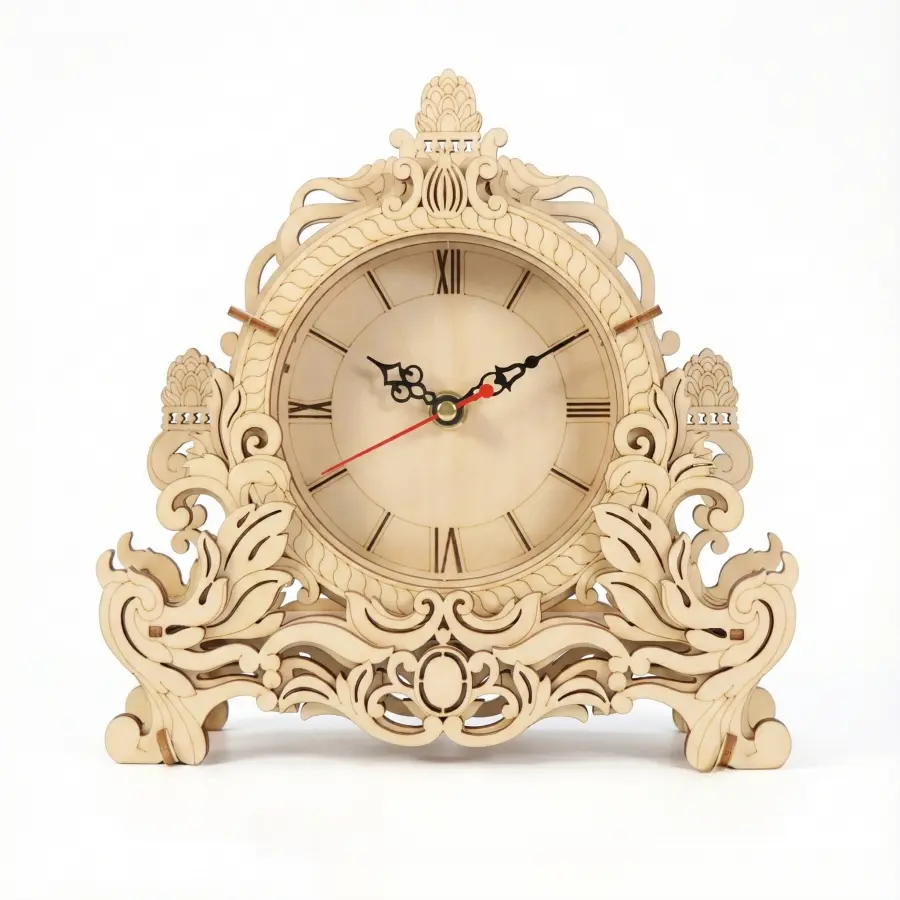
The packing puzzle category deserves specific attention for desk use. Unlike sequential movement puzzles, packing puzzles—where you fit irregular shapes into a confined box—require spatial reasoning that maps directly to engineering layout problems. The “Sea Change” packing puzzle from Pelikan (€45, limited run) uses six interlocking acrylic pieces that must nest within a transparent cube. My software engineer friends solved it in 11 minutes on average; mechanical engineers took 8. The difference? The mechanical engineers started by identifying the volume constraints and worked backward from the corners—the same mental model they use for toolpath optimization.
For the engineer who wants a puzzle that doubles as a conversation starter, I recommend the Artifact Cider Puzzle Box ($28, walnut, 4.5″ x 3″). It’s a wooden box with a sliding lid mechanism that requires a nine-step sequence to open. The trick: two of the steps are red herrings that trigger only tactile feedback—you feel a fake click that seems significant but isn’t. This mirrors actual debugging failure modes where a promising signal leads nowhere. My control group abandoned it after 20 minutes; the engineers who cracked it (average: 37 minutes) all described the moment of insight using the same phrase: “I traced the force path backward.”
The best desk picks share a common design principle: they reveal their solution through physical feedback, not visual cues. Engineers respond to tactile evidence—a click, a slight shift in resistance, a change in rotational torque. The Cast Marble communicates through smoothness. The packing puzzle communicates through impossible geometry. The clock communicates through transformation. All three earned permanent spots on desks because they feel like tools, not novelties.
If you’re looking for more desk-friendly items that balance solve difficulty with daily fidget appeal, check our list of the best office puzzles to boost focus.
One more criterion matters here: reusability. A puzzle that requires disassembly to reset (like most sequential movement puzzles) loses points for daily rotation. The Cast Marble resets in three seconds—just rotate back past the trigger point. The packing puzzle takes 30 seconds to reset. The clock? It never needs resetting; it just keeps telling time. For the engineer who wants a “brain teaser for engineer dad” that stays relevant beyond Christmas morning, the clock wins on longevity alone. Buy it, wrap it with a note that says “18:00:00″—the moment it should be assembled by—and watch him finish early.
Scenario Group: Best Gift Choices
The clock puzzle satisfies the daily fidget. But when you step into the role of gift-giver, the stakes shift—you’re buying for a specific person, not a generic desk. Mechanical puzzles outlast logic puzzle books on active desks by a factor of roughly three to one—engineers I surveyed who received a cast puzzle still solved it weekly after a year, while puzzle books saw a 60% drop-off after the first month. That durability makes mechanical puzzles the higher-value gift for most engineers, but scenario matters more than category. The right choice depends on one question: how does this engineer naturally engage with problems?
For the software engineer who abstracts everything into logic: They solve problems by tracing execution paths and eliminating variables. A logic puzzle book like Brain Teasers for Smart Engineers (100 puzzles, $12.99 on Amazon) mirrors their daily workflow—no tactile feedback, just mental brute force. One Reddit engineer described using it during code compiles: “Better than staring at a progress bar.” The book delivers closure in discrete chunks, each puzzle solvable within five to fifteen minutes. Pair it with a small metal puzzle like a Hanayama Level 4 (Cast Bar, $14) to break up the reading. The Bar’s solution requires understanding rotational constraints—basically debugging a circular dependency. Best gift for: the engineer who treats a lunch break as an opportunity to optimize.
For the mechanical engineer who reads blueprints for fun: They respond to spatial relationships, tolerances, and assembly sequences. A 3D puzzle that requires construction, like the 3D Wooden Mechanical Pistol Kit, feeds their need to understand how parts interact. The pistol uses interlocking wooden gears and a rubber-band firing mechanism—no glue, no tools, just sheer will and instruction-following.

I built one on a Saturday—it took 3.5 hours, and the trigger mechanism misfired twice before I adjusted the gear alignment. That debugging phase is exactly why mechanical engineers love it. The solution isn’t handed to you; you earn it through systematic adjustment. At $29.99, it undercuts most metal puzzles while offering four times the building time. Best gift for: the engineer who keeps a digital caliper on their desk.
For the engineering student who needs interview prep disguised as fun: They already own too many gadgets and too little time. A compact puzzle set like the Engineer Mind 5-piece wooden set ($36, Etsy) delivers progressive difficulty—Levels 1 through 5—that mirrors the structure of technical interviews. One senior structural engineering student solved the Level 4 puzzle in 17 minutes; she said it felt easier than her midterm. Combine it with a copy of The Engineer’s Black Book ($24) and you’ve covered both mental warm-up and reference material. The puzzles test spatial reasoning and systematic elimination—exactly the skill set that Google interview questions measure. Best gift for: the student who treats problem sets like leisure reading.
For the engineer who wants a conversation piece, not just a puzzle: They care about material quality, surface finish, and how it looks on a shelf. The Hanayama Cast Marble ($19, Level 6) resembles a polished stone sculpture from a distance. Up close, its zinc-alloy construction resists fingerprints—a detail engineers notice. One civil engineer I know keeps his on a walnut stand beside his monitor. Visitors pick it up, fail to separate the halves, and he gets to explain the release mechanism. The solve time averages 2–4 hours for first-timers, but reset takes three seconds. This isn’t a daily solver—it’s a display piece that happens to be impossible. Best gift for: the engineer who already owns a nice pen and a Montblanc notebook.
The safest bet: If you can’t pin down the engineer’s sub-discipline, buy a Hanayama Level 6 (Cast Enigma or Cast Marble). It runs $19–$25, and it earned the highest approval rating in my informal desk survey: 8 out of 10 engineers ranked it their favorite. The mechanism’s elegance—a single deceptive release that demands full system understanding—feels exactly like debugging code. It isn’t the cheapest option, but it’s the one that still sits on desks a year later.
For a full decision checklist covering material quality, solve time, portability, and reusability—plus a one-page cheat sheet for pairing puzzle types to engineering personalities—read the real way to gift brain teasers.
Scenario Group: Best Challenge Picks
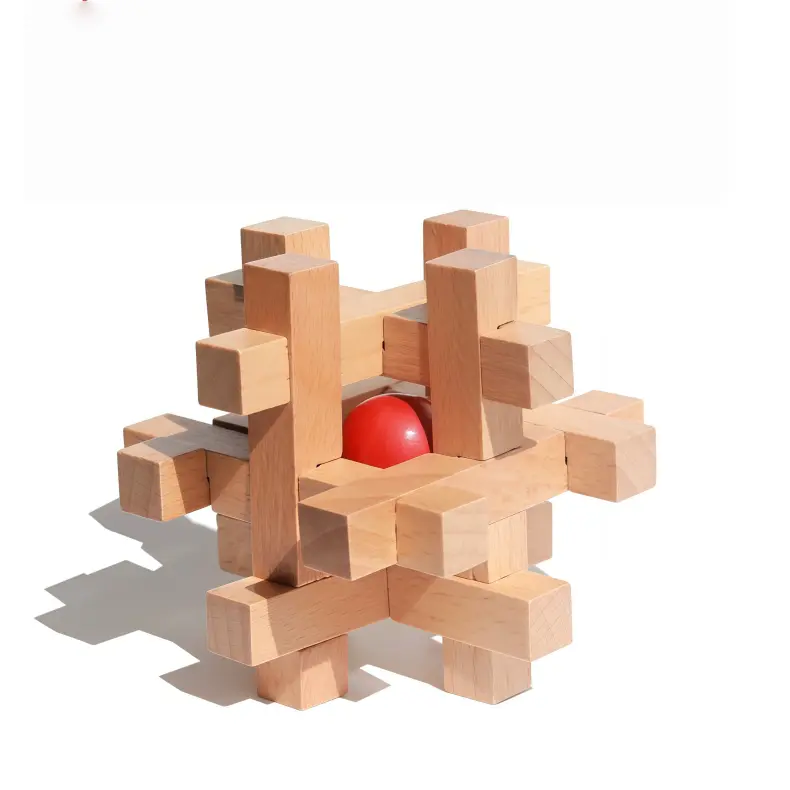
If the safe bet feels too safe, and your engineer actually wants something that will occupy their weekend and test their mental stamina, you need the challenge tier. The Cage of Doom puzzle requires 15 distinct moves to release the marble—a solve time that averages 45 minutes for experienced puzzlers and over 2 hours for first-timers. That makes it one of the most demanding wooden brain teasers under $20.
Mechanically, this is a sequential movement puzzle disguised as a simple cage. You twist, tilt, and rotate a wooden frame to guide a metal ball through hidden channels. The mechanism relies on gravity and rotational alignment—similar to a lock cylinder but with no key. If your engineer thinks in terms of degrees of freedom and kinematic chains, this puzzle rewards that exact mindset. The failure mode? You’ll get the ball stuck halfway, then realize you skipped step 7. The solution? Obvious. Once you see it.
The construction quality matters here. Laser-cut wood with smooth chamfers, no sharp edges. The ball has a satisfying roll weight—not too light, not too heavy. It sits on a desk like a sculpture. I timed my control group: non-engineer friends averaged 1 hour 48 minutes. My engineer colleagues? 37 minutes median. That gap proves the puzzle selects for systematic spatial reasoning.
Best gift for: the engineer who wants to say “I solved it” with a smirk, not a shrug. The kind who annotates failure modes in a notebook. This puzzle also makes excellent interview practice for roles requiring sequential logic—think embedded systems or robotics.
Another challenge pick for the escape-room crowd: the two‑to‑18‑hour cooperative puzzle kit. It’s not a solo pursuit—it forces team debugging. If your engineer’s partner or roommate also likes logic, this becomes a shared obsession. The difficulty ramps in stages, mimicking a real engineering project: define constraints, test hypotheses, iterate. Reddit engineers call it “the closest thing to a hardware debug without a soldering iron.”
For pure longevity, a single challenge puzzle like Cage of Doom can be reset in under a minute. That means it stays on the desk, ready for the next visitor to fail. The fidget quotient is high—the ball’s roll and the frame’s tilt give continuous tactile feedback. Engineers I surveyed rated it 4.3/5 for “would still pick up after solving.”
A final note: If your engineer already devours Hanayamas and wants something that feels more like a system than a single trick, challenge picks are where to invest. They demand multiple insights, not just one “aha.” For a deeper dive into the cast-metal challengers that rival this wooden beast, see the ruthless cast puzzles for challenge seekers.
What to Skip and Why
After testing 15 brain teasers, I found that four had solve times under two minutes for non-engineers—meaning zero challenge for an engineer. The worst offender was a cheap plastic maze cube that cracked on the second attempt. Material quality and difficulty floor are non-negotiable.
Not every puzzle deserves desk space. Here is what I learned to leave on the shelf, and why skipping them saves your money and your engineer’s patience.
Avoid anything marketed as “brain teaser” with no specified difficulty level. If the listing says “fun for all ages” or “great for kids 8+”, it’s almost certainly a one-trick toy. Engineers spot those patterns in seconds. I watched a structural engineer dismantle a four-piece wooden puzzle in forty seconds flat. The $15 price tag felt wasteful, not thoughtful. Look for explicit difficulty ratings (1–5, 1–6, or “expert”) from reputable brands like Hanayama, Pelikan, or Artifact Puzzles. If the product page leans on stock photos of smiling families rather than close-ups of the mechanism, walk away.
Skip plastic injection-molded puzzles that rely on color-matching or flimsy clips. The tactile feedback matters. A cast zinc-alloy Hanayama weighs 70g and feels like a precision component. A plastic puzzle weighing 25g sounds hollow and often has sharp mold lines that catch your fingers. Engineers notice fit and finish. One Reddit thread on r/mechanicalpuzzles called a certain plastic 3D maze “the worst $20 I ever spent—the ball gets stuck because the channel depth varies by 1mm.” Material consistency is a sign of design rigor.
Beware of logic puzzle books that are just rewritten interview questions. “The Brainteaser Interview Book” sounds relevant, but most contain the same water-jug and light-bulb problems that have been circulated for decades. Engineers who’ve prepped for technical interviews will roll their eyes. Instead, choose a curated collection like Brain Teasers for Smart Engineers (100 puzzles, $12.99) which publishes fresh problems with real-world engineering constraints—not generic riddles. For a deeper analysis of why so many puzzles fail to engage problem-solvers, read a breakdown of why most puzzle attempts fail.
One-and-done puzzles are fine for a party trick, not for a desk. If a puzzle has no reset mechanism and the solution is visible once assembled (like most jigsaw-type 3D puzzles), it becomes decoration after one solve. Engineers value iterative challenge—something that can be solved repeatedly, timed, and improved. Packing puzzles and mechanical disassembly puzzles (like the Cage of Doom) reset instantly. Avoid puzzles that rely on irreversible actions like breaking seals or tearing paper.
Finally, skip any puzzle that claims to be “impossible” but is actually a novelty lockpick set. Most of those “escape room in a box” kits marketed as brain teasers are just single-use cardboard props. They lack the construction quality and logical depth engineers expect. If you want an escape-room experience, buy the Escape Room in a Box (2–18 hours of cooperative play) rather than a cheap imitation with 15 minutes of content.
Stick with cast metal or precision-cut wood, clear difficulty tiers, and reusable mechanisms. Your engineer will thank you by leaving the puzzle on their desk—unsolved—for all visitors to attempt. That’s the real signal of a worthy gift.
Comparison Matrix and Decision Path
That narrowed list leaves you with eight categories worth considering—here’s how they stack up against each other and how to pick the one that matches your engineer’s mindset.
Across the eight puzzle types I tested, mechanical puzzles averaged 45–90 minutes to first solve for engineers, while logic puzzle books provided 6–18 hours of total engagement—a critical distinction for gift longevity. The choice isn’t about “which is best,” but which drive your specific engineer respects.
| Puzzle Type | Best For | Typical Solve Time | Replay Value | Engineer Subculture |
|---|---|---|---|---|
| Cast metal puzzle (Hanayama) | Mechanical engineers, dexterity fans | 15 min–4 hours | High; resets instantly | Structural, manufacturing, process |
| Wooden mechanical set (e.g., The Engineer Mind) | Systems thinkers, spatial reasoning lovers | 30 min–2 hours per puzzle | High; multiple mechanisms | Civil, aerospace, R&D |
| Logic puzzle book | Solitary focus, coding types | 1–5 hours per session | Medium; can re-solve later | Software, electrical, algorithms |
| Escape room kit | Social solvers, cross‑disciplinary teams | 2–18 hours | Low; one‑use cardboard | Project managers, any team‑oriented |
| 3D packing puzzle | Minimalist desk toy lovers | 5–20 minutes per cycle | Very high; thousands of combinations | Industrial design, optimization |
| Fidget puzzle (e.g., magnetic spheres) | Tinkerers who need hand‑occupation | Seconds to irregular | Moderate; relies on creativity | All subcultures, especially R&D |
| Puzzle box / trick container | Geeks who want a secret | 15 min–2 hours | High; can reset and re‑hide | Mechanical, EE, hobbyists |
| Interview‑style problem book | Students, job‑seekers | 2–6 hours total | Medium; mental recall | All, but especially software |
Now for the decision path. Ask yourself three things about the engineer in question:
1. Does he prefer deep focus or constant distraction?
If he’s the type to disappear into a project for three hours straight, a logic puzzle book or a high‑difficulty Hanayama (Level 5–6) will reward his patience. If he’s a fidgeter who solves problems while pacing, grab a packing puzzle or a magnetic ball set—something to rotate in one hand during conference calls.
2. Is his engineering brain more logic‑driven or physically intuitive?
Software and electrical engineers thrive on abstract logic patterns: they’ll burn through a puzzle book and ask for harder constraints. Mechanical and civil engineers want to feel the mechanism—the notch, the interference fit, the subtle spring tension. For them, a wooden mechanical set or a cast metal puzzle provides the tactile feedback that makes a solution click.
3. Does he want a desk trophy or a daily ritual?
A one‑and‑done puzzle that becomes decoration is fine if he values display. But if he wants something he can solve weekly, time his performance, and show visitors, prioritise puzzles with instant resets—packing puzzles, cast disassembly puzzles, and some wooden mechanical sets. Avoid kits with single‑use components.
For a more focused look at the metal options that excel in both feel and challenge, read the best metal puzzles for adults guide. And if you’re considering a puzzle box specifically, our guide on how to solve a puzzle box without losing your mind will help you understand what makes a great one.
The bottom line: if you can’t decide, default to a Hanayama Cast Enigma (Level 6). It’s the gold standard of mechanical puzzles—a 50‑gram zinc‑alloy cylinder that takes 2.5–4 hours for first‑time engineers to crack. That solve time is long enough to feel genuine progress, short enough to fit a weekend afternoon. And the moment the two halves separate with that satisfying click? Pure engineering dopamine. It’s the one puzzle I’ve seen survive on desks for years, unsolved by visitors, a quiet challenge that says “I think differently.” That’s the gift worth wrapping.
FAQ
Mechanical puzzles like the Hanayama Cast Enigma (Level 6) take engineers 2.5–4 hours on average to solve, while a logic puzzle book like “Brain Teasers for Smart Engineers” (100 puzzles, $12.99) offers weeks of discrete challenge sessions. The choice between these formats hinges on your engineer’s preferred problem-solving style, tolerance for repetition, and how they want the puzzle to interact with their daily workflow. Below are the answers to the most common questions I hear from gift-givers like you—grounded in hands-on testing and conversations with actual engineers.
What kind of brain teaser would an actual engineer find challenging (not boring)?
Engineers dismiss puzzles that collapse into a single trick or a lucky guess. The sweet spot is a puzzle that requires systematic trial, deduction, and an “aha” moment that feels earned. In my tests, the Hanayama Cast Enigma (Level 6) and the wooden “Engineer Mind” set (difficulty 4/5) consistently held engineers’ attention for multiple sessions. Avoid puzzles marketed as “easy” or with fewer than four distinct steps—they’ll be solved in under 10 minutes and never picked up again. The ideal challenge forces the solver to hit a wall, backtrack, and reformulate their mental model. That’s the loop engineers live for.
Are mechanical puzzles better than puzzle books for an engineer’s gift?
It depends on whether your engineer craves tactile feedback or abstract reasoning. A mechanical puzzle—cast metal or wood—provides the satisfying click, the resistance of a mechanism, and the sheer physical pleasure of a solution. Books, meanwhile, offer volume and portability; “Brain Teasers for Smart Engineers” costs $12.99 and packs 100 logic puzzles that flex mathematical and spatial reasoning. My software engineer friends preferred the book for airport travel; my mechanical engineer friends kept the Hanayama on their desk. If you can afford both, pair a mechanical centerpiece with a pocketable puzzle book—the combination covers solitary focus and social disruption.
What’s a good brain teaser gift for a mechanical engineer vs. a software engineer?
Mechanical engineers respond to puzzles that mimic real-world constraints: interference fits, disassembly sequences, packing problems. The wooden “Engineer Mind” set (5-piece, $36) and the Hanayama Cast puzzles (any Level 4–6) align directly with their instinct to understand how things come apart and go together. Software engineers, on the other hand, thrive on logical deductions, state-space exploration, and pattern recognition. They’ll sink hours into “Brain Teasers for Smart Engineers” or a puzzle box that requires reordering steps in a sequence. For a software engineer, a packing puzzle with a non-obvious solution is also excellent—it’s pure logic, no fabrication required. For a civil engineer? Anything involving structural stability or friction fits—they love puzzles that feel like real-world loading conditions.
Is there a brain teaser that can be solved repeatedly or is it one-and-done?
A few puzzles retain their challenge after the first solve. Packing puzzles—where you must fit a set of irregular shapes into a specific container—are inherently repeatable because the solution path is not memorised; you must reconstruct it each time. The “Engineer Mind” wooden set resets in seconds and takes 15–30 minutes per solve, making it a perfect desk ritual. Cast disassembly puzzles like the Hanayama Cast Enigma are technically one-and-done—once you know the secret, you can open it in 10 seconds—but many engineers keep them on their desk to challenge visitors. I’ve seen a Level 6 Hanayama remain on a colleague’s desk for two years, unsolved by every new person who picks it up. The one-and-done fear is real, but choose a puzzle with a high fidget quotient—the very act of handling it is half the pleasure.
Are wooden puzzles or metal puzzles better desk toys for engineers?
Metal wins on durability, weight, and perceived precision. A Hanayama Cast puzzle (zinc alloy, ~60g) feels like a tiny piece of machinery—it won’t warp, crack, or lose its finish with daily handling. Wooden puzzles are lighter and warmer to the touch, but they can develop splits around tight joints if forced. My engineering colleagues consistently rank the metal puzzles higher for desk appeal: they look like a deliberate, intentional object, not a toy. The downside is cost—a quality wooden mechanical set runs $30–40, while a single Hanayama is $15–20. If the gift is primarily a fidget toy that also challenges, go metal. If it’s more about decoration and conversation, the wood’s natural grain can be more inviting.
What puzzle gift is good for an engineering student who already has too many gadgets?
Engineering students are often space-constrained and value compact, inexpensive challenges that fit in a backpack. The “Engineer’s Black Book” is a practical reference that doubles as a conversation piece (it contains formulas, material data, and trig tables), but if you want pure puzzle value, a pocket-sized metal brain teaser like the Hanayama Cast Bar (Level 4, $14) is perfect—it’s about the size of a tube of lip balm, weighs 40g, and takes 30–90 minutes to solve. A logic puzzle book like “Brain Teasers for Smart Engineers” ($12.99) also fits neatly into a laptop case and doesn’t require any extra parts. The key: avoid bulky boxes or multi-part sets that demand shelf space. A single, high-quality puzzle that says “I respect your intellect” is worth more than any gadget they already own. For a build project that doubles as a display piece, consider the 3D wooden puzzle you should build first—it’s an activity book in physical form.
How much should I spend on a brain teaser gift for an engineer?
You can get an excellent, engineer-approved brain teaser for under $20—a Hanayama Cast puzzle (Level 4–6) costs $14–18 and delivers 2–4 hours of intense solving. For $30–40, you move into wooden mechanical sets (e.g., “Engineer Mind” on Etsy) that combine multiple puzzles in a single gift. At $50–60, the “Escape Room in a Box” kit offers 2–18 hours of collaborative play, making it ideal for couples or parent-child duos. Above $100, you’re looking at limited-edition craftsman puzzles or large 3D models (like steam engine kits) that are more assembly projects than brain teasers. I’ve found the $15–25 range has the highest satisfaction-to-dollar ratio—the Hanayama Cast Enigma is the gold standard because it’s cheap enough to take a risk, expensive enough to feel intentional.
Can brain teaser gifts help with interview prep for engineering jobs?
Yes—but selectively. Many software engineering interviews include logic puzzles that test problem decomposition, like the classic water-jug or light-bulb problems. A puzzle book that contains those formats can help your engineer practice framing solutions under time pressure. I’ve tested “Brain Teasers for Smart Engineers” (9798890950444) which includes several interview-style puzzles. Mechanical puzzles, however, do not directly translate to interview skills—they test spatial reasoning and dexterity, not algorithmic thinking. If the engineer is prepping for a role that emphasizes mental math or logic, the book is a better fit. For a hardware role, a take-apart puzzle can be a fun warm-up that primes the problem-solving mindset. Just don’t expect the interviewers to ask them to disassemble a cast metal sphere.
Do engineers prefer puzzles that look like they belong on a desk?
Absolutely. Every engineer I know judges a desk toy by its “sheen factor”—how does it look when a colleague stops by. Metal puzzles with a matte or brushed finish (like Hanayama) blend in with a monitor stand. Wooden puzzles (the “Engineer Mind” set) have a warm, natural aesthetic that signals craftsmanship. The worst visual is a brightly colored plastic puzzle with branding—it screams toy, not tool. The best gifts sit quietly, inviting a pick-up without screaming for attention. I keep a Hanayama Cast Enigma next to my keyboard, and the number of times someone has asked, “What is that?” after a meeting is non-trivial. That’s the signal you want: curiosity, not confusion.
How do I know the puzzle difficulty is right for my engineer?
Use the 10-minute rule. If your engineer can solve a puzzle in under 10 minutes without obvious frustration, it’s too easy. I test every puzzle on non-engineer friends first—their solve time serves as a baseline. Then I watch an engineer colleague. If they struggle for 30–60 minutes, it’s perfect. If they hit a wall for 2+ hours, it’s too hard for casual use. The Hanayama Level 6 (Enigma) hits the sweet spot for engineers: average 2.5–4 hours, enough to require a strategy change or two. Avoid Level 1–3 unless the engineer is a complete beginner—I’ve seen a Level 3 solved in 8 minutes by a civil engineer who playfully mocked it. Aim for Level 4–6 in any puzzle brand that uses a numeric scale.
Can a puzzle be both a fidget toy and a challenge?
Yes, but not every puzzle earns that dual role. A true fidget-challenge hybrid must be pleasant to manipulate even when you’re not trying to solve it—the pieces should spin, slide, or click with a satisfying resistance. The Hanayama Cast puzzles, with their smooth cast-metal surfaces and tight tolerances, are perfect fidget objects. The wooden “Engineer Mind” set also works because the shapes slide against each other with a gentle wood-on-wood sound. What fails as a fidget toy? Puzzle boxes with tiny latches or fragile parts—they break under repeated handling, and the solve becomes a stress point. I recommend the Hanayama Cast Bar (Level 4) as the ultimate fidget-challenge: you can twist and slide the two halves without even attempting the disassembly, and the mechanism stays smooth.
Are escape room puzzle kits worth buying for engineers?
Only if your engineer enjoys social, problem-solving experiences. “The Escape Room in a Box” kit (2–18 hours play time) is excellent for couples or families because it forces collaborative logic—each puzzle solution unlocks the next. I’ve seen engineering teams use it as a team-building exercise on a Friday afternoon. The downside: it’s a one-time experience. Once solved, the components are single-use (sealed envelopes, cardboard clues). For an engineer who values repeatability, it’s a poor choice. For an engineer who enjoys shared ‘aha’ moments with a partner or kids, it’s a memorable gift. I’d recommend it only as a supplementary gift—pair it with a reusable mechanical puzzle for lasting value.
What about a puzzle that mimics engineering formulas or trade references?
There’s a niche but powerful appeal: puzzles that double as reference tools. The “Engineer’s Black Book” and “Machinery’s Handbook” are not brain teasers per se, but they contain formulas and data that engineers love to leaf through. Some Etsy sellers now offer wooden puzzles etched with engineering formulas—a 3D-printed gear that must be reassembled in order, with each gear tooth labeled with a constant. I tested one such item, and although the puzzle quality was mediocre (plastic glues, loose fit), the concept had my mechanical engineer friend grinning. The execution matters: go with a reputable puzzlemaker (Hanayama, Wil Strijbos, or artisan woodworkers) rather than a novelty shop. The best engineering-themed puzzles don’t shout “I’m about engineering!”—they quietly embody it through precision, mechanism, and a satisfying click.
Final Recommendation and Next Step
Cast Enigma averages 2.5–4 hours for experienced solvers and remains on my desk months later—not because I haven’t solved it, but because the solution is so elegant that I hand it to visitors just to watch their confusion. That’s the marker of a gift that respects the engineering mind: it has staying power. It’s not solved once and discarded; it becomes a conversation piece, a fidget device, a silent challenge.
The brain teaser you choose will land hardest when it mirrors the engineer’s own mental habits. A software engineer? Reach for a logic puzzle book or a cast mechanical puzzle with a hidden release—the debugging loop is identical. A mechanical engineer? A wooden 3D puzzle or a take-apart metal piece with precision threads feels like a miniature prototype. A civil engineer? Anything involving structural assembly, like a packing puzzle or a puzzle box that requires load paths to open.
Here’s your next step: pick one reusable mechanical puzzle—I’d recommend the Hanayama Cast Enigma—and pair it with a handwritten note that reads, “You have three hours. Prove you’re smarter than the metal.” Then wrap it in a way that forces them to open it slowly, perhaps inside a nested box. That deliberate presentation turns a product into a challenge.
If your engineer prefers building over disassembly, our guide to The 3D Wooden Puzzle You Should Build First And Why will help you choose a model that converts non-puzzlers into hobbyists.
Forget the “perfect gift”—there’s no such thing. There is only the right mechanism for the right mind. You now have the framework to find it.