The smell of scorched birch is the first thing that hits you. It’s a clean, campfire-adjacent aroma that lingers on your fingertips long after you’ve popped the first laser-cut gear from its plywood housing. Last Tuesday, around 11:45 PM, I found myself staring at a pile of sixty-eight wooden slivers, wondering if my spatial reasoning had finally met its match. My thumb was slightly sore from pressing a stubborn axle into place, but the payoff—that rhythmic, mechanical click—was better than any digital notification I’ve received all year.
I’ve spent the better part of a decade testing over 200 mechanical puzzles, ranging from $500 limited-edition brass boxes to the $15 impulse buys you find at museum gift shops. Most people think a 3D wooden puzzle is just a jigsaw with an ego, but that’s a fundamental misunderstanding. A jigsaw is an exercise in color matching; a 3D wooden puzzle is a masterclass in structural engineering. It’s the bridge between static modeling and functional machinery.
My thesis is simple: The best 3D wooden puzzles aren’t the ones that look the prettiest on a shelf—they’re the ones that punish impatience and reward observation. If you try to force a wooden gear, it will snap. If you ignore the grain of the wood, it will splinter. These objects demand a specific kind of presence that our high-speed, glass-screen lives usually lack. They are tactile meditations on physics, and today, I’m breaking down which ones are worth your Saturday afternoon and which ones are just expensive kindling.
The Laser-Cut Revolution: Why Wood Still Wins
There’s a reason we haven’t switched entirely to 3D-printed plastic or precision-milled aluminum for our desk toys. Wood has a “give” to it. It has a soul. When you’re learning about the history of maritime engineering, holding a wooden hull just feels more authentic than holding a resin one.
Modern 3D wooden puzzles owe their existence to high-precision CO2 lasers. Ten years ago, wooden models were clunky, required a gallon of glue, and usually looked like a middle-school shop project. Today, the tolerances are measured in fractions of a millimeter. This precision allows for “snap-fit” joinery, a method where friction alone holds the structure together. It’s a delicate dance; the wood needs to be tight enough to stay assembled but loose enough to allow moving parts—like gears or pistons—to rotate.
However, this precision is a double-edged sword. I’ve noticed that cheaper, off-brand kits often use inferior plywood that de-laminates the moment you apply pressure. You want “Grade A” birch plywood. It’s dense, holds a laser edge without charring excessively, and has enough flexibility to handle the occasional “user error” during assembly.
The “Aha” Moment vs. The “Oh No” Moment
Every veteran solver knows the “Oh No” moment. It’s that sinking feeling when you realize you installed Gear A backwards three steps ago, and now Gear F won’t engage. In a 3D wooden puzzle, there is no “undo” button. You have to backtrack, carefully prying pieces apart without shearing the delicate wooden tabs.
This is where the cognitive benefits of mechanical assembly actually manifest. You aren’t just following a manual; you’re internalizing a mechanical system. You begin to understand how a cam-shaft converts circular motion into linear motion. You see why a certain gear ratio is necessary to turn a heavy music box drum.
For those who find the structural complexity of wood a bit too much on a Tuesday night, I often suggest translucent alternative challenges as a palate cleanser. They offer a different kind of spatial reasoning—one focused on transparency and light rather than friction and torque.
3D Wooden Puzzle Treasure Box
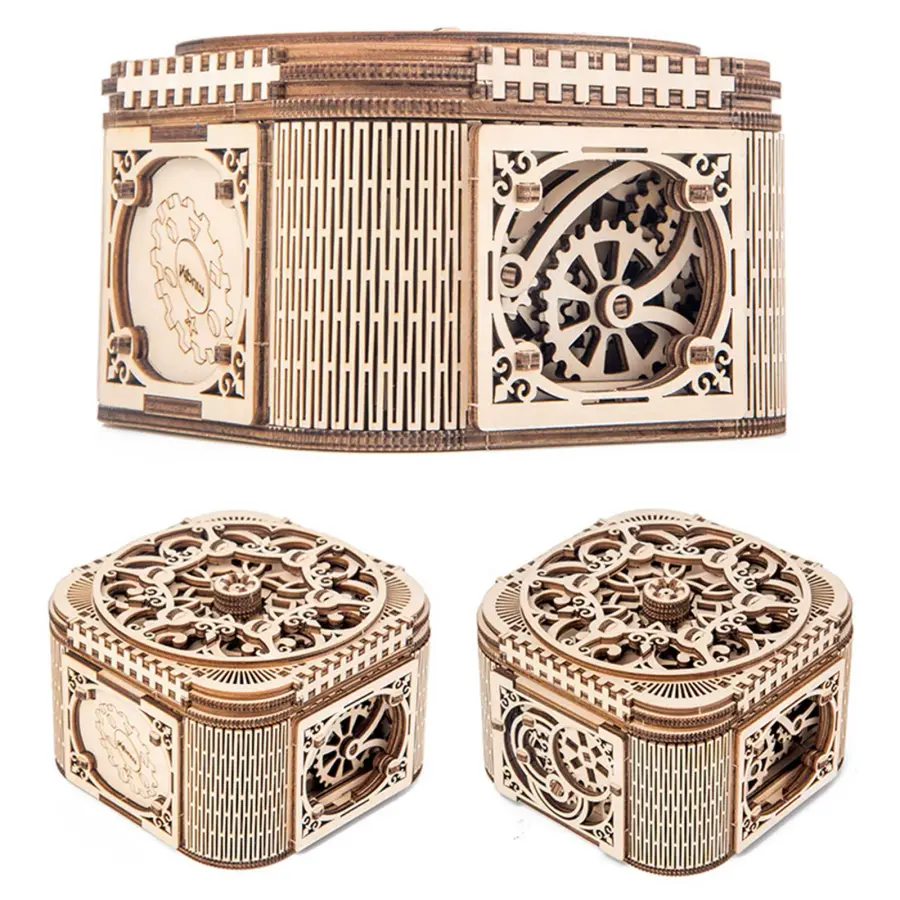
If you want to see a skeptic turn into an enthusiast, hand them this box. Priced at $29.99, it’s one of the few kits that feels like a genuine piece of furniture once finished. The build took me about three hours, and the complexity lies entirely in the lid mechanism. It uses a series of interlocking gears that you can actually watch through the laser-cut filigree as you turn the key.
What I love about this specific kit is the lack of glue. Everything is held together by the tension of the wood. The NIH has actually published research suggesting that this type of visuospatial engagement serves as a protective factor against cognitive aging, and I believe it. When you’re aligning 150+ pieces to create a functional lock, your brain doesn’t have room to worry about emails. The only downside? The “secret” compartment is relatively small—don’t expect to hide a whole watch in there, but it’s perfect for a wedding ring or a spare key.
Ancient Geometry: The 2,500-Year-Old Challenge
Long before lasers, there was Lu Ban. Around 500 BCE, this legendary Chinese carpenter was allegedly inventing puzzles to test his family’s intelligence. These weren’t just toys; they were architectural studies. The mortise-and-tenon joints used in these puzzles are the same ones that held ancient Chinese palaces together for millennia without a single nail.
The Burr puzzle is the Western cousin to this tradition. It’s a three-dimensional cross made of interlocking notched sticks. The beauty of these is their simplicity. There are no gears, no springs, and no instructions that actually help. It’s just you against a cube of wood that refuses to move.
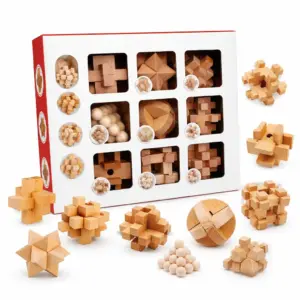
Luban Lock Set 9 Piece
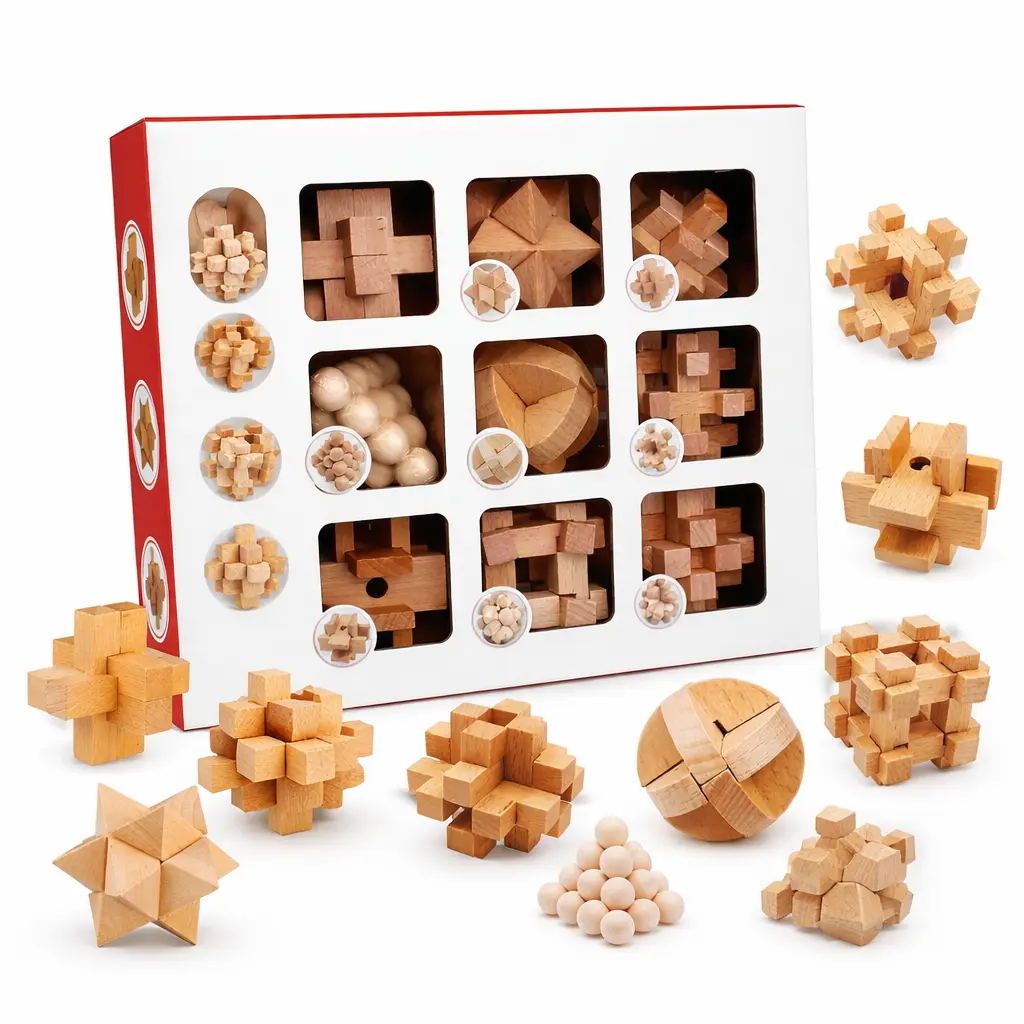
Luban Lock Set 9 Piece — $39.99
This set is the “final boss” of traditional wooden joinery. For $39.99, you get nine different challenges that range from “I figured this out in five minutes” to “I am going to throw this out the window.” I personally spent an embarrassing forty-five minutes on the “Ball in Cage” puzzle before realizing I was overthinking the gravity lock.
Unlike the mechanical kits, these are pure brain teasers. They are tactile, heavy, and incredibly satisfying to hand to a “smart” friend who thinks they’re good at puzzles. Watching a confident adult struggle to put six pieces of wood back into a cube is a hobby in itself. The finish on these is smooth, though I’d recommend a light coat of furniture wax if you plan on solving them repeatedly. It keeps the wood from binding. If you get truly stuck, there are archived solutions for complex wooden interlocks that can save your sanity.
Mechanical Feedback: The “Click-Clack” Factor
There is a specific category of 3D wooden puzzles that I call “Executive Fidget Toys.” These aren’t meant to be solved and forgotten; they are meant to be played with. They use rubber bands or gravity to create motion.
The engineering here is surprisingly robust. You’re essentially building a wooden machine. I’ve found that these kits are the most popular with the 25-40 age bracket because they provide that instant gratification of a working mechanism. They are the perfect distraction for a home office, providing a much-needed break from the digital grind. If you need a digital break that’s a bit more “old school,” you can always revisit a classic digital distraction on your browser, but nothing beats the physical snap of a wooden trigger.
3D Wooden Mechanical Pistol Kit

At $29.99, this is probably the most “fun” I’ve had with a 68-piece kit. It isn’t a weapon—it’s a mechanical study. The internal mechanism mimics the rack-and-snap of a real slide, powered by a simple rubber band. I keep this on my desk, and every person who walks into my office picks it up.
The build is quick—maybe 90 minutes if you’re taking your time—but the tolerances are tight. You need to be careful with the trigger assembly; if you don’t sand the contact points, the action will feel gritty. It’s a great entry point for someone who thinks they aren’t “handy” enough for a 500-piece ship. It’s a functional fidget toy that teaches you exactly how a sear and a hammer interact.
The Art of the Display: Beyond the Build
One of the biggest criticisms of the puzzle hobby is the “What now?” factor. You spend six hours building something, you admire it for ten minutes, and then it gathers dust.
The industry has responded to this by creating “shadow box” and “music box” kits. These are designed to be integrated into your home decor. They use LED lighting and musical movements to transition from a “puzzle” to a “piece of art.” When you start looking into atmospheric lighting projects, you realize that wood is the perfect medium for diffusing light. It creates a warmth that plastic simply can’t replicate.
DIY Castle Music Box Night Light

This is a bit of a departure from the “raw wood” aesthetic, and I was skeptical at first. But for $33.99, the integration of the six LED modes and the mechanical music box is surprisingly sophisticated. It’s only 28 pieces, making it the easiest build on this list, but the visual impact is the highest.
The layered laser-cut panels create a depth that reminds me of old-school theater sets. I gave one of these to my niece, but I secretly wanted to keep it for my own bookshelf. The “puzzle” element here is more about the delicate assembly of the lighting components than the structural engineering. If you’re looking for a gift for someone who appreciates the “cozy” aesthetic, this is the winner.
Heavy Duty Engineering: For the Gear-Heads
If the castle is too “whimsical” for you, there’s the industrial side of 3D wooden puzzles. These are the kits that celebrate the Golden Age of American haulage and heavy machinery. They are usually more complex, featuring working steering, opening doors, and detailed engines.
These kits are a great way to detect invisible seams and hidden compartments in mechanical design. When you build a truck from the chassis up, you start to look at the real vehicles on the road differently. You notice the suspension, the axle placement, and the sheer amount of engineering required to keep 80,000 pounds moving.
3D Wooden Puzzle Tanker Truck Kit

Priced at $22.99, this is the best value-for-money kit in the “vehicle” category. The Burst 913 Fuel Tanker is a rugged, 3-axle beast that took me about four hours to complete. The “tribal flame” etching is a bit loud for my personal taste, but the mechanical details—the rolling wheels and the dual-opening cabin doors—are top-notch.
The “snap” on this kit is particularly satisfying. The plywood is slightly thicker than what you find in the music box kits, giving the finished truck a nice heft. It’s a great “desk companion” for anyone in logistics or engineering. My only gripe? The mirrors are a bit fragile. I bumped mine while reaching for a coffee mug and had to break out the wood glue for a tiny repair.
The Supporting Cast: Inline Recommendations
Not every puzzle needs a three-hour deep dive. Sometimes you just want a quick hit of dopamine or a specific aesthetic.
If you’re a fan of the Victorian “what-if” genre, the
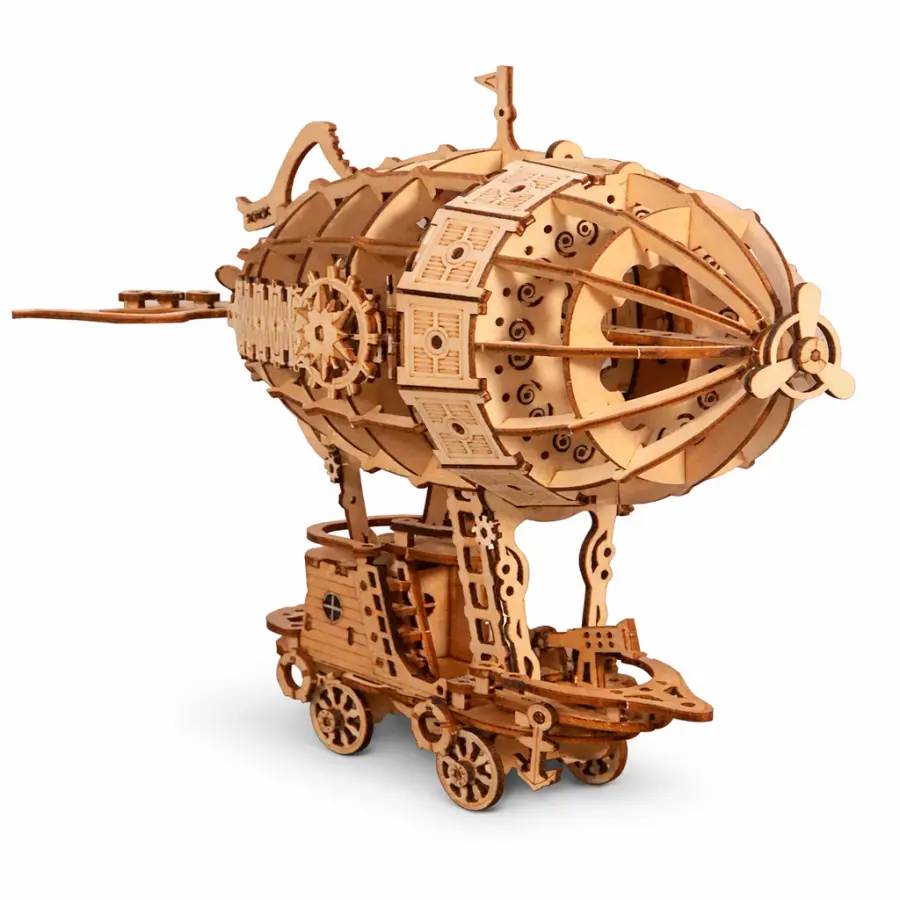
Steampunk Airship ($26.66) is a must. It’s a 160-piece build that captures the Jules Verne vibe perfectly with its spinning propeller and rolling wheels. It’s a one-hour build that looks like it cost twice as much.
For the maritime enthusiasts who find the Galleon too daunting, the

Wooden Sailboat ($25.55) is a 57-piece alternative. It’s less about the history and more about the clean, minimalist lines of a modern racer. It’s a great way to practice your fine motor skills without committing to a multi-day project.
If you’re looking for something that fits in your pocket, the
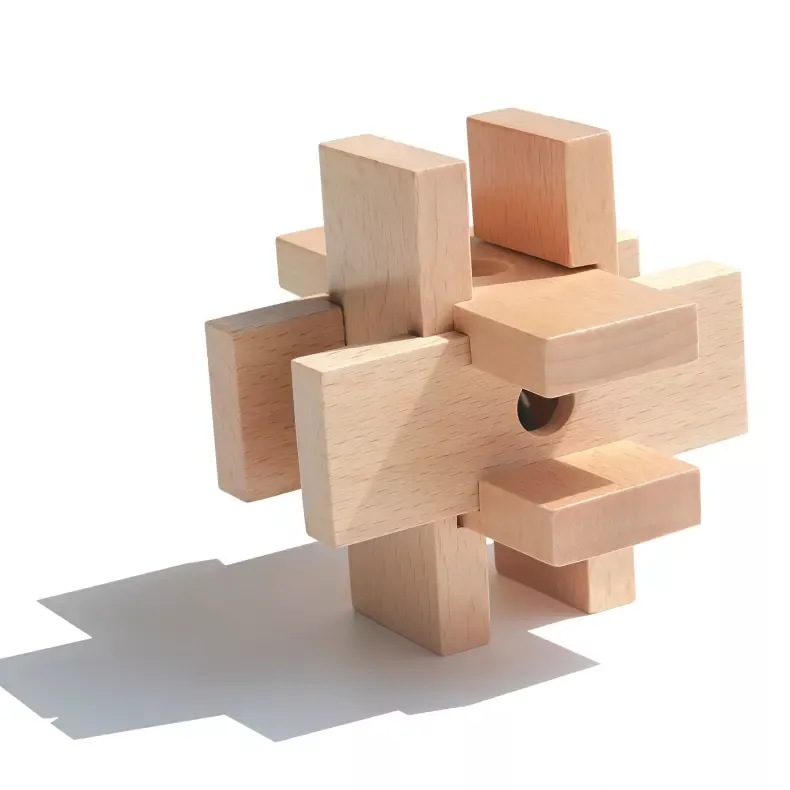
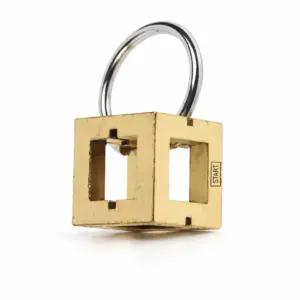
6 Piece Wooden Puzzle Key ($12.99) is the definition of “Wu Wei” problem-solving. It’s six pieces of hardwood that teach you to stop forcing the solution and let the patterns emerge. Similarly, the
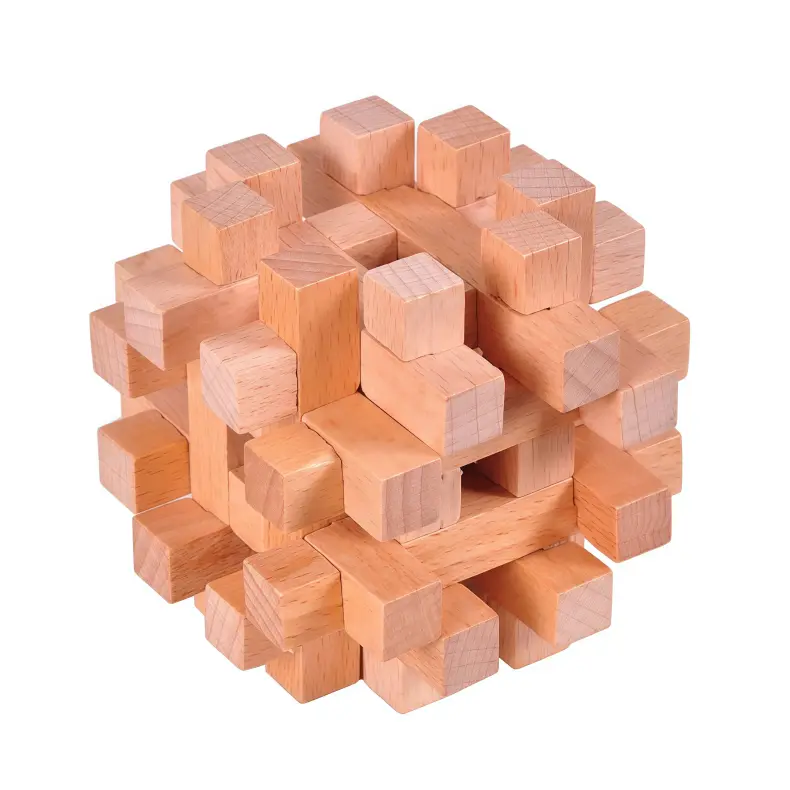
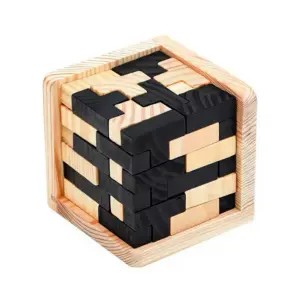
Double Cross Cage Puzzle ($18.88) uses twenty-four identical pieces to create a structure that seems impossible to disassemble. It’s a tactile meditation that I often use as a “fidget” during long conference calls.
Finally, for those who want a desk piece with a story, the

Galleon Ship (check current pricing) is a stunning replica of the vessels that dominated the Atlantic. It’s a more involved build, but the rigging and the hull design are incredibly rewarding for anyone with a bit of patience.
Quick-Reference Comparison Table
| Product | Type | Difficulty | Solve Time | Best For |
|---|---|---|---|---|
| Treasure Box | Secret Box | Medium | 3 Hours | Gift / Collector |
| Luban Lock Set | Interlocking | Hard | Infinite | Family / Party |
| Mechanical Pistol | Mechanical Kit | Easy | 1.5 Hours | Desk Toy |
| Castle Music Box | Shadow Box | Easy | 1 Hour | Home Decor |
| Tanker Truck | Mechanical Kit | Medium | 4 Hours | Gear-Heads |
FAQ: Everything You’re Afraid to Ask About Wood
Do I really not need glue?
Most modern kits, like the ones from Tea Sip, are designed for “press-fit” assembly. This means the friction between the pieces is enough to hold them. However, wood is a natural material that reacts to humidity. If you live in a very dry climate, the wood might shrink slightly, making some joints loose. In those cases, a tiny dot of wood glue is a lifesaver. Just don’t glue anything that is supposed to move!
What happens if I break a piece?
It happens to the best of us. I once snapped a delicate gear tooth on a complex specialized wooden storage puzzle because I was being impatient. Most high-quality kits include a few “spare parts” for the most fragile components. If the piece isn’t a spare, a little bit of superglue (cyanoacrylate) can usually fix a clean break. Just be careful not to glue your fingers to the gear.
How do I make the gears move smoothly?
This is the “pro tip” that separates beginners from veterans: wax. Every kit should come with a small block of paraffin wax. If it doesn’t, a plain white candle works perfectly. Rub the wax on any surface where wood touches wood—especially gear teeth and axles. It reduces friction and prevents that “squeak” that can ruin a good mechanical build.
Are these suitable for kids?
Most of these kits are rated for ages 14+. This isn’t because they’re dangerous, but because they require a level of patience and fine motor control that younger kids might lack. If you’re looking for something for a younger child, stick to the lower piece counts (like the Castle Music Box) and be prepared to help with the “fiddly” bits.
How do I get a stuck piece out?
If you’ve misaligned a piece and it’s stuck, don’t pull. Wiggle. Use a small flat-head screwdriver or the “extraction tool” that comes with many kits to gently pry the pieces apart from multiple angles. If you pull from one side, you’re almost guaranteed to snap a tab.
Why are some pieces charred on the back?
That’s just the nature of laser cutting. The laser is essentially burning through the wood. If the charring bothers you, a quick swipe with a high-grit sandpaper (300+) will clean it right up. I actually like the charred edges; it adds a bit of “industrial” character to the build.
Can I paint my 3D wooden puzzle?
Yes, but be careful. Paint adds thickness. If you paint the tabs or the gear teeth, they won’t fit together anymore. I recommend using alcohol-based markers or wood stains rather than thick acrylic paint. This allows the color to soak into the wood without changing the dimensions of the pieces.
What’s the difference between a “model” and a “puzzle”?
A model is about the final result; a puzzle is about the process. Many of these kits are “mechanical puzzles” because the challenge isn’t just assembly—it’s understanding how the mechanism works. If you want a pure “trick” experience, check out some extreme trick boxes that hide their secrets behind invisible panels.
Are these a good gift for someone with anxiety?
Actually, yes. Many people find the “flow state” of assembly to be incredibly grounding. It’s a structured task with a clear beginning, middle, and end. It’s the same reason people enjoy balance-themed browser games—it provides a sense of order in a chaotic world.
How long do they last?
If kept out of direct sunlight and extreme humidity, a 3D wooden puzzle will last decades. I have models from five years ago that still function perfectly. The wood actually develops a nice patina over time as it’s handled.
Do I need any special tools?
A pair of tweezers and a small hobby knife are helpful, but not strictly necessary. Most kits are designed to be “tool-free.” However, a small piece of sandpaper is essential for smoothing out the points where the pieces were attached to the wooden frame.
What is the hardest 3D wooden puzzle?
In my experience, the hardest puzzles are the ones with the most moving parts—like complex clocks or marble runs. The more gears you have, the more points of failure you have. If you want a challenge that’s more about logic than assembly, the Luban Lock Set is your best bet.
The Final Click
At the end of the day, a 3D wooden puzzle is a conversation between you and the material. It’s about that moment when the disparate pieces on your table suddenly transform into a functioning machine or a beautiful display piece. It’s a reminder that complexity can be mastered, one “click” at a time.
If you’re just starting, I’d suggest grabbing the Mechanical Pistol or the Tanker Truck. They offer a great balance of build time and mechanical satisfaction. If you’re a seasoned pro looking for something to humble you, go for the Luban Lock Set.
Whatever you choose, remember: don’t force it. If it doesn’t fit, there’s a reason. Sand it, wax it, and try again. That’s where the real “solve” happens. For more advanced tips on detecting the hidden seams in wooden designs, stay tuned to my future reviews. Now, if you’ll excuse me, I have a 200-piece airship calling my name, and I think I finally figured out where that last brass pin goes.