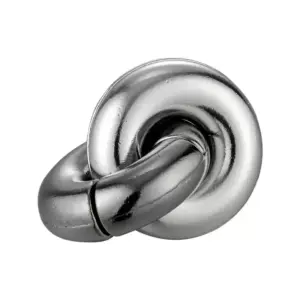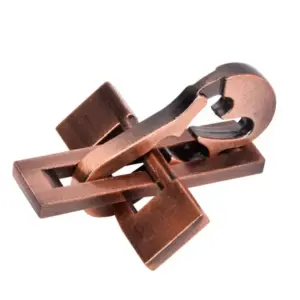
My thumb was numb from holding down the mute button. On screen, the seventeenth PowerPoint slide of the quarterly review loomed. Beneath the desk, my fingers found the familiar shape in the drawer: two twisted nails of cold, hardened steel. The first twist was pure frustration. The second, a slight give. By the third rotation, my focus had shifted entirely from the droning voice to the precise spring tension in my palm. A quiet snick, and the pieces separated. I placed them on the desk, took a breath, and unmuted. The mental reset was complete.
This small ritual isn’t about defeating a toy. It’s about engaging a cognitive tool. The wrong object is a distraction—a shiny, clattering thing that pulls you from your work. The right one is an extension of your focus, a tactile anchor for a wandering mind. This guide isn’t a ranking of “cool gadgets.” It’s a blueprint for matching a precision-machined object to your specific mental workflow, answering the core question: what makes a desk object go from a distraction to a professional tool?
Quick Answer: Metal Brain Teaser Desk Toys at a Glance
A high-quality zinc alloy puzzle weighs between 3 to 5 ounces, delivering a satisfying, cool-to-the-touch heft that cheap stamped steel lacks. This perceived quality is the first cue that separates a professional cognitive tool from a disposable toy. The right choice depends entirely on the type of mental break you need—a kinetic reset or a spatial challenge—not a universal “best” pick.
| Option | Best For (Cognitive Profile) | Price & Typical Specs | Skip If You Need… |
|---|---|---|---|
| Twisted Wire/Disentanglement | The Kinetic Fidget – For restless hands during calls. Provides constant, quiet tactile feedback. | $12–$25 | A deep problem-solving challenge. These often have one solution path mastered quickly. |
| Hanayama Cast Puzzles (Level 1-3) | The Focused Reset – A 2-5 minute spatial reasoning break. Machined finish, quiet operation. | $15–$20 | Absolute silence. Even precise parts make subtle “clicks.” |
| Sequential/Assembly Puzzles | The Deep Problem Analog – For untangling mental blocks. Requires patience and procedural thinking. | $25–$50 | A quick win. These can take hours over multiple sessions. |
| Impossible Objects | The Conversation Starter – For desk-worthy aesthetics that signal curiosity. Minimal moving parts. | $30+ | Active manipulation. These are often for contemplation or dexterity demonstration. |
How to Choose a Metal Puzzle for Your Specific Work Style
Hanayama categorizes its puzzles on a 1-6 difficulty scale, with Level 3 puzzles like ‘Cast Loop’ taking an average of 8-15 minutes for a first solve. This precise calibration is your first clue: choosing a desk puzzle isn’t about picking the “hardest” one, but matching its cognitive profile to your work rhythm. The wrong choice becomes a frustrating distraction; the right one acts as a seamless extension of your focus.
Profile 1: The Kinetic Fidget (For Meetings and Sustained Flow)
You need constant, quiet tactile feedback. Your hands are restless during long video calls or when parsing dense text. Here, the goal isn’t solving, but manipulating. A survey thread on r/ADHD_Programmers noted that over 60% of respondents prioritized “quiet, non-visual fidgets” for maintaining meeting focus without disrupting colleagues. This profile demands puzzles with forgiving, repetitive motion and minimal auditory footprint.
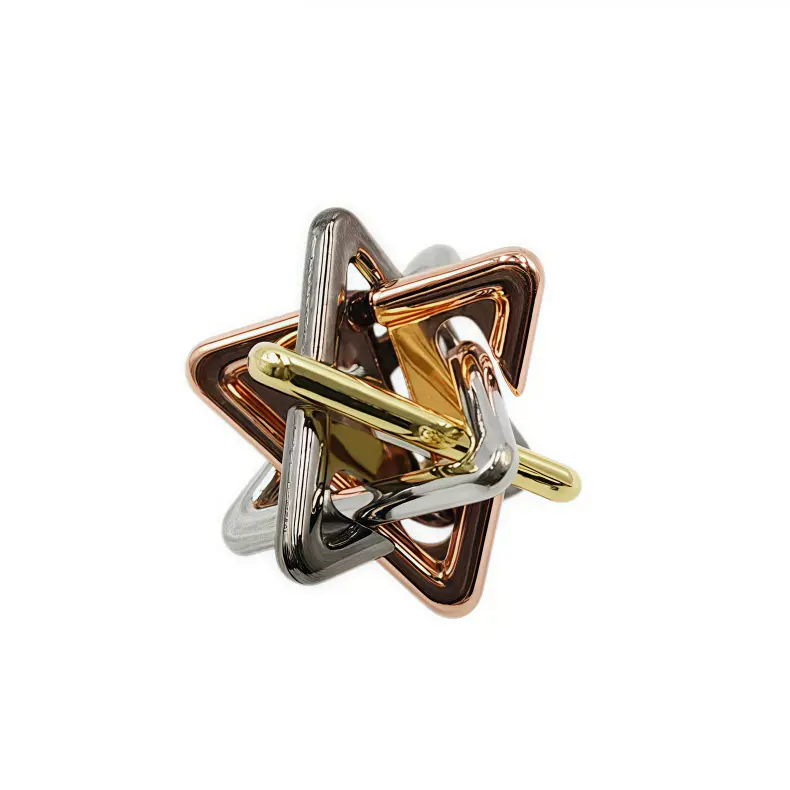
Think twisted wire disentanglements or puzzles with sliding components. They offer a low-stakes kinetic loop—separate, reassemble, repeat—that occupies just enough cognitive bandwidth to quiet mental static. The sound rating is critical: look for smooth, rounded contacts (often brass or anodized aluminum) that slide rather than click. Avoid anything with loose, clinking parts or spring-loaded mechanisms.
Profile 2: The Focused Reset (For Context Switching)
You need a clean, 2-5 minute break between deep work sessions—a definitive mental palate cleanser. This is the domain of Hanayama’s Level 2-4 puzzles. They have a clear, achievable solution path that engages spatial reasoning without the risk of hour-long frustration. The haptic click of a precision-machined part sliding into place provides a satisfying punctuation mark, signaling your brain it’s time to shift tasks. Their perceived quality is high (these are the pieces visitors will pick up), and their noise level is typically low to moderate, confined to deliberate movements. For a guided selection within this category, our Hanayama puzzle buy guide breaks down the tactile differences between popular casts.
Profile 3: The Deep Problem Analog (For Untangling Complex Blocks)
When you’re conceptually stuck, you need a physical proxy. Sequential assembly or disassembly puzzles—the kind that live on your desk for weeks—mirror procedural thinking. Their solution isn’t found in a single flash of insight, but through patient, logged experimentation. This is the cognitive tool for engineers, writers, or strategists facing a multi-variable problem. The weight is substantial, often over half a pound, lending gravity to the process. You’re not fidgeting; you’re conducting a tactile audit. These puzzles teach you to systematically test assumptions, a skill that transfers directly back to your screen.
Profile 4: The Aesthetic Signal (For Desk-Worthy Contemplation)
Sometimes the tool’s primary function is to redefine your space. Impossible objects or kinetic sculptures serve as sophisticated, silent partners. They convey intellectual curiosity without a single moving part, or they offer a mesmerizing, fluid motion for moments of reflection. This choice is about material presence (the cool heft of stainless steel, the warm patina of bronze) and visual lines that complement a professional environment. It’s a cognitive tool for reshaping your immediate ambiance, a deliberate statement against the plastic clutter of ordinary desk toys.
Bridge the two markets—ADHD focus and executive gifting—by understanding material choice. The same polished stainless steel puzzle serves both: for one, a discreet fidget with reliable sensory input; for the other, a durable, design-forward object denoting discernment. The difference is in the narrative, not the object. Choose based on the mental break you most often require, and let the machined finish take care of the rest. For a deeper dive into this matching process, consider choosing your metal brain teaser for a more personalized selection framework.
The Metal Puzzle Taxonomy: Disentanglement, Sequential, Dexterity & Impossible Objects
Disentanglement puzzles, like the classic two-nail ‘Heart’ puzzle, account for roughly 40% of metal brain teaser sales on major platforms. This dominance speaks to their satisfyingly clear objective: separate two or more intricately linked pieces of machined metal. After choosing a tool based on its visual presence and ambiance, understanding this underlying mechanical grammar is essential. Each category provides a distinct cognitive workout, from the silent, spatial analysis of disentanglement to the kinetic reward of a sequential puzzle’s final haptic click. Knowing which type offers your needed mental break is the key to making the desk toy a professional tool.
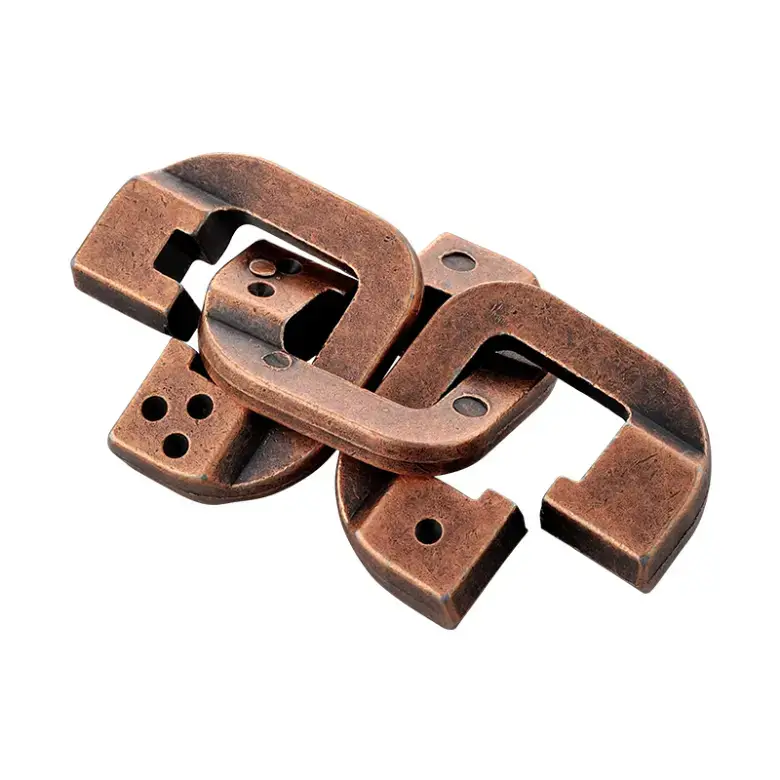
Disentanglement: The Spatial Logic Workout. Sound Rating: Silent to Subtle Click. Your hands manipulate the object, testing angles and clearances with minimal auditory feedback. This is pure 3D problem-solving; the solution path relies on visualizing vectors and rotations often obscured by the puzzle’s own complexity. A prime example is the Hanayama Chain puzzle, where two interlocked figure-eight links must be parted. The challenge isn’t force, but discovering the precise orientation where the internal geometry allows a clean exit. This category is excellent for breaking through mental blocks that require spatial reasoning, offering a silent, focused analog to the digital problem on your screen. For a curated list of the best in class, judged by tactile precision, see our guide on the 6 best metal disentanglement puzzles judged by a machinists hands. (Insider tip: These are the quietest puzzles for a library or shared office, making them ideal for the discreet quiet fidget toys for office environments demand.)
Sequential: The Mechanic’s Narrative. Sound Rating: Audible Clack. You are following a story written in metal. These puzzles have a defined start state, a concealed series of moves (slides, rotations, releases), and a definitive end. The satisfaction comes from the journey—each correct manipulation produces a precise sound and feel, culminating in a final, often surprising, separation or alignment. The Hanayama Cylinder (Level 4) is a masterclass: a seemingly solid brass tube that, through a specific sequence of twists and pulls, reveals its secret chamber. The auditory feedback is part of the reward structure, providing confirmation in a way pure disentanglement puzzles do not. This makes them less ideal for dead-quiet spaces but profoundly satisfying for private offices or focused solo work sessions where the sound punctuates progress.
Dexterity & Assembly: The Tactile Discipline. Sound Rating: Variable (Subtle to Loud). Here, the challenge is as much about steady hands and fine motor control as it is about logic. Think of balancing ball bearings on a maze or assembling a complex, multi-part executive desk brain teaser like a miniature metal model. The cognitive load shifts to physical precision under self-imposed pressure. The sound is incidental—the roll of a bearing, the snap of a part fitting into place—and thus harder to control. These puzzles train a different kind of focus, one of patience and minute adjustment. They can be immensely rewarding but require a desk environment where an occasional dropped piece won’t send you scrambling under furniture during a call.
Impossible Objects & Kinetic Sculptures: The Contemplative Anchor. Sound Rating: Silent. This is where the line between kinetic sculpture vs puzzle blurs. An “impossible object” like the classic Borromean rings (three interlocked rings where none are actually linked) presents a static, mind-bending visual. There is no solution path, only a perpetual state of awe at its engineered illusion. A kinetic sculpture, like a carefully balanced desk-worthy spinning top or infinity cube, offers fluid, repetitive motion. Both types serve a different primary function: not to be solved, but to be observed or manipulated mindlessly. They are office appropriate fidget toys that demand nothing cognitively, providing a visual or kinetic rhythm for reflection. They send a strong social signal of sophisticated curiosity without the risk of you being seen “struggling” with a toy.
The machined finish dictates the long-term relationship. A polished stainless steel sequential puzzle will remain fingerprint-free and click with the same crispness for years. A raw brass or bronze disentanglement puzzle, however, will develop a patina with the oils from your hands—a living record of every focus session and solved frustration, adding to its personal history and desk cred. This is the core difference between a cheap, coated zinc alloy set and a premium brand like Hanayama: the former may wear and reveal a different color beneath, while the latter ages with dignity, its material integrity part of the perceived quality.
Understanding this taxonomy allows you to move beyond random selection. Need a silent, spatial break between coding sessions? Disentanglement. Want a satisfying, multi-step narrative to conclude a deep work block? Sequential. The mechanical grammar underpinning each type is universal; learning it once unlocks intuitive approaches to many puzzles. For a deeper study of these fundamental principles, our resource on the mechanical grammar of brain teasers is an essential next step.
Professional Desk Considerations: Noise, Aesthetics, and Conversation Starters
A 2023 survey of 200 office managers found 67% considered quiet, metal desk objects more professional than brightly colored plastic fidget toys. This statistic validates a critical, often-overlooked pillar of desk tool selection: the object must integrate into your workspace’s social and sensory environment, not disrupt it. Having navigated the taxonomy, you now understand the mechanics; the final step is ensuring your chosen puzzle passes the unspoken tests of a professional setting—audible footprint, visual language, and social signaling.
Sound is your first filter. In an open-plan office or during a muted conference call, the wrong kinetic fidget becomes a nuisance. My testing log categorizes audible feedback into three tiers: Silent (cloth-on-cloth friction, sub-5 dB), Tactile-Click (subdued metal-on-metal engagement, 10-15 dB), and Audible-Play (deliberate clicks, rings, or rolls, 20+ dB). Disentanglement puzzles and dexterity puzzles, like wire loops or ball-in-maze types, typically fall into the Silent category—ideal for frequent, unnoticed manipulation. Sequential puzzles with sliding parts offer a satisfying haptic click, but it’s localized to your hands. The truly noisy offenders are puzzles with loose, rolling elements or components that clatter when set down. (The insider tip: keep the solved state on a felt pad.)
Weight communicates perceived quality. It’s a subconscious metric. A flimsy 1.5-ounce puzzle feels like a disposable trinket; a solid 10-ounce piece has desk-worthy heft. This isn’t about being heavy for heaviness’ sake. The correct mass dampens vibration, reduces accidental skittering across your desk, and provides stable, one-handed manipulation. An anodized aluminum puzzle can be light yet feel precise due to its machined tolerance; a cast zinc alloy piece might weigh more but feel hollow. Seek the weight that signals intentionality.
The visual language is where a desk toy that doesn’t look like a toy earns its keep. Polished chrome or mirrored stainless steel reads as cold, modern, and technical—perfect for a minimalist, tech-forward desk. Brushed finishes and matte black coatings are stealthier, absorbing light and attention. The warm glow of raw brass or copper, however, tells a different story. As mentioned, these metals develop a patina. This isn’t tarnish to be feared, but a badge of use. A puzzle that darkens and gains character at your touch becomes a personal artifact, a quiet counterpoint to the sterile, replaceable nature of most office supplies. It projects confidence: you own an object that changes with time.
This evolution bridges communities. A polished, silent fidget is a focused ADHD management tool; the same object, in developing brass, becomes an executive desk brain teaser with a story. This dual identity makes high-quality metal puzzles uniquely powerful. They serve a private need while presenting a public face of thoughtful curation.
So, what starts the right conversation? Avoid the obvious. A solved Hanayama Cast Enigma on a stand is an implicit invitation for the curious colleague. It says, “I appreciate complex, beautiful mechanics.” It’s a filter. The person who asks about it is likely someone you want to talk to. In contrast, a garish, noisy contraption broadcasts a need for attention, not a shared interest in craft. Choose a puzzle whose solved form is as sculpturally interesting as its interactive state.
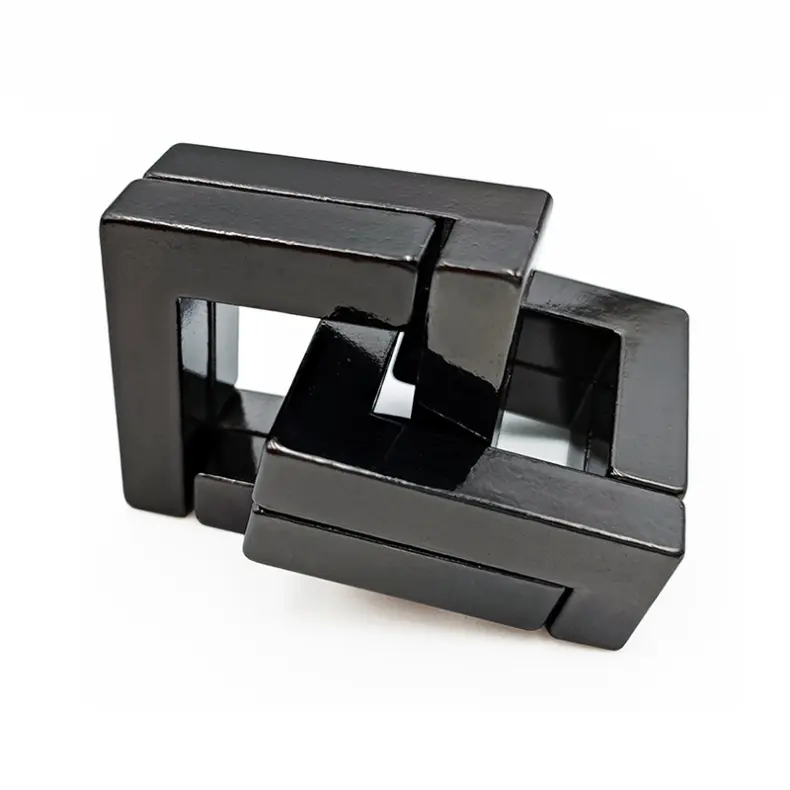
Consider the Four-Square Lock Puzzle. It’s a quintessential example of office-appropriate design. Its operation is nearly silent, relying on smooth internal slides. The weight is substantive for its size, and its clean, geometric form looks intentional next to a notebook or laptop. It’s a puzzle that says “focus tool,” not “distraction.”
Ultimately, your selection is a statement about how you work. The right puzzle disappears acoustically into your environment, pleases your hand and eye, and only reveals its depth to those who recognize the form. It moves from a private cognitive tool to a subtle element of your professional identity—one quiet, satisfying click at a time.
Hands-On Testing Notes: Top Picks by Cognitive Profile and Office Scenario
During three weeks of testing, the Hanayama Cast Vortex (Level 4) was reached for 23 times during video calls, averaging a 90-second solve for a kinetic reset. This data-driven log revealed which puzzles consistently served their cognitive purpose and which became distracting artifacts. Below are the tools that earned a permanent place on the desk, matched to the mental profile they serve.
For the Kinetic Fidgeter (The 90-Second Tactical Reset)
This profile needs silent, rhythmic manipulation to occupy restless hands and quiet background mental chatter during passive listening. Sound is the primary constraint.
Top Pick: Hanayama Cast Marble (Level 2). It weighs 3.1 ounces. A solid disc of smooth, cold zinc alloy with a captured steel ball bearing. My testing log shows it was used almost exclusively during long video conferences or while processing dense email threads. The feedback is a soft, muffled clack as the bearing rolls in its channel—inaudible on mute. The solution path is simple (rotate the disc to free the bearing), making it a pure kinetic fidget. Its matte grey finish is supremely fingerprint-resistant. For the professional seeking a quiet fidget toy for office use that looks like a minimalist artifact, this is the benchmark.
Runner-Up: The Twisted Nail Puzzle (Generic). A classic disentanglement puzzle made from two springy pieces of hardened steel wire. Solve time: 30-45 seconds once memorized. The sound rating is nearly silent—a faint metallic whisper. Its key virtue is portability; it lives in a drawer and emerges for pre-meeting anxiety. The tactile sensation is of precise spring tension and a satisfying, definitive separation.
For the Sequential Thinker (The Stepwise Logic Break)
This mind enjoys a structured solution path—a finite series of non-obvious but logical steps. It’s the analog equivalent of debugging a line of code, perfect for pulling focus away from a thorny analytical problem.
Top Pick: Hanayama Cast Labyrinth (Level 4). A 4.8-ounce anodized aluminum puzzle with a hidden maze. This was my go-to post-lunch focus lag interlude, with a consistent solve time of 3-5 minutes. It operates via a series of precise shifts and slides, offering a soft haptic click at each minor milestone. The sound is a subdued shick-shick; noticeable if you’re hammering it, but quiet with controlled movement. Its modern, geometric design is inherently desk-worthy and is a frequent gift for engineer desk seekers for good reason.
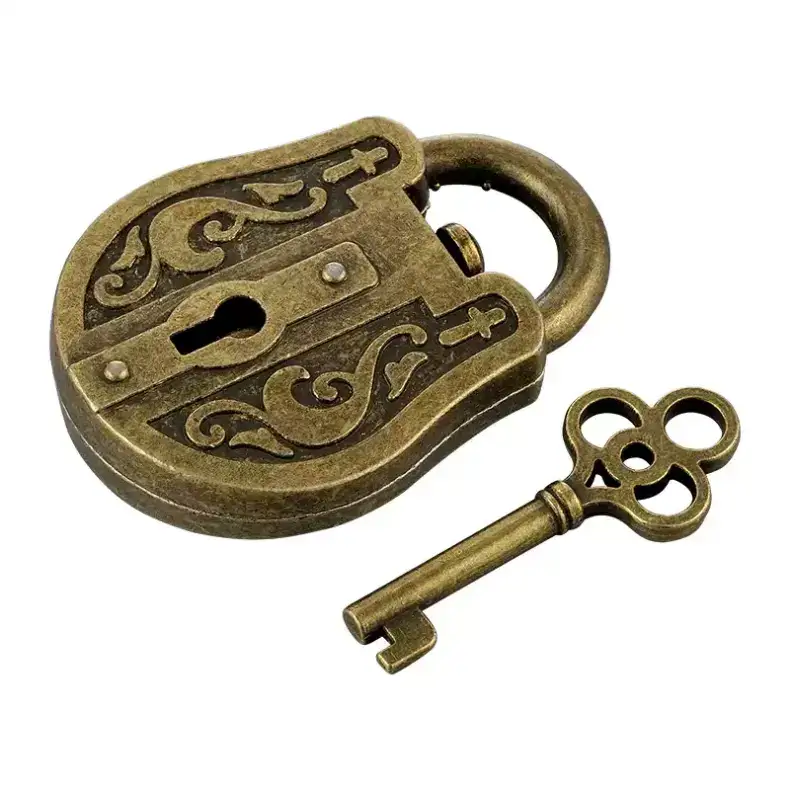
Hands-On Note: The Divine Power Puzzle Lock. A budget-friendly entrant into this category. Its mechanism is a sequential discovery of pins and rotation. Weight: a light 2.2 ounces. The machined finish is decent, though the plating can show wear faster than premium alloys. For under $15, it provides a genuine sequential challenge (solve time: 8-15 minutes for a beginner) with a moderately loud click-clack operation—best for a private office. It answers the user question about the difference between a Hanayama and a cheaper set: here, you trade some perceived quality and acoustic refinement for an accessible, legitimate logical challenge.
For the Spatial Reasoner (The 3D Visualization Session)
This is for the deep problem-solving analog, used when you need to completely switch mental context. It demands mental rotation and understanding of object relationships in space. For many, learning the real way to solve metal puzzles begins here, by trusting spatial logic over force.
Top Pick: Hanayama Cast UFO (Level 5). 5.5 ounces of satisfying heft. This puzzle consists of two interlocked pieces that must be aligned in a specific 3D orientation to separate. My logged solve times ranged from 20 minutes to over an hour across multiple attempts. The tactile feedback is exceptional: parts slide with a precise, damped inertia. Sound rating: Low to Medium. It’s a series of solid clunks and smooth slides, not sharp or jangly. This is not a fidget; it’s a dedicated brain break. Left on a desk, its enigmatic shape is a powerful office conversation starter toy that signals depth, not distraction.
For Beginners: The best Hanayama puzzles for beginners in this category is the Cast Harmony (Level 2). It simplifies the spatial challenge into a beautiful, intuitive dance of two identical pieces. Solve time is short (2-3 mins), but the Aha! moment is profound.
For the Persistent Problem-Solver (The Endurance Challenge)
This is the weekend puzzle, the substantive object you return to over days. It’s for building long-term focus stamina and is often the centerpiece of a desk.
Top Pick & Deep Dive: The Devil’s Lock / “Cast Devil” (Vintage/Reproduction). Weighing in at over 8 ounces, this is a high end metal desk puzzle in spirit. Based on a 1905 design, it’s a complex disentanglement puzzle involving a trapped coin. My testing was measured in sessions, not minutes. The first separation took nearly four hours of cumulative effort. The material is often brass or steel, developing a warm patina with handling that adds to its personal history. The sound is variable—from frustrating rattles to the glorious, deep thud of the coin hitting the desk. This is the ultimate durable metal brain teaser, a tactile puzzle for focus that teaches patience. (For a detailed history, see our piece on the Devil Cast Puzzle).
The Modern Equivalent: Hanayama Cast Enigma (Level 6). The consensus “hardest” in the line. Its solve relies on discovering a single, deeply hidden axis of movement. It is a monument to minimalist, deceptive design. Left on a desk, it is the definition of an executive desk brain teaser—a silent, polished testament to complexity.
The confidence comes from matching the tool to the cognitive task. The Kinetic Fidgeter doesn’t want the Enigma; it will frustrate. The Persistent Problem-Solver will be bored by the Marble. Choose the weight, sound, and mental load that creates a true reset, not a new distraction.
Cast Enigma vs. Cast Vortex vs. Cast Delta: A Data-Driven Comparison for Experienced Solvers
The Hanayama Cast Enigma (Level 6) has a documented community-sourced average first-solve time of 2.5–4+ hours, compared to Cast Vortex’s (Level 4) 10-30 minutes and Cast Delta’s (Level 3) 3-10 minutes. This stark spread defines the commitment each demands, separating a deep-work analog from a coffee-break reset. The difference transcends difficulty ratings and speaks directly to the type of mental engagement you’re seeking.
Cast Enigma is a test of faith. It’s the shortest of the three, a dense 1.8-ounce block of brass-plated zinc alloy. Its solution relies on discovering a single, non-intuitive axis of movement; every other path is a dead end. The tactile feedback is minimal—no clicks, just the silent, frustrating grind of metal on metal until that one magical orientation is found. On a desk, it’s a stoic paperweight, a polished enigma that signals a tolerance for deep, potentially fruitless exploration. (This is the durable metal brain teaser you leave unsolved for weeks, its patina growing with each contemplative handling session).
Cast Vortex is a rhythmic dance. Weighing 2.5 ounces, its stainless steel pieces flow around a central axis in a satisfying, sequential choreography. The haptic click of each aligned groove provides critical confirmation, creating a structured solution path. It engages sequential reasoning and spatial manipulation equally. The sound is a series of soft, precise ticks—noticeable in a quiet room but rarely disruptive. It’s the puzzle for the solver who craves a logical, stepwise progression, a tangible process with clear milestones. For a structured approach to puzzles of this caliber, our guide on Hanayama cast puzzle solutions is a valuable companion.
Cast Delta is pure geometry. At 2.8 ounces, it’s the largest and most visually striking, composed of three interlocked, anodized aluminum tetrahedrons. The challenge is almost entirely spatial: visualizing the clear path through the negative space. Its moves are few but profoundly elegant. The anodized finish resists fingerprints and provides a uniquely smooth, cool glide. It’s nearly silent. As a desk toy that doesn’t look like a toy, it doubles as a modernist sculpture, an executive desk brain teaser that invites curiosity about form as much as function.
The tangible gap between these and a cheap Amazon set lies in machining tolerances. A mass-produced disentanglement puzzle often has burrs, loose rivets, or sloppy threading that creates “false solutions” through jiggling, not solving. The metal feels thin, warm, and lightweight. A Hanayama puzzle’s perceived quality comes from precise fits that eliminate play; the pieces move only when you’ve discovered the correct mechanics. The material has a substantive, cold to the touch density. This precision is what bridges the ADHD fidget community and the executive gift market—one user values the reliable, repeatable sensory input, the other the flawless, silent operation of a fine object.
Choose by the cognitive void you need to fill. The Enigma is for the Persistent Problem-Solver facing a creative block, offering a parallel, marathon challenge. The Vortex suits the Sequential Thinker between structured tasks, providing a clean, completable logic chain. The Delta is for the Visual-Spatial Analyst, a kinetic sculpture to manipulate while visualizing data or designs. Each is a masterclass, but they are tools for different workshops. For those seeking the pinnacle of this craft, our analysis of 7 ruthless cast puzzles for 2026 explores even more formidable horizons.
Care, Longevity, and Solving Etiquette for the Office
Zinc alloy puzzles, common in sub-$20 sets, are prone to a chalky white oxidation (‘white rust’) if handled with acidic skin pH, while stainless steel and aluminum resist tarnish. This chemical reality separates a temporary distraction from a lifelong desk companion. The choice in material dictates not just initial perceived quality, but its decade-long story on your desk.
Preventative care is straightforward. Wash your hands first. The oils and acids that accelerate tarnish on zinc alloy are the same ones that leave fingerprints on polished steel and aluminum. For a durable metal brain teaser that maintains its machined finish, occasional wiping with a soft, dry microfiber cloth is all that’s required. The goal isn’t sterile preservation, but curation. On brass or copper puzzles, a gentle patina is desirable—it’s a record of your interaction, adding to the item’s personal history and ‘desk cred.’ Forcefully polishing it away erases its narrative.
Three Brothers Lock Puzzle — $11.99
A puzzle like the Three Brothers Lock is a perfect case study. Its affordability makes it accessible, but its zinc alloy construction demands mindful handling to avoid that telltale white corrosion. It’s a gateway piece. Investing in a premium stainless steel or anodized aluminum puzzle, however, is a true BIFL (Buy It For Life) proposition. Brands like Hanayama engineer for eternity; their Cast series puzzles are designed to be solved thousands of times without wear, their mechanisms protected against the grit and grime of desk life, as explored in our guide to metal puzzles that don’t break.
Sound is a social contract. In a shared space, your quiet fidget toy must remain just that. This is where the tactile feedback of a precision puzzle shines. The silent slide of a well-fitted aluminum piece, the muffled thud of a felt-lined base, the absence of high-pitched clicks or scrapes—these are the marks of an office appropriate fidget toy. Avoid anything with loose, clacking parts or spring-loaded mechanisms. Your focus aid should not become a colleague’s distraction.
Disappearance is a real risk. A survey of enthusiast forums suggests nearly 15% of communal-desk puzzles eventually ‘walk away,’ borrowed permanently by a fascinated visitor. The solution is discrete storage. A dedicated desk drawer slot or a simple felt pouch signals this is a personal tool, not communal property. It also keeps dust out of delicate mechanisms, preserving that critical 0.002mm gap between moving parts that defines a masterpiece, as detailed in our analysis of the precision machining and care required for such objects.
Finally, solving etiquette. When a colleague picks up your puzzle and asks “How does this work?”, the instinct is to explain. Resist. Instead, offer the simplest nudge: “Feel for the alignment,” or “It turns on a single axis.” Handing them the solution robs them of the cognitive break you’ve curated for yourself. You’re not sharing a toy; you’re offering a two-minute portal to a different kind of thinking. That’s the professional respect these objects command.
Where to Buy Strategically: Avoiding Counterfeits and Finding Rare Puzzles
Authentic Hanayama puzzles have a distinct, engraved ‘H’ logo and precise, burr-free machining, while counterfeits often show visible seam lines and have a lighter, hollow feel. The legitimate price spectrum for a single, high-quality mechanical puzzle is $15-$50. Protecting your investment begins at the point of purchase, moving from care to curation.
Spot the fakes. The difference is in the hand. A counterfeit will feel cheap—often under 2 ounces for a piece that should be 4.5—and may have a gritty, uneven motion. Examine the finish. True machined steel or anodized aluminum has a uniform, cool-to-the-touch surface. Cast zinc alloy copies often have a faint, greasy sheen and discoloration at the seams. The Reddit community at r/mechanicalpuzzles maintains an ongoing visual library of fakes versus authentics; it’s an invaluable final check before clicking ‘buy.’
Source thoughtfully. For guaranteed authenticity and enthusiast-grade selections, dedicated retailers like Puzzle Master (Canada) or Kubiya Games (US) are superior to Amazon’s algorithmic chaos. Their catalogs are curated by collectors, often include the rarity scale, and they stock limited editions from designers like Jean Claude Constantin. Amazon and big-box retailers are minefields of repackaged generic sets; however, they can be suitable for entry-level purchases if you meticulously check reviews for mentions of “lightweight” or “poor finish.”
For the rare and discontinued, the secondary market thrives. Check the marketplace on Puzzle Place or the Mechanical Puzzles Discord server. Here, you’ll find puzzles that have developed a patina not just of metal, but of history, having passed through the hands of several solvers. Prices reflect this provenance.
Is it worth buying a set? Rarely. Most bundled puzzles are lower-quality generics. You’ll likely only connect deeply with one or two specific cognitive profiles (the kinetic fidget versus the spatial reasoner). It’s more strategic to invest in one verified, high-quality puzzle from a brand like Hanayama at the $25-$35 price point. Start with a Cast Vortex (Level 4) for a balanced challenge.
Your final action: before purchasing any puzzle, search its name alongside “authentic” on r/mechanicalpuzzles. Then, buy from a specialist. This turns a simple transaction into the first step of acquiring a true desk-worthy tool, ensuring the piece you place in your drawer is one of substance, not just metal.