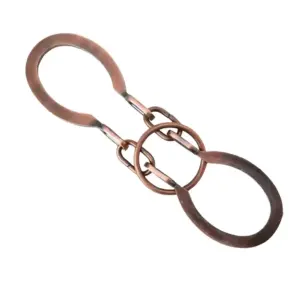
Two identical brass hooks, tangled in a way that looks permanent. You rotate them, pull them, flip them over — and somehow they get tighter. Fifteen minutes later, you’re convinced they were soldered together at the factory.
They weren’t. The Cast Hook metal brain teaser separates in about three moves. But those three moves require you to abandon every instinct your hands want to follow. That’s the puzzle’s real mechanism — not the metal, but the gap between what feels right and what actually works.
I spent my first attempt muscling through it. Twenty minutes of increasingly frustrated twisting. My second attempt, after understanding the underlying geometry, took nine seconds. This guide exists to get you from the first state to the second without the bruised ego in between.
What You’re Actually Holding
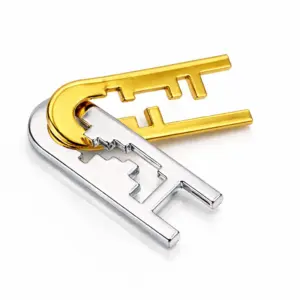
The Cast Hook puzzle consists of two pieces that are mirror images of each other. Each piece has a hook shape — a curved C with a straight tail — and the two pieces interlock through their circular openings. The metal has an antique bronze finish with satisfying weight, roughly the heft of a few stacked coins.
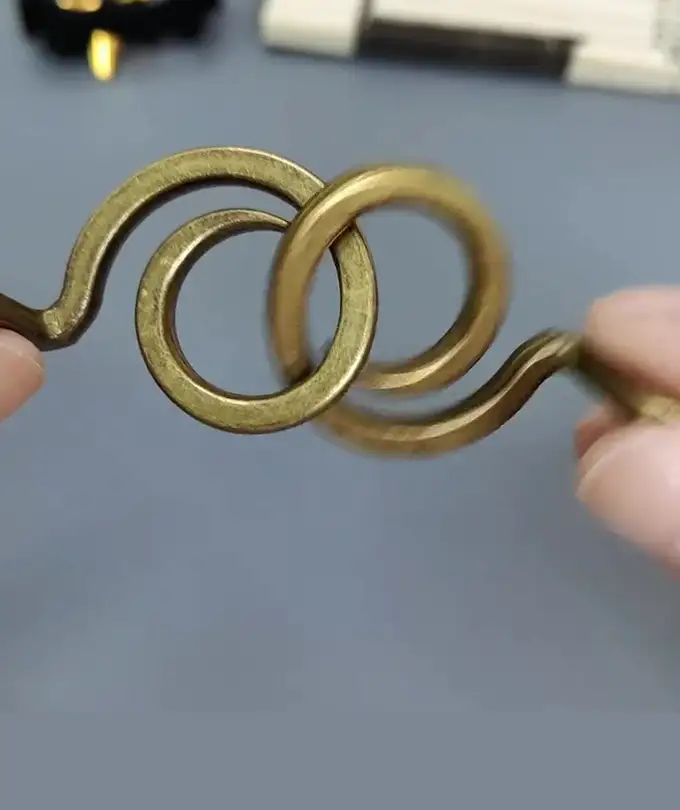
Here’s the critical observation that most people miss entirely: each hook piece has a gap in its circular ring. The ring isn’t closed — it’s an open C-shape. That gap is not a manufacturing defect. It is the entire solution.
Look at the piece in your right hand. Find the opening where the metal ring doesn’t quite close. Now look at the left piece. Same opening, same width. The gap on each piece is exactly wide enough to allow the other piece’s flat bar to pass through it. The puzzle designer, Finnish creator Vesa Timonen, engineered the tolerance so precisely that the passage feels impossible until you find the correct angle.
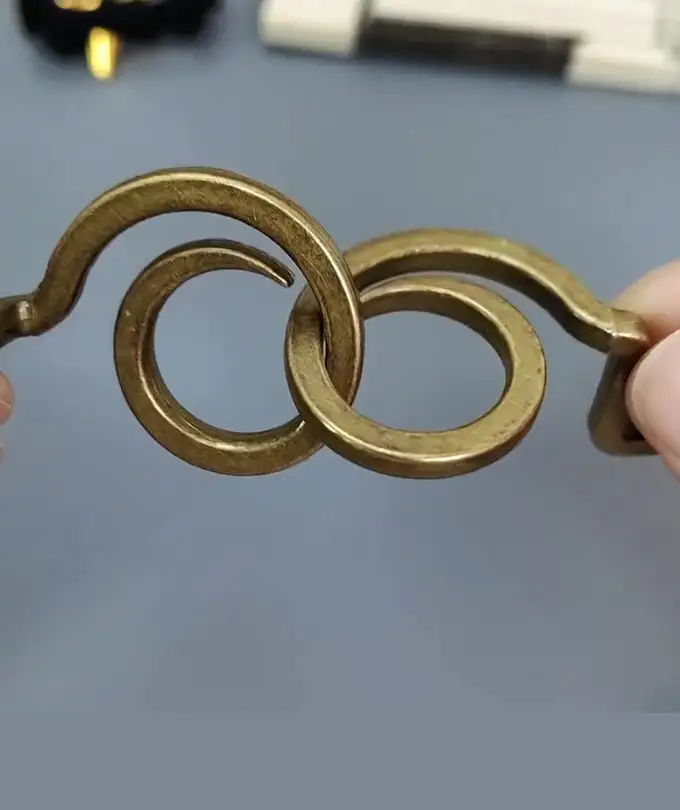
This is worth understanding before you touch anything else. The gap width equals the bar thickness. Not approximately — exactly. So the only way one piece exits the other is through that gap, at the correct orientation. Every other path is geometrically blocked.
If you’ve been exploring disentanglement-style brain teasers for any length of time, you’ll recognize this as a spatial constraint puzzle. The solution isn’t about force or speed — it’s about finding the single path where the geometry permits movement.
Why Your First Instinct Is Wrong (And Everyone’s Is)
Here’s what happens to about 90% of people who pick up this puzzle for the first time. They grab one hook in each hand and start rotating, trying to slide one ring through the other’s opening. The hooks seem to glide apart for a moment — then lock up harder than before.
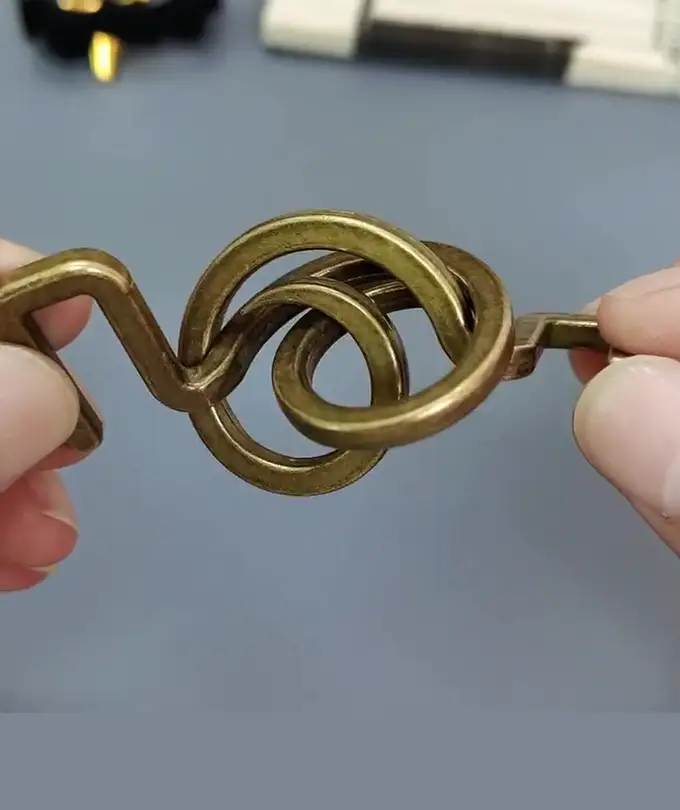
The reason is straightforward once you see it. When you try to separate the pieces by pulling them apart along the flat plane, you’re pushing the bar of one piece deeper into the ring of the other. The more force you apply, the more the pieces bind. It’s counterintuitive because pulling apart is exactly what separation should look like — but with this particular geometry, pulling apart is literally the opposite of solving.
I’ve watched people try this for forty minutes. Engineers, surgeons, people who work with their hands all day. The problem isn’t intelligence or dexterity. The problem is that the obvious approach creates a false sense of progress: the pieces shift, they rotate, they almost come apart — and then they lock. That “almost” feeling is the trap. It keeps you trying the same wrong approach with slight variations, instead of questioning the entire strategy.
There’s a broader principle at work here that applies well beyond metal puzzles. When a problem resists every variation of the same approach, the approach itself is usually wrong. Not the execution — the framing. The Cast Hook teaches this lesson in about 30 grams of bronze alloy, which is more memorable than any textbook.
If you enjoy puzzles that teach through productive failure, the Seahorse Separation Problem explores a similar dynamic with dual seahorse pieces — different geometry, same humbling realization.
The Principle: Spatial Displacement, Not Spatial Force
Before walking through the solution, I want you to understand why it works. If you just memorize the moves, you’ll forget them by next week. If you understand the principle, you’ll solve this puzzle and dozens like it forever.
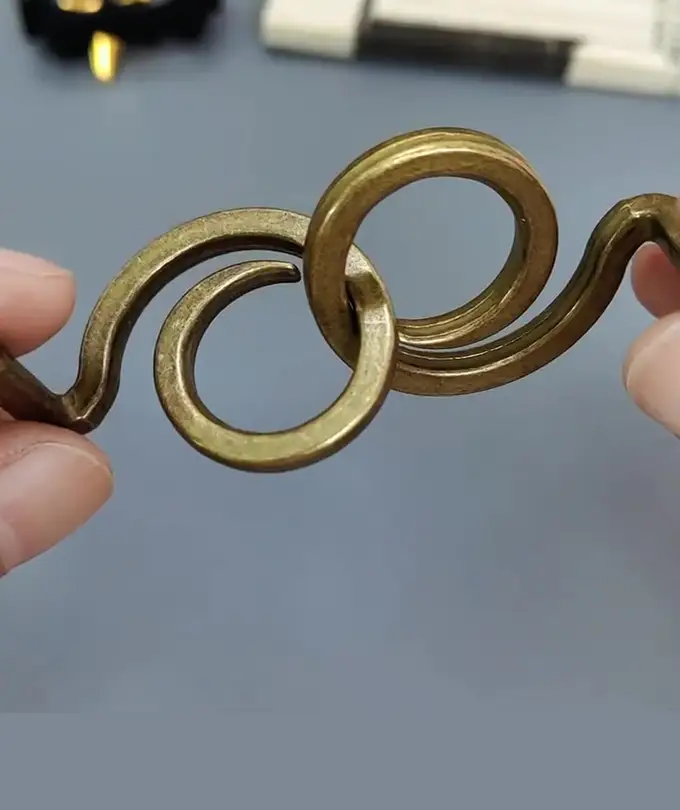
The core idea is spatial displacement: instead of trying to pull the pieces apart (which jams them), you align them so the gaps overlap, then rotate one piece through the other’s opening. Think of it like passing through a door. You don’t run at the wall next to the door and hope to punch through. You line yourself up with the doorframe, turn sideways if needed, and walk through.
Each hook has exactly one “door” — its gap. The solution requires you to line up both doors at the same point, then pass one piece through both doors simultaneously. This is a perpendicular movement, not a parallel pull.
In cognitive science terms, this is a classic insight problem — the kind studied at institutions like Carnegie Mellon’s cognitive psychology department. Researchers have documented that people systematically fail at spatial displacement tasks because the brain defaults to the most direct path between two points. The Cast Hook specifically exploits this bias by making the direct path feel almost right.
The practical implication: stop trying to move the pieces away from each other. Start trying to move them through each other. That mental shift is the entire puzzle.
The Solution: Five Clear Moves
I’m going to break this down using what Richard Feynman called “teaching to understand, not teaching to remember.” Each step builds on the previous one. If a step doesn’t make sense, go back and re-read the principle above before continuing.
Prerequisite: Orient the puzzle correctly. Hold one hook in each hand, with both hooks’ tails pointing outward (away from center). The circular rings should overlap in the middle. Both gaps should be roughly visible — one pointing slightly up, one slightly down.
Move 1: Position the Openings Perpendicular
Hold the puzzle so you can see both hook openings. Now rotate the pieces until the two gaps face each other — one pointing toward you, the other pointing upward. The key is that the gaps need to be at roughly 90 degrees to each other, not parallel.
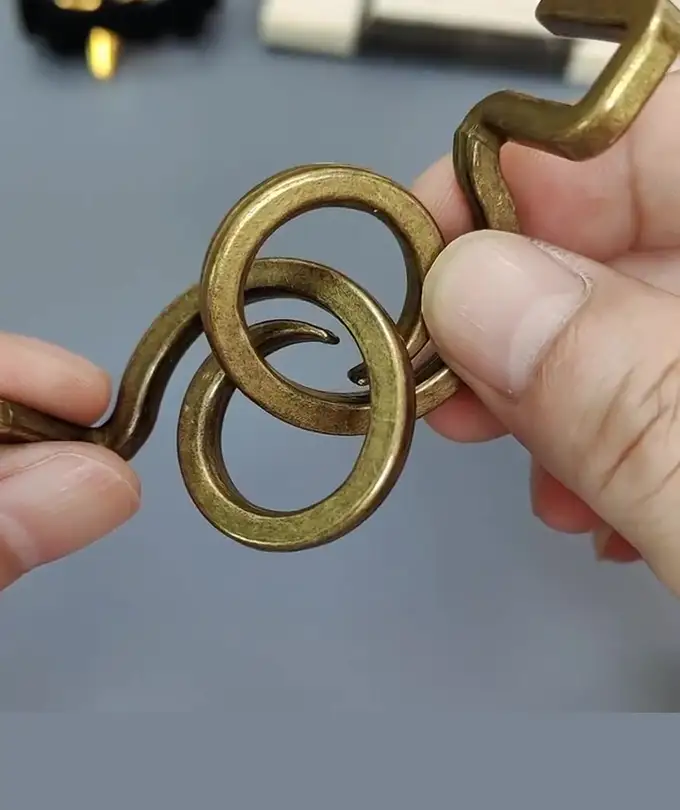
Most people instinctively try to align the gaps parallel (both pointing the same direction). That doesn’t work because parallel gaps can’t create a passage — you need the perpendicular alignment to form a path through both openings at once.
Think of it like two keyholes on adjacent doors. If both keyholes face the same way, a single key can’t pass through both simultaneously. But if you angle one keyhole 90 degrees relative to the other, a flat key can slide through the first and rotate into the second.
Move 2: Cross the Hooks at the Gap Point
With the gaps positioned perpendicular, gently slide the two pieces toward each other at the point where the gaps meet. You’re not pulling apart — you’re bringing together. The flat bar of one hook should start entering the gap of the other hook.
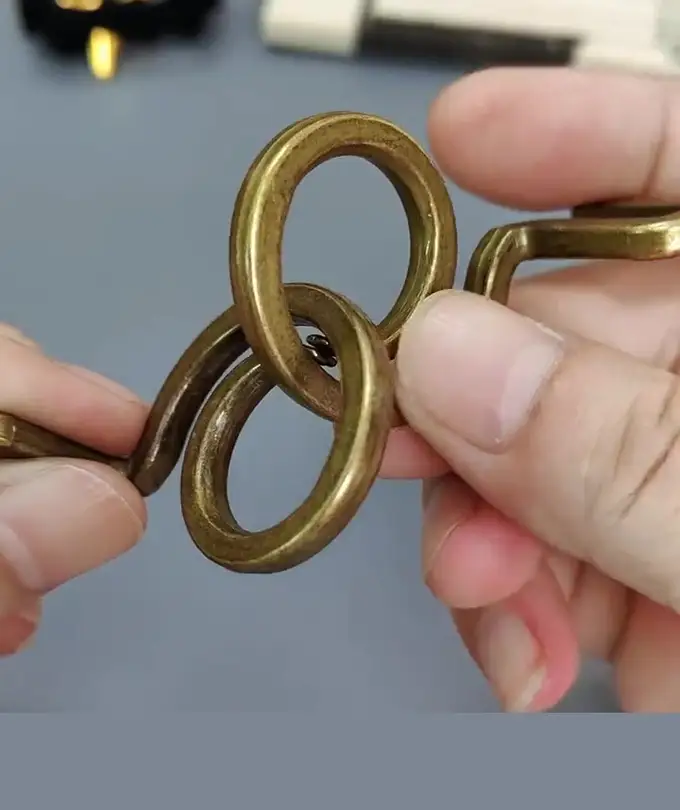
This is the moment that feels most wrong. Your hands want to separate. Instead, you’re compressing. The pieces should start to interweave at the gap point — the bar of one piece passing through the opening of the other.
If you feel resistance, you don’t have the angles right. No force should be needed at any point in this solution. If you’re pushing hard, stop, reposition, and try again. The correct alignment will feel like the pieces want to move — there’s almost a magnetic smoothness to it.
People who enjoy the satisfaction of finding precisely the right angle will find similar rewards in the Cast Coil Pocket Puzzle, which demands the same patience with a different curved geometry.
Move 3: Compress Both Hooks Together
Once the bars are crossing through the gaps, bring both hooks closer together. The circular rings will now overlap almost completely, with the bars of each piece threading through the other’s opening.
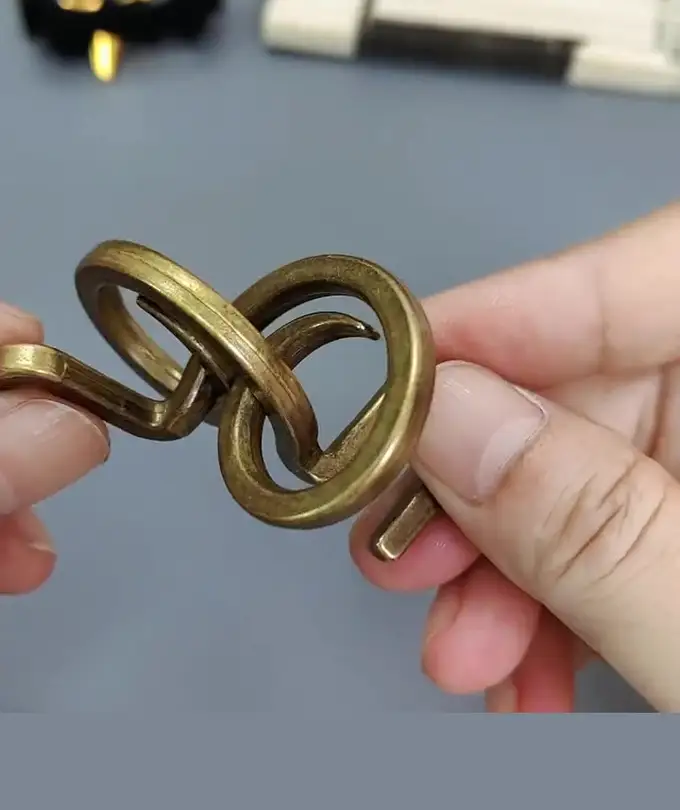
At this point, the puzzle looks more tangled than when you started. This is correct. It’s the “it gets worse before it gets better” phase. If you’ve ever untangled Christmas lights, you know the feeling — there’s a moment where the right move temporarily increases complexity. Trust the geometry.
The pieces should now be sitting perpendicular to each other, with the bars fully through the gaps and the rings overlapping in a compact formation.
Move 4: Rotate One Hook Through the Other
This is the key move. With both pieces compressed together and the bars threaded through the gaps, rotate one piece (I use the right-hand piece) approximately 180 degrees. You’re essentially flipping it over while it’s still inside the other piece’s ring.
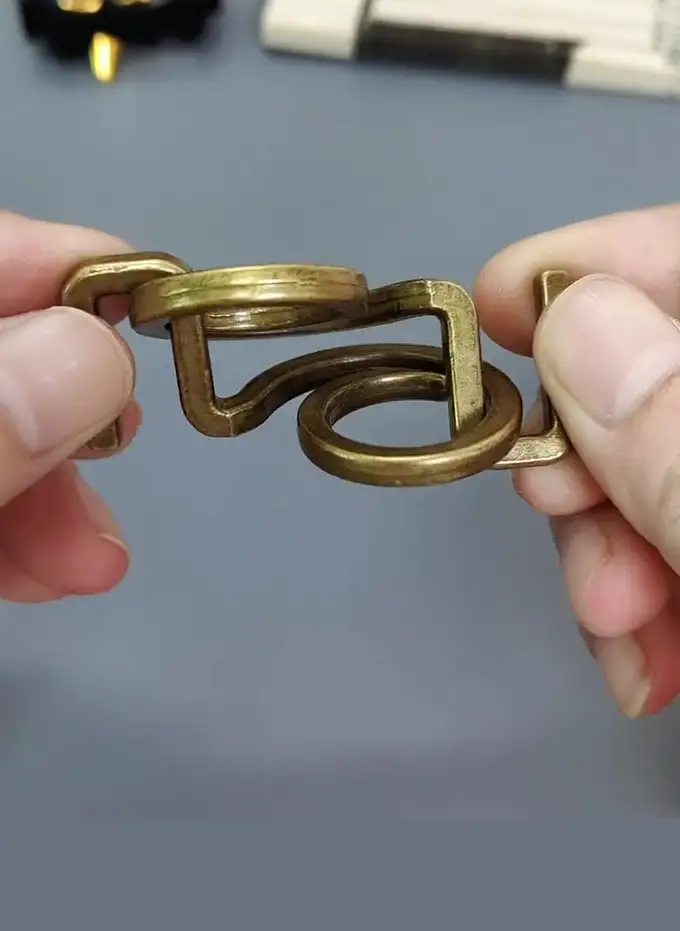
The rotation should feel smooth and almost effortless. The bar slides along the inside of the other piece’s ring, following the curvature. If it catches or binds, your angle is off — go back to the compression in Move 3 and adjust.
What you’re doing geometrically is remarkable: you’re passing the full width of one piece through the gap of the other by taking advantage of the curved interior path. The piece doesn’t go straight through the gap — it spirals through it, using the ring’s own curvature as a guide rail.
This is why force never works. The path isn’t a straight line. It’s a curve that follows the interior of the hook shape. You can’t force a piece along a curved path — you have to guide it.
Move 5: Separate
After the rotation, the two pieces are now oriented so they can simply slide apart. The final move is a gentle pull — the one movement you’ve been wanting to make since the beginning.
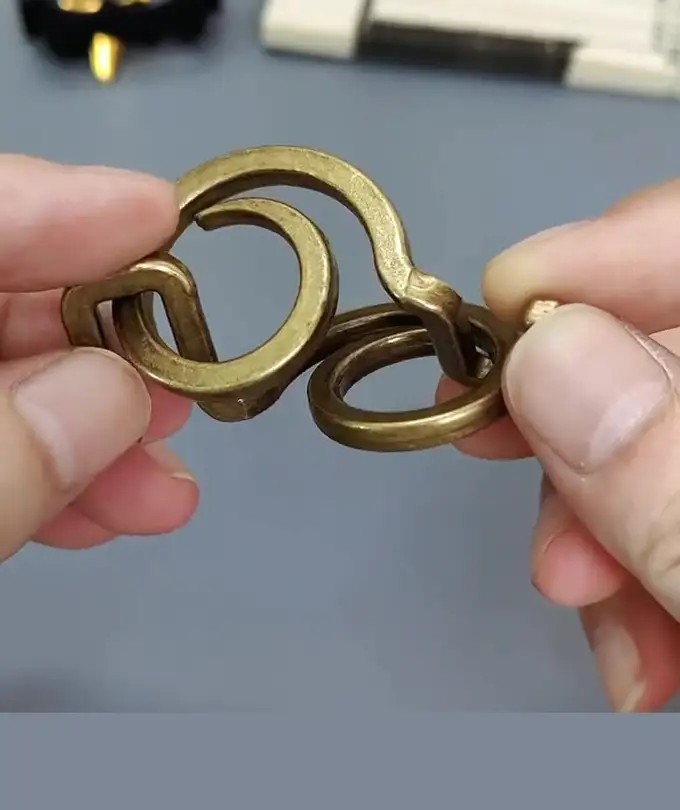
One smooth pull, and the two hooks come free.
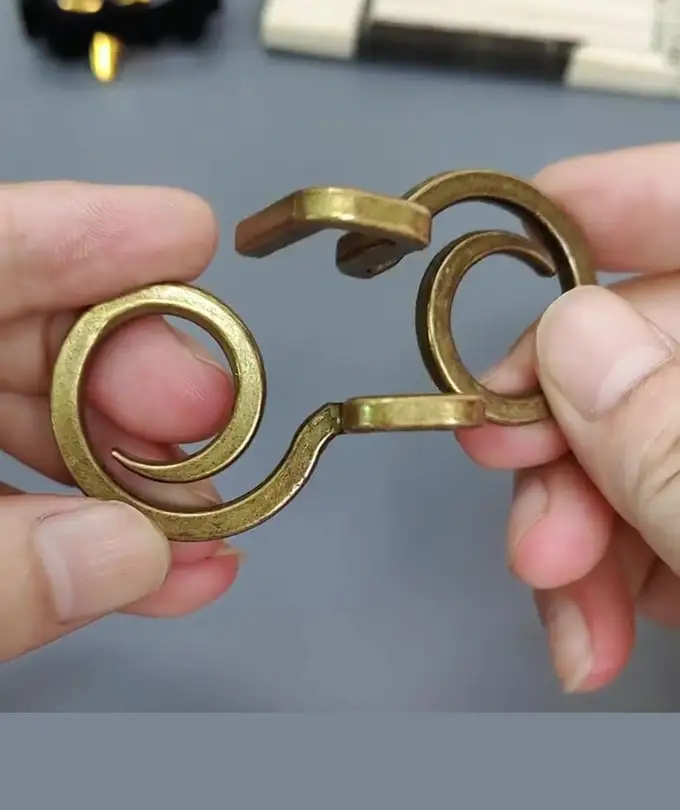
The entire sequence, once you understand it, takes less than ten seconds. But those first ten seconds contain a complete education in spatial reasoning that no amount of description can fully replace. You have to feel the pieces yield to understand what “finding the right path” actually means in three dimensions.
Putting It Back Together (The Real Challenge)
Here’s what the puzzle community knows but manufacturers rarely advertise: reassembly is harder than disassembly. Significantly harder.
When you take the Cast Hook apart, you can partly feel your way through — the pieces give feedback about what’s working. When you try to reconnect two separate hooks into their interlocked position, you’re working without that feedback. You have to reverse the entire five-step sequence, which requires remembering the exact orientations.
My suggestion: immediately after your first successful separation, put the pieces back together. Don’t wait. The spatial memory is still fresh, and your hands remember the path. If you wait a day, you’ll likely spend another fifteen minutes relearning.
The reassembly sequence is the exact reverse: start with the pieces in the final separated position, bring them perpendicular, thread the bars through the gaps, compress, rotate, and release. But reversed spatial sequences are cognitively harder than forward ones — a phenomenon documented in studies on spatial reasoning and working memory.
What the Cast Hook Teaches About Problem Solving
I’ve used this puzzle as an icebreaker in three different team workshops. The pattern is remarkably consistent across groups.
First, everyone grabs and pulls. Nobody reads instructions (there aren’t any in the box, which is intentional). After about five minutes, the group splits into two camps: people who try harder, and people who stop and stare. The “stop and stare” group almost always solves it first.
The observation carries into real problem-solving: the willingness to pause, examine constraints, and question assumptions almost always outperforms the willingness to try more variations of the same approach. The Cast Hook is a $10–20 object lesson in first-principles thinking.
There’s a reason cast metal puzzles keep showing up on engineering desks and in therapist waiting rooms. They force a particular kind of attention — the kind where your hands slow down and your spatial awareness takes over. If you keep a collection of metal brain teasers on your desk, you’ve probably noticed the same thing: the physical object becomes a thinking prompt, not just a toy.
The 5-Piece Cast Spiral Metal Puzzle takes this principle further — five interlocking pieces that look impossible until you find the sequence where each piece rotates free. The same “stop and think” principle applies, just with a longer chain of reasoning.
The Design Geometry: Why Two Identical Pieces Create an Asymmetric Problem
Something worth appreciating about the Cast Hook: both pieces are exactly identical. Same shape, same dimensions, same gap width. There’s no “key” and “lock” — no designated mover and stayer. Either piece can be the one that rotates through.
This symmetry is what makes the puzzle so disorienting. With asymmetric puzzles, your brain gets a structural hint: the smaller piece probably moves through the larger one. With symmetric puzzles, there’s no such hint. Both pieces are equally candidates for “the one that moves,” which doubles the mental search space.
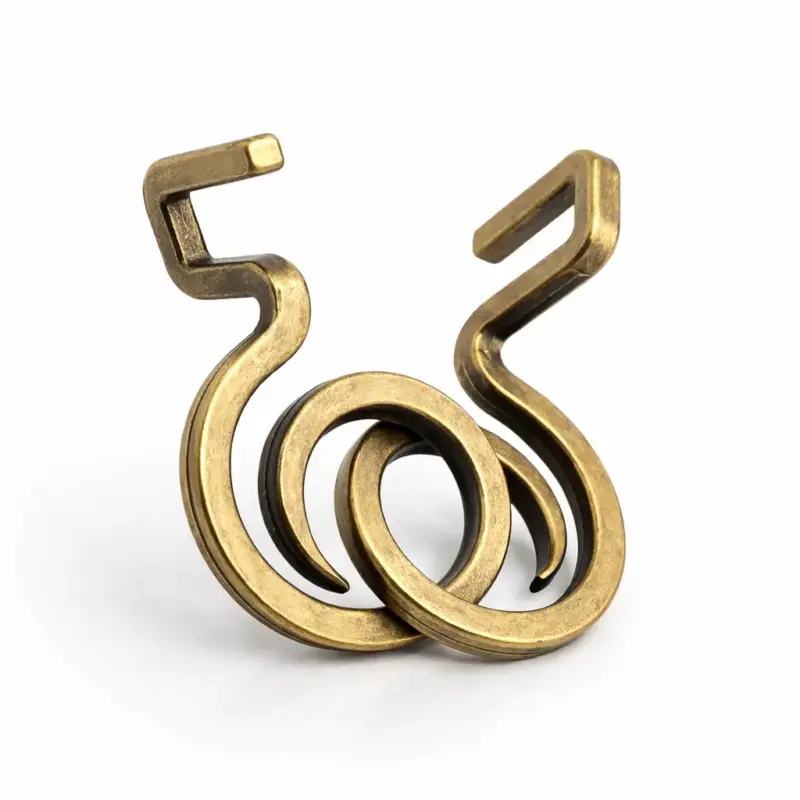
Cast Hook Metal Brain Teaser
The Cast Hook Metal Brain Teaser is a two-piece metal disentanglement puzzle: two identical cast alloy hooks, about 60mm tall, finished in antique bronze. Separating them takes a precise rotational sequence, not force, and reassembling them is the second, harder half of the challenge. Built for adults who want a pocket-sized desk puzzle they can reset and hand to the next skeptic at the table.
Vesa Timonen’s design exploits this beautifully. The hook shape suggests one natural orientation (hook pointing up, tail pointing down — like hanging something), which biases your grip and movement patterns. But the solution requires holding the pieces in an orientation that has nothing to do with how hooks naturally hang. You have to abandon the metaphor suggested by the object’s shape. That’s the second cognitive trap layered on top of the first one (pull-apart instinct).
If two-piece symmetric puzzles intrigue you, the Interlocking Metal Disk Puzzle uses a completely different geometry — flat disks instead of hooks — but the same principle of identical pieces requiring a non-obvious rotation to separate. A good next step after mastering the Hook.
Who Should Skip This Puzzle
I don’t believe in universal recommendations, so here’s who should probably spend their money elsewhere.
If you want a long-lasting challenge that keeps you busy for hours, this isn’t it. Once you understand the principle, the Cast Hook solves in under ten seconds every time. There’s no progressive difficulty, no alternative solutions to discover, no layer underneath the first one. It’s a one-trick puzzle — a very elegant trick, but one trick.
If you have limited hand dexterity or arthritis in your fingers, the rotation in Move 4 requires a particular grip that might be uncomfortable. The pieces are small (each hook is roughly the length of a house key), and the manipulation is fine-motor work.
If you’re looking for a puzzle to stump experienced puzzle solvers, this won’t do it. On the standard difficulty scale, the Cast Hook sits at the beginner end — rated approximately 2 out of 6 in difficulty. Experienced solvers will typically crack it in under two minutes without a guide.
The Cast Galaxy 4-Piece Silver Puzzle or the Cast Coil Triangle offer substantially more solving time if that’s what you’re after.
Who This Puzzle Is Perfect For
First-time metal puzzle buyers. The Cast Hook is one of the best entry points into cast metal disentanglement puzzles. The difficulty is low enough to solve without a guide (given patience), but high enough to provide a genuine “aha” moment. That ratio is hard to find.
Desk fidgeters. At roughly 50 grams combined weight, the two hooks fit in a pocket or desk drawer. The solve-and-reassemble cycle is satisfying to repeat, and the bronze finish feels good in hand. I keep mine next to my keyboard for the three-minute break between tasks.
Gift givers targeting “hard to shop for” people. The Cast Hook hits a specific sweet spot: unusual enough to feel thoughtful, inexpensive enough to not feel excessive, and solvable enough that the recipient won’t give up and shove it in a drawer. If you’re assembling a screen-free gift collection, this is a strong inclusion.
Teachers and workshop facilitators. I mentioned using it as an icebreaker earlier. It works because everyone fails the same way, which creates instant camaraderie. And the solution demonstrates first-principles thinking in a tangible, memorable way. Buy a set of five or six and hand them around a conference table.
How the Cast Hook Compares to Other Beginner Metal Puzzles
Without naming specific brands (because the Cast Hook design exists across multiple manufacturers), here’s where this puzzle sits in the broader category of two-piece cast metal brain teasers.
Difficulty: Low-end of the spectrum. Comparable to other beginner-rated cast puzzles, below medium disentanglement challenges, well below multi-piece sequential puzzles.
Solve time (first attempt without guide): 5–45 minutes for most adults. Under 5 minutes for experienced puzzle solvers. Under 30 seconds after the first successful solve.
Replay value: Moderate. The solve-reassemble loop is satisfying to repeat, but there’s no new discovery after the first solution. Replay comes from muscle memory building and speed, not from finding alternative paths.
Material quality: The bronze-finish zinc alloy is standard for this price range. Solid weight, smooth edges, no sharp points. The finish will patina slightly over time with handling, which some people consider a feature.
For a broader look at what beginner-friendly metal puzzles are available, 8 Metal & Wooden Brain Teasers for Logic Lovers covers several options across difficulty levels and materials.
Material Science: Why the Tolerances Matter
Cast metal puzzles live and die by their dimensional tolerances. The Cast Hook’s gap width needs to be precise to within fractions of a millimeter. Too wide, and the pieces fall apart on their own — no puzzle. Too narrow, and the pieces bind during the solution, requiring force that can scratch or deform the metal.
The zinc alloy used in cast puzzles like the Hook is chosen specifically for its casting precision. Zinc alloys (typically Zamak variants) flow well into molds, shrink predictably during cooling, and maintain dimensional stability over time. They’re also dense enough to feel substantial in hand without being heavy enough to cause fatigue during extended manipulation.
The bronze-tone finish isn’t just aesthetic — it provides a thin protective layer that reduces metal-on-metal friction during solving. Without it, bare zinc alloy pieces would gradually generate fine metallic dust at the contact points. The finish eliminates this while adding the warm, antique look that makes these puzzles feel like artifacts rather than toys.
If metal composition and finish quality interest you, the Antique Bronze Keyring Puzzle review goes deeper into how different casting methods affect puzzle feel and durability.
Maintaining Your Cast Hook Puzzle
Minimal maintenance, but two things extend the life:
Keep the pieces dry. Zinc alloy doesn’t rust, but moisture trapped in the interlocked position can discolor the finish over time. If you get the puzzle wet, separate the pieces and let them air dry individually.
Occasional light oil. A tiny drop of mineral oil or puzzle lubricant on the gap edges every few months keeps the sliding action smooth. This matters more if you’re a frequent solver who runs through the separation dozens of times.
Don’t store it solved for months without touching it. The compression of the pieces against each other, combined with humidity, can create minor surface bonding that makes the first solve attempt after storage feel stiffer than usual. A few rotations break it free, but it’s startling if you don’t expect it.
Frequently Asked Questions
How long does the Cast Hook puzzle take to solve? First-time solvers without a guide typically spend 5 to 45 minutes, depending on whether they abandon the pull-apart approach quickly. With the step-by-step guide above, a first solve should take under 3 minutes. Subsequent solves take under 10 seconds once the movement is memorized.
Is the Cast Hook puzzle good for kids? The puzzle itself is safe for older children (no sharp edges, no small detachable parts), but children under about 10 may find the spatial reasoning too abstract to enjoy. The sweet spot is ages 12 and up, where the “aha” moment is cognitively rewarding rather than just confusing. For younger children, a 6-in-1 Wooden Brain Teaser Set offers more accessible challenges.
Why does the Cast Hook get harder when I pull the pieces apart? Because pulling drives the bar of one piece deeper into the ring of the other, the opposite of the correct movement direction. The solution requires compression and rotation, not extension. See the “Why Your First Instinct Is Wrong” section above for the full explanation.
Can I solve the Cast Hook puzzle without a guide? Absolutely — and I’d recommend trying for at least 15–20 minutes before reading any solution. The puzzle is designed to be solvable through experimentation, and the satisfaction of an unguided solution is substantially higher. Use this guide as a fallback, not a starting point.
What difficulty level is the Cast Hook? The Cast Hook sits at the beginner level — approximately 2 out of 6 on standard difficulty scales. It’s an entry-level cast metal puzzle, ideal for first-time buyers or as a warm-up before tackling harder disentanglement challenges.
Is the Cast Hook the same as other hook-shaped metal puzzles? The core design — two identical hook-shaped pieces with precisely engineered gaps — was created by Finnish puzzle designer Vesa Timonen. Various manufacturers produce versions of this design, and quality varies significantly. Look for smooth casting, consistent finish, and precise tolerances. If the pieces feel gritty or require force during the solution, the casting quality may be subpar.
What metal is the Cast Hook puzzle made from? Most Cast Hook puzzles are made from zinc alloy (typically a Zamak variant) with a bronze-tone or antiqued finish. This material offers excellent casting precision, satisfying weight, and corrosion resistance.
How do I put the Cast Hook puzzle back together? Reverse the separation sequence: start with pieces perpendicular, thread the bars through the gaps by bringing pieces together, compress, rotate 180 degrees, and release into the interlocked position. Reassembly is harder than disassembly because you’re working without tactile feedback from the binding. Practice immediately after your first separation while spatial memory is fresh.
Is the Cast Hook a good gift? It’s one of the best puzzle gifts in the sub-$20 range. Small enough to wrap, satisfying to open, solvable enough to not frustrate the recipient, and interesting enough to demonstrate in social settings. Works especially well as a stocking stuffer or office gift exchange item. For more curated options, the puzzle box gift guide covers larger-format gift puzzles.
What should I try after solving the Cast Hook? If you enjoyed the Cast Hook and want to level up, move to a medium-difficulty cast metal puzzle. The Metal Starfish Puzzle Ring is a natural next step — two pieces like the Hook, but with geometry that demands a longer reasoning chain. For a significant jump in difficulty, the Orbital Ring Cast Puzzle adds rotational constraints that triple the solving time.
Where can I buy the Cast Hook metal brain teaser? The Cast Hook Metal Brain Teaser is available at Tea Sip with worldwide shipping. The puzzle ships in protective packaging to prevent surface scratching during transit.
Can I use the Cast Hook puzzle for team building? Yes — it’s particularly effective for team icebreakers because everyone fails the same way initially, creating shared experience. Hand out multiple puzzles (one per pair of people), set a 10-minute timer, and watch the room divide into force-users and observers. The debrief about approach vs. execution is worth the puzzle cost alone.
Does the Cast Hook puzzle come with a solution? Most versions do not include printed solutions. This is intentional — the solving journey is considered part of the product experience. This guide serves as the most detailed solution resource available online, with step-by-step photos and the underlying reasoning explained.
The Verdict
The Cast Hook is not the most complex, longest-lasting, or most impressive metal puzzle you can buy. It is, however, one of the most teachable ones. The gap between wrong approach and right approach is razor-thin but conceptually enormous, and that gap is where all the value lives.
Buy it as your first cast metal puzzle. Buy it as a desk toy. Buy it as the gift that starts a conversation about assumptions and hidden paths. Just don’t buy it expecting a week-long challenge — this one’s about the quality of the insight, not the quantity of the struggle.
If you want to test your spatial thinking with something you can carry in your pocket, explore the full cast metal collection and find the difficulty level that matches where you are now. The Cast Hook is the door. What’s behind it is your call.