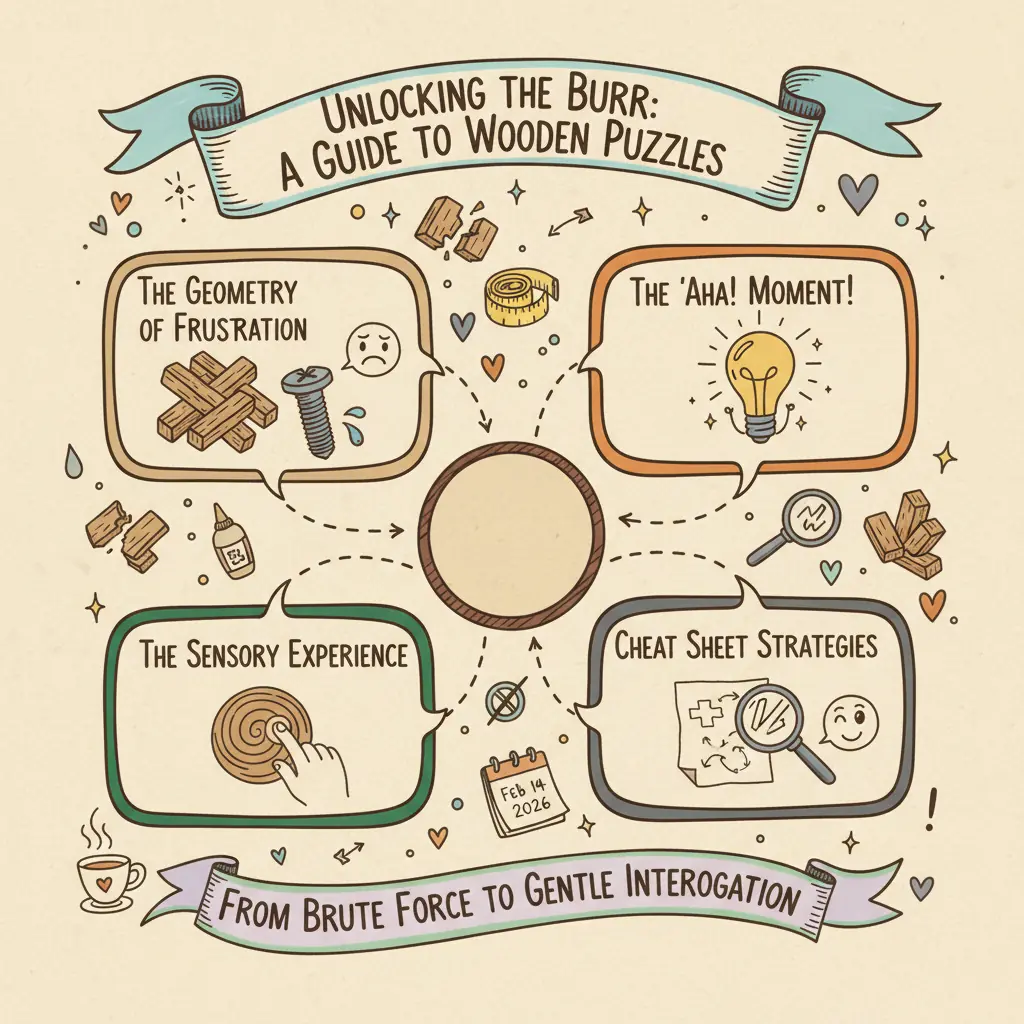
The third time the internal wooden pin slipped past my thumb, I set the 12-piece burr down and walked to the kitchen to refresh my tea. It is February 14, 2026, a Tuesday morning that smells faintly of cedar and frustration. My desk is currently a graveyard of half-disassembled geometry, a testament to the fact that even after reviewing over 200 mechanical puzzles, wood still has a way of humbling me. There is a specific kind of silence that accompanies a “stuck” puzzle—it’s the sound of your own spatial reasoning hitting a brick wall.
The real wooden puzzle solution isn’t found in a folded paper diagram or a grainy YouTube spoiler. It’s found in the fingertips. My thesis, developed over a decade of fiddling, is simple: the best solutions punish impatience and reward observation. If you are forcing a piece, you aren’t solving; you’re breaking. Wooden puzzles are living things, reactive to the humidity in your room and the oil on your skin, and conquering them requires a shift from brute force to gentle interrogation.
The Geometry of Frustration: Why Ancient Logic Still Works
Most people approach a wooden puzzle as a math problem, but it’s actually an architectural one. We are dealing with mortise-and-tenon joinery, a technique that has held buildings together for millennia without a single drop of glue or a solitary nail. When you hold a mechanical puzzle, you are holding a piece of structural history.
The “burr” puzzle, specifically, relies on interlocking notched sticks. The complexity isn’t just in how they fit, but in the sequence of their departure. You might find five pieces that wiggle, but only one that moves. That “key” piece is the gatekeeper. In my experience, beginners often fail because they try to move three things at once. The wood demands a linear logic.
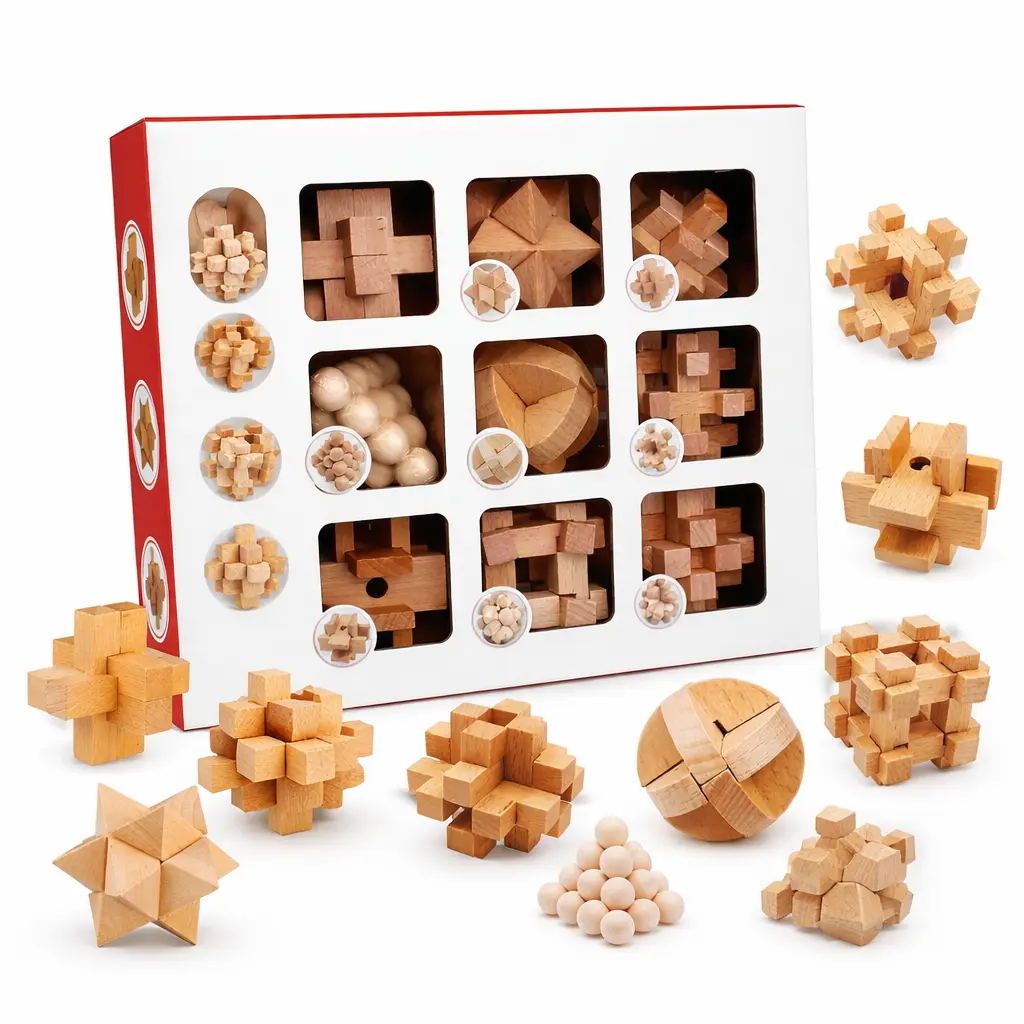
Luban Lock Set 9 Piece
If you want to understand the roots of this hobby, you start here. This $39.99 set is effectively a masterclass in 2,500 years of Chinese engineering. I spent nearly four hours on the sixth piece in this set last month, and I can tell you that the tolerances are surprisingly tight for the price point. These aren’t just toys; they are recreations of the tests Lu Ban used to challenge his apprentices.
The 9-piece set is a progression. You start with the basic cross and end with shapes that look like solid stars. My personal verdict? It’s the best “bang for your buck” for a serious hobbyist. The beechwood has a decent weight, though I’d recommend a very light sanding on the interior notches if you live in a high-humidity area like I do. The wood swells, and a solve that was easy in December might be impossible in July. It’s a perfect entry point for those who want to move beyond strategies for conquering the triangular bead challenges and into the world of traditional interlocking solids.
The “Aha!” Moment vs. The “Oh No” Moment
There is a chemical spike in the brain when a hidden panel finally slides. It’s a mix of dopamine and relief. However, that “Aha!” moment is frequently followed by the “Oh No” moment—the realization that you have a pile of twelve identical-looking sticks and no idea how to rebuild the sphere.
This is where the amateur and the veteran diverge. A veteran never takes a piece out without looking at the void it left behind. I’ve learned this the hard way. I once spent an entire weekend with a “Besieged City” puzzle ($16.99) spread across my coffee table because I got cocky and pulled the core out while watching a movie.
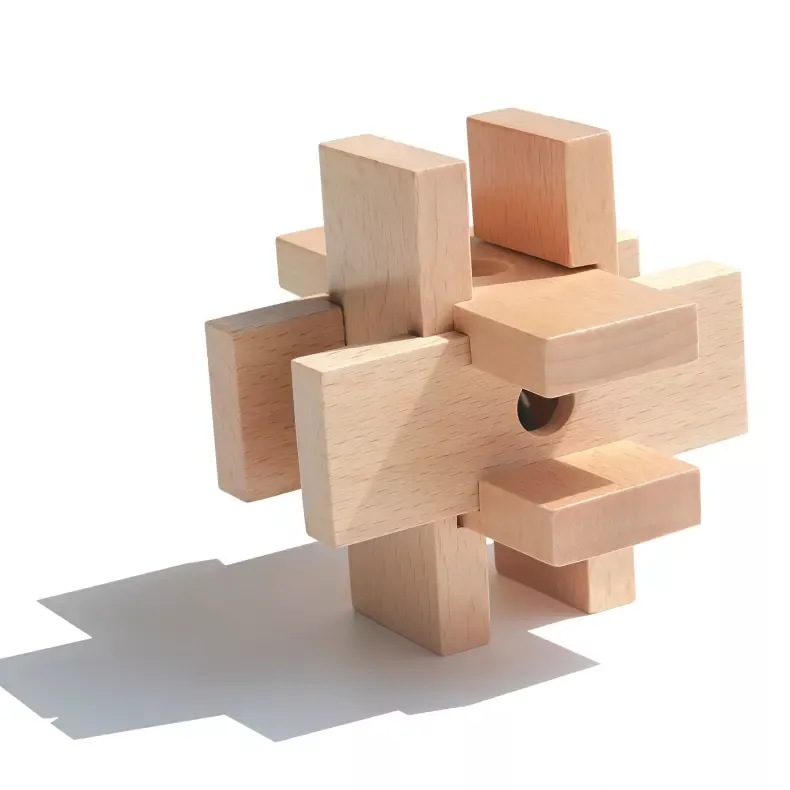
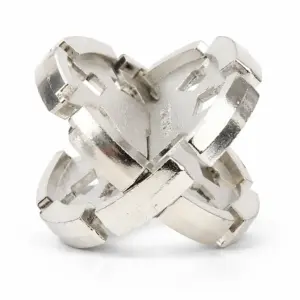
6 Piece Wooden Puzzle Key — $12.99
Something like the 6 Piece Wooden Puzzle Key ($12.99) is a great way to practice this “reverse-engineering” mindset. It’s a smaller commitment than a full burr set, but the principle is identical. It strips the problem down to pure geometry. I keep one of these in my car’s glove box. It’s the perfect thing to hand to a skeptical friend who thinks “it looks easy.” Watching a grown adult struggle with six pieces of wood for twenty minutes is a quiet joy that never gets old. It’s also a great way to introduce someone to the educational advantages of tactile play for children and adults alike.
When the Puzzle Becomes a Machine: 3D Mechanical Models
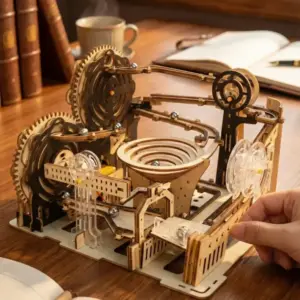
In the last few years, the market has shifted from “take-apart” puzzles to “build-your-own” mechanical models. These are a different beast entirely. You aren’t just solving a riddle; you’re acting as a factory assembly line. The “solution” here is following a 40-page manual without losing your mind—or a tiny wooden gear.
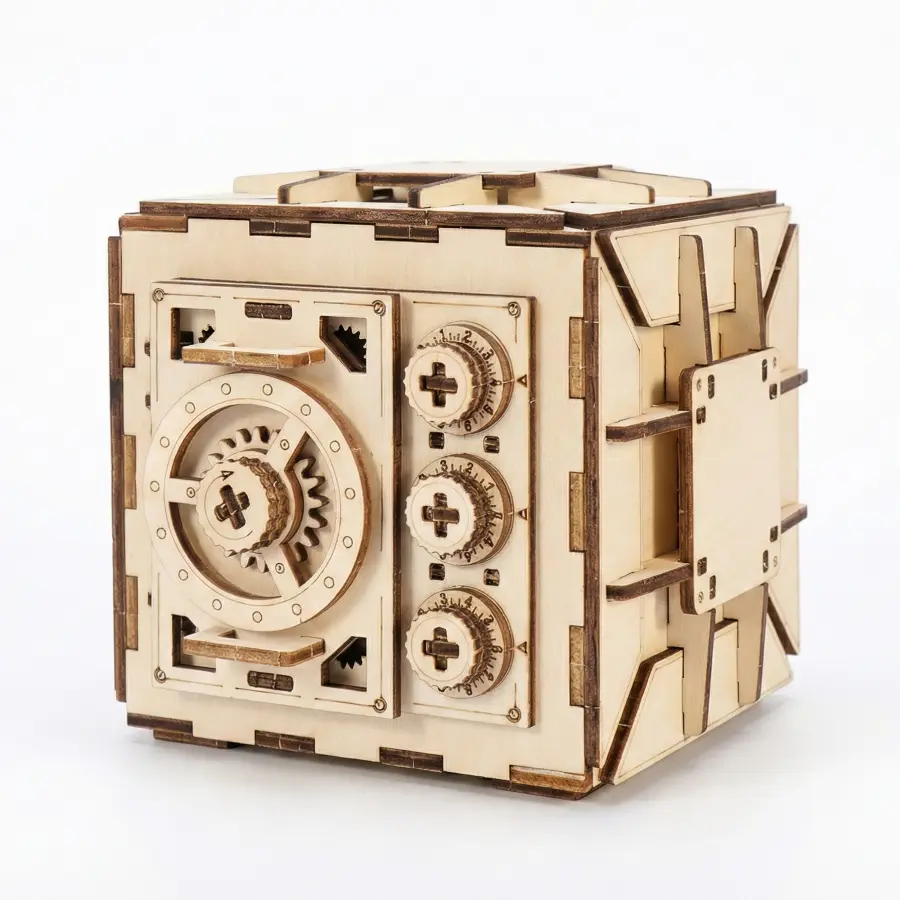
3D Wooden Puzzle Safe with Combination Lock
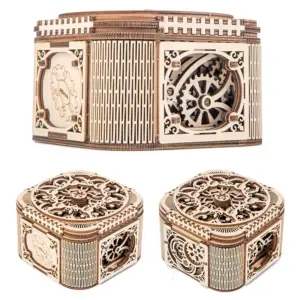
This is currently sitting on my bookshelf, and it’s one of the few models I’ve built that I actually use. At $30.99, you’re getting 111 pieces of precision-cut plywood. The “Aha!” moment here isn’t a single slide; it’s the first time you turn the dial and hear the wooden tumblers drop into place.
Who should NOT buy this? Anyone with zero patience for sanding. If you don’t wax the gears (I use a standard tea light candle), the mechanism will grind. But for the person who loves the “how” as much as the “what,” it’s brilliant. It’s a functional enigma. I use mine to hide the “emergency” chocolate bar my kids haven’t found yet. The combination lock is legitimate; it’s not just a prop. If you enjoy narrative-driven 3D ship builds, the Safe is the logical next step into functional mechanics.
The Sensory Experience of the Solve
A puzzle isn’t just a mental exercise; it’s a tactile one. One of the reasons I prefer wood over the translucent interlocking plastic challenges is the sound. Wood clicks. It thuds. It has a grain that tells you which way it wants to move.
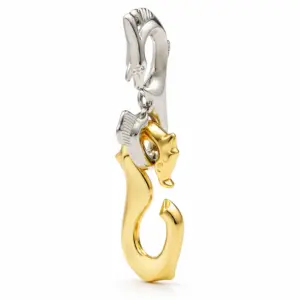
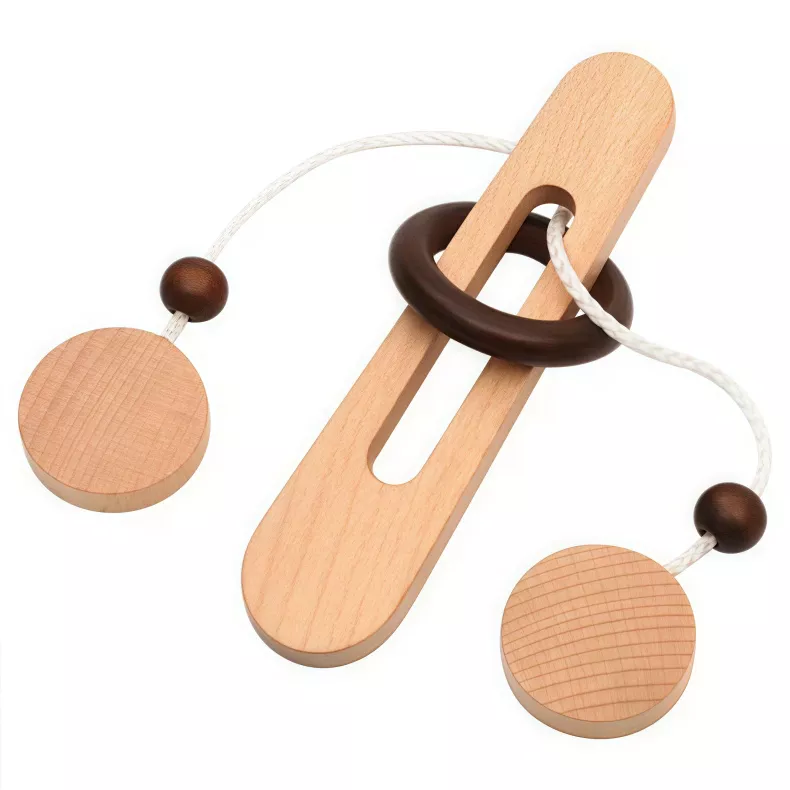
I’ve found that my best solves happen when I stop looking at the puzzle. I’ll sit on the porch, feel the pieces, and wait for the “give.” You can feel the seam with your fingernail long before your eyes see the gap. This is especially true for items like the Tricky Wooden Ring Puzzle ($12.89). It’s about finding the path of least resistance.
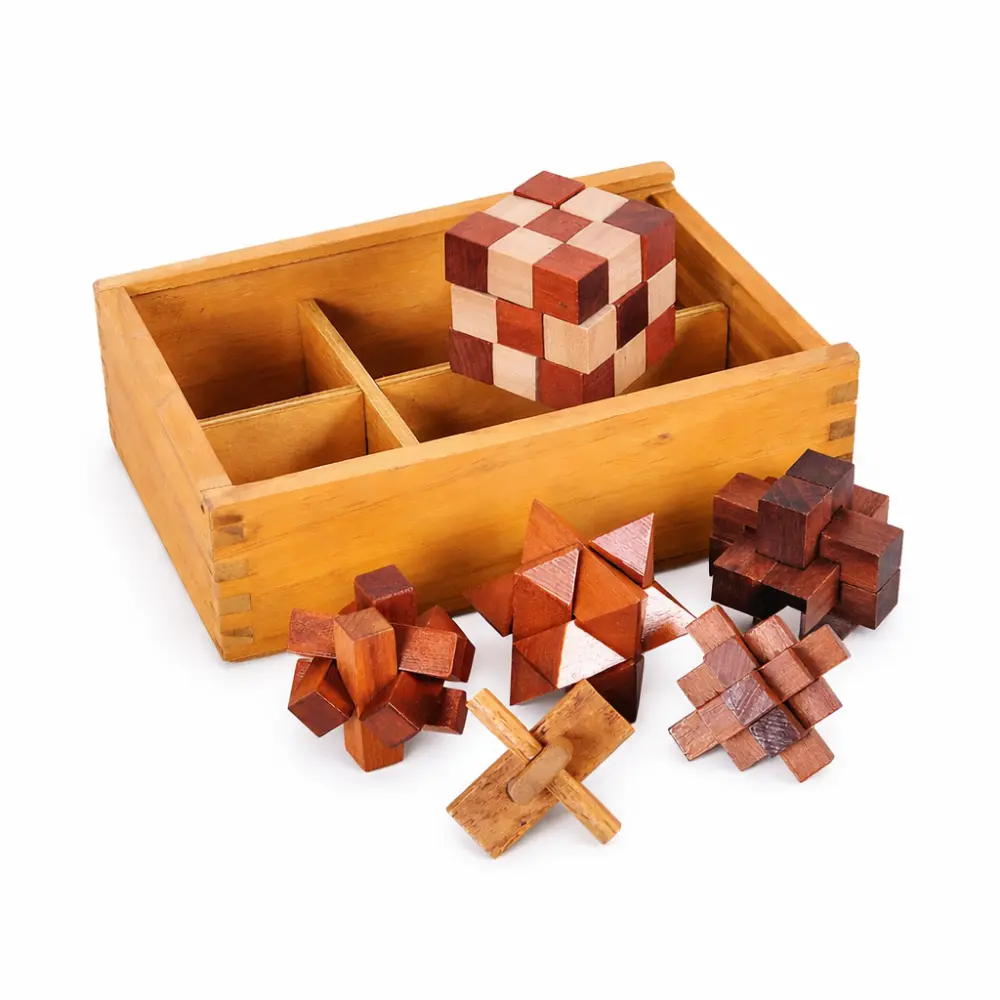
6-in-1 Wooden Brain Teaser Set
This set is the “sampler platter” of the puzzle world. For $38.88, you get six distinct challenges. I’ve had this set on my desk for three weeks, and it’s become my go-to “fidget” during Zoom calls.
The quality of the beechwood is solid, and the size is perfect for palm-work. The “star” puzzle in this set is notoriously difficult to reassemble because the pieces are so similar. One honest negative: the box it comes in is a bit flimsy. I ended up moving mine to a leather tray. But the puzzles themselves? They are the quintessential “desk toys” that actually challenge adults. If you find yourself needing to reset your focus between tasks, you might also enjoy classic strategy games to reset your focus like a quick match of Chess.
The Ethics of the Spoiler: To Google or Not to Google?
We live in an age where the solution to every mystery is thirty seconds away on a smartphone. For a puzzle reviewer, this is the ultimate temptation. There is a specific “Besieged City” puzzle ($16.99) that nearly broke me. I was two hours in, my tea was cold, and my thumb was sore. I had the search bar open.
I didn’t do it.
The value of a wooden puzzle isn’t the finished object; it’s the struggle. If you look up the solution, you’ve essentially paid $20 to watch someone else do a push-up. The only time I advocate for looking at a solution is if you’ve genuinely spent three days on a single step and you’re worried about breaking the wood out of spite. Even then, only look at the next step, not the whole sequence.
Sometimes, the best way to get unstuck is to switch genres. If a 3D burr is making you see red, try some short cognitive exercises to sharpen recall or look into the hidden mechanisms inside hybrid lock puzzles to see if a different logic applies.
The Aesthetics of the Enigma: Puzzles as Decor
Not every puzzle needs to be a 10/10 on the difficulty scale. Some are about the beauty of the construction. I’ve started prioritizing pieces that look as good as they solve.
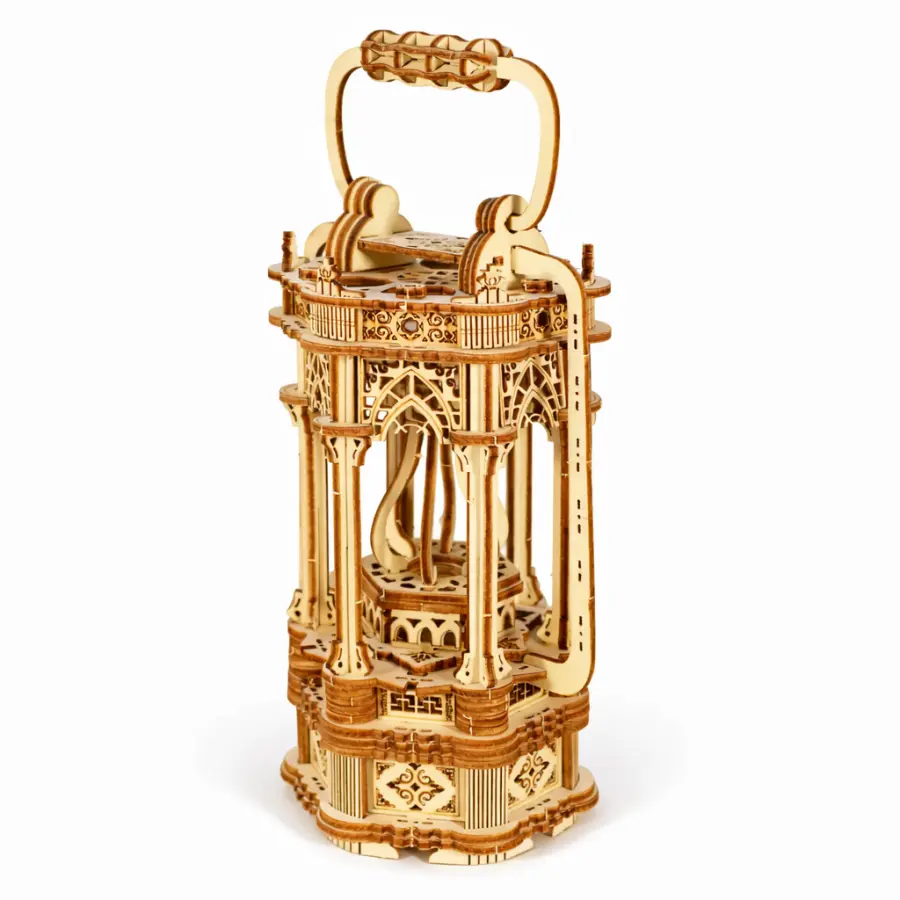
Light-Up Gothic Wooden Lantern 3D Puzzle
You should check current pricing on this one because it fluctuates, but it’s worth it for the ambiance alone. This isn’t a “hard” puzzle in the traditional sense—it’s 154 pieces of assembly—but the result is a stunning piece of Gothic architecture for your desk.
The way the light throws shadows through the laser-cut arches is genuinely evocative. It feels like a miniature cathedral. My one gripe? The wiring for the LED is a bit finicky. You’ll want a pair of tweezers to get the “wick” light seated perfectly. It’s less of a brain teaser and more of a meditative craft project. If you’re looking for secure storage puzzles for gifting, this lantern makes a fantastic “wrapping” for a small gift card or a note hidden inside the base.
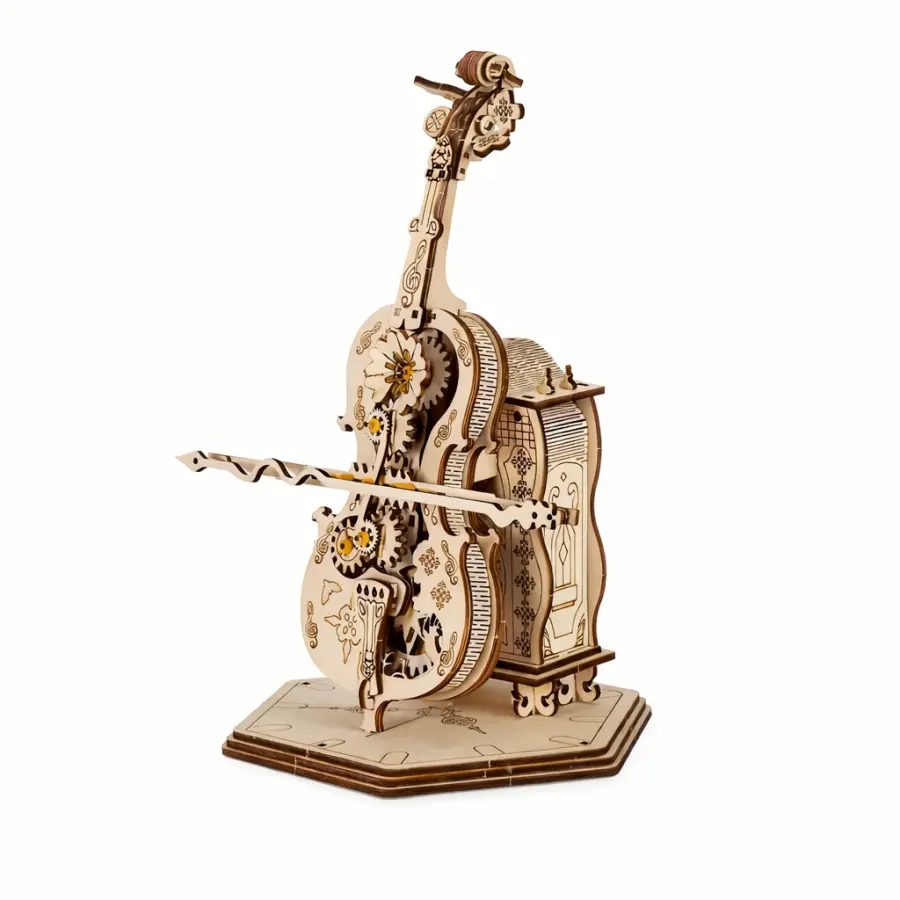
The 3D Wooden Cello Puzzle Model Kit ($29.99) falls into this same category. It’s more about the appreciation of form. I built this with my daughter over a rainy weekend, and it’s now a permanent fixture on our piano. It doesn’t “solve” in the way a lock does, but the “solution” is the finished, intricate steampunk aesthetic.
Maintenance and Care: Keeping the Solve Smooth
Wood is a fickle medium. Unlike metal puzzles (like the high-difficulty Japanese-style trick boxes which often use brass or steel), wood reacts to the environment.
If your puzzle is too tight:
1. Don’t force it. You’ll shear the notches.
2. Dry it out. If you live in a humid climate, put the puzzle in a sealed container with a few silica gel packets for 24 hours.
3. Wax the joints. A tiny bit of beeswax or even a white candle rubbed on the friction points makes a world of difference.
If your puzzle is too loose:
1. Humidity is your friend. A slightly more humid environment will cause the fibers to swell, tightening the fit.
2. Check for wear. Over hundreds of solves, the wood can actually compress. At that point, it’s a badge of honor—the puzzle has been mastered.
The “Solution” Cheat Sheet: General Strategies for Any Wooden Puzzle
After years of doing this, I’ve noticed that 90% of wooden puzzles succumb to the same four-step approach:
- The Mapping Phase: Before you move anything, count the pieces. Look for the “odd one out.” Is there a notch that seems deeper? A piece that is a slightly different color? This is often your “key.”
- The Tolerance Test: Gently wiggle every piece. One will move more than the others. That is your starting point. In the Cupid’s Arrow Heart Lock Puzzle ($12.98), the solution is all about finding that one sliding axis that feels “lighter” than the rest.
- The Gravity Technique: Sometimes a pin is held by a magnet or just simple friction. Turn the puzzle over. Shake it gently. Listen for a “clack.” This is a classic move for many sequential discovery boxes.
- The Reset: If you get three steps in and everything locks up, go back to the beginning. Don’t try to “fix” a bad move. Re-align and start over.
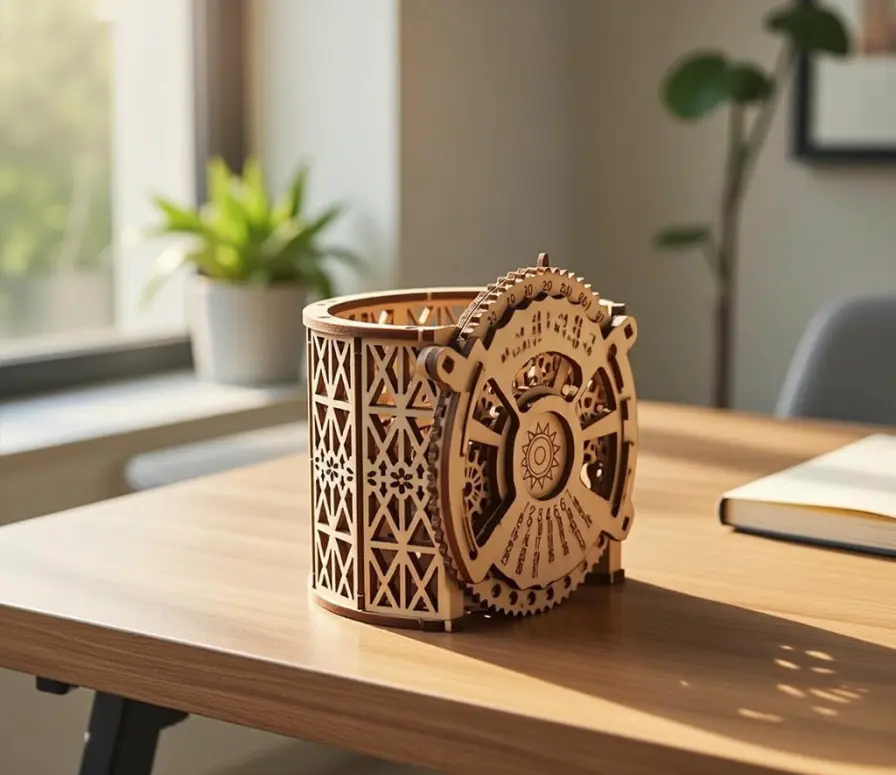
Sometimes the solution is functional. The Wooden Desk Organizer with Perpetual Calendar ($19.99) is a puzzle you solve once, and then it solves your desk clutter forever. It’s a precision-cut piece that requires a bit of logic to set the date gears correctly. It’s the kind of “productive” puzzle I love.
FAQ: Everything You Wanted to Ask While Frustrated
How do I solve a wooden puzzle without the instructions?
The best way is to work backward. If you’ve already taken it apart and are staring at a pile of sticks, look for the piece with the fewest notches. That is usually the last piece to go in (the “key”). Try to build the “skeleton” of the puzzle first, leaving a gap for the key. If you’re really stuck, search for the puzzle’s name + “PDF solution” rather than a video; it forces you to still do the mental work of translating a 2D image to a 3D object.
Why is my wooden puzzle so hard to move?
Wood expands and contracts based on humidity. If it’s a new puzzle, the laser-cut edges might just be “burred” (ironically). A light rub with a high-grit sandpaper or a bit of paraffin wax on the sliding parts usually fixes this. Never use oil-based lubricants (like WD-40) as they will soak into the wood and ruin the finish.
Are wooden puzzles good for seniors?
Absolutely. Research often points to the fact that puzzle activities enhance visuospatial cognition and support long-term brain health. The tactile nature of wood is particularly good for maintaining fine motor skills and hand-eye coordination.
What is a “Burr” puzzle exactly?
A burr puzzle consists of at least three interlocking bars. The name comes from the finished shape, which often resembles a seed burr. The classic “6-piece burr” is the most famous, but they can go up to hundreds of pieces. They are the gold standard of the wooden puzzle world.
My puzzle is stuck and I think I’m going to break it. What do I do?
Set it down. Walk away. I’m serious. Most puzzles are broken because of “five more minutes” syndrome. When you’re frustrated, you lose your “feel” for the wood’s tolerances. Come back tomorrow. Often, your brain will have “solved” the spatial block while you were sleeping.
How do I know if a puzzle is too difficult for me?
Check the “level.” Most manufacturers use a 1-10 or 1-5 scale. If you’re a beginner, don’t start at a Level 10. Start with something like the Tricky Wooden Ring Puzzle ($12.89) or a 6-piece set. If you can solve those in under 10 minutes, move up.
Do I need glue for 3D wooden puzzles?
Most modern 3D puzzles, like the Wooden Safe or the Cello, are designed for “friction fit,” meaning no glue is required. However, I always keep a small bottle of wood glue handy for the occasional “oops” if a small decorative piece snaps during assembly.
What’s the difference between a “disassembly” puzzle and a “sequential discovery” puzzle?
Disassembly is “take it apart.” Sequential discovery means you have to find hidden tools (like a small wooden pin) within the puzzle to use on other parts of the puzzle. The Besieged City ($16.99) has elements of this, where the path isn’t immediately visible.
Is the Luban Lock the same as a Burr puzzle?
Essentially, yes. “Luban Lock” (or Kongming Lock) is the traditional Chinese name, while “Burr” is the Western term. They both rely on the same interlocking joinery principles.
Can I make my own wooden puzzles?
Yes, and it’s a great way to understand the “solution” from the inside out. Many hobbyists start by cutting notches into square dowels. There are excellent resources online for “Burr Tools” software that helps you design your own interlocking shapes.
How do I clean a wooden puzzle?
Use a dry or very slightly damp microfiber cloth. Never submerge them in water. If the wood looks dull after a few years, a tiny bit of furniture-grade lemon oil can bring back the luster, but be careful not to get it into the internal mechanisms where it might attract dust.
Why are some wooden puzzles so expensive?
You’re paying for the “tolerance.” A cheap puzzle will have “slop”—the pieces wiggle too much, making the solution feel mushy. An expensive, hand-crafted puzzle will have “vacuum fits,” where the pieces slide with a satisfying hiss and zero wobble.
What is the most famous wooden puzzle?
The “Six-Piece Burr” is likely the most recognized. It’s the basis for almost everything else in the interlocking category.
Are these puzzles safe for kids?
Most are rated 14+ because of small parts and the complexity of the logic. For younger kids, stick to the larger 3D models or simpler 3-piece burrs.
The Final Click
As I finish my tea, I pick up that stubborn 12-piece burr again. I don’t look at the instructions. I don’t reach for my phone. I just feel the grain. I realize I’ve been trying to push the third piece down, when the wood grain suggests it wants to slide left.
Click.
The “solution” to a wooden puzzle isn’t the end of the journey; it’s the moment of alignment. Whether you are building the 3D Wooden Puzzle Safe with Combination Lock ($30.99) or trying to free the ring from the Tricky Wooden Ring Puzzle ($12.89), the lesson is the same: pay attention. The wood is telling you exactly what to do; you just have to learn how to listen.
If you’re looking to start your own collection, I’d suggest the Luban Lock Set 9 Piece ($39.99). It’s a fair price for a lifetime of frustration and triumph. Just remember to keep some wax handy, and never, ever force the “key.”