The smell of scorched birch hit me before I even opened the box. It’s a specific scent—the olfactory signature of high-precision CO2 lasers cutting through plywood—and for anyone who has spent their weekends hunched over a desk with a pair of tweezers and a nub of paraffin wax, it’s the smell of a good Saturday.
Last night, around 11:45 PM, I finally seated the last drive gear in a mechanical marble run. My thumbs were slightly sore, and my desk was dusted with a fine layer of wooden “snow,” but when I flipped the switch and watched the first steel ball bearing spiral down the track, the dopamine hit was cleaner than anything I’ve found on a smartphone screen.
I’ve spent the last decade testing over 200 mechanical enigmas, from $500 limited-edition brass boxes to $15 kits found in airport gift shops. Most people assume these wooden assembly kits are just “Legos for grown-ups.” They aren’t. A good 3D wooden puzzle is a lesson in mechanical engineering, a test of fine motor skills, and a brutal mirror for your own impatience. If you force a piece, wood breaks. If you skip the sanding step, the gears jam. These objects demand a level of presence that modern life rarely allows.
My thesis after a thousand hours of assembly is simple: The best 3D wooden puzzles for adults are those that prioritize mechanical movement and structural integrity over pure aesthetics. A pretty ship is nice; a ship that teaches you how a 16th-century forecastle was braced is better.
Why Wood Beats Plastic (And Metal) for the Modern Solver
Most of my colleagues in the hobbyist forums gravitate toward tactile challenges made of machined alloy when they want a serious challenge. I get it. Metal has weight. Metal has permanence. But wood has feedback.
When you are working with a material like birch or basswood, you are working with something that was once alive. It reacts to the humidity in your room. It has a grain that dictates which way it wants to bend. This organic variability means that every solve is slightly different. You can’t just follow the instructions; you have to listen to the material.
Beyond the tactile, there is the “display factor.” A completed wooden model has a warmth that plastic lacks. It looks like an heirloom, even if it only took you six hours to build. For those just starting, I often recommend looking at foundational concepts of interlocking joinery to understand how these flat sheets of wood eventually become rigid, three-dimensional structures.
The Mechanical Heavyweights: Spotlight Reviews
If you’re looking for a project that will occupy your brain for a full afternoon (or three), you need a mechanical kit. These are the “big” builds—the ones that move, rotate, or perform a function once the final piece is seated.
Mechanical 3D Wooden Globe Puzzle

The Mechanical 3D Wooden Globe Puzzle ($28.88) is perhaps the most “desk-worthy” build I’ve encountered this year. Most wooden globes are static, but this one uses a gear-drive system that feels genuinely robust.
During my build, I noticed the tolerances on the longitude ribs were incredibly tight. You have to be careful not to snap the delicate latitudinal rings, but once they are locked in, the structure is surprisingly rigid. It’s an intermediate build—not because the logic is hard, but because the repetitive nature of the panels requires a steady hand. I’ve had this on my office shelf for three weeks, and everyone who walks in feels the need to give it a spin. It doesn’t just look like a map; it feels like a piece of 19th-century navigation equipment.
Electric Wooden Marble Run Kit
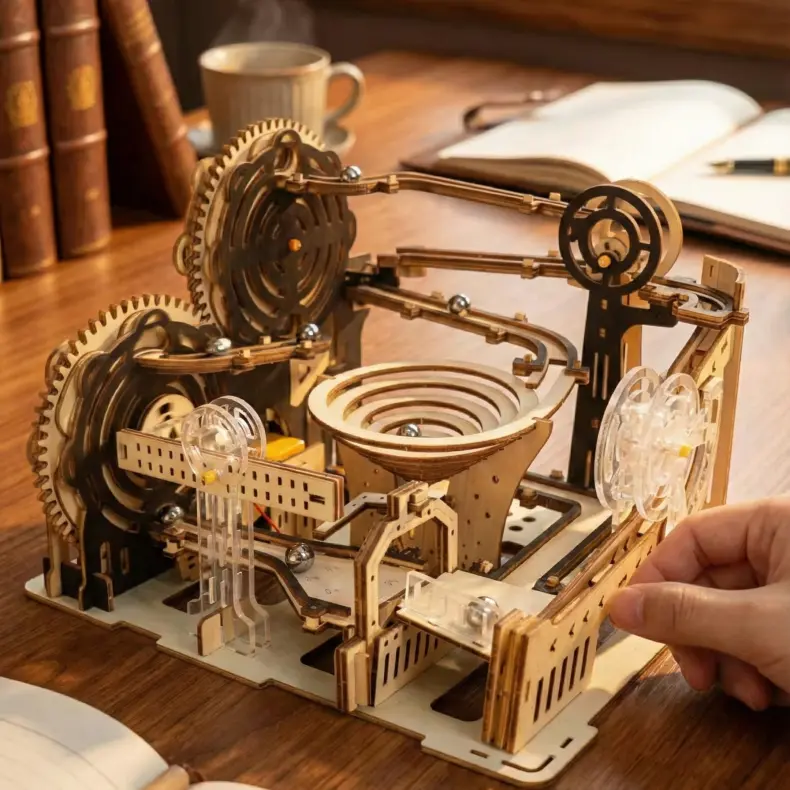
If the globe is about aesthetics, the Electric Wooden Marble Run Kit ($51.99) is about pure, unadulterated ASMR. This is a 168-piece beast that replaces the traditional hand-crank with an electric motor.
I’ll be honest: the wiring is simple, but if you’ve never handled a battery pack, take your time. The “peak” of this build is the spiral track. Watching the marbles navigate the laser-cut wood is mesmerizing. I found that I needed to sand the track edges slightly more than the manual suggested to keep the marbles from losing momentum. It’s a loud build—wood on wood with a motor—but as a piece of “kinetic art,” it’s hard to beat. Skip this if you want a silent, meditative experience, but buy it if you want a conversation piece that actually does something.
3D Wooden Perpetual Calendar Puzzle
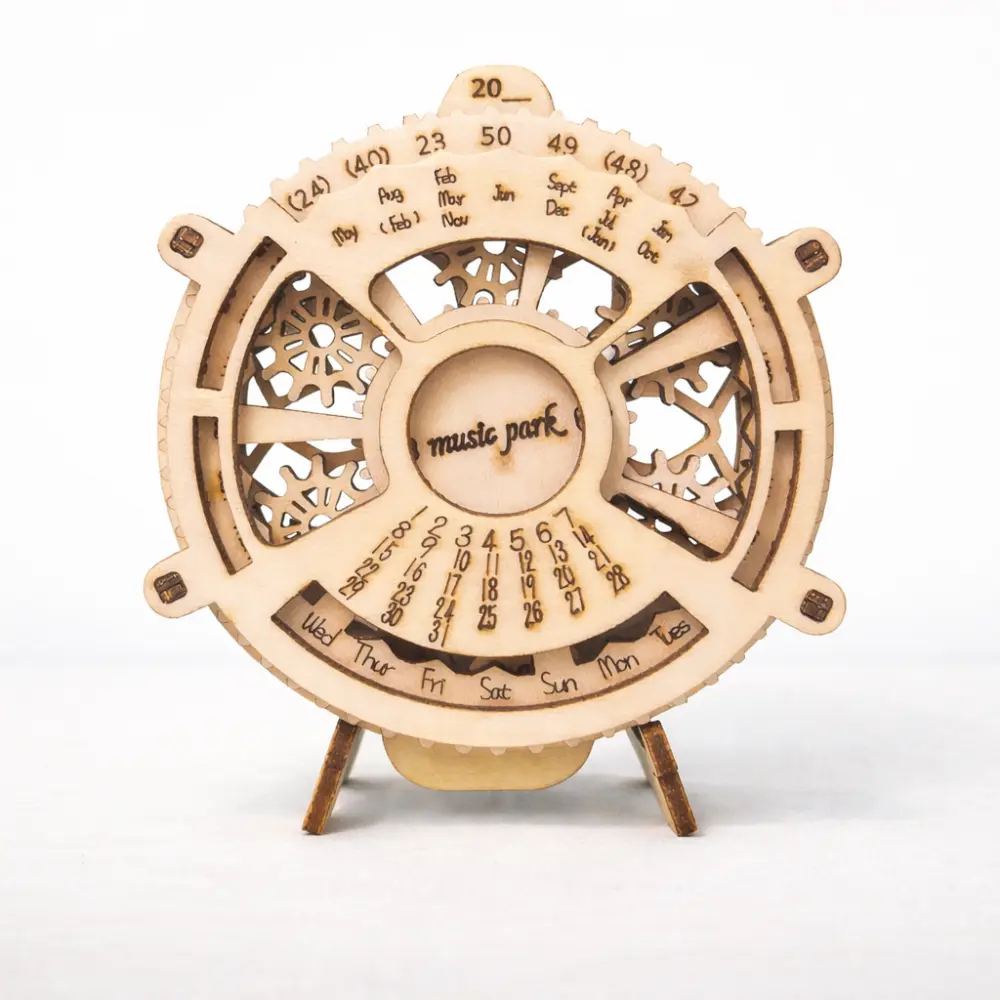
The 3D Wooden Perpetual Calendar Puzzle ($39.99) is the one I recommend to the “math nerds” in my circle. It’s based on calendar algorithms that date back to the 16th century, and the assembly is a masterclass in gear ratios.
Unlike the ships or globes, this is a functional tool. You rotate the interlocking gears to find the day of the week for any date up to 2050. I tested it against my phone’s calendar for several random dates in the 2040s, and it was spot on every time. The build is shorter than the marble run—expect about 2 to 3 hours—but the satisfaction of seeing the math manifest in physical wood is unique. It’s a great entry point for someone who wants to understand history and ancient mechanical enigmas without committing to a 500-piece ship.
Galleon Ship 3D Wooden Puzzle Model Kit

The Galleon Ship 3D Wooden Puzzle Model Kit (check current pricing) is where you go when you want to feel like a 17th-century shipwright. This isn’t a “snap-and-go” toy. It’s a replica of the vessels that defined the Age of Exploration.
The elongated hull and lower forecastle are recreated with impressive accuracy. The rigging is the hardest part—expect to spend at least an hour just on the tension of the masts. I’ve built several ship models, and this one stands out because it doesn’t rely on glue. It uses the same mortise-and-tenon principles found in traditional wooden puzzles. It’s a “patience tester.” If you rush the hull assembly, the masts won’t sit straight. But when it’s done, the silhouette against a window is beautiful.
Wooden Sailboat 3D Puzzle Kit DIY Ship Model

For those who find the Galleon a bit intimidating, the Wooden Sailboat 3D Puzzle Kit DIY Ship Model ($25.55) is the perfect weekend project. At 57 pieces, it’s a much faster solve, but it doesn’t sacrifice the “click” of a well-engineered joint.
I gave this kit to my brother-in-law, who usually has the attention span of a goldfish when it comes to hobbies. He finished it in about 90 minutes and immediately asked where to find more spatial reasoning toys for all ages. It’s a “clean” build—minimal sanding required, and the instructions are actually readable. It serves as a great reminder that complexity doesn’t always equal quality. Sometimes, a well-designed 57-piece boat is more satisfying than a poorly-cut 500-piece cathedral.
The Peak: The Physics of the “Satisfying Click”
After opening dozens of kits, I’ve noticed a pattern that separates the professional-grade puzzles from the cheap knockoffs: the “interference fit.”
In mechanical engineering, an interference fit is when two parts are fastened by friction after being pushed together, rather than using an external fastener. In the world of 3D wooden puzzles, this is the holy grail. When you slide a wooden tab into a slot, you want to feel a slight resistance—a “grab”—followed by a soft click as the fibers compress and then expand into the notch.
If the fit is too loose, the model feels flimsy and requires glue (which I consider a failure of design). If it’s too tight, you risk “delamination”—where the layers of the plywood split. The best kits, like those from Robotime Technology, calibrate their lasers to account for the exact thickness of the wood down to the tenth of a millimeter.
This is why I always tell people: never force the wood. If a piece isn’t going in, it’s not because you aren’t strong enough; it’s because the alignment is off by a hair. Back it out, sand the tab slightly, apply a bit of wax, and try again. That moment when a complex gear assembly finally turns freely for the first time? That’s the peak. That’s why we do this.
The “Fiddle” Factor: Interlocking Brain Teasers
Not every 3D puzzle requires a six-hour assembly. Sometimes, you want something you can pick up, fiddle with for twenty minutes, and hand to a friend. These are the “interlocking” puzzles, often inspired by ancient Chinese carpentry.
Luban Lock Set 9 Piece
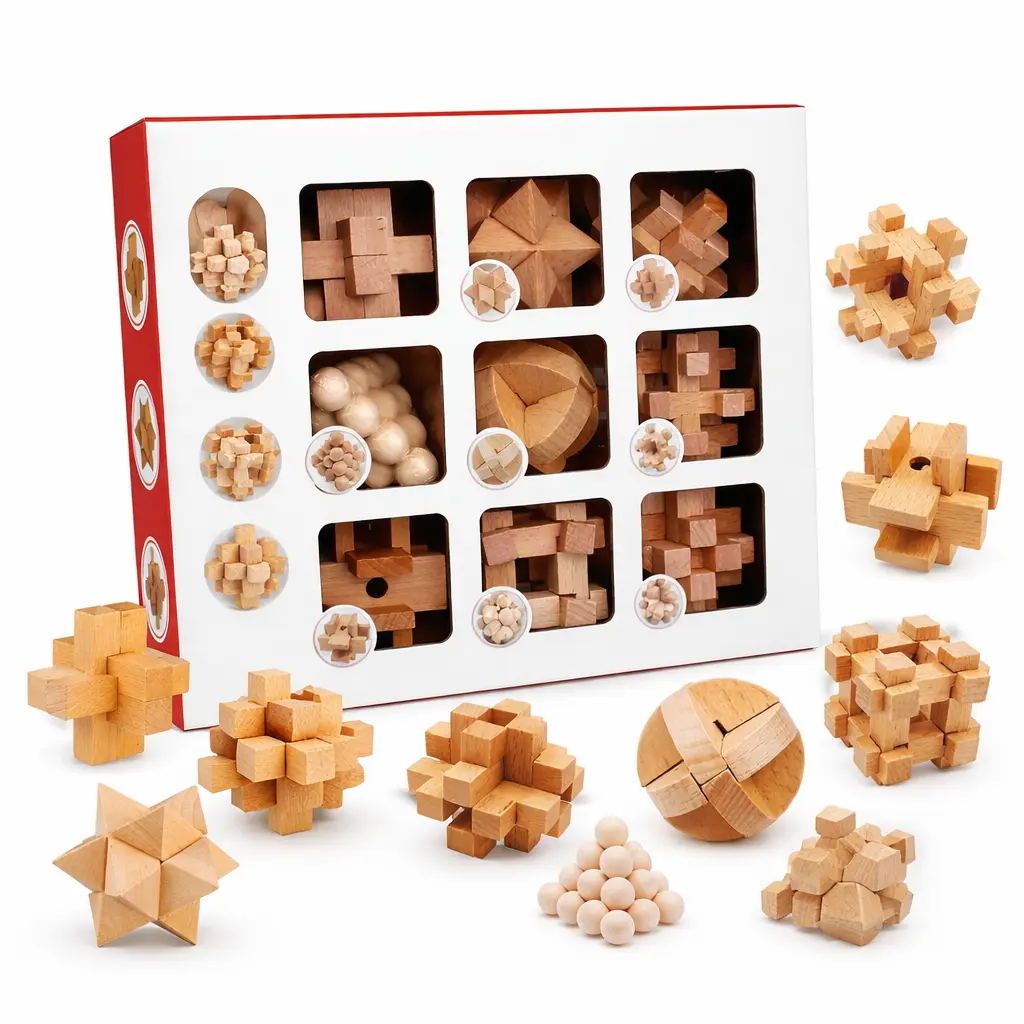
The Luban Lock Set 9 Piece ($39.99) is a history lesson in a box. Named after the legendary Lu Ban, these puzzles use zero nails or glue. They are held together by geometry alone.
I keep a couple of these on my coffee table. The beauty of the Luban lock is that taking it apart is easy—finding the “key” piece usually takes seconds. But putting it back together? That’s where the frustration lives. You have to hold four pieces in a specific orientation with one hand while sliding the fifth piece in with the other. It’s a great way to practice the classic wood-based logic challenges that have stumped people for 2,500 years.
Twelve Sisters Puzzle
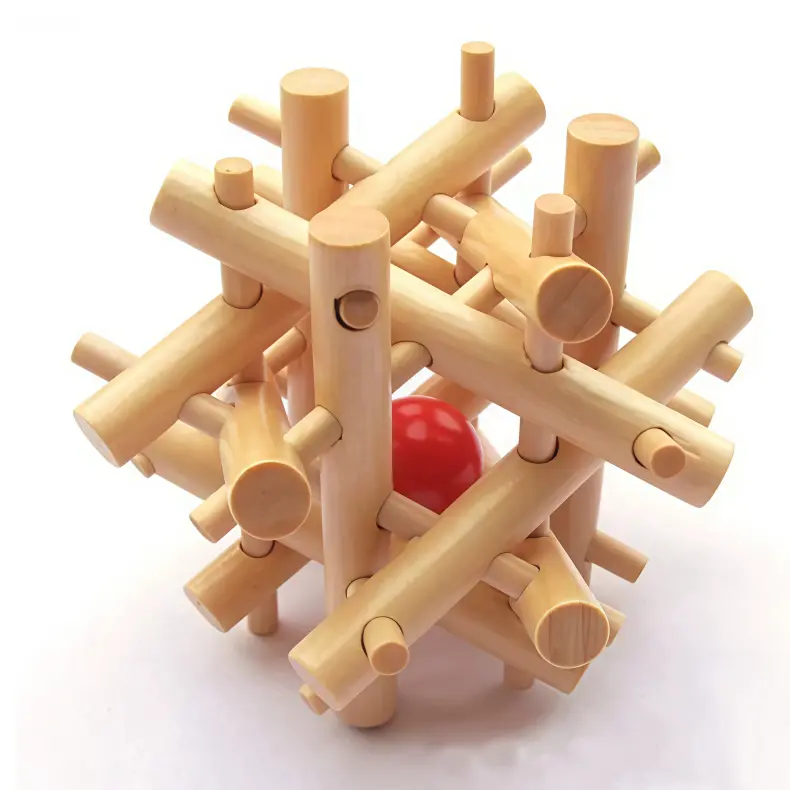
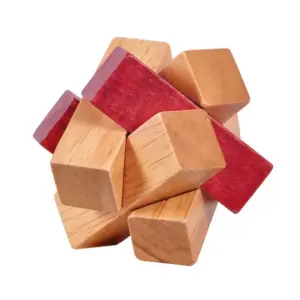
The Twelve Sisters Puzzle ($19.99) is a variation of the burr puzzle that uses twelve rods and a crimson center sphere. It’s deceptively simple looking.
When I first tried this, I thought I’d have it solved in ten minutes. An hour later, I was surrounded by rods and a very lonely red ball. The “sisters” rely on a fundamental structure where each piece supports the others. It’s a beautiful metaphor for engineering: true strength comes from the collective, not the individual parts. If you enjoy this, you might also like looking into curated selections of display-worthy brain teasers that double as art.
Interlock Puzzle Sphere
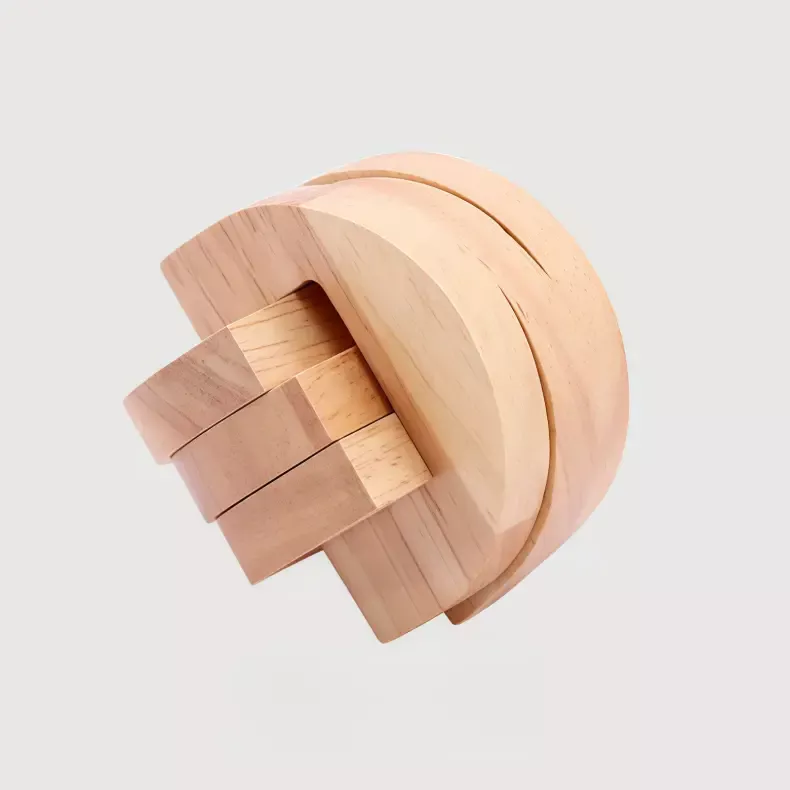
The Interlock Puzzle Sphere ($17.99) is the “meditation stone” of my collection. It’s six pieces that form a perfect sphere.
The tactile feedback here is what wins me over. The wood is smooth, and the pieces have a weight that makes them feel like they belong together. It’s a “low-stakes” puzzle. You aren’t going to break your brain solving it, but the act of sliding the pieces into that final, seamless shape is incredibly grounding. It’s the perfect thing to keep in your hand while you’re on a long Zoom call.
7 Color Soma Cube Puzzle
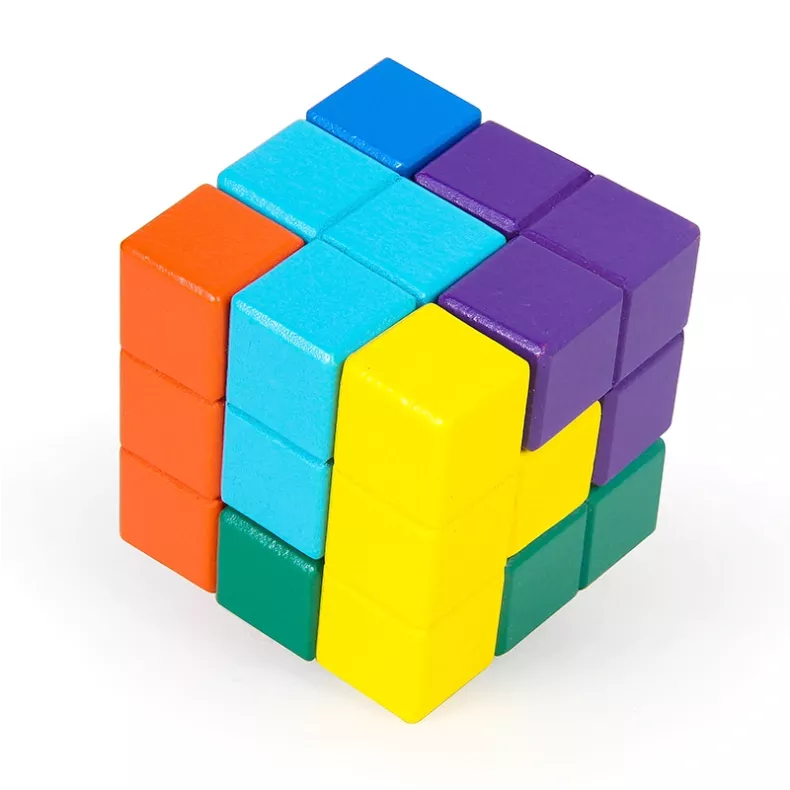
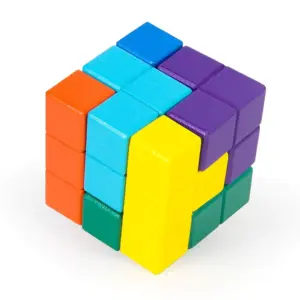
The 7 Color Soma Cube Puzzle ($21.88) is a classic for a reason. Invented by Piet Hein during a lecture on quantum mechanics, the Soma cube consists of seven non-convex polycubes that must be assembled into a 3x3x3 cube.
There are 240 different ways to solve it, which means it never gets old. I use this as a “brain reset.” If I’ve been staring at a spreadsheet for too long, I’ll take five minutes to find one of the 240 solutions. It’s a great entry point for those looking at comprehensive rankings of modern assembly kits because it bridges the gap between a toy and a serious logic puzzle.
Landmine Lock Puzzle
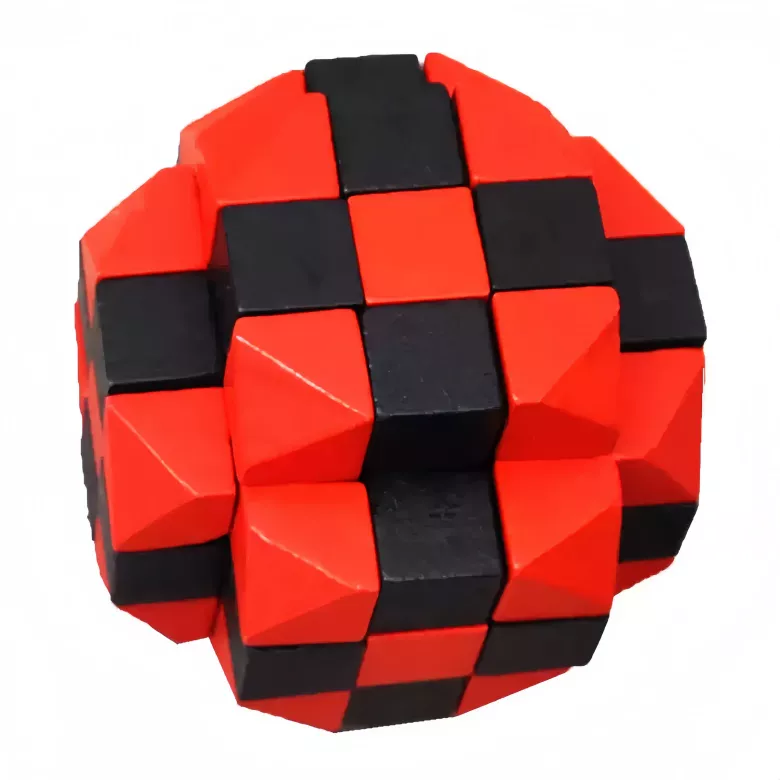
Finally, the Landmine Lock Puzzle ($18.99) is the “trap” of the group. Inspired by traditional Chinese joinery, it looks like a solid wooden ball, but it’s actually a complex series of sliding mortise-and-tenon joints.
The name is apt. One wrong move and the whole thing “locks up,” requiring you to backtrack and find the hidden mechanism. It’s expertly crafted from natural wood, and because there are no nails or glue, the tolerances are everything. If you like the idea of a “secret” object that only you know how to open, this is your best bet.
Comparison of Top 3D Wooden Puzzles
Frequently Asked Questions (FAQ)
Are 3D wooden puzzles good for adults?
Absolutely. While they are often marketed as STEM toys for teens, the complexity of the gear systems and the precision required for assembly make them ideal for adults. Research into cognitive health suggests that activities enhancing visuospatial cognition can help maintain mental sharpness as we age. For most adults, these puzzles serve as a “flow state” activity—a way to disconnect from digital screens and engage in tactile problem-solving.
Do I need glue or special tools to build these?
Most modern 3D wooden puzzles, especially those from reputable brands, are designed to be “snap-fit.” This means they use friction and interlocking joints rather than glue. However, I always keep a small hobby knife, a pair of fine-nosed tweezers, and a piece of sandpaper nearby. Sometimes a laser-cut tab needs a tiny bit of help to pop out cleanly. If you find yourself reaching for the glue, stop and check your alignment first.
How do I fix a broken piece?
It happens to the best of us. Plywood is strong but thin. If you snap a small connector, a tiny drop of wood glue (PVA) or even clear superglue will usually do the trick. If it’s a structural gear that broke, you might need to contact the manufacturer for a replacement sheet. Pro tip: many kits include “spare” parts for the most delicate pieces. Check the back of the wooden sheets before you panic.
Are 3D wooden puzzles too difficult for beginners?
It depends on where you start. If you jump straight into a 500-piece mechanical clock, you’re going to have a bad time. I recommend starting with something like the Wooden Sailboat ($25.55) to get a feel for how the wood behaves. Once you understand how much pressure you can apply before things snap, you can graduate to the more complex kits.
How long does it take to assemble a 3D wooden puzzle?
A “small” kit (under 100 pieces) usually takes 1-2 hours. A “medium” mechanical build (200-300 pieces) takes about 4-6 hours. The large, complex kits with motors or hundreds of gears can easily take 10+ hours. I usually spread my builds over several nights. There is no prize for finishing fast, and your fingers will thank you for the break.
Which is better: wooden or metal puzzles?
It’s a matter of preference. Wood is more forgiving and offers a warmer, more “organic” building experience. Metal puzzles, like those found in the best metal puzzles for adults guide, are usually about disassembly and reassembly rather than building a model from scratch. If you like the process of construction, go with wood. If you like the “eureka” moment of a hidden mechanism, metal might be your speed.
Can these puzzles be painted or stained?
Yes, but be extremely careful. Adding a layer of paint or stain increases the thickness of the wood. In a kit with tight tolerances, even a thin coat of acrylic can make the pieces impossible to fit together. If you want to customize your build, I recommend staining the pieces after assembly, or using watercolor pencils which add color without thickness.
What should I do if the gears are sticking?
Wax is your best friend. Most kits come with a small block of paraffin wax. Rub this liberally on every gear tooth and every axle. If the kit didn’t come with wax, a standard white tea light candle works perfectly. A well-waxed wooden gear system should turn with almost zero resistance.
Are these puzzles eco-friendly?
Most high-quality kits are made from sustainably sourced birch or basswood. Because they don’t require glue or plastic fasteners, they are much better for the environment than traditional plastic model kits. Just be sure to recycle the leftover wooden sheets once you’re done!
Is there a “correct” way to store these?
Keep them out of direct sunlight and away from high humidity. Because they are made of real wood, they can warp or fade over time. A bookshelf away from a radiator is the ideal spot. If it’s a mechanical model, give the gears a turn once a month to keep things from settling.
What if I get stuck and can’t solve it?
If you’re stuck on an interlocking puzzle like the Luban lock, take a break. Your brain needs time to process the spatial data. If you’re stuck on an assembly kit, double-check the orientation of your gears. 90% of the time, the issue is a gear that was installed backward. If you need a total mental reset, try a digital logic game for a few minutes to clear your head.
Can these be disassembled and rebuilt?
Interlocking puzzles (like the Soma Cube) are designed to be solved over and over. Mechanical assembly kits, however, are usually meant to be built once. The wooden tabs can lose their “grip” if they are taken apart and put back together too many times. Think of the assembly kits as a “one-and-done” project that results in a beautiful display piece.
Conclusion: The Value of the Slow Build
The third time the brass pin slipped past my thumb while I was working on the Marble Run, I didn’t get angry. I just set the wood down, took a breath, and realized that my haste was the only thing standing in the way of the solution.
That is the true value of 3D wooden puzzles for adults. In a world that demands instant results and infinite scrolling, these objects demand the opposite. They demand that you slow down, that you sand the edges, that you wax the gears, and that you respect the material. They are a physical manifestation of the idea that anything worth building takes time.
If you’re ready to trade your screen for a sheet of birch, I recommend starting with the Mechanical 3D Wooden Globe Puzzle ($28.88). It’s the perfect balance of challenge and reward, and it taught me more about mechanical tolerances than any textbook ever could.
Once you’ve mastered the globe, the next logical step is to explore advanced sequential discovery challenges that hide their secrets behind layers of wooden logic. Just remember: don’t force it. The wood always knows the way.