The zinc alloy felt cold, almost clinical, against my palm as I sat in the dim light of my home office at 11:30 PM. I’d been working the same three-inch piece of metal for forty minutes, my thumbs beginning to ache from the repetitive friction of trying to find a seam that shouldn’t exist. There is a specific kind of quiet that descends when you’re locked in a duel with a mechanical object—a silent conversation between your tactile nerves and the designer’s hidden intent.
Most people buy these things as stocking stuffers or “desk toys,” but after testing over 200 mechanical puzzles, I’ve realized that metal brain teaser puzzles are the ultimate test of character. They don’t offer the visual feedback of a jigsaw or the predictable increments of a crossword. They offer nothing but resistance until, suddenly, they offer everything. My thesis is simple: the best metal puzzles don’t just challenge your IQ; they punish your impatience and reward your ability to listen with your fingers. While wood offers warmth and forgiveness, metal demands precision and provides a level of “mechanical truth” that no other material can match.
Why Metal Demands a Different Mindset Than Wood
When you pick up a wooden puzzle, you’re dealing with a living material. Wood expands, contracts, and has a grain that can sometimes be “cheated” with a bit of force. Metal is different. In the world of high-quality cast puzzles, the tolerances are often measured in microns. If a piece doesn’t move, it’s not because it’s stuck; it’s because you haven’t earned the movement yet.
I’ve spent years analyzing technical deep-dives into precision engineering and the consensus among veteran collectors is that metal provides a “cleaner” solve. There’s no “maybe” with zinc alloy or stainless steel. It either clicks or it doesn’t. This rigidity forces a mental shift. You stop trying to manhandle the object and start trying to understand the internal geometry.
For those who are used to lessons learned from two hundred grueling solves, the transition to metal can be jarring. You can’t feel the “give” of the fibers. Instead, you feel the hard stop of a dead end. It’s a binary experience: solved or unsolved. This makes the eventual separation of the parts significantly more cathartic than the soft slide of a wooden dovetail.
The Anatomy of a Metal Solve: Disentanglement vs. Sequential Discovery
Not all metal puzzles are created equal. Broadly speaking, you’re looking at two main categories: disentanglement and sequential discovery.
Disentanglement is the “classic” metal puzzle—think of two interlocked horseshoes or a ring trapped on a wand. These are often classified as disentanglement puzzles, where the goal is to separate two or more pieces that appear topologically impossible to part. These rely heavily on spatial reasoning. You have to visualize the pieces in four dimensions, seeing the “hole” that the other piece needs to pass through.
Sequential discovery is the “mystery box” of the metal world. These often look like solid objects—bolts, locks, or spheres—that require a specific series of moves to open. You might need to rotate a piece, then press a hidden button, then tilt the puzzle at a 45-degree angle. These are my personal favorites because they feel like you’re cracking a safe. They transform the solver into a locksmith of the abstract.
Spotlight: The Masterpieces of Mechanical Deception
Three-Color Alloy Magic Scroll Puzzle
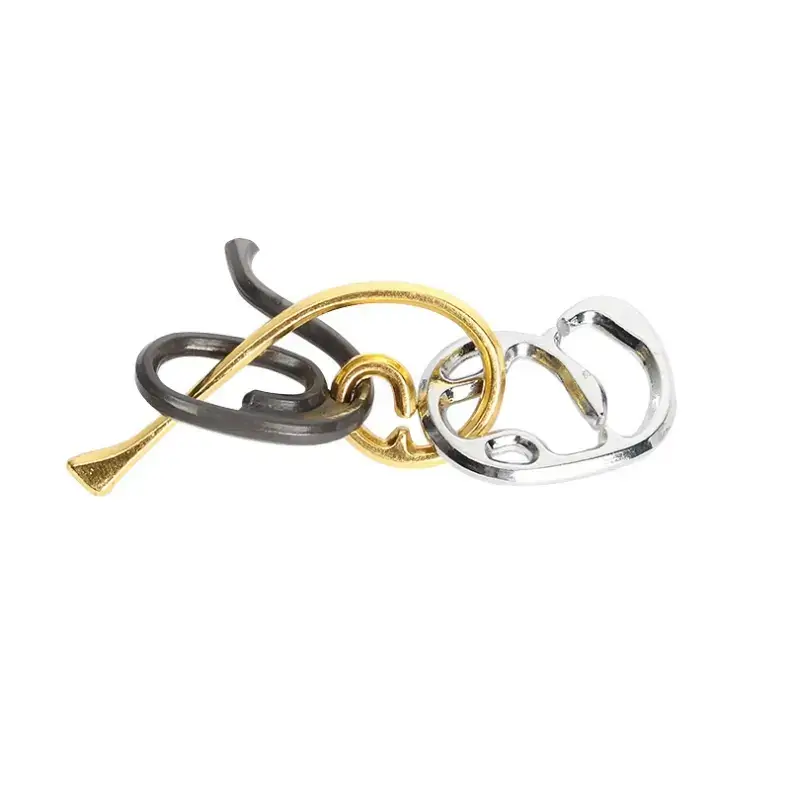
The Three-Color Alloy Magic Scroll Puzzle is, at its core, a mechanical maze disguised as a piece of modern art. Priced at $13.01, it features a striking gold, silver, and black finish that feels substantial in the hand. Unlike cheaper wire puzzles, this one uses internal channels that you cannot see. You have to “feel” your way through the maze.
When I first picked this up, I assumed it was a simple rotation challenge. I was wrong. The internal pathways are jagged and require you to navigate “dead ends” that feel like the pieces are simply stuck. The genius here is the weight; the heavy alloy gives you enough feedback to know when you’ve hit a wall versus when you’ve found a sliding track. It’s a meditative solve that rewards those who can visualize internal architecture without a map. If you’re coming from a comprehensive overview of the wooden category, the lack of visual cues here will be your biggest hurdle.
Metal Screw Interlock Riddle
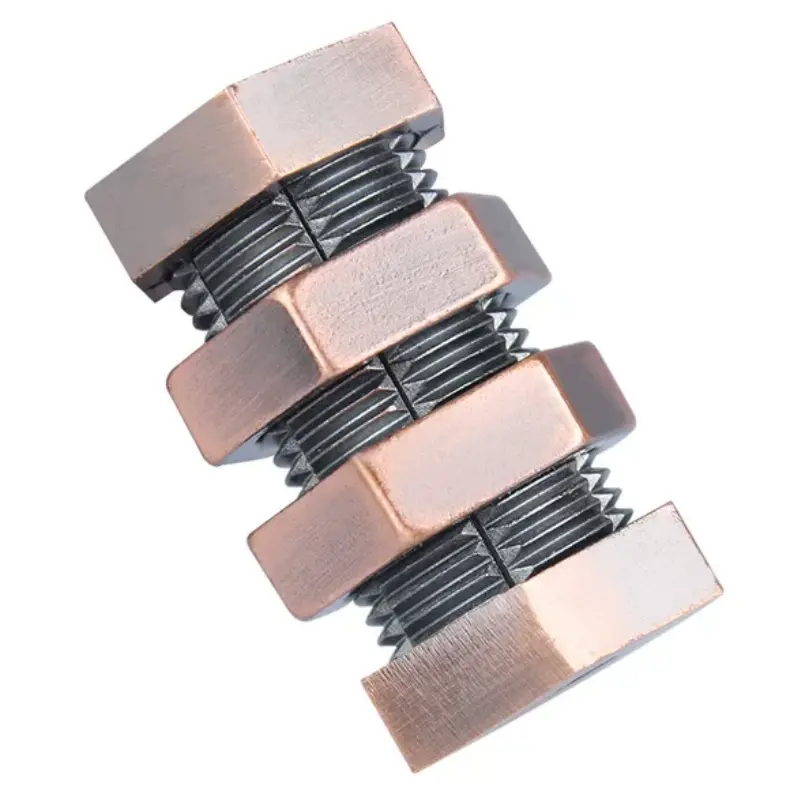
If you have a friend who thinks they’re “handy” because they can put together IKEA furniture, hand them the Metal Screw Interlock Riddle. At $13.98, this puzzle subverts everything you think you know about how threads and nuts work. We are conditioned to believe that righty-tighty, lefty-loosey is a universal law. This puzzle laughs at that law.
The mechanism involves a series of interlocking movements that require you to press and twist simultaneously. It’s a tactile masterclass. The finish is smooth, but the internal “catch” points are sharp and deliberate. I’ve seen engineers spend an hour on this, convinced the threads were stripped, only to realize they were just missing a single vertical movement. It’s a brilliant example of how a familiar object can be turned into a foreign enigma.
Sphere Morphs Into Cube
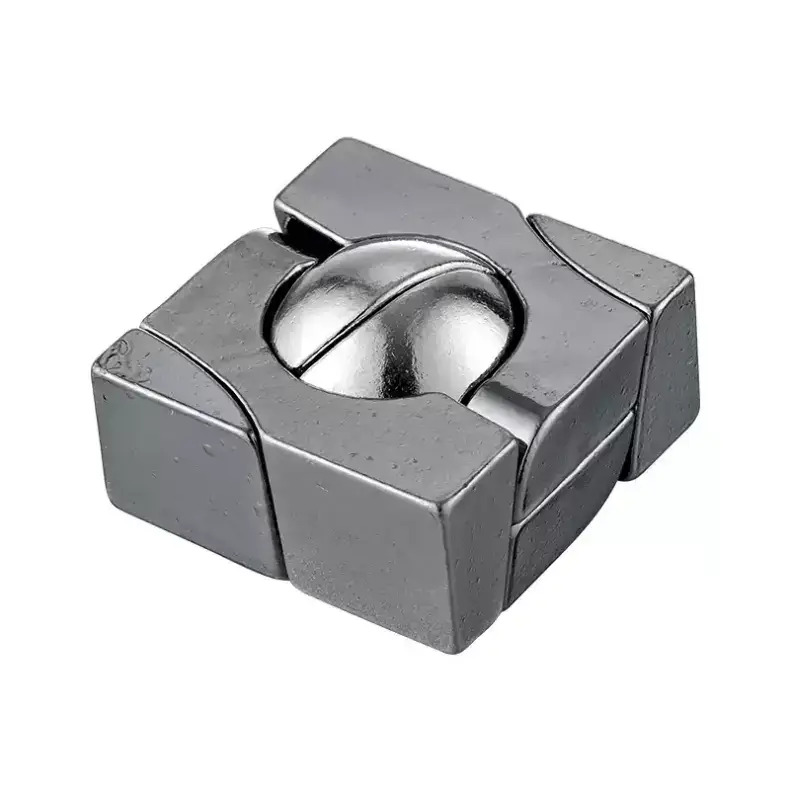
The Sphere Morphs Into Cube ($12.00) is what I call a “transformation puzzle.” It’s less about taking things apart and more about understanding how a set of modules can occupy two different geometric states. It’s a heavy, satisfying piece that feels like it belongs on a high-end executive’s desk.
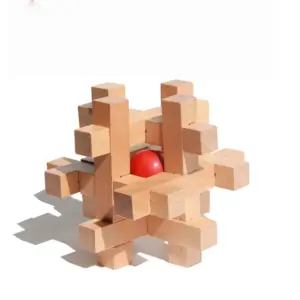
The move from sphere to cube isn’t just a gimmick; it’s a lesson in spatial efficiency. The interlocking modules have a hidden moving sphere inside that acts as the “key” to the structure. It reminds me of the classic Luban locks, but executed with the cold precision of modern engineering. It’s one of the few puzzles I keep on my desk not to solve, but to fidget with during long Zoom calls. The way the pieces slide past each other is almost frictionless, a testament to the manufacturing quality at this twelve-dollar price point.
Bagua Lock Puzzle
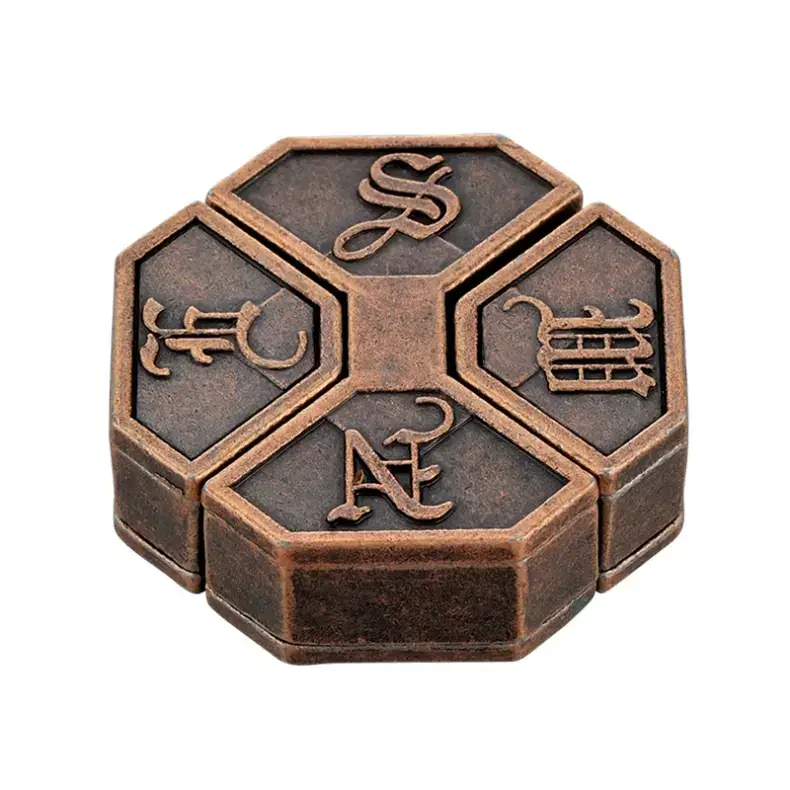
For those who appreciate history, the Bagua Lock Puzzle ($12.99) is a must-have. It’s based on traditional Chinese mortise and tenon joinery, the same principles used to build ancient temples without a single nail. It looks like a decorative ornament, but it’s a sophisticated mechanical lock.
The zinc alloy construction gives it a “relic” feel. Solving it requires a very specific sequence of sliding moves. If you do them out of order, the puzzle remains a solid block. It’s a humbling experience because it looks so simple. There are no dangling wires or obvious moving parts. It’s just a silver octagon that refuses to yield until you understand its internal logic. It’s a perfect entry point for someone who wants to see how initial impressions of different material types translate into actual difficulty.
The Peak: The Moment of the Mechanical Lie
After opening dozens of these, I noticed a pattern that nobody in the marketing departments talks about: the “Mechanical Lie.” Almost every high-quality metal puzzle is designed to lie to your hands.
Here is what I mean: you will feel a piece move 2 millimeters to the left. Your brain immediately says, “Okay, the solution is to the left.” You spend twenty minutes trying to force that 2mm into 4mm. But the movement to the left was a lie—a “decoy” movement designed to distract you from the fact that the actual solution requires you to push the piece inward.
I once handed a prototype to a mechanical engineer friend. He spent thirty minutes analyzing the seams with a magnifying glass. He concluded that the puzzle was “impossible” because the tolerances were too tight for the pieces to pass through each other. Two minutes later, my ten-year-old nephew picked it up, accidentally dropped it on the carpet, and the jar caused a gravity-fed pin to drop, opening the puzzle.
The lesson? We often over-intellectualize the problem. Metal puzzles are physical objects governed by physics—gravity, centrifugal force, and friction. Sometimes the “smart” move is to stop thinking like a mathematician and start thinking like a child who just wants to see what happens if they shake it. This “aha!” moment, where the mechanical lie is exposed, is the peak of the puzzling experience. It’s the moment the frustration evaporates and is replaced by a deep respect for the designer’s deviousness.
Supporting Cast: The Essential “Fiddle” Puzzles
While the spotlights above are the heavy hitters, a well-rounded collection needs what I call “fiddle puzzles”—items that are lower in complexity but high in tactile satisfaction.
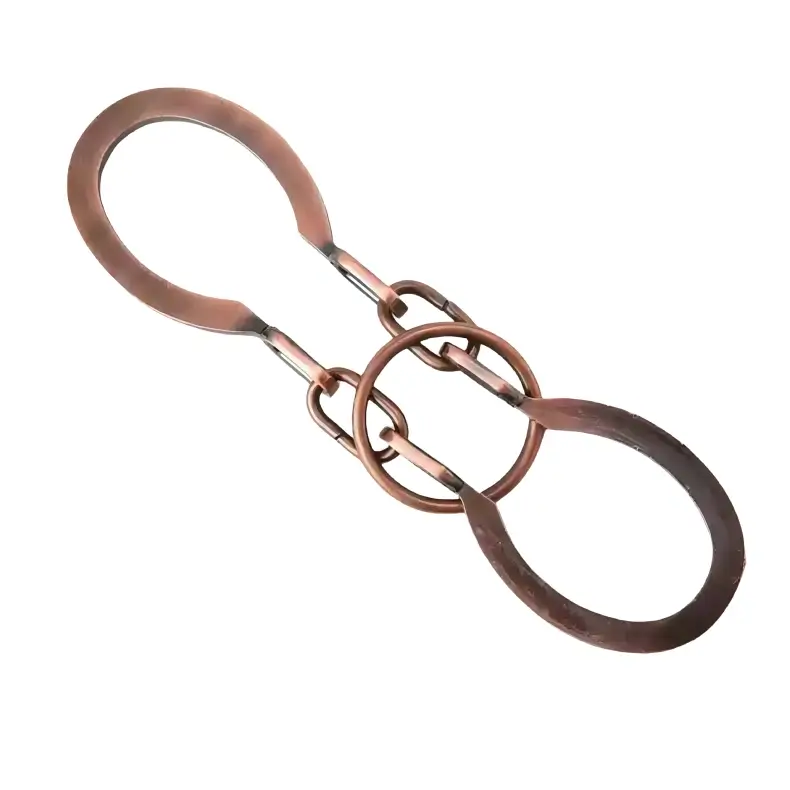
The Horseshoe Lock Puzzle ($13.00) is the quintessential “bar puzzle.” It’s two horseshoes, a chain, and a ring. It looks like something a blacksmith made in 1850, and it probably is. The goal is to get the ring off. It’s a classic mechanical puzzle that relies on a single “impossible” movement. It’s the one I always hand to people who say they “aren’t good at puzzles.” It’s approachable, durable, and has a solution that is so elegant it feels like a magic trick.

Cupid’s Heart Chain Puzzle — $13.15
Similarly, the Cupid’s Heart Chain Puzzle ($13.15) uses the same disentanglement logic but with a more aesthetic flair. It’s a bit more “fiddly” than the horseshoes because the chain can get tangled if you aren’t careful. It’s a great gift for a partner, mostly because it’s one of the few puzzles that actually looks “pretty” on a coffee table.
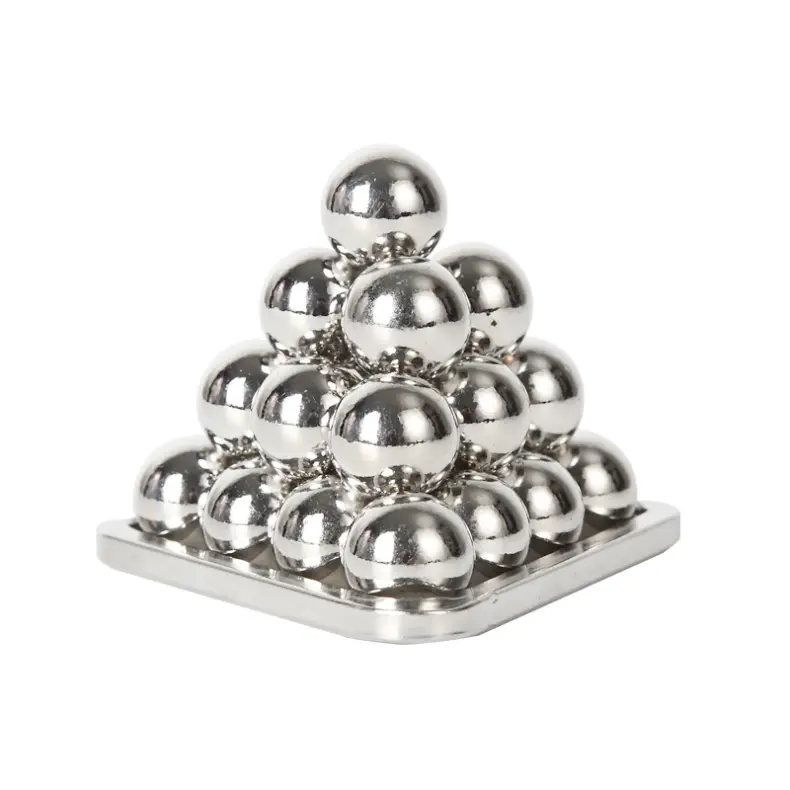
For those who prefer assembly over disassembly, the 6-Piece Steel Ball Pyramid Puzzle ($11.98) is a spatial nightmare. Taking it apart is easy; putting it back together is where the “brain teaser” part comes in. The steel balls make the pieces roll around in your hand, adding a layer of physical difficulty to the logical challenge. It’s a great way to develop spatial awareness, much like a quick mental palate cleanser between more intense tasks.
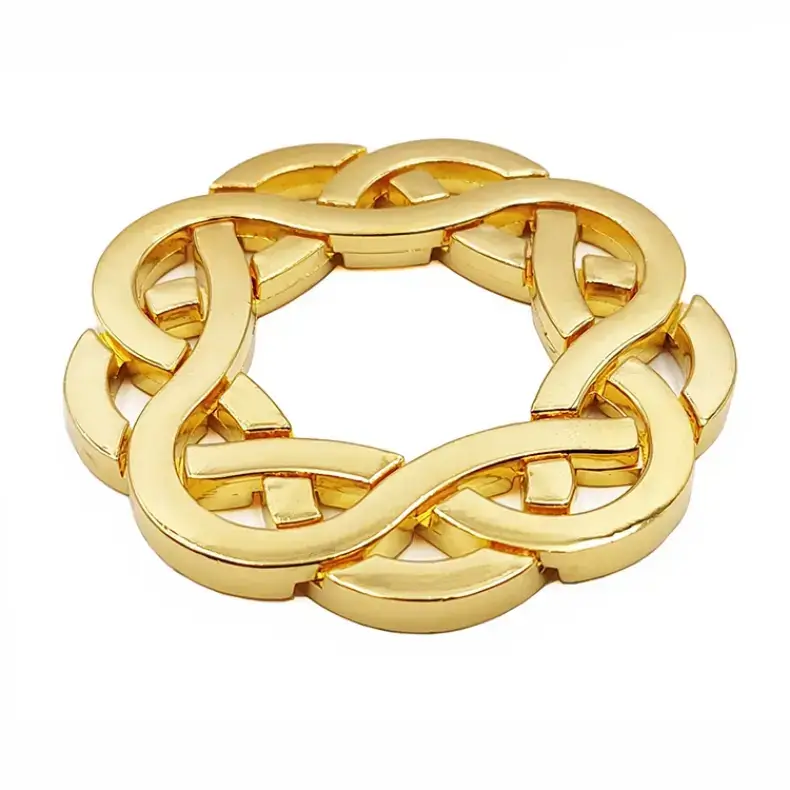
The Golden Chinese Knot Metal Puzzle ($12.98) is another assembly challenge that doubles as art. The interlocking 3D knot is surprisingly heavy. The difficulty here isn’t just finding the right order, but having the dexterity to hold four pieces in place while you slide the fifth one in. It’s a test of “hand-logic.”
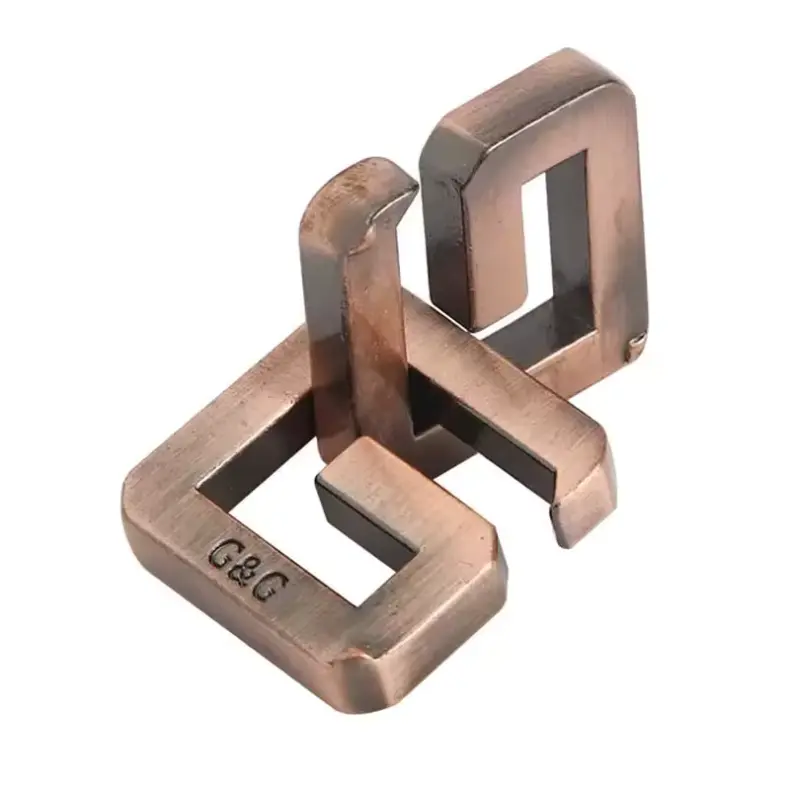
Double G Lock Puzzle — $11.99
If you’re looking for something truly portable, the Double G Lock Puzzle ($11.99) is small enough to fit in a coin pocket. It’s two “G” shaped pieces that are linked. It’s a low-barrier-to-entry puzzle that provides that “satisfying click” when the pieces finally separate. It’s perfect for a commute or a waiting room.
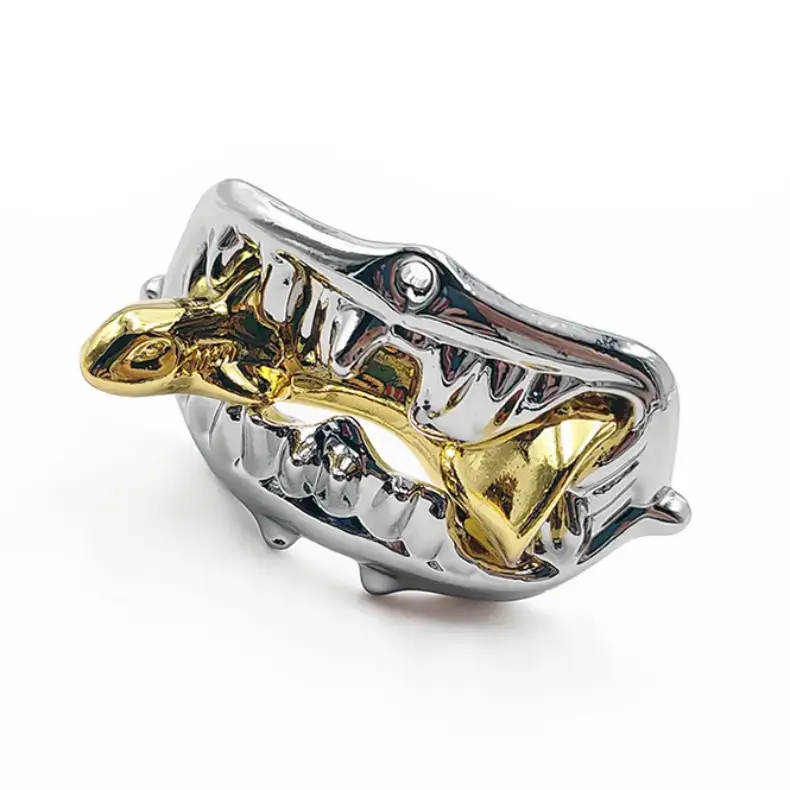
Finally, the Monster Mouth Fish Escape Puzzle ($11.89) is a bit more whimsical. It’s a thematic disentanglement puzzle where you have to free a “fish” from a “monster’s mouth.” It’s a bit easier than the others, making it a good “confidence builder” for younger solvers or beginners.
Comparison of Top Metal Brain Teasers
FAQ: Everything You’re Afraid to Ask About Metal Puzzles
How do I know if a metal puzzle is “solved”?
In the world of metal brain teasers, there are usually two stages of a solve. The first is “disassembly”—getting the pieces apart. The second, and often harder, stage is “reassembly”—getting it back to its original state. A puzzle is only truly “solved” when you can do both at will, demonstrating that you understand the mechanism rather than just getting lucky.
My puzzle feels stuck. Should I use WD-40 or pliers?
Never. If you need tools or lubricant, you aren’t solving the puzzle; you’re breaking it. High-quality metal puzzles are machined with specific tolerances. If it feels stuck, it’s usually because a piece is slightly misaligned or there’s a internal “locking” mechanism that requires a different movement. Using force will burr the metal, potentially making the puzzle unsolvable forever.
Are these puzzles safe for kids?
Most metal puzzles are made from zinc alloy or stainless steel, which are durable. However, many contain small parts or have pointed edges. I generally recommend them for ages 8 and up. For younger children, start with something larger like the Horseshoe Lock Puzzle which has no small swallowable parts.
Why are some metal puzzles so much more expensive than others?
It comes down to manufacturing tolerances and material. A $5 wire puzzle is bent by a machine with wide margins for error. A $100 “collector” puzzle is often CNC-machined from solid brass or stainless steel with tolerances tighter than a car engine. The puzzles on this list, in the $11-$14 range, represent the “sweet spot” of value: they are cast from solid alloy, providing a heavy feel and reliable mechanics without the triple-digit price tag.
How do I clean my metal puzzles?
Over time, the oils from your hands can dull the finish of zinc alloy. A simple wipe with a dry microfiber cloth is usually enough. Avoid water, as it can get trapped in internal mechanisms and cause oxidation. If a puzzle has a “patina” (like some antique-style ones), embrace it—it shows the history of your struggles.
I lost the instructions. Where can I find the solution?
I’ll be honest: the instructions that come with most of these are terrible. They are often low-resolution diagrams that spoil the fun. If you’re truly stuck, YouTube is your best friend. Search for the specific name, like “Metal Screw Interlock Riddle solution,” and you’ll find plenty of enthusiasts walking through the steps. But try to wait at least 48 hours before looking. The “Aha!” moment is worth the wait.
Can these puzzles help with dementia or ADHD?
While I’m not a doctor, I’ve seen cognitive benefits most puzzle sellers won’t mention. For ADHD, they provide a tactile “anchor” that can help with focus. For seniors, the fine motor skills and spatial reasoning required are excellent for maintaining neuroplasticity. They are far more engaging than a screen-based app because they provide physical feedback.
Why do I keep failing at disentanglement puzzles?
Most people fail because they try to move the pieces in 2D. They think about “up, down, left, right.” Metal puzzles exist in 3D space. You often have to rotate a piece while moving it through a gap. If you’re struggling, try changing your perspective—literally. Look at the puzzle from the bottom or the side. You might see a gap you missed.
What is the “best” metal for a puzzle?
Zinc alloy is the standard for mid-range puzzles because it’s heavy, casts well, and takes plating (like gold or silver) beautifully. Stainless steel is more durable but harder to machine, making it more expensive. Brass is the “gold standard” for collectors because it develops a beautiful patina and has a unique “heft” that feels premium.
Is it okay to “cheat” and look at the first step?
Purists will say no, but I say yes—with a caveat. If you’ve been stuck for three days and are about to throw the puzzle in the trash, look at the first move. Often, that one “click” is all you need to understand the designer’s “language,” allowing you to solve the rest on your own.
How do I store my collection?
Don’t just throw them in a drawer. The pieces will clank together and scratch the finish. I use a small felt-lined tray or individual velvet pouches. This keeps them looking new and makes it easier to grab one when you’re heading out the door.
Why do some puzzles have “levels” like 1 to 6?
Difficulty ratings are subjective. A “Level 6” puzzle might be easy for someone with a background in geometry but impossible for a linguist. Generally, a Level 1-2 is a 10-minute solve, while a Level 5-6 can take days or weeks. The products on this list are generally in the “Medium to Hard” (Level 3-5) range.
Can I solve these while wearing gloves?
Technically yes, but you’ll lose 50% of the experience. The “feel” of the metal is a crucial part of the feedback loop. You need to feel the slight vibrations and the temperature changes to really “hear” what the puzzle is telling you.
What’s the difference between a “cast” puzzle and a “wire” puzzle?
Cast puzzles are solid chunks of metal molded into shapes. Wire puzzles are made from bent rods. Cast puzzles generally offer more complex internal mechanisms and a more “substantial” feel, whereas wire puzzles are more about traditional disentanglement.
Why should I buy a single puzzle instead of a set of 20?
Those “20-piece sets” you see on big-box sites are usually very thin wire and repeated designs. They are “disposable” puzzles. Buying a single, high-quality cast puzzle like the Magic Scroll provides a deeper, more rewarding experience that you’ll actually want to keep on your shelf.
Start Here, Then See Where the Rabbit Hole Goes
After twenty years of fiddling, I’ve realized that my favorite puzzles aren’t the ones I solved the fastest. They are the ones that made me feel the most stupid before they made me feel like a genius. The beauty of metal is its honesty. It doesn’t care about your ego or your college degree. It only cares about the physical reality of its own construction.
If you’re ready to start your own collection, don’t buy a bucket of cheap wire. Start with something that has some weight to it. The Metal Screw Interlock Riddle ($13.98) is my top recommendation for a first “serious” metal puzzle. It’s affordable, it’s built like a tank, and it will teach you more about mechanical logic in thirty minutes than any textbook ever could.
Once you’ve mastered the screw, the foundational guide to timber-based challenges can show you how these same principles apply to other materials. But for now, just pick up a piece of cold alloy, sit in a quiet room, and start the conversation. The metal is waiting to tell you its secrets, provided you have the patience to listen.