The third time the brass pin slipped past my thumb, I set the box down and made coffee. My kitchen clock ticked, a rhythm far more predictable than the internal gears of the Chinese Koi Puzzle lock sitting on my table. I’ve spent the better part of fifteen years reviewing mechanical puzzles—over 200 of them have passed through my hands—and yet, the specific stubbornness of a well-made Chinese puzzle box for adults still finds new ways to humble me.
These aren’t just toys. They are mechanical lessons in ancient engineering that demand a complete shift in perspective. If you approach them with the “get it done” energy of a Monday morning, you will fail. The best of these objects punish impatience and reward observation. They force you to stop looking at what a box is and start feeling for what it wants to be.
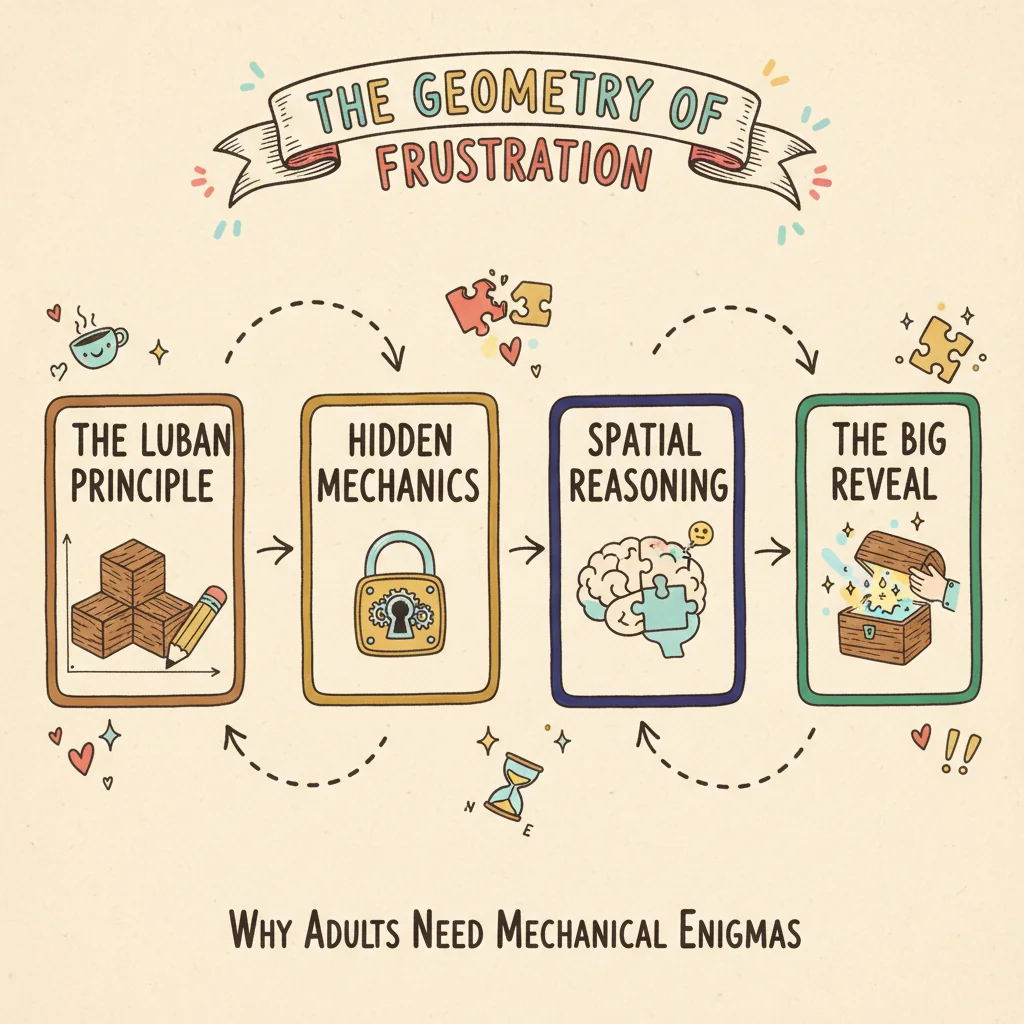
The Geometry of Frustration: Why Adults Need Mechanical Enigmas
Most people buy their first puzzle box because they want a clever way to hide a gift. They stay for the tactile dopamine hit of a hidden panel finally sliding home. Among the 200+ puzzles in my personal collection, the ones I return to most frequently are those that rely on the “Luban” principle—the ancient Chinese art of joinery that uses no nails or glue.
There is a specific weight to these challenges. When you hold a Luban Cube Puzzle, priced at $21.99, you aren’t just holding six pieces of wood. You’re holding a three-dimensional logic problem that dates back centuries. The satisfaction doesn’t come from the solve itself, but from the moment your brain finally maps the internal void where the pieces intersect. It’s a literal expansion of your spatial reasoning, which is why engaging with these three-dimensional challenges has such a profound effect on cognitive focus.
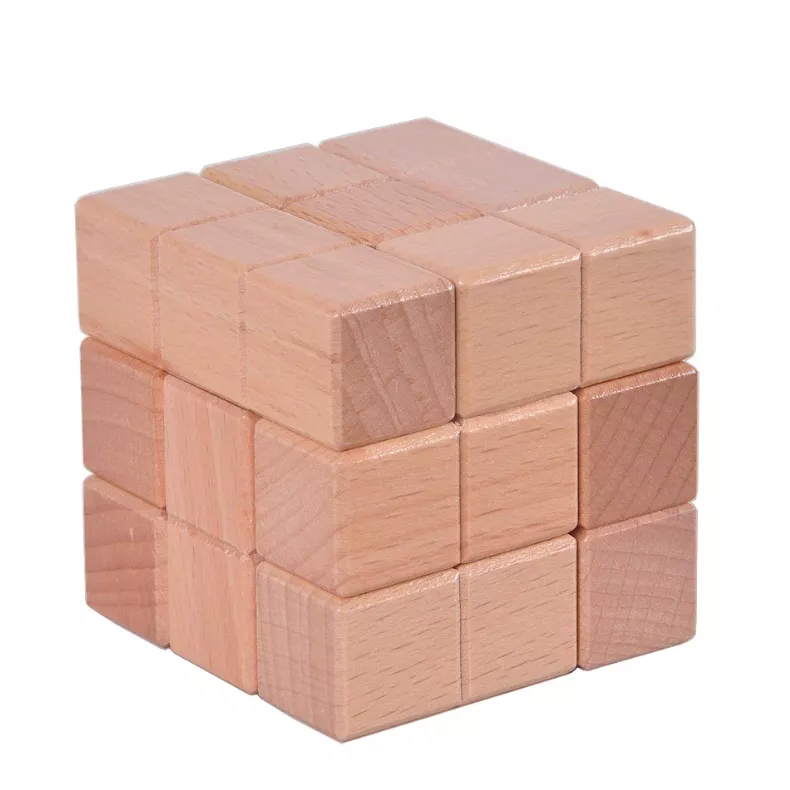
Luban Cube Puzzle — $21.99
I’ve noticed that when I hand a puzzle to a friend, their first instinct is to pull. They want to force the solution. But the mechanical puzzle tradition is built on the concept of Wu Wei—effortless action. You don’t force the 6 Piece Wooden Puzzle Key ($12.99) to open; you wait until the pieces align so perfectly that gravity does the work for you.
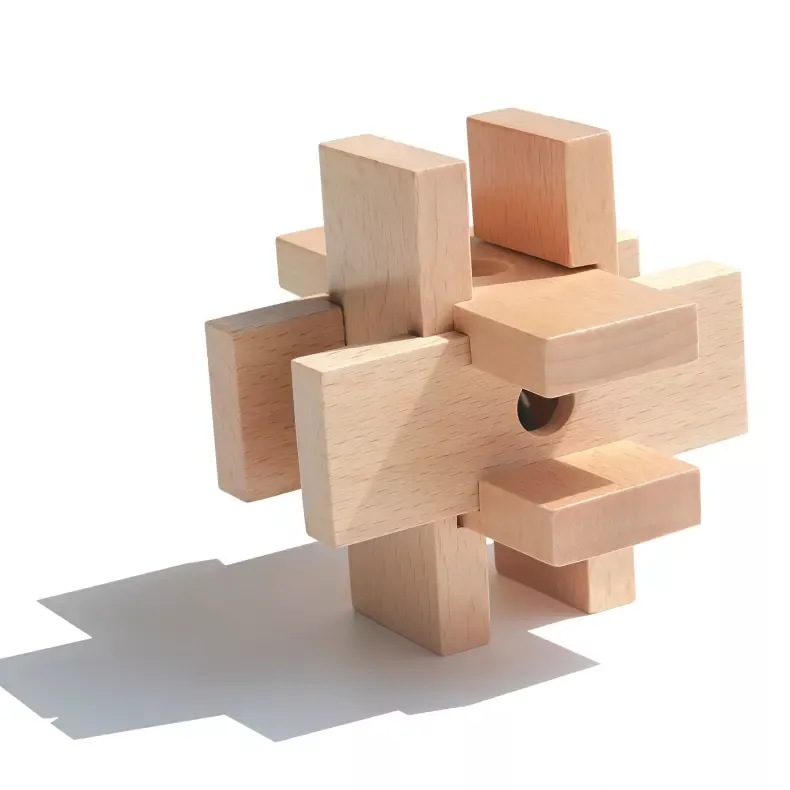
6 Piece Wooden Puzzle Key — $12.99
Material Matters: The Tactile Divide Between Wood and Brass
In my testing, I’ve found that the material of a puzzle box dictates the “vibe” of the solve. Wood is warm, forgiving, and organic. It expands and contracts with the humidity in your room. Metal, specifically the weathered bronze and brass often found in traditional Chinese locks, is cold, precise, and unforgiving.
If you are looking for a desk toy that doubles as a conversation piece, the metal locks are hard to beat. They have a “museum find” aesthetic that wood sometimes lacks. However, for a deep, evening-long engagement, the wooden assembly kits offer a level of immersion that a static lock can’t match. You build the mystery yourself, piece by piece, which makes the final mechanism feel like a personal achievement rather than just a riddle you solved.
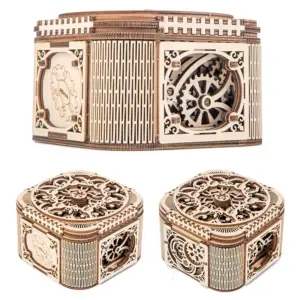
3D Wooden Puzzle Treasure Box
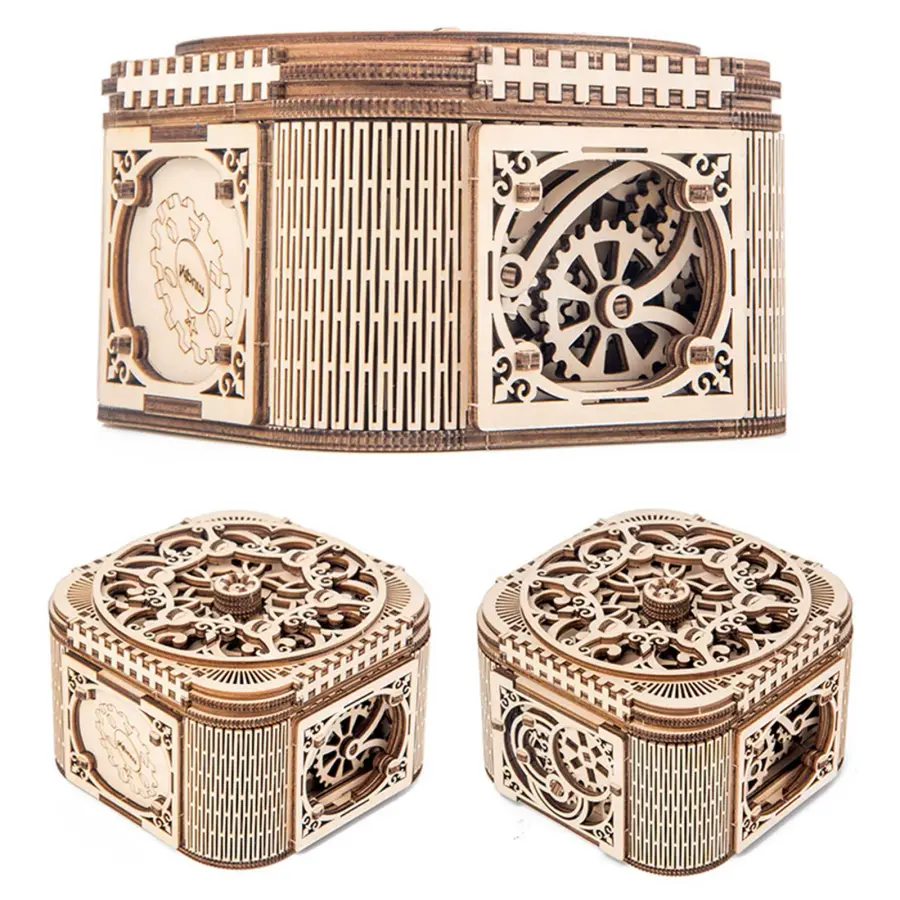
If you’ve ever wanted to feel like a 19th-century clockmaker, this is your entry point. The 3D Wooden Puzzle Treasure Box, which retails for $29.99, is less of a box and more of a mechanical theater. I spent about three hours on my living room floor with this kit, and the precision of the laser-cut birch is impressive for the price.
What sets this apart from a standard “trick box” is the transparency. You can see the gears. When you turn the key, you watch the internal levers lift and the lid rise in a synchronized dance. It’s not about hiding the secret; it’s about celebrating the mechanics. I did find that the gears require a bit of wax (a simple tea light candle works wonders) to get that buttery-smooth movement, but once it’s dialed in, the “click” is incredibly rewarding. It’s a perfect gift for someone who appreciates the inner workings of secret compartments but wants to be the one who built them.
Mechanical 3D Wooden Globe Puzzle

The Mechanical 3D Wooden Globe Puzzle ($28.88) is a beast of a different color. While many puzzle boxes are small enough to hide in a drawer, this is a statement piece. It’s an intermediate-level build, which means you shouldn’t attempt it after a long day of spreadsheets.
I noticed the laser-cut edges were surprisingly smooth, but you’ll want to be careful with the smaller gear pins. The magic here is the gear-drive system. Most globes just spin on a rod; this one uses a complex internal transmission that feels remarkably sturdy once assembled. It’s the kind of project that reminds me why I started collecting puzzles in the first place—it’s a tangible, physical manifestation of geography and engineering. If you find your brain needs a break from 3D spatial puzzles, I often pivot to digital pattern matching games just to reset my eyes before tackling the final assembly stages.
The Peak: Why Your First Solve Will Be an Accident
Here is the secret that most puzzle reviewers won’t tell you: about 40% of the time, your first successful opening of a Chinese puzzle box will be a total accident. You’ll be fiddling with it, your mind will wander, and suddenly—click—it’s open.
I call this the “Beginner’s Void.” I once handed the Jiutong Lock ($16.99) to a mechanical engineer friend. He spent twenty minutes analyzing the tolerances and trying to calculate the internal sliding paths. While he was talking about torque, his ten-year-old daughter picked it up, tilted it slightly to the left while sneezing, and the master key piece fell right out.
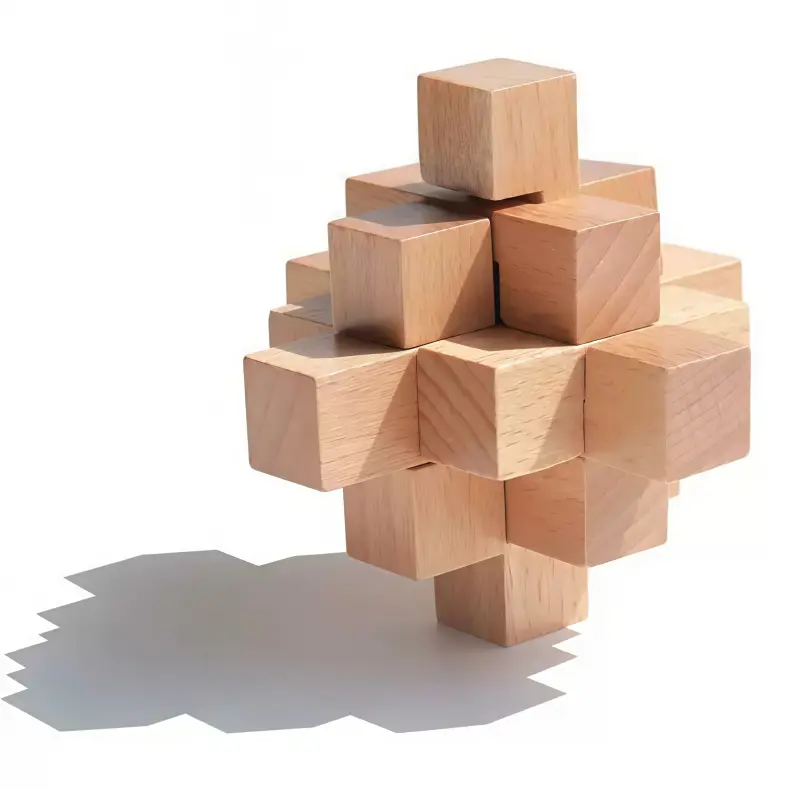
Jiutong Lock — $16.99
The lesson? These puzzles are designed to bypass the analytical mind and speak directly to your hands. The Jiutong Lock uses three identical skeletal strips and five unique blocks. It’s a masterpiece of “hidden in plain sight” design. You think you’re looking for a lever, but you’re actually looking for a lack of friction. This is the “Peak” of the puzzle experience—that moment when you realize the solution wasn’t a complex mathematical formula, but a simple shift in how you held the object.
The Art of the Traditional Lock: Beyond the Box
While boxes get all the glory, the traditional Chinese puzzle lock is where the real history lies. These were the original security systems for merchant chests and jewelry boxes. They don’t look like puzzles; they look like hardware. But try to open one without the specific sequence, and you’ll find yourself staring at a very pretty, very permanent piece of bronze.
Chinese Koi Puzzle lock
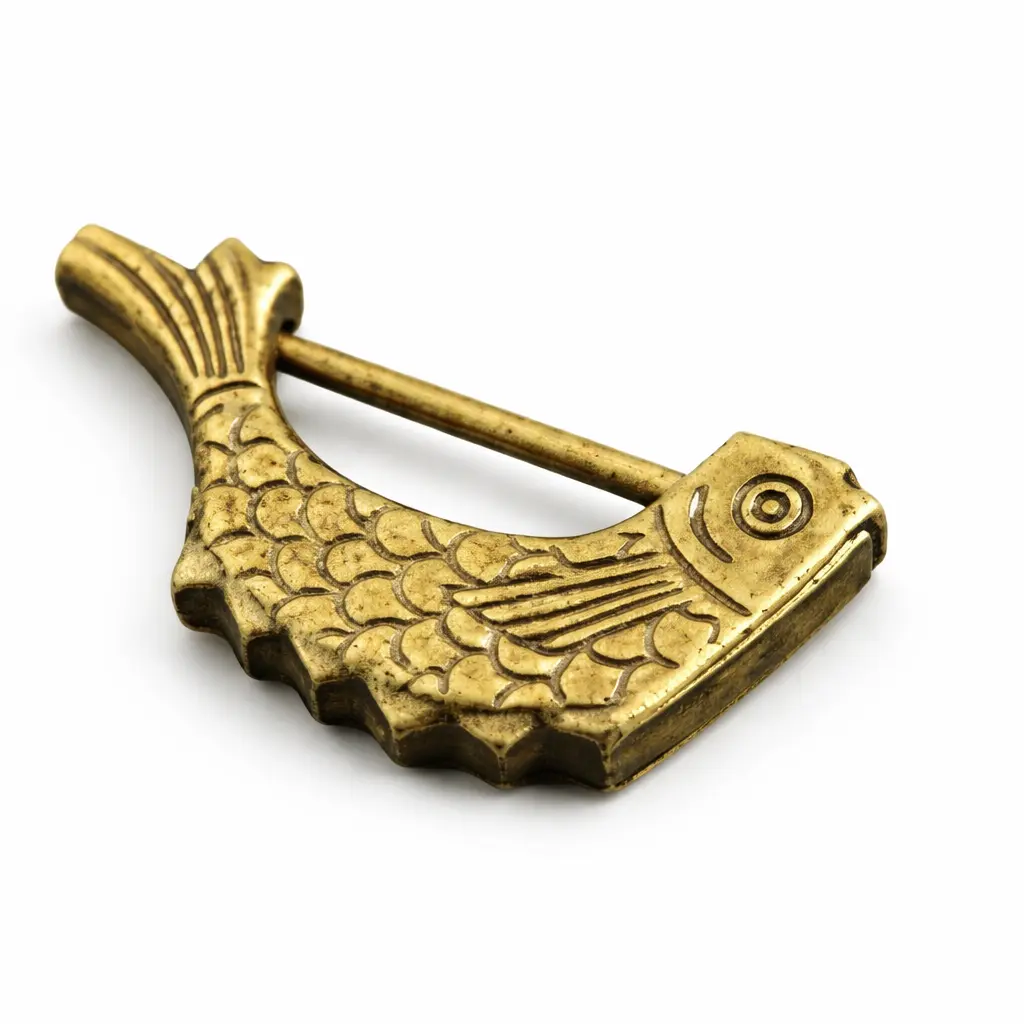
I’ve had the Chinese Koi Puzzle lock ($16.99) on my desk for three weeks, and it’s the only thing people pick up when they visit. At 59mm, it fits perfectly in the palm, and the weight is substantial—it doesn’t feel like a cheap trinket. The “puzzle” part is subtle. You have the key, but where does it go?
The scales of the fish are hand-detailed, and the weathered bronze finish gives it an heirloom quality. It’s a “level 1” puzzle in terms of difficulty, but a “level 10” in terms of aesthetic. If you’re looking for a fidget toy that doesn’t look like a plastic spinner, this is it. It’s a tactile reminder that even security can be beautiful.
Yin-Yang Taiji Lock
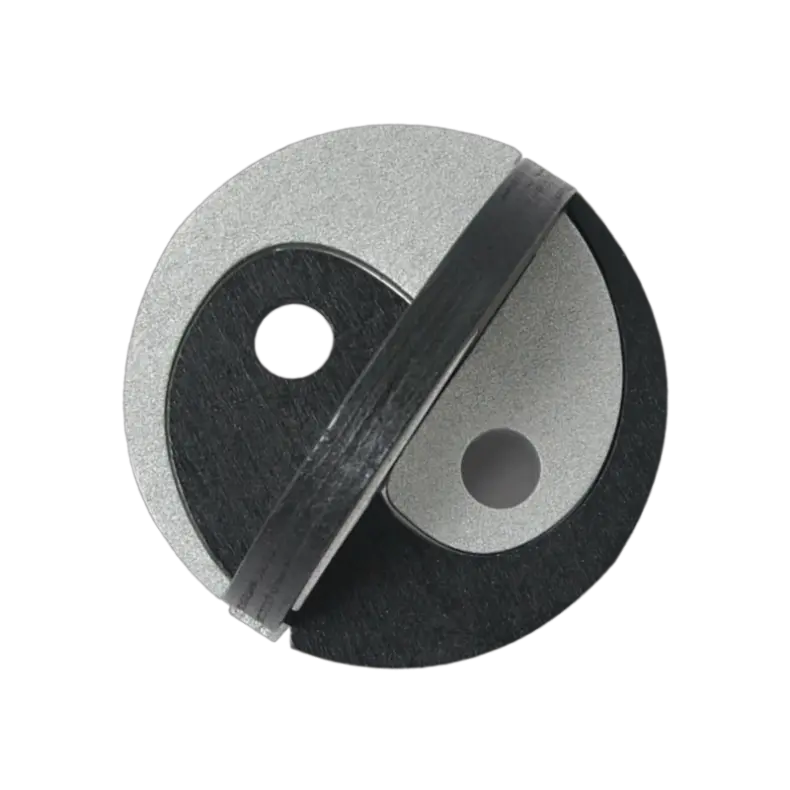
The Yin-Yang Taiji Lock ($15.88) is perhaps the most philosophical item in this lineup. Based on the “Dao De Jing,” it consists of four interlocking wooden pieces. This is where the “punishing impatience” part of my thesis comes into play. If you try to pull these pieces apart, they bind.
I’ve found that the best way to solve this is to close your eyes. Seriously. When you stop relying on your vision and start feeling for the balance between the pieces, the solution reveals itself. It’s a meditative practice disguised as a brain teaser. For those who enjoy simple numerical logic puzzles, the Taiji lock offers a similar “flow state” but in a physical, 3D space.
Chinese Old Style fú Lock with Key
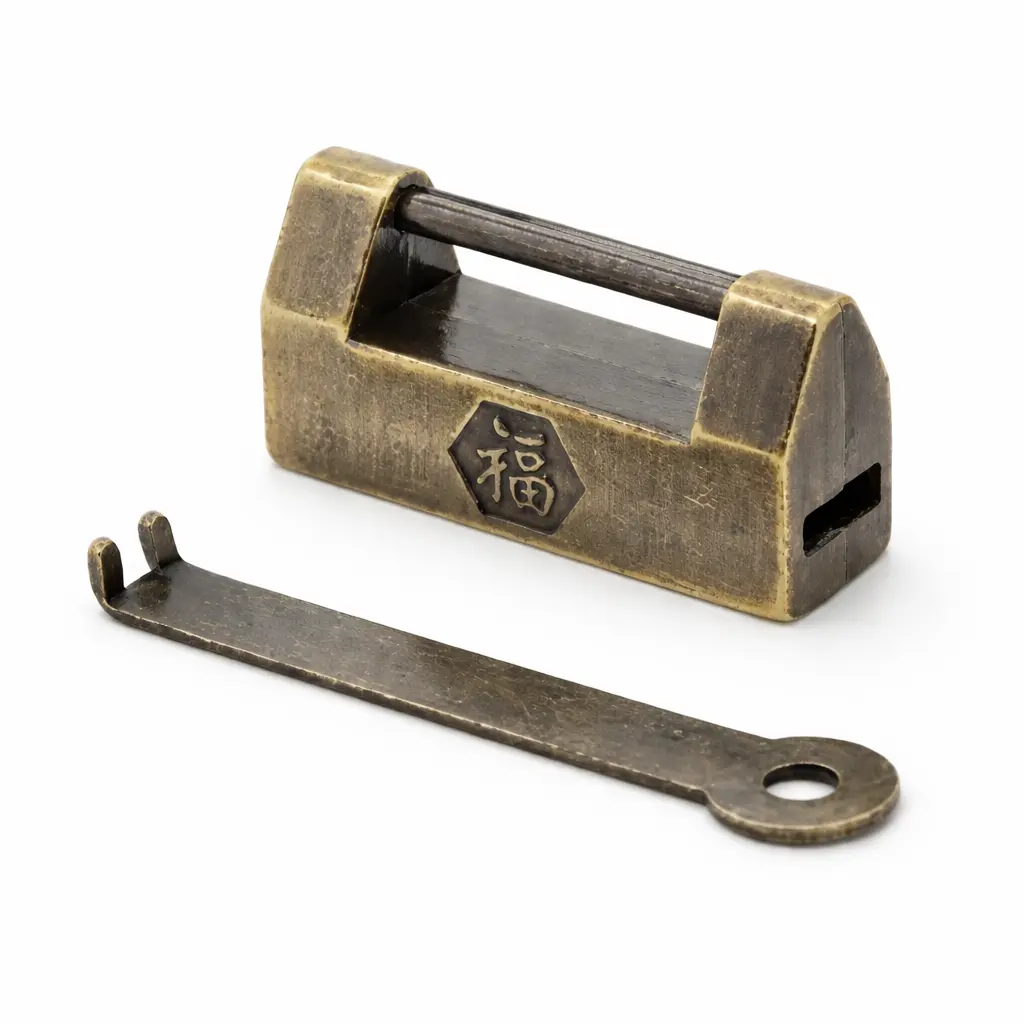
Don’t let the size fool you. The Chinese Old Style fú Lock with Key ($19.99) is only 30mm across, but it’s a fully functional rod-key lock. The “fú” character (福) stands for fortune, and there’s something genuinely charming about the tiny, satisfying snick it makes when it opens.
I use mine to lock a leather-bound journal. It’s not going to stop a determined thief with a pair of bolt cutters, but it’s a wonderful “speed bump” for the curious. The antique bronze finish is consistent across the piece, and the rod-key requires a specific twisting motion that feels very “old world.” It’s a great entry point for someone who wants to explore beginner-friendly magnetic and mechanical challenges before moving on to the more complex 10-step boxes.
Why Some Puzzles Fail the “Adult” Test
Not every “Chinese puzzle box for adults” is worth your time. I’ve seen plenty of cheap knock-offs where the tolerances are so loose you can see the solution through the cracks, or so tight you need a hammer to move a “sliding” panel.
A true adult-grade puzzle, like the Fuxi Eight-Corner Puzzle Ball ($19.99), relies on precision. If the six wooden blocks don’t meet at exactly the right angle, the whole sphere loses its integrity. Similarly, the Plum Blossom Lock ($16.99) is a masterclass in harmony—if one of the five petals is slightly out of alignment, the key won’t turn.
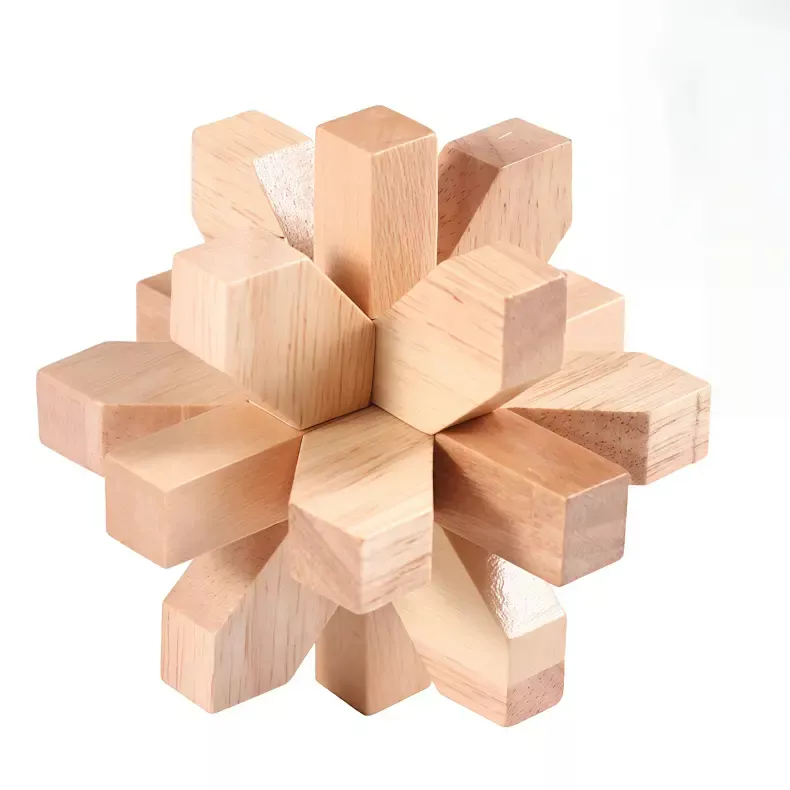
Plum Blossom Lock — $16.99
I tend to avoid puzzles that rely on “hidden magnets” unless they are exceptionally well-integrated. There’s something more honest about a purely mechanical connection. When you solve the Luban Cube Puzzle ($21.99), you are succeeding because you understood the geometry, not because you got lucky with a magnetic polarity.
Frequently Asked Questions About Chinese Puzzle Boxes
What is the difference between a Chinese puzzle box and a Japanese Himitsu-Bako?
While both are traditional wooden trick boxes, the Japanese Yosegi-zaiku boxes typically rely on a specific sequence of sliding panels (often 4 to 21 steps) and are famous for their intricate geometric veneers. Chinese puzzle boxes, or “Luban boxes,” often focus more on the internal joinery and mortise-and-tenon principles. A Chinese puzzle box for adults might involve gears, hidden pins, or interlocking blocks that must be removed in a specific order, rather than just sliding external panels.
Are these puzzles too difficult for beginners?
Not at all, provided you choose the right entry point. If you start with a 400-piece mechanical clock, you’ll likely get frustrated. However, something like the Chinese Koi Puzzle lock ($16.99) is perfectly accessible. The goal isn’t to be “smart” enough to solve it; it’s to be patient enough to observe it. Most beginners fail because they try to force the mechanism. If it doesn’t move with light pressure, you’re doing it wrong.
Do I need tools or glue for the 3D wooden kits?
Most modern high-quality kits, like the Mechanical 3D Wooden Globe Puzzle ($28.88), are designed to be “press-fit.” This means the pieces are laser-cut to such tight tolerances that they hold themselves together. You shouldn’t need glue, though I always keep a small piece of sandpaper and some wax (for gears) nearby. The sandpaper helps if a joint is just a hair too tight due to humidity.
Can I actually use these to store valuables?
The 3D Wooden Puzzle Treasure Box ($29.99) is perfect for jewelry or small keepsakes. However, remember that these are wooden puzzles, not steel safes. They are designed for “intellectual security”—meaning they keep out the curious, not the determined. If someone knows it’s a puzzle box, they can eventually solve it (or just break it). They are best used for sentimental items or as a “box-within-a-gift” for money or gift cards.
How do I maintain a wooden puzzle box?
Wood is a living material. To keep your Luban Cube Puzzle ($21.99) or Taiji lock in top shape, avoid keeping them in direct sunlight or very damp areas (like a bathroom). If a sliding part gets stuck, don’t force it. Usually, a little bit of humidity change or a tiny application of beeswax will fix the issue. For the metal locks, a quick wipe with a soft cloth is all they need to maintain that antique luster.
Why are some puzzles called “Luban Locks”?
Lu Ban was a legendary Chinese structural engineer and carpenter from the 5th century BC. He is considered the patron saint of Chinese builders. The “Luban Lock” (also known as the Kongming Lock) is a puzzle that uses his principles of interlocking joinery. It’s a testament to the fact that mechanical puzzles have been challenging the human brain for thousands of years.
Is it “cheating” to look up the solution?
I have a firm rule: you can only look up the solution if you are so frustrated that you are about to throw the puzzle across the room. Part of the value of a Chinese puzzle box for adults is the “struggle.” That friction in your brain is actually new neural pathways forming. If you skip straight to the answer, you lose the cognitive benefit. Try walking away for 24 hours first.
What is the best age for these puzzles?
While we focus on adults, many of these are great for teens. However, I’d be wary of giving complex wooden kits to children under 12 without supervision. The pieces can be delicate, and the logic requires a level of persistence that younger kids sometimes lack. For adults, there is no upper limit—they are fantastic for keeping the mind sharp and the fingers nimble.
Can these puzzles help with anxiety or stress?
In my personal experience, yes. There is something profoundly grounding about a physical object that requires 100% of your attention. You can’t scroll through social media while trying to reassemble the Fuxi Eight-Corner Puzzle Ball ($19.99). It’s a form of “tactile meditation.” The fidget toy aspect of the smaller locks also provides a productive outlet for nervous energy.
Are the instructions easy to follow?
For the assembly kits, the instructions are usually visual (like LEGO). For the pre-assembled locks and boxes, they often don’t come with instructions at all—because the “instruction” is the puzzle itself! If you get truly stuck, most of these have community-made solution videos online.
Why do some wooden puzzles smell like burnt toast?
That’s the laser cutting! To get the precision needed for a 3D Wooden Puzzle Treasure Box, the wood is cut with a high-powered laser. The slight charred smell is normal and usually fades within a week of opening the box. I actually find it quite pleasant—it’s the smell of precision.
What should I look for in a high-quality puzzle box?
Check the seams. In a high-quality box, the seams should be almost invisible. If you can see light through the joints, the craftsmanship is lacking. Also, look at the material. Solid hardwood or heavy-gauge brass/bronze will always outlast plastic or composite materials. The Jiutong Lock ($16.99) is a great example of simple materials used with high precision.
The One Puzzle That Teaches You How All the Others Work
If you only buy one item to start your collection, make it the Jiutong Lock ($16.99). It is the quintessential “adult” puzzle because it looks impossible, feels elegant, and teaches you the most important lesson in the hobby: look for the piece that moves when everything else is still.
I remember that morning in my kitchen, finally finishing my coffee and picking the Koi lock back up. I stopped trying to remember the “steps” I’d read about online and just felt the weight of the key in the shackle. I tilted it, heard a tiny, internal thump, and the lock slid open as if it had been waiting for me to finally pay attention.
That’s the magic of a Chinese puzzle box for adults. It’s not about the box; it’s about the person you become while trying to open it—someone more patient, more observant, and a little more connected to an ancient tradition of craftsmanship. If you’re ready to test your own patience, start with the 3D Wooden Puzzle Treasure Box ($29.99). It’s the perfect bridge between a fun afternoon project and a lifelong obsession with the hidden. Once you’ve mastered the physical, you might find that digital logic challenges feel entirely different.
The last panel always clicks eventually; you just have to be there to hear it.