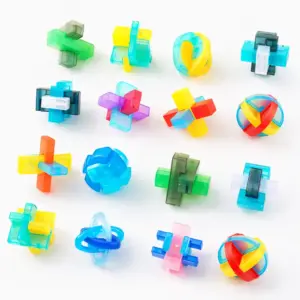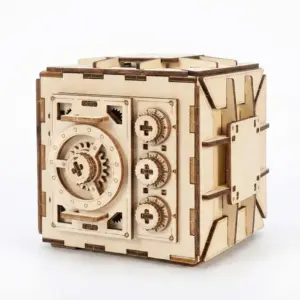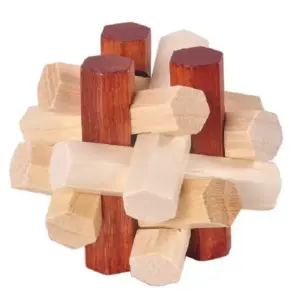
The third time the notched cedar corner of the Luban Cube Puzzle ($21.99) slipped from my grip and clattered onto my hardwood floor, I didn’t reach for it. I walked to the kitchen, ground some fresh beans, and let the silence of my office settle. If you’ve spent any time with a 3x3x3 wooden interlocking challenge, you know that sound—the hollow thwack of failure. It’s a sound that mocks your spatial reasoning and reminds you that, despite your engineering degree or your high-stakes job, you are currently being outsmarted by six pieces of dead tree.
Most “solution guides” you find online are either blurry PDFs from the 1990s or AI-generated listicles that have never actually felt the friction of a mortise-and-tenon joint. This is not that. After testing over 200 mechanical puzzles and maintaining a personal collection that has officially taken over my guest bedroom, I’ve learned that a wooden block puzzle cube solution isn’t a sequence of moves you memorize like a Rubik’s Cube algorithm. It’s a lesson in structural integrity.
The thesis of my collection is simple: wood demands a different kind of respect than metal. While a cast metal brain teaser ($19.99) relies on tight tolerances and “tricks,” a wooden cube is about the collective strength of identical-looking parts. If you’re forcing it, you’re doing it wrong.
The Anatomy of a “Stuck” Cube
Before you can solve the cube, you have to understand why you’re stuck. Most beginners approach a wooden block puzzle as if it’s a jigsaw. They look for edge pieces and corner pieces. But in the world of interlocking burr puzzles, every piece is an edge, a corner, and a structural beam simultaneously.
I recently spent forty-five minutes with the 6 Piece Wooden Puzzle Key ($12.99), and it perfectly illustrates the “Wu Wei” of puzzling. It’s a minimalist set of six bars, yet the solution only reveals itself when you stop trying to “fit” them and start trying to “balance” them. The wood has a slight grain to it; if you feel the resistance, it’s not just the notch—it’s the friction of the fibers.
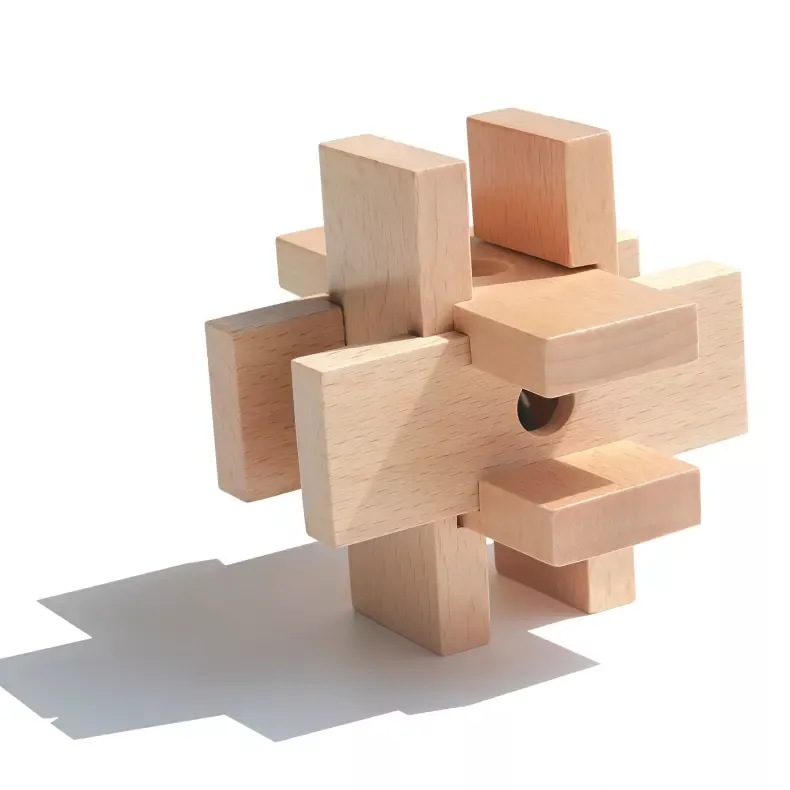
6 Piece Wooden Puzzle Key — $12.99
When people search for a “solution,” they usually have a pile of blocks on their desk and a sense of growing regret. The key is to identify the “Master Piece.” In almost every 3D wooden cube, there is one piece that looks exactly like the others but lacks a specific notch or has an extra groove. This is your “Key Piece”—the last one in, the first one out.
Why Your First Solve Will Probably Be an Accident
There is a specific phenomenon in mechanical puzzling where the pieces suddenly “click” into place while you’re absentmindedly fiddling with them during a Zoom call. You look down, and the cube is whole. You try to take it apart to see how you did it, and you’re back at square one.
This happens because our conscious minds are terrible at 3D spatial rotation. We tend to think in 2D layers. But a Luban Sphere Puzzle ($16.99) or a standard cube doesn’t exist in layers; it exists in intersections.
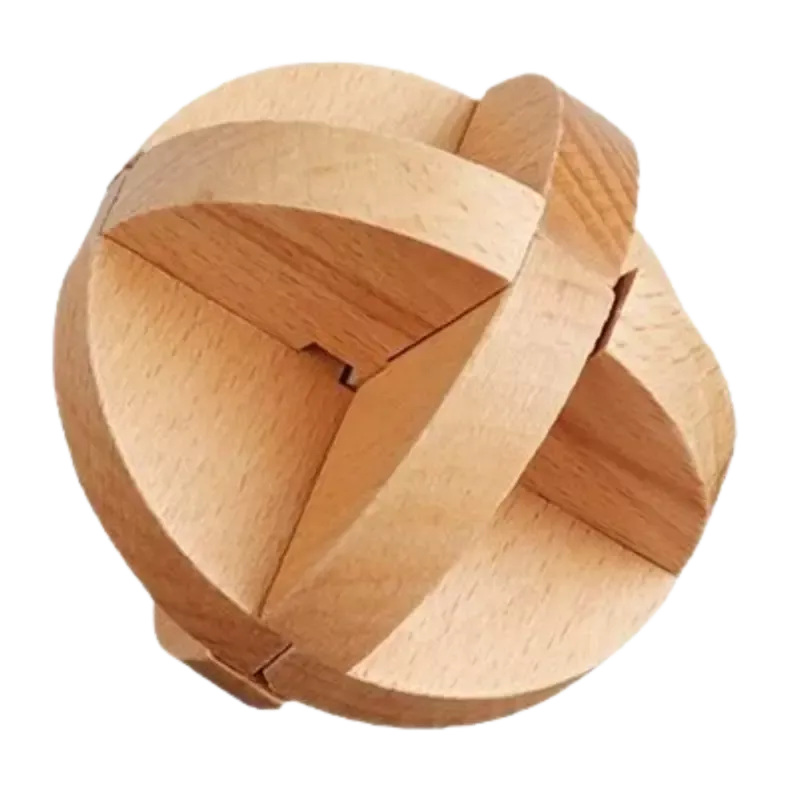
Luban Sphere Puzzle — $16.99
The Luban Sphere Puzzle ($16.99) is the ultimate test of this. It’s an exercise in mindfulness disguised as a toy. I’ve had this on my desk for three weeks, and I still find the disassembly more satisfying than the assembly. It teaches you that the “solution” is actually the journey of discovery. If you’re just looking for the end result, you might as well buy a pre-assembled paperweight. For those who find the 3D geometry of wood too taxing, digital pattern matching games can offer a similar dopamine hit without the risk of losing a piece under the sofa.
The “Key Piece” Strategy: A Universal Methodology
If you are staring at a pile of six or seven notched blocks, here is the veteran’s approach to finding the solution without looking at a spoiler map:
- The Symmetry Check: Group the pieces by shape. Usually, you’ll have pairs. If you have five identical pieces and one oddball, that oddball is your “Key.”
- The Core Construction: Most cubes are built around a central void. You aren’t building a solid block; you’re building a cage.
- The Slide, Not the Snap: Wood expands and contracts with humidity. If you’re trying to snap a piece in, you’re going to break the grain. Every move in a traditional Chinese Luban lock should be a smooth slide.
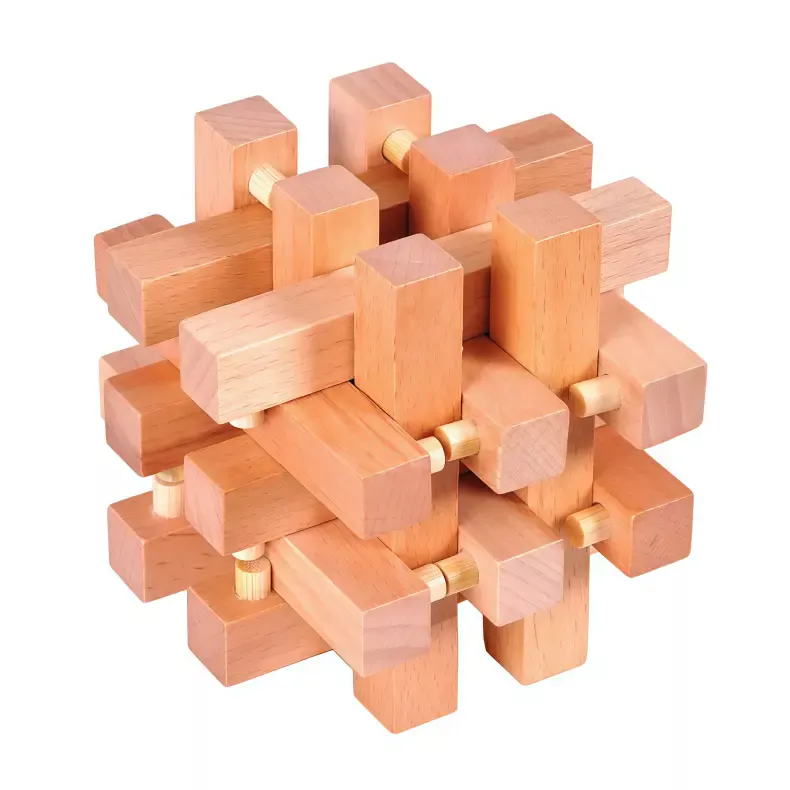
18 Piece Wooden Puzzle — $16.99
Take the 18 Piece Wooden Puzzle ($16.99). This is the “Final Boss” for many hobbyists. It features seventeen identical pieces and one master key. When you hold these, you can feel the seam with your fingernail—or rather, you can’t if it’s well-made. The solution here isn’t about complexity; it’s about the discipline of repeating the same alignment seventeen times until the eighteenth piece locks the entire universe into place. It’s incredibly silent. There is no “click”—just a sudden cessation of movement.
When the Geometry Shifts: From Cubes to Stars
Sometimes the “cube” isn’t a cube at all. The term “wooden block puzzle” often gets used as a catch-all for any interlocking wooden shape.
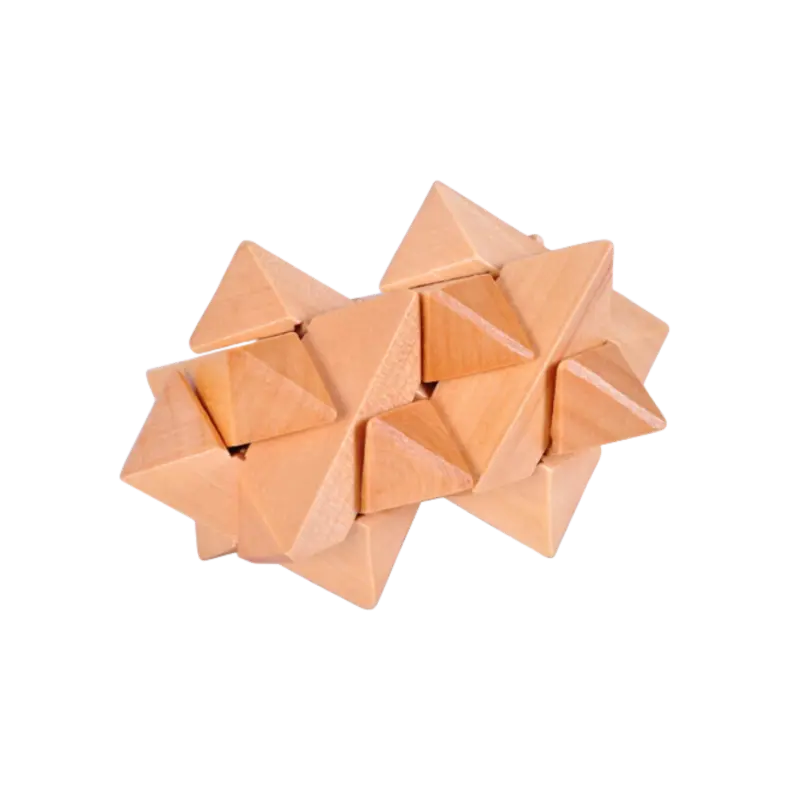
The Twin Star Puzzle — $17.88
I’ve found that The Twin Star Puzzle ($17.88) is the perfect “bridge” puzzle for people who have mastered the basic 6-piece cube. It uses three distinct block types: a core, diamond double-pyramids, and two twisted pieces. The “solution” here involves a rotation that feels almost illegal. It challenges your assumption that pieces only move on the X, Y, and Z axes.
If you’re struggling with the rigid logic of block puzzles, you might find that navigating wooden container puzzles offers a more narrative-driven challenge. Instead of just “making a shape,” you’re looking for a hidden compartment, which often uses similar interlocking principles but with a clear goal.
The Peak Moment: The Architecture of the Impossible Notch
Here is the secret that most puzzle manufacturers won’t tell you, and it’s the most important insight I’ve gained after testing hundreds of these objects: The solution is always hidden in the “void space,” not the wood.
When you look at a notched piece, your brain focuses on the wood that is there. To solve a complex cube, you must train your eyes to see the wood that isn’t there. Every notch is a doorway for another piece’s protrusion.
I once handed the Twelve Sisters Puzzle ($19.99) to a mechanical engineer friend of mine. He spent twenty minutes analyzing the 12 thick rods and the 5 precision holes in each. He was trying to calculate the permutations. Then, my 10-year-old nephew walked by, noticed the crimson center sphere, and realized that the sphere wasn’t a decoration—it was the “anchor” that occupied the central void.
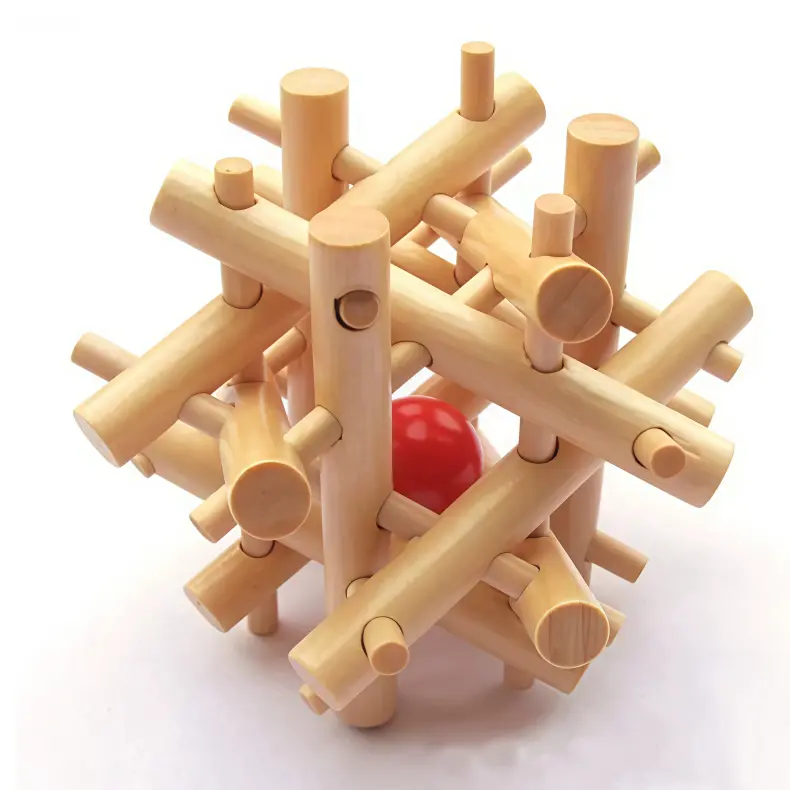
Twelve Sisters Puzzle — $19.99
The Twelve Sisters Puzzle ($19.99) is a masterclass in this. It disassembles in seconds, but reassembling it requires you to visualize the internal “negative space” where that sphere sits. It’s the moment the last rod slides past the sphere that you realize the “impossible notch” was actually a perfectly designed hallway.
Comparing the “Big Three” Wooden Challenges
If you’re looking to buy your first (or fifth) block puzzle, you need to know which geometry fits your brain’s current “software.”
The Classic 3x3x3 Cube
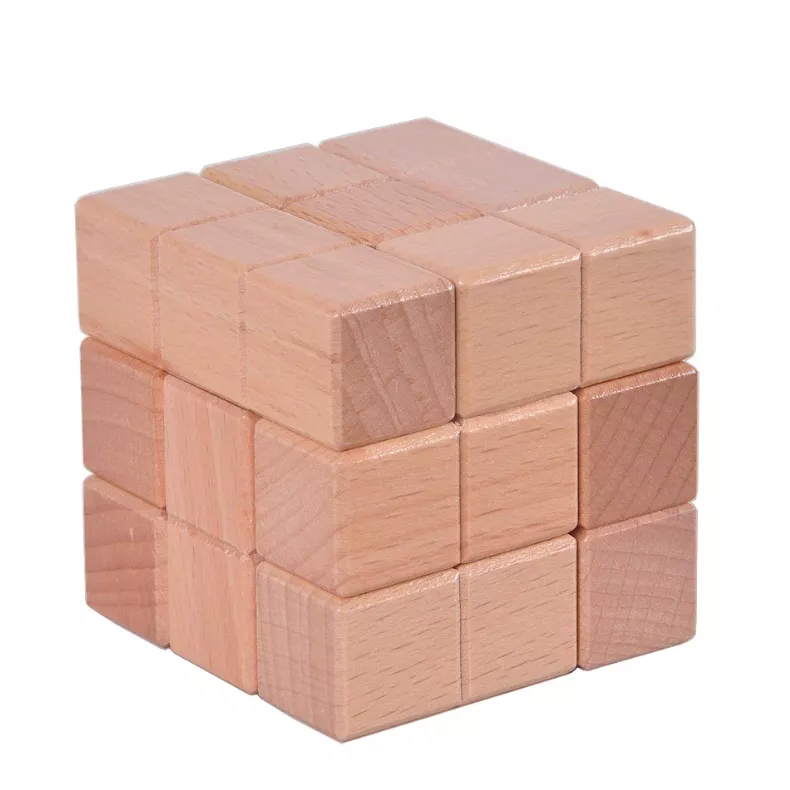
The Luban Cube Puzzle ($21.99) is the gold standard. It’s based on the Soma cube philosophy but uses the traditional Chinese mortise-and-tenon joints. It’s sturdy, the wood has a nice weight to it, and it looks great on a mahogany desk. The honest negative? If you have very large hands, some of the smaller notches can be a bit fiddly to align.
The Interlocking Sphere
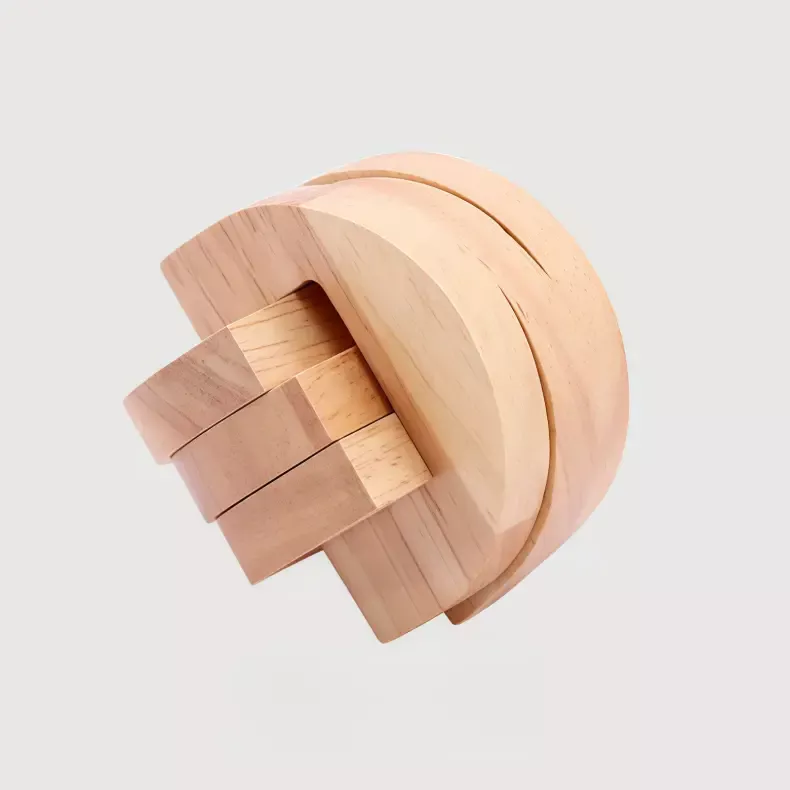
For something more tactile, the Interlock Puzzle Sphere ($17.99) is a different beast. Because it’s round, it wants to roll away while you’re trying to hold the first four pieces together. It demands more manual dexterity than the cube. I’ve found that solving this one on a felt mat or a piece of leather makes the experience much less frustrating. It’s a meditative practice; each attempt teaches you a bit more about how the pieces “meet” each other.
The Pyramid Challenge
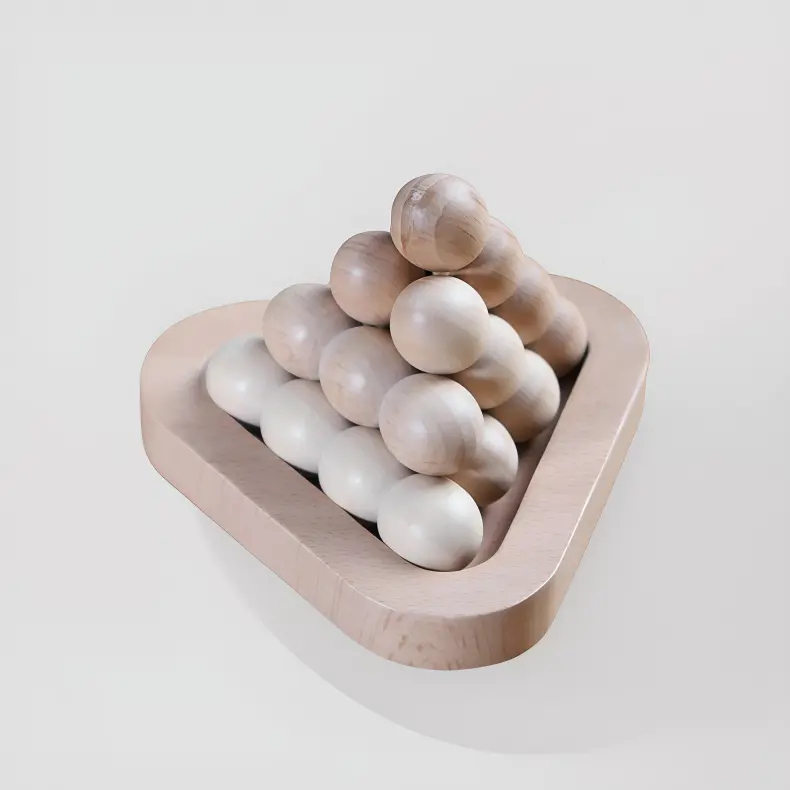
Then there’s the Wooden Bead Pyramid ($18.88). This isn’t a burr puzzle in the traditional sense. It’s a 3D packing puzzle using strands of beads. It’s deceptive. It looks like a child’s toy, but the spatial reasoning required to stack these strands into a perfect tetrahedron is surprisingly high. If you enjoy complex wooden trick boxes, you’ll appreciate the way this puzzle forces you to think about volume rather than just interlocking lines.
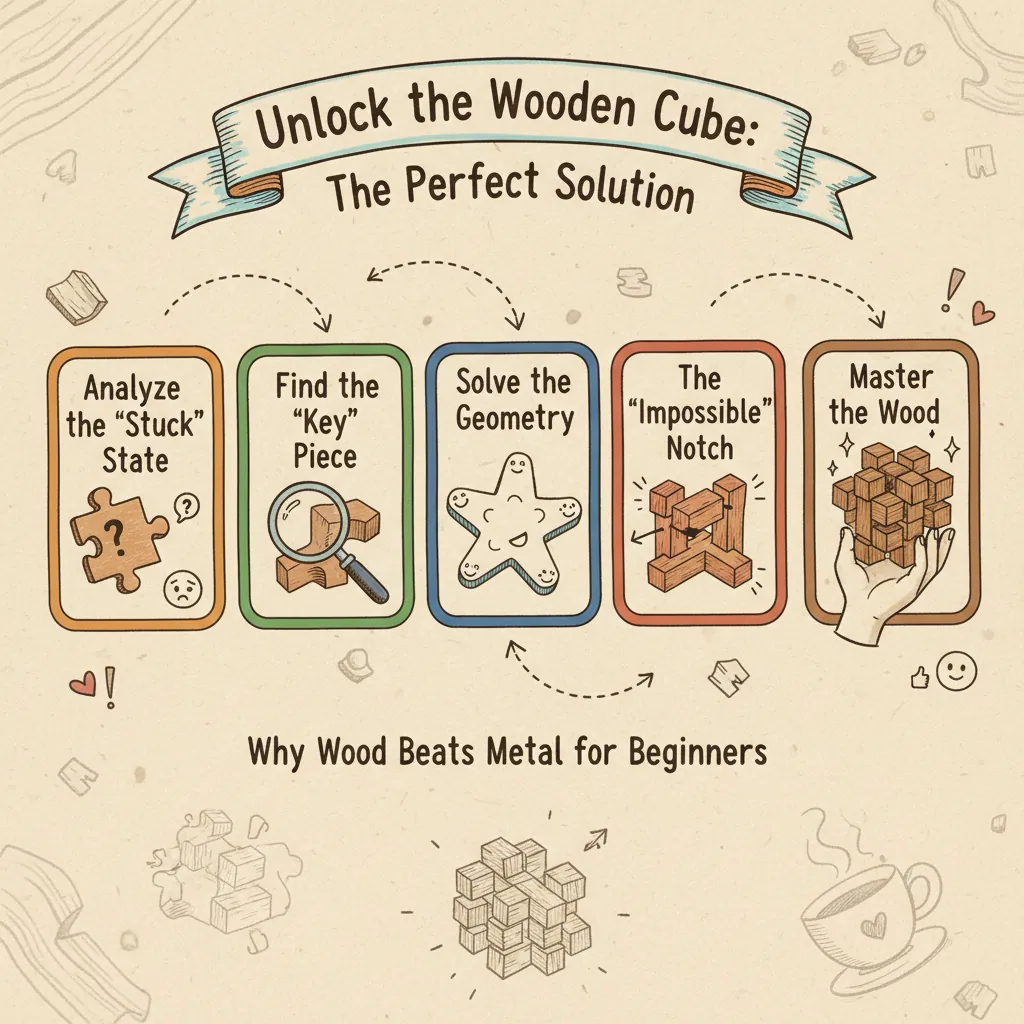
Why Wood Beats Metal for Beginners (and why it doesn’t)
I’m often asked if beginners should start with wood or metal. My opinion is biased toward wood, but with caveats.
The Case for Wood:
– Tactile Feedback: You can feel the tension. Metal is binary—it either fits or it doesn’t. Wood “whispers” when you’re close.
– Aesthetics: A wooden cube like the Six-Piece Burr ($17.99) feels like an heirloom.
– Forgiveness: Wood has a tiny amount of “give.”
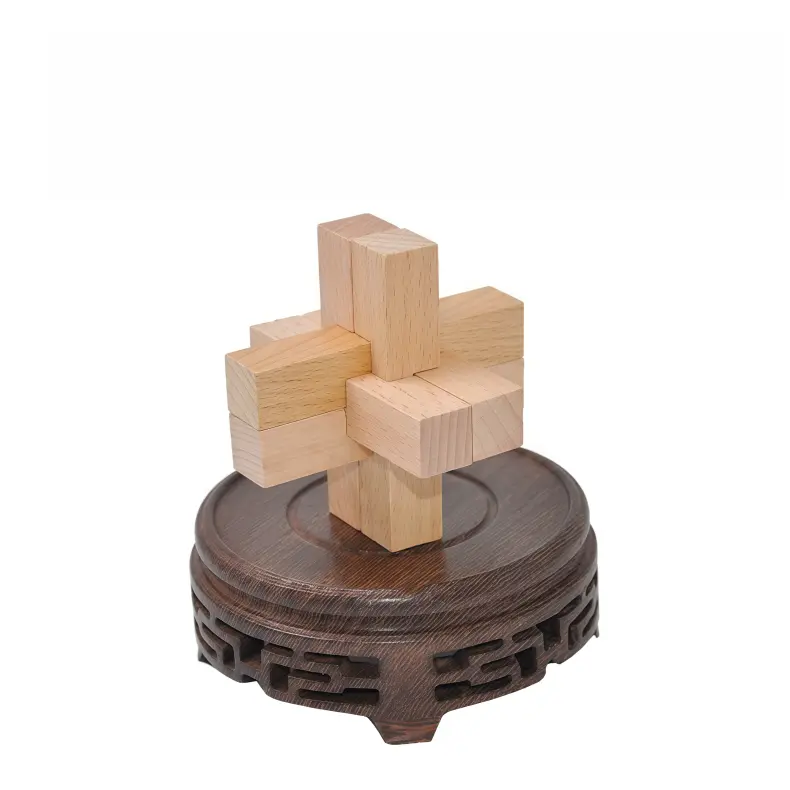
Six-Piece Burr — $17.99
The Six-Piece Burr ($17.99) is the essential starting point. It’s the “Hello World” of mechanical puzzles. It rewards those who seek understanding over force.
The Case Against Wood:
– Humidity: I live in a humid climate. In the summer, my Mystic Orb Lock ($16.99) gets a bit tight. In the winter, it’s loose.
– Durability: If you drop a metal puzzle, you dent the floor. If you drop a wooden puzzle, you might chip a notch.
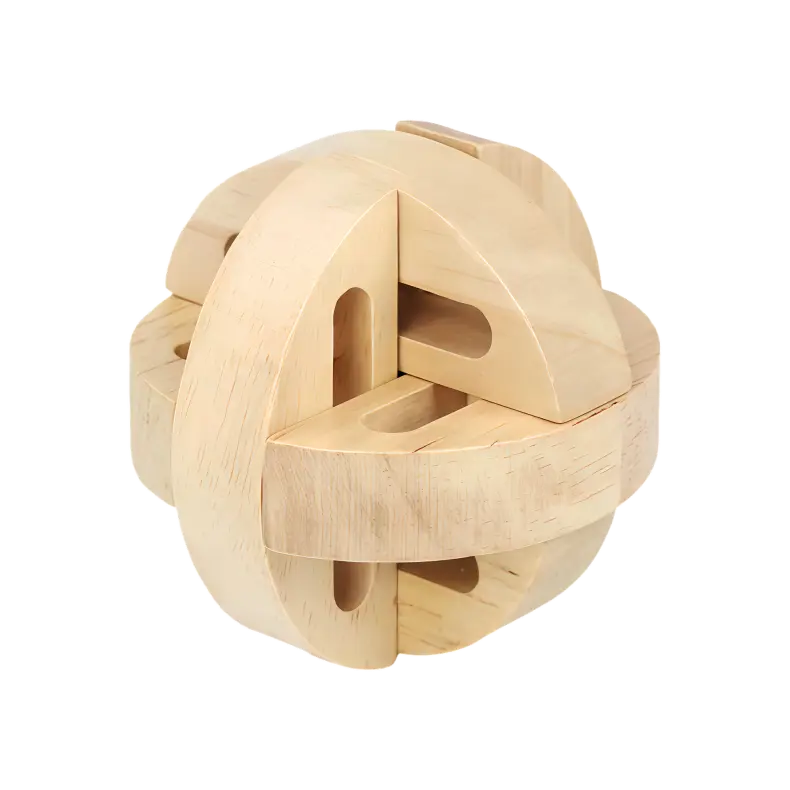
The Mystic Orb Lock — $16.99
That said, the The Mystic Orb Lock ($16.99) is one of the few wooden puzzles I’ve seen that uses semi-circular interlocking pieces. It’s a beautiful design that avoids the “chipping” issue by having rounded edges. It embodies the Taoist art of yielding—you have to find the gap where “death cannot enter” to unlock it. If you need a break from the physical, digital balance games offer a similar philosophical challenge.
Quick-Reference Comparison Table
FAQ: Solving the Unsolvable
How do I solve a wooden snake cube puzzle that seems unique?
The “Snake Cube” is a different beast from the interlocking Luban blocks. It consists of 27 small cubes connected by an elastic string. The solution involves finding the “corner” sequences. Most snake cubes have a 3-bit section that must form the center core. If you’re stuck, try to lay the snake flat and identify the sections that have three bits in a row—these are almost always the “edges” of your 3x3x3 frame.
What if my wooden puzzle is missing the instructions?
I’ll be honest: I usually toss the instructions after step three anyway. Most wooden puzzles are designed to be solved through observation. If you’re really stuck, search for the “burr puzzle” name on Wikipedia or specialized forums. However, the best way to “find” the solution is to take the puzzle apart slowly. The disassembly is your map. If you didn’t take it apart yourself, look for the piece that has the most “air” around it—that’s your starting point.
Are these puzzles durable enough for a 6-year-old?
While some puzzles like the Luban Cube Puzzle ($21.99) are great for developing spatial skills, I wouldn’t give an 18-piece burr to a young child. They tend to use force when logic fails, and thin wooden notches can snap. For younger kids, beginner-friendly magnetic cube sets are much more resilient.
My puzzle is “stuck” and won’t slide. Should I use oil?
Never use oil on wood! It will soak into the fibers, cause the wood to swell, and ruin the puzzle forever. If a piece is stuck, it’s usually due to humidity. Put the puzzle in a dry place (like a container with a silica gel packet) for 24 hours. If it’s still stuck, a very light tap with a rubber mallet can sometimes vibrate the pieces loose, but proceed with extreme caution.
What is the difference between a Soma cube and a Luban lock?
The Soma cube was invented by Piet Hein in 1933 and consists of seven irregular pieces made of unit cubes. A Luban lock (or Burr puzzle) is much older, rooted in ancient Chinese carpentry, and uses interlocking notches. Soma cubes are about “packing” a volume, while Luban locks are about “structural integrity.”
Why are some pieces offset by half a unit?
This is common in “Yamato” or “Ultimate” style puzzles. It’s a deliberate design choice to prevent you from using standard 3D grid logic. It means the pieces don’t just sit next to each other; they “grip” each other. It’s a higher level of difficulty that requires you to think about the “half-steps” in the assembly.
Can I solve these using a computer program?
Yes, there are solver programs for the Soma cube and various burr puzzles. But in my experience, using a solver is like reading the last page of a mystery novel first. You get the answer, but you miss the “Aha!” moment that makes the hobby worthwhile.
Is the wood treated with chemicals?
Most high-quality puzzles use natural hardwoods with a light wax or oil finish. If you’re sensitive to smells, the cedar-based ones have a strong, pleasant aroma that fades over time.
How do I know if I have a “Key Piece”?
Look for the piece that has no “internal” notches. It will usually be a solid bar or have a very shallow groove. This piece is designed to slide in last to provide the final friction that holds the other pieces against each other.
Why does my puzzle feel loose after I solve it?
If it’s a new puzzle, the wood might just be dry. As it acclimates to your home’s humidity, it should tighten up. Alternatively, you might have swapped two pieces that look identical but have slightly different tolerances.
What’s the best way to store these?
Keep them out of direct sunlight, which can warp the wood and fade the finish. I keep mine on a bookshelf away from the radiator. If you’re traveling, a small cloth bag prevents the pieces from knocking against each other and chipping.
Are there “unsolvable” wooden puzzles?
Technically, no. Every puzzle sold on tea-sip.com has a verified solution. However, some “impossible” puzzles are actually sequential discovery boxes that require you to find a hidden tool inside the puzzle to proceed.
The One Puzzle That Teaches You How All the Others Work
If you’ve read this far, you’re likely sitting in front of a pile of wooden blocks, wondering if you should give up. Don’t. The moment the last piece of the Luban Cube Puzzle ($21.99) slides into place is one of the most satisfying “clicks” in the hobby world. It’s not just about the cube being whole; it’s about the fact that you finally understood the language the wood was speaking.
I started this article by mentioning a clattering failure on my office floor. That cube eventually went back together, not because I found a better YouTube video, but because I stopped looking at the blocks as “parts” and started seeing them as a single, unified system.
If you’re looking for your next challenge, start with the Luban Cube Puzzle ($21.99). It taught me more about patience and structural logic than any textbook ever could. And once you’ve mastered the cube, the spatial logic of advanced trick boxes will feel like a natural next step in your journey.
The solution isn’t in your hands; it’s in your ability to see the space between the pieces. Now, go back to your desk, pick up that “Key Piece,” and try one more time. This time, don’t force it. Just listen.