The third time the brass pin slipped past my thumb on this Tuesday morning, February 20, 2026, I set the box down and made a fresh pot of coffee. My desk is currently a graveyard of zinc alloy and silver plating, a testament to a week spent re-testing the latest batch of mechanical enigmas. There is a specific kind of silence that happens when a smart person realizes they’ve been outsmarted by a three-inch object that doesn’t even have batteries.
A puzzle trick box isn’t just a container; it’s a physical argument. It’s a challenge to your assumptions about how hinges, lids, and locks are supposed to behave. After testing over 200 of these over the last decade, I’ve realized that the best designs aren’t the ones that are “hard” in a mathematical sense. They are the ones that punish impatience and reward the kind of quiet observation we usually lose somewhere between childhood and our first corporate job.
If you’re here, you’re likely looking for that specific hit of dopamine that comes when a “stuck” mechanism suddenly glides open. But before you buy, you need to understand the difference between a high-quality mechanical challenge and a cheap souvenir that will jam after three solves.
The Haptic Feedback of Metal vs. Wood
Most people start their journey with wooden boxes—the classic Japanese Himitsu-Bako style. They’re beautiful, but for a daily “fidget” or a desk toy that can survive being dropped by a curious co-worker, metal is the superior medium. When you hold a Silver Heart Lock Puzzle, you aren’t just feeling weight; you’re feeling tolerances.
Metal allows for “blind” mechanisms—internal pins and sliders that you can’t see, but you can hear. A wooden box might swell in the humidity of a February afternoon, changing the difficulty of the solve. Metal is honest. It stays the same. If it won’t open, it’s not because the weather changed; it’s because you haven’t mastered the sequence.
I’ve found that foundational principles of hidden compartments often rely on these tiny auditory cues. When you’re rotating a component, you’re listening for a “click” that is more felt than heard. It’s a sensory experience that digital games simply can’t replicate. While I enjoy a quick round of digital logic patterns during a commute, it doesn’t offer the tactile satisfaction of a cold alloy lock finally giving way under your palm.
Why Your Brain Is Wired to Fail
The fundamental trick of a puzzle box is that it uses your own experience against you. You see a screw, you want to turn it. You see a button, you want to press it.
The Metal Screw Interlock Riddle is a masterclass in this deception. Most of us have spent our lives tightening or loosening bolts. We have “muscle memory” for threads. This puzzle takes that memory and turns it into a trap. You’ll find yourself spinning the nut for five minutes before realizing that the solution has nothing to do with the direction of the threads.
This is why I often suggest that beginners moving from metal to complex wood assemblies take a moment to “un-learn” what they think they know. The most successful solvers I’ve met aren’t engineers—they’re musicians and artists. They tend to “feel” the movement rather than trying to calculate the torque.
Silver Heart Lock Puzzle
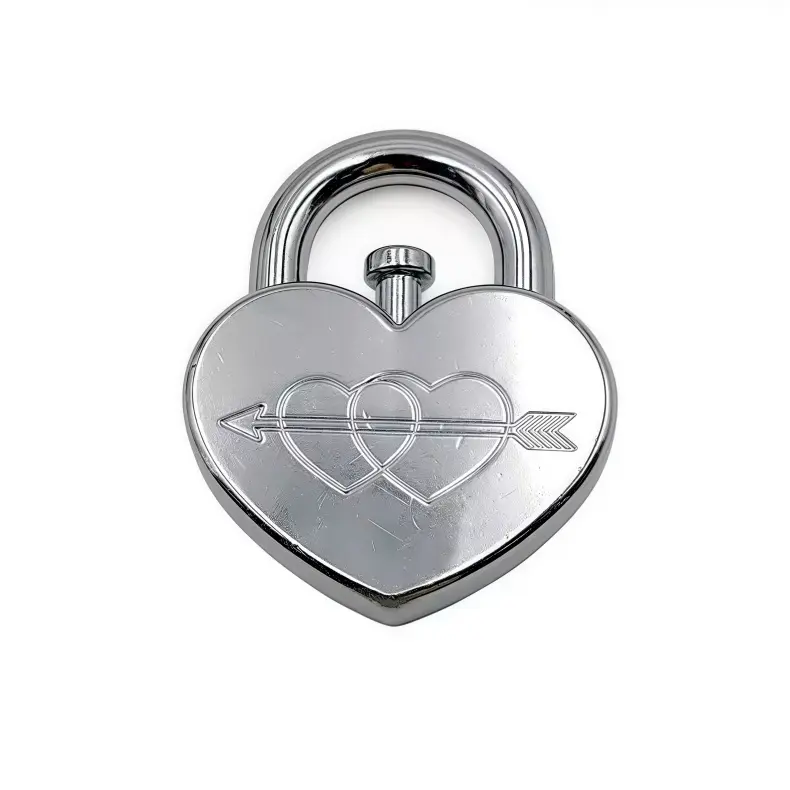
The Silver Heart Lock Puzzle ($18.89) is an interesting beast because it masquerades as a piece of jewelry or a sentimental gift. Don’t let the silver plating fool you; the interlocking mechanism inside is surprisingly tight. I spent about twenty minutes with this one on my porch last night, and what struck me was the “balance” of the pieces.
It uses a logic-based interlocking system where one move necessitates a specific orientation of the entire heart. If you’re looking for a gift that says “I love you, but I also want to frustrate you for an hour,” this is the one. The build quality is solid enough that you don’t feel like you’re going to snap the internal pins if you apply a little pressure—though, as always, if you’re using force, you’re doing it wrong. It’s a perfect entry point for someone who appreciates aesthetics but wants a legitimate mental workout.
Magic Golden Mandarin Lock
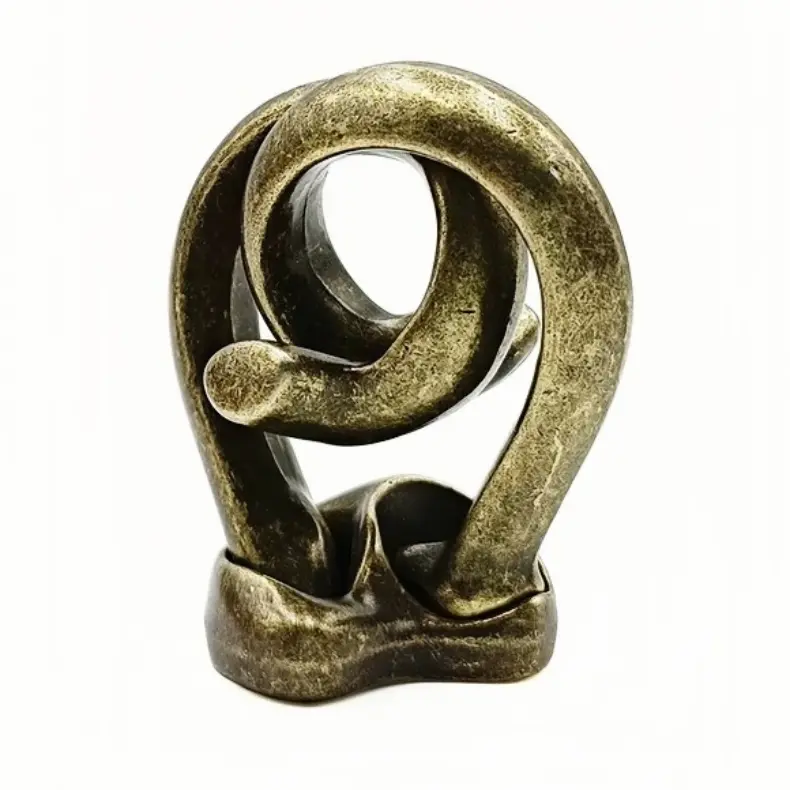
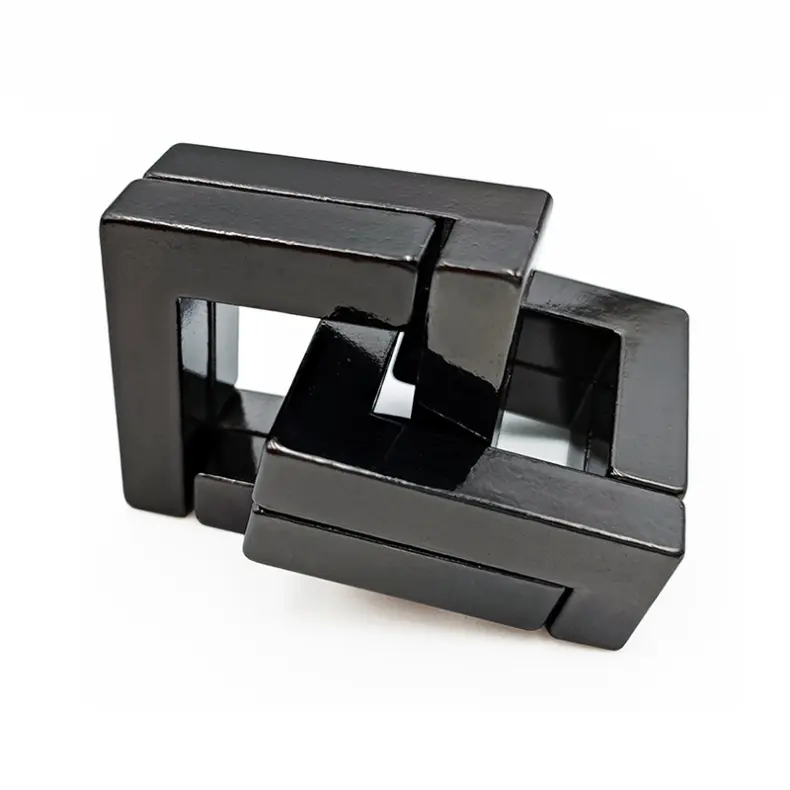
If the Heart Lock is about elegance, the Magic Golden Mandarin Lock ($18.98) is about tradition. This is a “disentanglement” style trick lock. It features two curved columns and a base that look like they were cast from a single piece of metal.
The trick here is spatial reasoning. You have to navigate the columns through a path that seems physically impossible at first glance. I’ve had this on my coffee table for three weeks, and it’s the one guests pick up most often. It’s “approachable” because it doesn’t look like a complex machine, yet it’s “infuriating” because the solution is right in front of your eyes. At just under nineteen dollars, it feels more expensive than it is, largely due to the weight of the casting. It reminds me of the ancient puzzles documented on Wikipedia, where the goal wasn’t just to hide something, but to prove the owner’s intellectual merit.
Metal Screw Interlock Riddle
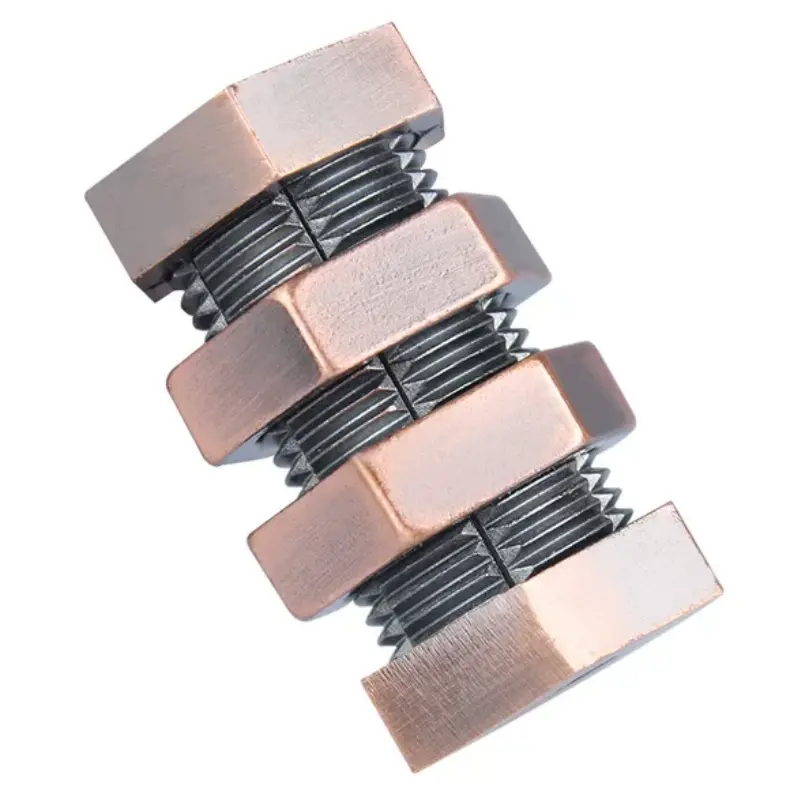
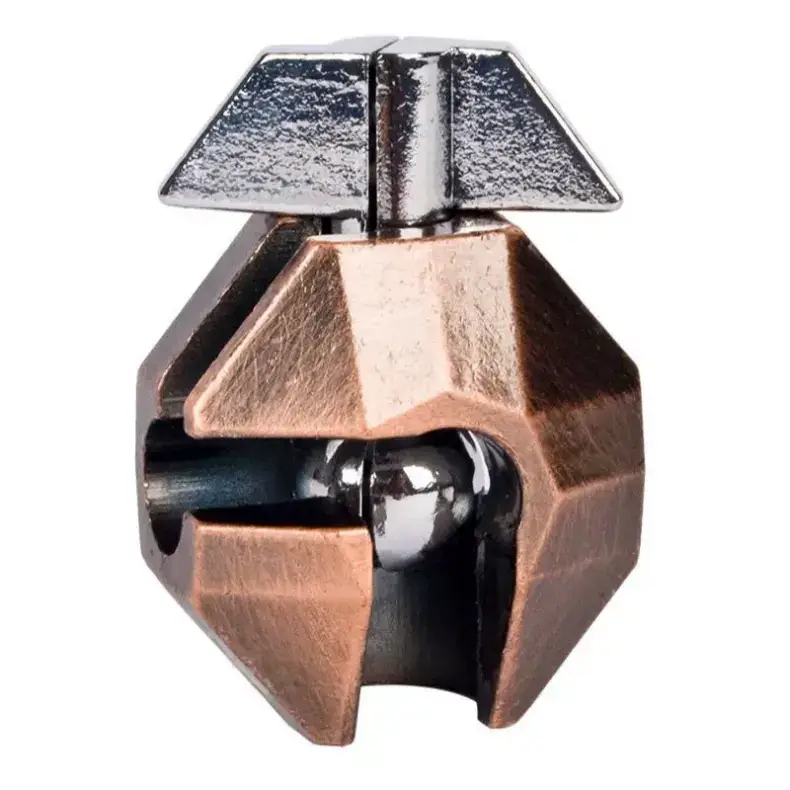
I have a love-hate relationship with the Metal Screw Interlock Riddle ($13.98). I’ll be honest: the first time I tried to solve this, I almost threw it across the room. It looks like a standard hardware store bolt and nut, but the internal “gravity lock” is a nightmare if you’re impatient.
You have to combine twisting, pressing, and—this is the key—tilting. It’s a 3D riddle that requires you to think about what’s happening inside the metal where you can’t see. For $13.98, it’s one of the best values in my collection. It’s small enough to fit in a pocket, making it a great “fidget” for long meetings. Just be prepared for the clicking sound to annoy your coworkers. If you need a break from the physical frustration, I usually suggest a quick session of spatial navigation exercises to reset your brain’s “frustration meter.”
The Peak: The “Engineer’s Curse” and the Toddler’s Triumph
After testing hundreds of these, I noticed a pattern that nobody in the marketing departments wants to talk about: the more “educated” you are, the worse you are at solving trick boxes.
I once hosted a dinner party where I put five different puzzles on the table, including the Four-Leaf Clover Puzzle ($13.89) and the Tian Zi Grid Lock Puzzle ($11.98). One guest was a mechanical engineer with twenty years of experience. He spent forty-five minutes analyzing the Four-Leaf Clover Puzzle, trying to calculate the clearance of the rings. He was convinced it was a manufacturing error.
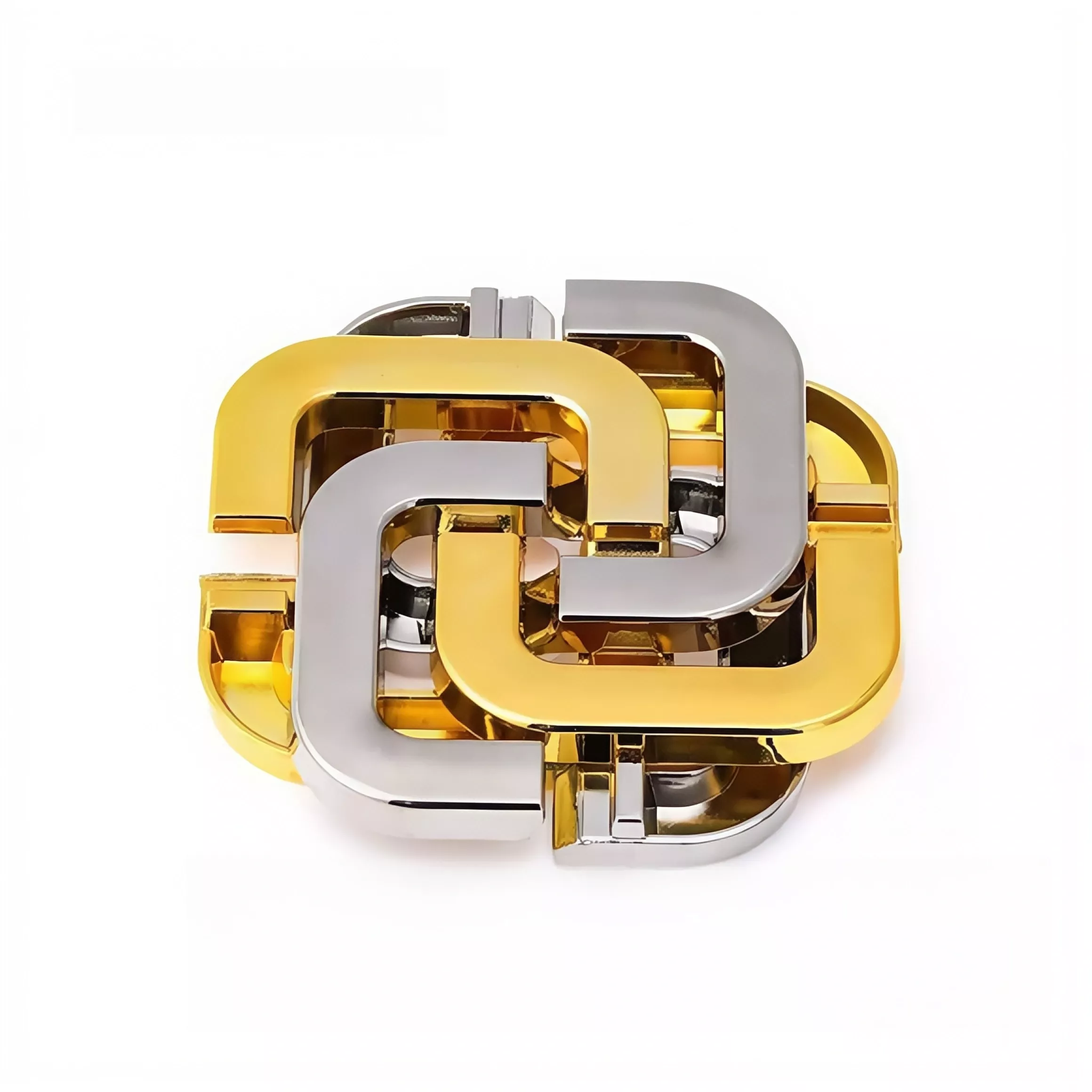
Four-Leaf Clover Puzzle — $13.89
Then, my eight-year-old nephew walked over, picked it up, turned it upside down while sneezing, and the rings fell apart.
The “Peak” insight here is that trick boxes aren’t solved with math; they are solved with play. The engineer was looking for a logical sequence of 1+1=2. The child was just exploring the object’s physical limits. Most trick boxes, especially the Metal Grenade Lock Puzzle ($11.98), rely on a “hidden” move that defies standard mechanical logic—like a centrifugal lock or a magnetic pin that only drops when the box is held at a 45-degree angle.
If you’re stuck, stop thinking like an adult. Stop trying to “solve” it and start trying to “break” it (gently). Shake it. Spin it. Turn it upside down. The solution is usually a physical “glitch” that you’re currently ignoring because you think you’re too smart for it.
Bagua Lock Puzzle
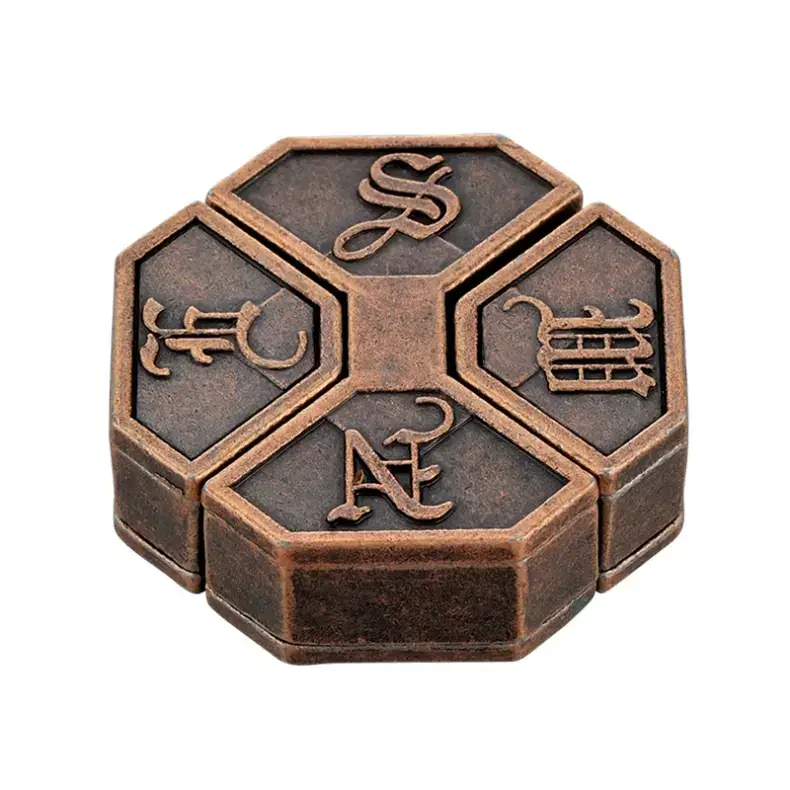
The Bagua Lock Puzzle ($12.99) is a personal favorite because it leans into the history of the “mortise and tenon” structure. In ancient Chinese architecture, buildings were held together without a single nail. This puzzle uses those same principles.
It’s made of a zinc alloy with a sleek finish, but the “soul” of the puzzle is ancient. Solving it requires you to understand how three-dimensional pieces can support each other while simultaneously blocking each other’s exit. It’s not just a “trick”; it’s a lesson in structural integrity. I’ve found that this is a great “desk toy” for people who work in construction or design. It’s a physical reminder that sometimes the strongest structures are also the most flexible. It’s a much more tactile way to engage your brain than a curated selection of mechanical enigmas viewed on a screen.
Maze Lock Dual-Sided Maze Puzzle
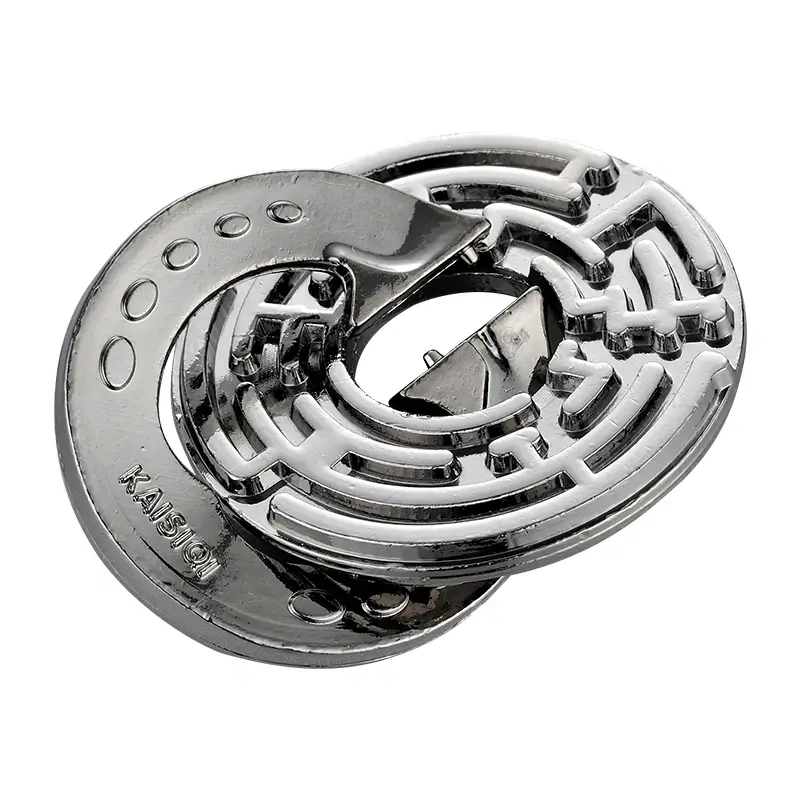
If you want something that will actually keep you busy for an entire flight, the Maze Lock Dual-Sided Maze Puzzle ($9.99) is the “heavy hitter” of the bunch. Most maze puzzles are one-dimensional. This one is dual-sided, meaning you have to track your progress on the front while navigating obstacles on the back.
It requires “reverse thinking.” You’ll get 90% of the way through the maze only to realize the exit is blocked by a pin on the other side. It’s maddening, but the “click” when you finally navigate that last node is incredibly satisfying. At under ten dollars, it’s the cheapest “high-difficulty” puzzle I recommend. The alloy construction is durable, which is good, because you will likely drop it in frustration at least once. It’s a different kind of challenge than the Four-Square Lock Puzzle ($12.98), which is more about misalignment than path-finding.
Comparing the Top Contenders
When you’re choosing your next desk companion, you need to decide if you want a “quick hit” or a “slow burn.” Some of these are meant to be solved in ten minutes and then handed to a friend, while others will sit on your shelf for a month before you crack the code.
Beyond the Box: Disentanglement and Riddles
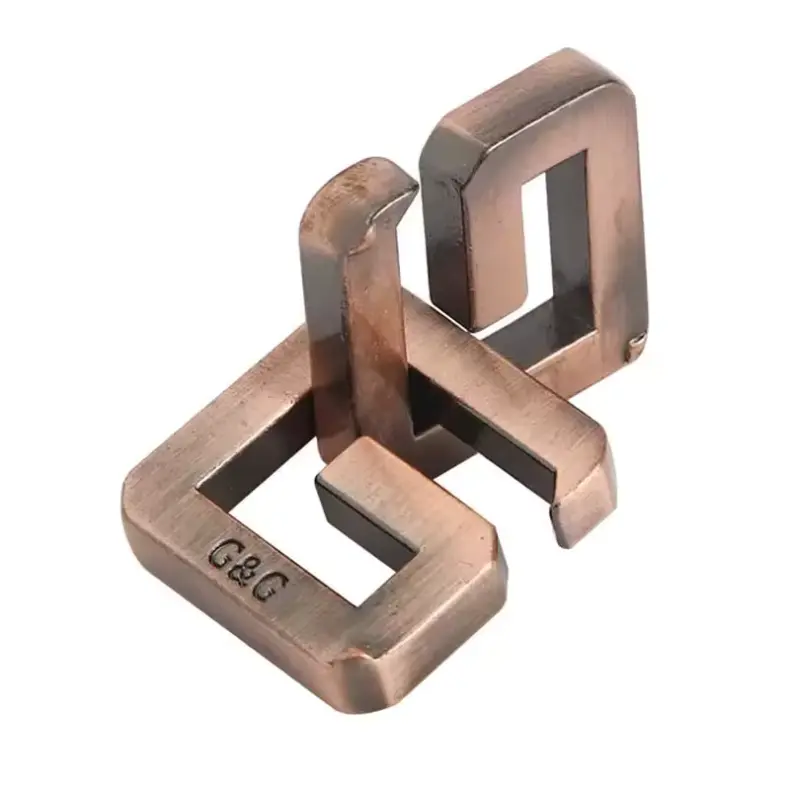
While “puzzle trick box” usually implies a container, the category has expanded to include “lock” puzzles that function on the same trick-based logic. For instance, the Double G Lock Puzzle ($11.99) isn’t a box, but it requires the same “aha!” moment to separate the two G-shaped components.
These are often better for travel. If you’re on a train, you don’t want to be worrying about a hidden compartment flying open and dropping a wedding ring or a small key under the seat. A disentanglement puzzle like the Double G or the Four-Square Lock Puzzle ($12.98) stays in your hands.
I often find that these simpler-looking puzzles are actually more difficult because they provide fewer “clues.” A box has sides, a lid, and a bottom. A Metal Grenade Lock Puzzle ($11.98) is just a lump of metal. You have to find the starting point yourself. It’s a pure test of observation.
Frequently Asked Questions
How do I know if I’m making progress on a trick box?
In most mechanical puzzles, progress is non-linear. You might spend twenty minutes doing “nothing” only to have the puzzle 90% solved in the twenty-first minute. Listen for small internal shifts. If you feel a piece move even half a millimeter further than it did before, you’ve likely cleared an internal pin. This is much like the “trial and error” learning described in the Thorndike puzzle box experiments, where success comes from accidental discoveries that eventually become learned behaviors.
Are these puzzles safe for children?
Most of the metal puzzles mentioned here, like the Silver Heart Lock Puzzle, are recommended for ages 12 and up. This isn’t just because of the difficulty; it’s because metal puzzles often have small parts or require a level of “finesse” that younger children lack. If a child tries to force the Metal Screw Interlock Riddle, they could potentially bend the internal threads.
What should I do if my puzzle is stuck and I can’t solve it?
First, don’t use tools. No WD-40, no pliers. Most manufacturers include a solution guide, like the one found with the Metal Grenade Lock Puzzle. If you’re truly stuck, put it down for 24 hours. Your brain continues to process spatial problems in the background. Often, you’ll pick it up the next day and see the “obvious” move immediately.
Why are some puzzles so much cheaper than others?
Price usually reflects the material and the complexity of the mold. A zinc alloy puzzle like the Maze Lock Dual-Sided Maze Puzzle is affordable because it’s a single-cast piece. Something with multiple interlocking parts and a plated finish, like the Magic Golden Mandarin Lock, requires more assembly and finishing work, which pushes the price toward twenty dollars.
Can I hide things inside these trick boxes?
It depends on the design. Many “trick locks” or disentanglement puzzles like the Tian Zi Grid Lock Puzzle don’t have a cavity. However, true trick boxes are designed specifically for this. If you’re looking for a way to present a gift card or cash, look for a “money box” style, though even a small lock puzzle can be used to “tether” a larger gift.
How do I maintain my metal puzzles?
Zinc alloy and silver-plated puzzles are fairly low-maintenance. The oils from your hands actually help lubricate some of the tighter mechanisms over time. If a puzzle like the Bagua Lock Puzzle feels “gritty,” a quick wipe with a dry microfiber cloth is usually enough. Avoid water, as it can cause oxidation in the hidden internal springs.
Are these puzzles based on real historical locks?
Many are. The Bagua Lock Puzzle, for example, draws directly from the history of Chinese joinery. You can read more about the History of Science Puzzles to see how these mechanical challenges have evolved from simple security devices into the “brain teasers” we use today.
What is “sequential discovery”?
This is a term for puzzles where you find “tools” inside the puzzle to help you solve the next step. While most of the items here are “trick” puzzles (one or two clever moves), sequential discovery puzzles are like a tiny escape room in your hand. They are generally much more expensive and complex.
Which is the best “first puzzle” for an adult?
I always recommend the Silver Heart Lock Puzzle. It’s intuitive enough that you won’t give up in five minutes, but clever enough that you’ll feel a genuine sense of accomplishment when it opens. It’s the perfect “gateway” into the hobby.
Do these puzzles help with cognitive decline?
While I’m a reviewer and not a doctor, there is significant research suggesting that “novel” problem-solving—doing things your brain isn’t used to—helps maintain neuroplasticity. Working on a Maze Lock Dual-Sided Maze Puzzle forces your brain to build new spatial maps, which is a great workout for any age.
Can I reset the puzzle once it’s open?
Yes. Every puzzle in this guide is designed to be repeatable. In fact, resetting the Metal Screw Interlock Riddle is often just as challenging as opening it, as you have to reverse the “trick” perfectly.
Why do some people call these “Chinese Locks”?
The term refers to the traditional “split-spring” mechanisms used in ancient China. Puzzles like the Magic Golden Mandarin Lock are modern homages to those ingenious designs that kept chests and doors secure for centuries without a standard “key.”
Is it okay to look up the solution?
There are no “puzzle police,” but I’ll tell you from experience: the regret of looking up a solution is real. Once you see the trick, you can never “un-see” it. The mystery is gone forever. Try to wait at least a week before giving in to a YouTube tutorial.
The One Puzzle That Teaches You How All the Others Work
If I had to strip my collection down to a single item that represents the soul of the “trick,” it would be the Metal Screw Interlock Riddle ($13.98). It looks like junk you’d find in a junk drawer, and that is its greatest strength. It teaches you that the solution is never where you expect it to be. It teaches you that force is the enemy of logic. And most importantly, it teaches you that your eyes are often lying to you.
The moment the last panel clicks into place on a difficult box, the world feels a little bit more orderly. We spend our days dealing with “puzzles” that have no clear solution—taxes, relationships, career paths. A puzzle trick box is a rare opportunity to face a problem that is guaranteed to have an answer, provided you are willing to listen to what the metal is telling you.
Start with the Silver Heart Lock Puzzle ($18.89)—it taught me more about patience than any self-help book ever could. Once you’ve mastered that, you’ll find that the foundational principles of hidden compartments start to show up in everything you touch. You’ll never look at a “simple” box the same way again.