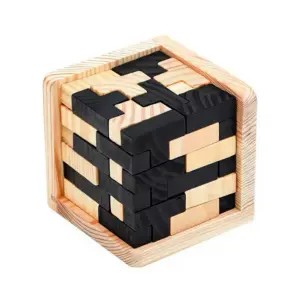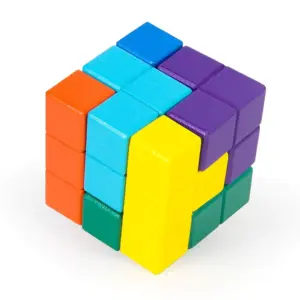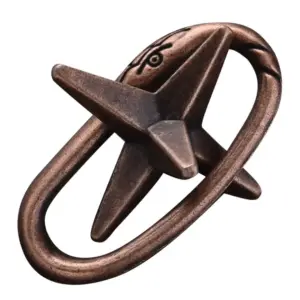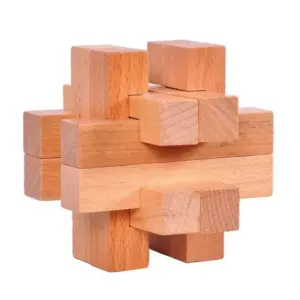
The third time the brass pin slipped past my thumb, I set the box down and made coffee. It was 11:14 PM on a Tuesday, and I was being outsmarted by a three-inch cube of zinc alloy. Most people buy a gift to provide immediate gratification—the rip of the paper, the flash of the plastic, the “thanks” that fades by dessert. But when you hand someone a mechanical enigma, you aren’t just giving them an object; you’re gifting them a temporary, blissful obsession.
My thesis after testing over 200 of these things is simple: the best puzzle box for a gift is one that punishes impatience and rewards observation. We live in an era of “swipe to skip,” but a well-made trick box or mechanical lock demands that you actually look at the grain of the wood or the seam of the metal. It forces a cognitive gear shift that most of us desperately need.
If you’re looking to buy one, you have to decide if your recipient is a “builder” who wants to see the guts of the machine, or a “solver” who wants to be baffled by a finished object. Over the next few thousand words, I’m going to break down which of these 10 specific pieces earn their keep on a coffee table and which ones will likely end up in a junk drawer.
The Engineering of the “Aha!” Moment
There is a specific neurological event that happens when a hidden panel finally slides. It’s a mix of relief and a sudden, sharp clarity. In the hobby, we call it the “Aha!” moment. When you’re choosing a puzzle box for a gift, you are essentially purchasing that specific millisecond of dopamine.
The complexity of these objects varies wildly. Some rely on centrifugal force (spinning the box to move internal pins), while others use sequential discovery, where one solved step provides the tool for the next. The history of science puzzles shows that we’ve been obsessed with these “locked room” scenarios for centuries, using them to test everything from animal intelligence to the security of royal secrets.
3D Wooden Puzzle Safe with Combination Lock
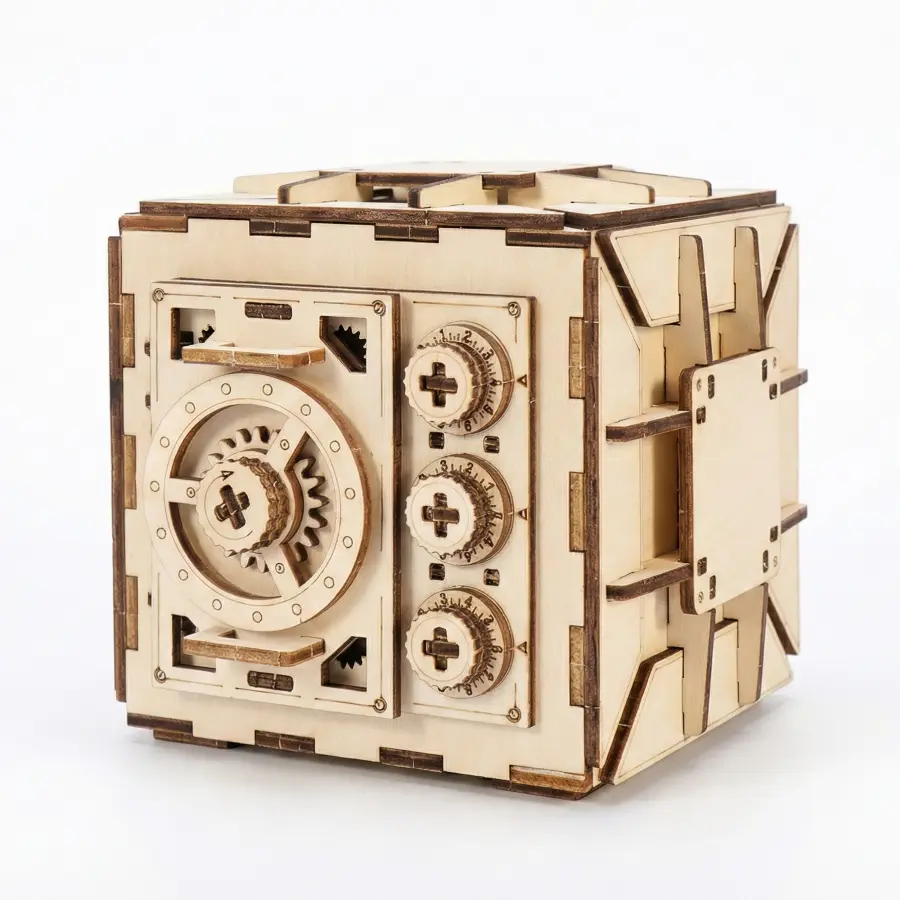
The 3D Wooden Puzzle Safe with Combination Lock is the ultimate gift for the person who likes to know how things work. Priced at $30.99, it’s a 111-piece build that took me about 90 minutes to finish. What I love about this kit is that it doesn’t hide its secrets. The gears are exposed, allowing you to watch the tumblers align as you turn the dial.
It uses precision-cut plywood that fits together with a satisfying “snap”—no glue required. I’ve found that giving a pre-assembled box is great, but giving a buildable box like this safe creates a much deeper connection to the object. Once it’s done, you actually have a functional 3-digit safe. It’s not going to stop a professional thief, but it’s perfect for hiding the “good” chocolate from your roommates. The mechanical feedback of the gears is surprisingly smooth for wood, though I’d recommend a bit of candle wax on the moving parts to keep things fluid.
3D Wooden Puzzle Treasure Box – Mechanical Jewelry Storage Gift
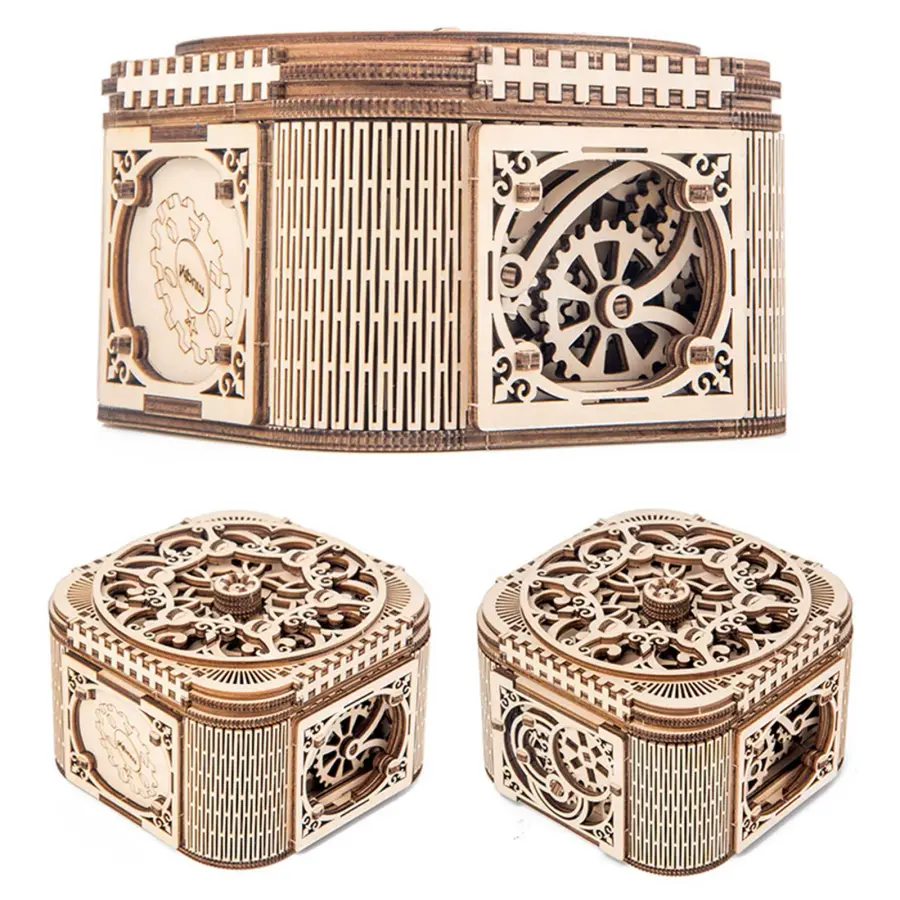
If the safe is for the engineer, the 3D Wooden Puzzle Treasure Box is for the romantic. At $29.99, it’s a slightly more complex build than the safe, featuring around 150-200 pieces. The payoff here is the opening mechanism: a series of visible, interlocking gears that lift the lid and expand the internal compartments.
I’ve had this on my shelf for months, and guests always gravitate toward it. There is something hypnotic about watching the laser-cut filigree move in unison. It’s a fantastic way to engage the whole family in logic games because the assembly is just as much of a puzzle as the final operation. It’s sturdy enough to hold actual jewelry, though you should be careful not to over-torque the key. It’s a tactile reminder that what is well-built endures.
Why Wood and Metal Teach Different Lessons
When you hold a wooden puzzle, you’re interacting with a living material. It expands with humidity; it has a scent; it feels warm. Metal puzzles, on the other hand, are cold, precise, and unforgiving. They represent the “Cast” style of brain teasers where the tolerances are measured in microns.
For a gift, I usually suggest wood for those who enjoy a meditative, quiet experience. Metal is better for the “fidgeter”—the person who needs something heavy and indestructible to fiddle with during a Zoom call. If you’ve spent time with tactile magnets for those just starting out, you know that the weight of an object changes how your brain processes the challenge.
Bagua Lock Puzzle
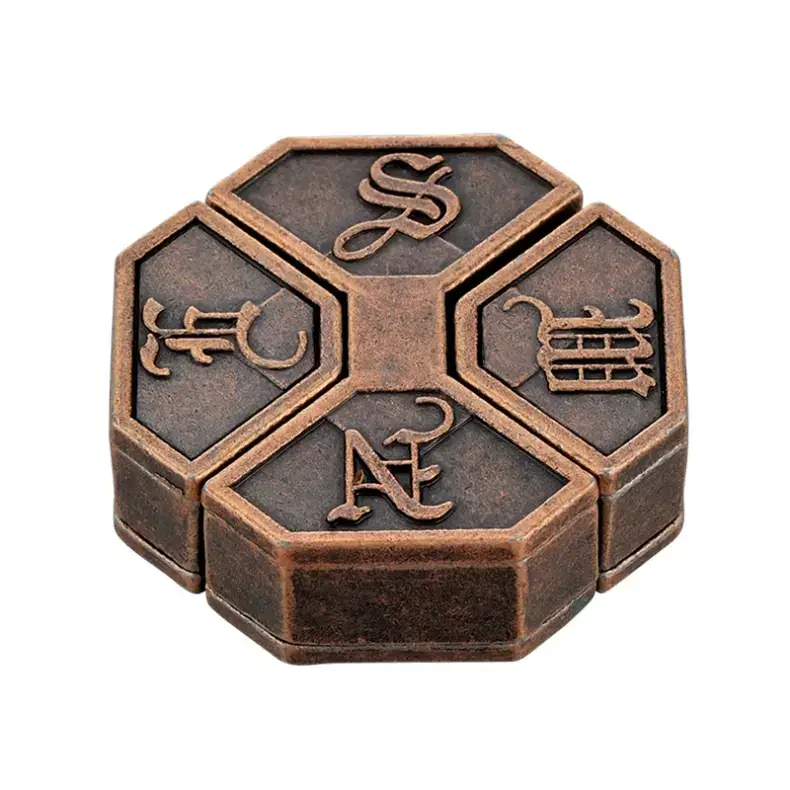
The Bagua Lock Puzzle is a masterclass in traditional Chinese joinery executed in modern zinc alloy. For $12.99, it’s an absolute steal. It’s based on the mortise and tenon structures found in ancient temples. Unlike the wooden kits, this is a “take apart and put back together” challenge.
It looks like a solid chunk of metal until you find the one piece that has a fraction of a millimeter of play. That’s your entry point. I’ve handed this to “smart” friends who spent thirty minutes trying to force it before realizing that the solution requires zero strength and 100% observation. It’s a great desk toy because it’s compact and has a premium, heavy feel that belies its low price point.
The Mystic Orb Lock
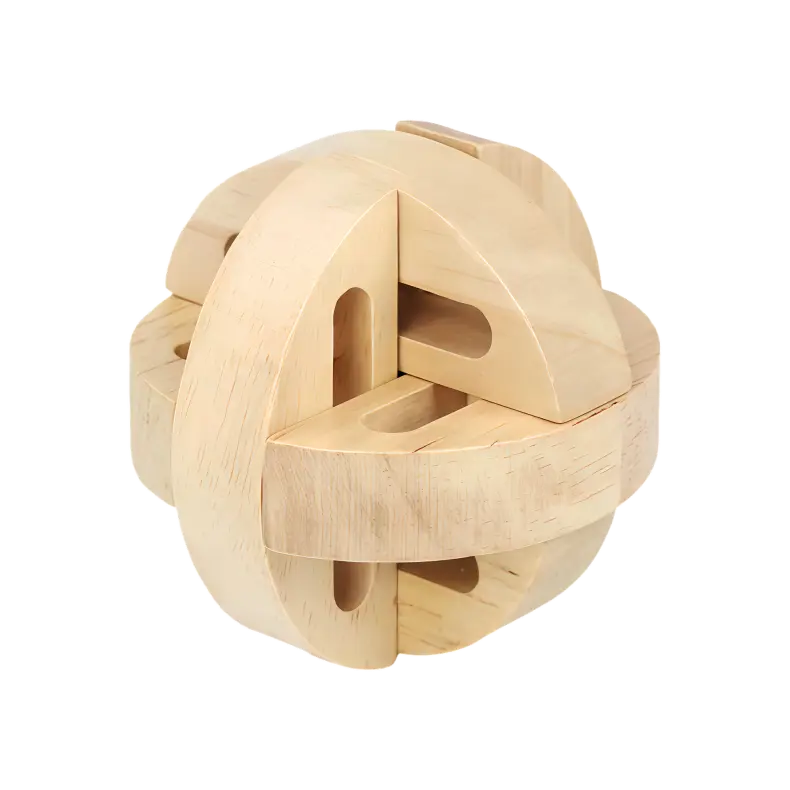
The Mystic Orb Lock, priced at $16.99, sits in that beautiful middle ground between a sculpture and a riddle. It’s composed of six semi-circular wooden pieces that interlock to form a perfect sphere. The trick here is finding the “key” pieces that control the tension of the entire structure.
In my testing, this one is particularly good for teaching the Daoist principle of yielding to succeed. If you pull too hard, the wood binds. If you relax and let the pieces slide where they want to go, the orb falls apart in your hands. It’s a metaphor for most problems in life, honestly. It’s a quiet, elegant piece that looks much more expensive than it is.
The Architecture of Deception (The Peak Moment)
Most people assume that a harder puzzle is a better puzzle. They are wrong. After opening dozens of trick boxes, I’ve noticed a pattern: the most frustrating puzzles aren’t the ones with 50 steps; they’re the ones with one step that goes against your intuition.
Designers use something called “mechanical misdirection.” They might make a button that clicks satisfyingly but does absolutely nothing, while the real trigger is a sliding panel on the opposite side. This is why a simple 6 Piece Wooden Puzzle Key ($12.99) can be more difficult than a complex safe. You assume the “key” shape is a hint, but often it’s a distraction.
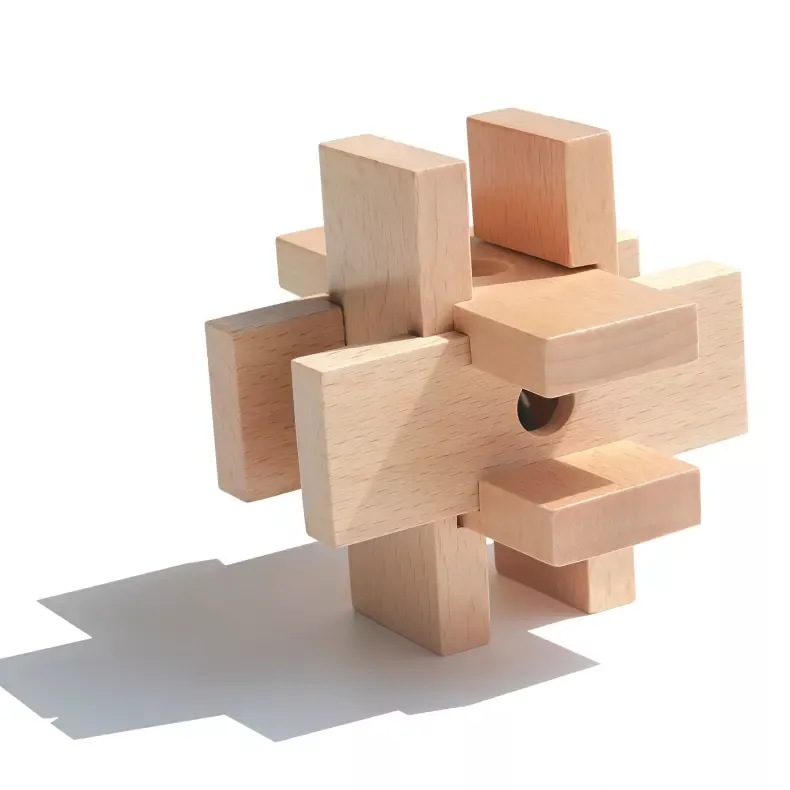
6 Piece Wooden Puzzle Key — $12.99
The real “peak” of the puzzle experience isn’t the solve; it’s the moment you realize you’ve been lying to yourself about how the object works. You’ve been assuming the lid lifts, but it actually rotates. You’ve been assuming the pin is metal, but it’s a magnet. That moment of self-correction—of realizing your own bias—is the most valuable thing a puzzle box can give you. It’s a small, safe environment to practice being wrong, which is a skill most adults have forgotten.
If you find yourself stuck, sometimes taking a break for mathematical pattern recognition or other digital games can reset your brain’s “stuck” state and allow you to see the physical object from a new angle.
Small Wonders: The Pocket-Sized Enigmas
Not every gift needs to be a 200-piece construction project. Sometimes the best puzzle box for a gift is something that fits in a pocket and can be solved over a cup of tea. These smaller items often rely on “interlocking” logic—a style of puzzle that dates back to the interlocking burr puzzles of the 18th century.
Silver Heart Lock Puzzle
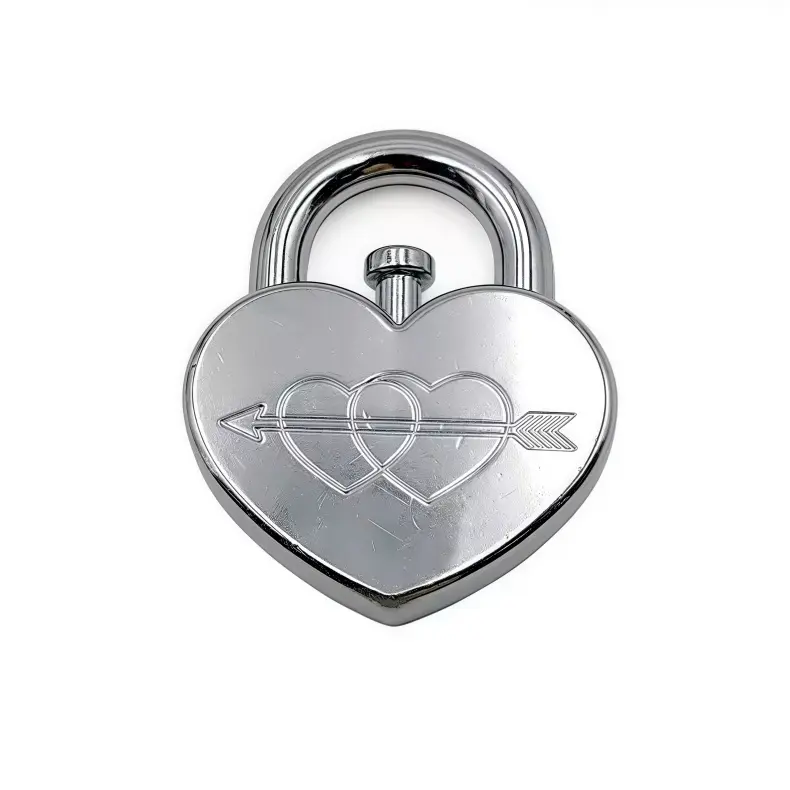
The Silver Heart Lock Puzzle ($18.89) is my go-to recommendation for Valentine’s Day or anniversaries. It’s silver-plated, which gives it a jewelry-like quality, but the “lock” is a genuine brain teaser. It’s not a box you can hide things in, but it’s a symbolic “heart” that requires logic to open.
I’ve seen people get genuinely emotional when they finally solve this. It’s a tactile fable about the effort required to truly understand someone. The metal is smooth and the mechanism is tight, meaning you won’t solve it by accident. It requires deliberate, thoughtful movements.
Luban Sphere Puzzle
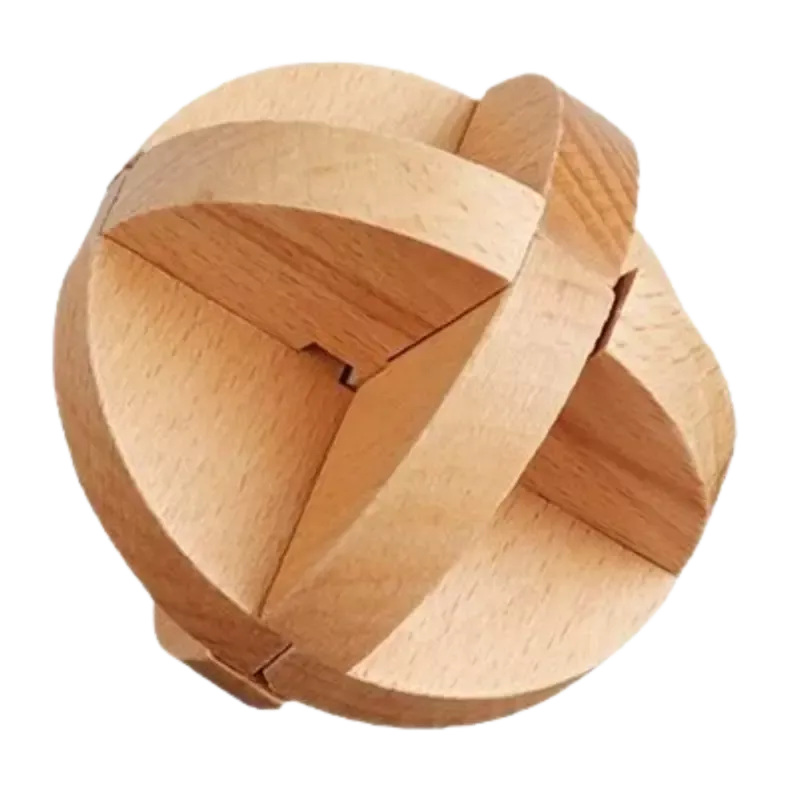
The Luban Sphere Puzzle ($16.99) is an exercise in mindfulness. It’s based on the “Luban Lock,” a traditional Chinese folk toy named after a legendary carpenter. This sphere is made of six interlocking wooden pieces.
What I love about the Luban Sphere is the “click” when the final piece slides into place. It’s a sound that signifies structural integrity. I often keep this on my desk and disassemble/reassemble it when I’m on a difficult phone call. It’s a grounding mechanism. If you’re interested in the deeper mechanics of hidden compartments, this sphere is a great primer on how three-dimensional pieces can lock each other into place without fasteners.
King Wen of Zhou heart-lock puzzle
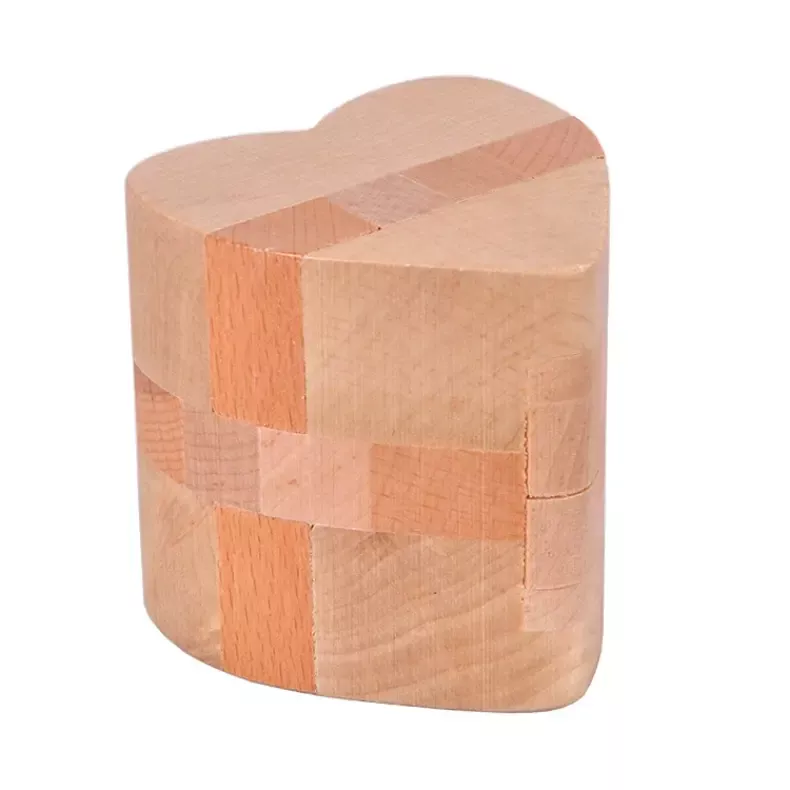
Another beautiful wooden option is the King Wen of Zhou heart-lock puzzle ($17.99). It’s steeped in folklore, representing the story of King Wen and Tai Si. Like the Silver Heart, it’s a symbolic gift, but the wooden texture gives it a more “ancient” feel. It’s a bit more forgiving than the metal version, making it a better choice for someone who might get frustrated by high-tension metal puzzles.
The “Coffee Table Test”: Why Durability Matters
I’ve reviewed puzzles that looked beautiful in photos but felt like cheap balsa wood in person. If you’re giving a puzzle box for a gift, it needs to survive the “Coffee Table Test.” This means it can be picked up, dropped, and fiddled with by a curious child or a clumsy guest without shattering.
Metal puzzles usually win on durability, but high-quality wooden puzzles like the Circular Lock ($16.99) are surprisingly resilient. This lock uses three precision-cut pieces that move with a fluidity you usually only find in machined steel. It proves that simplicity is often the highest form of sophistication.
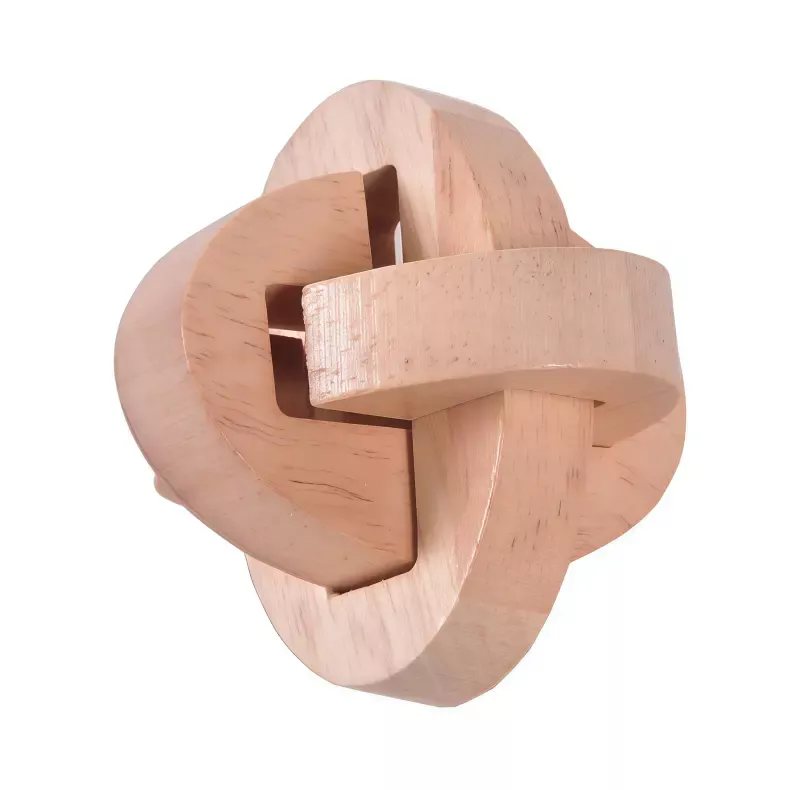
Circular Lock — $16.99
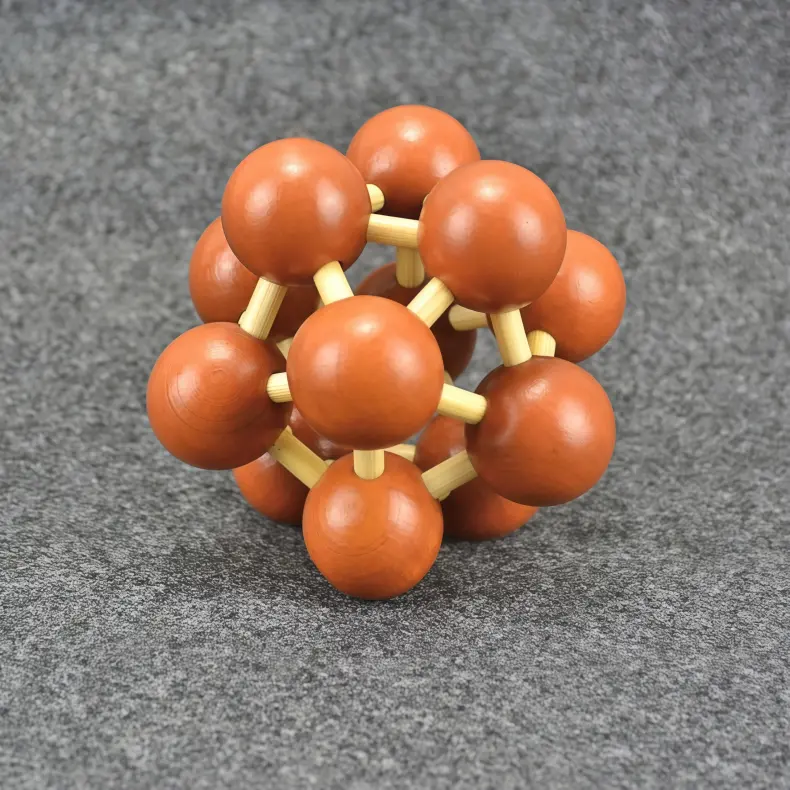
Molecular Ball Puzzle — $16.99
Similarly, the Molecular Ball Puzzle ($16.99) is built like an heirloom. It’s a series of wooden balls and rods that you have to configure into a sphere. There are no tools, no glue, just pure geometry. It feels substantial in the hand, and because it’s made of sustainably sourced wood, it’s a gift you can feel good about giving.
Quick-Reference Comparison Table
FAQ: Everything You Need to Know Before Gifting
Can I actually hide a gift inside these boxes?
Yes, but check the internal dimensions. The 3D Wooden Puzzle Safe and the 3D Wooden Treasure Box are designed specifically for storage. You can easily fit cash, jewelry, or a small note inside. Most of the metal puzzles, however, are the “gift” themselves—they don’t have internal cavities for other items.
Are these puzzles too difficult for children?
It depends on the child. Most of these are rated for ages 14 and up. The assembly of the wooden kits requires fine motor skills and patience. If you’re looking for something for younger kids, I’d suggest starting with quick digital logic breaks to build their problem-solving stamina before handing them a complex mechanical kit.
What happens if a wooden piece breaks during assembly?
This is a common fear. Most high-quality kits include a few “spare” parts for the most delicate pieces. If you do break a piece that isn’t doubled, a tiny drop of wood glue and 20 minutes of drying time usually does the trick. I’ve had to perform “surgery” on a few of my kits, and they still work perfectly.
Do I need any special tools?
For the products listed here, no. The wooden kits are laser-cut and designed to be “press-fit.” I do recommend having a pair of tweezers handy for the smaller gears and a bit of wax (even a birthday candle works) to lubricate the moving parts.
How do I reset the combination on the wooden safe?
The combination is set during the assembly process. You’ll choose your 3-digit code by aligning specific gears. Once the safe is fully built, the combination is permanent unless you take the mechanism apart. It’s a great lesson in how Thorndike’s puzzle boxes once tested the “law of effect” in psychology—learning through success.
Why choose metal over wood?
Metal is durable and offers a different tactile experience. If the recipient likes modern aesthetics and heavy objects, go with metal. If they like the smell of wood and the process of building, the wooden kits are superior.
Are the instructions easy to follow?
The wooden kits usually come with illustrated, step-by-step manuals. They are mostly visual, which helps avoid translation issues. However, you have to pay very close attention to the orientation of the gears. If you put one gear in backward, the whole box won’t open. It’s a great way to practice attention to detail.
How do I clean these?
For metal puzzles, a simple microfiber cloth is enough. For wood, avoid water at all costs, as it can cause the pieces to swell and jam the mechanism. A dry brush or a puff of compressed air is the best way to keep them dust-free.
Can these puzzles help with cognitive health?
There is significant research suggesting that puzzle-solving enhances visuospatial cognitive abilities. It’s essentially a workout for your brain’s “mental rotation” skills. It’s a much more active way to spend an evening than scrolling through a phone.
What is the difference between a “puzzle box” and a “trick box”?
Technically, a puzzle box is any box that requires a series of steps to open. A “trick box” usually implies a single, hidden “trick”—like a magnet or a hidden sliding panel—that opens the box instantly once you find it.
Is the Bagua Lock based on real history?
Yes. The Bagua (Eight Trigrams) is a core concept in Chinese philosophy, and the lock’s design mimics the structural integrity of ancient Chinese architecture. It’s as much a cultural artifact as it is a game.
What if the recipient gets frustrated?
Frustration is part of the process! However, if they are truly stuck, most of these have “spoiler” videos on YouTube. I usually suggest they try to solve it for at least three days before looking up the answer. There’s no feeling quite like the regret of seeing the solution and realizing how close you were.
Are these eco-friendly?
The wooden puzzles are generally made from sustainably sourced plywood and are much more environmentally friendly than plastic toys. They are designed to be kept for years, not thrown away.
Which one is best for a “fidgeter”?
The Bagua Lock Puzzle or the Luban Sphere Puzzle. They are small enough to hold in one hand and have a very satisfying “weight” to them.
Can I buy these for a group activity?
Absolutely. Building the 3D Wooden Puzzle Treasure Box is a great two-person project. One person can find the parts, and the other can do the assembly.
Start Here, Then See Where the Rabbit Hole Goes
After testing hundreds of these objects, I’ve realized that the “best” puzzle box for a gift isn’t the one that takes the longest to solve. It’s the one that stays on the desk the longest. It’s the object that people can’t help but pick up when they walk by.
If you’re still undecided, start with the 3D Wooden Puzzle Treasure Box ($29.99). It’s the most complete experience I’ve found: it’s a challenging build, a beautiful display piece, and a functional storage box. It taught me more about mechanical empathy—the ability to feel how a machine is working just by the resistance in your fingers—than any book ever could.
Once you’ve mastered the physical world of gears and wood, you might find that you have a new appetite for logic. You can continue that training with mathematical pattern recognition or other digital challenges that keep those cognitive gears turning.
A gift is a statement about how you see the recipient. When you give someone a puzzle, you’re telling them: “I think you’re smart enough to solve this, and I think you’re patient enough to enjoy the struggle.” In a world that wants everything to be easy, that is perhaps the most respectful gift you can give.