The third time the brass pin slipped past my thumb with a mocking snick, I set the box down and walked away to make coffee. It was 11:45 PM on a Tuesday, and I was being outsmarted by six ounces of wood and a hidden magnet. This is the reality of the hobby: you aren’t just fighting a physical object; you’re fighting your own assumptions. Most people approach a puzzle box like a locked door they need to kick down, but the secret to how to solve a puzzle box lies in realizing it isn’t a door at all—it’s a conversation.
After testing over 200 mechanical puzzles, from $10 cast-metal trinkets to $500 limited-edition sequential discovery boxes, I’ve learned that the “stuck” state is actually the most valuable part of the experience. My thesis is simple: solving a puzzle box is 10% logic and 90% sensory observation. If you are trying to think your way through a solution, you’ve already lost. You have to feel your way through it.
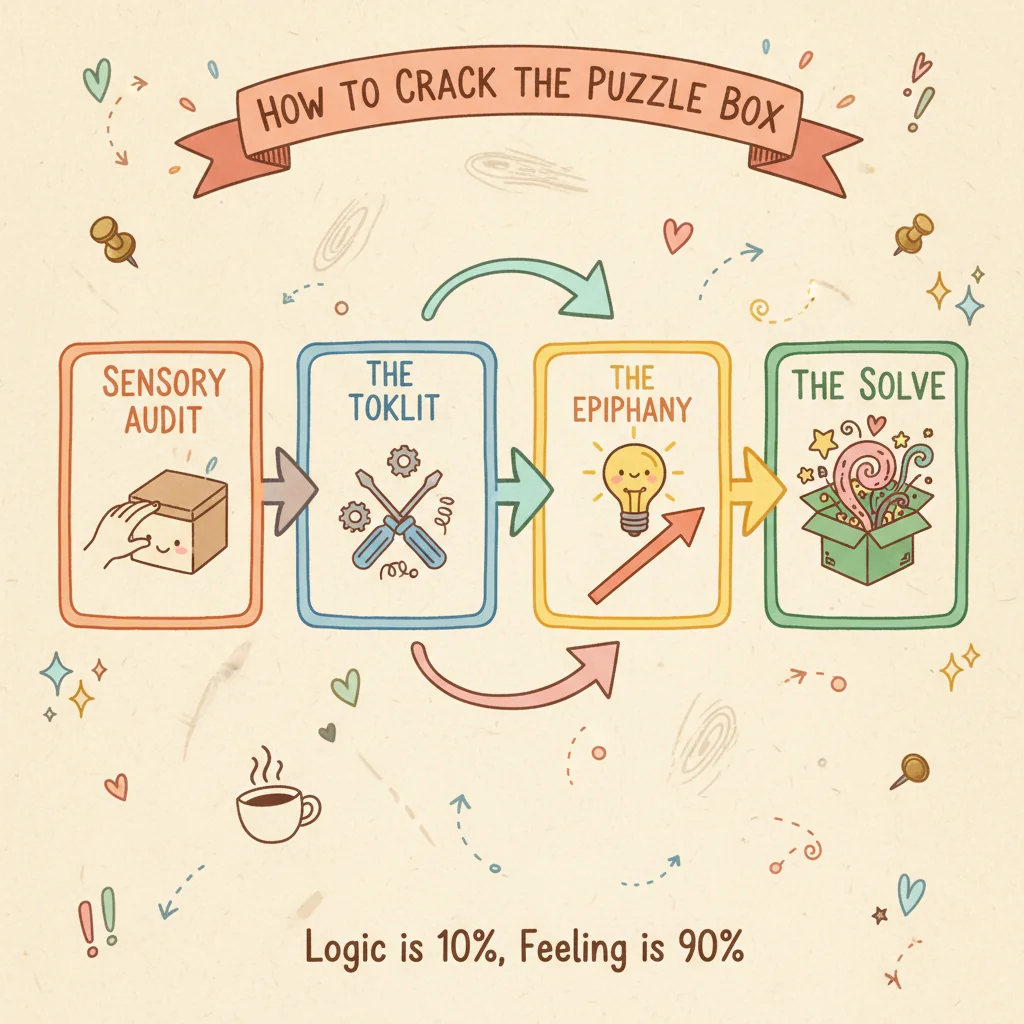
The Sensory Audit: Why Your Fingertips Are Smarter Than Your Brain
When you pick up a new challenge, your first instinct is to pull everything that looks like a handle. Stop. The most successful solvers I know start with a “sensory audit.” They hold the box to their ear and shake it gently. Is there a rattle? A rattle means a loose pin, a sliding tray, or a gravity-dependent lock. They run a fingernail along every seam. Is one gap slightly wider than the others?
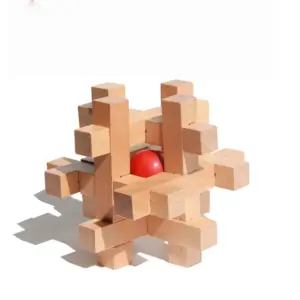
I’ve spent hours with the 6 Piece Wooden Puzzle Key, which retails for $12.99, and it perfectly illustrates this principle.
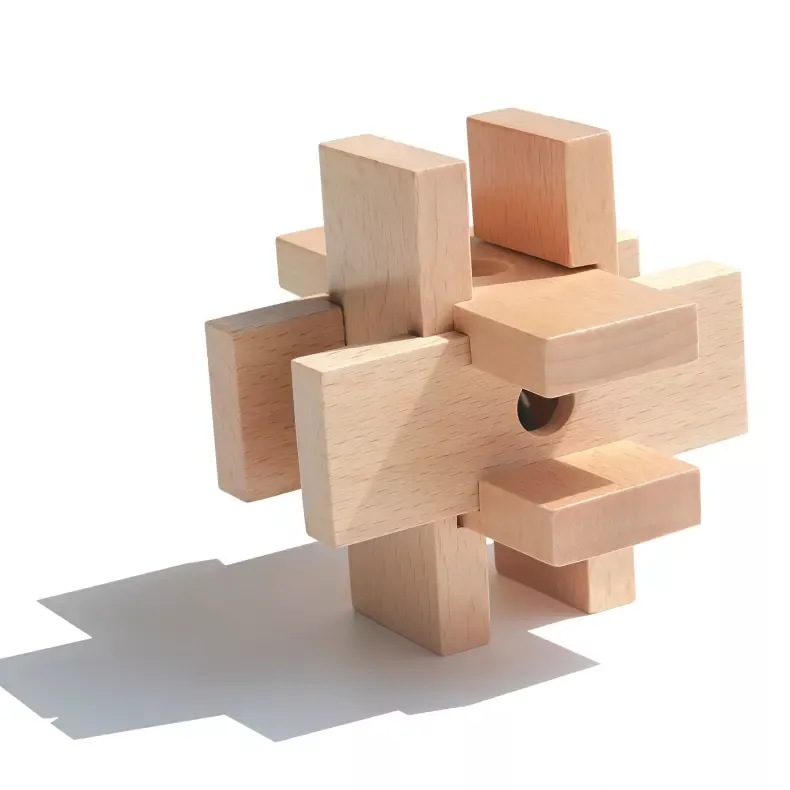
6 Piece Wooden Puzzle Key — $12.99
At first glance, this looks like a solid block of hardwood. But if you stop trying to “solve” it and just start exploring the tolerances, you’ll find that one piece has a fraction of a millimeter more play than the others. This is the “key” piece. In the philosophy of Wu Wei, or effortless action, the solution emerges when you stop forcing the wood to do what you want and start noticing what it wants to do. This specific puzzle is a masterclass in minimalism; it proves that you don’t need a hundred moving parts to create a genuine “aha!” moment. It’s the kind of desk toy that makes a visitor stop talking mid-sentence because their hands have discovered something their eyes missed.
The “Standard” Toolkit: Common Mechanisms You’ll Encounter
If you’re wondering how to solve a puzzle box that seems to have no moving parts, you’re likely dealing with one of four classic “tricks.” Understanding these won’t spoil the fun—it just gives you a map of the territory.
- The Gravity Pin: This is the most common “invisible” lock. A small metal or wooden pin sits in a hole, blocking a slide. To move it, you have to tilt the box. If you hear a faint click when you turn the box upside down, you’ve found a gravity lock.
- Centrifugal Force: Some boxes require you to spin them on a flat surface. The spinning motion forces internal weights outward, clearing the path for a drawer to open. I once spent two days on a circular box before realizing I just needed to give it a good whirl.
- Sequential Discovery: These are the “adventure” boxes. Solving one step gives you a tool (like a small metal rod) that you must use to solve the next step.
- The “Sacrificial” Move: Sometimes, to move forward, you have to move backward. You might need to close one panel tighter to allow another to release.
For those who prefer a more mechanical, “hands-on” approach to these concepts, the 3D Wooden Puzzle Safe with Combination Lock ($30.99) is an incredible educational tool.
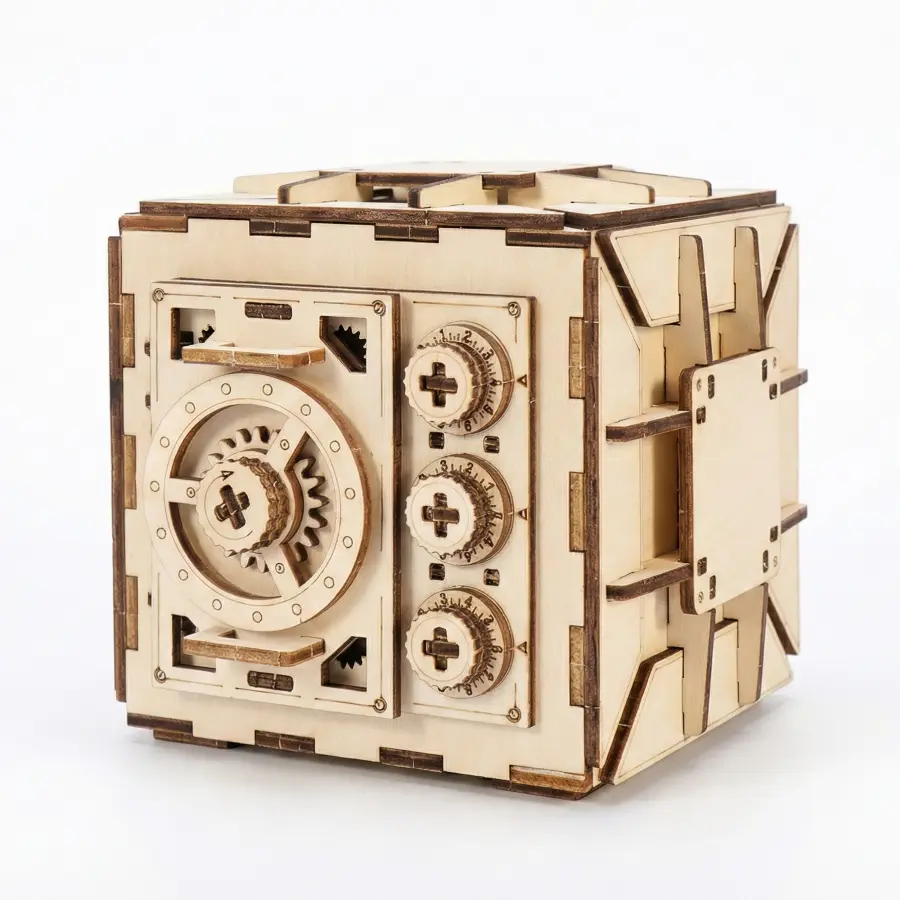
Unlike a pre-built trick box, you actually assemble this 111-piece kit yourself. As you fit the precision-cut plywood gears together, you see exactly how a 3-digit combination lock functions. It strips away the “magic” and replaces it with the much more satisfying reality of engineering. I’ve found that engaging the whole family in a puzzle night with a buildable kit like this changes the way kids look at the world—they start seeing mechanisms everywhere. Once built, the safe is fully functional. I use mine to store spare keys, and the tactile feedback of the dial is surprisingly crisp for a wooden build.
The Peak Moment: The “45-Degree Epiphany”
After years of fiddling with these objects, I noticed a pattern that nobody seems to talk about in the instruction manuals. I call it the “45-degree epiphany.”
Most people try to solve puzzles in 90-degree increments—up, down, left, right. But the most devious designers hide their solutions in the diagonals. I was once testing a high-end metal puzzle that felt completely solid. I had tried every linear movement possible. Then, almost by accident, I held it at a 45-degree angle and tapped it against my palm. The internal pin, caught between gravity and friction, finally slid into its recessed pocket.
This is the “Peak Moment” of puzzling. It’s that split second where the object in your hand transforms from a stubborn piece of matter into a compliant machine. It’s an addictive rush of dopamine that makes the previous three hours of frustration feel like a bargain. If you’re currently stuck, stop looking at the box head-on. Tilt it. Shake it at an angle. Treat it like it has its own internal compass.
Metal vs. Wood: Which Should You Start With?
There is a heated debate in the hobbyist community about materials. Purists love the warmth and “living” nature of wood, while the “techies” prefer the tight tolerances of machined metal.
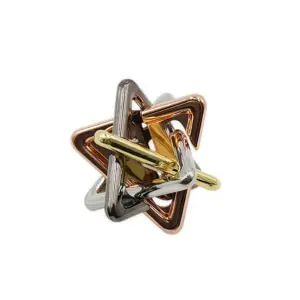
If you’re looking for something portable, metal is king. The Cast Keyhole Gold & Silver ($13.99) is a perfect example of why I love metal puzzles.
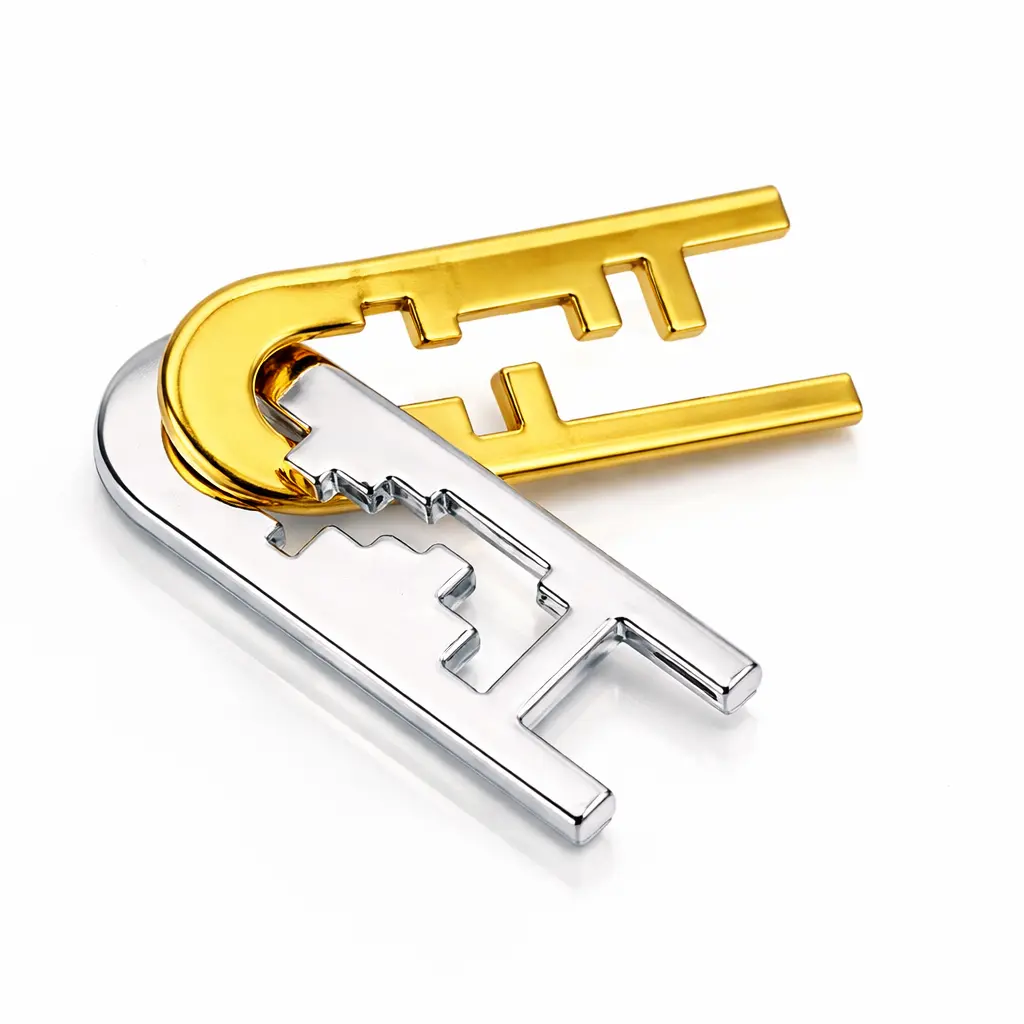
Cast Keyhole Gold & Silver — $13.99
It’s small enough to fit in a coin pocket, but the “maze” hidden inside the two interlocking pieces is surprisingly complex. The gold and silver finish isn’t just for show; it helps you track which piece is which as you navigate the 3D path. I’ve had this on my desk for three weeks, and even after solving it, I find myself absent-mindedly clicking the pieces together. It’s a “fidget” toy with a high IQ.
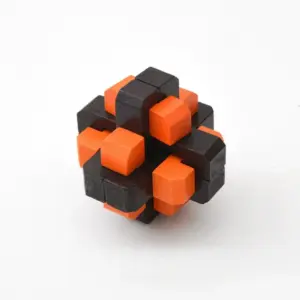
On the other hand, something like the Wood Knot Puzzle, priced at $16.99, offers a more meditative experience.
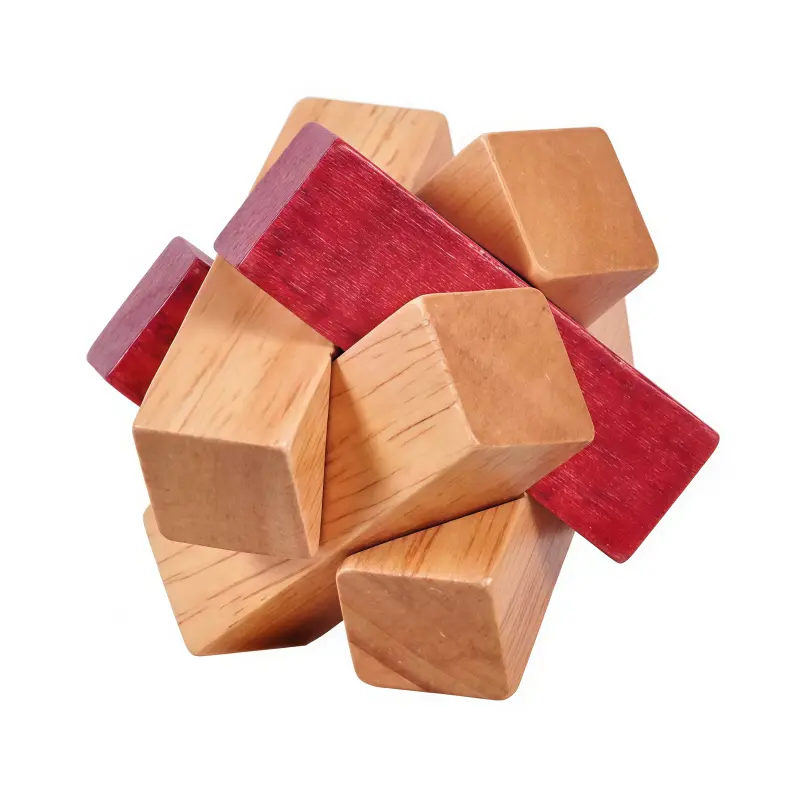
Wood Knot Puzzle — $16.99
It’s based on ancient Taoist principles of foundation and virtue. There are no magnets or hidden pins here—just pure geometric harmony. Solving it feels less like “beating” a machine and more like solving a poem. If you’re the type of person who needs to decompress after a long day of staring at a screen, wood is the way to go. The tactile feedback is softer, and the sound of the pieces sliding together is a muted, satisfying thud rather than a metallic clink.
The Art of the Hidden Lock
Sometimes, a puzzle box isn’t a box at all—it’s a lock. Traditional Chinese puzzle locks are some of my favorite objects to collect because they bridge the gap between utility and art.
Take the Chinese Koi Puzzle lock ($16.99).
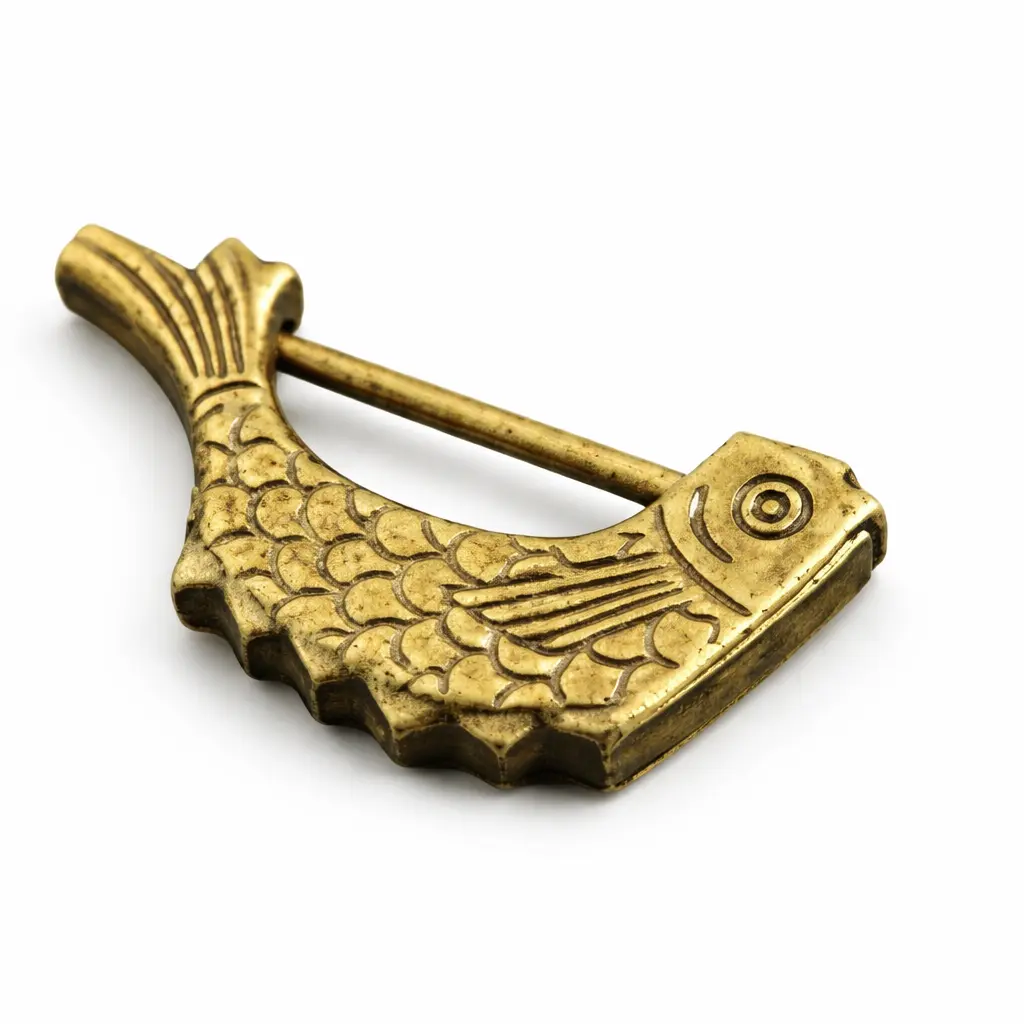
Chinese Koi Puzzle lock — $16.99
At first, it looks like a beautiful bronze-finished fish. You have a key, and you see a keyhole. Simple, right? Wrong. The keyhole is often a decoy, or the shackle is blocked by a hidden sliding panel (usually the fish’s fin or a section of its scales). I’ve given this as a gift to several “smart” friends, and watching them try to use the key conventionally is a masterclass in human stubbornness. It forces you to look at the object as a sculpture first and a tool second.
For a smaller version of this challenge, the Chinese Old Style fú Lock with Key ($19.99) is a tiny marvel.
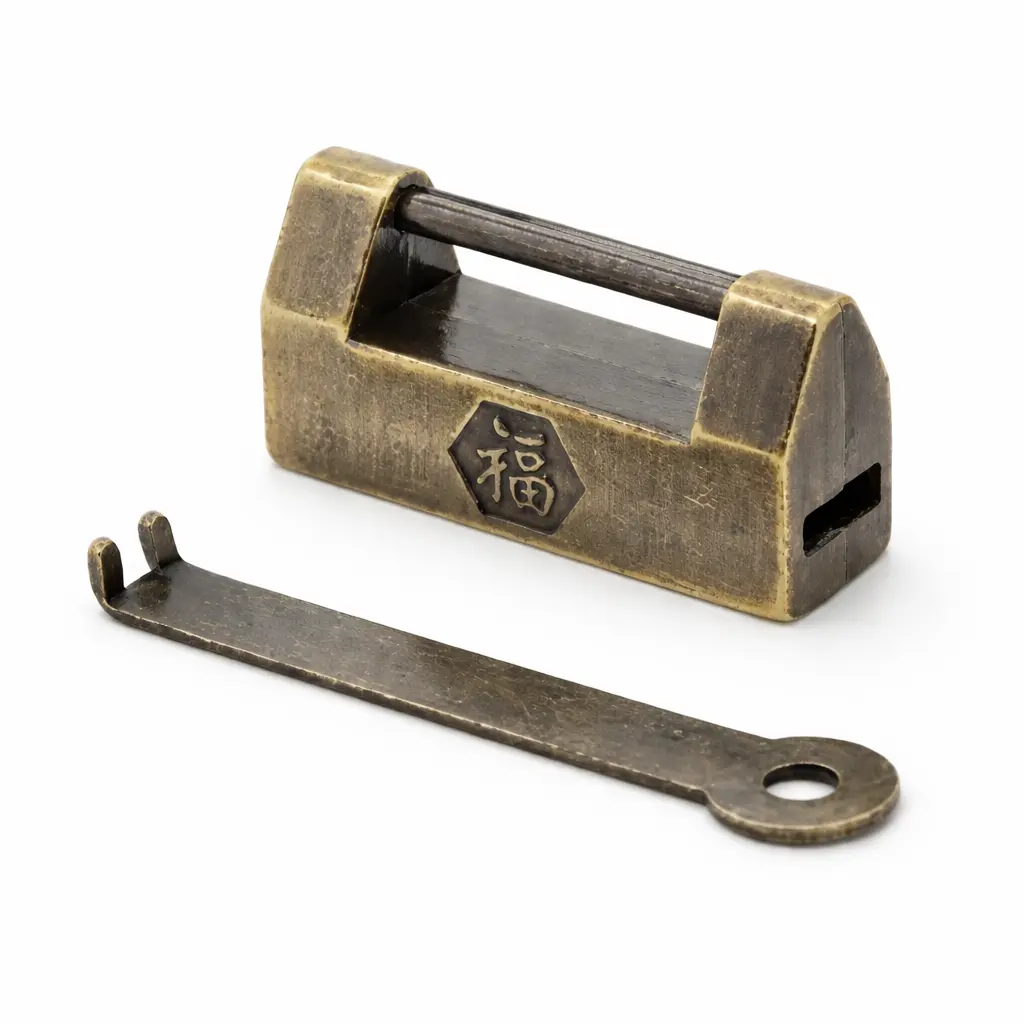
It’s only 30mm across, but it’s a fully functional mechanical lock. It’s perfect for adding a layer of mystery to a personal journal or a small jewelry chest. The “fú” character (meaning fortune) is embossed on the side, making it a great “good luck” charm for someone starting a new venture.
Comparison of Top Mechanical Challenges
The Psychology of the Solve: Why We Keep Coming Back
According to Edward Thorndike, the psychologist who pioneered the study of puzzle-solving, humans learn through “trial and error” that gradually becomes more refined. But in my experience, it’s more about “trial and observation.”
If you enjoy the feeling of a complex machine coming together, the 3D Wooden Puzzle Treasure Box ($29.99) is probably the most rewarding project on this list.
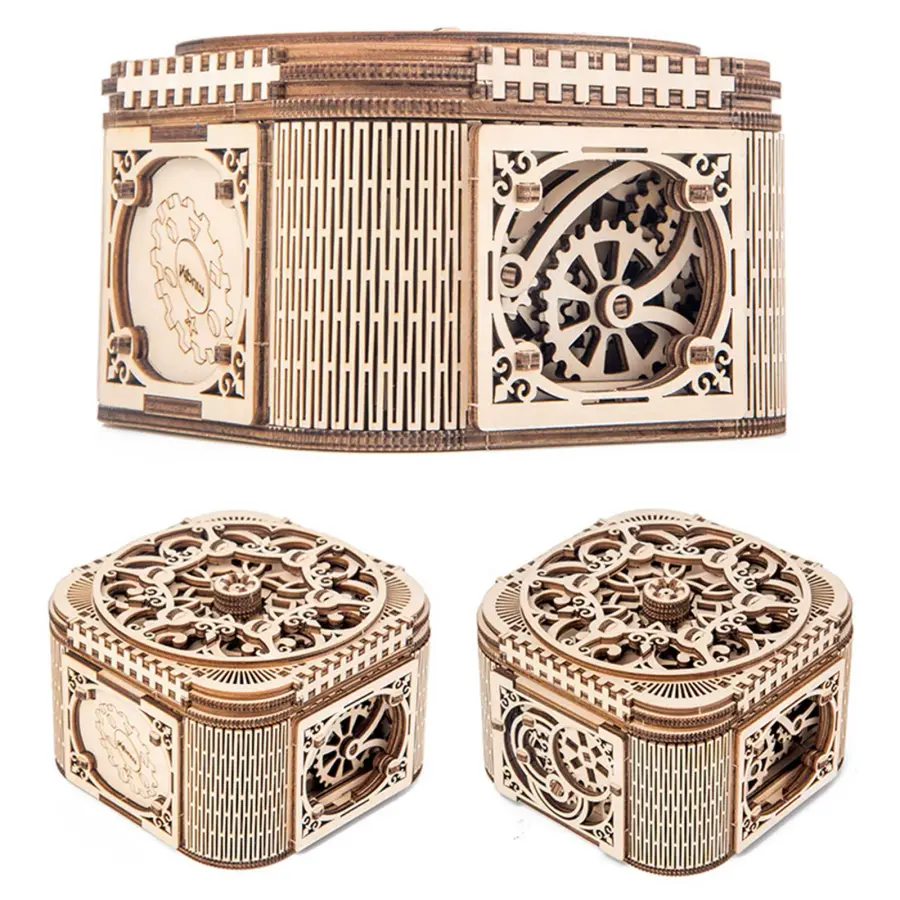
With nearly 200 laser-cut pieces, it’s a significant time investment. But the “Peak Moment” here isn’t just opening it—it’s the first time you turn the gear and watch the entire lid assembly flower open in a synchronized mechanical dance. Research suggests that this type of visuospatial engagement can actually help protect against cognitive aging, which is a nice bonus for those of us who just enjoy the “click.”
For a quicker hit of that same satisfying mechanical logic, I often recommend the Dual Seahorse Gold & Silver Brain Teaser ($14.99).
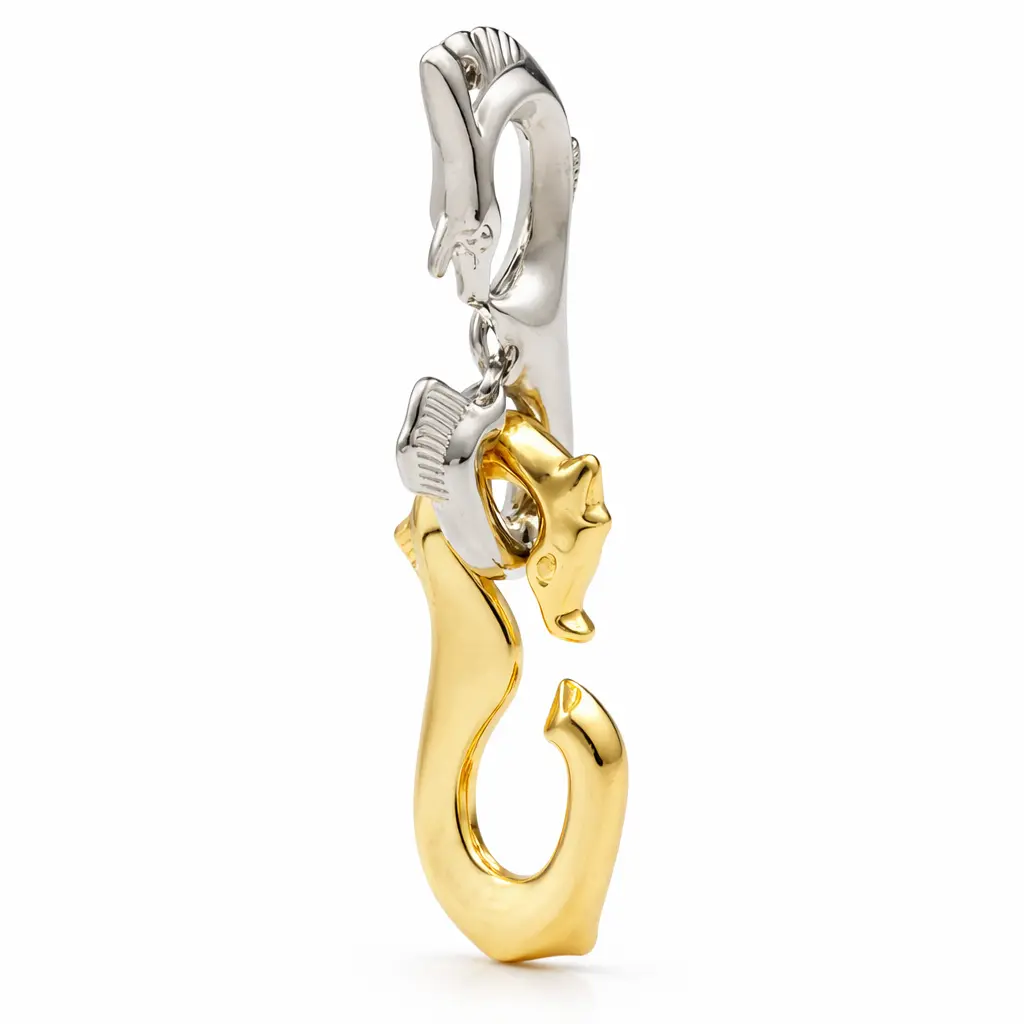
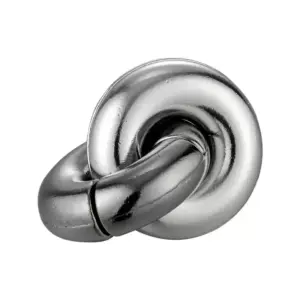
It uses a hidden threaded mechanism. If you try to pull them apart, you’ll never succeed. You have to understand the “twist.” It reminds me of the Metal Screw Interlock Riddle ($13.98), which strips the concept down to its barest essentials: a nut and a bolt that shouldn’t be this hard to separate.
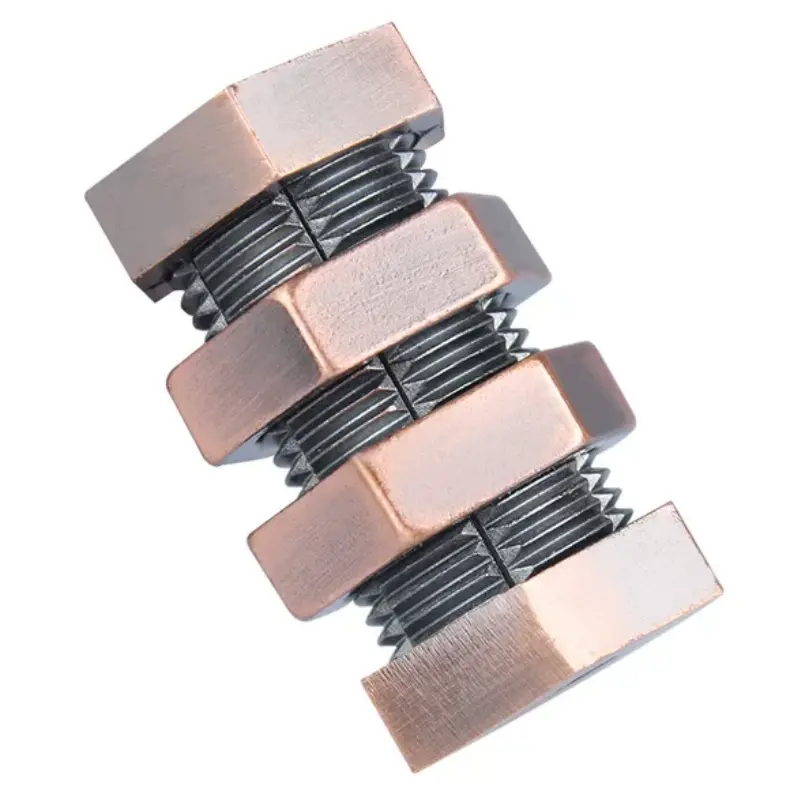
Both of these are what I call “commuter puzzles.” They are small enough to solve on a train, and they don’t have a dozen tiny pieces that you’ll lose under the seat.
Advanced Tactics: When You’re Genuinely Stuck
If you’ve been staring at a box for three days and you’re ready to use a hammer, try these three advanced tactics:
- The Temperature Trick: If a puzzle is made of metal and wood, sometimes the tolerances change based on temperature. I’ve solved a particularly tight wooden box just by moving it to a cooler room.
- The Flashlight Audit: Shine a bright light into every crevice. You might see a tiny notch or a metal pin that is invisible in normal room lighting.
- The “Reverse” Solve: If the puzzle is already in pieces (like the Interlock Puzzle Sphere ($17.99)), don’t try to build the whole thing at once. Find the two pieces that can’t be the last ones, and work backward from there.
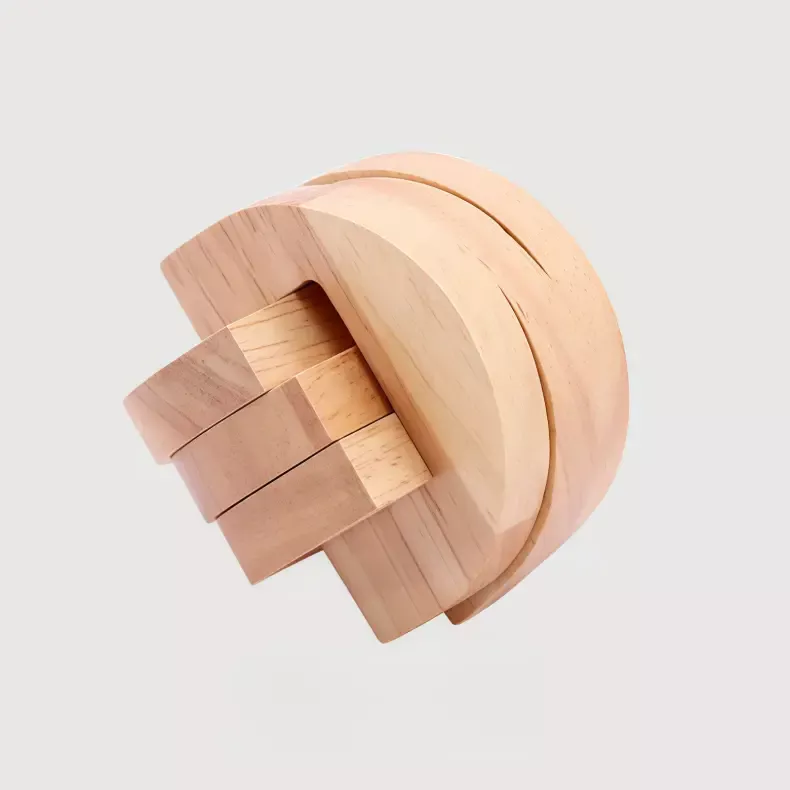
Interlock Puzzle Sphere — $17.99
The Sphere is a classic interlocking puzzle that looks simple but requires you to hold four things in place simultaneously while sliding in the fifth. It’s a test of manual dexterity as much as mental logic.
Frequently Asked Questions
How do I know if I’m forcing a puzzle too hard?
If your fingernails are turning white or the wood is creaking, you’re using too much force. Mechanical puzzles are designed to move smoothly once the lock is disengaged. If you have to “muscle” it, you haven’t found the solution yet. A good rule of thumb: if a child couldn’t move it with two fingers, it’s not meant to move that way.
Are wooden puzzle boxes durable for kids?
It depends on the age. For kids under 10, I’d avoid the delicate laser-cut kits like the 3D Wooden Puzzle Treasure Box ($29.99). They are made of birch plywood and can snap if twisted incorrectly. For younger kids, metal puzzles or solid hardwood blocks like the 6 Piece Wooden Puzzle Key ($12.99) are much more “drop-proof.”
What’s the best way to clean a metal puzzle?
Most cast puzzles have a plated finish. Avoid harsh chemicals. A simple microfiber cloth and a tiny bit of rubbing alcohol will remove fingerprints and skin oils. For the Cast Keyhole Gold & Silver ($13.99), keeping it clean actually makes the solve smoother, as it reduces the “stickiness” of the polished surfaces.
I lost the instructions. Where can I find the solution?
Before you Google it, try to take a break with a different type of logic challenge. Often, the solution will pop into your head when you’re thinking about something else. If you must have the answer, YouTube is your best friend—search for the specific product name + “solution.” But be warned: you can never “un-see” a spoiler.
Why are some puzzle boxes so expensive?
You’re paying for tolerances. A cheap box might have a 1mm gap, which makes the solution obvious. A high-end box might have a 0.01mm gap, making the seams invisible to the naked eye. The engineering required to make wood or metal move that precisely is what drives the price.
Can I reset a puzzle box once it’s open?
Yes, and for many, the “re-assembly” is the harder part of the challenge. Puzzles like the Interlock Puzzle Sphere ($17.99) are notorious for being easy to take apart and a nightmare to put back together. Always pay attention to the orientation of pieces as they come out!
How do I choose a gift for a beginner?
Start with something tactile and visual. The Chinese Koi Puzzle lock ($16.99) is a great entry point because it’s a beautiful object even if they never solve it. It doesn’t look like a “toy,” which makes it more acceptable for a professional’s desk.
Is puzzle solving actually good for your brain?
Yes, but not in the way most people think. It’s not about “increasing IQ.” It’s about practicing cognitive flexibility—the ability to switch between different strategies when one isn’t working. It’s a workout for your frustration tolerance.
What should I do if a wooden piece is stuck due to humidity?
If you live in a very humid area, wood can swell. Try putting the puzzle in a sealed container with a few silica gel packets for 24 hours. This will often draw out enough moisture to let the pieces slide again.
Can these puzzles be solved more than once?
The first solve is for discovery; the second solve is for mastery. I find that I enjoy sharpening my logic with a quick solve of a familiar puzzle when I’m on a long phone call. It becomes a form of “active meditation.”
Do I need any tools to solve these?
Almost never. If a puzzle requires a tool, it will usually be hidden inside the puzzle itself as part of a sequential discovery process. If you find yourself reaching for a screwdriver, stop immediately.
What is “Sequential Discovery”?
It’s a sub-genre of puzzle boxes where you find “tools” inside the puzzle that help you reach the next stage. It’s like a tiny, handheld escape room.
Are these puzzles safe for travel?
Metal puzzles are great for travel, but be prepared for TSA to give them a second look. A solid block of metal with internal voids looks interesting on an X-ray. I always keep mine in my carry-on so I can explain what they are if asked.
The One Puzzle That Teaches You How All the Others Work
If I had to go back to the beginning of my collection and pick just one starting point, it wouldn’t be the most expensive or the most complex. It would be the 3D Wooden Puzzle Safe with Combination Lock.
At $30.99, it’s the price of a decent dinner, but it provides something a pre-assembled box never can: the “X-ray vision” to understand how mechanisms think. Once you’ve built a gear-driven lock with your own hands, you stop guessing and start analyzing. You begin to hear the difference between a pin that’s blocked by a slide and a pin that’s blocked by a magnet.
Solving a puzzle box is ultimately a lesson in humility. It reminds us that our first impression is almost always wrong, and that the loudest solution (force) is rarely the correct one. If this clicked for you, the deeper world of sequential discovery and trick boxes is waiting. Start with the Safe—it’s the best $31 you’ll ever spend on your own brain.
The next time you’re stuck, don’t reach for the instructions. Reach for a cup of coffee, sit back, and just look at the seams. The box is trying to tell you how to open it; you just have to learn how to listen.