The third time the brass pin slipped past my thumb without clicking, I set the wooden box down and made a fresh pot of coffee. It was 11:15 PM on a Tuesday, and I was supposedly “testing” a new mechanism for a friend’s birthday gift. My thumb was slightly sore from the friction of the laser-cut birch, and my skepticism was peaking. Most “puzzle box gift box” options you find online are either flimsy plastic mazes that a determined ten-year-old could smash open in seconds or overpriced wooden blocks that are more “stuck” than “puzzling.”
But then, after that first sip of caffeine, I felt it. A slight lateral give. A movement that wasn’t a mistake, but a permission. The lid didn’t just pop; it exhaled. That moment of mechanical surrender is why we do this.
If you are looking for a puzzle box gift box, you are likely trying to solve a specific problem: cash, gift cards, and jewelry are boring to give. You want the recipient to earn their prize. However, after handling over 200 mechanical puzzles in my time, I’ve learned that the “gift” part is often an afterthought. A great gift box must be a legitimate puzzle first and a container second. If the mechanism is clunky or the solution is purely accidental, the “fun” of the gift turns into a chore.
The best puzzle boxes punish impatience and reward observation. They turn a thirty-second exchange of a gift card into a twenty-minute memory of frustration, laughter, and eventual triumph.
The Psychology of the “Gated” Gift
Why do we want to lock things away? There is a long history of science puzzles and mechanical enigmas that suggests humans are hardwired to value things more when there is a barrier to entry. In the late 19th century, Edward Thorndike used a puzzle box to study animal intelligence, proving that “trial and error” eventually gives way to “insight.”
When you hand someone a 3D Wooden Puzzle Treasure Box – Mechanical Jewelry Storage Gift, you aren’t just giving them a place to put their earrings. You are giving them a “eureka” moment.
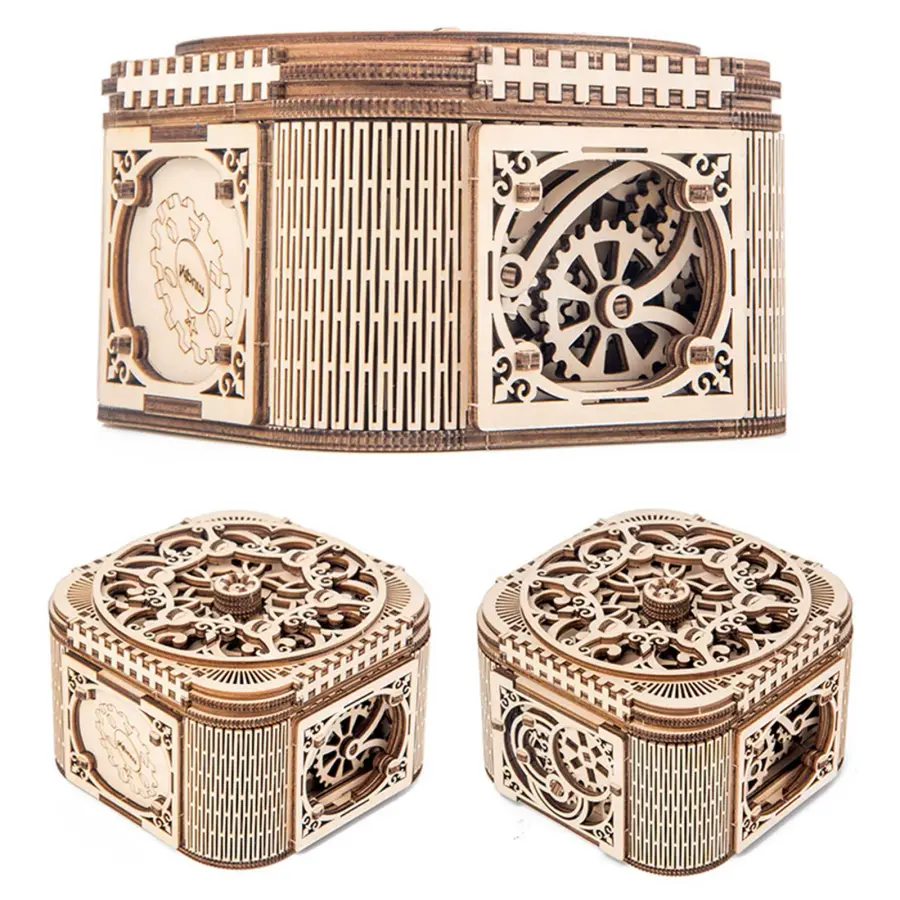
3D Wooden Puzzle Treasure Box
The 3D Wooden Puzzle Treasure Box – Mechanical Jewelry Storage Gift is the gold standard for what a “gift box” should be. Priced at $29.99, it arrives as a flat-pack kit of about 150-200 pieces. I spent roughly two and a half hours putting this together, and I’ll be honest: if you rush the gear alignment in step 14, the whole thing will bind. But when it’s finished? It’s a mechanical marvel. The lid doesn’t just lift; it’s tied to a visible gear train that moves in unison.
The interior compartment is perfectly sized for a folded stack of cash or a standard gift card. What I love most about this specific model is the transparency of the mechanism. You can see the teeth engaging as you turn the key. It’s a great way to master the inner workings of traditional trick boxes while building something functional. If you’re gifting this, I recommend assembling it yourself first, placing the gift inside, and then handing the completed box to the recipient. Watching them try to find the “start” of the gear sequence is half the fun.
Wood vs. Metal: Which Makes a Better Gift Box?
When searching for a puzzle box gift box, you’ll generally find two camps: the wooden mechanical kits and the metal “trick” locks.
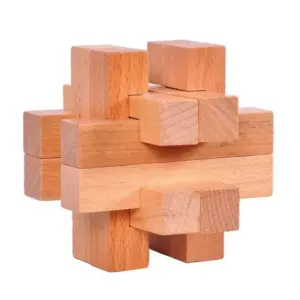
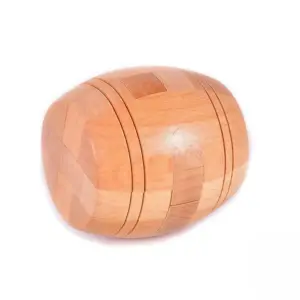
Wooden boxes, like the Luban Square Lock, offer a tactile warmth and a “secret compartment” feel. They are often based on ancient joinery techniques—no nails, no glue, just friction and geometry.
The Luban Square Lock, which retails for $21.99, is a solid hardwood cube that looks like a simple decorative object. However, it’s actually a 6-to-12-piece interlocking challenge. While it doesn’t have a large hollow center for a big gift, you can easily hide a small note or a rolled-up hundred-dollar bill inside the central void. I’ve found that hardwood puzzles like this are more forgiving over time; metal can sometimes burr or scrape if forced, but wood develops a “burnished” feel the more it’s solved.
On the other hand, metal puzzles offer a level of precision that wood can’t match. If you want a “stocking stuffer” style gift box, you might look at something like the Chinese Koi Puzzle lock.
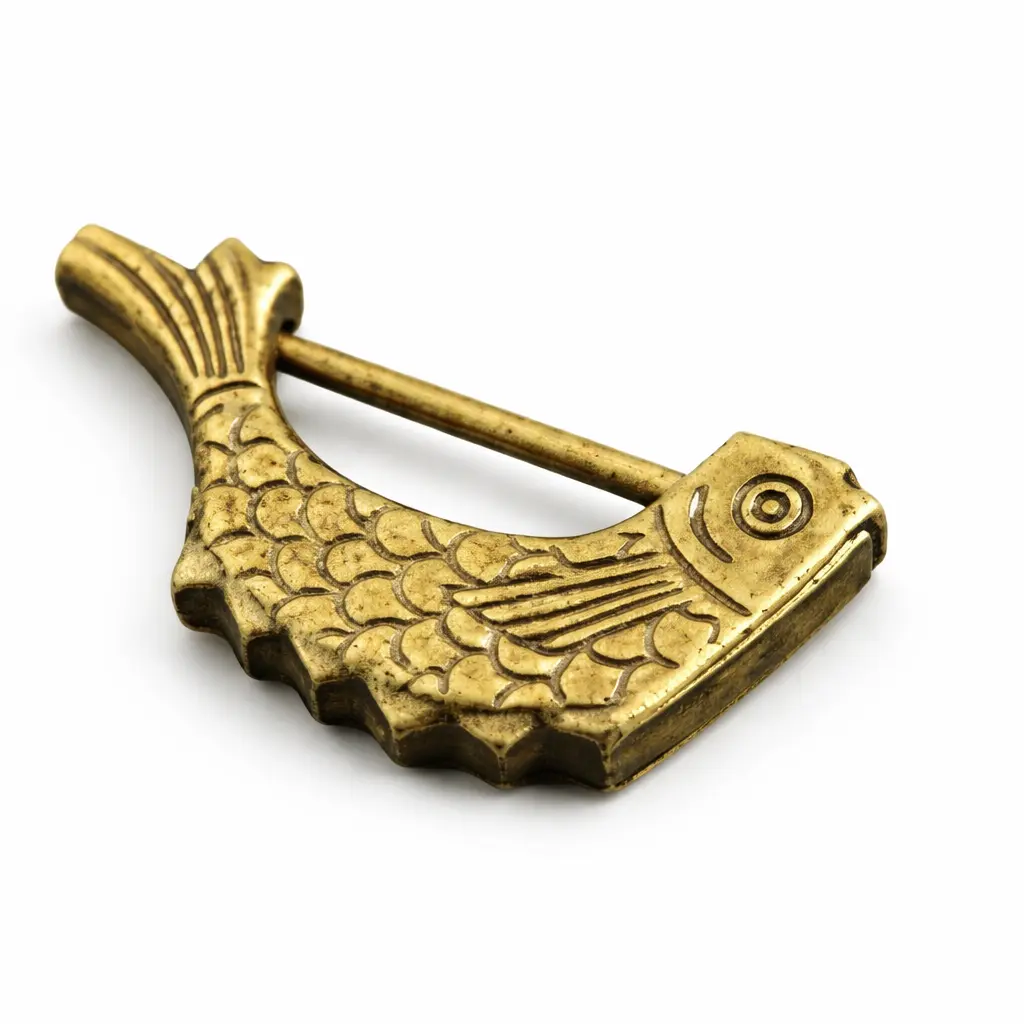
Chinese Koi Puzzle lock
This is one of my favorite “gift tags.” At $16.99, the Chinese Koi Puzzle lock isn’t a box itself, but you use it to secure the gift. Imagine a small wooden crate or even a heavy-duty gift bag with the handles locked together by this 59mm fish. The weathered bronze finish makes it look like a museum artifact. The “puzzle” here is the key itself—it’s a flat, traditional rod-key that requires a specific orientation to release the shackle. It’s not a high-difficulty solve, but it adds a layer of ceremony to the gifting process. I’ve used these for several years now, and they never fail to get a “Wait, how does this work?” reaction.
The Peak: The “Tactile Epiphany”
After testing hundreds of these, I’ve noticed a pattern. There is a specific moment—usually about four minutes into a solve—where the recipient stops looking at the puzzle and starts listening to it. This is the “Peak” of the experience.
Most people start by shaking the box. They look for seams. They try to pull the lid. But the real “puzzle box gift box” experience happens in the fingertips. You feel a slight vibration when a pin drops into a groove. You hear the faint “snick” of a wooden tooth clearing a gate.
I remember handing a prototype of a sequential discovery box to a colleague who claimed they “hated puzzles.” For five minutes, they were annoyed. At the six-minute mark, they felt a panel slide just half a millimeter. Their entire posture changed. They weren’t just “opening a box” anymore; they were cracking a safe. That transition from frustration to flow is the greatest gift you can actually give someone.
Using Mechanical Kits as “Experience” Gifts
Sometimes the “gift box” is the gift itself. If you’re buying for someone who enjoys the process of creation, a DIY kit is a much better move than a pre-assembled box.
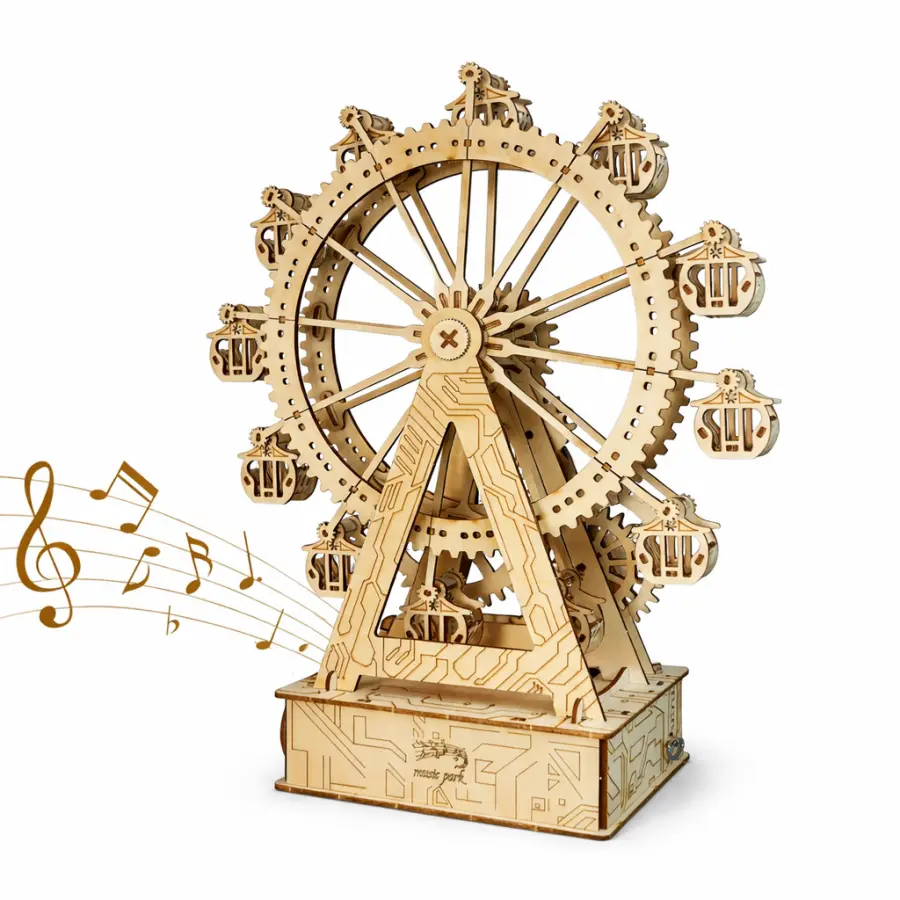
Wooden Ferris Wheel Music Box Kit
The Wooden Ferris Wheel Music Box Kit ($59.99) is a beast of a project, but it has a secret. While the main attraction is the rotating wheel and the dual music movements, there is a hidden drawer in the base. This makes it an incredible “puzzle box gift box” for a significant anniversary or a milestone birthday. You give them the kit, they spend the afternoon building it, and at the very end, they discover the hidden compartment where you’ve tucked away a ring or a heartfelt letter. It turns the act of receiving a gift into several hours of engaging in shared problem-solving sessions with the family.
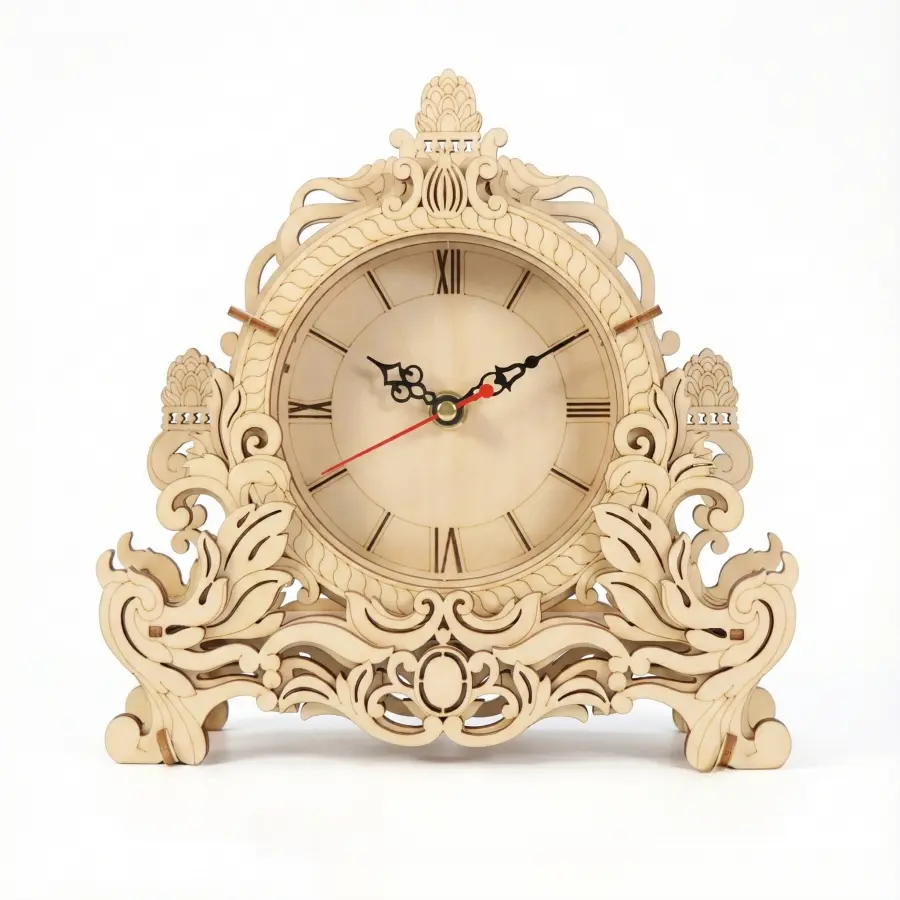
If the Ferris wheel feels too daunting, the 3D Wooden Puzzle Clock DIY Kit is a more accessible entry point. At $26.99, it’s a 28-piece build that takes about 30 minutes. It doesn’t have a traditional “secret compartment,” but the baroque design allows you to easily tape a gift card to the back of the clock face, making it a functional piece of art that hides a surprise.
Small Gifts: The “Fidget” Factor
Not every gift needs a 200-piece wooden chest. Sometimes you just want to make a $20 bill more interesting. This is where the smaller, palm-sized puzzles come into play. They act as “gatekeepers” for the gift.
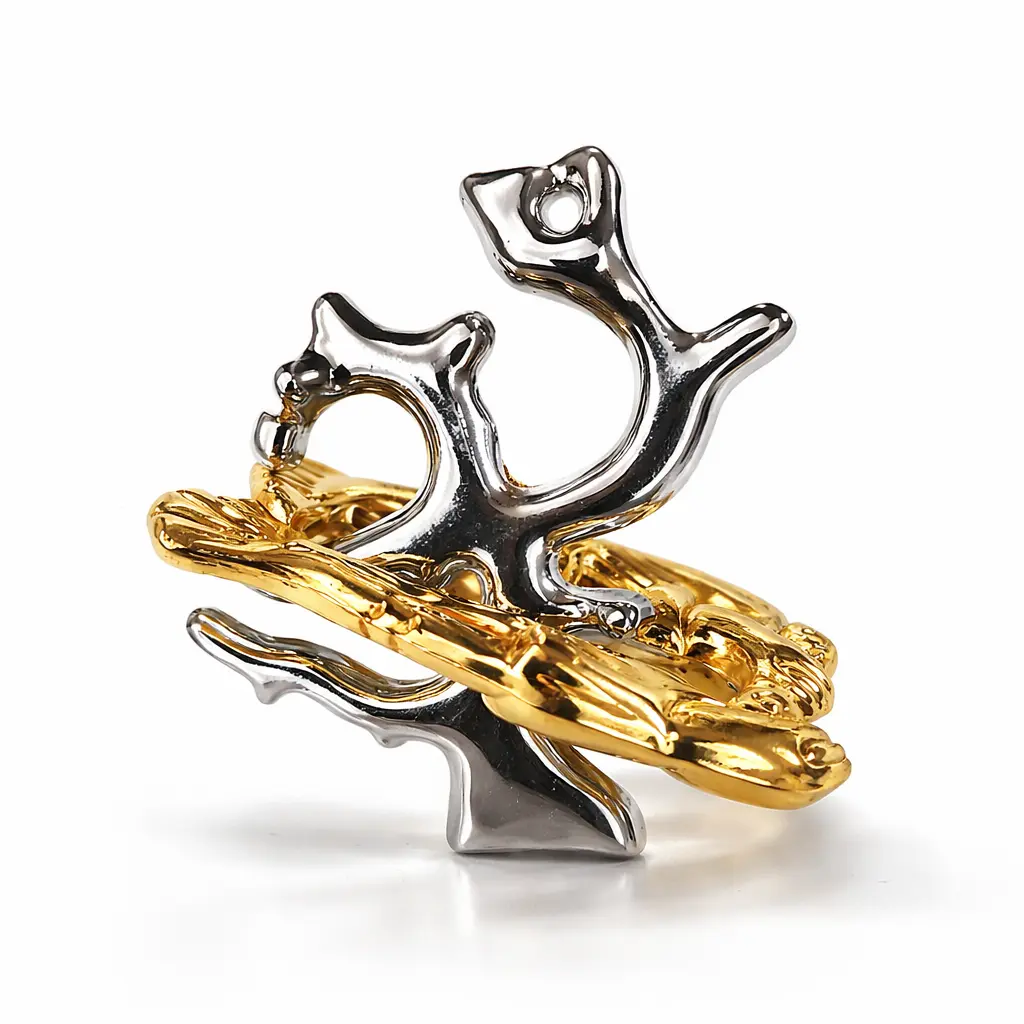
The Gold Fish & Silver Coral Reef Cast ($13.99) is a perfect example. It’s a two-tone metal brain teaser where the goal is to free the fish. I often loop a ribbon through the coral and tie it to the main gift. The recipient has to “solve” the fish to get to the box. It’s a tactile, heavy little object that feels much more expensive than its price tag suggests.
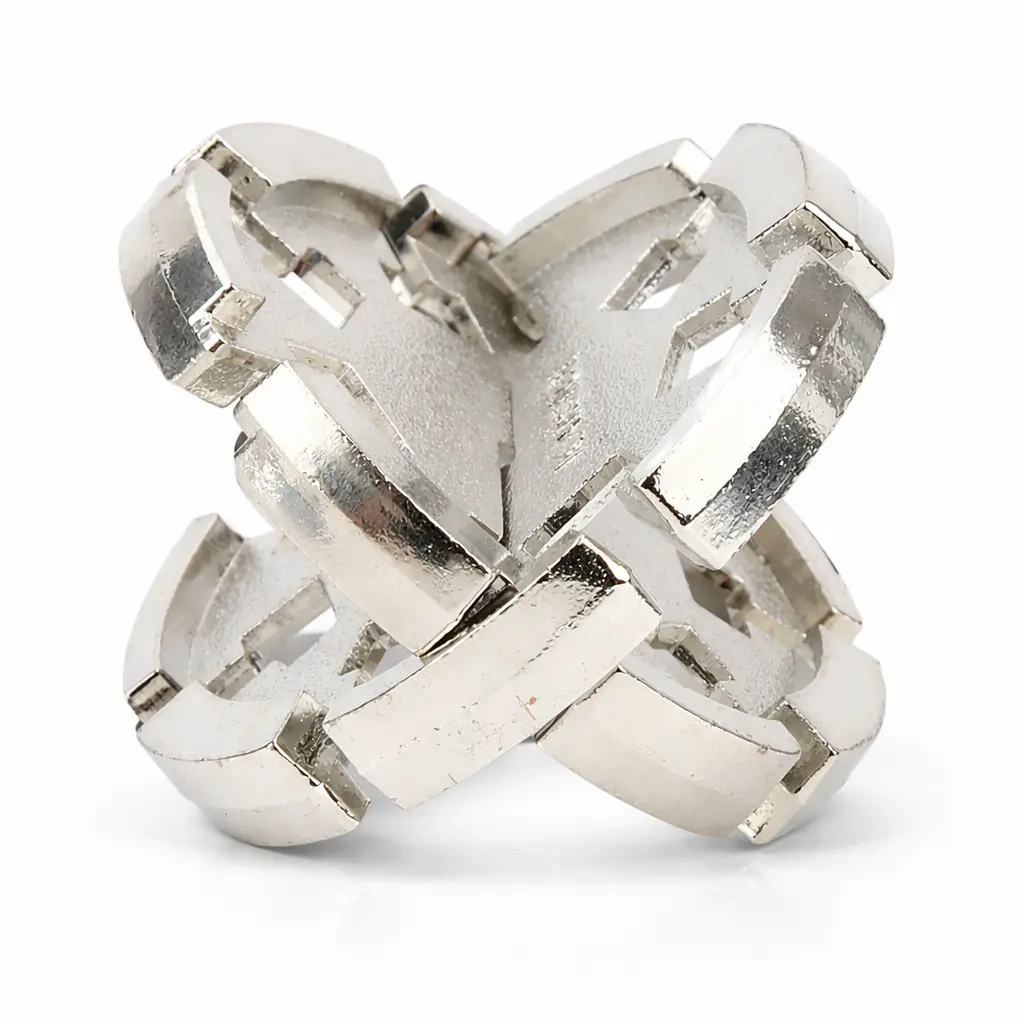
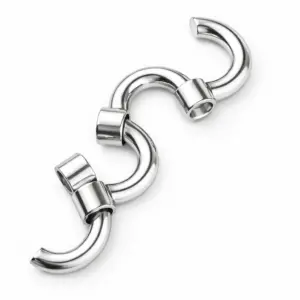
Similarly, the Interlocking Metal Disk Puzzle ($14.99) is a great desk toy to include alongside a gift. It’s a rotational sequence puzzle that helps people clear the mind with minimalist rotational challenges during a stressful workday.
The “Over-Engineering” Warning: When a Puzzle is Too Hard
I have made the mistake of giving a Level 10 puzzle box to someone who just wanted their birthday money. It didn’t end well. They ended up looking for a screwdriver.
When choosing a puzzle box gift box, you have to read the room. If the recipient is a software engineer or a mechanical tinkerer, go for the Cast Coil Triangle Puzzle.
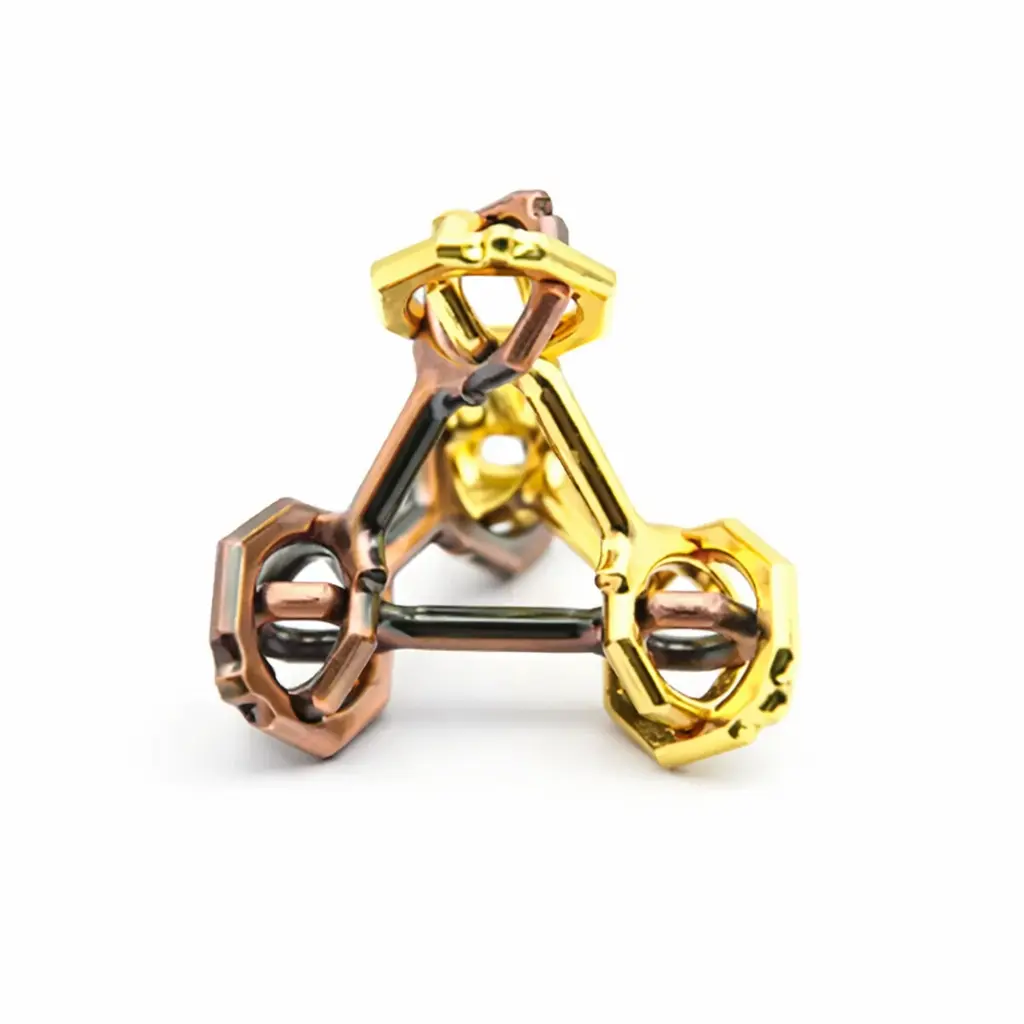
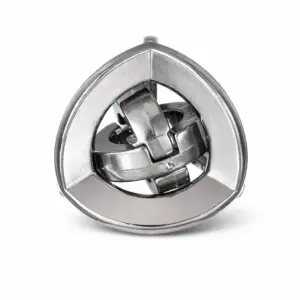
Cast Coil Triangle Puzzle — $25.99
At $25.99, this cast metal triangle is chunky, heavy, and surprisingly difficult. It doesn’t hide a gift, but it’s the kind of thing you hand someone before you give them the actual gift. “Solve this, and you get the envelope.” It’s a conversation piece that demands focus.
However, for a child or a casual hobbyist, you might want something more visual and less “frustrating.” The Royal Carriage 3D Wooden Puzzle ($25.99) is a beautiful intermediate-level build. It’s more about the joy of assembly than the “trick” of the opening.
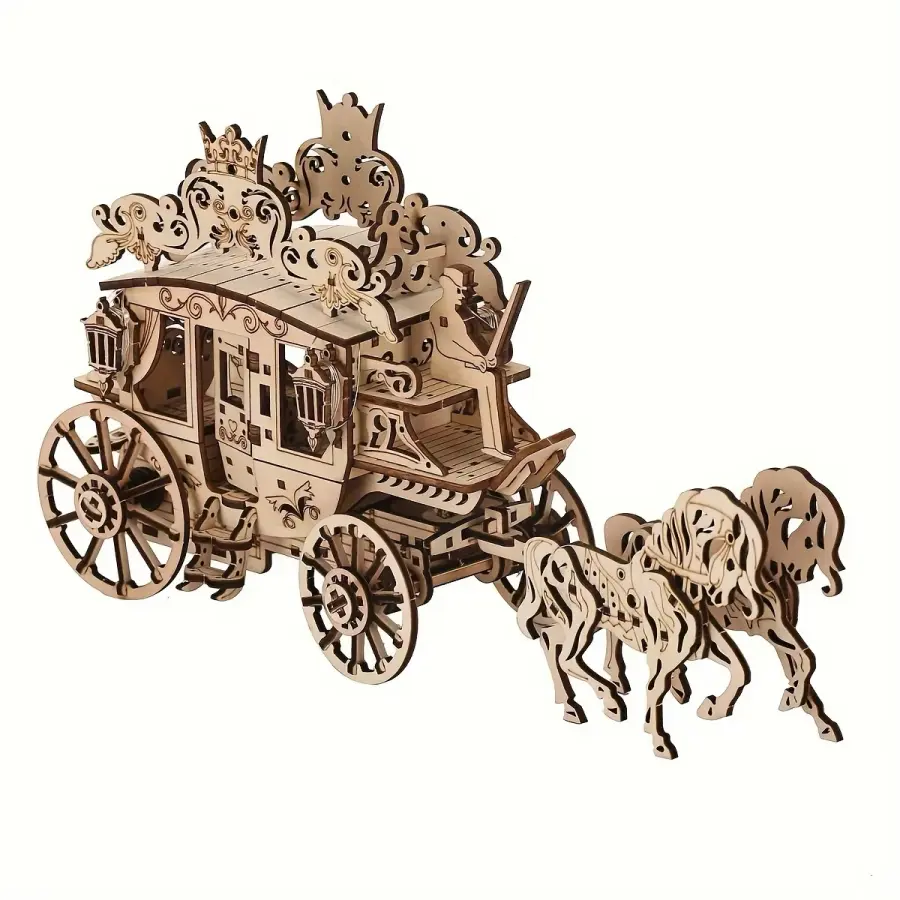
The carriage is over 11 inches long when finished, making it a substantial gift in its own right. If you’re looking to entertain someone for an afternoon, this is a better bet than a tiny metal “trick” puzzle. It’s also a great way to introduce someone to the hobby before they move on to switching gears with gravity-based physical strategy games.
Quick-Reference Comparison Table
Frequently Asked Questions
How do I know if a puzzle box is too difficult for a gift?
Look at the “step” count. A standard “Japanese-style” puzzle box is measured in “sun” (size) and “steps” (moves to open). A 4-step or 7-step box is great for beginners. Anything over 12 steps requires serious concentration. For a gift, I usually recommend a “sequential discovery” style where the solver finds a tool (like a hidden key) that helps them with the next step. This keeps the momentum going. If you’re worried about the recipient getting stuck, choosing simple logic games that reset your focus might be a safer bet to include alongside the gift.
Can these boxes be reused or regifted?
Absolutely. One of the best things about a well-made 3D Wooden Puzzle Treasure Box is its durability. Unlike cardboard or cheap plastic mazes, these are designed to be solved, reset, and solved again. I actually have a “traveling” gift box in my family that has been passed around for five different birthdays. Each person puts a new gift inside and passes it on. It’s become a tradition.
What if the recipient gets frustrated and breaks it?
This is a real concern with wooden kits. Most puzzle boxes are built with tight tolerances. If someone tries to “brute force” a wooden gear, it will snap. My advice: always include a little note that says, “Technique over force.” If it doesn’t move easily, you haven’t found the right trick yet. For younger kids, I’d stick to metal puzzles like the Gold Fish & Silver Coral Reef Cast because they are nearly impossible to break.
Are there puzzle boxes large enough for a bottle of wine?
Most “standard” puzzle boxes are designed for jewelry, cash, or gift cards. A wine-sized puzzle box is usually a specific type of wooden “cradle” or “clasp” that locks the cork in place. While we don’t stock those specifically, you can often use a Chinese Koi Puzzle lock and a bit of sturdy chain to create your own “bottle lock” puzzle.
How do I reset a puzzle box after I’ve put the gift inside?
Always solve the box yourself before you put the gift in. This ensures you know the “reverse” path. For kits like the Wooden Ferris Wheel Music Box Kit, the reset is usually just closing a drawer or turning a gear back to its starting position. Just make sure you don’t accidentally lock the key inside the box—I’ve done that once, and it required a very thin piece of wire and forty minutes of swearing to fix.
What is the best puzzle box for a “proposal”?
You want something that feels like an heirloom. The 3D Wooden Puzzle Treasure Box is excellent because the visible gears add a sense of “time” and “precision” to the moment. It also looks beautiful on a shelf afterward. Avoid the tiny metal puzzles for proposals; you want something with a bit of “heft” and “ceremony.”
Do these puzzles help with cognitive aging?
Yes, there is actually some research in the National Institutes of Health database (which we cite on our product pages) suggesting that solving mechanical puzzles can help maintain visuospatial cognitive abilities. It’s essentially a workout for your brain’s “mapping” software. Gifting a puzzle box to an older relative isn’t just fun; it’s a legitimate brain-boosting tool.
Is the Luban Square Lock good for kids?
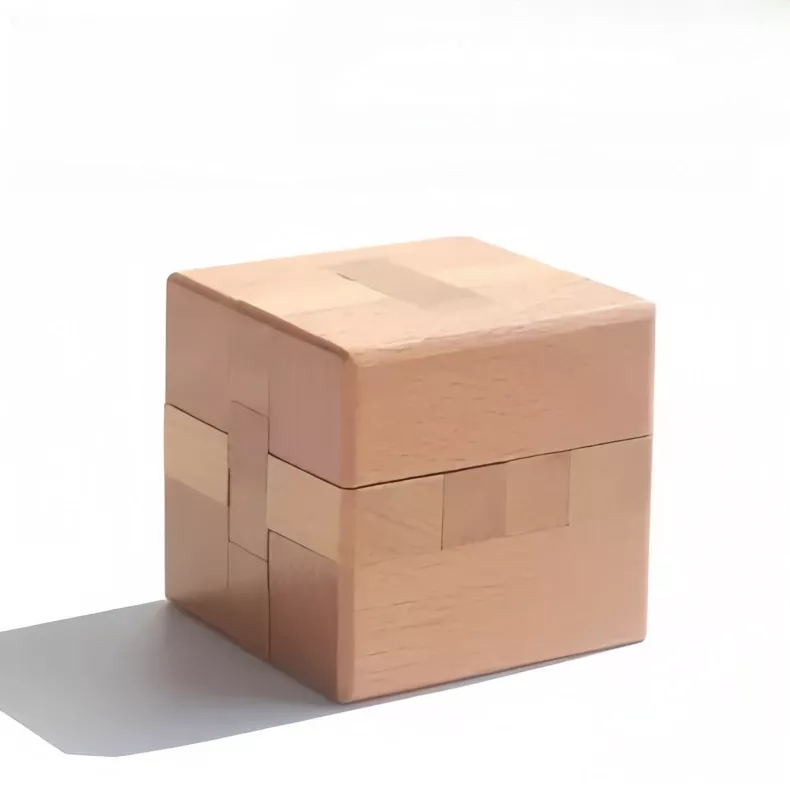
The Luban Square Lock is probably better for ages 12 and up. It requires a lot of spatial reasoning to understand how the notched bars interlock. For younger children, I’d suggest something more visual, like the Royal Carriage 3D Wooden Puzzle, which focuses on building a recognizable shape.
How do I hide a gift card in the Chinese Old Style fú Lock?
The Chinese Old Style fú Lock with Key is quite small (30mm). You won’t fit a gift card inside it. Instead, you use the lock to secure a small pouch or a wooden box that contains the card. It’s the “gatekeeper” that makes the recipient work for the prize.
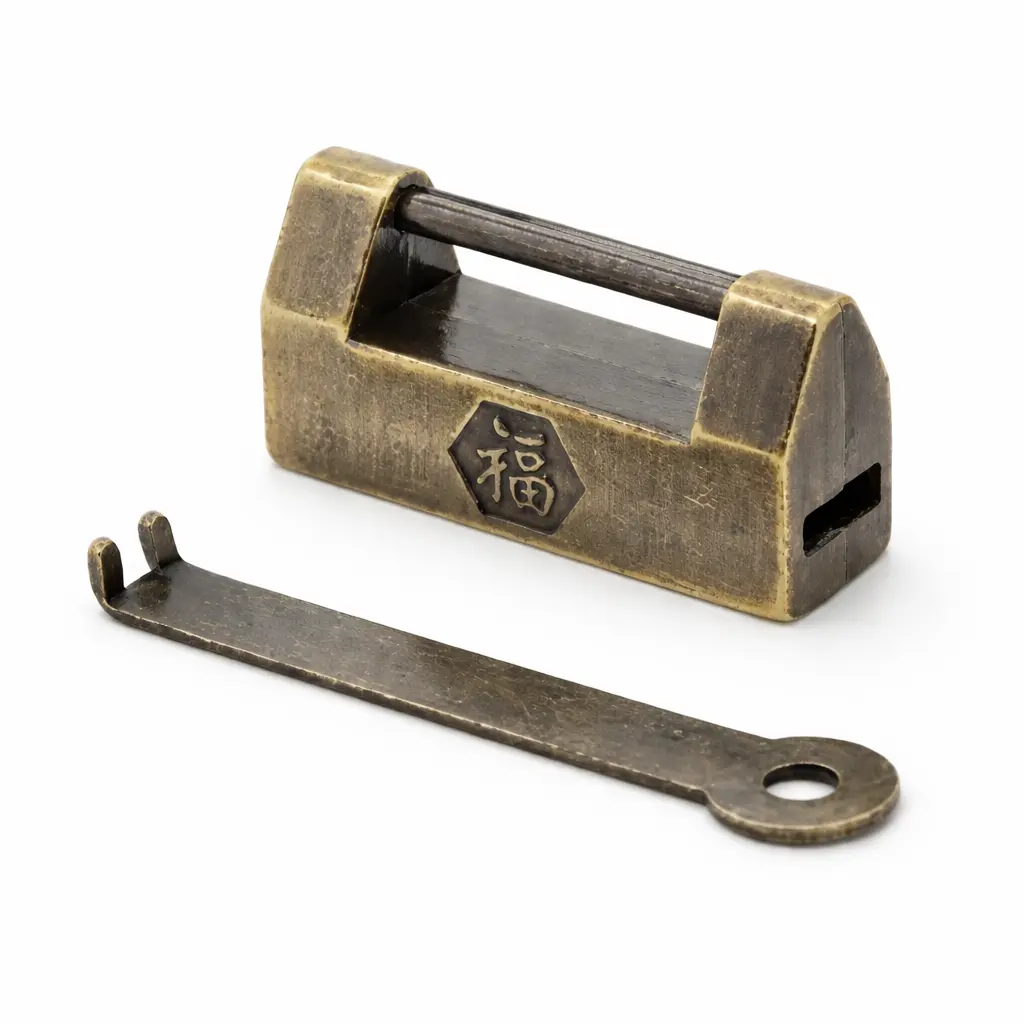
Chinese Old Style fú Lock with Key
At $19.99, this is a tiny but mighty piece of hardware. It’s modeled after traditional Chinese “fortune” locks. I’ve found it’s perfect for locking a leather-bound journal or a small keepsake box. The rod-key mechanism is very satisfying—it requires a specific “push and twist” motion that feels very old-world. It’s a great way to step up to ultra-complex wooden mechanical enigmas by starting with the basics of lock-and-key puzzles.
Are the instructions for these kits easy to follow?
Most of the wooden kits we carry, like the 3D Wooden Puzzle Clock DIY Kit, use pictorial instructions. They are designed to be language-agnostic. However, you need to pay very close attention to the orientation of the pieces. If a gear is facing the wrong way, the whole mechanism will fail. I always tell people to “measure twice, click once.”
Why are some puzzle boxes so expensive?
You’re paying for the engineering and the material. A box that uses pure mortise and tenon joinery with no glue requires incredibly high-precision machining. If the wood expands or contracts even a fraction of a millimeter, the puzzle might become unsolvable or fall apart. The higher-priced boxes use better-aged wood and more complex internal “mazes.”
Can I get a hint if I get stuck?
We always suggest trying to solve it without help first, but we know the feeling of being truly “stuck.” Most of our products have video solutions available online. For the Cast Coil Triangle Puzzle, the solution is almost entirely about finding the one “loose” ring that allows the others to slide. Once you see it, you can’t unsee it.
What’s the difference between a “trick box” and a “puzzle box”?
In the hobbyist community, they are often used interchangeably. However, a “trick box” usually implies a single “trick” to open it (like a hidden button or a sliding panel). A “puzzle box” often involves a sequence of moves. If you want to dive deeper, our guide to the mechanics of secret compartments breaks down the technical differences.
Are these puzzles noisy?
The wooden mechanical kits like the Wooden Ferris Wheel Music Box Kit are designed to make noise—they play music! However, the metal puzzles like the Interlocking Metal Disk Puzzle are very quiet, making them perfect for “stealth fidgeting” during a long Zoom call or a flight.
Start with the Treasure Box and See Where the Rabbit Hole Goes
The “Puzzle Box Gift Box” is more than just a container; it’s a way to slow down time. In an age where every gift is a digital code or a “one-click” delivery, giving someone a physical object that requires their undivided attention is a rare and valuable thing.
If you’re not sure where to start, I cannot recommend the 3D Wooden Puzzle Treasure Box – Mechanical Jewelry Storage Gift enough. For $29.99, it offers the best balance of “build-it-yourself” satisfaction and “how-does-this-open” mystery. It taught me more about the relationship between gears and patience than any textbook ever could.
The first time you see those gears spin and the lid rise to reveal what’s inside, you’ll understand why people have been obsessed with these things for centuries. Whether you’re locking up a diamond ring or a twenty-dollar Starbucks card, the box makes the moment.
If this mechanical world clicked for you, you might want to look into activities that involve the whole household to see how these puzzles can turn a quiet evening into a collaborative challenge. After all, the only thing better than solving a puzzle is watching someone else struggle with it exactly the same way you did.
The click of the lock is just the beginning.