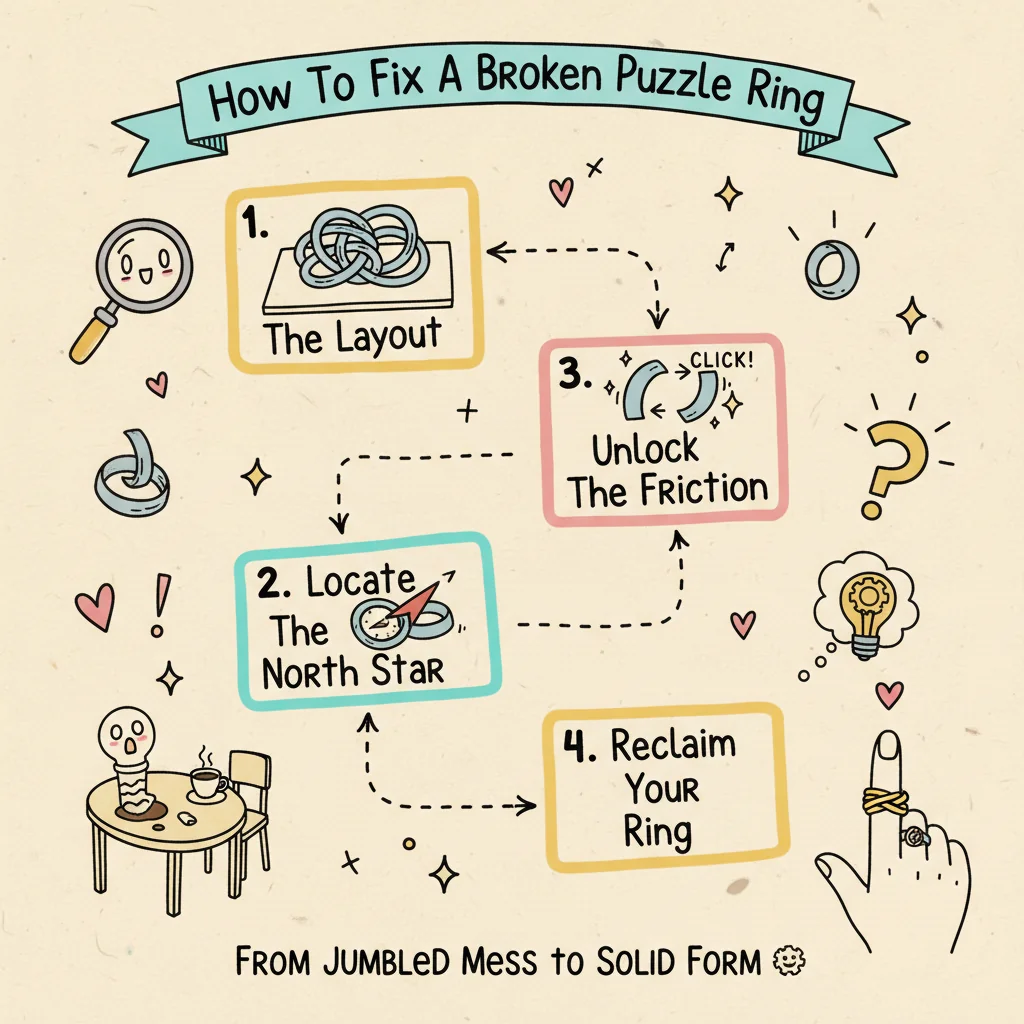
The sound of four interlocking metal bands hitting a hardwood floor is a specific kind of heartbreak. It happened to me three years ago with a vintage Turkish puzzle ring I’d inherited. One moment, it was a solid, elegant piece of jewelry; the next, it was a jumbled mess of silver loops that looked more like a broken chain than a ring. I spent four hours that night at my kitchen table, fueled by cold coffee and a growing sense of personal failure, trying to make the pieces “click” again.
Most people approach these objects with the wrong mindset. They think it’s about force or luck. It isn’t. Solving a puzzle ring—or any high-quality mechanical puzzle—is actually a lesson in restraint. If you find yourself pulling hard or trying to bend the metal, you’ve already lost. The solution exists in the gaps, not the friction.
The core thesis of my collection, which now spans over 200 pieces, is simple: the best puzzle rings aren’t solved with your eyes, but with the memory of your fingertips. You have to learn how the metal wants to move before you can tell it where to go.
The Anatomy of the Collapse: Why Your Ring is Now a Mess
Before you can solve a puzzle ring, you have to understand why it fell apart. Most traditional designs, including the puzzle ring variations found in museum collections, rely on a series of nested curves. When the ring is on your finger, the tension of your skin (or a small piece of wire) keeps the bands aligned. Once that tension is gone, gravity takes over.
You’re likely looking at a “clover” or “diamond” style layout where two bands form an outer frame and two (or more) bands weave through the middle. The biggest mistake beginners make is trying to solve all the bands at once. You have to find the “anchor” bands first. These are usually the ones with the most dramatic curves or the ones that seem to form a natural ‘V’ shape when held together.
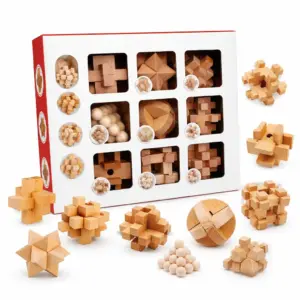
If you’re struggling with the basic logic of how metal components interact, I often suggest stepping back and trying some transparent geometric challenges first. Seeing the internal mechanics can help build the spatial “X-ray vision” you need for solid metal puzzles.
Four-Leaf Clover Puzzle
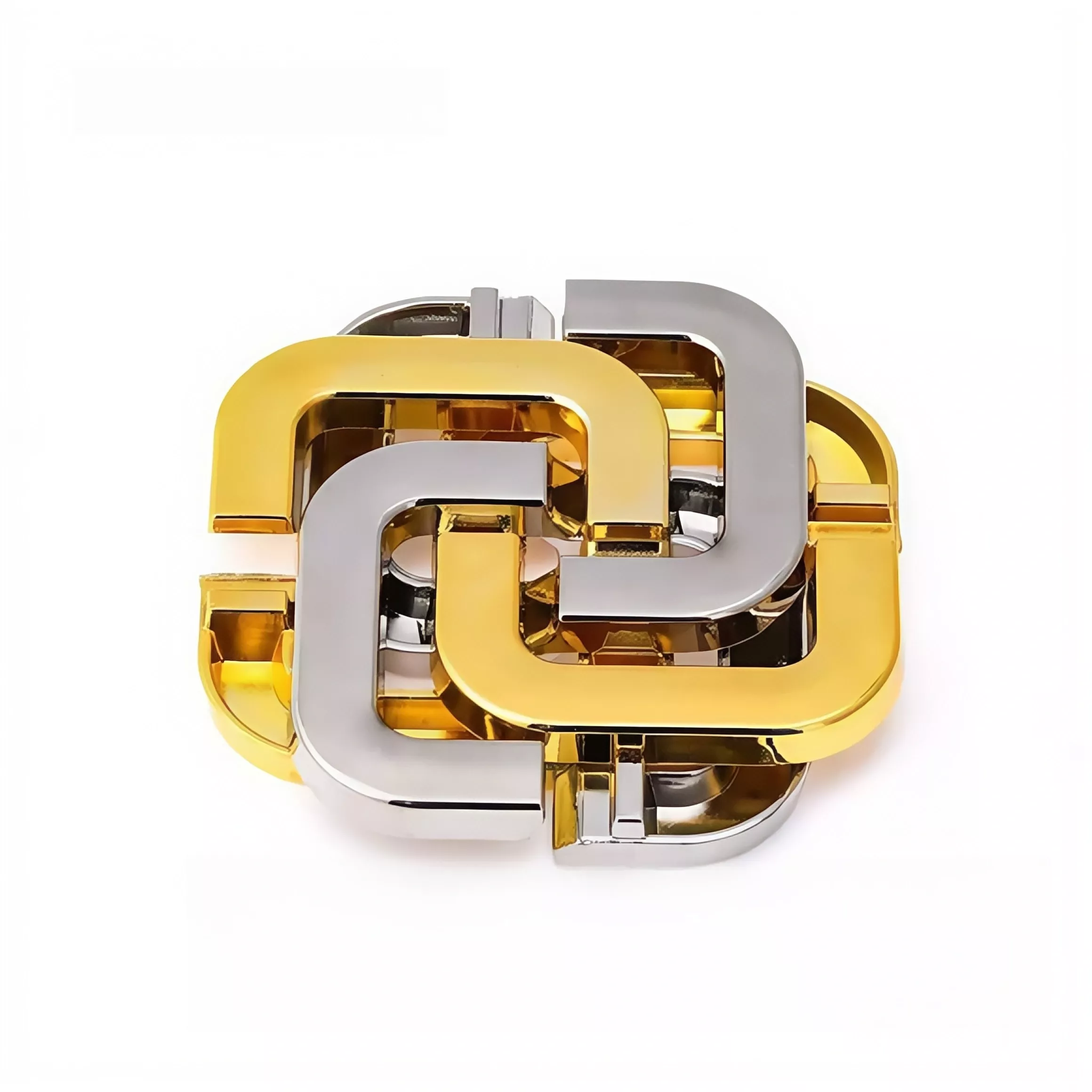
The Four-Leaf Clover Puzzle ($13.89) is my go-to recommendation for anyone who has just “exploded” their first real puzzle ring. While technically a cast brain teaser rather than a piece of jewelry, it utilizes the exact same interlocking logic. You have four distinct loops that must be oriented to form the clover shape.
What I love about this specific piece is the weight. At $13.89, it feels substantial in the hand, which is crucial because light, flimsy puzzles don’t provide the tactile feedback you need to feel the “drop.” When I first tested this, I noticed the finish is smooth enough that the pieces slide past each other without catching—unless you’re doing it wrong. If it catches, you’re off by a fraction of a millimeter. It’s a perfect training tool for the traditional mechanical locking designs that dominate this hobby. It teaches you to look for the “gate”—the one specific orientation where the metal paths clear each other.
The “V” Method: Finding the North Star of Your Puzzle
Once you’ve stopped panicking, pick up two bands. In almost every 4-band ring, there are two bands that, when held correctly, form a diamond or a “V” shape. These are your outer bands. They usually have the “face” of the ring on them.
The trick is to hang the other two bands (the “inner” bands) inside this “V.” They will look like a tangled mess, but they aren’t. They are usually identical to each other, just mirrored. Your job is to rotate them so they sit flush against each other, forming a figure-eight.
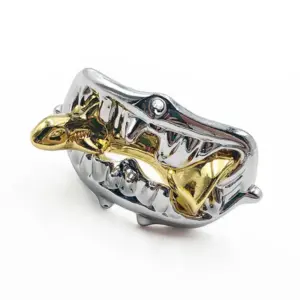
I’ve seen people spend days on this. My brother-in-law once took a Magic Golden Mandarin Lock ($18.98) and tried to use needle-nose pliers to “help” the pieces fit. I nearly had a heart attack. You never use tools. The Magic Golden Mandarin Lock ($18.98) is a great example of why patience matters; it features two columns and a base that look impossible to separate, but they rely on the same rotational logic as a ring. If you can solve the Mandarin lock, you can solve a 4-band ring.
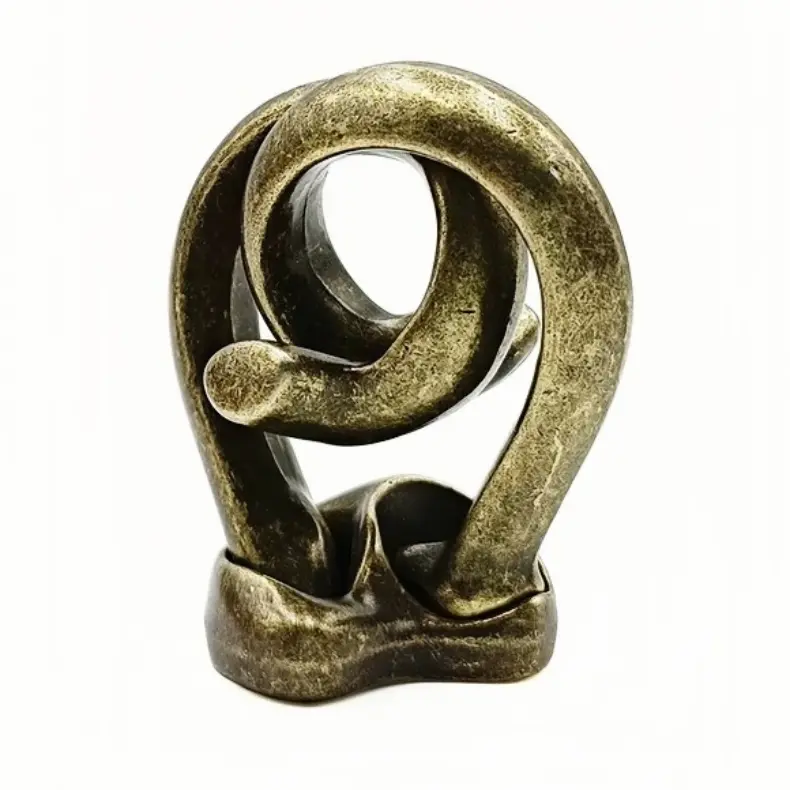
Magic Golden Mandarin Lock — $18.98
Why Your First Solve Will Always Feel Like an Accident
There is a moment in every puzzle solve where the pieces just… go. You aren’t entirely sure what you did, but suddenly the mess has become a solid object again. This is the “accidental solve,” and it’s the most dangerous part of the hobby. Why? Because you haven’t actually learned the puzzle yet.
To truly master how to solve a puzzle ring, you must immediately take it apart and do it again. And again. You’re looking for the “click”—not necessarily a sound, but a feeling of zero resistance.
Silver Heart Lock Puzzle
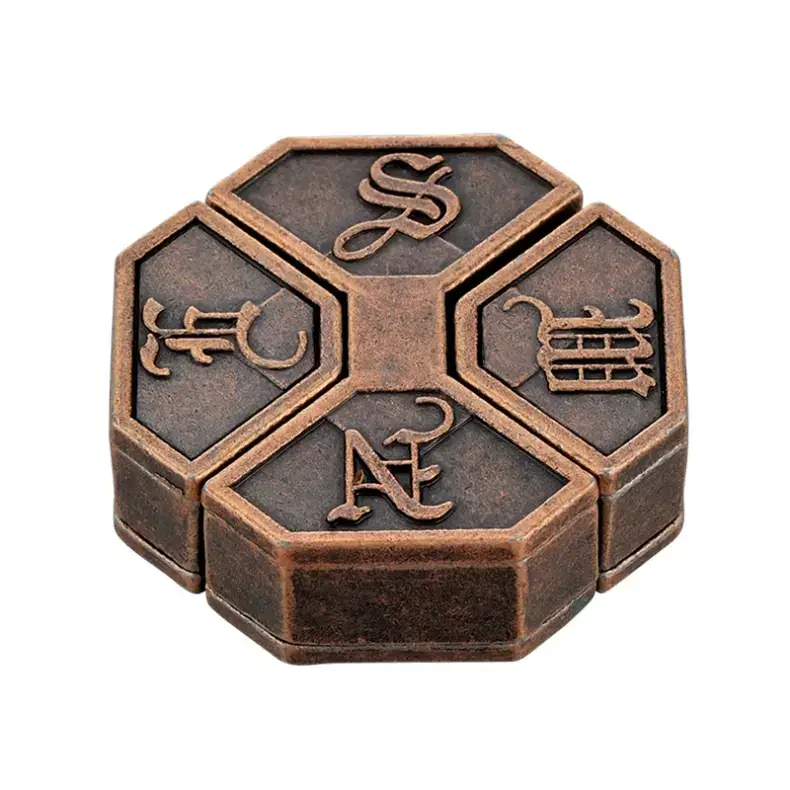
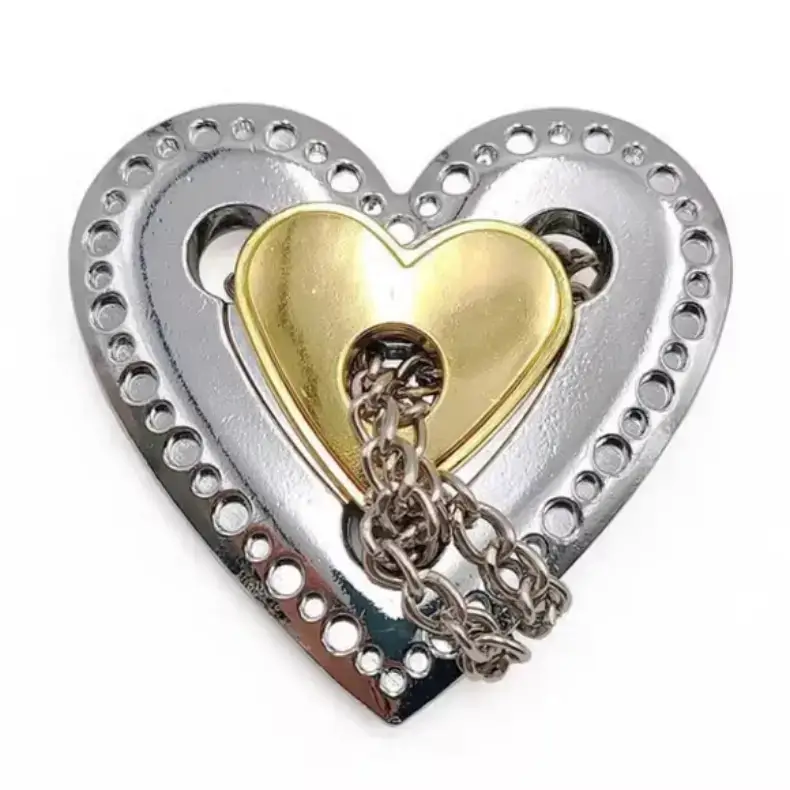
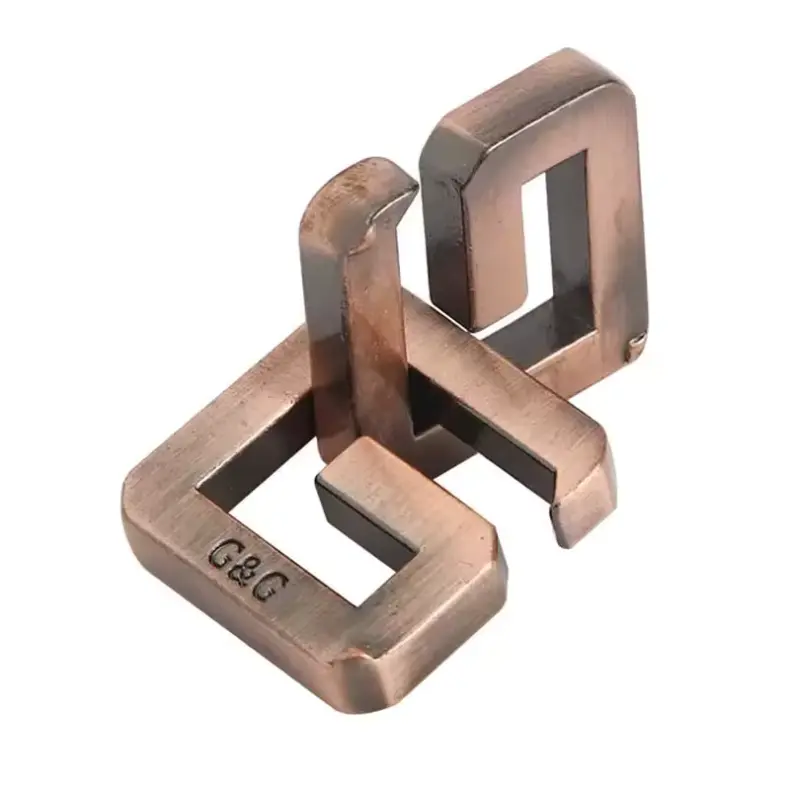
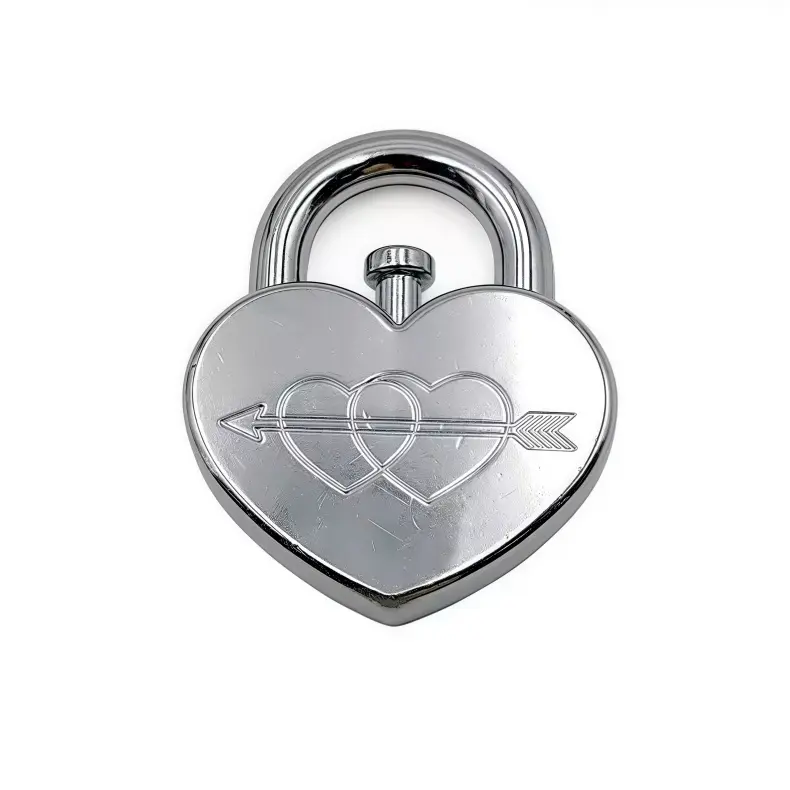
The Silver Heart Lock Puzzle ($18.89) is a masterclass in this “accidental vs. intentional” solve. It’s shaped like a heart, which makes it a popular gift, but don’t let the sentimentality fool you. The interlocking mechanism is clever and requires a very specific sequence of slides and rotations.
When I first unboxed this one, I solved it in about three minutes by sheer luck. I felt like a genius. Then I tried to do it again and it took me twenty minutes. The silver plating provides a very low-friction surface, which means the pieces can slip out of alignment if you aren’t holding them with just the right amount of tension. For $18.89, it’s one of the more “elegant” feeling puzzles in my collection. It doesn’t feel like a toy; it feels like an object that belongs on a mahogany desk. If you’re coming from beginners looking for magnetic feedback, the lack of magnets here will be a wake-up call. You are the only thing holding this puzzle together.
The Peak: The Secret Language of Friction
After testing over 200 of these things, I’ve noticed a pattern that most “how-to” guides miss. We focus so much on the visual steps—Step 1: Move Band A, Step 2: Rotate Band B—that we ignore the physics of the metal.
Here is the “peak” insight I’ve gained: High-quality metal puzzles use gravity as a hidden component.
Take something like the Shuriken Dart Edition Gear Puzzle ($12.77). When you hold it horizontally, the internal gears might be locked. But if you tilt it 45 degrees to the left, a pin you can’t even see might drop, clearing the path for the next move.
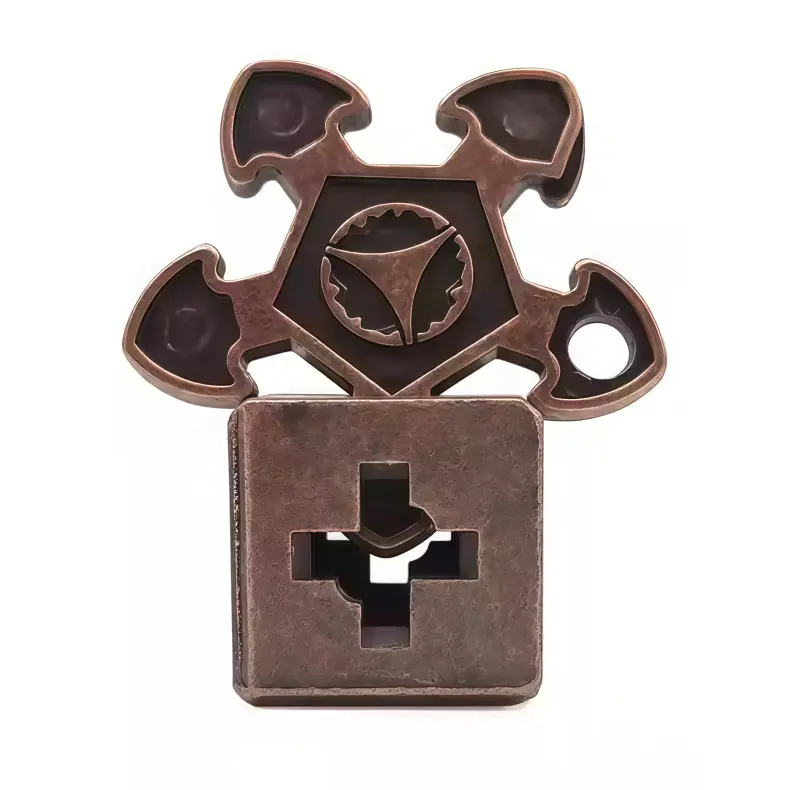
Puzzle rings are the same. Sometimes a band won’t slide into place because the other bands are hanging too low, creating just enough friction to stop the move. When you’re stuck, don’t look at the band you’re moving. Look at the ones you aren’t moving. Are they out of the way? Are they perfectly perpendicular to the axis of rotation?
This is why I tell people to close their eyes. If you can’t feel where the metal is catching, you aren’t paying enough attention. The Shuriken Dart Edition Gear Puzzle ($12.77) is particularly good at teaching this because the “ninja star” design is so balanced that any slight misalignment is immediately obvious to your touch.
Master-Level Frustration: When Rings Become Riddles
Eventually, you’ll get bored with the standard 4-band ring. You’ll want something that fights back. This is where we move into the territory of “Level 6” difficulty—puzzles that have a solve rate of less than 15% for first-time users.
Four-Dimensional Triangle Puzzle
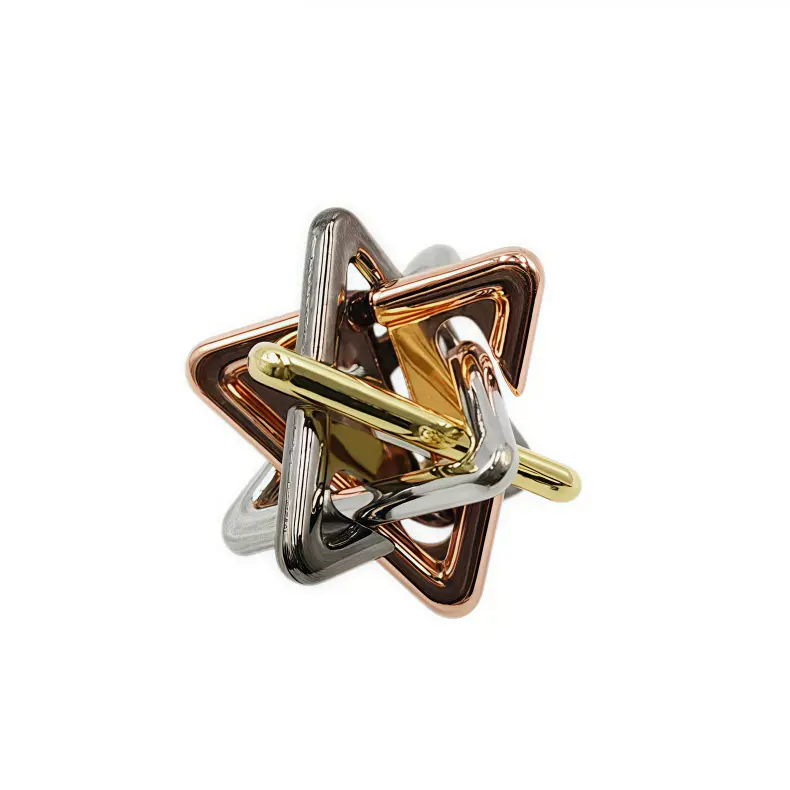
If you think you’ve mastered spatial reasoning, the Four-Dimensional Triangle Puzzle ($11.98) will humiliate you. It’s rated at a Level 6 difficulty, and for once, the marketing isn’t exaggerating. It consists of four uniquely colored triangular pieces that use dovetail connections.
I’ve had this on my desk for three weeks, and I still find the reassembly process to be a genuine mental workout. It’s not a “ring” in the traditional sense, but it uses the same interlocking principles taken to a geometric extreme. The “four-dimensional” claim refers to the way the pieces must move through each other’s space simultaneously. You can’t just move one piece at a time; you often have to move three at once to clear the internal tracks. For just $11.98, it’s the most “difficulty-per-dollar” you can find. It’s the kind of puzzle that makes you want to go play some Japanese logic grid games just to remind yourself that you actually do have a functioning brain.
The Symbolic Solve: Puzzles as Keepsakes
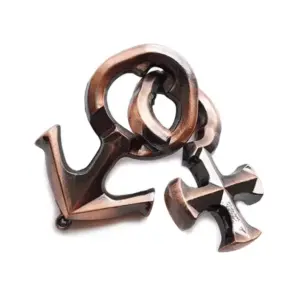
There’s a reason many of these ring puzzles are designed around themes of love and connection. The Cupid’s Heart Chain Puzzle ($13.15) and the Love Interlocking Arrow Cross Rings Puzzle ($11.98) aren’t just about the solve; they’re about the metaphor. Two things that seem separate but are fundamentally joined.
Love Interlocking Arrow Cross Rings Puzzle
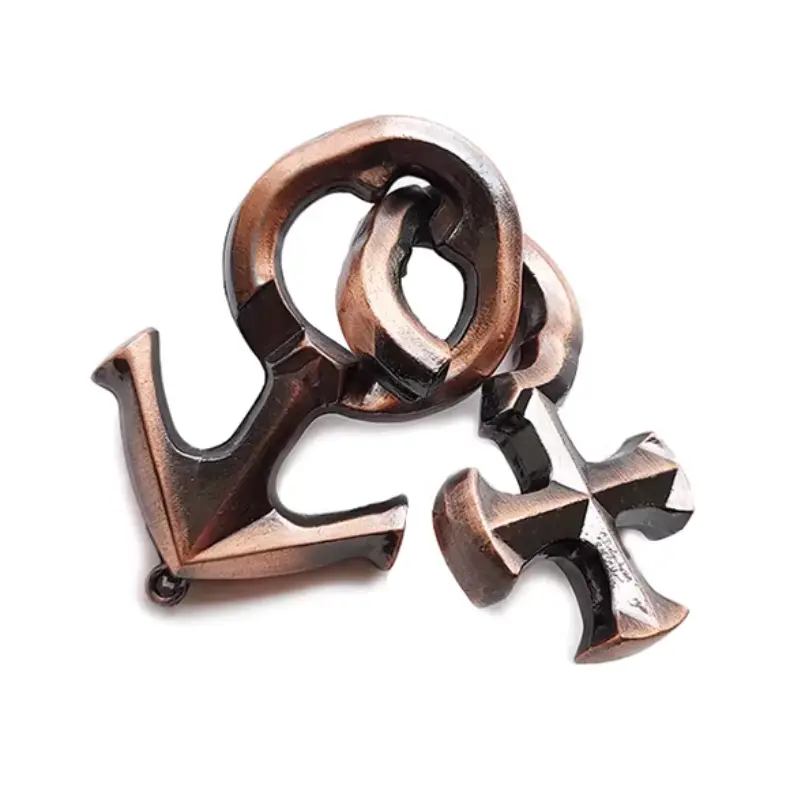
The Love Interlocking Arrow Cross Rings Puzzle ($11.98) is perhaps the closest thing to a “pure” puzzle ring in this lineup. It features two rings—one with an arrow motif and one with a cross—that represent “him” and “her.”
What’s interesting about this one is the hidden mechanism. Unlike a standard puzzle ring where the bands just hang, this one has a specific “keyhole” move. I gave this to a couple at their engagement party, and it took them the entire dinner to get it apart. It’s durable enough to be tossed in a pocket or purse, and at $11.98, it’s a much better “fidget” than a plastic spinner. It has that satisfying “clink” of high-quality zinc alloy that makes you feel like you’re handling something from an earlier century.
If the “arrow and cross” logic feels too simple, you might find the traditional Chinese architectural principles of the Bagua Lock Puzzle ($12.99) more your speed. It uses the mortise and tenon structure, which is essentially the “grandfather” of all interlocking puzzles.
Quick-Reference Comparison Table
FAQ: Everything You’re Too Frustrated to Ask
How do I identify which band is which?
In a standard 4-band ring, look for the two bands that form a “V” or a diamond shape. These are your outer bands. The other two will have “twisty” parts that run through the middle. If you’re struggling to visualize this, it’s often helpful to look at detailed diagrams of mechanical puzzles to understand how “nested” loops work.
Why won’t the last band slide into place?
You likely have the middle two bands upside down. Even if they look symmetrical, they usually aren’t. Try rotating the figure-eight you’ve formed by 180 degrees and see if the outer bands “nest” more comfortably. Never force it. If you have to push, the alignment is wrong.
Can I solve a puzzle ring while wearing it?
Technically, no. The bands need room to rotate and drop, which your finger prevents. However, some people use a piece of thread to keep the bands together once solved so they can slide it onto their finger.
Are these puzzles safe for kids?
Most metal puzzles like the Double G Lock Puzzle ($11.99) are great for kids aged 8 and up. However, for very young children, the small parts and the “frustration factor” might be a bit much. The Double G Lock Puzzle ($11.99) is actually a great “entry point” because it’s tactile and logic-based without being overly complex.
What if I accidentally bent one of the bands?
This is the “death knell” for a puzzle ring. If the metal is bent even slightly, the tolerances will be off, and the puzzle may become unsolvable. This is why I emphasize restraint. If you’re stressed, take a break and play some physics-based tabletop challenges to reset your fine motor skills.
Is there a “master key” for all ring puzzles?
Not really, but there is a master logic. Almost all of them rely on the “Baguenaudier” principle—a sequence of moves where each step is dependent on the previous one. You can learn more about this ancient Chinese ring logic to see how deep the rabbit hole goes.
How do I clean my metal puzzles?
A simple microfiber cloth is best. For silver-plated pieces like the Silver Heart Lock Puzzle ($18.89), avoid harsh chemicals which can strip the plating. Just the oils from your hands will eventually give the metal a nice “patina.”
Why are some puzzles so much cheaper than others?
Price usually reflects the complexity of the cast and the quality of the finish. A Metal Screw Interlock Riddle ($13.98) is affordable because it uses a simpler screw-and-nut mechanism, whereas a Level 6 geometric puzzle requires much tighter tolerances during manufacturing.
My puzzle arrived “pre-solved.” Should I take it apart?
Yes! But pay attention as you do. The “disassembly” is 50% of the learning process. If you just rip it apart without looking, you’re going to have a very long afternoon ahead of you.
What is the most common mistake beginners make?
Trying to solve it with their eyes only. You have to feel the tension. If a piece feels “mushy,” it’s in the wrong spot. If it feels “solid,” it’s likely blocked. You’re looking for that “smooth glide.”
Are there “fake” puzzle rings?
Some rings are sold that look like puzzles but are actually soldered together. These are just jewelry. A real puzzle ring will always have a bit of “jingle” to it when you shake it.
What’s a good “next step” after mastering rings?
I usually point people toward the Metal Screw Interlock Riddle ($13.98). It introduces a “hidden mechanism” element where you have to combine twisting and pressing. It’s a different kind of mental “click.”
Do I need to be good at math to solve these?
Not at all. You need to be good at patience. It’s about spatial reasoning—the ability to rotate objects in your mind. If you find that difficult, practicing with logic-based grid games can actually help strengthen those neural pathways.
Why do some people call these “friendship rings”?
Historically, they were given as tokens of commitment. The idea was that if the wearer took the ring off to “stray,” they wouldn’t be able to get it back together quickly enough to hide their secret. It’s a bit of a dark history for such a fun object!
Can I use WD-40 on a sticky puzzle?
I wouldn’t. Most modern cast puzzles use alloys that don’t need lubrication. If it’s sticking, it’s almost certainly an alignment issue, not a friction issue. Plus, you don’t want lubricant on your hands while you’re trying to grip small metal bands.
The One Puzzle That Teaches You How All the Others Work
Whenever I’m asked where to start, I always go back to that hardwood floor moment. If I had started with a training tool instead of a family heirloom, I would have saved myself a lot of grief.
If you want to truly understand how to solve a puzzle ring without the high stakes of ruining a piece of jewelry, start with the Four-Leaf Clover Puzzle ($13.89). It strips away the “jewelry” aspect and forces you to focus on the pure geometry of the interlock. It taught me more about the “V-method” and anchor bands than any YouTube video ever could.
The beauty of this hobby is that once you solve that first one intentionally—not by accident, but because you understood the metal—every other puzzle becomes a conversation rather than a confrontation. You stop fighting the object and start listening to it. If this clicked for you, our collection of traditional mechanical locking designs is the natural next step in your progression.
The next time you hear that “clatter” on the floor, don’t panic. Just pick up the bands, find the “V,” and remember: the solution is already there, waiting for you to stop forcing it.