The third time the brass pin slipped past my thumb and retreated into the dark interior of the mahogany casing, I didn’t swear. I didn’t shake the box. I set it down, walked into the kitchen, and made a very slow cup of coffee. That is the fundamental truth of the puzzle box puzzle: it is a dialogue between your impatience and a designer’s wit. If you rush, you lose. If you force it, you break the conversation—and likely the mechanism.
After testing over 200 mechanical challenges ranging from $10 cast-iron trinkets to $500 limited-edition Karakuri boxes, I’ve realized that the most “difficult” puzzles aren’t the ones with the most steps. They are the ones that exploit your assumptions about how physical objects should behave. We assume a lid lifts; we assume a key turns clockwise; we assume gravity is a constant, not a tool. My thesis for any serious collector is simple: the best puzzle boxes punish impatience and reward observation, acting less like toys and more like tactile philosophy.
The Architecture of the Secret: Why We Solve
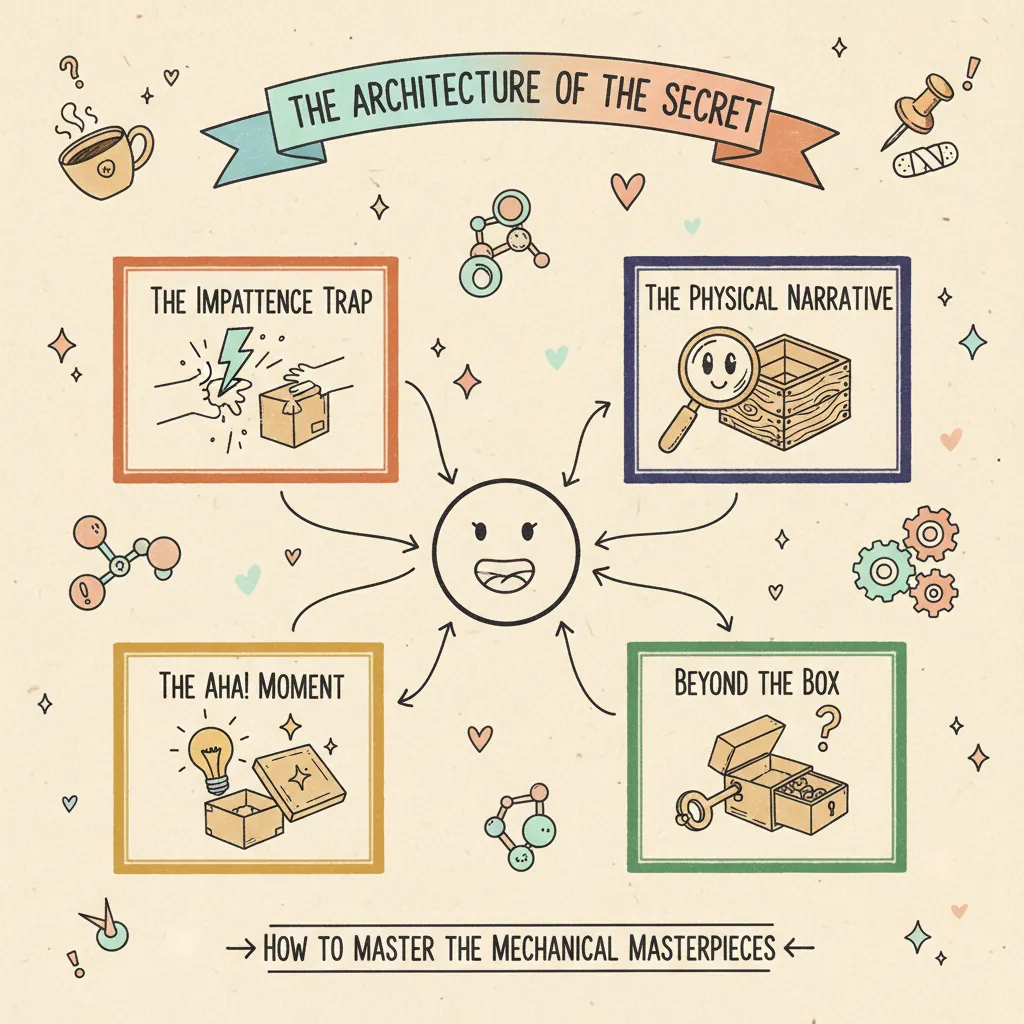
The appeal of a puzzle box isn’t just the “aha!” moment of the solve; it’s the physical narrative of the discovery. When you hold a well-crafted box, you are engaging with a history that stretches back to 19th-century Japan and Victorian England. These objects were originally designed to protect valuables—jewelry, secret letters, or even early scientific instruments. Today, they serve as a necessary friction in an increasingly frictionless digital world.
There is a specific cognitive satisfaction in finding a seam that shouldn’t exist. Research into how humans interact with physical enigmas suggests that the “click” of a successful solve releases a dopamine hit similar to finishing a marathon, albeit one for your fingertips. Unlike a digital game, a physical box offers weight, temperature, and sound. You can hear a tumbler fall; you can feel the wood expand slightly with the humidity of your palms.
Spotlighting the Mechanical Masterpieces
To understand the spectrum of this hobby, we have to look at the pieces that define their categories. I’ve selected three “spotlight” products that represent the pinnacle of entry-to-mid-level box and lock design.
3D Wooden Puzzle Treasure Box
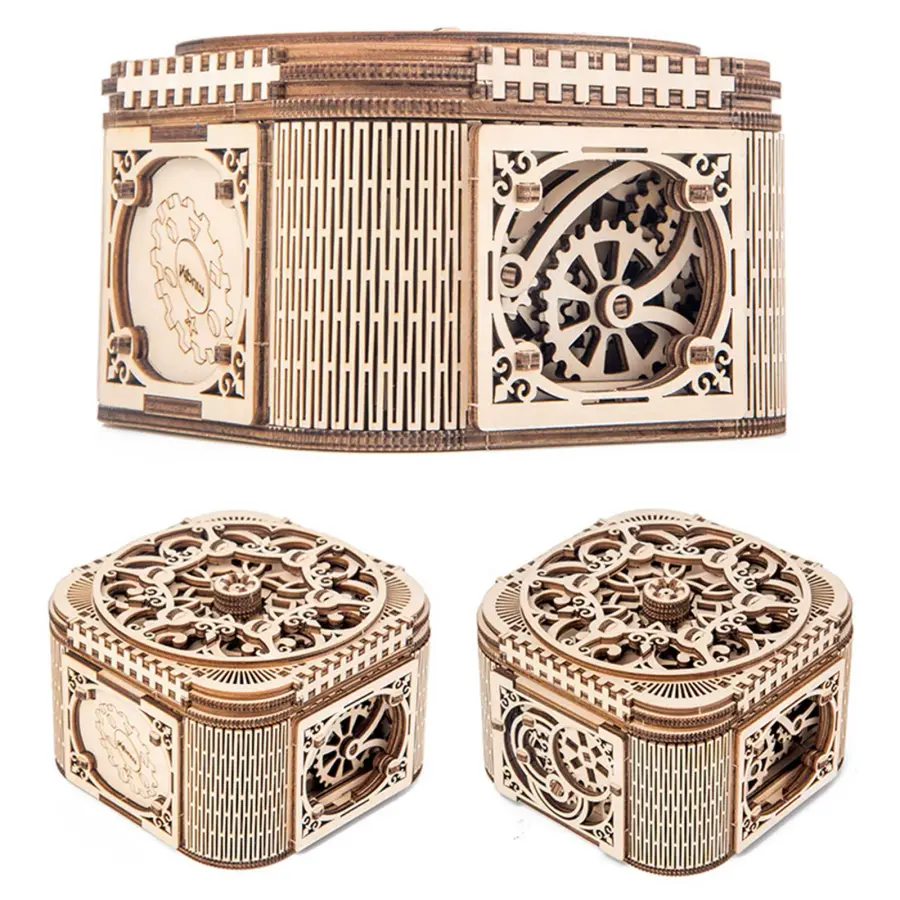
The 3D Wooden Puzzle Treasure Box ($29.99) is less of a “trick” and more of a mechanical odyssey. Most boxes come pre-assembled, but this one demands you understand its internal organs before you’re allowed to use it. With roughly 150 to 200 laser-cut pieces, you are essentially building a functional vault.
What I love about this kit is the transparency. Usually, the “magic” of a puzzle box is hidden behind solid walls. Here, the gears are visible. You can see the teeth of the drive wheels engaging as you turn the dial. It took me about two and a half hours to assemble, and the precision is remarkable for the price point. If you’ve ever wanted to feel like a 19th-century horologist, this is your entry point. The only downside? If you sand a gear slightly off, the movement won’t be as buttery smooth as it should be. Take your time with the wax. It’s a great way to introduce shared problem-solving for all ages into a rainy Sunday afternoon.
Chinese Old Style fú Lock with Key
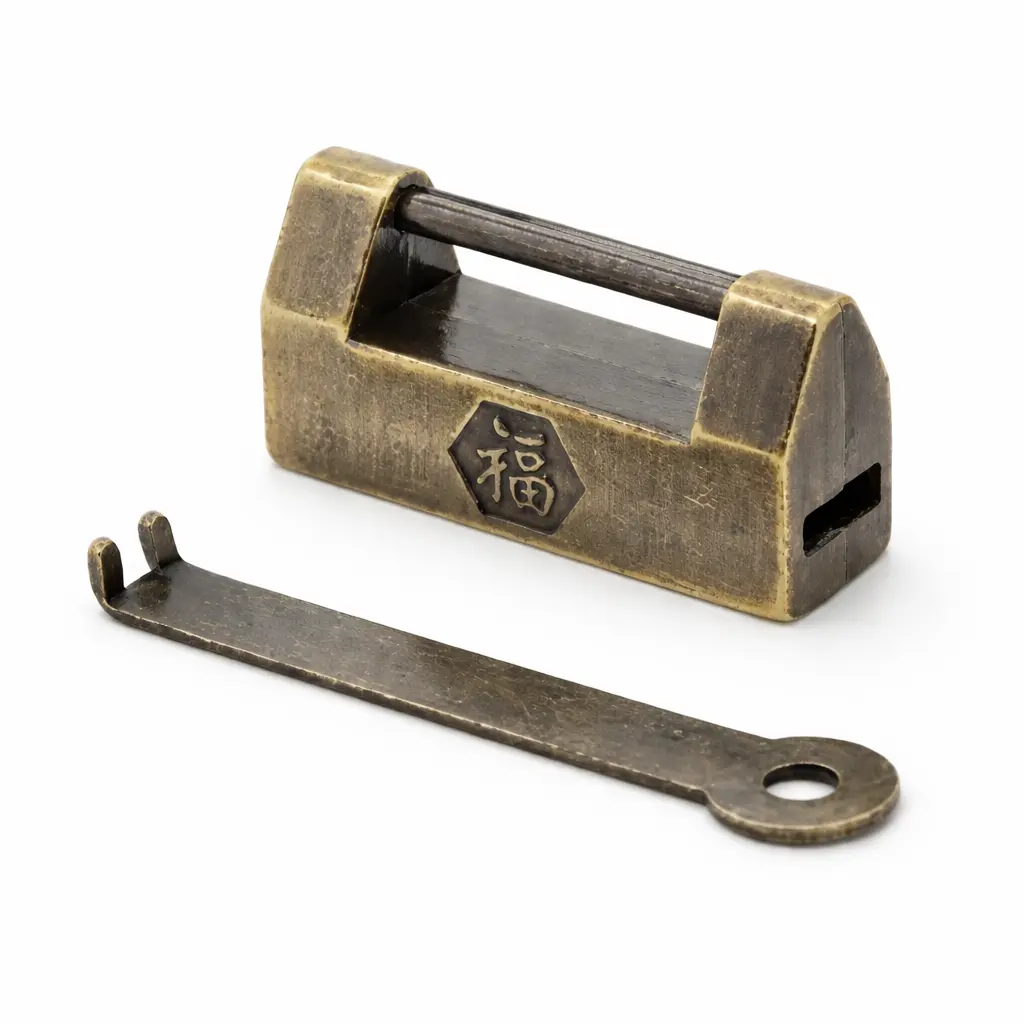
At the other end of the size spectrum is the Chinese Old Style fú Lock with Key ($19.99). This isn’t a “puzzle” in the sense of having twenty hidden steps, but rather a study in traditional mechanical logic. Measuring just 30mm, it’s a miniature marvel of antique bronze finish.
The “fú” (fortune) character embossed on the side gives it a weight of history that modern plastic puzzles lack. The challenge here is the rod-key. It doesn’t work like a Yale lock. You have to find the specific angle and pressure to release the internal leaf springs. I keep one of these on my leather journal. It’s a tactile reminder that security used to be an art form. While it’s technically “easy,” the satisfaction of the mechanical click is immense. It’s the kind of object that makes you realize how much we’ve lost in the transition to digital keypads.
3D Wooden Puzzle Clock DIY Kit
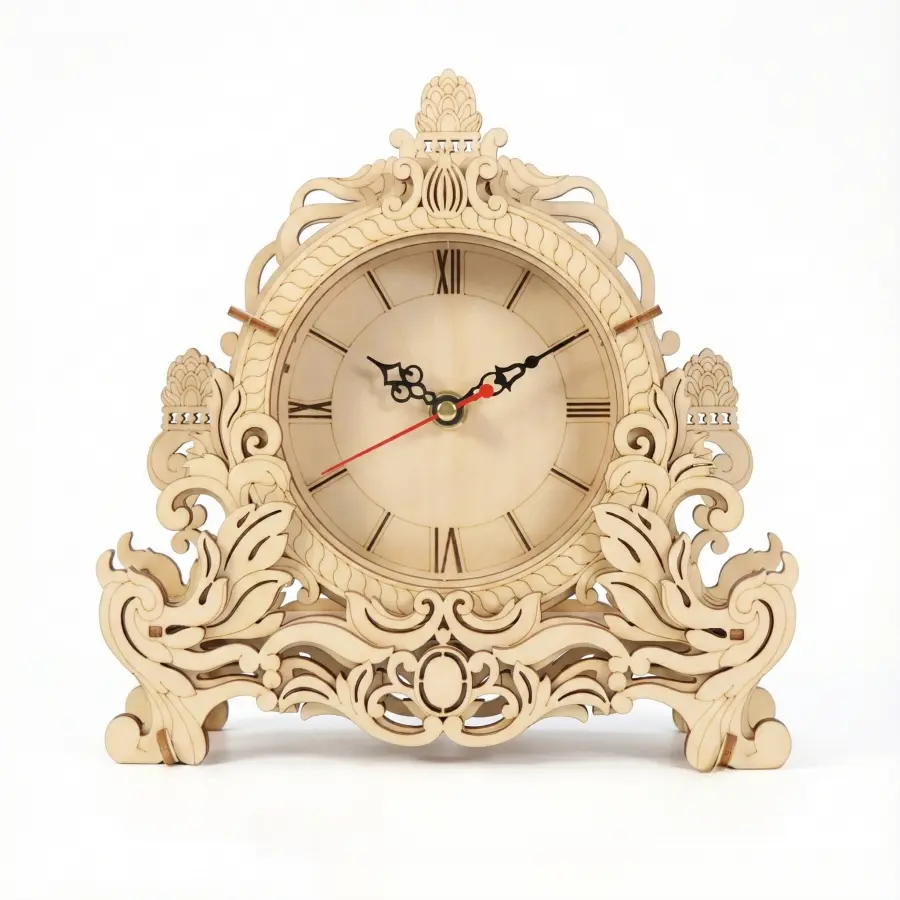
The 3D Wooden Puzzle Clock DIY Kit ($26.99) challenges the definition of a “puzzle box” by being a box that tells time. With 28 pieces, it’s a much faster build than the Treasure Box, but it’s no less rewarding. The baroque styling feels elevated, like something you’d find in a dusty library in a Sherlock Holmes story.
The solve here is in the assembly—ensuring the working movement is perfectly aligned within the wooden housing. I’ve found that many people who struggle with “trick” boxes actually prefer these functional puzzles because the goal is clear, even if the path requires precision. It’s a 30-minute project that results in a piece of home décor you actually want to display. If you find your brain needs a break from spatial logic, you might try testing your physical steady-hand coordination with some balance games before diving back into the heavier mechanical builds.
The Peak Moment: When Logic Betrays You
After opening hundreds of these things, I noticed a pattern that most beginners miss. We are trained by the modern world to look for buttons or sliders. But the most devious designers—the ones who truly master the puzzle box puzzle—rely on “blind” mechanisms.
I remember a specific Japanese box that had no moving parts on the exterior. I spent forty minutes trying to slide panels that were actually glued shut. The solution? Centrifugal force. You had to spin the box on a flat surface to move internal pins that were held by magnets.
This is the “Peak Moment” of the hobby: the realization that the solution isn’t “out there” on the surface, but “in there” in the physics of the object. It forces a complete mental reset. You stop looking at the box as a container and start looking at it as a physical system. This shift in perspective is exactly why advanced wooden sequential discovery is so addictive. It’s not about finding the key; it’s about understanding the lock’s soul.
Material Science: Why Metal Teaches You More
While wood offers warmth and history, metal puzzles offer a level of machining precision that changes the nature of the solve. In a wooden puzzle, you can sometimes “cheat” by forcing a piece—the wood will give slightly. In metal, there is no mercy. If it doesn’t move, it doesn’t move.
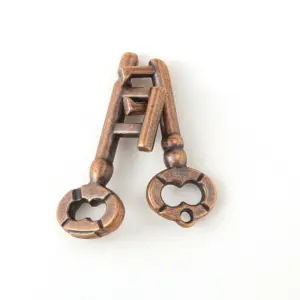
Take the Cast Keyhole Gold & Silver ($13.99). It looks like two flat pieces of metal. But as you slide them, they reveal a 3D maze hidden in the notches. This is a “disentanglement” puzzle that acts like a box without walls. You are trying to navigate an interior space that you can only see through the gaps. It’s pocket-sized, but I’ve seen grown men spend an entire flight trying to separate these two pieces.

Cast Keyhole Gold & Silver — $13.99
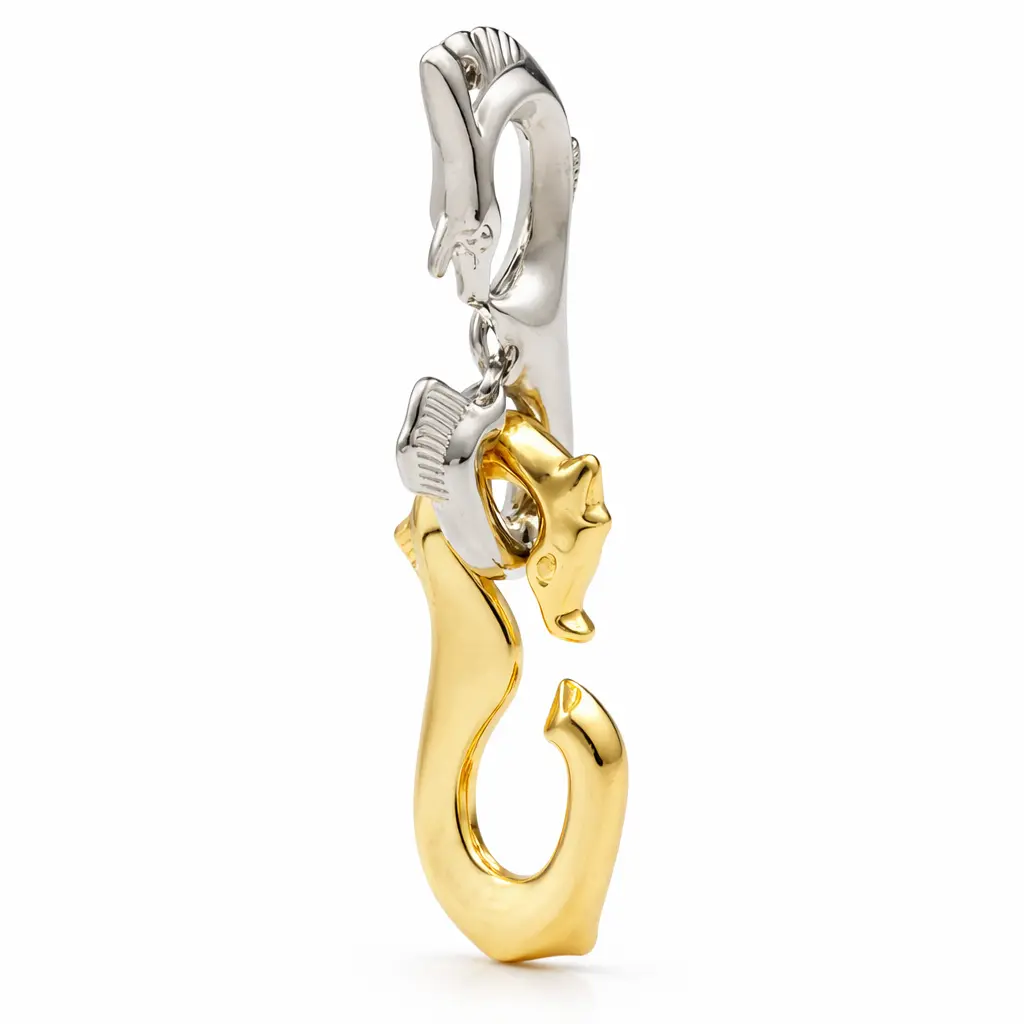
Similarly, the Dual Seahorse Gold & Silver Brain Teaser ($14.99) uses a hidden threaded mechanism. It’s a “twist” puzzle that mimics the action of opening a secret compartment. The mirror-polished finish makes it feel more like jewelry than a toy, which is a hallmark of the long history of mechanical puzzles.
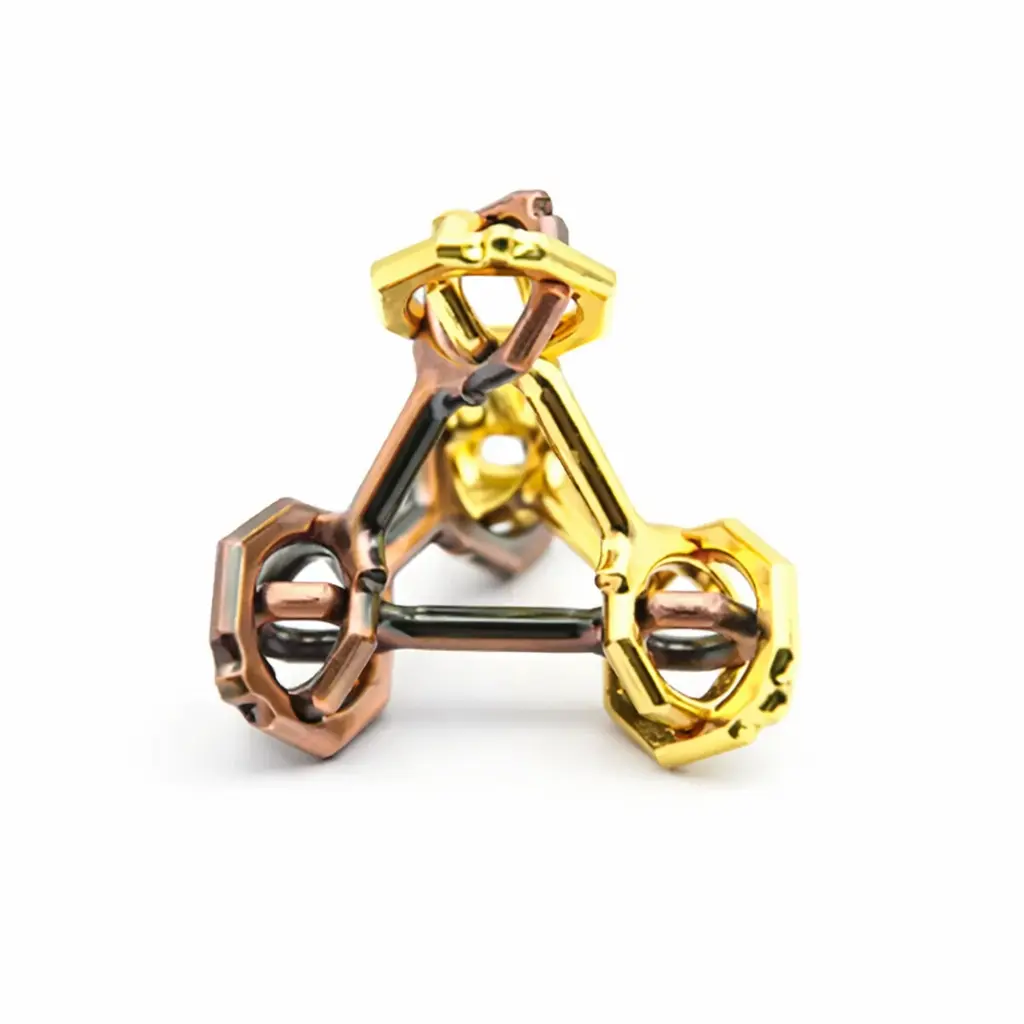
Cast Coil Triangle Puzzle — $25.99
If you prefer something chunkier, the Cast Coil Triangle Puzzle ($25.99) is what I call a “desk fidget” for the over-educated. It’s three interlocking rings that form a stereoscopic triangle. It’s heavy, brass-toned, and feels like a piece of industrial hardware. It doesn’t hide a “treasure,” but the “secret” is the path required to knit the three pieces back into one. It’s the perfect companion for someone who needs to keep their hands busy during a long Zoom call.
The Interlocking Enigma: Beyond the Box
Sometimes the “box” is the shape itself. Interlocking puzzles, particularly the “Luban” style, are the ancestors of the modern puzzle box. They rely on mortise-and-tenon joinery—the same technique used to build ancient Chinese temples without a single nail.
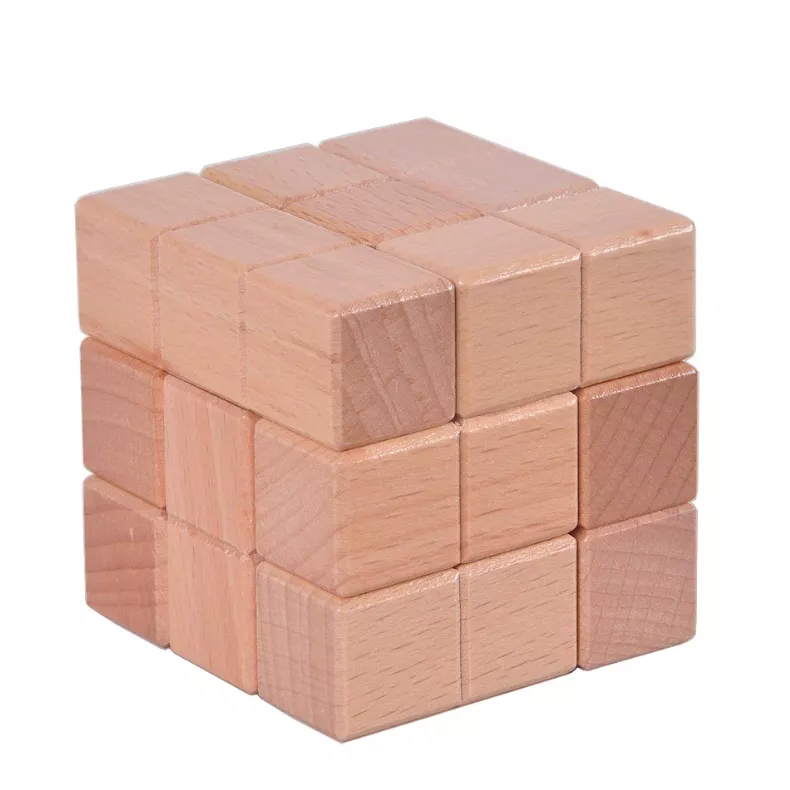
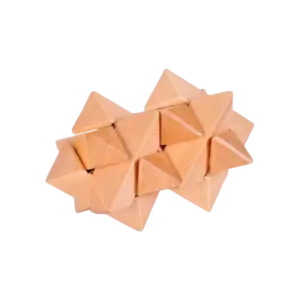
Luban Cube Puzzle — $21.99
The Luban Cube Puzzle ($21.99) is the classic 3x3x3 challenge. Six or seven notched blocks must be fitted together in a specific sequence. If you get the order wrong, the last piece simply won’t fit. It’s a lesson in sequential logic. I’ve found that people who enjoy digital logic grids often find the Luban Cube to be the perfect physical manifestation of those same principles.
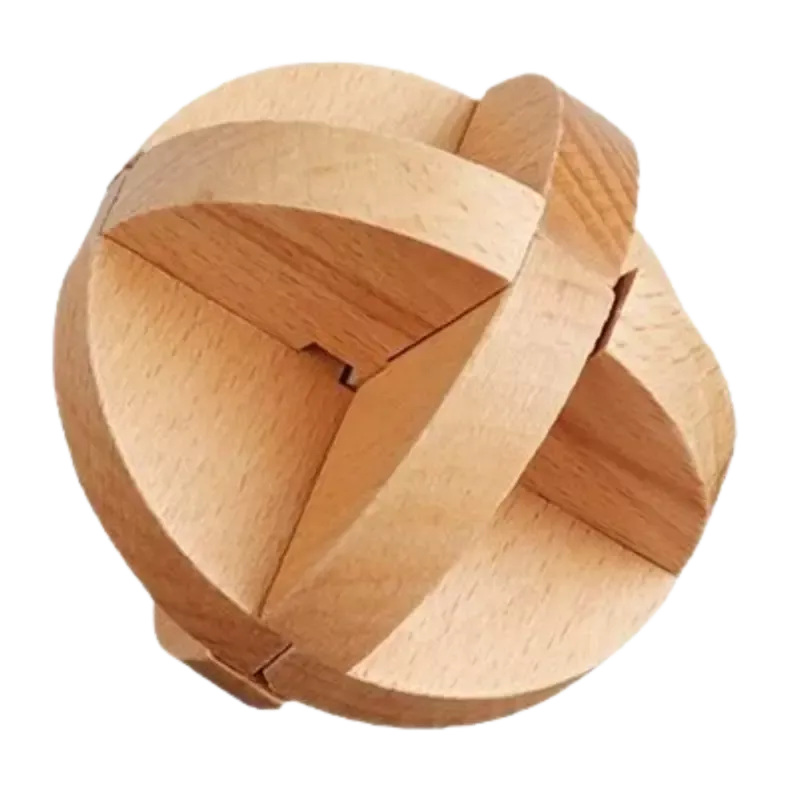
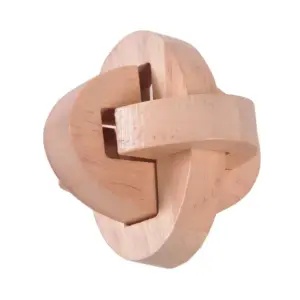
Luban Sphere Puzzle — $16.99
For a more meditative experience, the Luban Sphere Puzzle ($16.99) offers a softer aesthetic. Disassembling it is easy; rebuilding it is where the “quiet wisdom” comes in. It’s an exercise in mindfulness. I’ve had this one on my coffee table for months, and guests always gravitate toward it. It’s less intimidating than a box but just as complex.

Silver Heart Lock Puzzle — $18.89
For something more symbolic, the Silver Heart Lock Puzzle ($18.89) combines the “lock” and “interlocking” categories. It’s a silver-plated heart that requires a specific series of moves to open. It’s a popular gift, but don’t let the sentimentality fool you—the mechanism is genuinely clever.
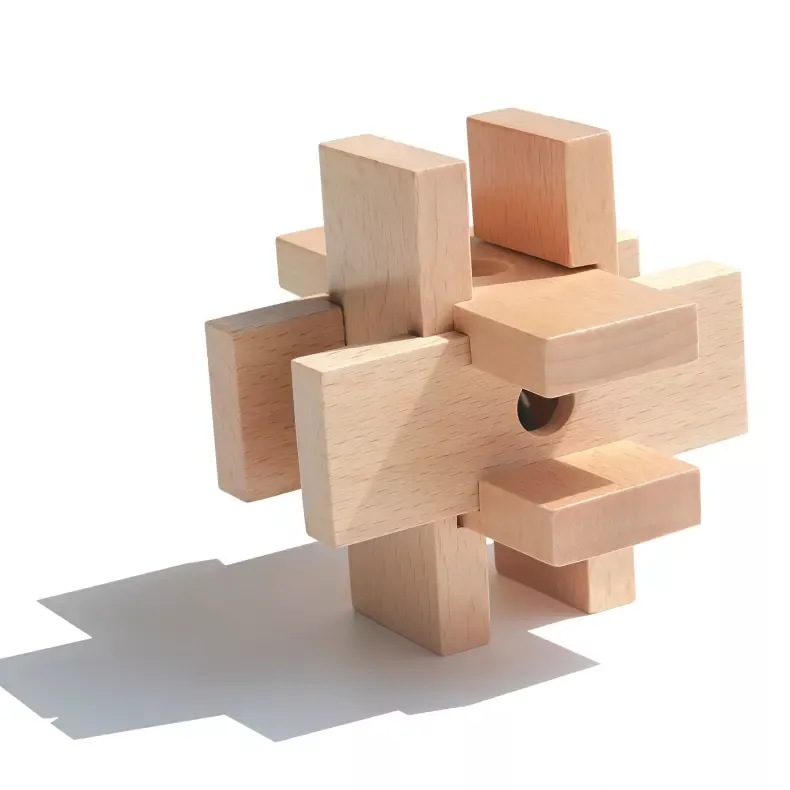
6 Piece Wooden Puzzle Key — $12.99
Finally, the 6 Piece Wooden Puzzle Key ($12.99) is the “minimalist” version of the Luban lock. It’s six hardwood pieces that form a key shape. It’s the kind of puzzle that proves you don’t need a $100 price tag to get a deep, engaging solve.
Quick-Reference Comparison Table
FAQ: Navigating the World of Trick Boxes
How do I solve a puzzle box without the instructions?
The most important rule is: never force it. If a panel doesn’t slide with gentle pressure, it isn’t meant to slide yet. Look for “dead ends”—sliding a piece as far as it can go might unlock a secondary movement elsewhere. Use all your senses. Sometimes you can hear a pin drop or feel a magnet release. If you’re really stuck, many enthusiasts suggest looking into the nuances of trick box mechanics to understand common tropes like gravity pins or sliding dovetails.
Are Japanese puzzle boxes different from “trick” boxes?
Yes and no. All Japanese puzzle boxes (Himitsu-Bako) are trick boxes, but not all trick boxes are Japanese. Traditional Himitsu-Bako rely on a specific series of sliding panels (sun-steps) and are often decorated with Yosegi-zaiku marquetry. “Trick boxes” is a broader category that includes boxes with hidden buttons, magnetic locks, or sequential discovery elements. The history of jigsaw puzzles and other mechanical enigmas shows a convergence of these styles over the last century.
What is “sequential discovery”?
Sequential discovery is a sub-genre of puzzle boxes where you find “tools” inside the puzzle to help you progress. For example, you might find a small metal pin hidden in a drawer, which you then use to poke into a hole to release a second drawer. These are generally more expensive and complex. Many collectors who start with simple boxes eventually graduate to advanced wooden sequential discovery.
My wooden puzzle box is stuck. What should I do?
Wood is a natural material that reacts to humidity. If a box was made in a humid climate and shipped to a dry one (or vice versa), the wood can swell or shrink. Try moving the box to a different room or using a hairdryer on a low, cool setting to gently normalize the moisture. Never use oil or lubricant on wood unless specified by the maker, as it can swell the fibers further.
Are these puzzles suitable for children?
Most mechanical puzzles are rated for ages 14+ because they require fine motor skills and patience. However, simpler metal puzzles can be great for younger kids to develop spatial reasoning. Just be wary of small parts in DIY kits like the 3D Wooden Puzzle Treasure Box ($29.99), which contains many tiny gears.
How do I care for metal cast puzzles?
Metal puzzles like the Cast Coil Triangle Puzzle ($25.99) are very durable but can pick up oils from your hands. A quick wipe with a microfiber cloth after a long solving session will keep the finish bright. If they develop a patina (especially the brass or bronze ones), some people prefer to leave it as a “mark of the solver,” while others use a tiny bit of metal polish.
What is a Luban lock?
A Luban lock (or Kongming lock) is a traditional Chinese puzzle based on interlocking wooden slats. It’s named after Lu Ban, a legendary structural engineer from the Zhou Dynasty. The genius of the design is that it stays together through friction and geometry alone—no glue or nails. You can see this in the Luban Cube Puzzle ($21.99).
How long should a solve take?
This varies wildly. A “Level 1” puzzle might take 5 minutes, while a “Level 10” can take weeks of “fiddling.” I always tell people that the “solve time” listed on a box is an average. Don’t feel bad if a 10-minute puzzle takes you an hour. The goal is the journey, not the destination.
Can I reset a puzzle box for someone else?
Almost always. Part of the design of a good puzzle box puzzle is that it can be returned to its original state. In fact, for many, the “re-assembly” is harder than the “disassembly” because you have to reverse-engineer the logic you just discovered.
Where should I start as a beginner?
I recommend starting with a mix of materials. Get one metal puzzle to understand precision, and one wooden kit to understand construction. Something like the Cast Keyhole Gold & Silver ($13.99) is a fantastic, low-stakes entry point that still feels like a “real” challenge.
Do these puzzles help with brain health?
While I’m a reviewer, not a doctor, there is significant research into cognitive benefits suggesting that spatial puzzles help maintain neuroplasticity. They require you to use parts of your brain—like 3D rotation and logical sequencing—that aren’t always engaged by daily screen time.
Why are some puzzle boxes so expensive?
You’re paying for two things: tolerances and design. A box where the seams are invisible to the naked eye requires incredibly high-end CNC machining or master-level woodworking. Furthermore, you’re paying for the “IP” of the designer who spent months or years perfecting a mechanism that won’t jam.
Is it “cheating” to look up the solution?
In the community, we call it “the spoiler.” Most of us try to avoid it at all costs, but if you’ve been stuck for three months and the puzzle is just gathering dust, a small hint can help you move past a “mental block.” Just don’t watch the whole video—watch just enough to get the next click.
What’s the best way to display a collection?
I use shallow shelving units that allow people to pick them up. A puzzle box shouldn’t be behind glass; it’s a tactile object. I often leave one or two “unsolved” on a coffee table to see which of my friends has the “puzzle itch.” It’s a great social experiment.
Are there digital versions of these puzzles?
There are many apps, but they lack the sensory feedback. If you want a digital break that still feels like a logic challenge, try something like digital logic grids. But for the true “box” experience, nothing beats the weight of real wood or metal in your hand.
Start with the Treasure, Stay for the Logic
The first time I finally opened the 3D Wooden Puzzle Treasure Box ($29.99), I realized I wasn’t just looking at a container. I was looking at a map of my own cognitive biases. I had assumed a certain gear was decorative; it was actually the primary locking lug. That “aha!” moment is the closest thing we have to real-world magic.
If you are just starting out, don’t buy the most expensive thing on the shelf. Start with the Cast Keyhole Gold & Silver ($13.99). It’s small, it’s affordable, and it taught me more about the importance of “feeling” a mechanism than any $500 box ever did. It forces you to stop looking with your eyes and start looking with your fingers.
Mechanical puzzles are one of the few things in 2026 that still demand your undivided, analog attention. They are a protest against the “scroll” culture. Whether you’re building a clock or trying to separate two seahorses, you are engaging in a tradition of mystery that is as old as civilization itself. If this clicked for you, the advanced wooden sequential discovery path is the natural next step in your collection. Put down the phone, pick up a box, and let the frustration begin—it’s the most fun you’ll have all week.