The Sound of Getting Stuck: Why a Simple ‘Click’ is So Addictive
That sound—the dry, definitive click of a sliding panel meeting an unseen obstruction—is where the obsession starts. It’s the sound of being wrong. I know because I was sitting there, a former designer of escape rooms, completely stumped by a small, lacquered box advertised as “Level 1.” My fingers had found a seam, a hint of movement, and then… nothing. Just that smug, wooden click. It wasn’t the complexity that got me; it was the sheer, silent confidence of the object. It knew a secret, and it wasn’t telling.
We’ve all been there. Maybe you saw a wooden puzzle box in a heist film, whirring open to reveal a microfilm. Or you encountered an escape room puzzle box that made you feel like a genius (or a fool). That moment of frustration isn’t a bug; it’s the core feature. Your brain, presented with a sealed container and the undeniable proof of a hidden compartment, enters a state of low-grade emergency. It must open. This is the primal hook. It’s not about what’s inside (often, it’s nothing). It’s about the conquest of the mechanism itself.
Pop culture sells the romance of the secret compartment box—the twist-of-a-lamp, slide-of-a-panel revelation. But the real allure is more tactile. It’s the heft of good wood in your palm, the visual hunt for a hidden seam, the subtle tactile feedback of a panel shifting a millimeter under your thumb. This is the opposite of a screen. You’re not clicking a mouse; you’re applying pressure, listening, testing leverage. You’re in a silent conversation with an inanimate object. And when that final lock yields, the satisfaction is physical. It’s a direct dopamine hit for your hands. (If you want a deeper dive into the neuroscience of that satisfying click, our piece on why your brain craves it breaks it down.)
This is what cheap, poorly-made boxes steal from you. That flimsy “Level 1” box that first frustrated me? Its click wasn’t a logical step in a solve path; it was just a piece of warped wood jamming. The magic dies when the mechanism feels random, not intentional. A well-crafted box, however, turns frustration into focused curiosity. Each dead end is a data point. That solid click isn’t a “no,” but a “not that way.” The puzzle box stops being a locked thing and becomes a system to be understood. Your mindset shifts from “How do I open this?” to “How does this work?”
And this is where the journey splits. For some, the goal is that single, triumphant opening—the “aha!” moment captured in a film. For others, it’s about the fidget-friendly pleasure of the dance itself, the rhythmic opening and closing of a satisfying mechanism. This is the “Fidget Factor,” and it’s a crucial way to categorize your own desire. Do you want a one-time revelation, or a tactile toy you’ll return to for years? For more on that irresistible, hands-on pull, explore the secret language of the puzzle box.
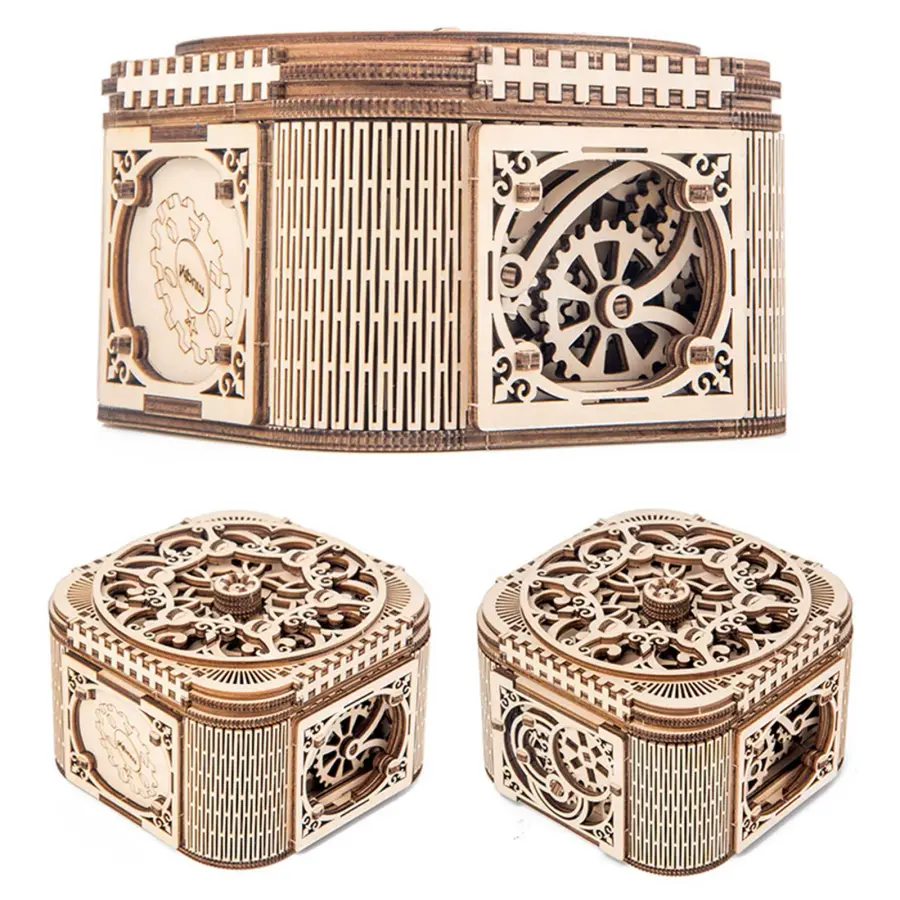
A perfect example of this dual-purpose design—a satisfying mechanism paired with actual utility—is something like this 3D puzzle treasure box. It offers the hands-on engagement of assembly and the ongoing pleasure of a secret mechanism, all while serving a real function afterward. It bridges the gap between pure puzzle and functional art.
So, that initial frustration? It’s the sign you’re doing it right. You’re paying attention. The box has your full focus. Now, let’s shift that focus from the what (stuck) to the how (the brilliant, hidden logic that got you stuck in the first place). The secret isn’t just in the compartment. It’s in understanding the language of the locks.
The Mechanism Glossary: From Blind Mazes to Sequential Discovery
That moment of focus, of listening for the next clue, is really a conversation with the box’s internal logic. To understand what it’s trying to tell you, you need to know the dialect. Puzzle boxes speak through their mechanisms—the hidden physical systems that guard their secrets. Think of this as your translator’s guide to the most common dialects you’ll encounter, from the elegantly simple to the deviously complex.
Let’s start with the foundation of most wooden puzzle boxes: Sliding Panels. This is where 90% of new solvers get their start. The concept is straightforward: a panel moves, but not directly. It might be blocked by another panel, requiring a specific sequence (slide A left to unlock B, then slide B down, etc.). The satisfaction here is all in the tactile feedback—the smooth glide of a well-sanded piece, the definitive thud of a panel reaching its endpoint. Many traditional Japanese puzzle boxes use intricate, multi-step sliding sequences. The key is that nothing is forced; if you’re using pressure, you’re on the wrong solve path.
Then there’s the Blind Maze. This is a classic trick that preys on your assumptions. From the outside, you see a small pin or bead that seems to roll freely in a groove. Your instinct is to guide it to a goal. The trick? The visible groove is a decoy. The real path is a labyrinth hidden inside the walls of the box, invisible to you. You navigate purely by sound, tilt, and feel, listening for the faint rumble of the ball passing through internal channels. It’s a lesson in ignoring what you see and trusting what you hear.
Now for the crown jewel for many enthusiasts: Sequential Discovery. This is the mechanism type that feels most like an escape room or a video game like The Room. The puzzle doesn’t just open; it unfolds. You start with a sealed box and, through exploration, discover the tools you need to proceed hidden within the puzzle itself. A poke of a panel might release a hidden pin; that pin might be used to trip a latch elsewhere, revealing a key. Each step provides a component for the next. This mechanism transforms the box from a static object into a dynamic narrative. It’s not about finding the compartment; it’s about engineering your way to it.
Magnets introduce silent, invisible force. Magnetic locks can be wonderfully deceptive. A panel might seem solid until you move a specific external piece into the correct position, aligning internal magnets to release a catch. The lack of any visible keyhole or moving part is the whole point. The quality of these boxes lives and dies by the precision of that magnetic alignment—a cheap version will feel sloppy and inconsistent, while a good one offers a satisfying, almost magical, snap of release.
Finally, the Dovetail Trick is a masterclass in woodworking deception. From one angle, the box looks like it’s assembled with classic, interlocking dovetail joints. The hidden seam is expertly camouflaged within the pattern of the joint itself. Solving it requires running your fingers along what appears to be a decorative edge, searching for the slight lip or texture change that reveals the true opening point. It’s a mechanism that celebrates craftsmanship and intricate carving technique.
You’ll often find these mechanisms layered. A box might use a sliding panel to access a magnetic lock, which reveals a tool for a sequential discovery step. This layering is what defines true difficulty, more than the raw number of moves. (This is why decoding difficulty levels is so tricky—a brilliantly designed 5-step sequential discovery box can be a far greater intellectual challenge than a 50-move sliding panel marathon).
Understanding these core puzzle box mechanisms demystifies the entire process. It shifts the task from random fiddling to informed exploration. You stop asking “What moves?” and start asking “How does this want to move?” Once you can identify the language a box is speaking, you’re no longer just guessing—you’re problem-solving. For a practical application of these principles, you can see them in action in our step-by-step solving guide. These concepts are part of a broader world of mechanical puzzles that have fascinated people for centuries.
Now, with this decoder ring for mechanisms in hand, you’re ready for the real fun: matching the type of hidden logic you enjoy to the box you’ll actually love to solve.
Your Puzzle Box Compass: Choosing by Experience, Not Just Price
So you can now hear a box whispering its mechanical language—a sliding panel here, a potential blind maze there. That’s the foundation. But the real secret to satisfaction isn’t just picking a box you can solve; it’s picking the box whose personality matches yours. Forget scrolling by price or a random “difficulty level.” Grab your compass. We’re navigating by experience.
First, perform the Heft Test (mentally, for now). This is borrowed straight from woodworking forums. A well-crafted box, even a small one, has a certain density, a satisfying weight in the hand. Cheap, laser-cut 3D wooden box puzzles or novelty trick boxes often feel light, even hollow, because they use thin basswood or MDF. A solid piece, whether it’s a handcrafted Japanese box in Paulownia or a modern piece in walnut, feels deliberate. This heft translates directly to durability and the quality of the secret mechanisms inside. A box that feels substantial is less likely to warp, bind, or have its delicate hidden compartments fail after a dozen solves.
Now, ask yourself the core question: Are you a Fidget Factor person or a One-and-Done solver? This is crucial and almost never discussed.
If you love the tactile process itself—the slide of wood, the snick of a catch, the rhythmic manipulation—you want a box with high re-solveability. Look for mechanisms that are a pleasure to execute, like satisfying sequential discovery boxes where the journey is the point, or trick boxes with a clever but repeatable series of moves. These are the boxes you’ll leave on your desk to absentmindedly solve during a phone call.
If you’re driven purely by the “Aha!” moment and the conquest of the unknown, you’re a One-and-Done solver. For you, the value is in the first, intense intellectual struggle. After that first open, the magic is in the memory, not the repetition. You should prioritize boxes known for deep, devious, and layered logic, even if you’ll only solve them fully once. They become trophies of a mental battle won.
Decoding Your Skill Level & “Difficulty”
This is where that Mechanism Glossary pays off. A manufacturer’s “Level 5” is meaningless on its own. Instead, cross-reference it with the mechanism types. As a rule: Sequential discovery adds exponential complexity. A box rated “5” that uses sequential discovery will be a steeper, more satisfying challenge than a box rated “7” that’s just a long series of identical slides. For a beginner puzzle box, I recommend a modern box with clear, logical sliding panels and maybe one simple trick (like a magnet). It teaches you the grammar without overwhelming you with syntax. Avoid the absolute cheapest trinkets; frustration with poor construction can kill the hobby before it starts. For curated options, see our list of 11 puzzle boxes for adults that actually reward your patience.
Mechanism Preference: What’s Your Neurological Flavor?
Do you love spatial reasoning? A blind maze inside a small puzzle box will be your jam. Prefer narrative and tangible cause-and-effect? Seek out sequential discovery where you find tools inside. Enjoy pure, elegant simplicity? A traditional Japanese box with its rhythmic sliding pattern might feel meditative. Your preference here is more important than any arbitrary difficulty number.
The Aesthetic & Utility Question
Is this a display piece, a desktop toy, or actual storage? This answers the user’s question about the difference between a ‘secret box’ and a ‘puzzle box’. A secret compartment box prioritizes the hidden space; the opening mechanism might be simple (a single sliding panel or magnet). A true puzzle box prioritizes the process of revealing the space; the compartment is the reward, not the primary function. Many modern mechanical puzzles blend both beautifully. And yes, many are fantastic for storing rings, USB drives, or other small treasures—just ensure the interior is finished and not raw, dusty wood.
Budget: Where the Spectrum Lies
You can find genuine intrigue for ~$30-$50 from modern puzzle designers. Traditional Japanese puzzle boxes start around $50 for small, simple designs and scale into the hundreds for complex, authenticated pieces from Hakone. The jump to $150+ generally buys either extraordinary complexity, exquisite materials (like solid walnut or maple), or artistry from a known designer. You’re paying for engineering and labor, not just a name.
Ultimately, your compass points to the intersection of these four coordinates: your desired experience (Fidget vs. One-and-Done), your mechanism curiosity, your aesthetic and utility needs, and your budget. Get this self-assessment right, and you’re not just buying a product. You’re commissioning an experience that fits perfectly in your hand and your mind.
Category Deep Dive: Where Tradition Meets Trickery
That experience—fidget-friendly, intensely logical, or artistically stunning—isn’t random. It’s baked into the design philosophy of different puzzle box categories. Think of it like choosing between a precise Japanese chef’s knife, a multi-tool, a model ship kit, and a beautifully painted music box. Each delivers satisfaction, but in a wildly different way.
1. Japanese Tradition (Himitsu-Bako): The Art of Concealment
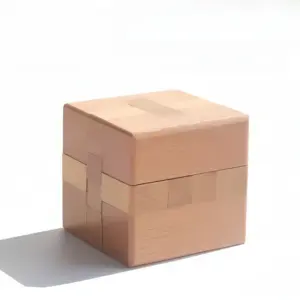
Originating in the Hakone region of Japan in the 19th century, these are the quiet masters. Their philosophy isn’t about overwhelming you with steps, but about perfecting a subtle, deceptive simplicity. They’re crafted from lightweight Paulownia wood, chosen for its stability and fine grain that allows for impossibly tight, hidden seams.
So, are they worth the price? If you’re paying for an authenticated piece from Hakone, you’re not just buying a puzzle. You’re buying a specific, centuries-old woodworking tradition. The value is in the precision of the trick—often a sequence of precise slides and pressures that feels more like a secret handshake than a lock. This is where we decode that earlier hook: a traditional 5-move Japanese box can be far harder than a 50-step modern one. Why? Because every move is a blind commitment. There’s no visible lock to pick, no obvious panel to slide first. The solve path is invisible, relying on tactile intuition and patience over brute-force logic. For a deeper look at specific designs that embody this philosophy, our guide to 7 Japanese Puzzle Boxes That Will Humble Your Iq And My Desk explores some standout examples.
2. Modern Mechanical: The “Escape Room” Experience
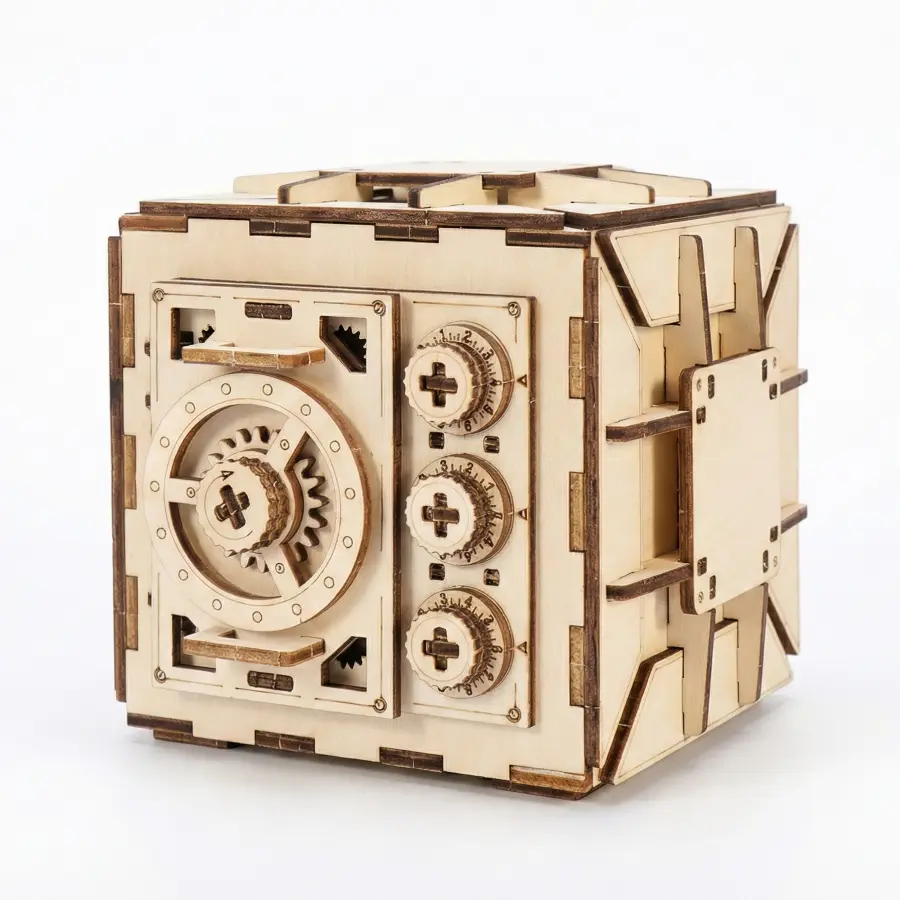
This is the category for anyone who played The Room mobile game and craved that feeling in real life. These boxes are kinetic sculptures of logic. They lean heavily into sequential discovery, where solving one step reveals a tool (a key, a lever, a magnet) needed for the next. The mechanism variety explodes here: magnetic locks, gear trains, ratchet mechanisms, and blind mazes are all in play.
The construction is different, too. You’ll find denser hardwoods like walnut or maple, giving them a satisfying heft. The challenge is often more cerebral and less about finding the starting point. It’s a plotted adventure you hold in your hands. This is the realm of the true escape room puzzle box, designed by modern artisans who are as much engineers as woodworkers. The price reflects that labor of design and the complexity of the internal architecture. In essence, they are a specialized form of the broader puzzle box tradition.
3. 3D Assembly Kits: The Builder’s Path
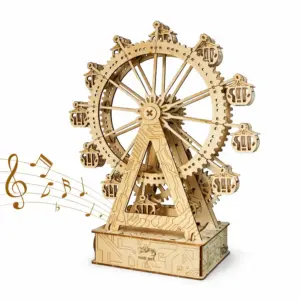
Here, the puzzle happens before it becomes a box. These DIY puzzle boxes arrive as flat sheets of laser-cut pieces—anywhere from 100 to 300+ parts—that you assemble into a functional secret compartment box. The primary challenge is spatial reasoning and following sometimes-Byzantine instructions. It’s a woodworking project with a glorious payoff.
The satisfaction is two-fold: the pride of building a complex object, and then having a puzzle box to show off (or give away). The mechanism is usually part of the build, often involving interlocking layers and sliding panels that you create yourself. They are fantastic educational tools for understanding basic engineering and, as we explored in our hands-on guide, can become stunning pieces like The 3D Wooden Puzzle Treasure Box. Just know that the “puzzle” is primarily in the assembly; the opening mechanism afterward is often more straightforward.
4. Whimsical & Novelty: The Display Piece
This category is where function meets ornament. Think music boxes, jewelry caskets, or decorative chests that happen to have a secret mechanism. The puzzle element is often secondary to the aesthetic appeal. These are the personalized gifts that delight with a hidden trick, rather than stump with deep complexity.
The trick puzzle boxes live here, too—boxes with a single, clever secret latch meant to surprise and amuse guests once. The challenge is low, but the “wow” factor is high. They prioritize being a conversation piece on a shelf. Many in this category blend the line with 3D wooden puzzles, resulting in beautiful objects you build that also conceal a space.
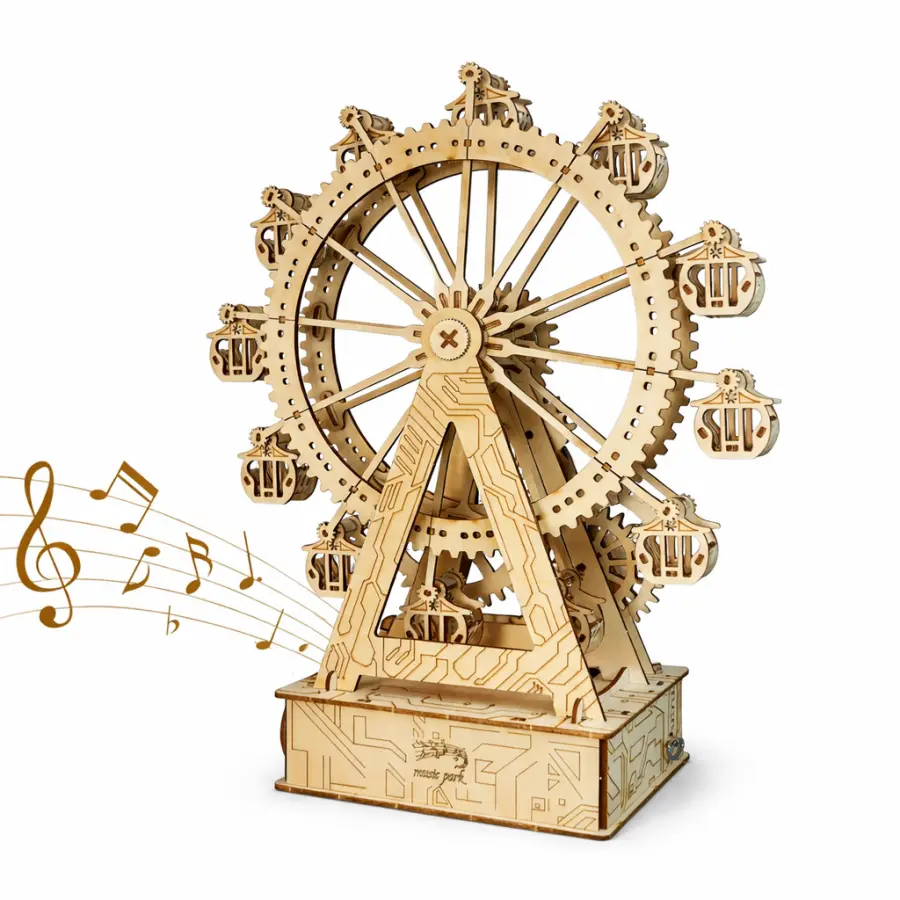
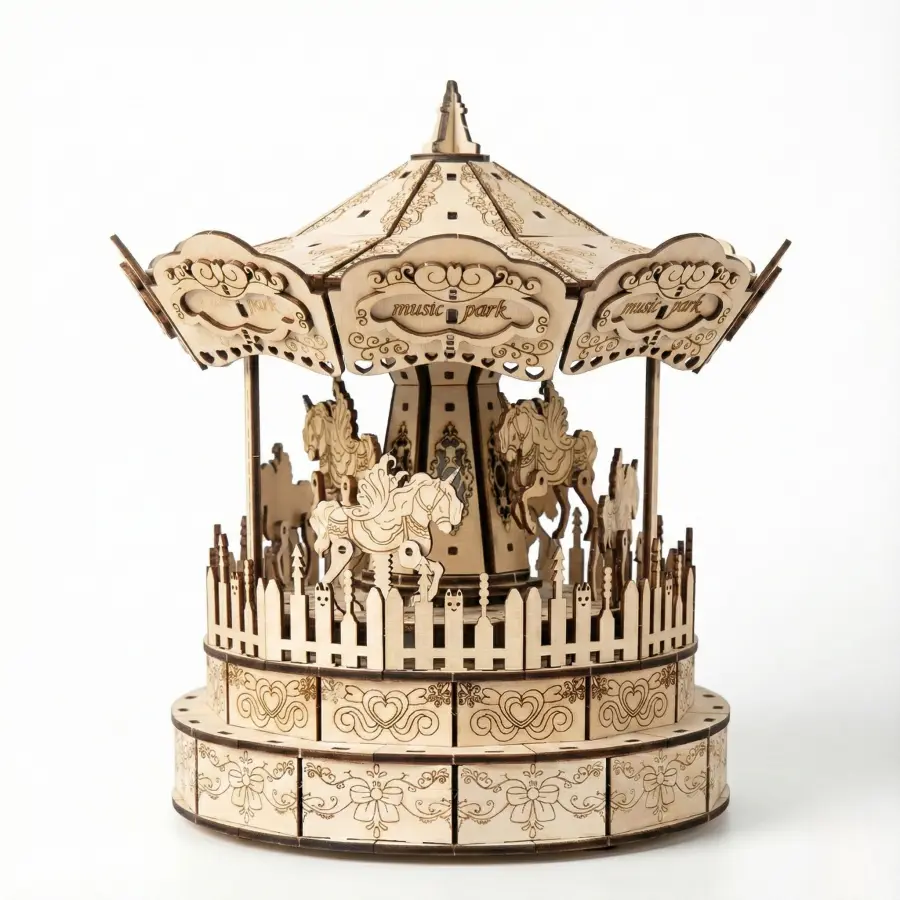
So, where does that leave you? If you crave pure, meditative deception, follow the tradition to Hakone. If you want a narrative of gears and locks, dive into modern mechanical. If the act of creation calls you, a 3D kit is your starting block. And if you want the delight of a secret that complements your decor, the whimsical category awaits. Each is a door to a different kind of wonder.
The r/PuzzleBox FAQ: Dust, Durability, and Designer Secrets
You’ve found your category. You know the experience you’re after. Now, the questions get practical, and a little… obsessive. This is where the hobbyist forums live, debating wood swell and designer signatures. Let’s pull back the curtain.
My new puzzle box feels a bit stiff. Did I get a dud?
Probably not. A new, well-made box often has a “break-in” period. The interior sliding panels and hidden seams are machined to incredibly fine tolerances. A little natural wood-on-wood friction is normal. Work the moves deliberately. If it feels truly stuck (not just tight), check for a stray wood whisker or a tiny burr. A piece of 2000-grit sandpaper, used with agonizing gentleness on the edge of a sliding panel, can help. The tactile feedback should improve with use.
How do I actually clean and maintain a wooden puzzle box?
Dust is the enemy. It finds its way into blind mazes and gums up slides. A soft, dry microfiber cloth is your first tool. For deeper cleaning, a barely-damp cloth (wring it out completely) followed by immediate drying is safe. Never use furniture polish or oils—they can attract more dust and seep into mechanisms. The real secret? Heft your box occasionally. If it feels lighter, the wood is too dry; if seams feel tighter, humidity is high. A stable environment (40-60% relative humidity) is the best maintenance plan you can have.
Can the mechanism wear out or break?
Yes, but rarely catastrophically. Cheap boxes with weak internal stops or thin panels can fail. In a quality box, the “wear” is often just a satisfying loosening of the solve path. The risk points are force (never force a move) and small, inserted tools in sequential discovery boxes—don’t lose them. A $300 collector’s box from a known artisan is built for hundreds of solves. A $25 novelty trick box might have a life measured in dozens.
Are expensive woods like Walnut worth it over Basswood?
It’s about purpose. Basswood (and Paulownia in Japanese puzzle boxes) is soft, easy to carve with precision, and light. It’s ideal for complex, interlocking mechanisms. Walnut, Oak, or Maple offer durability and a dramatic, rich grain that is part of the aesthetic. You’re paying for material density and visual art. For a pure puzzling experience, the wood type matters less than the precision of the cut. For a display piece, the upgrade defines it.
Where do puzzle box designers and hardcore collectors actually hang out online?
Beyond retailers, the heartbeats are forums. The subreddit r/PuzzleBox is the central watercooler. For deep, technical discussion, the “Puzzle Design” board on PuzzleForge.org is where designers post works-in-progress. On Instagram, search tags like #puzzleboxdesign or #woodenmechanism to find artisans. This is where you see prototypes and learn what makes a difficult puzzle box truly clever, not just fiddly.
What’s the real difference between a ‘secret compartment box’ and a ‘puzzle box’?
This is a hill some collectors will die on. A ‘secret box’ might have one clever, hidden latch—push the right spot, a spring releases, and it opens. Its function is concealment. A true puzzle box offers a sequential discovery journey with multiple discrete steps, often with misdirection. One is a hidden drawer; the other is a escape room puzzle box condensed into your palm.
I want a truly difficult box, not just one that’s tedious. How do I find it?
You’re looking for elegant logic, not just a high step count. Avoid descriptions that say “challenging” and look for specifics: “requires non-linear thinking,” “incorporates a blind maze,” or “tools are discovered during the solve.” Read between the lines on forums. A “Level 10” from one brand might be a brute-force slide-fest, while a “Level 5” Japanese puzzle box with a single, perfect dovetail trick will humble you. Difficulty in puzzles is about insight, not effort.
How accurate are online “puzzle box review” videos?
Temper your expectations. Most are unboxings and first reactions, not deep puzzle box reviews. A reviewer getting stuck on camera tells you it’s not trivial, but them solving it quickly doesn’t mean it’s easy—they might have already known the solve path. The real value is seeing the box’s size, finish, and movement quality. For true critical analysis, you have to dig into forum posts where users compare notes over weeks.
Is it worth buying a “solved” box from a collector?
Absolutely, if the price is right and it’s confirmed complete. Unlike a jigsaw puzzle, knowing the solution doesn’t always ruin a great mechanical puzzle. The joy is in feeling the engineered interaction, the precision of the movement. It’s like appreciating a fine watch even after you know how the gears turn. Just ensure all internal parts are present.
Can I use puzzle boxes to store things, or will it ruin them?
You can, but choose wisely. A sturdy, few-step secret compartment box made of a hard wood is perfect for rings or spare keys. Avoid storing anything heavy or abrasive. For intricate, multi-step boxes, constant opening and closing for retrieval adds wear. I use my simpler boxes for storage; my complex ones are experiences, not vaults.
Why do some high-end boxes have a signature or number on them?
You’re buying a piece of art, not just a product. The signature is the artisan’s mark, and a number (e.g., 15/50) means it’s part of a limited, handcrafted series. This affects collectibility and value. It’s a direct line from the designer’s bench to your shelf.
My box is completely stuck. Have I broken it?
Before panic, set it down. Walk away for a day. Our brains lock into patterns. When you return, start from absolute zero: assume no move has been made. Re-explore every surface, every grain pattern, with no pressure. 95% of “broken” boxes are just in an unsolved state that’s been forgotten. If you’ve genuinely forced something, a forum post with clear photos is your best hope. The community loves a rescue mission.
From First Solve to Full Collection: The Road Ahead
So, you’ve unstuck your box, answered the FAQs, and maybe even found a perfect fit from one of the categories we’ve explored. The initial mystery has been replaced with understanding, and that first satisfying click of discovery is behind you. What now? For many, that single solve is a gateway. The path forks here: one leads to a well-cared-for object on a shelf, the other into a deeper world of craftsmanship and community. Let’s talk about that road ahead.
First, a mechanic’s note on longevity. Your puzzle box isn’t a disposable toy; it’s a kinetic artifact. Care is simple but critical. The two enemies are extreme humidity and grit. Store it in a stable environment—dramatic swings can cause wood to swell or contract, subtly altering hidden seams and tolerances. Dust is an abrasive; a soft brush is better than a rag that can push particles into sliding channels. For boxes with complex mechanisms, occasional, gentle operation is better than letting them sit static for years. Think of it like a fine watch; the movement benefits from use.
The real journey, though, happens when you start talking to others who get it. If you find yourself searching for that next, deeper challenge or wondering about the signature on a handcrafted piece you saw, you’re ready for the communities. This is where the collector puzzle boxes are discussed long before they hit retail.
Your first stop should be the r/MechanicalPuzzles subreddit. It’s more active than the niche r/PuzzleBox and is the de facto hub for serious discussion. Here, designers preview prototypes, collectors trade rare finds, and users post sincere, detailed reviews that dissect solve paths and mechanism ingenuity. It’s where I go to hear about a new sequential discovery box from a one-person workshop in Europe. Puzzle.Master’s forum is another stalwart, with decades of archived knowledge on everything from classic Japanese puzzle boxes to the latest escape room puzzle box kits.
For the truly next-level challenges, you graduate from browsing retailers to following specific puzzle publishers and artisans. Companies like CubicDissection and Pelikan Wooden Puzzles are the Criterion Collection of mechanical puzzles. They release limited-run, artist-signed puzzle boxes that are as much about brilliant engineering and narrative as they are about opening. Getting one often means joining a mailing list and being ready when a drop happens—a ritual in itself. Following individual designers on platforms like Instagram is another way to see the future of intricate designs.
This path—from a frustrating first click to discussing dovetail tricks on a forum—is the real magic. It transforms a purchase into a participation. You’re no longer just a buyer; you’re an enthusiast appreciating a hidden art form. You start to see the wooden puzzle box not as a locked secret, but as a conversation between maker and solver, built in grain and gravity.
For a structured look at escalating those challenges, I’ve mapped out a progression of puzzles that build specific skills in another guide: Puzzle Box Challenges: The Ultimate Guide To Mechanical Mastery. Consider it your next map.
Wherever your road leads, remember the feeling of that first stuck panel. You pushed past it. That’s the only skill you really need. Everything else—identifying a blind maze, appreciating the heft of solid walnut, recognizing a designer’s signature style—is just detail added to a foundation of curiosity you’ve already built. Now go find a box that stumps you all over again.
Reader Friction and Quick Answer
After all that deep knowledge—from mechanism types to niche forums—it’s easy to feel a new kind of friction. Not the stuck-panel kind, but the paralysis of choice. With so many paths, how do you actually choose? The most common hesitations boil down to a few pointed questions. Let’s clear them up fast.
“Won’t I just get frustrated and give up?”
Maybe. And that’s part of the process. The goal isn’t an instant solve; it’s the tactile investigation. If true frustration looms, walk away. The solution often appears when you’re not forcing it. Start with a box that promises high tactile feedback—lots of sliding parts and audible clicks—to keep your hands engaged even when your brain is stuck. This is the core of the escape room experience translated to your coffee table.
“How do I know I’m getting value, not just paying for a name?”
This is especially relevant with Japanese puzzle boxes. Price often reflects the story (authentic Hakone craftsmanship, specific wood like Paulownia) and the elegance of the hidden seams. A $200 box isn’t just “harder”; it’s a quieter, more refined conversation. For modern mechanical boxes, price scales with mechanism complexity and material heft. A puzzle box review from a trusted community is your best decoder ring here. If a design is simple but the price is high, you’re likely paying for art, which is a valid choice if that’s what you want on your shelf.
“What if it breaks or I can’t figure it out?”
A well-made wooden puzzle box is a tool, not a relic. Gentle handling is key, but don’t fear it. If a panel truly jams, most reputable sellers or designers provide solution guides or will troubleshoot with you. For maintenance, a simple rule: keep it out of direct sun and away from wild humidity swings. Dust it with a soft brush. The mechanism shouldn’t “wear out” from normal solving; a quality box is designed for repeated journeys along its solve path.
“Is this a good gift for someone who isn’t a ‘puzzle person’?”
Tread carefully. A true difficult puzzle box is a terrible gift for most. Instead, aim for the “Aha!” not the “Ugh.” Look for boxes with a clear, satisfying payoff—a hidden compartment that’s genuinely useful for storing a ring or a flash drive. The experience should feel clever, not cruel. (For more on gifting pitfalls and better ideas, I dissect the whole concept in Gift Card Puzzle Box Why The Envelope Is The Enemy Of Excitement).
The quick answer to all this friction? You now have the tools to judge. You know to check for sequential discovery if you want a journey, or a blind maze if you want pure deduction. You know a box’s weight and wood grain tell a story. Your choice isn’t a guess anymore; it’s a diagnosis of what you want from the experience. So pick a friction—budget, skill, purpose—and let that be your final filter. Then click “buy” with the confidence of someone who knows exactly what’s hiding inside.
How We Evaluate Puzzle Toys
You’ve filtered by your needs, you’ve diagnosed your desired experience. Now, let’s talk about the final, most satisfying step: judging a box on its own merits. This is where you move from browsing to connoisseurship, using a mechanic’s-eye view to separate the merely clever from the truly enduring.
It’s not about finding the “best,” but the best for you. Our evaluation boils down to a simple, five-point checklist born from opening (and occasionally repairing) hundreds of these things.
1. The Integrity of the Illusion. A great puzzle box is a confident liar. Its hidden seams should be virtually invisible to the eye and fingertips until the exact moment of revelation. Run your nail along the grain—if you can catch a joint before the first move, the craftsmanship is lacking. The best boxes maintain their secret until the mechanism decides to give it up.
2. The Logic of the Solve Path. Does the solution feel earned, or arbitrary? We look for a narrative in the mechanisms. A sequential discovery box should introduce concepts that build upon each other. A blind maze should have consistent, deducible rules. The “aha!” moment should come from understanding, not from random fiddling. (This is why a well-designed 5-move Japanese box can feel more substantial than a convoluted 50-step one—every action has clear intent).
3. The Grammar of the Mechanism. This is the tactile feedback. Slides should move with a precise, sometimes ratcheted, confidence—never gritty or wobbly. Locks should engage with a definitive click. Listen as much as you feel. A dull thud suggests soft wood or loose tolerances; a sharp, crisp sound hints at precision. And always apply the Heft Test: a quality box has a satisfying weight that speaks to material density, not hollow construction.
4. Material & Finish as Narrative. The wood isn’t just a container; it’s part of the escape room experience. Is the choice of wood meaningful? Traditional Japanese puzzle boxes use lightweight Paulownia for intricate sliding panels, while a modern mechanical puzzle might use oak or walnut for structural heft. The finish should protect without feeling plasticky. A hand-rubbed oil finish that lets you feel the grain is a sign of handcrafted care.
5. The Afterlife (Re-solve & Durability). Once opened, what then? Does the mechanism reset cleanly for another satisfying journey, or is it a one-and-done revelation? For a collector, re-solveability is key. Also, consider longevity. Will those delicate slides wear out? Look for reinforcements in high-friction areas—a sliver of brass or a harder wood inset can make a box last for decades.
So, take this checklist with you. When you’re considering a box—whether a 3D wooden box puzzle kit or a collector puzzle box—run it through these points. Does it pass? Then you’re not just buying a toy; you’re investing in a piece of interactive engineering.
Your next step is simple. Go to one of the forums or shops we’ve mentioned, find a box that speaks to you, and evaluate it with this new lens. You’re no longer just guessing. You’re looking under the hood. Now go find a mechanism that deserves your curiosity.