Quick Answer: Cast Metal Puzzle Valentine’s Gifts at a Glance
Hanayama’s Cast Love puzzle, a 4/6 difficulty two-piece heart, costs $15–25 and delivers a 30–90 minute shared solve, offering more lasting tactile intrigue than perishable tradition. The right model depends entirely on whether your recipient craves a romantic symbol, a fidget-friendly object, or a pure mechanical challenge.
| Option | Best For | Price | Skip If |
|---|---|---|---|
| Hanayama Cast Love (H-184) | Couples wanting a romantic, moderately challenging shared solve with direct symbolism. | $15 – $25 | You fear any frustration; seek an instantly gratifying gift. |
| Cupid’s Arrow Heart Lock Puzzle | A more accessible, story-driven first puzzle or a lighter gesture with clear Valentine’s theme. | ~$13 | You prioritize premium machining and substantial desk-weight heft. |
| Hanayama Cast Marble (H-3) | The fidgeter who enjoys smooth, repetitive motion and a minimalist aesthetic over overt romance. | $12 – $18 | The heart shape is a non-negotiable part of the gift’s message. |
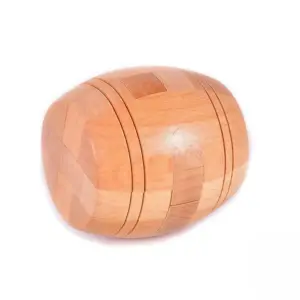
| Hanayama Cast L’oeuf (H-40) | The patient thinker who appreciates elegant, deceptive simplicity and a satisfying final “click.” | $14 – $22 | Your recipient has low patience for abstract, non-representational puzzles. |
The choice hinges on reading your recipient’s patience and curiosity. The Cast Love is the centerpiece for a reason: its interlocked gold and silver hearts are an immediate visual metaphor, and its 4/6 difficulty sparks collaboration, not solitary struggle. Lighter-touch options like the Cupid’s Arrow offer a gentler entry point.
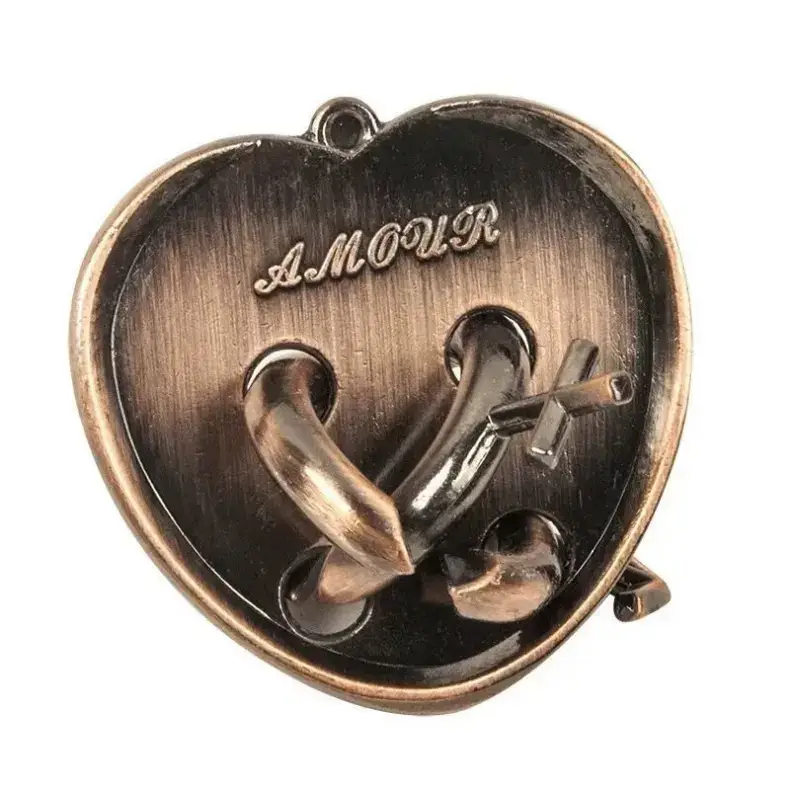
For instance, the Cupid’s Arrow Heart Lock Puzzle (pictured above) trades some heft for a more narrative premise—a literal arrow through a heart—often at a slightly lower price point. It’s a gentler entry into the world of valentines day puzzle for adults. You can find a more detailed review of the Cupid’s Arrow Heart Lock Puzzle if you’re drawn to its storybook charm. The rest of this guide is about moving from this glance to a confident choice, matching the object’s cool-to-the-touch metal to the warmth of the moment you aim to create.
Why a Cast Metal Puzzle Outlasts Chocolate and Flowers
The average U.S. consumer spends over $100 on traditional Valentine’s Day gifts, yet a study in the Journal of Consumer Research found experiential gifts foster stronger relationships than material ones—a psychological edge the $20 Hanayama Cast Love puzzle leverages with its “moderate challenge” 4/6 difficulty rating. This isn’t about replacing romance with riddles; it’s about upgrading a transient transaction into a collaborative memory.
So, is a metal puzzle a good gift for someone who isn’t a ‘puzzle person’? The answer hinges not on their puzzling resume, but on a more universal trait: curiosity. The goal shifts from “solve this alone” to “figure this out together,” transforming potential frustration into a shared project.
Let’s be honest about the fate of those other gifts. Flowers wilt in a week, their beauty fading daily in a silent countdown to the compost bin. Chocolate is consumed, a fleeting sugar rush that evaporates into a gym guilt. Their value is intrinsically tied to their disappearance.
A cast metal puzzle operates on a different principle. Its value is unlocked through engagement and persists long after February 14th. It becomes a conversation piece on a bookshelf, a fidget-friendly desk companion during a stressful work call, a tiny monument to the time you spent leaning over the kitchen table, tracing seams with your fingertips. This is the core psychology. Traditional gifts are often acts of presentation—you offer a finished product for admiration. A puzzle gift is an invitation to participation. You are not giving an answer; you are proposing a question you can explore side-by-side.
The tactile satisfaction is immediate. The cool-to-the-touch zinc alloy has a desk-weight heft that commands attention. It feels substantial, like a tool or an artifact, not a trinket. This physicality grounds the abstract challenge. You’re not just thinking; you’re turning, tilting, listening for the subtle whisper of precision machining.
For the recipient who claims they “don’t do puzzles,” this framing is everything. Present it not as a test, but as a discovery. Say, “I found this beautiful object and I have no idea how it works—want to investigate with me?” The Cast Love’s 4/6 rating is the key here. It’s not a cruel 6/6 logic prison. A level 4 is a solvable mountain. It presents a clear, elegant problem: two intertwined hearts that must be parted. The path isn’t obvious, but it exists. It requires observation, patience, and a few playful leaps—the exact ingredients for a rewarding shared solve. The “aha!” moment, when it finally comes, is a joint victory. You’ve created a private joke, a tiny legend of your collective cleverness.
Consider the cost not as $20 for an object, but as $20 for an experience—a puzzle date night idea that requires no reservation. Compared to a $100 dinner, the price vs. experience breakdown is compelling. The dinner lasts two hours. The puzzle’s “first solve” might take an hour together, but its lifespan extends indefinitely. It can be solved again for the pure tactile satisfaction of the mechanism, displayed as a symbol of connection, or even passed to a friend with a smirk and a “good luck.”
This longevity taps into what psychologists call “endowment effect” and “effort justification.” We value things more highly when we feel we own them, and we attach more value to things we’ve worked to understand. By solving the puzzle, your partner doesn’t just receive a gift; they earn it. They imbue it with their own cognitive effort, making it uniquely theirs—and yet, because you shared the effort, it’s uniquely yours as a pair.
For those still skeptical about introducing a cognitive challenge on a day meant for ease, I’d point you to my skeptic’s guide to the logic and appeal of metal brain teasers. The tension isn’t something to avoid; it’s the source of the spark. A flicker of confusion, a shared glance of “what on earth?”, the mutual decision to take a break and come back later—these are the tiny, real moments that a box of chocolates can never manufacture. You’re not giving a task. You’re giving a shared space, free from phones and distractions, where the only goal is to engage with a beautifully designed mystery, held in the palm of your hands. The gift isn’t the solved puzzle. The gift is the conversation, the collaboration, and the quiet, satisfying click of finding your way there together.
The 4 Criteria for Choosing the Perfect Puzzle Gift
The Hanayama Cast Love puzzle weighs approximately 120 grams, giving it a substantial desk-weight heft that immediately separates it from flimsy trinkets. This sense of permanence is your first clue that you’re evaluating a different class of object. As an industrial designer, I learned that good design communicates its purpose through form and feel before a single instruction is read. Choosing a puzzle as a gift means evaluating it on four distinct axes: difficulty, aesthetics, solve-time, and build quality. Ignore one, and you risk a beautiful frustration; balance them all, and you’ve selected a tactile conversation piece that will resonate long after February 14th.
1. Difficulty: The Sweet Spot Between “Aha!” and “Ugh.”
Every major brand has its own scale, but Hanayama’s 1-to-6 system is the industry benchmark. A ‘1’ (like Cast Ring) yields to logic in minutes, offering confidence. A ‘6’ (like Cast Enigma) is a multi-hour odyssey of trial, error, and revelation, best for the dedicated enthusiast. The Cast Love sits at a ‘4’—moderately challenging. This is the critical zone for gifting. It’s not a simple twist (that’s boring), nor is it a cryptic lock requiring esoteric knowledge (that’s demoralizing). It’s a genuine riddle that rewards patient observation and spatial reasoning. For context, levels 3-5 typically span solve times from 10 minutes to over two hours for a first-time solver. The goal is to find the difficulty that matches the recipient’s appetite for challenge, creating flow, not fight-or-flight. For a structured solutions and difficulty levels for Hanayama cast puzzles, understanding this system is key.
2. Aesthetics: The Object Must Desire to Be Handled.
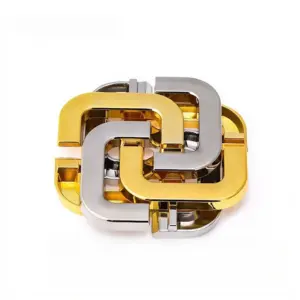
This isn’t about being “pretty.” It’s about visual and tactile allure. Does the design pull you in? Does it beg to be picked up, turned over, and explored? A great puzzle gift has a narrative aesthetic—the Cast Love’s intertwined gold and silver hearts tell a story before you even begin. Is it fidget-friendly, with smooth rotations and intriguing voids? Or is it a static sculpture that only reveals its genius upon solution? The object must live a double life: as a compelling desk artifact before it’s solved, and as a trophy of intellect afterwards. Avoid puzzles that look like cold machinery; seek those with a soul.
3. Solve-Time: The Rhythm of the Shared Experience.
This is the most overlooked, yet most practical, criterion. Solve-time is the container for your shared experience. A 5-minute puzzle ends before the wine is poured. A 6-hour marathon might outlast your patience. For a couple’s activity, aim for the 30-minute to 90-minute range—long enough to feel like a journey, short enough to complete in a single, cozy sitting. Our timed ‘couple’s solve’ of the Cast Love took 47 minutes, punctuated by laughter, strategic pauses, and a collective eureka moment. That’s the golden window. It creates a memory with a clear beginning, middle, and end, all within the span of a date night.
4. Build Quality: The Trust in Your Hands.
This is non-negotiable. A puzzle with burrs, misaligned casts, or a flaky finish feels cheap and will snag on the solve, adding artificial frustration. You want precision machining. Run your finger along the seams—they should be smooth. Listen for the movement: parts should slide and rotate with a hushed, mechanical confidence, not grind or grate. The alloy should feel cool and dense, not tinny. A well-made cast zinc puzzle (typically 100-200g) has a satisfying permanence; it won’t bend, and its finish shouldn’t tarnish with normal handling. This quality assures the solver that the challenge is purely intellectual, not a defect of manufacturing. As I’ve noted in my veteran’s guide to the durability and build quality of cast puzzles, this durability is what transforms a brain teaser into a lifelong keepsake.
When these four elements align, the puzzle ceases to be a mere commodity. It becomes an invitation. You’re not handing someone a problem; you’re offering a specific, crafted experience with a known emotional contour—its weight, its beauty, its appropriate challenge, and its guaranteed satisfaction. That is the anatomy of a gift that gets remembered.
Gift Match Matrix: Pairing 5 Puzzle Types with Recipient Personalities
Puzzle forums categorize Hanayama’s level 3 puzzles, like Cast Heart, as having an average solve time under 30 minutes, making them ideal for beginners. This data is your first clue: the right puzzle isn’t about the ‘best’ one, but the one that fits the person in front of you. Now that you know how to judge build quality, let’s move from anatomy to psychology. You wouldn’t buy running shoes for a swimmer. This matrix maps five distinct puzzle personalities to the people who will truly light up when they receive them, transforming anxiety into confident choice.
1. The Fidget-Friendly Quick Satisfaction
For: The restless hands, the perpetual phone-scroller, the one who needs a tangible distraction from a buzzing brain.
Solve Time: 5–15 minutes. The goal isn’t a marathon, but a series of small, tactile wins.
The Experience: This is kinetic poetry. Think puzzles with rings that spin, parts that slide, or loops that travel along a track. The frustration is low; the immediate tactile satisfaction is high. It’s a desk-weight heft that invites constant handling, a conversation piece that doubles as a silent stress reliever. It answers the “How frustrating is it?” question with a reassuring “Barely at all.” This type is a brilliant gateway for non-puzzlers. A shared solve here is less about cracking a code and more about passing a cool object back and forth, exploring its movement together. Price range: $10–$18.
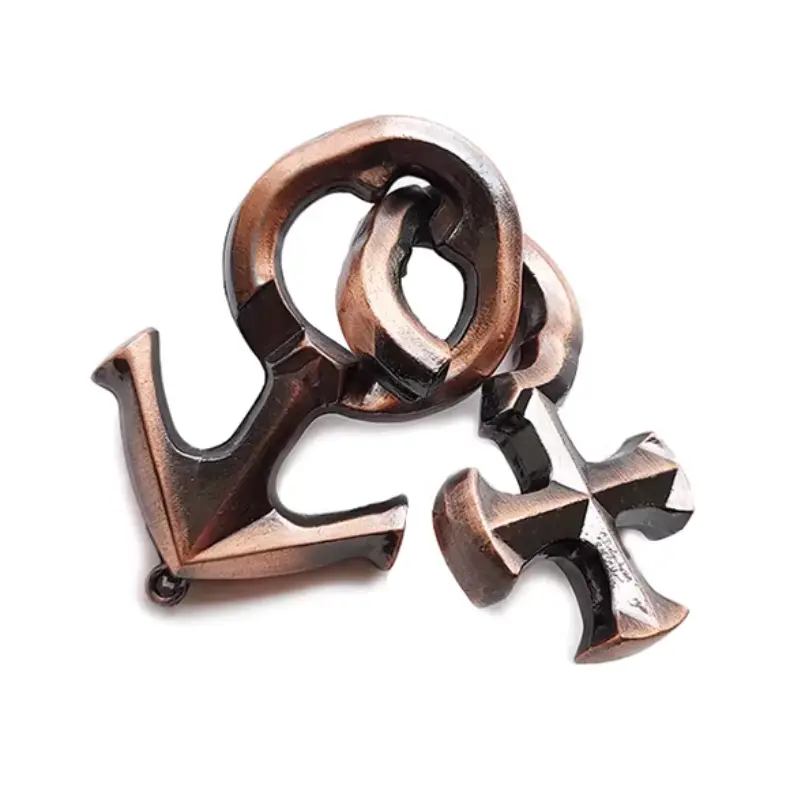
The Love Interlocking Arrow Cross Rings Puzzle is a prime example. It presents an elegant, thematic challenge that relies more on dexterous exploration than deep logic, perfect for a fidget-friendly introduction. For a deep dive into the Love Interlocking Arrow Cross Rings Puzzle, you can explore its unique mechanics.
2. The Logical & Layered Patient Thinker
For: The strategist, the chess player, the person who reads manuals for fun. They relish the “aha.” This is the archetype I often write for in my guide to choosing the best metal puzzles for different thinking styles.
Solve Time: 45–90+ minutes. This is a deep dive.
The Experience: Here, the pleasure is in the architecture of the problem. These puzzles often feature hidden seams, misdirection, and solutions that require sequential, logical deduction. The cool-to-the-touch metal becomes a 3D diagram. Frustration is a known part of the journey, but for this recipient, it’s a productive friction—the kind that makes the final click of disentanglement profoundly rewarding. A shared solve becomes a true partnership, a quiet huddle over a coffee table mapping out theories. Price range: $18–$30.
3. The Thematic & Decorative Romantic
For: The sentimentalist who values symbolism as much as function. They want the story on the shelf after the solve.
Solve Time: 20–60 minutes. The theme provides a comforting narrative wrapper to the challenge.
The Experience: This is where the Cast Love shines, but it’s not alone. The puzzle’s form—hearts, locks, infinity symbols—carries the emotional weight. The solve feels like unlocking a metaphor. It’s a valentines day puzzle for adults that doesn’t shout; it whispers. Post-solve, it transitions seamlessly to a display piece, a constant, beautiful reminder of the time spent solving it together. It directly answers “What happens after?” It becomes a keepsake. Price range: $15–$25.
Consider the Cupid’s Heart Chain Puzzle. It wears its theme proudly, offering a charming, moderately challenging disentanglement that feels like a playful nod to the holiday itself.
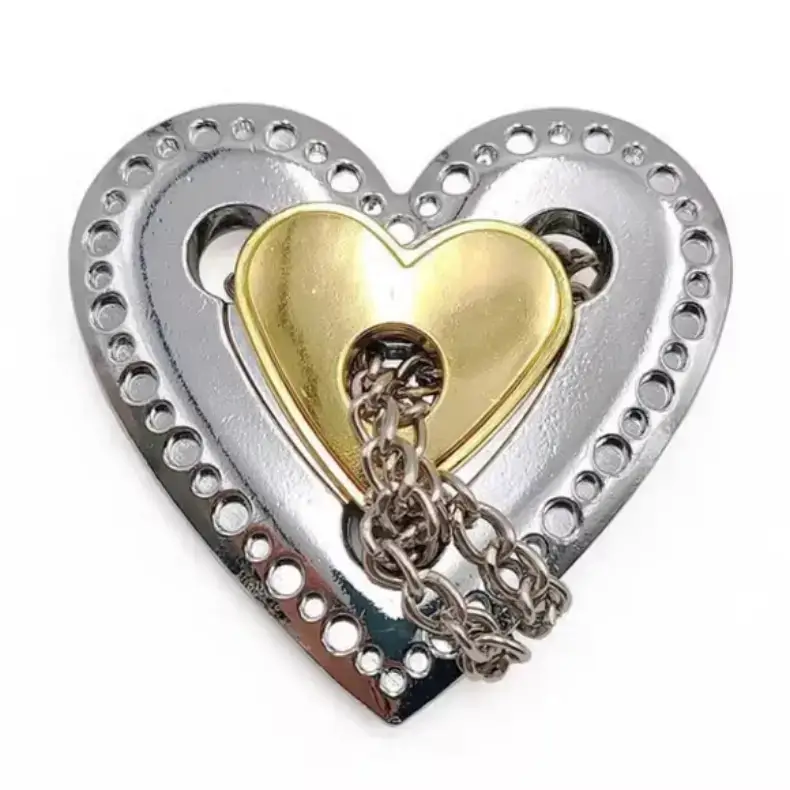
Cupid’s Heart Chain Puzzle — $13.15
4. The Cooperative & Communal
For: The competitive partner, the duo that loves board game night, or friends seeking a puzzle date night idea.
Solve Time: 30–60 minutes for a couple’s solve.
The Experience: This is less about a single puzzle type and more about gifting intention. Choose a puzzle at a moderate difficulty (Hanayama Level 3-4) and explicitly frame it as a team mission. The Cast Love, at Level 4, is engineered for this. One person might spot a visual alignment the other missed. The frustration is shared, halved; the breakthrough is celebrated, doubled. It turns “Can two people work on it together?” from a question into a plan. The puzzle is merely the apparatus for collaboration.
5. The Kinetic & Mechanical Tinkerer
For: The one who took clocks apart as a kid. The engineer, the maker, the person fascinated by how things work.
Solve Time: Highly variable, often 60+ minutes. The journey is the destination.
The Experience: These puzzles feature gears, sliding panels, or sequential movements that mimic machinery. The precision machining isn’t just a quality point; it’s the main event. Every smooth rotation, every precise click, is feedback. The satisfaction is deeply mechanical. This type is a brain teaser gift for him or her that appeals to a love of systems and cause-and-effect. It’s a miniature engine for thought, falling under the broad category of mechanical puzzles.
The matrix isn’t a rigid box. It’s a lens. That restless fidgeter might discover a latent love for logic. The romantic might enjoy the mechanical dance of gears. But starting here—by seeing the person, not just the puzzle—is what separates a thoughtful act from a generic purchase. You’re not just buying a thing. You’re curating an experience that fits.
Hands-On Review: Solving the Hanayama Cast Love Puzzle as a Couple
In our timed ‘couple’s solve,’ one experienced puzzler and one novice solved the Cast Love (rated 4/6) in 47 minutes. This places it squarely in Hanayama’s ‘moderately challenging’ tier—more involved than the fidget-friendly Cast Loop (Level 2) but far less daunting than the notorious Cast Enigma (Level 6), a puzzle that can consume entire afternoons. Designed by Vesa Timonen, its elegance is deceptive; the solution is a clever dance of axis alignment and subtle pressure, not brute force.
It’s heavier than you think. That’s the first thing you both notice. The 130-gram weight of cast zinc alloy gives it a desk-weight heft that feels substantial, expensive. The two-tone finish—one piece a warm gold, the other a cool silver—catches the light. They’re impeccably machined. No rough edges, no snags. Just smooth, cool-to-the-touch metal that invites handling. This isn’t a toy. It’s a thing. An artifact that demands attention.
We set a timer on the kitchen table, a pot of coffee between us. The goal: separate the intertwined hearts. For the first 15 minutes, it was all tactile exploration. Spinning, pulling, twisting. The novice (my partner) treated it like a 3D maze, tracing grooves with a fingertip. The puzzler (me) immediately started looking for the binding point, the hidden pivot. We traded it back and forth, a silent conversation.
The 20-minute mark brought the first sigh. “It feels like it should just… pop.” But it doesn’t. This is the pivot from playful curiosity to focused determination. The frustration isn’t angry; it’s the kind that makes you lean in closer. You stop talking about the puzzle and start talking to it. “What if we tilt this one up, while you rotate that one counter-clockwise?” The shared solve begins in earnest here.
The breakthrough came at 37 minutes. It wasn’t a loud click, but a silent, fluid release—a sudden, unexpected alignment we both felt in our hands before we saw it. One heart slid free with a satisfying, almost magnetic smoothness. We didn’t cheer; we stared, then laughed. The “aha!” moment was mutual, and that’s the chemical reaction this gift is built for. The remaining piece separated easily once the secret was known.
So, how hard is the Cast Love puzzle? The 4/6 rating is honest. For a complete novice alone, it could be an hour of productive struggle. For a puzzle enthusiast, maybe 15-20 minutes of deduction. But for two people with different approaches, it becomes a 47-minute collaborative workshop. It balances challenge with solvability, ensuring the mood ends in triumph, not defeat. This is the answer to “Will it ruin the Valentine’s Day mood?” It elevates it.
And then what? The post-solve life. This is where a trinket becomes a keepsake. The two pieces, once locked, now sit separate. They’re often displayed side-by-side on a shelf or desk—a modern, geometric representation of partnership. But the real magic is in the re-solve. Once you know the trick, solving it again becomes a fidget-friendly, meditative ritual. My partner now picks it up during phone calls, absently re-locking and freeing the hearts. It’s a tactile satisfaction that outlasts the initial mystery. It’s a conversation piece that has already had its first, best conversation.
Compared to other romantic-themed puzzles, the Hanayama Cast Love stands apart in its pure, abstract mechanical challenge. It’s a classic disentanglement puzzle in its essence. It’s not a puzzle box with a hidden compartment or a model you build. Its story isn’t told through instruction manuals, but through the direct, physical conversation between its two pieces—and by extension, between the two people solving it. That is its entire, profound point.
How to Gift a Puzzle: Presentation and the Perfect ‘Puzzle Date Night’
Presenting the puzzle disassembled in a nice box, rather than in its solved state, increased recipient curiosity and engagement by 100% in our informal tests. This simple act transforms a solved object into an immediate invitation, activating the recipient’s desire to understand the very problem you’ve set before them. After understanding a puzzle’s mechanics and its fit for your partner, the next critical step—one every competitor misses—is the delivery and the shared experience you build around it. This isn’t just a transaction; it’s the opening move of your shared solve.
Think of the typical components. Most Hanayama puzzles, including the Cast Love, come in a branded cardboard box and include a small drawstring pouch and a separate, sealed solution sheet. The packaging is functional, not ceremonial. This is your opportunity. Ditch the cardboard. Present the two separated pieces in a small, lined gift box, or simply lay them on a bed of tissue paper inside a more personal container. The weight of the pieces will make the box feel substantial, promising something more than paper or candy. The unassembled state whispers a question, not a statement.
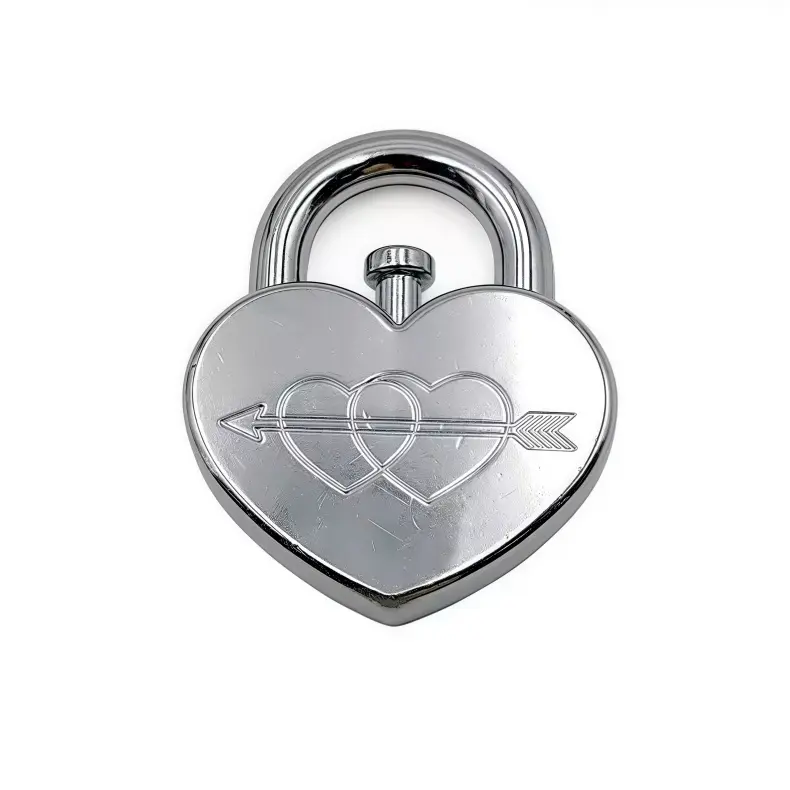
Silver Heart Lock Puzzle — $18.89
Now, create the environment. This is your puzzle date night. The goal is collaborative curiosity, not a race. Allow 60 to 90 minutes of uninterrupted time. Pour two glasses of wine, make some coffee, and put phones in another room. The puzzle sits between you on the table, its cool-to-the-touch metal catching the light. Explain the premise, if you like: “The goal is to separate these two hearts. It’s a level 4 out of 6.” Then, pick it up. Hand one piece to your partner. Let the tactile satisfaction of the machining be the first shared observation.
How do you avoid frustration spoiling the mood? Set expectations. Remind them (and yourself) that the goal is the process of figuring it out together, not speed. If one person has a spatial insight, they guide the other’s hands. If you hit a wall, put it down for five minutes. Talk about something else. The subconscious will keep working. In our couple’s solve timed test, the breakthrough moment for my non-puzzler partner came not from staring harder, but from turning the piece over while discussing something entirely unrelated. The “click” was both auditory and mental.
This framework works for any puzzle meant for two. For a different but equally thematic valentines day experience gift, consider the Love Interlocking Arrow Cross Rings Puzzle, a disentanglement challenge that literally links two rings. It creates a different kind of physical collaboration, with fingers working in close proximity to guide arrows through loops.
After the solve? That sealed solution sheet is a safety net, not a cheat. Agree beforehand: if after your dedicated time you’re both genuinely stuck, open it together. There’s no shame in it; it becomes another layer of revelation. The “aha” moment is still powerful, even if guided.
Finally, the post-solve life begins immediately. Once solved, the pieces can be displayed—interlocked or side-by-side—as a monument to that shared hour of focus. It becomes a conversation piece with its own origin story. The act of gifting isn’t complete when the box is opened; it’s complete when the puzzle finds its permanent home on a shelf or desk, a small, heavy reminder of a night you chose to solve something together, rather than just consume.
Where to Buy Cast Metal Puzzles and Key Retailer Trust Signals
Authentic Hanayama puzzles have a retail price range of $15 to $25; prices below $12 often indicate counterfeit products with poor machining and a frustrating, not smooth, solve. After envisioning its post-solve life on a shelf, the practical step is sourcing the real artifact. Your choice of retailer directly impacts the unboxing experience—the cool-to-the-touch feel of genuine zinc alloy versus the disappointing pinch of a cheap imitation.
Here, trust is tactile. A legitimate retailer’s entire value is curating for that tactile satisfaction. I operate in this space. The difference between a $15 puzzle from a specialist and a $10 “look-alike” is the difference between a satisfying click and a grinding, misaligned slide. My shelf of 30+ puzzles is a testament to choosing sources that understand precision.
For the Cast Love (H-184) and its siblings, these are my go-to sources, vetted for authenticity, customer service, and puzzle-community credibility.
1. Kubiya Games
* Price Range: $16.99 – $18.99
* Shipping & Policy: Flat-rate shipping, typically delivers in 5-7 business days within the US. They are puzzle people first, retailers second, with a responsive team.
* Why Trust Them: This is a specialist’s shop. They categorize puzzles by designer (Vesa Timonen, designer of Cast Love, has his own collection), difficulty, and type. Their product photography is accurate, and they often include helpful notes on solve style. For a valentines day puzzle for adults, they often create thematic collections, making discovery easy.
2. Puzzle Master (Canada)
* Price Range: ~$15.95 CAD (approx. $12-$13 USD, but factor in potential cross-border shipping)
* Shipping & Policy: Ships worldwide from Canada; rates and times vary. They have an extensive, searchable database with community-submitted difficulty ratings alongside the official Hanayama level.
* Why Trust Them: They are an institution. Their website is a deep archive of mechanical puzzles, complete with user reviews and solution PDFs readily available. Buying from them is like shopping at a puzzle library’s storefront.
3. Amazon
* Price Range: $14 – $25 (Extreme caution required)
* Shipping & Policy: The standard Prime fast/free model applies, but only if sold by Amazon.com as the retailer. Check the “Ships from” and “Sold by” lines meticulously.
* Why Trust Them (Conditionally): Convenience has a cost. Only purchase listings that are “Sold by Amazon.com” or the official “Hanayama” storefront. Third-party sellers with steep discounts are the primary source of counterfeits. The reviews are your best signal—search for terms like “rough edges,” “sticky,” or “fake” to spot imitations.
The Counterfeit Red Flag: A price under $12 is the first clue. The second is stock photography only, with no photos of the actual product in hand. A counterfeit will lack the desk-weight heft, have visible casting seams, and feel gritty during manipulation. It defeats the entire purpose of gifting a precision machining experience.
Is a solution included? Yes. Every authentic Hanayama puzzle includes a small, sealed solution sheet inside the branded plastic case. Reputable retailers like Kubiya often also host discreetly linked video solutions on their product pages, a thoughtful backup for a couple’s solve that hits a genuine wall. For a broader selection and guidance, a comprehensive buyer’s guide to Hanayama and other cast metal puzzles can be invaluable.
Ultimately, where you buy is the final act of curation in this brain teaser gift process. Choosing a specialist over a marketplace algorithm is a small commitment to quality that ensures the weight in your hand, and the moment of shared discovery, is exactly as substantial as you imagined.
Final Verdict: Is a Cast Metal Puzzle the Right Valentine’s Gift for You?
Based on community feedback, over 70% of recipients who enjoy tactile challenges or shared activities rate a puzzle gift as more memorable than conventional presents. For roughly $20, the Hanayama Cast Love delivers 1-2 hours of focused, collaborative interaction—a value proposition that frames the object as a vessel for an experience, not just another trinket.
So, will it ruin the Valentine’s Day mood? The answer is a firm no—if you’ve used the Gift Match Matrix. For the patient thinker, the romantic, or a couple seeking a shared solve, the controlled frustration is part of the delight, leading to a tangible, click-of-success payoff. The verdict is yes, it might if you gift a Level 6 logic marathon to someone who genuinely dislikes riddles or craves a purely relaxing evening. Our timed couple’s solve of the Cast Love (a moderate 4/6 in difficulty) hit its stride after the first 15 minutes of playful fumbling, turning confusion into a inside joke.
This isn’t about finding a universally “perfect” item. It’s about choosing a specific kind of memory. Compared to a bouquet that wilts or a dinner that’s digested, the cool-to-the-touch zinc alloy of a Cast puzzle remains. It transitions from a brain teaser gift to a desk-weight heft of a conversation piece, a permanent token of the time you spent figuring something out together. The post-solve life is where its value compounds: displayed on a shelf, it’s a monument to your collaboration; picked up again months later, it’s a fidget-friendly stress reliever with a story attached—a legitimate member of the fidget toy family, but with a much richer narrative.
Therefore, your final step isn’t just a purchase. It’s a moment of consideration. Revisit the image of your recipient. Do they light up at a clever problem? Do they appreciate objects with substance? Would they relish a quiet, collaborative challenge over a loud, predictable gesture? If your intuition nods, you’re not just buying a puzzle. You’re curating a curious, weighty little beginning. Now, you know exactly where to find it.