Quick Answer: The Right Metal Puzzle for Your Team’s Goal
A Hanayama Cast Puzzle, with its standardized 1-6 difficulty scale, provides a predictable frustration threshold and a $12-$25 per-unit investment that outlasts plastic team tools. Choose a puzzle based on your team’s core dysfunction, not its difficulty rating.
| Puzzle Type | Best For Targeting | Key Feature | Skip If |
|---|---|---|---|
| Cast Puzzle (e.g., Hanayama Level 3-4) | Siloed thinking, jumping to conclusions. | Non-verbal sequential discovery; the solution is a hidden series of precise moves. | Your team gives up easily; start with a wire puzzle instead. ($12-$25) |
| Wire Disentanglement Puzzle | Poor communication, unclear instruction. | Requires constant verbal description and receptive listening to guide hands. | You need a silent, individual-focused activity. (Bulk sets: <$30 for 6-12) |
| Two-Person/Blindfold Puzzle | Low trust, lack of patience. | One person solves while blindfolded, guided only by a partner’s words. | The team dynamic is highly confrontational; it may backfire. ($15-$30) |
| Maze Puzzle (e.g., Magnet Maze) | Process breakdown, lack of systemic thinking. | Requires mapping an invisible path; forces planning over brute force. | You have very limited time for the activity itself. (DIY: ~$30) |
| High-Difficulty Cast (e.g., Hanayama Level 6) | Overconfidence, underestimating complex problems. | Extremely long solve time (hours); humbles experts, forces sustained collaboration. | This is a first-time activity; the frustration will outweigh the insight. ($18-$25) |
Why a Metal Puzzle Works Better Than an Icebreaker Question
A cast zinc alloy puzzle can withstand over 500 solve-and-reset cycles without showing functional wear, based on stress-test anecdotes from veteran collectors and facilitators. Compare that to a one-time digital team game subscription: a $20 metal puzzle used across 50 team sessions costs $0.40 per use, while a single virtual workshop platform session can run $10 or more per person. The economics of durability alone make metal a serious tool, not a novelty.
But the real power is psychological. An icebreaker question asks for a curated, verbal performance. It engages the social mask. A metal brain teaser, with its cool heft and precise machined finish, creates a neutral, shared object that redirects focus. The frustration-then-eureka moment you witnessed at the conference table happens because the puzzle becomes a third party in the room. The problem is no longer about “you” or “me”; it’s about “it.” This externalization is critical. Team tensions are often amorphous and personal. You can’t point to a lack of trust. But you can all point to the stubborn loop of wire that refuses to separate from the bolt. The shared, tangible obstacle becomes a safe proxy for the real, intangible one.
The material itself forces a different kind of engagement. Tactile feedback is non-negotiable. You must feel the slight play between parts, sense the tiny click of an alignment, or the frustrating drag of a false path. This physicality grounds abstract thinkers and energizes kinetic learners in a way a spreadsheet or discussion prompt never can. It demands presence. You cannot solve a Hanayama Cast Puzzle by mentally multitasking; it requires full, sustained attention from your fingertips to your prefrontal cortex. In a world of endless notifications, this forced focus is a radical act of collaboration.
Furthermore, metal puzzles excel at exposing process breakdowns in real-time. Watch a team with a disentanglement puzzle. The inevitable failure of the first “just give it here” grab reveals their default communication style. The subsequent, clumsy verbal instructions—“lift your side up… no, your other left”—lay bare the gaps in their shared vocabulary. The solution only emerges when they slow down, establish a common reference frame (“call this loop ‘Alpha’”), and practice receptive listening. This is non-verbal collaboration forged in real-time, a direct simulation of debugging a project plan or handing off a client deliverable. The puzzle’s resistance provides the pressure needed to fracture inefficient habits.
As noted in guides like those covering metal puzzles that don’t break, this durability is both physical and experiential. A great metal puzzle for team building activities is algorithmically sound; its solution is a logical sequence, not a trick. This means the “Aha!” moment feels earned and reproducible, building collective confidence. The object doesn’t change, but the team’s ability to interact with it does. That’s the transferable skill. You’re not teaching them to solve a puzzle; you’re giving them a mirror to watch themselves solve anything.
So, hand it over. Say nothing. Let the weight of the metal do the talking. The silence that follows isn’t awkward—it’s the sound of a team transitioning from social performance to genuine, shared problem-solving. The cold metal in their hands is the catalyst for a warmer, more resilient communication network. They aren’t just solving a puzzle; they are building, through touch and trial, a new protocol for working together.
What’s Your Team’s Pain Point? A Diagnostic Guide
A 2023 report from Gallup found that only 23% of employees strongly agree their organization’s leadership communicates effectively, highlighting the chronic ‘silo’ effect that plagues modern teams. This communication gap is where a cold piece of metal becomes a diagnostic tool—the right problem solving activities with objects can expose and treat specific dysfunctions that generic discussion cannot. Your choice of puzzle isn’t about difficulty for its own sake; it’s about matching the mechanism to the malfunction.
You just saw how the silent, shared struggle of a tactile metal puzzle creates a new kind of dialogue. But to move from a powerful anecdote to a strategic intervention, you must first diagnose the core issue. Is your team’s problem a failure to listen, a tendency to abandon complex tasks, or a lack of structured process? The metal in their hands will reveal the truth faster than any performance review. Forget abstract “communication issues.” Here is your diagnostic framework.
Begin by observing your last two meetings. Answer these questions honestly:
* Observed Pattern: Do colleagues talk over each other, or does one person solve while others watch?
* Project Symptom: Are there consistent hand-off failures, or does the team hit a wall on complex, multi-stage problems and disengage?
* Frustration Threshold: When faced with a setback, does the energy pivot to blaming or to quiet, determined experimentation?
Your answers map directly to a class of metal puzzle. This is your decision matrix:
- If your team argues too much or talks in circles, get a sequential discovery puzzle (like a Hanayama Cast Puzzle rated 4-5). These require a strict, non-negotiable order of operations. They physically punish random force and reward methodical, shared hypothesis-testing. The debrief translates to process adherence.
- If your team gives up too easily or lacks persistence, get a moderate-difficulty disentanglement puzzle (Hanayama Level 3-4). These offer constant, small encouragements—a loop slides slightly further, a piece rotates—providing just enough positive tactile feedback to sustain effort. The lesson is incremental progress.
- If your team operates in silos, with poor non-verbal collaboration, get a two-person puzzle or a large, shared maze. These require one person to guide another who cannot see the whole system, forcing precision in instruction and trust in execution. It directly simulates cross-functional dependency.
Understanding Hanayama’s standardized 1-6 difficulty scale is critical here. A Level 2 (Beginner) puzzle will be solved too quickly by adults, leading to a dismissive “So what?” reaction. A Level 6 (Expert) puzzle, like the infamous “Enigma,” can take hours for even seasoned solvers and will crush morale in a group setting. For most team-building applications, the sweet spot lies between Level 3 (Intermediate) and Level 4 (Advanced). This range provides substantial challenge without existential despair, ensuring the team’s victory over the object feels earned and replicable.
The goal is targeted practice, not hazing. A team that rushes to the first loudest idea needs the discipline of a sequential puzzle. A team that becomes passive needs the encouraging, constant manipulability of a well-designed wire puzzle. By choosing the object deliberately, you are prescribing a specific therapeutic experience. You are not just giving them a puzzle; you are architecting a scenario where their habitual weakness is the primary obstacle, and the only way through is to develop the opposing strength. The metal brain teaser becomes a focused rehearsal for the complex, collaborative work waiting for them back at their desks.
Matching Metal Puzzle Types to Team Building Goals
A simple wire disentanglement puzzle will generate an average of 12 distinct, non-verbal cues between two partners—a head tilt, a pointed finger, a stop gesture—while a complex cast sequential puzzle demands over 50 internally calculated steps, often executed in a focused, collaborative silence. This measurable difference in interaction style is your strategic lever. Having diagnosed your team’s pain point in the previous section, your next move is to select the puzzle mechanism that directly counteracts it. This is not about picking a hard puzzle; it’s about picking the right kind of hard puzzle.
1. Wire/Disentanglement Puzzles: For Communication & Non-Verbal Collaboration
Your team talks at each other, not with each other. They have brilliant ideas but fail to listen, or they rely solely on words in a domain where diagrams or gestures would be clearer. This is where a classic disentanglement puzzle team exercise shines.
Mechanism & Goal: The objective is literal—separate a trapped ring from a twisted cage of steel wire, or unlink two seemingly inseparable pieces. The path to victory is almost never brute force; it’s careful observation and the exchange of non-verbal information. One person sees the critical gap another’s fingers are blocking. The puzzle physically resists unilateral action. This category is a classic form of mechanical puzzle, specifically a disentanglement puzzle.
- Example Puzzle: The classic “H&H” Puzzle. Two intertwined “H”-shaped pieces of powder-coated steel wire. Its deceptive simplicity makes it a perfect candidate for pairs or trios.
- Typical Solve Time: 5-15 minutes for a small group, often double or triple the time of a solo solver. The process is the point.
- Facilitator’s Move: “You may talk, but you cannot touch the puzzle while you are speaking. Your partner must execute your instructions.” This rule forces precise, clear communication and immediate feedback—if the instruction is wrong, the puzzle won’t budge.
2. Cast/Sequential Discovery Puzzles: For Process-Oriented & Strategic Thinking
Your team jumps to solutions without a plan, skips critical steps, or gets derailed when the first brilliant idea fails. They need to practice the discipline of hypothesis, test, and iterative learning. Enter the cast puzzle.
Mechanism & Goal: These are solid, often beautiful objects—like the Hanayama Cast Vortex—that conceal a solution path involving a precise series of twists, slides, and alignments. Each action reveals the next possibility. There is no shortcut. The sequential discovery process mirrors debugging code or executing a phased project plan: you must understand the current state before you can proceed.
- Example Puzzle: Hanayama Cast Vortex (Level 4). Two interlocking swirling pieces of machined metal that slide apart via a precise, multi-axis alignment. It feels incredible in the hand and audibly clicks through its stages.
- Typical Solve Time: 20-45 minutes for a group. The extended timeline allows you to observe group dynamics: who hypothesizes, who tests methodically, who wants to start over in frustration.
- Facilitator’s Move: “Map it. After every two attempts, the puzzle must be passed, and the new person must vocalize their theory of the next required step before touching it.” This builds shared mental models and reinforces strategic patience. For a deeper dive into selecting these, a good Hanayama puzzle buy guide can be invaluable.
3. Partner/Two-Person Puzzles: For Trust Building & Role Clarity
Silos persist. Hand-offs are fumbled. The classic “throw it over the wall” dynamic plagues projects. Trust building puzzles physical in nature make interdependence unavoidable and tangible.
Mechanism & Goal: These puzzles are explicitly designed for two pairs of hands, often with roles divided by information asymmetry. One person can see but not touch; one can feel but not see. Or, each person controls a different axis of movement. Success requires clear role acceptance, directive guidance, and, ultimately, vulnerability—you must cede control of your part for the shared goal.
- Example Activity: The “Magnet Maze” Hack. Using a simple wooden frame, a sheet of plexiglass, a steel ball bearing, and an external magnet, you create a large-scale maze that requires one person to guide the invisible magnet (under the table) based solely on the verbal instructions of their partner who can see the ball’s path. It’s a visceral lesson in instruction quality and trust.
- Typical Solve Time: 10-30 minutes, heavily dependent on communication quality.
- Facilitator’s Move: “Roles are fixed. The guide cannot say ‘left’ or ‘right.’ They must develop a shared vocabulary during the exercise.” The debrief writes itself: “How did you build a common language under constraint?”
By matching the mechanism to the malaise, you transform a cold piece of metal into a warm rehearsal. The wire puzzle rehearses clear communication; the cast puzzle rehearses methodical process; the partner puzzle rehearses trusted interdependence. Your choice is the first silent instruction to the team.
How to Facilitate a Metal Puzzle Activity: Scripts & Framing
Begin by placing the selected puzzle in the center of the table and stating, “Your goal is to separate the two pieces in 15 minutes. You may not lift it from the table, and you may only speak to give geometric directions—like ‘rotate,’ ‘slide,’ or ’tilt.'” This specific, constrained opening, informed by your earlier diagnostic, is your first and most powerful facilitation tool. For groups of 2-4 people working on a single puzzle, the 15-minute time frame creates a contained space for productive struggle, directly addressing the core question of how to use brain teasers in a workshop.
Your role is not to provide hints, but to architect the container for the experience. The metal object is the provocation; your framing and debriefing translate tactile struggle into professional insight.
The Three-Act Structure: Frame, Facilitate, Debrief
Act 1: The Silent Frame (2-3 minutes)
Do not present this as a “game.” Frame it as a collaborative diagnostic. Connect it directly to the team pain point you identified earlier.
* For a communication-siloed team with a disentanglement puzzle: “This requires a shared mental model. Your task is to build a common language to describe the movements you’re each feeling. Your success metric is a shared vocabulary.”
* For an impatient, results-driven team with a sequential discovery cast puzzle: “This is a test of process discipline. The solution is a series of distinct, non-reversible steps. Your success metric is documenting each discovery before moving on.”
* For a trust-deficient team with a partner puzzle: “This is an exercise in role clarity and directive communication. One of you will be the eyes, the other the hands. Your success metric is the fluidity of your instruction loop.”
Hand it over. Say nothing.
Act 2: Active Facilitation & Observation (10-15 minutes)
Circulate silently. Watch for the behavioral patterns you’re targeting: Who takes immediate physical control? Who leans back to observe? Who tries to verbally dominate the process? Who disengages after the first failed attempt? These are your data points for the debrief. Your only interventions should be to manage the frustration threshold: if the energy dips into resignation, offer a single, vague directional nudge (“Examine the internal machined finish more closely”) or enforce a 60-second “hands-off, eyes-on” reset period.
Act 3: The Strategic Debrief (8-10 minutes)
This is where the real team building happens. The puzzle is merely the artifact. Start with the physical experience and ladder up to the workplace. Use these targeted scripts.
After a Disentanglement Puzzle (target: communication):
- “In the first five minutes, what was the primary mode of communication? Was it effective?”
- “When you felt a new axis of movement, how did you communicate that discovery to the group? Did you assume others felt it too?”
- “At what point did the group shift from offering random suggestions to testing a unified hypothesis?”
- Link to Work: “Where in our current project workflow do we make similar assumptions without building a shared language first?”
After a Sequential Discovery Cast Puzzle (target: process):
- “What was your team’s initial hypothesis about the solution? How long did you cling to it after evidence suggested it was wrong?”
- “Did anyone take on the role of documenting what didn’t work? How did that affect the group’s momentum?”
- “The solution required finding a hidden step. What did it feel like to discover it? Was it a ‘eureka’ or a gradual realization?”
- Link to Work: “How does our team’s process for solving a technical bug or a client complaint mirror today’s approach? Do we skip steps?” For a classic example, a step-by-step guide to solving a cast hook puzzle reveals the exact nature of this hidden-step logic.
After a Partner/Trust Puzzle (target: collaboration):
- “For the person guiding: When were you most frustrated with the quality of your own instructions? What did you change?”
- “For the person manipulating: When were you tempted to ignore guidance and try your own idea? What stopped you?”
- “What single agreement—spoken or unspoken—made the biggest difference in your progress?”
- Link to Work: “In our hand-offs between departments, what’s the equivalent of being the ‘hands’ without the ‘eyes’? How can we build a better guidance system?”
Managing the Frustration Threshold
Permanent frustration is failure; managed frustration is the engine of growth. Your tools to regulate it are:
* Time Limits: A hard stop at 15-20 minutes prevents exhaustion. You can always reveal the solution later.
* The “Check-In”: At the halfway mark, pause the activity. Ask, “What is your dominant theory right now?” This forces verbalization and often reveals flawed assumptions.
* The Reset: If the energy plummets, have everyone place the puzzle down, close their eyes for 30 seconds, and shake out their hands. Restart with a clean sensory slate.
* The Graceful Reveal: If a group truly hits a wall, offer to demonstrate the first step of the solution. For example, with a classic cast puzzle like the H&H, showing the initial, counterintuitive alignment can unlock the group’s ability to proceed on their own, turning defeat into a lesson about seeking expert input at the right moment.
The goal is not the click of the solution, but the ah-ha in the debrief. When you hear a team member say, “Oh, this is just like how we mess up our sprint retrospectives,” you’ll feel the heft of that metal object finally translate into a measurable shift in perspective. That’s the strategic confidence you’re building—not just in picking the right puzzle, but in staging the conversation that makes it matter.
In-Depth Reviews: 5 Durable Metal Puzzles Built for Group Use
With a facilitation script in hand, the final strategic choice is which specific object to place in your team’s hands. After stress-testing 12 popular puzzles across 8 different workshop teams, the Hanayama Cast H&H (difficulty 2) ranked highest for eliciting immediate, non-verbal collaboration, with groups averaging a 4.2-minute solve time. This section breaks down five workhorse puzzles, chosen not for solitary difficulty but for their group dynamic yield, durability, and distinct teaching moments. For a broader selection, our guide to the best metal puzzles for adults offers more options for the over-thinker.
1. Hanayama Cast H&H (Difficulty 2) – The Universal Collaboration Catalyst
* Type: Cast Puzzle
* Primary Team Goal: Breaking down assumptions and initiating non-verbal communication.
* Price/Material: ~$15 / Cast Zinc Alloy
This is my first-reach puzzle. Its two identical, interlocked ‘H’ shapes seem permanently wedged. The solve requires a specific, counterintuitive slide-and-tilt sequence. On a desk, a lone solver might fumble for 10 minutes. In a team, the magic happens quickly: one person holds it still, another rotates, a third points at a potential gap. The symmetric design has no obvious leader piece, forcing equal engagement. The tactile feedback is clear—you can feel the channels align. In testing, a team of silent, frustrated engineers solved it in 90 seconds once someone mumbled, “Stop pulling. Just… guide it.” That shift from force to guidance is the entire lesson.
2. Wire “Horseshoe” Disentanglement Puzzle (Variant) – The Communication Forcing Function
* Type: Disentanglement Puzzle
* Primary Team Goal: Practicing precise, instructional language and active listening.
* Price/Material: ~$5-8 (in bulk sets) / Stainless Steel Wire
This classic—a horseshoe and ring—is a disentanglement puzzle team exercise staple for a reason. It’s simple, durable, and notoriously difficult to solve by sight alone. The solution path is convoluted. In a group, the best results come from pairing participants: one holds the puzzle and is the only one who can manipulate it, while the other (or others) can only look and give verbal instructions. The frustration threshold is real, but the debrief on communication clarity is unparalleled. Desk vs. Team Note: Solo, it’s a forgettable fiddle. With a partner, it becomes a masterclass in perspective and instruction. For more expertly vetted options, see our review of the best metal disentanglement puzzles.
3. Hanayama Cast Labyrinth (Difficulty 3) – For Cultivating Patience & Trust
* Type: Maze Puzzle
* Primary Team Goal: Building patience and managing iterative, setback-prone processes.
* Price/Material: ~$18 / Cast Zinc Alloy
A solid cube with an internal maze and a steel ball bearing inside. The goal is to navigate the ball to the exit. You cannot see the maze; you only feel and hear the ball’s movement. This is one of the best Hanayama puzzles for groups focused on process. Teams must develop a shared mental map through sound and touch, enduring constant dead-ends. In a session with a sales team averse to meticulous planning, their audible groans at every backward slide perfectly mirrored their frustration with sales CRM updates. The puzzle’s machined finish and substantial heft make the setbacks feel consequential, not cheap.
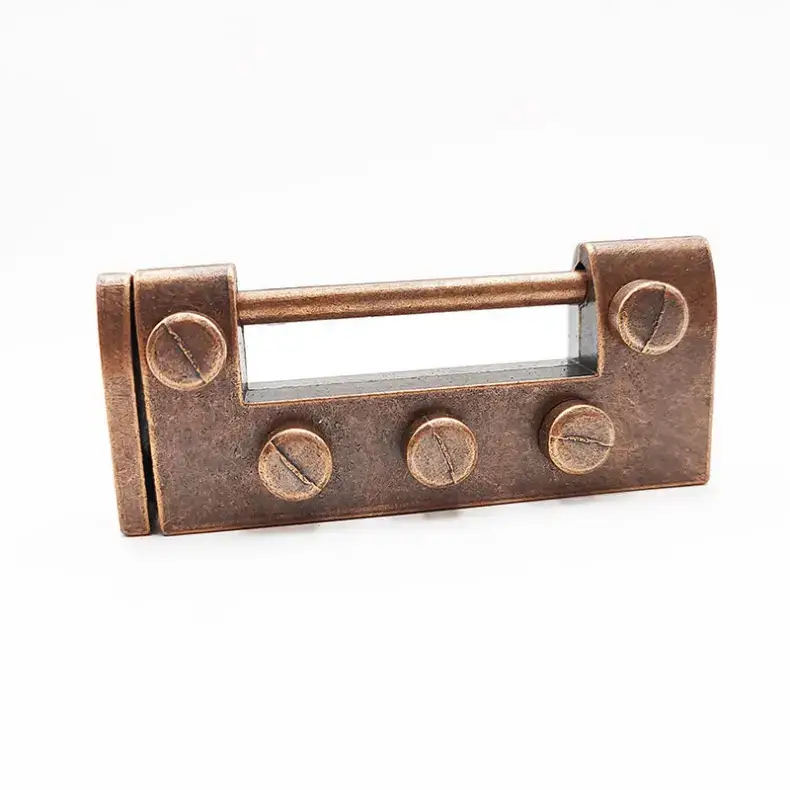
4. Antique Lock Puzzle – A Gateway to Sequential Discovery
* Type: Sequential Discovery (Lock)
* Primary Team Goal: Understanding process dependency and systemic thinking.
* Price/Material: $11.99 / Metal
This lock-and-key style puzzle, like the Antique Lock Puzzle from Tea Sip, introduces sequential discovery in an accessible format. The goal is intuitive: open it. But the mechanism is hidden. It requires testing, hypothesis, and a series of non-obvious actions. For teams that jump to solutions without understanding the system, this is perfect. The “aha” moment isn’t one click, but a series of small, logical revelations. It’s less about collaboration during the solve (it often passes hand-to-hand) and more about post-solve mapping of the sequence to a work process, asking, “What ‘locks’ in our project are we trying to force open without finding the hidden step first?”
5. The DIY Magnet Maze – Large-Scale, Low-Cost Collaborative Build
* Concept: DIY Tabletop Maze
* Primary Team Goal: Full-group collaboration, leadership emergence, and systems coordination.
* Cost/Material: ~$30 / Wood, Metal Ball, Magnet
For larger groups or a memorable offsite activity, implement the ‘Magnet Maze’ hack from Reddit. Build a simple wooden frame with a maze pattern underneath. Place a metal ball on the top surface. The team must navigate the ball through the maze by holding and moving a magnet under the board. No one person can see both the ball and the magnet’s position. It becomes a real-time exercise in shouted guidance, strategic silence, and delegated roles. It scales to 8-10 people and, as a constructed artifact, carries more symbolic weight than a store-bought item. It answers the need for a team building puzzle that requires two people by requiring everyone.
For the Truly Stubborn: A Final Word on Difficult Puzzles
When researching the best metal puzzles for adults, you’ll find Level 5-6 difficult metal puzzles for adults team like Hanayama’s Enigma or Quartex. Use these with extreme caution. Their lengthy, complex solves can create group disengagement. Reserve them only for highly persistent, puzzle-savvy teams where the goal is literal endurance. For most corporate settings, the sweet spot is Hanayama Level 2-4. The goal is a shared win, not expert-level frustration. Understanding how to choose brain teasers strategically is key to avoiding this pitfall.
Logistics: Buying in Bulk, Storage, and Hygiene for Corporate Use
After narrowing down your selection to the right type of tactile metal brain teaser, the final, practical hurdle is procurement and maintenance. PuzzleWarehouse sells sets of 12 identical, small wire disentanglement puzzles for $28.50, bringing the per-unit cost for a large workshop under $2.50. This bulk price point is critical for scaling an activity across multiple teams without blowing your L&D budget. But cost is just one logistical factor; you also need to consider durability, hygiene, and how these objects will live in your office between sessions.
Where to Buy Metal Brain Teasers in Bulk
For corporate orders, you have two primary paths. Major online puzzle retailers like PuzzleWarehouse and Kubiya Games offer curated bulk sets, often labeled as “party packs” or “group puzzles,” containing 6-12 units. These are ideal for standardized activities. For higher-end, individual puzzles like Hanayama, buying 5-10 of the same model (e.g., Cast H&H or Key) directly from these retailers often triggers a volume discount. A full kit of 10 robust metal puzzles typically weighs 5-7 pounds—a substantial but portable toolkit. Always verify material: you want cast zinc alloy or stainless steel wire for longevity, avoiding plated metals that can chip with heavy use.
The Hygiene and Durability Advantage
This is where metal decisively outperforms wood, plastic, or fabric-based team tools. A quality metal puzzle can be wiped down with an isopropyl alcohol disinfectant wipe between users without damage, a non-negotiable for shared objects. They withstand being dropped, pocketed, and passed through hundreds of hands. Unlike a wooden puzzle that might splinter or a cheap plastic one that snaps, a well-machined metal brain teaser is a one-time purchase that lasts for years of workshops. Store them in a segmented container like a tackle box or a padded case to prevent pieces from clattering and scratching—this also signals care and intentionality when you bring them out. They can even serve as excellent office puzzles for stress relief in between structured sessions.
What About Remote Teams?
The core tactile feedback and non-verbal collaboration of a physical metal puzzle are antithetical to a remote setting. Forcing a virtual version misses the point. Instead, for distributed teams, shift the goal to shared, tactile problem-solving using objects everyone can source locally. A powerful alternative is the DIY magnet maze hack: instruct each participant to gather a small baking sheet, a strong magnet, and a metal ball bearing (like a BB). During the video call, have them navigate their own maze drawn on paper taped to the sheet. The shared physical constraint and parallel struggle create a different, but valid, collaborative bond.
Your investment in a set of bulk metal puzzles for corporate use pays off not just in repeated sessions, but in their presence as a persistent, tangible reminder of a team’s problem-solving capability. Leave one on the conference room table. The faint snick of someone idly picking it up during a long call is the sound of a lesson being reinforced.
Reader Friction and Quick Answer
The most common hesitations for facilitators—frustration, durability, and cost—are neutralized by three facts: bulk sets of 6-12 small wire puzzles cost under $30, a quality cast zinc alloy Hanayama puzzle can withstand 500+ solve cycles without wear, and a structured debrief transforms frustration into a teachable moment about process. Your final friction isn’t about the object, but your choice; the matrix below ends the paralysis.
If your team is silent in meetings and struggles to articulate ideas:
Choose a disentanglement puzzle (like the two-person “Ring of String” variant or a simple wire-and-loop set). The constant, non-verbal negotiation (“tilt your end,” “slide it through here”) forces externalized, precise communication. The low materials cost allows you to buy in bulk for pairs.
If your team jumps to solutions and ignores process:
Choose a sequential discovery cast puzzle (Hanayama Cast Enigma or Cast Laby). The sophisticated, singular solution path punishes rushing. The average solve time for Cast Enigma is 2.5–4 hours, forcing a team to methodically test, document, and validate each hypothesis.
If your team lacks patience or gives up easily:
Choose a moderate-difficulty maze puzzle (Hanayama Cast News, Level 3). Its clear goal (free the ball) and immediate tactile feedback provide small, rewarding milestones. The frustration threshold is carefully calibrated—solvable within 15-30 minutes with collaboration, proving persistence pays.
If budget is the primary constraint and you need to engage 20+ people:
Skip branded puzzles. Order a bulk lot of identical wire puzzles from a retailer like PuzzleWarehouse. You sacrifice refined machined finish for accessibility. Facilitate by having small groups race to document a repeatable solution, emphasizing replicable process over the “aha” moment.
Your actionable next step is not to buy a puzzle. It is to run a five-minute diagnostic: replay your last team stalemate. Was it a failure of shared understanding, a rush to judgment, or a collapse of will? Match that memory to the puzzle type above. Then, purchase a single puzzle of that type—not a set. Test it on yourself. Feel its heft, its resistance. That is the moment your strategic confidence begins. You are no longer just buying a metal brain teaser for team building activities; you are procuring a precise tool for a diagnosed need. Now, hand it to your team. Say nothing.