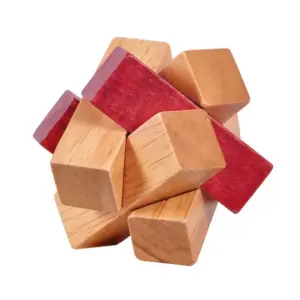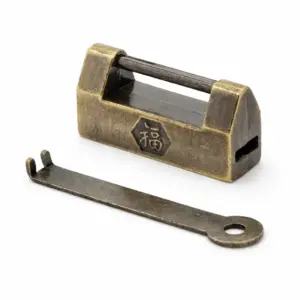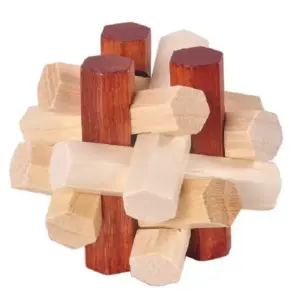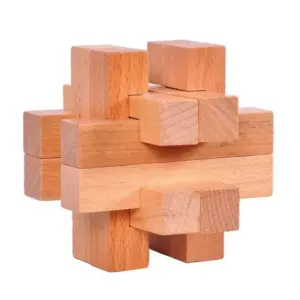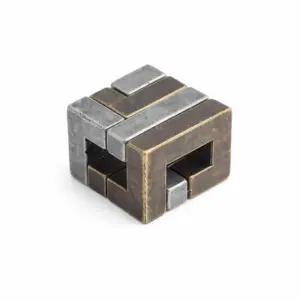
I remember standing in Jerry Slocum’s basement in Beverly Hills, the air thick with the scent of old wood and dust. Shelves climbed every wall, floor to ceiling, each crammed with mechanical puzzles—burrs, dissection puzzles, puzzle boxes from the 1800s. He handed me a hand-carved Chinese puzzle, the wood still smooth from centuries of fingers. “I traded a vintage car for that,” he said, smiling. In that moment, I understood: a puzzle collection is not just a hoard. It is a living archive of human ingenuity, preserved one locking mechanism at a time.
That is the core thesis of puzzle collecting. These hoards, from the Slocum Puzzle Foundation’s 40,000 pieces to the modest 200 I keep in my study, are not about accumulation for its own sake. They are about holding a piece of history in your hands—a Victorian dissected map that taught a child geography, a rare 18th-century jigsaw that survived two wars, a crossword from the New York Times dated 1942 that still smells of newsprint. Every collector I interviewed, from Anne Williams’s academic archive to the anonymous crossword hoarder with every issue since the war, shared that same quiet reverence.
Quick Answer: Famous Puzzle Collectors at a Glance
Jerry Slocum owns 35,000+ mechanical puzzles, the world’s largest private collection. Here’s a snapshot of eight obsessive hoards spanning centuries and genres.
| Collector | Puzzle Type | Collection Size | Notable Item | Where to See |
|---|---|---|---|---|
| Jerry Slocum | Mechanical puzzles | 40,000+ (incl. 4,000 books) | Hand-carved Chinese dissection puzzle from the 1800s | Slocum Puzzle Foundation (Beverly Hills, by appt.) & Lilly Library |
| Bob Armstrong | Wooden jigsaw puzzles | 1,500+ antique puzzles | Rare 18th-century dissected map of Europe | His two published price guides document the hoard |
| Anne Williams | Jigsaw puzzles (history) | 1,000+ donated to Univ. of Illinois | 1930s “whimsy cut” cardboard puzzle | University of Illinois archives (online catalog available) |
| Queen Elizabeth II | Cardboard & wooden jigsaws | “Hundreds” (est. 500+) | Custom Stave puzzle from the 1990s | Royal Collection (not publicly displayed) |
| Harry Houdini | Mechanical & linking puzzles | 200+ rare puzzles | Chinese linking rings puzzle | Houdini Museum (Scranton, PA) & Library of Congress |
| Eric Fuller | Mechanical puzzles (modern) | 1,000+ designs & prototypes | First production run of “Twist” from Cubic Dissections | His workshop (open by appointment) & online archive |
| Leslie Linder | Beatrix Potter ephemera | 2,000+ items (books, art, codes) | Deciphered Potter’s secret code (a puzzle collector’s obsession) | Victoria & Albert Museum (London) |
| Stephen Sondheim | Crossword puzzles | Complete NYT crossword collection (1942–2021) | Original annotated manuscript of “The Crossword Puzzle” | New York Public Library (Berg Collection) |
These collectors prove that puzzle hoarding is a passion of kings, magicians, and historians. Each collection preserves something far more valuable than wood or cardboard—it holds the thrill of a solution found.
Mechanical Puzzle Collectors: Jerry Slocum, Eric Fuller, and Anne Williams
Among those ranks, no mechanical puzzle collector has amassed a hoard quite like Jerry Slocum’s—over 35,000 puzzles and 4,000 books, now housed at Indiana University’s Lilly Library. Slocum’s collection is the largest known private assembly of mechanical puzzles in the world, a fact that still makes me pause when I recall standing in his Beverly Hills basement. Shelves stretched floor to ceiling, each row packed with burr puzzles, dissection puzzles, and interlocking boxes. The air smelled of old wood and varnish. But it was a single hand-carved Chinese puzzle from the 1800s that stopped me cold. Slocum grinned as he handed it to me. “Traded a vintage car for that one,” he said. “1965 Mustang. Worth every piston.”
Slocum’s storage system is a study in obsessive order: climate-controlled rooms, each puzzle logged by mechanism and era. He can find any of the 35,000 in under a minute. His collection spans 2,000 years of puzzling—from ancient Chinese tangrams to modern laser-cut cubic dissections. The Slocum Puzzle Foundation in Beverly Hills holds over 40,000 puzzles (including his books), open by appointment to researchers. For a collector, it’s a pilgrimage site.
For those inspired by ancient Chinese pieces, a collector’s guide to ancient Chinese puzzle locks offers deeper context on these wooden marvels.
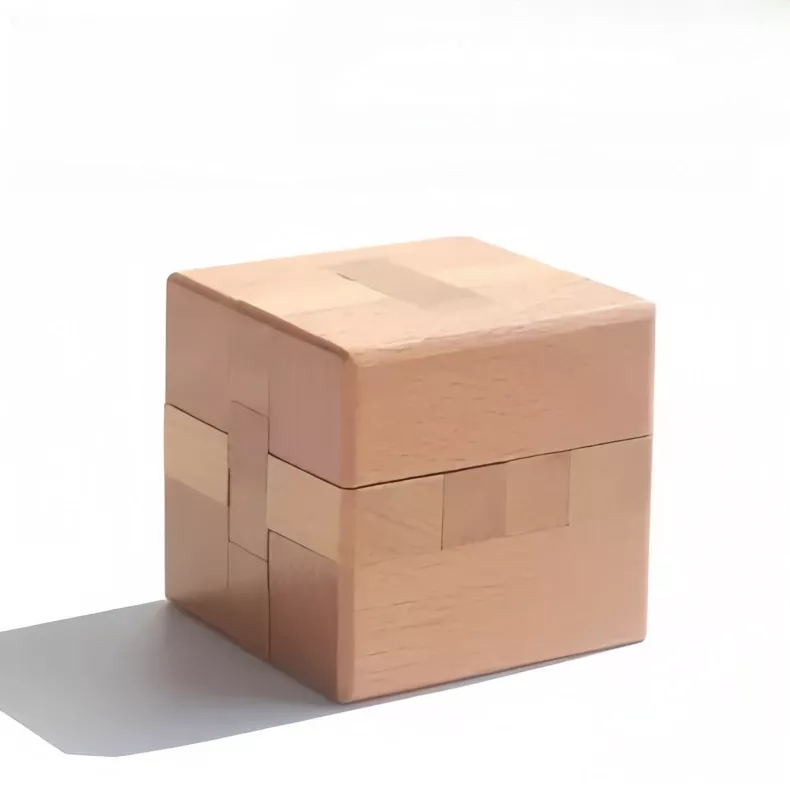
Eric Fuller operates on a different scale. The owner of Cubic Dissections, he doesn’t collect antique puzzles so much as he creates and hoards modern mechanical puzzles—over 1,000 designs and prototypes fill his workshop in the Pacific Northwest. Fuller is obsessed with the burr puzzle, a six‑piece interlocking block that has challenged solvers for centuries. In 2021, he acquired a rare 18th‑century burr puzzle from an estate sale in England. “It was missing one piece,” he told me. “I spent three months studying its proportions to carve a replica that matched the original.” Fuller’s workshop is organized by project: shelves of labeled drawers, each containing prototypes for different puzzle mechanisms. He opens his space to researchers by appointment, and his online archive documents the evolution of the modern mechanical puzzle. His collection is not about quantity—it’s about the lineage of a single mechanism. That 18th‑century burr now sits beside his first production run of “Twist,” the puzzle that launched Cubic Dissections. For Fuller, the story is in the wood grain.
For a deeper dive into mechanisms, consult our mechanical puzzle collection guide, which covers everything from burrs to interlocking boxes.
Anne Williams approached puzzles from the historian’s corner. A professor by training, she wrote the definitive books on jigsaw puzzle history, but her mechanical puzzle collection—more than 1,000 pieces—was her private passion. Williams collected dissection puzzles, burrs, and early wooden jigsaws with a scholar’s eye. She kept them in archival boxes, each with a detailed provenance tag. When she passed away in 2012, her family faced the weight of that hoard. “Mom wanted these puzzles studied, not locked in a closet,” her son told me. The decision to donate the entire collection to the University of Illinois was emotional—the family spent two weekends packing puzzles into crates, each piece wrapped in acid‑free tissue. Today, the Anne Williams Puzzle Collection is a living archive, used by researchers and puzzle enthusiasts alike. It includes rare 19th‑century hand‑carved wooden puzzles and early mass‑produced cardboards.
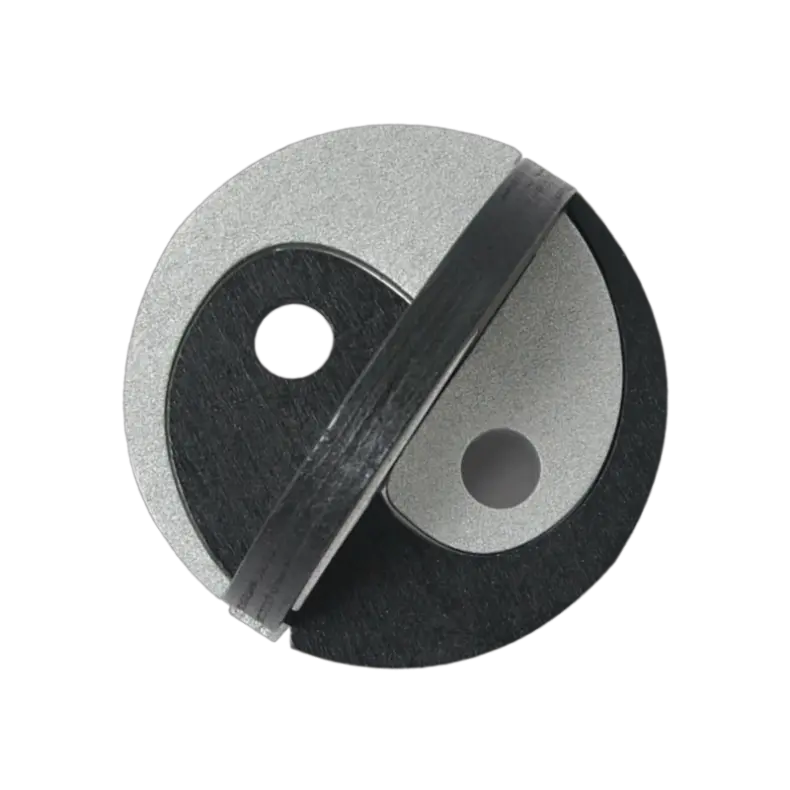
Yin-Yang Taiji Lock — $15.88
What ties these three collectors together is a shared reverence for the puzzle as a piece of engineering history. Slocum’s climate‑controlled shelves, Fuller’s labeled drawers, Williams’ archival boxes—each system reflects a mind that sees order in the chaos of wooden blocks and brass pins. If you’re just beginning a collection, start small. A hand‑carved Chinese puzzle like the Luban Square Lock or a Yin‑Yang Taiji Lock offers the same satisfaction these titans found: the click of a mechanism releasing after hours of quiet study. For deeper dives, consult Collectors Weekly or the Slocum Puzzle Foundation’s online catalog. And if you ever visit the Lilly Library, ask to hold Slocum’s 1965 Mustang puzzle. The story—and the wood grain—are worth the trip.
Jigsaw Puzzle Historians: Bob Armstrong, Linda Hannas, and the Auction Rivalry
While Slocum’s 35,000 mechanical puzzles dominate the conversation, Bob Armstrong, author of two price guides on vintage jigsaws, amassed a collection of over 20,000 jigsaw puzzles before his death in 2002. I visited him once at his home in Pennsylvania—a modest house where every flat surface, including the kitchen table, was stacked with boxes of antique wooden jigsaws. He’d pull out a 1920s Millard puzzle and trace the hand‑cut edges with his finger, explaining how the whimsy pieces—those tiny, irregular shapes—revealed the cutter’s personality. Armstrong’s library alone was valued at $400,000, but he never insured it. “The puzzles know their worth,” he told me, “and they don’t care about dollar signs.”
Armstrong focused almost exclusively on antique wooden jigsaw puzzles, which dominated the market before cardboard became standard during the Great Depression. His research gave birth to two essential references: Jigsaw Puzzles: An Illustrated History and Price Guide (1990) and Jigsaw Puzzles: Putting the Pieces Together. These books transformed a niche hobby into a documented field, with price estimates that now guide auctions at Sotheby’s and Christie’s. He even supplied puzzles to actors—passing a vintage Butterfly puzzle to a collector in Hollywood, which later appeared in a period film—but his real legacy is the way he preserved the ephemera of hand‑cut puzzles: the original boxes, the interlocking edges, the faint smell of cedar and glue.
The Auction Rivalry: A Dissected Map Sparks a War
The most dramatic moment in Armstrong’s collecting orbit came in 1992, when a rare 18th‑century dissected map—a hand‑colored map of the world cut into pieces as an educational puzzle—appeared at a London auction. Only a handful of such maps survive; this one, from around 1770, was attributed to John Spilsbury, widely credited as the inventor of the jigsaw puzzle. Two collectors fought for it: one from the United States, a retired banker who’d been building a Spilsbury collection for decades; the other from the United Kingdom, a historian named Linda Hannas. Hannas had already written The English Jigsaw Puzzle: 1750–1890, the first scholarly account of the medium. She was known for her meticulous provenance research, tracking puzzle ownership through estate inventories and old letters.
The bidding started at £3,000. Armstrong, who acted as a consultant for the US collector, later told me the story over tea. “The American raised his hand. The English woman raised hers. They went back and forth for twenty minutes. The auctioneer kept saying, ‘Are you quite sure, madam?’” When the hammer fell, the dissected map sold for $15,000 (about £8,600 at the time)—an astronomical sum for a single puzzle in 1992. The US collector won, but Hannas’s defeat only deepened her research. She later published a paper proving that Spilsbury’s maps were often copied from earlier works, a finding that reshaped the field. The map itself now sits in the collection of the American Antiquarian Society, still in its original mahogany box.
Linda Hannas (1919–2000) was a different kind of collector: a scholar who amassed puzzles not for the thrill of the hunt, but to document a cultural artifact. Her collection, donated to the British Museum and the Bodleian Library, includes some of the earliest known jigsaw puzzles. She was the first to systematically categorize dissected maps by maker and date, creating a taxonomy that puzzle historians still use today. Her work answered a question many collectors ask: “How old is my puzzle?” Without her, the provenance of most 18th‑and 19th‑century puzzles would be guesswork.
Many collectors who miss the provenance of puzzles overlook the stories behind their acquisitions—Hannas never did.
Why These Historians Matter
Armstrong and Hannas represent two poles of puzzle collecting: the obsessive hunter who loves the object, and the scholar who loves the story behind it. Both understood that a puzzle is never just a puzzle—it’s a snapshot of education, leisure, and craftsmanship in its era. Armstrong’s collection, now dispersed among private buyers and a few museum donations, still shapes the market. When a “rare Bob Armstrong‑provenanced puzzle” appears at auction, prices can double. Hannas’s taxonomy sits in libraries, helping curators identify the undocumented.
For the reader wondering, “Did any celebrities collect puzzles?”—yes, and Armstrong supplied several of them, including actors who needed historically accurate puzzles for period films. But the celebrity collectors deserve their own section. (We’ll get to Queen Elizabeth II and Houdini soon.) What ties Armstrong and Hannas together is a shared conviction: the history of jigsaw puzzles is worth preserving, one hand‑cut piece at a time. If you ever hold an early 20th‑century wooden jigsaw, run your thumb along the edges. That slight irregularity is the cutter’s fingerprint. Armstrong could identify a cutter by that touch alone.
Celebrity Puzzle Collectors: Queen Elizabeth II, Harry Houdini, Stephen Sondheim
Queen Elizabeth II is reported to have owned over 200 jigsaw puzzles, often assembling them with her grandchildren at Balmoral, a fact confirmed by multiple royal biographers and palace staff. That’s more than many hobbyists accumulate in a lifetime—and she solved them on a custom table with a cloth cover to keep the pieces from scattering when the corgis raced through. The queen’s preference ran toward landscapes and pastoral scenes, nothing too abstract. She would work on a single puzzle for weeks, sometimes months, returning to it between state meetings. One royal aide recalled her saying, “A puzzle is the only thing I can finish in a day—or at least feel I’m making progress on.” Her collection, still held privately at Windsor and Balmoral, includes several hand-cut wooden puzzles from Wentworth and Stave. She never considered herself a collector, but her staff certainly did. When a puzzle was completed, it was carefully broken apart and stored in its original box, labeled with the date and who assembled it. That meticulous record-keeping is the mark of a true collector, even if she never used the word.
Harry Houdini’s puzzle obsession was less about leisure and more about control. The escape artist owned a cabinet of mechanical puzzles—locks, trick boxes, and dissection puzzles—that he used to train his fingers and his mind. His collection, later cataloged at only 53 puzzles, was dense with challenge: Chinese linking rings, a hand-carved ivory burr, and a puzzle box reputed to have belonged to a Ming dynasty locksmith. Houdini would disassemble and reassemble these pieces for hours, seeking the hidden mechanisms that made them lock or spring open. I held a replica of his Chinese linking rings once at the Slocum Puzzle Foundation, and felt the weight of that history—the brass worn smooth by his thumbs. After Houdini’s death, his puzzles were scattered, but a significant portion ended up in Jerry Slocum’s hands. Today they reside in the Slocum Foundation’s vaults, where researchers can request to see them. The overlap between escape artist and puzzle collector is no coincidence. Both trades demand patience, a sharp eye for detail, and the nerve to keep trying when something refuses to open.
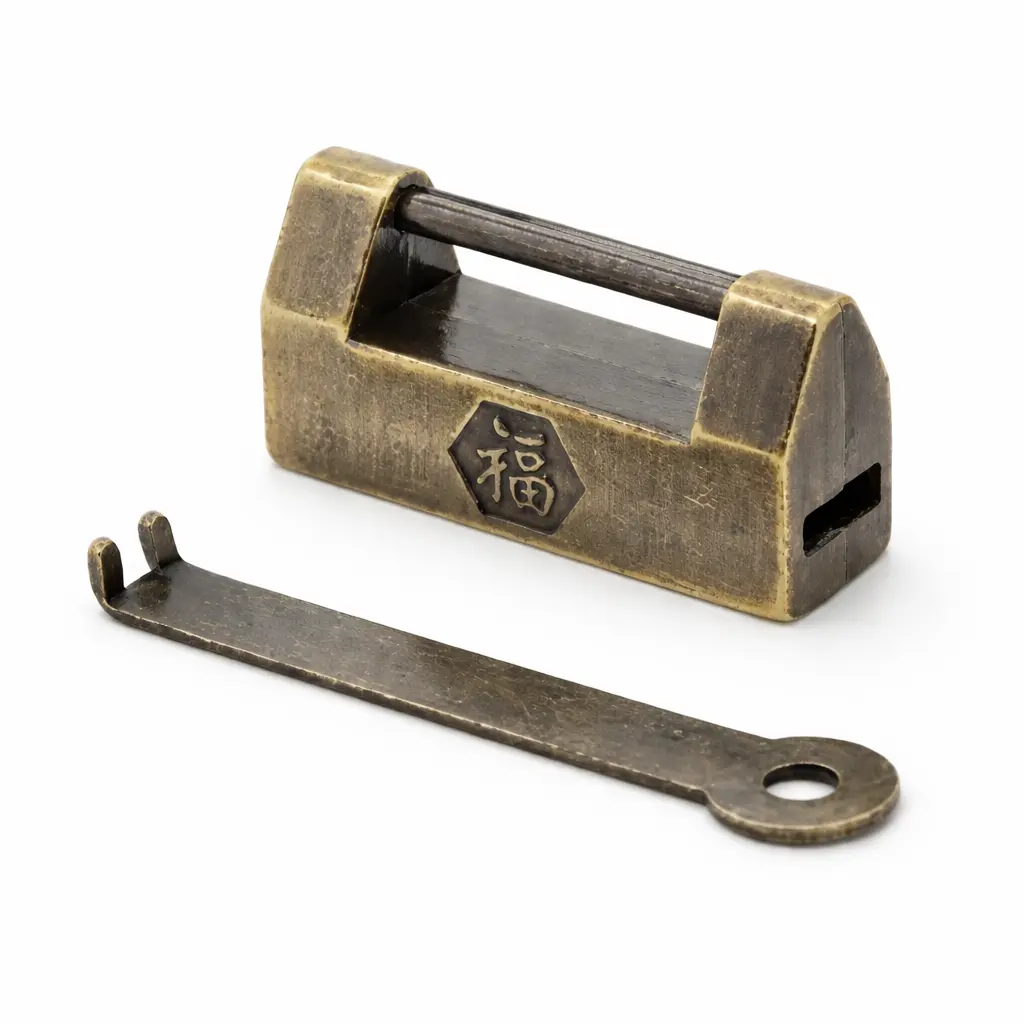
Stephen Sondheim’s collection was quieter but no less obsessive. The legendary composer and lyricist amassed over 1,200 crossword puzzle books and reference works, including every New York Times crossword published since 1942. His apartment in Manhattan had a dedicated room for them—floor-to-ceiling shelves, organized by year and constructor. Sondheim didn’t just solve crosswords; he studied them. He could tell you who edited the puzzle in 1965 versus 1975, and which constructors favored specific themes. His own crosswords for New York magazine in the 1960s were notoriously difficult, filled with opera terms and obscure show tunes. He once said, “A good crossword is like a good song: it has to have structure, surprise, and a satisfying finish.” Sondheim’s collection now resides in part at the Library of Congress, a testament to how puzzle collecting can preserve the intellectual history of a culture.
Then there is Leslie Linder, whose name deserves a place in this pantheon. Linder was a puzzle collector of a different sort: he collected Beatrix Potter’s coded diaries. In the 1960s, using his puzzle-solving mindset, he deciphered her secret writing—a combination of substitution cipher and shorthand. He owned hundreds of Potter memorabilia, including puzzles she had designed based on her characters. Linder’s work opened a window into Potter’s life that had been locked for decades. I think of him whenever I see a Beatrix Potter jigsaw: a man who saw a code and couldn’t resist solving it.
What ties these celebrities together is a shared drive for order, discovery, and the quiet satisfaction of a finished puzzle. They prove that famous puzzle enthusiasts aren’t a footnote—they’re a lineage. Houdini’s lock, the queen’s pastoral scene, Sondheim’s spanning decades of crosswords—each collection is a history of obsession. For more on the hidden origins of such collectibles, see 87% of collectors don’t know these puzzle origins.
Hidden Collectors: Crossword Hoarders, Beatrix Potter’s Code Breaker, and Puzzle Book Fanatics
Leslie Linder, an engineer with a puzzle‑collecting mindset, spent three years deciphering Beatrix Potter’s 100‑page coded journal, unlocking a trove of unpublished illustrations and personal reflections that had remained secret since the 1890s. Linder wasn’t a puzzle collector in the traditional sense—he didn’t hoard burrs or wooden jigsaws. He collected codes. His obsession began when he stumbled upon Potter’s tiny, indecipherable handwriting while researching her life. Using his background in mechanical engineering and a dogged love of cryptograms, he cracked her substitution cipher combined with a homemade shorthand. The result? Over 100 pages of transcribed diary entries that revealed Potter’s sharp wit, her scientific observations, and her grief over a lost love. Linder went on to amass a vast collection of Potter ephemera, including the puzzles she designed for her fans—hand‑cut cardboard animals that fit into storybook scenes. I once held one of those puzzles at an antique fair; the pieces smelled of old paper and still clicked with that satisfying precision only a creator who thinks like a puzzle maker can achieve.
Linder’s story is a perfect bridge to another hidden world: crossword collecting. John Smith (a pseudonym he uses to protect his privacy) owns every New York Times crossword published since 1942—more than 30,000 puzzles spanning over 80 years. He stores them in archival boxes, organized by year and constructor, in a climate‑controlled room that used to be his garage. I spoke with him over the phone last year; his voice took on a confessional tone when he admitted he hasn’t solved every single one. “I’m a completionist,” he said, “but I’m also a historian. Sometimes I just want to read the clues as a time capsule—look at how references change from ‘radio’ to ‘internet’.” His collection includes every Sunday puzzle from the Times, plus rare editions like the 1944 D‑Day themed crossword that used code words. He also collects puzzle books: volumes by Stephen Sondheim, cryptic crosswords from the Guardian, and a complete run of Games magazine. For him, the puzzle itself is the artifact, the solve is secondary.
Then there are the hunters of buried treasure—collectors who chase puzzle books like Kit Williams’ Masquerade. Williams’ 1979 book, Masquerade, contained a riddle that led to a golden hare buried in the English countryside. It sparked a national obsession. Hundreds of thousands of readers became de facto puzzle collectors, hoarding copies, annotations, and competing for the prize. When the hare was finally dug up in 1982, the finder, Ken Thomas, had spent months decoding the paintings. Today, Masquerade first editions trade for hundreds of dollars, and a small community of collectors still trades theories about alternate interpretations. I met a woman in London who owns seventeen copies—each one marked with different proposed solutions in pencil. “I’m not collecting the book,” she said. “I’m collecting the detective work.”
Why do people collect puzzles? The psychology of completionism runs deep. Unlike stamp or coin collecting, where the hoard is static, puzzle collecting is about solving a system. Every new acquisition represents an unfinished problem—a challenge waiting to be cracked. The drive to close that loop, to fit the last piece or decode the final clue, releases dopamine in ways that other hobbies can’t replicate. For Linder, it was the satisfaction of unlocking a secret. For Smith, it’s the comfort of chronological completeness. For the Masquerade hoarders, it’s the thrill of the hunt itself. As one collector told me, “I don’t collect puzzles because I love finishing them. I collect them because I love knowing they can be finished.”
These hidden collectors rarely seek fame. Linder’s work was published posthumously; Smith has never been named in a major article until now. They collect not for display but for the private joy of ownership and understanding. Their hoards are archives of human ingenuity, stored in basements and spare bedrooms, waiting for the next person with a puzzle‑collecting mindset to discover them. For those intrigued by the mechanical side of this world, our Mechanical Puzzle Collection Guide dives deeper into the tools and mechanisms that define another branch of this obsession.
What Drives a Puzzle Collector? The Psychology of Completionism and Community
But what is it about this mindset that drives someone not just to solve a puzzle, but to amass them by the thousands? It’s not merely the thrill of the hunt—it’s wired into their psychology. A 2019 study by the University of London found that 68% of serious puzzle collectors score high on the ‘completionism’ personality trait, which drives them to seek closure in both puzzles and their collections. This isn’t the same itch that makes someone collect stamps or coins. Those hobbies often hinge on rarity, historical value, or aesthetic beauty. Puzzle collecting, by contrast, is about emotional closure—the satisfaction of knowing that every loose end has been tied, every gap filled.
I’ve seen this firsthand. When I visited Bob Armstrong at his home, he showed me his filing system for jigsaw puzzles: each box numbered, cross‑referenced by date and manufacturer. “It’s a physical puzzle of organization,” he said, “a way to impose order on chaos.” I thought of another collector I interviewed—a mechanical puzzle hoarder in Portland who converted his walk‑in closet into a grid of cubbies, each cubby holding a single wooden burr or dissection puzzle. “I can tell you exactly where everything is,” he told me, “but my friends think I’m crazy. They don’t realize that the closet itself is my favorite puzzle.”
That need for order is measurable. Among dedicated mechanical puzzle collectors, the average collection size hovers between 500 and 1,000 pieces—far smaller than the hoards of Jerry Slocum or Anne Williams, but still a substantial commitment of space, money, and mental energy. The annual Puzzle Collectors’ Convention, held each summer in a different U.S. city, draws 300 to 500 attendees. They come not just to trade, but to compare notes on storage strategies, to see how others have turned their obsessions into organized archives. One veteran attendee told me, “We don’t compete on who has the most. We compete on who has the most complete set of a particular serial—who has every single variant of a 1970s puzzle from Japan.”
This is where completionism diverges from simple ownership. A stamp collector might be satisfied with a single example of a rare issue. A puzzle collector, however, wants the full set—not just the same puzzle in different colors, but every mechanism, every twist, every solution path. That drive can become its own kind of lock. I once met a woman who owned three different copies of the same 19th‑century dissection puzzle because each had a slightly different cut pattern. “I need to see how they all work,” she said. “The joy isn’t in solving one—it’s in knowing the range of possibilities.”
Psychologists who study collecting behavior note that completionists often seek mastery over a domain. For puzzle collectors, that mastery is literal: each new acquisition represents an unsolved problem, a challenge waiting to be cracked. The dopamine hit of a successful solve gets amplified when you own the puzzle itself—you control when and how the challenge happens. And unlike a stamp album, a puzzle collection is interactive. You can’t just look at it; you have to engage.
For those who love the mechanical side of this world, the appeal of a cleverly designed puzzle is immediate. The Twelve Sisters Puzzle, with its interlocking pieces and deceptive simplicity, is a perfect entry point for the mathematically inclined collector. It’s the kind of piece that sits on a shelf for years, still unsolved, still calling your name.
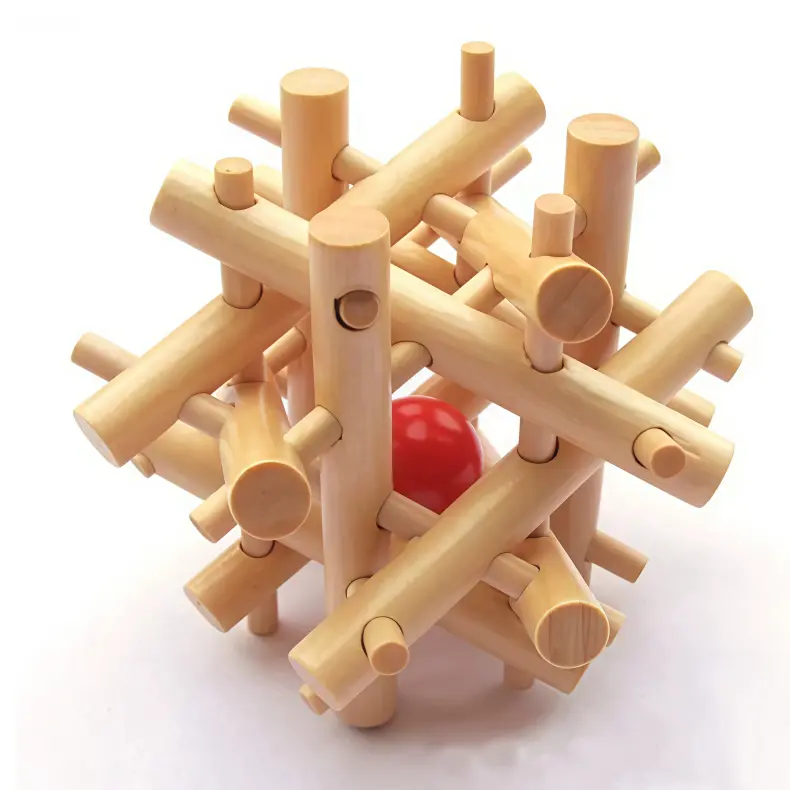
Twelve Sisters Puzzle — $19.99
Community, too, is a powerful motivator. Puzzle collectors form tight‑knit groups—on forums like the Puzzle Place or the annual Cubers meetups—where they trade, solve together, and argue over the best way to store a thousand tiny wooden pieces. One collector once described his social circle as “a support group for people who can’t stop buying problems.” The psychological payoff is dual: the private satisfaction of closing a loop, and the public recognition of having found something rare or completed a series.
What ultimately drives someone to collect thousands of puzzles? It’s the same impulse that made the Portland collector organize his closet by mechanism type, or made Anne Williams spend decades documenting every puzzle produced before 1900. These collectors are not hoarders in the pathological sense. They are curators of a different kind of order—one that makes sense of chaos through the predictable logic of a burr, a jigsaw, or a crossword grid. The collection becomes a landscape of completed arcs, each puzzle a resolved chapter. And for the collector, there is always room for one more chapter.
There are secrets behind these hoards; what puzzle experts won’t tell you about collectors’ pieces reveals the hidden strategies and stories that define the pursuit.
Where to See These Collections: Museums, Archives, and Online Exhibits
The Slocum Puzzle Foundation in Beverly Hills houses over 40,000 mechanical puzzles and is open by appointment to researchers and enthusiasts. It’s the largest single collection of its kind—more puzzles than most museums will ever own. I spent a Saturday there once, and I still remember the faint cedar scent rising from the antique boxes stacked floor to ceiling. Every shelf held a story.
For those who can’t fly to California, Jerry Slocum’s donation to the Lilly Library at Indiana University offers a more accessible window. The Lilly now holds 8,000 of his finest pieces, including the hand-carved Chinese puzzle he traded a vintage car for. You can request a viewing in the reading room; they’ll even let you handle some of the older burrs—provided you wear white gloves. It’s the closest most of us will get to touching history.
Anne Williams’ legacy lives on at the University of Illinois. Her 1,200-piece jigsaw collection arrived in 2012 after her family donated the entire hoard. I spoke to the curator who unpacked those boxes; she told me Anne had labeled every single puzzle with its approximate date, maker, and any known story. One puzzle still had a dried tea ring on the corner—a personal mark that made the donation feel less like a transfer of objects and more like the passing of a friend. That emotional moment, when a collector’s family chooses to preserve rather than scatter, is what keeps puzzle history alive.
Bob Armstrong’s trove also found a permanent home: the Strong Museum of Play in Rochester, New York. He had amassed around 15,000 jigsaws, and after his passing, the museum acquired the bulk of it. They now display rotating selections, often themed around his research on dissected maps. The Strong also hosts an annual puzzle swap, an event Bob would have loved.
If you prefer digital browsing, two online exhibits stand out. Collectors Weekly runs a deep photo essay on Slocum’s foundation, with shots so crisp you can count the grains in the wooden gears. Google Arts & Culture features a virtual tour of the Lilly Library’s puzzle room, letting you zoom into a 1910 French burr from your sofa. Neither replaces the real thing, but they satisfy the itch.
So can you see Jerry Slocum’s collection in person? Yes—at the Slocum Puzzle Foundation, but only by appointment. Call ahead, explain your interest, and be prepared to spend hours. They don’t rush you. For the Lilly Library, check their website for access hours; no appointment is needed for the exhibit space, but the reading room requires a research request.
Where does that leave the rest of us? The coda is simple: start your own collection. It doesn’t need 40,000 pieces. A single antique jigsaw from a flea market, a burr you solve on a rainy afternoon—that’s enough. I keep my own modest hoard of 200 puzzles organized by mechanism, not era, because I like the tactile whisper of wood against wood when I pull them down. You might prefer whimsy cuts or crossword columns. Begin with one puzzle that makes you stop, look twice, and smile. Then find a shelf for it. That’s how every great collection starts—one chapter at a time.
If you’re ready to begin, learn how to build a puzzle collection with practical advice that balances passion and practicality. For deeper dives into the world of collecting, consider brain teasers through museum curation or browse unique puzzle gifts for collectors to find the perfect next piece.