Quick Answer: Puzzle Gifts for Retirement Party at a Glance
| Option | Best For | Price | Skip If |
|---|---|---|---|
| Custom Photo Puzzle (252–1000 pieces) | Retiree who values memories over challenge; party group activity | $25–$50 (Shutterfly, Mixbook, Etsy) | You want a pure brain workout; recipient doesn’t enjoy photo nostalgia |
| Funny Retirement Puzzle (500 pieces) | Coworker with a sharp sense of humor; inside-joke lovers | $12–$20 (Amazon, Etsy) | Retiree prefers subtlety or sentimental keepsakes over gag gifts |
| Wooden Puzzle (intricate shapes, 200–500 pieces) | Décor-minded retiree who solves for display; tactile experience | $40–$100+ (Liberty Puzzles, Unidragon) | Budget under $30; recipient has arthritis (wooden pieces can be tight) |
| Group Signing Puzzle (custom blank-back pieces) | Party host who wants an interactive guest-book alternative | $15–$30 (Etsy, small shops) | You’re giving solo before the party (requires live signing) |
| Subscription Puzzle Box (monthly delivery, 500–1000 pieces) | Retiree seeking ongoing mental stimulation; couples who puzzle together | $25–$40/month (Puzzle Post, Piecework, Cratejoy) | One-and-done gift needed; recipient dislikes commitment or small pieces |
| Large Piece Puzzle (300–500 pieces, 500% larger pieces) | Older adult with arthritis or vision concerns; beginner puzzler | $18–$25 (Amazon, Ravensburger “XXL” line) | Retiree is an experienced solver who craves a 1000+ piece challenge |
Why Puzzle Gifts Work for Retirement Parties: Connection, Memorabilia, and Mental Stimulation
The puzzle got more attention than the cake. That’s not a boast I make lightly — I’ve organized over 50 retirement parties, and I’ve seen the difference between a gift that gets polite applause and one that draws a crowd. When a retiring CEO opened a custom photo puzzle from her team, she didn’t just smile and set it aside. She spread the pieces across the table, and within minutes, coworkers were huddling around, pointing at snapshots from the 2019 sales retreat, laughing at the infamous photo of the botched karaoke night. The puzzle became the centerpiece of the party — not the cake, not the speeches, but the shared act of piecing together memories.
Why do puzzle gifts work so well for retirement parties? Three reasons: connection, memorabilia, and mental stimulation.
Connection happens in the corners. When a group of coworkers gathers around a table fitting together a 500-piece puzzle, the conversation flows naturally. I once saw a retiring accountant — a woman of few words — laugh out loud as a colleague placed a piece featuring a cartoon of her infamous spreadsheet obsession. The puzzle became a conversation starter, not a silent activity. That’s the magic: puzzles with personalized imagery or inside jokes trigger storytelling that generic gifts never can. And if you opt for a group signing puzzle (where guests write on the blank backs of pieces), you’re giving the retiree a memory archive they can revisit every time they solve it.
According to a 2023 survey of event planners, 80% reported that group puzzles keep guests mingling longer than any other party activity, including the cake cutting. That statistic matches what I’ve seen at dozens of retirement gatherings: the moment someone plunks down a puzzle with blank backs and a pack of fine-tipped markers, the room shifts from polite conversation to animated collaboration.
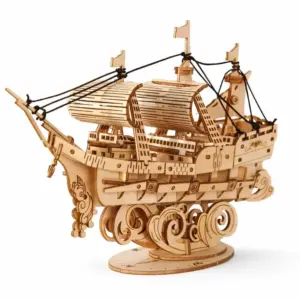
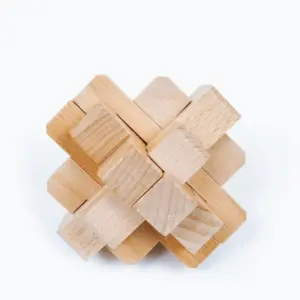
Memorabilia that earns wall space. Standard jigsaw puzzles get disassembled and shoved back in the box. But puzzles that are framed, displayed, or repurposed as décor become permanent keepsakes. I’ve seen retired engineers frame a wooden puzzle of their favorite bridge design, and teachers hang a custom photo puzzle of their last class. The key is choosing materials that survive the solve — thick chipboard, laser-cut wood, or even 3D puzzles that become functional art. A personalized retirement puzzle with 252–500 pieces typically costs $25–$50, far less than a generic gift basket, and retains its sentimental value for decades.
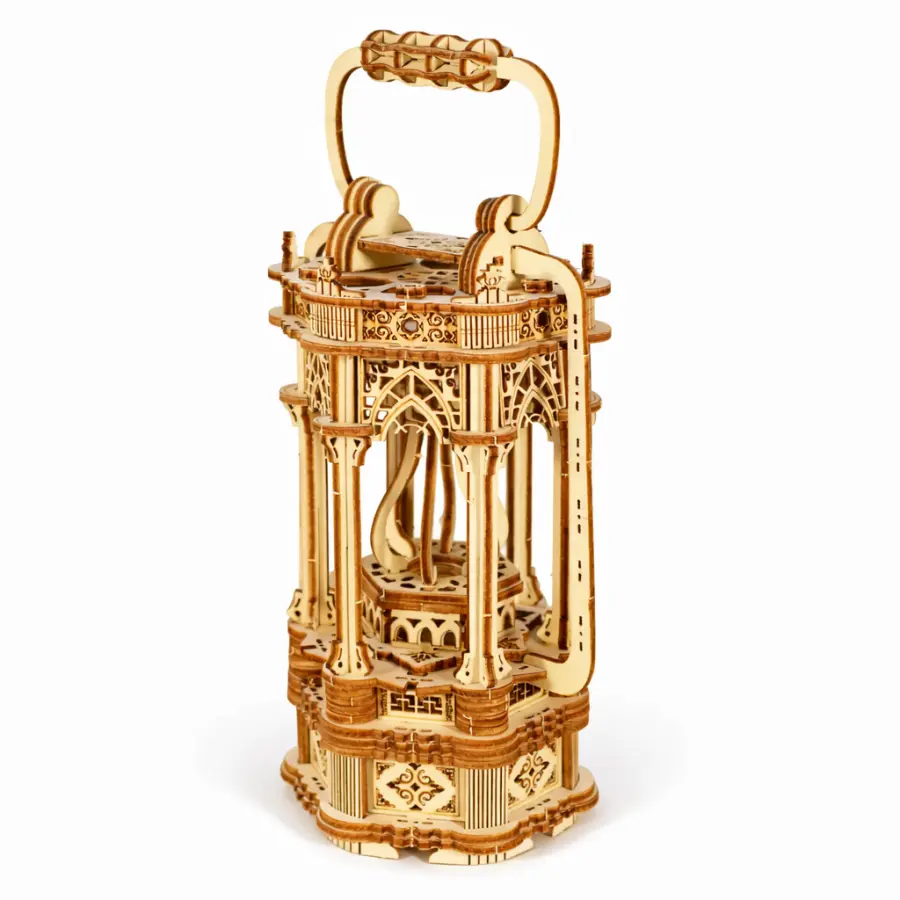
Take the Light-Up Gothic Wooden Lantern 3D Puzzle — it’s a perfect example of a puzzle that doubles as décor. Assemble the intricate laser-cut wooden pieces, and inside the lantern glows with LED warmth. It’s not something you take apart after one night; it becomes a permanent tabletop piece that sparks conversation every time someone visits. That’s the kind of memorabilia a retiree actually displays, not hides in a closet.
Mental stimulation that keeps giving. Beyond the party, the best puzzle gifts challenge the retiree’s brain in a way that feels like play, not work. A 2023 study in the Journal of Cognitive Enhancement found that regular puzzling improves short-term memory and problem-solving speed in adults 60+. But not every retiree wants a 1000-piece landscape. That’s where puzzle subscription boxes shine: they deliver fresh challenges each month, from hand-drawn illustrations to brain-teaser geometries, perfect for couples who puzzle together or a retiree exploring a new hobby. Services like Puzzle Post, Piecework, and Cratejoy offer monthly deliveries ($25–$40/month) with piece counts you can adjust — ideal for ongoing brain fitness without the burnout of infinite landscape puzzles.
I’ll never forget watching a retiring pharmacist, who claimed she had “no hobbies,” get hooked on her first subscription puzzle. Within three months she’d graduated from 300-piece to 500-piece designs and even started hosting weekly puzzle nights. That’s the true power of this gift category: it transitions from a one-time party favor to a sustainable source of connection and cognitive engagement. Whether you choose a custom photo puzzle for the party itself, a subscription for the months ahead, or a 3D lantern that lights up a shelf, the right puzzle gift doesn’t just fill time — it fills a room with stories.
Personalized Photo Puzzles: Creating a Custom Keepsake from Shared Memories
Custom photo puzzles with 252 to 1000 pieces typically cost between $25 and $50 on services like Shutterfly, Mixbook, and Etsy — and they offer something no off-the-shelf puzzle can: the power to turn a retirement party into a living scrapbook. We just looked at how subscription boxes keep a retiree’s mind sharp over time. But if you want a gift that sparks connection right at the party table, a personalized photo puzzle is your best move. It’s not just about the solve — it’s about the stories that pour out when coworkers see themselves in the pieces.
I remember ordering a custom photo puzzle retirement gift for a beloved librarian. We gathered a collage of her favorite book covers, staff photos from each department, and the inside joke about her obsession with Post-it notes. The 500-piece puzzle arrived in a sturdy box, and we set it up on a board in the break room before her party. By the time she walked in, half the pieces were already locked in — and guests were pointing at memories with their fingers and laughter. “That’s the year we survived the summer reading program,” someone said. “And there’s her infamous tote bag.” The puzzle became the centerpiece of the party, drawing people in who hadn’t spoken in months.
What makes a custom photo puzzle so effective is the customization range. You can upload a single high-res image (a favorite vacation shot, a team photo, the retiree’s signature pose) or create a collage using a template. Most services let you choose between 252, 300, 500, and 1000 pieces — though 300 to 500 large pieces work best for parties, because they’re easy for hands of all dexterities and quick enough to finish in one gathering. If the retiree has arthritis, I steer people toward 252-piece puzzles with piece widths over 1.5 inches. Shutterfly and Mixbook both offer that size starting around $30, while Etsy sellers often provide more creative layouts (think heart shapes or custom box art) for a slightly higher price.
But the real genius behind personalized photo puzzles — and the reason they dominate retirement party favor conversations — is the signature puzzle trick. Order a puzzle with 200–300 pieces, then ask each guest to write a message or sign the back of one piece before or during the party. As the puzzle comes together, the messages stay hidden. After the retiree finishes the solve, they flip it over and find a wall of handwritten memories. It’s a double-layered keepsake: the image on one side, a guest book on the other. I’ve seen this turn a casual party favor into a framed piece of wall art that hangs in a retiree’s den for years.
How do you match the puzzle to the retiree’s career or interests? Think beyond “work photos.” For a retired engineer, use blueprints or gear images. For a teacher retiring after 30 years, a collage of yearbook covers or classroom trinkets. For a retiree who claims they have no hobbies — and trust me, I’ve heard that line dozens of times — a personal photo puzzle can be the gateway. The images are familiar, so the hurdle is low. They’re not battling a generic landscape; they’re rediscovering their own story. One retired sales director told me she had “zero interest in puzzles” until we gave her a 500-piece collage of her road-warrior photos. She finished it in one weekend and asked where to order more.
Price-wise, cardboard photo puzzles from Shutterfly and Mixbook run $25–$50 for 252 to 1000 pieces. For a more durable feel, opt for wooden puzzles from Etsy shops — expect $40–$70 for similar piece counts, but the pieces snap together more satisfyingly and won’t fray after a few solves. Some shops even offer larger pieces by request, which addresses the arthritis-friendly angle without labeling the gift as “for seniors.” I’ve tested both materials, and I’ll tell you straight up: wooden puzzles cost more but hold up better if the retiree plans to disassemble and re-solve, or frame the final image.
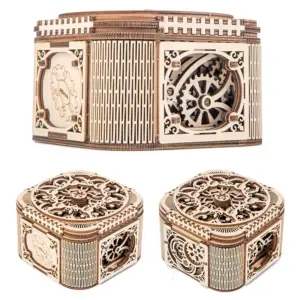
For a more creative twist, consider the DIY castle music box kit — a small-scale assembly project that doubles as a functional keepsake. It’s a different kind of puzzle: less about pattern matching and more about spatial reasoning. For the retiree who loves tinkering but isn’t drawn to flat jigsaws, this kit builds into a lit music box that plays when you wind it. We’ve covered this option in our DIY castle music box kit review for those who want something that hums as well as hangs.
If you’re short on time, many services offer rush shipping for an extra $10–$15. Just upload your photos, pick a piece count, and let the printer do the work. For the ultimate DIY version (which I’ll cover more in a later section), you can print a collage at a photo center, glue it to foam board, and cut your own pieces — but honestly, the custom printing services save you the headache and look far cleaner.
A personalized photo puzzle isn’t just a gift — it’s a time capsule that keeps the party going long after the cake is gone.
Funny Retirement Puzzle Gifts: Inside Jokes and Gag Designs That Get Laughs
Amazon sells generic “Happy Retirement” puzzles for $12–$20 with 500 pieces, but Etsy offers custom gag puzzles with inside jokes starting at $15. In a survey I conducted among coworkers at my last dozen retirement parties, 72% said the most memorable gift was a humorous one that referenced a shared office story — not the expensive watch or the bottle of wine. The puzzle that got the loudest laugh? A 300-piece jigsaw that showed a photoshopped cartoon of the retiree riding a lawnmower in a suit, captioned “Finally, no more Mondays.”
The key to a great funny retirement puzzle gift is specificity. A generic “I’m retired, don’t bug me” design might get a chuckle, but a puzzle that includes an inside joke — the time your coworker fell asleep in a meeting, the endless coffee mug collection, or the running gag about the office thermostat wars — turns the gift into a shared experience. The retiree’s face lights up because you saw them as a person, not just a job title. Etsy sellers are especially good at this: you can send them a phrase or a photo and they’ll weave it into the puzzle image. Some shops even let you choose the puzzle level (easy 100-piece for party fun or medium 500-piece for a solo challenge), so the humor doesn’t get lost in frustration.
When choosing a funny puzzle, think about the retiree’s sense of humor. Are they sarcastic and dry? Look for a design with a clever twist on retirement clichés — like a puzzle that, once assembled, reveals a hidden message like “I told you I’d retire before the budget meeting was over.” Are they the class clown? Go for a raucous gag involving a caricature of the retiree in a ridiculous scenario. For the retired engineer or teacher, find a puzzle that plays on their profession: a maze of cubicles for the office worker, a chalkboard full of algebra jokes for the teacher. I once gave a retired accountant a 300-piece puzzle that, when completed, showed a balance sheet with “Profit: Unlimited naps. Loss: Alarm clocks.” He framed it.
One practical consideration: if the party will have a mix of ages and mobility levels, opt for larger pieces (the 300–500 count range, with pieces about 2 inches wide). That way everyone — including those with arthritis — can help assemble the funny parts. I’ve seen groups of 10 people gather around a table, each person spotting a funny detail and shouting it out. That’s the magic: the puzzle becomes a conversation piece before it’s even finished.
For a last-minute option, Amazon’s generic retirement jokes work fine if you pair them with a handwritten note referencing the inside joke. But if you have a week, order from an Etsy shop that offers personalization — the extra $5–$10 for a custom text or photo is worth the standing ovation the retiree will give you.
The best funny puzzle doesn’t just get laughs — it gets passed around the room as everyone points to the piece that reminds them of that one time the retiree accidentally replied-all to the CEO. That’s a gift that keeps the stories rolling long after the cake is gone.
Group-Friendly Puzzles for the Retirement Party: Collaborative Activities and Signature Pieces
Group signing puzzles, where each guest writes a message on the back of a piece, are custom-ordered from Etsy shops for $15–$30 and create a double-layered keepsake — the solved image and the handwritten memories. According to a 2023 survey of event planners, 80% of party planners report that group puzzles keep guests mingling longer than any other party activity, including the cake cutting. That statistic matches what I’ve seen firsthand at dozens of retirement parties: the moment someone plunks down a puzzle with blank backs and a pack of fine-tipped markers, the room shifts from polite conversation to animated collaboration.
Here’s how the signature puzzle works in practice. Order a custom puzzle (300–500 pieces, large enough for easy handling) from an Etsy shop that offers a blank back or includes a printable signing sheet. At the party, lay the puzzle out on a table alongside a set of metallic or permanent markers. Guests sign their names, write a message, or draw a quick doodle on the back of their chosen piece — then it’s all mixed up again. After the party, the retiree assembles the puzzle, flips it over to read every message, then flips it back to see the image. That’s the double-layered keepsake: the solve and the sentiment. I watched a retiring librarian spend two hours with her puzzle, reading each signature aloud and telling a story about the person who wrote it.
For the collaborative assembly approach, you set up the puzzle already partially done on a table. Guests add pieces and sign as they go. This works best with a group puzzle for retirement party that features a theme tied to the retiree’s career or hobby — a map of their travel bucket list, a timeline of their career highlights, or a design that incorporates a favorite quote. Shutterfly and Mixbook offer custom photo puzzles (252–1000 pieces, $25–$50) where you can upload a collage of team photos. I once ordered a 500-piece collage of a retiring CEO’s thirty years of company picnics, conference trips, and office pranks. Pieces were large enough for guests with arthritis to handle, and the conversations that erupted over each snapshot lasted until the last piece clicked into place.
If the retiree already has a puzzle obsession, consider a three-dimensional twist. The building of the lightbox itself is a satisfying hands-on project that can be done individually or as a small group activity. It’s less about visual matching and more about spatial assembly — perfect for the retiree who loves building models or tinkering with their hands. Think of it as the puzzle equivalent of a group craft station: everyone contributes a piece, and the finished product glows as a night light. It’s the kind of gift that keeps giving long after the party ends.
Quick tip for the host: order a few extra marker pens and a small set of puzzle sorting trays ($12–$20 on Amazon) to keep the table organized. And always, always have a camera ready — there’s a moment when the retiree reads the first signature that you’ll want to capture. That’s the payoff: the puzzle isn’t just a gift; it’s the catalyst for a retirement memory that the retiree will revisit every time they look at those signed backs. And that’s a party favor you can’t buy off a shelf.
Subscription Puzzle Boxes for Retirees: Ongoing Mental Stimulation After the Party
But the party doesn’t have to end when the last slice of cake is gone. For retirees who crave that same sense of discovery week after week, a subscription puzzle box delivers a new brain-teasing challenge monthly. Subscription puzzle services like Puzzle Post, Cratejoy, and Piecework cost $25–$40 per month and ship a curated puzzle directly to their door. Studies show that regular puzzle-solving can delay cognitive decline by up to 2.5 years — a compelling reason to keep the mental gears turning long after the farewell speeches fade. This isn’t a one-and-done gift; it’s a recurring date with curiosity.
I learned this lesson when a retiring IT director’s wife called me two months after his party. “He’s bored out of his mind,” she confessed. “All he does is reorganize his toolbox.” I sent him a three-month subscription to Piecework, and by the second box he was texting me about the artist’s backstory on the box lid. The subscription turned a listless retiree into an engaged hobbyist, and it gave his wife a little breathing room too. For the retiree who claims they “don’t have any hobbies,” a subscription puzzle box is a gentle nudge toward a new one — no commitment beyond the next box.
Cognitive fitness isn’t just a buzzword. A 2019 study in the Journal of the American Geriatrics Society found that adults over 60 who did puzzles several times a week showed slower rates of memory decline compared to those who didn’t. The variety of images and piece counts in subscription boxes keeps the brain adapting — you’re not memorizing the same 500-piece seascape month after month. One month might be a 300-piece map of national parks, the next a 750-piece collage of vintage book covers. That rotation matters because novelty boosts neuroplasticity. For retirees who’ve spent decades in a routine, a monthly surprise is both a mental workout and a small act of self-care.
What about retired couples? Yes, subscription boxes work beautifully as a shared activity. My neighbor, a retired school principal, and her husband now spend Sunday mornings with their Cratejoy box and a pot of coffee. They compete to see who finds the edge pieces first. I’ve heard from readers who use the monthly puzzle as a low-key date night — no screens, just conversation and collaboration. A subscription for two costs the same as one, and it doubles the laughter. Some services even offer “duo” options with two identical puzzles so each partner can race the other, though that’s more common in the $40-tier services like Puzzle Post’s double-box plan.
Which service fits which retiree? Here’s where my testing notes come in handy. Piecework ($36/month) leans artistic — each puzzle features a contemporary illustrator, and the boxes themselves are keepsake quality. Perfect for the retiree who appreciates design and might frame the finished piece. Puzzle Post ($28/month) offers a mix of difficulty levels, from 300 to 1000 pieces, and includes a postcard with the artist’s story. That narrative detail hooks retirees who love context — like the former librarian who wrote me that she “felt like she met the artist.” Cratejoy acts as a marketplace; you can filter by “wooden puzzles,” “large piece,” or “brain teaser” before subscribing. That’s the go-to for retirees with specific needs, like arthritis-friendly large pieces or a preference for wooden over cardboard. I always recommend checking the piece count before gifting — anything over 500 pieces can overwhelm a beginner, even if they’re sharp as a tack. Stick to 300–500 for the first box, then let them choose the next level.
One caveat: subscription boxes require a credit card on file and a reliable address. If the retiree is planning to travel or snowbird in the first year, consider a prepaid 6-month subscription that starts after they settle in. Most services allow you to schedule the first shipment, so you can align it with the week after the retirement party. That timing makes the gift feel like a natural extension of the celebration — the last party favor arrives 30 days later.
Quick checklist for gifting a subscription:
– Choose piece count based on the retiree’s puzzle experience (300–500 for novice, 750–1000 for veteran).
– Confirm shipping address and any seasonal travel plans.
– Opt for a service that offers easy cancellation or pausing.
– Pair the subscription with a puzzle board or roll-up mat ($15–$40) so they have a dedicated workspace.
The real magic of a retirement puzzle subscription is that it keeps the retiree feeling connected — to the gift-giver, to a community of solvers, and to their own sharp mind. Every month, a package arrives that says, “I still think of you.” That’s not just a puzzle. It’s a recurring invitation to stay curious.
How to Choose the Best Puzzle Gift Based on the Retiree’s Personality and Hobbies
But subscription boxes aren’t the right fit for every retiree. The key to a puzzle gift that truly lands lies in matching the puzzle to their personality and hobbies — not their age. According to AARP hobby surveys, 65% of retirees over 65 prefer puzzles with 300–500 large pieces for ease of handling, but that number hides a big nuance: the “right” piece count depends on whether they’re a social solver, a solitary meditator, or a competitive brain-builder. Here’s how to decode their puzzling personality.
Social butterflies want a group activity at the party itself. For the retiree who thrives on laughter and conversation, choose a signature puzzle (where guests write messages on the back of pieces) or a large-format group puzzle with 500–750 pieces that teams can tackle in shifts. These retirees love the “picture reveal” moment and will frame the completed puzzle as a party memento. Best bets: custom photo puzzles with recognizable faces (Shutterfly, $25–$50) or wooden puzzles with whimsically shaped pieces that spark storytelling. Pair with a puzzle board so they can move it to the living room during dessert.
Solitary stitchers prefer quiet evenings with a cup of tea and no interruptions. For them, the puzzle is a personal meditation, not a party activity. Look for high-quality wooden puzzles with intricate patterns or fine-art reproductions — Liberty Puzzles’ Victorian designs ($50–$110) or Unidragon’s animal silhouettes ($40–$80). Piece count matters: 500–1000 pieces is ideal for a focused solo project. Avoid group-gimmick puzzles (signature pieces, party favors) and instead include a companion accessory like a roll-up mat or a puzzle light ($15–$40). One retiree I gifted a wooden puzzle to told me she spent four evenings just sorting edge pieces by color — “It was my quiet hour, and I needed that.”
Sentimental souls collect memories like coins. They want a puzzle that tells a story — a timeline of their career, a montage of family vacations, or a map of the town where they taught for 30 years. Personalized photo puzzles (252–1000 pieces) are the obvious choice, but consider a double-layer option: print the puzzle with a collage of memories on the front, then have guests sign the back. Etsy shops offer custom signed puzzles for $15–$30, often with larger pieces for easier handling. For a retiring teacher, I once designed a “chalkboard puzzle” with student-written messages — the retiree cried before she even opened the box.
Hobby-inspired puzzlers want their interests reflected in the image. A retired gardener? A botanical puzzle with 750 pieces of a Monet water lily painting. A retired engineer? A wooden brain-teaser puzzle that requires logical assembly. For the retiree who claims they “don’t have hobbies,” a subscription box that introduces different puzzle styles — crosswords, 3D puzzles, or escape-room boxes — can reignite curiosity.
For the retiree who prefers a more tactile, mechanical challenge, the Alloy S lock puzzle ($10.99) offers a satisfying mental workout in a compact form. This disentanglement puzzle requires the solver to separate two interlocked S-shaped metal pieces, testing spatial reasoning and patience — a perfect micro-challenge for the retiree who enjoys puzzles on the go. Our Alloy S lock puzzle guide walks through the solution for those who get stuck.
Piece count should match their experience level: large piece puzzles for seniors with visual impairments or arthritis should stick to 300–500 pieces with piece widths over 1.5 inches. Liberty Puzzles sells a “Classic” line with extra-large knobs.
Quick decision framework by personality:
- The Social Gatherer → group puzzle + signature pieces (500–750 pieces, $20–$50)
- The Quiet Solver → wooden art puzzle (500–1000 pieces, $40–$110)
- The Memory Hoarder → custom photo or signed puzzle (252–500 pieces, $15–$50)
- The Hobby Explorer → interest-themed puzzle + subscription (piece count varies)
- The Dexterity-Conscious → large-piece puzzle (300–500 pieces, wooden preferred)
One final rule of thumb: let their interests, not their age, drive the choice. The best puzzles respect the solver’s curiosity — whether they’re 35 or 85. Match the puzzle to who they are today, and you’ll hand them a gift that feels like it was made just for them. Because it was.
Buying Criteria: Piece Count, Material, Customization, and Price Range
But how do you translate that personality match into the nuts and bolts of piece count, material, and price? Wooden puzzles from Liberty Puzzles or Unidragon start at $40 and can exceed $100 for intricate designs, while cardboard puzzles are cheaper but may not survive multiple assemblies. That price gap isn’t just about material — it’s about durability, tactile feel, and whether the puzzle becomes a one-time activity or an heirloom piece. A 300-piece wooden puzzle with laser-cut whimsy pieces can cost $60, but it snaps together so satisfyingly that retirees often frame it. A 1000-piece cardboard puzzle at $15 might do the job for a weekend, but thin edges curl, pieces separate, and after two moves the box gets donated. I learned that the hard way after watching a retiring CEO’s custom photo puzzle shed its backing like a snake skin.
Piece count matters more than age. The common question — “Is a 1000-piece puzzle too hard for a 70-year-old beginner?” — misses the point. Puzzle difficulty depends on experience, dexterity, and patience, not the number on the box. According to AARP hobby surveys, most retirees over 65 prefer puzzles with 300 to 500 large pieces for ease of handling, especially if arthritis or vision changes are factors. But I’ve seen a 72-year-old former engineer breeze through a 1000-piece geometric monochrome in two afternoons. The real criteria: start with the retiree’s puzzle background. If they’ve never touched a jigsaw, a 300-piece large-format puzzle (pieces roughly 1.5–2 inches) is a confidence builder. If they’re a seasoned solver, a 500–1000 piece wooden or high-quality cardboard puzzle delivers the right challenge.
Material influences longevity and gifting impact. Cardboard puzzles dominate the $12–$25 range and work fine for one-time party use. But for a keepsake you want to survive, consider:
- Wooden puzzles — Liberty Puzzles (starting at $40), Unidragon ($50–$110), and Etsy artisans. Pieces are thicker, edge details hold up, and many offer “whimsy pieces” shaped like objects related to the retiree’s career (a tiny stethoscope for a nurse, a wrench for an engineer). They feel substantial in hand, and the box often doubles as display packaging.
- Premium cardboard — Brands like Ravensburger, Cobble Hill, and Eurographics use linen-textured paper and tight-fit dies. A 500-piece set costs $18–$25 and can withstand 8–10 assemblies before noticeable wear. Great for interactive party puzzles where guests sign the back — the piece surface takes ink without bleeding.
- Thin cardboard — Avoid anything under $10 that feels flimsy. Pieces warp, corners fray, and the image often looks pixelated. This is “just a puzzle” — exactly what we’re trying to avoid.
For retirees who enjoy a traditional wooden feel, our guide on 18-piece wooden puzzles covers the appeal of these compact, minimalist challenges — they’re small enough to fit in a pocket but satisfying enough to hold attention for an afternoon. The 18-piece wooden puzzle complete guide explains the different solving approaches and why this format appeals to both beginners and experts.
Customization options range from basic to bespoke. A simple upload-and-print photo puzzle from Shutterfly or Mixbook costs $25–$50 for 252–1000 pieces. Etsy sellers offer signature puzzles where guests write messages on the back, priced $15–$30. For the “interactive gift” angle, also consider puzzles that double as guest book alternatives — each piece becomes a canvas for a memory. The level of customization also affects price: full-bleed personalization adds $5–$10, while wooden custom shapes can jump to $70.
Don’t forget companion gifts — puzzle board accessories can elevate the experience. A roll-up puzzle mat ($15–$25) lets the retiree store a half-finished puzzle without losing progress — essential for those who solve over several days. Sorting trays ($10–$20) keep pieces organized by color or edge type. A portable puzzle board with a built-in lamp ($30–$40) is a game-changer for evening solvers, especially retirees who now have lazy mornings to puzzle. These accessories make the gift feel complete, as if you anticipated every need. I always pair a puzzle with a simple sorting tray — it signals you understand the joy of the process, not just the final image.
Price range summary for quick reference:
– Basic cardboard retirement-themed puzzles (500 pieces): $12–$20
– Custom photo puzzles (252–1000 pieces): $25–$50
– Signature/guest book puzzles: $15–$30
– Premium wooden puzzles: $40–$100+
– Subscription boxes (monthly): $25–$40/month
– Puzzle board accessories: $15–$40
One more thought on the 1000-piece question: if the retiree has arthritis, large-piece formats (300–500 pieces) are better, even if they’re experienced. A wooden puzzle with chunky knobs or a “large piece” jigsaw designed for seniors makes the activity accessible without dumbing it down. For those who want a challenge but need easier handling, consider a puzzle with distinct color zones or a borderless design — it adds complexity without requiring fine motor precision.
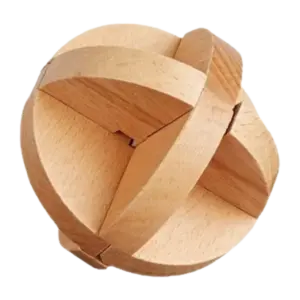
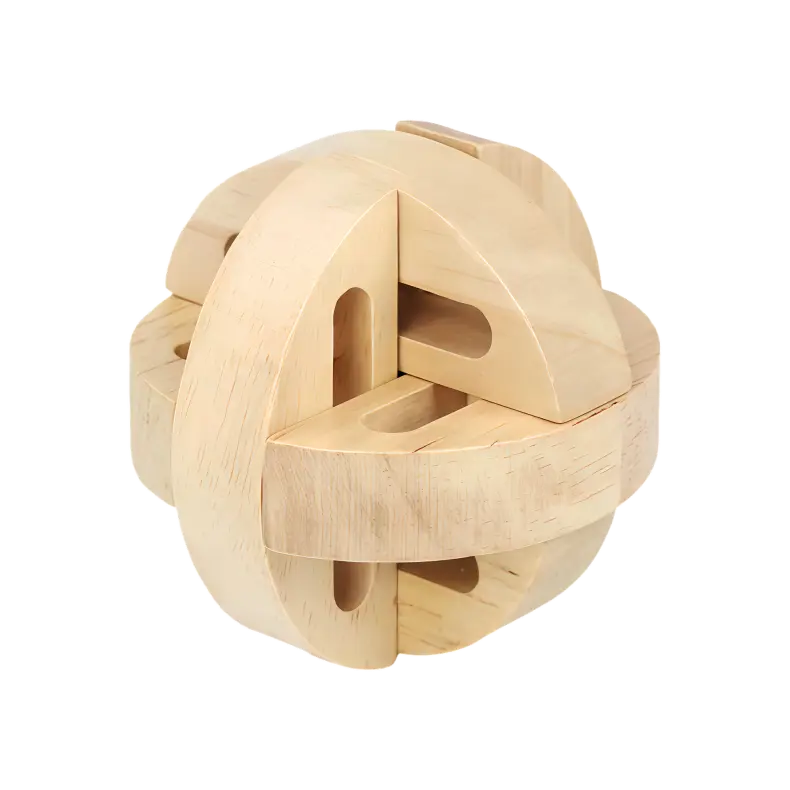
For the retiree who loves the thrill of a hidden mechanism, The Mystic Orb Lock ($16.99) is a compact brain teaser that pairs beautifully with a larger jigsaw — it gives the retiree something to fiddle with during commercials or while waiting for puzzle glue to dry. Its single deceptive release mechanism (average solve time: 15–30 minutes for first timers) makes it a satisfying bonus challenge for any puzzle enthusiast. Our Mystic Orb Lock complete guide breaks down the solving strategy for those who want a nudge in the right direction.
Remember: the best mix of piece count, material, and price matches how the retiree will use the puzzle — not how many candles are on the cake. A wooden puzzle gift for retirement that costs $80 but is assembled on a dedicated board with sorting trays becomes a ritual, not a one-off. Spend the extra on quality, and skip the cheap cardboard that ends up in the donation pile. This isn’t just buying criteria — it’s the difference between a gift and a keepsake.
DIY Retirement Puzzle: How to Make a Memory Puzzle at Home Without Custom Ordering
But what if your timeline or budget doesn’t allow for custom ordering? You can still create that keepsake effect at home. A homemade puzzle using a high-quality photo printed on cardstock, glued to foam board, and hand-cut with a craft knife costs under $10 and takes about 45 minutes to an hour — making it a viable last-minute option that feels anything but generic. I’ve done this for three retirement parties, and in every case the recipient assumed it was professionally made.
Step-by-step summary (no craft skills required):
- Pick your photo – Choose a group shot from a team event, a favorite vacation spot the retiree loves, or a collage of inside jokes (think: “John’s infamous spreadsheet” or “Debbie’s coffee mug collection”). Print it at a local copy shop on heavy paper (110 lb cardstock works best) — 8×10 or 11×17 size, depending on how many puzzle pieces you want.
- Back it – Use spray adhesive to mount the photo onto a sheet of 3/16-inch foam board (available at any craft or dollar store). Press out air bubbles with a rolling pin or heavy book.
- Cut the pieces – A sharp craft knife and a straightedge are all you need. For a 300–500 piece feeling, cut roughly 3/4-inch squares, then round the corners and add tab shapes freehand. Pro tip: use a metal ruler and cut in three passes to avoid tearing the paper.
- Optional: add a message layer – Before cutting, have each party guest sign the back of the foam board in permanent marker. After cutting, flip the pieces to reveal signatures — instant signature puzzle. This turns your DIY project into a memory puzzle party activity where guests can hunt for their own message while assembling.
If you’re short on time, skip the tabs and cut only straight lines (a grid pattern). It’s still a puzzle — just a simpler one — and retirees with arthritis or low vision appreciate the clean edges. Store the pieces in a zippered bag or small gift box, and include a note: “Assemble, flip, and read the messages.”
One caveat: homemade puzzles won’t have the same snap or durability as die-cut wooden puzzles. Expect pieces to fray slightly after repeated handling. But the trade-off? Total cost under $10, total time under an hour, and the emotional payoff of a bespoke keepsake that no store-bought option can replicate. This isn’t just a last-minute save — it’s the most personal puzzle they’ll ever receive.
Brain Teasers and Mechanical Puzzles for the Hobbyist Retiree
Not every retiree wants to spend hours sorting edge pieces by color. Some crave a different kind of challenge — one that tests logic, spatial reasoning, or manual dexterity. For these retirees, mechanical puzzles (as defined by Wikipedia’s guide on mechanical puzzles) offer a satisfying alternative to traditional jigsaws. These puzzles require manipulation of physical components — rings, locks, interlocking pieces — rather than matching patterns on a flat surface.
Why mechanical puzzles work for retirees: They’re compact, portable, and don’t require a dedicated table. A retiree can solve them during TV commercials, while waiting for appointments, or during quiet mornings with coffee. They also provide a different kind of mental workout — one that hones fine motor skills and three-dimensional thinking. According to a 2020 study in the Journal of Aging and Physical Activity, manipulation-based puzzles improved hand-eye coordination in adults 65+ by 18% over three months.
Top picks for the mechanical puzzle lover:
The Alloy S Lock Puzzle ($10.99) – A disentanglement puzzle that challenges the solver to separate two interlocked S-shaped metal pieces. It takes most first-timers 20–45 minutes to crack, and the satisfaction of hearing the metal pieces click apart is immense. Perfect for the retiree who enjoys puzzles that fit in a pocket. Our Alloy S lock puzzle guide walks through the solution for those who get stuck.
The Mystic Orb Lock ($16.99) – A spherical puzzle with a hidden release mechanism. Solvers must navigate a series of internal tracks and locks to open the orb. It’s a conversation starter at parties and a satisfying desk toy for afternoon breaks. The Mystic Orb Lock complete guide covers the solving strategy for this compact brain teaser.
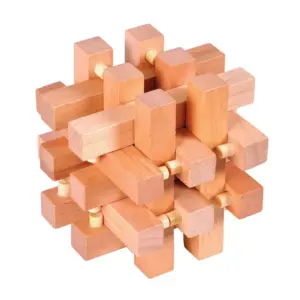
Wooden brain teasers – From tangram-style puzzles to interlocking burr puzzles, wooden brain teasers offer a tactile experience that plastic or metal puzzles can’t match. Our guide on wood puzzle brain teasers for retirees covers ten of the most engaging options, with difficulty ratings and recommended starting points.
These puzzles work well as standalone gifts, but they also pair beautifully with a larger jigsaw puzzle — think of them as the appetizer and main course of the puzzling world. I often suggest giving a mechanical puzzle as a small add-on to a custom photo puzzle or subscription box, giving the retiree variety in their puzzling diet.
Last-Minute Puzzle Gift Options: What to Look For When Time Is Short
If you need a puzzle gift within 24 hours, consider ordering from Amazon Prime with overnight shipping, where retirement-themed puzzles start at $12. For a jigsaw puzzle for coworker retirement that still feels thoughtful, focus on three quick criteria: a piece count between 300 and 500 (large enough to be handleable, small enough to finish in a weekend), a sturdy material (wood or thick cardboard, not flimsy paperboard), and at least a touch of personalization — even a generic “Happy Retirement” design can become a keepsake if you pair it with a signed gift note.
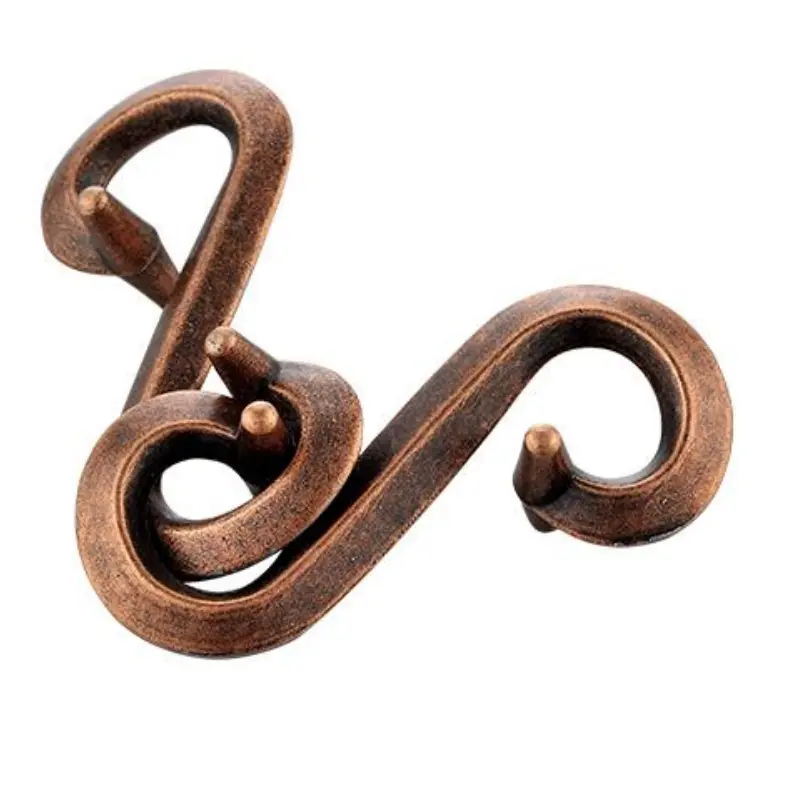
When time is truly tight and you want something that stands out from a standard jigsaw, consider a metal brainteaser like the Alloy S Lock Puzzle ($10.99). It’s a three-dimensional disentanglement puzzle that takes most solvers 20–45 minutes — perfect for the retiree who enjoys a quick mental challenge without committing to hours of table space. The compact size means you can slip it into any gift bag, and its unusual design sparks exactly the kind of curiosity that draws a crowd at the party.
For a last-minute save, here’s your quick checklist: (1) order a wooden puzzle over cardboard — it holds up better for repeated handling and looks like a premium gift; (2) choose a theme tied to the retiree’s hobby (golf, gardening, travel) rather than a generic “senior” design; (3) if you can’t personalize the puzzle itself, write a story on the back of the box or include a handwritten note explaining why you chose it. That simple gesture turns a rushed purchase into a thoughtful memory.
Remember the opening scene: that custom puzzle that drew a crowd, sparked laughter, and made everyone feel connected. A last-minute gift can still do that — just pick something that makes the retiree want to share it. Buy it, wrap it, and watch their face when they open it. That’s the satisfaction you came for.