The sun was hitting the corner of my desk at that sharp, late-February angle when I finally realized why I couldn’t solve the 3×3 sitting in my lap. I had been treating it like a math problem—a series of variables to be isolated and neutralized. But a puzzle cube isn’t an equation; it’s a physical system. My thumb was sore from forcing a corner rotation that didn’t want to happen, and the plastic was starting to feel greasy from my own frustration. I set it down, took a breath, and looked at the core.
That was 200 puzzles ago. Since then, I’ve twisted, slid, and clicked my way through everything from antique brass locks to precision-machined interlocking alloys. If you’re staring at a scrambled mess of colors or a pile of wooden sticks that used to be a cube, you don’t need a faster set of fingers. You need to change how you see the object in your hands.
The best mechanical challenges punish impatience and reward observation. Whether you are holding a classic twisty cube or an interlocking wooden structure, the “solve” isn’t the goal—the understanding is. Most beginners fail because they try to solve the whole thing at once. Experts solve the system, one layer of logic at a time.
The Anatomy of the Mess: Understanding the System
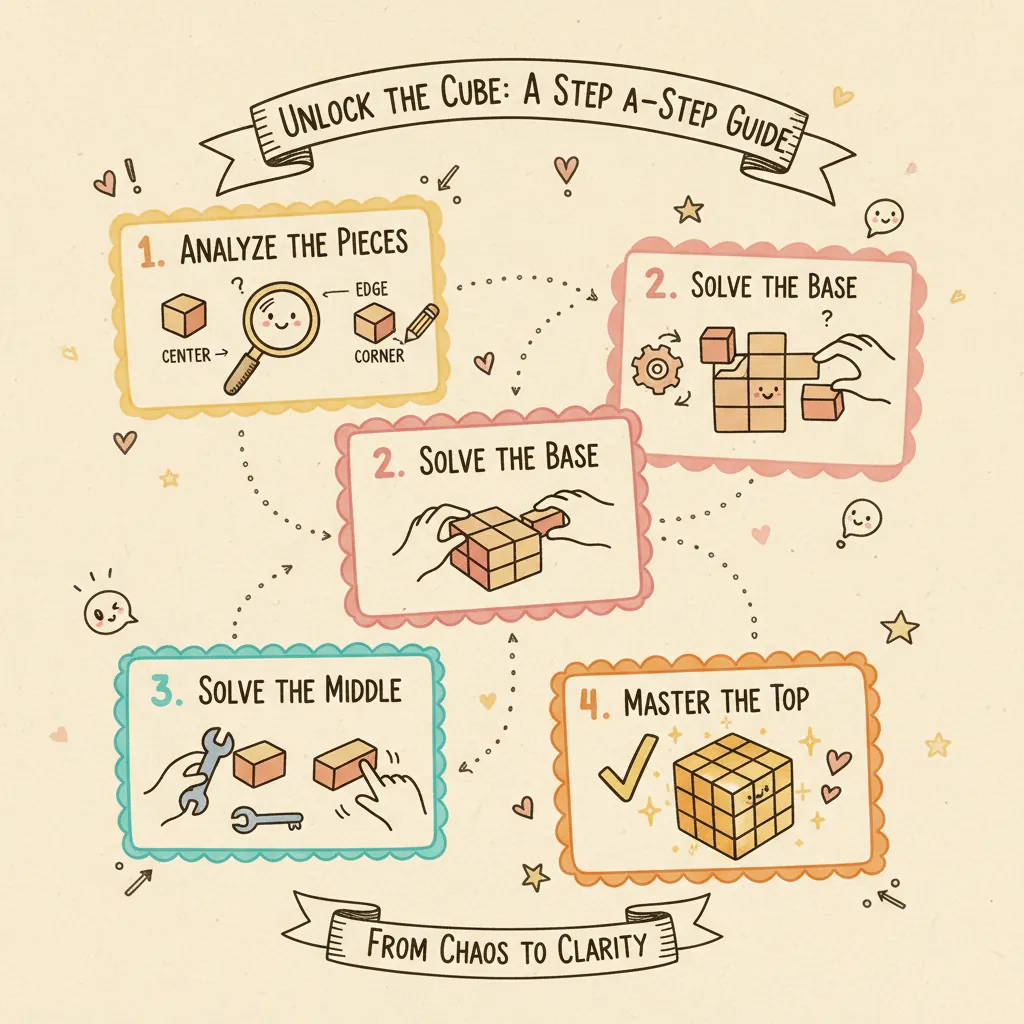
Before you make a single move, you have to understand what you’re actually holding. In a standard twisty cube, there are three types of pieces: centers, edges, and corners. The centers never move in relation to each other. If the white center is on top, the yellow center will always be on the bottom. This is your North Star.
Most people get lost because they focus on the stickers. Don’t look at the stickers; look at the pieces. A corner piece has three colors and will always be a corner. It can never become an edge. When you realize that you aren’t moving “red” but rather “the red-white-blue corner,” the geometry starts to make sense. This same principle applies to magnetic cubes that click into place, where magnets help align the internal geometry so you can focus on the pathing rather than the friction.
The history of these objects is fascinating. Ernő Rubik, a Hungarian architect, originally built the cube to explain three-dimensional geometry to his students. He didn’t even know if it could be solved once scrambled. It took him a month to find his way back to the start. If the inventor struggled, you can afford to take twenty minutes to just observe how one turn affects the rest of the structure.
Why Brute Force Is Your Worst Enemy
I have a rule in my workshop: if you have to strain your grip, you’re doing it wrong. Mechanical puzzles are designed with tolerances—the tiny gaps between pieces that allow movement. When you force a piece, you aren’t solving the puzzle; you’re damaging the mechanism.
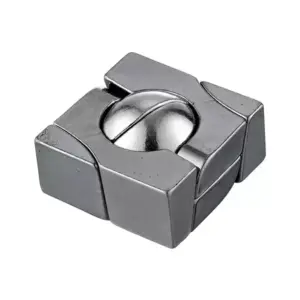
This is especially true with cast metal teasers. Unlike plastic cubes, metal doesn’t flex. If a piece doesn’t slide, it’s because you haven’t found the gate.
6-in-1 Wooden Brain Teaser Set
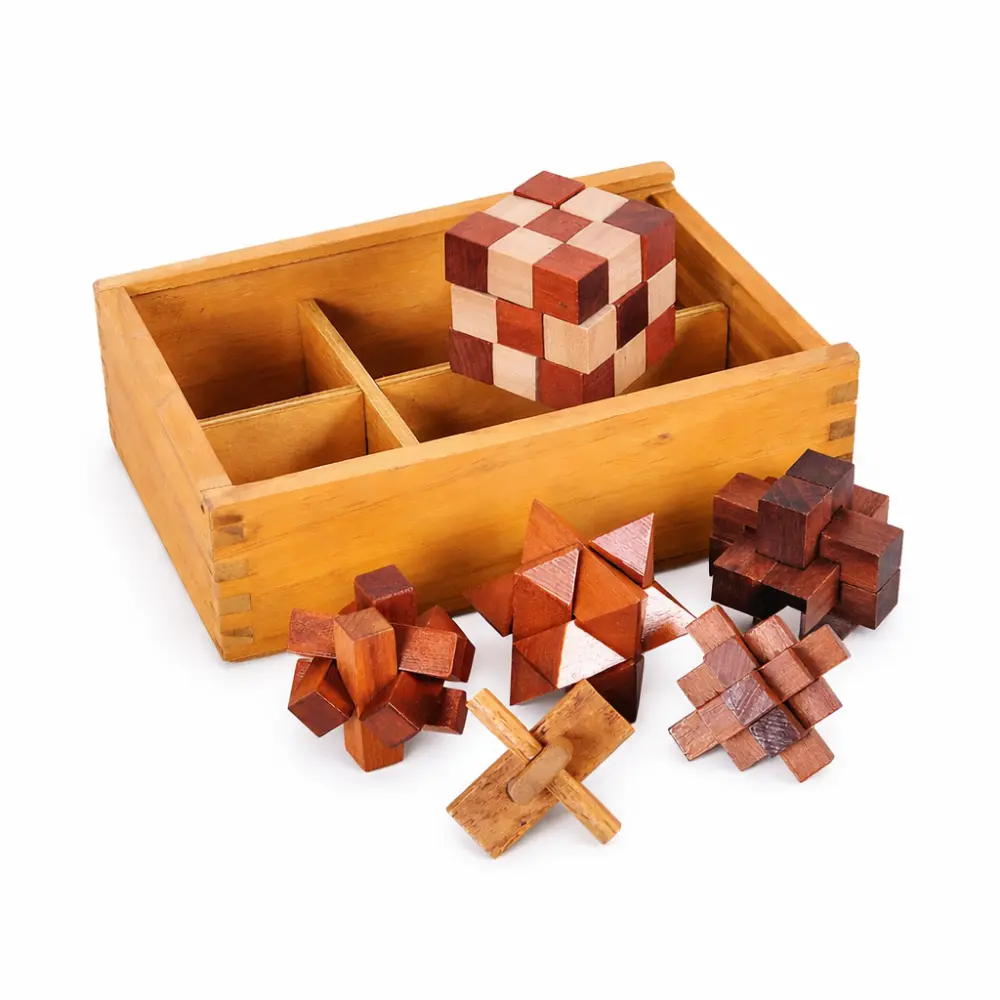
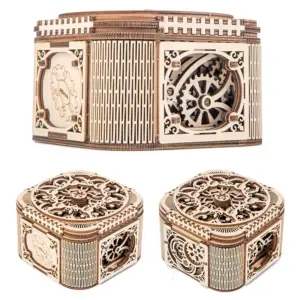
The 6-in-1 Wooden Brain Teaser Set is the perfect training ground for this philosophy. Priced at $38.88, this collection uses mortise-and-tenon joinery—the same technique used in ancient Chinese architecture to keep buildings standing without nails. I spent an afternoon with the “burr” cube from this set and realized that the pieces only move when they are perfectly aligned. There is one “key” piece in each of these six puzzles. If you try to pull any other piece first, the whole thing stays locked. It teaches you to feel for the “give” in the wood. The beechwood has a soft, organic texture that makes the trial-and-error process feel less like a chore and more like a conversation with the material.
The First Layer: Finding Your Anchor
To solve any cubic puzzle, you need a starting point. For most, this is the “White Cross.” You pick a side and align the four edge pieces so they match the center color and the adjacent side colors.
Think of this as building the foundation of a house. If the foundation is off by even a fraction, the roof won’t fit. I often see beginners solve one side and feel proud, only to realize the side colors don’t match the centers. They’ve built a wall in the wrong neighborhood.
If you find yourself getting frustrated with the 3D spatial reasoning required for this, it sometimes helps to step back and work on logical patterns in a 2D space to reset your brain’s sequencing habits. Solving a cube is just a more complex version of those grid-based logic games we played as kids.
The “Aha!” Moment: When Geometry Becomes Intuition
There is a specific point in every puzzle solve—usually about 60% of the way through—where the “scramble” suddenly transforms into a “structure.” This is the peak of the experience.
After testing over 200 puzzles, I’ve noticed a pattern: we spend the first half of the solve trying to organize chaos, but the second half is about protecting what we’ve already built. This is where “algorithms” come in. An algorithm is just a sequence of moves that changes one small part of the puzzle without ruining the parts you’ve already finished.
Here is the secret most speed-cubers won’t tell you: you don’t need to know 100 algorithms. You need to know four. If you can move a piece to the left, move it to the right, swap two corners, and rotate three edges, you can solve almost any twisty puzzle in existence. The “Aha!” moment happens when you stop thinking “Up, Left, Down, Right” and start seeing the piece travel through the mechanism like a car on a track.
Shifting Gears: The Metal Challenge
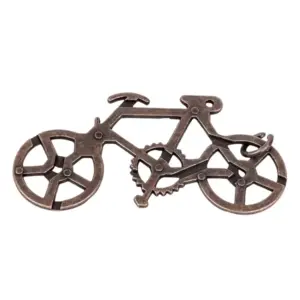
Once you’ve mastered the plastic twisty cube, the next logical step is sequential discovery or cast metal puzzles. These don’t have stickers to guide you. You have to rely entirely on tactile feedback.
Gold Fish & Silver Coral Reef Cast
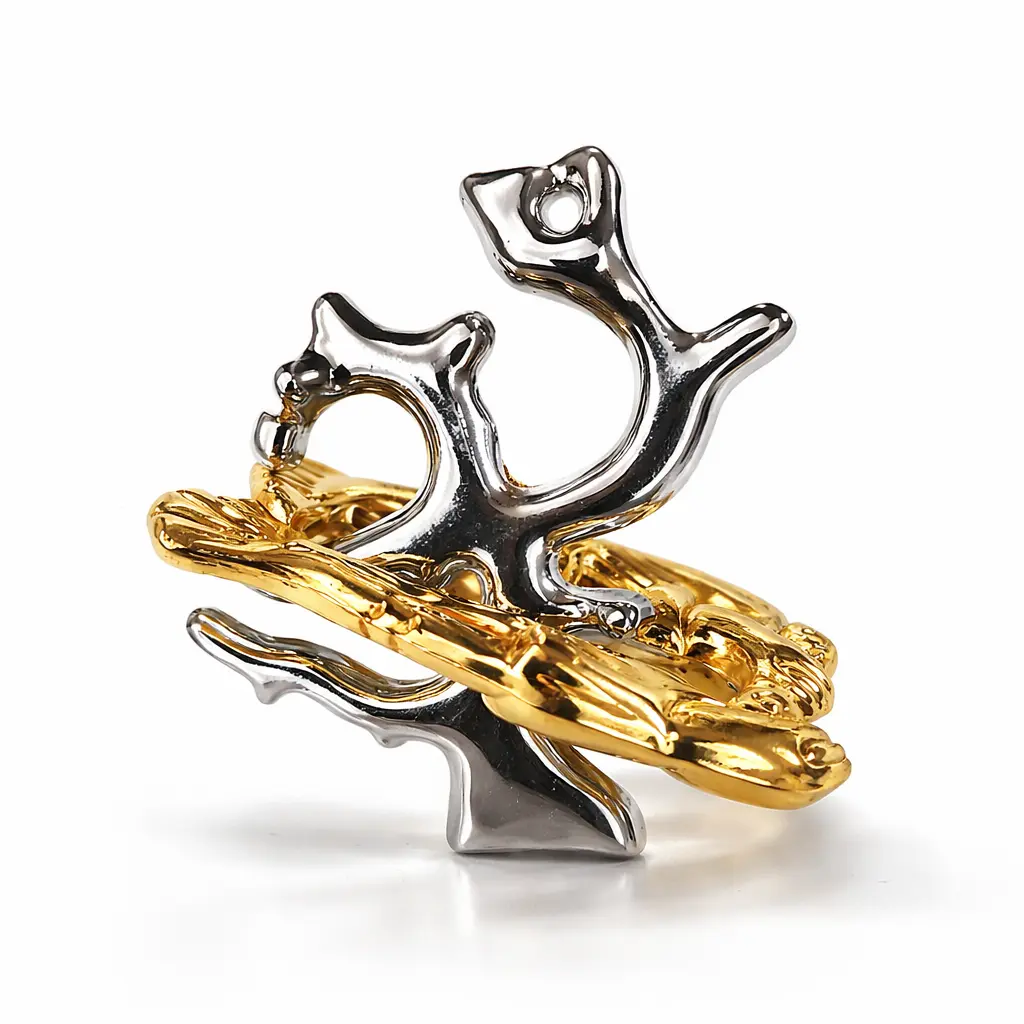
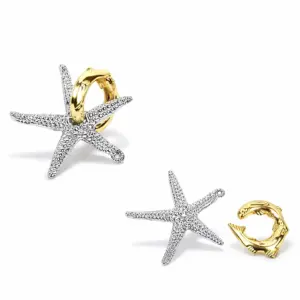
Take the Gold Fish & Silver Coral Reef Cast ($13.99). It’s a palm-sized sculpture that looks beautiful on a coffee table, but the “solve” is surprisingly tricky. You have to navigate the gold fish through the silver reef. Unlike a cube, where you can see every face, the “path” here is often hidden inside the overlapping metal. I found that the best way to solve this is to close your eyes. When you stop relying on your sight, your fingers become much more sensitive to the tiny bumps and grooves that indicate the correct exit path. It’s a $14 lesson in patience.
Cast Coil Triangle Puzzle
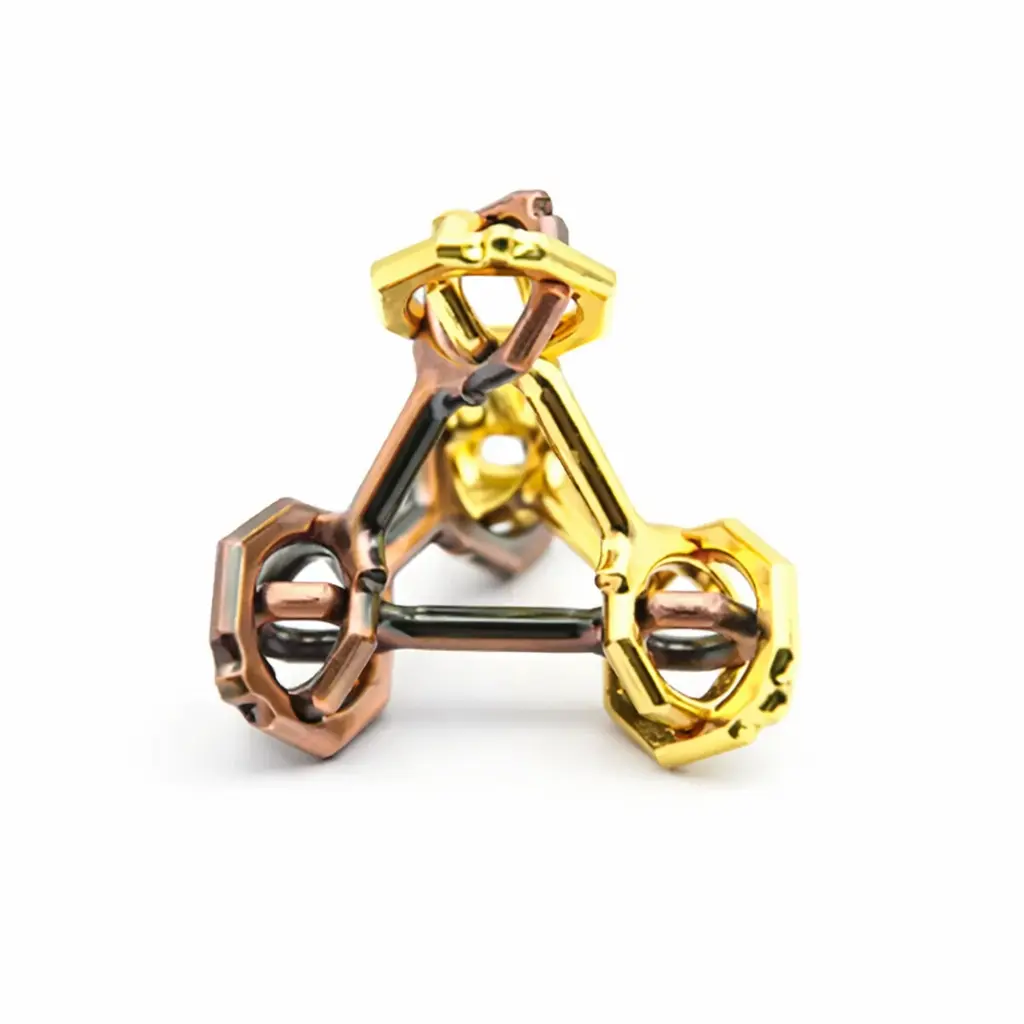
Cast Coil Triangle Puzzle — $25.99
If you want something that feels more industrial, the Cast Coil Triangle Puzzle ($25.99) is a beast. It’s heavy, finished in brass and bronze, and it rattles with a very specific “clink” when you’re close to the solution. I keep this one on my desk for Zoom calls. It’s a stereoscopic challenge—three rings that look like they are fused together but are actually held by a very clever geometric trick. It’s less about algorithms and more about finding the one orientation where gravity does the work for you.
The Middle Game: Solving the Second Layer
In a 3×3 cube, the middle layer is actually the easiest part, but it’s where most people quit because it requires you to temporarily “break” what you did in the first layer to tuck a new piece in.
This is a profound metaphor for learning any new skill. You have to be willing to mess up your progress to make room for more. If you are too afraid to move your finished white side, you will never finish the middle.
For those who find the 3×3 too repetitive, exploring complex 3D crystal structures can provide a fresh perspective. Crystal puzzles often use irregular shapes that don’t follow the standard grid, forcing you to look at the “silhouette” of the puzzle rather than just the faces.
The Logic of Locks and Burrs
Not every “cube” puzzle is a twisty one. Some of the most satisfying solves come from the world of interlocking wood and traditional locks. These require a different kind of “solve”—one based on finding the hidden vulnerability.
Six-Piece Burr
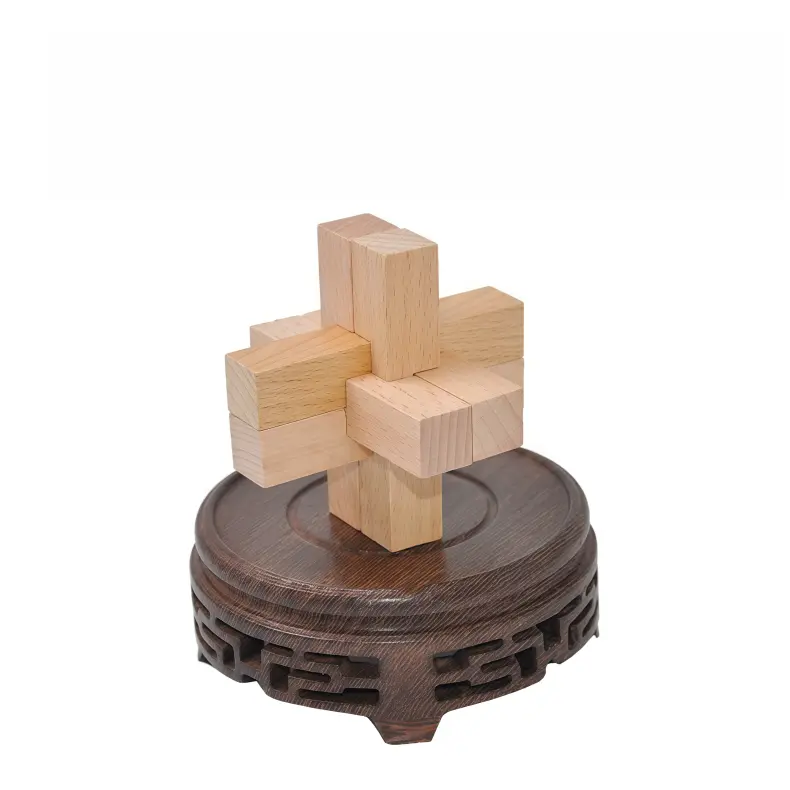
Six-Piece Burr — $17.99
The Six-Piece Burr ($17.99) is a masterclass in minimalism. It’s a cube made of six notched sticks. To a casual observer, it looks solid. But one piece is the “key.” Once you slide that key out, the whole thing collapses into your palms. Reassembling it is the real challenge. You have to hold five pieces in a precarious balance while sliding the sixth one in. It reminds me of the Soma cube puzzles from the 1930s—it’s about how shapes occupy space.
The Mystic Orb Lock
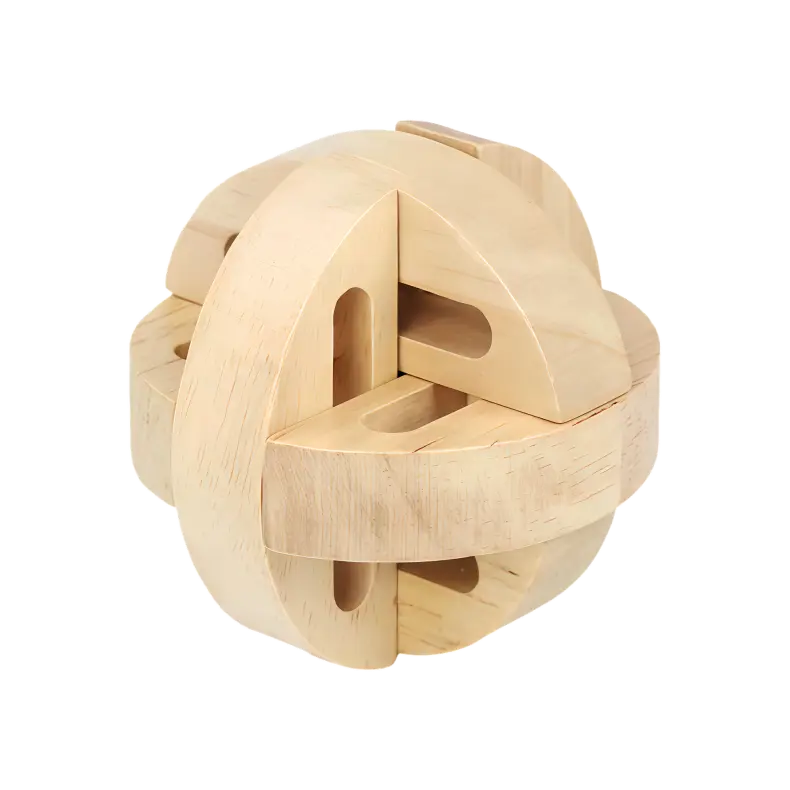
The Mystic Orb Lock — $16.99
Similarly, The Mystic Orb Lock ($16.99) uses semi-circular pieces that must be rotated into a specific alignment. It’s priced affordably, but the precision required is high. I’ve noticed that if the humidity in my office changes, the wood swells just enough to make this puzzle slightly harder. It’s a living object. Solving it requires you to find the “place where death cannot enter”—the one gap in the defense that lets the whole structure open.
The Final Stretch: The Last Layer
The top layer of a cube is the “Boss Fight.” This is where you have to use the longest sequences of moves. You have to orient the edges, then permute them, then orient the corners, then permute them.
If you get one move wrong in a 20-move sequence, you can scramble the entire cube. This is where most beginners throw the cube across the room. My advice? Slow down. Say the moves out loud. “Right, Up, Inverted Right, Up…” When you involve your voice, your brain processes the sequence differently, and you’re less likely to make a “finger slip.”
If the stress of the final layer gets to be too much, I usually take a five-minute break with something low-stakes, like a quick round of retro arcade games. It clears the mental cache so you can return to the cube with fresh eyes.
Portable Puzzles for the Daily Grind
Sometimes you don’t want a 45-minute deep dive. You want something you can solve and re-solve while waiting for a train or sitting in a lobby. This is where “fidget-style” mechanical puzzles shine.
Interlocking Metal Disk Puzzle
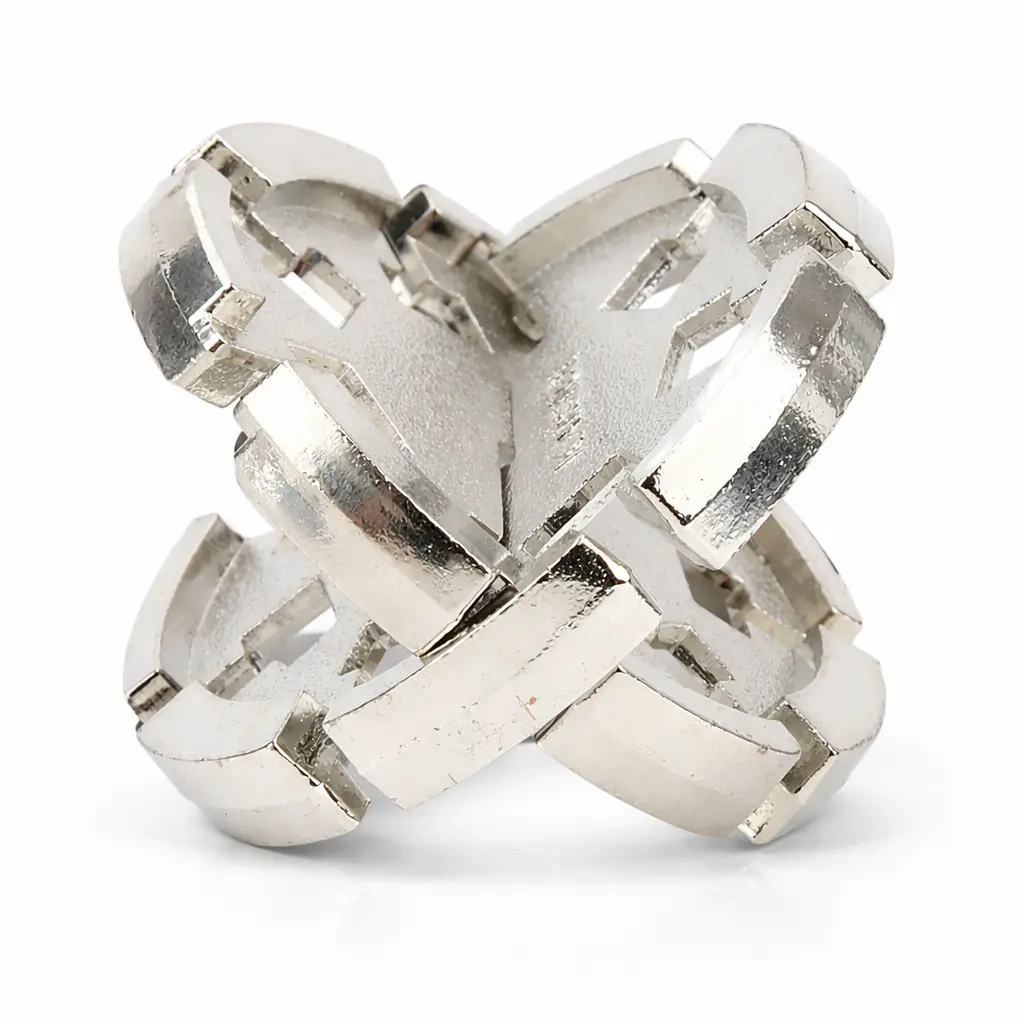
The Interlocking Metal Disk Puzzle ($14.99) is my current go-to for travel. It’s two disks that rotate and slide through each other. It’s small enough to fit in a coin pocket. The solve is short—maybe 30 seconds once you know it—but the tactile “click” as the pieces clear the slots is incredibly satisfying. It’s a reset button for your brain.
Cast Coil Pocket Puzzle
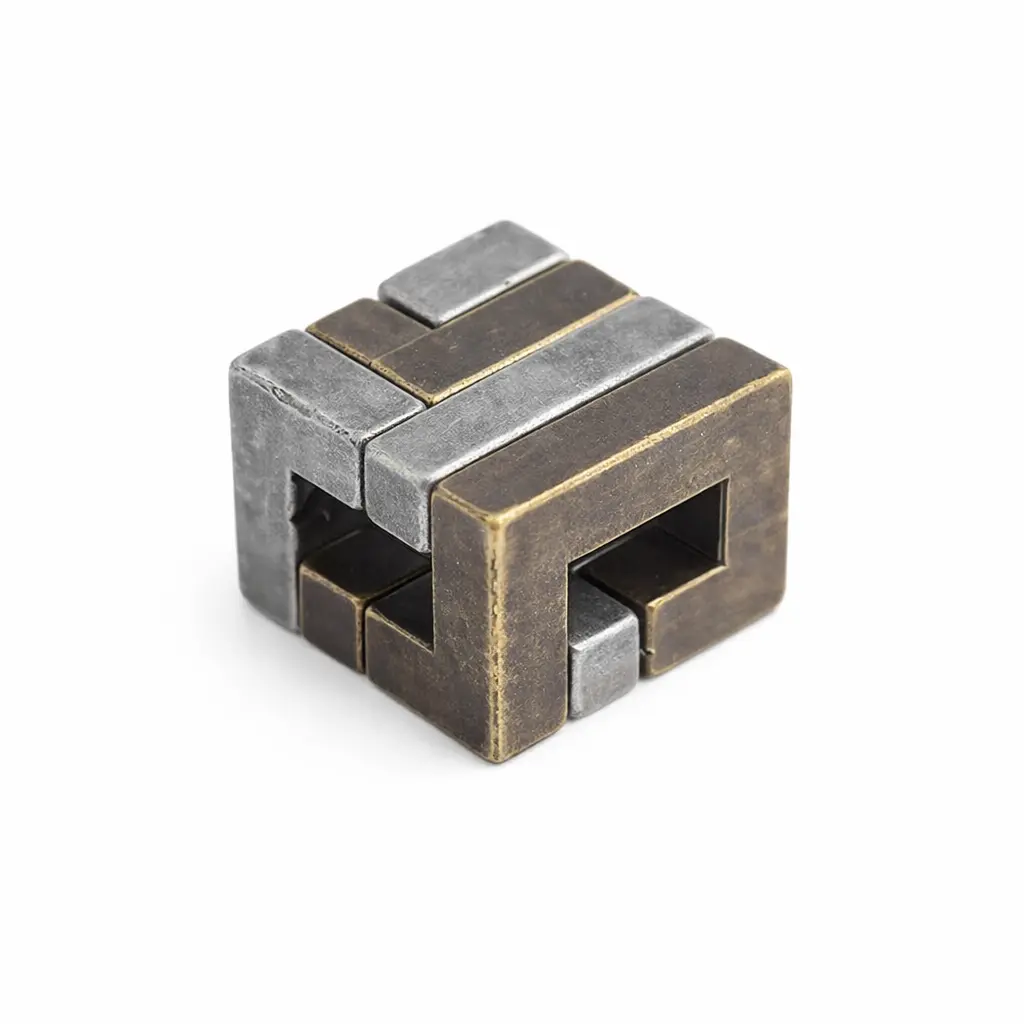
For something with a bit more weight, the Cast Coil Pocket Puzzle ($18.99) offers a “vault heist” feel. It’s an antique bronze and silver coil that feels like it should just pull apart, but it won’t. You have to find the exact angle of the slide. I’ve handed this to friends who spent twenty minutes trying to “pull” it before they realized the solution was a gentle, spiraling slide.
The Art of the Ancient Lock
There is a subset of puzzles that aren’t cubes at all, but they follow the same logic of hidden mechanisms. Traditional Chinese puzzle locks are a great way to transition your “cube solving” skills into a new medium.
Chinese Koi Puzzle lock
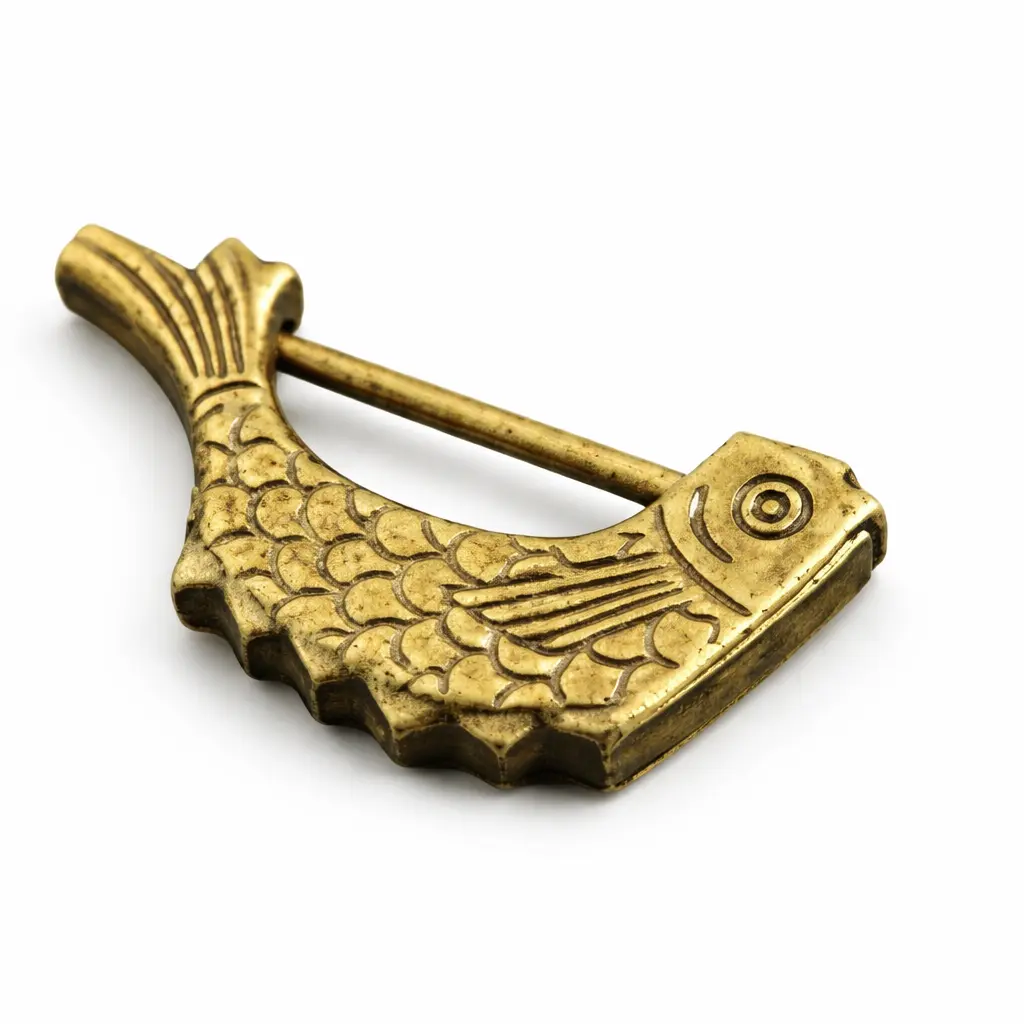
The Chinese Koi Puzzle lock ($16.99) is a 59mm fish that hides its keyhole. You can’t just stick the key in; you have to find the sliding panel or the hidden release. It’s modeled after antique merchant chest locks and feels like a piece of history on your desk.
Chinese Old Style fú Lock with Key
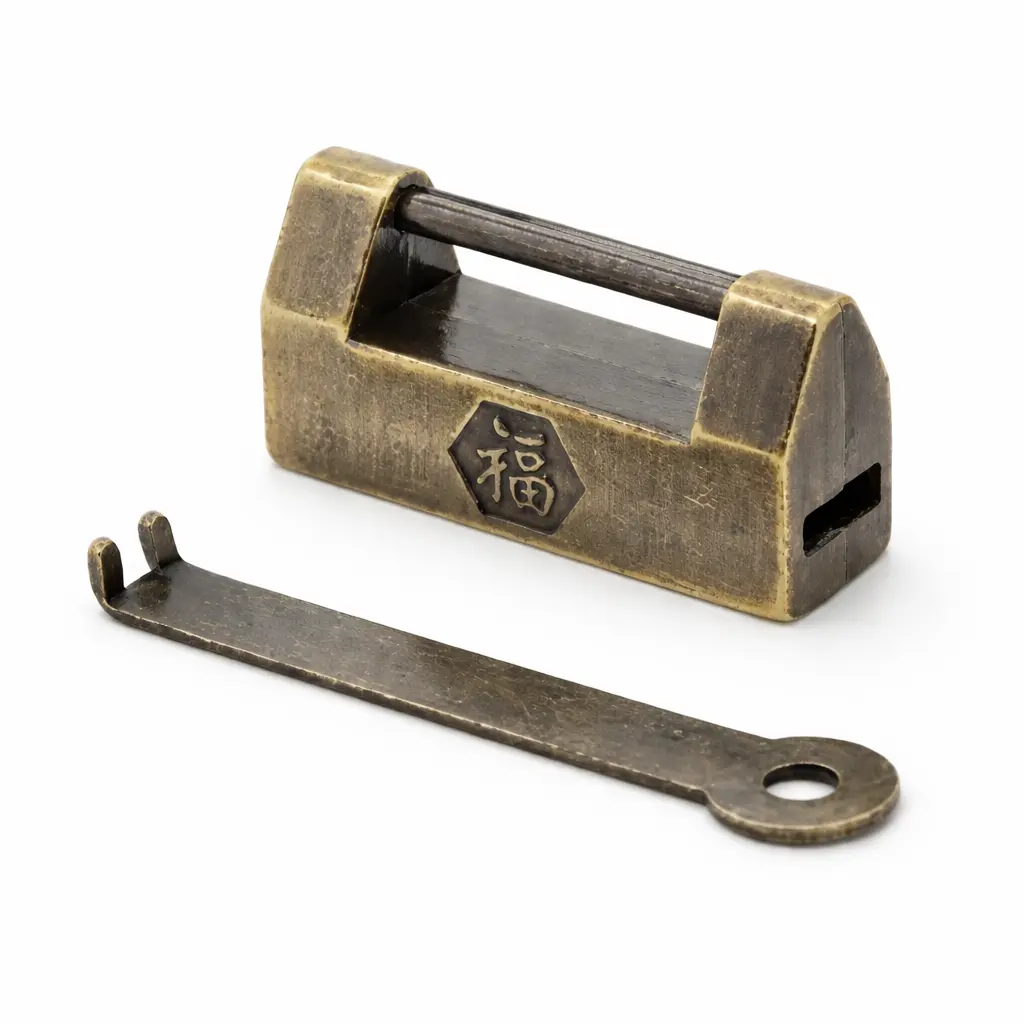
If you prefer something smaller, the Chinese Old Style fú Lock with Key ($19.99) is only 30mm across. It’s tiny but fully functional. Solving these locking puzzle brain teasers is about understanding the “trick” rather than memorizing a sequence. It’s a different kind of mental muscles than the one you use for a Rubik’s cube.
Double Cross Cage Puzzle
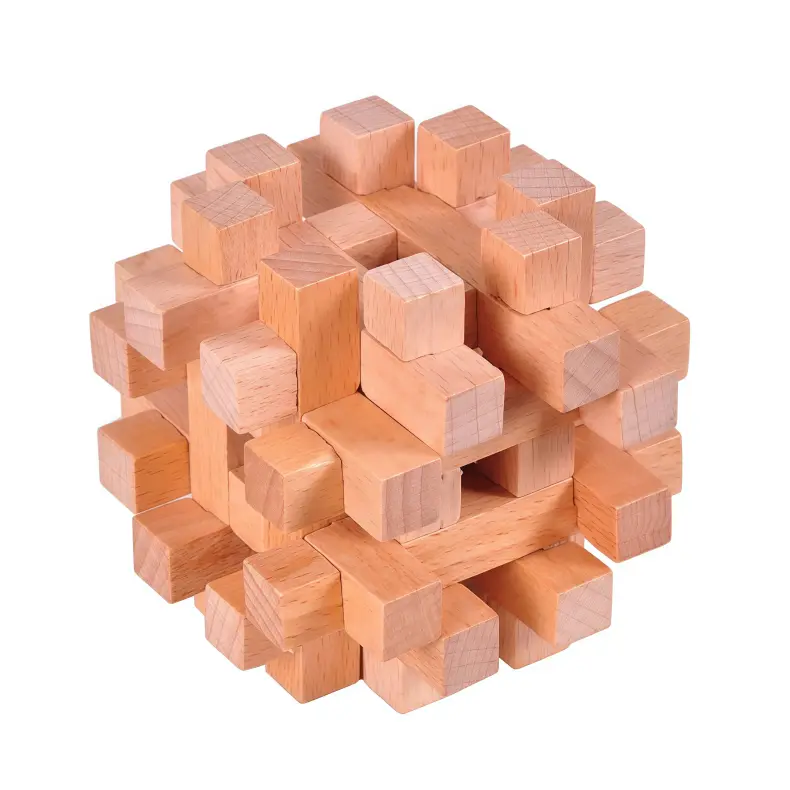
Finally, the Double Cross Cage Puzzle ($18.88) is for when you want to prove you’ve mastered the art of alignment. Twenty-four pieces. No nails. Just geometric balance. It’s the ultimate “calm down” puzzle because if you are agitated, you will knock the whole thing over before the final piece locks it in.
Comparing the Top Solving Experiences
Frequently Asked Questions
How long does it actually take to learn how to solve a puzzle cube?
If you are starting from scratch with a 3×3 twisty cube, expect to spend about two to three hours with a good tutorial before you can do it without looking at notes. It’s not about being a genius; it’s about muscle memory. I’ve found that breaking the process into stages is much more effective than trying to marathon the whole thing in one sitting. Your brain needs sleep to “knit” those new neural pathways together.
What is the easiest method for a total beginner?
The “Layer-by-Layer” method is the gold standard. You solve the top cross, then the top corners, then the middle edges, and finally the bottom layer. Some people will tell you to learn the “Roux” or “ZZ” methods, but those are for speed, not for learning the basic physics of the cube. Stick to the basics first.
Are wooden puzzles harder than metal ones?
Not necessarily harder, but more “honest.” Wood has friction and grain. If you try to force a wooden burr puzzle, you might actually snap a piece. Metal puzzles, like the Cast Coil Triangle Puzzle, are more durable but can be more frustrating because they don’t give you as much tactile “warning” before you hit a dead end. Wood whispers; metal just stops.
What should I do if my puzzle gets stuck?
First, stop pulling. Most puzzles get stuck because a piece has shifted slightly out of its track. For plastic cubes, a drop of silicone lubricant can work wonders. For wooden puzzles, sometimes a change in room temperature or humidity is the culprit. If a metal puzzle is stuck, try rotating it in every possible axis—gravity often plays a hidden role in the locking mechanism.
Is solving puzzles actually good for your brain?
I’m a reviewer, not a doctor, but the “smart, skeptical” take is this: it improves your tolerance for frustration and your 3D spatial reasoning. It’s a workout for your prefrontal cortex. Beyond the science, there is a legitimate mental health benefit to taking a screen-free break and focusing on a physical object. It grounds you in a way that scrolling through a feed never will.
Are these puzzles suitable for children?
Most of the cast metal and wooden puzzles mentioned here are great for ages 8 and up. Younger children might lack the fine motor skills or the patience, which can lead to them throwing the puzzle (I’ve seen it happen). The 6-in-1 Wooden Brain Teaser Set is actually a fantastic family activity because you can distribute the six different puzzles based on difficulty.
What is “sequential discovery”?
This is a high-level puzzle category where the solve involves finding hidden tools within the puzzle itself. For example, you might find a small pin hidden in one compartment that you must use to poke a hole in another. While most of the items here are “interlocking” or “twisty,” sequential discovery is the natural next step for someone who finds standard cubes too predictable.
How do I keep my metal puzzles looking new?
The “antique” finishes on puzzles like the Chinese Koi Puzzle lock are designed to age gracefully. However, the oils from your skin can cause some metals to tarnish over years. A quick wipe with a microfiber cloth after a long solving session is usually all you need. Don’t use harsh chemicals—you’ll ruin the patina.
Why are some puzzles so much more expensive than others?
It comes down to tolerances and materials. A $10 puzzle might have loose pieces and stickers that peel. A $40 puzzle, like the 6-in-1 Wooden Brain Teaser Set, uses premium beechwood and precision machining so the pieces slide like silk. You aren’t just paying for the “riddle”; you’re paying for the engineering that makes the riddle possible.
Can I solve a cube if I’m colorblind?
Standard cubes are a nightmare for colorblind solvers, but there are “tactile cubes” that use embossed shapes (circles, squares, triangles) instead of colors. Alternatively, many people enjoy 3D crystal puzzles because they rely on shape and fit rather than color recognition.
Is it cheating to look up the solution?
I have a controversial opinion here: looking at the first step of a solution isn’t cheating—it’s “priming.” Sometimes you just need to know which direction the first piece moves to unlock your own brain’s logic. That said, don’t follow a step-by-step video for the whole thing. You’ll rob yourself of the dopamine hit that comes from the final click.
What’s the best way to store a large collection?
Avoid direct sunlight, especially for wooden puzzles, as it can warp the pieces. I use a felt-lined shadow box for my metal cast puzzles. It keeps them from scratching each other and turns them into a conversation piece for guests.
The One Puzzle That Teaches You How All the Others Work
If you’ve read this far, you’re likely looking for a starting point. Most people start with a cheap plastic cube and give up because the movement feels “crunchy” and the stickers start to peel. Don’t do that.
If I had to go back to day one of my collection, I would start with the 6-in-1 Wooden Brain Teaser Set ($38.88). It’s the most comprehensive education in mechanical logic you can buy for under forty dollars. It teaches you about the “key piece” in burr puzzles, the importance of alignment in mortise-and-tenon joints, and the sheer joy of a perfectly executed assembly.
That afternoon on my desk, when the sun was hitting the cube and my thumb was sore, I eventually solved it. Not because I was fast, but because I stopped fighting the plastic and started listening to the mechanism. Solving a puzzle cube isn’t a race against time; it’s a race against your own impatience. Once you win that race, the rest is just geometry.
If you’re ready to move beyond the basics, your next step is to look into advanced sequential discovery challenges that will truly test your ability to think in three dimensions. The rabbit hole goes deep—see you at the bottom.