The third time the notched plywood spar of the galleon snapped under my thumb, I didn’t swear. I just set the piece down, walked into the kitchen, and stared at the coffee maker until it finished its cycle. That was three years and roughly 150 puzzles ago. Today, my desk is a graveyard of “impossible” shapes that I’ve finally mastered, and if there’s one thing I’ve learned, it’s that solving a wood puzzle has almost nothing to do with being a genius and everything to do with how you handle frustration.
Most people approach a new mechanical challenge like they’re trying to win a wrestling match. They push, they pull, and when the wood resists, they apply more force. That is the quickest way to turn a $30 investment into a pile of expensive kindling. My thesis is simple: The secret to solving any wooden puzzle—whether it’s an ancient interlocking burr or a modern mechanical model—is shifting your focus from the shape of the pieces to the direction of the grain. Wood isn’t a dead material; it has a memory and a logic dictated by how the tree grew, and once you learn to read that, the “impossible” becomes inevitable.
The Three Families of Wooden Enigmas
Before you can solve the thing, you have to know what kind of “thing” it is. In my collection, I categorize wood puzzles into three distinct families, each requiring a different mental gear.
First, you have Interlocking Puzzles, often called Burr puzzles. These are the classic “clusters” of notched sticks that form a cross or a cube. The goal is usually disassembly followed by the much harder reassembly. Second are Packing Puzzles, where you’re trying to fit a specific set of irregular shapes into a confined tray or box. Finally, there are Mechanical Model Kits, where the “solve” is the assembly process itself, resulting in a moving machine.
If you’re just starting, you might be tempted by magnetic cubes for entry-level tactile play, which offer a similar spatial challenge with a more forgiving material. But there is a specific weight and friction to wood that metal and plastic can’t replicate. When you slide a perfectly machined tenon into a mortise, the sound is a soft, organic “thwack” that feels like a secret handshake between you and the maker.
Why Your First Solve Will Probably Be an Accident
I’ve watched hundreds of people try to solve the puzzles on my coffee table. The pattern is always the same: they fiddle aimlessly for ten minutes, get a lucky “click,” and then panic because they didn’t see what they just did.
To solve a wood puzzle intentionally, you have to move slowly enough to feel the internal friction change. Wood expands and contracts with humidity. On a rainy Tuesday in February 2026, a puzzle might feel tighter than it did in the dry heat of July. If a piece won’t move, it’s rarely because it’s “stuck”—it’s because another piece is acting as a deadbolt.
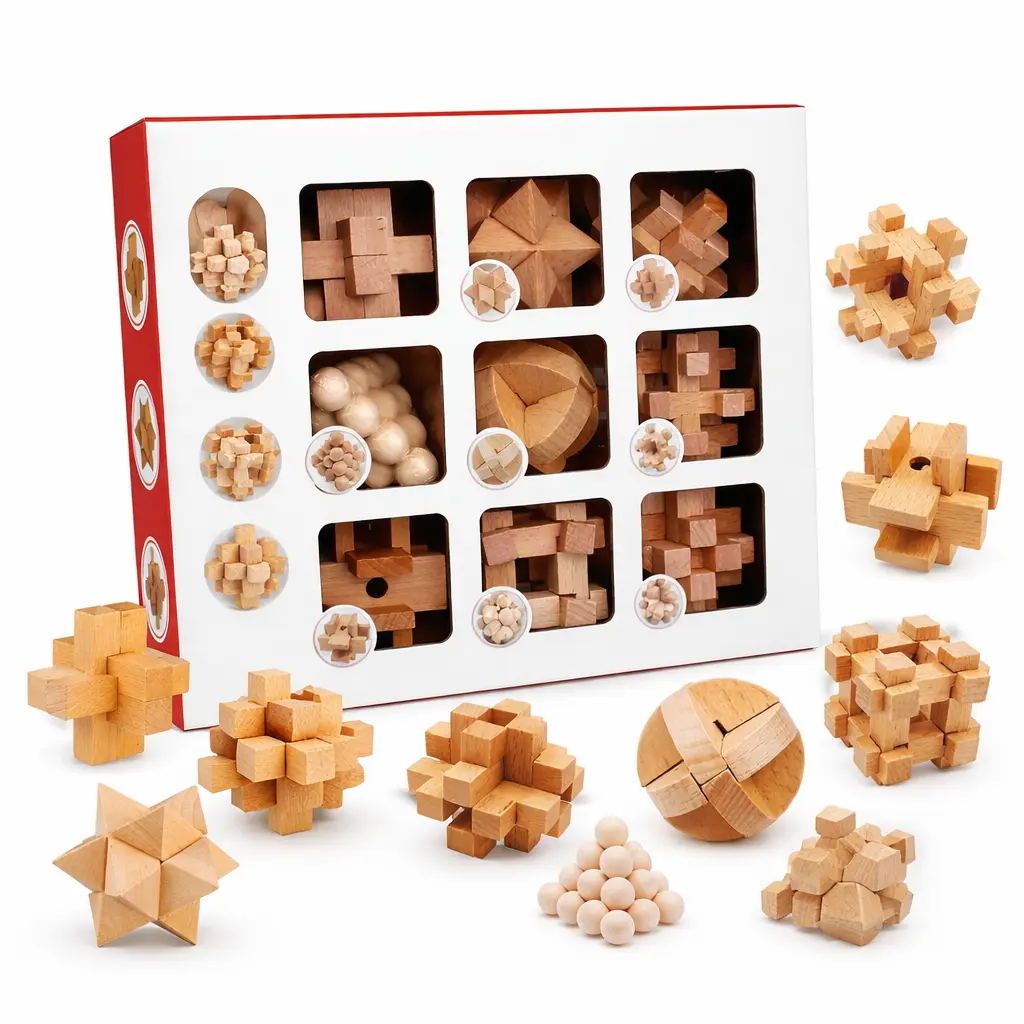
Luban Lock Set 9 Piece
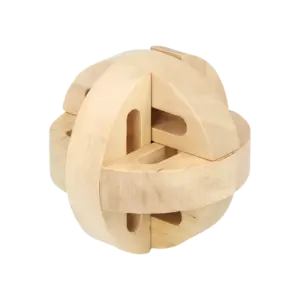
The Luban Lock Set 9 Piece is the ultimate training ground for this kind of tactile sensitivity. Priced at $39.99, this set is a masterclass in 2,500 years of Chinese joinery. When I first opened this box, I expected a few simple crosses. Instead, I found a series of increasingly complex geometry problems that use no glue or nails.
The beauty of the Luban lock is that it rewards the “gentle tug.” You have to systematically test every piece with the lightest pressure possible. Eventually, one piece will give by a fraction of a millimeter. That’s your “key” piece. In this 9-piece set, the difficulty curve is perfectly calibrated; by the time you reach the ninth puzzle, you’ll have developed a “sixth sense” for where the hidden voids are located inside the solid-looking wood. It’s a much more grounded experience than translucent 3D challenges which rely more on visual transparency than physical feel.
The “Grain Mapping” Peak: The Secret Professional Solvers Use
Here is the peak insight that took me 50 puzzles to realize: The grain never lies.
When a master craftsman or a high-end laser-cutter creates a wooden puzzle, they are limited by the structural integrity of the wood. If you are struggling with a packing puzzle or a complex burr, look at the direction of the wood fibers. Usually, the “sliding” action of a piece will happen parallel to the grain of the surrounding frame to prevent snapping.
If you see a piece where the grain runs vertically while the rest of the block runs horizontally, that piece is almost certainly a moving part or a structural anchor. I’ve solved dozens of puzzles just by tilting the wood toward a desk lamp and looking for the microscopic gaps where the grain patterns don’t quite line up. This is a level of “cheating” that only works with natural materials, and it’s why wood puzzles feel more “alive” than their metal counterparts.
While I love a good wooden challenge, sometimes I need a palate cleanser. If my brain is fried from grain-mapping, I’ll pick up the

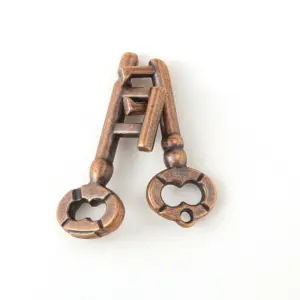
Cast Keyhole Gold & Silver — $13.99
Cast Keyhole Gold & Silver ($13.99). It’s a pure 3D maze that doesn’t care about humidity or grain—it only cares about your ability to visualize a path you can’t see.
When the Puzzle is a Project: Solving Through Assembly
For many, the “solve” isn’t about taking something apart; it’s about the meditative hours spent putting something together. This is where mechanical kits come in. These aren’t just toys; they are lessons in engineering.

Galleon Ship 3D Wooden Puzzle Model Kit
I spent a rainy weekend with the Galleon Ship 3D Wooden Puzzle Model Kit. This isn’t a “quick win” puzzle. It’s a deep dive into the Age of Exploration. What struck me most about this kit was the precision of the snap-fit plywood. You aren’t just building a ship; you’re recreating the hull stability and forecastle designs that changed Atlantic trade.
At its price point (check current pricing), the value is in the details—the rigging, the masts, the way the layers create depth. My advice for this one? Keep a piece of fine-grit sandpaper nearby. Even the best laser-cuts can have a tiny burr that prevents a perfect fit. If you force it, you’ll snap a spar. If you sand it, you’ll solve it. It’s a great way to practice the patience needed for deductive reasoning games where one wrong move cascades into a mess later.
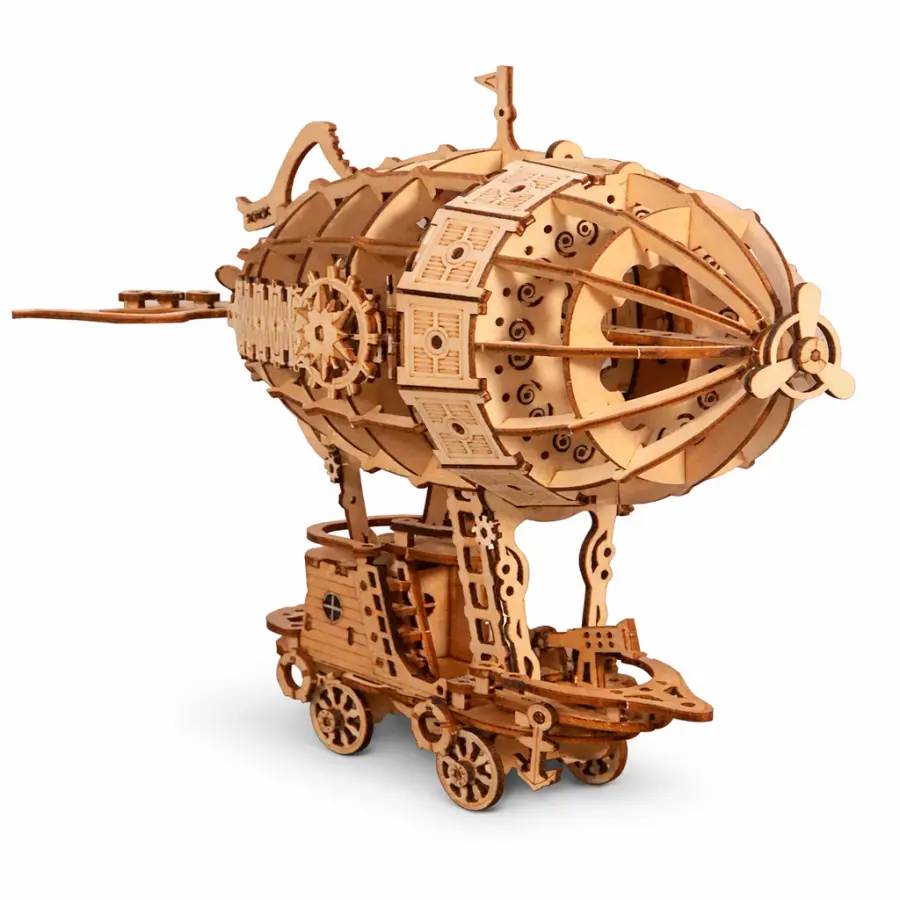
Steampunk Airship 3D Wooden Puzzle
If the Galleon feels like a history lesson, the Steampunk Airship 3D Wooden Puzzle ($26.66) feels like a fever dream from a Jules Verne novel. This 160-piece build is one of the most satisfying “desk toys” I own. The assembly takes about an hour, making it perfect for a Sunday afternoon.
The “solve” here is managing the mechanical components. There’s a spinning propeller and rolling wheels that require a delicate touch during assembly. I’ve found that a tiny bit of candle wax on the moving gears makes the final result significantly smoother. It’s a different kind of satisfaction than solving mechanisms that require specific sequential moves, as the reward is a functional, kinetic sculpture.
The Tactile Feedback of Different Materials
While we’re focusing on wood, it’s worth noting that your “puzzle vocabulary” grows when you branch out. I often keep a few metal pieces on my desk to reset my tactile expectations. For instance, the

Gold Silver Double Fish Metal Puzzle ($13.99) offers a cold, heavy feedback that is the polar opposite of a light plywood kit.
Similarly, the
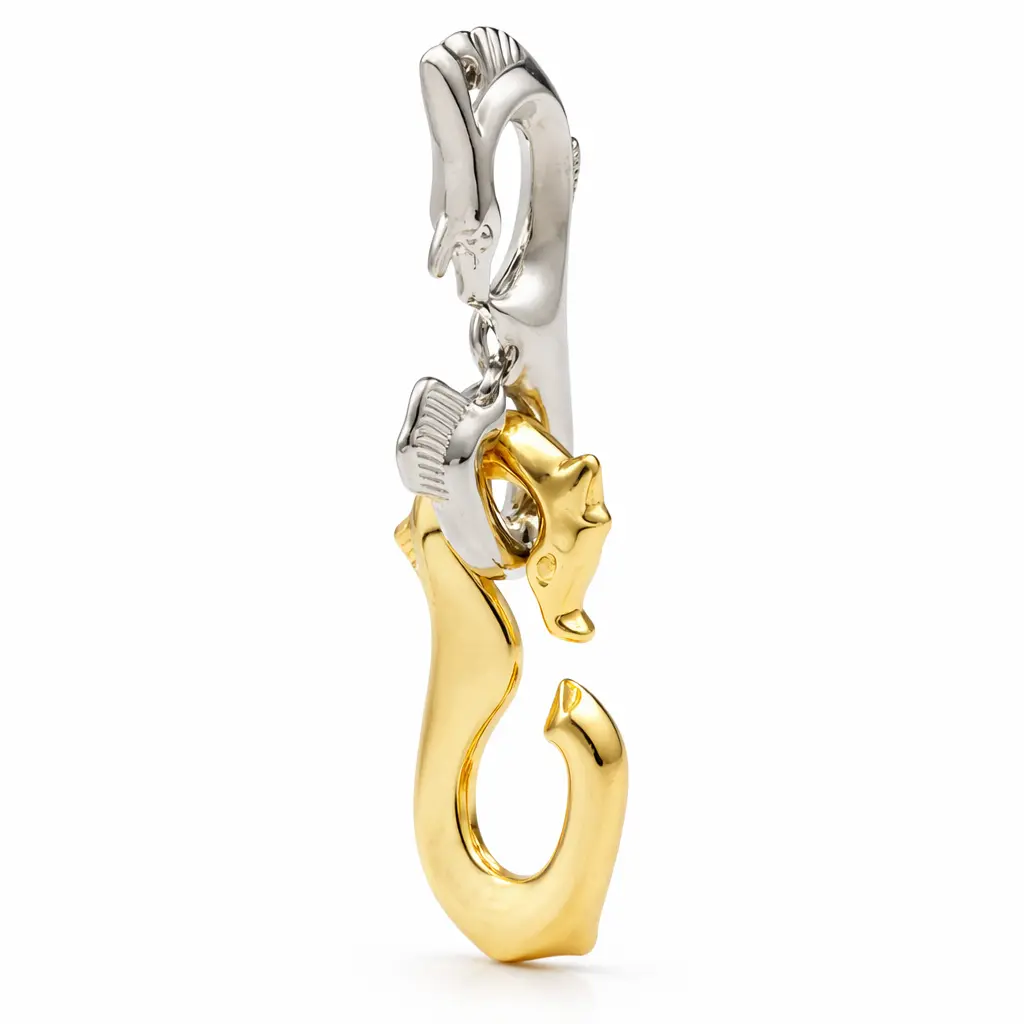
Dual Seahorse Gold & Silver Brain Teaser ($14.99) uses a hidden threaded mechanism. In a wood puzzle, you’re looking for sliding friction; here, you’re feeling for the “bite” of a screw thread. Learning to distinguish between these types of resistance is what moves you from a “fiddler” to a “solver.”
The Aesthetic Solve: Puzzles as Art
Sometimes, the goal isn’t just to solve the puzzle, but to live with it. A well-designed wood puzzle should look as good on your shelf as it feels in your hands.
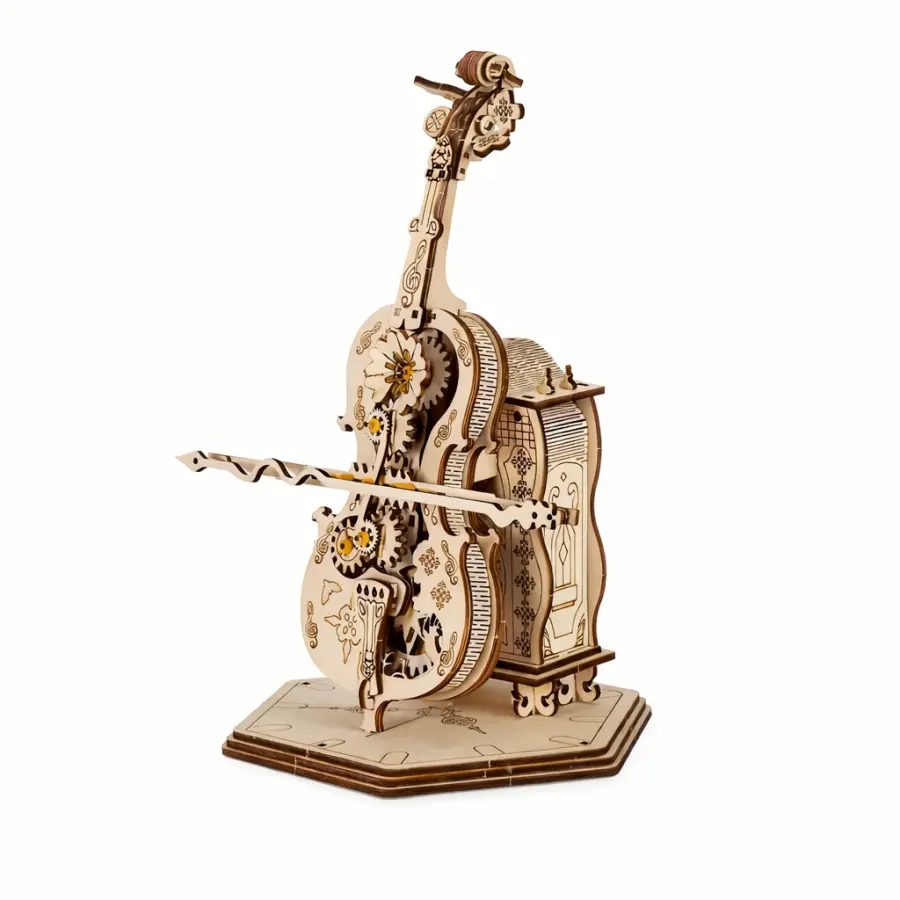
3D Wooden Cello Puzzle Model Kit
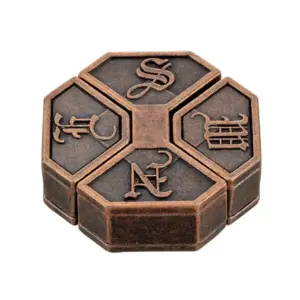
The 3D Wooden Cello Puzzle Model Kit ($29.99) is a perfect example. It blends Victorian engravings with steampunk gears. From a “solving” perspective, the challenge lies in the curvature of the body. Wood doesn’t naturally want to be a cello; it wants to be a flat board.
Assembling this kit teaches you about the structural tension of musical instruments. I’ve had this on my bookshelf for six months, and it’s the first thing guests pick up. It’s a reminder that balancing logic with spatial awareness can result in something genuinely beautiful. The National Institutes of Health has even noted that these types of activities support cognitive health, which is a nice bonus for something that just looks cool on a desk.

DIY Castle Music Box Night Light Shadow Box Kit
For those who want a multi-sensory “endgame,” the DIY Castle Music Box Night Light Shadow Box Kit ($33.99) is a beast of its own. This is a 28-piece build, but don’t let the low piece count fool you. The “solve” involves layering laser-cut panels to create depth, integrating a mechanical music box, and wiring LED lights.
This is less about “where does this piece go?” and more about “how do I maintain the delicate alignment of these layers?” It’s a therapeutic process that results in a functional night light. It’s the kind of project that makes you realize why people get obsessed with this hobby—it’s a total escape from the digital world.
Why Metal Puzzles Make You a Better Wood Solver
It might sound counterintuitive, but I always recommend that wood enthusiasts try a few high-quality metal “disentanglement” puzzles. They strip away the variables of humidity and grain, forcing you to focus purely on geometry.
Take the
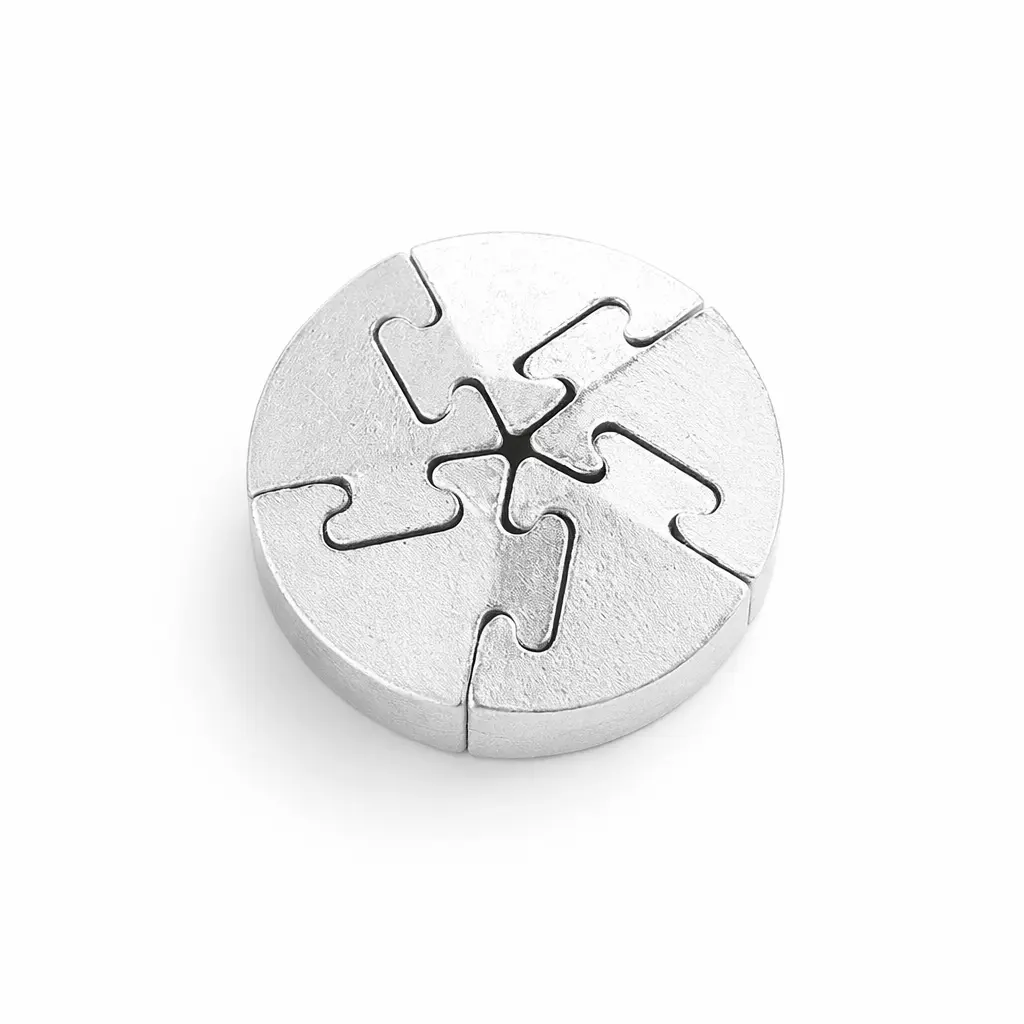
5 Piece Cast Spiral Metal Puzzle. It’s a palm-sized disc of five identical-looking wedges. In a wood version of this, you might look for a grain flaw to find the first piece. In metal, you have to rely on pure logic and the “weight” of the pieces as they shift.
Then there’s the

Metal Starfish Puzzle Ring — $13.99
Metal Starfish Puzzle Ring ($13.99). It looks like a piece of jewelry, but it’s actually a lesson in patience. It requires a specific sequence of rotations that feel impossible until they don’t. These metal challenges act like “strength training” for your brain, making the subtle cues of a wooden puzzle much easier to spot.
Quick-Reference Comparison Table
FAQ: Everything You Wanted to Ask While Frustrated
How do you solve a 3D wooden puzzle that seems stuck?
First, stop pulling. Most wooden puzzles are held together by a single “key” piece that slides out with almost zero resistance once you find it. If it feels stuck, check for environmental factors. High humidity can cause the wood to swell. I’ve occasionally put a stubborn burr puzzle in a sealed container with a few silica gel packets for 24 hours to “shrink” the wood back to its original tolerances. Never use a knife or screwdriver to pry pieces apart—you’ll leave permanent marks on the soft grain.
What is the trick to solving a wooden cube puzzle?
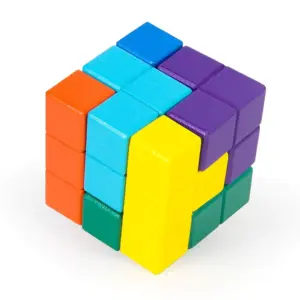
The “trick” is counting. Most wooden cubes are made of 6 to 12 pieces. Before you take it apart, count the number of “units” on each face. When reassembling, start by finding the piece with the most complex notches—this is usually the core. Try to build the cube from the corners inward. If you get stuck, look at the grain. The pieces were likely cut from the same block of wood, so the grain patterns often “flow” across the faces of the finished cube.
Are wooden puzzles harder than metal ones?
They are different, not necessarily harder. Mechanical puzzles made of metal have tighter tolerances and don’t change with the weather. Wooden puzzles are more “forgiving” but also more fragile. I find wood more satisfying because the material has a history and a warmth that metal lacks. However, metal puzzles often have more “trick” mechanisms (like magnets or internal ball bearings) that wood can’t easily hide.
My wooden piece snapped. Can I fix it?
Yes, but you have to be precise. Use a high-quality wood glue (like Titebond) and a toothpick to apply a very thin layer. Clamp the piece for at least four hours. Once dry, use 400-grit sandpaper to remove any excess glue. If the glue creates a “bump,” the puzzle won’t fit back together because the tolerances are often less than 0.1mm.
What age are these puzzles really for?
Most of the kits I review are labeled 14+, but that’s more about patience and fine motor skills than intelligence. A smart 10-year-old can solve a Luban lock, but they might lack the restraint not to force a piece and break it. For adults, these are the perfect “anti-screen” devices. I keep a few on my desk to fiddle with during long conference calls.
How do I maintain my wooden puzzles?
Keep them out of direct sunlight, which can fade the wood and make it brittle. If a puzzle becomes too “loose” over time, a tiny bit of clear beeswax in the joints can add just enough friction to keep it together. For laser-cut kits, I always recommend a light sanding of the “nubs” where the pieces were attached to the main board.
Is it “cheating” to look at the instructions?
In the puzzle community, the instructions are usually considered a “last resort.” However, for complex 3D model kits like the Galleon, the instructions are essential assembly guides, not “hints.” For interlocking burrs, I try to go 48 hours without the manual. If I’m still stuck, I’ll look at the first step just to identify the key piece. There’s no “puzzle police,” but the “Aha!” moment is much sweeter when you earn it.
Why do some people call these “Burr” puzzles?
The term comes from the finished shape, which often looks like a “burr” seed (the prickly things that stick to your socks). Traditionally, a burr puzzle is an interlocking puzzle where all the pieces are notched sticks. The “Six-Piece Burr” is the most famous version and has been around for centuries.
Do I need tools to solve these?
For disassembly puzzles, no tools are required—just your hands. For model kits, a pair of tweezers and a small hobby knife (to help pop pieces out of the board) are very helpful. I also recommend a small bottle of wood glue, even if the kit says “no glue required,” just in case of accidents.
What’s the best “first” wood puzzle for an adult?
I always point people toward the Luban Lock Set 9 Piece. It gives you nine different challenges, so if you get stuck on one, you can move to another. It’s the best way to learn the “language” of wooden joinery without a massive time commitment.
Why are some wooden puzzles so expensive?
You’re paying for the precision of the cut. If a wooden puzzle is off by even a fraction of a millimeter, it will either be impossible to open or it will fall apart when you pick it up. High-end puzzles are often made from exotic hardwoods like padauk or wenge, which are much more durable (and beautiful) than standard plywood.
Can these puzzles help with anxiety or focus?
Many users find that the tactile nature of wood provides a “grounding” effect. When you’re focused on a 0.5mm gap in a wooden block, it’s hard to worry about your inbox. It’s a form of active meditation. I’ve found that solving logic puzzles provides a similar mental reset by forcing your brain into a flow state.
The One Puzzle That Teaches You How All the Others Work
If you’ve read this far, you’re probably looking for a place to start. If I could only keep one item from my current collection, it would be the Luban Lock Set 9 Piece ($39.99). It’s not just a puzzle; it’s a library of spatial logic. It taught me more about the “gentle tug” and the “grain map” than any other product on my shelf.
The first time you slide that final piece into place and feel the entire structure become solid in your hand, something in your brain clicks. You stop seeing the wood as an obstacle and start seeing it as a partner. That shift in perspective is the real solve. If you find that this kind of spatial reasoning becomes addictive, your next step should be exploring sequential discovery boxes, where the puzzle actually hides tools inside itself to help you reach the next stage.
Puzzles are one of the few things in 2026 that can’t be rushed, hacked, or automated. You have to sit with them. You have to be frustrated. And eventually, you have to listen to what the wood is trying to tell you. Start with the Luban set, take your time, and remember: if it doesn’t move, don’t push harder—just look closer.