The third time the notched cedar bar slipped through my fingers and clattered onto the hardwood floor, I didn’t swear. I didn’t reach for the instructions either—those had been recycled weeks ago. Instead, I set the half-finished cube down, walked to the kitchen, and made a very slow cup of pour-over coffee.
That’s the secret nobody tells you about high-end wooden brain teasers. Solving them isn’t a race; it’s a conversation between your fingertips and the grain of the wood. If you try to shout, the puzzle just stays shut. You have to learn to whisper.
Among the 200+ mechanical puzzles currently cluttering my office shelves, the wooden ones are the only ones that feel alive. Unlike their cold, precision-machined metal cousins, wood changes. It breathes with the humidity in the room. It has “give.” It has personality. But that personality can be incredibly stubborn if you don’t know the fundamental geometry of the interlock.
The core thesis of this guide is simple: solving a wooden puzzle isn’t about memorizing a sequence of moves. It’s about understanding the “key” piece and the “wiggle” factor. Once you learn how to identify the one piece that holds the entire structural integrity of the object together, the mystery dissolves into pure, satisfying logic.
The Philosophy of the Interlock: Why We Fiddle
Before we get into the “how,” we have to look at the “what.” Most of the puzzles you’ll find on a desk today are descendants of the Burr puzzle, a tradition of interlocking joinery that dates back centuries. In China, these are often called Luban Locks or Kongming Locks, named after legendary architects and strategists who used these geometries to secure buildings without a single nail or drop of glue.
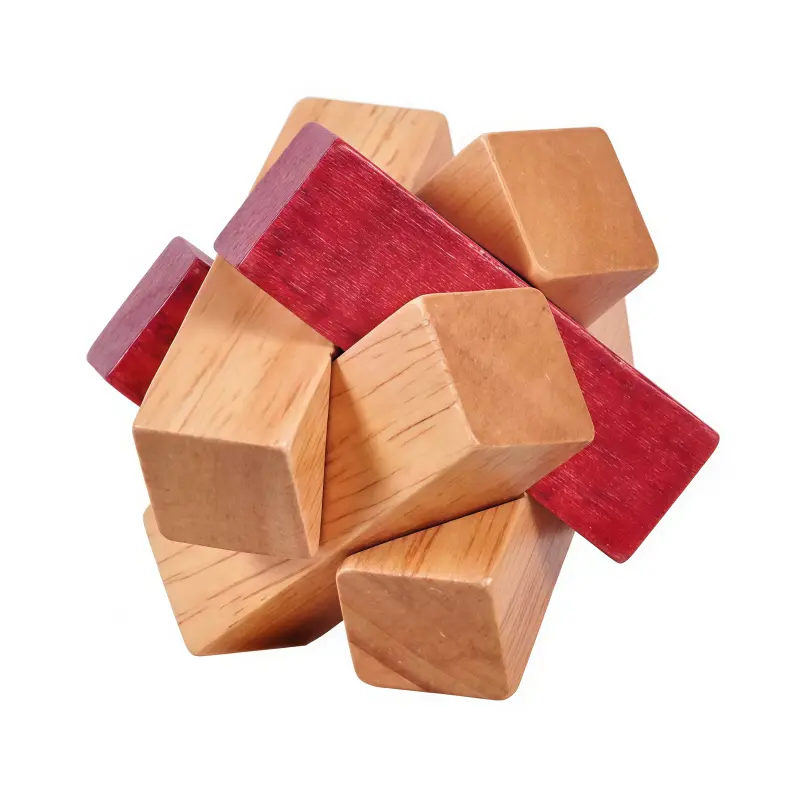
When you hold a piece like the
Wood Knot Puzzle — $16.99
Wood Knot Puzzle ($16.99), you aren’t just holding a toy. You’re holding a physical manifestation of Taoist philosophy. It’s built on the idea that “great form has no shape.” This particular knot uses six hardwood pieces that rely on geometric harmony rather than friction. If you force it, you risk snapping the delicate notches. If you observe it, you’ll see that one piece has slightly more travel than the others. That’s your way in.
We fiddle with these objects because they provide a tactile feedback loop that digital screens cannot replicate. There is a specific “thunk” when a wooden piece seats itself perfectly into a mortise-and-tenon joint. It’s a sensory reward for patience. If you find yourself getting frustrated, you’re likely trying to solve it with your ego instead of your eyes.
The Three-Step Framework for Any Wooden Puzzle
Most people approach a pile of wooden blocks with a “trial and error” mindset. That is a recipe for a very long, very annoying afternoon. After testing everything from simple 3-piece locks to 24-piece monsters, I’ve distilled the process into three distinct phases.
Phase 1: The Gravity Test (Observation)
Before you move anything, rotate the puzzle in your hands. Feel for the “slack.” In almost every interlocking wooden puzzle, there is exactly one piece—the “key”—that is designed to slide out first. This piece usually has no internal notches or a very specific linear path.
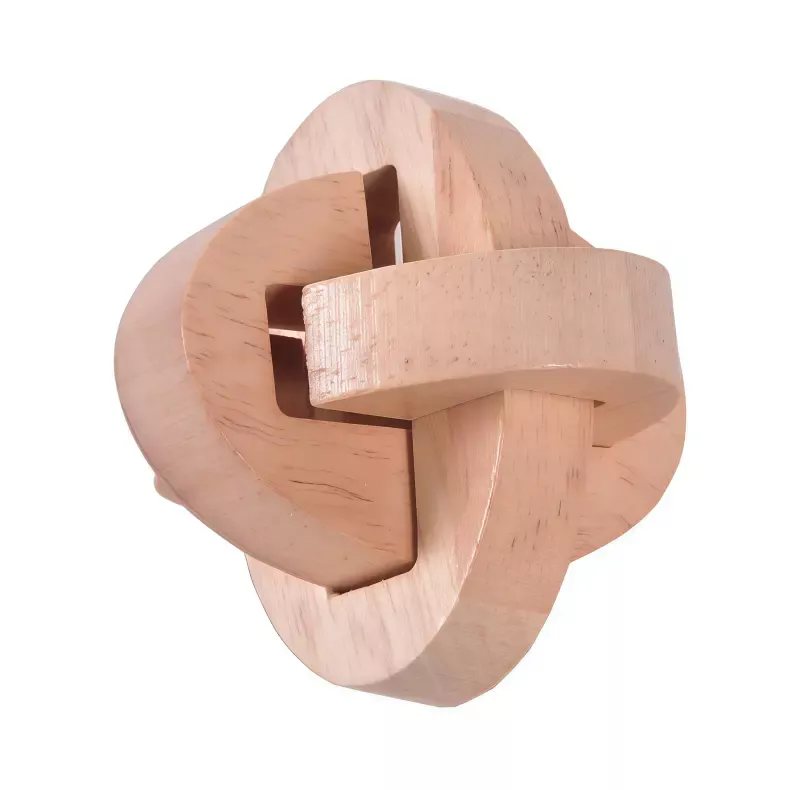
Hold the puzzle loosely and shake it gently. Listen. The piece that rattles the most is often your starting point. If you’re dealing with something like the
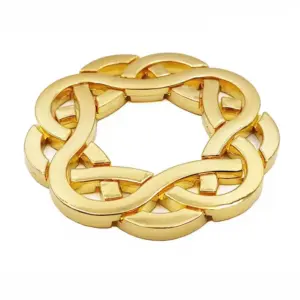
Circular Lock — $16.99
Circular Lock ($16.99), you’ll notice the three precision-cut pieces don’t just sit there; they have a “dance” to them. You have to find the one that moves along the axis of the others.
Phase 2: Deconstruction and Mapping
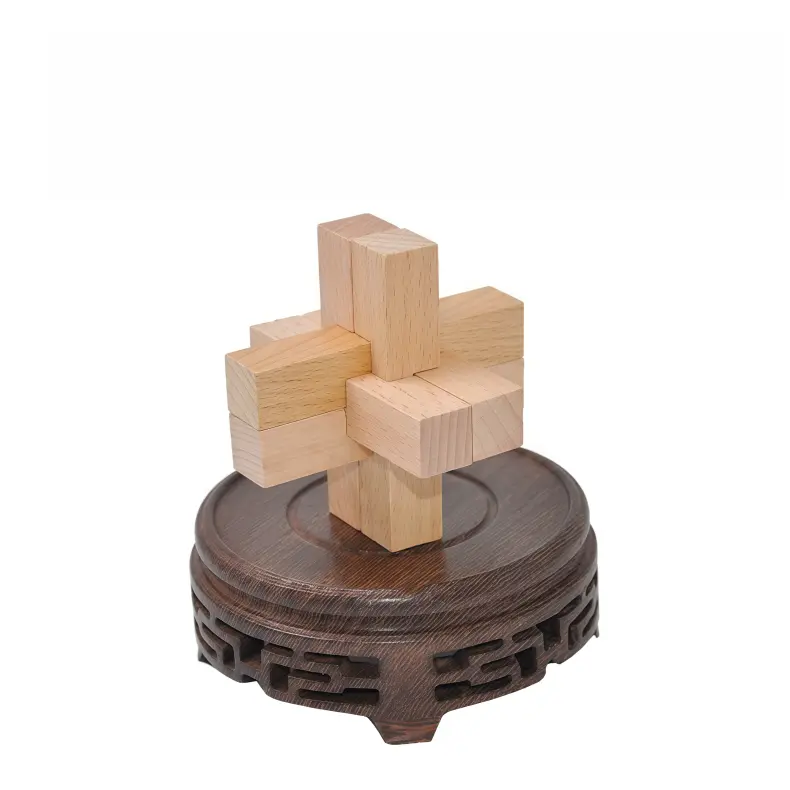
The biggest mistake beginners make is taking a puzzle apart and immediately throwing the pieces into a heap. If you do this with a Six-Piece Burr ($17.99), you are in for a world of hurt.
Six-Piece Burr — $17.99
As you remove each piece, lay it down in the exact orientation it came out. I call this “the surgical spread.” If a piece came out vertically, lay it vertically on your table. Look at the notches. Are they symmetrical? Is there a hidden “gate” that allowed another piece to pass through? Understanding why a piece was able to move is 90% of the battle for putting it back together.
Phase 3: The Reconstruction “Aha!”
This is where the real challenge lies. Reassembling a puzzle is significantly harder than taking it apart because you have to fight gravity. You’ll often need three hands to hold five pieces in place while the sixth one slides in to lock the structure.
This is where the “key” piece returns. In a standard 6-piece burr, the final piece is usually a solid bar with no notches. It acts as the deadbolt. If you’ve correctly mapped the other five, that final slide is the most satisfying feeling in the hobby.
Spotlight: The Ancient Wisdom of the Luban Lock
If you want to master the art of the wooden puzzle, you have to start with the classics. The Luban tradition is the gold standard for mechanical joinery.
Luban Square Lock
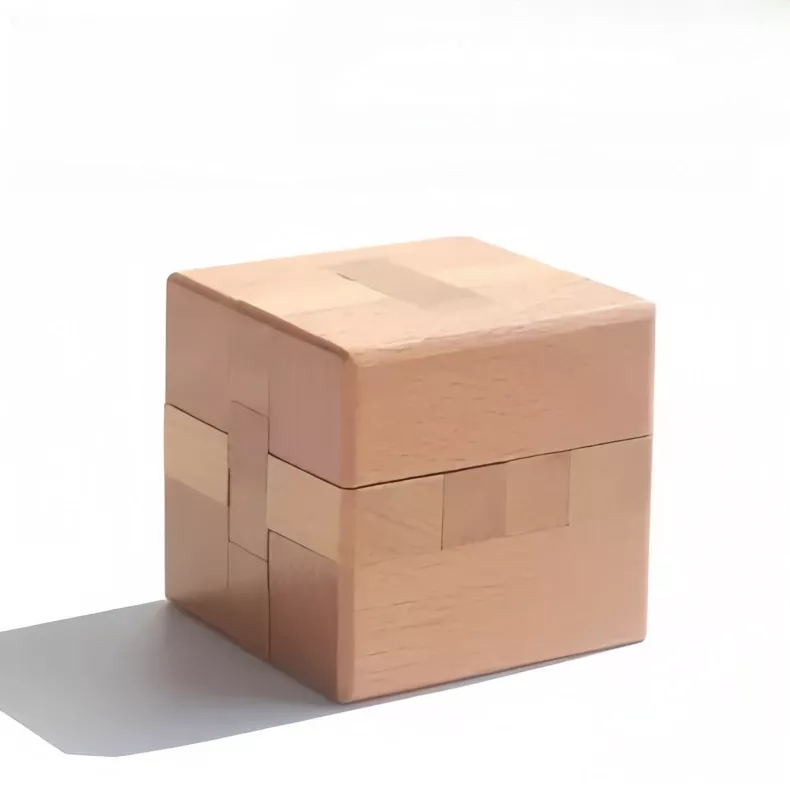
The Luban Square Lock ($21.99) is the puzzle I give to people who think they’re “too smart” for wooden toys. It looks like a simple cube of solid hardwood. There are no obvious seams, no visible hinges, and certainly no instructions. It relies entirely on mortise-and-tenon joinery, a technique used in ancient Chinese architecture to build temples that could survive earthquakes.
When I first sat down with this one, it took me nearly forty minutes just to find the first move. The tolerances are tight—deliberately so. You have to apply pressure in opposing directions simultaneously. It’s a lesson in spatial reasoning and fine motor control. If your hands are shaky or you’re rushing, the pieces won’t budge. But once you find that first sliding bar, the rest of the cube unfolds like a flower. It’s an heirloom-quality piece that feels much more expensive than its twenty-one-dollar price tag. It’s perfect for stress relief because it demands 100% of your focus; you can’t solve this while thinking about your inbox.
6 Piece Wooden Puzzle Key
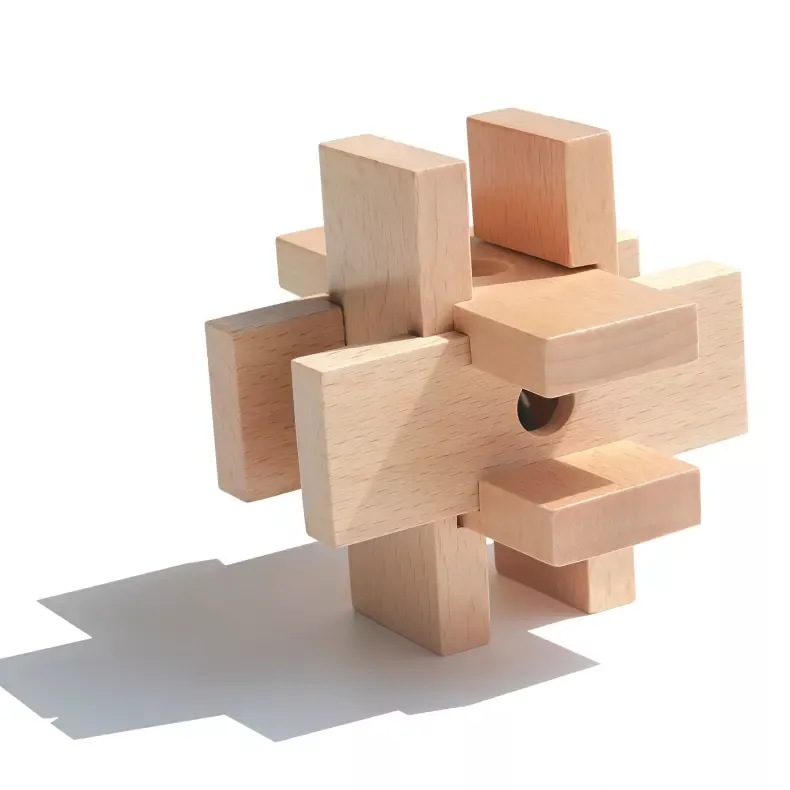
For those who prefer a more minimalist aesthetic, the 6 Piece Wooden Puzzle Key ($12.99) is a masterclass in “Wu Wei,” or effortless action. It’s a smaller, more portable challenge that I often keep in my bag for commutes.
The beauty of this key is its simplicity. There are only six pieces, but they are notched in a way that creates a deceptive level of complexity. I’ve watched engineers spend twenty minutes trying to “calculate” the solution, only for a child to pick it up and find the pattern naturally. It teaches you to stop forcing the solution. When you let the pieces guide your fingers, the “key” reveals itself. At under thirteen dollars, it’s the best “entry drug” into the world of wooden mechanical kits.
Why Wood Beats Metal for Beginners
I love a good 3D Crystal Puzzle Guide as much as the next guy, but there’s a reason I always point beginners toward wood. Metal puzzles, especially the cast zinc varieties, are often about “tricks”—a hidden magnet, a rotating internal pin, or a specific angle of tilt. They are binary: either you know the trick, or you don’t.
Wooden puzzles are different. They are about structure. You can see the logic of a Kongming Lock Color Match ($16.99) just by looking at how the colors align. It’s about balance and equilibrium. If you’re looking for translucent interlocking geometries, you might prefer plastic, but the organic feel of wood provides a much more meditative experience.
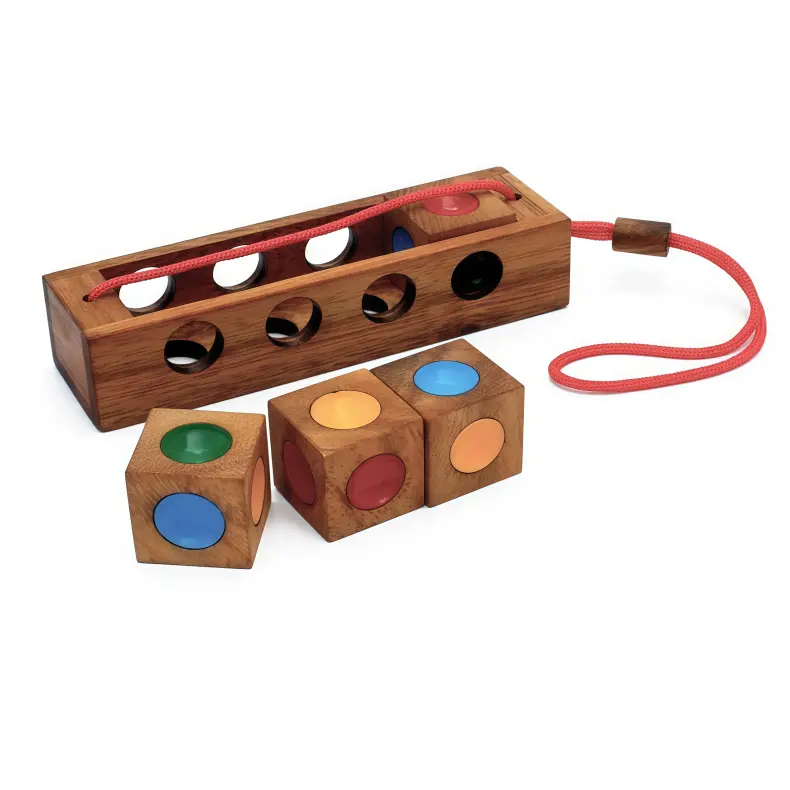
Kongming Lock Color Match — $16.99
Furthermore, wood is forgiving. If a piece is a fraction of a millimeter off because of the weather, you can often feel that tension and adjust your strategy. It makes the solving process feel like a collaboration with the material itself.
Spotlight: The Geometry of the Sphere and Pyramid
Not all wooden puzzles are based on the traditional “burr” cube. Some of the most difficult challenges I’ve faced involve non-orthogonal shapes—spheres and pyramids that defy your usual “up-down-left-right” logic.
Wooden Bead Pyramid

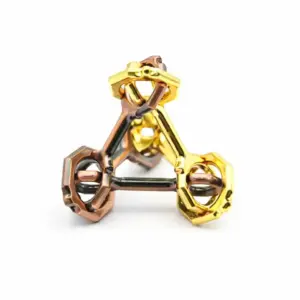
The Wooden Bead Pyramid ($18.88) is, quite frankly, a nightmare disguised as a desk toy. It consists of six strands of precision-crafted wooden beads. Your goal is to stack them into a perfect tetrahedron.
Most people start by trying to build the base first, but the pyramid is a 3D problem that requires you to think in layers. I spent an entire Saturday afternoon on my porch with this thing, and the “Aha!” moment didn’t come until I realized I was trying to add too many pieces to the bottom. Like the ancient philosophies it’s inspired by, the solution involves subtracting the unnecessary. It’s a sophisticated brain teaser that rewards patient insight over brute force. If you’re looking for a gift for someone who “solves everything,” this is the one that will actually make them sweat.
Mortise-and-Tenon Soccer Ball Puzzle
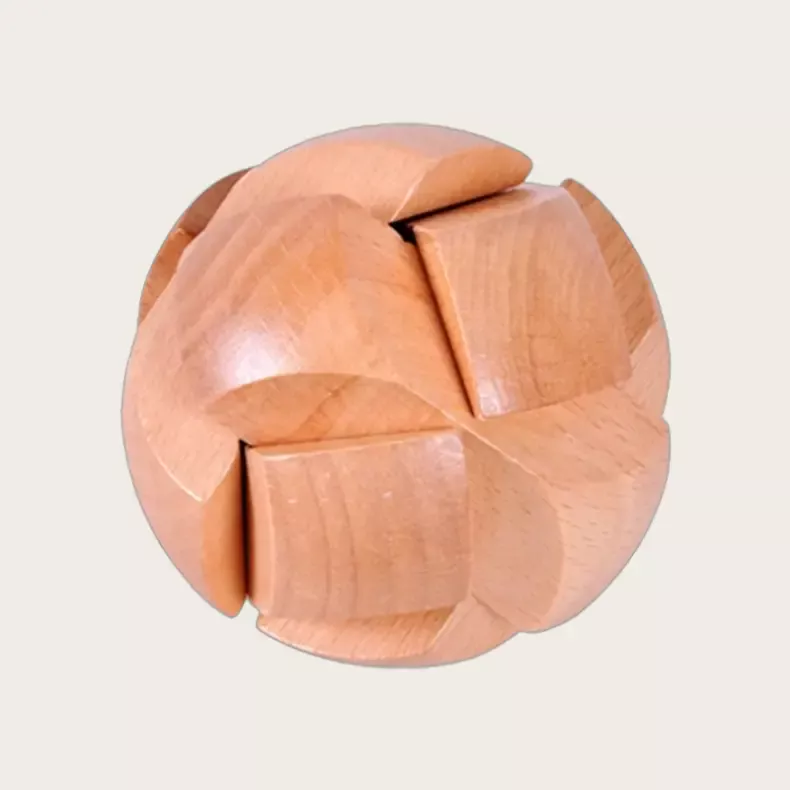
Then there’s the Mortise-and-Tenon Soccer Ball Puzzle ($16.89). This is a journey into traditional Chinese craftsmanship. Building a sphere out of flat-notched wooden bars is a feat of engineering that feels like magic when it finally clicks together.
The difficulty here isn’t just finding where the pieces go; it’s the physical act of assembly. You’ll find yourself using your chin or the table to hold three pieces in place while you try to slot the fourth one in. It’s a test of dexterity as much as logic. I’ve found that this particular puzzle is a great conversation starter; people can’t help but pick it up and try to figure out how a ball can be made of nothing but interlocking wood.
The Peak Moment: When the Logic Clicks
There is a specific moment in every solve that I live for. It happened most vividly for me with the
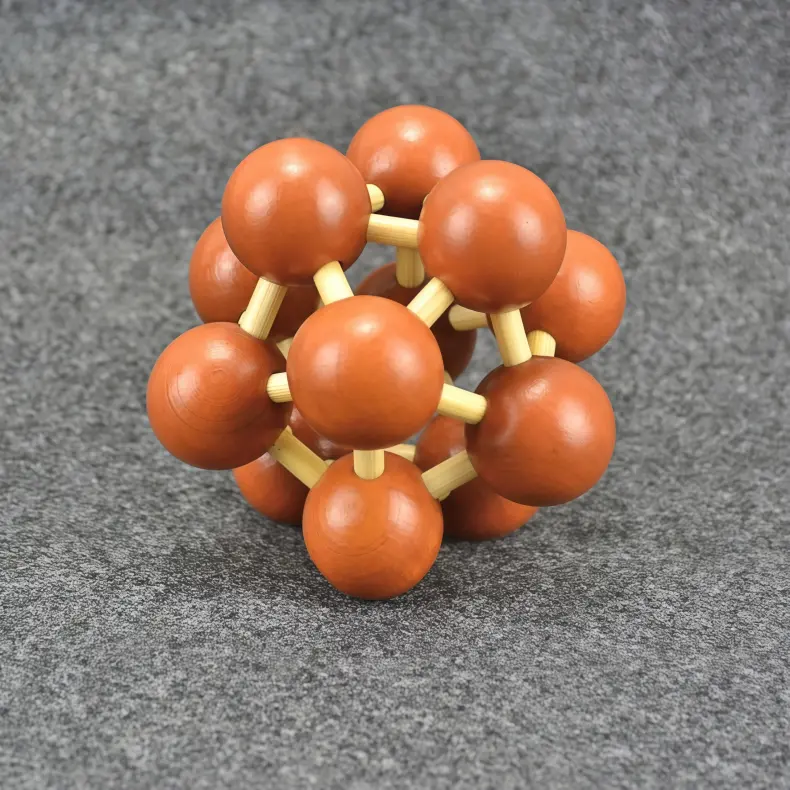
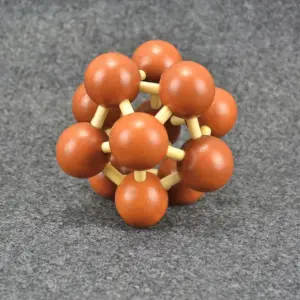
Molecular Ball Puzzle — $16.99
Molecular Ball Puzzle ($16.99).
I had been staring at the rods and balls for thirty minutes, convinced that my kit was missing a piece or that the laws of physics had shifted. I was trying to build it from the outside in, which is how we solve almost everything in the modern world. But wooden puzzles often require a “center-out” approach.
The peak moment came when I stopped looking at the individual pieces and started looking at the voids between them. I realized that the rods weren’t just connectors; they were the structural skeleton that allowed the balls to float in a perfect sphere. When that last rod slid into place—with no glue, no screws, just pure mechanical logic—the entire structure suddenly became rigid and indestructible.
I handed it to my wife, who is a mechanical engineer, and she spent ten minutes just turning it over in her hands, trying to find the “weak point.” There wasn’t one. That is the “Peak” of the wooden puzzle experience: the transition from a pile of “garbage” wood to a structurally sound work of art. It’s a reminder that when things are built with the right foundation, they don’t need external fasteners to stay together.
Troubleshooting: What to Do When You’re Stuck
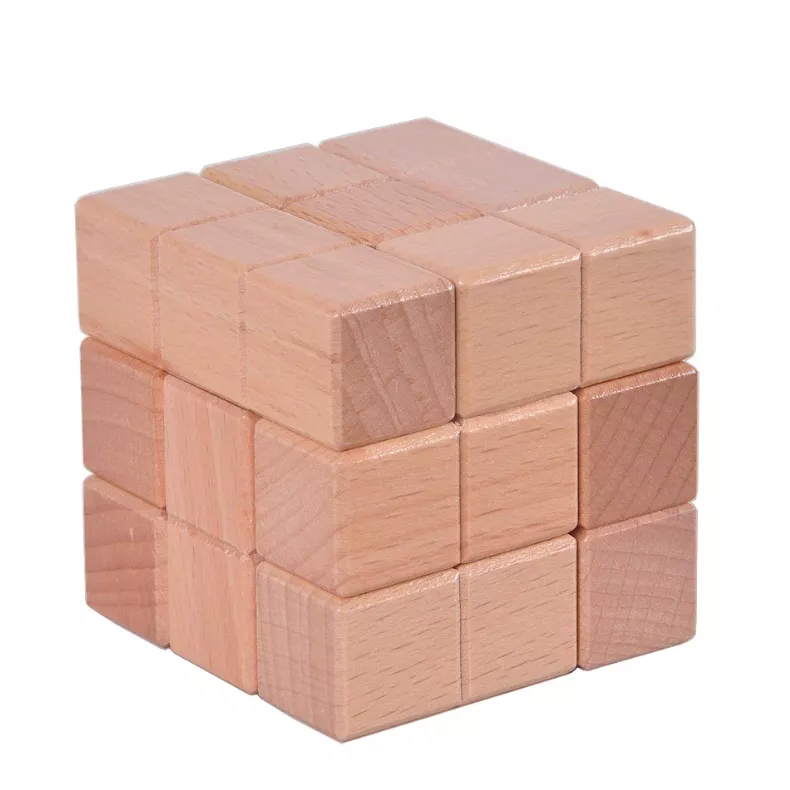
Even a veteran reviewer like me gets stuck. If you’ve been staring at the
Luban Cube Puzzle — $21.99
Luban Cube Puzzle ($21.99) for two hours and haven’t made progress, don’t give up. Here is my “Emergency Protocol” for stuck solvers:
- Walk Away: This is the most important step. Your brain gets into a “logic loop” where you keep trying the same wrong move. Go play a mental palate cleanser like Kurodoko or take a break with a quick round of Snake. When you come back, you’ll see the pieces differently.
- Check the Humidity: Wood swells. If you’re in a very humid environment, the “key” piece might be physically stuck. I once had to put a stubborn burr puzzle in a sealed container with a silica packet for 24 hours just to get it to budge.
- The Light Test: Hold the puzzle up to a bright light. Look for tiny gaps between the joints. A gap indicates that a piece is meant to move in that direction. If there is no gap, you’re pushing against a solid wall of wood.
- The “Stick” Method: A user on Reddit once mentioned using a small stick or toothpick to dislodge settled pieces. While I generally advise against tools, sometimes a gentle nudge on an internal notched bar is all you need to break the friction of a puzzle that hasn’t been solved in years.
Comparison of Top Wooden Challenges
FAQ: Everything You Wanted to Ask While Frustrated
How do you solve a wooden puzzle quickly?
Speed is the enemy of the wooden puzzle. If you want a quick fix, look for a deductive grid puzzle like Kurodoko. For wooden mechanicals, “speed” comes from identifying the key piece immediately. Look for the piece that has no notches on its visible faces—that is almost always the last piece in and the first piece out. Once you find that, the rest of the puzzle’s internal logic becomes visible.
What is the easiest way to solve a 6-piece wooden puzzle?
The “easiest” way is to use the gravity method. Hold the puzzle in your palm and rotate it 360 degrees. Watch for which piece drops even a millimeter. That piece is your “lead.” Once it moves, the tension holding the other five pieces in place will relax. It’s also helpful to look at the grain of the wood; often, the key piece is cut from a different part of the block and the grain won’t perfectly align with its neighbors.
What approach can I use for a wooden packing puzzle?
General advice for packing puzzles—like the Bead Pyramid—is to leave the smallest pieces for last. Smaller pieces are more versatile and can fill the awkward gaps left by the larger, more rigid components. However, some experts suggest the opposite: start with the most restrictive piece first. If you can place the piece that has the most “branches” or “arms,” the rest of the puzzle usually dictates its own solution.
Are wooden puzzles harder than metal ones?
They aren’t necessarily harder, but they are more “analog.” Metal puzzles often have a single hidden mechanism. Wooden puzzles like the Luban Cube Puzzle ($21.99) are about the collective interaction of every single piece. If one piece is wrong, nothing works. In that sense, they require more holistic thinking.
How do I know if my puzzle is a Burr or a Lock?
A Burr puzzle is typically an interlocking set of notched sticks that form a symmetrical shape (like a cross or a star). A “Lock” puzzle, like the Luban Square, usually forms a solid geometric object (like a cube) where the interlocking mechanism is hidden inside. Locks are generally considered more difficult because you can’t see the notches until the puzzle is already halfway apart.
Is it “cheating” to use the wood grain to solve it?
Some purists say yes, but I call it “using your resources.” Every piece of wood has a unique fingerprint. If you’re stuck on reassembly, looking at how the grain lines up can be a vital clue. It’s not cheating; it’s being an observant solver.
What if a piece snaps?
This is the heartbreak of the hobby. High-quality puzzles use hardwoods like rosewood or ebony, which are quite durable, but the thin “necks” of the notches are vulnerable to brute force. If you feel resistance, stop pushing. A wooden puzzle should never require more force than you can apply with two fingers. If it’s stuck, it’s because you haven’t found the right path yet.
Are these puzzles good for kids?
Absolutely, but with a caveat. Younger kids (under 8) might get frustrated by the tight tolerances of a Luban lock. Start them with something more tactile like the 6 Piece Wooden Puzzle Key. It builds spatial reasoning without the “I’m going to break this” anxiety.
How do I clean my wooden puzzles?
Never use water. A dry microfiber cloth is usually enough. If the wood looks dull after years of use, a tiny amount of high-grade beeswax or mineral oil can restore the luster and keep the pieces sliding smoothly. Just be careful not to over-apply, or the pieces might become too slippery.
Why are some wooden puzzles so expensive?
You’re paying for the tolerances. A cheap wooden puzzle will have loose, rattling pieces that make the solution trivial. A premium puzzle, like those found in our hidden compartment mechanics guide, is cut so precisely that the seams are nearly invisible. That level of craftsmanship requires high-end CNC milling or expert hand-carving.
Can these puzzles help with anxiety?
Many users find the repetitive, tactile nature of wooden puzzles to be highly meditative. It’s a “screen-free ritual” that forces you to slow down your breathing and focus on a single, solvable problem. Unlike the chaos of daily life, a puzzle has a definitive end and a logical path.
What should I buy after I master the 6-piece burr?
Once you’ve mastered the basics, you should graduate to sequential discovery challenges. These are puzzles that hide tools (like a small key or a pin) inside themselves, which you must find and use to reach the next stage. It’s like an escape room in the palm of your hand.
Do wooden puzzles lose their “replayability”?
While you might remember the solution to a simple puzzle, the complex ones like the Soccer Ball are difficult to memorize. Even after solving it once, putting it back together six months later will still feel like a fresh challenge. Plus, they make excellent display pieces.
How do I store them?
Keep them out of direct sunlight and away from heat vents. Extreme temperature changes can cause the wood to warp, which will either make the puzzle too loose to stay together or too tight to open. A cool, dry shelf is perfect.
The One Puzzle That Teaches You How All the Others Work
If you take nothing else from this guide, remember the coffee. Remember the moment I had to walk away from my desk to let my brain reset. Solving a wooden puzzle is a lesson in humility. It’s a physical reminder that the most complex problems in life usually don’t require more power; they require a different perspective.
We live in a world of “instant results,” but wood doesn’t care about your deadline. It has been growing for decades before it reached your desk, and it’s perfectly happy to stay locked for a few more hours. When you finally hear that “click,” it’s not just a toy being solved—it’s your own patience being rewarded.
If you’re ready to start your own collection, I’d suggest beginning with the 6 Piece Wooden Puzzle Key ($12.99). It’s the purest expression of the “key piece” logic I’ve discussed here, and it taught me more about mechanical harmony than any instruction manual ever could. Once that one clicks for you, the mechanical logic of trick boxes will start to make a lot more sense.
The journey from “I can’t do this” to “How did I not see that?” is the shortest and most satisfying trip you can take without leaving your chair. Just remember: don’t force it, watch the grain, and if all else fails, go make some coffee. The puzzle will be waiting for you when you’re ready to listen.