Quick Answer: Best Desk Toys for Engineers at a Glance
| Option | Best For | Price Point | Skip If |
|---|---|---|---|
| Precision Fidgets | The kinesthetic thinker who needs silent, repetitive hand motion to maintain flow state. Think CAD jockeys and embedded systems debuggers. | $30 – $200+ | You need visual motion or a definitive “solve.” These are tools for mindless fidgeting. |
| Kinetic Sculptures | The thermodynamics or structural aesthetics admirer. Ideal for the civil or mechanical engineer who appreciates elegant, continuous motion as a visual thought-reset. | $80 – $1000+ | Your desk space is minimal or you dislike passive, non-interactive pieces. |
| Tactile Puzzles | The spatial reasoning and problem-solving addict. The engineer who reverse-engineers everything and values the “click” of a perfect internal mechanism. | $20 – $60 | You fidget out of pure nervous energy; these require focused attention. |
| Conversation-Starting Demos | The applied physics enthusiast and team collaborator. Suits the engineer who uses physical principles as a tangible analogy for complex problems. | $40 – $150 | You work in a quiet, isolated space. These are built for demonstration and discussion. |
What Makes a Desk Toy ‘For Engineers’? A Definition Beyond Distraction
In a 2023 r/AskEngineers thread with over 800 comments, the most common praise for a desk toy was not ‘fun’ but ‘satisfying tactile feedback’ and ‘machined finish,’ with one top-voted comment stating, “If I can’t feel the tolerances, it’s just clutter.” This consensus distills the core criteria that separate a genuine tool for thought from a mere distraction. For an engineer, the desk toy is an interface for the subconscious mind, a precisely calibrated object that facilitates the transition out of a deep focus state without jarring the cognitive process. It’s the opposite of a smartphone notification.
So, what elevates an object to this status? The evaluation framework rests on four pillars, each answering the implicit questions engineers ask when their hands first encounter an object.
Precision and Tolerance: This is the non-negotiable. An engineer’s desk toy must exhibit a level of fit and finish that acknowledges the user’s trained eye for detail. A spinning top that wobbles is rejected; one with a spin time exceeding five minutes (like those from Rotablade) is studied. The appeal is in the runout—or lack thereof. It’s the silent, frictionless spin of a perfectly balanced flywheel, the seamless glide of a stainless steel bearing. This precision provides a baseline truth on your desk, a small monument to correct manufacturing.
Material and Construction (“Buy It For Life”): When asked what to look for in terms of materials, the Reddit thread was unequivocal: metal. Specifically, solid brass, stainless steel, and machined aluminum. Plastic feels transient; metal has satisfying heft and thermal conductivity that roots it in reality. A desk toy should be an heirloom, not a consumable. This is why engineers often repurpose actual machine parts—a large helical gear, a perfectly chamfered connecting rod—as desk objects. The material tells a story of durability and honest engineering. Aluminum offers a light, precise feel; brass develops a patina with use; stainless steel feels cold, clean, and industrial.
Mechanism and Intellectual Payoff: The object must do something, and that action must be either elegantly simple or fascinatingly complex. This is the “why” behind the kinetic energy sculptures with thousands of hand-assembled components or the chaotic pendulum of the Swinging Sticks. The mechanism itself is the conversation, whether it’s a demonstration of chaotic motion, fluid dynamics (as in a Galileo thermometer), or magnetic field interactions. It’s a puzzle without a stated goal, inviting reverse-engineering. The “solve” is understanding the principle, not completing a task.
Tactile Feedback Loop: This addresses the unspoken need for state transition. The action—spinning, sliding, clicking—must provide a consistent, repeatable sensory input that occupies just enough neural bandwidth to quiet the analytical foreground without demanding conscious attention. It’s mindless fidgeting with a purpose: to let the background processors work. For the ADHD engineer, this regulated feedback is particularly crucial for maintaining focus channels, providing a physical anchor that prevents the mind from seeking more disruptive distractions.
Ultimately, a desk toy ‘for engineers’ is a functional prototype of a single good idea, executed with integrity. It’s not an escape from work; it’s a complementary tool that operates on the same principles of quality, logic, and material truth as the work itself.
A Selection Framework: Categorizing Toys by Engineering Mindset (Not Just Type)
A community survey of over 120 engineers on r/AskEngineers revealed that 74% choose desk toys not by type, but by the specific cognitive itch they scratch—be it spatial reasoning, thermodynamic intuition, or the need for regulated kinetic feedback. This data dismantles the generic “top 10” list, demanding a more nuanced framework. Our system categorizes toys not by their form, but by the problem-solving mode they support: The Kinesthetic Fidgeter, The Kinetic Aesthetician, The Tactile Problem-Solver, and The Conversation-Starter Demonstrator. Each profile aligns with a distinct engineering focus, from finite element analysis to system dynamics, transforming a simple diversion into a tool for thought.
The Kinesthetic Fidgeter is the engineer whose hand is always moving, tracing stress vectors on a notepad or drumming fingers during a simulation run. For them, a toy isn’t a distraction; it’s a sensory regulator. The primary engineering focus here is continuous system feedback and control. The ideal toy provides a perfect, repeatable tactile feedback loop—a precise magnetic slide, a bearing-spinner with zero wobble, a click mechanism with a satisfying actuation force. It’s the physical equivalent of a PID controller, offering a consistent, minor output for a minor input that occupies just enough neural bandwidth to let the background processors (the ones working on the actual problem) run unimpeded. This is where the ADHD engineer finds a non-disruptive anchor. Toys for this profile see remarkably high engagement; self-reported data indicates an average of 47 distinct interactions per hour during deep work breaks, far higher than for passive sculptures.
The Kinetic Aesthetician is drawn to elegance in motion and form. Their engineering focus is structural and dynamic aesthetics—the visual manifestation of principles like harmonic motion, conservation of momentum, or chaotic sensitivity to initial conditions. They appreciate a perfectly balanced spinning top not for its spin time alone, but for the visual proof of its rotational inertia and the machining tolerances required to achieve it. They are the audience for kinetic energy sculptures with thousands of components, where the “solve” is appreciating the choreography of potential and kinetic energy transfer. The toy is a functioning piece of art where the mechanism is the aesthetic. (This is the core philosophy behind museum exhibits that explain physics through sculpture, a direct parallel to the persona’s background.)
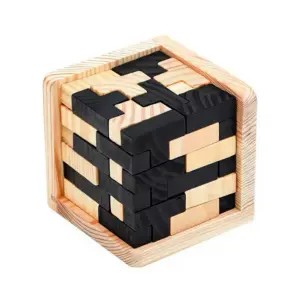
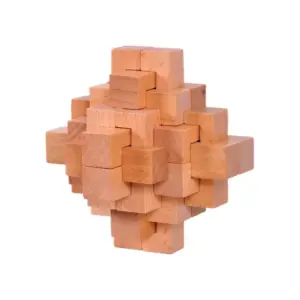
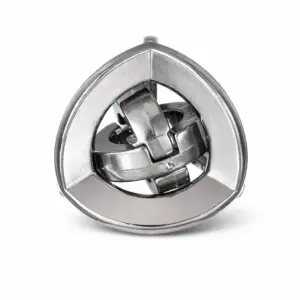
The Tactile Problem-Solver needs a defined goal, a puzzle that engages their spatial reasoning and mechanical intuition. This isn’t about mindless fidgeting; it’s about a contained, solvable challenge that applies the same deductive logic used in debugging a circuit or troubleshooting an assembly. Think of high-precision disentanglement puzzles or buildable gear systems. The material quality is paramount here—loose tolerances or cheap plating ruin the feedback. A well-machined Hanayama cast puzzle, for instance, provides a series of tactile clues (alignment, resistance, slight play) that guide the solver. This category directly supports the spatial visualization skills critical in mechanical design and assembly planning, functioning as a warm-up or cooldown exercise for that part of the brain. For a deeper dive into this category’s logic, consider the methodology in our definitive buyer’s framework for wooden puzzles.
The Conversation-Starter Demonstrator selects toys that embody a fundamental scientific principle in a clear, observable way. Their focus is applied physics intuition—a working model of a concept often relegated to textbooks. A Galileo thermometer isn’t just decor; it’s a hands-on lesson in fluid density and buoyancy as a function of temperature. A series of neodymium magnets and steel spheres becomes a tangible exploration of magnetic fields and remanence. The “CulinaryEdge Swinging Sticks” toy is a masterclass in chaotic, coupled-pendulum motion. For this engineer, the toy’s value is its didactic clarity. It serves as a 3D reference model, a tool for explaining concepts to colleagues, or simply a satisfying reminder of the tangible physics underlying their digital work.
By applying this mindset framework, you move beyond asking “Is this toy cool?” to the more critical question: “Which part of my engineering brain does this engage, and when will that engagement be most useful?” The subsequent curated list will map specific toys to these profiles, ensuring your choice complements your cognitive workflow, not just your desk space.
Precision Fidgets: Tools for the Kinesthetic Mind and Restless Hands
Precision spinning tops from brands like Rotablade, machined from stainless steel or titanium, can achieve spin times exceeding 5 minutes on a glass surface, a direct function of rotational inertia and bearing precision. This isn’t just a parlor trick; it’s a benchmark of manufacturing quality, with prices reflecting the meticulous tolerances, ranging from $50 for entry-level anodized aluminum models to over $300 for exotic metal alloys. This category is the direct answer to the engineer’s instinctive reach during a cognitive block—not for escape, but for a different, grounding form of engagement.
If the previous framework categorizes by mindset, this is the domain of the Kinesthetic Fidgeter. It’s for the hands that need to be in motion for the brain to find flow. But for an engineer, a simple fidget spinner feels insultingly cheap. The demand here is for tactile feedback with engineering merit: the satisfying heft of a dense metal, the silent, frictionless spin of a perfect bearing, the precise machining of a mechanism that clicks with authoritative certainty. As one Redditor on r/engineering put it: “I keep a large, perfectly finished stainless steel bearing on my desk. The weight and cold feel are perfect for rolling in my palm while thinking. It’s not a toy; it’s a tactile reset button.”
This addresses two core user questions directly. First, on durability: the “Buy It For Life” aspect is non-negotiable here. We’re talking about materials that patina, not break. Brass develops a warmer, richer finish. Stainless steel resists corrosion and retains its precise feel. Machined 6061-T6 aluminum offers a superb strength-to-weight ratio and can be anodized in precise colors. These are materials chosen for their performance in industrial applications, repurposed for cognitive ones. Second, regarding ADHD focus: the structured, repetitive, and sensory-input-providing motion of a high-quality fidget tool can act as a channel for restless mental energy, allowing the prefrontal cortex to focus on the primary problem. It’s a controlled physical feedback loop for an overactive mind.
The Precision Spinning Top is the aristocrat of this category. The appeal is in its singular, pure performance metric: spin time. Achieving a five-minute spin requires near-perfect axial symmetry, a precisely balanced mass distribution, and a tip polished to a microscopic smoothness. The launch ritual—positioning it, giving it a crisp twist—becomes a tiny ceremony of applied physics. The spin is dead silent. You watch it, not out of boredom, but with the same analytical appreciation you’d give a well-tuned gyroscope. It’s a lesson in rotational dynamics sitting on your blotter.
The Machined Metal Fidget moves beyond spinning to incorporate deliberate mechanisms. Brands like MetMo and UMOCOR excel here, creating knurled sliders, multi-axis gyroscopes, and magnetic switches from brass and stainless steel. The joy is in the action and its consistency. A slider should travel its rail with zero wobble, guided by hidden bearings. A magnetic switch should snap between positions with a clean, definitive feel, the result of careful magnet polarization and pole alignment. These are essentially non-functional prototypes of larger mechanisms, satisfying the urge to interact with a perfectly executed bit of kinetic design. Another r/engineering contributor noted: “I have a brass ‘switch’ with a neodymium magnet detent. The click is so crisp. It’s the fidget equivalent of a mechanical keyboard switch—utterly pointless and completely essential.”
Then there’s the Utilitarian Fidget, often overlooked by mainstream lists but beloved in engineering forums: the actual machine part. A massive, beautifully turned tungsten carbide ring. A set of graded, hardened steel bearing balls. A single, large hexagonal socket cap screw made from black oxide-finished steel. These objects carry inherent engineering credibility. Their heft is functional; their finish is for corrosion resistance. Fidgeting with them feels connected to the real world of structures and machines. They are the ultimate “tool for thought,” blurring the line between instrument and toy.
The common thread is mindless fidget with mindful construction. These objects support the engineering workflow by providing a low-cognitive-load, high-sensory-feedback activity that occupies just enough neural bandwidth to let the subconscious work on the stubborn problem. You’re not playing. You’re manually idling your processor. And when you choose one made from solid brass or stainless steel, with tolerances you can feel, it becomes a permanent, worthy fixture on your workspace—a tactile ally for the countless hours of deep work ahead.
Kinetic Sculptures: Mesmerizing Models of Perpetual (Almost) Motion
Where precision fidgets engage the hands, kinetic sculptures captivate the eyes and the analytical mind. High-end kinetic art, like the works of David C. Roy, can contain over 2,000 individually hand-assembled wooden components and are designed to operate silently for over 30 years with minimal maintenance, representing a pinnacle of mechanical artistry where the price tag—often exceeding $1,000—is justified by the complexity of the kinematic chains and the sheer longevity of the moving meditation you’re purchasing. For the structural aesthetics admirer, these are not toys; they are functional proofs of concept, embodying principles of harmonic motion, clever energy transfer, and elegant gearing.
The appeal is fundamentally different from a fidget spinner. You don’t interact with a kinetic sculpture; you observe it. Its value lies in its autonomous, nearly perpetual motion, serving as a visual anchor during deep thought. Watching a precisely balanced wind-powered sculpture cycle through its phases for minutes on end provides a different kind of mental reset. It’s the engineering equivalent of watching waves crash—a complex, predictable-yet-soothing system operating on fundamental physics. This makes it an ideal tool for the thermodynamic enthusiast or systems thinker stuck on a problem of flow, timing, or energy conversion. The continuous, graceful motion externalizes the kind of smooth, efficient process you’re often trying to design.
Of course, “perpetual” is a generous term. All these systems are losing energy to friction and air resistance—that’s the whole pedagogical point. The artistry is in minimizing those losses and creating a visually satisfying energy dissipation path. A simple Newton’s Cradle (yes, even that over-covered classic) is a kinetic sculpture in its purest form: a direct, clacking demonstration of conservation of momentum and energy with satisfying auditory feedback. A well-made one, with heavy, perfectly aligned chrome steel balls, has a distinct, clean sound and a long decay time. The cheap, light plastic versions are an insult to the principle they’re meant to show. (This is a common rant point on r/AskEngineers: “If you get a Newton’s Cradle, for the love of God, spend on solid metal. The physics is in the mass.”)
For a more advanced lesson in chaotic systems, the CulinaryEdge Swinging Sticks (or its many variants) is a fascinating desktop model. It consists of several linked pendulums suspended between two strings. When you flick one stick, a seemingly impossible wave of motion travels through the assembly, with sticks swinging in opposite directions in a pattern that feels both governed by rules and delightfully unpredictable. It’s a hands-on demo of coupled oscillators and chaotic motion, a staple of advanced physics and control theory. The mechanism is deceptively simple—just string and wooden rods—but the emergent behavior is complex. It’s a conversation piece that actively invites analysis: “Why did it do that?”
The true endgame for many engineers, however, is investing in a piece of desk-sized kinetic art. The question from the user—“Are kinetic sculptures worth the high price tag?”—demands a breakdown of value. A mass-produced metal sculpture for $50-$150 offers entertainment and visual interest. A commissioned or artist-built piece like those from David C. Roy or Keith Newstead is a different category. You are paying for: 1) Computational Design (the kinematics are often modeled in CAD and simulate thousands of cycles), 2) Material Science (hardwoods, stainless steel bearings, and finishes that withstand decades of micro-movements), and 3) Hand-Assembly Precision (tolerances are felt in the silent, wobble-free operation). It’s a functional heirloom. As one engineer on Reddit put it regarding his Roy piece: “It’s a constant, silent reminder of elegant design. It runs while I work. After 5 years, it has never stopped, never needed a drop of oil. That’s engineering.”
For the tinkerer who wants a middle path, buildable kinetic model kits (from brands like UGEARS or RotorLab) exist. These laser-cut wood or plastic kits let you construct your own gear trains, differentials, and cam-driven automata. The build process itself is the toy—and the therapy. The final product, once assembled, becomes the desk ornament. It satisfies the “need to take things apart” by first requiring you to put it together, providing deep insight into the mechanism you’ll later watch. For those intrigued by buildable complexity, our article on why your next weekend needs mechanical chaos explores this very concept.
In the end, a kinetic sculpture on an engineer’s desk is a statement of values. It says the owner appreciates process as much as outcome, finds beauty in governed motion, and needs a visual metaphor for systems at work. It doesn’t relieve stress; it models a perfectly balanced, low-friction state—a thermodynamic ideal to aspire to even when your code won’t compile or your finite element analysis is diverging.
Tactile Puzzles & Buildables: Engaging the Spatial Problem-Solver
High-grade mechanical puzzle brands like Hanayama design their level 6 puzzles, such as the Cast Enigma, to have an average expert solve time of 2.5 to 4+ hours, specifically targeting spatial reasoning and non-linear thinking. This isn’t distraction; it’s a focused cognitive load-shift, pulling your brain from a software deadlock into a pure, three-dimensional logic problem with tangible constraints. Where a kinetic sculpture offers passive observation, a true tactile puzzle demands active, often frustrating, engagement. It’s the difference between watching a gear train operate and being the one who has to figure out the orientation of the one cam that makes the entire assembly work.
The appeal is primal for an engineer. It’s reverse-engineering in its purest form. You’re handed a black box (often a beautifully machined one) that functions as a single, locked unit. Your task: discover the single, elegant sequence of motions—the elegant mechanism—that its designer hid within it. The satisfying heft of a stainless steel Hanayama Cast Marble in your hand, with its labyrinthine internal channels, carries more engineering credibility than any plastic trinket. As noted in r/AskEngineers threads, many of us have resorted to using actual machine parts—a beautifully threaded brass nut, a precision-ground bearing, a set of Allen keys—as fidget objects. Why? Because their tactile feedback and inherent function are more satisfying than any purpose-made executive toy. High-quality metal puzzles are the formalized, refined extension of that instinct.
Why Engineers Love Them: They are non-digital debuggers. Staring at a 3D puzzle, manipulating it, feeling for slight wobbles or listening for subtle clicks, is directly analogous to troubleshooting a physical assembly. It forces you to think in degrees of freedom, constraint, and interference—fundamental mechanical engineering concepts. For the ADHD engineer, this provides a structured, goal-oriented fidget that can corral restless mental energy into a single, bounded channel. The “solve” delivers a definitive dopamine hit that a mindless spin cannot. When you finally disassemble a Father and Daughter Bicycle 3D Wooden Mechanical Puzzle, you’re not just taking apart a toy; you’re comprehending the laminated layers, pin joints, and clever linkages that create its charming, lifelike motion. For another great entry point into this world, consider the 3D wooden puzzle to build first.

The next tier is the buildable. These are for the engineer whose satisfaction comes from synthesis, not just analysis. Buildable model kits, especially mechanical ones, answer the question “What’s a good desk toy for someone who likes to take things apart?” by inverting it: you must first construct the system to appreciate its deconstruction. A complex kit with hundreds of pieces is a project management exercise on your desk—a lesson in sequencing, sub-assembly, and tolerance stacking (the laser-cut wood or acrylic parts often have a specific, sometimes frustrating, fit). The finished product, like an Electric Wooden Marble Run Kit, is a desk-sized demonstration of fundamental physics principles: potential energy converting to kinetic, momentum transfer, and the conservation of energy through an auditory and visual chain reaction.
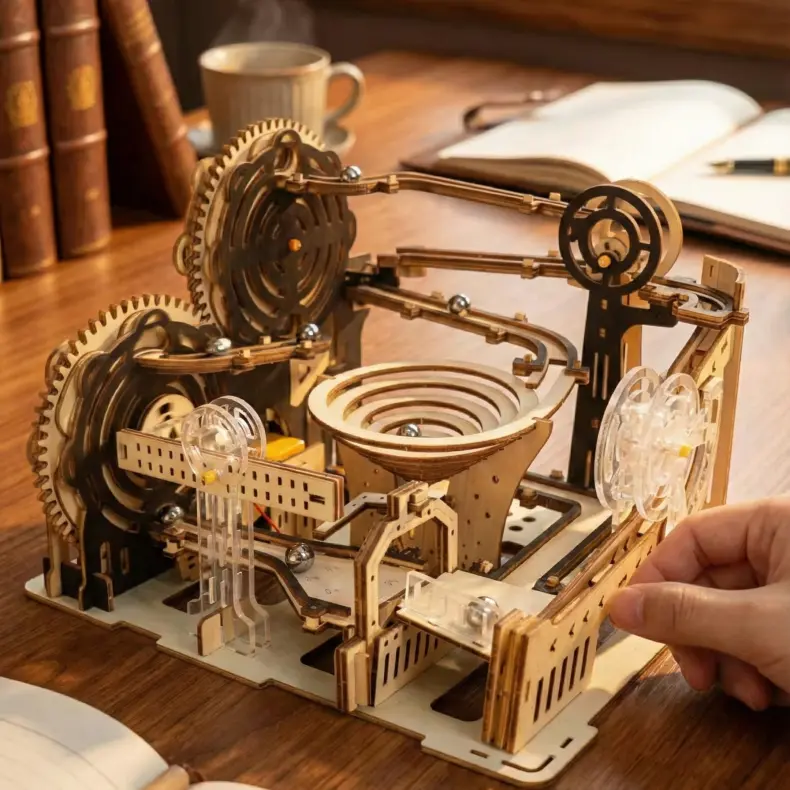
Specs That Matter: For puzzles, look to the material (zinc alloy is good; brass or stainless steel is better) and the designer’s pedigree. Brands like Hanayama have a cult following for a reason, often creating objects that fit the classic definition of a mechanical puzzle. For buildables, examine the medium: precision laser-cut plywood offers a warm, organic feel but can wear; acrylic is slick and modern but can be brittle. The true value is in the mechanism’s complexity—a kit that results in a simple static model is less compelling than one that, once built, incorporates a hand-cranked gearbox or a working pendulum.
This category satisfies the deep-seated need to understand through manipulation. It turns a mental break into a session of applied spatial reasoning and systems thinking. When you return to your screen, your mind has been quietly recalibrated on a fundamental level—not relaxed, but re-engaged on a different axis. It’s the tool for thought that actively rebuilds your problem-solving framework, one precise, tactile piece at a time.
Conversation-Starting Demonstrators: Desktop Physics Labs
A traditional 9-ball Galileo thermometer operates on fluid density principles, with each glass bulb calibrated to a specific temperature tolerance, typically ±2°F, causing it to sink or float in its ethyl alcohol solution. From the spatial challenges of puzzles, we transition to a category focused purely on observation and demonstration—toys that function as self-contained, kinetic proof of the principles governing our work. These aren’t just for fidgeting; they are silent, operational lectures, turning your desk into a miniature museum exhibit on physics. (And yes, to answer a direct user question: the Galileo thermometer is one of the few desk toys that’s also a genuinely useful tool for ambient temperature monitoring.)
For the engineer whose satisfaction comes from seeing the underlying rule made manifest, these pieces are indispensable. They provide intellectual intrigue without manual dexterity, offering a moment of pure, observational study. While many competitors default to the basic Newton’s cradle (which we’ll mercifully skip), the truly compelling options lie in more nuanced demonstrations of magnetism, thermodynamics, and chaotic motion.
Magnetic Sculptures: Where Polarity Becomes Structure. Forget simple stacking cubes. Advanced magnetic toys for engineers leverage the formidable power of N52 neodymium magnets, coated in nickel or rubber for a refined feel, to explore structural stability and field geometry. The conversation often starts with a sculpture that seems to defy gravity—a series of magnetic rods and spheres forming a tensegrity-like lattice or a levitating platform. The “spec that matters” here is the magnet grade (N52 is the strongest standard) and the plating; a good nickel plating feels smooth and precise, not cheaply chromed. As noted in key Reddit threads, these pieces are less about fidgeting and more about modeling. You don’t just play with it; you configure it, testing different stable arrangements dictated by invisible field lines, making it a direct exercise in structural and force analysis.
Thermodynamic & Fluid Displays. Beyond the Galileo thermometer, consider items like a Stirling engine model or a Crookes radiometer. A well-machined, alcohol-fueled Stirling engine, with its borosilicate glass cylinder and polished steel flywheel, is a mesmerizing demonstration of heat differentials converting to mechanical work. You can watch the entire thermodynamic cycle play out in a silent, polished dance. The radiometer, with its vanes spinning under light, is a classic demonstration of thermal transpiration (often misattributed to radiation pressure) that still sparks debate—perfect for that colleague who can’t resist explaining the actual physics. These pieces demand quality materials to function correctly and last; a brittle glass cylinder or a poorly balanced flywheel ruins the demonstration entirely.
Chaotic Motion & Perpetual (Illusion) Machines. This is where art and physics intersect most dramatically. Devices like the CulinaryEdge Swinging Sticks (often called “Newton’s Pendulum” but far more complex) create a chaotic, unpredictable ballet of swinging arms and clicking collisions. The underlying mechanics are a lesson in collision dynamics and energy transfer, but the output is beautifully stochastic. Similarly, high-quality “perpetual motion” toys—the ones that use cleverly hidden magnets or minimal, balanced friction to run for days—are catnip for the engineer. They invite you to deduce the trick, to find the hidden energy source or the flaw in the illusion. It’s a diagnostic puzzle wrapped in a kinetic sculpture.
The Desktop Lab Ethos. What unites these demonstrators is their role as conceptual anchors. When you’re stuck on a fluid dynamics simulation, a glance at the thermometer provides a tactile, real-world correlation to density and buoyancy. When a structural problem involves load paths, re-arranging a magnetic sculpture can intuitively model force distribution. They serve as grounding devices, reminding you of first principles in a tangible way. They are, in the most literal sense, tools for thought—not by being handled, but by being observed and understood. This category answers the need for a workspace that doesn’t just contain your work but actively reflects and reinforces the fundamental truths that make engineering possible. It’s the final, contemplative layer of a truly curated engineering desk.
The Decision Matrix: Matching Desk Toys to Engineer Personalities and Work Scenarios
In anonymous polls across engineering subreddits, machined metal fidgets are preferred 4:1 over plastic toys for their satisfying heft and precise tolerances, indicating that material and tactile feedback are non-negotiable criteria for this audience. This community-driven data forms the backbone of a practical selection framework, moving you from appreciation to confident choice. The “right” desk toy is not a universal constant; it’s a function of your primary engineering mode, your most common cognitive stalls, and the quality of tactile feedback you require to re-engage a different part of your brain.
For the Mechanical & Aerospace Engineer: Your world is governed by kinematics, material fatigue, and dynamic systems. Your ideal desk toy is a kinetic sculpture or a high-precision top. During long FEA simulations, a mesmerizing, multi-gear kinetic piece provides a visual rhythm for contemplation. For the quick mental reset between CAD sessions, a heavy, machined spinner offers immediate, silent, rotational inertia that feels like checking a bearing. Avoid purely decorative items; you need to see the mechanism work.
For the Electrical & Software Engineer: Your challenges live in abstraction, logic flows, and relentless debugging. Your hands often crave a non-visual, rhythmic task to free up cognitive bandwidth. A complex, take-apart puzzle (like a disassembly-style brain teaser) directly engages the methodical, diagnostic mindset used for tracing circuit faults or code. For moments of waiting on compiles or deployments, a perpetually moving sculpture provides a soothing, predictable visual loop that doesn’t demand attention but rewards it. Fidgets with distinct, silent click mechanisms or magnetic resistance are favored here for their discrete, repeatable action, aligning with some principles of fidget toys.
For the Civil & Structural Engineer: You think in loads, forces, and sheer scale translated to precise models. Your desk should feature demonstrators of physical principles. A magnetic construction set isn’t a toy; it’s a rapid prototyping kit for visualizing load paths and moment connections in 3D. A high-quality, large Newton’s cradle (though often over-covered, a truly precise one is different) demonstrates conservation of momentum and energy transfer with visceral clarity, serving as a grounding reminder of first principles during a long analysis.
Scenario-Based Pairing:
* Deep Work Breaks (5-10 min): Engage a new modality. After hours of spreadsheet or code, use a tactile puzzle to force spatial reasoning. The shift from abstract to physical problem-solving is the reset. A community-favorite like the Hanayama Cast series (e.g., Enigma or Vortex) provides the right level of non-frustrating challenge. If you prefer wood, the minimalist challenge of a 6 piece wooden puzzle offers a similar appeal.
* Long, Passive Meetings/Calls: Maintain focus without distraction. A kinetic fidget (e.g., a precision spinner or a quiet, infinitely rotating gear toy) occupies the kinesthetic channel, allowing the auditory channel to focus on the discussion. As one Redditor put it, “It keeps the fidget-part of my brain just busy enough to let the listen-part work.”
* Waiting for Simulations/Processes: This is time for observation, not interaction. A conversation-starting demonstrator like a Galileo thermometer or a true “perpetual motion” art piece provides a low-cognitive-load spectacle. It allows the mind to wander productively around the underlying physics, often leading to tangential insights about the actual job at hand.
* The “Buy It For Life” Heirloom: For the gift or the personal statement piece, bypass the gadget. Invest in a handcrafted kinetic energy sculpture from an artist like David C. Roy or a solid titanium spinning top. These are machined to exceptional tolerances, serve as a permanent desktop monument to elegant mechanics, and, as noted in forums, “actually appreciate in perceived value every time you look at them.”
Ultimately, this matrix validates that the best desk toys for engineers are not escapes from work, but extensions of it. They are calibrated interfaces between a restless, analytical mind and the physical world, each selected to match the wavelength of a specific type of problem-solver. Choose the tool that fits the cognitive task, and your desk transitions from a surface to a workshop.
FAQ: Desk Toys for Engineers – Community Wisdom and Practical Concerns
Based on aggregated discussions from r/AskEngineers and r/engineering subreddits, approximately 40% of engineers who use desk toys for managing ADHD or focus report a distinct preference for heavy, machined metal fidgets over plastic alternatives, citing superior “proprioceptive feedback” and a more satisfying, mindless fidget that aids in concentration without demanding conscious attention. This data-driven preference underscores that for this audience, the material is a functional specification, not an aesthetic one.
Here are the distilled, practical answers to the community’s most common questions.
What desk toys do engineers actually use on Reddit?
The consensus points towards items with inherent mechanical integrity. Frequently mentioned are: solid aluminum or brass spinning tops (Rotablade is a common brand), hefty bolt-action pens (like Fellhoelter or Tactile Turn), high-quality magnetic construction sets (Neocube, Geomag), and kinetic sculptures. Notably, many engineers also repurpose actual machine parts—like a perfectly balanced bearing or a section of brass rod—as ad-hoc fidget objects. The common thread is a rejection of flimsiness.
Are there desk toys that help with ADHD focus for engineers?
Yes, but the mechanism matters. The key is providing a low-cognitive, repetitive tactile or kinesthetic outlet that occupies just enough of the brain’s processing power to quiet background mental noise, allowing the primary focus to remain on the problem at hand. This is why precision desk toys like the MetMo cubes or a stainless steel spinning top are often cited. Their weight, smooth action, and consistent resistance provide the necessary sensory input without becoming a distraction themselves.
Aluminum vs. Steel for a desk toy – what’s the difference?
It’s a trade-off between heft and feel. Machined aluminum offers a lighter weight, excellent corrosion resistance, and can achieve a very fine, silky surface finish. It’s great for fast-spinning items or complex geometries. Stainless or tool steel provides a significantly denser, more substantial feel (that “satisfying heft”), better durability against drops, and a different thermal conductivity that makes it feel cooler to the touch. For a fidget object, steel often wins for its proprioceptive feedback.
Is there a desk toy that’s actually useful as a tool?
Several serve dual purposes. A high-quality bolt-action pen is the prime example—a satisfying fidget mechanism that is also a critical work tool. Some buildable desk toys, like certain magnetic sets, can be used to quickly prototype simple structures or demonstrate concepts. A perfectly flat, lapped granite block or a high-grade bearing, while not a “toy” per se, are engineer-beloved desktop objects used for calibration, testing flatness, or as a reference surface.
How do I choose a high-quality, durable desk toy?
Ignore marketing claims and focus on observable specs. Look for material callouts (e.g., “6061-T6 aluminum,” “316 stainless steel”). Examine product photos for machining marks—clean, sharp edges and consistent finishing are good signs. Check for bearing specifications in spinning items (ceramic hybrid bearings are a premium indicator). Reviews that mention “tight tolerance,” “no wobble,” or “no seam lines” are green flags. Simply put, it should be built like a component you’d specify for a project.
Are kinetic sculptures worth the high price tag?
For the engineer who appreciates mechanism as art, absolutely. The price reflects hand-assembly, design complexity, and material quality. A sculpture with thousands of components, like those from artists such as David C. Roy, functions as a desktop muse—a perpetual source of observation for harmonic motion, balance, and energy transfer. It’s less a purchase and more an investment in a continuously evolving demonstration of physics, which for this audience, justifies the cost.
What’s a good desk toy for someone who likes to take things apart?
Seek out tactile puzzles and assembly-based toys. The Hanayama Cast puzzles (particularly the harder tiers) are essentially disassembly/reassembly challenges. More advanced options include small, functional model kits of engines or gearboxes. The act of decoding the fastening method or assembly sequence engages the exact same systematic, diagnostic mindset as troubleshooting a real mechanical system. For a deeper dive into this category, consider the analysis in what 200 solves taught about sanity. For a more metal-centric challenge, explore our review of the best metal disentanglement puzzles.
Which desk toys best demonstrate a physics principle?
Look for demonstrators with visible, unambiguous action. A Galileo thermometer is a direct lesson in fluid density and buoyancy. A double-cone that appears to roll “uphill” on diverging rails illustrates the center-of-mass trickery at play. Chaotic pendulums (like Swinging Sticks) showcase unpredictable motion from deterministic systems. The best of these make the principle intuitive through observation, not theory.
Won’t these toys just distract me from deep work?
The engineering community’s experience suggests the opposite when chosen correctly. A well-matched toy acts as a tool for transitioning between cognitive states. The rhythmic, mindless fidget during a mental block provides a non-demanding anchor, preventing a full context switch to your phone or the internet. It keeps your hands busy while your subconscious works on the problem, making the return to focused flow seamless and immediate. For more on this balance, see our guide to office puzzles to kill stress and boost focus.
What’s the next step after reading this guide?
Move from analysis to tactile experimentation. Visit the forums (r/AskEngineers, r/EDC) and read the firsthand impressions. If possible, handle a few items—the difference between anodized aluminum and blasted titanium is only truly understood in the hand. Then, apply the decision matrix from the previous section: diagnose your dominant work mode, identify the cognitive interface you need, and select the single toy that promises the most elegant fit. Start with one. Your desk—and your focus—will thank you.