

Cast Galaxy Metal Puzzle: A 4-Piece Interlocking Silver Brain Teaser That Rewards Patience
The Puzzle That Punishes Confidence
Pick this up and you will do what everyone does. You will rotate it once, feel the pieces shift, and think: this is easy.
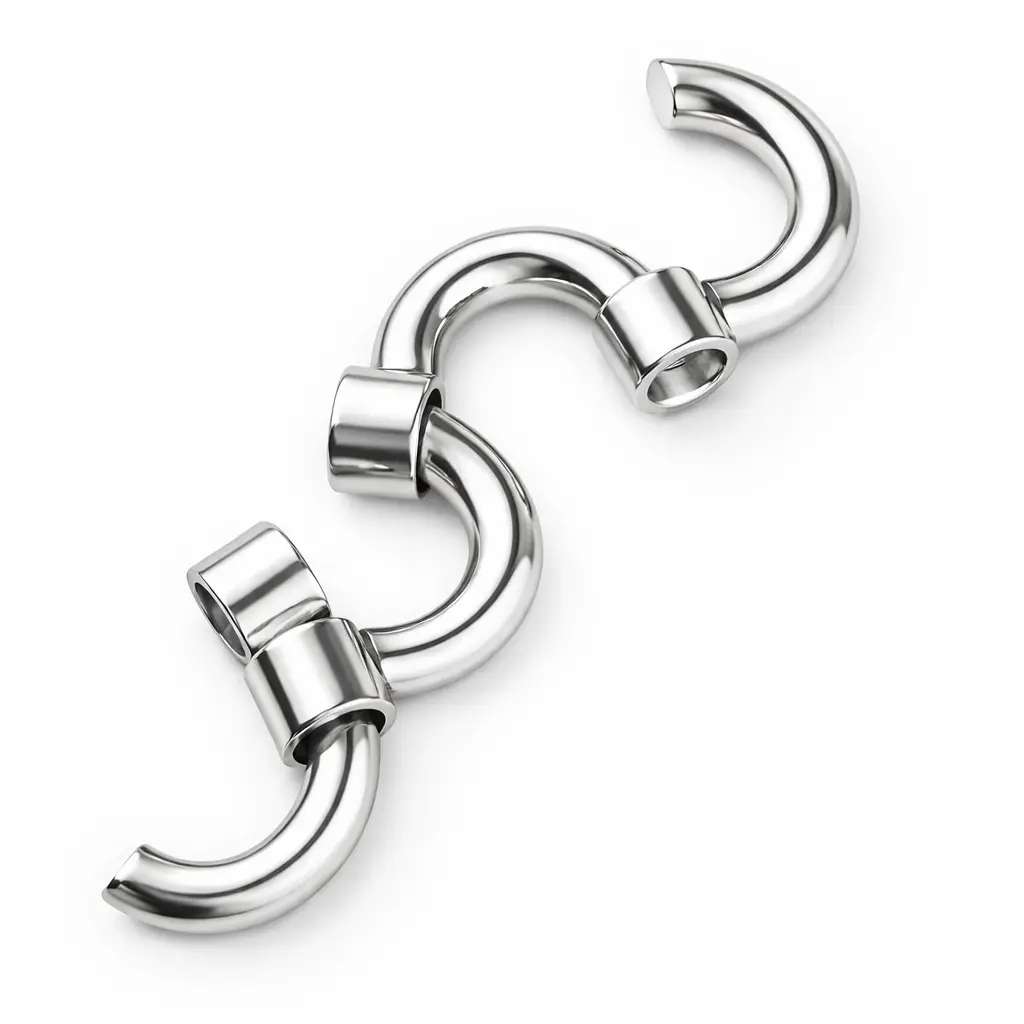
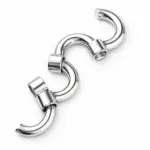
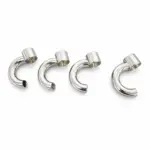
Give it forty-five seconds. The four curved arms will slide apart in your hands — almost casually, as if the puzzle wanted to open. You will set the four chrome pieces on the table, admire how they catch the light, and reach for reassembly.
That is when the trouble starts.
The cast galaxy metal puzzle belongs to a specific category of brain teasers where disassembly is a trap. It lulls you into thinking you understand the mechanism. You do not. You understood gravity and luck. Reassembly demands something else entirely: spatial memory, rotational awareness, and the willingness to slow down when every instinct says to push harder.
If you are shopping for someone who claims to be good at puzzles, this is the one that will make them reconsider. If you are shopping for yourself, clear your schedule.
What You Are Actually Holding
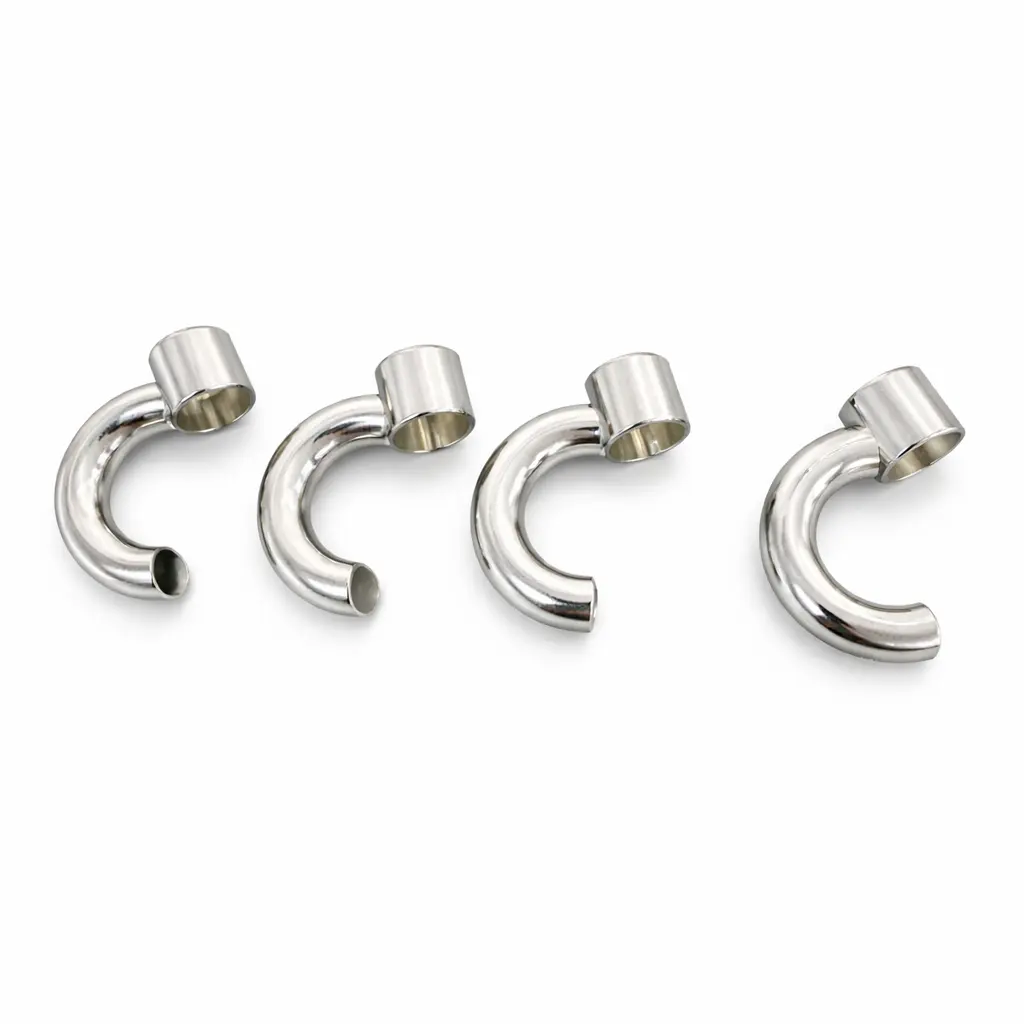
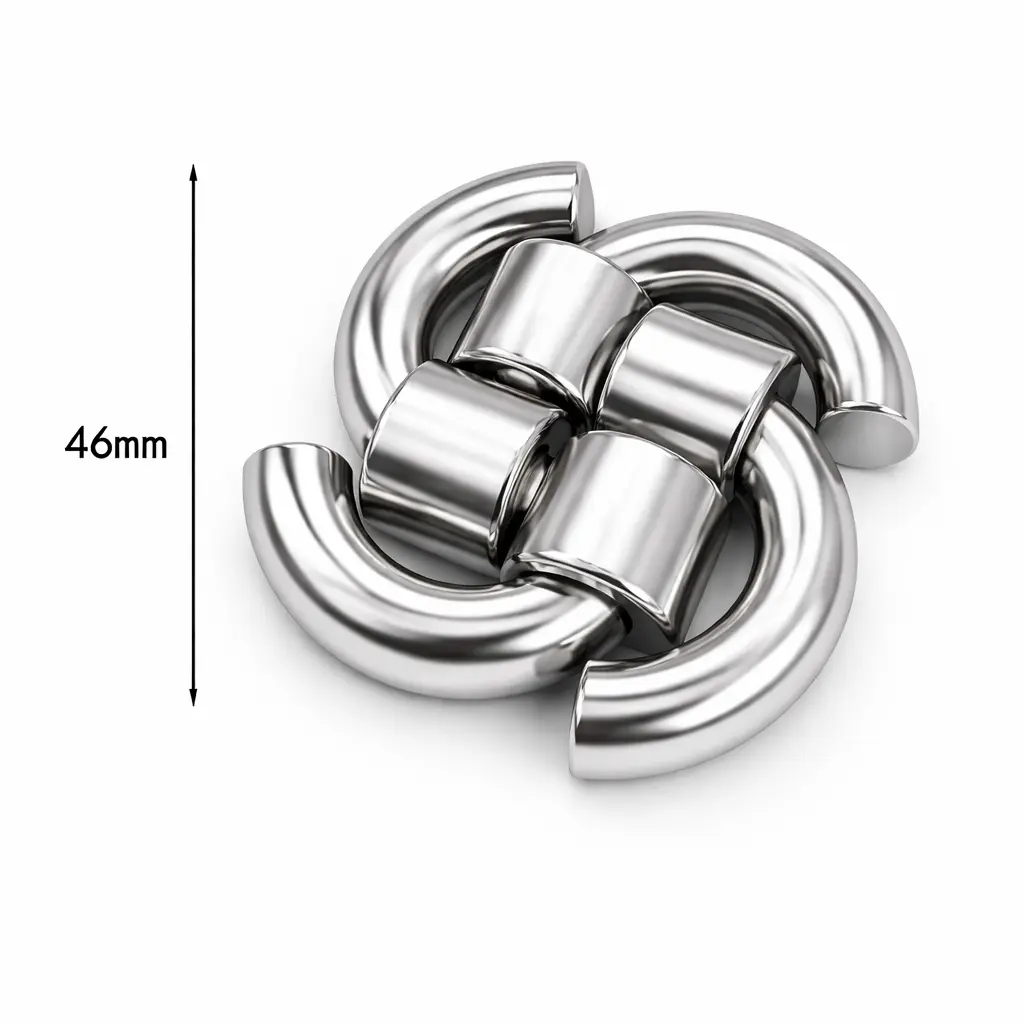
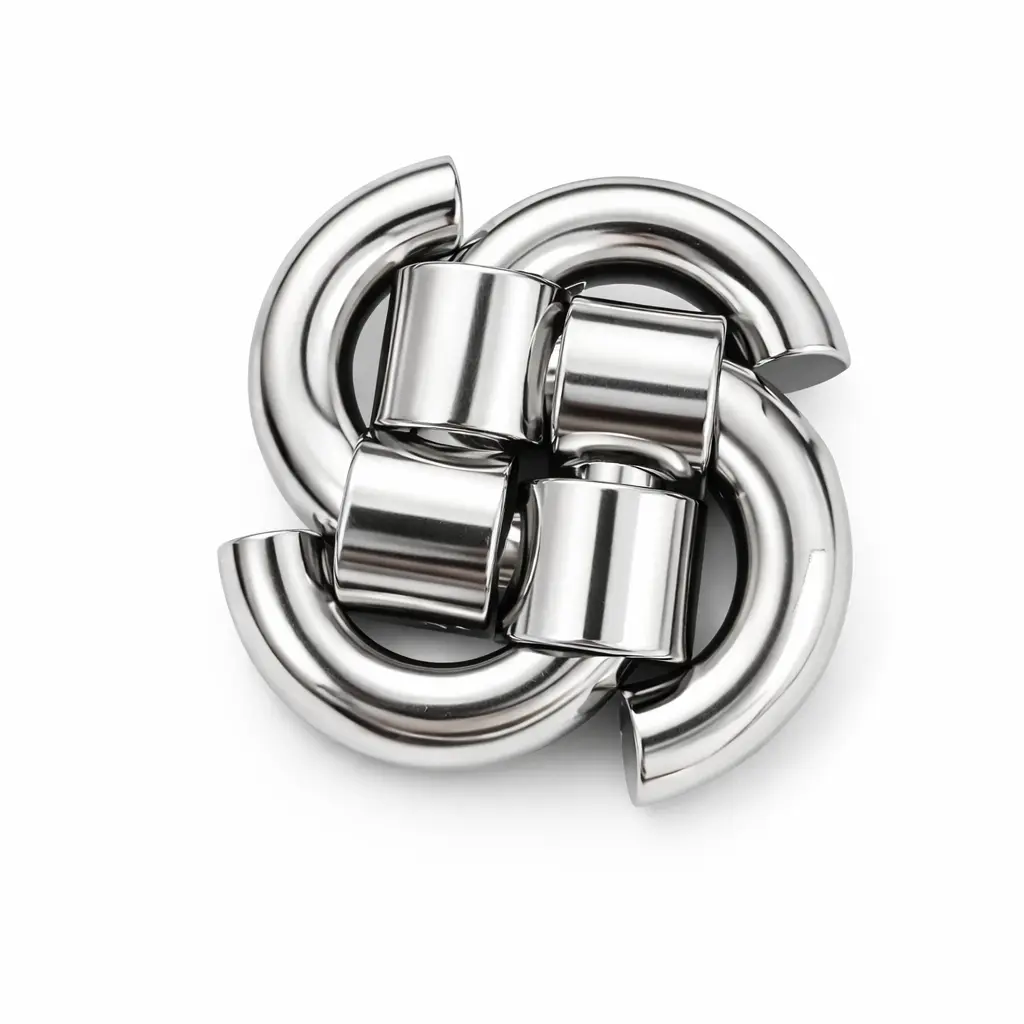
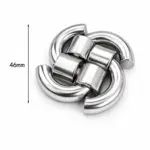
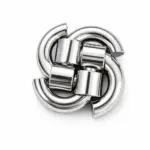
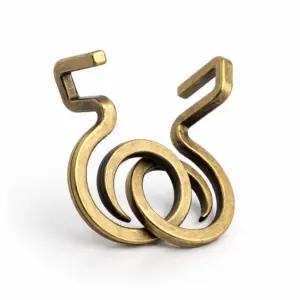
Four cast metal pieces, each shaped like a curved hook with a cylindrical sleeve at one end. The silver chrome finish is bright enough to catch your reflection if you hold it at the right angle. In the assembled state, the four hooks spiral around each other, forming a compact knot that appears seamless from the outside.
The pieces are dense for their size. This is not stamped sheet metal or injection-molded plastic — it has the heft of something machined and finished with deliberate care. The edges appear smooth and burr-free, which matters because you will be rotating these pieces against each other repeatedly.
Each hook slides into the neighboring piece’s sleeve. All four connections must align simultaneously for the puzzle to hold together. That simultaneous requirement is the entire game. Move one piece and you affect three others. If you are the kind of person who starts assembling IKEA furniture without reading the instructions, this puzzle was designed specifically to test that habit.
For a broader look at what makes cast metal brain teasers a category of their own, the ultimate guide to cast metal brain teasers covers the mechanics and what to expect from your first (or fifth) solve.
Why Disassembly Feels Easy and Reassembly Feels Impossible
The mechanism here is rotational interlocking. Each piece’s curved arm passes through a neighboring piece’s open tube. When assembled, the four pieces constrain each other — but not rigidly. There is a specific range of motion where all four arms can flex, rotate, and eventually separate.
Most solvers find the separation in under five minutes. Some stumble into it in under one. The pieces practically announce the exit path if you move them gently.
Reassembly is the real puzzle. You need to hold three pieces in position — remembering the exact rotational orientation of each — while threading the fourth into place. The tolerance for error is slim. A few degrees off and the last piece simply will not seat. You end up with three-quarters of a galaxy and one orphan hook mocking you from the tabletop.
Sometimes the most powerful move is the one you hold back. This puzzle rewards the solver who watches before acting — who notices how the arms nest, which direction the sleeves face, and what changes when a single piece rotates thirty degrees. Brute logic will not save you here. Observation will.
If you enjoyed the slow, careful approach this puzzle demands, the cast coil pocket puzzle uses a similar philosophy in a different geometry — two coiled pieces that require patient, precise manipulation.
Who This Puzzle Is For
The desk fidgeter. Something to pick up during calls, between tasks, or when your brain needs a five-minute reset. The chrome finish and compact size make it look intentional on a desk, not childish. It is heavy enough to feel purposeful in your hand and quiet enough not to annoy coworkers.
The gift buyer who is tired of guessing. This works for birthdays, stockings, office white elephants, and the person who “doesn’t want anything.” It is small, self-contained, requires no batteries or apps, and creates an immediate challenge. Most people who receive it will spend the next twenty minutes trying to solve it, which is twenty minutes where they are not on their phone. For more ideas along these lines, browse the screen-free gift guide for options that do not require a charger.
The cast metal collector. If you already own a few interlocking metal puzzles, this fills a specific slot: the “knot” mechanism. Where most cast puzzles rely on sliding, rotating, or sequential movement, this one demands coordinated simultaneous movement of all four pieces. It is a distinct solving experience, not a repeat.
The puzzle skeptic. Someone who tried a wire puzzle once and was unimpressed? This is a different experience. The weight, the precision of the casting, the satisfying way the pieces slide — it converts skeptics more reliably than anything else in this price range.
Who Should NOT Buy This
Not every puzzle fits every person. Be honest with yourself before ordering.
If you want a 30-minute challenge. Once you learn the reassembly sequence, each subsequent solve takes significantly less time. This is not a puzzle that reveals new complexity over weeks. It has a clear “aha” moment, and after that, the difficulty drops sharply. If you want something that stays hard, look at higher-difficulty options like the five-piece spiral metal puzzle — more pieces, more frustration, longer shelf life.
If you lose small parts. Four pieces. Lose one and the puzzle is done forever. There is no replacement part option. If your desk, couch cushions, or travel bag have a history of eating small objects, factor that in.
If you need instructions to enjoy a puzzle. This one benefits heavily from not reading instructions. The discovery is the point. If you are the type who reads the solution first, this will feel like a $15 paperweight after ten minutes.
What It Feels Like to Solve
The first thing you notice is the temperature. Cast metal pulls heat from your fingers, and this puzzle is no exception. It warms slowly as you work. By the time you have found the disassembly path, the pieces feel like they have been in your pocket all day.
The rotation is smooth. The cylindrical sleeves are machined tightly enough that there is no rattle, but loosely enough that movement requires no force. You feel the pieces glide past each other — a sensation that is genuinely satisfying and hard to describe to someone who has never handled a cast metal puzzle.
Disassembly happens in a kind of controlled tumble. All four pieces move at once, and the puzzle seems to unfold like a flower. If you are paying attention, you notice the exact position of each arm relative to its sleeve. If you are not paying attention — and most people are not, because the disassembly is too entertaining to interrupt with note-taking — you will pay for it later.
Reassembly is a tactile negotiation. You hold three pieces in a rough cluster, trying to recreate the starting position from memory. The fourth piece goes in… almost. You rotate it. Still doesn’t seat. You try the mirror orientation. Closer. You adjust one of the other three by a few degrees. The fourth piece drops into place with a satisfying click that you feel in your fingertips before you hear it.
That click is why people solve this puzzle more than once. For a similar experience with a different geometry, try the interlocking metal disk puzzle — same category of satisfaction, different shape, different sequence.
The Solving Approach That Actually Works
Patience is not passive — it is the discipline of waiting for the right opening. This puzzle proves that principle more clearly than any motivational poster ever could.
Here is what experienced solvers do differently:
Before disassembling, they study the assembled state for a full minute. They note which piece’s arm enters which sleeve. They pick a reference piece and track its position throughout the separation. They resist the urge to just pull.
During disassembly, they go slowly. Not because they need to — the pieces separate willingly — but because the disassembly sequence is a mirror of the reassembly sequence. Every movement you observe now is a movement you will need to reverse later.
After disassembly, they do not walk away. The muscle memory fades fast. Experienced solvers reassemble immediately, while the spatial relationships are still fresh. The first reassembly is always the hardest. The second is dramatically easier. By the third, you have internalized the sequence.
If you want to develop this kind of spatial thinking more broadly, the mechanical puzzle collection guide covers how different puzzle types build different cognitive skills.
Technical Details
| Spec | Detail |
|---|---|
| Pieces | 4 |
| Material | Cast metal |
| Finish | Silver chrome (appears mirror-polished) |
| Approximate size | ~2″ × 2″ (assembled, based on visual proportions) |
| Mechanism | Rotational interlocking — curved arms in cylindrical sleeves |
| Force required | None |
| Difficulty | Medium (Tea Sip assessment: approx. 3 out of 5) |
| Solve type | Take apart + reassemble |
Note: Dimensions and weight are estimated from photographs. Cast metal puzzles in this size category typically weigh between 100–180 grams. Exact specs will be confirmed upon receipt and updated here.
Care and Handling
Cast metal puzzles with chrome finishes hold up well under regular handling. A few practical notes:
The mirror finish will develop micro-scratches over time from normal use. This is cosmetic and does not affect function. If display condition matters to you, store the puzzle in a soft pouch when not in use.
Metal puzzles benefit from occasional cleaning with a dry microfiber cloth. Avoid water or chemical cleaners on plated finishes — they can accelerate tarnishing at the plating boundaries.
The cylindrical sleeves may feel slightly stiffer after months of storage. A brief session of gentle rotation restores full movement. This is normal for cast metal mechanisms.
For tips on long-term care of your metal puzzle collection, keeping pieces stored individually prevents contact scratching between different puzzles.
How This Fits Into a Growing Collection
Cast metal brain teasers generally fall into a few mechanism families: disentanglement (separate linked pieces), sequential movement (follow a specific path), and interlocking (pieces that constrain each other in 3D space). The Galaxy sits squarely in the interlocking category, with the added twist that all four pieces must move simultaneously.
If you already own cast metal puzzles, this fills the “coordinated movement” niche. It pairs well with sequential-movement puzzles like the metal orbit ring cast puzzle, which requires following a specific path rather than coordinating multiple pieces at once. Together, they cover two fundamentally different types of spatial reasoning.
For solvers building a curated shelf, the Galaxy’s compact, sculptural shape also displays well. Unlike puzzles that look best in their solved state, this one is visually interesting both assembled and spread across a display stand. The cast coil triangle puzzle shares that dual-display quality — attractive whether solved or scattered.
Frequently Asked Questions
How many pieces does the cast galaxy metal puzzle have?
Four. Each piece is a curved hook with a cylindrical sleeve. They interlock into a compact, knot-like assembly that fits in one hand. Despite the low piece count, the coordinated movement required for reassembly makes this substantially more challenging than it appears. If you want more pieces for a longer challenge, the five-piece spiral metal puzzle adds another layer of complexity.
Is it harder to take apart or put back together?
Put back together — significantly. Disassembly typically takes under five minutes. Reassembly, on a first attempt, can take anywhere from ten minutes to over an hour depending on how carefully you observed the disassembly. The gap between the two is what makes this puzzle interesting. It rewards attention, not just logic.
What difficulty level is this?
Medium by Tea Sip standards. Disassembly is accessible for beginners. Reassembly will challenge intermediate solvers and mildly frustrate advanced solvers on the first attempt. After two or three successful reassemblies, most solvers report it becomes routine — which is why this works best as a gateway puzzle or a warm-up piece for experienced collectors.
Is this a good gift for someone who does not do puzzles?
Yes — with a caveat. The disassembly is immediately satisfying and does not require puzzle experience. That makes the first five minutes enjoyable for anyone. Reassembly requires patience, and some gift recipients may not have the temperament for it. If the recipient is the type to give up quickly, pair it with something more immediately rewarding.
Does the chrome finish scratch easily?
It develops micro-scratches from regular handling over weeks. This is typical for chrome-plated cast metal and does not affect puzzle function. The scratches are only visible under direct light and at specific angles. If pristine appearance matters for display, store it in a pouch between sessions.
Can kids solve this?
Children ages twelve and up generally have the dexterity and spatial reasoning for disassembly. Reassembly is harder and may require adult guidance. This puzzle contains small parts — not suitable for children under three, and supervision is recommended for younger solvers.
Does it make noise when you fidget with it?
Minimal. The pieces produce a soft metallic sliding sound during rotation, but nothing loud enough to disturb a quiet office. It is substantially quieter than wire puzzles or anything with springs. The memory match game on Tea Sip’s site is another silent brain exercise if you want a digital alternative between physical puzzling sessions.
Can I solve it with one hand?
Disassembly, possibly. Reassembly, no — you need both hands to hold three pieces in position while threading the fourth. This is a two-hand puzzle, which is part of why it works well as a focused desk break rather than a casual fidget.
How does this compare to other cast metal puzzles in terms of replay value?
Moderate. The first three solves are genuinely challenging. After that, the sequence becomes muscle memory and each solve takes under two minutes. The replay value comes from the satisfying tactile experience rather than ongoing difficulty. If you want a puzzle you can return to with fresh challenge each time, the metal starfish puzzle ring offers a different kind of repeatability — two pieces that create a 20-minute challenge even after multiple solves.
Will it tarnish over time?
Chrome-plated cast metal resists tarnishing better than raw brass or copper puzzles. With normal handling and dry storage, the finish should remain bright for years. Avoid storing in humid environments or leaving it wet after cleaning.
The Verdict
The cast galaxy metal puzzle does one thing exceptionally well: it makes you pay for overconfidence. The disassembly is a gift. The reassembly is the lesson. Between those two moments sits a genuinely satisfying puzzle experience that works for desk display, gift-giving, and building the spatial awareness that makes harder puzzles solvable.
It is not the hardest cast metal puzzle available. It is not the one that will occupy you for weeks. But it might be the one that convinces you to start a collection — and for that reason alone, it earns its spot on the shelf.
Browse more metal puzzles at Tea Sip to find your next challenge.


Evelyn C. –
This little galaxy puzzle is a quiet gem—smooth, heavy in a satisfying way, with a disentanglement that feels like解开 a fine dovetail. The metal has a subtle sheen that catches light like walnut sapwood, and it looks just as beautiful sitting on my bench as it does when I’m puzzling. Much more elegant than that clunky steel one I bought last year.