There is a specific silence that falls over a room when someone is truly stumped. It’s the sound of fingers tracing wood grain, the soft click of metal against metal, and a breath held in anticipation. Puzzle box challenges offer a unique form of entertainment that refuses to be passively consumed. You cannot watch a solution video and truly understand the mechanism; you must feel the resistance. These objects are not merely containers. They are tests of patience, spatial reasoning, and tactile intuition.
The modern obsession with digital distractions has sparked a counter-movement toward tangible, analog challenges. People are returning to physical objects that demand focus. According to research published in the National Institutes of Health database, puzzle-solving enhances cognitive function and stress relief. This guide explores the intricate world of mechanical brain teasers. We will dissect the different categories of difficulty, the materials used, and the specific satisfaction of cracking a seemingly impenetrable safe.
The Anatomy of a Challenge
Not all puzzles are created equal. The industry generally categorizes these items by difficulty levels, ranging from simple entry-level brainteasers to “black box” mysteries that require hours of sequential discovery. Understanding the anatomy of the challenge helps you select the right opponent.
Entry-level challenges often rely on a single mechanism. You might find a sliding panel or a simple button sequence. These are designed to provide a quick “win” to hook the solver. Intermediate puzzles introduce compound movements. You must slide, twist, and press in a specific order. Advanced challenges, however, are different beasts. They often require tools hidden within the box itself to unlock the next stage. This is known as “sequential discovery.”
The material dictates the feel. Wood offers warmth and a traditional aesthetic, often hiding seams in the grain. Metal provides a cold, precise weight, tolerating zero margin for error. Acrylic or crystal puzzles introduce transparency, which paradoxically makes the solution harder to spot by revealing the complex internal chaos. Choosing your material is choosing your battlefield.
The Psychology of the “Stuck” Moment
Why do we subject ourselves to frustration? It is the dopamine release. The moment the solution clicks into place is chemically rewarding. However, the journey there involves navigating the “stuck” moment. This is the point where logic fails, and brute force tempts.
Experienced solvers know that brute force is the enemy of progress. Puzzles teach us that applied aggression usually results in a broken toy, not a solved one. You must learn to slow down. The Riddler Box Puzzle Box Challenges Advanced often require a meditative state. The solution is rarely loud. It is a whisper—a slight give in a panel, a difference in resonance when you tap.
This mental shift has real-world applications. It trains the brain to look for patterns rather than forcing outcomes. It teaches resilience. If you are looking for more ways to test your mental limits, you might explore What Experts Wont Tell You About These 16 Puzzle Challenges. These resources emphasize that the struggle is the feature, not the bug.
Pocket-Sized Frustrations: Metal Teasers
Sometimes you need a challenge that fits in your pocket. Metal puzzles are the purest expression of spatial reasoning. They strip away the aesthetics of compartments and focus entirely on separating two interlocked pieces.
5 Piece Cast Spiral Metal Puzzle
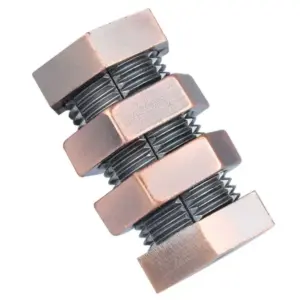
Five precision-machined metal wedges lock into a palm-sized disc that looks impossible to separate—until you find the one piece that moves. The Cast Spiral measures 4cm in diameter and is crafted from solid alloy. It comes apart in multiple stages, requiring you to rotate and align the internal wedges perfectly. This is not a puzzle you solve by luck; it demands observation and dexterity.
These metal challenges are deceptive. They look small and harmless. Yet, they can occupy a mind for hours during a commute or a wait at the doctor’s office. The weight of the metal provides a satisfying tactile feedback that plastic cannot replicate. When the pieces finally separate, the sound is distinct—a sharp “snap” that signals victory.
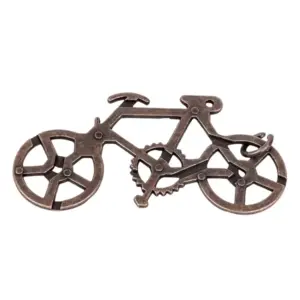
A pocket-sized metal keyring puzzle that fits in your palm and challenges your spatial thinking. Two interlocking cast metal pieces separate and reassemble through a hidden sequence that rewards patience. At $14.99, the Antique Bronze Metal Keyring Puzzle offers an excellent entry point into the world of metal disentanglement. It serves as a constant companion, ready to turn wasted minutes into mental training sessions.
Sequential Discovery: The Safe and the Treasure
The highest tier of puzzle box challenges involves “sequential discovery.” This means the puzzle gives you the tools to solve itself, but you must find them first. You are not just unlocking a box; you are exploring a mechanical landscape.
3D Wooden Puzzle Safe
Unlock the engineer within! This 111-piece 3D wooden puzzle safe combines mechanical brilliance with hands-on fun. Featuring a fully functional 3-digit combination lock and intricate gear system, it assembles into a functional secure container. Priced at $30.99, it is a model kit and a brain teaser in one package. Building the safe is only half the battle; setting the combination and locking it creates a new challenge for others.
Building a safe from laser-cut wood changes your relationship with the object. You understand exactly how the locking mechanism functions because you installed the gears yourself. Yet, once the dial is set, the magic returns. The friction of the wood, the distinct click of the tumblers, and the final swing of the door provide a deep sense of accomplishment.
Experience the centuries-old tradition of mechanical puzzles with this exquisite 3D Wooden Treasure Box. Research confirms that puzzle-solving enhances cognitive function, making this gift as healthy as it is fun. The mechanism relies on sliding panels and hidden keys rather than combination dials. For a deeper dive into the cognitive benefits of this specific model, read Why This 3D Wooden Puzzle Treasure Box Is The Brain Boosting Gift Your Friends And Brain Cells Will Thank You For.
These wooden boxes serve a dual purpose. Once solved, they become functional storage for jewelry or keepsakes. Unlike a standard store-bought box, a puzzle box carries a story. Every time you open it to retrieve a watch or a pair of earrings, you are reminded of the challenge you conquered.
Nautical Engineering: Ships and Airships
Puzzle box challenges are not limited to boxes and rings. The world of 3D wooden modeling overlaps heavily with puzzle culture. These kits require you to translate a 2D blueprint into a 3D structure, often involving complex interlocking joints that require no glue.
Steampunk Airship 3D Wooden Puzzle
What if Count Zeppelin had been born into a Jules Verne novel? This 160-piece steampunk airship imagines exactly that—a Victorian flying machine complete with spinning propeller, rolling wheels, and a detailed cabin. At $26.66, it captures the romanticism of alternate history. The challenge lies in the precise alignment of the rigging and the gears that drive the propeller.
This model is a display piece. It demands attention to detail. The “puzzle” aspect is structural integrity. If a piece is slightly misaligned during assembly, the final mechanism will not turn smoothly. It teaches the builder the importance of precision. The aesthetic is unique, blending the warmth of wood with the industrial vibe of steampunk design.
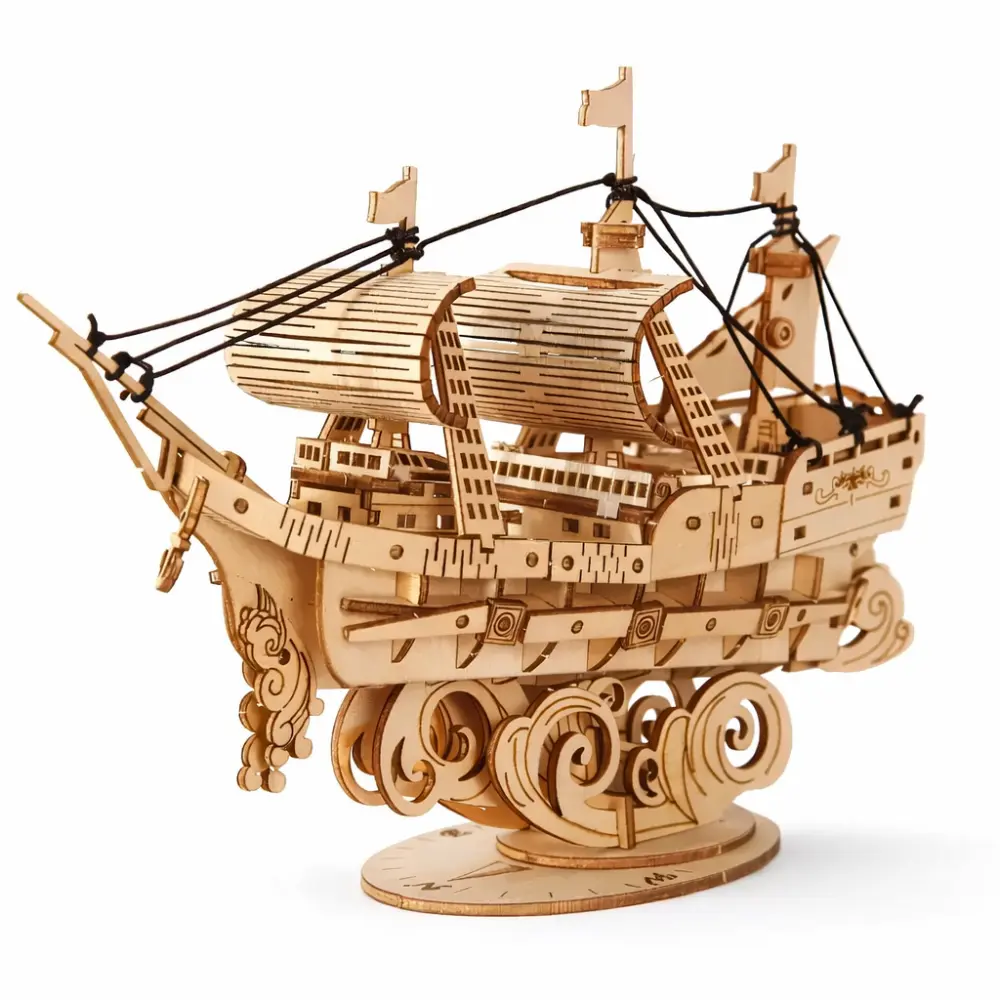
Picture this: your desk, a tiny galleon riding laser-cut wooden waves, rigging stretched taut between masts. This isn’t another generic ship puzzle—it’s a desktop replica of the vessels that dominated the high seas. The complexity of the rigging requires steady hands and patience, similar to tying knots.

Embark on a maritime building adventure with this intricate wooden sailboat 3D puzzle. Ship models have been crafted for over two thousand years, evolving from ancient Greek burial artifacts to modern hobbies. At $25.55, this kit continues that lineage, offering a satisfying hands-on building experience that results in a graceful vessel.
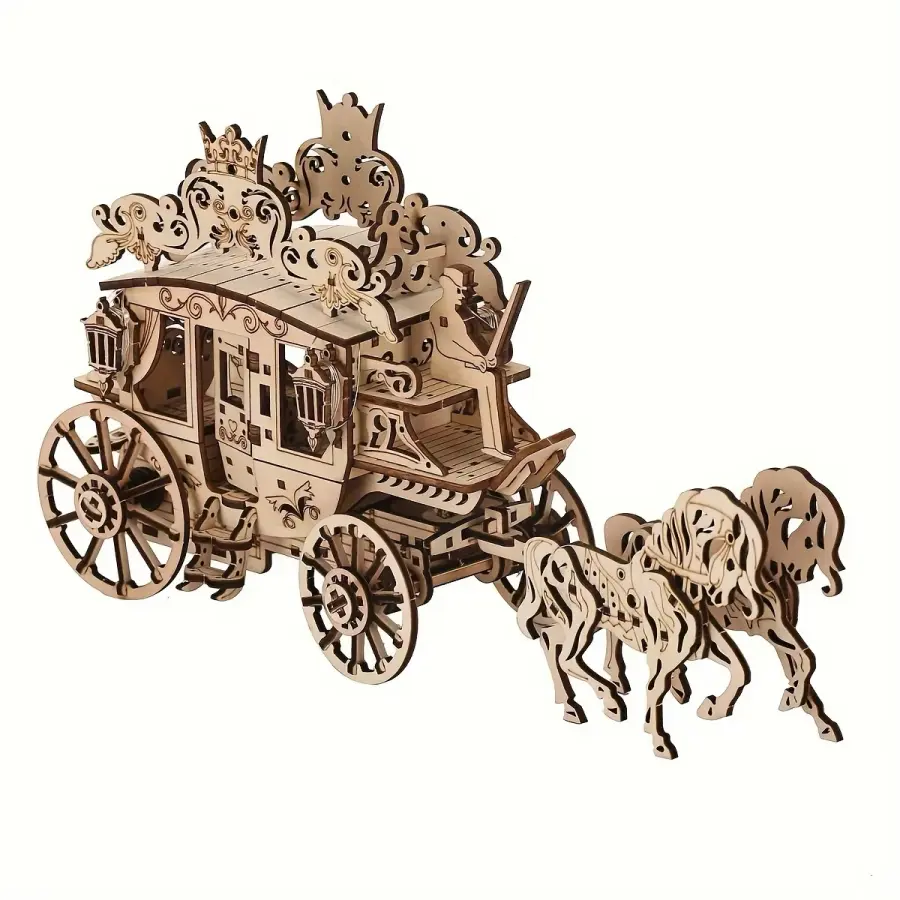
Step into a fairytale with this exquisite Royal Carriage 3D Wooden Puzzle. Featuring two galloping horses and a finely detailed coach, this laser-cut model offers a satisfying hands-on building experience. Priced at $25.99, it focuses on the dynamic motion of the wheels and the structural integrity of the carriage frame.
These models share a common trait: they reward patience. Unlike a jigsaw puzzle where the image guides you, these mechanical models require you to understand the engineering. You are building a machine, not just a picture.
The Aesthetic Trap: Beauty vs. Difficulty
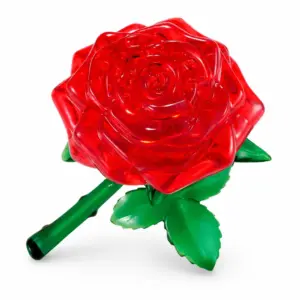
Some puzzles disguise their difficulty behind stunning visuals. They look like art objects, lulling the solver into a false sense of security. The “Crystal Rose” is a prime example of this trap.
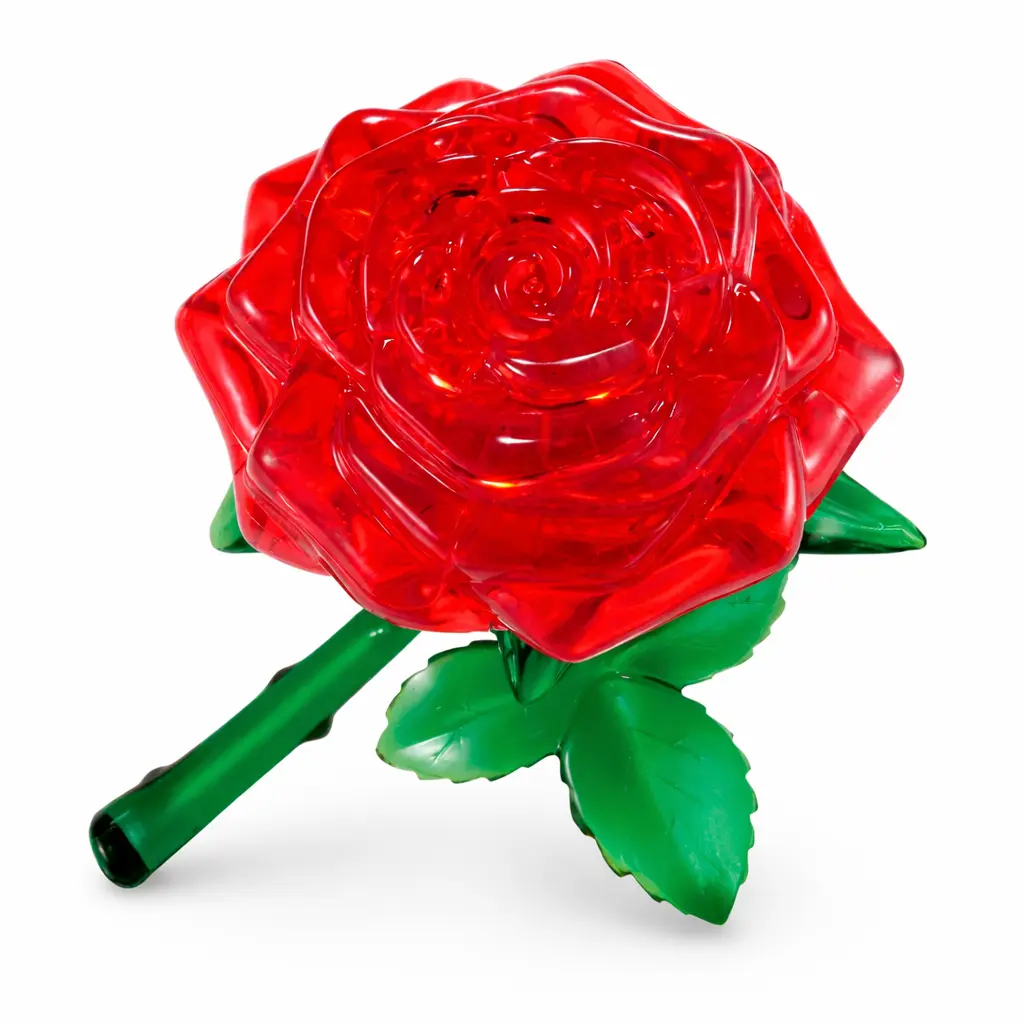
A rose that never wilts—because you built it. This 44-piece crystal puzzle assembles into a stunning translucent red rose that looks like it belongs in a jewelry store window. The finished sculpture fits perfectly on a desk or shelf. At $19.99, it is an affordable way to combine floral aesthetics with geometric logic.
The challenge here is translucency. Because the pieces are clear or translucent red, it can be difficult to see where one piece ends and another begins. You are relying on the refraction of light and the feel of the plastic tabs locking together. It is a deceptive challenge. It looks delicate and simple, yet the internal geometry is rigorous.
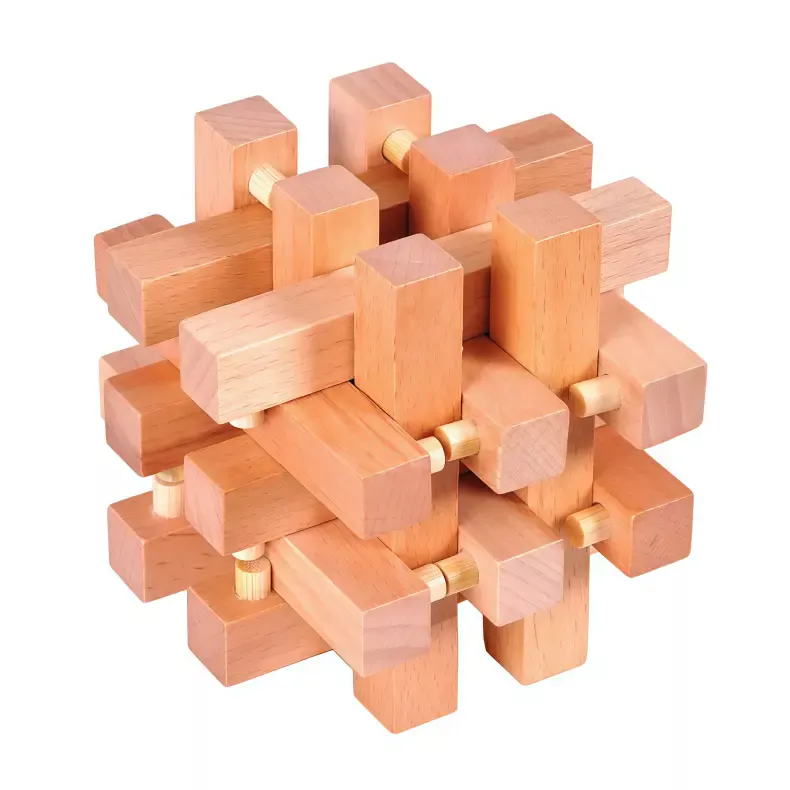
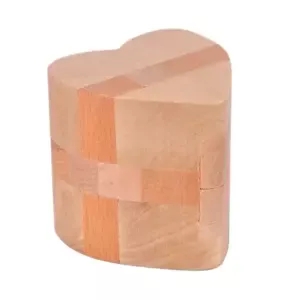
Silent Mastery in Your Hands: The 18-Piece Wooden Puzzle teaches what words cannot—that true knowledge reveals itself through action, not announcement. Seventeen identical pieces plus one “key” piece interlock to form a perfect sphere or cube. Priced at $16.99, this puzzle relies on geometric symmetry. The solution requires you to visualize the internal voids and understand how the pieces support one another.
These items blur the line between game and decor. They are designed to be touched, picked up, and fiddled with by guests. They serve as conversation starters, sitting on a coffee table, waiting for an unsuspecting visitor to fall into their trap.
Strategies for the Unsolved
We have all been there. Staring at a wooden box for forty-five minutes, convinced it is broken or rigged. Here are advanced strategies for when you are truly stuck.
First, change your sensory input. Close your eyes. Feel the edges. Run your fingernail over the seams to detect differences in height. Sometimes, visual processing gets in the way. Your fingers can detect a 0.5mm deviation that your eyes miss.
Second, consider gravity. Turn the puzzle upside down. Shake it gently. Listen for rattling. Many puzzle boxes, particularly the “Riddler” styles, rely on gravity to move internal pins or sliders into position. If a mechanism feels stuck, it might be waiting for you to rotate the box 180 degrees.
Third, look for the “too obvious” spot. We often ignore large, flat panels because we assume they are structural. We look for small buttons or hidden keyholes. Sometimes, the solution is simply pressing firmly on the back panel. The designer knows you will overthink it. They bank on your complexity bias.
Finally, take a break. The “incubation effect” is real. Your brain continues to work on the problem subconsciously while you do the dishes or take a walk. Coming back to the challenge with fresh eyes often reveals the solution that was staring you in the face.
Comparison: Puzzles vs. Traditional Games
How does this hobby stack up against Chess or other strategy games? Chess is competitive; puzzle solving is solitary. Chess requires you to predict an opponent’s move; puzzles require you to predict the designer’s logic.
However, both train pattern recognition. A chess master sees board configurations, while a puzzle master sees mechanical configurations. The difference is the feedback loop. In chess, you lose or win. In a puzzle box, you are simply “locked” or “open.” There is no loser, only a solver who hasn’t finished yet. This makes puzzle boxes excellent for stress reduction. There is no timer, and no opponent is trying to crush your spirit. It is a dialogue between you and the object.
Maintenance and Care
These are functional objects, and they require care. Wooden puzzles are sensitive to humidity. Dry air can cause the wood to shrink and mechanisms to bind. Humid air can cause swelling. Ideally, keep your puzzles in a room with stable climate control.
If a wooden puzzle becomes stiff, do not force it. Apply a small amount of wax or dry lubricant to the moving parts. Avoid oil-based lubricants, as they can stain the wood or attract dust. Metal puzzles can be polished with a soft cloth to remove tarnish, but be careful not to use abrasive cleaners that might remove the protective coating.
Acrylic or crystal puzzles should be kept away from direct sunlight, which can cause them to yellow or become brittle over time. Dust them with a microfiber cloth to maintain their clarity.
Conclusion
Puzzle box challenges offer a sanctuary in a noisy world. They demand presence, patience, and a willingness to fail. Whether you are manipulating the cast metal wedges of a spiral puzzle or assembling the rigging of a wooden galleon, the reward is the same: a moment of pure, unadulterated clarity.
Start small. Pick a challenge that speaks to you, whether it is the mechanical intrigue of a safe or the aesthetic beauty of a crystal rose. The goal is not just to open the box, but to enjoy the process of figuring out how. The click of the lock is just the punctuation mark at the end of a satisfying sentence.
Frequently Asked Questions
What are puzzle box challenges?
Puzzle box challenges are physical brain teasers that require problem-solving to open, assemble, or disassemble. Unlike standard jigsaw puzzles, these often involve hidden compartments, complex mechanical movements, or interlocking 3D structures. They test spatial reasoning, logic, and fine motor skills.
Are metal or wooden puzzles harder?
Neither is inherently harder; they test different skills. Metal puzzles, like the 5 Piece Cast Spiral Metal Puzzle, usually rely on dexterity and finding a specific release point. Wooden puzzles often involve sequential discovery and larger mechanisms. Metal is unforgiving; wood can be more subtle with hidden seams.
How do sequential discovery puzzles work?
Sequential discovery puzzles require you to find tools inside the puzzle to unlock the next stage. For example, the 3D Wooden Puzzle Safe might hide a key inside a drawer that you must open first. You are not given the tools upfront; the puzzle “gives” them to you as you progress.
Can puzzle boxes be reset?
Most puzzle boxes that open to reveal a compartment, like the 3D Wooden Puzzle Treasure Box, can be closed and reset to challenge others. Assembly puzzles, like the Steampunk Airship, are usually meant to be built once and displayed, though some can be disassembled.
What if I break my puzzle?
If a wooden piece snaps, use high-quality wood glue to clamp it back together. For metal puzzles, if a piece bends, you can usually gently bend it back. Avoid using excessive force. If a mechanism is stuck, apply wax or check for humidity expansion before pushing harder.
Are these suitable for children?
It depends on the specific puzzle. The Antique Bronze Metal Keyring Puzzle is small and could be a choking hazard, so it is not for toddlers. However, simpler 3D models like the Wooden Sailboat are excellent for teenagers to develop engineering skills.
How long does it take to solve a hard puzzle box?
A difficult puzzle box can take anywhere from 30 minutes to several hours. Sequential discovery boxes often require multiple sessions. The Riddler Box Puzzle Box Challenges Advanced category is designed to take days or weeks for some solvers.
Do I need any tools to solve these?
Generally, no. The philosophy of puzzle design is that the object is self-contained. However, some enthusiasts use a rubber mallet for tight wooden fits or a bright light to look through translucent pieces like the 3D Crystal Rose Puzzle.
Why are some puzzles so expensive?
High-quality puzzles use precision machining (often CNC) and durable materials. The 3D Wooden Puzzle Safe involves complex engineering and numerous parts. You are paying for the design intellectual property and the manufacturing precision.
Can I clean my wooden puzzle?
Yes, but with care. Use a dry or slightly damp cloth to dust it. Do not soak it in water or use harsh chemical cleaners, as the moisture can warp the wood and ruin the mechanism. A dry brush works well for the Galleon Ship rigging.
What is the benefit of building 3D model ships?
Building models like the Royal Carriage or ships improves focus, fine motor skills, and understanding of structural engineering. It is a meditative process that results in a tangible display piece, offering a sense of completion distinct from winning a video game.
Where can I find solutions if I am truly stuck?
Many manufacturers offer hints on their websites. However, we recommend trying to solve it yourself first. Check out resources like What Experts Wont Tell You About These 16 Puzzle Challenges for general strategies before looking up specific answers.
Are these puzzles good for seniors?
Yes, puzzles are excellent for cognitive health in seniors. They help maintain dexterity and problem-solving abilities. The 18 Piece Wooden Puzzle is a great cognitive workout without being frustratingly small or fragile.
How does puzzle solving compare to brain training apps?
Physical puzzles offer tactile feedback that apps cannot replicate. The 3D spatial reasoning required to assemble a Steampunk Airship engages different neural pathways than tapping a screen. It is a holistic mental workout.
What is the best gift for a puzzle lover?
Consider their experience level. A beginner might love the Antique Bronze Metal Keyring Puzzle. An expert needs a challenge like the 3D Wooden Puzzle Safe. Always choose something slightly harder than you think they can handle.