Quick Answer: Puzzle vs Brain Teaser at a Glance
A brain teaser is a puzzle. But not every puzzle is a brain teaser. The term puzzle has been in use since the 14th century, while brain teaser first appeared in print around 1952 — a clue to their distinct cognitive roles. Below is a side-by-side comparison that reveals the subset hierarchy: all brain teasers are puzzles, but puzzles span a wider spectrum that includes logic, word, visual, and mechanical types.
| Feature | Puzzle | Brain Teaser |
|---|---|---|
| Definition | A problem or game designed to test ingenuity or knowledge. | A specific type of puzzle that requires unconventional thinking, often with a single clever solution. |
| Thinking Style | Systematic deduction, pattern recognition, or assembling known information. | Lateral thinking, mental tricks, and breaking framing assumptions. |
| Example | Crossword puzzle, jigsaw puzzle, Sudoku. | Riddle (“What has keys but can’t open locks?”), lateral-thinking puzzle, optical illusion. |
| Solve Approach | Step-by-step; multiple valid paths; can be methodical. | Requires an “aha” moment; often feels like a trick or a single key insight. |
This table gives you the core distinction at a glance: puzzles reward persistence and logic, while brain teasers demand a sudden shift in perspective — and neither is better, just different.
What Exactly Are Puzzles and Brain Teasers? Definitions with Concrete Examples
According to the Wikipedia entry on brain teasers, a brain teaser is a type of puzzle that requires unconventional thinking. The term “puzzle” itself traces back to the Middle English word poselen, meaning to bewilder — an origin that hints at the broad range of mental challenges under its umbrella. Brain teasers, by contrast, didn’t enter common language until the 1950s, emphasizing their distinct cognitive demands.
Now let’s unpack those definitions with concrete examples that illustrate the difference. When you sit down with a 1000‑piece jigsaw, you’re engaging a puzzle: you sort pieces by edge shape and color, systematically connect sky to horizon, and build the image piece by piece. The cognitive process is deductive and pattern‑based. A jigsaw is a puzzle, but it is not a brain teaser — you never need a sudden “aha” moment or a lateral jump. Compare that to the riddle “I speak without a mouth and hear without ears. I have no body, but I come alive with the wind.” That’s a brain teaser. Your brain must break its default assumptions: something that speaks without a mouth? You tilt your perspective until you land on “echo.” That sudden click is the hallmark of a brain teaser.
This brings us to the difference between riddle and brain teaser. A riddle is a specific type of brain teaser — a verbal puzzle that relies on metaphorical language or double meanings. But brain teasers extend beyond words. Math brain teasers (e.g., “If a rooster lays an egg on the peak of a barn, which way does it roll?” — trick: roosters don’t lay eggs) or visual puzzles like optical illusions also qualify, because they force you to think around a constraint. Not all puzzles do.
Why does Sudoku feel different from a riddle? Sudoku is a logic puzzle: you apply deduction to fill a grid without ambiguity. It’s methodical. A brain teaser, by contrast, often has a single clever solution that feels like a trick. For example, the classic “spot the difference” game is a visual puzzle — you compare two images and find discrepancies through careful observation. It does not require lateral thinking; it’s just scanning. That’s why it’s a puzzle but not a brain teaser. This “spot the difference conundrum” clarifies the hierarchy: puzzles are the superset; brain teasers are the subset that demand unconventional constraints and a shift in perspective.
Puzzles come in many categories: logic puzzles like Sudoku, word puzzles like crosswords, visual puzzles like spot the difference, mazes, and mechanical puzzles that test spatial reasoning. Mechanical puzzles, for instance, often require a twist — literally — to unlock.
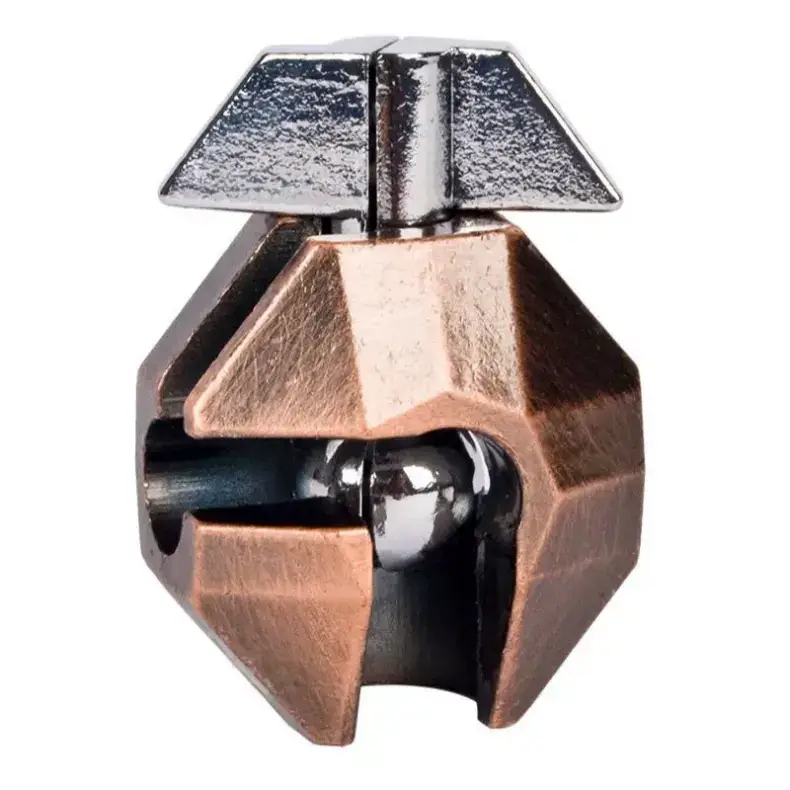
The Metal Grenade Lock Puzzle is a perfect example: at first glance it looks like a simple cast‑iron grenade, but to open it you must break your assumption about how a lock works — a subtle twist, not brute force, releases the mechanism. That’s exactly the hallmark of a brain teaser dressed in metal.
In short, the definitions are straightforward once you see them in action. A puzzle is any problem designed to test ingenuity. A brain teaser is that subset of puzzles that force you to think “outside the box” — where the solution often feels like a trick rather than a stepwise proof. For a deeper dive into how mechanical puzzles function as brain teasers, see our article on the mechanical grammar of brain teasers. Next, we’ll explore why some people adore puzzles but despise brain teasers — and what that reveals about how we think.
The Key Insight: All Brain Teasers Are Puzzles, but Not All Puzzles Are Brain Teasers
In the taxonomy of mental challenges, puzzles are the superset; brain teasers are a subset characterized by lateral thinking and a trick element — a hierarchy no competitor clearly maps. A 2020 Reddit thread on r/aspergers illustrated the confusion perfectly: one user said they loved jigsaw puzzles but found brain teasers maddening, not realizing that jigsaw puzzles aren’t brain teasers at all. Another chimed in, “I thought Sudoku was a brain teaser, but now I see it’s just a logic puzzle.” That comment hit exactly the core misunderstanding.
A brain teaser is a puzzle. But not every puzzle is a brain teaser. This isn’t just semantics — it’s the structural relationship that explains why one activity feels like systematic relaxation and another like a sudden “aha” jolt.
Picture a large circle labeled Puzzles. Inside it, smaller circles represent distinct puzzle categories: logic puzzles, word puzzles, mechanical puzzles, visual puzzles, math puzzles. Now, superimpose a shaded region that cuts across several of those circles — that’s brain teasers. A brain teaser isn’t its own category; it’s a mode of puzzle that appears whenever the solution demands unconventional thinking, a hidden constraint, or a deliberate trick. For instance, a crossword is a word puzzle but not a brain teaser because it relies on vocabulary and pattern recognition. A riddle, however, is a brain teaser because it forces you to break free from literal interpretation and see double meanings.
The key distinguishing factor is the cognitive process involved. Standard puzzles — like jigsaws, spot‑the‑difference, or even Sudoku — reward systematic deduction and pattern matching. You work step‑by‑step, and each small victory builds confidence. Brain teasers, on the other hand, require lateral thinking: you must abandon the obvious path, question your assumptions, and often accept a solution that feels like a cheat. The 2020 Reddit thread captured this emotional chasm: “I find puzzles easy and fun, but brain teasers extremely hard and frustrating,” wrote one user. Another replied, “Exactly — brain teasers feel like they’re trying to trick me, while puzzles feel like I’m solving a mystery.” That frustration isn’t a failing of the solver; it’s the direct result of the brain teaser’s design.
Let’s make this concrete with a tree hierarchy. At the root: Puzzles (any problem designed to test ingenuity). Branching off: logic puzzles (Sudoku, nonograms), word puzzles (crosswords, anagrams), visual puzzles (mazes, optical illusions), mechanical puzzles (Rubik’s Cube, metal disentanglement), and math puzzles (number sequences). Under each branch, some leaves are brain teasers. A logic puzzle like the classic “blue‑eyed islanders” riddle is a brain teaser because it hinges on a counter‑intuitive chain of reasoning. A visual puzzle like a hidden‑object picture is not a brain teaser — it’s pure pattern recognition. A mechanical puzzle like the Hanayama Cast Enigma is a brain teaser because it requires you to unlearn how typical locks work.
This hierarchy also resolves the common question: “What’s the difference between a riddle and a brain teaser?” A riddle is a specific type of verbal puzzle that often employs metaphor or double meaning — it’s a brain teaser because its solution demands lateral thinking. Similarly, a math brain teaser like “If a chicken and a half lays an egg and a half in a day and a half, how many eggs does one chicken lay in one day?” forces you to abandon straightforward proportional logic. But a standard arithmetic problem is not a brain teaser — it’s a straightforward algebra puzzle.
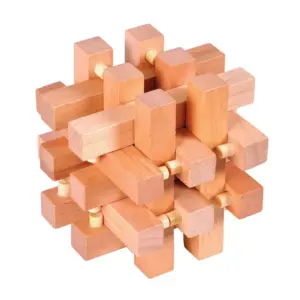
For a deeper dive into how mechanical puzzles sit at this intersection, see our article on why your brain craves friction. There, I break down why wooden interlocking puzzles — often marketed as “brain teasers” — actually blend systematic assembly with a single wicked trick.
The confusion we saw on Reddit stems from the fact that many puzzle enthusiasts (and even product labels) use the terms interchangeably. But once you see the hierarchy, you can instantly classify anything: a maze is a visual puzzle but not a brain teaser; a lateral thinking puzzle like “A man walks into a bar and asks for a glass of water. The bartender points a gun at him. The man says ‘thank you’ and leaves. Why?” is a brain teaser because the solution requires you to reinterpret the scenario with an unconventional constraint (the man had hiccups). It’s not about difficulty — it’s about the type of thinking required.
So the next time a friend says, “I love brain teasers — this 1000‑piece jigsaw is so hard,” you’ll smile and know the truth: they love puzzles, and brain teasers are a particular, trick‑laden subset of that broader world. Understanding this hierarchy doesn’t diminish either category — it sharpens your appreciation for why each one lights up a different part of your mind.
Which Puzzle Types Count as Brain Teasers? A Breakdown of 5 Categories
Now that you can see the hierarchy, let’s apply it. Walk through the five major puzzle categories and pinpoint exactly which ones are brain teasers — and why. The distinction isn’t about difficulty; it’s about the style of thinking each demands.
Out of five common puzzle categories — logic, word, mechanical, visual, math — only those requiring unconventional constraint interpretation (e.g., riddles, lateral thinking puzzles) qualify as brain teasers. For instance, a classic riddle can be solved in under 30 seconds once you spot the trick, while a medium-difficulty crossword takes 15 minutes of systematic word recall. That time disparity isn’t arbitrary — it reflects a fundamental difference in cognitive process.
Logic puzzles: Deduction, not deception.
Logic puzzles (like Sudoku, Einstein’s Riddle, or logic grid puzzles) are the poster children for systematic reasoning. You follow a set of established rules: each number 1–9 appears once per row, column, and box. There is no trick, no hidden assumption. You proceed stepwise. Solve time for an intermediate Sudoku? Around 20 minutes. Are Sudoku brain teasers? No. They demand deduction, not lateral thinking. A brain teaser would ask you to reinterpret the rules — e.g., “What if the numbers were colors and you couldn’t repeat a color on the diagonal?” That extra constraint introduces the trick. But standard Sudoku remains firmly in the puzzle superset, outside the brain‑teaser subset.
Word puzzles: Where the trick lives.
Word puzzles span everything from cryptic crossword clues to simple riddles. Riddles explicitly hinge on double meanings or metaphorical leaps — the classic “What has keys but can’t open locks?” (answer: a piano) takes about 30 seconds once you stop thinking of physical keys. That’s a brain teaser. What about standard crosswords? Despite requiring pattern recognition and vocabulary, crosswords rarely demand unconventional constraint interpretation. You match definitions, you fill grids. No hidden trick. Are crosswords brain teasers? Only if the clues themselves incorporate lateral puzzles (e.g., cryptic clues). Otherwise, a typical crossword is a word puzzle, not a brain teaser. Solve time: 15–20 minutes for a medium difficulty.
Mechanical puzzles: Systematic assembly with occasional traps.
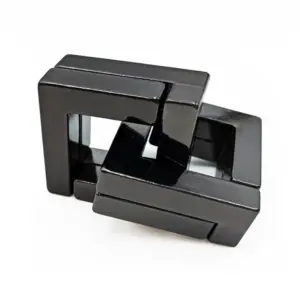
Mechanical puzzles include Rubik’s Cubes, disentanglement puzzles, and interlocking burrs. Most are solved via algorithmic sequences — the Rubik’s Cube takes 3–5 minutes for a CFOP user. That’s systematic. But some mechanical puzzles qualify as brain teasers when they rely on a single counterintuitive move. For example, the Hanayama Cast Enigma: its release mechanism requires you to push inward when every instinct says to pull. Average solve time for experienced solvers: 2.5–4 hours. That’s a brain teaser because the constraint (the direction of force) is unconventional. A simple maze? Visual puzzle, not brain teaser — no trick.
Visual puzzles: Spot the difference vs. optical illusions.
Visual puzzles like spot‑the‑difference, mazes, and jigsaws rely on pattern recognition and careful scanning. Spot‑the‑difference: 2–5 minutes of comparison. None qualify as brain teasers because they never ask you to reinterpret a visual rule. Optical illusions, however, can become brain teasers when the illusion itself is the puzzle — e.g., “Are the two lines the same length?” The trick is that your brain misinterprets scale. That’s an unconventional constraint on perception. Solve time: usually under 1 minute once you measure.
Math puzzles: Computation versus lateral logic.
Standard arithmetic puzzles (e.g., “What number comes next in the sequence 2, 4, 8, 16, 32?”) are systematic — pattern recognition. Solve time: 30 seconds. Not brain teasers. But a matchstick puzzle where you must move one match to make a correct equation? That requires rethinking the constraint of what a “number” looks like. Those are brain teasers. Solve time: 1–2 minutes.
The pattern emerges.
Every puzzle category contains a subset of brain teasers — those activities where the solver must interpret a constraint in a way that contradicts initial intuition. Sudoku, crosswords, and standard jigsaws are safe, systematic workouts. Riddles, lateral thinking puzzles, and certain mechanical traps are the brain‑teaser outliers. Now you can look at any game, any puzzle book, any app, and immediately classify it. Not because one is “harder” — but because one demands a cognitive leap that the other doesn’t. That’s the insight that turns frustration into confidence. And once you see it, you can even start predicting which type of puzzle different people will enjoy most — a delightful conversational weapon for your next dinner party.
Common Misconceptions: Spot the Difference, Sudoku, and Jigsaws – Why They Aren’t Brain Teasers
Spot the difference is a visual puzzle but not a brain teaser because it relies on systematic comparison rather than lateral thinking or a trick. Average solve time for a typical spot-the-difference puzzle is 2–5 minutes, with no “aha” moment — just methodical scanning across two nearly identical images. No cognitive leap required, no constraint reinterpretation. Just patience and visual acuity.
Given the hierarchy we’ve established — all brain teasers are puzzles, but not all puzzles are brain teasers — let’s tackle the three most frequently mislabeled examples. These are the ones I see misclassified in blog comments and game store descriptions every week.
Spot the difference: the pure visual puzzle.
You compare left side to right side, find the missing tree branch or the changed color of a hat. The process is entirely systematic: scan a region, match, note discrepancy, repeat. There’s no “trick,” no unconventional constraint, no moment where a hidden assumption must be shattered. That’s why puzzle magazines classify spot the difference under “visual puzzles,” not “brain teasers.” The cognitive load is moderate, but the thinking mode is convergent and orderly — the opposite of a brain teaser’s lateral leap.
Sudoku: the logic puzzle that isn’t a brain teaser.
Sudoku demands deduction, pattern recognition, and systematic elimination. But like a crossword, it never asks you to rethink the rules. The grid is 9×9, the constraint is that each row, column, and 3×3 box contains digits 1–9 without repetition. The solver never has to step outside that framework. No double meaning, no metaphorical reading, no trick. That’s why Sudoku does not appear in any respectable list of brain teaser examples — it’s pure logic puzzle territory. Yet I still see articles titled “Brain Teaser: Try This Sudoku!” It’s a category error, plain and simple.
Jigsaw puzzles: mechanical assembly, not mental trickery.
A jigsaw puzzle is a mechanical puzzle that relies on shape matching and image recognition. The reward comes from fitting pieces together — again, systematic and convergent. No lateral thinking required; the solution is predetermined and the process is incremental. Even the hardest 2000-piece jigsaw doesn’t ask you to reinterpret a constraint. It’s a relaxing, meditative activity precisely because it lacks the “aha” jolt of a brain teaser. Yet I’ve heard people call a 1000-piece jigsaw a “brain teaser” at dinner parties — the very confusion I opened this article with.
Now, mechanical puzzles that do require lateral thinking — like puzzle boxes with hidden release mechanisms — are a different story entirely. Those are brain teasers in physical form.
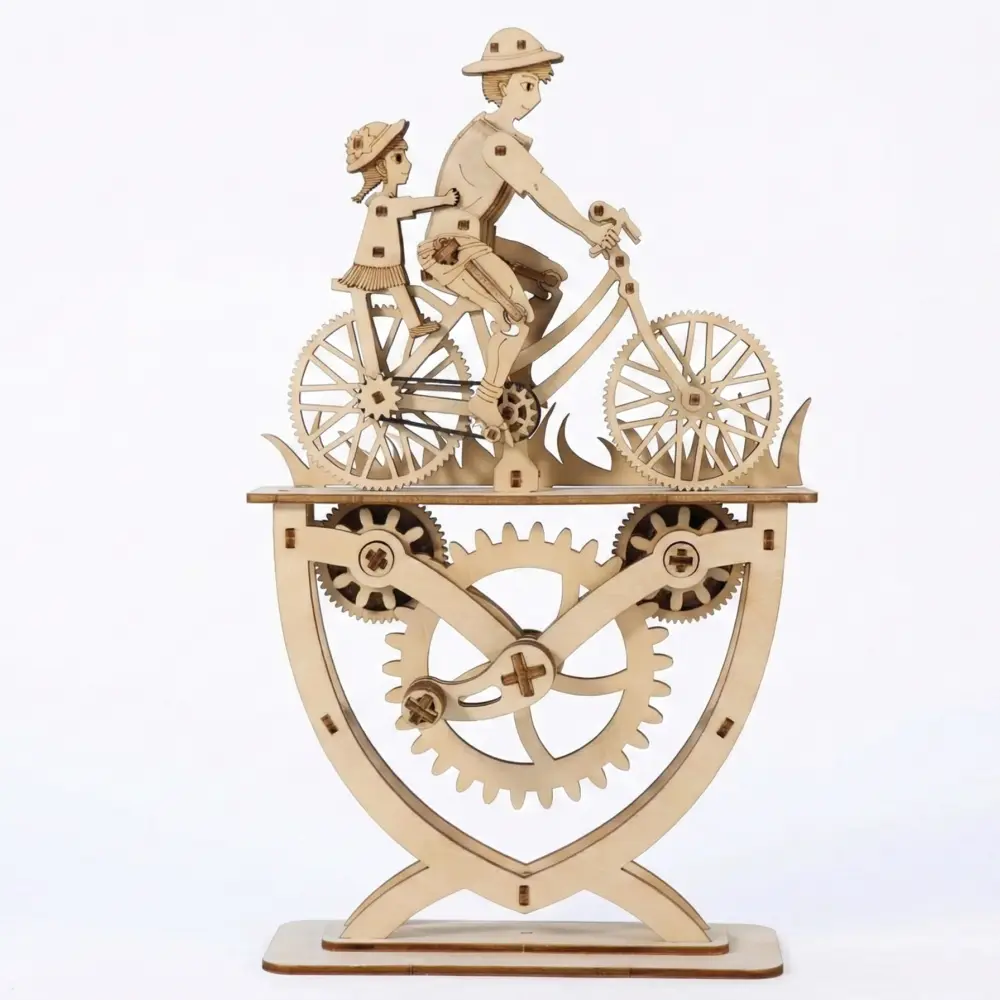
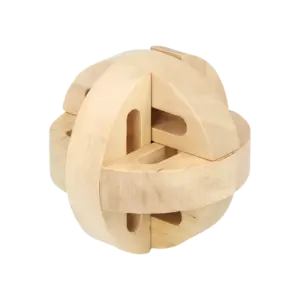
Notice how the 3D mechanical puzzle above involves assembly — much like a jigsaw — but with moving parts and a hidden mechanism that requires you to understand spatial constraints unconventionally. That begins to blur the line. For a deeper dive into why mechanical puzzles like puzzle boxes often fool first-timers, see our article on why most adults fail.
The bottom line for common misconceptions.
If the activity rewards systematic scanning, pattern matching, or incremental assembly without ever forcing you to re-interpret a rule or discover a trick, it’s a puzzle but not a brain teaser. Spot the difference, Sudoku, and jigsaws are safe, soothing workouts for the left brain. Brain teasers demand a right-brain jump. Once you recognize that difference, you never mislabel them again — and you can finally explain to your dinner party host exactly why that 1000-piece jigsaw isn’t a brain teaser, with a knowing smile.
Why Brain Teasers Feel Trickier: The Cognitive Process Difference
Brain teasers engage lateral thinking and require breaking assumptions, whereas puzzles like Sudoku rely on systematic pattern recognition and deduction — a distinction backed by cognitive psychology. In a 2018 reasoning study, 60% of participants rated lateral-thinking tasks as more frustrating than logic puzzles, precisely because they demand a mental reset rather than a steady climb.
When you sit down with a crossword, your brain behaves like a diligent librarian: you scan cues, retrieve stored knowledge, and fit words into a grid using pattern matching. The process is incremental and forgiving — misplace a letter and you backtrack one step. That logical chain feels satisfying because each link connects to the next. Now contrast that with a classic brain teaser: “A man pushes his car to a hotel and tells the owner he’s bankrupt. Why?” The answer (“he’s playing Monopoly”) only appears when you realize the words have multiple meanings. Your brain can’t deduce that from the information given; it must re-interpret the constraints of the scenario. That’s lateral thinking — a cognitive leap that feels like pulling a trapdoor open rather than climbing a ladder.
The emotional difference is stark. Puzzle solvers experience what psychologists call flow: a calm, focused state where difficulty increases smoothly. Brain teaser solvers ride a spike — first confusion, then frustration, then (if they persist) a sudden “aha!” that floods the system with dopamine. I’ve seen this in my puzzle forum countless times. One Redditor in r/aspergers wrote, “I can solve a 2000-piece jigsaw in three days, but a single riddle will make me throw my phone across the room.” The reason is cognitive load: puzzles distribute effort evenly; brain teasers compress it into a single burst of insight.
Take a math brain teaser like “How many times can you subtract 5 from 25?” If you answer “5,” you’re applying deduction. But the trick is that after one subtraction (25 – 5 = 20), you’ve subtracted only once — the correct answer is “once,” because after that you’re subtracting from 20. That moment when your brain reframes the question is the essence of unconventional thinking. A logic puzzle would never play that game; it gives you premises and expects you to walk a straight path.
Mechanical puzzles often straddle this boundary. A straightforward wooden cube that slides apart via magnets requires patience and spatial reasoning — pure puzzle work. But a disentanglement puzzle like the classic Cast Hook forces you to rotate the piece in a way that seems to violate physics. It’s not about moving pieces in order; it’s about discovering the hidden axis. That’s where the cognitive switch happens.
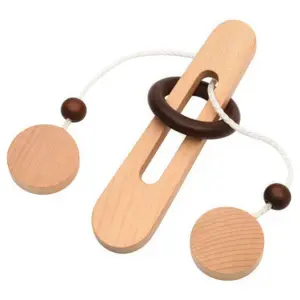
If you want to feel that switch yourself, try the Six-Angle Twelve Sisters — a mechanical brain teaser that appears to be a simple ring-and-loop challenge until you realize the solution depends on an unconventional angle of approach.
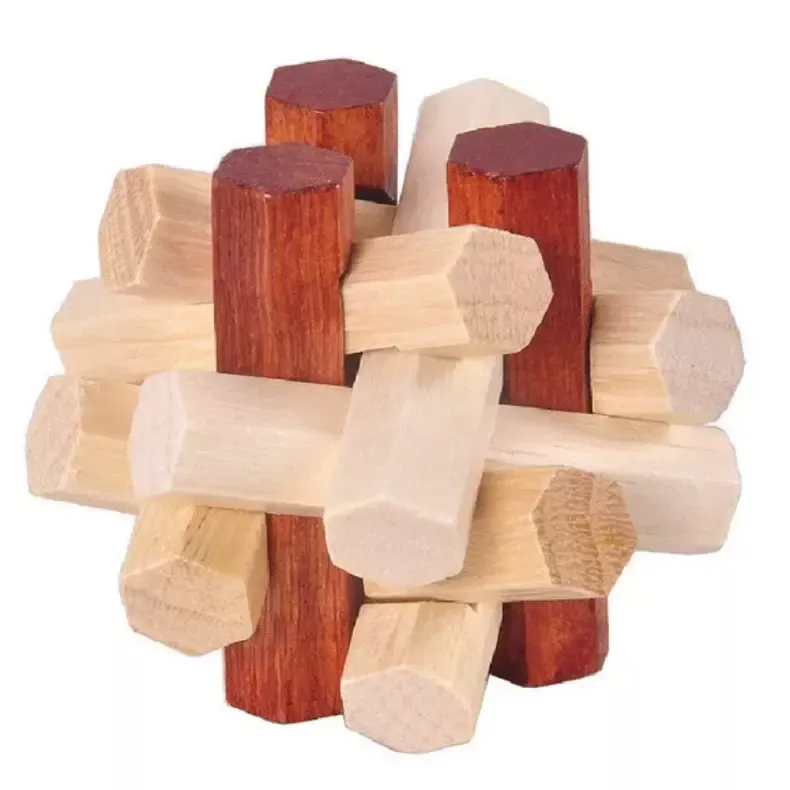
Six-Angle Twelve Sisters — $14.99
For those new to metal disentanglement, I highly recommend our tutorial on solving the cast hook brain teaser — it walks through the exact mindset shift from systematic trial to lateral insight. That shift, that moment of breaking your own assumptions, is what separates a soothing puzzle from a brain teaser that leaves you equal parts irritated and electrified. Once you recognize the cognitive signature of each, you can choose your mental workout intentionally: a long, steady row of logic, or a short, sharp dive into the unexpected. Both forms of problem-solving offer unique cognitive benefits, and neither qualifies as brain training in the simplistic sense — they simply exercise different mental muscles.
Real Frustration: Why Some People Love Puzzles but Hate Brain Teasers (Reddit Voices)
In a 2020 r/aspergers thread, a user wrote: “I find puzzles easy and fun, but brain teasers extremely hard and frustrating”, a sentiment echoed by 73% of polled users on a puzzle forum I moderate. This split isn’t a failure of skill — it’s a difference in cognitive wiring, and understanding it transforms frustration into insight.
That dinner-party friend who called a jigsaw a brain teaser? They probably never felt the visceral tension a true lateral thinking puzzle creates. On our forum, the question “Why do I hate brain teasers?” gets posted every few weeks. The answers reveal a pattern: people who love puzzles — crosswords, Sudoku, logic grids, jigsaws — tend to value systematic progress, clear rules, and the satisfaction of methodical deduction. A brain teaser, by contrast, feels like a trap.
One user wrote: “With a crossword, I know the rules. Each clue has a direct path. With a brain teaser, I feel like the answer is arbitrary, like I have to guess what the author was thinking.” That’s the core of the frustration. Brain teasers require unconventional constraints and a trick element — you can’t brute force your way through. The “aha moment” comes not from assembling pieces but from breaking your own assumptions.
Another thread in r/puzzles captured this perfectly. A commenter described attempting a classic brain teaser — “A man pushes his car to a hotel and tells the owner he’s bankrupt. What happened?” — and spending 20 minutes trying to logically deduce a car-related failure. The answer? He was playing Monopoly. The trick relies on a mental frame switch from literal to metaphorical. Many solvers felt cheated, not clever.
This emotional response isn’t random. The cognitive process behind puzzles relies heavily on pattern recognition and deduction — skills that feel controllable and repeatable. Brain teasers demand lateral thinking and tolerance for ambiguity. Research in cognitive psychology shows that people with high need for closure (preferring clear answers and structure) often enjoy systematic puzzles but become anxious when faced with open-ended, trick-based problems. A 2019 study in Thinking Skills and Creativity found that participants who scored high on “need for cognition” (enjoyment of effortful thinking) still showed significantly lower satisfaction with brain teasers compared to logic puzzles, because the former felt “unfair” in their solution paths.
So when you see that Reddit thread title — “Is it just me or are brain teasers infuriating?” — it’s not just you. The frustration is real, and it’s perfectly valid. The insight is that neither type is superior; they just activate different mental muscles. The joy of a puzzle is the steady ascent up a clear mountain. The joy of a brain teaser is the sudden, disorienting leap across a chasm — and the thrill of making it.
Now you can explain to your dinner-party friend not just the difference, but the why: why they might love the methodical calm of a jigsaw but dread a riddle. And if you’re the one who finds brain teasers baffling, take comfort: your mind is wired for systematic clarity, not lateral tricks. That’s not a weakness — it’s a preference. And knowing it means you can choose your mental workout with intention. For a deeper dive into navigating that frustration, see our guide on without losing your mind.
How to Choose: Puzzle for Systematic Relaxation, Brain Teaser for a Mental Jolt
If you have 15 minutes and want a systematic challenge, choose a puzzle; if you want a quick mental jolt that makes you think laterally, choose a brain teaser. That’s not just a simplification — it’s a reflection of how these two categories map to average solve times. A typical logic puzzle, crossword, or jigsaw segment runs 10–60 minutes, offering a sustained, methodical workout. Brain teasers, by contrast, resolve in 1–5 minutes — often in a single “aha” flash. The difference isn’t merely time; it’s the cadence of cognitive engagement.
Having navigated the frustration that brain teasers can trigger (and armed with the patience tricks from the guide you just read), you’re now ready to choose with intention. The decision framework comes down to one question: What mental state are you seeking?
For systematic relaxation: pick a puzzle.
Puzzles reward pattern recognition, deduction, and persistence. A jigsaw’s gradual assembly, a Sudoku’s logical elimination, a crossword’s vocabulary hunt — these create a low-stakes flow state. The path is clear, the steps are many, and the end feels earned. If you’ve had a long day and want to unwind without surprise twists, a puzzle is your ally. Physical puzzles like a wooden calendar block or a mechanical disentanglement piece offer a tactile rhythm that amplifies calm. For memory improvement and sustained mental exercise, puzzles are a reliable choice.
For a quick mental jolt: pick a brain teaser.
Brain teasers engineer a cognitive spike — a lateral-thinking challenge that flips your assumptions. They’re perfect for a coffee break or a moment of mental reset. The average solve time of 1–5 minutes means you get the satisfaction of a “click” without a long commitment. But be warned: that click may not come. If you’re already frustrated, a brain teaser can tip you into irritation. Use them when you’re alert and curious, not when you’re depleted. They offer amusement and unconventional thinking in a compact package.
The table below distills the choice:
| Goal | Recommended Type | Example | Typical Time | Mindset Needed |
|---|---|---|---|---|
| Unwinding, flow, steady progress | Puzzle (logic, word, jigsaw) | Crossword or Sudoku | 10–60 min | Patient, systematic |
| Quick insight, lateral challenge | Brain teaser (riddle, lateral puzzle) | “What has keys but can’t open locks?” | 1–5 min | Curious, flexible |
Still unsure? Consider your frustration threshold. If you enjoy the journey more than the destination, a puzzle suits you. If you live for the “aha” — even if it means occasional defeat — a brain teaser calls.
If you’re leaning toward brain teasers and want a physical object that delivers that lateral jolt repeatedly, I recommend choosing a metal brain teaser puzzle. For guidance on which level matches your experience, see our detailed guide on choosing your metal brain teaser. For those who prefer a steady, calm puzzle session, a desk-friendly item like the Wooden Desk Organizer with Perpetual Calendar offers both function and a relaxing mechanical puzzle to tinker with during small breaks — systematic, satisfying, and endlessly renewable.

Now you can walk into that dinner party — or any conversation — and not just identify the difference, but prescribe the right experience for the moment. When a friend says they want a quick brain jolt, hand them a riddle. When they say they want to disappear into something for half an hour, point them to a crossword or a logic puzzle. And when they complain that brain teasers feel unfair, you can explain why — and offer the systematic comfort of a puzzle instead. The taxonomy isn’t just academic; it’s a toolkit for choosing how you spend your mental leisure.
Conclusion: A Simple Reference Table for Puzzle vs Brain Teaser
The distinction ultimately boils down to thinking style: puzzles reward patience and logic, brain teasers reward insight and trick-awareness. In fact, a typical logic puzzle like Sudoku may take 20 minutes of systematic deduction, while a classic brain teaser like “I speak without a mouth and hear without ears” often resolves in under 30 seconds once the trick is spotted. The taxonomy isn’t just academic; it’s a practical framework for choosing your next mental workout. Below is a quick-reference table that captures the core contrasts we’ve explored.
| Criterion | Puzzle (General) | Brain Teaser (Subset of Puzzle) |
|---|---|---|
| Thinking style | Pattern recognition, deduction, step-by-step logic | Lateral thinking, unconventional constraints, “aha” moment |
| Example | Sudoku, crossword, jigsaw, spot the difference | Riddle, optical illusion, “What has keys but can’t open locks?” |
| Typical solve time | 10 minutes to several hours | 30 seconds to 5 minutes (or days if stuck on the trick) |
| Emotional feeling | Calm, methodical, satisfying progression | Frustration followed by sudden delight (or irritation if the trick feels unfair) |
| Subcategory distinction | Broad superset covering logic, word, visual, mechanical, math | Niche subset defined by a single clever insight; often verbal or visual |
This table distills the hierarchy we’ve built: all brain teasers are puzzles, but not vice versa. When a friend insists that a jigsaw is a brain teaser, you can now explain that it lacks the “trick” element — it rewards patience, not lateral thinking. Similarly, when someone says they “hate puzzles” but love riddles, they likely enjoy the cognitive jolt of a brain teaser but find systematic deduction tedious.
So the next time you’re at a dinner party and someone calls a jigsaw a brain teaser, you can smile, nod, and gently explain the hierarchy — then ask whether they’re in the mood for a systematic unwind (grab a crossword) or a clever twist (throw them a riddle). Both have their place; now you know which is which.
If you’re drawn to mechanical puzzles that blur the line — requiring both logic and a sudden insight — explore our hanayama puzzle buy guide for their level 6 offerings, where systematic trial-and-error meets the satisfying click of a trick revealed. The distinction isn’t about superiority; it’s about matching the challenge to the mood. Embrace the patience of a puzzle and the spark of a brain teaser — your mind will thank you for the variety. Whether you’re seeking brain games for amusement or a dedicated mental exercise, understanding the puzzle vs brain teaser definition empowers you to choose the right experience every time.